Dear Zazie,
Here is today’s Lovers’ Chronicle from Mac Tag.
Rhett
The Lovers’ Chronicle
Dear Muse,
one of the ones born
of tradin’ words with Bret
“Y’all used to do that a lot”
back when we did not have lives
the phrase fairly describes where
i was compared to where i had been
“And now look where you are”
where we are, we both took the circuitous route
to where we can say we are doin’
considerably better than fair to middlin’
© copyright 2023 mac tag/cowboycoleridge all rights reserved
slightly above or far below, i have been and this constant blue on white holds together, you, words from the past, visions seen or heard or imagined, still gratefulness paces ahead of expectations and you listen and belief comes a two-step left behind now glidin’ effortlessly sweepin’ all else away
© copyright 2022.2023 mac tag/cowboycoleridge all rights reserved
better than that these days
as we continue towards us
no longer, hopeless nights
from the depths to the horizon
this here, the way this becomes,
no room for despair
the next day and the next, the only dream, the only one in which we face whatever happens with desire and grace
© copyright 2021.2023 mac tag/cowboycoleridge all rights reserved
Pale Love, Pale Rider
well, better than that
since i saw you last night
a mere mirage, true
but it was good to see you
i surprised you while
you were cleanin’
you said somethin’
about not havin’
any makeup on
and i said,
you never looked prettier
we sat and talked
and we were content
© copyright 2020 mac tag/cowboy coleridge all rights reserved
another night
left with wakefulness
helpless against
what has and has not
been done
turn to
most faithful
memories
to chase away
the bad dreams,
the ones
which dwell
in deep retreats
veils removed
till in concord
and come
to all that remains
you and i
beloved
© copyright 2019 mac tag/cowboy coleridge all rights reserved
grew up dreamin’
of bein’ a cowboy
raised by a son
of a son of one
two hundred miles
from nowhere
hired vaqueros
were my first,
best friends
taught me Spanish
and how to ride
learned all
there is to know
about hard work
and hard weather
grew up dreamin’
and readin’
and knowin’
that someday
i would find
ever after
wonderin’ how that worked out;
to make a heart-broke story short,
never even had
a fair to middlin’ chance
© copyright 2018 mac tag/cowboy coleridge all rights reserved
hey thanks for askin’
been a long dang time
some 40 years… i god
where did it go
gone to waste,
gone to chasin’
what could not be caught
gone to hell if i know
but this ain’t gonna be
no tear in my beer song
not lookin’ for pity
for shitty decisions
no, i did my best
to steer my life
between the bar ditches
and my far flung wishes
i took my chances
i danced with faith
and hope and grace
but they were not
havin’ any
turns out, i was good at fallin’,
but not worth a damn at stayin’
and i got really good at runnin’
and hidin’ from feelin’s,
hidin’ from myself,
hidin’ from life
then livin’ became
readin’, writin’,
and dreamin’
sure you could ask
what kinda livin’ is that
well, better than not
so how ‘m i doin’… well
i may not be great
i may not be good
but fair to middlin’,
by god, ain’t that bad
considerin’ it all,
you may say i am settlin’
but i say when the forecast
calls for no chance,
fair to middlin’ ain’t that bad
© copyright 2017 mac tag/cowboy Coleridge all rights reserved

Today is the birthday of William Wordsworth (Cockermouth, Cumberland, England 7 April 1770 – 23 April 1850 Rydal, Westmorland, England); Romantic poet who, with Samuel Taylor Coleridge, helped to launch the Romantic Age in English literature with their joint publication Lyrical Ballads (1798). Wordsworth’s magnum opus is generally considered to be The Prelude, a semiautobiographical poem of his early years that he revised and expanded a number of times. It was posthumously titled and published, before which it was generally known as “the poem to Coleridge”. Wordsworth was Britain’s Poet Laureate from 1843 until his death in 1850.
In November 1791, Wordsworth visited Revolutionary France and became enchanted with the Republican movement. He fell in love with a French woman, Annette Vallon, who, in 1792, gave birth to their daughter Caroline. Financial problems and Britain’s tense relations with France forced him to return to England alone the following year. The circumstances of his return and his subsequent behaviour raised doubts as to his declared wish to marry Annette. However, he supported her and his daughter as best he could in later life. The Reign of Terror left Wordsworth thoroughly disillusioned with the French Revolution and the outbreak of armed hostilities between Britain and France prevented him from seeing Annette and his daughter for some years.
With the Peace of Amiens again allowing travel to France, in 1802 Wordsworth and his sister Dorothy visited Annette and Caroline in Calais. The purpose of the visit was to prepare Annette for the fact of his forthcoming marriage to Mary Hutchinson. Afterwards he wrote the sonnet “It is a beauteous evening, calm and free”, recalling a seaside walk with the nine-year-old Caroline, whom he had never seen before that visit. Mary was anxious that Wordsworth should do more for Caroline. Upon Caroline’s marriage, in 1816, Wordsworth settled £30 a year on her (equivalent to £2,400 in 2021), payments which continued until 1835, when they were replaced by a capital settlement. On 4 October, following his visit with Dorothy to France to arrange matters with Annette, Wordsworth married his childhood friend Mary Hutchinson. Dorothy continued to live with the couple and grew close to Mary.
True beauty dwells in deep retreats,
Whose veil is unremoved
Till heart with heart in concord beats,
And the lover is beloved.
A Poet’s Epitaph (1799)
- A fingering slave,
One that would peep and botanize
Upon his mother’s grave.- Stanza 5.
- A reasoning, self-sufficing thing,
An intellectual All-in-all!- Stanza 8.
- He murmurs near the running brooks
A music sweeter than their own.- Stanza 10.
- And you must love him, ere to you
He will seem worthy of your love.- Stanza 11.
- The harvest of a quiet eye,
That broods and sleeps on his own heart.- Stanza 13.
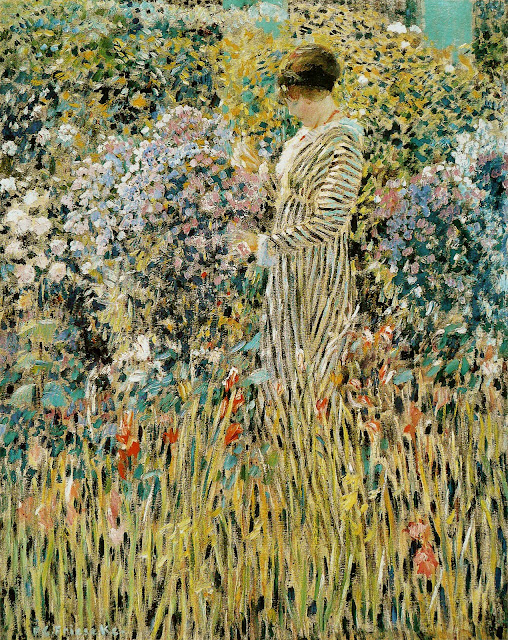
Today is the birthday of Frederick Carl Frieseke (Owosso, Michigan April 7, 1874 – August 24, 1939 Normandy); Impressionist painter who spent most of his life as an expatriate in France. An influential member of the Giverny art colony, his paintings often concentrated on various effects of dappled sunlight. He is especially known for painting female subjects, both indoors and out.
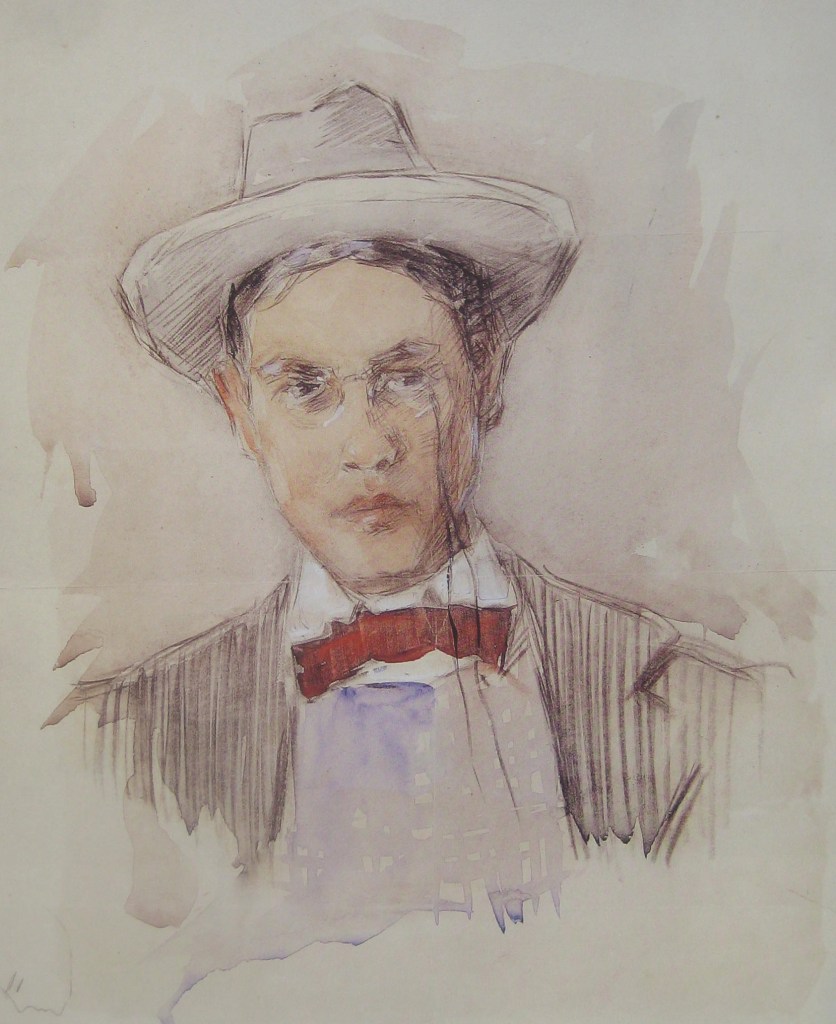
Self-Portrait, 1901
In 1898 he moved to France, where he would remain, except for short visits to the United States and elsewhere. In October 1905 he married Sarah Anne O’Bryan (known as Sadie), whom he had met seven years earlier. They spent every summer from 1906 to 1919 in Giverny. He kept a Paris apartment and studio throughout his life, and the Friesekes spent the winters in Paris. Their Giverny house, previously the residence of Theodore Robinson, was next door to Claude Monet’s. Despite the proximity, Frieseke did not become close friends with Monet, nor was Monet an artistic influence. He said in an interview, “No artist in [the impressionist] school has influenced me except, perhaps, Renoir.” Indeed, Frieseke’s paintings of sensually rounded figures often bear a resemblance to those of Renoir.
Gallery
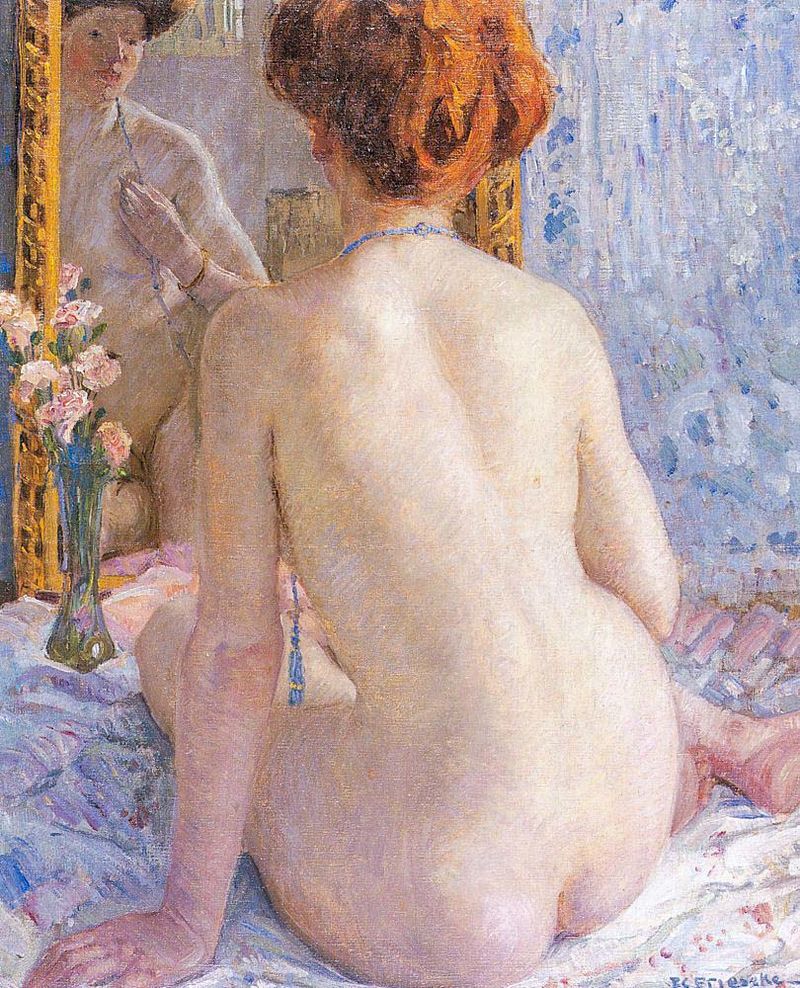
Reflections (Marcelle), by 1909
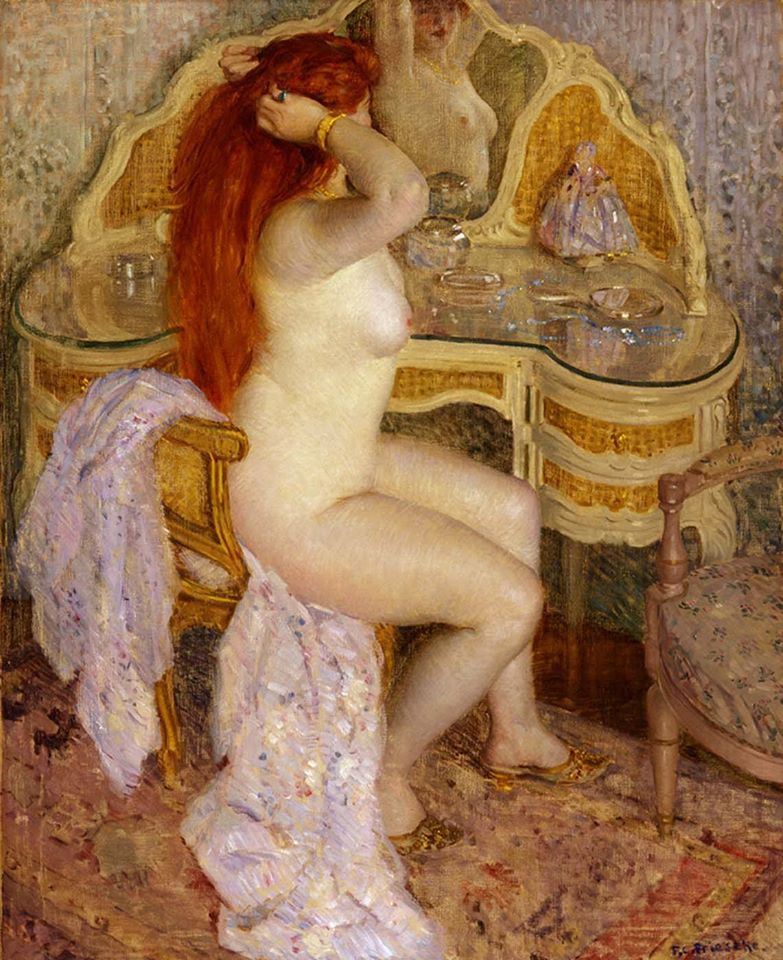
Nude Seated at Her Dressing Table, 1909
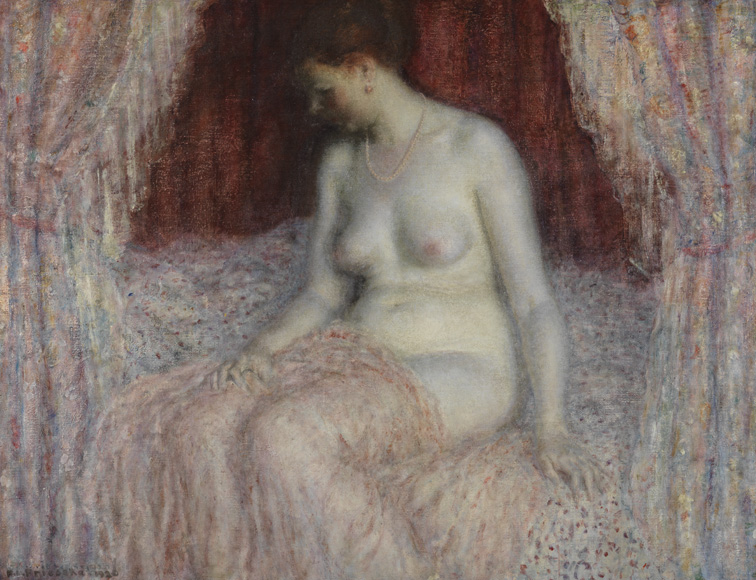
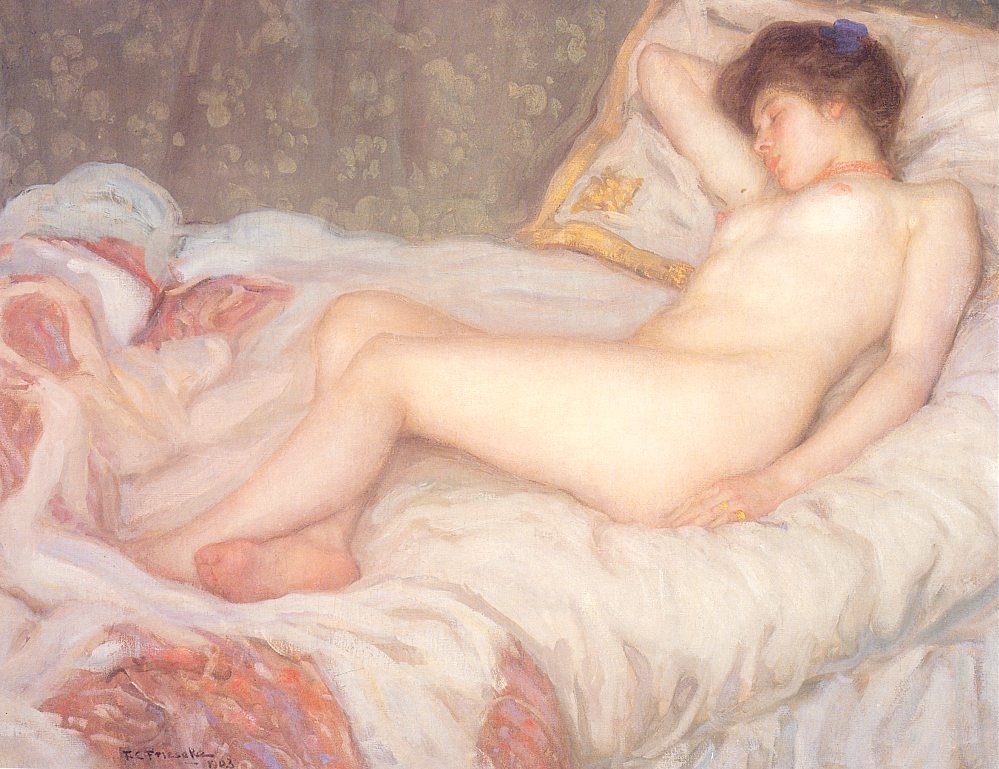
sleep
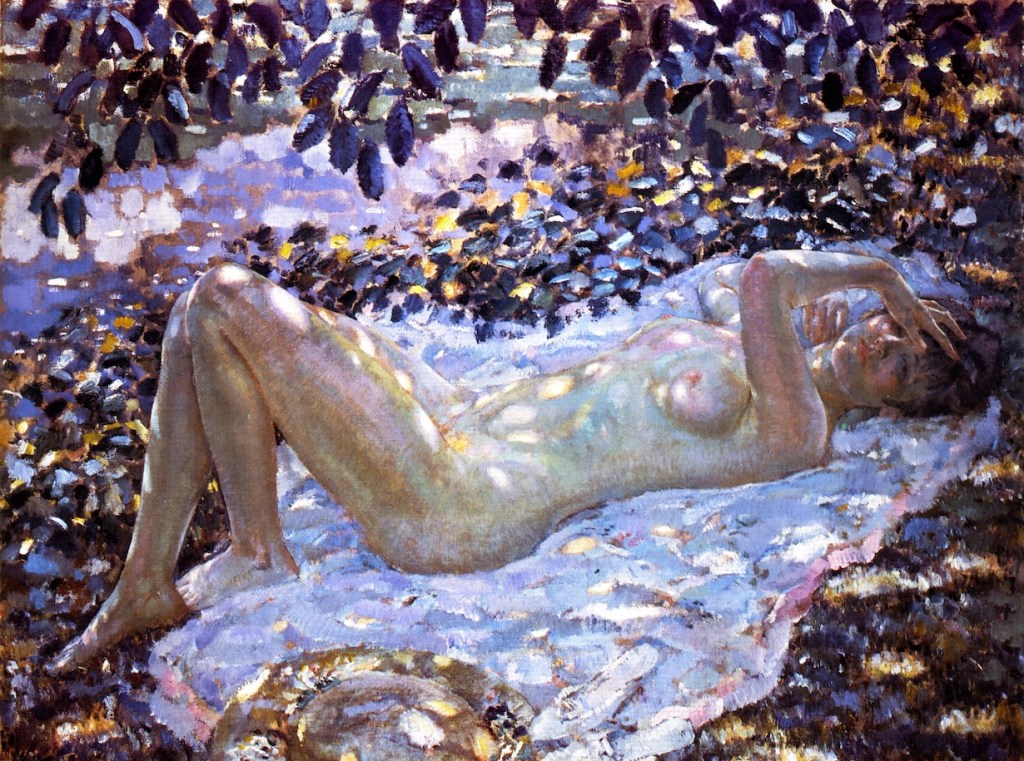
Nude in Dappled Sunlight, 1915
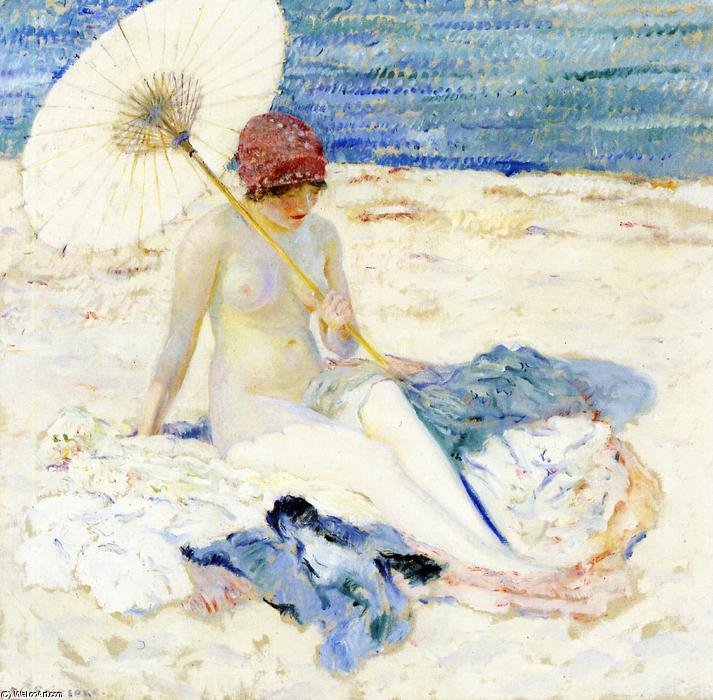
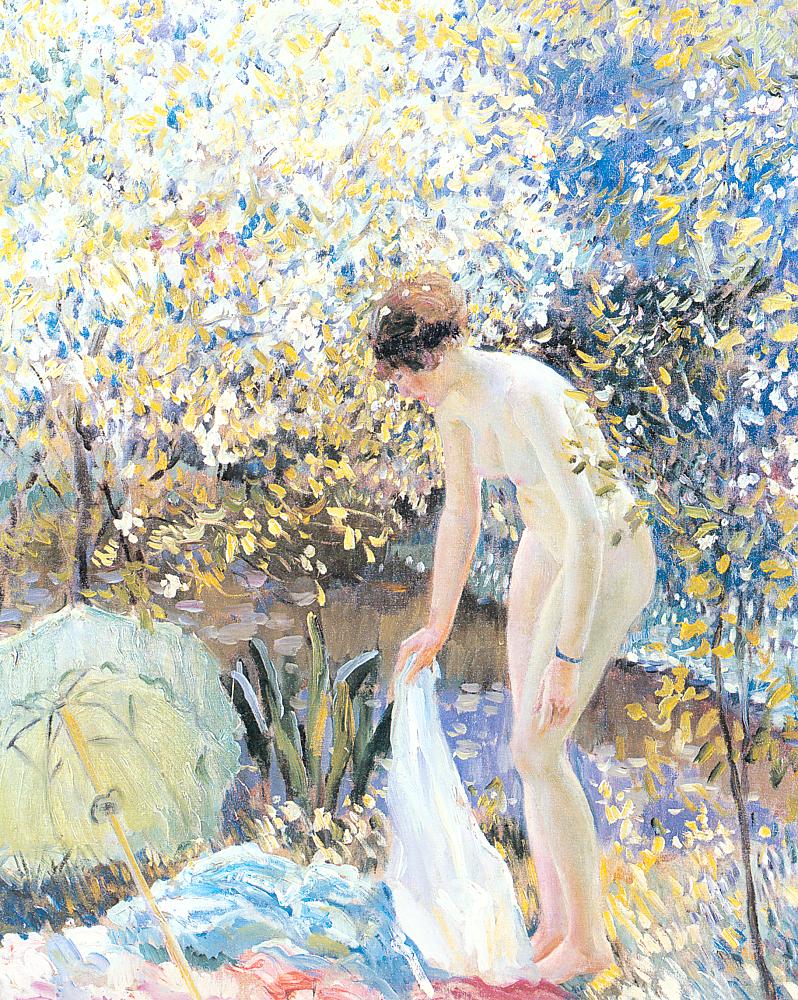
Cherry Blossoms, ca. 1913
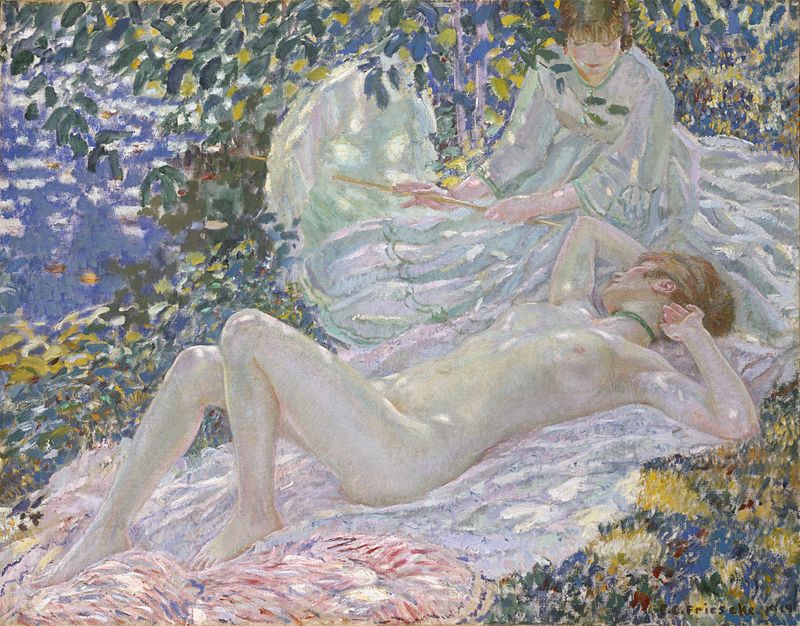
summer 1914
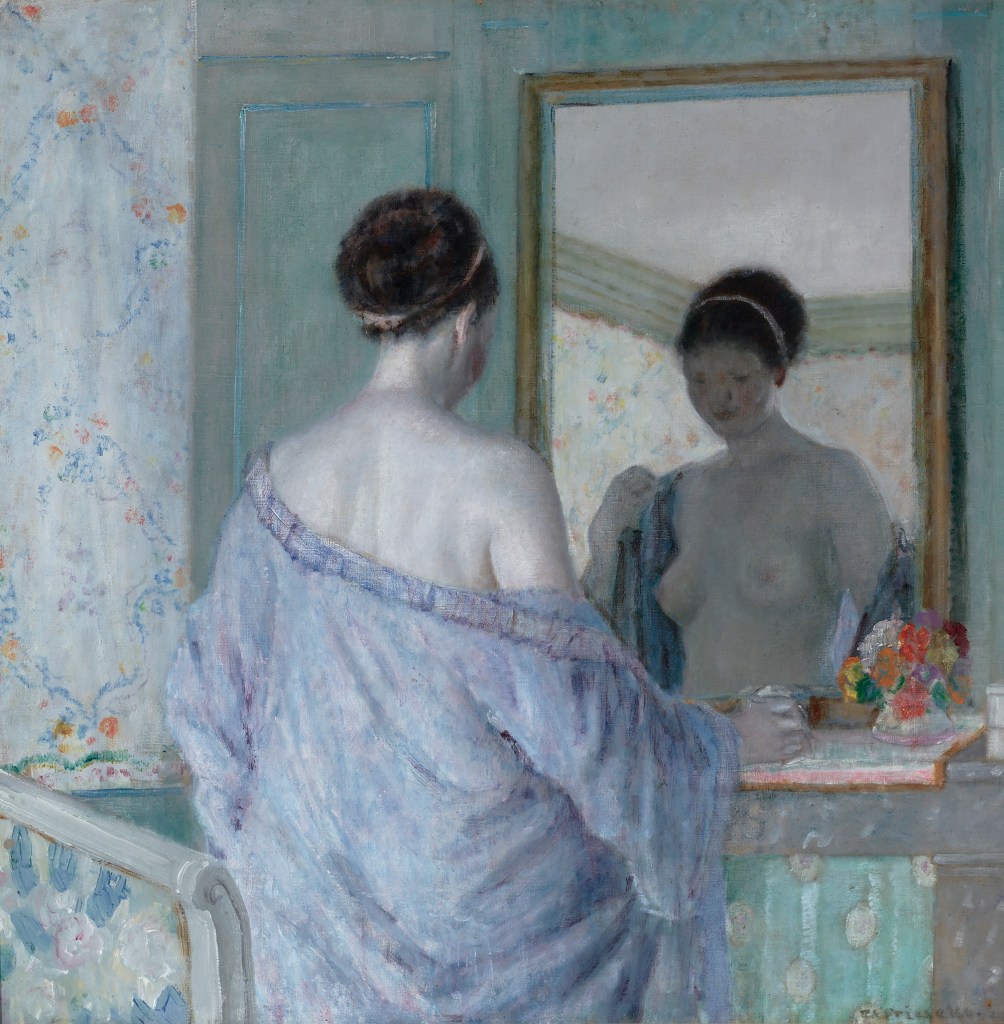
Lady at the Mirror, ca. 1922
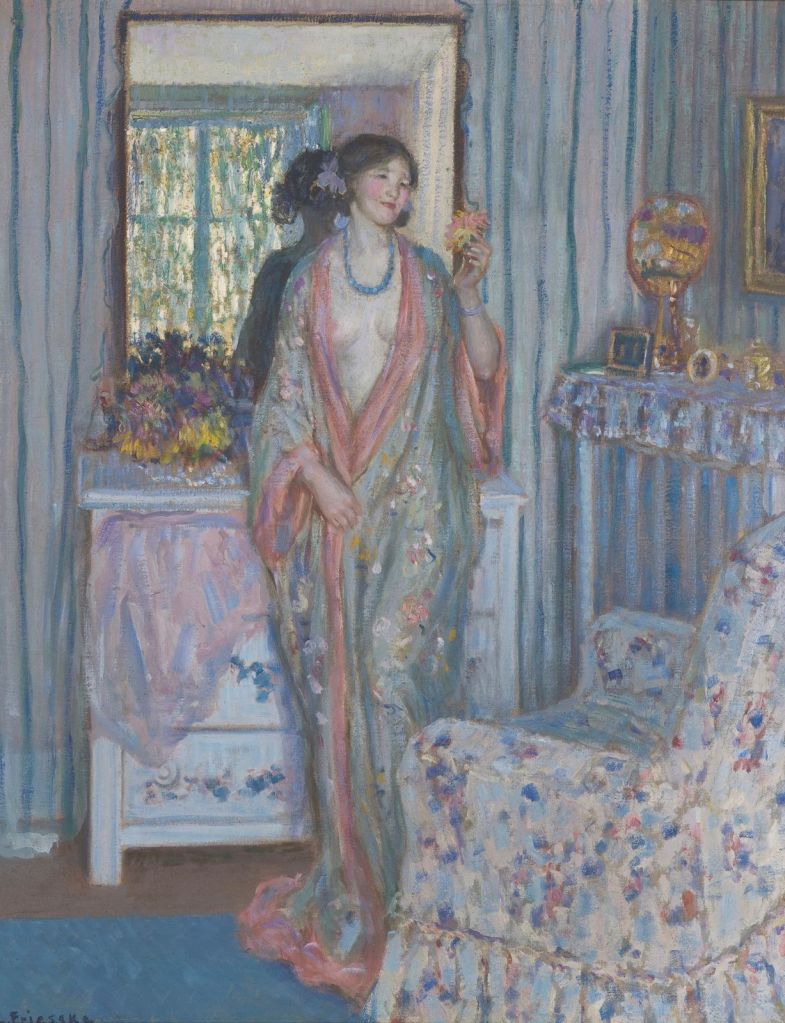
The Robe, 1915
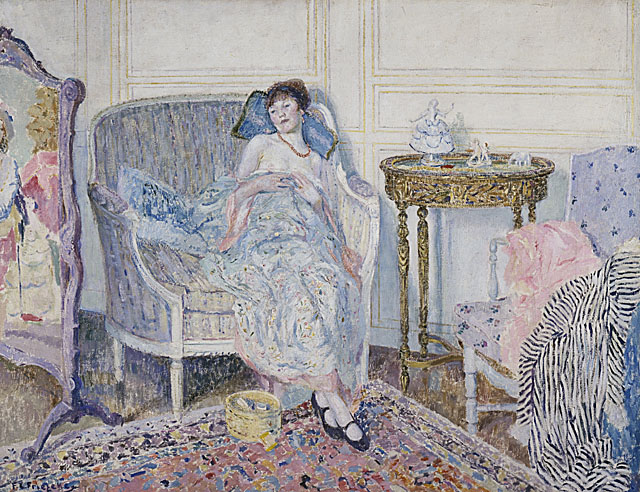
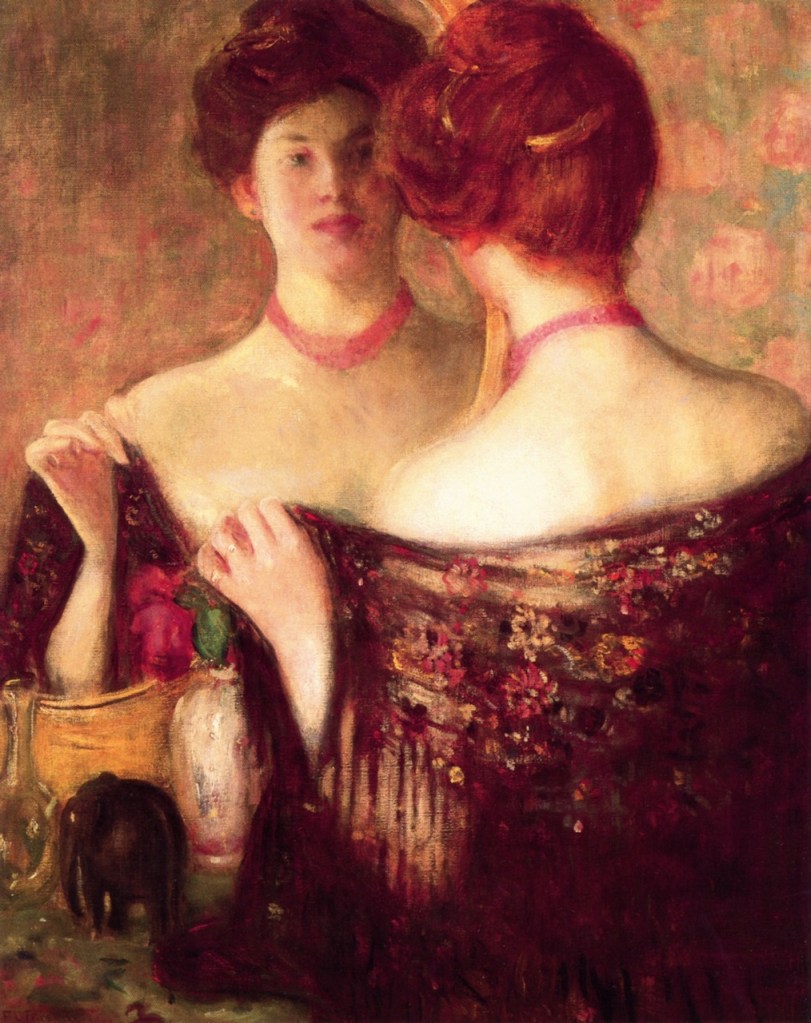
before a mirror
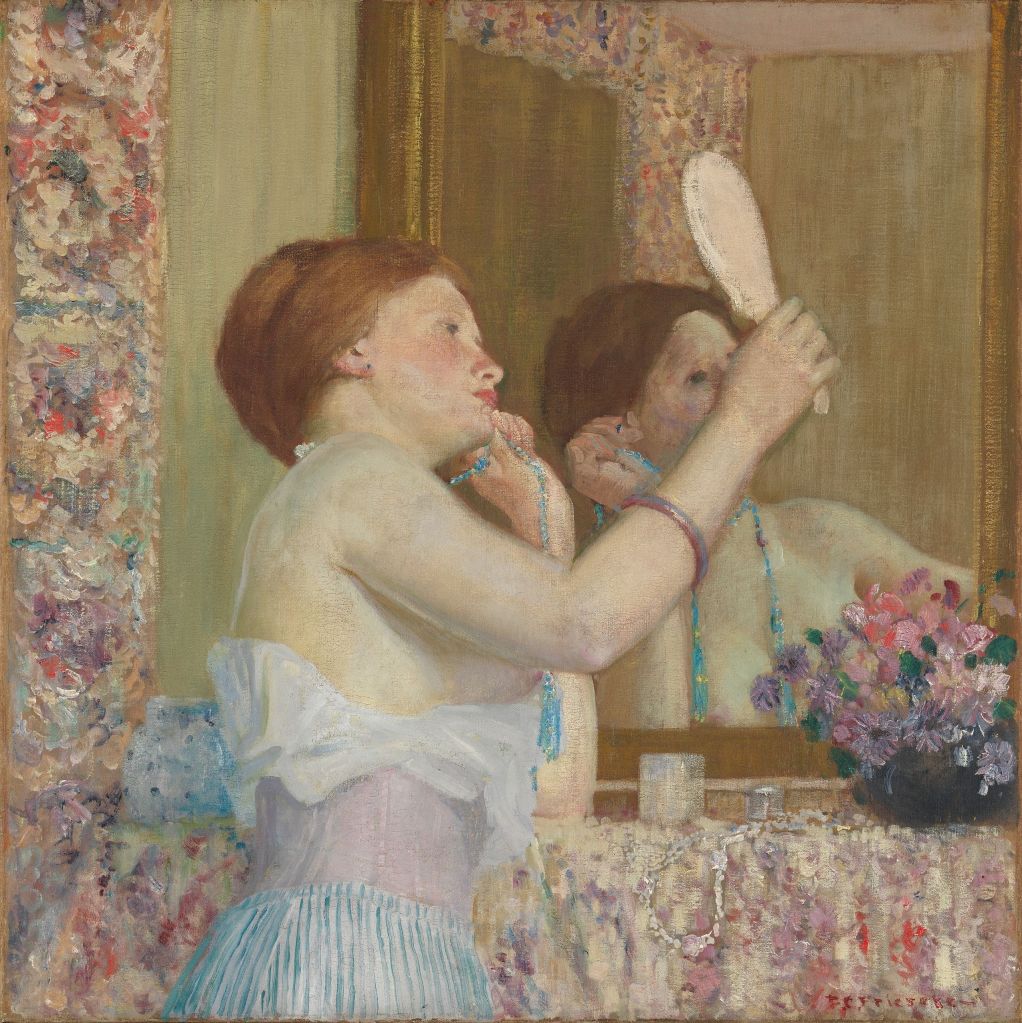
Woman with a Mirror, 1911
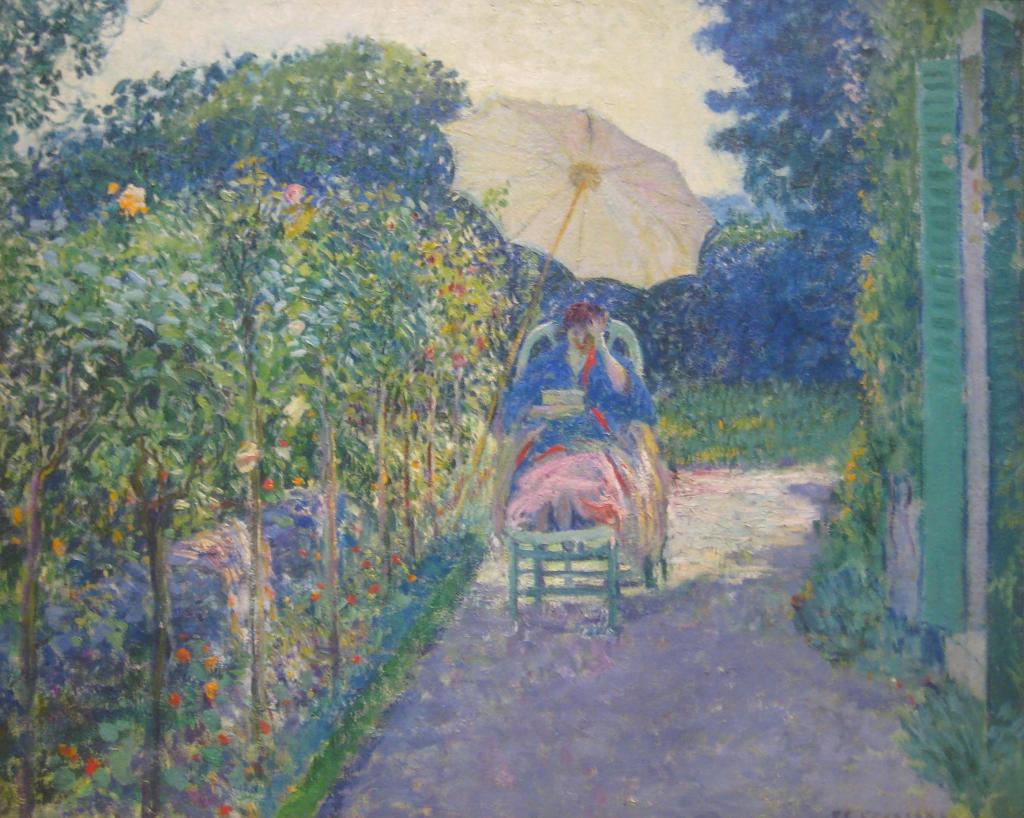
Woman Seated in a Garden, 1914
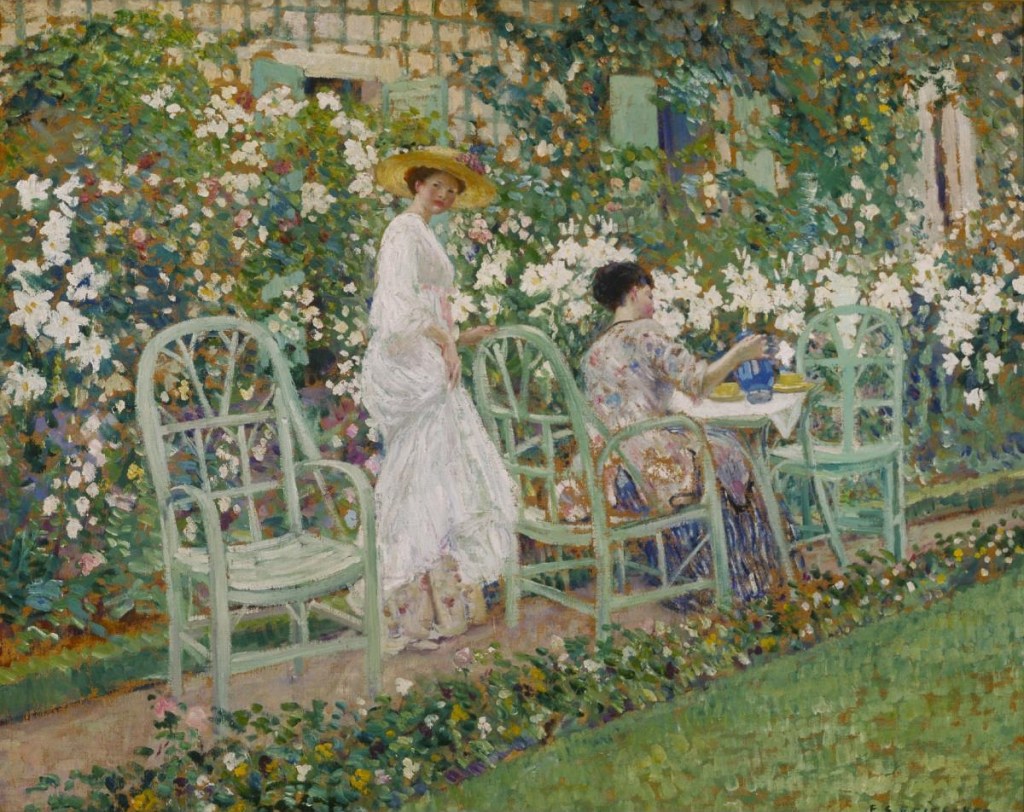
Les Lys, 1911 Terra Foundation, Chicago
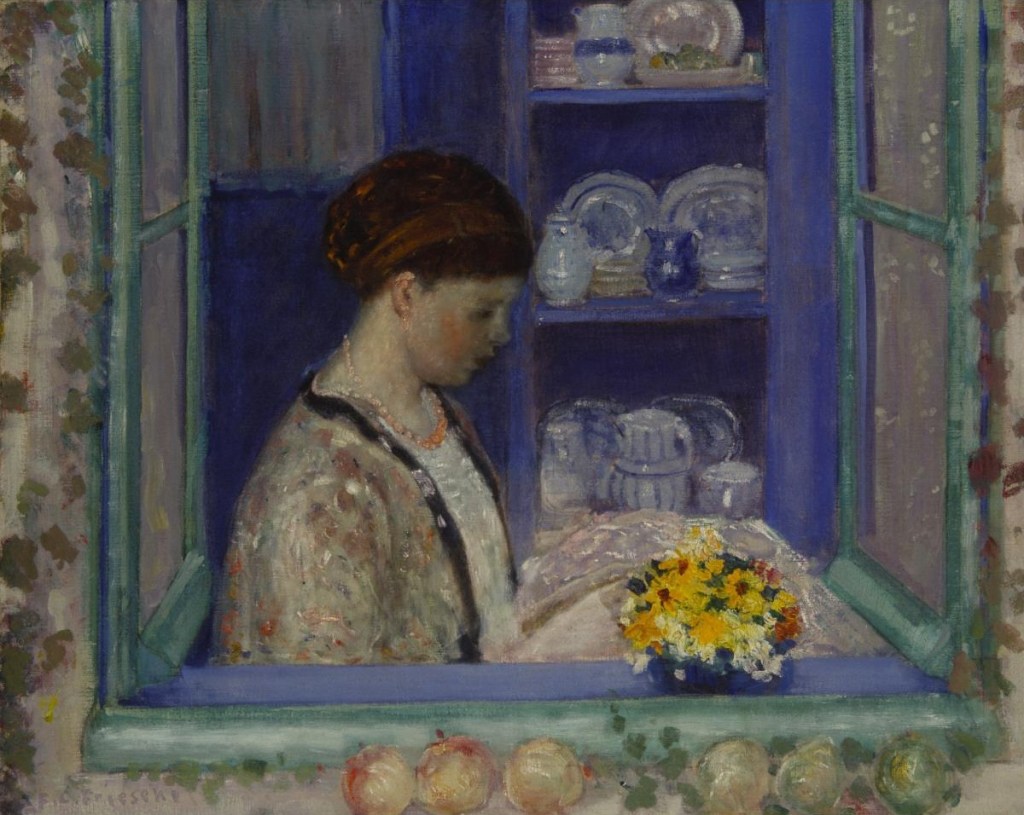
Mrs. Frieseke at the Kitchen Window, 1912
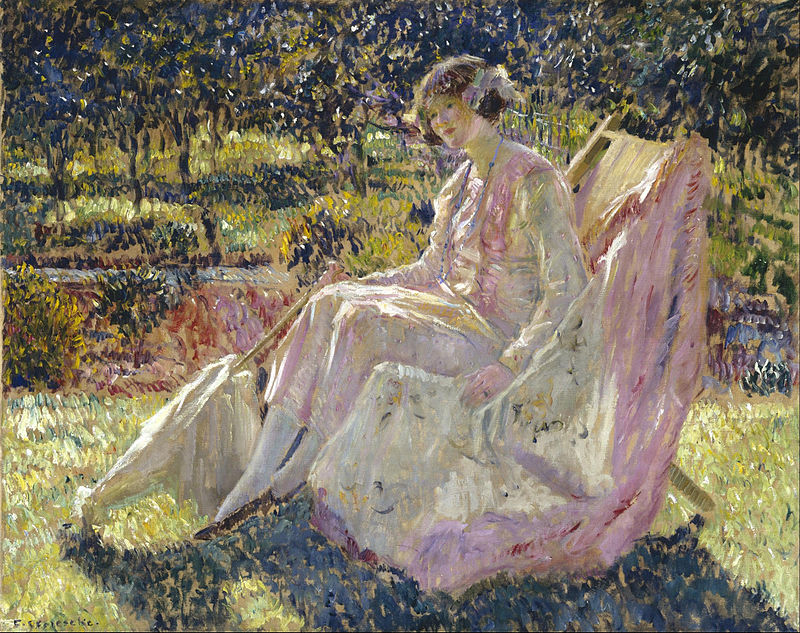
Sunbath 1908/1918
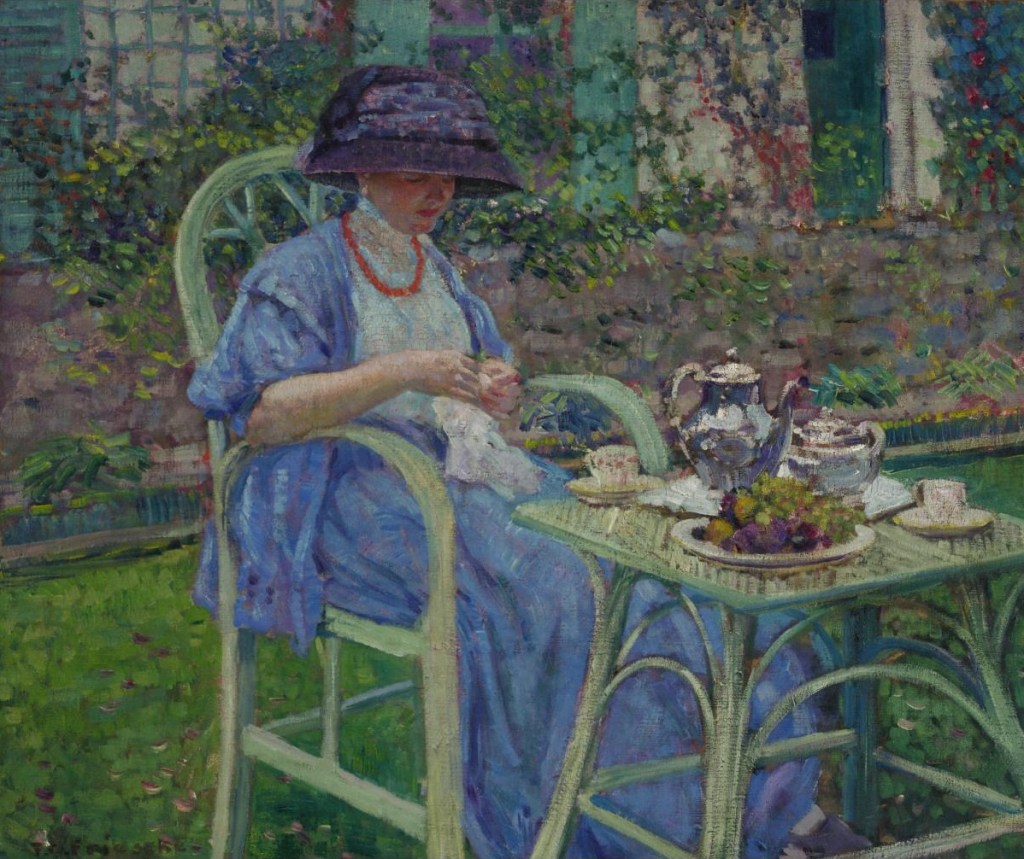
Breakfast in the Garden, ca. 1911
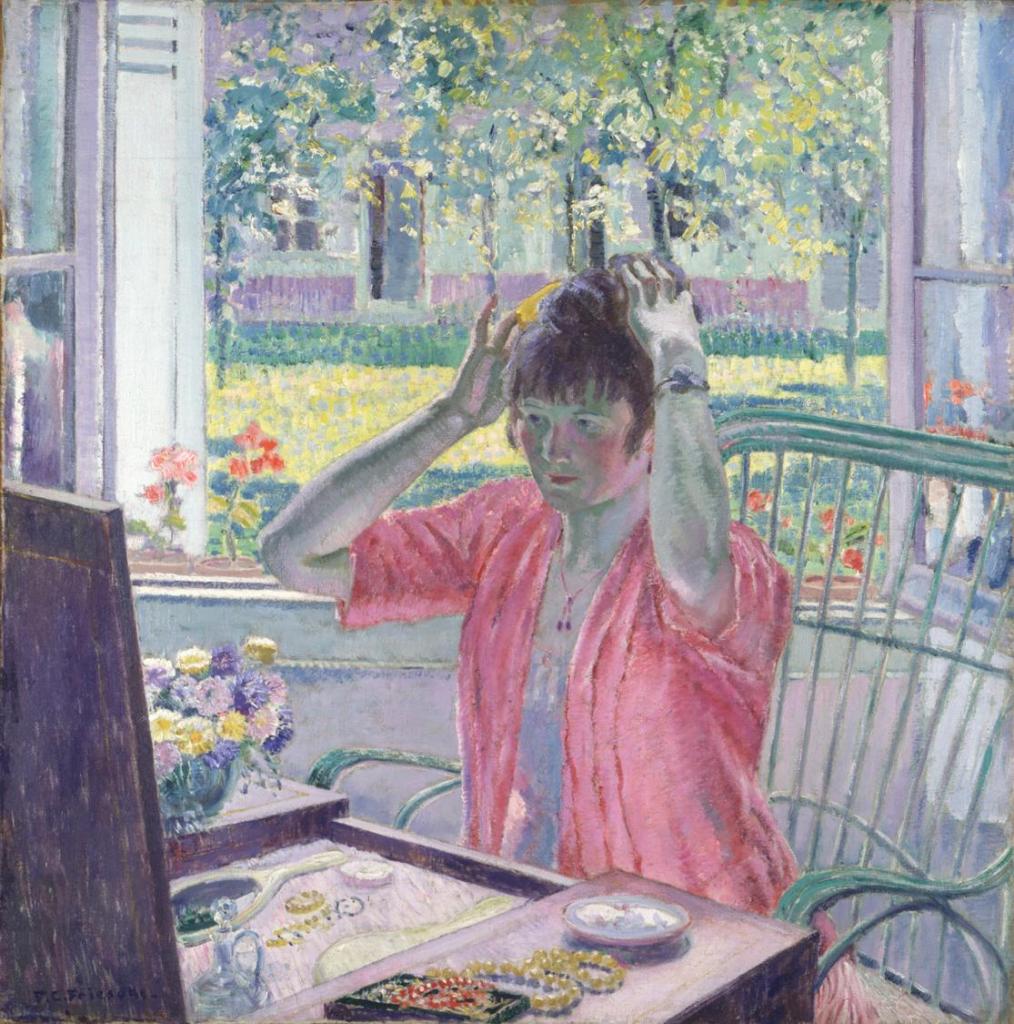
The Window, ca. 1915
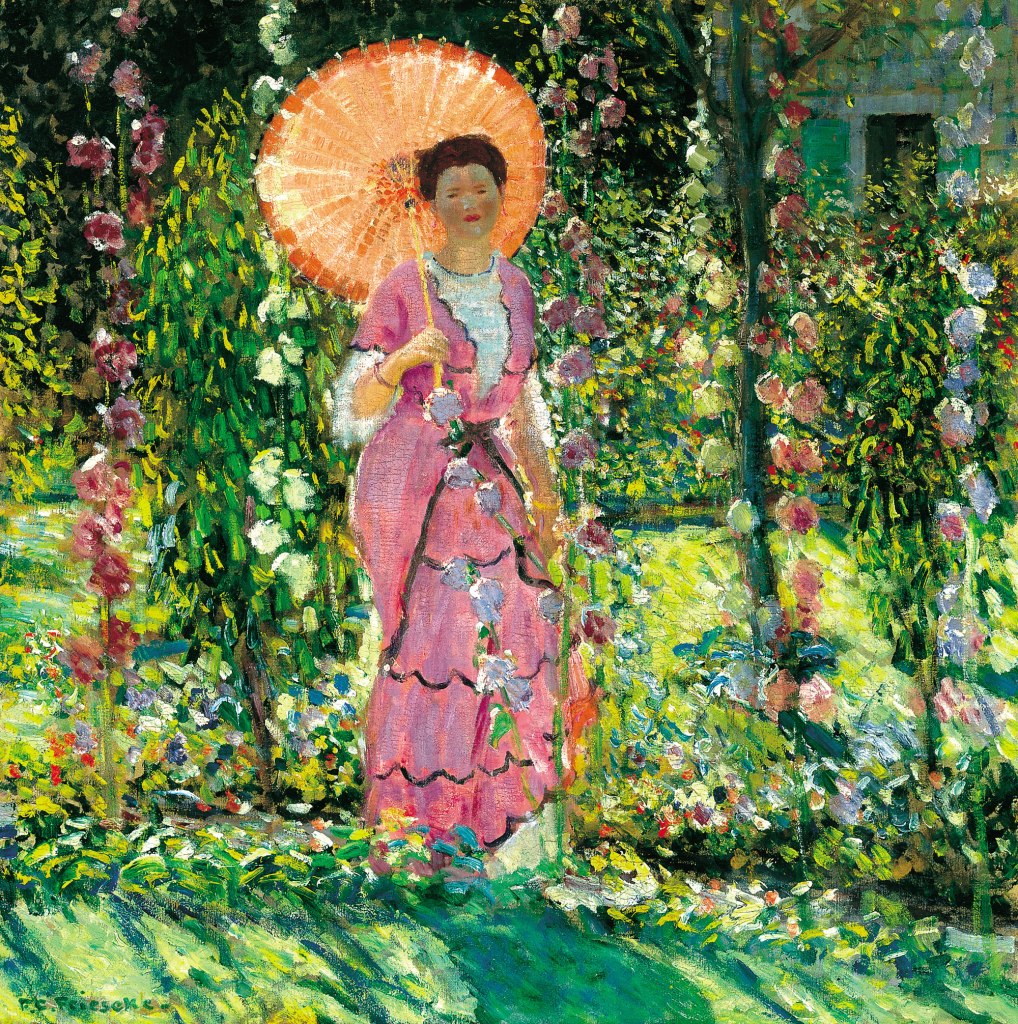
Hollyhocks, ca. 1912–1913
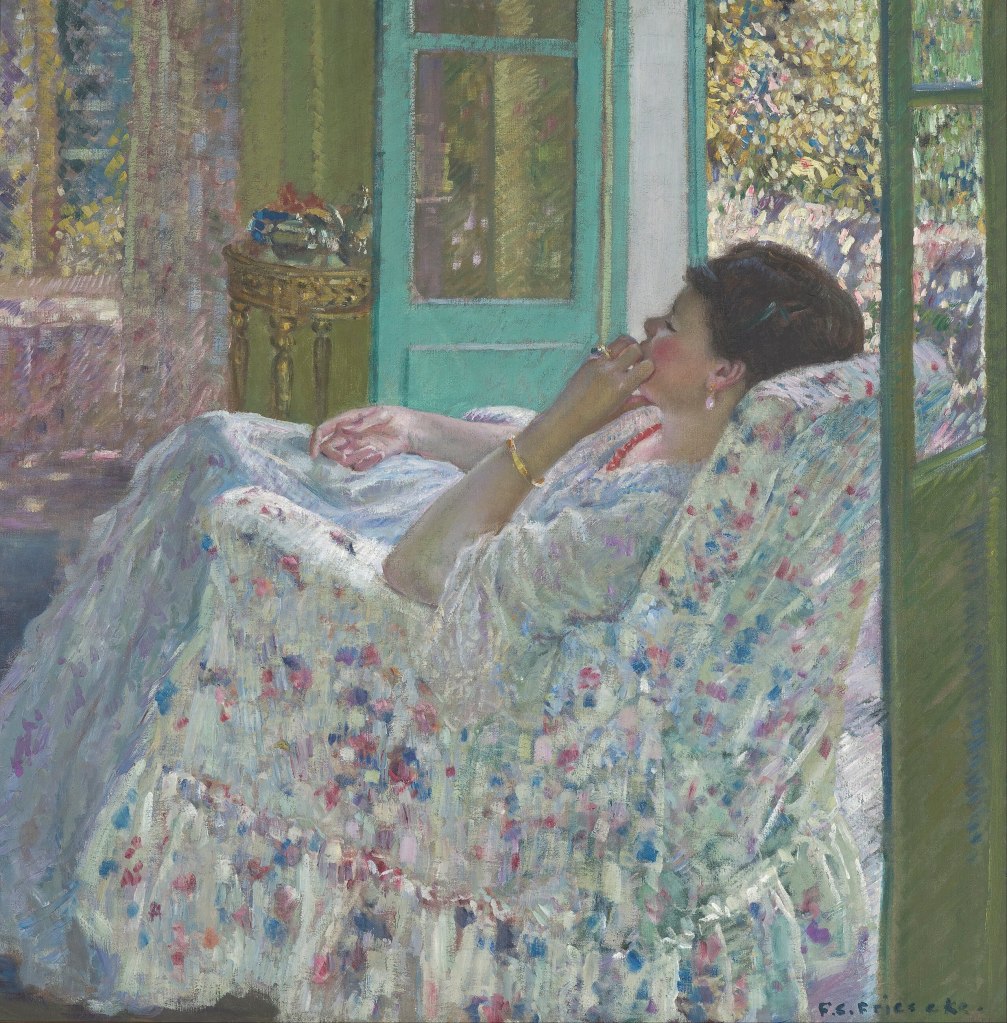
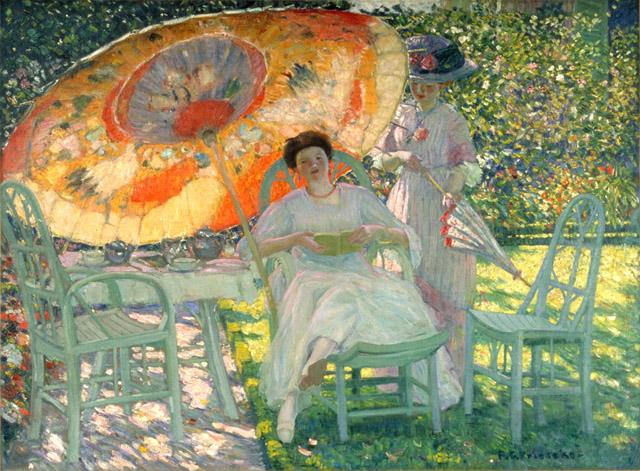
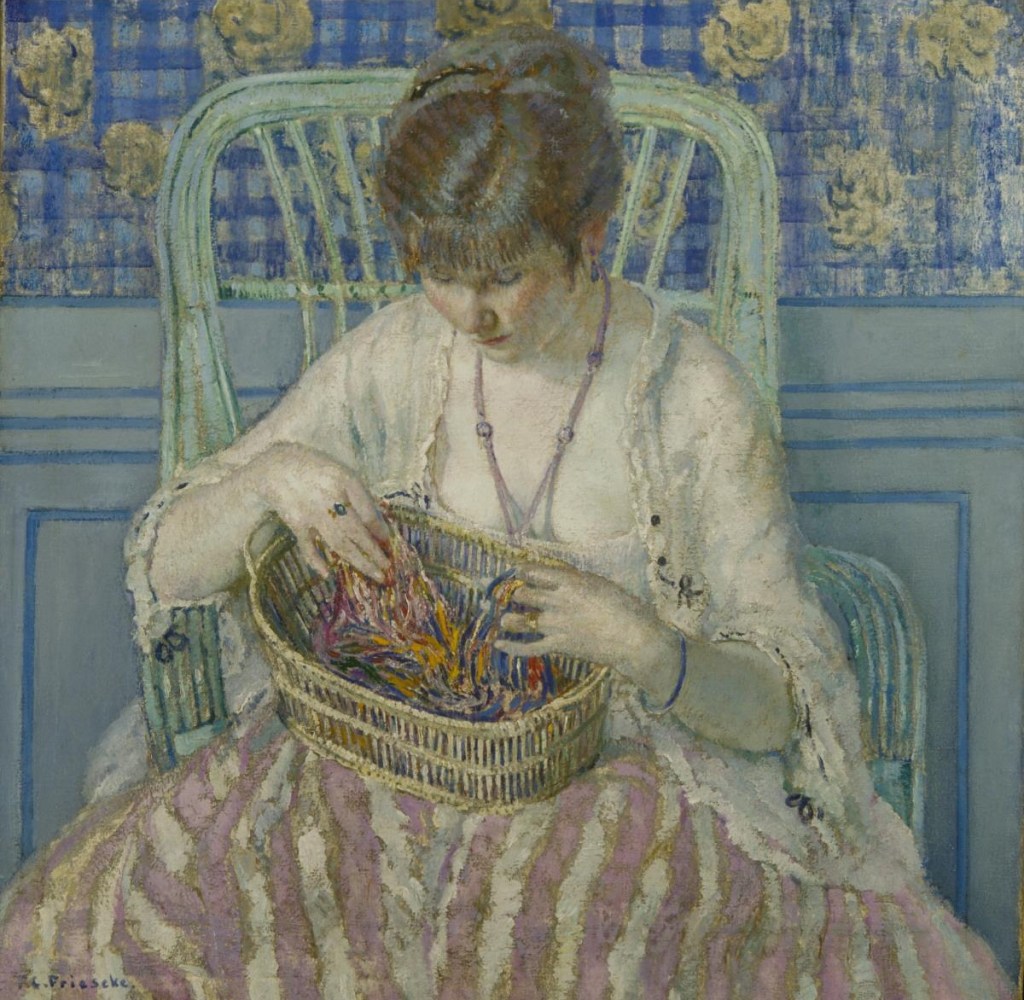
Démêler la soie, vers 1915 Terra Museum, Chicago
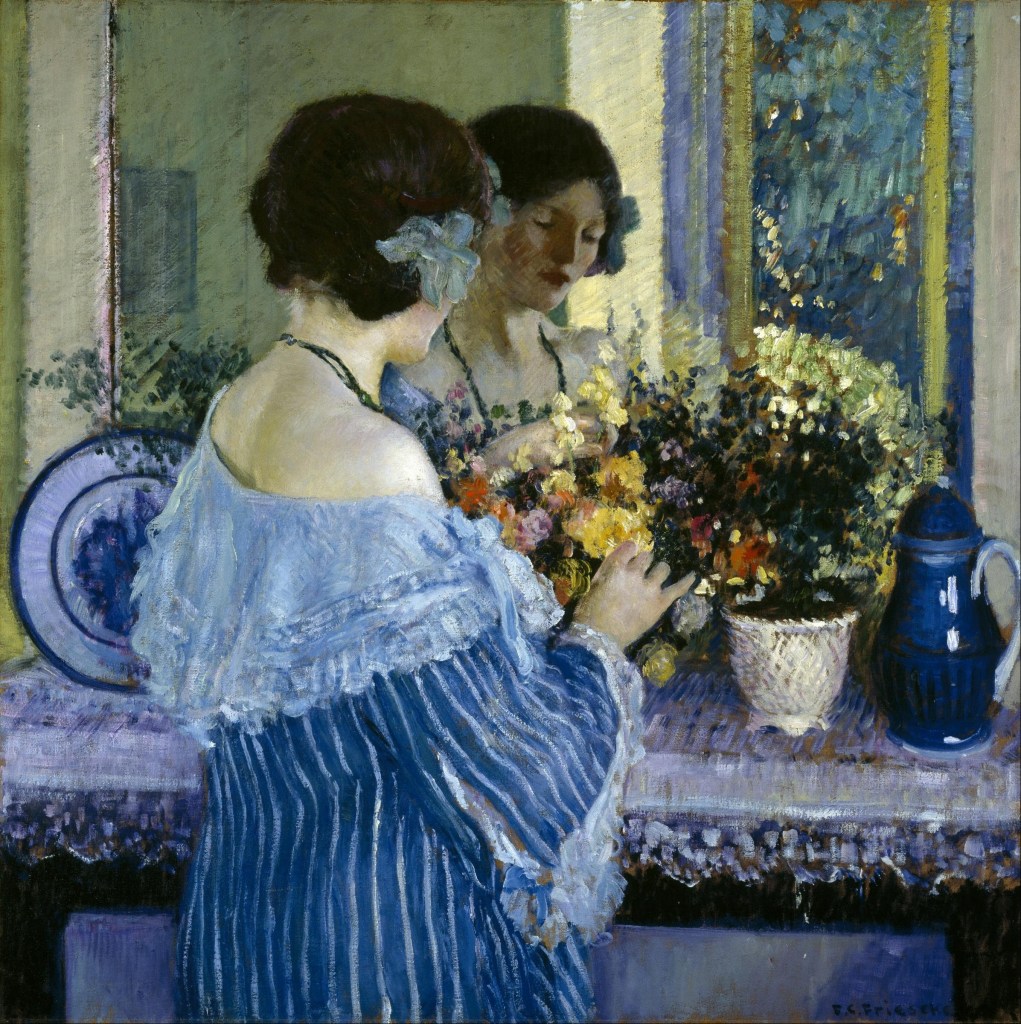
Girl in Blue Arranging Flowers
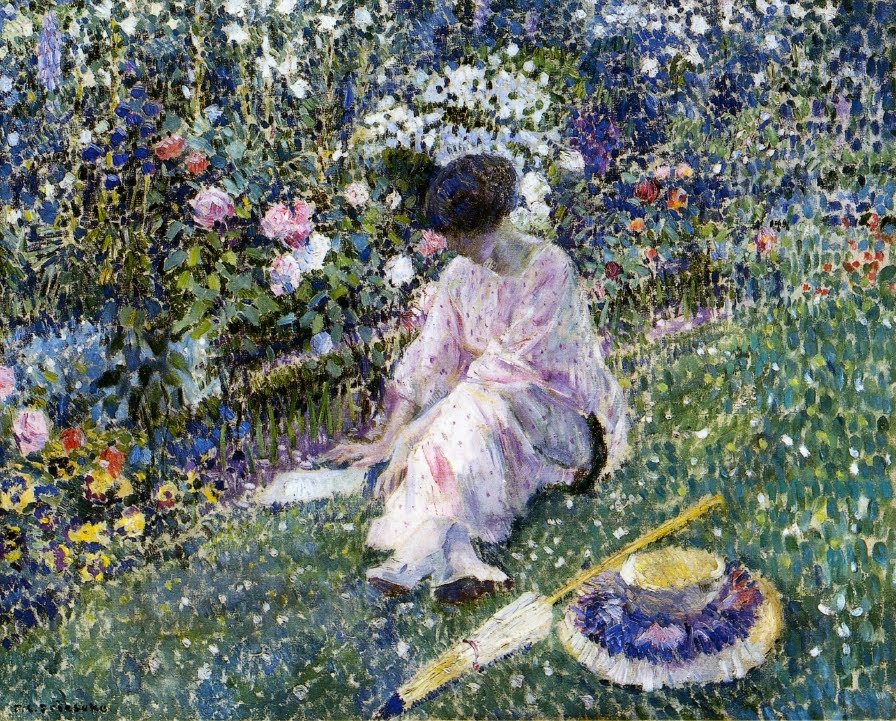
1911 garden in June
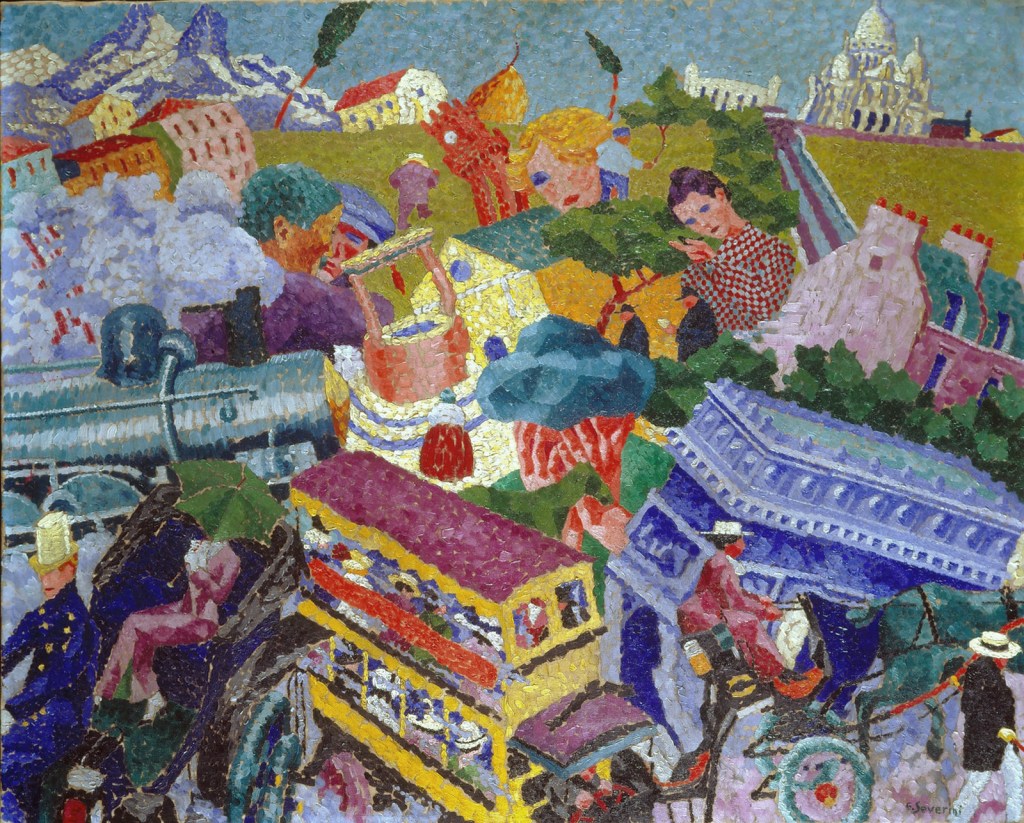
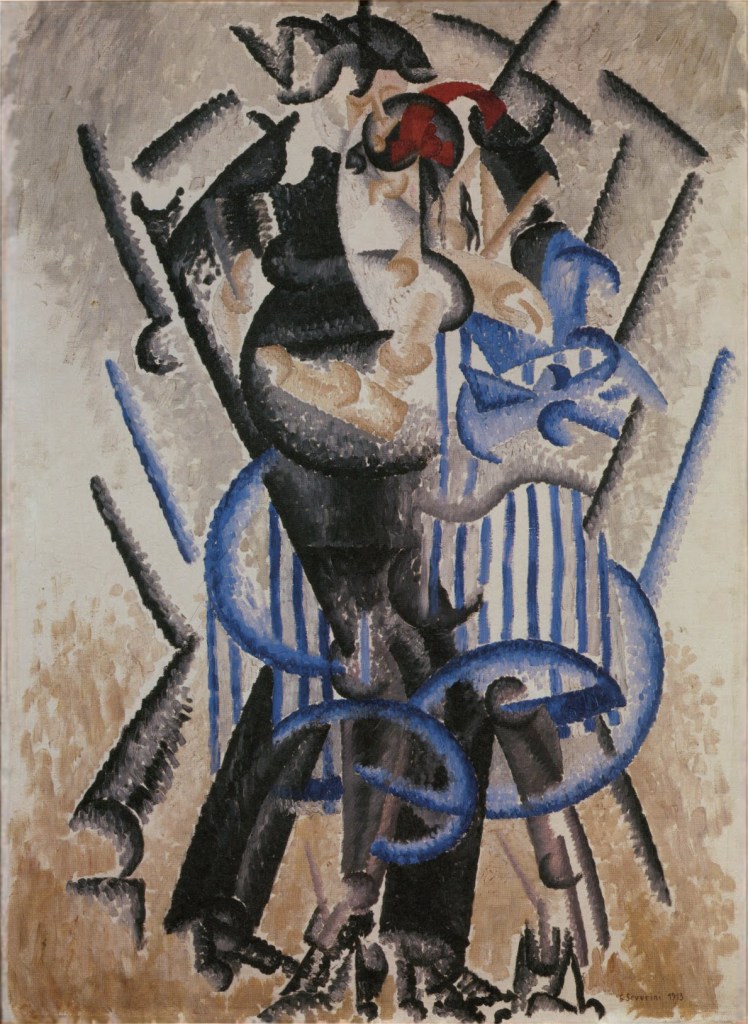
Today is the birthday of Gino Severini (Cortona, Italy 7 April 1883 – 26 February 1966 Paris); painter and a leading member of the Futurist movement. For much of his life he divided his time between Paris and Rome. He was associated with neo-classicism and the “return to order” in the decade after the First World War. During his career he worked in a variety of media, including mosaic and fresco. He showed his work at major exhibitions, including the Rome Quadrennial, and won art prizes from major institutions.
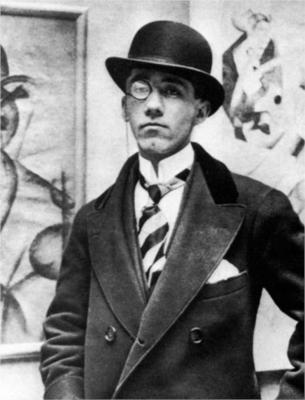
aged 30, at the opening of his solo exhibition at the Marlborough Gallery, London
Severini settled in Paris in November 1906. The move was momentous for him. He said later, “The cities to which I feel most strongly bound are Cortona and Paris: I was born physically in the first, intellectually and spiritually in the second.” He lived in Montmartre and dedicated himself to painting. There he met most of the rising artists of the period, befriending Amedeo Modigliani and occupying a studio next to those of Raoul Dufy, Georges Braque and Suzanne Valadon. He knew most of the Parisian avant-garde, including Jean Metzinger, Albert Gleizes, Juan Gris, Pablo Picasso, Lugné-Poe and his theatrical circle, the poets Guillaume Apollinaire, Paul Fort, Max Jacob, and author Jules Romains. The sale of his work did not provide enough to live on and he depended on the generosity of patrons.
Gallery
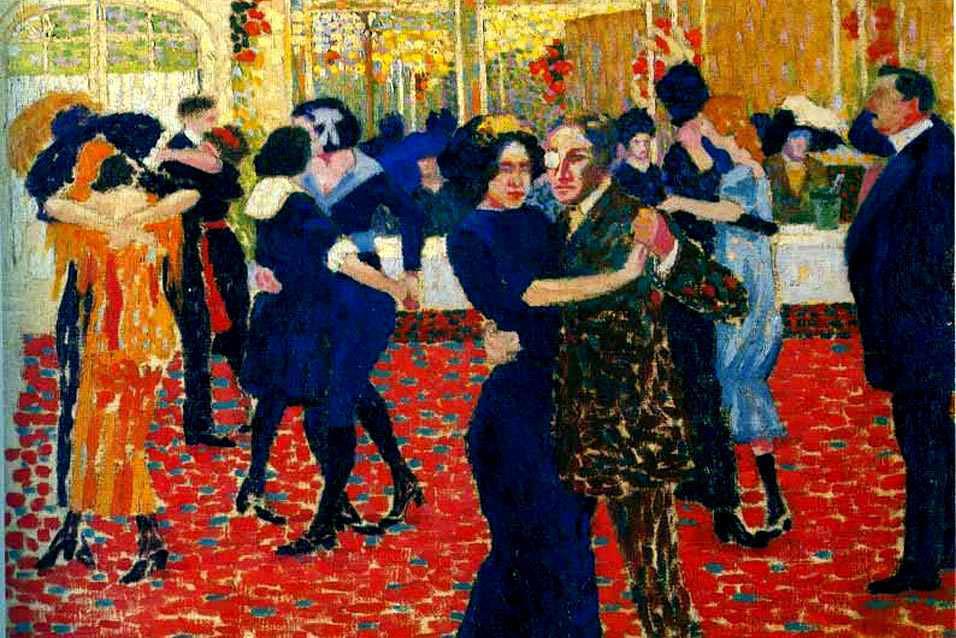
Dancers at Monicos
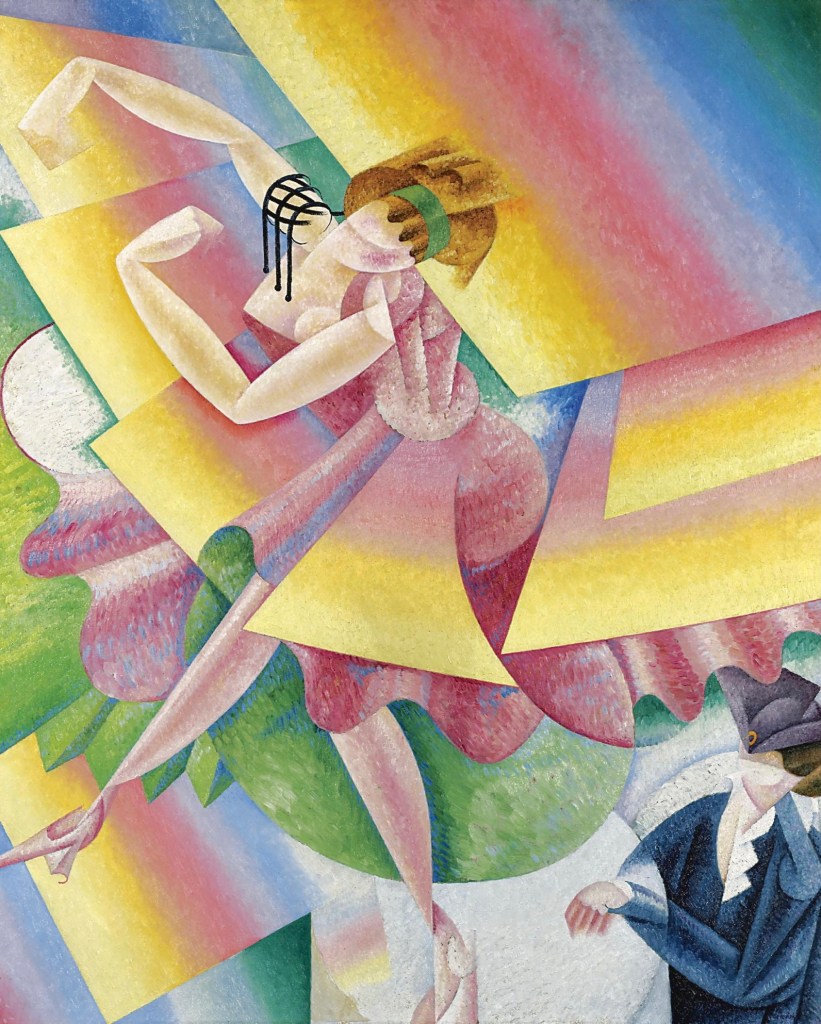
DANSEUSE 1917
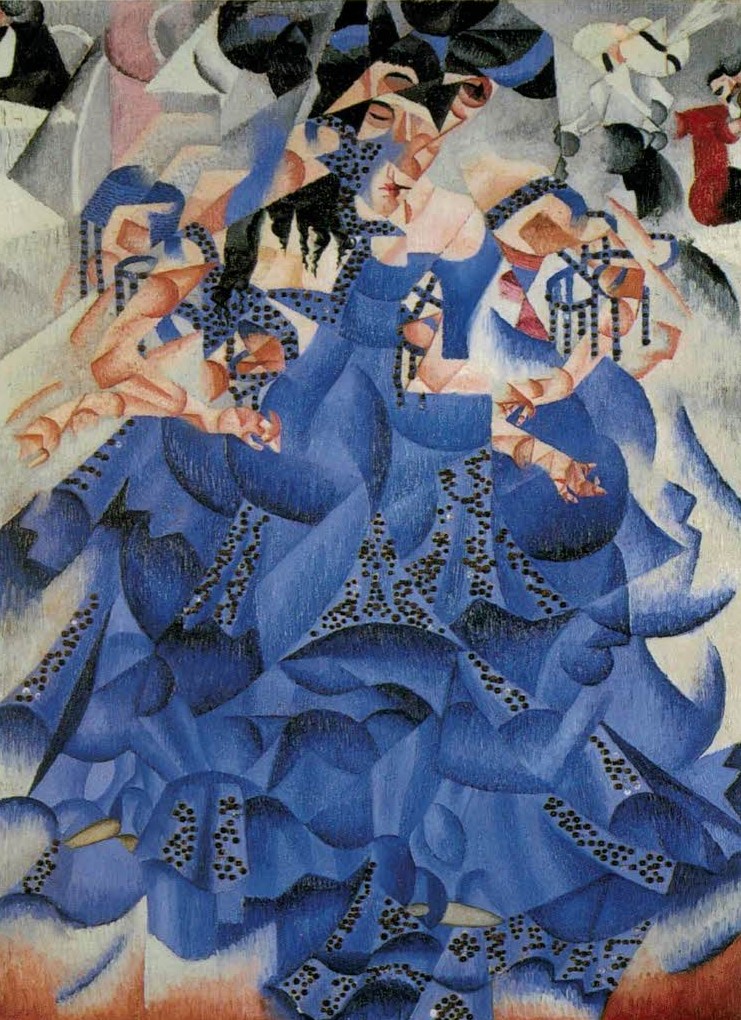
Ballerina Blu 1912
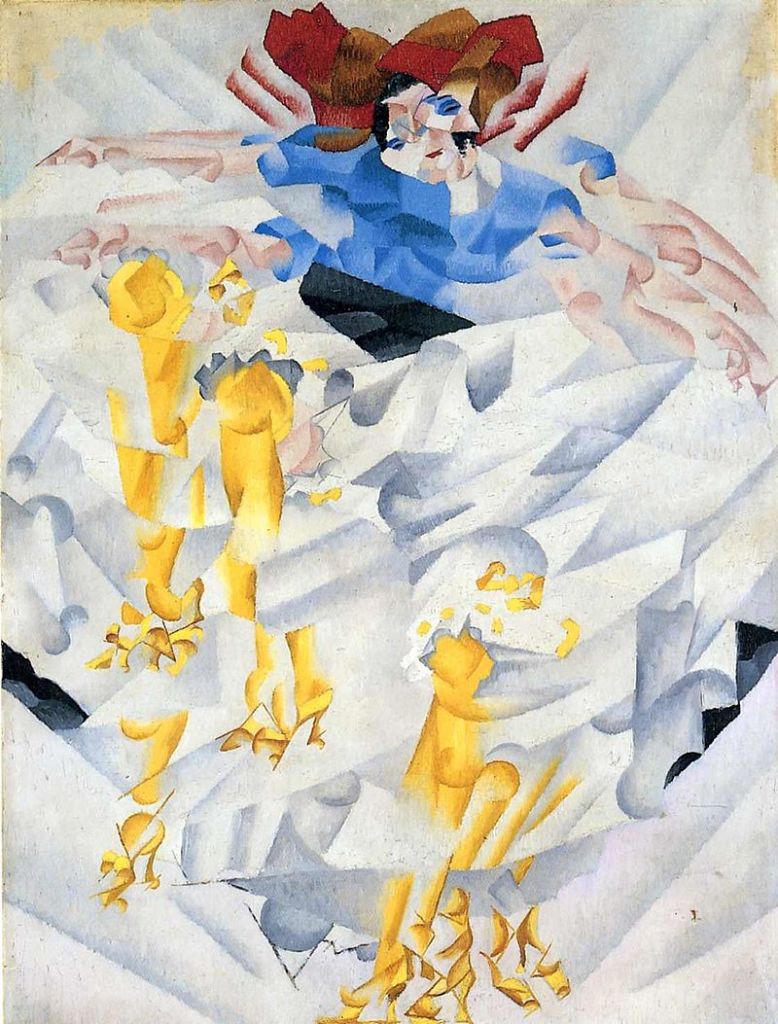
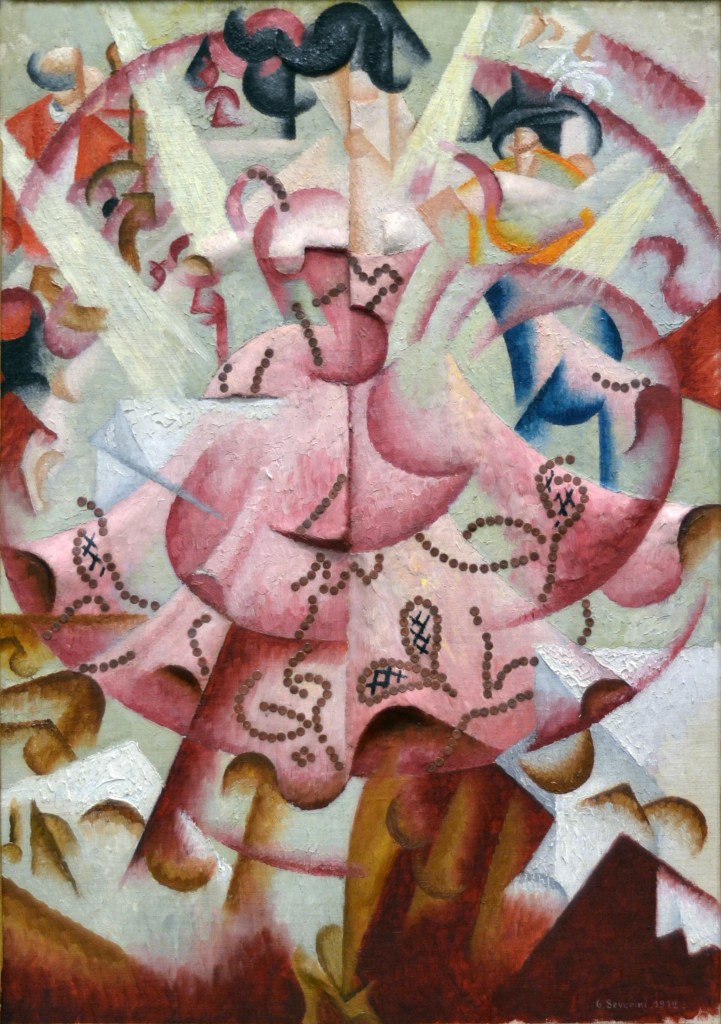
1912, Dynamism of a Dancer (Dinamismo di una danzatrice, Ballerina di chahut), oil on canvas, 60 x 45 cm, Jucker Collection, Pinacoteca di Brera, Milan
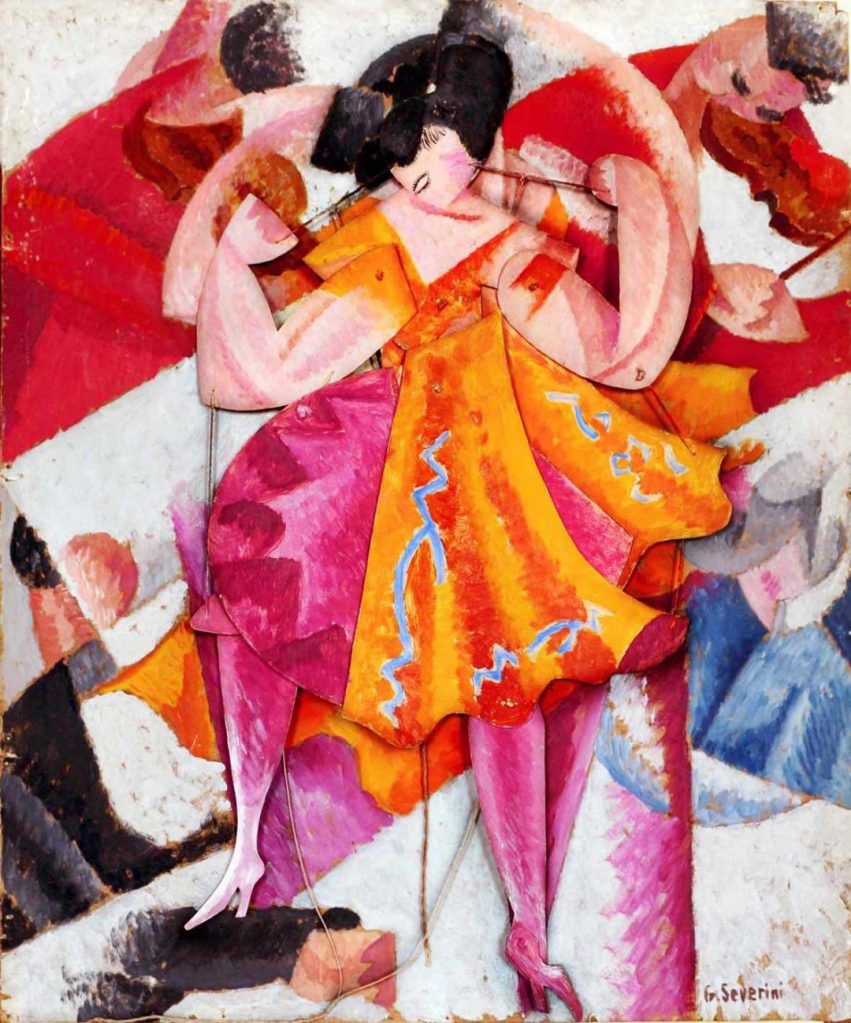
Danseuse Articulée” (1915)
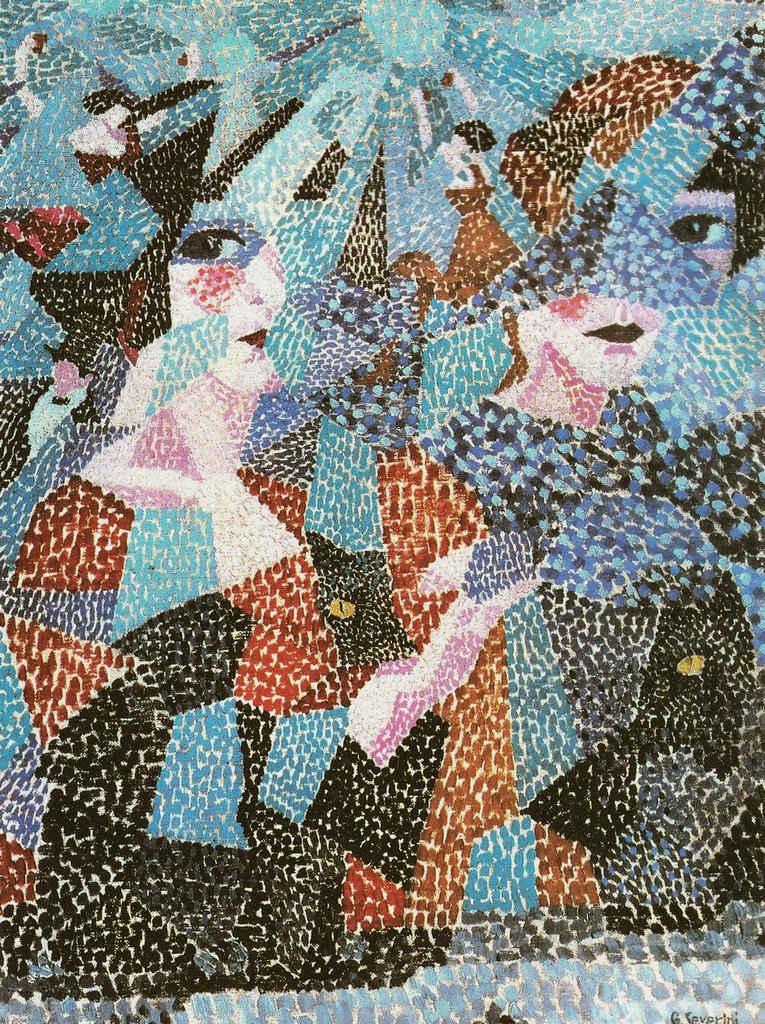
1911, La Danseuse Obsedante (The Haunting Dancer, Ruhelose Tanzerin), oil on canvas, 73.5 x 54 cm, private collection
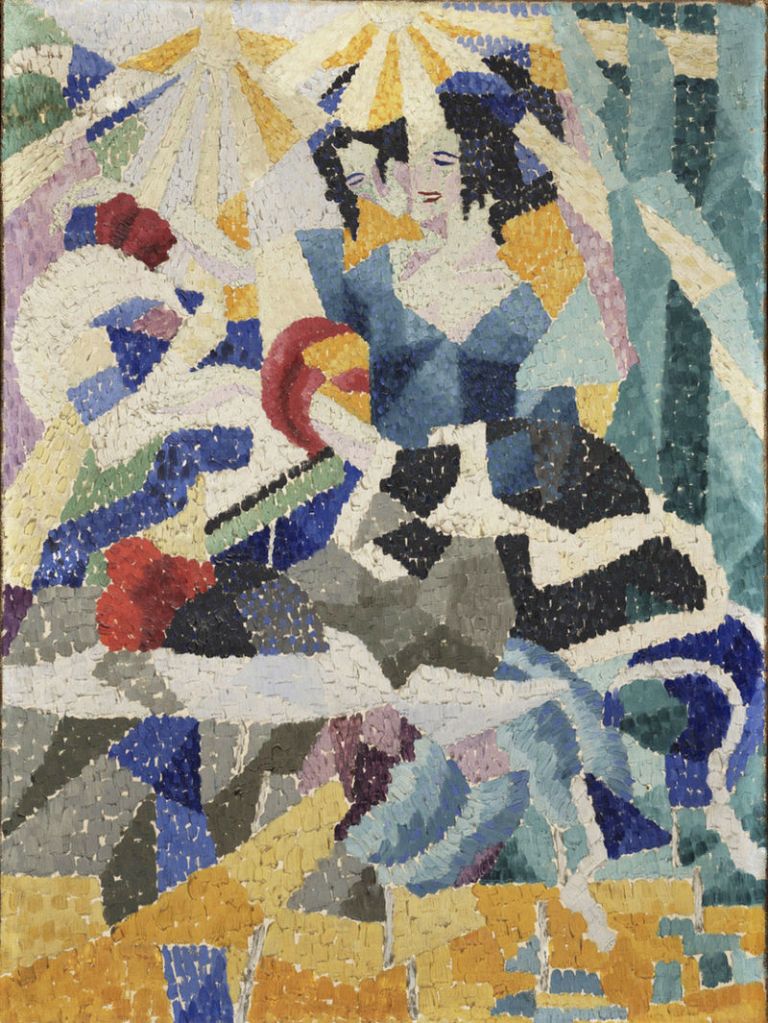
1910–11, La Modiste (The Milliner), oil on canvas, 64.8 x 48.3 cm, Philadelphia Museum of Art
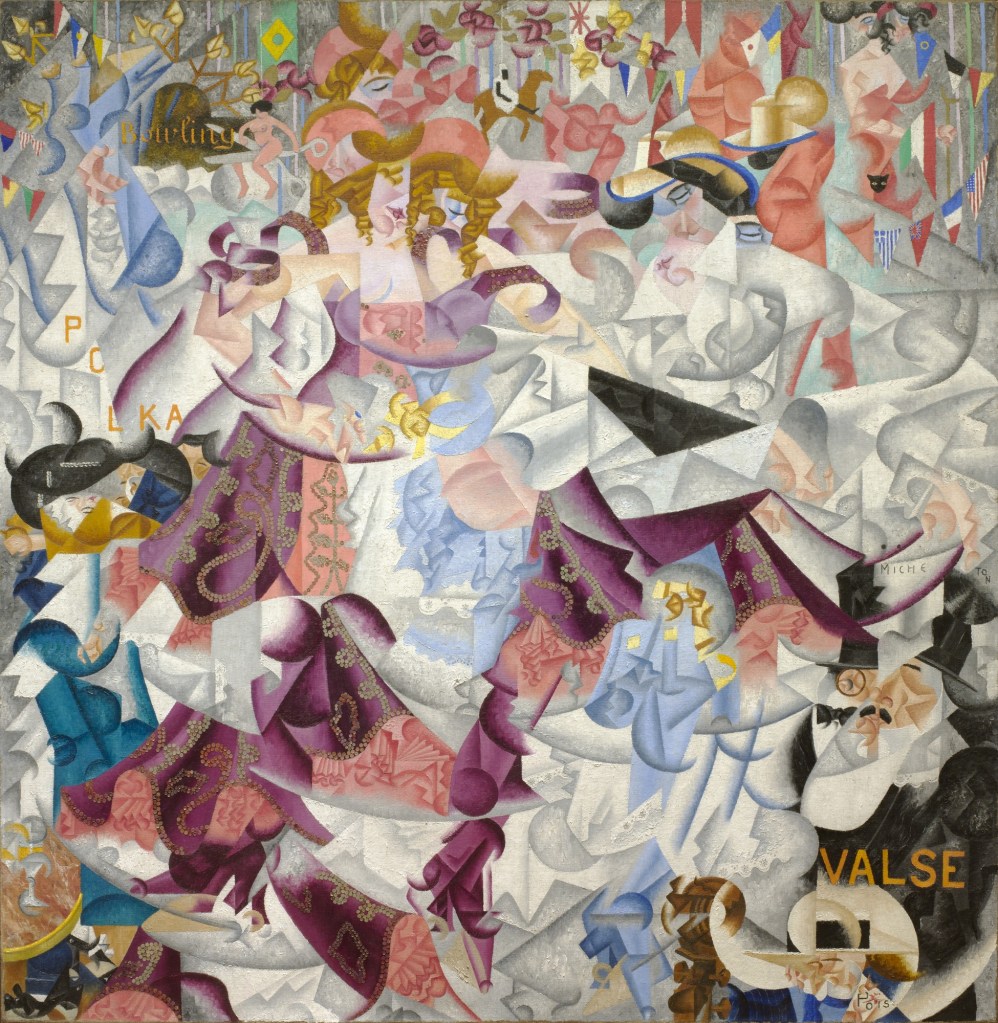
1912, Dynamic Hieroglyphic of the Bal Tabarin, oil on canvas with sequins, 161.6 x 156.2 cm (63.6 x 61.5 in.), Museum of Modern Art, New York
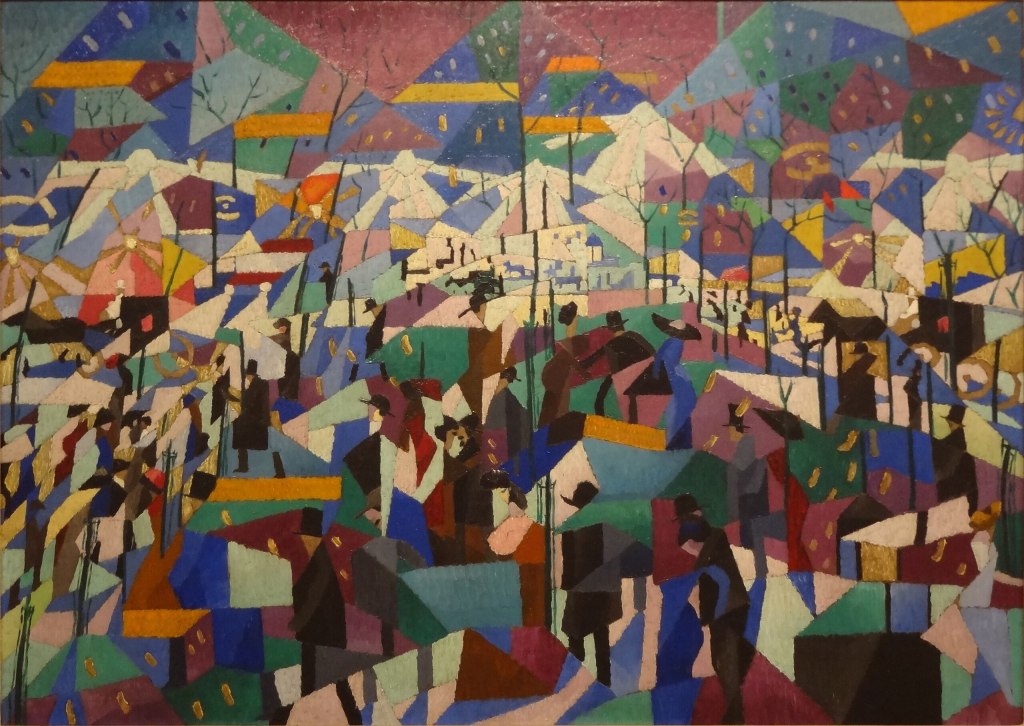
Le Boulevard, 1911, oil on canvas, 63.5 x 91.5 cm, Estorick Collection, London
And Today is the birthday of Gabriela Mistral (Vicuña, Chile; 7 April 1889 – 10 January 1957 Hempstead, New York); the pseudonym of Lucila Godoy y Alcayaga; poet-diplomat, educator and humanist. In 1945 she became the first Latin American author to receive a Nobel Prize in Literature, “for her lyric poetry which, inspired by powerful emotions, has made her name a symbol of the idealistic aspirations of the entire Latin American world”. Some central themes in her poems are nature, betrayal, love, a mother’s love, sorrow and recovery, travel, and Latin American identity as formed from a mixture of Native American and European influences. Her portrait also appears on the 5,000 Chilean peso bank note.
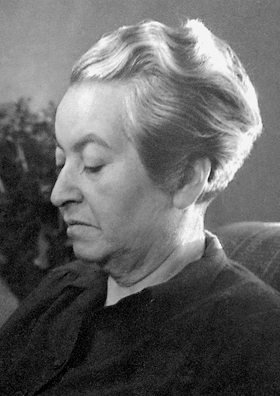
1945
Poesia
Me voy de ti con vigilia y con sueño, y en tu recuerdo más fiel ya me borro.
Es la noche desamparo
de las sierras hasta el mar.
Pero yo, la que te mece,
¡yo no tengo soledad!
Al otro día o al siguiente, el único sueño malo, el único en que su rostro tenía descompostura y daño.
thanks for stoppin’ by y’all
mac tag
 The Lovers’ Chronicle
Leave a reply to The Lovers’ Chronicle 2 June – longed for – art by Domenico Ghirlandajo & Paul-Albert Besnard – birth of Thomas Hardy – The Lovers’ Chronicle Cancel reply