Dear Zazie, Here is today’s Lovers’ Chronicle from Mac Tag dedicated to his muse. Follow us on twitter @cowboycoleridge. Rhett
The Lovers’ Chronicle
Dear Muse,
a dream is dream is a dream…
walking up the steps and knocking on the door at 27 rue de Fleurus
a small woman, slightly stooped, opens the door, and quietly says, come in;
following her into a large living room with walls covered by paintings, he cannot help but stare at the scene;
a woman with short dark hair sits on a large overstuffed couch underneath a portrait of her, she notices him and says;
Oh good, glad you’re here, you know Ernest and Scott, we were just discussing Pablo’s newest painting;
just as i imagined, he thinks, from what i have read
Fascinating, says the pretty redhead, all of them in the same room
i could spends hours just listenin’ to them
There is there here
© copyright 2024 mac tag/cowboy coleridge all rights reserved
gotta go with the Holocaust song,
which was covered by Metallica
on Garage Inc., “The Small Hours”;
“And I try to get through to you, in my own special way,
As the barriers crumble at the end of the day”
“The answer is, more Metallica please”
i feel like the verse i wrote
was me tryin’ to git through to you
“You conjured me”
it sure seems so
and in the ways and hours
that followed when we met
all the barriers crumbled
© copyright 2023.2024 mac tag/cowboy coleridge all rights reserved
at this point much can be written about time spent in many endeavors, consequence of survivin’, or is that, reward; the cumulative from readin’, perhaps the most significant, and what of bein’ with others, well, valuable but misspent probably, look at what was not done; there is there here in the hours with you
© copyright 2022.2024 mac tag/cowboy coleridge all rights reserved
one of the pleasant things
the daily miracle, you do come
goin’ on and on
essentially and absolutely
wantin’, adorin’,
doin’, pleasin’,
caressin’
wave on wave
ever in this new
discovery
together
the further we go
into these new hours,
the more certain i become
© copyright 2021 mac tag/cowboy coleridge all rights reserved
Pale Love, Pale Rider
wait, what
“I said, it can get better.”
i cannot fathom that
and doubt i could handle it
for sure, it would take
gettin’ used to
never had anything
as good as this vision
so if it gets better,
just ease me into it
© copyright 2020 mac tag/cowboy coleridge all rights reserved
they go on and on
essentially and absolutely
usin’, losin’, wantin’, denyin’,
avoidin’, adorin’, and replacin’
doin’, always doin’
refusin’, pleasin’,
betrayin’, and caressin’
tryin’ to hold
the ones that should be
and let go the rest
ridin’ on through
ever into the hours
© copyright 2019 mac tag/cowboy coleridge all rights reserved
they are tickin’ on by, time,
friend or stalker, which is it
have never spent much thought,
certainly not with any anguish,
on whether any of it was wasted
would certainly change some parts
of the past but not pinin’ for that,
no just gonna make the most
of the hours left
***
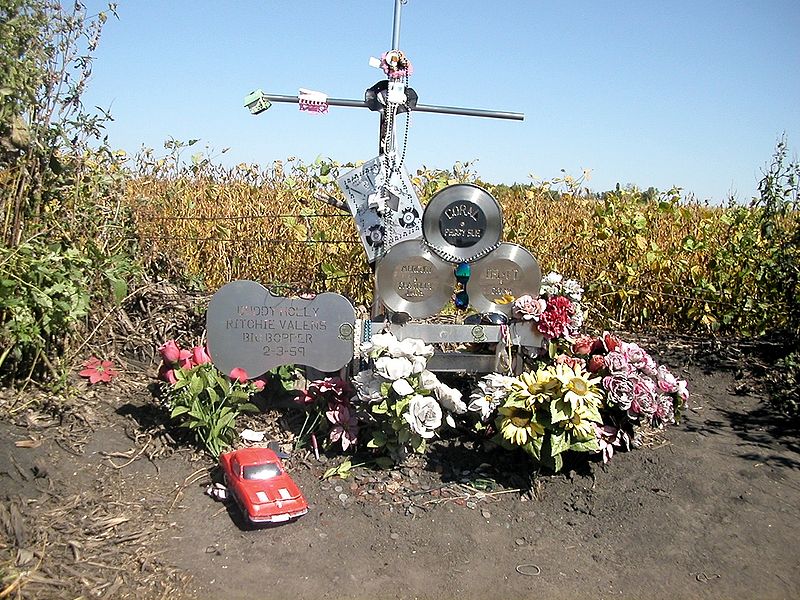
have never set foot
on the Spanish Steps
but i have knelt
in the dirt at the site
where Buddy Holly died
and wondered why
© copyright 2018.2024 mac tag/cowboy coleridge all rights reserved
hour by hour keepin’ up a steady trot
sun sinks and the long shadows
lengthen down the prairie
movin’ veils of purple twilight
creep out of the hills,
soon merge and shade into night
guidin’ the pale horse nearer to the trail
to see better, ridin’ on through the hours
feel only vaguely, as outside things,
the ache and burn and throb of muscles
but the dammed-up torrent of emotion holds
and the hour for release, continues to elude
sufferin’, catchin’ glimpses into self,
into unlit darkness of soul
a torturin’ possession of mind
ranges, runs riotin’, tramplin’
resurgin’ hope, draggin’
ever into the hours
© copyright 2017 Mac tag/cowboy Coleridge all rights reserved
it comes
without notice
has been there
all the while
somewhere between
the tenderness
and the achin’
my trail to you
lay in no straight line
above you
an achin’
you cannot see
mind and body slack
then
leaps into your head
lights in focus
it flares, it flames out
© copyright 2016 Mac tag/cowboy Coleridge all rights reserved
A heart was left.
Not only not
Taken, but turned
Away. It was
Shown to be not
Lackin’, not at
All. So was it
That it was just
Misunderstood
© copyright 2015 Mac tag/cowboy Coleridge all rights reserved
Today is the birthday of Gertrude Stein (Allegheny, Pennsylvania; February 3, 1874 – July 27, 1946 Neuilly-sur-Seine, France); novelist, poet, playwright, and art collector. raised in Oakland, California, Stein moved to Paris in 1903, and made France her home for the remainder of her life. She hosted a Paris salon, where the leading figures of modernism in literature and art, such as Pablo Picasso, Ernest Hemingway, F. Scott Fitzgerald, Sinclair Lewis, Ezra Pound, and Henri Matisse would meet.
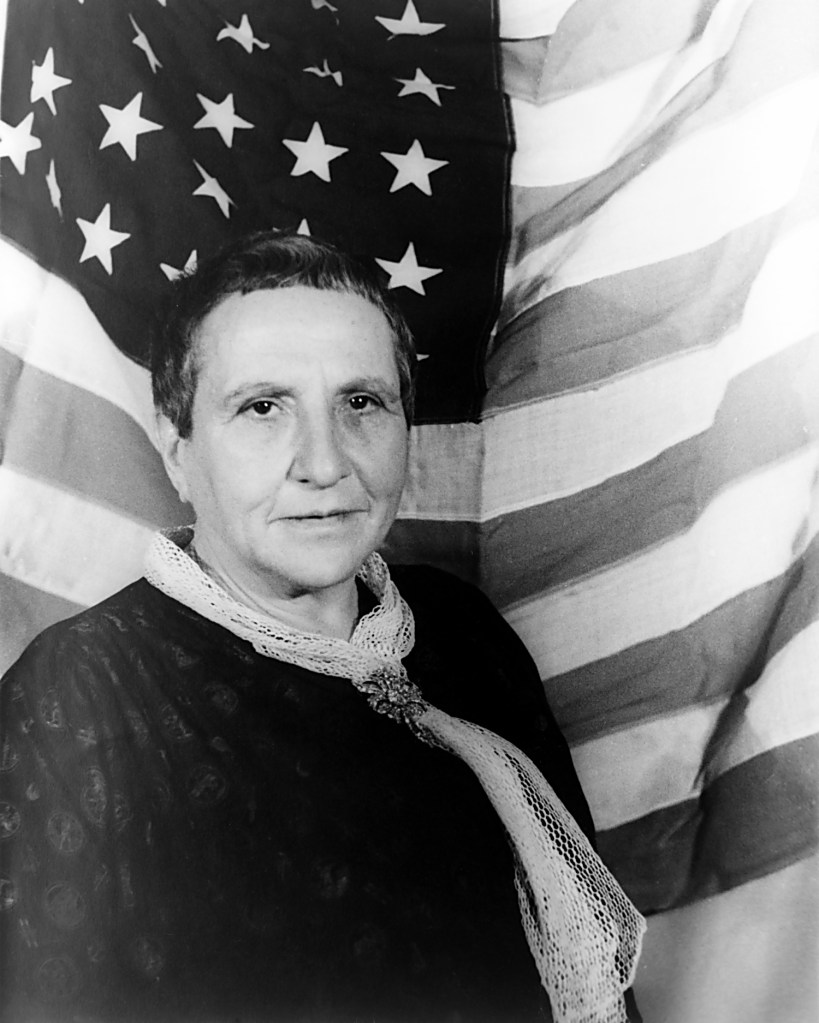
in 1935 photograph by Carl Van Vechten
In 1933, Stein published a kind-of memoir of her Paris years, The Autobiography of Alice B. Toklas, written in the voice of her life partner, Alice B. Toklas, an American-born member of the Parisian avant-garde. The book became a literary bestseller and vaulted Stein from the relative obscurity of the cult-literature scene into the limelight of mainstream attention. Two quotes from her works have become widely known: “Rose is a rose is a rose is a rose” and “there is no there there“.
Her books include Q.E.D. (Quod Erat Demonstrandum) (1903), about a lesbian romantic affair involving several of Stein’s female friends; Fernhurst, a fictional story about a romantic affair; Three Lives (1905–06) and The Making of Americans (1902-1911). In Tender Buttons (1914), Stein commented on lesbian sexuality.
Stein met Toklas on September 8, 1907, on Toklas’s first day in Paris, at Sarah and Michael Stein’s apartment. On meeting Stein, Toklas wrote:
She was a golden brown presence, burned by the Tuscan sun and with a golden glint in her warm brown hair. She was dressed in a warm brown corduroy suit. She wore a large round coral brooch and when she talked, very little, or laughed, a good deal, I thought her voice came from this brooch. It was unlike anyone else’s voice—deep, full, velvety, like a great contralto’s, like two voices.
Quotes
“What is the answer?” [ I was silent ] “In that case, what is the question?”
- Last words (27 July 1946) as told by Alice B. Toklas in What Is Remembered (1963)
- Poetry is I say essentially a vocabulary just as prose is essentially not. And what is the vocabulary of which poetry absolutely is. It is a vocabulary based on the noun as prose is essentially and determinately and vigorously not based on the noun. Poetry is concerned with using with abusing, with losing with wanting with denying with avoiding with adoring with replacing the noun. It is doing that always doing that, doing that doing nothing but that. Poetry is doing nothing but using losing refusing and pleasing and betraying and caressing nouns. That is what poetry does, that is what poetry has to do no matter what kind of poetry it is. And there are a great many kinds of poetry. So that is poetry really loving the name of anything and that is not prose.
- “Poetry and Grammar”
- When I said. “A rose is a rose is a rose.” And then later made that into a ring I made poetry and what did I do? I caressed completely caressed and addressed a noun.
- “Poetry and Grammar”
One of the pleasant things those of us who write or paint do is to have the daily miracle. It does come.
Today is the birthday of Norman Rockwell (Norman Percevel Rockwell; New York City; February 3, 1894 – November 8, 1978 Stockbridge, Massachusetts); painter and illustrator. His works have a broad popular appeal in the United States for their reflection of the country’s culture. Rockwell is most famous for the cover illustrations of everyday life he created for The Saturday Evening Post magazine over nearly five decades. Among the best-known of Rockwell’s works are the Willie Gillis series, Rosie the Riveter, The Problem We All Live With, Saying Grace, and the Four Freedoms series. He is also noted for his 64-year relationship with the Boy Scouts of America (BSA), during which he produced covers for their publication Boys’ Life, calendars, and other illustrations. These works include popular images that reflect the Scout Oath and Scout Law such as The Scoutmaster, A Scout Is Reverent and A Guiding Hand, among many others.
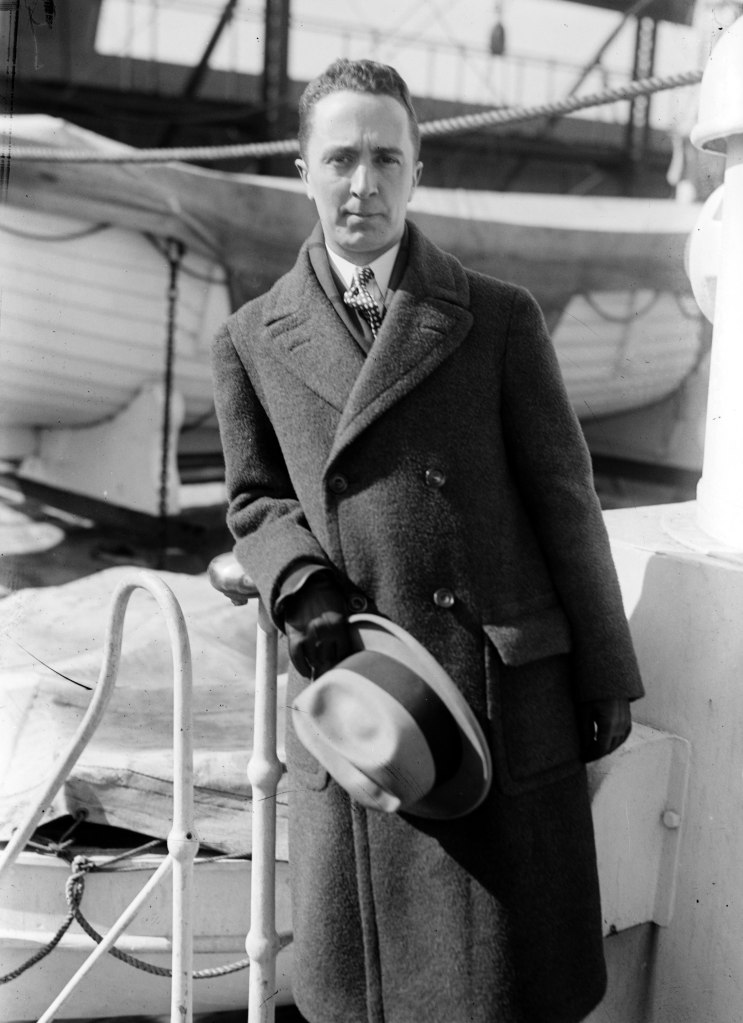
c 1920 – 1925
Rockwell married his first wife, Irene O’Connor, on July 1, 1916. Irene was Rockwell’s model in Mother Tucking Children into Bed, published on the cover of The Literary Digest on January 19, 1921. The couple divorced on January 13, 1930.
Depressed, Rockwell moved briefly to Alhambra, California as a guest of his old friend Clyde Forsythe. There, Rockwell painted some of his best-known paintings including The Doctor and the Doll. While there, he met and married schoolteacher Mary Barstow on April 17, 1930. The couple returned to New York shortly after their marriage and lived at 24 Lord Kitchener Road in the Bonnie Crest neighborhood of New Rochelle, New York.
In 1953, the Rockwell family moved to Stockbridge, Massachusetts, so that Mary could be treated at the Austen Riggs Center, a psychiatric hospital at 25 Main Street, close to where Rockwell set up his studio. Rockwell also received psychiatric treatment, and was told that he painted his happiness, but did not live it. On August 25, 1959, Mary died unexpectedly of a heart attack.
Rockwell married his third wife, retired Milton Academy English teacher, Mary Leete “Mollie” Punderson (1896–1985), on October 25, 1961. His Stockbridge studio was located on the second floor of a row of buildings. Directly underneath Rockwell’s studio was, for a time in 1966, the Back Room Rest, better known as the famous “Alice’s Restaurant”.
Rockwell died of emphysema at the age of 84.
Gallery
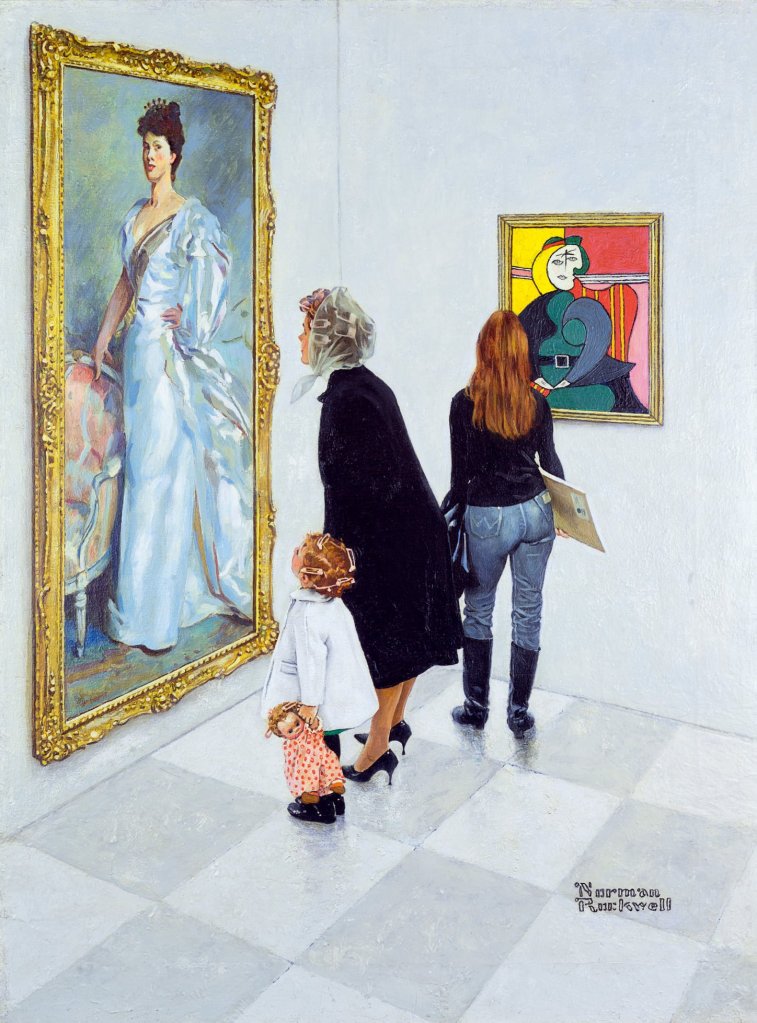
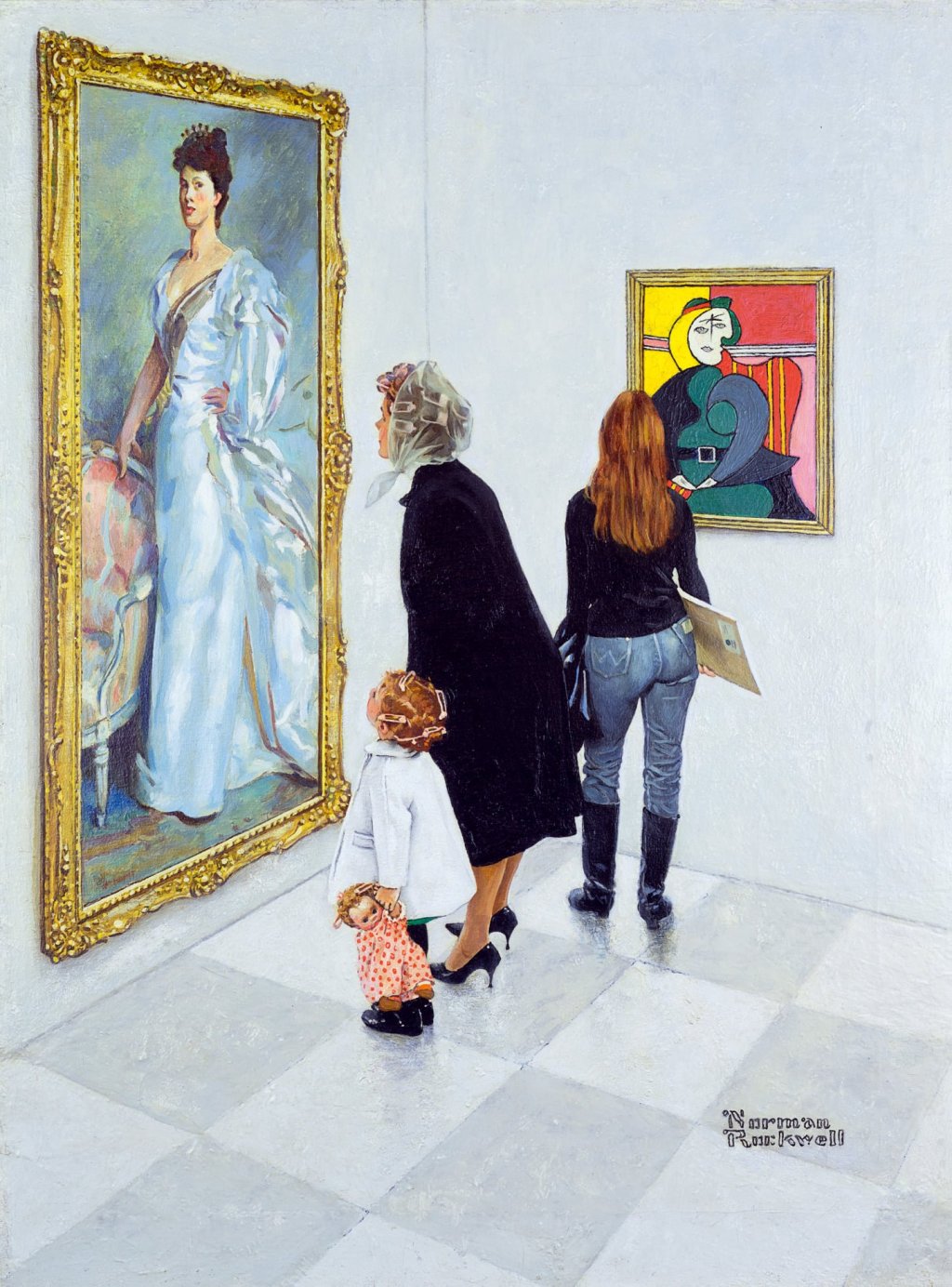
Picasso Vs. Sargent
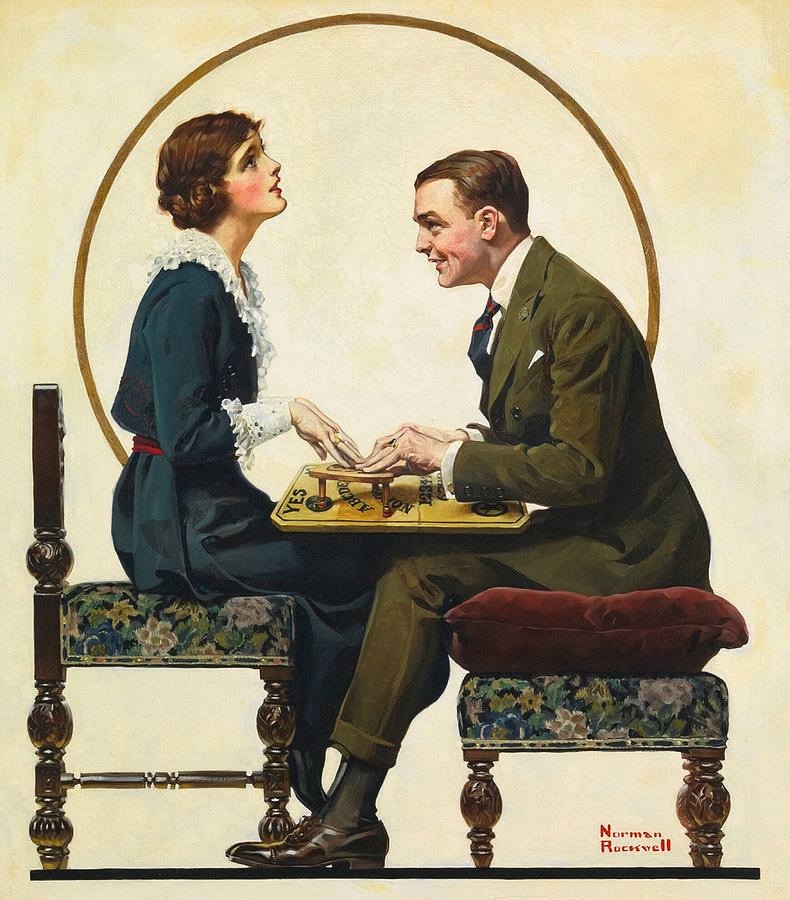
Saturday Evening Post May 1, 1920 “The Ouija Board”
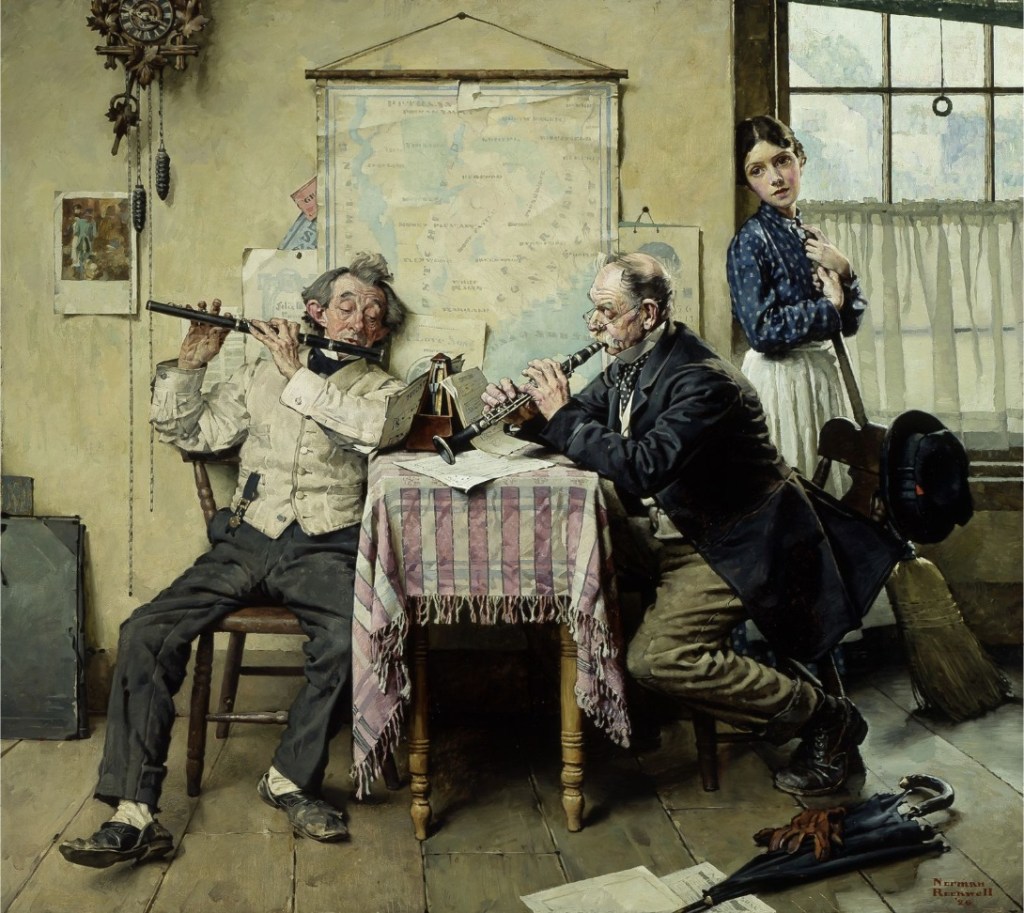
The Love Song (1926)

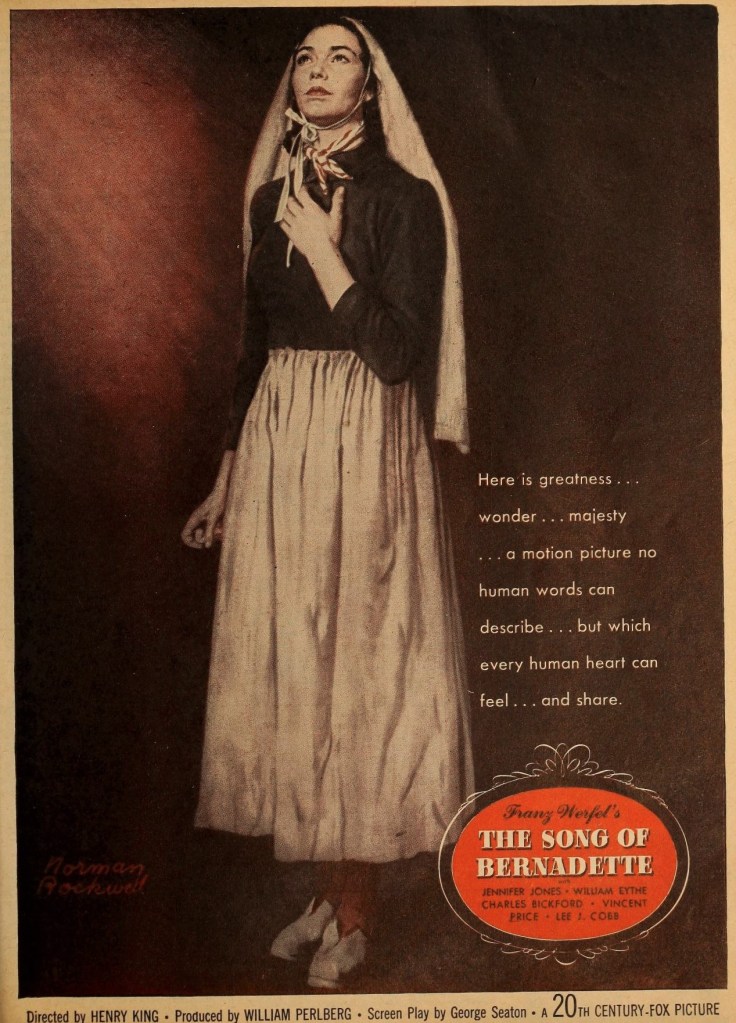
The Song of Bernadette, 1944
 Rosie the Riveter
 Jo (March) and the Editor, 1938
Today is the birthday of Simone Weil (Paris; 3 February 1909 – 24 August 1943 Ashford, Kent, England); philosopher, mystic, and political activist.
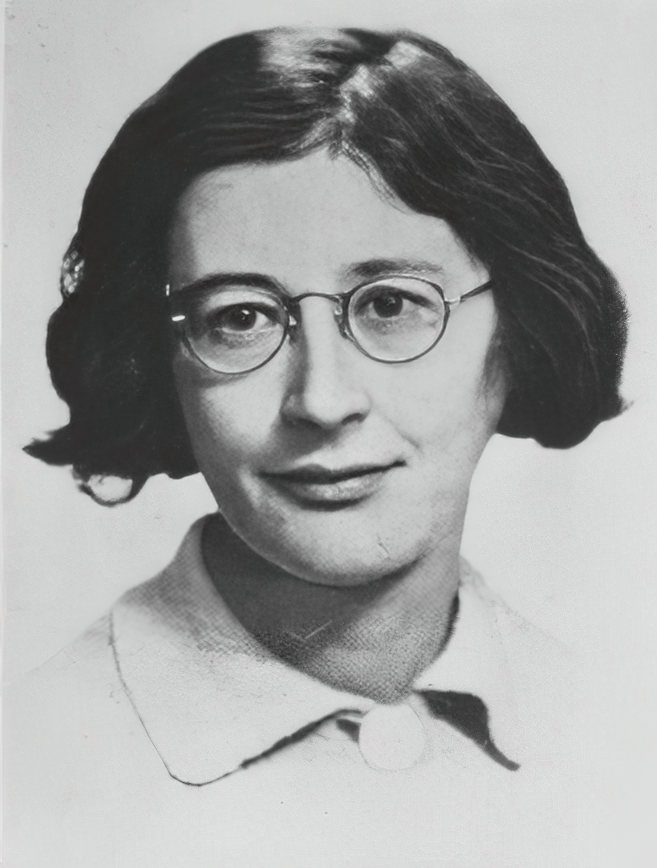
New York 1942
After her graduation from formal education, Weil became a teacher. She taught intermittently throughout the 1930s, taking several breaks due to poor health and to devote herself to political activism, work that would see her assisting in the trade union movement, taking the side of the Anarchists known as the Durruti Column in the Spanish Civil War, and spending more than a year working as a labourer, mostly in auto factories, so she could better understand the working class.
Taking a path that was unusual among twentieth-century left-leaning intellectuals, she became more religious and inclined towards mysticism as her life progressed. Weil wrote throughout her life, though most of her writings did not attract much attention until after her death. In the 1950s and 1960s, her work became famous on continental Europe and throughout the English-speaking world. Her thought has continued to be the subject of extensive scholarship across a wide range of fields. A meta study from the University of Calgary found that between 1995 and 2012 over 2,500 new scholarly works had been published about her. Albert Camus described her as “the only great spirit of our times“.
On Beauty
For Weil, beauty which is inherent in the form of the world. She saw it proven in geometry, and expressed in all good art. It is the proof that the world points to something beyond itself. It establishes the essentially telic character of all that exists. Beauty also served a soteriological function for Weil. It constitutes a way in which the divine reality behind the world infuses our lives. Where affliction conquers us with force, beauty steals in and topples the self from within. She wrote…
« l’art de tout premier ordre qui a nécessairement rapport à la sainteté. »
« Le beau est la preuve expérimentale que l’Incarnation est possible »
« Nous devons avoir la foi que l’univers est beau à tous les niveaux … et qu’il a une plénitude de la beauté par rapport au corps et à l’esprit des êtres pensants qui existent et de tous ceux qui pourraient exister. C’est un accord de l’infini d’une beauté parfaite qui donne un caractère transcendant à la beauté du monde … Il (le Christ) est réellement présent dans la beauté universelle. L’amour de cette beauté vient de Dieu, demeure dans nos âmes et retourne vers Dieu présent dans l’univers ».
« c’est le sourire de tendresse du Christ pour nous à travers la matière ».
« La beauté séduit la chair pour obtenir la permission de passer jusqu’à l’âme. »
today is the birthday of Richard Yates (Yonkers; February 3, 1926 – November 7, 1992 Birmingham, Alabama); fiction writer identified with the mid-century “Age of Anxiety”. His first novel, Revolutionary Road, was a finalist for the 1962 National Book Award, while his first short story collection, Eleven Kinds of Loneliness, brought comparisons to James Joyce. Critical acclaim for his writing, however, was not reflected in commercial success during his lifetime.
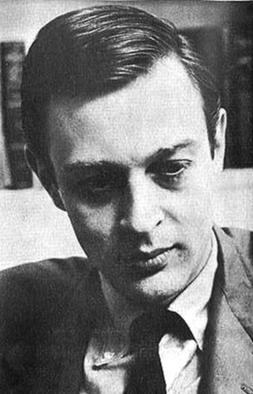
in 1960
Interest in Yates has revived since his death, partly because of an influential 1999 essay by Stewart O’Nan in the Boston Review, a 2003 biography by Blake Bailey and the 2008 Academy Award-nominated and Golden Globe-winning film Revolutionary Road starring Kate Winslet and Leonardo DiCaprio.
In 1948, he married Sheila Bryant, the daughter of Marjorie Gilhooley Bryant and British actor Charles Bryant, who lived with Broadway actress and silent-film star Alla Nazimova from 1912 to 1925 during the height of her wealth and fame. Richard and Sheila Yates had two daughters, Sharon and Monica, before divorcing in 1959. His daughter Monica dated Larry David and was the inspiration for Elaine Benes on Seinfeld. In 1968, Yates married Martha Speer and they had a daughter, Gina. A heavy smoker his entire life, in 1992, he died of emphysema and complications from minor surgery.
Revolutionary Road (1961)
- “I mean talk about decadence,” he declared, “how decadent can a society get? Look at it this way. This country’s probably the psychiatric, psychoanalytical capital of the world.”
- p.65. (Part 1, Chapter 4) [Page numbers per the 2007 Vintage paperback edition]
- How small and neat and comically serious the other men looked, with their gray-flecked crew cuts and their button-down collars and their brisk little hurrying feet! There were endless desperate swarms of them, hurrying through the station and the streets, and an hour from now they would all be still. The waiting mid-town office buildings would swallow them up and contain them, so that to stand in one tower looking out across the canyon to another would be to inspect a great silent insectarium displaying hundreds of tiny pink men in white shirts, forever shifting papers and frowning into telephones, acting out their passionate little dumb show under the supreme indifference of the rolling spring clouds.
- p.119-120. (Part 2, Chapter 1)
- “Wow,” he said. “Now you’ve said it. The hopeless emptiness. Hell, plenty of people are on to the emptiness part; out where I used to work, on the Coast, that’s all we ever talked about. We’d sit around talking about emptiness all night. Nobody ever said ‘hopeless’, though; that’s where we’d chicken out. Because maybe it does take a certain amount of guts to see the emptiness, but it takes a whole hell of a lot more to see the hopelessness. And I guess when you do see the hopelessness, that’s where there’s nothing to do but take off. If you can.”
- p.189. (Part 2, Chapter 5)
- “I still had this idea that there was a whole world of marvelous golden people somewhere, as far ahead of me as the seniors at Rye when I was in sixth grade; people who knew everything instinctively, who made their lives work out the way they wanted without even trying, who never had to make the best of a bad job because it never occurred to them to do anything less than perfectly the first time. Sort of heroic super-people, all of them beautiful and witty and calm and kind, and I always imagined that when I did find them I’d suddenly know that I belonged among them, that I was one of them, that I’d been meant to be one of them all along, and everything in the meantime had been a mistake; and they’d know it too. I’d be like the ugly duckling among the swans.”
- p.258. (Part 3, Chapter 3)
- “You know?” he said. “This is the kind of thing that really—” he paused, examining the wisp of smoke that curled from his wet pipestem. “Really makes you stop and think.”
- p.329. (Part 3, Chapter 9)
And today is the birthday of Robert McGinnis (Robert Edward McGinnis; Cincinnati; February 3, 1926 – March 10, 2025 old Greenwich, Connecticut); artist and illustrator. McGinnis is known for his illustrations of more than 1,200 paperback book covers, and over 40 movie posters, including Breakfast at Tiffany’s (his first film poster assignment), Barbarella, and several James Bond and Matt Helm films.
In 1948, McGinnis married Ferne Mitchell, whom he had met while attending university. Born on September 17, 1926, she died on February 19, 2023 after 75 years of marriage. McGinnis died at his home aged 99.
gallery
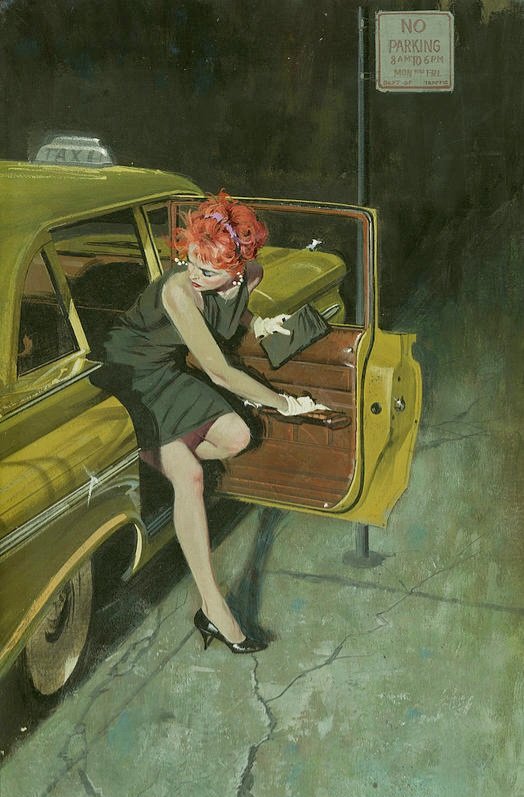
Cover art for novel ‘Too Hot To Hold’ (1959)
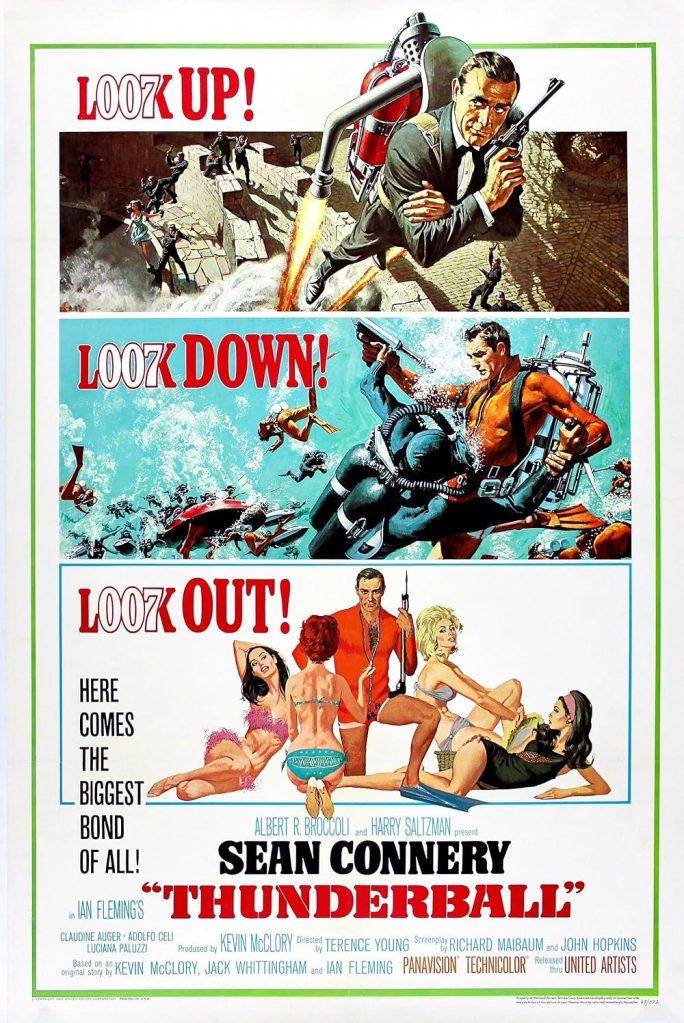
thunderball 1965
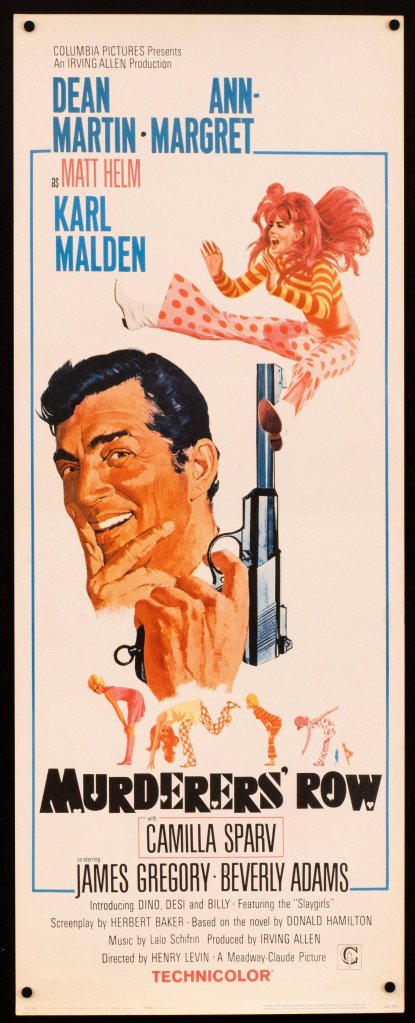
1966
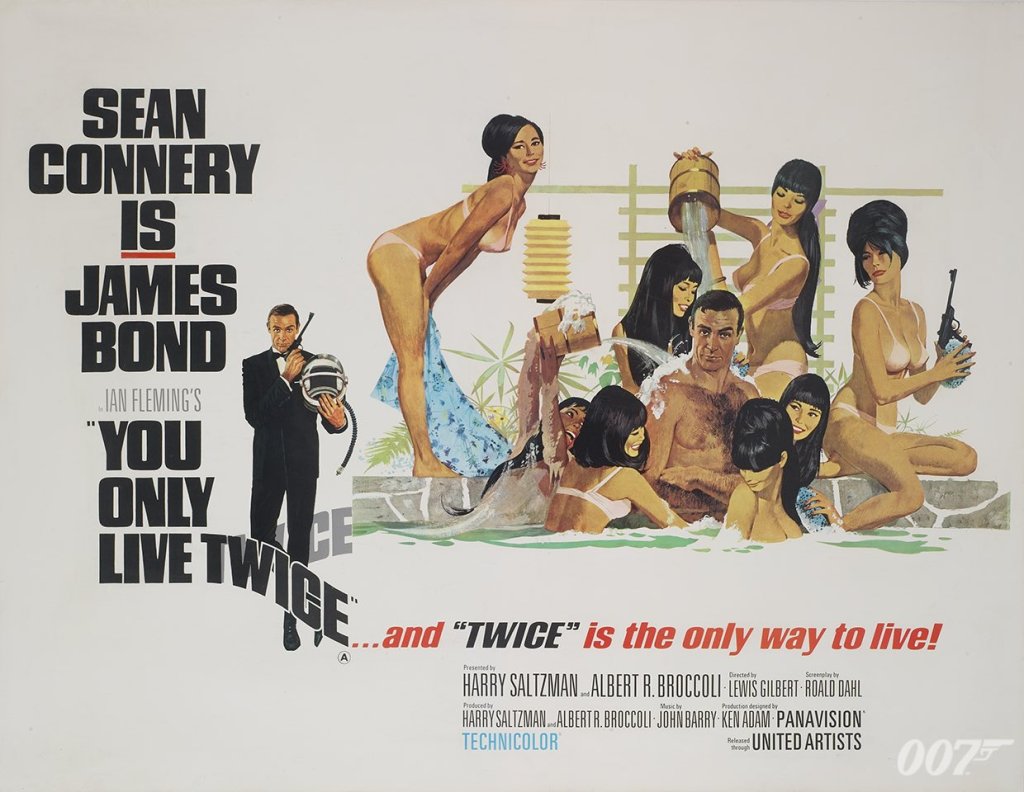
1967
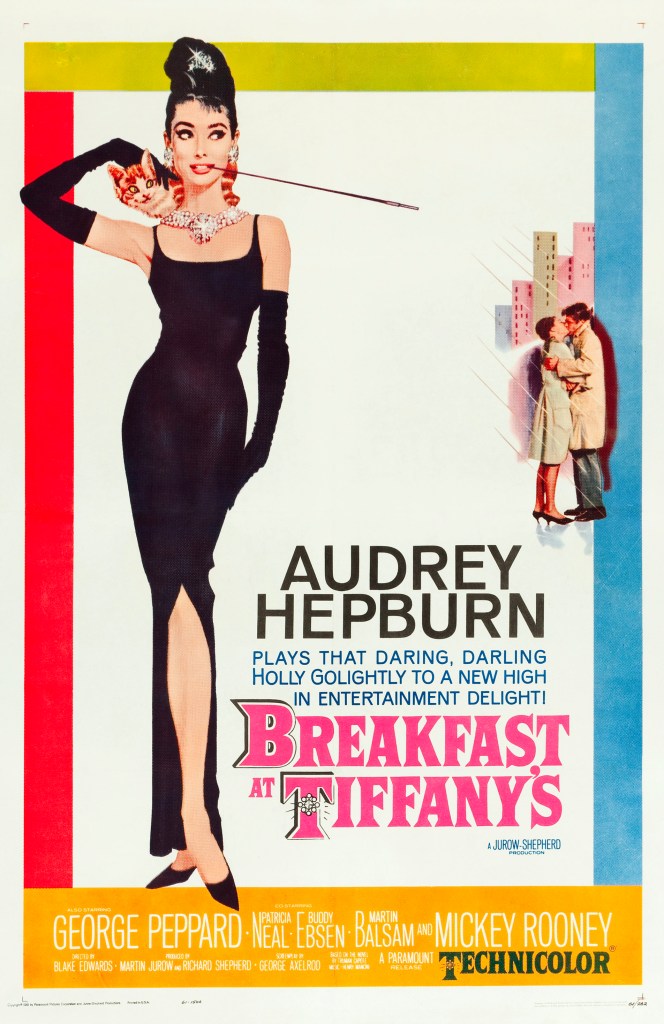

thanks for stoppin’ by y’all
mac tag
 The Lovers’ Chronicle
Leave a reply to The Lovers’ Chronicle 20 January – gittin’ it right – photography by Hippolyte Bayard – birth of Yvette Guilbert – The Lovers’ Chronicle Cancel reply