
Dear Zazie, Here is today’s Lovers’ Chronicle from Mac Tag dedicated to his muse. Rhett
The Lovers’ Chronicle
Dear Muse,
there is a song, “La Carrozzo dei Fantasmi”
written by Ennio Morricone for the film
Il Buono, Il Brutto E Il Cattivo
“Ah, The Good, the Bad and the Ugly“
yes, translation, “The Carriage of Spirits”
“Not a carriage we will need anytime soon”
oh no, but Morricone’s songs were brilliant,
they helped make those spaghetti westerns
iconic, and i had to include him in this vision
but for now, lets see if another carriage
will stop for us, oh look, here comes one,
La carrozza della passione, shall we
© copyright 2023 mac tag/cowboy coleridge all rights reserved
the carriage is whiskin’ us off on a musical tour back in time with the Swampers in Muscle Shoals this weekend, grew up with some of those songs and now git to see where they were made, more than once that music picked me when i was feelin’ blue now how ’bout me and you, creatin’ lastin’ memories
© copyright 2022.2023 mac tag/cowboy coleridge all rights reserved
now if a carriage for two goin’ someplace
interestin’ stops we would board, see
where and why, we have talked about
many places we have been and want
to go, the places we would return to
anywhere with us becomes a favorite
so lets have another drink while we wait
to see where the next carriage takes us
© copyright 2021.2023 mac tag/cowboy coleridge all rights reserved
Pale Love, Pale Rider
give yourself wholly, seek solace
in every reflection, resolve against
ever settlin’ for ordinary
to hear those lines which drive,
pronounced with such clarity
i did not then know what it was to feel
had i really felt, could i have believed
givin’ ourselves wholly to this
© copyright 2020 mac tag/cowboy coleridge all rights reserved
no carriages of any kind stoppin’ here
would not board if they did, content
to stay here and work on creatin’ this
would even let the one with spirits
pass, plenty of time for that later
now if the verse starts to falter
then embarkin’ with anyone
anywhere to find the words
© copyright 2019.2023 mac tag/cowboy coleridge all rights reserved
from an unknown,
inexorable source
comes the need
color, splashes
leapin’ without plan
laid bare or concealed
silent, scrupulous
in fanfare or played
pianissimo on the keys
and verse serene, cradlin’
are those not the means
embark, while we still can
© copyright 2018 mac tag/cowboy coleridge all rights reserved
would have to think about embarkin’ today
previously, would have gone anywhere
with anyone if asked, had nothin’ to lose
so why not, what the hell, but now
creatin’ somethin’ here that might last,
that might sustain through cold nights,
through three o’clock in the mornin’
© copyright 2017.2023 mac tag/cowboy coleridge all rights reserved
La Carrozzo dei Fantasmi
playin’ in the background
from whence no return
the drum bangs slowly
to let someone near
best leave that lie and
embark that carriage…
never cared for that
to be understood
never knew what it was
to need someone…
a wanderer
on the high plains
carin’ not
if anyone
understands
© copyright 2016 mac tag/cowboycoleridge all rights reserved
She thought
That wearin’
Anything more
Than a few drops
Of Chanel No. 5
To bed, was bein’
Overdressed
Some cold, still night
like tonight
It happens;
half asleep,
fractured dream
Somethin’
barely audible
movin’ in the darkness
Say what needs be said
without sayin’ it
Write what needs be
written without
writin’ it. With
the fewest words.
Me!? Offended!?
I can never be
Offended by
A sensual
Woman
© copyright 2015 mac tag/cowboycoleridge all rights reserved
Sometimes, at last
Does not come first,
Or second, or
Third, or (you can
Stop me if this
Is gettin’ old)
Cold
Wind blows
Darkness comes
Snow on the ground
Cattle hunker down
Stars fill the great big sky
Warm
Hearth glows
Music plays
Candles flicker
Man, woman touchin’
Dreams fill two empty hearts
One of the best
Parts of winter;
Women wearin’
Tight sweaters!
Yes!
Hallelujah!
© copyright 2014 mac tag/cowboycoleridge all rights reserved
Today is the birthday of Jane Austen (Steventon, Hampshire, England; 16 December 1775 – 18 July 1817 Winchester, Hampshire, England); novelist known primarily for her six major novels, which interpret, critique and comment upon the British landed gentry at the end of the 18th century. Austen’s plots often explore the dependence of women on marriage in the pursuit of favourable social standing and economic security. Her works critique the novels of sensibility of the second half of the 18th century and are part of the transition to 19th-century literary realism. Her use of biting irony, along with her realism, humour, and social commentary, have long earned her acclaim among critics, scholars, and popular audiences alike.
With the publications of Sense and Sensibility (1811), Pride and Prejudice (1813), Mansfield Park (1814) and Emma (1816), she achieved success as a published writer. She wrote two additional novels, Northanger Abbey and Persuasion, both published posthumously in 1818, and began another, eventually titled Sanditon, but died before its completion. She also left behind three volumes of juvenile writings in manuscript, a short epistolary novel Lady Susan, and another unfinished novel, The Watsons. Her six full-length novels have rarely been out of print, although they were published anonymously and brought her moderate success and little fame during her lifetime.
Austen has inspired a large number of critical essays and literary anthologies. Her novels have inspired many films, from 1940’s Pride and Prejudice to more recent productions like Sense and Sensibility (1995), Emma (1996), Mansfield Park (1999), Pride & Prejudice (2005), and Love & Friendship (2016).
Sense and Sensibility

- They gave themselves up wholly to their sorrow, seeking increase of wretchedness in every reflection that could afford it, and resolved against ever admitting consolation in future.
- Chapter 1
- To hear those beautiful lines which have frequently almost driven me wild, pronounced with such impenetrable calmness, such dreadful indifference!
- Chapter 13
- Know your own happiness. You want nothing but patience; or give it a more fascinating name: call it hope.
- Chapter 19
- Her mind did become settled, but it was settled in a gloomy dejection. She felt the loss of Willoughby’s character yet more heavily than she had felt the loss of his heart…
- Chapter 32
- There was a kind of cold hearted selfishness on both sides, which mutually attracted them; and they sympathised with each other in an insipid propriety of demeanour, and a general want of understanding.
- Chapter 34
- I did not then know what it was to love […] had I really loved, could I have sacrificed my feelings to vanity, to avarice?
- Chapter 44
| Wassily Kandinsky | |
|---|---|
 | |
Today is the birthday of Wassily Kandinsky (Wassily Wassilyevich Kandinsky; Moscow; 4 December (16 December by the Gregorian calendar) 1866 – 13 December 1944 Neuilly-sur-Seine); painter and art theorist. He is credited with painting one of the first purely abstract works.
Gallery

“Russian Beauty in Landscape” from 1904

Couple on Horseback, 1906–07, Lenbachhaus, Munich
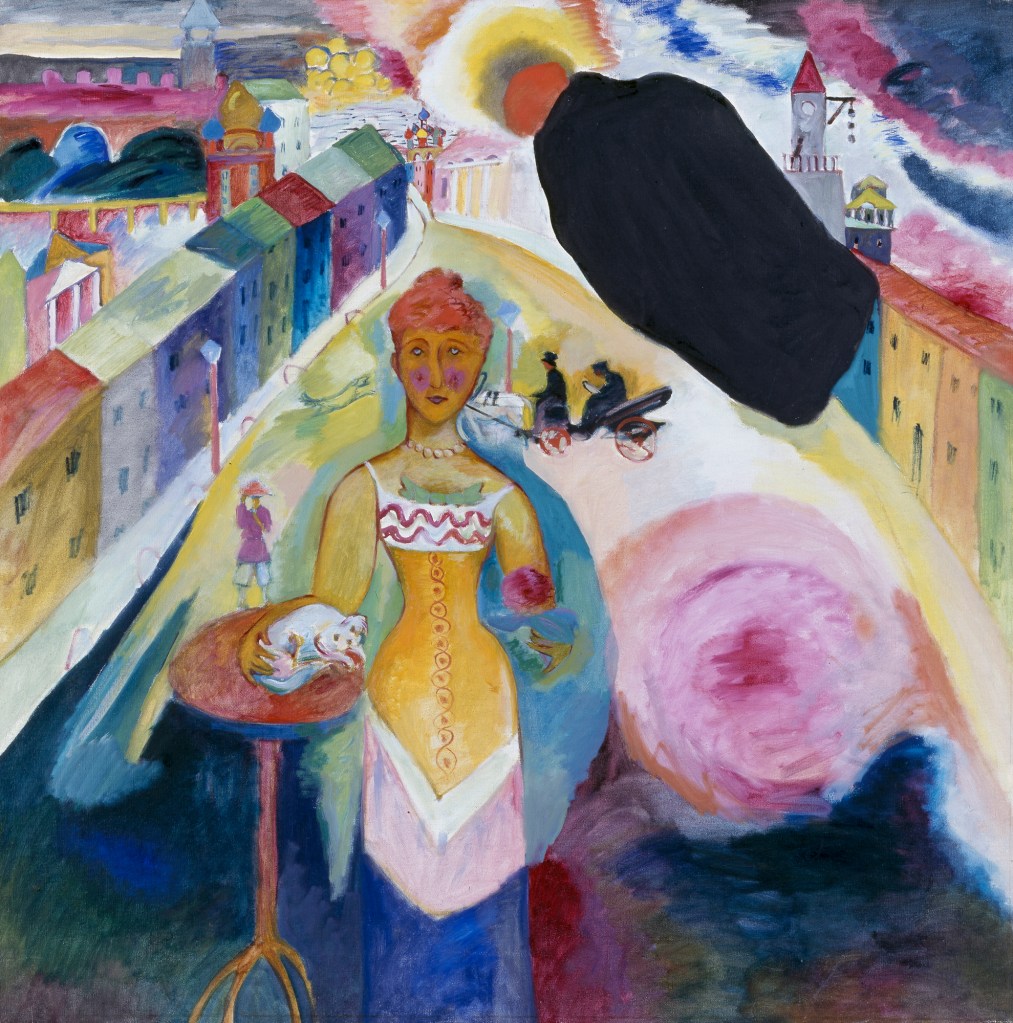
Lady in Moscow 1912

Gabriele Münter painting

Group in Crinolines

Der Blaue Reiter (1903)
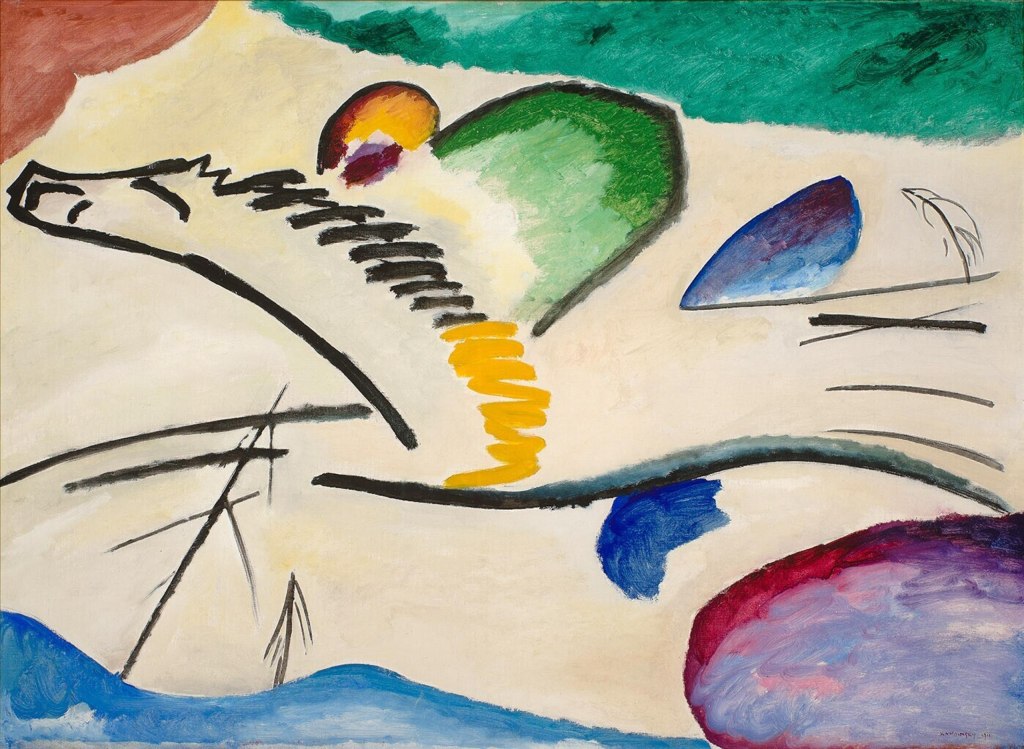
Lyrical, 1911
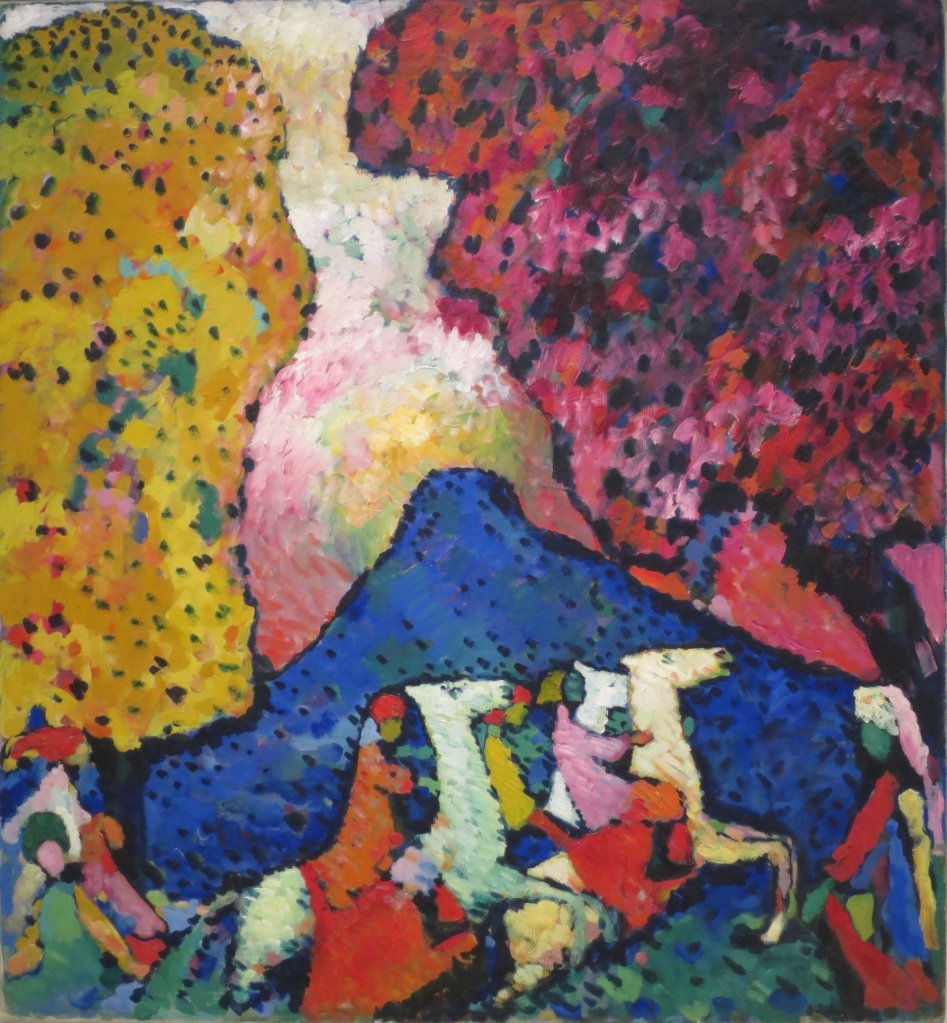
Blue Mountain, 1908–09, Solomon R. Guggenheim Museum, New York

And today is the birthday of Remedios Varo (María de los Remedios Alicia Rodriga Varo y Uranga; Anglès, Girona, Spain 16 December 1908 – 8 October 1963 Mexico City); surrealist painter working in Spain, France, and Mexico.

Varo had a difficult life, struggling against poverty and fleeing from war in Spain and then France. In the last thirteen years of her life she found financial stability in Mexico, painting productively until her death from a heart attack in 1963. André Breton commented that the death made her “the sorceress who left too soon”.
In 1924, aged 15, she enrolled at the Escuela de Bellas Artes in Madrid, under the tutelage of Manuel Benedito. Many renowned artists were alumni, including Salvador Dalí (though he was expelled for insubordination).
Varo met her first husband Gerardo Lizárraga at the Escuela de Bellas Artes, and married him in San Sebastián in 1930. This marriage allowed her to flee her hometown and exercise her independence. The couple left Spain for Paris to be nearer to where much of Europe’s art scene was. After a year, Lizárraga got a job in Spain and the couple moved to Barcelona, at that time a European center of the artistic avant-garde.
Varo formed her first artistic circle of friends, which included Josep-Lluis Florit, Óscar Domínguez, and Esteban Francés. Varo soon shared a studio with Francés in a neighborhood filled with young avant-garde artists. She separated from her husband and moved back to Paris with both Francés and the poet Benjamin Péret in order to escape from the Spanish Civil War. Varo never divorced Lizárraga and had different partners/lovers throughout her life.
After World War II began, Péret was imprisoned in 1940 by the French government for his political beliefs; Varo was also imprisoned as his romantic partner. A few days after Varo was freed, the Germans seized Paris, and she was forced to join other refugees leaving the city. Péret was freed soon after, and the two escaped south to Marseilles. On 20 November 1941 Varo along with Péret boarded the Serpa Pinto in Marseilles to flee Nazi-dominated Europe. The terror she experienced at this time remained as a significant psychological scar. Varo initially considered her time in Mexico to be temporary. However, except for a year spent in Venezuela, she would reside in Mexico for the rest of her life.
Among all the refugees that were forced to flee from Europe to Mexico City during and after World War II, Varo, Leonora Carrington, and Kati Horna formed a bond that would immensely affect their lives and work. They all lived in proximity to each other in the Colonia Roma district of Mexico City.
In 1949 she began her third and last important relationship, with Austrian political refugee Walter Gruen, who had endured concentration camps before escaping from Europe. Gruen believed fiercely in Varo, and he gave her the economic and emotional support that allowed her to fully concentrate on her painting. In 1952, Varo married Gruen. His financial stability allowed Varo to stop working as a commercial illustrator, with more time to devote to her painting. The bulk of Varo’s significant artwork was produced during 1953–1963.
Gallery
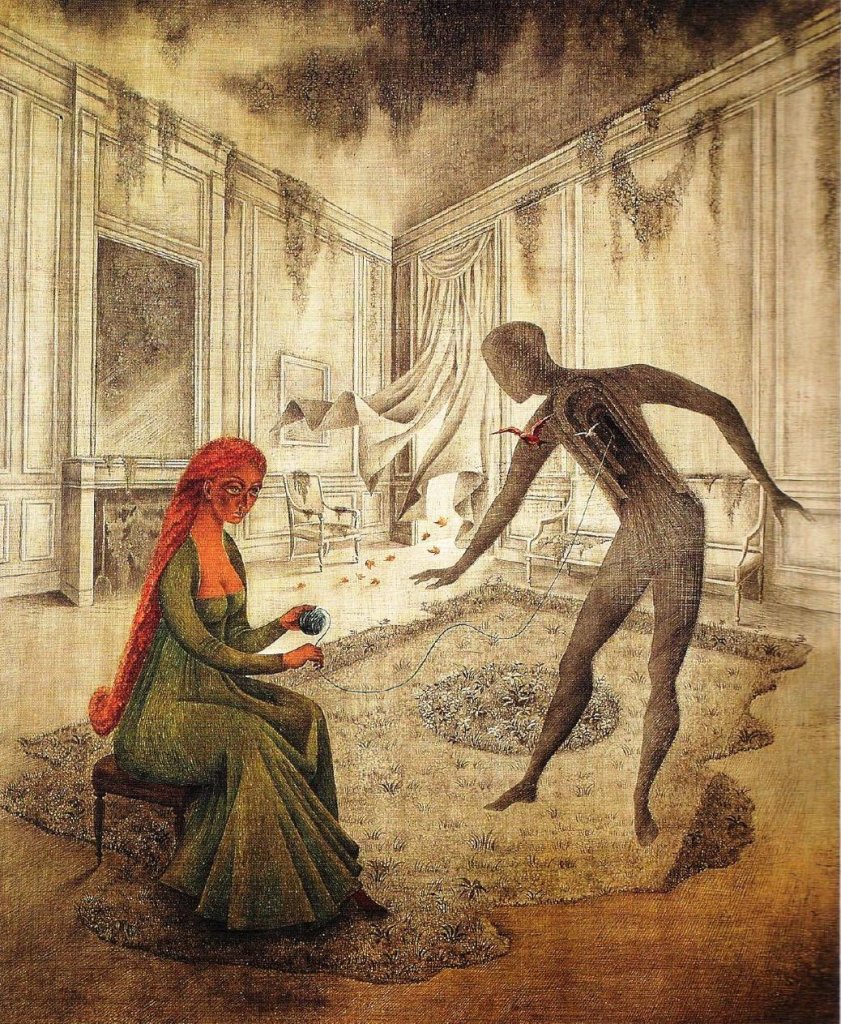
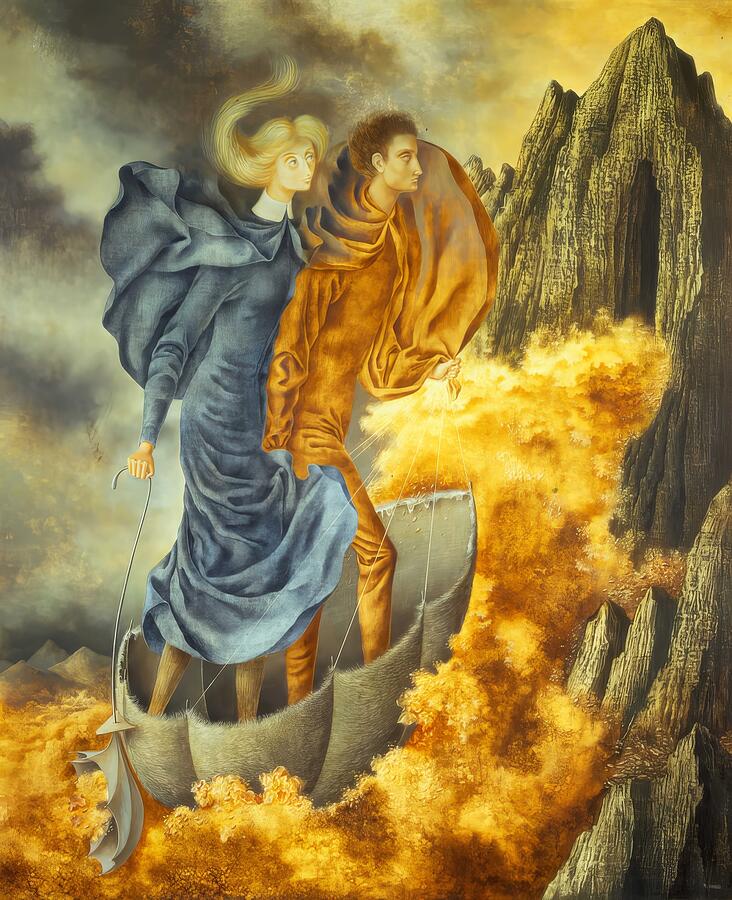
the flight

Nacer de nuevo


La tejedora roja. 1956

Papilla Estelar 1958
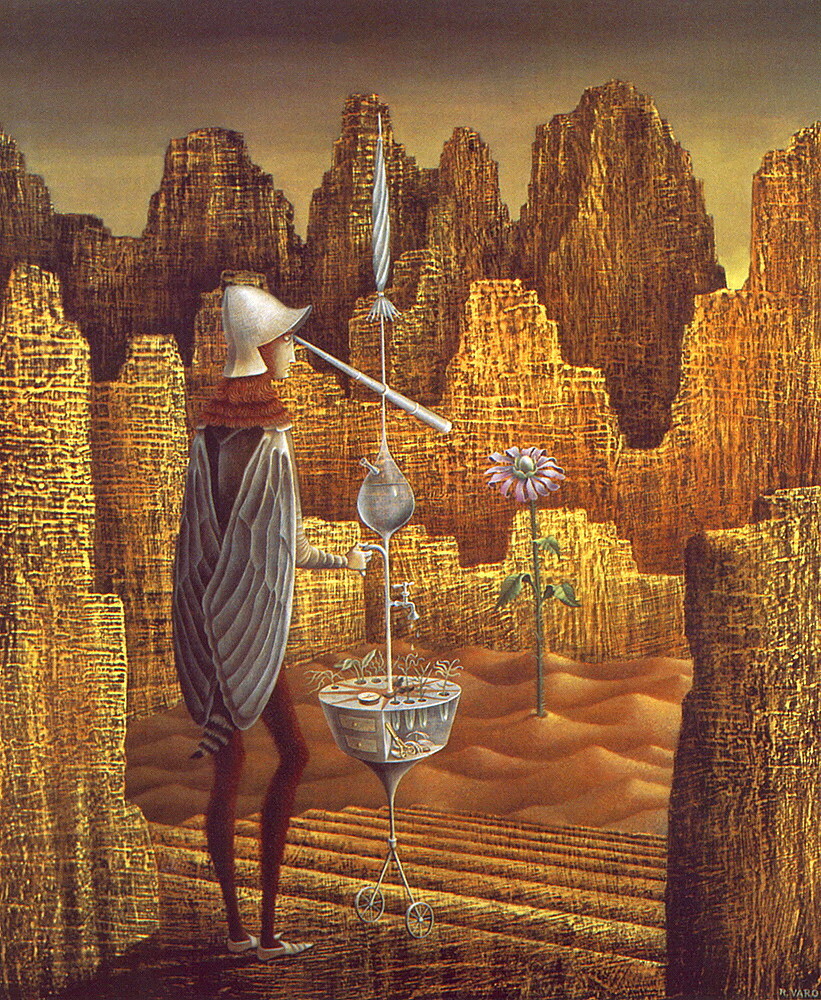
Creation with astral rays

towards the tower
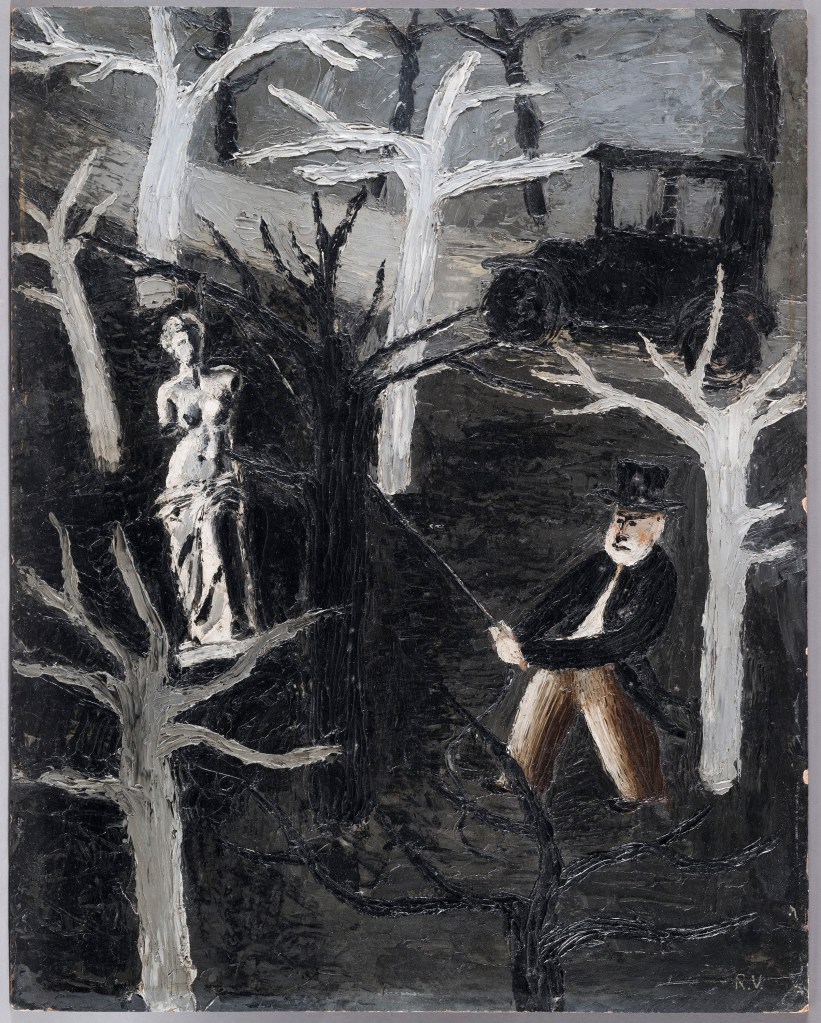
Thanks for stoppin’ by y’all
Mac Tag
 The Lovers’ Chronicle
Leave a comment