Dear Zazie, I love the picture! We have been there done that. And the thoughtful words touch me in a place that has rarely been touched. May the Holidays bring you lastin’ cheer.
I shared your note with Mac Tag and it inspired him. Here is today’s Lovers’ Chronicle from Mac Tag dedicated to his muse. Who are you picturin’ right now? Rhett
The Lovers’ Chronicle
Dear Muse,
“Oh I have a song for today”
ok, whatcha got
“Pictures of You” by The Cure;
“I’ve been looking so long at these pictures of you
That I almost believe that they’re real”
never heard it before but i like it
reminds me that we saw photos
of each other months before we met
“We did and the more we looked…”
the more we could see, pictures of us
© copyright 2023 mac tag/cowboy coleridge all rights reserved
this; High Plains boy so far from anything, easily could have gone nowhere, but he was equipped with a readin’ habit and curiosity, that was enough for doors to start openin’, leadin’ here, after much tribulation and drama, and now picture this; with you by my side, best one yet
© copyright 2022.2023 mac tag/cowboy coleridge all rights reserved
also under the category of
savin’ the best for last
the places we have been
the visions we have created
captured in photos, in these pages,
only took a few of me on the way here
who would care, why would it matter
that was a persistent theme, pre-you
but learnin’ acceptance, what it is
to be significant to another and how
these pictures with you matter most
© copyright 2021.2023 mac tag/cowboy coleridge all rights reserved
Pale Love, Pale Rider
readin’ ED poems today
becomin’ aware she was right
about dreams and wakin’, after another
amorous Wednesday evenin’ on Peachtree
fully prepared to go either way
still think that was pivotal
in bein’ able to accept
someone, or rather,
allowin’ my self
to become acceptable,
to step into the picture
© copyright 2020.2023 mac tag/cowboy coleridge all rights reserved
left it all behind for beauty
“And that’s why you failed”?
you think i had a choice
dreams are well
and wakin’
was once better
at first light
or at three o’clock,
pictures of you
thou art veiled
behold thee
smile and bliss,
an apparition
because i could not stop
© copyright 2019 mac tag/cowboy coleridge all rights reserved
picturin’ you in my mind as i write this:
pictures that stop me
because they remind me
without evidence
does it make sense
to comprehend
requires sorest need
only those who take
the trail less traveled
can tell the tale
distant strain,
comin’ clear
sings the tune,
the sweetest
i have heard
© copyright 2018 mac tag/cowboy coleridge all rights reserved
pictures of you
the ones i can hold
the ones i cannot
counted amongst
all that matters
livin’ my life
in these pictures
and these words
they are the only
comfort i know
and stayin’ lost
in this world
is becomin’
all i can do
© copyright 2017 mac tag/cowboy coleridge all rights reserved
Shaped
To an agony
Of despair
And a surrender
In particular
Must I,
continually
be beset by
the ineptitude
of others
Yes! Sweet taste of success!
Made a pretty woman…
laugh. My day is complete
© copyright 2015 mac tag/cowboy coleridge all rights reserved
Try to define
This cowboy’s needs:
Open range, good
Horse, fine weather,
Poems to read &
Write. And love? Been
So long without
It, matters not.
Who was that in
My dream last night
Her fingers, her
Lips, her mouth! I
Could not see her
Face! Who are you?
Where are you? Come
On back to me!
New woman at
The gym, lookin’
Good this mornin’
Now if only –
Yeah, there it is
A little smile
What a great way
To start the day
© copyright 2014 mac tag/cowboy coleridge all rights reserved
I Picture You
Ever come across a picture
That stops you for a moment
Because it reminds you
Of a time, or a place,
Or a someone
Saw a picture that made me think of you
I see you in every picture of beauty
You are always with me
The pictures I have of you
Are among my treasures
I picture you wherever I go
I picture you when I see beauty
I picture you in the sun
I picture you still by my side
Remember, me and you…
Downtown, eatin’ at a sidewalk cafe
Before the opera dress rehearsal
The whole place was ours
You looked so beautiful
I kept hopin’ the world
Would stop spinnin’ for us
And that night would never end
The picture of you in my mind
Will forever be with me
Instead of holdin’ your pictures
I wish I was still holdin’ you
I picture you smilin’ and laughin’
I picture you layin’ in our bed
I picture you sleepin’ in my arms
I picture you always
© copyright 2012 mac tag/Cowboy Coleridge all rights reserved
The Song of the Day is “Picture” performed by Kid Rock and Sheryl Crow,
The SOD hits close to home for Jett. He has been there lived that!

Today is the birthday of author, poet and Christian minister, George MacDonald (Huntly, Aberdeenshire, Scotland 10 December 1824 – 18 September 1905 Ashtead, Surrey, England); perhaps best known for the fantasy novel Phantastes: A Faerie Romance for Men and Women (1858). I found an untitled poem/song in Chapter 19. I thought it POD worthy and I gave it a title, voilà –
A Sigh Too Much
Sir Aglovaile through the churchyard rode;
Sing, All alone I lie:
Little recked he where’er he yode,
All alone, up in the sky.
Swerved his courser, and plunged with fear
All alone I lie:
His cry might have wakened the dead men near,
All alone, up in the sky.
The very dead that lay at his feet,
Lapt in the mouldy winding-sheet.
But he curbed him and spurred him, until he stood
Still in his place, like a horse of wood,
With nostrils uplift, and eyes wide and wan;
But the sweat in streams from his fetlocks ran.
A ghost grew out of the shadowy air,
And sat in the midst of her moony hair.
In her gleamy hair she sat and wept;
In the dreamful moon they lay and slept;
The shadows above, and the bodies below,
Lay and slept in the moonbeams slow.
And she sang, like the moan of an autumn wind
Over the stubble left behind:
Alas, how easily things go wrong!
A sigh too much, or a kiss too long,
And there follows a mist and a weeping rain,
And life is never the same again.
Alas, how hardly things go right!
‘Tis hard to watch on a summer night,
For the sigh will come and the kiss will stay,
And the summer night is a winter day.
“Oh, lovely ghosts my heart is woes
To see thee weeping and wailing so.
Oh, lovely ghost,” said the fearless knight,
“Can the sword of a warrior set it right?
Or prayer of bedesman, praying mild,
As a cup of water a feverish child,
Sooth thee at last, in dreamless mood
To sleep the sleep a dead lady should?
Thine eyes they fill me with longing sore,
As if I had known thee for evermore.
Oh, lovely ghost, I could leave the day
To sit with thee in the moon away
If thou wouldst trust me, and lay thy head
To rest on a bosom that is not dead.”
The lady sprang up with a strange ghost-cry,
And she flung her white ghost-arms on high:
And she laughed a laugh that was not gay,
And it lengthened out till it died away;
And the dead beneath turned and moaned,
And the yew-trees above they shuddered and groaned.
“Will he love me twice with a love that is vain?
Will he kill the poor ghost yet again?
I thought thou wert good; but I said, and wept:
`Can I have dreamed who have not slept?’
And I knew, alas! or ever I would,
Whether I dreamed, or thou wert good.
When my baby died, my brain grew wild.
I awoke, and found I was with my child.”
“If thou art the ghost of my Adelaide,
How is it? Thou wert but a village maid,
And thou seemest an angel lady white,
Though thin, and wan, and past delight.”
The lady smiled a flickering smile,
And she pressed her temples hard the while.
“Thou seest that Death for a woman can
Do more than knighthood for a man.”
“But show me the child thou callest mine,
Is she out to-night in the ghost’s sunshine?”
“In St. Peter’s Church she is playing on,
At hide-and-seek, with Apostle John.
When the moonbeams right through the window go,
Where the twelve are standing in glorious show,
She says the rest of them do not stir,
But one comes down to play with her.
Then I can go where I list, and weep,
For good St. John my child will keep.”
“Thy beauty filleth the very air,
Never saw I a woman so fair.”
“Come, if thou darest, and sit by my side;
But do not touch me, or woe will betide.
Alas, I am weak: I might well know
This gladness betokens some further woe.
Yet come. It will come. I will bear it. I can.
For thou lovest me yet — though but as a man.”
The knight dismounted in earnest speed;
Away through the tombstones thundered the steed,
And fell by the outer wall, and died.
But the knight he kneeled by the lady’s side;
Kneeled beside her in wondrous bliss,
Rapt in an everlasting kiss:
Though never his lips come the lady nigh,
And his eyes alone on her beauty lie.
All the night long, till the cock crew loud,
He kneeled by the lady, lapt in her shroud.
And what they said, I may not say:
Dead night was sweeter than living day.
How she made him so blissful glad
Who made her and found her so ghostly sad,
I may not tell; but it needs no touch
To make them blessed who love so much.
“Come every night, my ghost, to me;
And one night I will come to thee.
‘Tis good to have a ghostly wife:
She will not tremble at clang of strife;
She will only hearken, amid the din,
Behind the door, if he cometh in.”
And this is how Sir Aglovaile
Often walked in the moonlight pale.
And oft when the crescent but thinned the gloom,
Full orbed moonlight filled his room;
And through beneath his chamber door,
Fell a ghostly gleam on the outer floor;
And they that passed, in fear averred
That murmured words they often heard.
‘Twas then that the eastern crescent shone
Through the chancel window, and good St. John
Played with the ghost-child all the night,
And the mother was free till the morning light,
And sped through the dawning night, to stay
With Aglovaile till the break of day.
And their love was a rapture, lone and high,
And dumb as the moon in the topmost sky.
One night Sir Aglovaile, weary, slept
And dreamed a dream wherein he wept.
A warrior he was, not often wept he,
But this night he wept full bitterly.
He woke — beside him the ghost-girl shone
Out of the dark: ’twas the eve of St. John.
He had dreamed a dream of a still, dark wood,
Where the maiden of old beside him stood;
But a mist came down, and caught her away,
And he sought her in vain through the pathless day,
Till he wept with the grief that can do no more,
And thought he had dreamt the dream before.
From bursting heart the weeping flowed on;
And lo! beside him the ghost-girl shone;
Shone like the light on a harbour’s breast,
Over the sea of his dream’s unrest;
Shone like the wondrous, nameless boon,
That the heart seeks ever, night or noon:
Warnings forgotten, when needed most,
He clasped to his bosom the radiant ghost.
She wailed aloud, and faded, and sank.
With upturn’d white face, cold and blank,
In his arms lay the corpse of the maiden pale,
And she came no more to Sir Aglovaile.
Only a voice, when winds were wild,
Sobbed and wailed like a chidden child.
Alas, how easily things go wrong!
A sigh too much, or a kiss too long,
And there follows a mist and a weeping rain,
And life is never the same again.
| Emily Dickinson | |
|---|---|
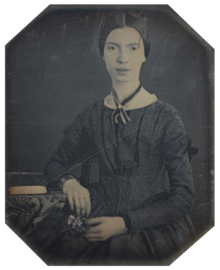 | |
Today is the birthday of Emily Dickinson (Emily Elizabeth Dickinson; Amherst, Massachusetts; December 10, 1830 – May 15, 1886 Amherst); poet. Dickinson lived much of her life in reclusive isolation. After studying at the Amherst Academy for seven years in her youth, she briefly attended the Mount Holyoke Female Seminary before returning to her family’s house in Amherst. Considered an eccentric by locals, she developed a noted penchant for white clothing and became known for her reluctance to greet guests or, later in life, to even leave her bedroom. Dickinson never married, and most friendships between her and others depended entirely upon correspondence.
Dickinson was a prolific, yet private poet; fewer than a dozen of her nearly 1,800 poems were published during her lifetime. The work that was published during her lifetime was usually altered significantly by the publishers to fit the conventional poetic rules of the time. Dickinson’s poems are unique for the era in which she wrote; they contain short lines, typically lack titles, and often use slant rhyme as well as unconventional capitalization and punctuation. Many of her poems deal with themes of death and immortality, two recurring topics in letters to her friends.
It was not until after her death, when Dickinson’s younger sister Lavinia discovered her cache of poems, that the breadth of her work became apparent to the public. Her first collection of poetry was published in 1890 by personal acquaintances Thomas Wentworth Higginson and Mabel Loomis Todd, though both heavily edited the content. A complete, and mostly unaltered, collection of her poetry became available for the first time when scholar Thomas H. Johnson published The Poems of Emily Dickinson in 1955. In my opinion, Dickinson is one of the most significant of all American poets.
Verse
- Success is counted sweetest
By those who ne’er succeed.
To comprehend a nectar
Requires a sorest need. - Not one of all the purple Host
Who took the Flag today
Can tell the definition
So clear of Victory - As he defeated — dying —
On whose forbidden ear
The distant strains of triumph
Burst agonized and clear!- 67: Success is counted sweetest
- “Faith” is a fine invention
When Gentlemen can see —
But Microscopes are prudent
In an Emergency.- 185: “Faith” is a fine invention
- “Hope” is the thing with feathers —
That perches in the soul —
And sings the tune without the words —
And never stops — at all — - And sweetest — in the Gale — is heard —
And sore must be the storm —
That could abash the little Bird
That kept so many warm —- 254: “Hope” is the thing with feathers —
- I’m Nobody! Who are you?
Are you — Nobody — Too?- 288: I’m Nobody! Who are you?
- How dreary — to be — Somebody!
How public — like a Frog —
To tell one’s name — the livelong June —
To an admiring Bog!- 288: I’m Nobody! Who are you?; In some editions “June” has been altered to “day”.
- The Soul selects her own Society —
Then — shuts the Door —
To her divine Majority —
Present no more —- 303: The Soul selects her own Society —
- Some keep the Sabbath going to Church —
I keep it, staying at Home—
With a Bobolink for a Chorister —
And an Orchard, for a Dome—- 324: Some keep the Sabbath going to Church —
- God preaches, a noted Clergyman —
And the sermon is never long,
So instead of getting to Heaven, at last—
I’m going, all along.- 324: Some keep the Sabbath going to Church —
- This is my letter to the World
That never wrote to Me —
The simple News that Nature told —
With tender Majesty - Her Message is committed
To Hands I cannot see —
For love of Her — Sweet — countrymen —
Judge tenderly — of Me- 441: This is my letter to the World
- I died for Beauty — but was scarce
Adjusted in the Tomb,
When One who died for Truth, was lain
In an adjoining Room — - He questioned softly “Why I failed”?
“For Beauty,” I replied.
“And I — for Truth, — Themself are One —
We Brethren, are”, He said —- 449: I died for Beauty —
- Dreams — are well — but Waking’s better,
If One wake at Morn —
If One wake at Midnight — better —
Dreaming — of the Dawn —- 450: Dreams — are well — but Waking’s better
- Love — thou art Veiled —
A few — behold thee —
Smile — and alter — and prattle — and die —
Bliss — were an Oddity — without thee —
Nicknamed by God —
Eternity —- 453: Love — thou art high —
- I heard a Fly buzz — when I died —
The Stillness in the Room
Was like the Stillness in the Air —
Between the Heaves of Storm —- 465: I heard a Fly buzz — when I died —
- Because I could not stop for Death —
He kindly stopped for me —
The Carriage held but just Ourselves —
And Immortality. - We slowly drove — He knew no haste
And I had put away
My labor and my leisure too,
For His Civility —- 712: Because I could not stop for Death —
- Since then — ’tis Centuries — and yet
Feels shorter than the Day
I first surmised the Horses’ Heads
Were toward Eternity —- 712: Because I could not stop for Death —
- My Life had stood — a Loaded Gun —
In Corners — till a Day
The Owner passed — identified —
And carried Me away — - And now We roam in Sovereign Woods —
And now We hunt the Doe —
And every time I speak for Him —
The Mountains straight reply —- 754: My Life had stood — a Loaded Gun —
- We outgrow love, like other things
And put it in the Drawer —
Till it an Antique fashion shows —
Like Costumes Grandsires wore.- 887: We outgrow love, like other things
- A Grave — is a restricted Breadth —
Yet ampler than the Sun —
And all the Seas He populates
And lands he looks upon - To Him who on its small Repose
Bestows a single Friend —
Circumference without Relief —
Or Estimate — or End- 943: A Coffin — is a small Domain,
- To Whom the Mornings stand for Nights,
What must the Midnights — be!- 1095: To Whom the Mornings stand for Nights,
- A Vastness, as a Neighbor, came,
A Wisdom, without Face, or Name,
A Peace, as Hemispheres at Home
And so the Night became.- 1104: The Crickets sang
- Tell all the Truth but tell it slant —
Success in Circuit lies
Too bright for our infirm Delight
The Truth’s superb surprise - As Lightning to the Children eased
With explanation kind
The Truth must dazzle gradually
Or every man be blind —- 1129: Tell all the Truth but tell it slant —
- Could Hope inspect her Basis
Her Craft were done —
Has a fictitious Charter
Or it has none — - Balked in the vastest instance
But to renew —
Felled but by one assassin —
Prosperity —- 1283: Could Hope inspect her Basis
- Not with a Club, the Heart is broken
Nor with a Stone —
A Whip so small you could not see it
I’ve known - To lash the Magic Creature
Till it fell,
Yet that Whip’s Name
Too noble then to tell. - Magnanimous as Bird
By Boy descried —
Singing unto the Stone
Of which it died — - Shame need not crouch
In such an Earth as Ours —
Shame — stand erect —
The Universe is yours.- 1304: Not with a Club, the Heart is broken
- A little Madness in the Spring
Is wholesome even for the King.- 1333: A little Madness in the Spring
- More than the Grave is closed to me —
The Grave and that Eternity
To which the Grave adheres —
I cling to nowhere till I fall —
The Crash of nothing, yet of all —
How similar appears —- 1503: More than the Grave is closed to me —
- If Aims impel these Astral Ones
The ones allowed to know
Know that which makes them as forgot
As Dawn forgets them — now- 1528: The Moon upon her fluent Route
- Who has not found the Heaven — below —
Will fail of it above —- 1544: Who has not found the Heaven — below —
- I took one Draught of Life —
I’ll tell you what I paid —
Precisely an existence —
The market price, they said.- 1725: I took one Draught of Life —
Today is the birthday of Henri Gervex (10 December 1852 – 7 June 1929); painter who studied painting under Alexandre Cabanel, Pierre-Nicolas Brisset, and Eugène Fromentin.

His early work belonged almost exclusively to the mythological genre, which served as an excuse for the painting of the nude, but not always in the best of taste. His Rolla of 1878, based on a poem by Alfred de Musset, was rejected by the jury of the Salon de Paris for immorality, since it depicted a scene from the poem of a naked prostitute after having sex with her client. However, the censorship only made Gervex’s painting even more famous, and launched the career of Gervex, then age 26. Although banned from the Salon, Rollawas exhibited in a nearby private gallery and became, according to the book Famous Pictures Reproduced from Renowned Paintings By the World’s Greatest Artists, “probably the most successful private exhibition made in Paris.” The book also called Rolla “a masterpiece, one of the few real great works on modern art.”
Gervex was one of many lovers entertained by the famous courtesan Valtesse de La Bigne. Their relationship was long and deep, with Gervex including the golden haired beauty in his piece of art called The Civil Marriage of 1881; here Valtesse De la Bigne is dressed from head to toe in blue, her favourite colour, standing beside a dark haired man with a moustache. Another painting of La Bigne inspired Émile Zola in the creation of his heroine for the novel Nana, and Gervex himself was the model for the character of an opportunistic painter who appears in Zola’s novel L’Œuvre (The Work [of Art], 1886).
gallery

Rolla (1878), musée des Beaux-Arts de Bordeaux
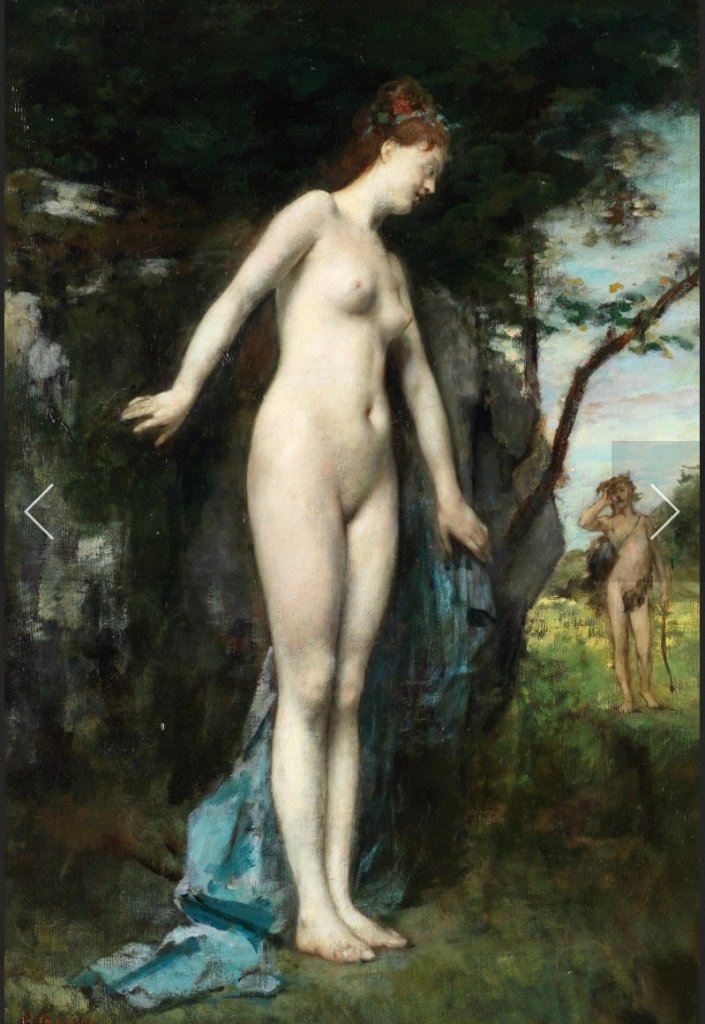
Diane et Acteon (olio su tela – 1890 c.ca)
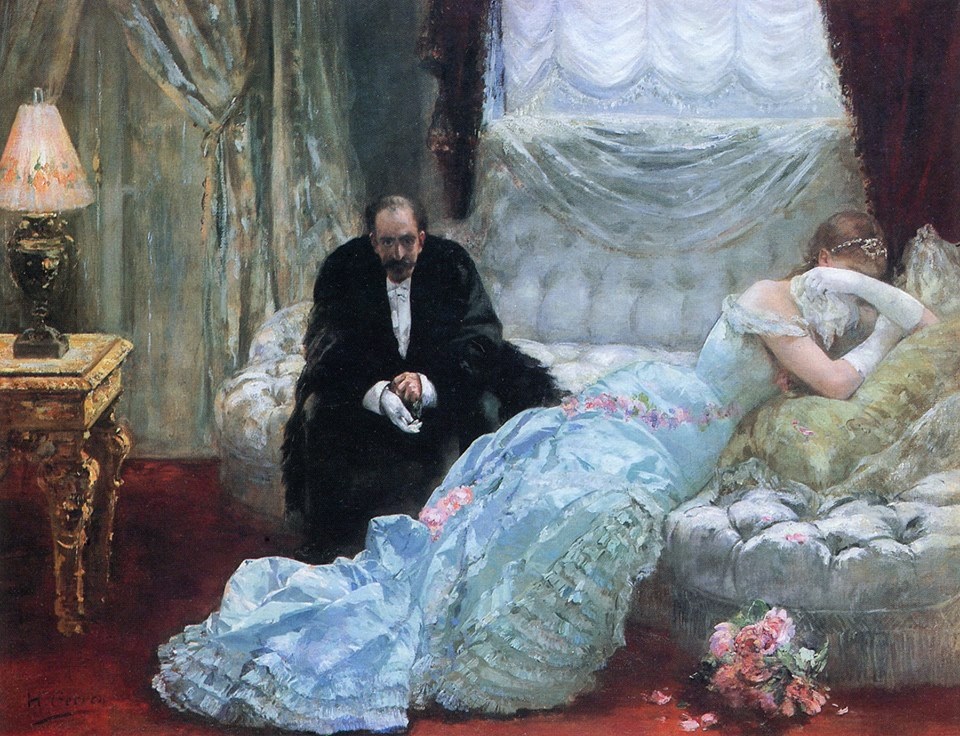
Retour de bal (vers 1879) localisation inconnue
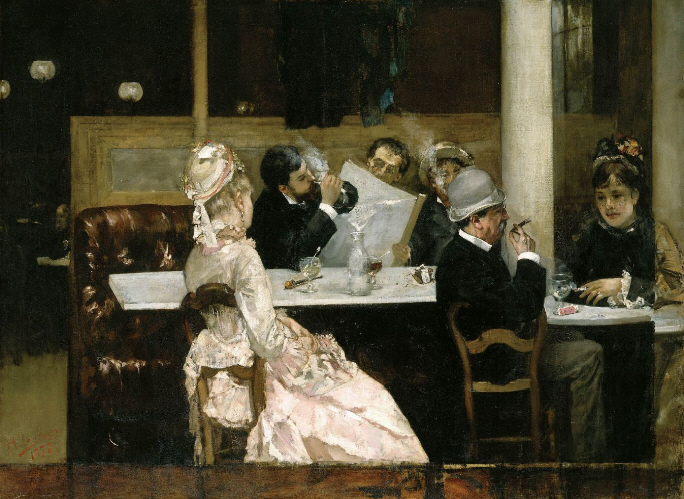
Scène de café à Paris (1877) Detroit Institute of Arts
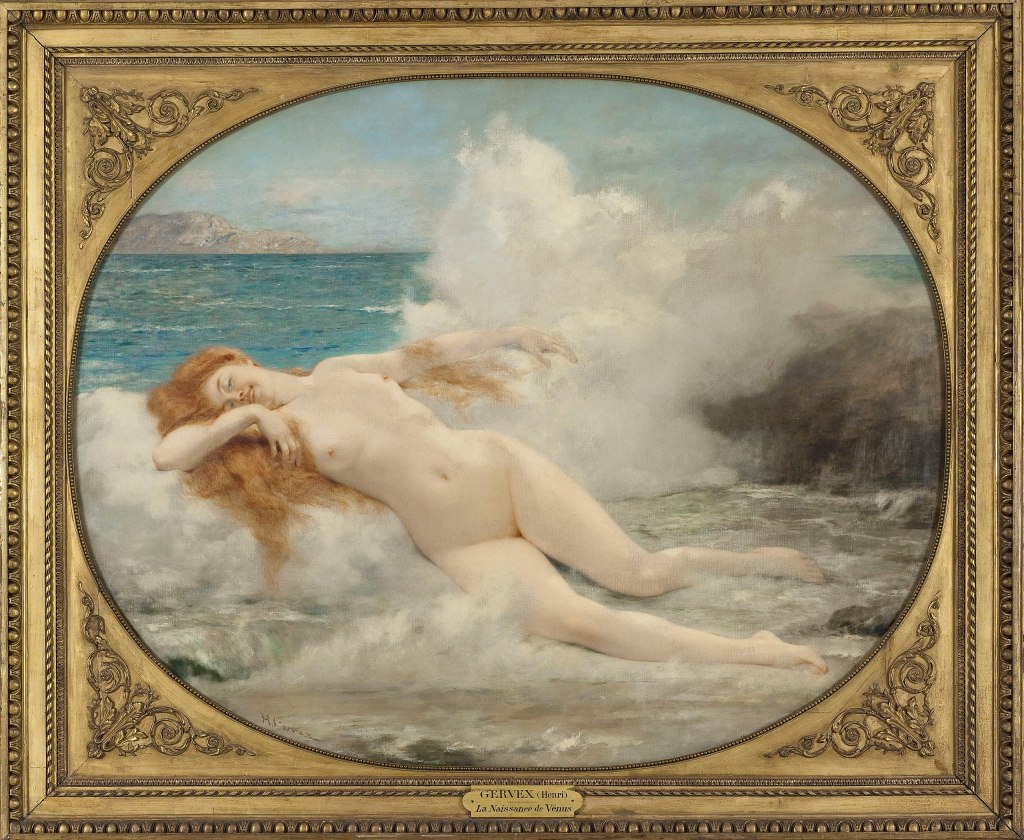
The Birth of Venus (1907)

“Valtesse de La Bigne”, 1879


La femme au Masque, 1885, which garnered world-wide attention in a 1902 court case because Camille du Gast had been falsely accused of being the subject.

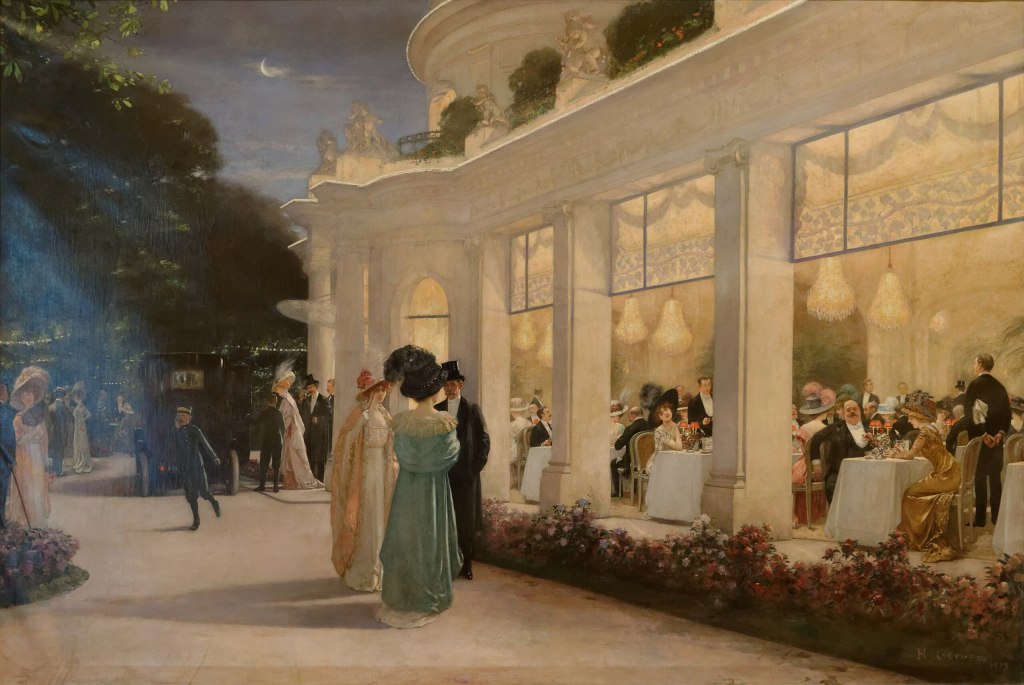
Cinq Heures Chez Paquin

Un soir de grand prix au pavillon d’Armenonville
Today is the birthday of Zinaida Serebriakova (Zinaida Yevgenyevna Serebriakova; née Lanceray) (Neskuchnoye estate, near Kharkov, Russian Empire (present-day Ukraine) 12 December [O.S. 30 November] 1884 – 19 September 1967 Paris); painter.

self portrait At the Dressing-Table 1909
Serebriakova’s most famous self-portrait, At the Dressing-Table (1909, Tretyakov Gallery), was painted while she was snowed in at her family home and models from a nearby village were unable to travel there. Her brother Evgenii encouraged Serebriakova to enter the painting in an exhibition mounted by the Union of Russian Artists in 1910, where it was received with enthusiasm and purchased for the Tretyakov Gallery collection. The self-portrait was followed by Girl Bathing (1911, Russian Museum), a portrait of Ye.K. Lanceray (1911, private collection), and a portrait of the artist’s mother Yekaterina Lanceray (1912, Russian Museum).
In the autumn of 1924, Serebriakova went to Paris, having received a commission for a large decorative mural. On finishing this work, she intended to return to the Soviet Union, where her mother and the four children remained. However, she was not able to return, and although she was able to bring her children, Alexandre and Catherine, to Paris in 1926 and 1928 respectively, she could not do the same for her two other children, Evgenyi and Tatiana, and did not see them again for 36 years.
In 1905, Lanceray married her first cousin, Boris Serebriakova, the son of Evgenyi’s sister, and took his surname.
Serebriakova died from a brain hemorrhage at the age of 82. She is buried in Paris, at the Russian cemetery at Sainte-Geneviève-des-Bois.
Gallery

en la playa

Sauna, 1913
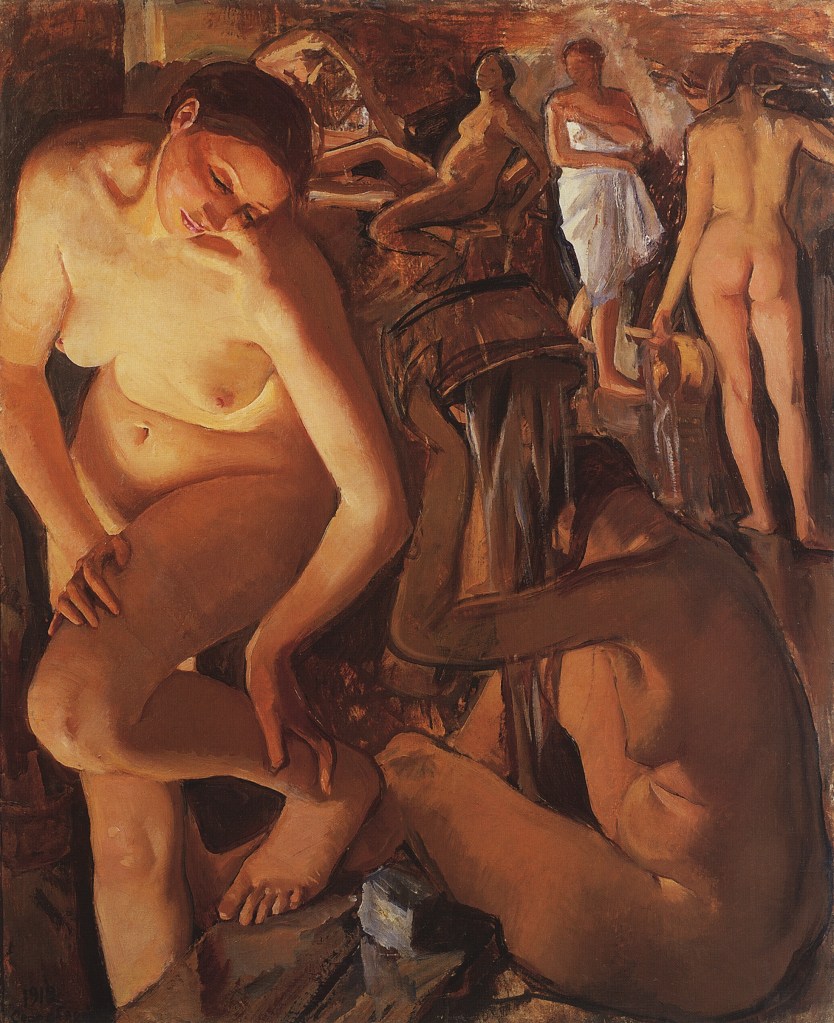
Sauna, 1912

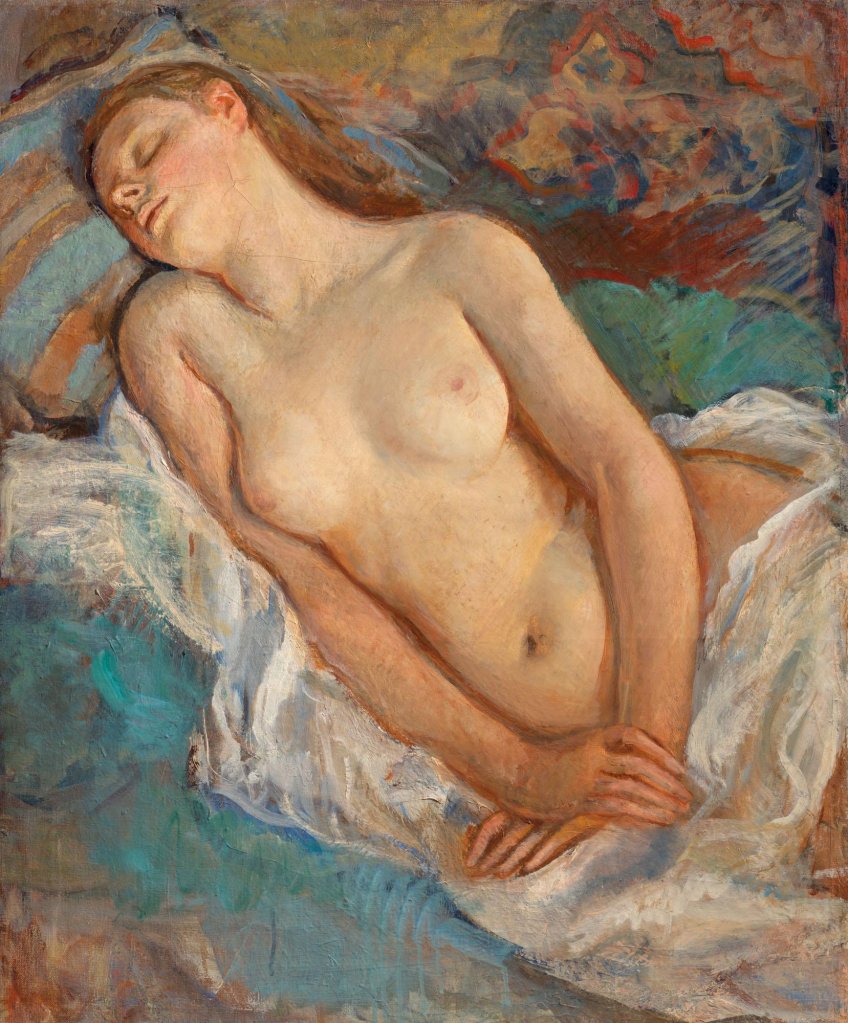


Nude, 1911


Portrait de E.I. Finogenova, 1920
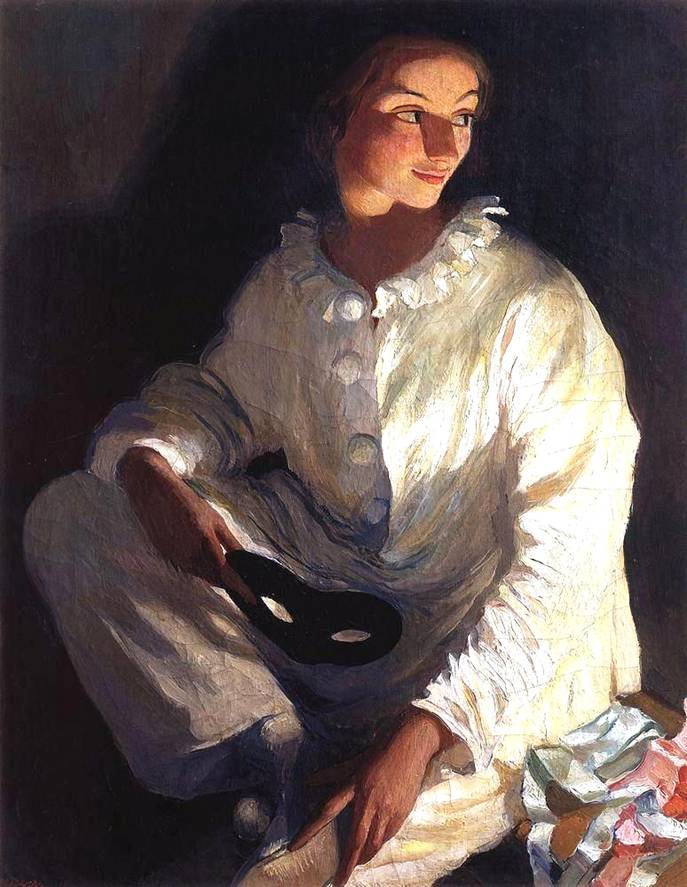
Self-Portrait as Pierrot, 1911

self portrait

Portrait of Olga Lanceray, 1910
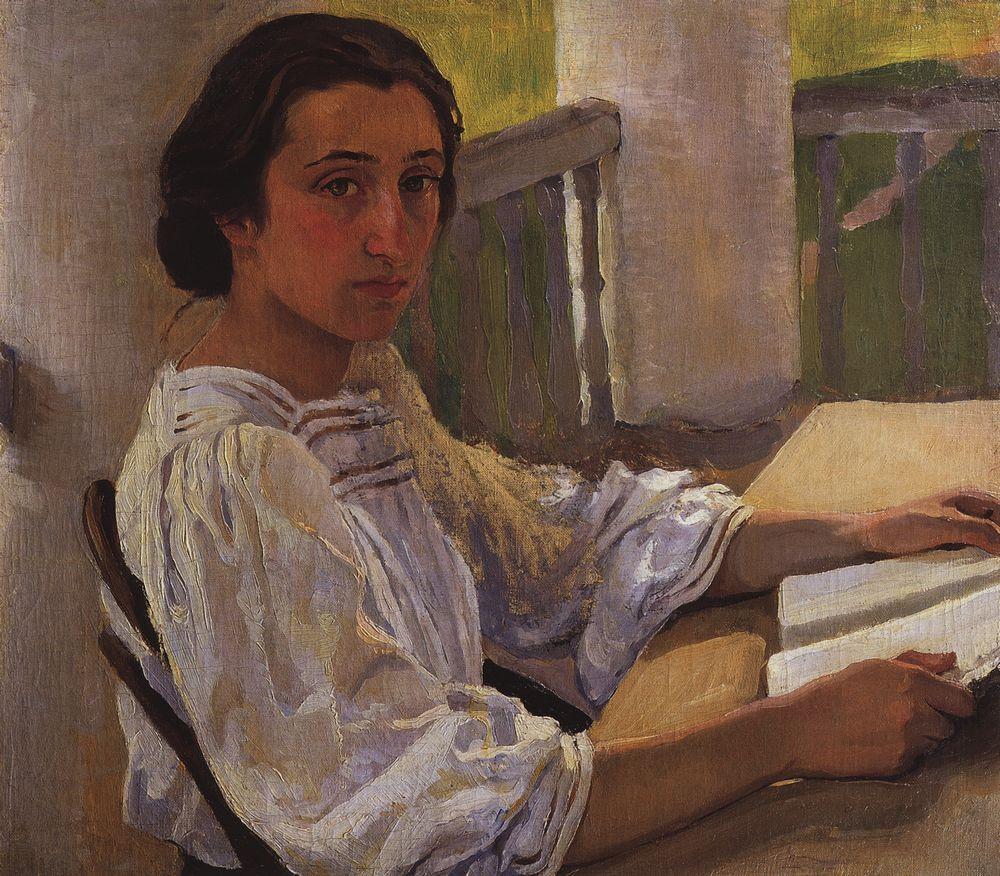
The Artist’s Sister, 1911
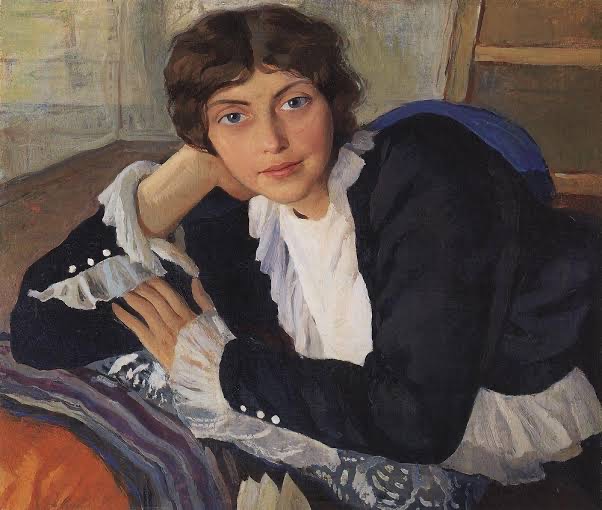
Portrait of Lola Braz, 1910
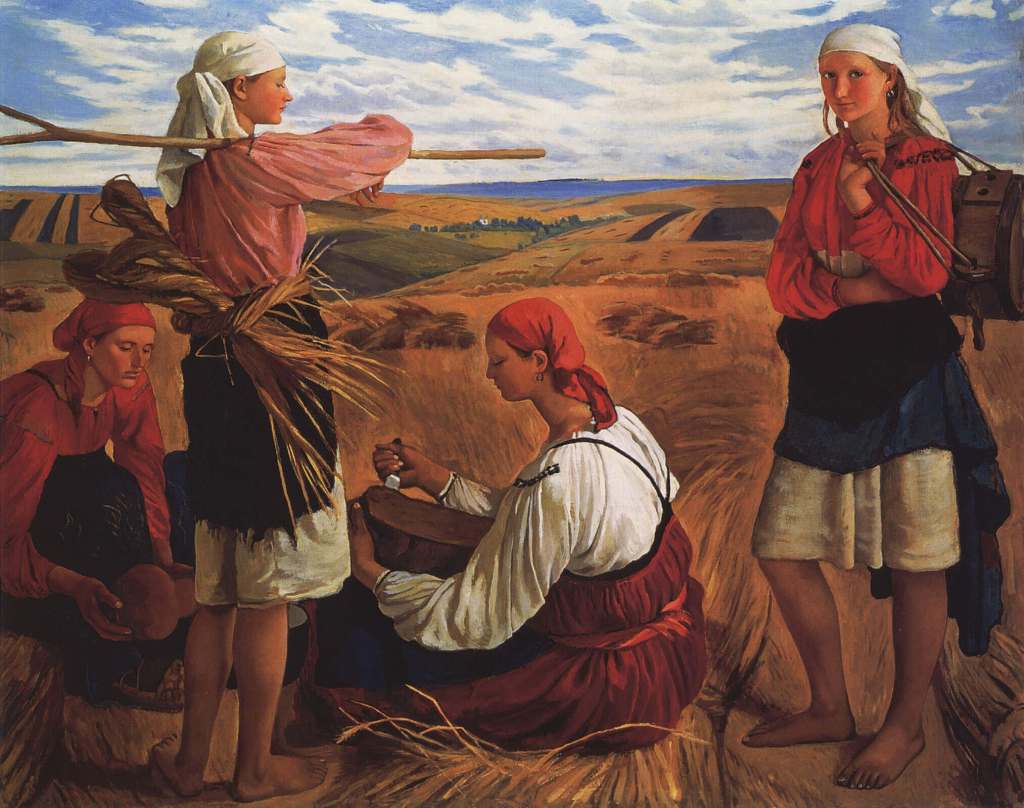
Harvest, 1915

And today is the birthday of Clarice Lispector (Chaya Lispector in Chechelnyk, Podolia, a shtetl in what is today Ukraine; December 10, 1920 – December 9, 1977 Rio de Janeiro); writer acclaimed for her innovative novels and short stories. Her family moved to Brazil when she was an infant, amidst the disasters engulfing her native land following the First World War.
While in law school in Rio, she began publishing her first journalistic work and short stories, catapulting to fame at the age of 23 with the publication of her first novel, Near the Wild Heart (Perto do Coração Selvagem), written as an interior monologue in a style and language that was considered revolutionary in Brazil.
She left Brazil in 1944, following her marriage to a Brazilian diplomat, and spent the next decade and a half in Europe and the United States. After returning to Rio de Janeiro in 1959, she began producing her most notable works, including the stories of Family Ties (Laços de Família), the great mystic novel The Passion According to G.H. (A Paixão Segundo G.H.), and what is arguably her masterpiece, Água Viva. Injured in an accident in 1966, she spent the last decade of her life in frequent pain, steadily writing and publishing novels and stories until her premature death in 1977.
She has been the subject of numerous books, and references to her and her work are common in Brazilian literature and music. Several of her works have been turned into films. In 2009, the American writer Benjamin Moser published Why This World: A Biography of Clarice Lispector. Since that publication, her works have been the object of an extensive project of retranslation, published by New Directions Publishing and Penguin Modern Classics, the first Brazilian to enter that prestigious series. Moser, who is also the editor of her anthology The Complete Stories (2015), describes Lispector as the most important Jewish writer in the world since Kafka.
Eu não te disse que viver é apertado? Pois fui dormir e sonhei que te escrevia um largo majestoso e era mais verdade ainda do que te escrevo: era sem medo. Esqueci-me do que no sonho escrevi, tudo voltou para o nada, voltou para a Força do que Existe e que se chama às vezes Deus. Tudo acaba mas o que te escrevo continua. O que é bom, muito bom. O melhor ainda não foi escrito. O melhor está nas entrelinhas.”
(Didn’t I tell you that living is tight? For I went to sleep and dreamed that I would write you a majestic broad and it was even more true than I write you: it was fearless. I forgot what in the dream I wrote, everything came back to nothing, went back to the force of what exists and what is sometimes called God. It’s all over but what I write to you continues. Which is good, very good. The best is not yet written. The best is between the lines.)
thanks for stoppin’ by y’all
Mac Tag
 The Lovers’ Chronicle
Leave a reply to The Lovers’ Chronicle 2 January – clearly comin’ – art by Piero di Cosimo & Constant Detré – The Lovers’ Chronicle Cancel reply