
Dear Zazie, Here is today’s Lovers’ Chronicle from Mac Tag dedicated to his muse. Do you long for the one you love? How many ways? Rhett
The Lovers’ Chronicle
Dear Muse,
we could go Barrett Browning
but lets save that for her birthday
“Ok with me my dear”
a song that kinda fits came to mind,
do you know the Fastball song “The Way”
“No, play it and tell me”
my interpretation is, it is about
two people goin’ somewhere
without knowin’ where
but it does not matter
because they are together
“The only way to travel”
right, are you ready baby
“Let’s go”
© copyright 2023 mac tag/cowboy coleridge all rights reserved
start with windin’ through the variations on this day; the course generally goin’ from loss and despair to hope to resignation to discoverin’ feelin’s and desire, long thought lost, a ride not for the weak, no doubt made more difficult by stubbornness and bein’ too independent, ways that served a purpose on the trail to you
© copyright 2022.2023 mac tag/cowboy coleridge all rights reserved
lends itself to several options for countin’
a story perhaps, a dream settin’ works
then the meanin’ can go any direction
we start packin’ but where are we goin’
talkin’ about what we need without
knowin’ where and the time for leavin’
keeps changin’ which does not seem
to matter, lost in the ways of the lovers
together where details are irrelevant
© copyright 2021.2023 mac tag/cowboy coleridge all rights reserved
Pale Love, Pale Rider
words come flowin’
forth, stayin’,
along with feelin’s
thus with will to speak,
“Look in thy heart and write.”
in verse to show
comes the certainty
the release,
that only comes this way
think not that i by verse seek
anything more than this…
to stay here with you
© copyright 2020 mac tag/cowboy coleridge all rights reserved
in the light of dusk,
suddenly appears…
no, i do not wish that
i do not miss it
i figured this out
it ain’t about happiness,
but rather contentment
which lies in the eyes
of the beholder
call it penance,
i will give you that
but if you have been
payin’ attention
you will see
© copyright 2019 mac tag/cowboy coleridge all rights reserved
words come haltin’
forth, tryin’ to stay,
and feel still seems
a long way off
thus with will to speak,
and helpless in throes,
holdin’ my hesitant pen,
wrestlin’ with doubt
“Look in thy heart and write.”
in truth, and fain
in verse to show
voices of the night
have i caught
come sleep,
the certainty,
the balm of woe,
the release,
between what has
and has not been done
think not that i by verse seek
anything more than this…
to find my way back to you
© copyright 2018 mac tag/cowboy coleridge all rights reserved
how many ways
oh, i s’pose a lot…
protective, in tune,
and sensitive, a gift
the ability to feel everything
a brave feat, to have a heart
that can open so fully
and give and receive
a breath of life, a reminder
of release, prayer, and connection
© copyright 2017 mac tag/cowboy Coleridge all rights reserved
How Many Ways
Were I as witty as Wilde
No doubt a better poet
Would I be and these words
I write would wind their way
Better around your heart
Some men can be happy
With any woman as long
As they do not love them
With you I found it easy
To love you and be happy
How many ways
Can it be said
Still missin’ you
Some men think women were made
To be loved and not understood
Learnin’ to understand you
Was the best part of lovin’ you
How many ways
Can it be said
Still needin’ you
Some say we ought to misbehave
Or rather look like we might
Misbehavin’ or pretendin’
Was never more fun than with you
How many ways
Can it be said
Still wantin’ you
Some think when it comes to lovin’,
Three is company and two none
When you and I were together
You were all I ever needed
How many ways
Can it be said
Still lovin’ you
Some say and it has been written
One should always be in love
How many ways can it be said
Would it were that I still was
© copyright 2012 mac tag/Cowboy Coleridge all rights reserved
The Song of the Day is “How Many Ways” by Murray Head.
| William-Adolphe Bouguereau | |
|---|---|
 | |
Today is the birthday of William-Adolphe Bouguereau (La Rochelle, France; November 30, 1825 – August 19, 1905 La Rochelle); academic painter and traditionalist. In his realistic genre paintings he used mythological themes, making modern interpretations of classical subjects, with an emphasis on the female human body. As the quintessential salon painter of his generation, he was reviled by the Impressionist avant-garde. By the early twentieth century, Bouguereau and his art fell out of favor with the public. In the 1980s, a revival of interest in figure painting led to a rediscovery of Bouguereau and his work. Throughout the course of his life, Bouguereau executed 822 known finished paintings, although the whereabouts of many are still unknown.
In 1856, he married Marie-Nelly Monchablon. In 1877, she died. Bouguereau was married for the second time in 1896, to fellow artist Elizabeth Jane Gardner, one of his pupils.
Gallery
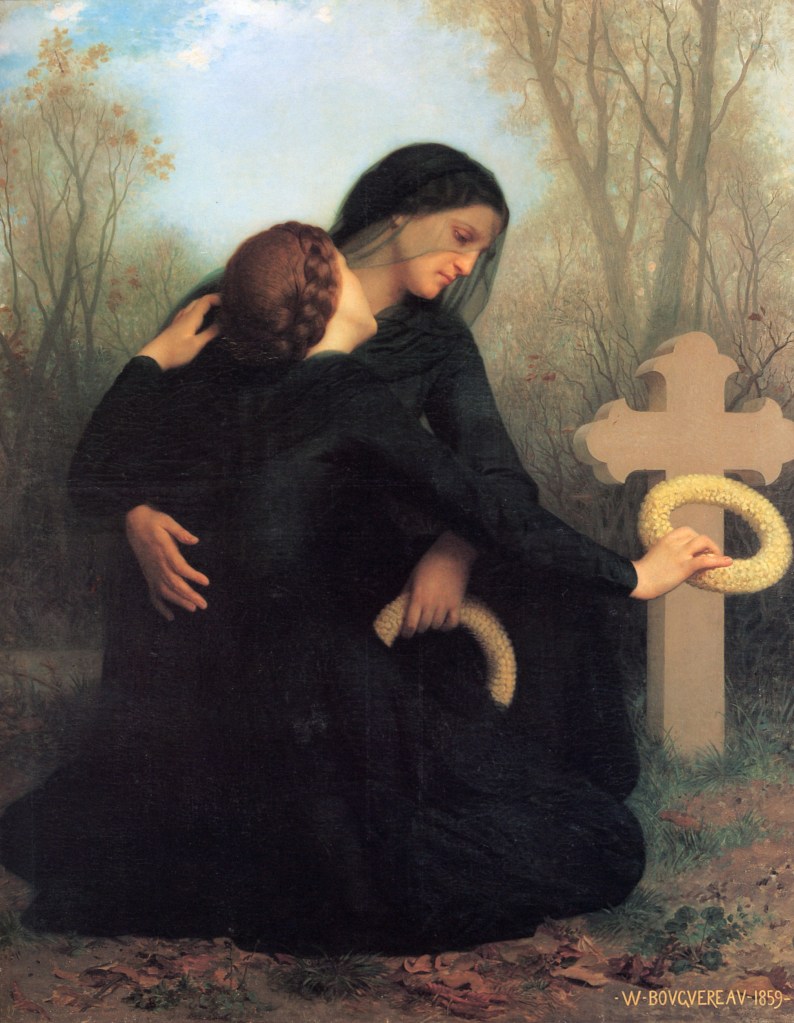
The Day of the Dead (1859)

The First Mourning (1888)

The Abduction of Psyche (1895)

Psyche et L’Amour (1889)

Nymphs and Satyr, 1873, oil on canvas, 260 × 180 cm (102.4 × 70.9 in), Clark Art Institute

Entre la richesse et l’amour
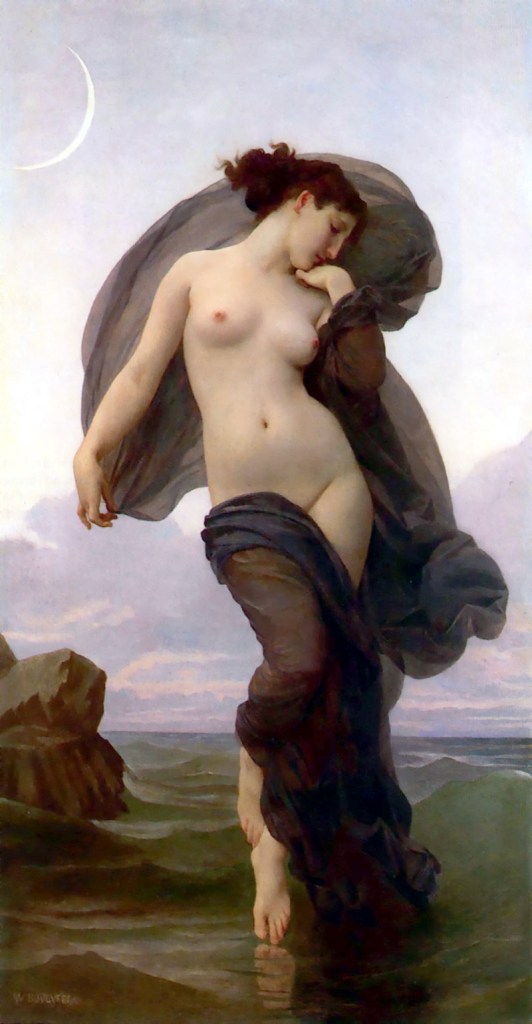
Soir, Evening or Evening Mood (1882)

L’Etoile Perdue

The Wave (1896)

Biblis (1884)
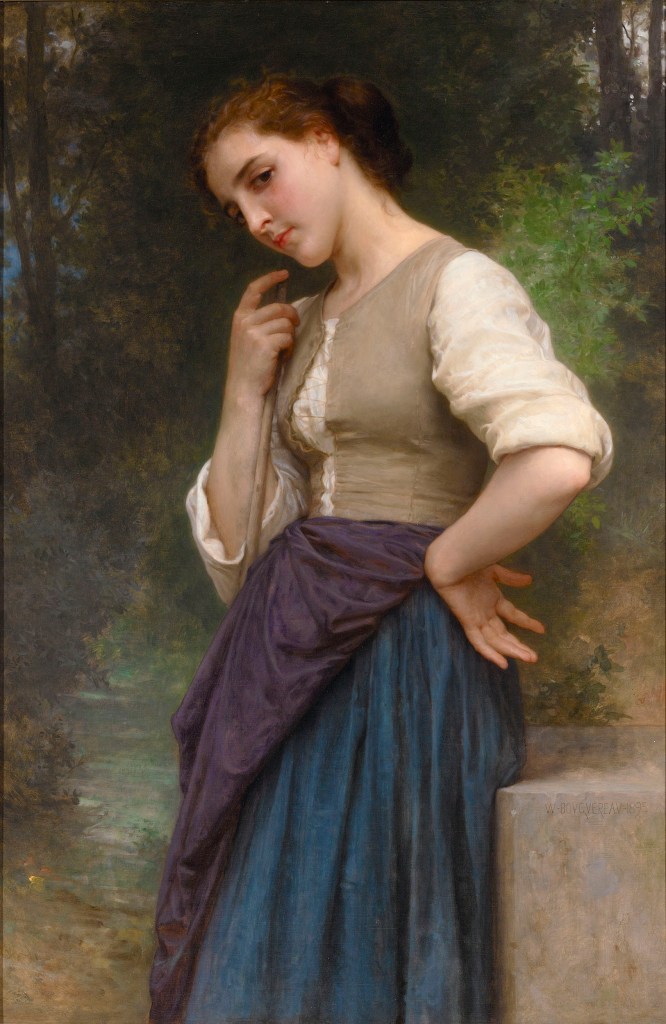
The Shepherdess (1895)

Les Oréades
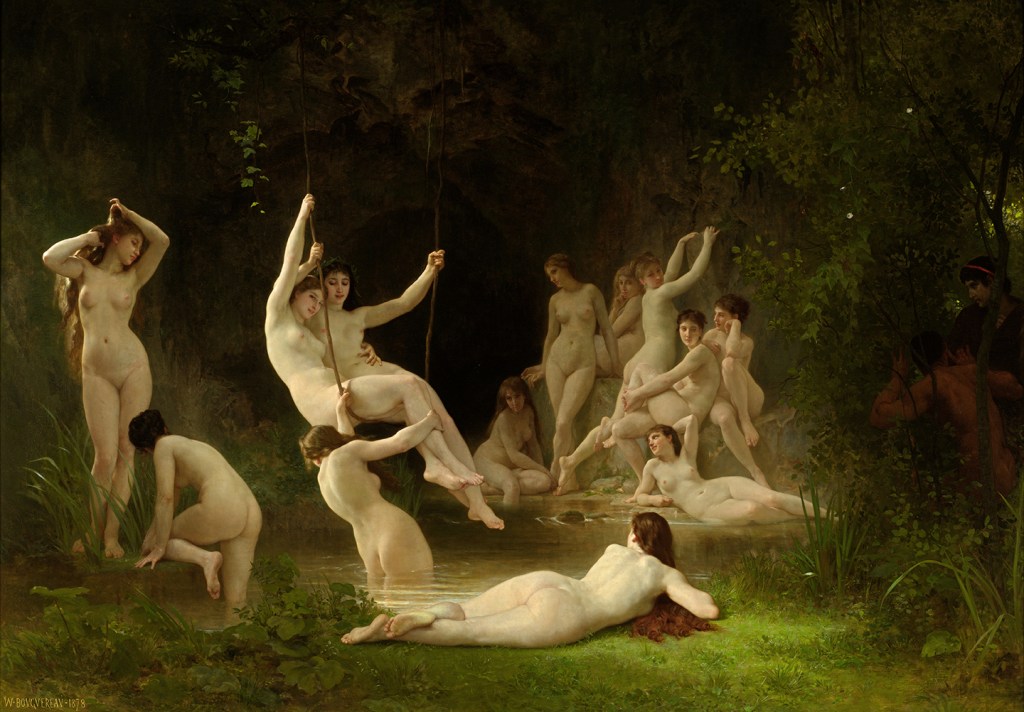
Nymphaeum, 1878, Haggin Museum
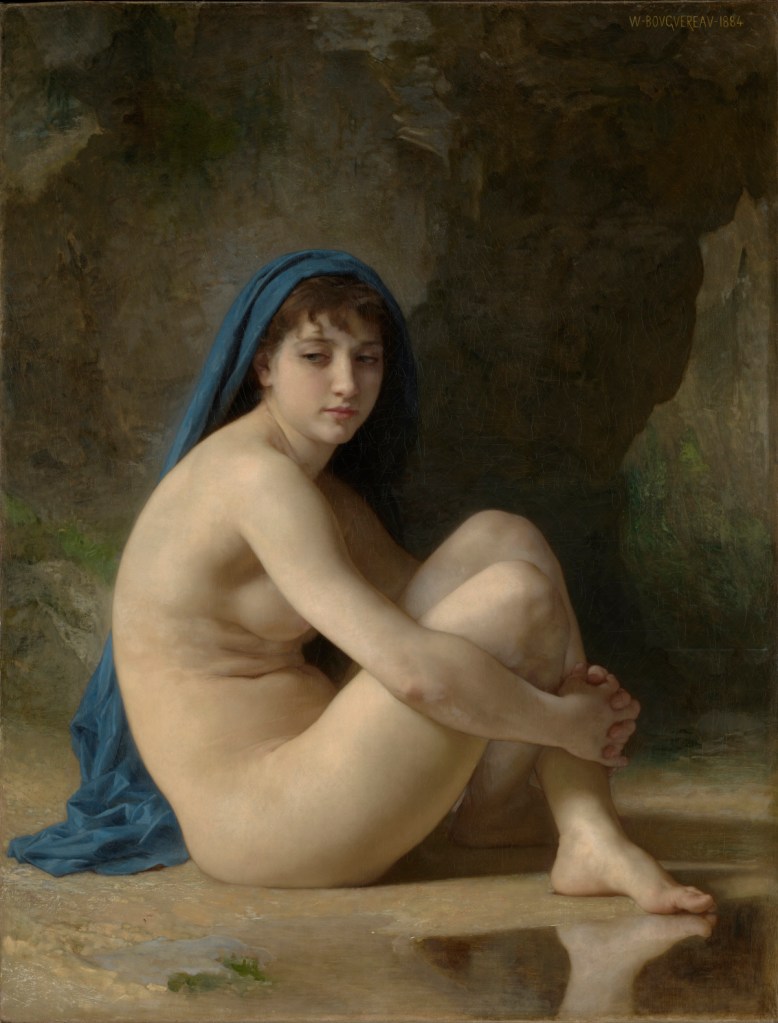
Seated Nude (1884)
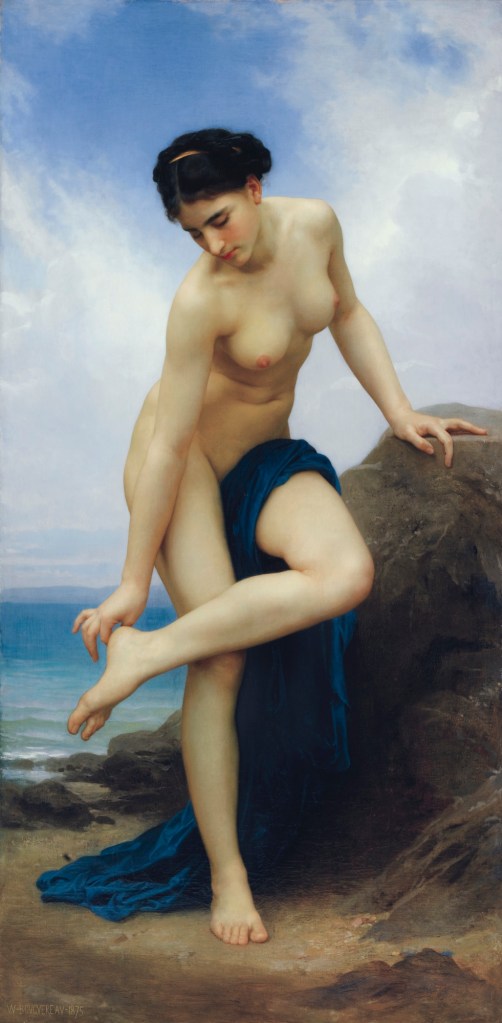
After the Bath (1875)
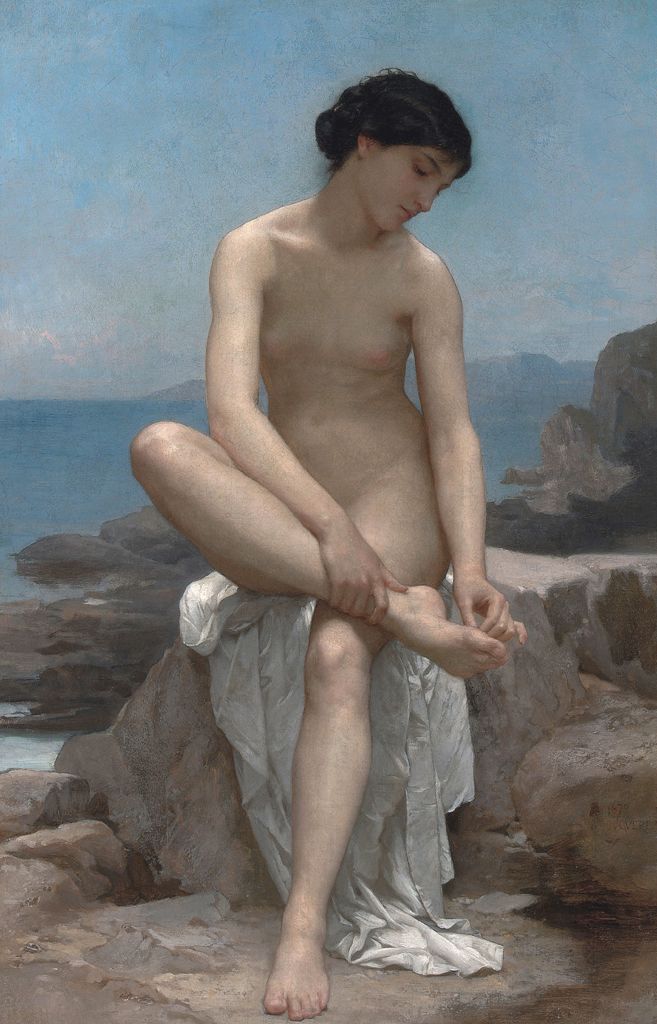
The Bather or Baigneuse (1879)

Les Deux Baigneuses (1884)

Baigneuse (1870)

The Bather (1864)

L’Aurore or Dawn (1881)
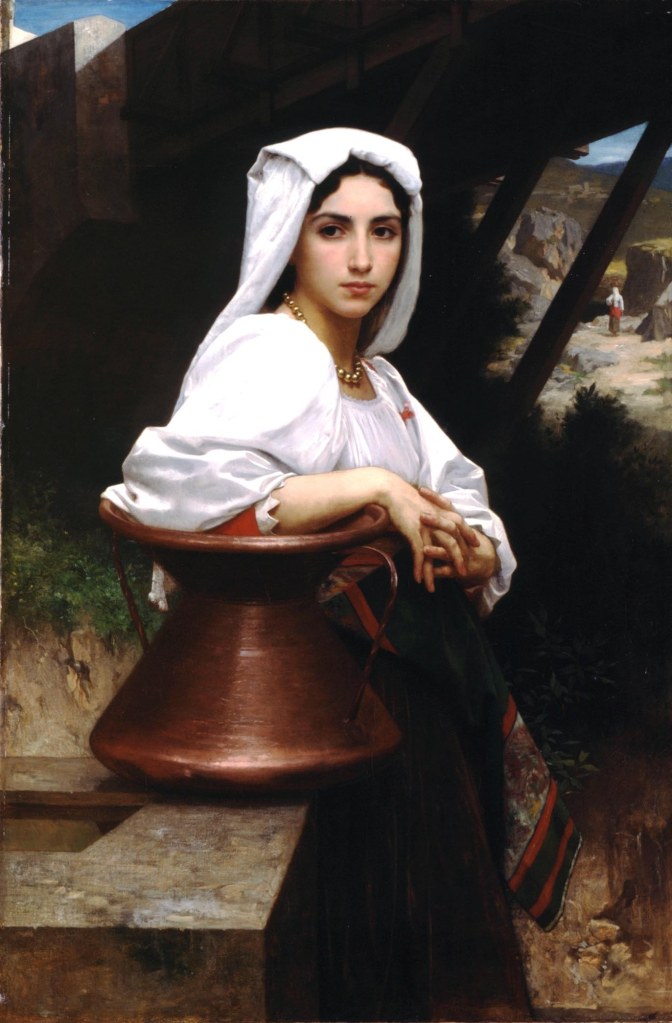
Italian Girl Drawing Water (1871)
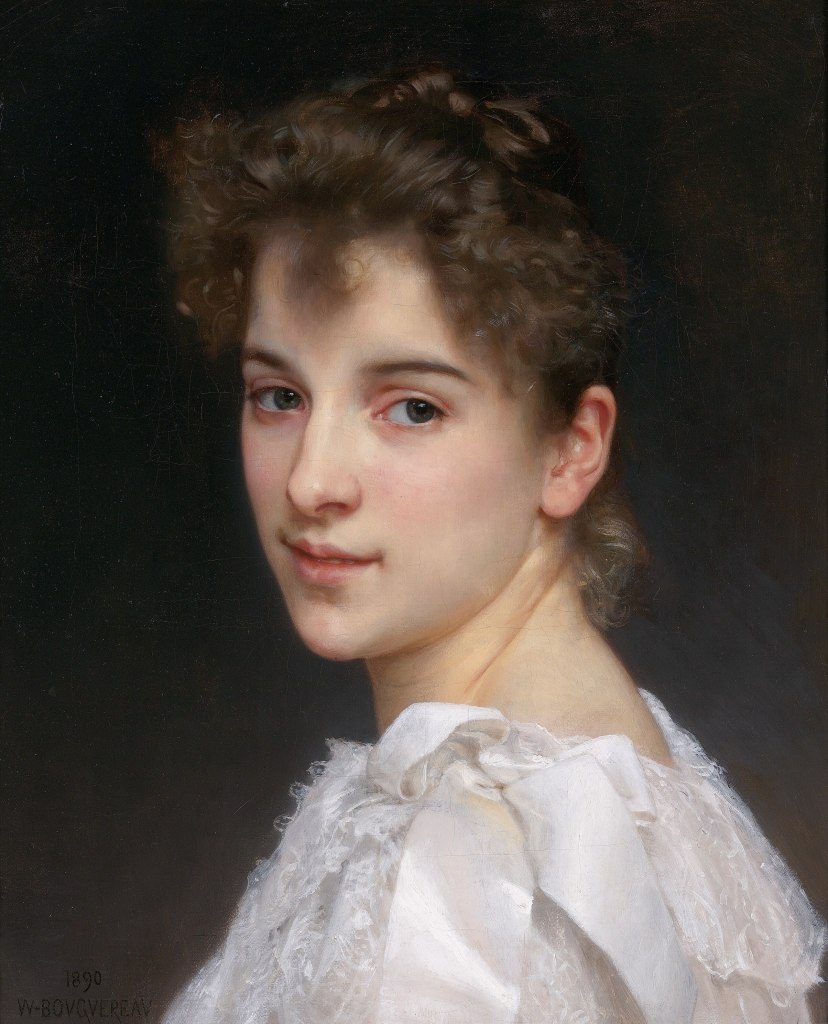
Gabrielle Cot, daughter of Pierre Auguste Cot (1890)

The Haymaker (1869)
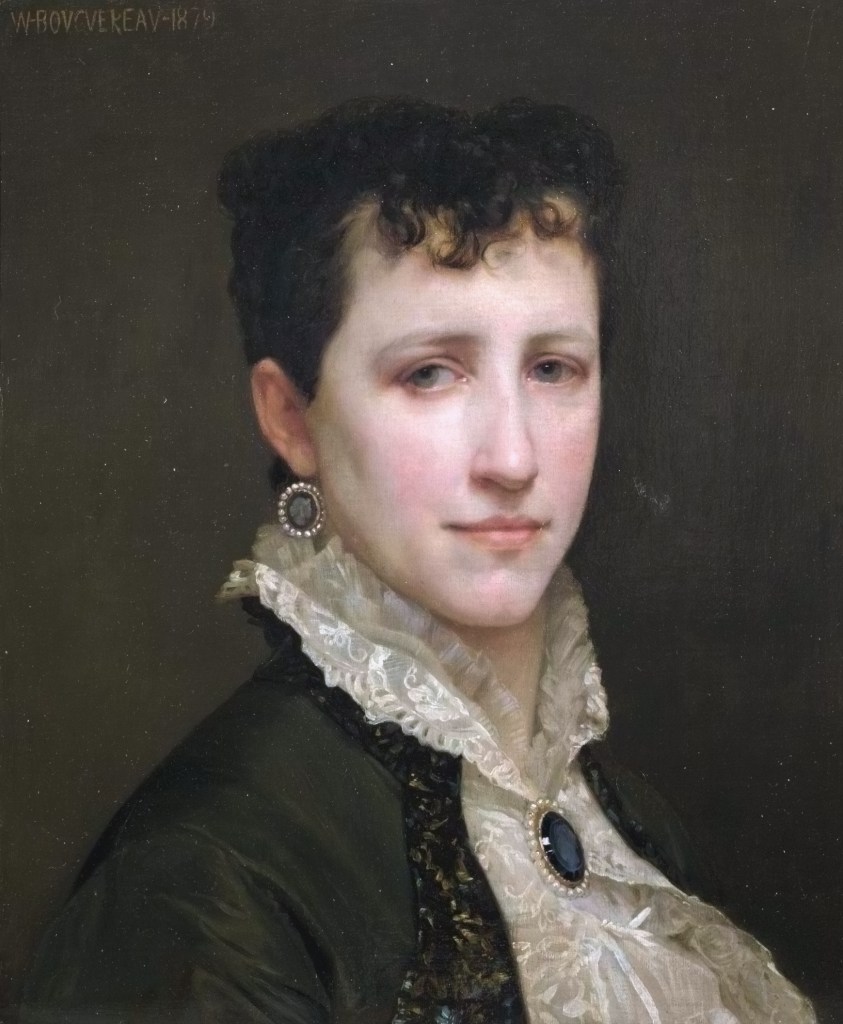
Portrait by Bouguereau of his wife Elizabeth Jane Gardner, Chimei Museum, Tainan, Taiwan

Today is the premiere date of Le Cid, an opera in four acts and ten tableaux by Jules Massenet to a French libretto by Louis Gallet, Édouard Blau and Adolphe d’Ennery. It is based on the play of the same name by Pierre Corneille.
It was first performed by a star-studded cast at the Paris Opéra on 30 November 1885 in the presence of President Grévy, with Jean de Reszke as Rodrigue. The staging was directed by Pedro Gailhard, with costumes designed by Comte Lepic, and sets by Eugène Carpezat (act 1), Enrico Robecchi and his student Amable (act 2), Auguste Alfred Rubé, Philippe Chaperon and their students Marcel Jambon (act 3), and Jean-Baptiste Lavastre (act 4). The opera had been seen 150 times by 1919 but faded from the repertory and was not performed again in Paris until the 2015 revival at the Palais Garnier. While Le Cid is not in the standard operatic repertory, the ballet suite is a popular concert and recording piece which includes dances from different regions of Spain. It was specially created by Massenet for the prima ballerina Rosita Mauri. An opera on the subject had been composed by Sacchini, Il Cid, for London in 1783, and from 1890 to 1892 Debussy worked on, but did not complete, an opera Rodrigue et Chimène also based on Corneille.
on this day in 1886 – The Folies Bergère stages its first revue.
 | |
The Folies Bergère is a cabaret music hall, located in Paris, France. Established in 1869, the house was at the height of its fame and popularity from the 1890s’ Belle Époque through the Golden Twenties. The institution is still in business, and is still a strong symbol of French and Parisian life.

Costume, c. 1900
Located at 32 rue Richer in the 9th Arrondissement, the Folies Bergère was built as an opera house by the architect Plumeret. It opened on 2 May 1869 as the Folies Trévise, with light entertainment including operettas, opéra comique (comic opera), popular songs, and gymnastics. It became the Folies Bergère on 13 September 1872, named after a nearby street, the rue Bergère (“bergère” means “shepherdess”). The American impresario Florenz Ziegfeld, Jr., named his light-hearted, extravagant Broadway revues the Ziegfeld Follies (1907-1931), after the venue.

Édouard Manet‘s A Bar at the Folies-Bergère, 1882
In 1882 Manet painted A Bar at the Folies-Bergère which depicts a bar-girl, one of the demimondaines, standing before a mirror.
In 1886, Édouard Marchand conceived a new genre of entertainment for the Folies Bergère: the music-hall revue. Women would be the heart of Marchand’s concept for the Folies.

And today is the birthday of Jeanloup Sieff (Paris; November 30, 1933 – September 20, 2000 Paris); photographer. He was born to Polish parents. He was a photography student of Gertrude Fehr. Perhaps best known for his portraits of politicians, famous artists, landscapes, as well as for his nudes and use of wide-angle lens and visible dodging marks. He worked mainly in black and white and in fashion.

self portrait
His daughter, Sonia Sieff, is also a photographer
Gallery
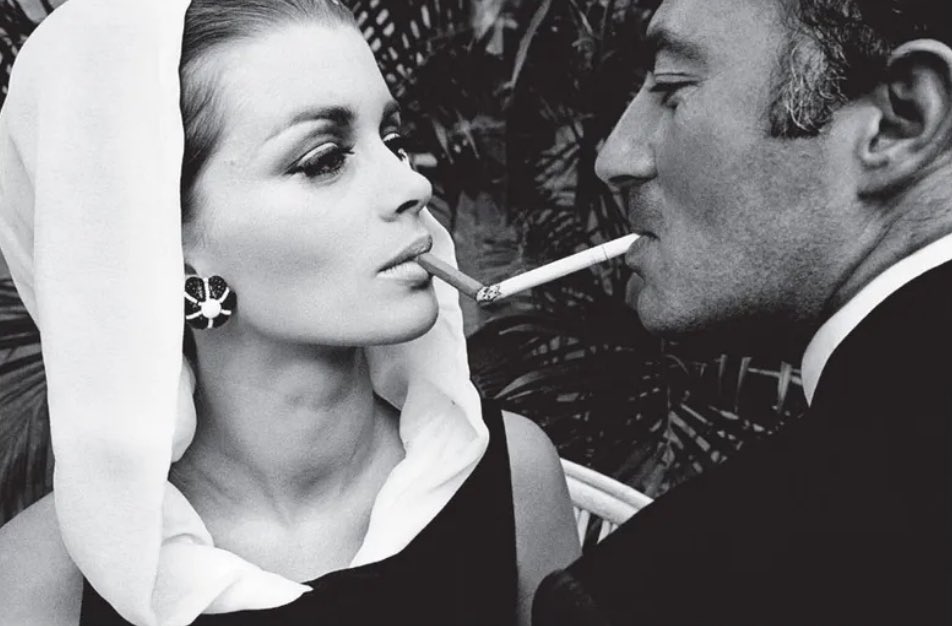
connection

Le tapis volant, Normandie, 1988


Paris 1978
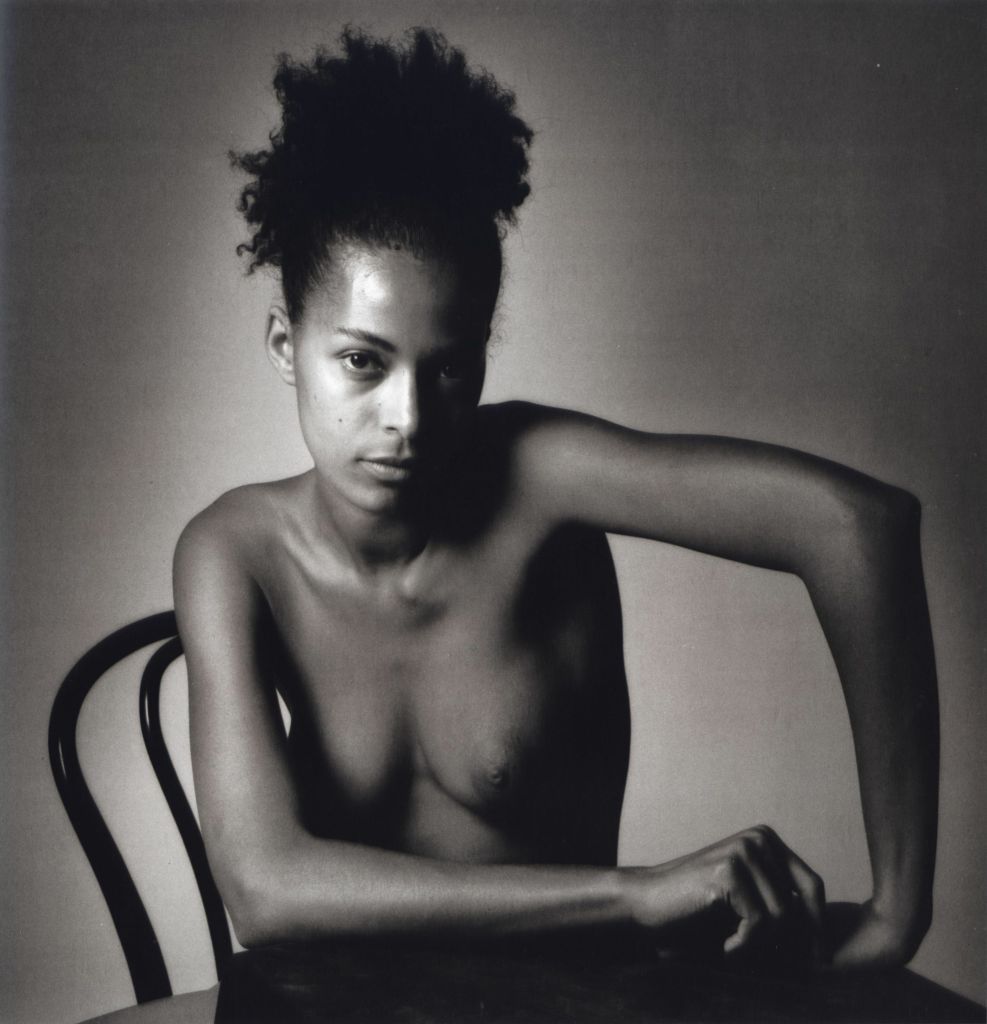
Mariama Cartillier

Lucie de la Falaise, modèl, 1990
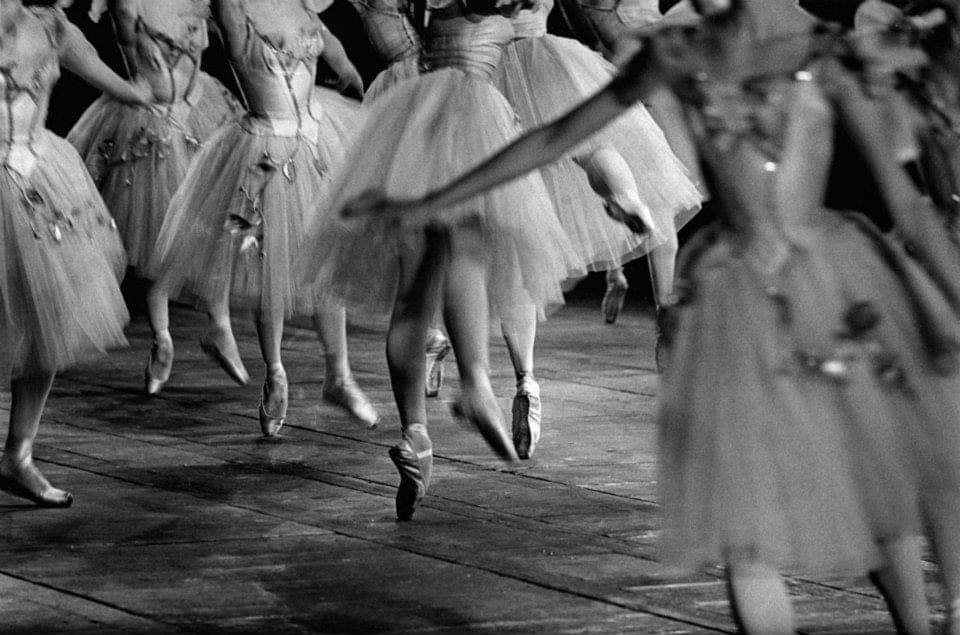
Ballet à l’Opéra
Paris

sylvie

Woman with cello, Paris, 1984
mac tag
thanks for stoppin’ by y’all
 The Lovers’ Chronicle
Leave a reply to The Lovers’ Chronicle 1 February – cold outside – art by Thomas Cole – premiere of Puccini’s Manon Lescaut & La bohème – birth of Langston Hughes – photography by Vivian Maier – premiere of The Broadway Cancel reply