Dear Zazie, Here is today’s Lovers’ Chronicle from Mac Tag dedicated to his muse. Are you with?
Rhett
The Lovers’ Chronicle
Dear Muse,
had to go with the obvious
though it might be a bit overplayed;
‘’Take my hand
Take my whole life too
For I can’t help falling in love with you’’
’’You know Elvis left the building’’
ha, no he just went home
’’Shaking my head my love’’
fortunately i do not have too many foibles
‘’We’ll talk later’’
ha, ok but now we have the story of this song;
written by Hugo Peretti, Luigi Creatore, and George David Weiss
to a melody based on "Plaisir d'amour", a popular French love song composed in 1784 by Jean-Paul-Égide Martini, it was initially written
from the perspective of a woman as "Can't Help Falling in Love with Him"
‘’Perhaps we could write alternate lyrics’’
yes, instead of him, us
’’Because we can’t help it’’

© copyright 2023.2024 mac tag/cowboy coleridge all rights reserved
ah, la forza del destino, that is what we have here, goin’ on five years, to all those who say, ‘bout damn time, yep, i woulda said it first, and i do look back on the wasted years and think what if, but i can hang my hat on, had to git here how i got here, yes the force of destiny brought me here, has kept me here and, speakin’ of better late than never, led to another destiny when through the lens of broken dreams, bein’ with you came into focus

© copyright 2022.2024 mac tag/cowboy coleridge all rights reserved
it was a fine theme when it debuted,
given that i was committed to bein’ alone
and reconciled to the only ‘you’ i would
ever have was the ‘you’ i was writin’ to
now for the first time, able to write about
with someone and there is a someone,
wait, need to step back a moment…
yes, no one more surprised than me
that after every which way of without,
with you has finally come around

© copyright 2021.2024 mac tag/cowboy coleridge all rights reserved
Pale Love, Pale Rider
when announced as from a shock, had
any one observed us they would have seen
a change in our complexion, in amazement,
in the vividness of our looks, which might
have made them imagine that our bodies
had passed the message of a magic touch
and so it had, transcendent
© copyright 2020 mac tag/cowboy coleridge all rights reserved
ok, decision made
though difficult,
it was the only choice
here i sit with you
where i belong
all posturin’ aside
i tried, i did
but it just is not
meant to be
i am so tired,
relieved, sad,
resigned, ready
to move on
and get back
to all that matters
here with you
© copyright 2019 mac tag/cowboy Coleridge all rights reserved
perhaps my best, shortest poem…
thankful
for you
……
who that cares so much…
smile at the thoughts
walkin’ forth one evenin’
hand in hand, an ideal life
fed from within, soar
with illimitable satisfaction
anyone observin’
sees the change,
the vivid glances,
the subtlety
of touches,
the freshness
of sunlit mornin’
© copyright 2018 mac tag/cowboy coleridge all rights reserved
no, still without thanks
just thought it might provide
a spin on inspiration to flip it;
the only ‘with’ goin’ on is with
friends and those that stop by to read,
ever grateful for that, you know i come
here every day to try to make some sense
of what, why and how, that is what matters
most and if that is the only ‘with’ i ever have,
well, who am i to argue with the way it will be

@inkedinred art, erin Clark
© copyright 2017 mac tag/cowboy coleridge all rights reserved
Down to nothin’ but
The read ’em and blues
The rhythm and weep
Need a verse for you
Somethin’ only you
Can feel; somethin’
Real, to thank you
For givin’ me all
That I would ever need
© copyright 2016 mac tag/cowboy coleridge all rights reserved
Work hard
Write hard
Love hard
Well, I guess
two outta
three ain’t bad
Nothin’ I have
to give matters
Except these words
© copyright 2015 mac tag/cowboy coleridge all rights reserved
“I fell in love
with the man in your bio.
Now ain't that a bitch.”
Well he exists,
but he comes with a warnin' label.
Many have tried to love him,
none have succeeded.
And i am truly flattered  darlin'.
Flattery will get you anything!

© copyright 2014 mac tag/cowboy coleridge all rights reserved

Today, a new feature on TLC; on occasion, I will feature original photography or artwork that I have created for you. This is Lake Francis Case in South Dakota. I took this picture in October just after first light. I camped in this spot overnight. As you know, this is right where I like to be; in the middle of nowhere with not another soul for miles. Hope you enjoy the view as much as I did.
| George Eliot | |
|---|---|
 | |
Today is the birthday of George Eliot (Mary Ann Evans; Nuneaton, Warwickshire, England 22 November 1819 – 22 December 1880 Chelsea, Middlesex, England; alternatively “Mary Anne” or “Marian”); novelist, poet, journalist, translator and one of the leading writers of the Victorian era. She is the author of seven novels, including Adam Bede (1859), The Mill on the Floss (1860), Silas Marner (1861), Felix Holt, the Radical (1866), Middlemarch (1871–72), and Daniel Deronda (1876). Most of her novels are set in provincial England and known for their realism and psychological insight. She used a male pen name, she said, to ensure that her works would be taken seriously. Female authors were published under their own names during Eliot’s life, but she wanted to escape the stereotype of women writing only lighthearted romances. She also wished to have her fiction judged separately from her already extensive and widely known work as an editor and critic. An additional factor in her use of a pen name may have been a desire to shield her private life from public scrutiny and to prevent scandals attending her relationship with the married George Henry Lewes, with whom she lived for over 20 years.
The philosopher and critic George Henry Lewes (1817–78) met Evans in 1851, and by 1854 they had decided to live together. Lewes was already married to Agnes Jervis. They had an open marriage. Because Lewes allowed himself to be falsely named as the father on the birth certificates of Jervis’s illegitimate children, he was considered to be complicit in adultery, and therefore he was not legally able to divorce her. In July 1854, Lewes and Evans travelled to Weimar and Berlin together for the purpose of research.
The trip to Germany also served as a honeymoon for Evans and Lewes, and they now considered themselves married, with Evans calling herself Mary Ann Evans Lewes, and referring to Lewes as her husband. It was not unusual for men and women in Victorian society to have affairs; it was the lack of discretion and their public admission of the relationship which created accusations of polygamy and earned them the moral disapproval of English society.
On 16 May 1880 Eliot courted controversy once more by marrying John Cross, a man twenty years her junior, and again changing her name, this time to Mary Anne Cross. While the couple was honeymooning in Venice, Cross, in a fit of depression, jumped from the hotel balcony into the Grand Canal. He survived, and the newlyweds returned to England. They moved to a new house in Chelsea, but Eliot fell ill with a throat infection. This, coupled with the kidney disease she had been afflicted with for several years, led to her death on 22 December 1880 at the age of 61.
Eliot was not buried in Westminster Abbey because of her denial of the Christian faith and her unconventional life with Lewes. She was buried in Highgate Cemetery (East), Highgate, London, in the area reserved for religious dissenters and agnostics, beside the love of her life, George Lewes. In 1980, on the centenary of her death, a memorial stone was established for her in the Poets’ Corner.
Verse
May I Join the Choir Invisible (1867)
- O may I join the choir invisible
Of those immortal dead who live again
In minds made better by their presence; live
In pulses stirred to generosity,
In deeds of daring rectitude, in scorn
For miserable aims that end with self,
In thoughts sublime that pierce the night like stars,
And with their mild persistence urge men’s search
To vaster issues. - So to live is heaven:
To make undying music in the world,
Breathing a beauteous order that controls
With growing sway the growing life of man. - This is life to come, —
Which martyred men have made more glorious
For us who strive to follow. May I reach
That purest heaven, — be to other souls
The cup of strength in some great agony,
Enkindle generous ardor, feed pure love,
Beget the smiles that have no cruelty,
Be the sweet presence of a good diffused,
And in diffusion ever more intense!
So shall I join the choir invisible
Whose music is the gladness of the world.
Middlemarch (1871)
- Who that cares much to know the history of man, and how the mysterious mixture behaves under the varying experiments of Time, has not dwelt, at least briefly, on the life of Saint Theresa, has not smiled with some gentleness at the thought of the little girl walking forth one morning hand-in-hand with her still smaller brother, to go and seek martyrdom in the country of the Moors? Out they toddled from rugged Avila, wide-eyed and helpless-looking as two fawns, but with human hearts, already beating to a national idea; until domestic reality met them in the shape of uncles, and turned them back from their great resolve. That child-pilgrimage was a fit beginning. Theresa’s passionate, ideal nature demanded an epic life: what were many-volumed romances of chivalry and the social conquests of a brilliant girl to her? Her flame quickly burned up that light fuel; and, fed from within, soared after some illimitable satisfaction, some object which would never justify weariness, which would reconcile self-despair with the rapturous consciousness of life beyond self. She found her epos in the reform of a religious order.
- Prelude
- That Spanish woman who lived three hundred years ago, was certainly not the last of her kind. Many Theresas have been born who found for themselves no epic life wherein there was a constant unfolding of far-resonant action; perhaps only a life of mistakes, the offspring of a certain spiritual grandeur ill-matched with the meanness of opportunity; perhaps a tragic failure which found no sacred poet and sank unwept into oblivion.
- Prelude
- Some have felt that these blundering lives are due to the inconvenient indefiniteness with which the Supreme Power has fashioned the natures of women: if there were one level of feminine incompetence as strict as the ability to count three and no more, the social lot of women might be treated with scientific certitude. Meanwhile the indefiniteness remains, and the limits of variation are really much wider than any one would imagine from the sameness of women’s coiffure and the favorite love-stories in prose and verse. Here and there a cygnet is reared uneasily among the ducklings in the brown pond, and never finds the living stream in fellowship with its own oary-footed kind. Here and there is born a Saint Theresa, foundress of nothing, whose loving heart-beats and sobs after an unattained goodness tremble off and are dispersed among hindrances, instead of centring in some long-recognizable deed.
- Prelude
- Miss Brooke had that kind of beauty which seems to be thrown into relief by poor dress.
- First lines.
- ‘I suppose a woman is never in love with any one she has always known— ever since she can remember; as a man often is. It is always some new fellow who strikes a girl.’
- When Mrs. Casaubon was announced he started up as from an electric shock, and felt a tingling at his fingerends. Any one observing him would have seen a change in his complexion, in the adjustment of his facial muscles, in the vividness of his glance, which might have made them imagine that every molecule in his body had passed the message of a magic touch. And so it had. For effective magic is transcendent nature; and who shall measure the subtlety of those touches which convey the quality of soul as well as body, and make a man’s passion for one woman differ from his passion for another as joy in the morning light over valley and river and white mountain-top differs from joy among Chinese lanterns and glass panels? Will, too, was made of very impressible stuff. The bow of a violin drawn near him cleverly, would at one stroke change the aspect of the world for him, and his point of view shifted— as easily as his mood. Dorothea’s entrance was the freshness of morning.
- But what we call our despair is often only the painful eagerness of unfed hope.
- She nursed him, she read to him, she anticipated his wants, and was solicitous about his feelings; but there had entered into the husband’s mind the certainty that she judged him, and that her wifely devotedness was like a penitential expiation of unbelieving thoughts—was accompanied with a power of comparison by which himself and his doings were seen too luminously as a part of things in general. His discontent passed vaporlike through all her gentle loving manifestations, and clung to that unappreciative world which she had only brought nearer to him.
Her finely touched spirit had still its fine issues, though they were not widely visible. Her full nature, like that river of which Cyrus broke the strength, spent itself in channels which had no great name on the earth. But the effect of her being on those around her was incalculably diffusive: for the growing good of the world is partly dependent on unhistoric acts; and that things are not so ill with you and me as they might have been, is half owing to the number who lived faithfully a hidden life, and rest in unvisited tombs.
- Last lines
Today is the birthday of Christian Rohlfs (Groß Niendorf, Kreis Segeberg, Holstein, Germany; November 22, 1849 – January 8, 1938 Hagen, Westfalia, Germany); painter, one of the important representatives of German expressionism.
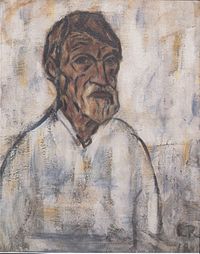 self-portrait (1918)
In 1901 Rohlfs left Weimar for Hagen, where through the architect Henri van der Velde got to know the art collector Karl Ernst Osthaus who offered him a studio in an estate which would become the Museum Folkwang. Rohlfs was the first artist to begin to work there. Meetings with Edvard Munch and Emil Nolde and the experience of seeing the works of Vincent van Gogh inspired him to move towards the expressionist style, in which he would work for the rest of his career.
In 1908, at the age of 60, he made his first prints after seeing an exhibition of works by the expressionist group Die Brücke. He went on to make 185 in total, almost all woodcuts or linocuts. He lived in Munich and the Tyrol in 1910–12, before returning to Hagen. The outbreak of World War I worried Rohlfs such, that for some time he felt unable to paint. In rare instances he experimented with heavily hand-coloring his prints, onto the verge of painting and sometimes well after they were made, as in his 1919 recoloring of the prior year’s Der Gefangene.
In May 1922 he attended the International Congress of Progressive Artists and signed the “Founding Proclamation of the Union of Progressive International Artists”. In 1937 the Nazis expelled him from the Prussian Academy of Arts, condemned his work as degenerate, and removed his works from public collections. Seventeen of his paintings were exhibited in the Degenerate Art Exhibition in 1937.
Gallery
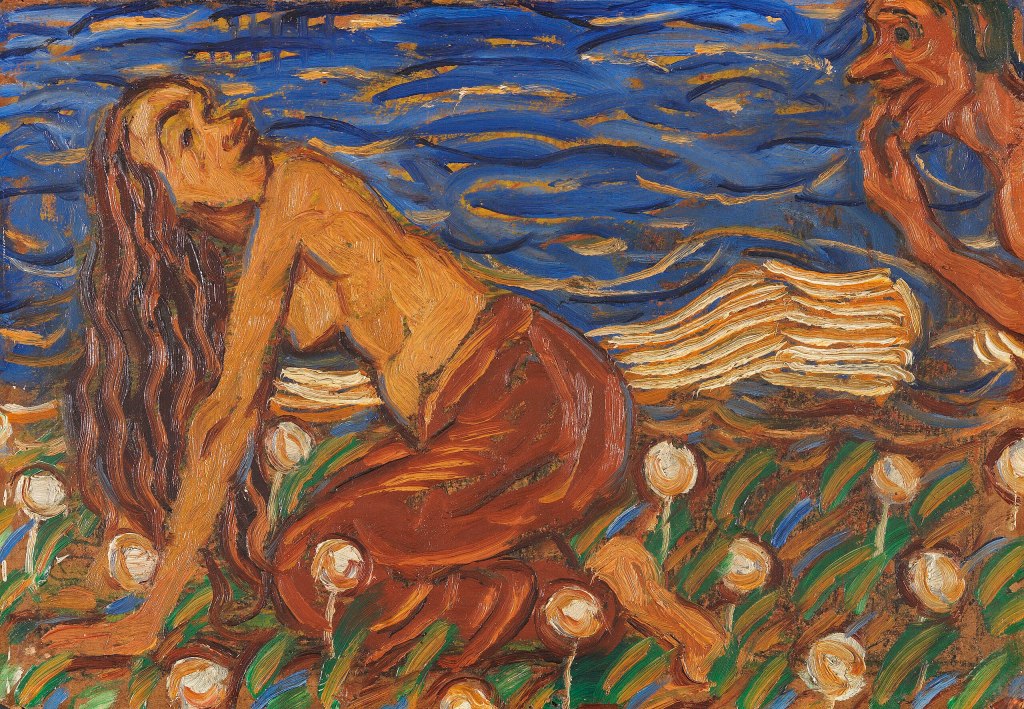
Frau und Mann in der Wiese

Dancing around the ball of the sun
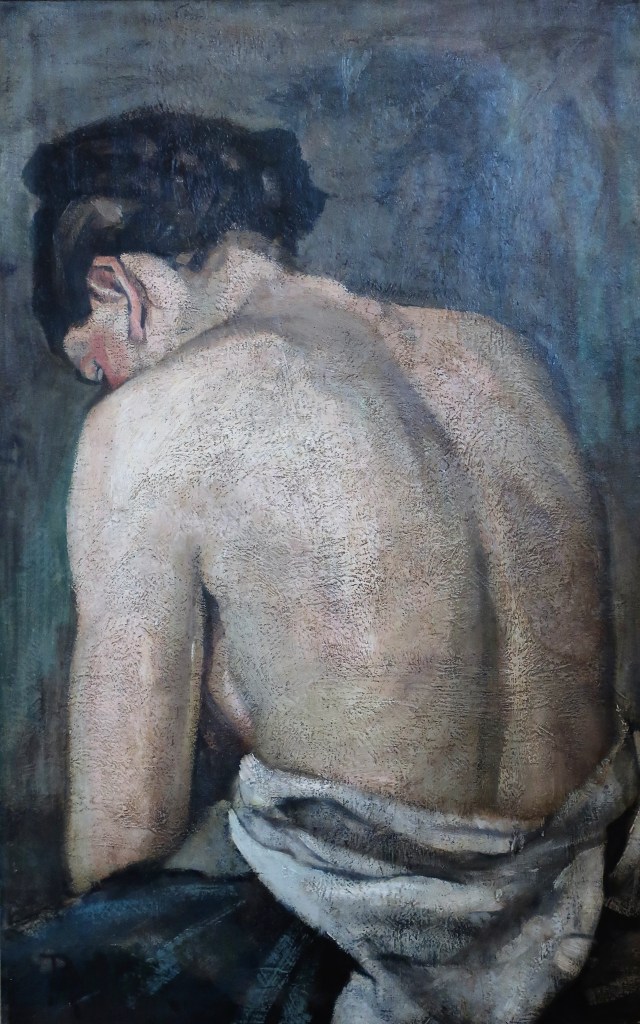

kneeling nude

1911 Rohlfs Weiblicher Akt anagoria
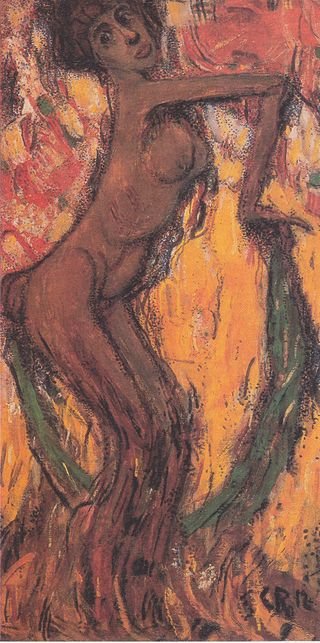
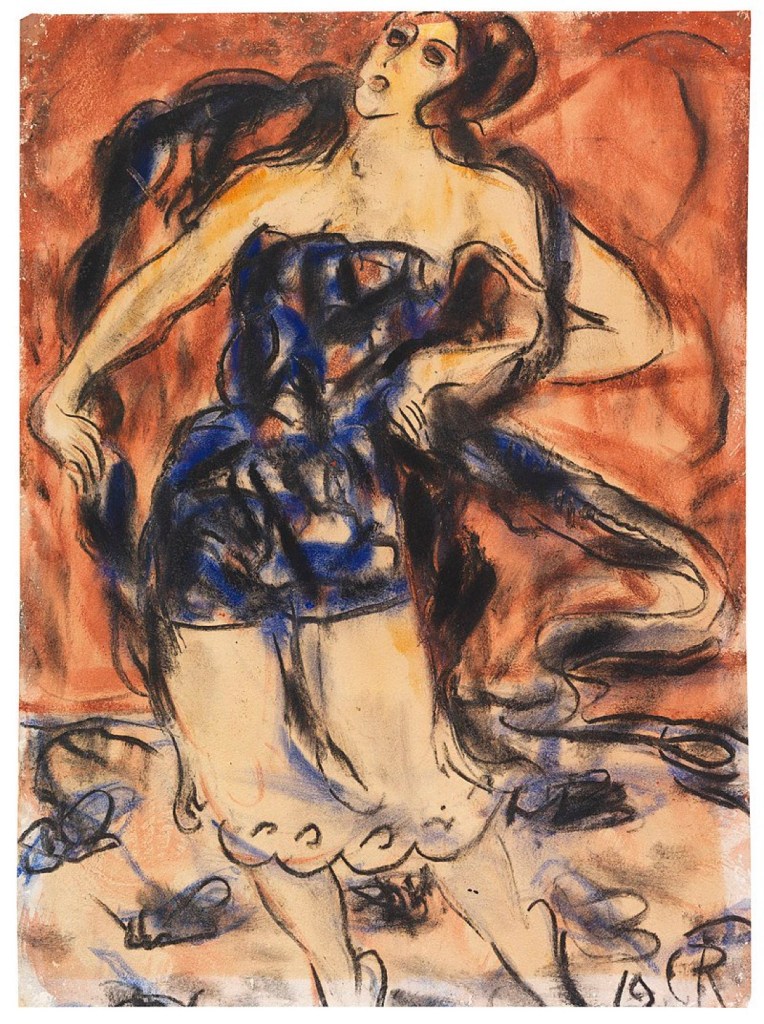
Dancer

amazon
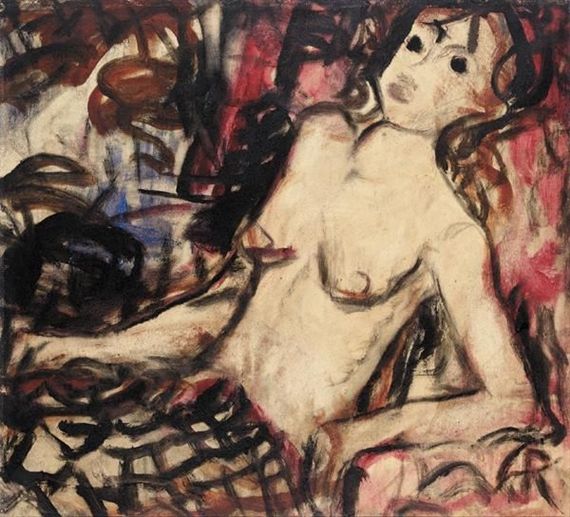
female half nude
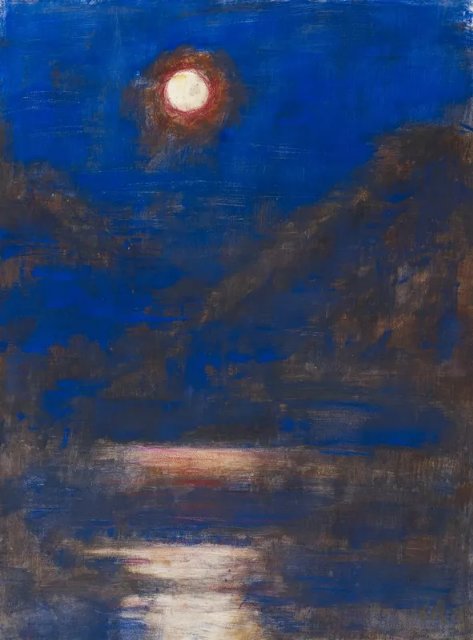
moonlight on the lake

Landscape vision, 1912, Germanisches Nationalmuseum
On this day in 1862, La forza del destino (The Power of Fate, or The Force of Destiny); an Italian opera by Giuseppe Verdi had its premiere in the Bolshoi Kamenny Theatre of Saint Petersburg, Russia. The libretto was written by Francesco Maria Piave based on a Spanish drama, Don Álvaro o la fuerza del sino (1835), by Ángel de Saavedra, 3rd Duke of Rivas, with a scene adapted from Friedrich Schiller’s Wallensteins Lager.
 c. 1870 poster by Charles Lecocq
La forza del destino is frequently performed, and there have been a number of complete recordings. In addition, the overture (to the revised version of the opera) is part of the standard repertoire for orchestras, often played as the opening piece at concerts.
 1860s postcard showing Act IV.
 Enrico Caruso, Jose Mardones and Rosa Ponselle in a 1918 Metropolitan Opera performance.
Forza is an opera that many old school Italian singers felt was “cursed” and brought bad luck. The superstitious Luciano Pavarotti avoided the part of Alvaro.
On 4 March 1960 at the Metropolitan Opera, in a performance of La Forza del Destino with Renata Tebaldi and tenor Richard Tucker, the American baritone Leonard Warren was about to launch into the vigorous cabaletta to Don Carlo’s Act 3 aria, which begins “Morir, tremenda cosa” (“to die, a momentous thing”). Warren either simply went silent and fell face-forward to the floor, or started coughing and gasping, and cried out “Help me, help me!” before falling to the floor, remaining motionless. A few minutes later he was pronounced dead of a massive cerebral hemorrhage, and the rest of the performance was canceled. Warren was only 48.
The “Curse” prompted singers and others to do strange things to fend off possible bad luck. The great Italian tenor Franco Corelli was rumored to have held on to his groin during some of his performances of the opera as “protection.”

Today is the birthday of André Gide (André Paul Guillaume Gide; Paris 22 November 1869 – 19 February 1951 Paris); author and winner of the Nobel Prize in Literature (in 1947). Gide’s career ranged from its beginnings in the symbolist movement, to the advent of anti-colonialism between the two World Wars. The New York Times described him as “France’s greatest contemporary man of letters” and “judged the greatest French writer of this century by the literary cognoscenti.”
Known for his fiction as well as his autobiographical works, Gide exposes to public view the conflict and eventual reconciliation of the two sides of his personality, split apart by a straitlaced traducing of education and a narrow social moralism. Gide’s work can be seen as an investigation of freedom and empowerment in the face of moralistic and puritanical constraints, and centres on his continuous effort to achieve intellectual honesty. His self-exploratory texts reflect his search of how to be oneself, including owning one’s sexual nature, without betraying one’s values. His political activity is shaped by the same ethos, as indicated by his repudiation of communism after his 1936 voyage to the USSR.
- La sagesse n’est pas dans la raison, mais dans l’amour.
- Wisdom comes not from reason but from love.
- Les Nourritures Terrestres [Fruits of the Earth] (1897), book I
- Wisdom comes not from reason but from love.
- …que toute émotion sache te devenir une ivresse. Si ce que tu manges ne te grise pas, c’est que tu n’avais pas assez faim.
- Let every emotion be capable of becoming an intoxication to you. If what you eat fails to make you drunk, it is because you are not hungry enough.
- Les Nourritures Terrestres (1897)
- Let every emotion be capable of becoming an intoxication to you. If what you eat fails to make you drunk, it is because you are not hungry enough.
- Ce qu’un autre aurait aussi bien fait que toi, ne le fais pas. Ce qu’un autre aurait aussi bien dit que toi, ne le dis pas, — aussi bien écrit que toi, ne l’écris pas. Ne t’attache en toi qu’à ce que tu sens qui n’est nulle part ailleurs qu’en toi-même, et crée de toi, impatiemment ou patiemment, ah! le plus irremplaçable des êtres.
- What another would have done as well as you, do not do it. What another would have said as well as you, do not say it; what another would have written as well, do not write it. Be faithful to that which exists nowhere but in yourself — and thus make yourself indispensable.
- Les Nourritures Terrestres (1897), Envoi
- What another would have done as well as you, do not do it. What another would have said as well as you, do not say it; what another would have written as well, do not write it. Be faithful to that which exists nowhere but in yourself — and thus make yourself indispensable.
- Le péché, c’est ce qui obscurcit l’âme.
- Sin is whatever obscures the soul.
- La Symphonie Pastorale (1919)
- Sin is whatever obscures the soul.
- On ne découvre pas de terre nouvelle sans consentir à perdre de vue, d’abord et longtemps, tout rivage.
- One doesn’t discover new lands without consenting to lose sight, for a very long time, of the shore.
- Les faux-monnayeurs [The Counterfeiters] (1925)
- One doesn’t discover new lands without consenting to lose sight, for a very long time, of the shore.
- C’est avec de beaux sentiments qu’on fait de la mauvaise littérature.
- It is with noble sentiments that bad literature gets written.
- Letter to François Mauriac (1929)
- It is with noble sentiments that bad literature gets written.
- Croyez ceux qui cherchent la vérité, doutez de ceux qui la trouvent; doutez de tout, mais ne doutez pas de vous-même.
- Believe those who seek the truth, doubt those who find it; doubt all, but do not doubt yourself.
- Gallimard, ed. (1952), Ainsi soit-il; ou, Les Jeux sont faits, p. 174
- Toutes choses sont dites déjà; mais comme personne n’écoute, il faut toujours recommencer.
- Everything has been said before, but since nobody listens we have to keep going back and beginning all over again.
- Le Traité du Narcisse (The Treatise of the Narcissus)
- Nothing is said that has not been said before. — Terence
The Immoralist (1902)
- Savoir se libérer n’est rien; l’ardu, c’est savoir être libre.
- Translation: To know how to free oneself is nothing; the arduous thing is to know what to do with one’s freedom.
- The Immoralist, Chapter 1 (1902)
Today is the birthday of Dora Maar (Henriette Theodora Markovitch; Paris 22 November 1907 – 16 July 1997 Paris); photographer and painter. Maar was both a pioneering Surrealist artist and an antifascist activist. Maar was depicted in a number of Picasso’s paintings, including his Portrait of Dora Maar and Dora Maar au Chat. However, Maar said of the works: “All his portraits of me are lies. They’re all Picassos. Not one is Dora Maar.”

Her work ranged from commercial assignments in fashion and advertising to documenting social and economic struggles during the Depression, and explored Surrealist themes. Maar was one of the few photographers to be included in exhibitions of surrealist work in the 1930s in Paris, New York and London, alongside Man Ray and Salvador Dalí. Her techniques in the darkroom explore psychology, dreams and inner states.
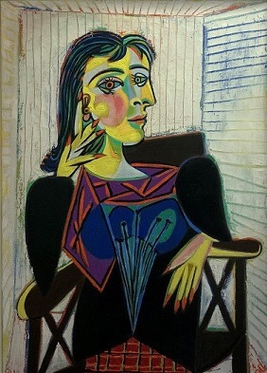
Maar first saw Picasso at the end of 1935 when she was taking promotional shots on the set of the Jean Renoir film The Crime of Monsieur Lange. She was captivated by him, but they did not formally meet. Maar was introduced to Picasso a few days later by their mutual friend Paul Eluard at Cafe des Deux Magots. The story of their first encounter was told by the writer Jean-Paul Crespelle, “the young woman’s serious face, lit up by pale blue eyes which looked all the paler because of her thick eyebrows; a sensitive uneasy face, with light and shade passing alternately over it. She kept driving a small pointed pen-knife between her fingers into the wood of the table. Sometimes she missed and a drop of blood appeared between the roses embroidered on her black gloves… Picasso would ask Dora to give him the gloves and would lock them up in the showcase he kept for his mementos.”

as the weeping woman by picasso
Picasso was intrigued by Maar’s seductive and masochistic behaviour, which served as inspiration for many of his works throughout their relationship. Their liaison would last nearly nine years, during which time Picasso did not end his relationship with Marie-Thérèse Walter, mother of his daughter Maya.
Maar photographed the successive stages of the creation of Guernica painted by Picasso in his studio in the rue des Grands-Augustins from May to June 1937; Picasso used these photographs in his creative process. She was Picasso’s principal model, and he often represented her in tears. Maar boosted Picasso’s understanding of politics and taught him skills in photography. Maar also introduced Picasso to the method of combining photography and printmaking, also known as the cliché verre technique.
Maar was Picasso’s lover, subject, and muse and he painted many portraits of her. In the majority of these paintings, Maar was represented as a tortured, anguished woman. The most well known of these portraits is The Weeping Woman. Picasso was very inspired by the tragedies of the Spanish Civil War, and he thought of Maar as a living depiction of the pain and suffering that people experienced during this time. Maar did not appreciate Picasso’s depiction of her in this way.
Her liaison with Picasso, who physically abused her and made her fight Walter for his love, ended in 1943, although they met again episodically until 1946. Thus, on 19 March 1944, she played the role of Fat Anguish in the reading, at the home of Michel Leiris, of Picasso’s first play, Desire Caught by the Tail, led by Albert Camus. In 1944, through the intermediary of Éluard, Maar met Jacques Lacan, who took care of her nervous breakdown through years of analysis, in which her mental health began to improve. Picasso bought her a house in Ménerbes, Vaucluse, where she retired and lived alone. She turned to the Catholic religion, met the painter Nicolas de Staël (who lived in the same village), and turned to abstract painting.
Maar spent her last years in her apartment on Rue de Savoie, on the Left Bank of Paris. She died aged 89. She was buried in the Bois-Tardieu cemetery in Clamart. Her experiments with photograms and dark-room photography were found only posthumously.
gallery
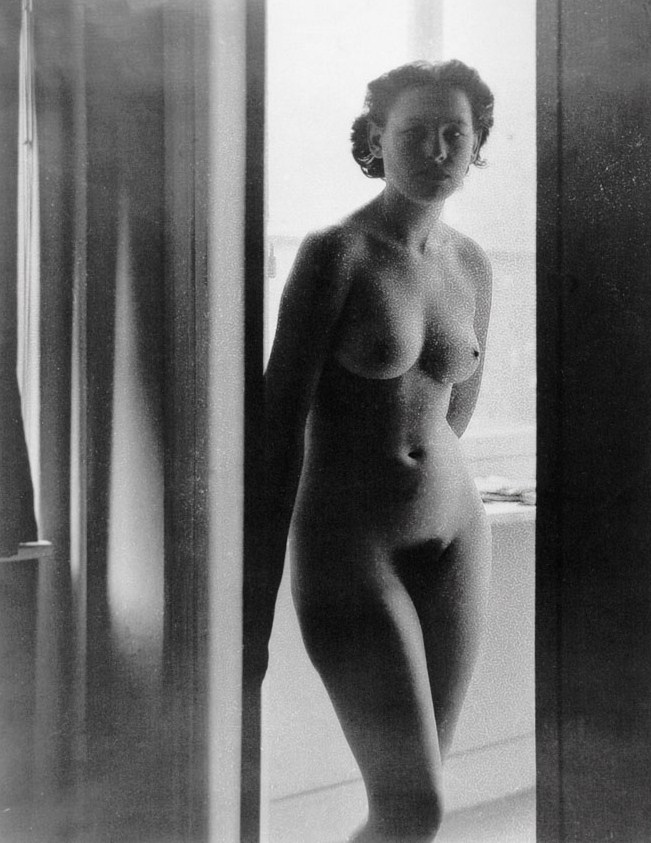
self portrait 1938

Portrait at the Window, 1935

Portrait of Nusch Éluard, c. 1935
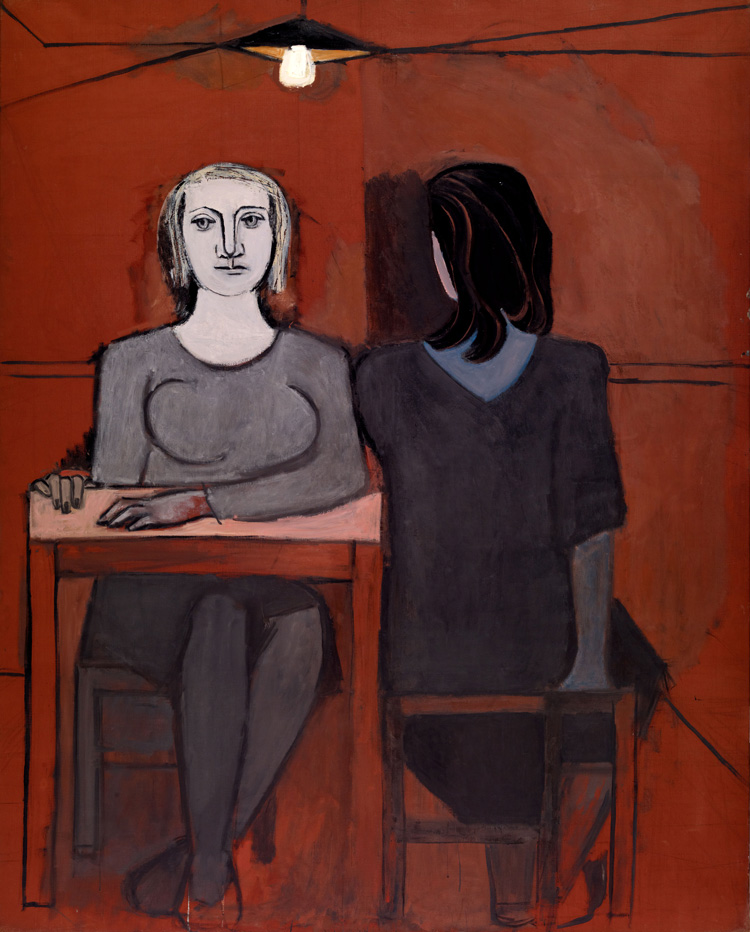
And on this day in 1928, the premier performance of Ravel’s Boléro takes place in Paris. Boléro is a one-movement orchestral piece by the French composer Maurice Ravel (1875 – 1937). Originally composed as a ballet commissioned by Russian actress and dancer Ida Rubinstein, the piece, which premiered in 1928, is, in my opinion, Ravel’s most famous musical composition.

Before Boléro, Ravel had composed large scale ballets (such as Daphnis et Chloé, composed for the Ballets Russes 1909 – 1912), suites for the ballet (such as the second orchestral version of Ma mère l’oye, 1912), and one-movement dance pieces (such as La valse, 1906 – 1920). Apart from such compositions intended for a staged dance performance, Ravel had demonstrated an interest in composing re-styled dances, from his earliest successes, the 1895 Menuet and the 1899 Pavane, to his more mature works like Le tombeau de Couperin, which takes the format of a dance suite.
Boléro epitomises Ravel’s preoccupation with restyling and reinventing dance movements. It was also one of the last pieces he composed before illness forced him into retirement. The two piano concertos and the song cycle Don Quichotte à Dulcinée were the only completed compositions that followed Boléro.
Mac Tag
 The Lovers’ Chronicle
Leave a reply to The Lovers’ Chronicle 2 June – longed for – art by Domenico Ghirlandajo & Paul-Albert Besnard – birth of Thomas Hardy – The Lovers’ Chronicle Cancel reply