
Dear Zazie, Here is today’s Lovers’ Chronicle from Mac Tag dedicated to his muse. Rhett
The Lovers’ Chronicle
Dear Muse,
this one comes from
a line in Bryant’s poem
“Thanatopsis” which,
since it deals with death,
is included below
“Of course it is”
i wrote in the early years
how i was hearin’ voices,
not just the livin’ kind
but i promised
that i would listen
should a voice come along
and voilà
“Here I am”
you and your lovely voice
© copyright 2023 mac tag/cowboy coleridge all rights reserved
very important, the sound, the auditory response, big difference though between listenin’ and hearin’ what you want to hear; was a time, a great one for the latter, probably led to most of the romantic failures, but it took years to learn to stop tryin’ to force it, to just let it happen, what a concept, and then i could hear what i was supposed to, you
© copyright 2022.2023 mac tag/cowboy coleridge all rights reserved
i did say, and it could
be taken as a promise
or a vow, that i would,
and i did, listen
when the time came
voices entered and left
not sure why not right
helped when i figured out
the one might not come
a convergence, pointin’
this way, accepted
no explanation
necessary
your voice i heard
© copyright 2021.2023 mac tag/cowboy coleridge all rights reserved
Pale Love, Pale Rider
and make my bed with thee, as the view
in the rearview disappears, the vision,
the youth in beginnin’ again, and we
who go in full strength, made for this,
shall gather the verse, the melodies
alive that we may summon moments
to conform to our will, pretendin’ no more
© copyright 2020 mac tag/cowboy coleridge all rights reserved
when emotions
receive a wound
it starts to make
itself felt, deepenin’
its ache, till it fills all
recovery comes,
only in appearance
then with the mechanism
of the resumed routine
for as soon as forgettin’
comes along, it is then
that the after-effects
manifest at their worst
© copyright 2019 mac tag/cowboy coleridge all rights reserved
comes a still voice,
from a distance
long sought for
long thought denied
melancholy nights
yes, but as it should be,
makes it all right
earned or deserved,
not sure which
but that matters not
the only purpose
must be served
yet
comes a still voice
i will listen
© copyright 2018 mac tag/cowboy coleridge all rights reserved
Little ol’ road trip weekend
Headed to South Dakota
Will keep y’all posted
Found a cool old hotel
To spend the night in
Relaxin’ with a glass of wine
But somethin’ is missin’…
***
if one comes,
might be hard to hear
over whichever Bellini
opera is playin’
no other voices,
livin’ ones that is,
around here
still a good thing
leanin’ into the solitude
actually, my native habitat
left to my own steerin’
i will stay firm no matter
what other voices
come along
© copyright 2017.2023 mac tag/cowboy coleridge all rights reserved
Geoffrey Firmin in Malcolm Lowery’s
Under the Volcano;
“No mezcal.
Mezcal is for the damned”
ah, that explains a lot
Weep not
The damned
Weep not
No matter which way conceived,
you more than fill my sight
Come to me, come, ere it be too late;
You alone can draw the sting
© copyright 2016 mac tag/cowboy coleridge all rights reserved
You tell yourself;
You are the sole
author of this
situation
You were, you are
As is, guilty
of a dreadful
and selfish crime
But is there no
accountin’ for
not knowin’. How
was I to know
“I would ask that
you not get
emotionally
attached, but
I don’t think
that’s your
problem, is it?”
See, you are
gittin’ to know me
© copyright 2015 mac tag/cowboy coleridge all rights reserved
A shaky start
To be sure. But
Gradually
The rhythm came
Back and the strokes
Became strong
And bold again
The touch. Still there.
© copyright 2014 mac tag/cowboy coleridge all rights reserved
| Annibale Carracci | |
|---|---|
 | |
Today is the birthday of Annibale Carracci (Bologna; November 3, 1560 – July 15, 1609 Rome); painter and instructor, active in Bologna and later in Rome. Along with his brother Agostino and his cousin Ludovico Carracci, Annibale was one of the progenitors of a leading strand of the Baroque style, borrowing from styles from both north and south of their native city. Painters working under Annibale at the gallery of the Palazzo Farnese would be highly influential in Roman painting for decades.
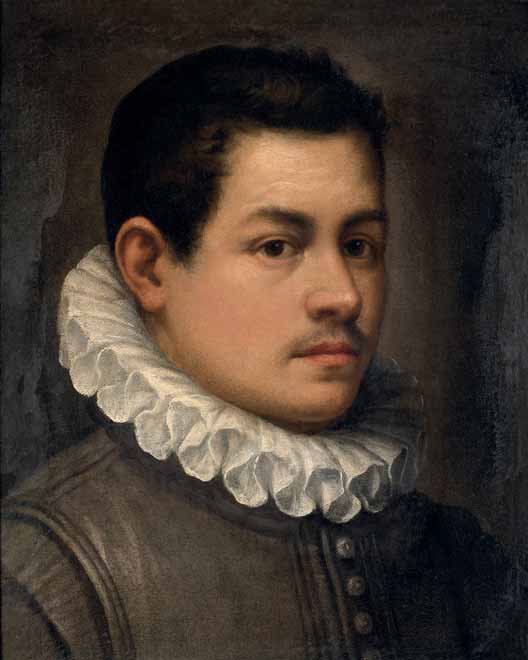
self portrait
Annibale was entombed, according to his wish, near Raphael in the Pantheon of Rome. It is a measure of his achievement that artists as diverse as Bernini, Poussin, and Rubens praised his work. Many of his assistants or pupils in projects at the Palazzo Farnese and Herrera Chapel would become among the pre-eminent artists of the next decades, including Domenichino, Francesco Albani, Giovanni Lanfranco, Domenico Viola, Guido Reni, Sisto Badalocchio, and others.
Gallery

Venus with a Satyr and Two Cupids, 1590

Plenty and Felicity
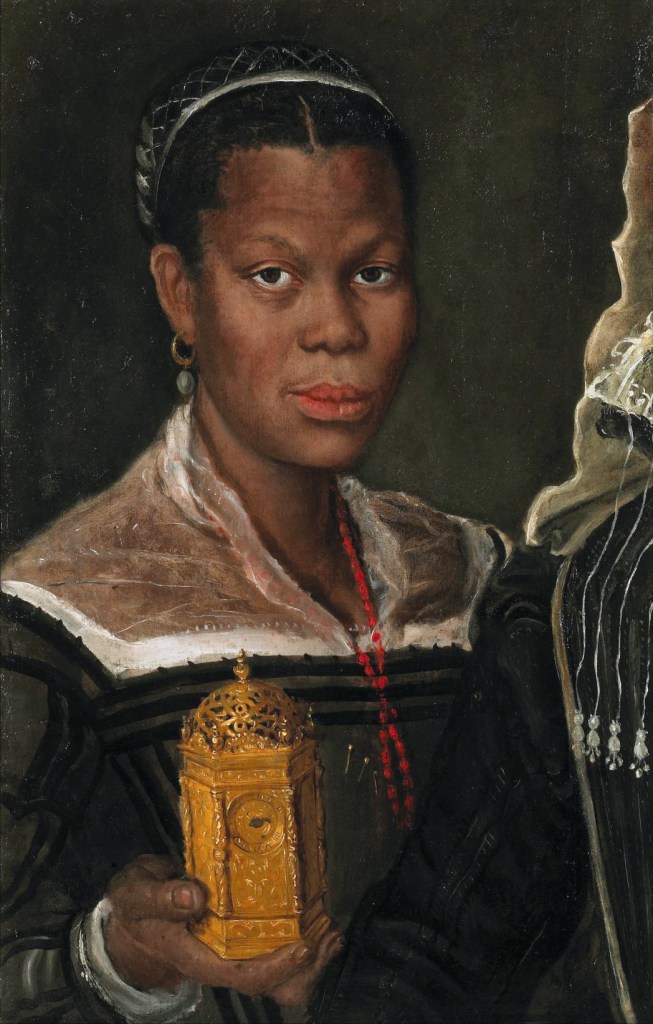
Portrait of an African Woman Holding a Clock, c. 1585
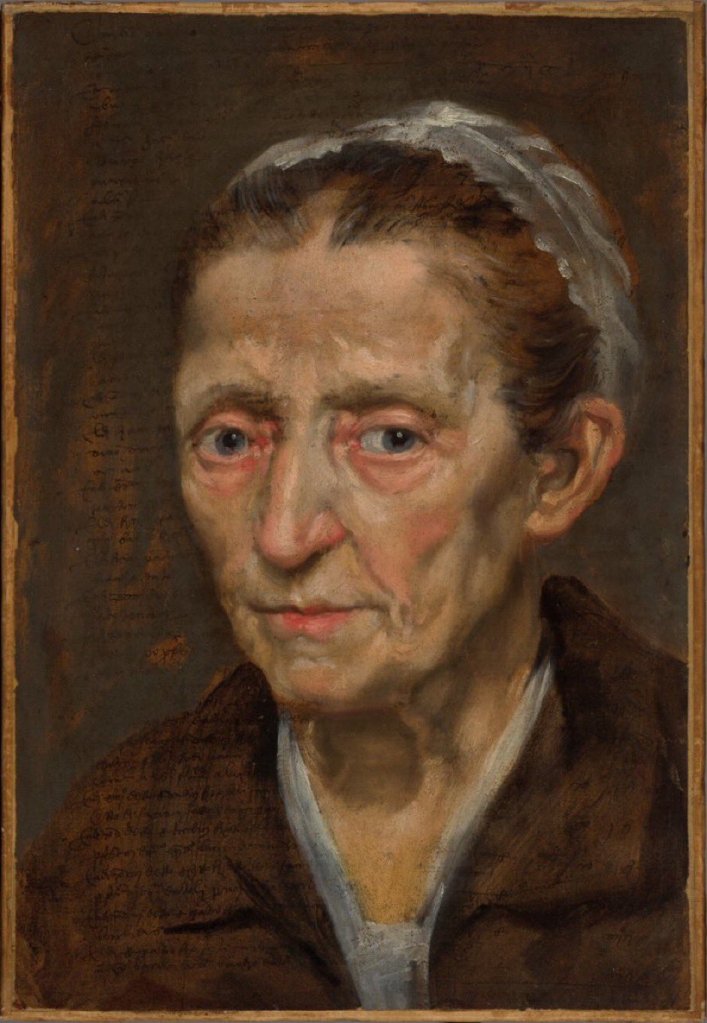
testa di donna

The Judgment of Hercules, 1596, National Museum of Capodimonte
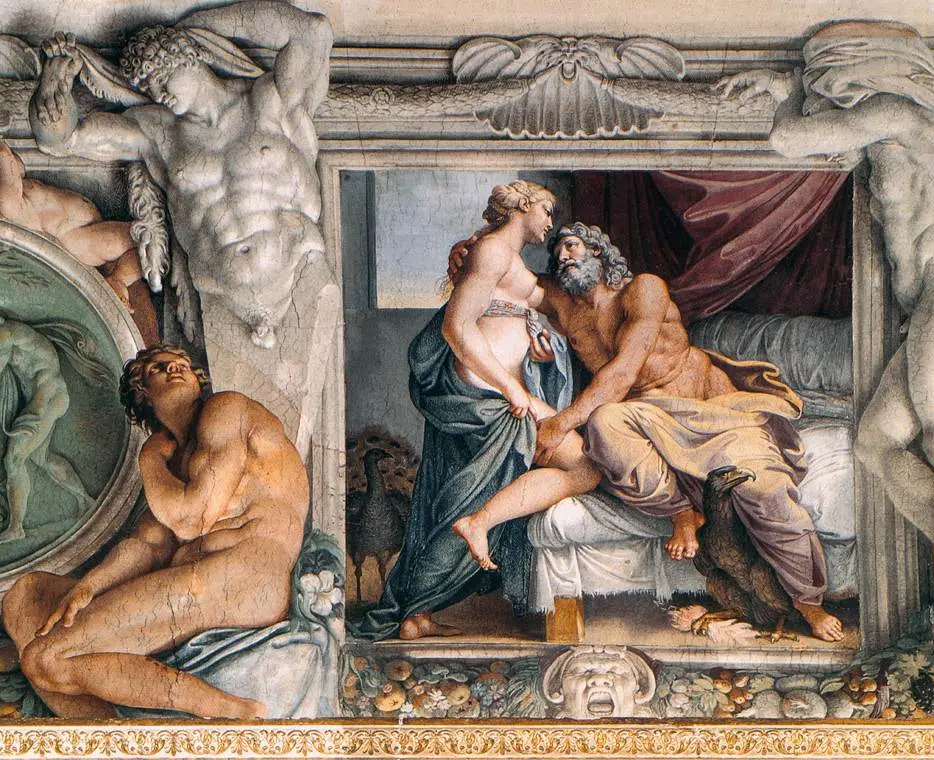
Jupiter and Juno, 1602, Palazzo Farnese

| William Cullen Bryant | |
|---|---|
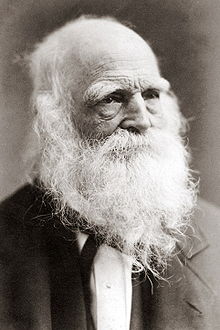 | |
Today is the birthday of William Cullen Bryant (Cummington, Massachusetts; November 3, 1794 – June 12, 1878 New York City); romantic poet, journalist, and long-time editor of the New York Evening Post. he started his career as a lawyer but showed an interest in poetry early in his life.
In 1825, Bryant relocated to New York City, where he became an editor of two major newspapers. He also emerged as one of the most significant poets in early literary America and has been grouped among the fireside poets for his accessible and popular poetry.
On January 11, 1821, still striving to build a legal career, Bryant married Frances Fairchild. Soon after, he received an invitation to speak from Phi Beta Kappa at Harvard University to deliver the August commencement. Bryant spent months working on “The Ages”, a panorama in verse of the history of civilization, culminating in the establishment of the United States. He subsequently published “The Ages”, which led the volume and was titled Poems, which he arranged to publish on the same trip to Harvard. For that book, he added sets of lines at the beginning and end of “Thanatopsis” that changed the poem.
“Thanatopsis” established Bryant’s career as a poet. From 1816 to 1825, Bryant depended on his law practice in Great Barrington, Massachusetts to sustain his family financially but he traded his unrewarding profession for New York City and the promise of a literary career. With the encouragement of a distinguished and well-connected literary family, the Sedgwicks, he quickly gained a foothold in New York City’s vibrant cultural life.
In his final years, Bryant shifted from writing his own poetry to a blank verse translation of Homer’s works. He assiduously worked on the Iliad and The Odyssey from 1871 to 1874.
In 1843, Bryant bought a house in Roslyn Harbor on Long Island. He christened and named the house Cedarmere because of the cedar trees around its pond.
In 1865, he bought the farmhouse in Cummington and summered annually until his death. He made substantial improvements to the houses at both properties. He was known for his attention to trees on his land, and later in life he expressed concerns that deforestation in the United States would prove disastrous for American agriculture.
Bryant died of complications from an accidental fall suffered after participating in a Central Park ceremony to honor Italian patriot Giuseppe Mazzini. He is buried at Roslyn Cemetery in Roslyn, New York.
Verse
Thanatopsis
To him who in the love of Nature holds
Communion with her visible forms, she speaks
A various language; for his gayer hours
She has a voice of gladness, and a smile
And eloquence of beauty, and she glides
Into his darker musings, with a mild
And healing sympathy, that steals away
Their sharpness, ere he is aware. When thoughts
Of the last bitter hour come like a blight
Over thy spirit, and sad images
Of the stern agony, and shroud, and pall,
And breathless darkness, and the narrow house,
Make thee to shudder, and grow sick at heart;—
Go forth, under the open sky, and list
To Nature’s teachings, while from all around
Earth and her waters, and the depths of air—
Comes a still voice—
Yet a few days, and thee
The all-beholding sun shall see no more
In all his course; nor yet in the cold ground,
Where thy pale form was laid, with many tears,
Nor in the embrace of ocean, shall exist
Thy image. Earth, that nourished thee, shall claim
Thy growth, to be resolved to earth again,
And, lost each human trace, surrendering up
Thine individual being, shalt thou go
To mix for ever with the elements,
To be a brother to the insensible rock
And to the sluggish clod, which the rude swain
Turns with his share, and treads upon. The oak
Shall send his roots abroad, and pierce thy mould.
Yet not to thine eternal resting-place
Shalt thou retire alone, nor couldst thou wish
Couch more magnificent. Thou shalt lie down
With patriarchs of the infant world—with kings,
The powerful of the earth—the wise, the good,
Fair forms, and hoary seers of ages past,
All in one mighty sepulchre. The hills
Rock-ribbed and ancient as the sun,—the vales
Stretching in pensive quietness between;
The venerable woods—rivers that move
In majesty, and the complaining brooks
That make the meadows green; and, poured round all,
Old Ocean’s gray and melancholy waste,—
Are but the solemn decorations all
Of the great tomb of man. The golden sun,
The planets, all the infinite host of heaven,
Are shining on the sad abodes of death,
Through the still lapse of ages. All that tread
The globe are but a handful to the tribes
That slumber in its bosom.—Take the wings
Of morning, pierce the Barcan wilderness,
Or lose thyself in the continuous woods
Where rolls the Oregon, and hears no sound,
Save his own dashings—yet the dead are there:
And millions in those solitudes, since first
The flight of years began, have laid them down
In their last sleep—the dead reign there alone.
So shalt thou rest, and what if thou withdraw
In silence from the living, and no friend
Take note of thy departure? All that breathe
Will share thy destiny. The gay will laugh
When thou art gone, the solemn brood of care
Plod on, and each one as before will chase
His favorite phantom; yet all these shall leave
Their mirth and their employments, and shall come
And make their bed with thee. As the long train
Of ages glide away, the sons of men,
The youth in life’s green spring, and he who goes
In the full strength of years, matron and maid,
The speechless babe, and the gray-headed man—
Shall one by one be gathered to thy side,
By those, who in their turn shall follow them.
So live, that when thy summons comes to join
The innumerable caravan, which moves
To that mysterious realm, where each shall take
His chamber in the silent halls of death,
Thou go not, like the quarry-slave at night,
Scourged to his dungeon, but, sustained and soothed
By an unfaltering trust, approach thy grave,
Like one who wraps the drapery of his couch
About him, and lies down to pleasant dreams.
| Vincenzo Bellini |
|---|
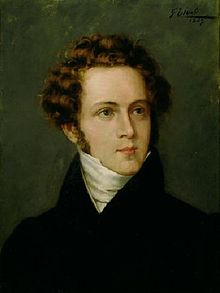 |
Today is the birthday of Vincenzo Salvatore Carmelo Francesco Bellini (Vincenzo Salvatore Carmelo Francesco Bellini; Catania, Kingdom of Sicily; 3 November 1801 – 23 September 1835 Puteaux, France); opera composer, known for his long-flowing melodic lines for which he was named “the Swan of Catania”. Bellini was the quintessential composer of the Italian bel canto era of the early 19th century.
In considering which of his operas can be seen to be his greatest successes, Il pirata laid much of the groundwork in 1827. Both I Capuleti ed i Montecchi at La Fenice in 1830 and La sonnambula in Milan in 1831 reached new triumphal heights, although initially Norma, given at La Scala in 1831 did not fare as well until later performances elsewhere. “The genuine triumph” of I puritani in January 1835 in Paris capped a significant career.
Bellini never married.
Bellini wanted to marry Maddalena Fumaroli but her parents refused. The success achieved by Bianca e Gernado gave Bellini fresh hope that her parents would finally relent, and a new appeal was made through a friend. This was rejected by Maddalena’s father, who returned all the letters which she had received along with a letter from him stating that “my daughter will never marry a poor piano banger (suonatore di cembalo)”.
At some time before March 1828, after the major success of Il pirata and just as Bellini was about to leave Milan for his production of Bianca e Ferdinando in Genoa, he received a notification from his go-between with the Fumarolis family that they had withdrawn their rejection of his proposal. But by then—with the efforts to build his career and with time and distance between him and Maddalena—his feelings had changed and, using Florimo to communicate to the family, he rejected the offer, expressing the feeling that he would be unable to support her financially. Even Maddalena’s own pleas in three letters which followed failed to change his mind. Good thinkin’ Bellini.

The one significant relationship which Bellini had after 1828 was the five-year relationship with Giuditta Turina, a young married woman with whom he began an affair when both were in Genoa in April 1828 for the production of Bianca e Fernando. Their relationship lasted until Bellini went to Paris. Perhaps because her marriage was irrevocable and not based on love, and because the lovers were discreet, her husband, Fernandino, and his family seem to have tacitly permitted the relationship. Bellini’s letters to his friend Florimo indicate his satisfaction with the nature of the liaison, particularly because it kept him from having to marry—and thus becoming being distracted from his work. Exactly!
However, in May 1833 while he was in London, a change in Bellini’s relationship with Giuditta followed from the discovery by her husband of a compromising letter from Bellini. The result was that he decided to seek a legal separation and have her removed from his house. For Bellini, it meant the possibility of taking on responsibility for her, and he had no interest in doing that, having cooled in his feelings for her. When he wrote to Florimo from Paris the following year, he clearly stated that “I constantly am being threatened from Milan with Giuditta’s coming to Paris”, at which point he says he’ll leave that city if that were to happen. Then he continues: “I no longer want to be put in the position of renewing a relationship that made me suffer great troubles”. Ultimately, he resisted any long-term emotional commitment, and never married. Smart man!
And today is the birthday of Walker Evans (St. Louis, Missouri; November 3, 1903 – April 10, 1975 New Haven, Connecticut); photographer and photojournalist best known for his work for the Farm Security Administration (FSA) documenting the effects of the Great Depression. Much of Evans’ work from the FSA period uses the large-format, 8×10-inch (200×250 mm) view camera. He said that his goal as a photographer was to make pictures that are “literate, authoritative, transcendent”.

profile, hand up to face
Evans died in his apartment from a stroke. In 1994, the estate of Walker Evans handed over its holdings to New York City’s Metropolitan Museum of Art. The Metropolitan Museum of Art is the sole copyright holder for all works of art in all media by Walker Evans. The only exception is a group of about 1,000 negatives in collection of the Library of Congress, which were produced for the Resettlement Administration and Farm Security Administration; these works are in the public domain.
Gallery
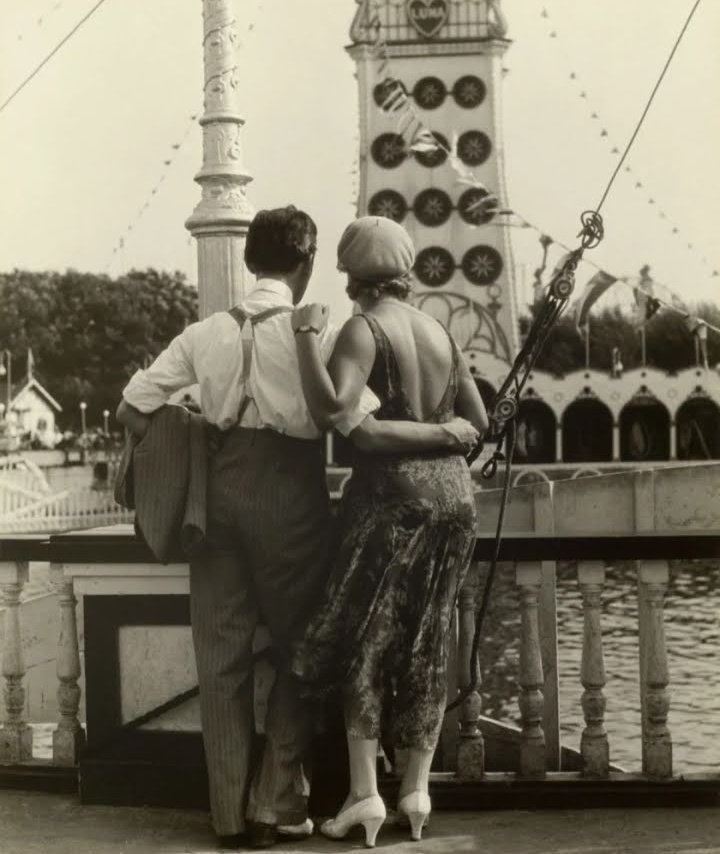
Couple at Coney Island, 1928
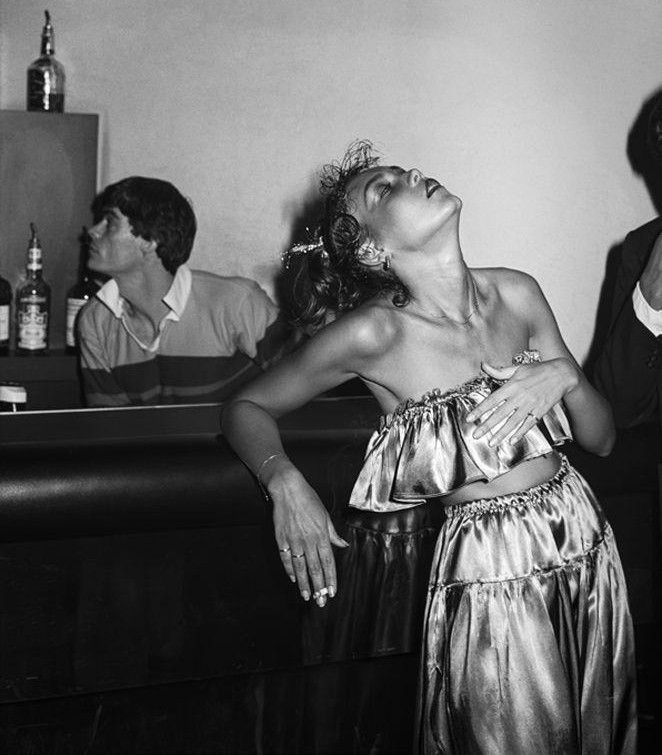
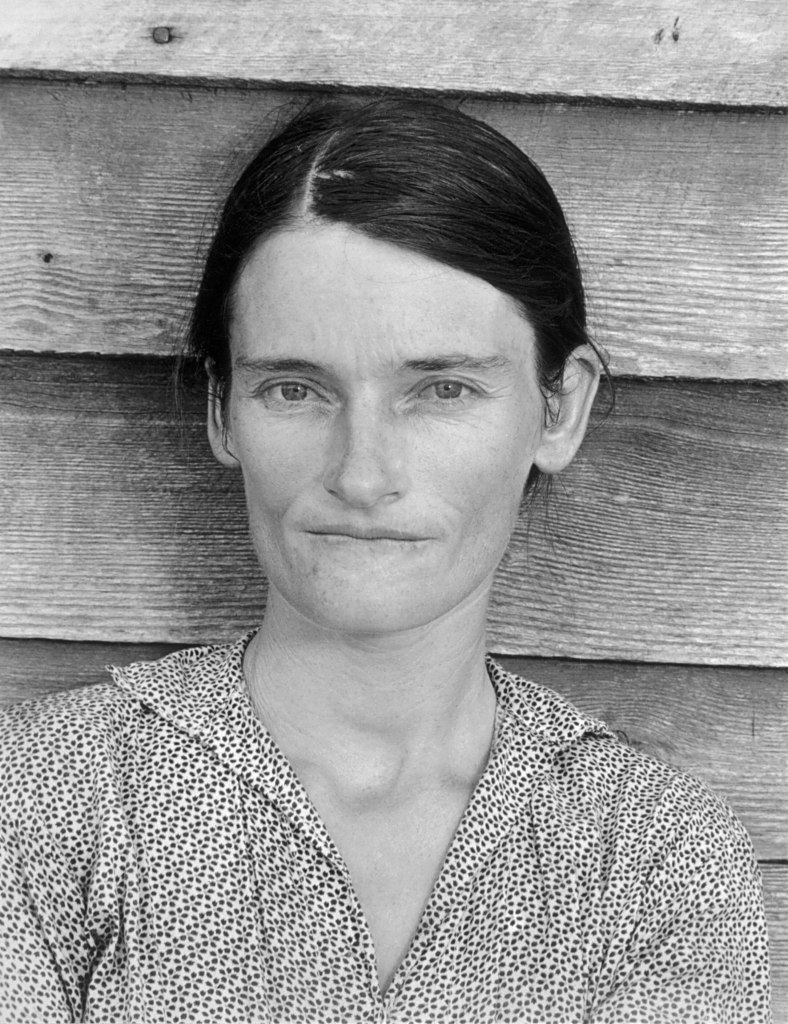
1936 photo of then-27-year-old Allie Mae Burroughs, a symbol of the Great Depression


Coney Island Boardwalk, 1929, Gelatin silver print Image: 21.4 x 14.4 cm (8 7/16 x 5 5/8 in.) Mount: 27.9 x 21.6 cm (11 x 8 1/2 in.) The J. Paul Getty Museum, Los Angeles
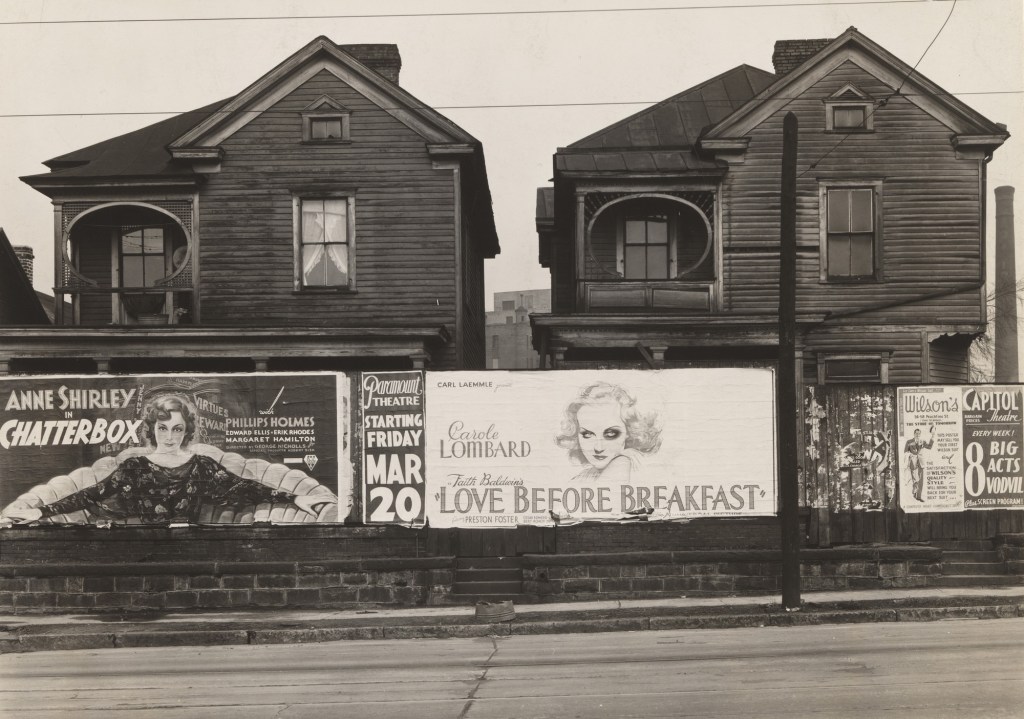
Atlanta 1936

Atlanta 1936
 Carol Kalker. Greenwich, Connecticut. C. June 1929

Mac Tag
Thanks for readin’ y’all
 The Lovers’ Chronicle
Leave a reply to The Lover’s Chronicle 4 November – reachin’ – art by Guido Reni – inauguration of the Teatro di San Carlo – birth of La Belle Otero – The Lovers’ Chronicle Cancel reply