Dear Zazie, Here is today’s Lovers’ Chronicle from Mac Tag dedicated to his muse. Tell me your dreams and desires, what you see in your long vistas. Rhett
The Lovers’ Chronicle
Dear Muse,
this one comes from
a line in Paul Valéry’s poem,
“Le Cimetière Marin”
seemed appropriate in that
it could describe what
i have been writin’ about,
takin’ a long view of the past
“Oh that makes sense”
in order to sort out
what has been
and where i should go
“And looking forward too”
right, the long vista
ahead with us
“My favorite view”
moi aussi
© copyright 2023 mac tag/cowboy coleridge all rights reserved
no place better than the High Plains for long views of sunrises and sunsets; and this, the best place for long views of the past, the future, of all that has been, all that could be, an extended reign of uncertainty over whether the future would include one or two; do not have big skies here, but the clarity that the long vista includes you, nothin’ else matters
© copyright 2022.2023 mac tag/cowboy coleridge all rights reserved
settin’ aside
old disappointments
keep returnin’
to the moments
we have created
whether it be
talkin’ or lovin’,
a rare connection
insists it can be
acceptin’
that someone understands
and not bein’ afraid to feel
it is time to let go,
to spread my arms
and trust my cape
© copyright 2021 mac tag/cowboy coleridge all rights reserved
Pale Love, Pale Rider
takin’ chances, lettin’ my verse
loose, free, open, unimpeded
trustin’, believin’
it will take us
wherever we want
gamblin’ on sure nuff abandon
where we will tell each other, yes
and set aside old necessities
all that matters
here, now
and what we create
with each other
© copyright 2020 mac tag/cowboy coleridge all rights reserved
same same in the near view
work, writin’, accompanied
by good food and drink
takin’ advantage of livin’
where any type of food
is available to order
not that i cannot cook
i can and well for the two years
from June 2017 to June 2019
because i could and because
eatin’ out presented few options
now, i have no time
oh sorry, i digress
you were wonderin’
about the long view
same same
© copyright 2019.2023 mac tag/cowboy coleridge all rights reserved
for Tamela
what do you want
“I thought you knew;
to go through life
jumping naked
into fountains.”
in the summer of 2010,
i arose, a ghost from the grave,
and began to write again
she had once been a dancer,
still was in the way she moved,
now just tryin’ to make her way
we came soon to only prefer
the company of each other
we took long lunches,
went to cocktail parties,
and the opera, and took
long walks in a cemetery
we talked about
plans and dreams,
dancin’ and poetry,
beauty and sorrow
and i began to write
and i have not stopped
© copyright 2018 mac tag/cowboy coleridge all rights reserved
the luckiest ones
are ones who find
each other
this quiet room, where words and notes,
between images and visions, come from
long quelled emotions flame once again
the dream startin’ and re-startin’
when thoughts entwine, how dear,
these long vistas of us together
© copyright 2017 mac tag/cowboy Coleridge all rights reserved
I say your name
Not aloud
Breathe again
Deep, quiet,
Without haste
It is like music
It is like singin’
© copyright 2016 mac tag/cowboy Coleridge all rights reserved
Unlikely meetin
of minds? Well perhaps
But Crow knows anguish
and Cowboy knows pain
So yippee-ki-yay
May their words stay true
As for the lovers and Venice,
where they bore their concupiscence,
Dust and ashes so you wrote it
“Do you know what it is to be a lover
Do you know what it is to be half of a whole”
And She said to me:
“Give me proof. Show me
you are still the one,
you believe you are.”
© copyright 2015 mac tag/cowboy Coleridge all rights reserved
Feelin’ nervous
Have not done this
In a long time
But those luscious
Curves beckon and
I’m burnin’ with
Inspiration,
Creation. Now!
© copyright 2014 mac tag/cowboy Coleridge all rights reserved
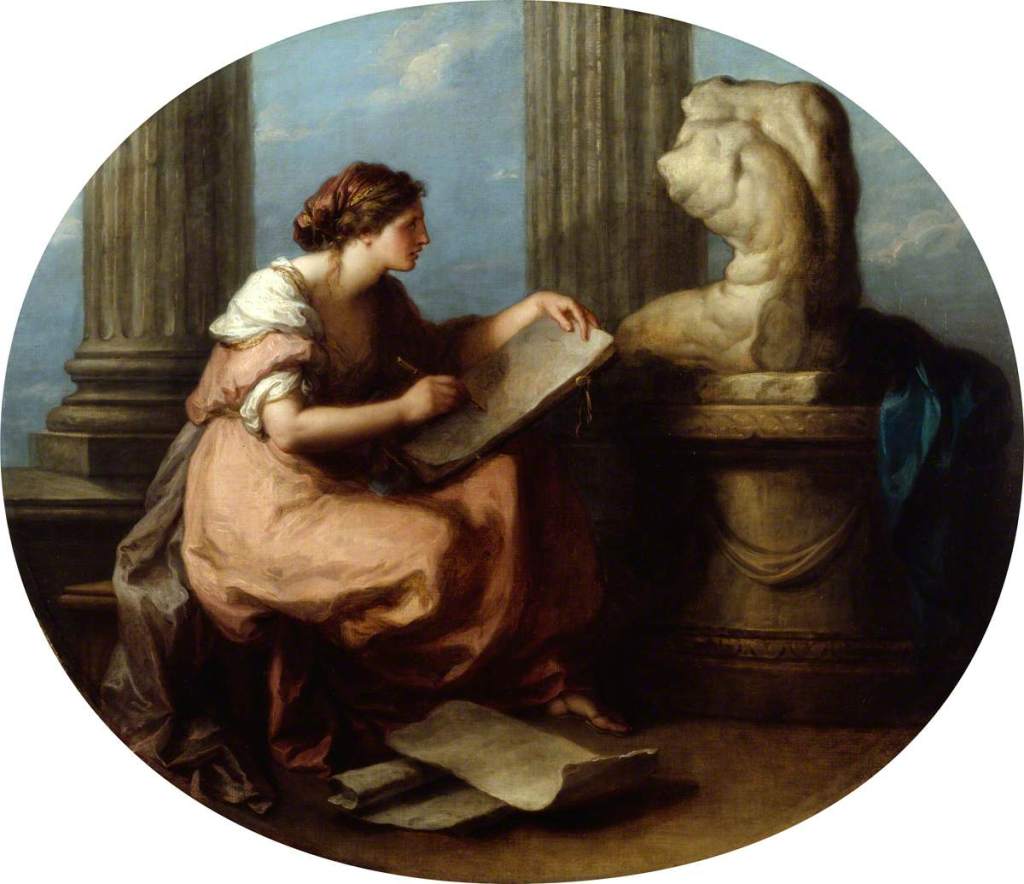
Today is the birthday of Angelica Kauffman (Maria Anna Angelika Kauffmann; Chur, League of God’s House, present day Graubünden, Switzerland 30 October 1741 – 5 November 1807 Rome, Papal States); Neoclassical painter who had a successful career in London and Rome. Remembered primarily as a history painter, Kauffmann was a skilled portraitist, landscape and decoration painter. She was, along with Mary Moser, one of two female painters among the founding members of the Royal Academy in London in 1768.
In 1767 Kauffman was seduced by an imposter going under the name Count Frederick de Horn, whom she married, but they were separated the following year. In 1781, after his death, she married Antonio Zucchi (1728–1795), a Venetian artist then resident in England. Shortly afterwards she retired to Rome.
The Angelika Kauffmann Museum in Schwarzenberg, Vorarlberg (Austria) was established in 2007. This location is in the same area that her father called home. The annually changing exhibitions focus on different aspects and themes of her artistic work. In the 2019 exhibition “Angelika Kauffmann – Unknown Treasures from Vorarlberg Private Collections”, many of her paintings were shown to the public for the first time, as a large proportion of her oeuvre is owned by private collectors. The museum is housed in the so-called “Kleberhaus”, an old farmhouse (1556) in the typical architectural style of the region.
Gallery
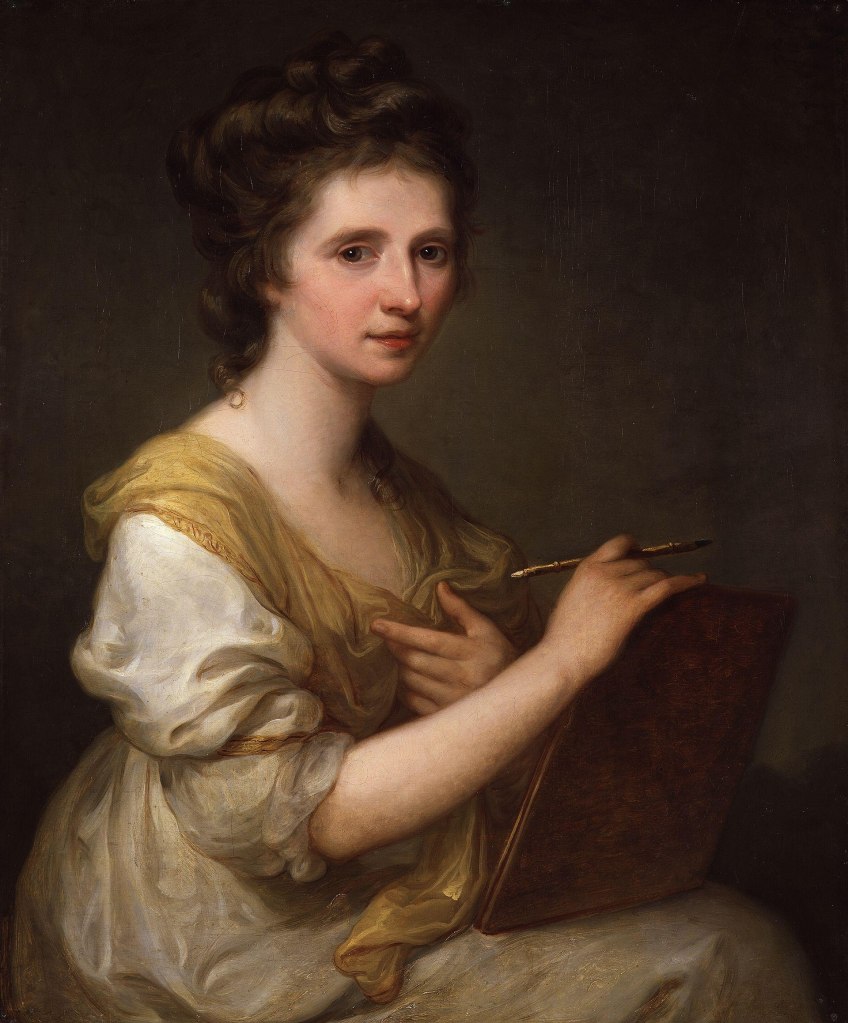
self portrait
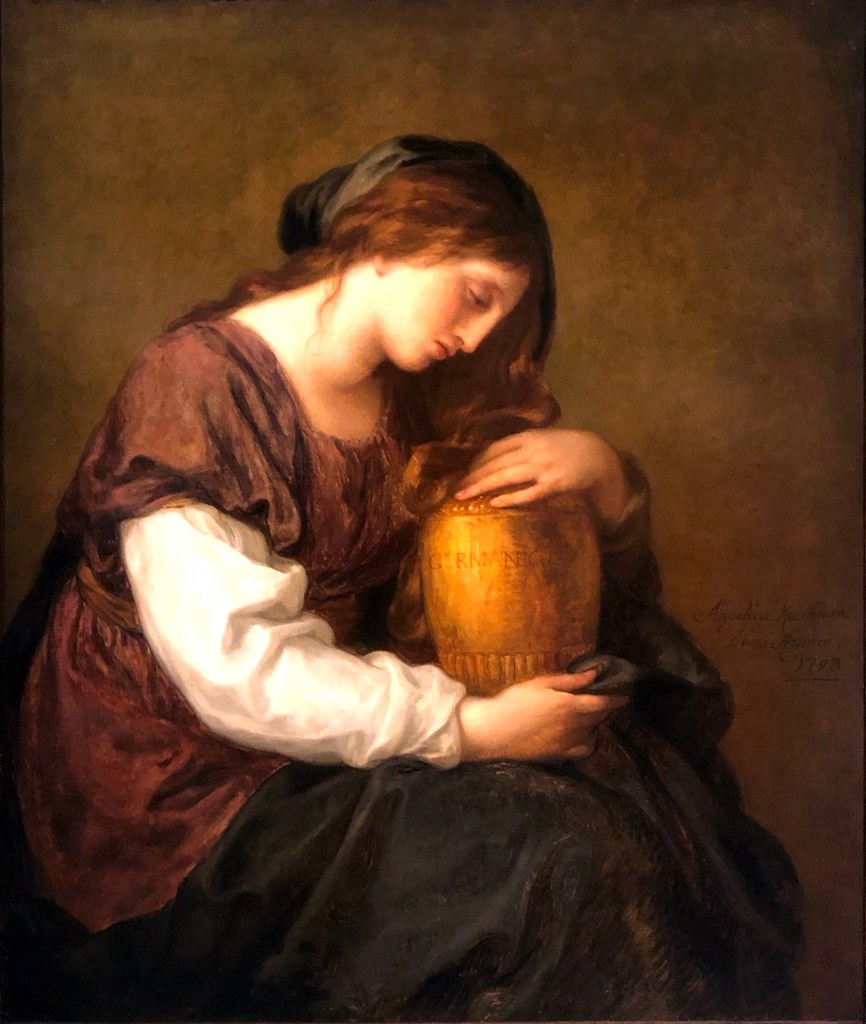
Agrippina Mourns the Urn of Germanicus (1793), oil on canvas, Museum Kunstpalast, Düsseldorf
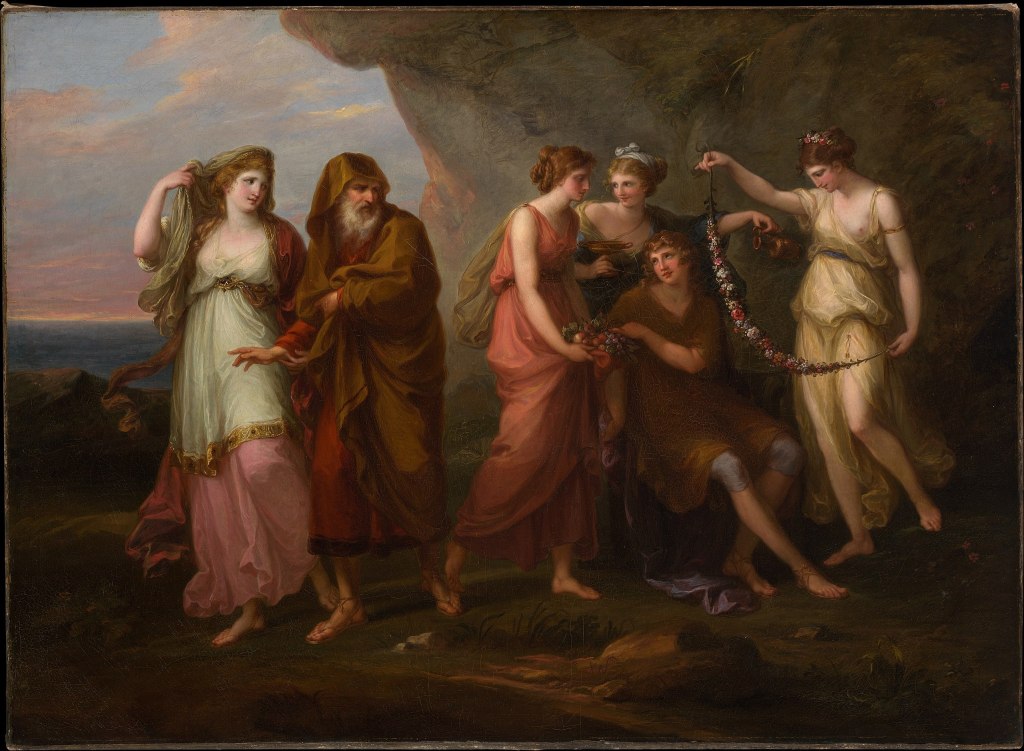
Telemachus and the Nymphs of Calypso (1782), oil on canvas, 82.6 x 112.4 cm., Metropolitan Museum of Art, New York
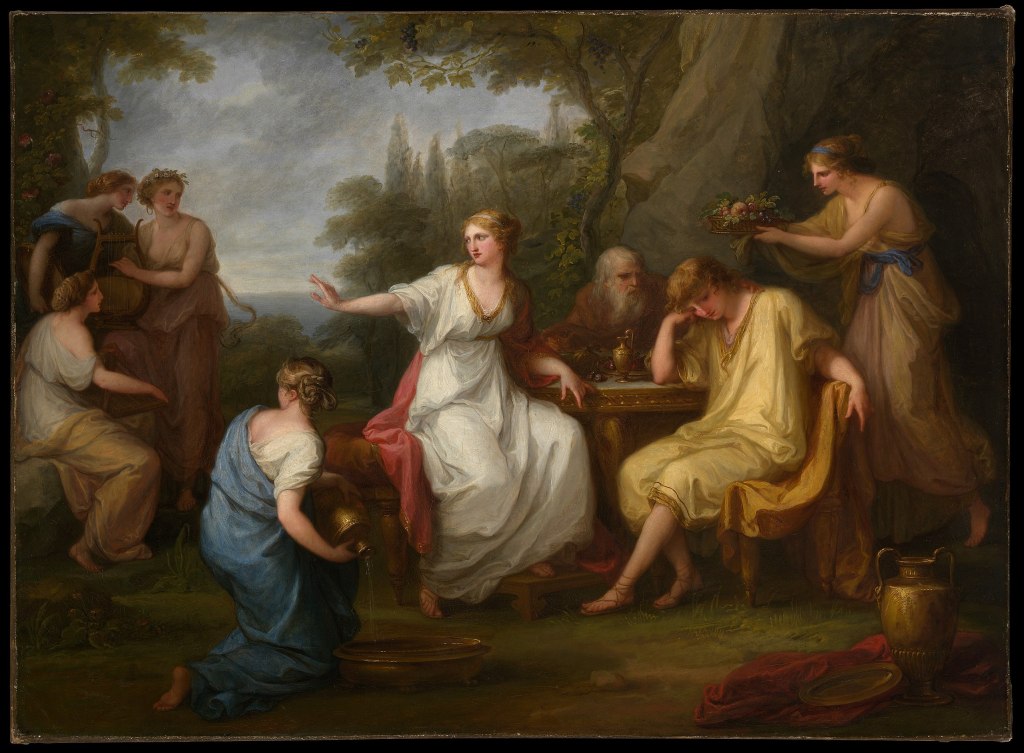
The Sorrow of Telemachus (1783), oil on canvas, 83.2 x 114.3 cm. Metropolitan Museum of Art, New York

Self-Portrait Hesitating Between Painting and Music (1794). oil on canvas
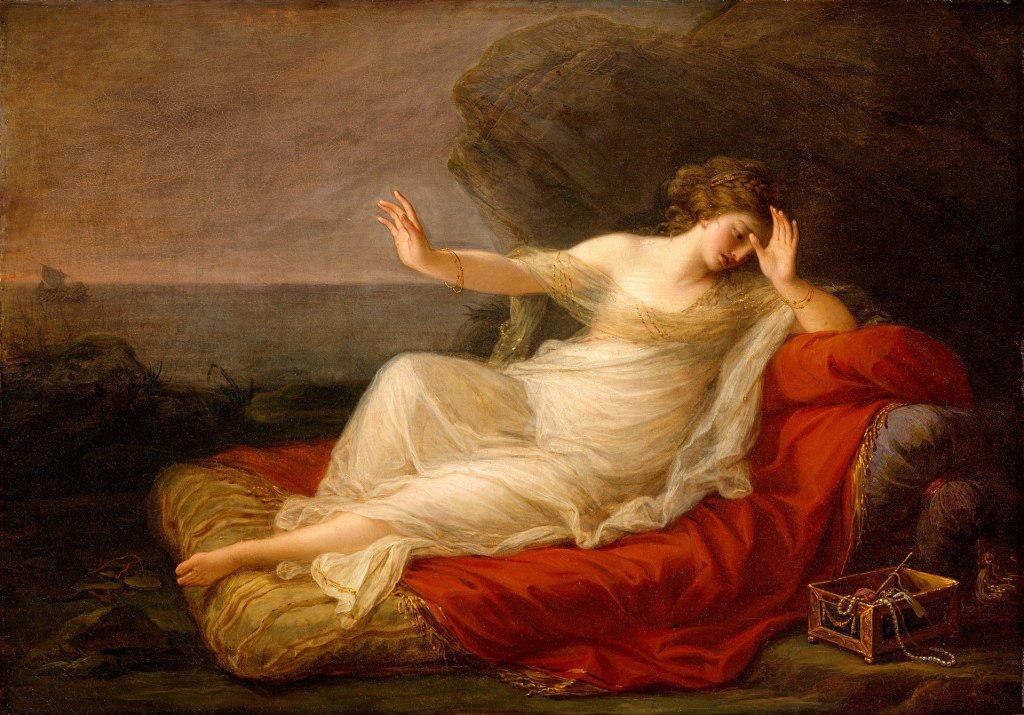
Ariadne Abandoned by Theseus (1774)

Portrait of a Woman as a Vestal Virgin (1770s), oil on canvas, 60 x 41 cm., Thyssen-Bornemisza National Museum, Madrid
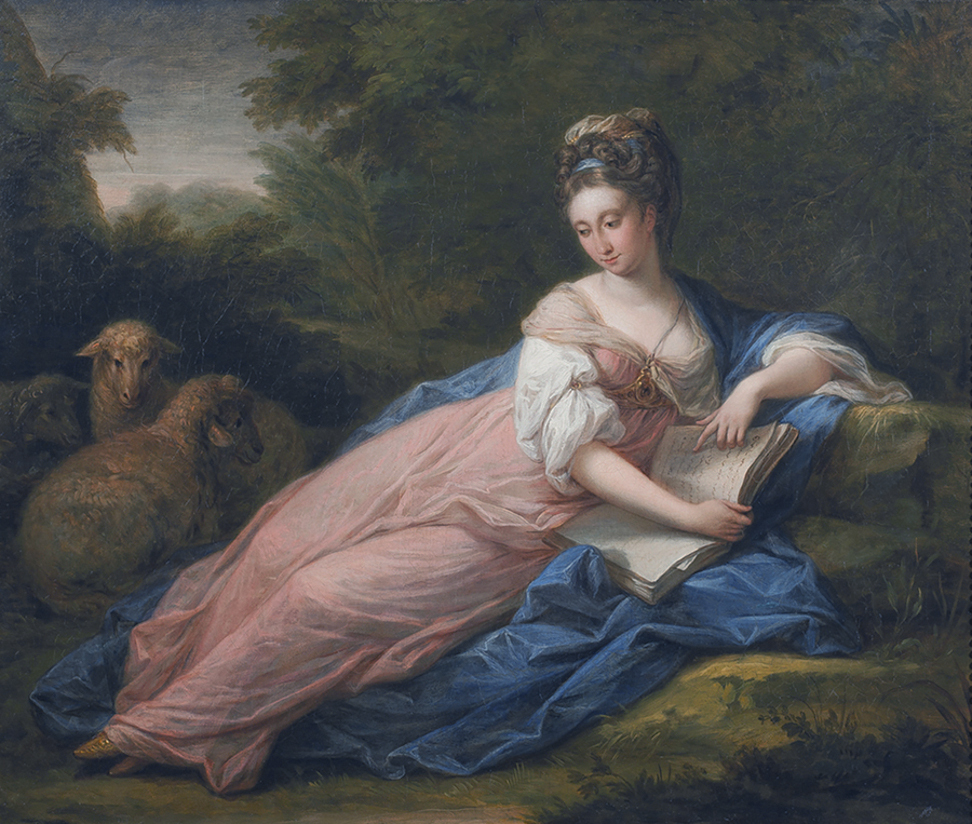
Mary Tisdall, Dublin (1771–72)
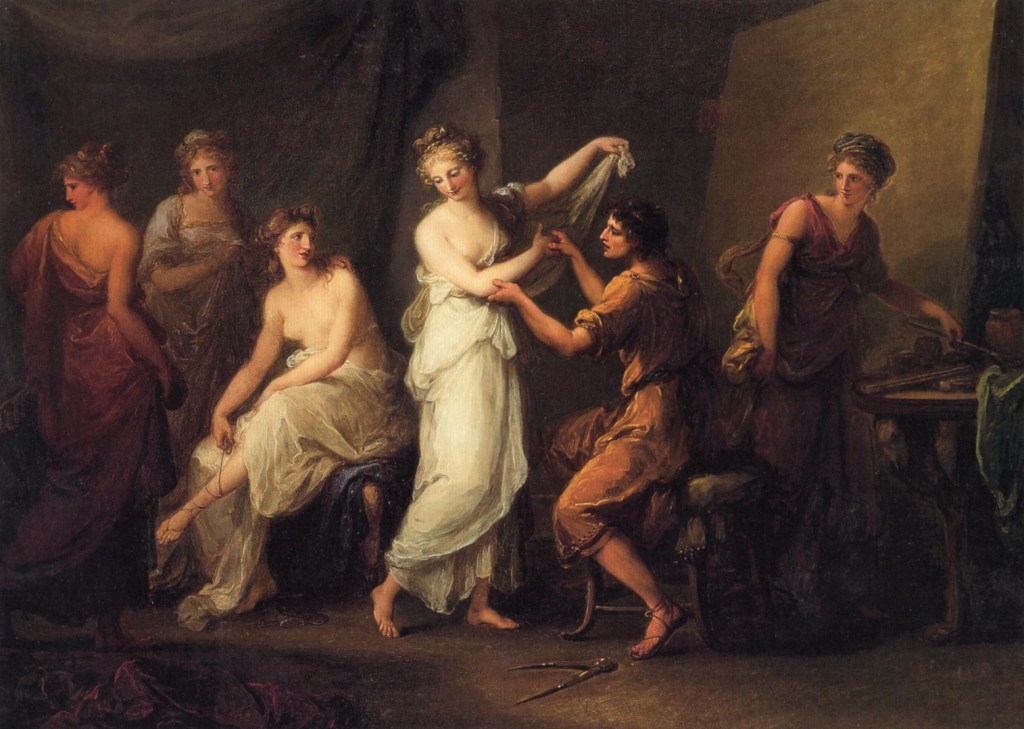
Zeuxis Selecting Models for His Painting of Helen of Troy (c. 1778), oil on canvas, dimensions unknown, Annmary Brown Memorial Library, Brown University, Rhode Island
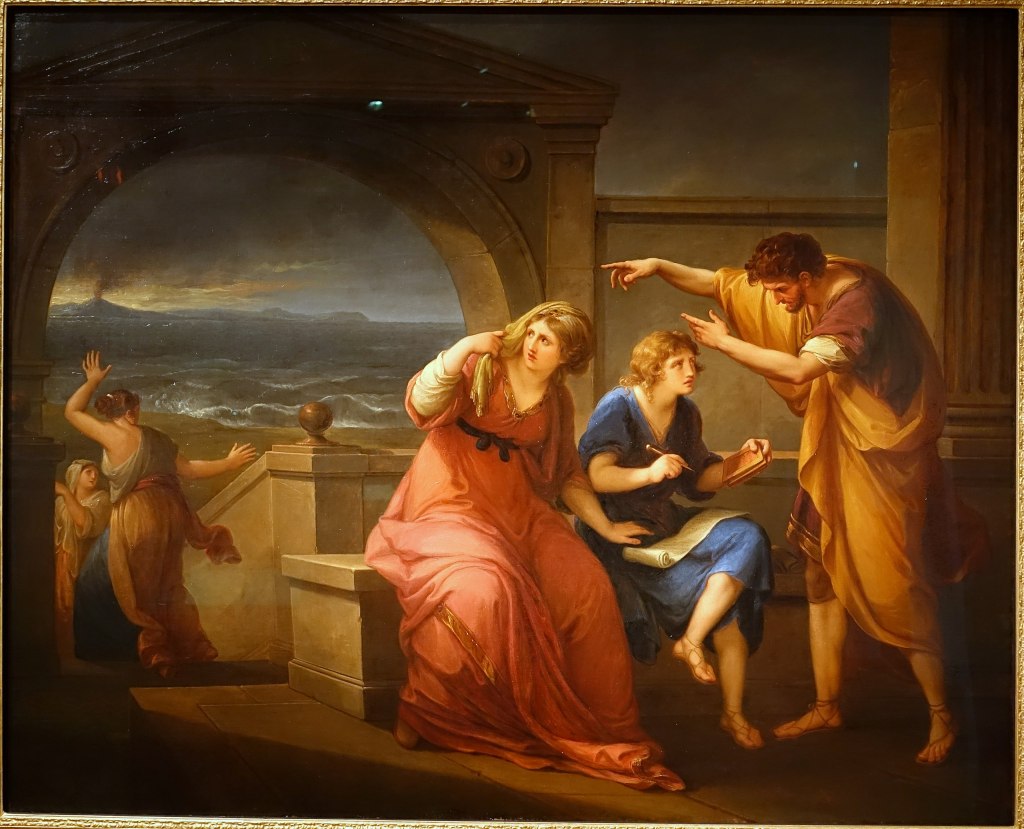
Pliny the Younger and His Mother at Miseno (1785), oil on canvas, 103 x 127.5 cm., Princeton University Art Museum, New Jersey
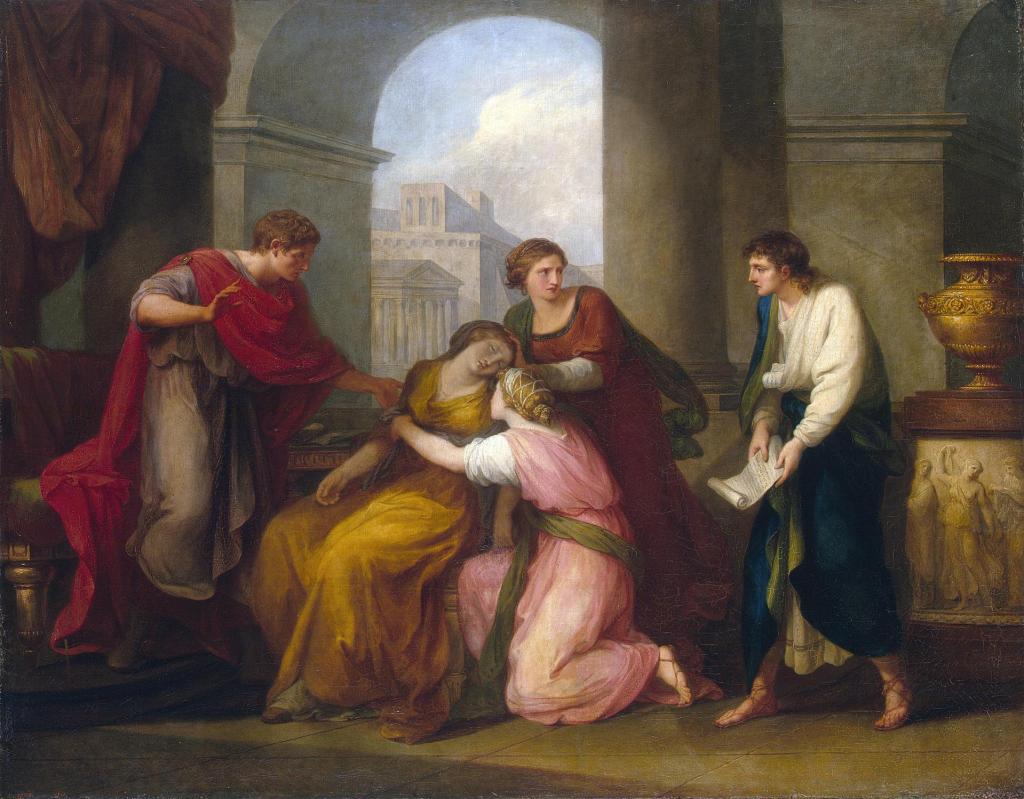
Virgil reading the Aeneid to Augustus and Octavia (1788), oil on canvas, 123 x 159 cm, Hermitage Museum, Saint Petersburg

Portrait of Eleanor, Countess of Lauderdale (c. 1780), oil on canvas, 76.2 x 63.5 mm., Museum of Fine Arts, Houston
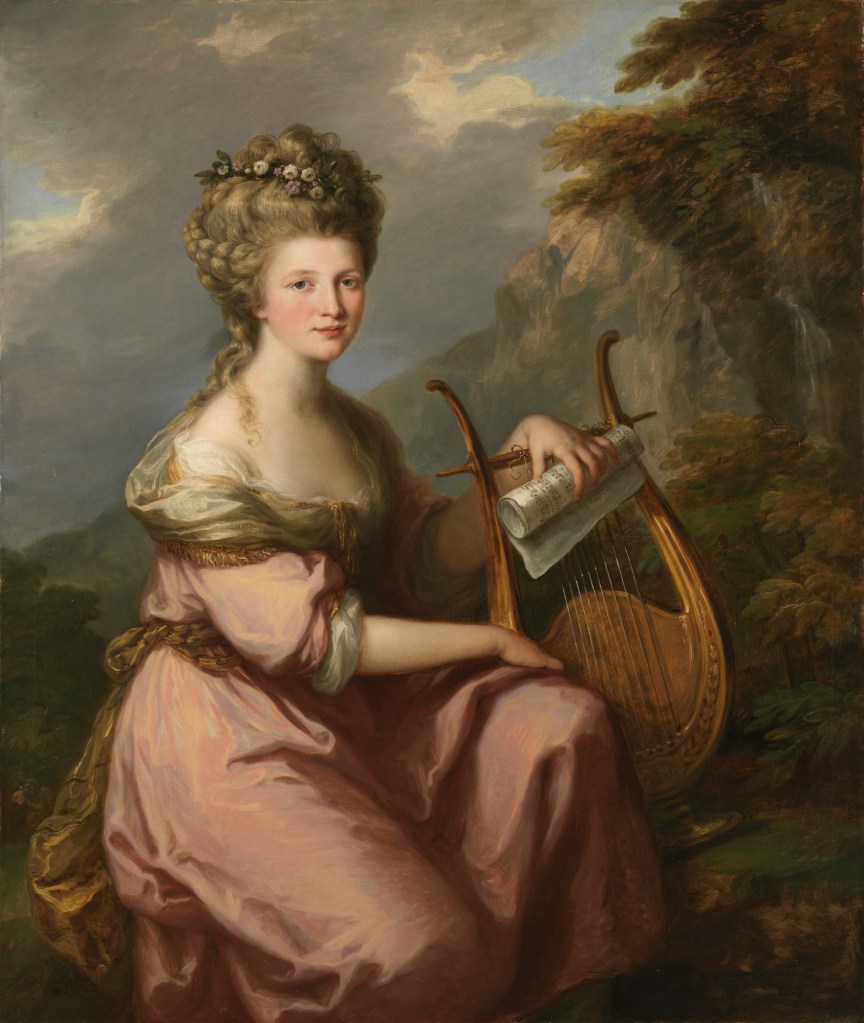
Portrait of Sarah Harrop (Mrs. Bates) as a Muse (1780–81), oil on canvas, 142 x 121 cm., Princeton University Art Museum, New Jersey
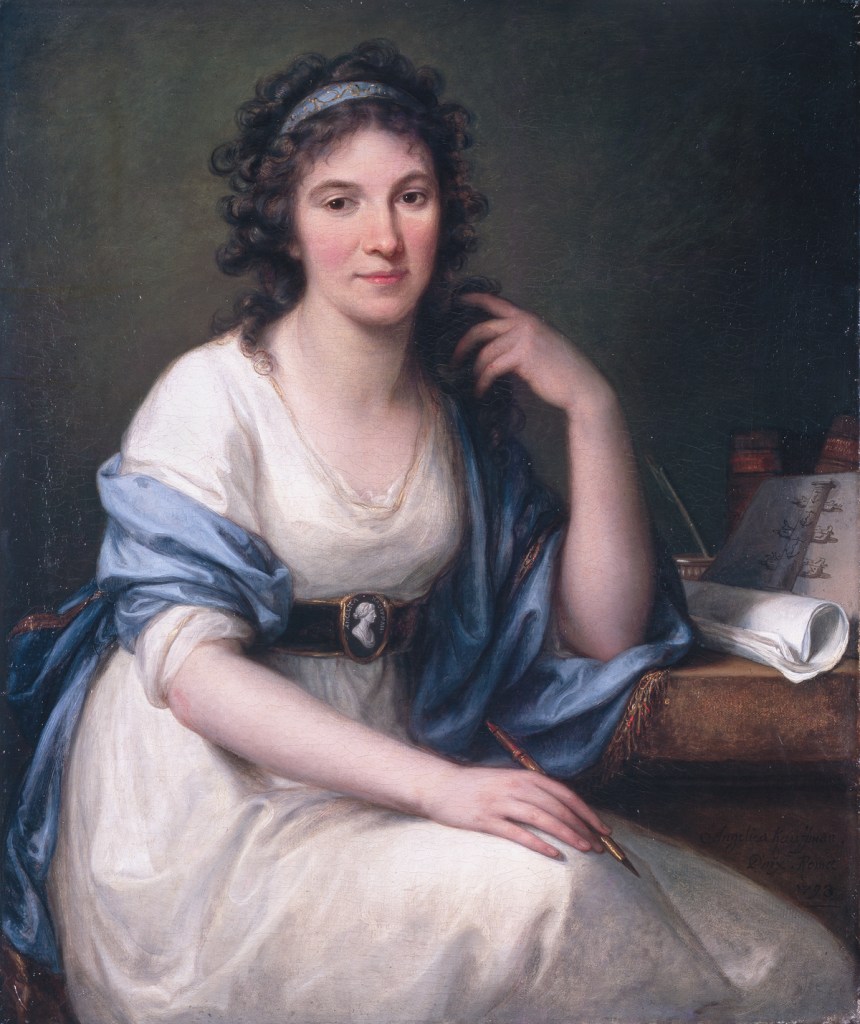
Ellis Cornelia Knight (1793), oil on canvas, 96 x 80 cm., Manchester Art Gallery
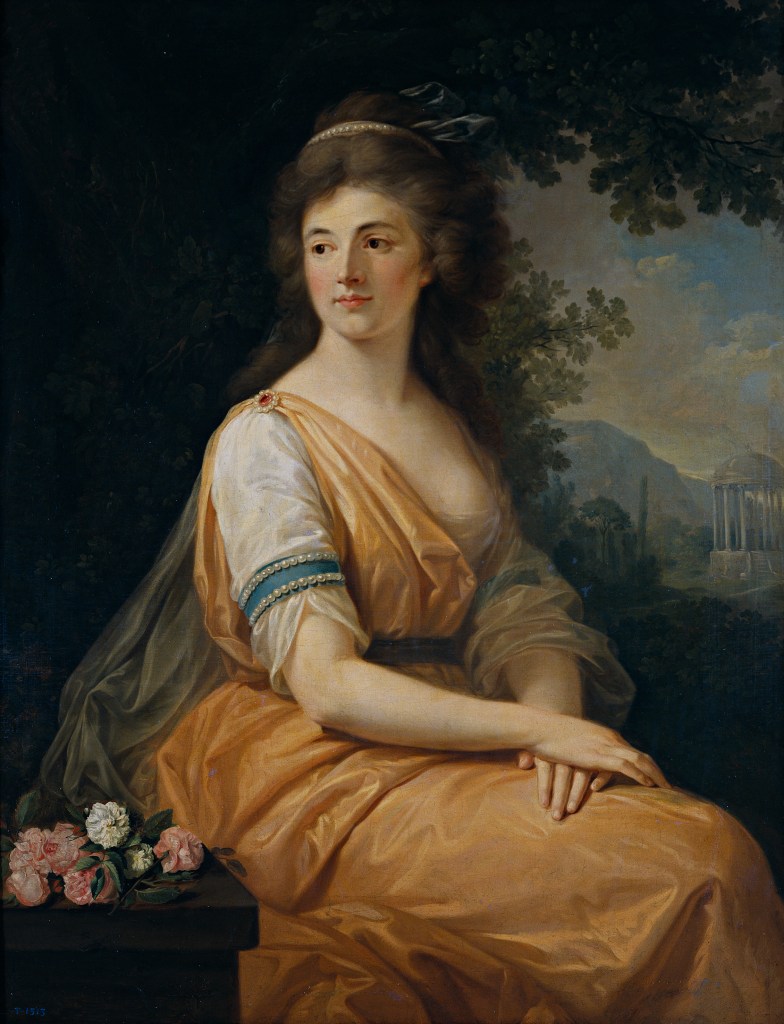
Anna von Escher van Muralt (c. 1800), oil on canvas, 110 x 86 cm., Prado, Madrid
| Alfred Sisley | |
|---|---|
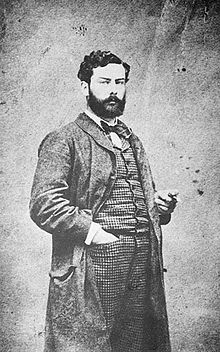 | |
Today is the birthday of Alfred Sisley (Paris 30 October 1839 – 29 January 1899 Moret-sur-Loing); Impressionist landscape painter who was born and spent most of his life in France, but retained British citizenship. Perhaps the most consistent of the Impressionists in his dedication to painting landscape en plein air (i.e., outdoors). He deviated into figure painting only rarely and found that Impressionism fulfilled his artistic needs.
Among his important works are a series of paintings of the River Thames, mostly around Hampton Court, executed in 1874, and landscapes depicting places in or near Moret-sur-Loing. The notable paintings of the Seine and its bridges in the former suburbs of Paris are like many of his landscapes, characterized by tranquillity, in pale shades of green, pink, purple, dusty blue and cream.
In 1866, Sisley began a relationship with Eugénie Lesouezec (1834–1898; also known as Marie Lescouezec), a Breton living in Paris. Sisley died at the age of 59, a few months after the death of his wife.
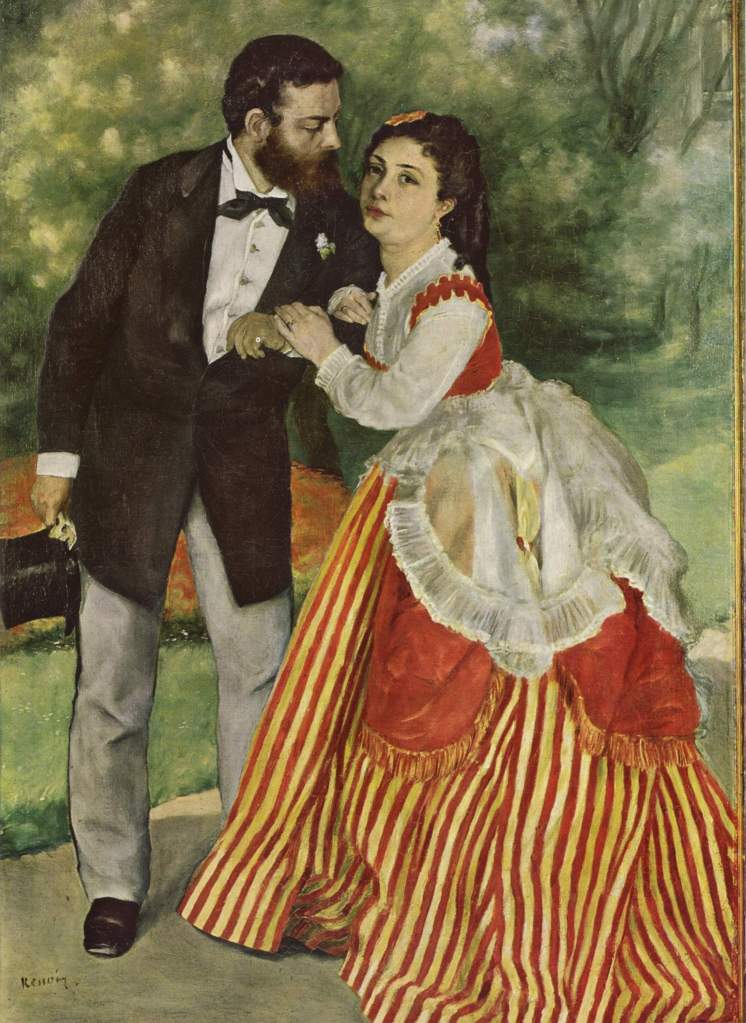
Pierre-Auguste Renoir, Alfred Sisley and his Wife, 1868
Gallery

Bateau à Veneux
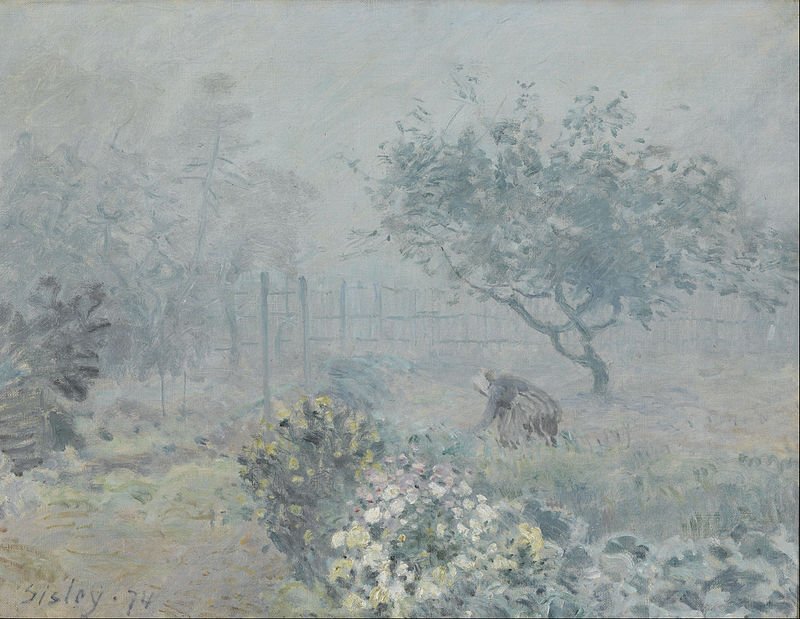
Le Brouillard, Voisins
1874 Musée d’Orsay

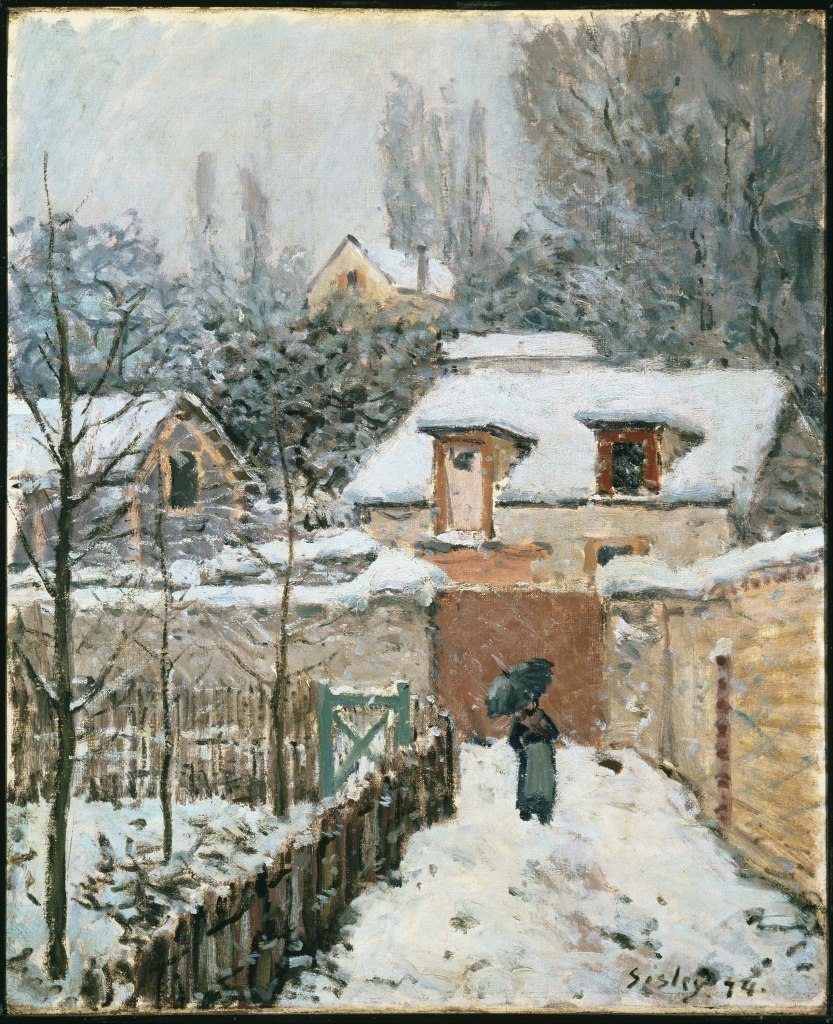
Snow at Louveciennes

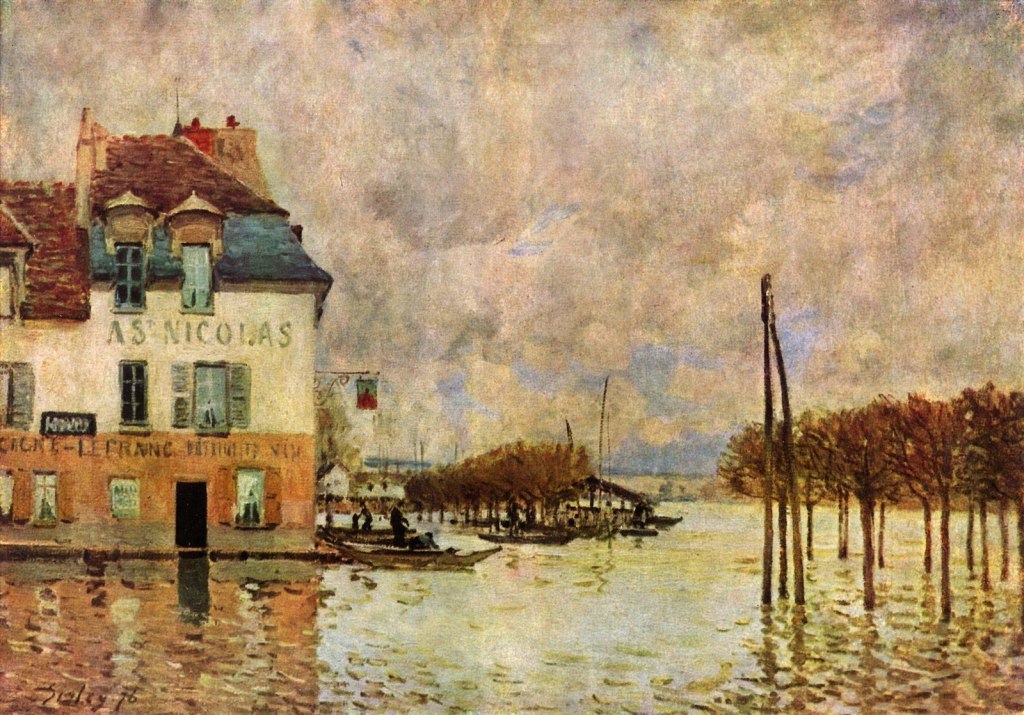
L’Inondation à Port-Marly (1876) paris musée d’Orsay
Today is the birthday of Paul Valéry (Ambroise Paul Toussaint Jules Valéry; Sète, Hérault, Occitanie, France; 30 October 1871 – 20 July 1945 Paris); poet, essayist, and philosopher. In addition to his poetry and fiction (drama and dialogues), his interests included aphorisms on art, history, letters, music, and current events. Valéry was nominated for the Nobel Prize in Literature in 12 different years.

Perhaps best known as a poet, he is sometimes considered to be the last of the French symbolists. He published fewer than a hundred poems. On the night of 4 October 1892, during a heavy storm, Valéry underwent an existential crisis, an event that impacted his writing career. Around 1898, he quit writing altogether, publishing not a word for nearly twenty years. This hiatus was in part due to the death of his mentor, Stéphane Mallarmé. When, in 1917, he finally broke his ‘great silence’ with the publication of La Jeune Parque; he was forty-six years of age.
This sublimely musical masterpiece, of 512 alexandrine lines in rhyming couplets, took him four years to complete, and it secured his fame. With “Le Cimetière marin” and “L’Ébauche d’un serpent,” it is, in my opinion, one of the greatest French poems of the twentieth century.
The title refers to the youngest of the three Parcae (the minor Roman deities also called The Fates). The poem is written in the first person, and is the soliloquy of a young woman contemplating life and death, engagement and withdrawal, love and estrangement, in a setting dominated by the sea, the sky, stars, rocky cliffs, and the rising sun.
In 1900, he married Jeannie Gobillard, a friend of Mallarmé’s family, who was also a niece of the painter Berthe Morisot. The wedding was a double ceremony in which the bride’s cousin, Morisot’s daughter, Julie Manet married the painter, Ernest Rouart.
Valéry died in Paris in 1945. He is buried in the cemetery of his native town, Sète, the same cemetery celebrated in his famous poem, Le Cimetière marin.
Verse Charmes ou poèmes (1922)
Ce toit tranquille, où marchent des colombes,
Entre les pins palpite, entre les tombes;
Midi le juste y compose de feux
La mer, la mer, toujours recommencée
O récompense après une pensée
Qu’un long regard sur le calme des dieux!
This quiet roof, where dove-sails saunter by,
Between the pines, the tombs, throbs visibly.
Impartial noon patterns the sea in flame —
That sea forever starting and re-starting.
When thought has had its hour, oh how rewarding
Are the long vistas of celestial calm!
Le Cimetière Marin
Quel pur travail de fins éclairs consume
Maint diamant d’imperceptible écume,
Et quelle paix semble se concevoir!
Quand sur l’abîme un soleil se repose,
Ouvrages purs d’une éternelle cause,
Le temps scintille et le songe est savoir.
What grace of light, what pure toil goes to form
The manifold diamond of the elusive foam!
What peace I feel begotten at that source!
When sunlight rests upon a profound sea,
Time’s air is sparkling, dream is certainty —
Pure artifice both of an eternal Cause.
As translated by C. Day Lewis
Beau ciel, vrai ciel, regarde-moi qui change!
Après tant d’orgueil, après tant d’étrange
Oisiveté, mais pleine de pouvoir,
Je m’abandonne à ce brillant espace,
Sur les maisons des morts mon ombre passe
Qui m’apprivoise à son frêle mouvoir.
Beautiful heaven, true heaven, look how I change!
After such arrogance, after so much strange
Idleness — strange, yet full of potency —
I am all open to these shining spaces;
Over the homes of the dead my shadow passes,
Ghosting along — a ghost subduing me.
As translated by by C. Day Lewis
Ici venu, l’avenir est paresse.
L’insecte net gratte la sécheresse;
Tout est brûlé, défait, reçu dans l’air
A je ne sais quelle sévère essence . . .
La vie est vaste, étant ivre d’absence,
Et l’amertume est douce, et l’esprit clair.
Now present here, the future takes its time.
The brittle insect scrapes at the dry loam;
All is burnt up, used up, drawn up in air
To some ineffably rarefied solution . . .
Life is enlarged, drunk with annihilation,
And bitterness is sweet, and the spirit clear.
As translated by by C. Day Lewis
Allez! Tout fuit! Ma présence est poreuse,
La sainte impatience meurt aussi!
All perishes. A thing of flesh and pore
Am I. Divine impatience also dies.
As translated by by C. Day Lewis
Le vent se lève! . . . il faut tenter de vivre!
L’air immense ouvre et referme mon livre,
La vague en poudre ose jaillir des rocs!
Envolez-vous, pages tout éblouies!
Rompez, vagues! Rompez d’eaux rejouies
Ce toit tranquille où picoraient des focs!
The wind is rising! . . . We must try to live!
The huge air opens and shuts my book: the wave
Dares to explode out of the rocks in reeking
Spray. Fly away, my sun-bewildered pages!
Break, waves! Break up with your rejoicing surges
This quiet roof where sails like doves were pecking.
As translated by by C. Day Lewis
today is the birthday of Ezra Pound (Ezra Weston Loomis Pound; Hailey, Idaho Territory 30 October 1885 – 1 November 1972 Venice); poet and critic, and a major figure in the early modernist movement. His contribution to poetry began with his development of Imagism, a movement derived from classical Chinese and Japanese poetry, stressing clarity, precision and economy of language. His best-known works include Ripostes (1912), Hugh Selwyn Mauberley (1920) and the unfinished 120-section epic, The Cantos (1917–1969).
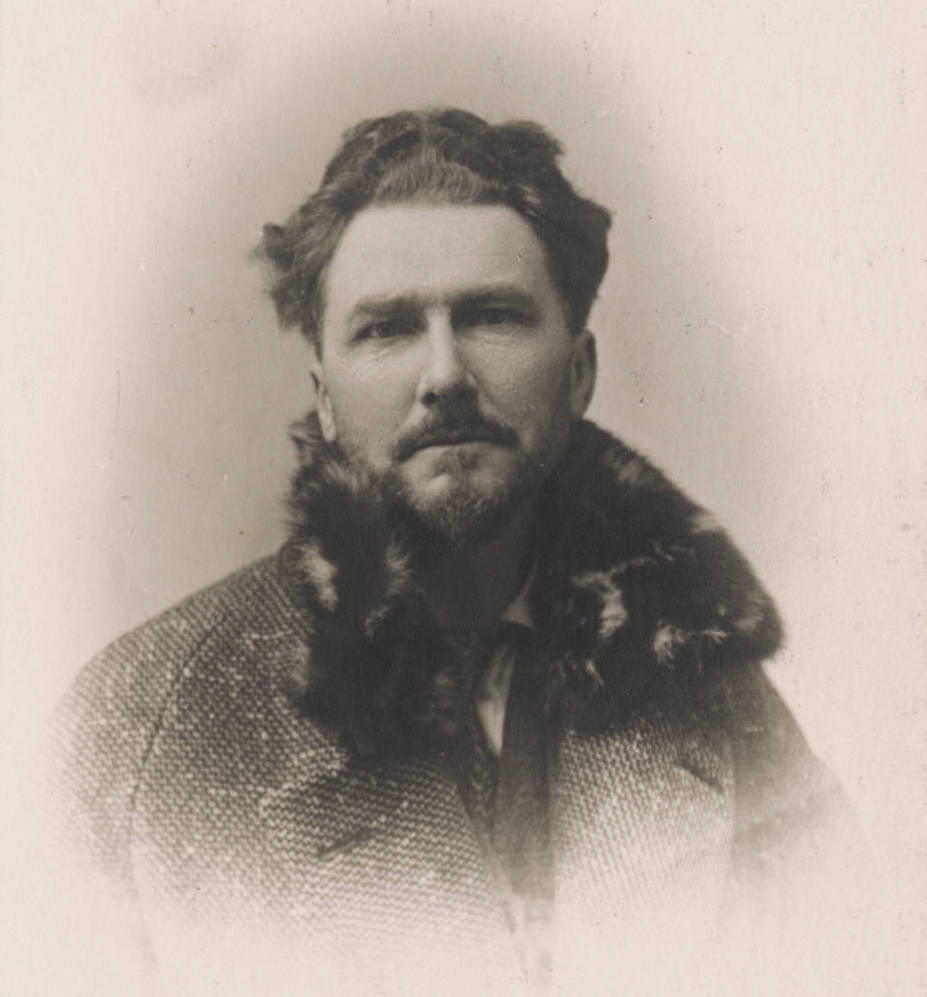
passport photo c. 1919
Working in London in the early 20th century as foreign editor of several American literary magazines, Pound helped discover and shape the work of contemporaries such as T. S. Eliot, James Joyce, Robert Frost and Ernest Hemingway. This included arranging for the publication in 1915 of Eliot’s “The Love Song of J. Alfred Prufrock” and the serialization from 1918 of Joyce’s Ulysses.
Pound lost faith in England and blamed the WWI on usury and international capitalism. He moved to Italy in 1924, and throughout the 1930s and 1940s he embraced Benito Mussolini’s fascism and wrote for publications owned by the British fascist Oswald Mosley. During World War II, he was paid by the Italian government to make hundreds of radio broadcasts criticizing the United States, Franklin D. Roosevelt and Jews, as a result of which he was arrested in 1945 by American forces in Italy on charges of treason. He spent months in detention in a U.S. military camp in Pisa, including three weeks in a six-by-six-foot outdoor steel cage, which he said triggered a mental breakdown: “when the raft broke and the waters went over me”. Deemed unfit to stand trial, he was incarcerated in St. Elizabeths psychiatric hospital in Washington, D.C., for over 12 years.
While in custody in Italy, Pound had begun work on sections of The Cantos. These were published as The Pisan Cantos (1948), for which he was awarded the Bollingen Prize in 1949 by the Library of Congress, triggering controversy. Largely due to a campaign by his fellow writers, he was released from St. Elizabeths in 1958 and returned to live in Italy until his death. His political views ensure that his work remains as controversial now as it was during his lifetime. Hemingway wrote: “The best of Pound’s writing—and it is in the Cantos—will last as long as there is any literature.”
At a literary salon in January 1909, Pound met the novelist Olivia Shakespear and her daughter Dorothy, who became his wife in 1914. Through Olivia Shakespear he was introduced to her former lover W. B. Yeats. Pound had sent Yeats a copy of A Lume Spento the previous year, before he left for Venice, and Yeats had apparently found it charming. The men became friends, although Yeats was older by 20 years.
Pound was 36 when he met the 26-year-old American violinist Olga Rudge in Paris in the fall of 1922, beginning a love affair that lasted 50 years. Biographer John Tytell believes Pound had always felt that his creativity and ability to seduce women were linked, something Dorothy had turned a blind eye to over the years. Shortly after arriving in Paris, he complained that he had been there for three months without having managed to find a mistress. He was introduced to Olga at a musical salon hosted by American heiress Natalie Barney in her home at 20 Rue Jacob, near the Boulevard Saint-Germain. The two moved in different social circles: Olga was the daughter of a wealthy Youngstown, Ohio, steel family, living in her mother’s Parisian apartment on the Right Bank, socializing with aristocrats, while his friends were mostly impoverished writers of the Left Bank. They spent the following summer in the south of France, where Pound worked with George Antheil to apply the concept of Vorticism to music, and managed to write two operas, including Le Testament de Villon. He wrote pieces for solo violin, which Olga performed.
On his 87th birthday, 30 October 1972, he was too weak to leave his bedroom. The next night he was admitted to the Civil Hospital of Venice, where he died in his sleep of an intestinal blockage on 1 November, with Olga at his side. Dorothy was unable to travel to the funeral. Four gondoliers dressed in black rowed the body to the island cemetery, Isola di San Michele, where he was buried near Diaghilev and Stravinsky. Dorothy died in England the following year. Olga died in 1996 and was buried next to Pound.
Verse
The Cantos
- If a man have not order within him
He can not spread order about him;
And if a man have not order within him
His family will not act with due order;
And if the prince have not order within him
He can not put order in his dominions.- Canto XIII
- And even I can remember
A day when the historians left blanks in their writings,
I mean, for things they didn’t know,
But that time seems to be passing.- Canto XIII
- Without character you will
be unable to play on that instrument- Canto XIII
- The blossoms of the apricot
blow from the east to the west,
And I have tried to keep them from falling.- Canto XIII
- With usura hath no man a house of good stone
each block cut smooth and well fitting
[…]
with usura
hath no man a painted paradise on his church wall
[…]
no picture is made to endure nor to live with
but it is made to sell and sell quickly- Canto XLV
- Note: Regarding usura, in 1972 Pound wrote in the foreword to “Selected Prose, 1909-1965”:
- Canto XLV
“re USURY
I was out of focus, taking a symptom for a cause.
The cause is AVARICE.”
- What thou lovest well remains,
the rest is dross
What thou lov’st well shall not be reft from thee
What thou lov’st well is thy true heritage- Canto LXXXI
- Pull down thy vanity, it is not man
Made courage, or made order, or made grace,
Pull down thy vanity, I say pull down.
Learn of the green world what can be thy place- Canto LXXXI
- How mean thy hates
Fostered in falsity
[…]
Rathe to destroy, niggard in charity- Canto LXXXI
- To have gathered from the air a live tradition
or from a fine old eye the unconquered flame
This is not vanity.
Here error is all in the not done,
all in the diffidence that faltered . . .- Canto LXXXI
- “You damn sadist!” said mr. cummings,
“you try to make people think.”- Canto LXXXIX
- The temple is holy because it is not for sale.
- Canto XCVII
- Pride, jealousy and possessiveness
3 pains of hell- Canto CXIII
- And of man seeking good,
doing evil.- Canto CXV
- But the beauty is not the madness
Tho’ my errors and wrecks lie about me.
And I am not a demigod,
I cannot make it cohere.- Canto CXVI
- Many errors,
a little rightness.- Canto CXVI
- I have tried to write Paradise
Do not move
Let the wind speak.
that is paradise.
Let the Gods forgive what I
have made
Let those I love try to forgive
what I have made.- Canto CXX (the concluding Canto of the 1975 edition of The Cantos’)
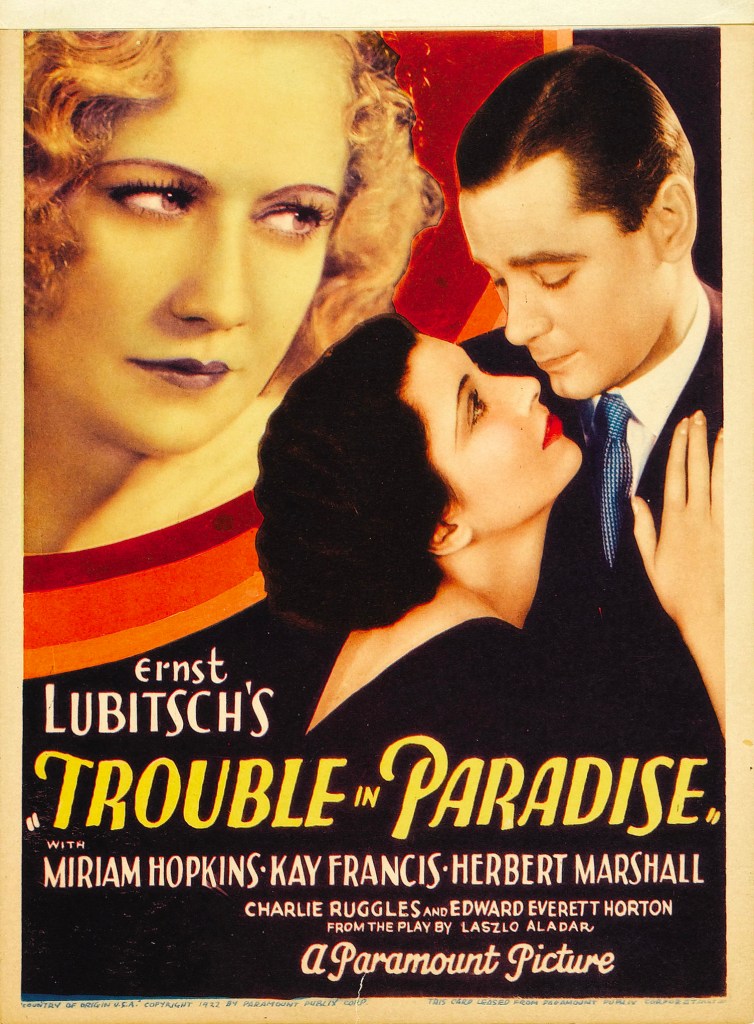
And on this day in 1933; the premiere of Trouble in Paradise an American pre-Code romantic comedy film directed by Ernst Lubitsch and starring Miriam Hopkins, Kay Francis, and Herbert Marshall. Based on the 1931 play The Honest Finder (A Becsületes Megtaláló) by Hungarian playwright László Aladár, the lead characters are a gentleman thief and a lady pickpocket who join forces to con a beautiful woman who is the owner of a perfume company. In 1991, Trouble in Paradise was selected for preservation by the United States National Film Registry by the Library of Congress as being “culturally, historically, or aesthetically significant”
Mac Tag
thanks for stoppin’ by y’all
Follow us on twitter @cowboycoleridge
 The Lovers’ Chronicle
Leave a reply to The Lovers’ Chronicle 14 February – be mine – verse by Shakespeare & Elizabeth Barrett Browning – birth of Nina Hamnett – The Lovers’ Chronicle Cancel reply