
Dear Zazie, Here is today’s Lovers’ Chronicle from Mac Tag dedicated to his muse. Have you been pierced by love? Has beauty been chased from your heart? Rhett
The Lovers’ Chronicle
Dear Muse,
there is no song
but there is a poem
by Emily Dickinson
“Oh fabulous”
one of her more
abstract ones
“Word soup”
yes, the first line;
“Is it dead – Find it -“
and there are three questions:
(i added an answer)
happy – which is wiser
conscious – ask of that
homesick – not anymore
we are found
© copyright 2023 mac tag/cowboy coleridge all rights reserved
the way through, day by day, all that can be done on this ride; what would have changed if known then what know now, speculation serves this purpose, not sure what else, a matter of whatever happens, with who and how, comes as close as possible to joie de vivre
© copyright 2022.2023 mac tag/cowboy coleridge all rights reserved
quite comfortably found
yes, took long enough
is a fair point
better than never
best retort for now
it takes what it takes
it costs what it costs
no point in arguin’
just give thanks
particularly
for bein’ found
times two
purpose and you
© copyright 2021.2023 mac tag/cowboy coleridge all rights reserved
Pale Love, Pale Rider
upon my troth
i write for you faithfully
the verse has been
of my life and near death
and that was enough breath
then your eyes piercin’ me,
i may the beauty of them sustain
so have you from my heart chased
without, i need not feign i am found
© copyright 2020 mac tag/cowboy coleridge all rights reserved
your eyes suddenly
i may of them
not sustain,
so wounds
unless your words
while that it grieves
eyes suddenly
upon troths,
thus faithfully,
nothin’ has been
for with, shall be seen
suddenly
of anything
not sustain
such is the world
where the poet
feels no more
© copyright 2019 mac tag/cowboy coleridge all rights reserved
it bein’ a purpose
mine, clearly here
that much figured out
has to be done before
anyone can be let in
obviously a past
problem
since this was only
figured out
in the last year
loner tendencies
can be traced
to early years
again, the isolation
the limited outlets
leanin’ into
what i found
© copyright 2018.2023 mac tag/cowboy Coleridge all rights reserved
turn this way and that,
hearts comin’ undone
chased away or lost,
forgot and abandoned
Picasso said…
Je ne cherche pas, je trouve
maybe that is the key
do not seek… find it
do not give up
do not settle
whatever it takes
however long it takes
find it
you are out there
and i will find you
***
and make sure
you ask yourself this…
can you live
with not tryin’ anymore,
with walkin’ away
Karen: “No. I will always try.”
i loved someone who suffered from depression/anxiety and would not take care of herself. the stress of tryin’ to help her and us…
“Rare are the people who truly want to help those who need it; sadly, some people do not want to be helped—often those who need it… I know that stress too well.”
gave me a dang heart attack. i had to let go. as for tryin’ for love, i still believe it is worth the effort.
“Rare love, the kind that floods your blood with emotions, the kind that reshapes you, defines you and elevates you—is worth all the effort, yes.”
© copyright 2017 mac tag/cowboy Coleridge all rights reserved
My first, best destiny
Why, writin’ verse for you
In the dimmin’ light
Cling
The quick heave
Closer
Sink into
In the silent watch
Of the night
Ever must be
He who yearns
And the long tremble
By what strange chance
have you come
By what change…
by what marvel
No more listen
To the rush and roar
Conscious of distant touches
© copyright 2016 mac tag/cowboy Coleridge all rights reserved
Either, I never had
anything worth keepin’
or, I could not see that
what was in front of me
was worth hangin’ on to

Makin camp on the Sioux reservation, south dakota

my mornin’ view
Poetry:
Verses written
from deep within
The way you look
at first light
The way I think
about you
Flock of ravens feastin’
on carrion
Flock of regrets feast on
my breath of life
Flock of verses tryin’
to save my soul
© copyright 2015 mac tag/cowboy Coleridge all rights reserved

Today, probably, is the death day of Geoffrey Chaucer (c. 1343 London – 25 October 1400 London); poet, writer and civil servant perhaps best known for The Canterbury Tales. He has been called the ‘father of English literature’, or alternatively, the ‘father of English poetry’. He was the first writer to be entombed in what has since become Poets’ Corner in Westminster Abbey.
Chaucer also gained fame as a philosopher and astronomer, composing the scientific A Treatise on the Astrolabe for his ten-year-old son, Lewis. He maintained a career in public service as a bureaucrat, courtier, diplomat and member of the Parliament of England, having been elected as shire knight for Kent.
Amongst his other works are The Book of the Duchess, The House of Fame, The Legend of Good Women, Troilus and Criseyde, and Parlement of Foules. A prolific writer, Chaucer has been seen as crucial in legitimising the literary use of Middle English at a time when the dominant literary languages in England were still Anglo-Norman French and Latin. His contemporary Thomas Hoccleve hailed him as “the firste fyndere of our fair langage” (i.e., the first one capable of finding poetic matter in English). Almost two thousand English words are first attested in Chaucerian manuscripts.
In 1366, Chaucer married Phillipa Pan, a “damsel of the queen’s bedchamber.” From his writin’s, one can find an invective against naggin’ and scoldin’ wives, so it seems that Chaucer’s married life was not particularly happy, that he was cynical about marriage and apparently in love with another woman. Our pal Jett says; “In other words, a typical marriage!”
For today’s Poem of the Day, I offer my translation, from Middle English, of Chaucer’s “Merciless Beauty”:
Merciless Beauty
Your eyes pierce me suddenly
I may the beauty of them not sustain,
So wounds me and my heart keen
Unless your words heal hastily
My heart’s wound while that it grieves
Your eyes pierce me suddenly
Upon my troth I say to you faithfully,
You have been of my life and death the queen;
For with my death the truth shall be seen
Your eyes pierce me suddenly
I may the beauty of them not sustain,
So wounds me and my heart keen
So has your beauty from my heart chased
Pity, that it avails not to complain:
For fate holds your mercy in his chain
Guiltless my death have you purchased;
I say to you so, I need not feign:
So has your beauty from my heart chased
Alas, that nature has in you composed
So great beauty, that no man may attain
To mercy, though he starve for the pain
So has your beauty from your heart chased
Pity, that it avails not to complain
For fate holds your mercy in his chain
Since I from love escaped it yet,
I never plan to be in his prison;
Since I am free, I will not wait
He may answer and say this and that,
I care not, I speak right as I mean;
Since I from love escaped it yet
Love has my name struck from his slate,
And he is struck from my books clean:
For evermore, is my curse,
Since I from love escaped it yet
Your eyes pierce me suddenly
So has your beauty from my heart chased
Since I from love escaped it yet
The Song of the Day is Ralph Vaughan Williams‘ “So Hath Your Beauty”
Today is the birthday of Richard Parkes Bonington (Arnold (near Nottingham) 25 October 1802 – 23 September 1828 London); Romantic landscape painter, who moved to France at the age of 14. He brought aspects of English style to France. Becoming after his very early death one of the most influential British artists of his time, the facility of his style was inspired by the old masters, yet was entirely modern in its application. His landscapes were mostly of coastal scenes, with a low horizon and large sky, showing a brilliant handling of light and atmosphere. He also painted small historical cabinet paintings in a freely-handled version of the troubadour style.

Portrait of Richard Parkes Bonington by Alexandre-Marie Colin
Gallery

Mademoiselle Rose Nue, Vue de Dos – Yale Center for British Art


Landscape near Quilleboeuf, c. 1824–1825. Yale Center for British Art
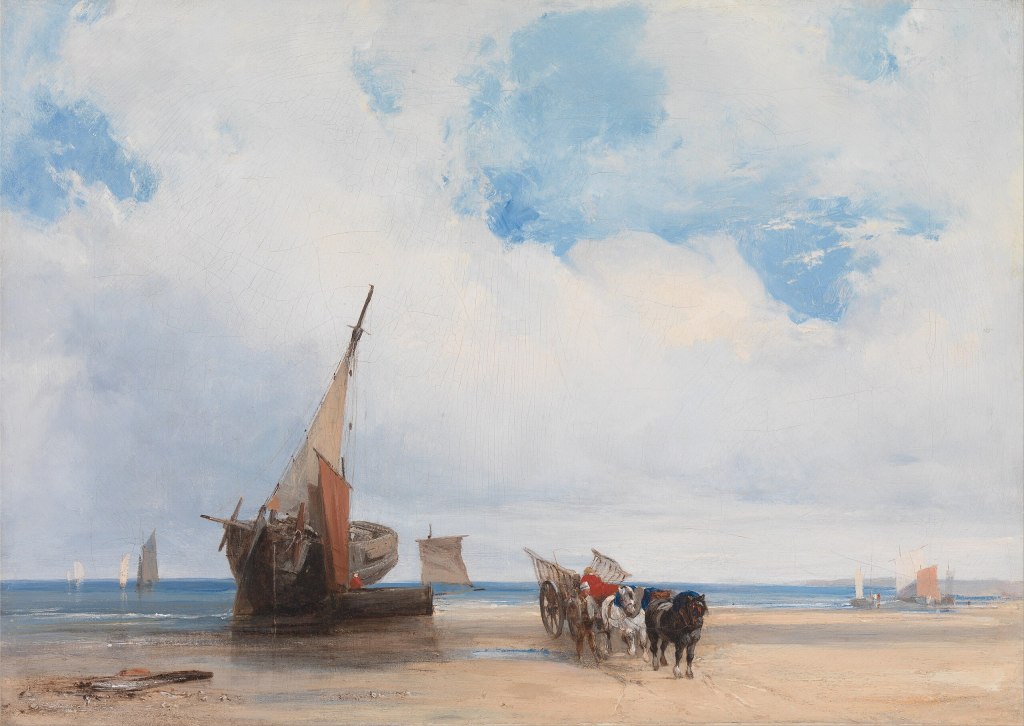
Beached Vessels and a Wagon, near Trouville, 1825

On the Adriatic, 1826

The Doge’s Palace, Venice, 1826
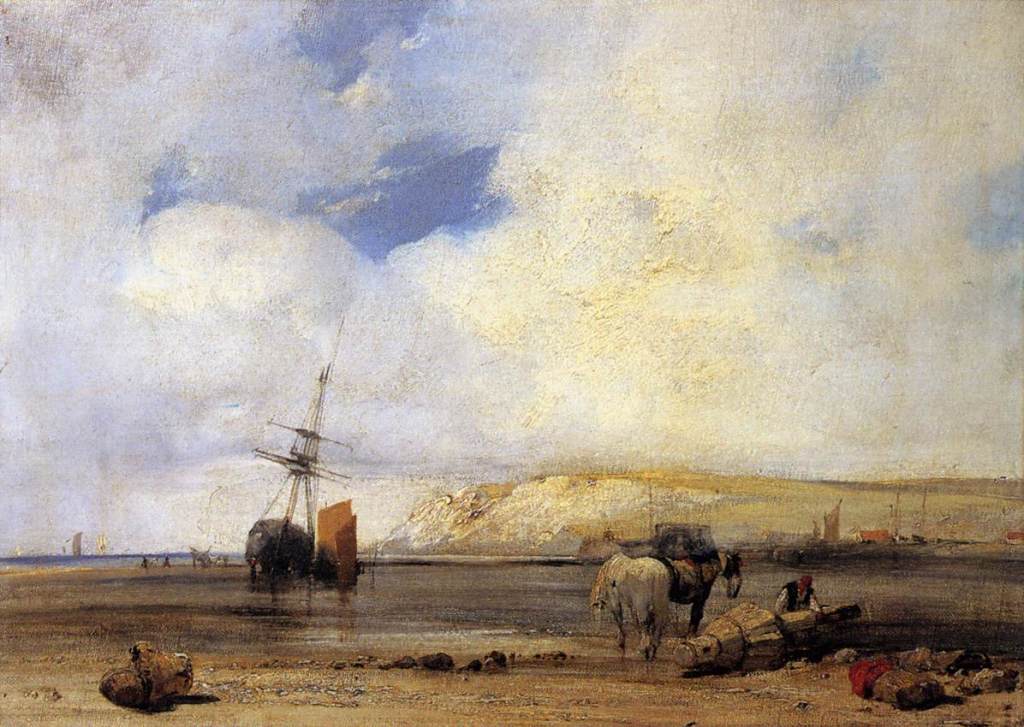
On the Coast of Picardy, 1826
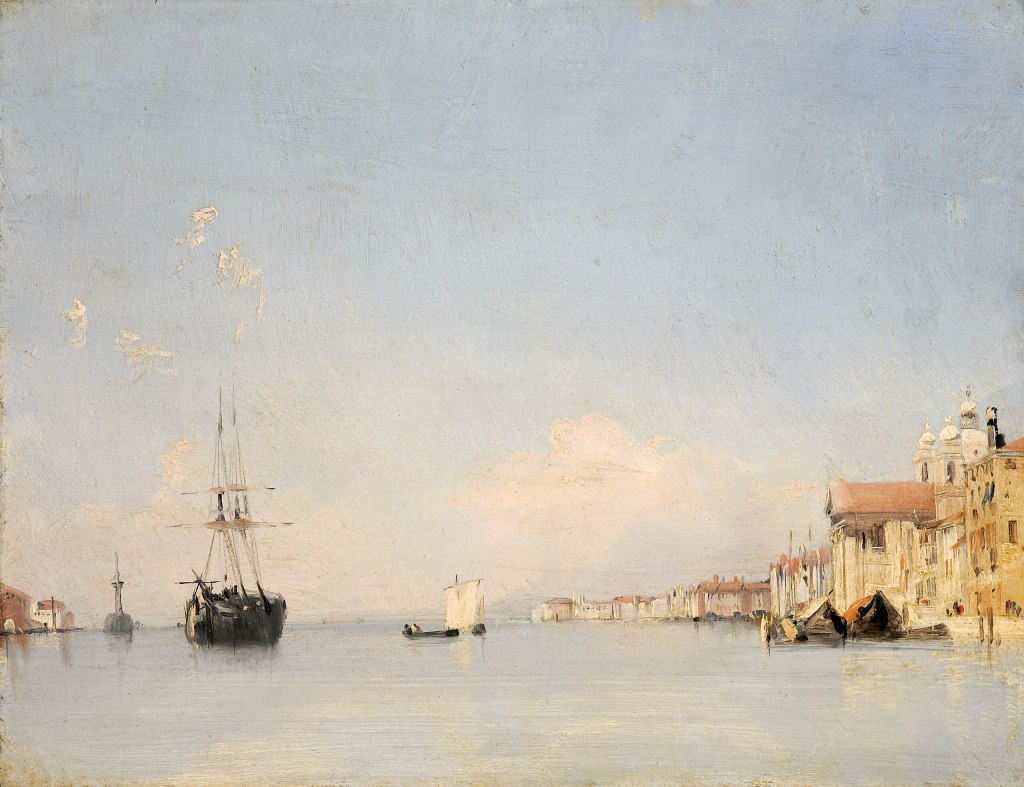
The Giudecca in Venice, 1826

View of the Lagoon Near Venice, 1827. Louvre

| Pablo Picasso | |
|---|---|
 | |
Today is the birthday of Pablo Picasso (Pablo Ruiz y Picasso; Málaga, Spain 25 October 1881 – 8 April 1973 Mougins, France); painter, sculptor, printmaker, ceramicist, stage designer, poet and playwright. In my opinion, one of the greatest and most influential artists of the 20th century. He is known for co-founding the Cubist movement, the invention of constructed sculpture, the co-invention of collage, and for the wide variety of styles that he helped develop and explore. Among his most famous works are the proto-Cubist Les Demoiselles d’Avignon (1907), and Guernica (1937), a portrayal of the Bombing of Guernica by the German and Italian air forces at the behest of the Spanish nationalist government during the Spanish Civil War.

in 1904. Photograph by Ricard Canals
Exceptionally prolific throughout the course of his long life, Picasso achieved universal renown and fortune for his revolutionary artistic accomplishments, and became one of the best-known figures in 20th-century art.
In the summer of 1918, Picasso married Olga Khokhlova, a ballerina with Sergei Diaghilev’s troupe, for whom Picasso was designing a ballet, Erik Satie’s Parade, in Rome; they spent their honeymoon near Biarritz in the villa of glamorous Chilean art patron Eugenia Errázuriz. Khokhlova’s insistence on social propriety clashed with Picasso’s bohemian tendencies and the two lived in a state of constant conflict.
In 1927 Picasso met 17-year-old Marie-Thérèse Walter and began a secret affair with her. Picasso’s marriage to Khokhlova soon ended in separation rather than divorce, as French law required an even division of property in the case of divorce, and Picasso did not want Khokhlova to have half his wealth. The two remained legally married until Khokhlova’s death in 1955. Picasso carried on the affair with Walter and fathered a daughter with her, named Maya. Walter lived in the vain hope that Picasso would one day marry her, and hanged herself four years after Picasso’s death. Throughout his life Picasso maintained several mistresses in addition to his wife or primary partner. Photographer and painter Dora Maar was also a constant companion and lover of Picasso. The two were closest in the late 1930s and early 1940s, and it was Maar who documented the painting of Guernica.
In 1944, after the liberation of Paris, Picasso, then 63 years old, began a romantic relationship with a young art student named Françoise Gilot, who was 40 years younger than he was. In her 1964 book Life with Picasso, Gilot describes his abusive treatment and myriad infidelities which led her to leave him.
Picasso had affairs with women of an even greater age disparity than his and Gilot’s. While still involved with Gilot, in 1951 Picasso had a six-week affair with Geneviève Laporte, who was four years younger than Gilot. By his 70s, many paintings, ink drawings and prints have as their theme an old, grotesque dwarf as the doting lover of a beautiful young model. Jacqueline Roque (1927–1986) worked at the Madoura Pottery in Vallauris on the French Riviera, where Picasso made and painted ceramics. She became his lover, and then his second wife in 1961. The two were together for the remainder of Picasso’s life.
Picasso died while he and his wife Jacqueline entertained friends for dinner. He was interred at the Chateau of Vauvenargues near Aix-en-Provence, a property he had acquired in 1958 and occupied with Jacqueline between 1959 and 1962. Devastated and lonely after the death of Picasso, Jacqueline Roque killed herself by gunshot in 1986 when she was 59 years old.
Gallery
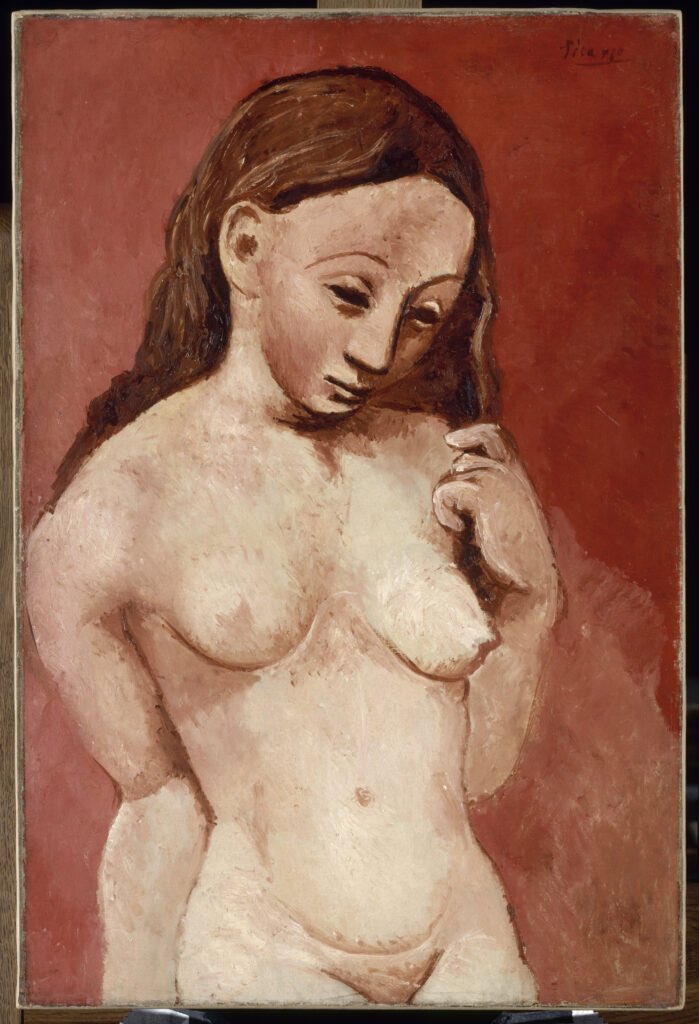
Nu sobre fons vermell

Mujer soñando en Venecia , (1900)
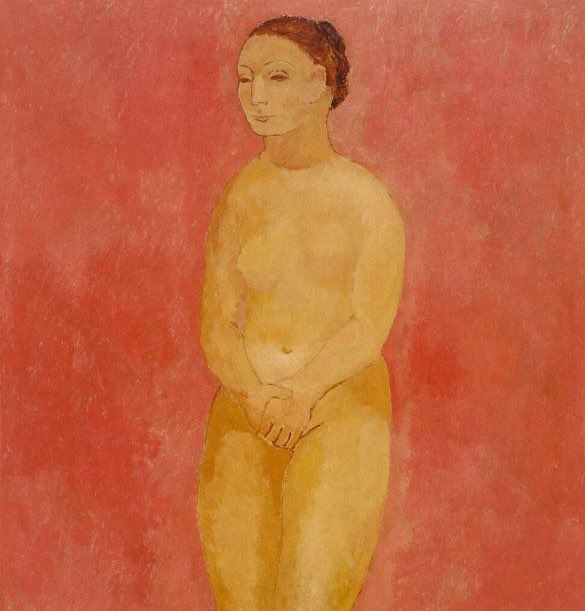
Nu amb les mans juntes, 1906

La Vie (1903), Cleveland Museum of Art

the couple 1904

La Repasseuse (1901), peinte durant la période bleue

Les Demoiselles d’Avignon (1907), Museum of Modern Art, New York
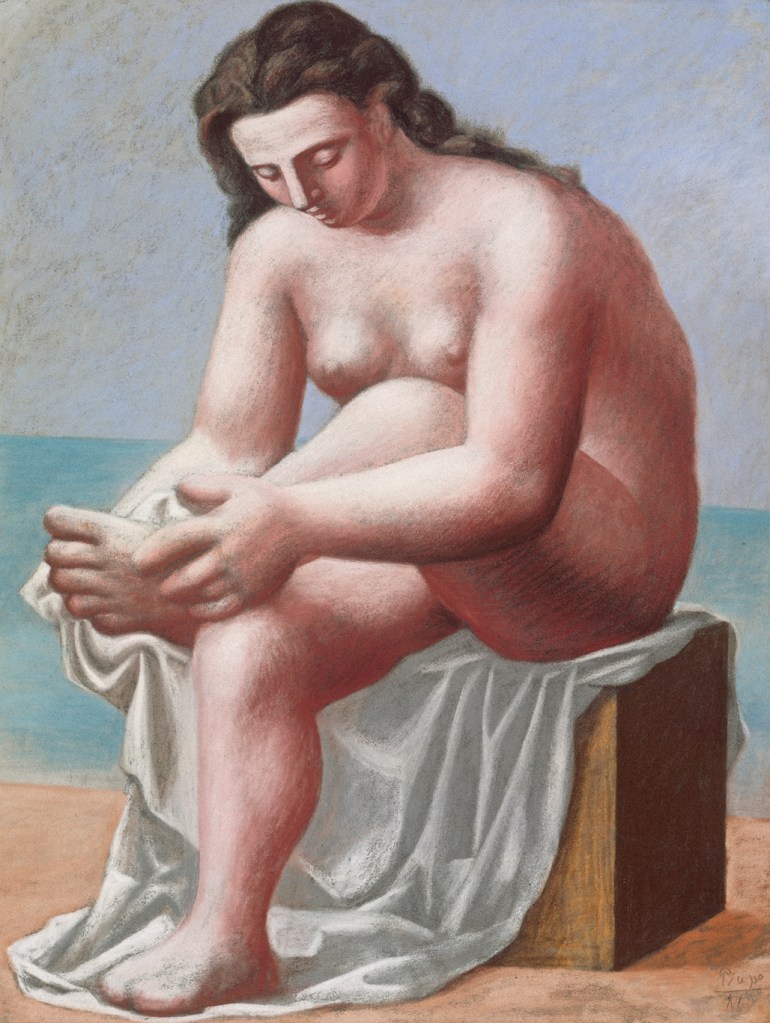
1921, Nu assis s’essuyant le pied (Seated Nude Drying her Foot), pastel, 66 × 50.8 cm, Berggruen Museum

1919, Sleeping Peasants, gouache, watercolour and pencil on paper, 31.1 × 48.9 cm, Museum of Modern Art
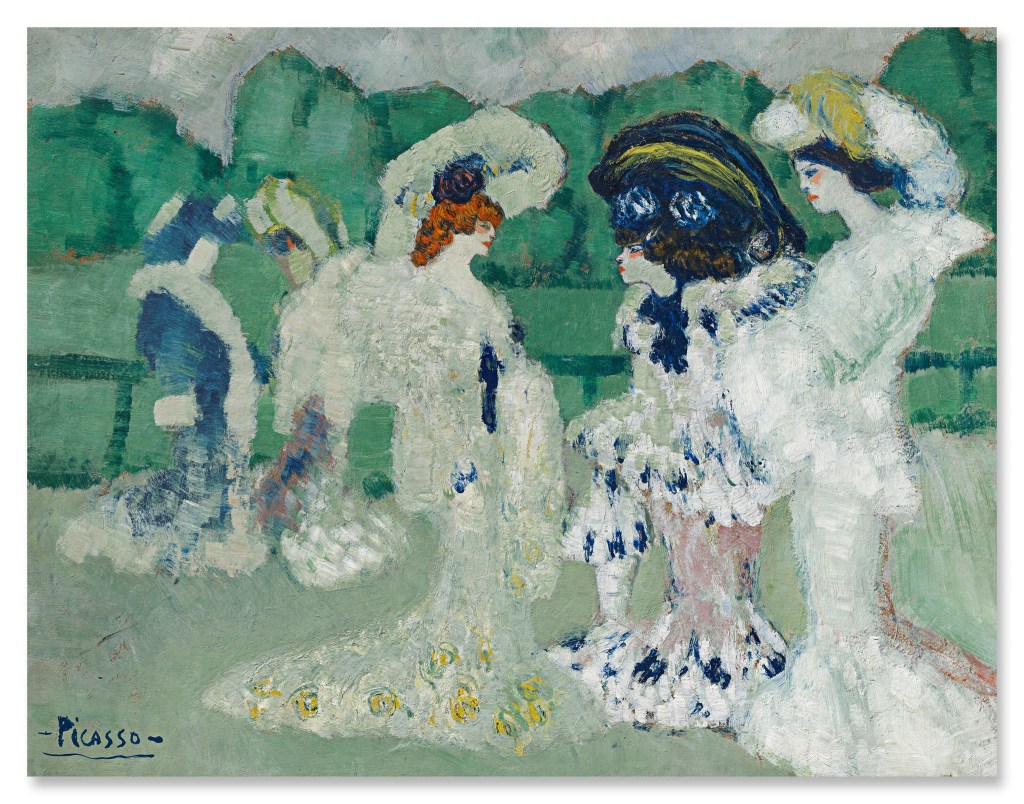
Les courses 1901

1905, Au Lapin Agile (At the Lapin Agile) (Arlequin tenant un verre), oil on canvas, 99.1 × 100.3 cm, Metropolitan Museum of Art

Portrait of Gertrude Stein, 1906, Metropolitan Museum of Art, New York City. When someone commented that Stein did not look like her portrait, Picasso replied, “She will”.

1909, Femme assise (Sitzende Frau), oil on canvas, 100 × 80 cm (39 × 31 in), Staatliche Museen, Neue Nationalgalerie, Berlin

1909–10, Figure dans un Fauteuil (Seated Nude, Femme nue assise), oil on canvas, 92.1 × 73 cm (36 × 28 in), Tate Modern, London

1910, Woman with Mustard Pot (La Femme au pot de moutarde), oil on canvas, 73 × 60 cm (28 × 23 in), Gemeentemuseum, The Hague

1910, Girl with a Mandolin (Fanny Tellier), oil on canvas, 100.3 × 73.6 cm (39 × 28 in), Museum of Modern Art, New York

1918, Portrait d’Olga dans un fauteuil (Olga in an Armchair), Musée Picasso, Paris, France

1901, Old Woman (Woman with Gloves), oil on cardboard, 67 × 52.1 cm, Philadelphia Museum of Art

1901-02, Femme au café (Absinthe Drinker), oil on canvas, 73 x 54 cm, Hermitage Museum, Saint Petersburg, Russia.
| Nils Dardel | |
|---|---|
 | |
Today is the birthday of Nils Dardel (Nils Elias Kristofer von Dardel, Bettna, Södermanland 25 October 1888 – 25 May 1943 New York City sometimes known as Nils de Dardel); Post-Impressionist painter, grandson to Swedish painter Fritz von Dardel.
In 1919 he proposed to Nita Wallenberg, but her father, a Swedish diplomat, disapproved of Dardel and the marriage was not to be.
Nils Dardel married the author Thora Dardel (1899–1995 – née Klinckowström), which lasted between 1921–1934.
After the marriage to Thora, sometime in the 1930s Nils meets Edita Morris (1902–1988, née Toll), a Swedish writer with whom he shares his remaining life.
Gallery

A dance with Death 1920

1921 Paying a Call upon an Eccentric Lady

1940-1943 Skeleton on Horseback


Return to the Playgrounds of Youth 1924

Marthe 1930
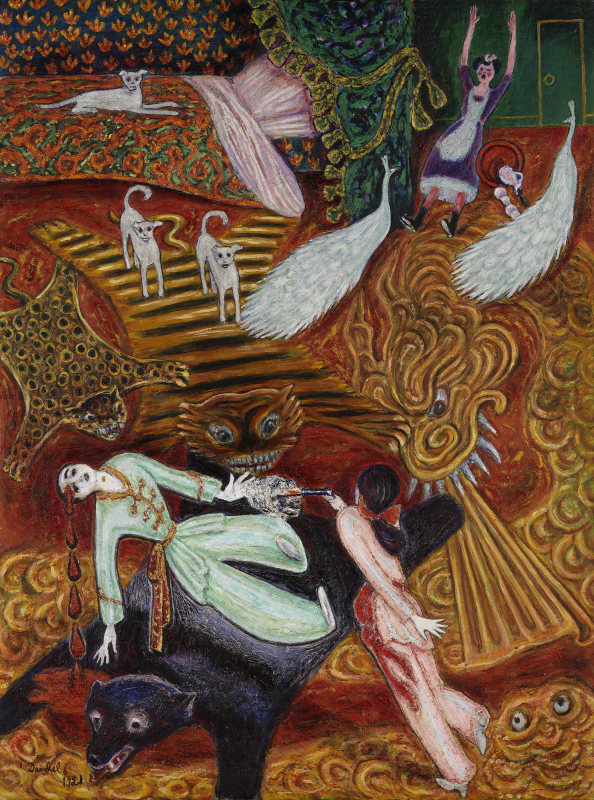
Crime passionel – One of Dardel’s paintings from the Ballets Suédois era, depicting a violent scene said to be indicative of Dardel’s hectic personal life of the era

The Dying Dandy 1918

A heart in flames ca. 1930
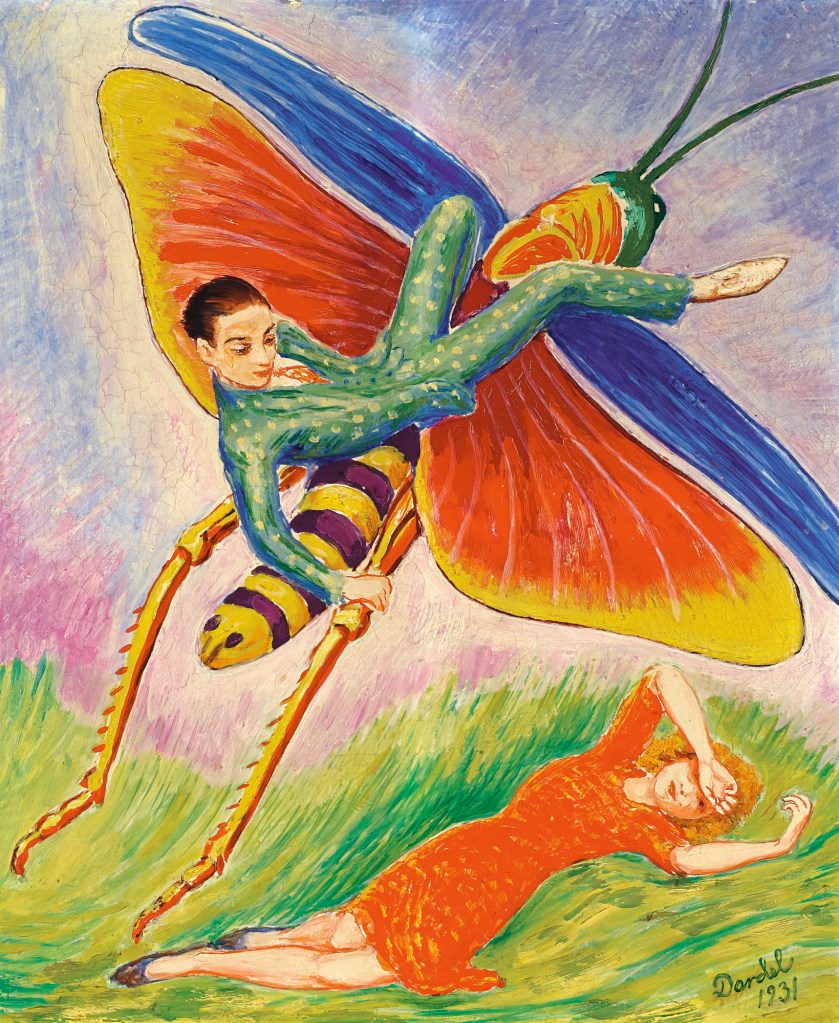
The Grasshopper 1931

Den bortrövade ormen
ca. 1931

Dreams and fantasies 1922

Family idyll 1923

John Blund (1927), on display at the Stockholm Public Library
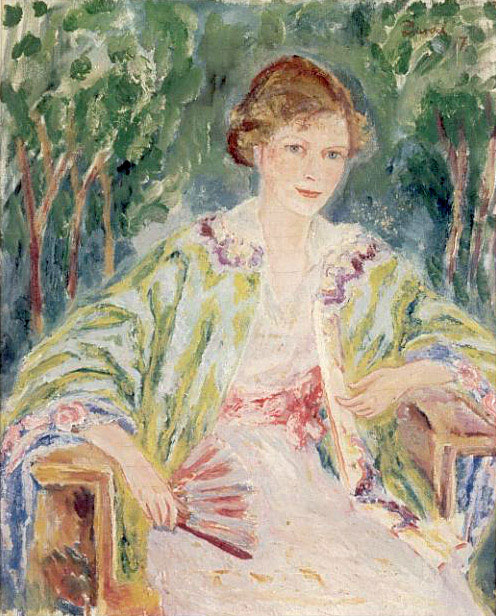
Portrait of Nita Wallenberg in 1917, when Dardel met her in Japan

Japanska (med rygg mot betraktaren) – Japanese woman (with back towards the viewer), shows influences of Dardels 1917 visit to Japan, including the medium, silk
Japanska (med rygg mot betraktaren) – Japanese woman (with back towards the viewer), shows influences of Dardels 1917 visit to Japan, including the medium, silk
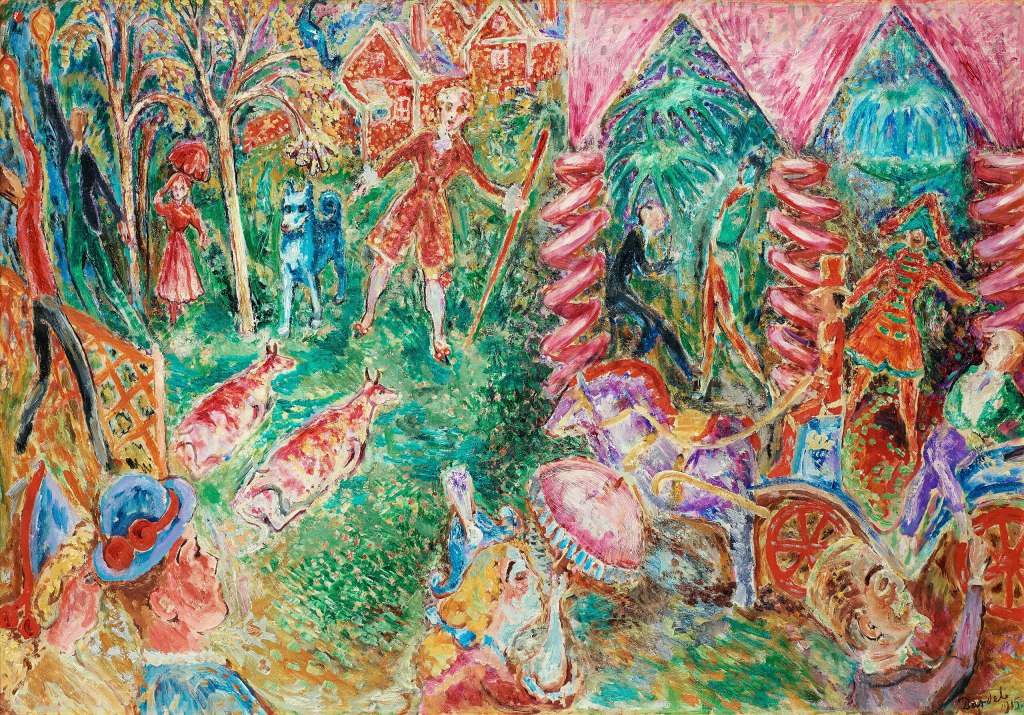
Tourist hotel in Rättvik 1915

black Diana

Edita Morris 1936
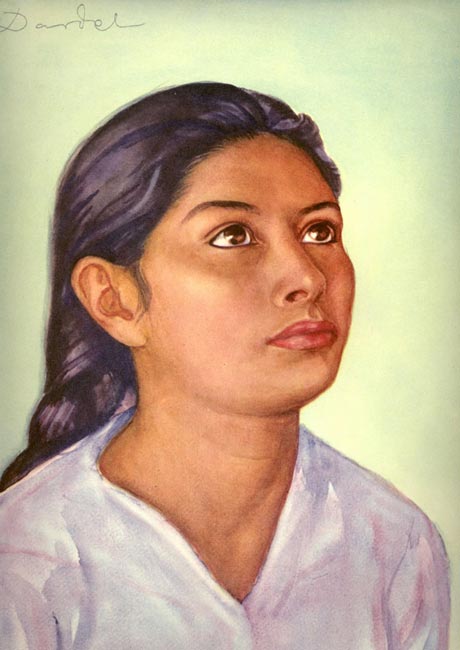
Mexican girl ~1940

Mexican woman with crossed hands ~1940

Mexican girl ~1940
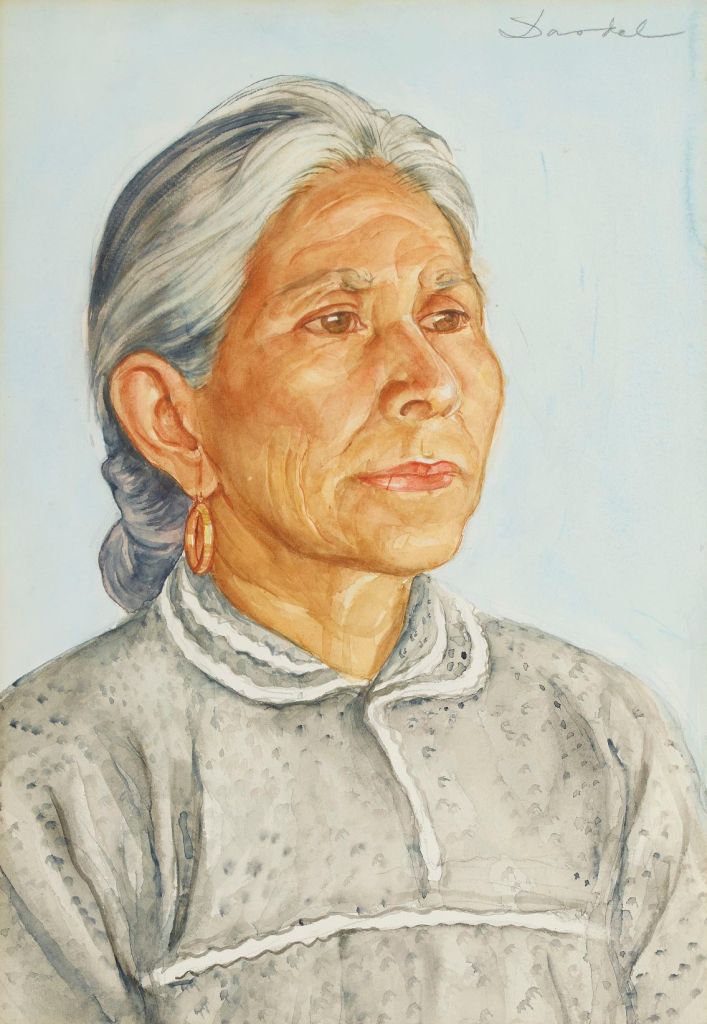
Old Mexican lady

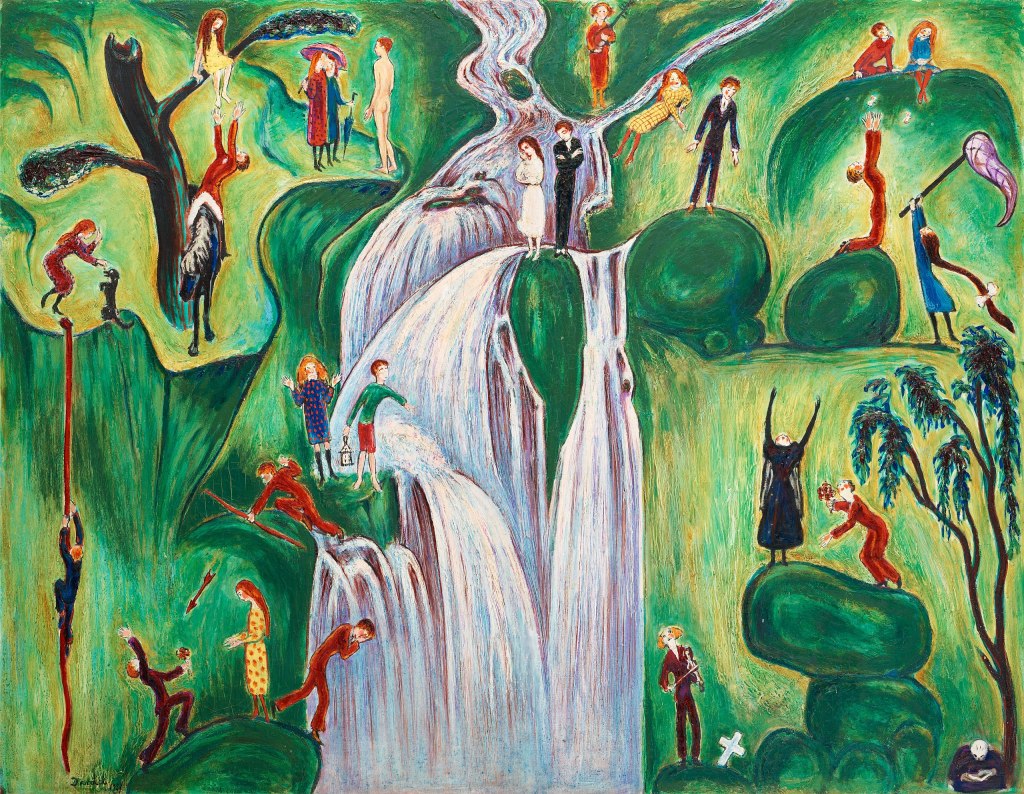
“Vattenfallet”, 1921
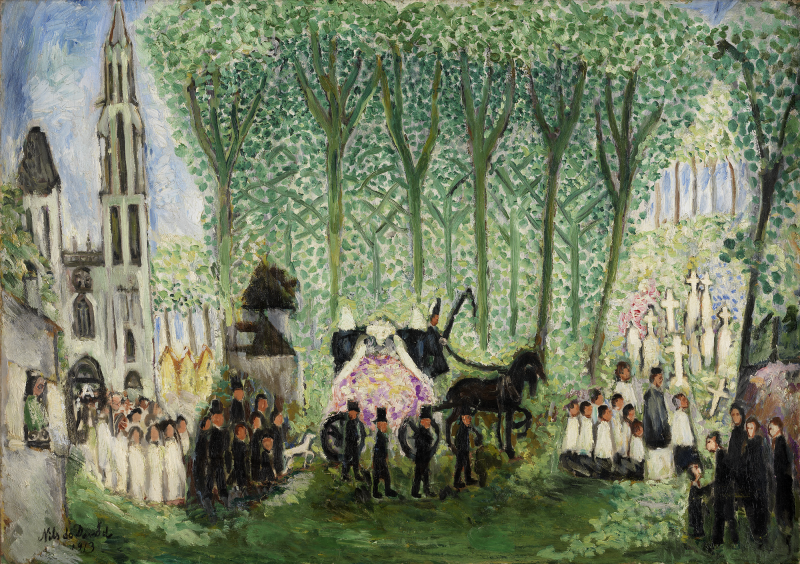
1913 work Begravning i Senlis (Funeral in Senlis)

And on this day in 1909, James Joyce wrote to his wife Nora Barnacle; “You are my only love. You have me completely in your power. I know and feel that if I am to write anything fine or noble in the future I shall do so only by listening to the doors of your heart. … I love you deeply and truly, Nora. … There is not a particle of my love that is not yours. … If you would only let me I would speak to you of everything in my mind but sometimes I fancy from your look that you would only be bored by me. Anyhow, Nora, I love you. I cannot live without you. I would like to give you everything that is mine, any knowledge I have (little as it is) any emotions I myself feel or have felt, any likes or dislikes I have, any hopes I have or remorse. I would like to go through life side by side with you, telling you more and more until we grew to be one being together until the hour should come for us to die. Even now the tears rush to my eyes and sobs choke my throat as I write this. Nora, we have only one short life in which to love. O my darling be only a little kinder to me, bear with me a little even if I am inconsiderate and unmanageable and believe me we will be happy together. Let me love you in my own way. Let me have your heart always close to mine to hear every throb of my life, every sorrow, every joy.”
Mac Tag
 The Lovers’ Chronicle
Leave a reply to The Lovers’ Chronicle 14 June – any doubt – photography by Margaret Bourke-White – verse by René Char – The Lovers’ Chronicle Cancel reply