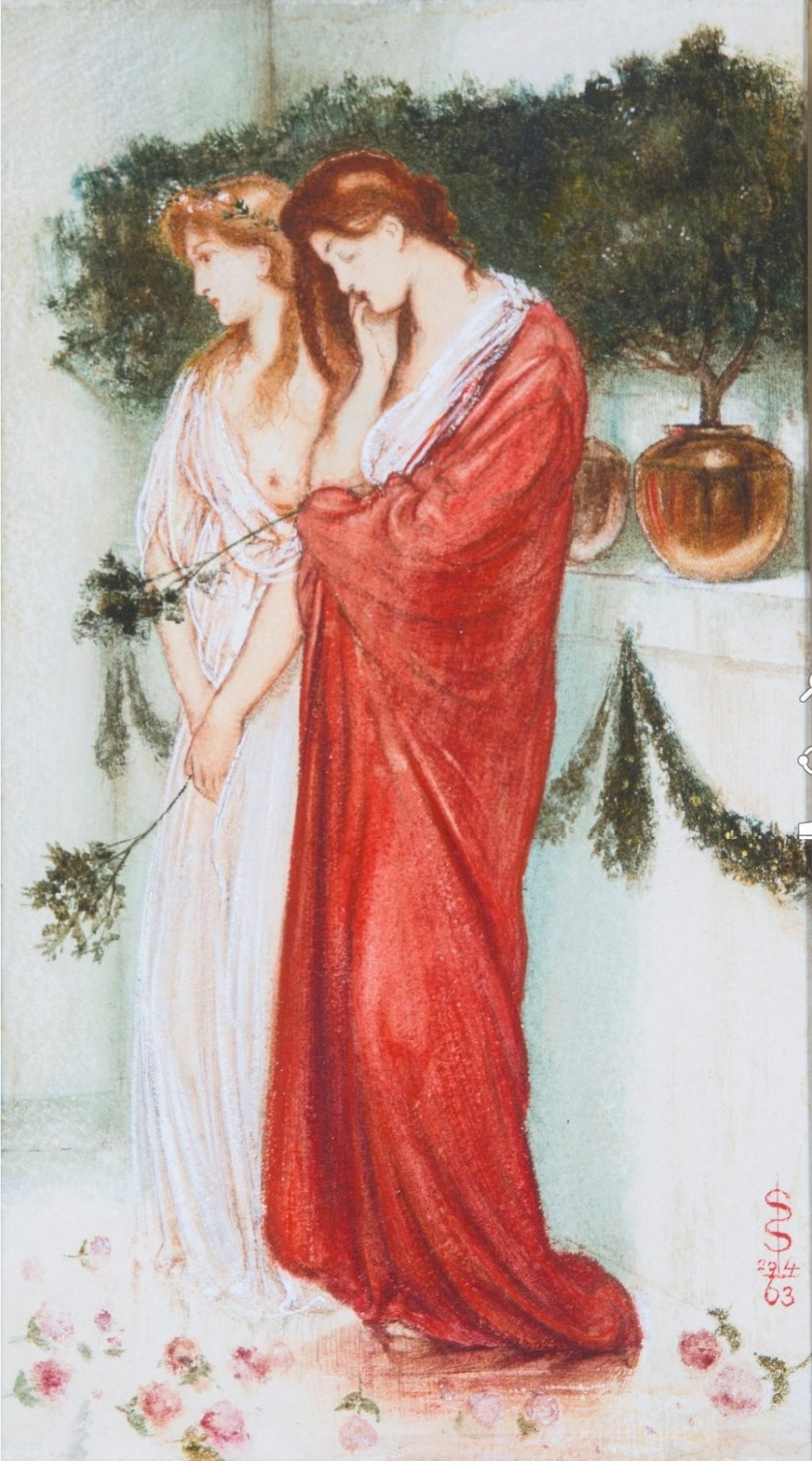
Dear Zazie, Here is today’s Lovers’ Chronicle from Mac Tag dedicated to his muse. Who do you feel safe with? Who feels safe with you? Rhett
The Lovers’ Chronicle
Dear Muse,
not without dreams…
so this is what it looks like, he thinks,
in the stereo room in my mind,
orange shag carpet from my room at home


© copyright 2024 mac tag/cowboy coleridge all rights reserved
i can give you a list of without songs
but i would have to think about ones with
“I got this one dear, there is a line
in “Songbird” by Christine McVie;
“Cause I feel that when I’m with you
It’s alright, I know it’s right”
hold please while i look it up…
thanks baby, a great song
and appropriate in that
with you, i know it is right
© copyright 2023 mac tag/cowboy coleridge all rights reserved
not accustomed to thinkin’ about with, without out; usin’ words seldom used, is it a different part of the brain, to git there, they flow willin’ly, has not phased the Muse, maybe She had tired of my callin’ Her dark, to write is the method, the only way from there to here, with you
© copyright 2022.2023 mac tag/cowboy coleridge all rights reserved
one day, you,
appeared,
and ever since,
in wonder
i lived through verse,
a pulse, mysterious
in constant search
and i found this purpose,
and all i have to offer
i know how to feel
how to tune in
to the depths
of emotions
now this,
with you
shall we have it all
© copyright 2021 mac tag/cowboy coleridge all rights reserved
Pale Love, Pale Rider
no, not goin’ down that road
how everything was lovely
it was what it was, i violated
my own rule, got too close
paid the price, period
turn somethin’ negative
to positive, soonest
this hardened heart
now ready, the last
lesson learned
bring on whatever
i will not falter
© copyright 2020.2023 mac tag/cowboy coleridge all rights reserved
everything spent,
reason, pride,
up to the tears
so look forward to this
creative flow unabated
honest self expression
trust tellin’ you things
i have never told
we cannot stop ourselves
i shall be here awaitin’
the paths we travel
to find and feel
safe in us
© copyright 2019 mac tag/cowboy coleridge all rights reserved
then one day,
there you were
like magic
or was it
luck or fate
whichever,
does not matter
just glad you appeared
i was already
well into forgettin’
how to feel by then
you know how Leonard wrote,
“there is a crack in everything,
that is how the light gets in”
well, nailed the cracked part
but it had been a long time
since i had been anywhere
near any light
until that day
***
Karen: ‘’The only way is towards the fire’’
That is where the light is
© copyright 2018 mac tag/cowboy coleridge all rights reserved
for Julie
have you ever spent
everything,
reason, your pride,
all of your tears
“Did you know
I so look forward
to your notes?
Here is a new favorite
song line;
‘we didn’t want
to stop ourselves’.”
good, cuz i love sendin’ ’em
and love the song line,
cuz we did not
i just finished writin’,
safe with you
“Your self expression
is unabated and honest.
There are many thoughts
that I stop mid stream.”
you know your thoughts
are safe with me
“In all things
I feel safe with you.”
© copyright 2017 mac tag/cowboy Coleridge all rights reserved
As is
A consequence
Out of Joy, sorrow born
Memory of past bliss,
anguish of to-day
Agonies which are,
ecstasies which might have been
© copyright 2016 mac tag/cowboy Coleridge all rights reserved
for Kelli
His calloused hands
Strong, persistent
Caressin’ her
Knowin’ what she
Needs, where she needs
To go and how
To get her there
© copyright 2014 mac tag/cowboy Coleridge all rights reserved
For Julie
Safe with You
J, Song line of the day from the song ‘’Per Amore’’, as sung by Andrea Bocelli –
Per amore,
hai mai speso tutto quanto,
la ragione,
il tuo orgoglio fino al pianto?
For love,
have you ever spent everything,
reason,
your pride, up to the tears?
M
M, did you know that i so look forward to your notes? seem to be craving a Bellini !!! new favorite line from a song – ” …. we didn’t want to stop ourselves …” from “Body Surge” by The Great Fiction
J, Oh thank heavens because I so enjoy sendin’ ’em. And the creative flow continues unabated. I jotted notes yesterday on what will become, “She’s Not You.” I will have one of those Bellinis if you please! Love the song line. I shall be here ever patiently awaitin’ your return.
M
M, whoa!! somebody’s creativity and self expression are unabated and honest. you are brave my Mac! there are many thoughts that I stop mid stream.
you don’t seem to be saddled with self censorship!
J
J, Well, I trust you. I have told you things I have never told anyone. I am realizin’ that there is a rich vein of material to be mined from my trials and tribulations. I must take advantage of that.
M
M, the paths we travel to find, and keep, happiness! by the way, you inspired me to start reading for fun again. Two pages a day is the goal. Lady Chatterly’s Lover is my current choice.
J
J, I feel honored! Great choice to start with! I was thinkin’ about your self censorship comment: You know your thoughts are safe with me.
M
M, in all things, I feel safe with you.
J
© copyright 2010 mac tag/cowboy Coleridge all rights reserved

Today is the birthday of Giuseppe Verdi (Le Roncole, a village near Busseto, then in the Département Taro, First French Empire, now Italy 9 or 10 October 1813 – 27 January 1901 Milan); composer best known for his operas. He was born to a family of moderate means, receiving a musical education with the help of a local patron. Verdi came to dominate the Italian opera scene after the era of Gioachino Rossini, Vincenzo Bellini, and Gaetano Donizetti, whose works significantly influenced him.
An intensely private person, Verdi did not seek to ingratiate himself with popular movements. As he became professionally successful, he was able to reduce his operatic workload and sought to establish himself as a landowner in his native region. He surprised the musical world by returning, after his success with the opera Aida (1871), with three late masterpieces: his Requiem (1874), and the operas Otello (1887) and Falstaff (1893).
His operas remain popular, especially the three peaks of his ‘middle period’: Rigoletto, Il trovatore and La traviata.
His first wife was Margherita Barezzi, (married on May 4th 1836). They had two children together both of whom died very young and then, not much later, Margherita passed away as well on June 18th 1840, aged 26.
Verdi met Italian operatic soprano, Giuseppina Strepponi in Paris and the two began a romantic relationship, with the composer remaining there for two years (albeit with short periods in Italy to firstly return to Milan in April 1848 after the nationalistic uprising there and then to oversee production of his new opera in Rome, La battaglia di Legnano in early 1849.
The couple returned to Italy by July 1849 and began living together in Busseto, Verdi’s hometown where they first lived at the Palazzo Orlandi. The reaction of many of the people of Busseto towards Giuseppina, a woman of the theatre living openly with the composer in an unmarried state concerned Verdi, and as such, she was shunned in the town and at church. While Verdi could “treat the Bussetani with contempt … Giuseppina, in the next few years, suffered greatly.” From May 1851 they moved to Verdi’s house in Sant’Agata just outside the town, which today is known as the Villa Verdi. They married in 1859, and remained together for the rest of her lI’ve and she supported him in his career in many ways, her knowledge of French and English being especially useful. Their marriage was happy and Verdi was deeply saddened by her death at Sant’Agata in 1897.
Teresa Stolz, a Czech spinto soprano, then became Verdi’s companion until his death.
In his honour, and yours, here is “Un dì, felice, eterea” (One day, you, happy, ethereal) a duet from the first act of La Traviata. It is sung by the male and female protagonists of the opera, Alfredo (a tenor) and Violetta (a soprano). The main melody of the duet, which is famous in its own right, is also an important musical theme throughout the opera. It is also notable for bein’ one of the songs heard in the film Pretty Woman.
| Original Italian | English Translation |
|---|---|
| Alfredo: Un dì, felice, eterea, Mi balenaste innante, E da quel dì tremante Vissi d’ignoto amor. Di quell’amor ch’è palpito Dell’universo, Dell’universo intero, Misterioso, altero, Croce e delizia cor. Misterioso, Misterioso altero, Croce e delizia al cor. Violetta: Ah, se ciò è ver, fuggitemi, Solo amistade io v’offro: Amar non so, nè soffro Un così eroico amor. Io sono franca, ingenua; Altra cercar dovete; Non arduo troverete Dimenticarmi allor. | Alfredo: One day, you, happy, ethereal, appeared in front of me, and ever since, trembling, I lived from unknown love. That love that is the pulse of the universe, the whole universe, Mysterious, proud, torture and delight to the heart. Mysterious, mysterious and proud, torture and delight to the heart. Violetta: If that is true, forget me. Friendship is all I can offer. I do not know how to love. I could not feel so great an emotion.. I am being honest with you, sincere. You should find somebody else. Then you would not find it hard to forget me. |
The Song of the Day is “Un dì, felice, eterea” as performed by Giuseppe di Stefano and Maria Callas.
I will never forget the day you appeared in front of me, happy, ethereal.
| Nicholas Roerich | |
|---|---|
 | |
Today is the birthday of Nicholas Roerich (Saint Petersburg; October 9, 1874 – December 13, 1947 Naggar, Himachal Pradesh, India) – known also as Nikolai Konstantinovich Rerikh; painter, writer, archaeologist, theosophist, and philosopher. He was interested in hypnosis and other spiritual practices and his paintings are said to have hypnotic expression.
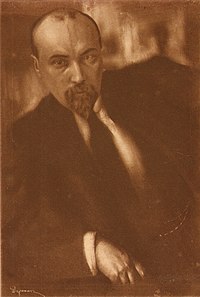
During the first decade of the 1900s and in the early 1910s, Roerich, largely by the influence of his wife, Helena, developed an interest in eastern religions, as well as alternative belief systems such as Theosophy. Both Roerichs became avid readers of the Vedantist essays of Ramakrishna and Vivekananda, the poetry of Rabindranath Tagore, and the Bhagavad Gita.
Gallery

mother of the world
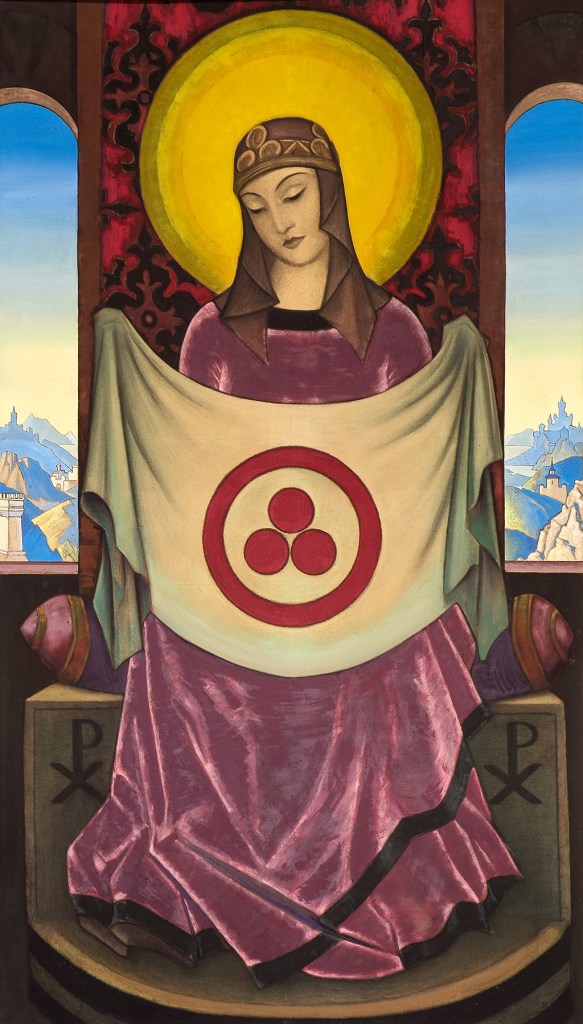
Madonna Oriflamma (1932), She is seen holding the Banner of Peace
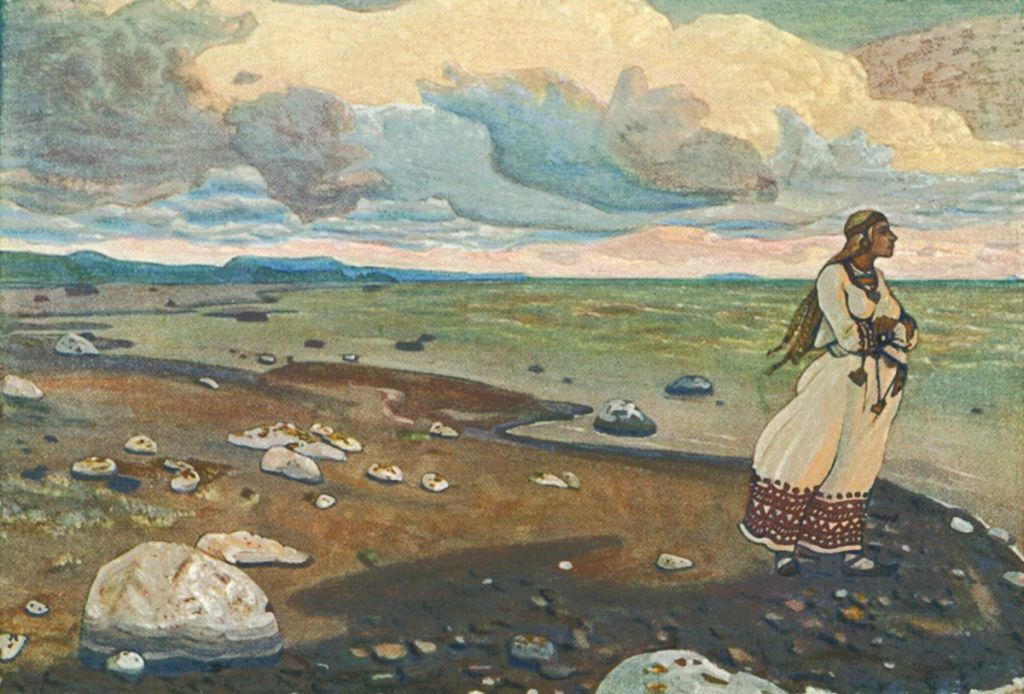
beyond the seas there are great lands
 “Language of bird” 1920

Monhegan, Maine, International Centre of the Roerichs
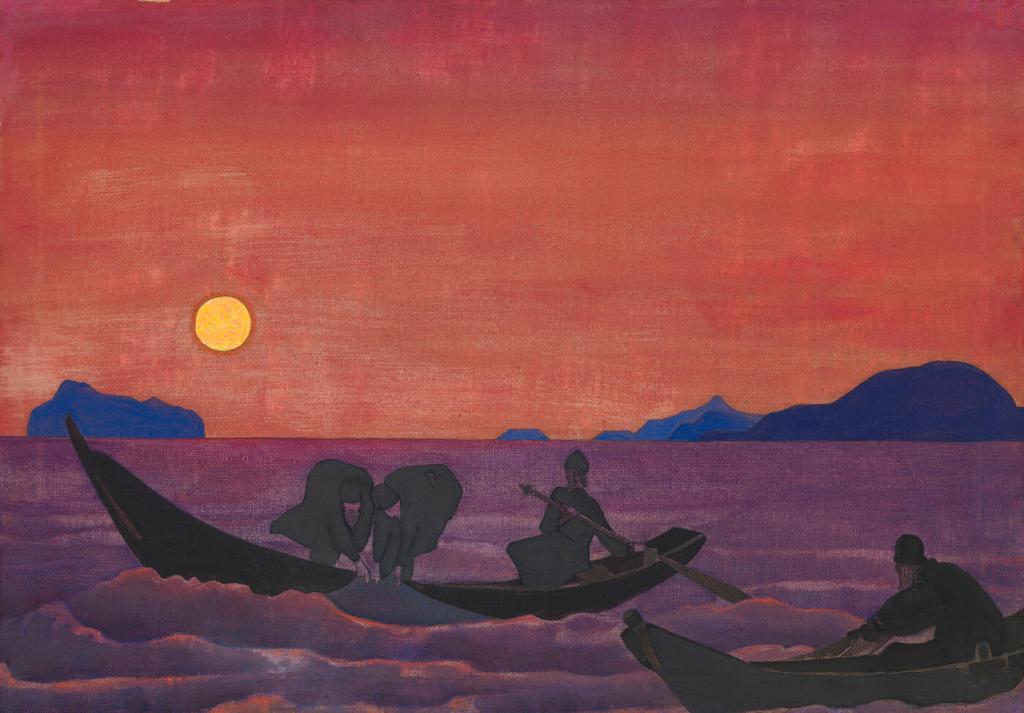
And We Continue Fishing, from the “Sancta” series
And Today is the birthday of Simeon Solomon (London; 9 October 1840 – 14 August 1905 Westminster); Pre-Raphaelite painter noted for his depictions of Jewish life and same-sex desire. His career was cut short as a result of public scandal following his arrests and convictions for attempted sodomy in 1873 and 1874.

in Oriental costume, a photograph by David Wilkie Wynfield
Gallery

The Moon and Sleep – Tate
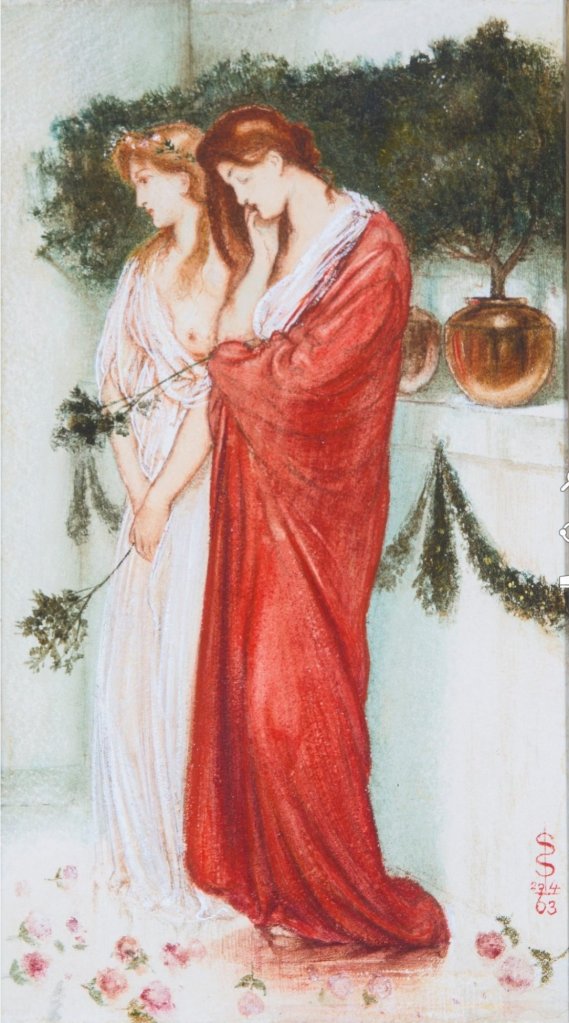
In the Temple of Venus, 1863
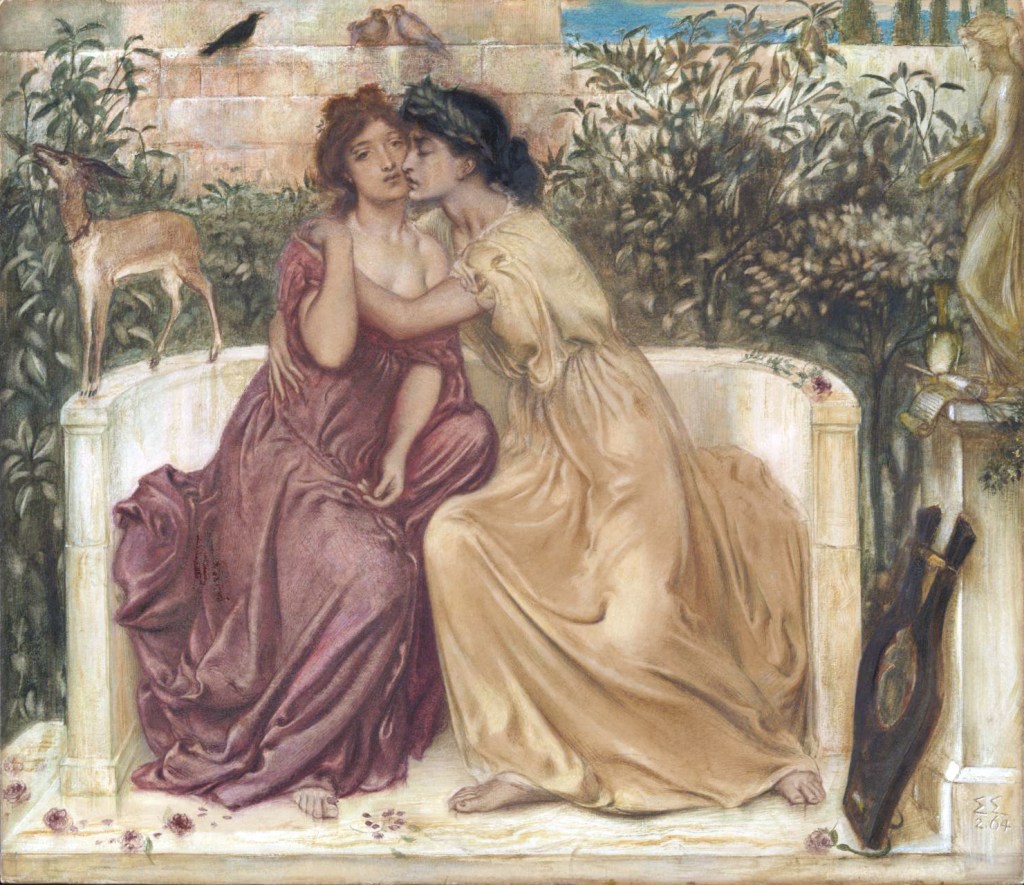
Sappho and Erinna in a Garden at Mytilene, 1864 Watercolour on paper, Tate Britain

night 1890
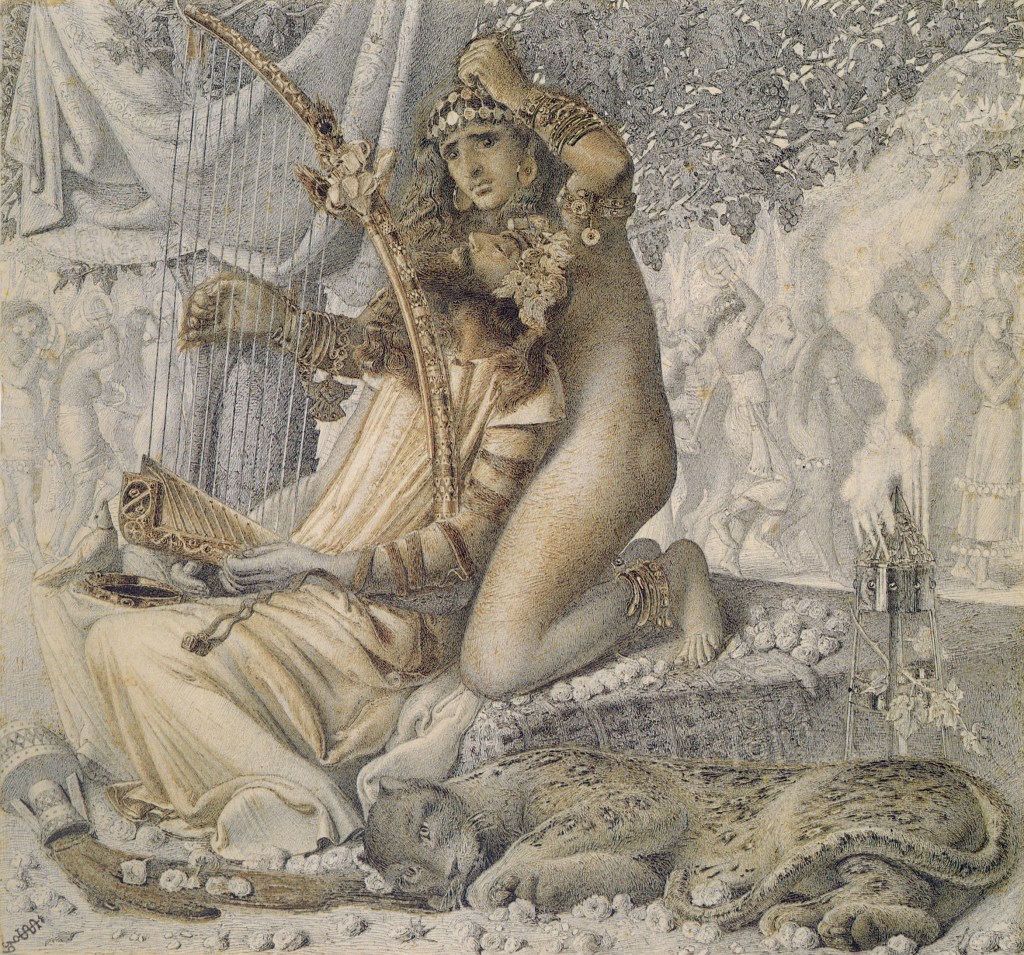
Babylon Hath Been a Golden Cup, 1859
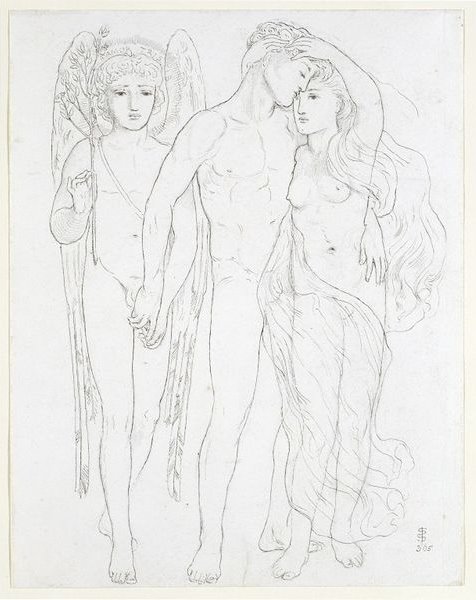
The Bride, Bridegroom and Sad Love, 1865
Mac Tag
thanks for stoppin’ by y’all
Follow us on twitter @cowboycoleridge
 The Lovers’ Chronicle
Leave a reply to The Lovers’ Chronicle 29 February – leap – birth of Gioachino Rossini – art by Augusta Savage & Balthus – The Lovers’ Chronicle Cancel reply