Dear Zazie, Here is today’s Lover’s Chronicle by me as Mac Tag takes the day off. Follow us on twitter @cowboycoleridge. Has someone told you two out of three ain’t bad? Have you told someone two out of three ain’t bad? Rhett
The Lovers’ Chronicle
Dear Muse,
another way to dream…
-Entering dream state with music playing in the background
then slowly becoming aware they are in an old dancehall,
Waylon Jennings is on the stage and he launches into
the Steve Young song, ‘’Lonesome, On’ry and Mean’’-
Great way for a dream to start, says the lovely redhead
you know i shoulda listened to ol' Waylon
had the lonesome on'ry and mean part down cold
but shoulda spent some time thinkin’ about
"There weren't another other way to be"
from the Billy Joe Shaver song
thought there was no way out
no other way to be
prob’ly heard that song dozens of times
in those years but it never occurred
that there could have been another way
And now we know, another better way, she says
absolutely, lets give Waylon the outro;
"Well, piano roll blues, I danced holes in my shoes
There weren't another other way to be
For them lovable losers and no account boozers
And honky tonk heroes like me, yeah"

© copyright 2024 mac tag/cowboy coleridge all rights reserved
not inspired by a line from the Billy Joe Shaver
song “Honky Tonk Heroes”, as sung by Waylon,
but coulda been
“Play it for me”
i will, it is about a no account boozin’ honky tonk hero
who did not know another other way to be
“That was his excuse”
correct, it led me to think about
bein’ aware that one always has options
“Right, don’t get stuck
in a bad situation for lack
of exploring all options”
anyway, that is where my head went
but now i am thinkin’ with you,
no need for any other way
© copyright 2023 mac tag/cowboy coleridge all rights reserved
could go Eliot on y’all, “I was neither living nor dead, and I knew nothing”; felt like that and i was ignorant as a post, did as much as i could to remedy that; as for feelin’s, they became irrelevant and i tossed ’em aside, called it survival, then it turned into habit, they lay dormant long enough, i was shocked when they awoke with you, even more shocked in this; that we found another way and the courage to find each other and have what we sought
© copyright 2022.2023 mac tag/cowboy coleridge all rights reserved
to spare the drama,
there was another way
took a fancy chance
held fast to a conviction
and started my own trail
started learnin’ all i could
about art, movies, poetry
dove deeper into music,
literature and opera
threw it all into my saddlebag
with my memories and dreams,
and my High Plains drawl
the words started comin’
and have not stopped
pavin’ the way to you
© copyright 2021.2023 mac tag/cowboy coleridge all rights reserved
Pale Love, Pale Rider
there is a way,
do you have courage
because you have seen it,
illustrated in lines about us
the destination cannot be described
we will know very little until we get there
but the way leads towards possession
of what we have been lookin’ for
of what is in you, in me
© copyright 2020 mac tag/cowboy coleridge all rights reserved
movin’ verse
written day by day
the more given
the more repaid
that i was not, but
bein’, i can again
no longer removed
from those charms
we are never far,
with so lovely eyes
thus it befalls
that though
once so,
in a certain sort,
here we are
never knowin’
anything like this

Hendrick’s Gin and Basil Martini
Cheers y’all!
and Sophie in the background
© Copyright 2019 Mac tag/cowboy Coleridge all rights reserved
moved by all things
extraordinary
fancies and whims
that gather ’round
the imaginin’s
of days bygone
and present
no more fear
nothin’
can hurt or heal
now that the moments
of ecstasy and desire
are all past
no shame in not findin’
what was sought
you know,
there is another way
© copyright 2018 mac tag/cowboy coleridge all rights reserved
for Sara
we were so damn dysfunctional
not sure how we made it
through a day
but the nights were the best ever
and the mornin’s were amazin’
she would ask if i wanted her
to give me ‘’special kisses’’,
to which the answer was always obvious
when she finished, or rather when i did,
she would masturbate while takin’ a hot bath
almost every day started that way
i had just started writin’ then
thus my demons ran rampant
and i could not help her with hers
all that was left was one of us to wreck it
i took that on and did so;
have you noticed, the human capacity
for self destruction is rather remarkable
***
I like 140 characters,
the forced brevity
way too much is bein’ written
usin’ way too many words
say what you gotta say
in as few words as possible
make me feel your beauty
and sorrow in the fewest words
show me
your beauty
and sorrow
I will show you mine
© copyright 2017 mac tag/cowboy coleridge all rights reserved
Fences, gates whizzin’ by
Mesas rise against the sky
The river winds through
The wide, shallow valley
Beyond the barbwire,
Somethin’ movin’
Had little talent for stayin’
Standin’ armored against
Emanatin’ from him
A carved-wood quietude
Common to those
Who have for a long time
Buried their emotions
© copyright 2016 mac tag/cowboy coleridge all rights reserved
One changed
everything
© copyright 2015 mac tag/cowboy coleridge all rights reserved
What has been said about
Unattached attractive people –
An hour after bein’ alone
They knew without talkin’
They were both stark ravin’ crazy
© copyright 2014 mac tag/cowboy coleridge all rights reserved
Hey this is Rhett and I am takin’ over the reins on The Lovers’ Chronicle. We have a sonnet inspired by Samuel Butler‘s “Sonnet on Miss Savage”. We do not think he will mind us borrowin’ a few lines, he has been dead for over 300 years. You know how we have a weakness here at TLC for dead poets and sonnets. The Poem of the Day:
Sonnet, She was too kind
She was too kind, wooed too persistently,
Wrote movin’ letters to me day by day;
But I was as unmoved as I could be,
The more she gave, the less could I repay.
Therefore I grieve, not that I was not loved,
But, bein’ loved, I could not love again.
I had lust, but stayed from love far removed;
Hard though I tried to love I tried in vain.
Of beauty and charms, she was never short,
With so lovely eyes. Thus hence it befell
That though I loved her in a certain sort,
Was it then unwise to not love her well?
I want and need you but, do not be sad,
I said, because two out of three ain’t bad.
© Copyright 2012 mac tag/cowboy Coleridge all rights reserved
The Song of the Day is “Two Out of Three Ain’t Bad” by Meatloaf we do not own the rights to this song. no copyright infringement intended.
| Théodore Gericault | |
|---|---|
 by Alexandre-Marie Colin, 1816 by Alexandre-Marie Colin, 1816 | |
Today is the birthday of Théodore Géricault (Jean-Louis André Théodore Géricault; Rouen, Normandy; 26 September 1791 – 26 January 1824 Paris); painter and lithographer, known for The Raft of the Medusa. Although he died young, he was one of the pioneers of the Romantic movement.
A trip to Florence, Rome, and Naples (1816–17), was prompted in part by the desire to flee from a romantic entanglement with his aunt.
Gallery
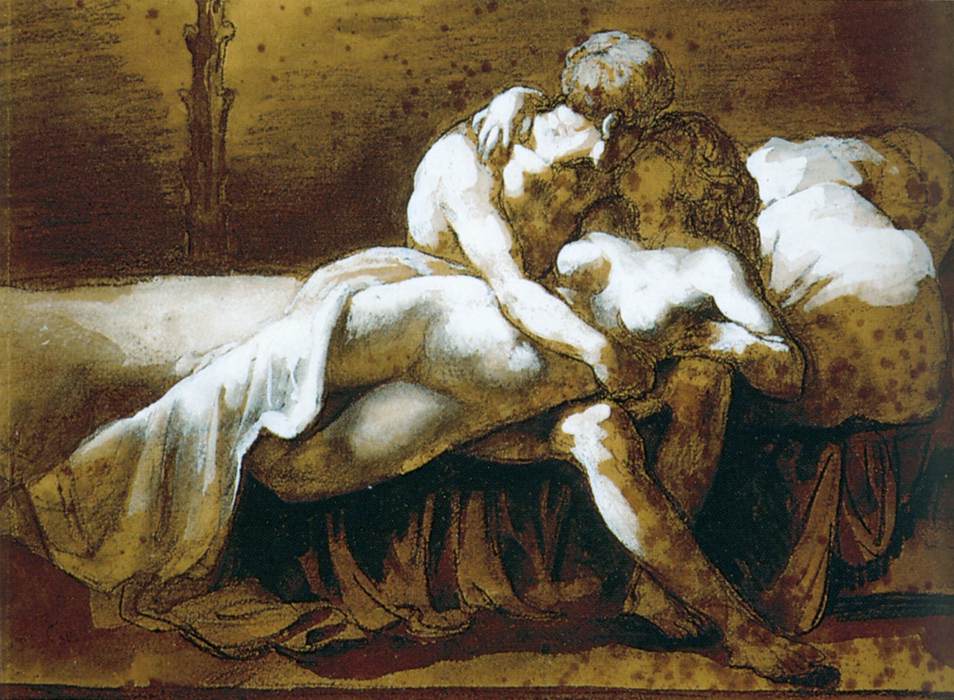
The Kiss, charcoal, sepia wash and white gouache on paper, ca. 1822

Leda e il cigno

trois amants
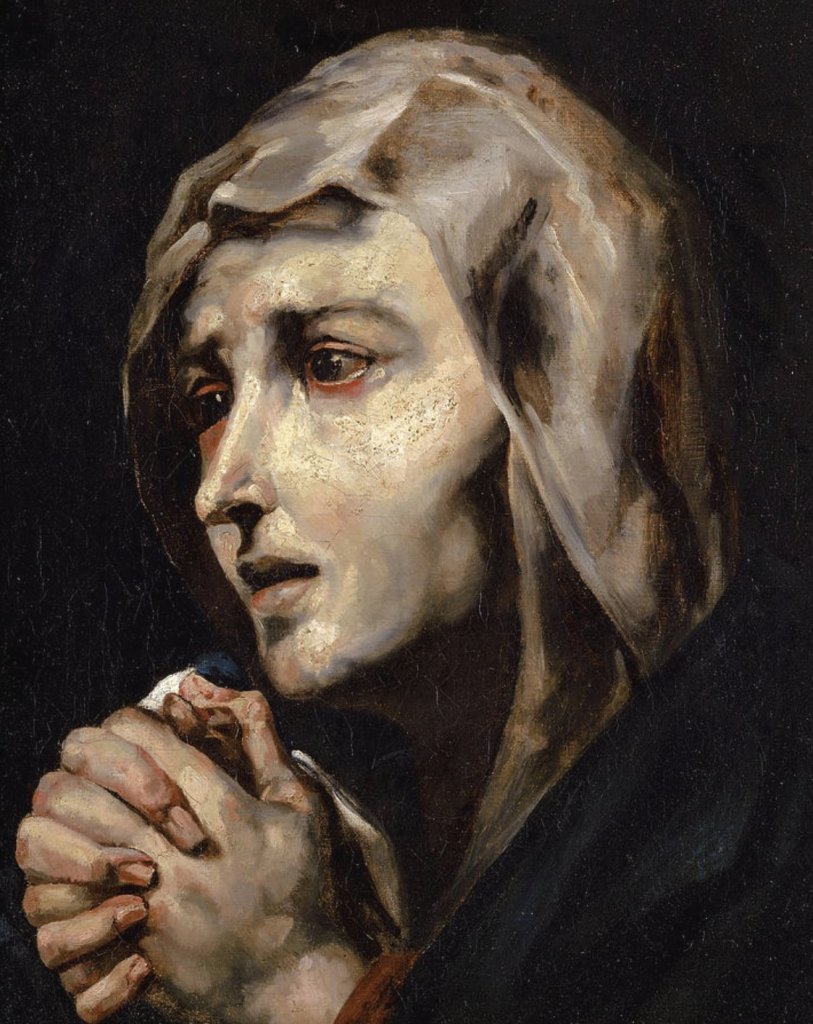
Mater Dolorosa

Portrait of Laure Bro, 1818

Portrait of a Woman Suffering from Obsessive Envy (La Monomane de l’envie), 1822 (Museum of Fine Arts of Lyon)

The Woman with a Gambling Mania (La Folle Monomane du Jeu), 1822 (Louvre, Paris)
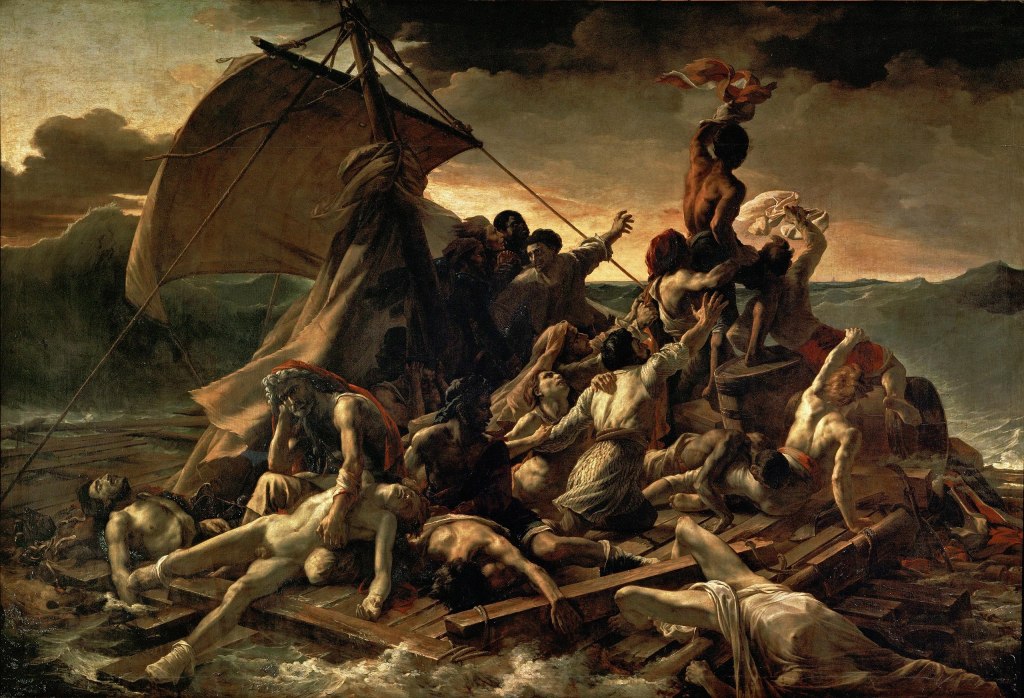
Le Radeau de la Méduse 1819 Louvre

White Arabian Horse, before 1824

Horse in the Storm, 1820–1821
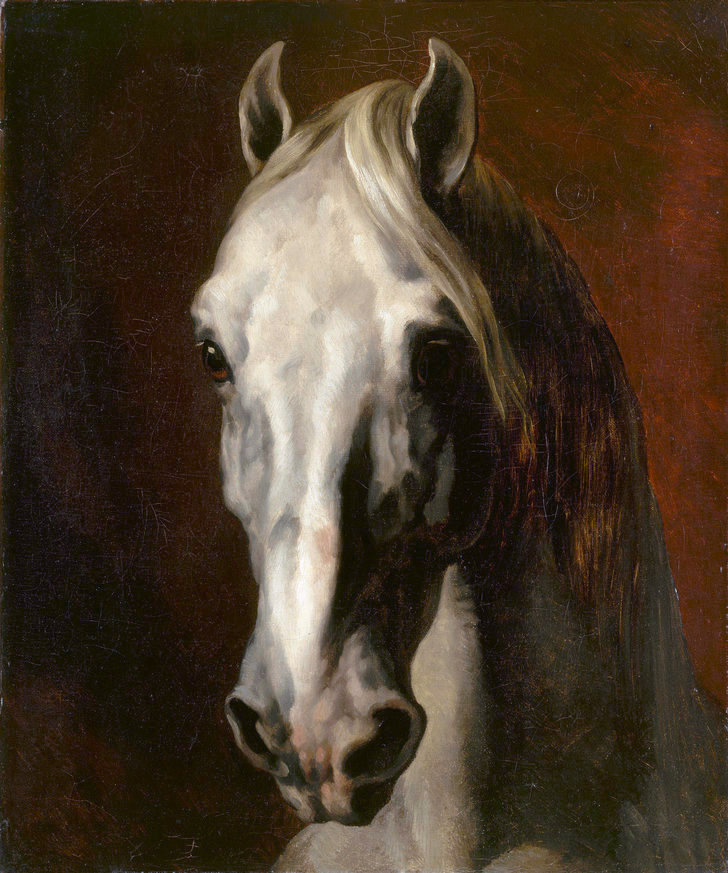
Horse Head, 1815
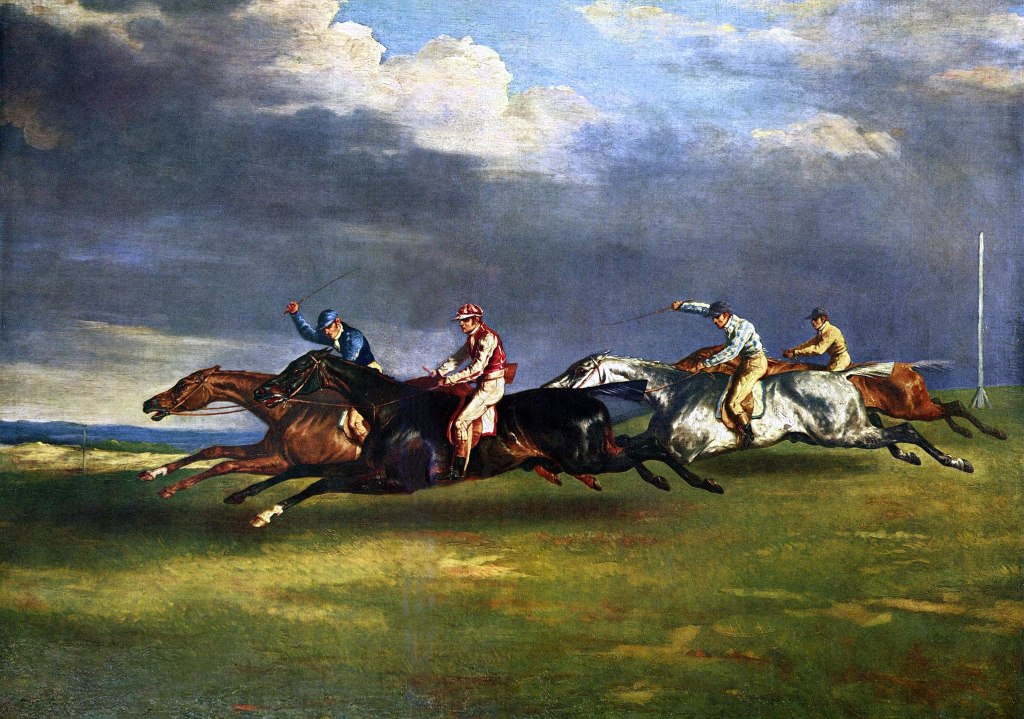
The Derby of Epsom, 1821

Wounded Cuirassier Leaving the Field of Battle, 1814
Today is the birthday of Eugène Pirou (Louis Eugène Pirou; Saint-Michel-Tubœuf, France 26 September 1841 – 30 September 1909); photographer and filmmaker, known primarily for his portraits of celebrities and scenes from the Paris Commune. He was awarded a gold medal at the Exposition Universelle of 1889.
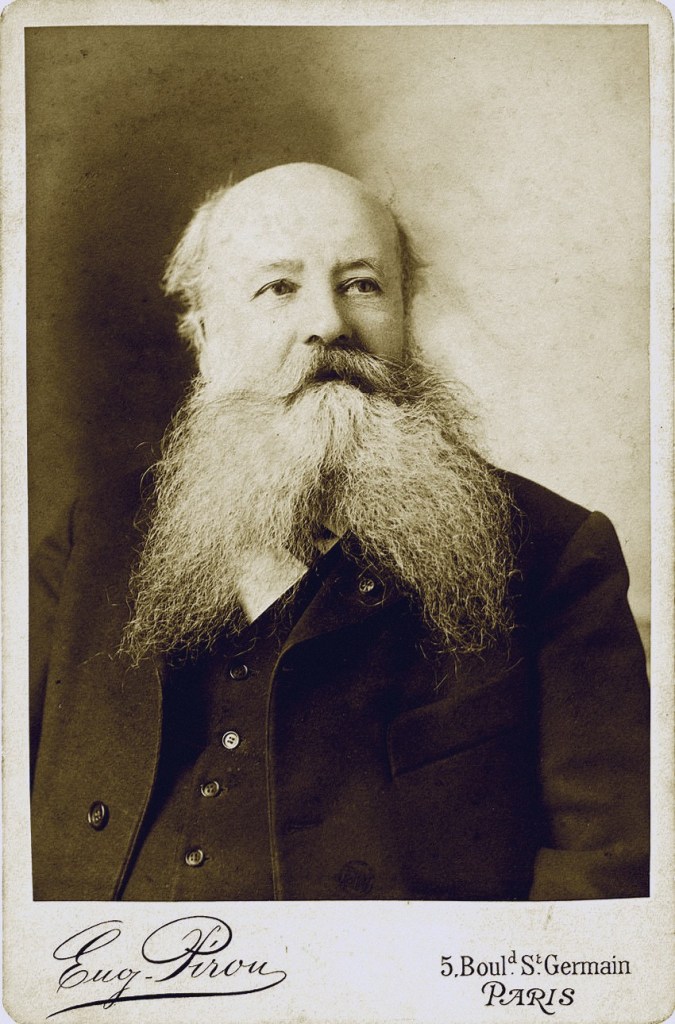
c 1906
During the Exposition of 1889, he saw a presentation of chronophotography, given by its inventor, Étienne-Jules Marey. Not long after, he decided to pursue the new art of cinematography. He bought the necessary equipment in the summer of 1896 and, together with his employee, Albert Kirchner, who would later become a noted filmmaker in his own right, he filmed scenes of assorted events in Paris and showed them at the “Cinématographe Eugène Pirou” in the basement of the Café de la Paix at the Place de l’Opéra, with a projector designed by Henri Joly.
He and Kirchner later produced one of the first known erotic films, Le Coucher de la Mariée (generally called Bedtime for the Bride in English), starring an actress who went by the name Louise Willy. It was mostly a striptease. He also produced a short film about the Parisian visit of Tsar Nicolas II in 1896.
He was married twice. His first wife died in 1881 and his second in 1899.
gallery

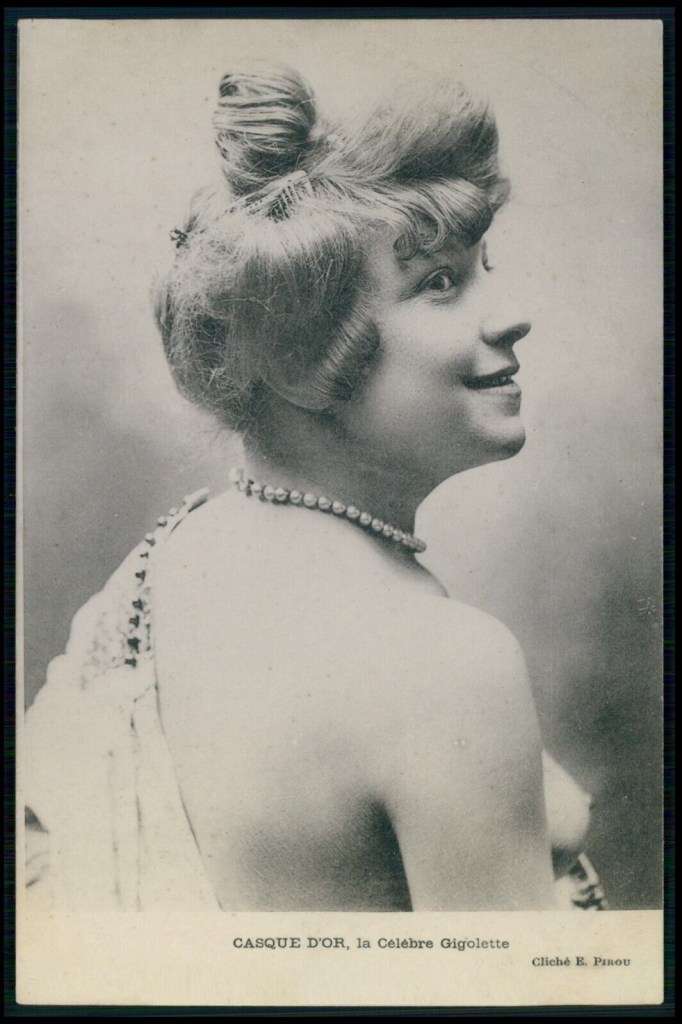

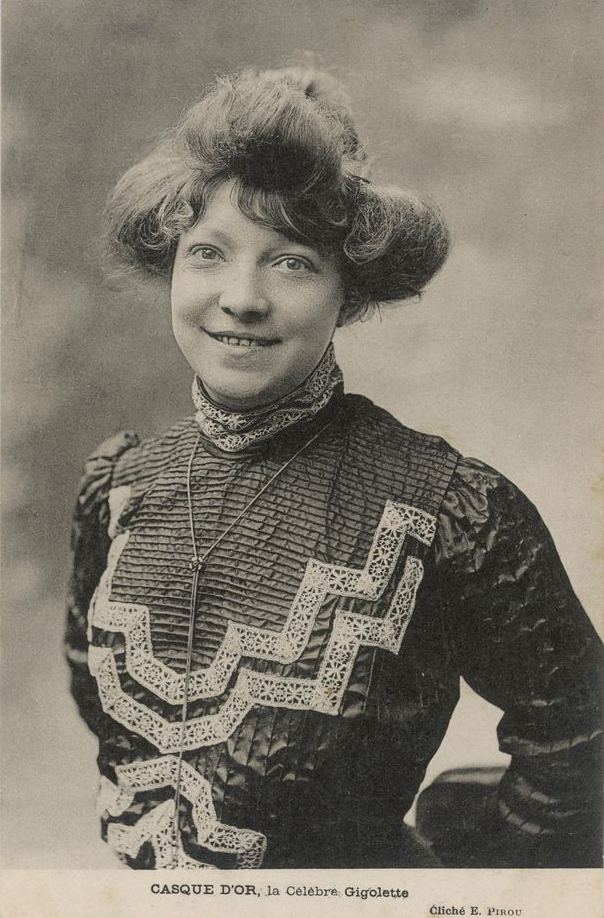
Today is the birthday of Albert Lynch (Alberto Fernando Lynch; Gleisweiler, Kingdom of Prussia (Germany) 26 september 1860 – 1950 Monaco); painter and illustrator of Peruvian/German ancestry.
The women of his time were his favorite subject to paint and he preferred pastel, gouache and watercolor although he occasionally worked in the oil technique. His work maintained the spirit of the Belle Époque. He illustrated such books as Lady of the Camellias by Alexandre Dumas, fils, Le Père Goriot by Honoré de Balzac and La Parisienne by Henry Becque.
Lynch moved to Monaco in 1930, where he died, survived by his wife Marie Anna Victoria Bacouel, who he had married in Paris on 28 October 1896.
Gallery
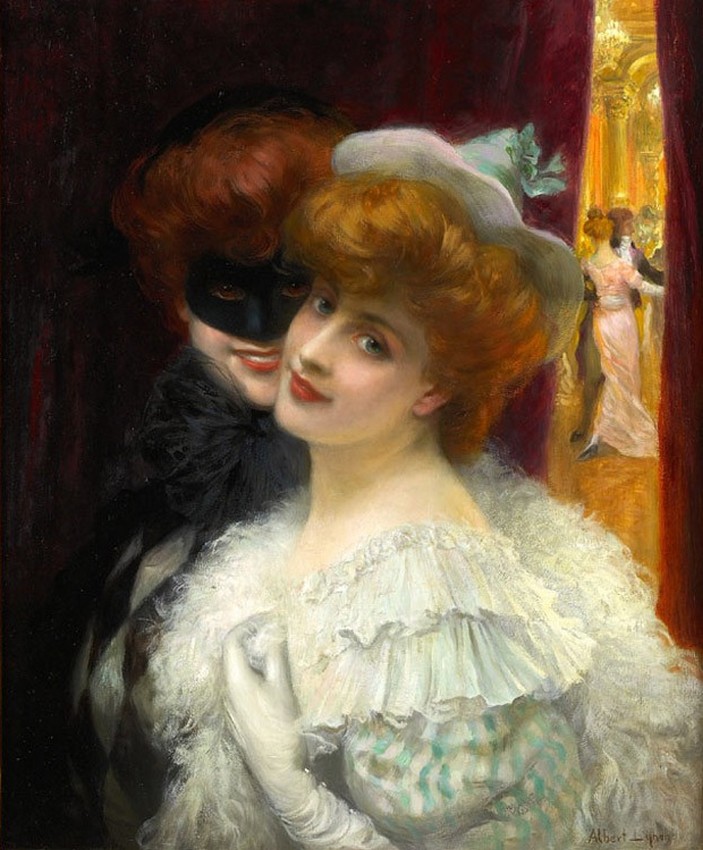
Le Bal masqué

Manon Lescaut And Her Lover Des Grieux Are Set Ashore In Louisiana (1896)

printemps

Portrait d’une jeune femme au bracelet en or

the white ribbon

A Young Beauty With Flowers In Her Hair

The Letter
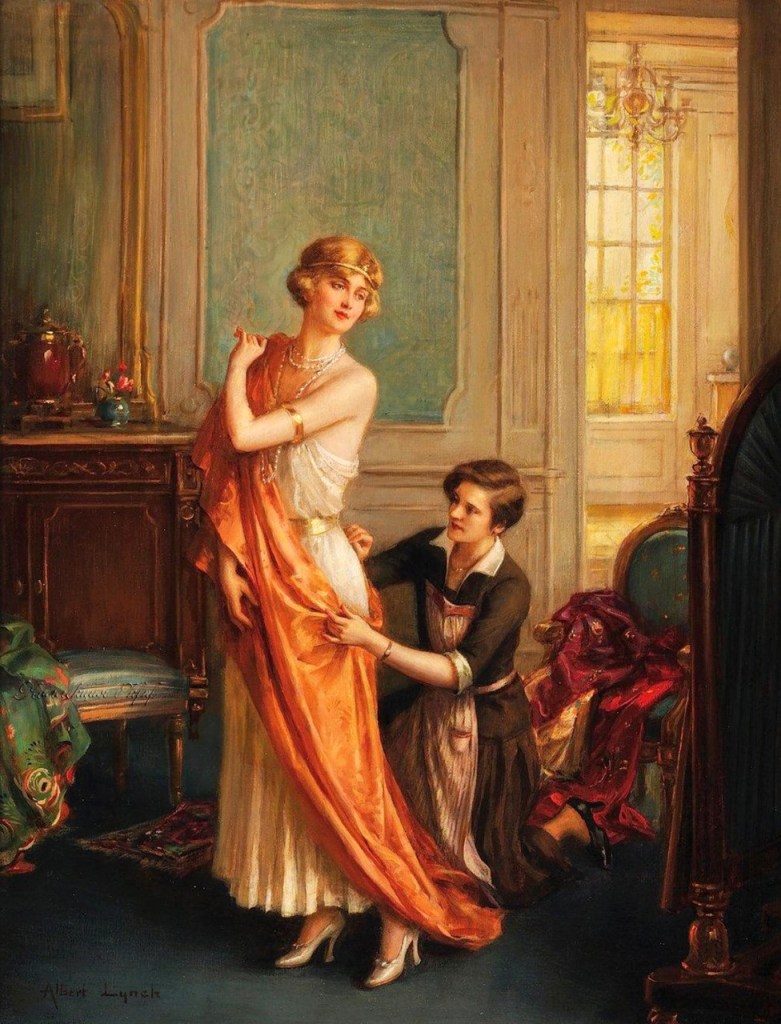
An Elegant Lady Being Dressed
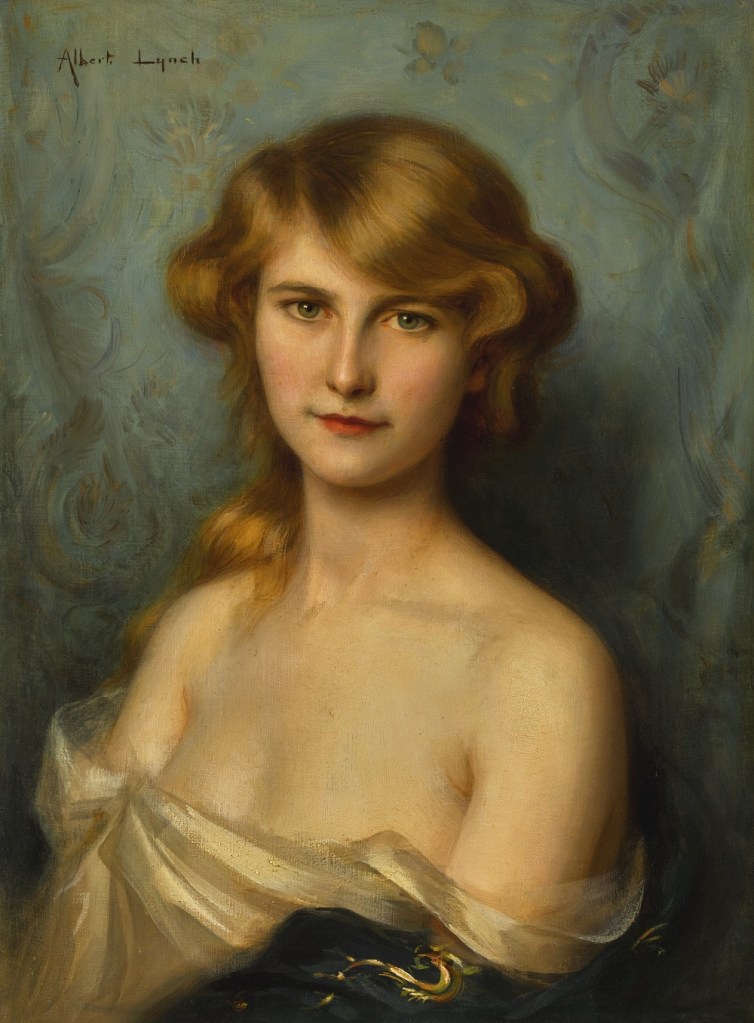
A Young Beauty With Red Hair

Beautiful Betty

A Young Beauty

Une Femme Prenant le Thé (A Lady Having Tea)

Portrait of a Woman, 1895
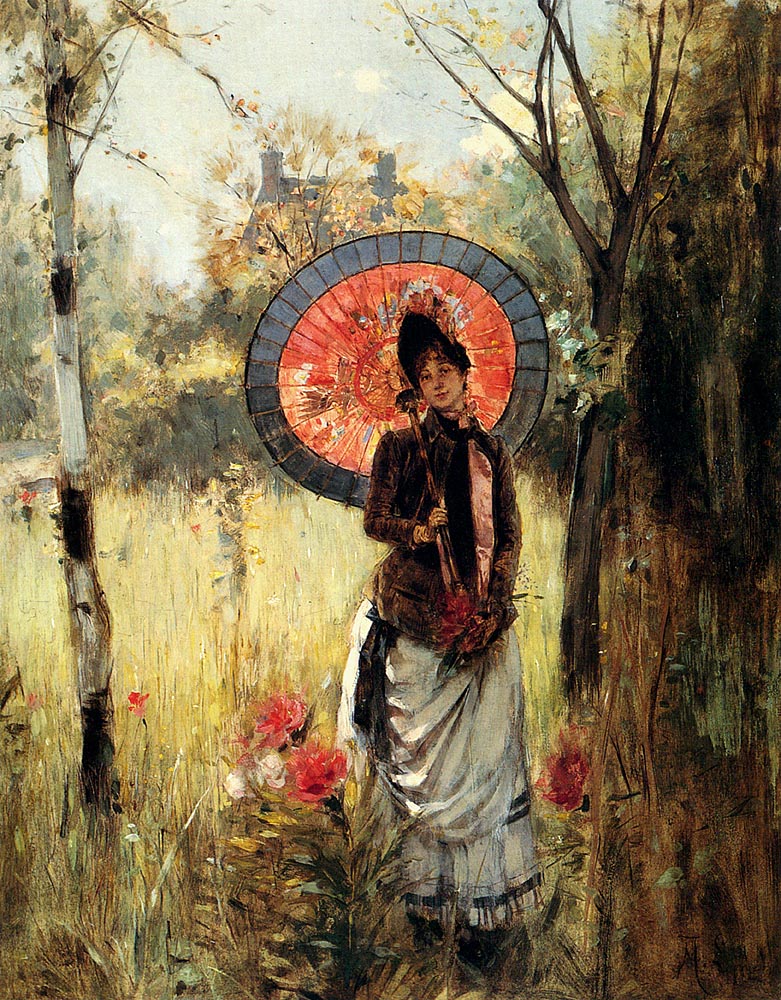
A Summer Stroll

A Lady and Her Chambermaid
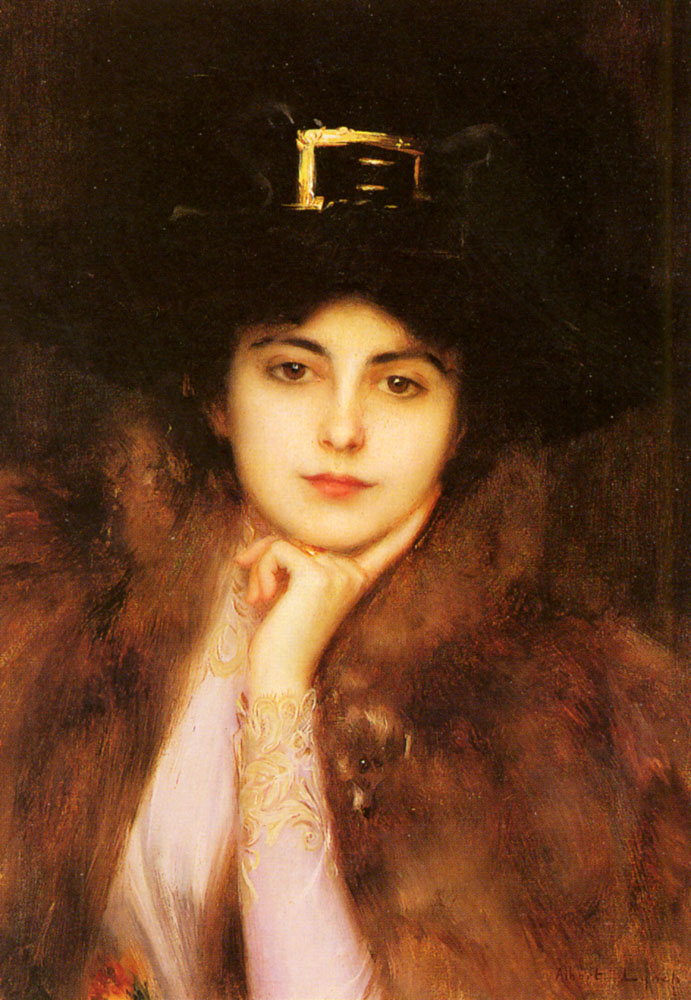
Portrait Of An Elegant Lady
| T. S. Eliot | |
|---|---|
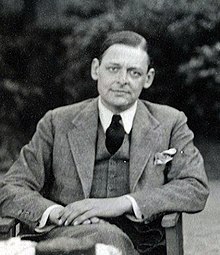 in 1934 in 1934 | |
today is the birthday of T. S. Eliot (Thomas Stearns Eliot; St. Louis, Missouri; 26 September 1888 – 4 January 1965 Kensington, London); essayist, publisher, playwright, literary and social critic and in my opinion, one of the twentieth century’s major poets. He moved to England in 1914 at age 25, settling, working and marrying there. He was eventually naturalised as a British subject in 1927 at age 39, renouncing his American citizenship.
Eliot attracted widespread attention for his poem “The Love Song of J. Alfred Prufrock” (1915), which is seen as a masterpiece of the Modernist movement. It was followed by some of the best-known poems in the English language, including The Waste Land (1922), “The Hollow Men” (1925), “Ash Wednesday” (1930) and Four Quartets (1945). He is also known for his seven plays, particularly Murder in the Cathedral (1935). He was awarded the Nobel Prize in Literature in 1948.
Before leaving the US, Eliot had told Emily Hale that he was in love with her. He exchanged letters with her from Oxford during 1914 and 1915, but they did not meet again until 1927. In a letter to Conrad Aiken late in December 1914, Eliot, aged 26, wrote: “I am very dependent upon women (I mean female society).” Less than four months later, Thayer introduced Eliot to Vivienne Haigh-Wood, a Cambridge governess. They were married at Hampstead Register Office on 26 June 1915.
After a short visit, alone, to his family in the United States, Eliot returned to London and took several teaching jobs, such as lecturing at Birkbeck College, University of London. The philosopher Bertrand Russell took an interest in Vivienne while the newlyweds stayed in his flat. Some scholars have suggested that she and Russell had an affair, but the allegations were never confirmed.
The marriage was markedly unhappy, in part because of Vivienne’s health problems. In a letter addressed to Ezra Pound, she covers an extensive list of her symptoms, which included a habitually high temperature, fatigue, insomnia, migraines, and colitis. This, coupled with apparent mental instability, meant that she was often sent away by Eliot and her doctors for extended periods of time in the hope of improving her health. And as time went on, he became increasingly detached from her. The couple formally separated in 1933 and in 1938 Vivienne’s brother, Maurice, had her committed to a mental hospital, against her will, where she remained until her death of heart disease in 1947.
Their relationship became the subject of a 1984 play Tom & Viv, which in 1994 was adapted as a film of the same name.
In a private paper written in his sixties, Eliot confessed: “I came to persuade myself that I was in love with Vivienne simply because I wanted to burn my boats and commit myself to staying in England. And she persuaded herself (also under the influence of Pound) that she would save the poet by keeping him in England. To her, the marriage brought no happiness. To me, it brought the state of mind out of which came The Waste Land.”
By 1932, Eliot had been contemplating a separation from his wife for some time. When Harvard offered him the Charles Eliot Norton professorship for the 1932–1933 academic year, he accepted and left Vivienne in England. Upon his return, he arranged for a formal separation from her, avoiding all but one meeting with her between his leaving for America in 1932 and her death in 1947. Vivienne was committed to the Northumberland House mental hospital in Woodberry Down, Manor House, London, in 1938, and remained there until she died. Although Eliot was still legally her husband, he never visited her. From 1933 to 1946 Eliot had a close emotional relationship with Emily Hale. Eliot later destroyed Hale’s letters to him, but Hale donated Eliot’s to Princeton University Library where they were sealed until 2020. When Eliot heard of the donation he deposited his own account of their relationship with Harvard University to be opened whenever the Princeton letters were.
From 1938 to 1957 Eliot’s public companion was Mary Trevelyan of London University, who wanted to marry him and left a detailed memoir.
On 10 January 1957, at the age of 68, Eliot married Esmé Valerie Fletcher, who was 30. In contrast to his first marriage, Eliot knew Fletcher well, as she had been his secretary at Faber and Faber since August 1949. They kept their wedding secret; the ceremony was held in St. Barnabas’ Church, Kensington, London, at 6:15 am with virtually no one in attendance other than his wife’s parents. Eliot had no children with either of his wives. In the early 1960s, by then in failing health, Eliot worked as an editor for the Wesleyan University Press, seeking new poets in Europe for publication. After Eliot’s death, Valerie dedicated her time to preserving his legacy, by editing and annotating The Letters of T. S. Eliot and a facsimile of the draft of The Waste Land. Valerie Eliot died on 9 November 2012 at her home in London.
Verse
I am moved by fancies that are curled
Around these images, and cling:
The notion of some infinitely gentle
Infinitely suffering thing.
- “Preludes” (1917), § IV
I was neither
Living nor dead, and I knew nothing,
Looking into the heart of light, the silence.
- The Waste Land (1922) Line 39 et seq.
Who is the third who walks always beside you
When I count, there are only you and I together
But when I look ahead up the white road
There is always another one walking beside you
- The Waste Land Line 359 et seq.
In this decayed hole among the mountains
In the faint moonlight, the grass is singing
Over the tumbled graves, about the chapel
There is the empty chapel, only the wind’s home.
- The Waste Land Line 385 et seq.
The Hollow Men (1925)
- We are the hollow men
We are the stuffed men
Leaning together
Headpiece filled with straw. - Those who have crossed
With direct eyes, to death’s other Kingdom
Remember us — if at all — not as lost
Violent souls, but only
As the hollow men
The stuffed men. - Between the idea
And the reality
Between the motion
And the act
Falls the Shadow
For Thine is the Kingdom.
- Between the conception
And the creation
Between the emotion
And the response
Falls the Shadow
Life is very long.
- Between the desire
And the spasm
Between the potency
And the existence
Between the essence
And the descent
Falls the Shadow . - This is the way the world ends
This is the way the world ends
This is the way the world ends
Not with a bang but a whimper.
The Cocktail Party (1949)
- It will do you no harm to find yourself ridiculous.
Resign yourself to be the fool you are. - You will find that you survive humiliation
And that’s an experience of incalculable value. - That is the worst moment, when you feel you have lost
The desires for all that was most desirable,
Before you are contented with what you can desire;
Before you know what is left to be desired;
And you go on wishing that you could desire
What desire has left behind. But you cannot understand.
How could you understand what it is to feel old? - You will change your mind, but you are not free.
Your moment of freedom was yesterday.
You made a decision. You set in motion
Forces in your life and in the lives of others
Which cannot be reversed.
It’s not that I’m afraid of being hurt again:
Nothing again can either hurt or heal.
I have thought at moments that the ecstasy is real
Although those who experience it may have no reality.
For what happened is remembered like a dream
In which one is exalted by intensity of loving
In the spirit, a vibration of delight
Without desire, for desire is fulfilled
In the delight of loving. A state one does not know
When awake. But what, or whom I love,
Or what in me was loving, I do not know.
And if all that is meaningless, I want to be cured
Of a craving for something I cannot find
And of the shame of never finding it.
There is another way, if you have the courage.
The first I could describe in familiar terms
Because you have seen it, as we all have seen it,
Illustrated, more or less, in lives of those about us.
The second is unknown, and so requires faith —
The kind of faith that issues from despair.
The destination cannot be described;
You will know very little until you get there;
You will journey blind. But the way leads towards possession
Of what you have sought for in the wrong place.
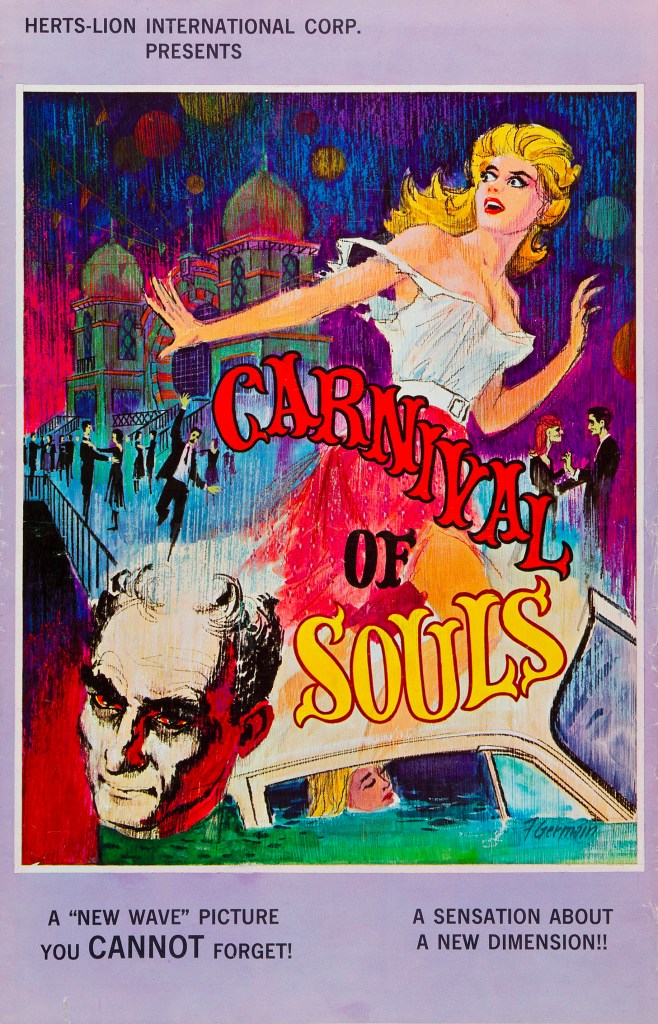
And on this day in 1962, Carnival of Souls an American psychological horror film produced and directed by Herk Harvey and written by John Clifford from a story by Clifford and Harvey, and starring Candace Hilligoss, premiered at the Main Street Theatre in Lawrence, Kansas. Its plot follows Mary Henry, a young woman whose life is disturbed after a car accident. She relocates to a new city, where she finds herself unable to assimilate with the locals, and becomes drawn to the pavilion of an abandoned carnival. Director Harvey also appears in the film as a ghoulish stranger who stalks her throughout. The film is set to an organ score by Gene Moore.
Filmed in Lawrence and Salt Lake City, Carnival of Souls was shot on a budget of $33,000, and Harvey employed various guerrilla filmmaking techniques to finish the production. The film is loosely based on the French short An Occurrence at Owl Creek Bridge (1961), an adaptation of the 1890 story of the same name by Ambrose Bierce, and Harvey was inspired by the visual style of filmmakers such as Ingmar Bergman and Jean Cocteau. Carnival of Souls was Harvey’s only feature film, and did not gain widespread attention when originally released as a double feature with the now mostly forgotten The Devil’s Messenger in 1962.
Since the 1980s, the film has been noted by critics and film scholars for its cinematography and foreboding atmosphere. The film has a large cult following and is occasionally screened at film and Halloween festivals.
Rhett
thanks for stoppin’ by y’all
 The Lovers’ Chronicle
Leave a reply to The Lovers’ Chronicle 30 October – long vistas – art by Angelica Kauffman & Alfred Sisley – verse by Paul Valéry & Ezra Pound – premiere of Trouble in Paradise – The Lovers’ Chronicle Cancel reply