Dear Zazie, Here is today’s Lovers’ Chronicle from Mac Tag dedicated to his muse. Follow us on twitter @cowboycoleridge. Has it ever been time for love for you? Rhett
The Lovers’ Chronicle
Dear Muse,
all about Bret’s song “Lawrence KS”
“Oh yeah, one of your favorites of his”
yes, such a heart rendin’ tale
i was captivated right away
and i have been to the city itself
“Hard to believe he saw that sign
and then the way his show went”
comes to eight years i have been
writin’ about it, or near it, on this day
the what time question posed in the song
is at the heart of this little ol’ blog
“Well the two of you
have a beautiful connection”
one of the deepest ones i have
oh wait, do you hear the chimes
“Yes, I believe it’s time”
© copyright 2023 mac tag/cowboy coleridge all rights reserved
went through my own version of Lawrence to get here, meetin’ someone and seein’ signs that pointed to right time, right place, only to find myself alone, bereft on the floor tryin’ to write it out, now for the not quite funny part, it became a dang playbook i kept repeatin’, thinkin’ the outcome would be different; how a fool such as this finally came to the right time; keep readin’
© copyright 2022.2023 mac tag/cowboy coleridge all rights reserved
very clear, what time it is
finally came around
to wantin’ to hear it,
to feel it, and with
someone who cares
comes to nearly a year
spent growin’, becomin’
understandin’ the why’s,
the what the hell twists
and how to make it all fit
however, we made it
and we did not have to go
through Lawrence to get here
© copyright 2021.2023 mac tag/cowboy coleridge all rights reserved
Pale Love, Pale Rider
what time is it
comin’ into focus
with purpose
just had to learn
to trust this vision
to understand at last
determination now,
to share the stories,
the verse, the art
the feelin’s
to make it all matter
it is a fine question
is the answer now
has it come for us
© copyright 2020 mac tag/cowboy coleridge all rights reserved
for Pamela
away with fictions,
tissues of never-could-be
so, yes, this is sauce
for the gander…
what were you so afraid of
you said you just wanted to let go,
to feel alive
and then we were there
ready to fall and fly
but you left
why
not time you say, well
you can never understand
what was denied us
© copyright 2019 mac tag/cowboy coleridge all rights reserved
what time is it
marked by confusion,
almost always,
without apparent purpose
just had to learn
to trust this vision
to understand at last
determination now,
to give the stories,
the songs, the art
some kinda form
to make it all matter
the time is now
© copyright 2018 mac tag/cowboy coleridge all rights reserved
a fine evenin’
a walk without
any apparent purpose
a trail that loses itself
at the gate of a cemetery
near the edge of a mesa
buffalo grass, metal angel statue,
granite tombs, rocks, wind,
and a forty mile view
stretchin’ out before us
we sit on a tomb
and there, seated
in the dyin’ sunlight,
while the valley and plains below
git lost in shadow, we talk together
the pure air playin’ round us,
the magnificent landscape
beneath our feet
impart serenity
to thoughts
we stay up there late
talkin’ of what matters…
of beauty and sorrow
and as of old, we talk
of partin’
may it never happen
© copyright 2017 mac tag/cowboy Coleridge all rights reserved
Bret you are right
it is a fine question
one i asked regularly
for about 40 years
on more than one occasion,
i thought it was time, but no
reckon it was not
the right question,
for me anyhow
now i am asked out
and i just wanna
spin some vinyl,
and spin the totem
may it never wobble
© copyright 2016 Mac tag/cowboy coleridge all rights reserved
Never so pretty
as in the mornin’
Awakened fresh with
the world every day
© copyright 2015 Mac tag/cowboy coleridge all rights reserved
Today is the birthday of Arnold Schoenberg or Schönberg (Vienna 13 September 1874 – 13 July 1951 Los Angeles); composer, music theorist, teacher, writer, and painter. He was among the first modernists who transformed the practice of harmony in 20th-century classical music, and a central element of his music was its use of motives as a means of coherence. He propounded concepts like developing variation, the emancipation of the dissonance, and the “unity of musical space”.
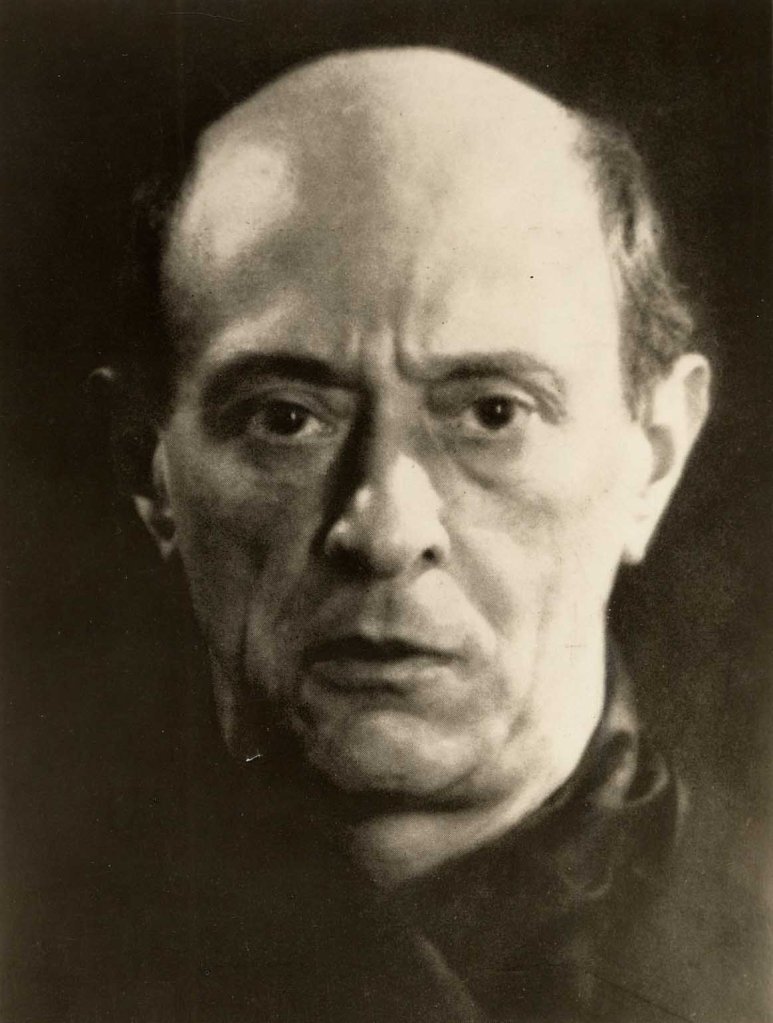
Schoenberg’s early works, like Verklärte Nacht (1899), represented a Brahmsian–Wagnerian synthesis on which he built. Mentoring Anton Webern and Alban Berg, he became the central figure of the Second Viennese School. They consorted with visual artists, published in Der Blaue Reiter, and wrote atonal, expressionist music, attracting fame and stirring debate. In his String Quartet No. 2 (1907–1908), Erwartung (1909), and Pierrot lunaire (1912), Schoenberg visited extremes of emotion; in self-portraits he emphasized his intense gaze. While working on Die Jakobsleiter (from 1914) and Moses und Aron (from 1923), Schoenberg confronted popular antisemitism by returning to Judaism and substantially developed his twelve-tone technique.
Schoenberg resigned from the Prussian Academy of Arts (1926–1933), emigrating as the Nazis took power; they banned his (and his students’) music, labeling it “degenerate”. He taught in the US, including at the University of California, Los Angeles (1936–1944), where facilities are named in his honor. He explored writing film music (as he had done idiosyncratically in Begleitungsmusik zu einer Lichtspielscene, 1929–1930) and wrote more tonal music, completing his Chamber Symphony No. 2 in 1939. With citizenship (1941) and US entry into World War II, he satirized fascist tyrants in Ode to Napoleon (1942, after Byron), deploying Beethoven’s fate motif and the Marseillaise. Post-war Vienna beckoned with honorary citizenship, but Schoenberg was ill as depicted in his String Trio (1946). As the world learned of the Holocaust, he memorialized its victims in A Survivor from Warsaw (1947). The Israel Conservatory and Academy of Music elected him honorary president (1951).
His innovative music was among the most influential and polemicized of 20th-century classical music. At least three generations of composers extended its somewhat formal principles His aesthetic and music-historical views influenced musicologists Theodor W. Adorno and Carl Dahlhaus. The Arnold Schönberg Center collects his archival legacy.
Gallery
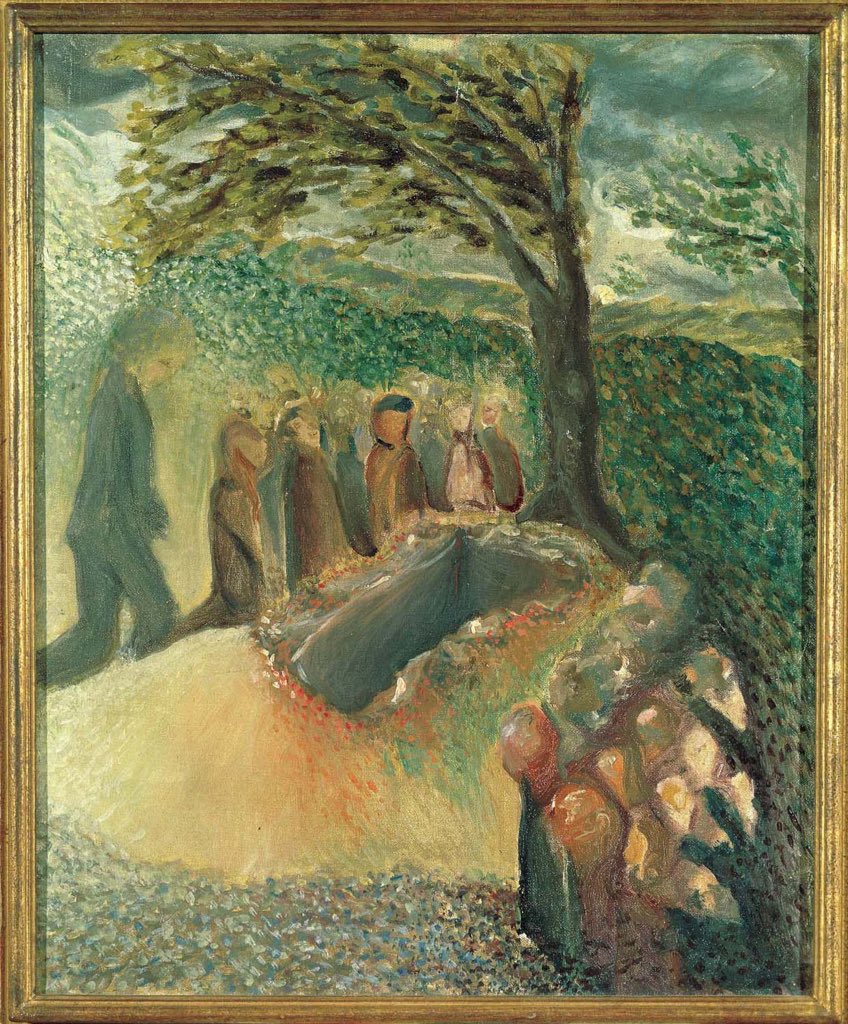
The Burial of Gustav Mahler (Oil on canvas, 1911)
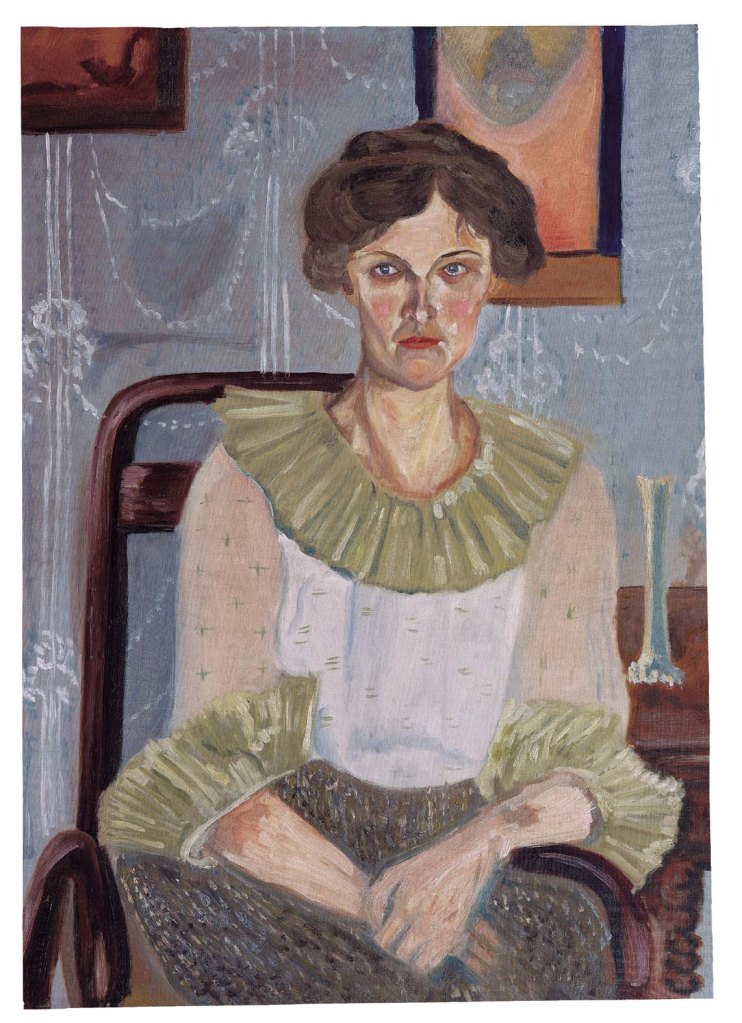
Helene Nahowski (i.e. Helene Berg) circa 1910
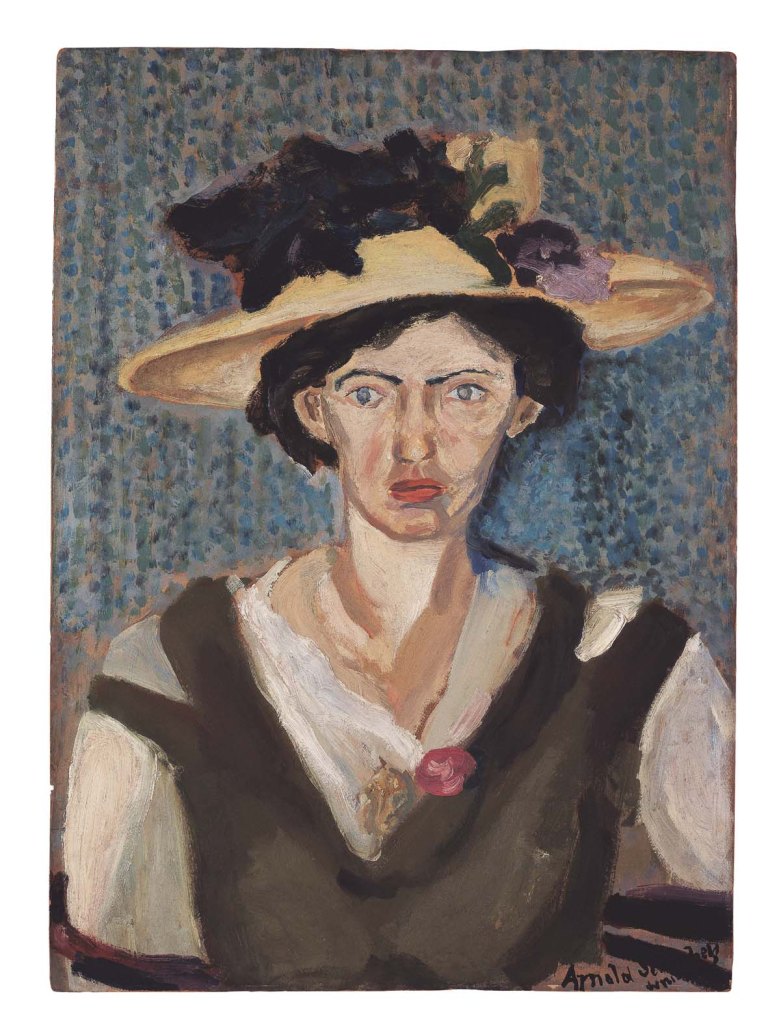
Mizzi Pappenheim 1909

| Édouard Boubat | |
|---|---|
 in 1943 in 1943 | |
And today is the birthday of Édouard Boubat (born Montmartre, Paris 13 September, 1923 – died Paris 30 June 1999); photojournalist and art photographer.
He studied typography and graphic arts at the École Estienne and worked for a printing company before becoming a photographer. In 1943 he was subjected to service du travail obligatoire, forced labour of French people in Nazi Germany, and witnessed the horrors of World War II. He took his first photograph after the war in 1946 and was awarded the Kodak Prize the following year. He travelled the world for the French magazine Réalités, where his colleague was Jean-Philippe Charbonnier, and later worked as a freelance photographer. French poet Jacques Prévert called him a “peace correspondent” as he was humanist, apolitical and photographed uplifting subjects. His son Bernard Boubat became a photographer.
Boubat married twice; Lella (m. 1947; div. 1952) and Sophie (m. 1954)

Self-portrait with Lella, 1951
Gallery
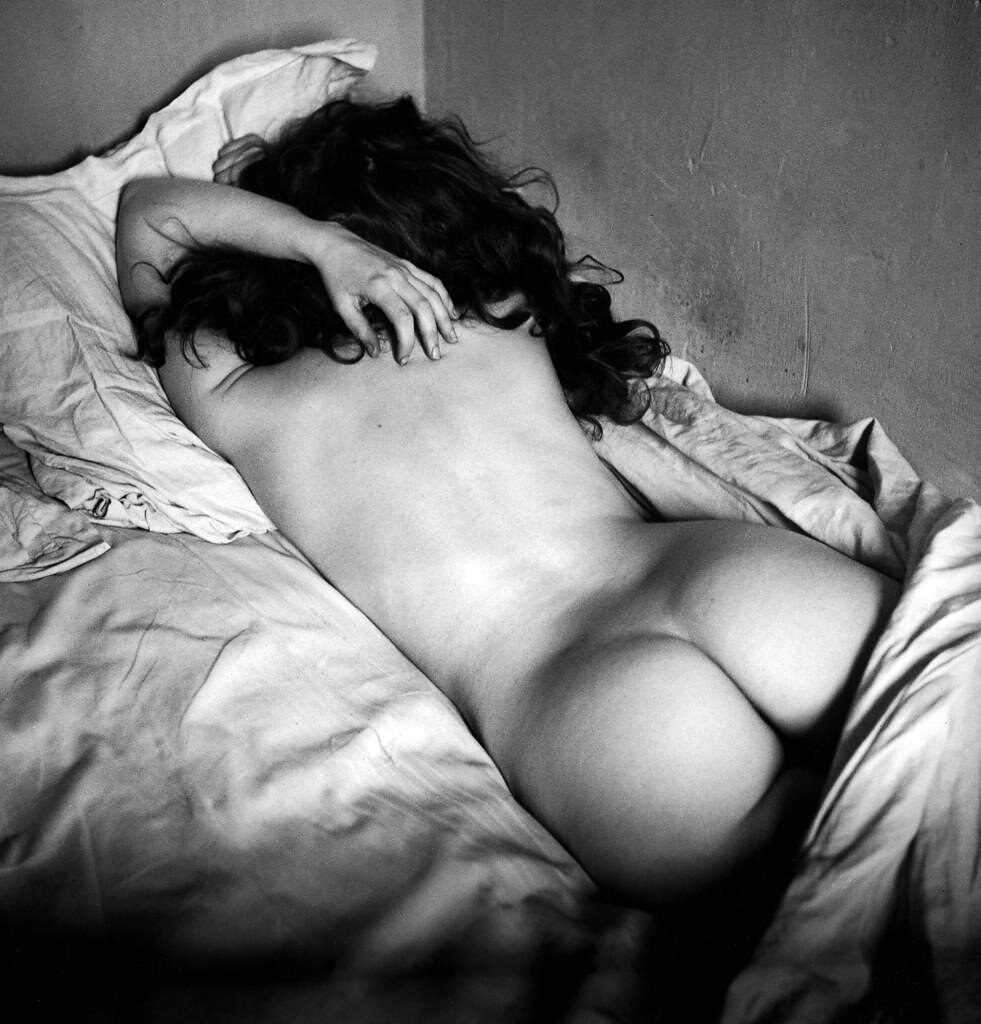
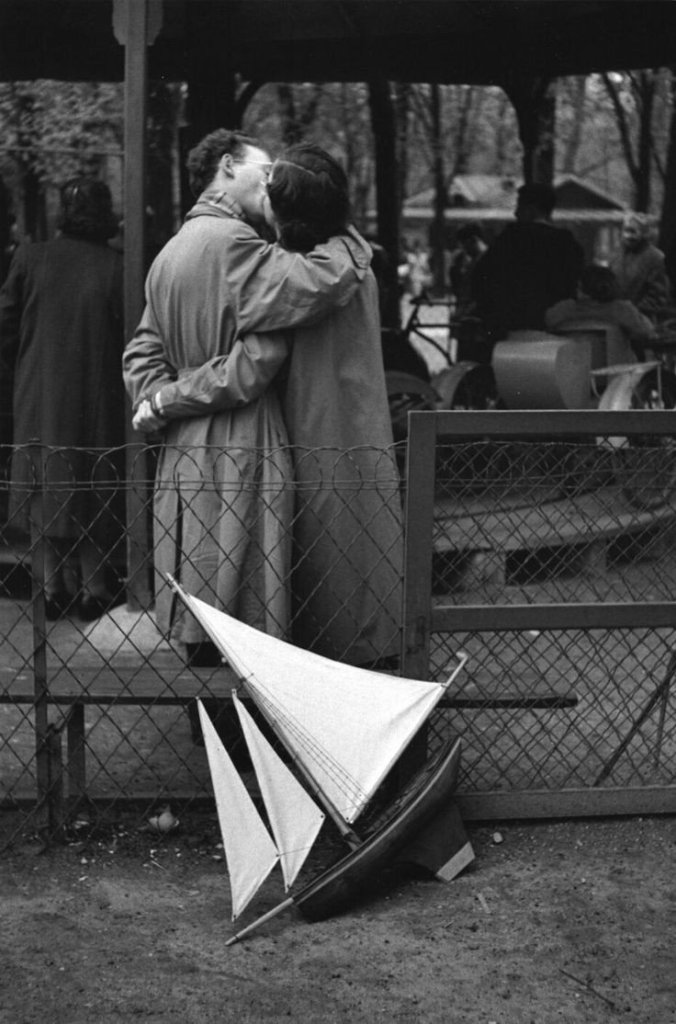
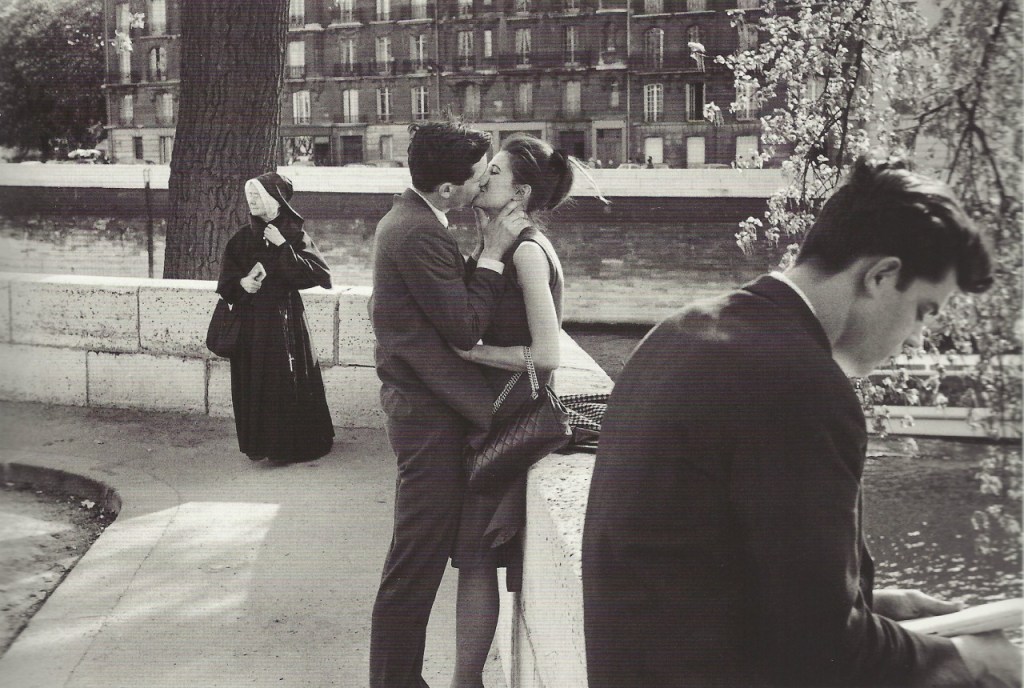
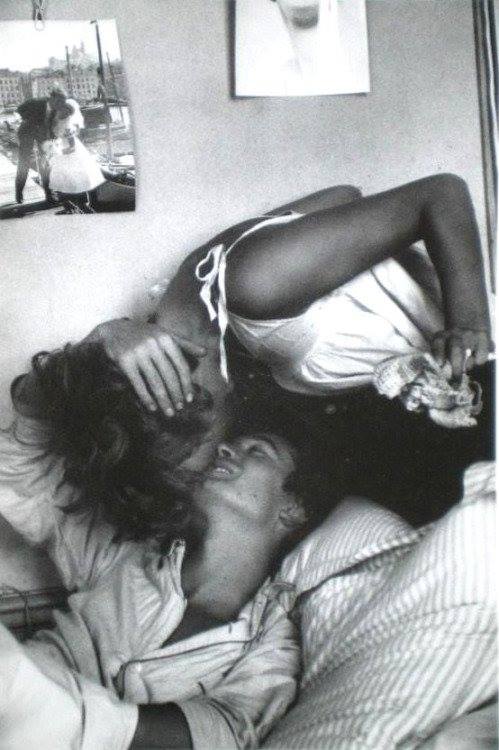
les amoureux

Café La Tartine, Rue de Rivoli, Paris, 1980

Lella, Bretagne, 1947
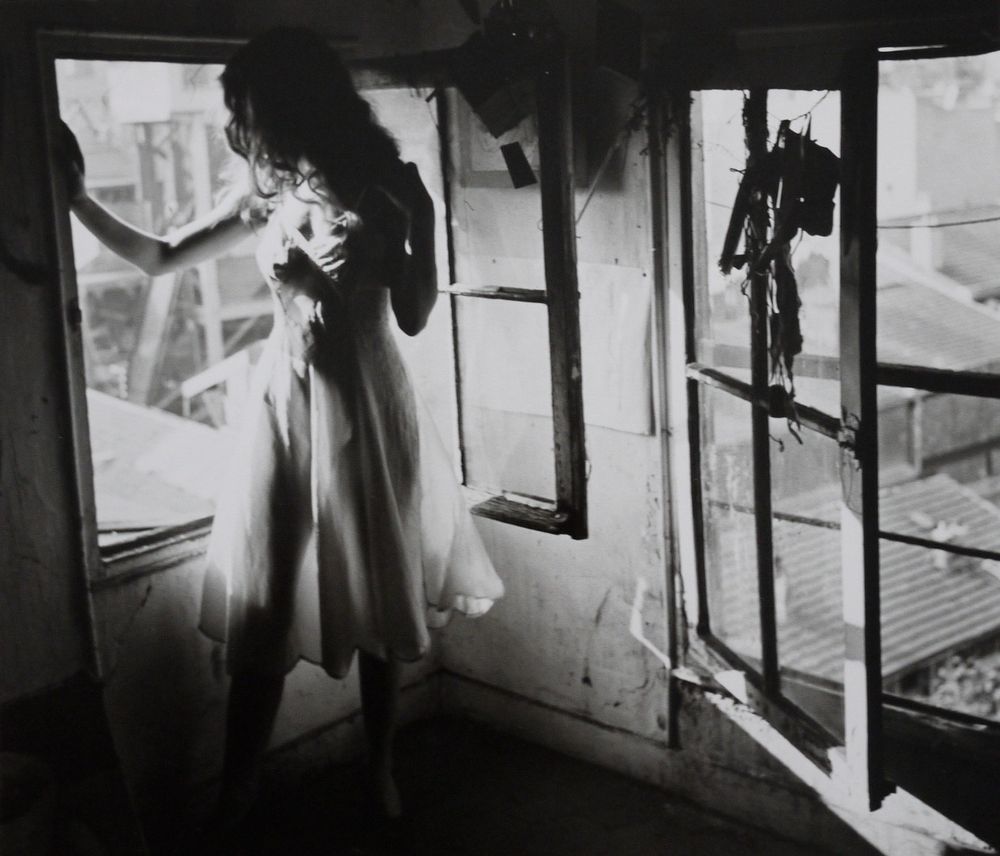
Lella Paris, 1946

Les amoureux de Paris III, 1962
For the song of the day we turn once again to our friend Bret Mosley (Bretmosley.com) and his song “Lawrence KS”, in which you find the question of the day.
Mac Tag
 The Lovers’ Chronicle
Leave a comment