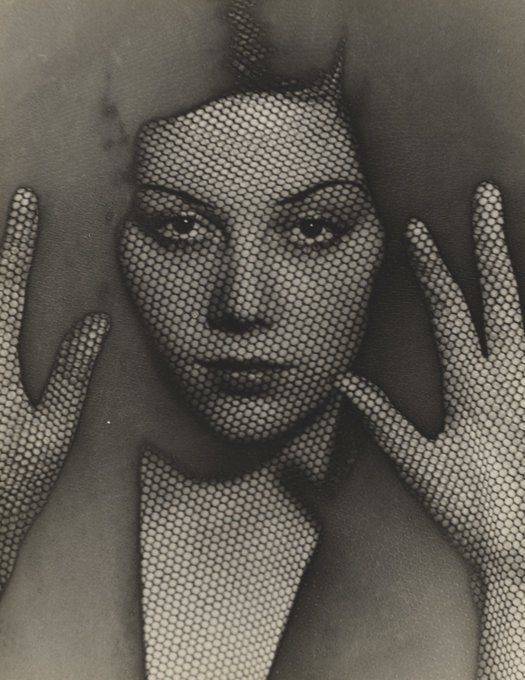
Dear Zazie, How is your day? Hope it was good. Here is today’s Lovers’ Chronicle from Mac Tag dedicated to his muse. Follow us on twitter @cowboycoleridge. Do you have a story to tell? Which way do you tell it? Is it a story of two? Rhett
The Lovers’ Chronicle
Dear Muse,
well they are everywhere
but we are not goin’ with
the song that just popped
in your head
“Oh but I was ready”
you always are my dear
and you have a lovely voice
“Thank you”
no, just wanted to say,
so much depends
on not missin’ the signals,
on readin’ ’em right, not
misinterpretin’ ’em
one reason why
what we have is rare
© copyright 2023 mac tag/cowboy coleridge all rights reserved
as mentioned earlier, a great misinterpreter, and also too good at ignorin’; plenty of signals in the past that should have been heeded, would have made things smoother, but is smoother bad, if experiences make the writer, then all the sad situations resultin’ from missed signs provided more material; then i best git busy, i have a lot of writin’ to git to
© copyright 2022.2023 mac tag/cowboy coleridge all rights reserved
they were always
pointin’ in this direction
writin’ and you
everything else pales
for writin’, it began
with readin’ every day
and a fascination
with lyrics, turned
to frequent word play
in my mind, all of it
pointin’ this way
with you
every turn
even the wrong ones
can now been seen
as signs pointin’ the way
to you
© copyright 2021.2023 mac tag/cowboy coleridge all rights reserved
Pale Love, Pale Rider
gazin’ at each other
stretched on the vision
you came to me
as i wished
fragments
of a scene
but enough
to see us
believe,
courage
now wound
tight enough
so i gotta know
never been one
to ignore clearly
marked signs
on the trail
saddle up darlin’
shall we see
what lies ahead
© copyright 2020 mac tag/cowboy coleridge all rights reserved
true, never been one
to ignore clearly
marked signs
but maybe
an all time great
at misinterpretin’ them
sounds so fine talkin’
’bout two together
try and again fail
never could get it right
some things are meant,
some just are not to be
so yes, the clearest
ever marked sign
on the trail
of one ridin’ solo
© copyright 2019.2023 mac tag/cowboy Coleridge all rights reserved
watchin’ each other
stretched out
sated for the moment
the mornin’ breeze
billows the curtains
of the open windows
and first light
dances across the room
the gaze is the same
lips move, but do not speak
just two watchin’
and waitin’ for signs
© copyright 2018 mac tag/cowboy coleridge all rights reserved
for Marci
a door in a hallway
and behind that door
you came to me
as i wished
fragments of a scene
but enough
to see me through
signs ahead
my friend bret mosley
sings a song of hope,
then a dark haired
high plains beauty,
and now The Lioness
speakin’ of hope
never been one
to ignore clearly
marked signs
on the trail
saddle up darlin’
shall we see what lies ahead
believe, courage
now wound tight enough
so i gotta know
the day you walked away
would it have mattered
if i had asked you to stay
***
And never forget y’all,
Still, the sky is cryin’
RIP SRV
© copyright 2017 mac tag/cowboy Coleridge all rights reserved
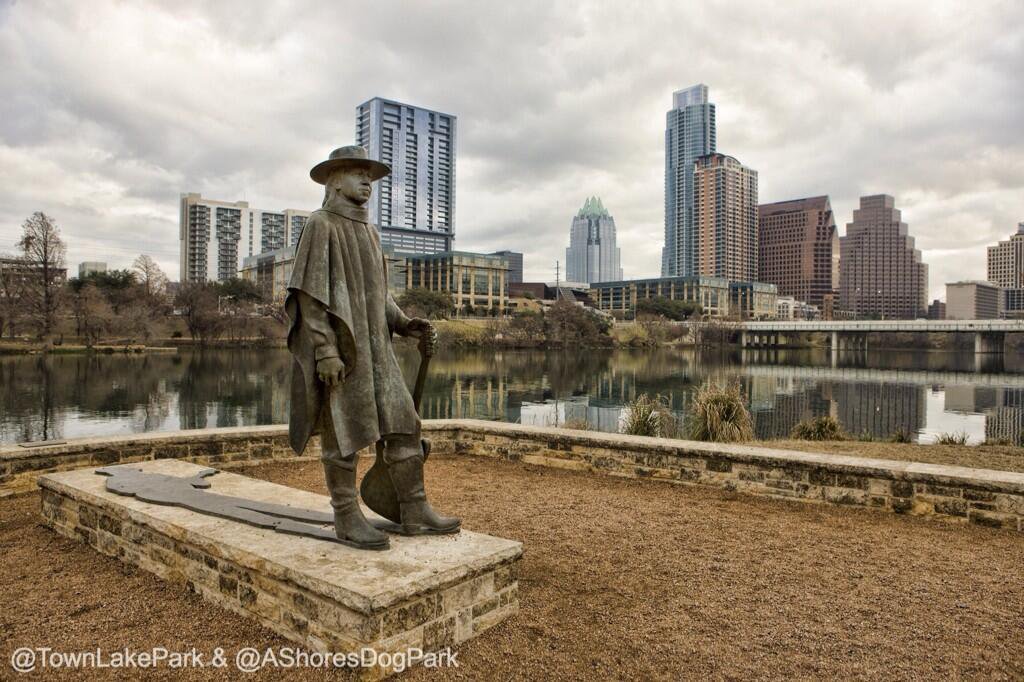
Payin’ my respects
RIP SRV
The sky is cryin’…
Wait, let me check…
Nope, your machinations
Do not impede my verse
So carry on; I frankly
Do not give a f……
Not to be understood
“Or tolerated”
Touche!
© copyright 2016 mac tag/cowboy Coleridge all rights reserved
Believe, still believe in you
The path better harnessed thus
Flesh, in you I believe, yes
Wasted under the vast sky
No longer chaste, defiled, bent,
Towards base slaveries
© copyright 2015 mac tag/cowboy Coleridge all rights reserved
Two
Just us two
Two bodies lyin’
Naked, exhausted.
Two people livin’
Two people talkin’
Two people believin’
Two different voices
Two ways to tell the story
Was there nothin’ I could do
To save you?
When did we become so unhappy?
We were so disappointed
Our dreams disjointed,
Sleepin’ out of tune
Through all of the mistakes
We held each other in the doorframe
Through the earthquakes
But no one could fix us no one could
There are no other witnesses
Just us two
The still gazes
Do not change in the shadows
© copyright 2012 mac tag/Cowboy Coleridge all rights reserved
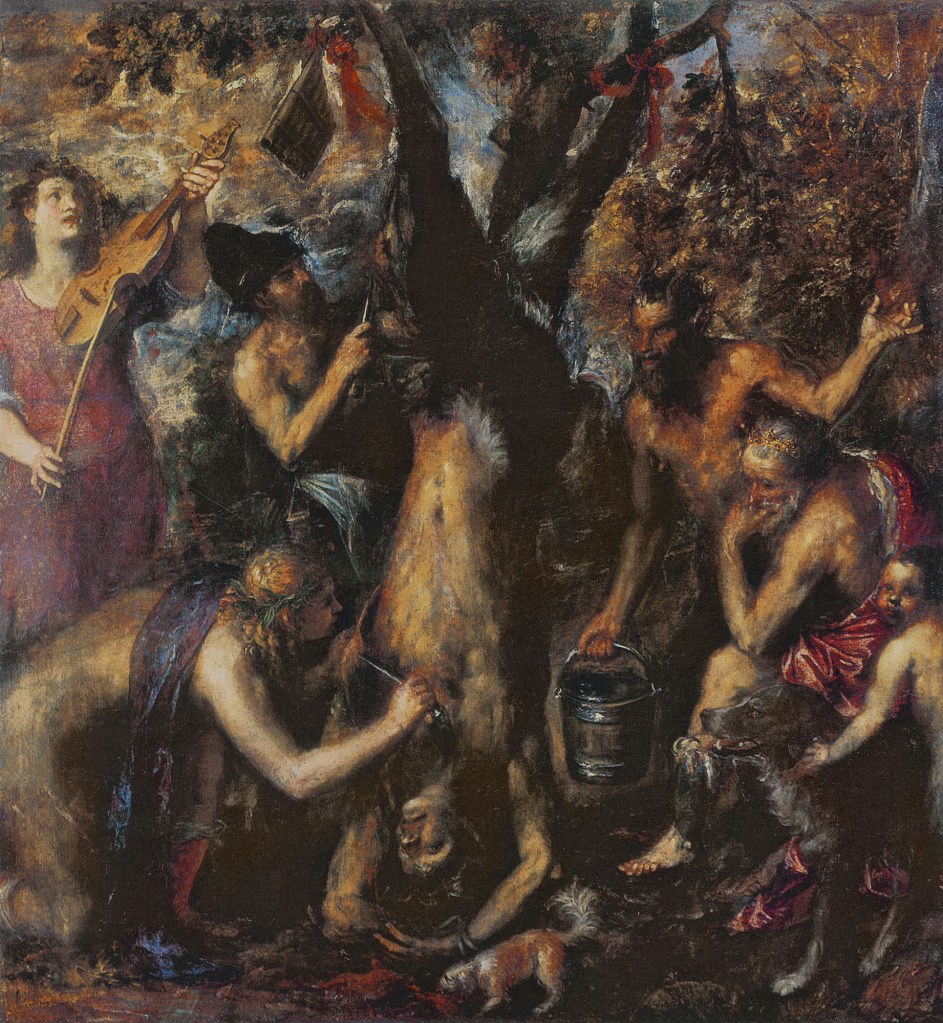
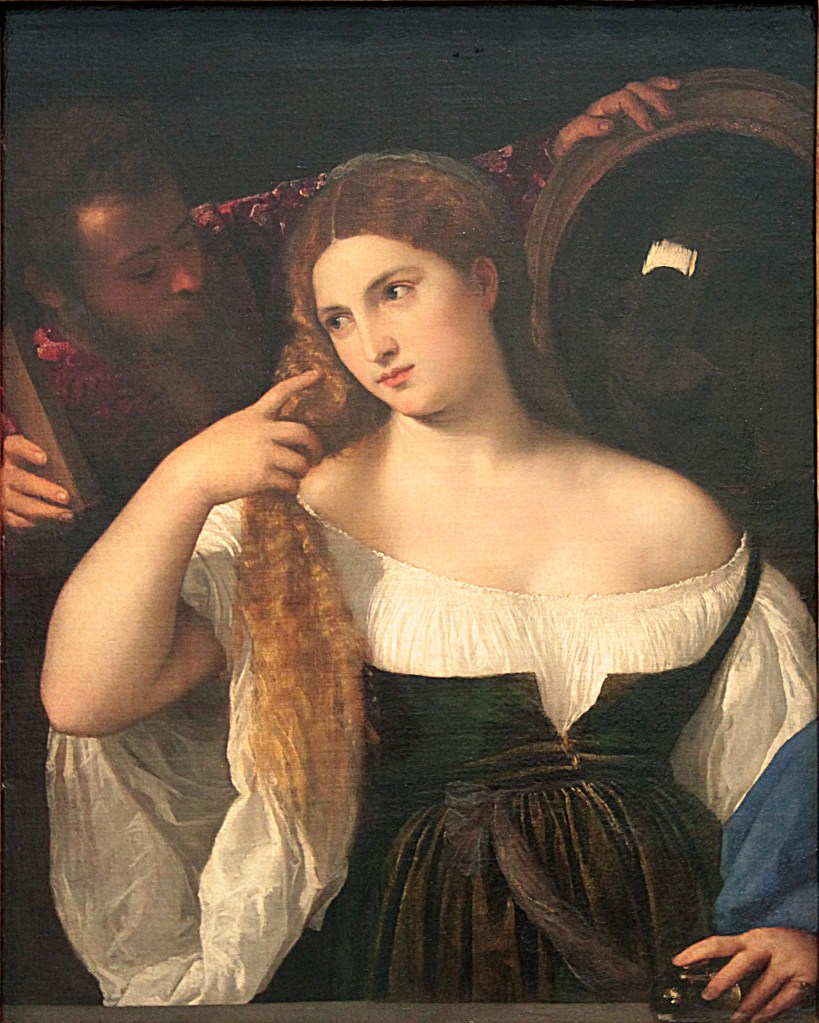
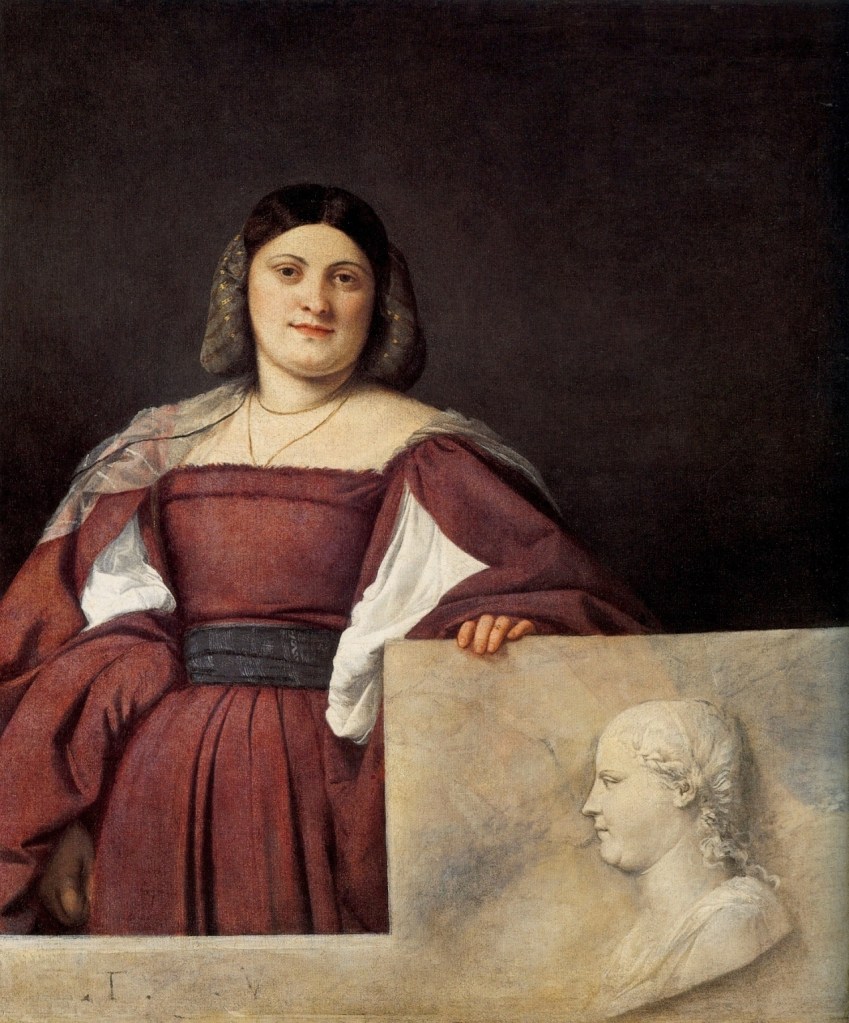
Today is the death day of Tiziano Vecellio (Pieve di Cadore, Italy c. 1488/1490 – 27 August 1576 Venice), Latinized as Titianus, hence known in English as Titian; Renaissance painter. In my opinion, the most important artist of Renaissance Venetian painting.
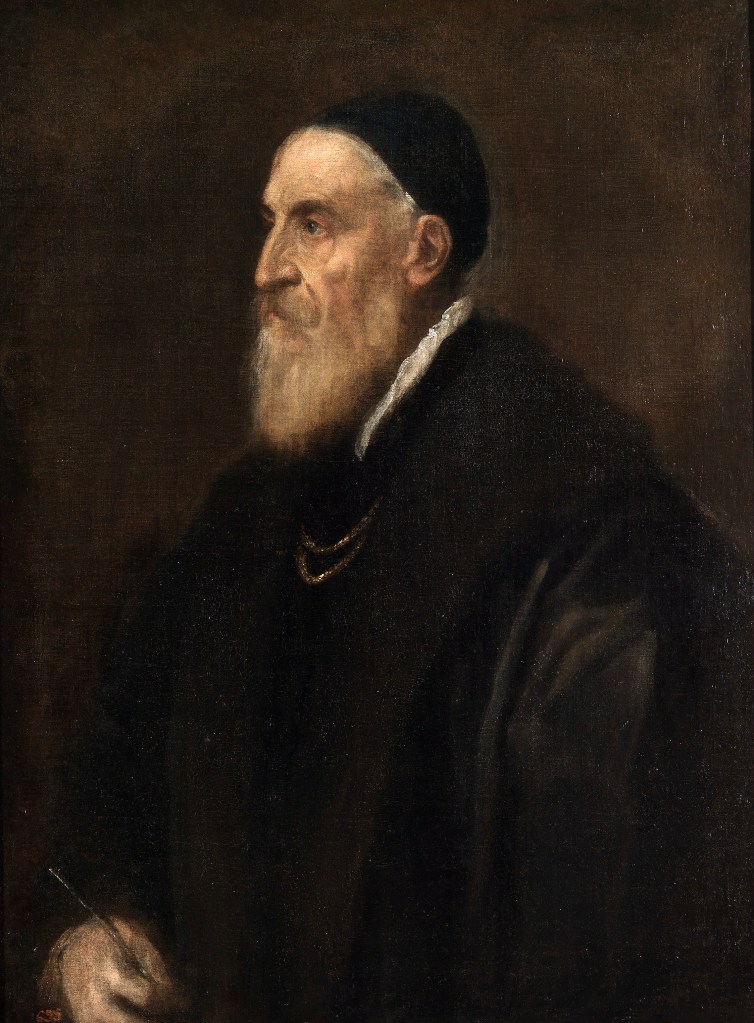
Titian was one of the most versatile of Italian painters, equally adept with portraits, landscape backgrounds, and mythological and religious subjects. His painting methods, particularly in the application and use of colour, exerted a profound influence not only on painters of the late Italian Renaissance, but on future generations of Western artists.
His career was successful from the start, and he became sought after by patrons, initially from Venice and its possessions, then joined by the north Italian princes, and finally the Habsburgs and the papacy. Along with Giorgione, he is considered a founder of the Venetian school of Italian Renaissance painting. In 1590, the painter and art theorist Giovanni Paolo Lomazzo described Titian as “the sun amidst small stars not only among the Italians but all the painters of the world”.
During his long life, Titian’s artistic manner changed drastically, but he retained a lifelong interest in colour. Although his mature works may not contain the vivid, luminous tints of his early pieces, they are remarkable and original in their loose brushwork and subtlety of tone.
Titian’s wife, Cecilia, was a barber’s daughter from his hometown of Pieve di Cadore. As a young woman she had been his housekeeper and mistress for some five years. Cecilia had already borne Titian two sons, Pomponio and Orazio, when in 1525 she fell seriously ill. Titian, wishing to legitimize the children, married her. Cecilia recovered, the marriage was a happy one, and they had another daughter who died in infancy. In August 1530 Cecilia died. Titian remarried, but little information is known about his second wife; she was possibly the mother of his daughter Lavinia. Titian had a fourth child, Emilia, the result of an affair, possibly with a housekeeper. His favourite child was Orazio, who became his assistant.
gallery
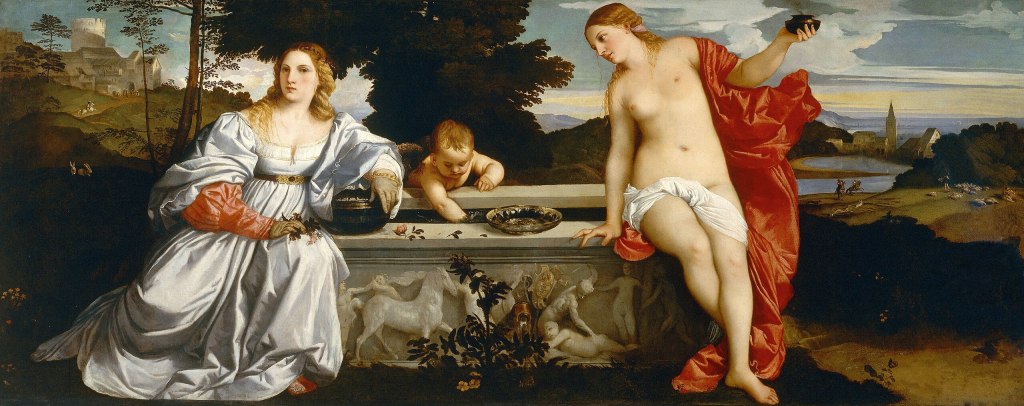
Amor sacro e Amor profano, 1514, Roma, Galleria Borghese
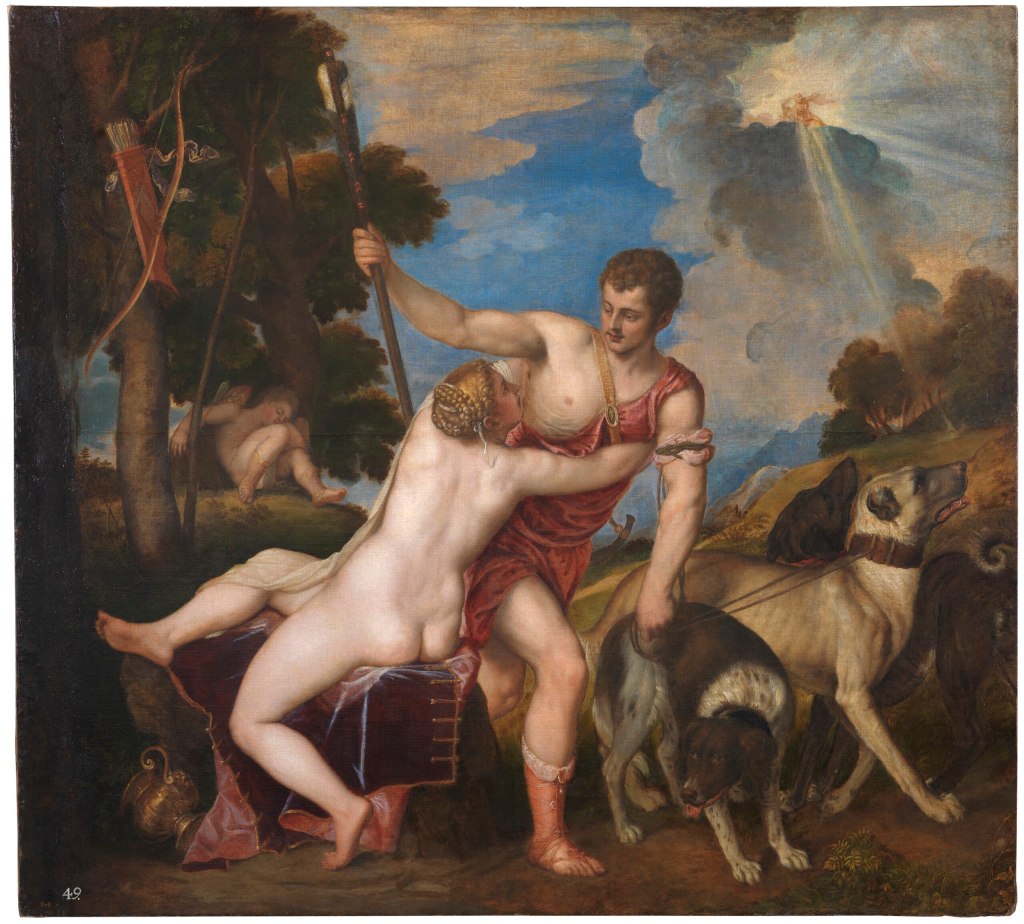
Venere e Adone, 1553 ca, olio su tela, 186 x 207 cm, Madrid, Museo del Prado

Venus and Organist and Little Dog, c. 1550. Museo del Prado, Madrid
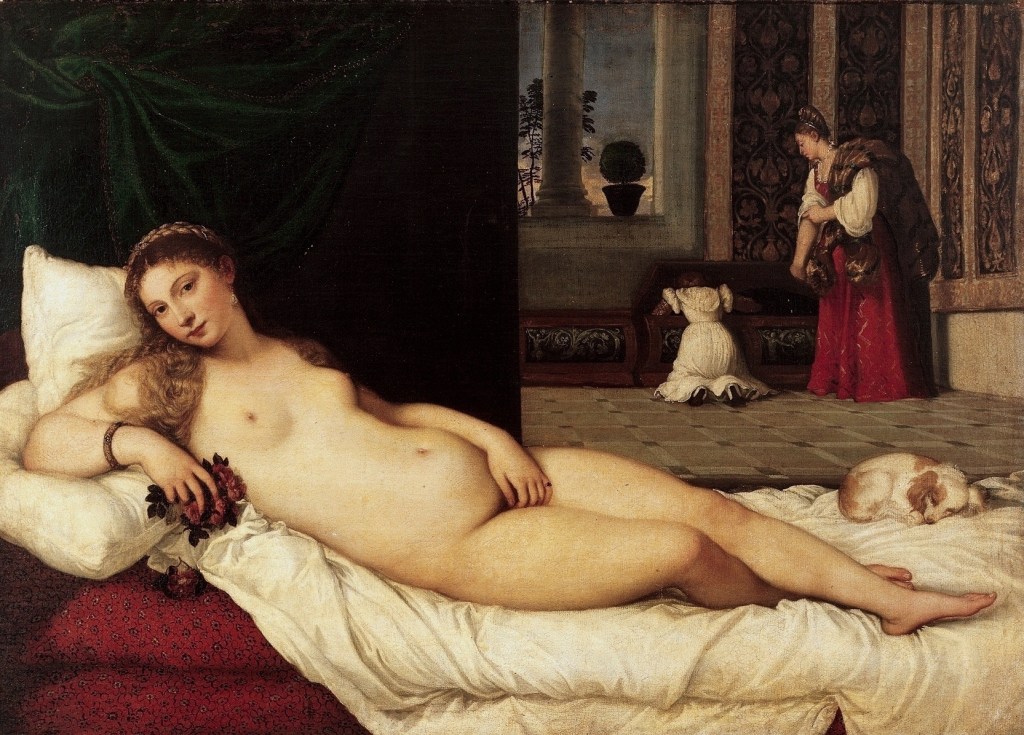
Venere di Urbino, 1538, olio su tavola, 119 x 165, Firenze, Galleria degli Uffizi
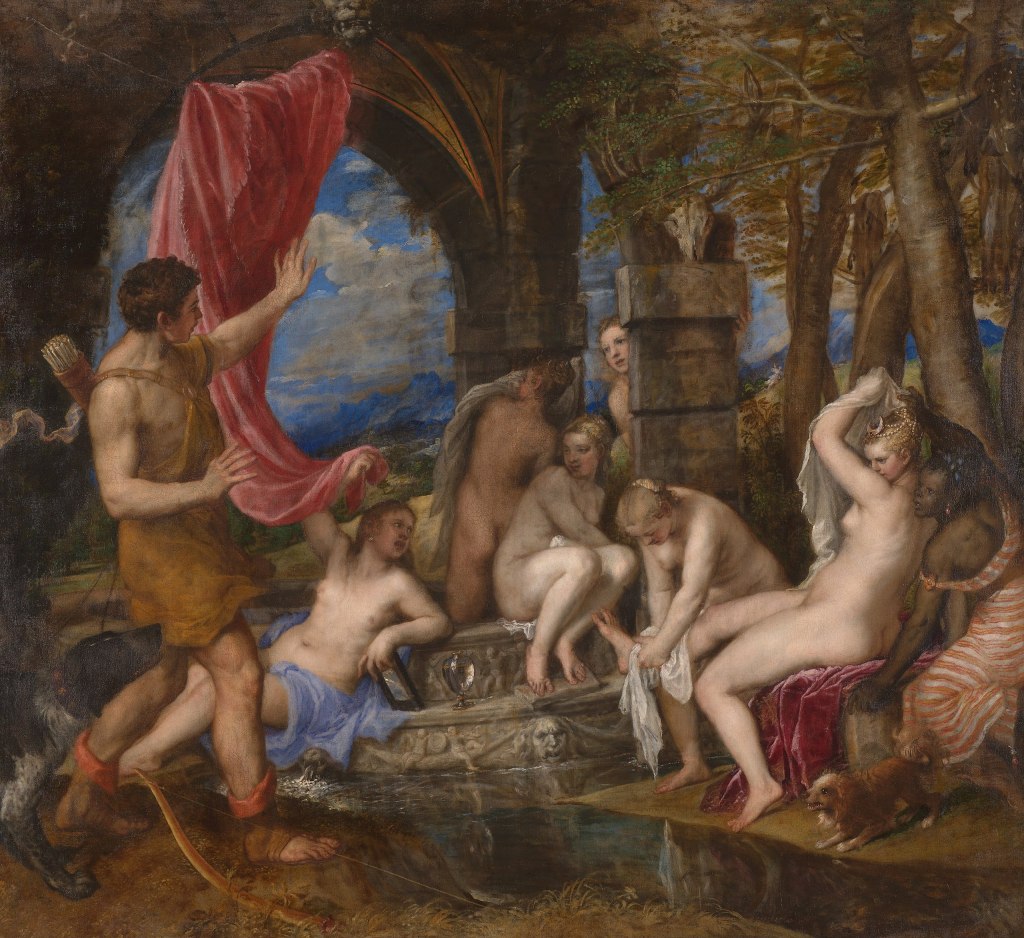
Diana and Actaeon, 1556–1559. National Galleries of Scotland, Edinburgh
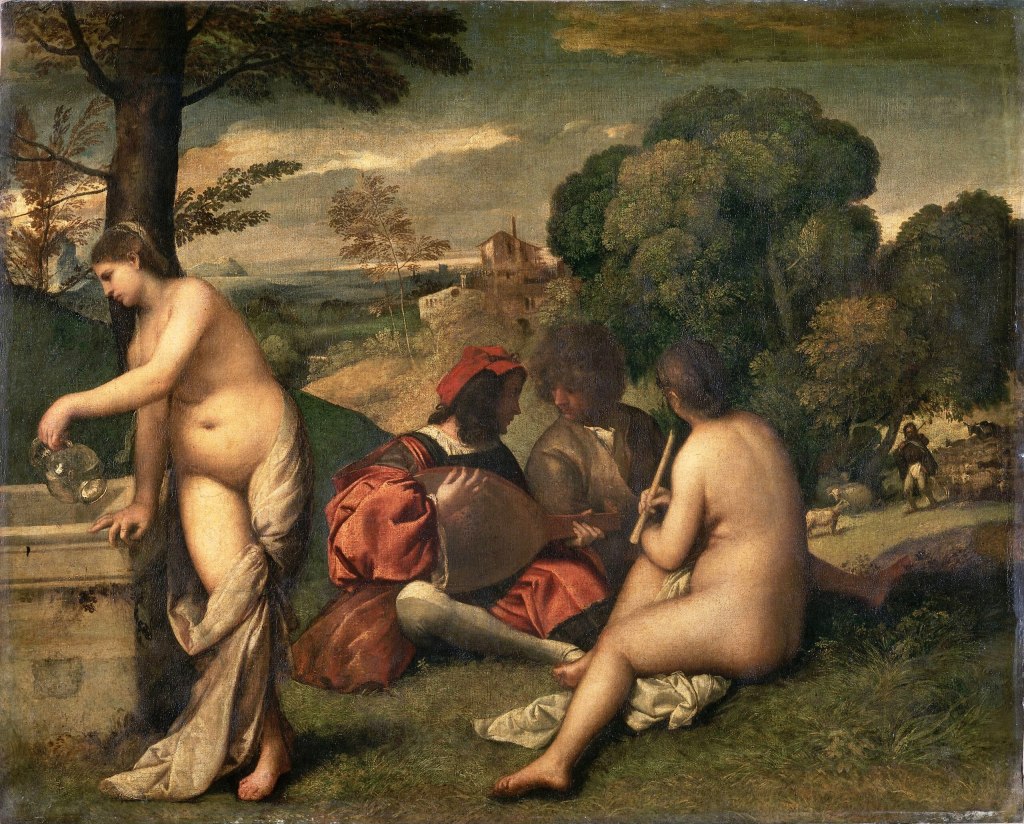
Concerto campestre, 1509, Parigi, Museo del Louvre
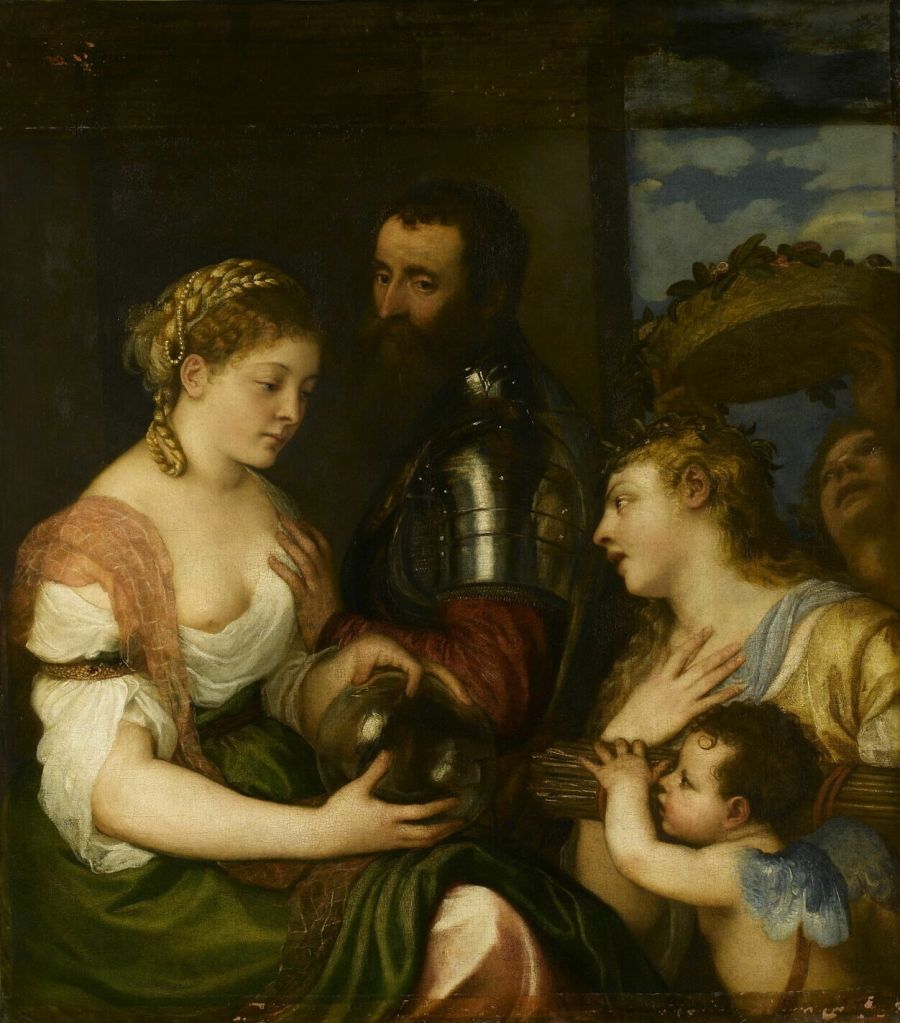
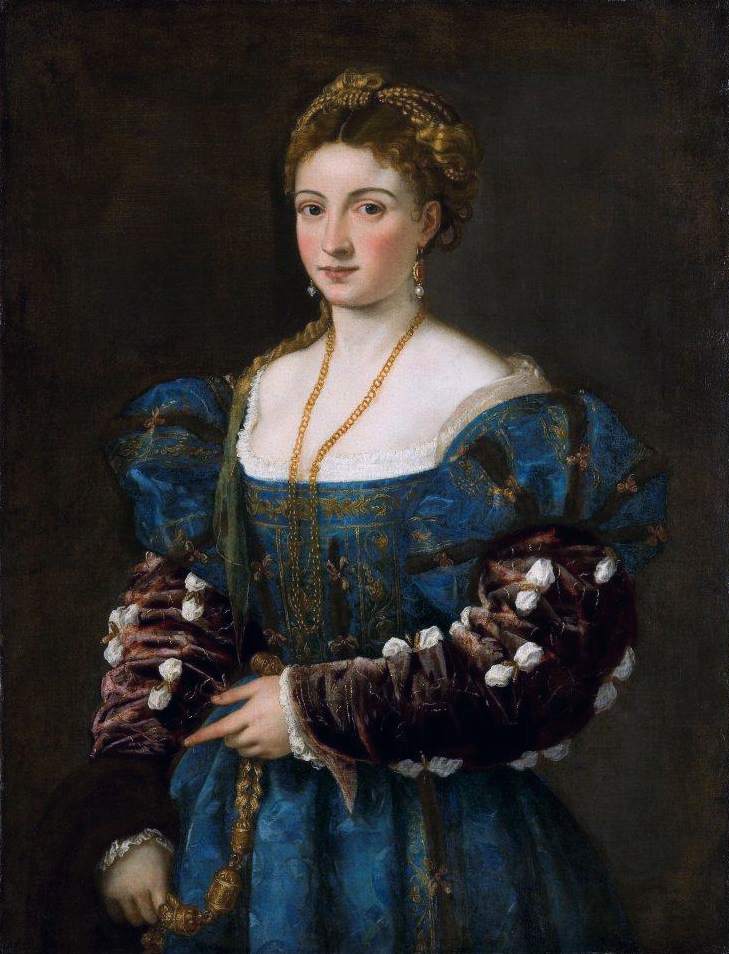
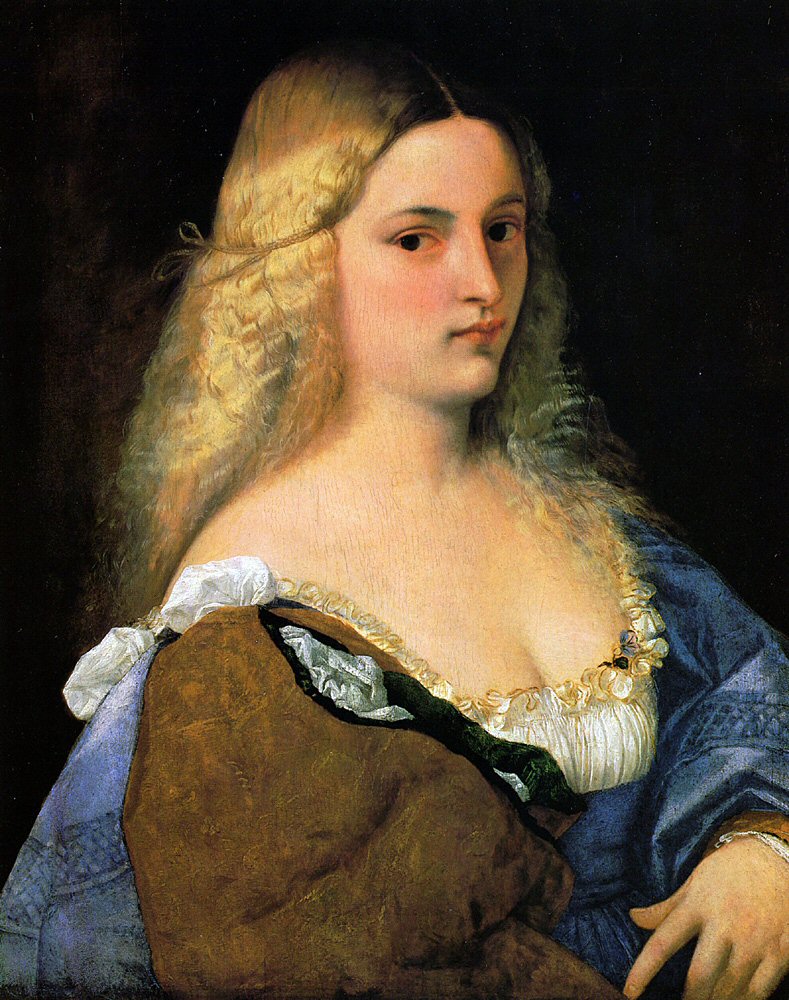
Violante, 1515 circa, Vienna, Kunsthistorisches Museum
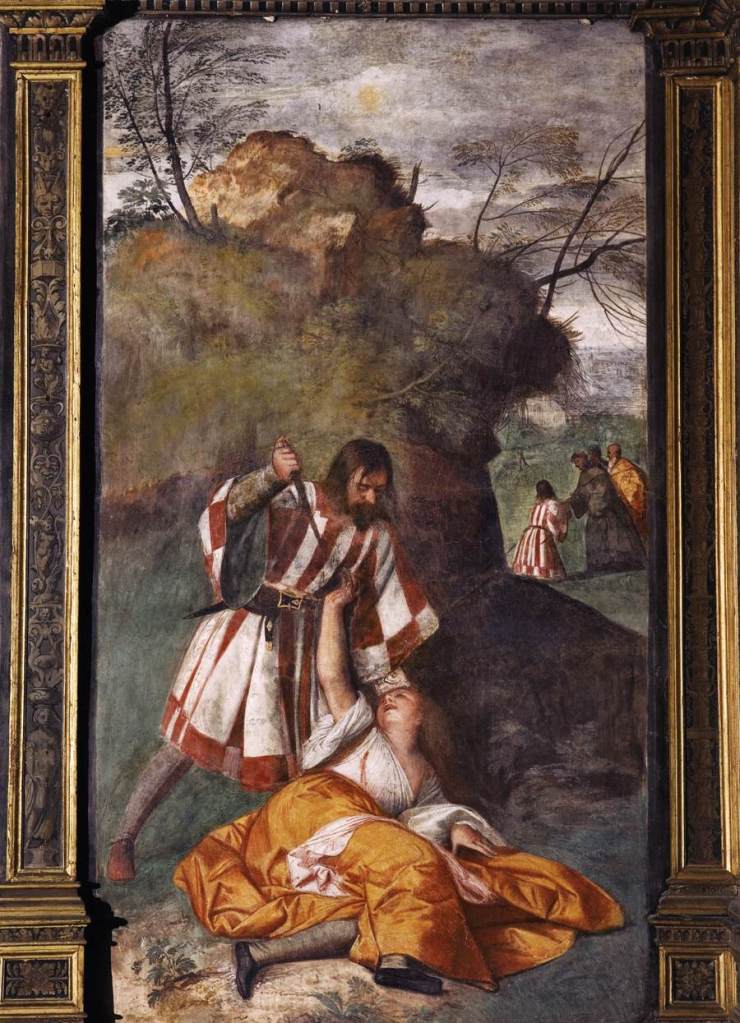
Miracolo del marito geloso, 1511, Padova, Scuola del Santo
| Man Ray | |
|---|---|
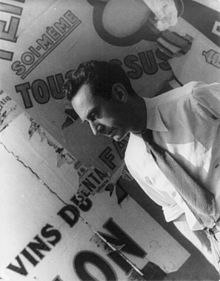 photographed at the Théâtre de la Gaîté-Montparnasse exhibition in Paris by Carl Van Vechten on June 16, 1934 photographed at the Théâtre de la Gaîté-Montparnasse exhibition in Paris by Carl Van Vechten on June 16, 1934 | |
Today is the birthday of Man Ray (born Emmanuel Radnitzky in Philadelphia, August 27, 1890 – November 18, 1976 Paris); visual artist who spent most of his career in France. He was a significant contributor to the Dada and Surrealist movements. He produced major works in a variety of media but considered himself a painter above all. Perhaps best known for his photography, he was a renowned fashion and portrait photographer. Man Ray is also noted for his work with photograms, which he called “rayographs” in reference to himself.
In 1913, Man Ray met his first wife, the Belgian poet Adon Lacroix (Donna Lecoeur) (1887–1975), in New York. They married in 1914, separated in 1919, and formally divorced in 1937.
In July 1921, Man Ray went to live and work in Paris, France. He soon settled in the Montparnasse quarter favored by many artists. Shortly after arriving in Paris, he met and fell in love with Kiki de Montparnasse (Alice Prin), an artists’ model and celebrated character in Paris bohemian circles. Kiki was Man Ray’s companion for most of the 1920s. She became the subject of some of his most famous photographic images and starred in his experimental films, Le Retour à la Raison and L’Étoile de mer. In 1929, he began a love affair with the Surrealist photographer Lee Miller.
Man Ray was forced to return from Paris to the United States due to the Second World War. He lived in Los Angeles, California from 1940 to 1951 where he focused his creative energy on painting. A few days after arriving in Los Angeles, Man Ray met Juliet Browner, a first-generation American of Romanian-Jewish lineage. She was a trained dancer, who studied dance with Martha Graham, and an experienced artists’ model. The two married in 1946 in a double wedding with their friends Max Ernst and Dorothea Tanning.
He died from a lung infection. He was interred in the Cimetière du Montparnasse in Paris. Ray’s epitaph reads “unconcerned, but not indifferent”. When Browner died in 1991, she was interred in the same tomb. Her epitaph reads “together again”.
Gallery
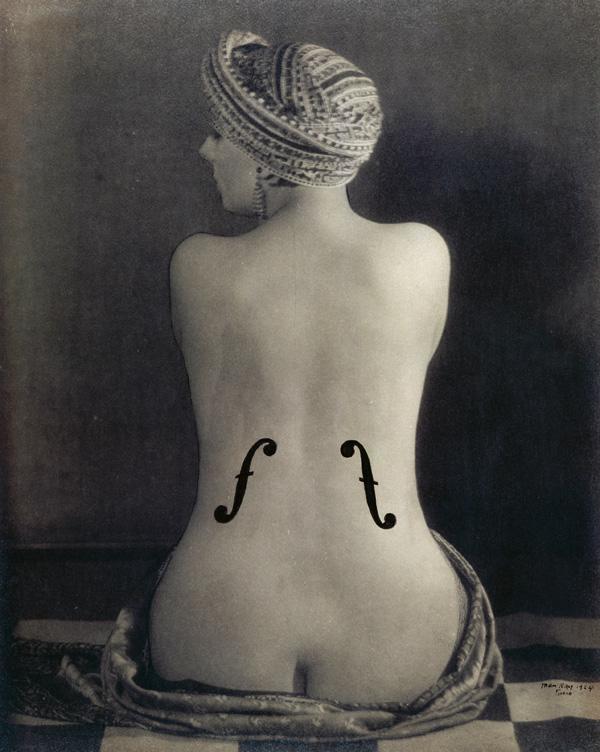
Le Violon d’Ingres, shows Kiki Montparnasse from the back, nude to below her waist, with two f-holes painted on to make her body resemble a violin.
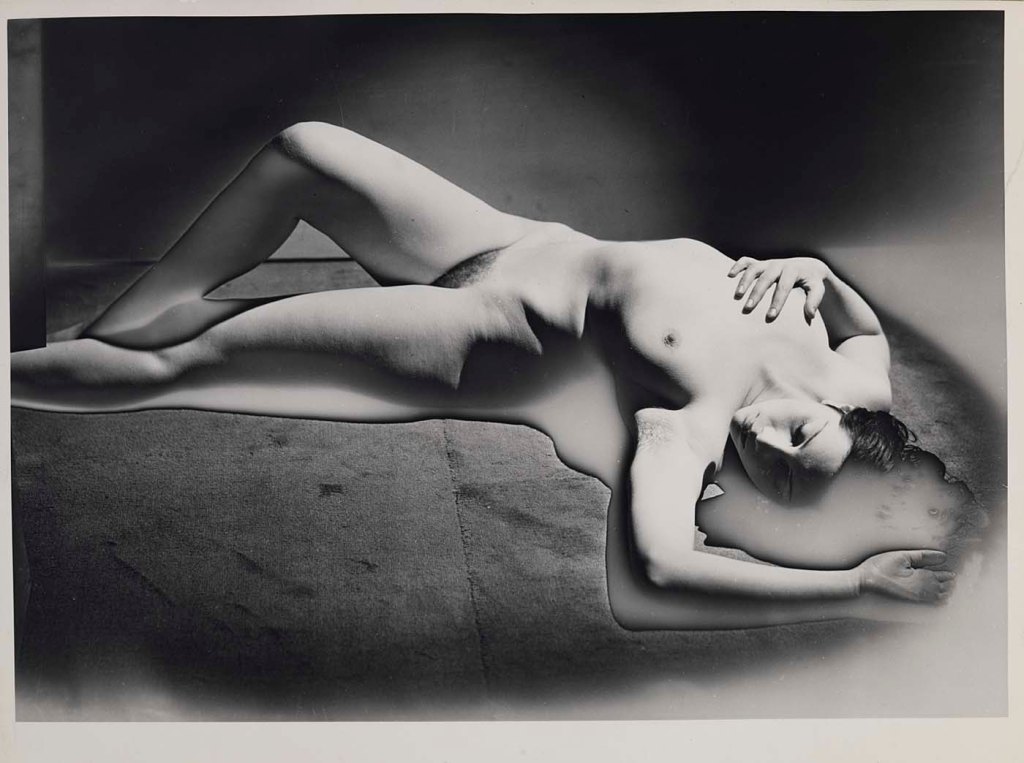
cabaret singer/actress/painter Alice Prin, the “Queen of Montparnasse”
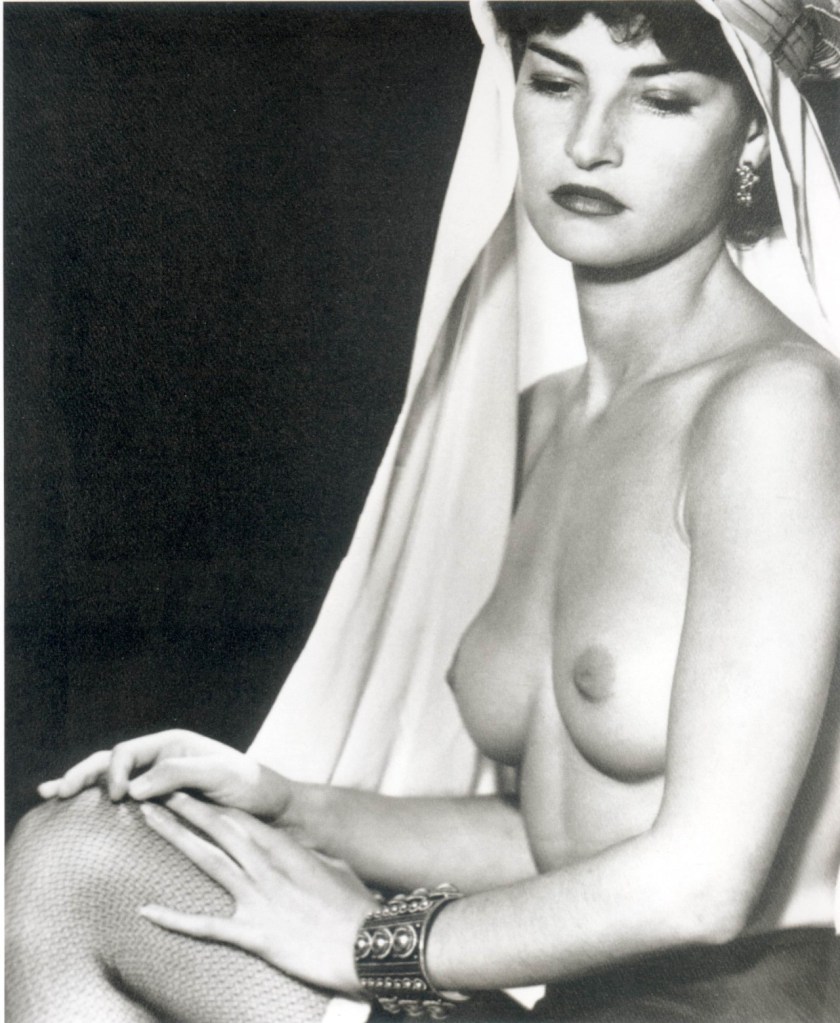
Juliet browner 1945-47
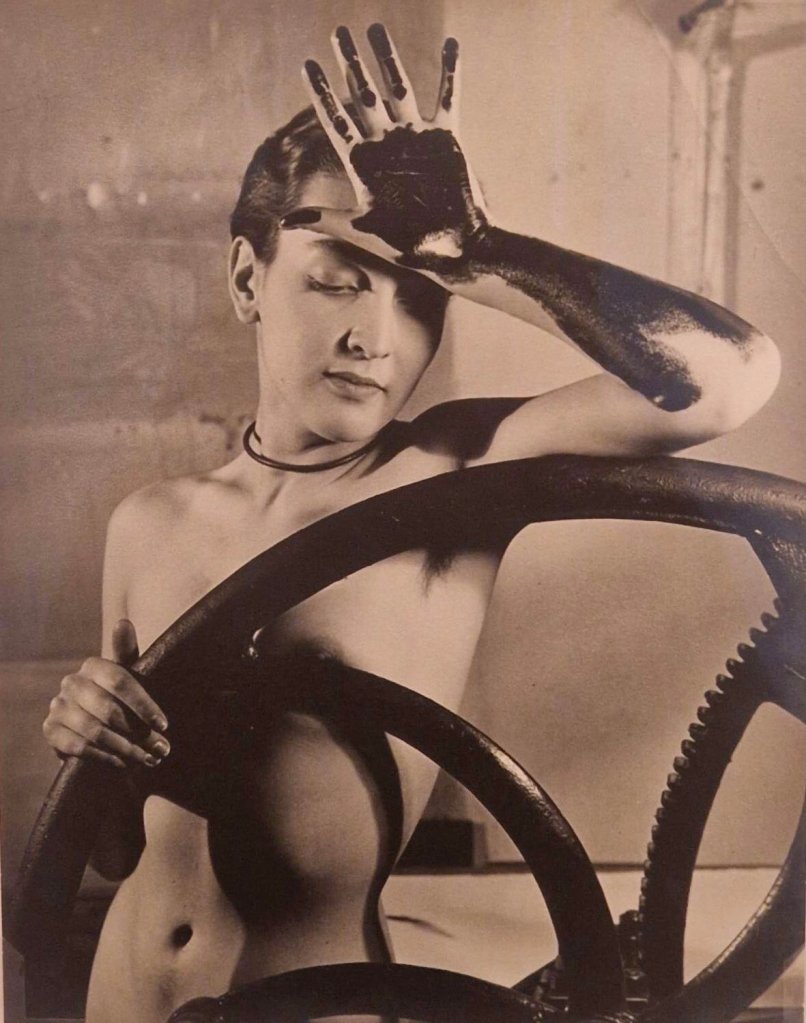
Erotique voilée (1933)
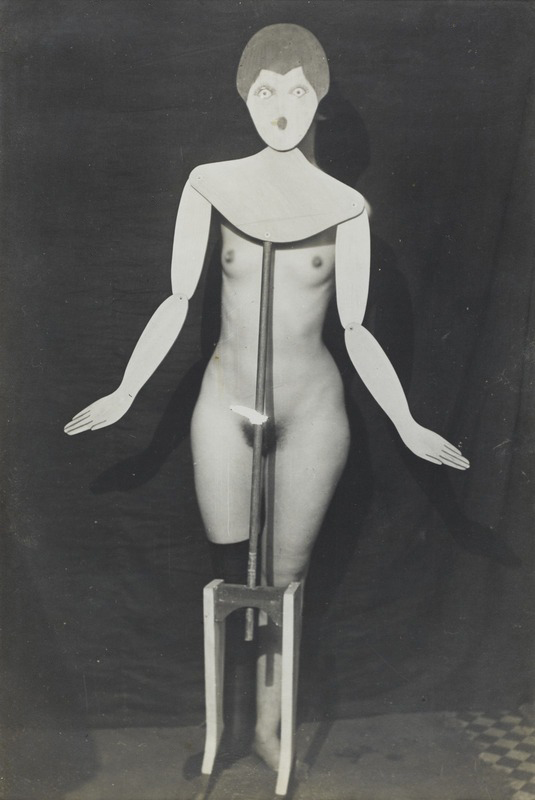
1920, The Coat-Stand (Porte manteau), reproduced in New York dada (magazine), Marcel Duchamp and Man Ray, April, 1921
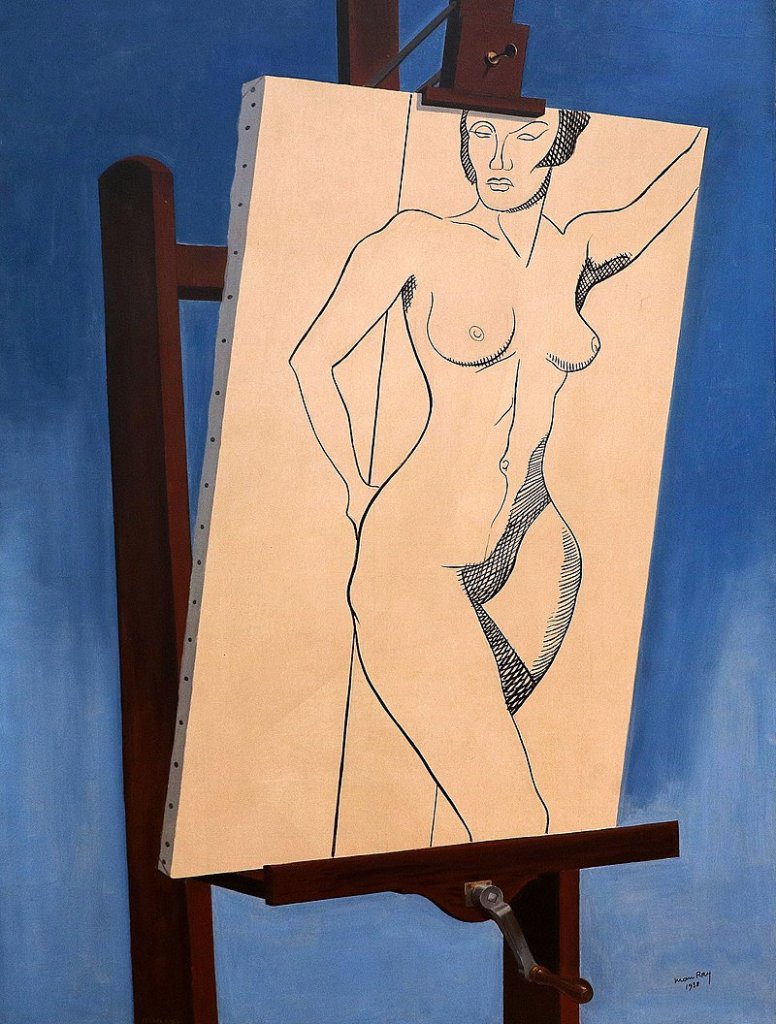
Peinture de chevalet (1938), Huile sur toile, Musée d’arts de Nantes
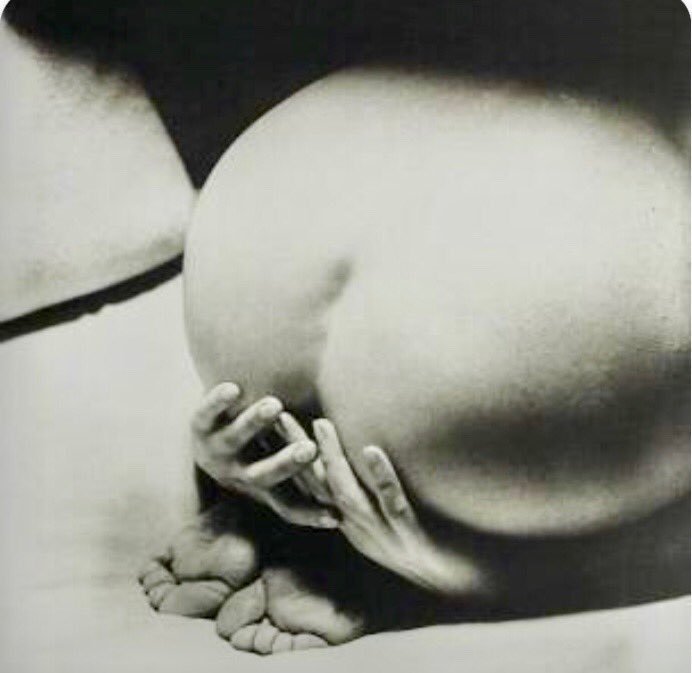
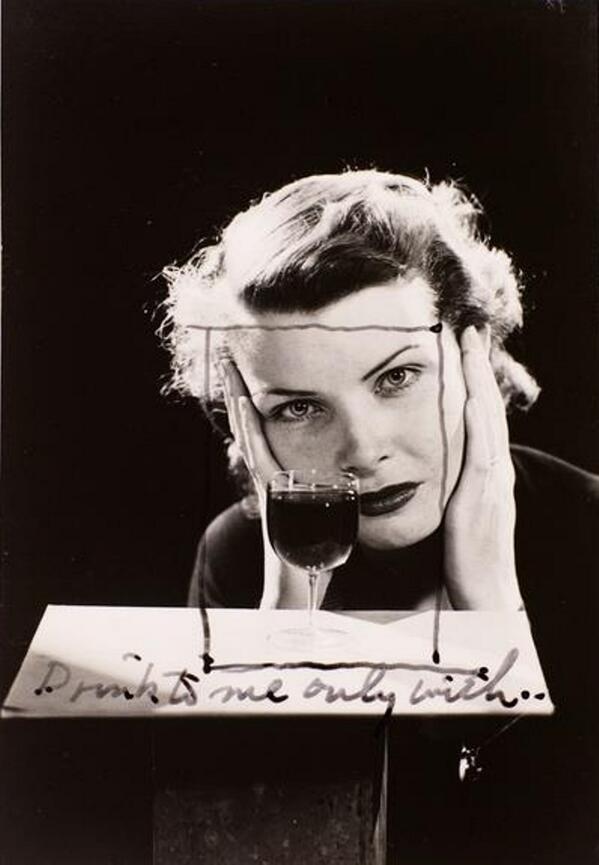
Drink to me only with…
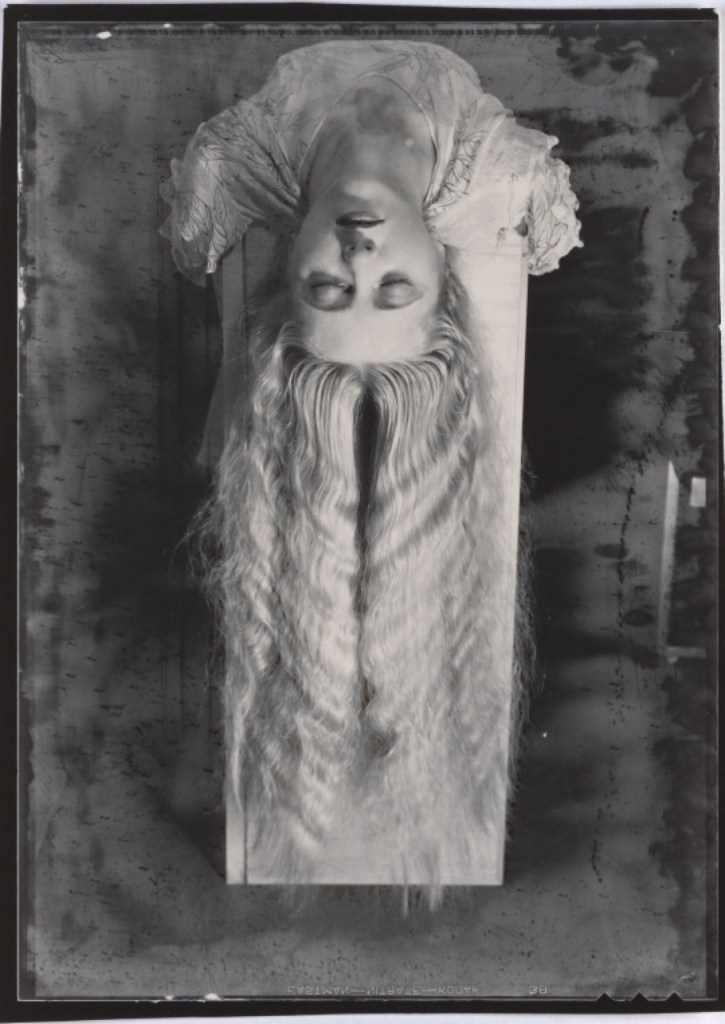
Long-haired woman, 1929
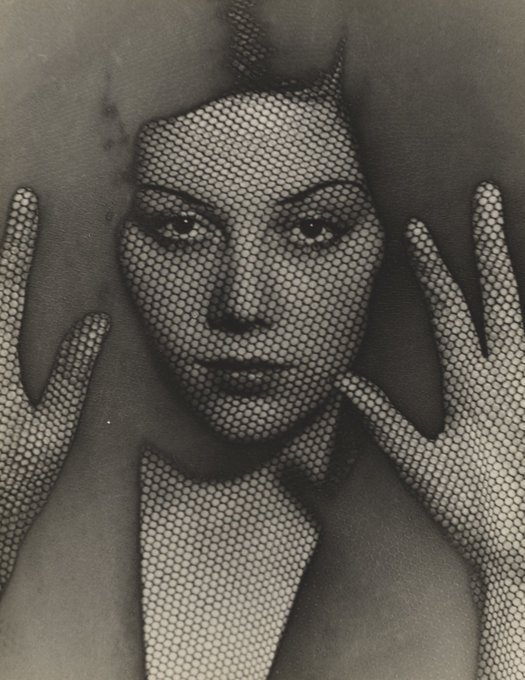
The Veil, c. 1930
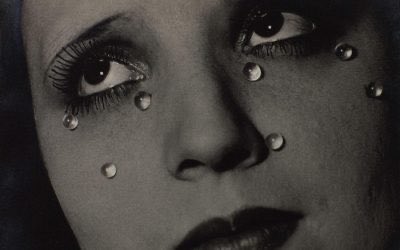
glass tears
 1920, Three Heads (Joseph Stella and Marcel Duchamp, painting bust portrait of Man Ray above Duchamp), gelatin silver print, 20.7 x 15.7 cm, Museum of Modern Art, New York
 With Salvador Dalí in Paris, on June 16, 1934 making “wild eyes” for photographer Carl Van Vechten
“There is no progress in art, any more than there is progress in making love. There are simply different ways of doing it.”
“It has never been my object to record my dreams, just the determination to realize them.”
― Man Ray
Fascinatin’ day today in romance history, dedicated to you.

On this day in 1930, one of America’s most eligible bachelors got married. Journalist H.L. Mencken, almost 50, had never before been married. He was a man who made fun of romance and who called marriage “the end of hope.” My friend Jett loves that quote, though he keeps gettin’ married, and Rhett believes it is so. So Mencken shocked America when he tied the knot on this day. The bride, his girlfriend of seven years: Sara Haardt, of Montgomery, Alabama, an English professor, suffragist, and fellow writer. She died of meningitis just five years after marryin’ Mencken. Mencken was grief-stricken and never remarried.

On this day in 1950, Italian poet, writer, Cesare Pavese died from an overdose perhaps due to the failure of a brief love affair with the actress Constance Dowling, to whom his last novel (La luna e i falò, The Moon and the Bonfires (1950)), was dedicated (“For C. The ripeness is all”.) And one of his last poems (“Death will come and she’ll have your eyes”) was dedicated to Dowling.
The Poem of the Day is from Pavese:
”Two”
Man and woman watch each other lying in bed:
their two bodies stretched out wide and exhausted.
the man is still, only the woman takes long breaths
that quiver her ribs. The legs distended
are bony and knotted in the man’s. The whispers
from the sun-covered street are foisted on them.
The air hangs impalpable in the heavy shadow
and freezes the drops of living sweat
on the lips. The gazes from the adjoining heads
are identical, but they no longer find each other’s bodies
as when they first embraced. They nearly touch.
The woman’s lips move a little, but do not speak.
The breathing that swells the ribs stops
at the longest gaze from the man. The woman
turns her face close to the man’s, lips to lips.
But the man’s gaze does not change in the shadow.
Heavy and still weigh the eyes within eyes
at the warmth of the breath that revives the sweat,
desolate. The woman does not move her body,
supple and alive. The lips of the man come close
but the still gaze does not change in the shadow.
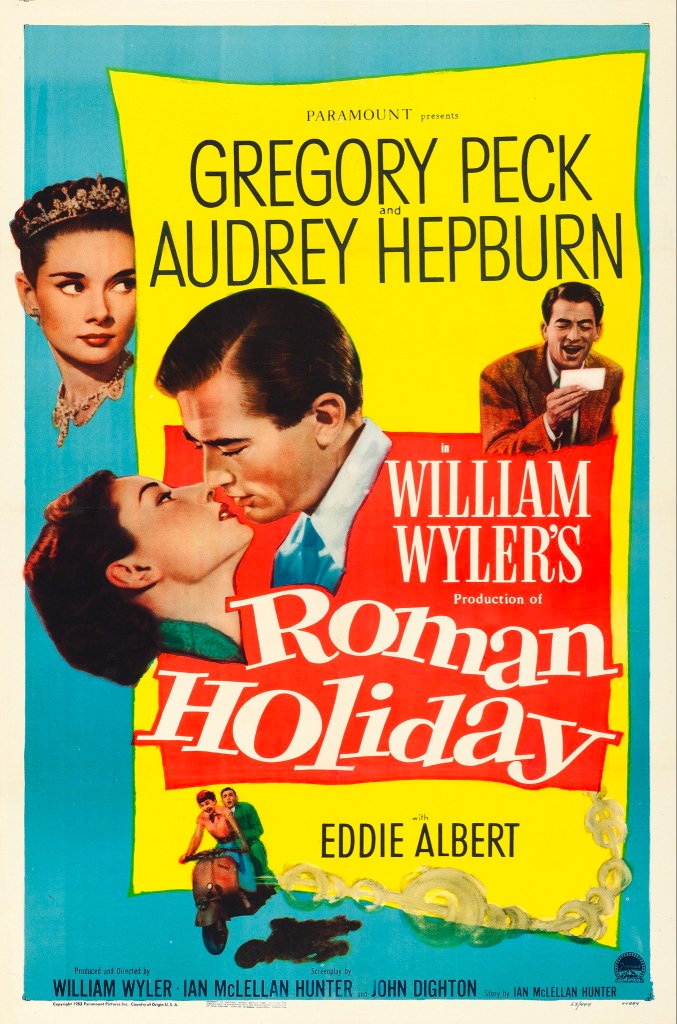
And on this day in 1953, William Wyler‘s film, Roman Holiday (1953) with Audrey Hepburn and Gregory Peck, premiered at Radio City Music Hall in New York City. It was Hepburn’s first starrin’ role and she would win an Oscar. A wonderful, romantic, sad movie.

The Song of the Day is The Antlers – “Two”
Mac Tag
thanks for stoppin’ by y’all
 The Lovers’ Chronicle
Leave a reply to The Lovers’ Chronicle 22 February – belief – art by Rembrandt Peale & Norman Lindsay – verse by Edna St. Vincent Millay – The Lovers’ Chronicle Cancel reply