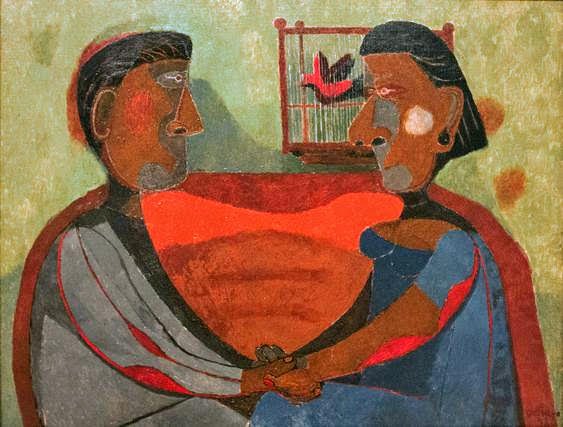
Dear Zazie Lee, Here is today’s Lovers’ Chronicle from Mac Tag to his muse. Rhett
The Lovers’ Chronicle
Dear Muse,
if it is to be a song
“Oh you thought of one”
“Come as you are, as you were
As I want you to be”
“Of course, great Nirvana song”
i like the message;
just get here
“However you are”
how convenient for us
that are, were and want
came into alignment
“Right, if you’re going
to want someone, they
have to be who they are and were”
no time left for pretenders
“No”
oh, there is one more to add
how ’bout, as you will be
“Come as we will be”
© copyright 2023 mac tag/cowboy coleridge all rights reserved
as you like, as you were meant to be, never any judgment here, how ’bout, as you would have it, very flexible here, the constant, you, for without, there would be no here, here; now, take a seat, get comfortable, i will fix drinks for us and then we will see where the story goes from here
© copyright 2022.2023 mac tag/cowboy coleridge all rights reserved
join me on this journey
decades in the makin’
it started with readin’
since i was a kid i have
always had a book to read
then i discovered music
and a fascination with lyrics began
movies and visual arts would come
later, but now i want to know if you
will come and take a seat next to me
© copyright 2021.2023 mac tag/cowboy coleridge all rights reserved
Pale Love, Pale Rider
if not for you…
come lay with me
listen to the rain
feel the thunder
so many miles in the rear view
to finally find myself, and a place
where my feelin’s have room to roam
often of mind,
as a pleasure
and as a part
sayin’ your name out loud
this place called you
© copyright 2020 mac tag/cowboy coleridge all rights reserved
yes do, sit next to me
what shall we write about
do i get to choose, ok good,
how ’bout somethin’ dark
when three o’clock knocks
when there is no pretendin’
no hidin’, no kiddin’ around
about what has and has not
been done, about the broken
trail left behind, whatcha
gonna do when three o’clock
comes callin’
© copyright 2019.2023 mac tag/cowboy coleridge all rights reserved
a song for those of us…
on the walkin’ bridge
over the Canadian
the sights and sounds
of the High Plains twilight
comin’ on
the river,
what is left of it,
runs on
the days go away
time past
cannot come again
everything moves on
i shall return often
remember i am waitin’
does hope die
along with the wind
© copyright 2018 mac tag/cowboy coleridge all rights reserved
thanks Karen
if not for muses,
this maddenin’, damned world
would not be worth fightin’ for
“There are the rare special ones
That make everything worth fighting for.
It makes me happy that your hope
Hasn’t lost the battle, Mac”
come lay with me
listen to the rain
feel the thunder
so many miles in the rear view
to find myself, to find a place
from whence i behold a vision
of verse piled upon verse for you
my feelin’s for you
are not like a star,
or a river
or a red, red rose
my feelin’s for you
are necessary
often of mind
as a pleasure
and as a part
sometimes,
sayin’ out loud
a name
a place called you
come to me
come to me is my request
© copyright 2017 mac tag/cowboy Coleridge all rights reserved
If only sustenance still drawn
If only not forsaken long ago
Risin’ in the tremendous darkness
In blue waters, flesh perfumed by the wave,
Showin’ rosy skin, awash in the warmth
And love made in rhythm and rhyme
© copyright 2015 mac tag/cowboy Coleridge all rights reserved
| Guillaume Apollinaire | |
|---|---|
 Photograph in spring 1916 after his shrapnel wound to the temple Photograph in spring 1916 after his shrapnel wound to the temple | |
Today is the birthday of Guillaume Apollinaire (born Wilhelm Albert Włodzimierz Apolinary Kostrowicki in Rome; 26 August 1880 – 9 November 1918 Paris); poet, playwright, short story writer, novelist, and art critic of Polish descent.
Perhaps one of the foremost poets of the early 20th century, as well as one of the most impassioned defenders of Cubism and a forefather of Surrealism. He is credited with coining the first term in 1911 for the new art movement, and of coining the latter in 1917 to describe the works of Erik Satie. Apollinaire wrote one of the earliest works described as Surrealist, the play The Breasts of Tiresias (1917), which was used as the basis for the 1947 opera Les mamelles de Tiresias.
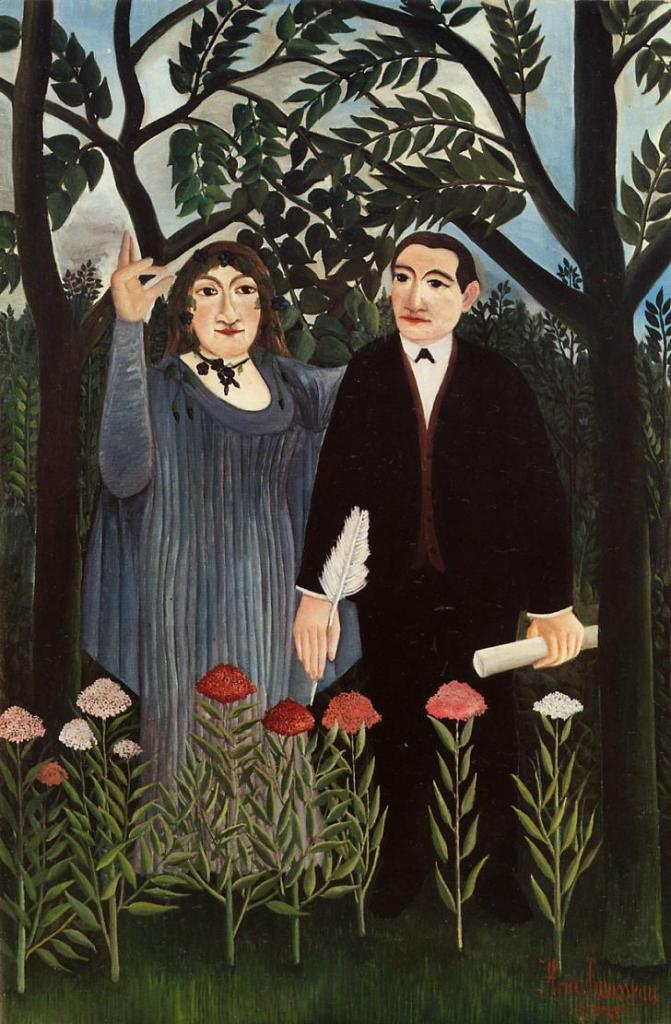
Muse Inspiring the Poet. Portrait of Apollinaire and Marie Laurencin, by Henri Rousseau, 1909
Apollinaire became romantically involved with the French painter, Marie Laurencin who has often been identified as his muse.
Two years after being wounded in World War I, he died in the Spanish flu pandemic of 1918 at age 38. He was interred in the Père Lachaise Cemetery, Paris.
Verse
Sous le pont Mirabeau coule la Seine
Et nos amours
Faut-il qu’il m’en souvienne
La joie venait toujours après la peine
Vienne la nuit sonne l’heure
Les jours s’en vont je demeure
- “Le Pont Mirabeau” line 1
L’amour s’en va comme cette eau courante
L’amour s’en va
Comme la vie est lente
Et comme l’Espérance est violente
- “Le Pont Mirabeau” line 13
Passent les jours et passent les semaines
Ni temps passé
Ni les amours reviennent
- Nor days nor any time detain.
Time past or any love
Cannot come again. - “Le Pont Mirabeau” line 19
Mon beau navire ô ma mémoire
Avons-nous assez navigué
Dans une onde mauvaise à boire
Avons-nous assez divagué
De la belle aube au triste soir
- “La Chanson du Mal-Aimé” line 51
Avec la femme qui s’éloigne
Avec celle que j’ai perdue
L’année dernière en Allemagne
Et que je ne reverrai plus
Voie lactée ô sœur lumineuse
Des blancs ruisseaux de Chanaan
Et des corps blancs des amoureuses
Nageurs morts suivrons-nous d’ahan
Ton cours vers d’autres nébuleuses
- “La Chanson du Mal-Aimé” line 56
Moi qui sais des lais pour les reines
Les complaintes de mes années
Des hymnes d’esclave aux murènes
La romance du mal-aimé
Et des chansons pour les sirens.
- “La Chanson du Mal-Aimé” line 91
Et ma vie pour tes yeux lentement s’empoisonne
- And for your eyes my life takes poison slowly.
- “Les colchiques” (The Saffrons), line 7
Je passais au bord de la Seine
Un livre ancien sous le bras
Le fleuve est pareil à ma peine
Il s’écoule et ne tarit pas
Quand donc finira la semaine
- “Marie”, line 21;
J’ai cueilli ce brin de bruyère
L’automne est morte souviens-t’en
Nous ne nous verrons plus sur terre
Odeur du temps brin de bruyère
Et souviens-toi que je t’attends
- “L’Adieu” line 1
Passons passons puisque tout passe
Je me retournerai souvent
Les souvenirs sont cors de chasse
Dont meurt le bruit parmi le vent
- “Cors de chasse” (Hunting Horns), line 9;
Calligrammes (1918)
Me voici devant tous un homme plein de sens
Connaissant la vie et de la mort ce qu’un vivant peut connaître
Ayant éprouvé les douleurs et les joies de l’amour
Ayant su quelquefois imposer ses idées
Connaissant plusieurs langages
Ayant pas mal voyagé
Ayant vu la guerre dans l’Artillerie et l’lnfanterie
Blessé à la tête trépané sous le chloroforme
Ayant perdu ses meilleurs amis dans l’effroyable lutte
Je sais d’ancien et de nouveau autant qu’un homme seul pourrait des deux savoir
- “La jolie rousse” (The Pretty Redhead), line 1; p. 133.
La beauté n’est la plupart du temps que la simplicité.
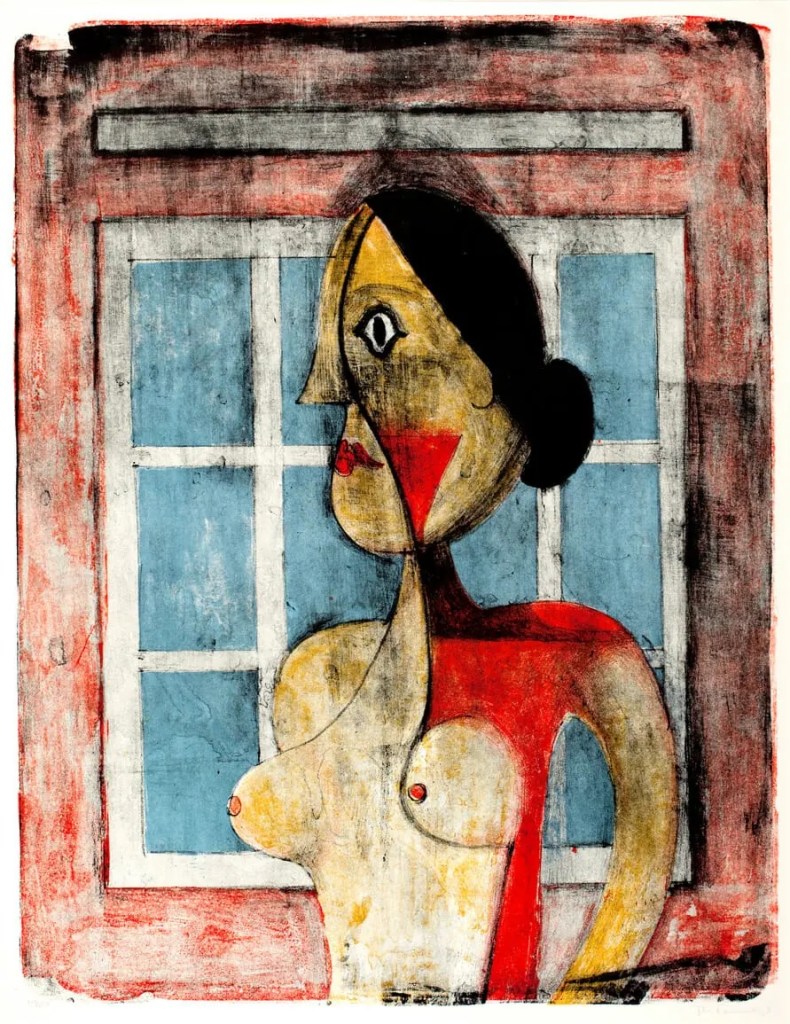
And today is the birthday of Rufino Tamayo (Rufino del Carmen Arellanes Tamayo; August 25, 1899 Oaxaca de Juárez, Mexico – June 24, 1991 Mexico City); painter of Zapotec heritage. Tamayo was active in the mid-20th century in Mexico and New York, painting figurative abstraction with surrealist influences.
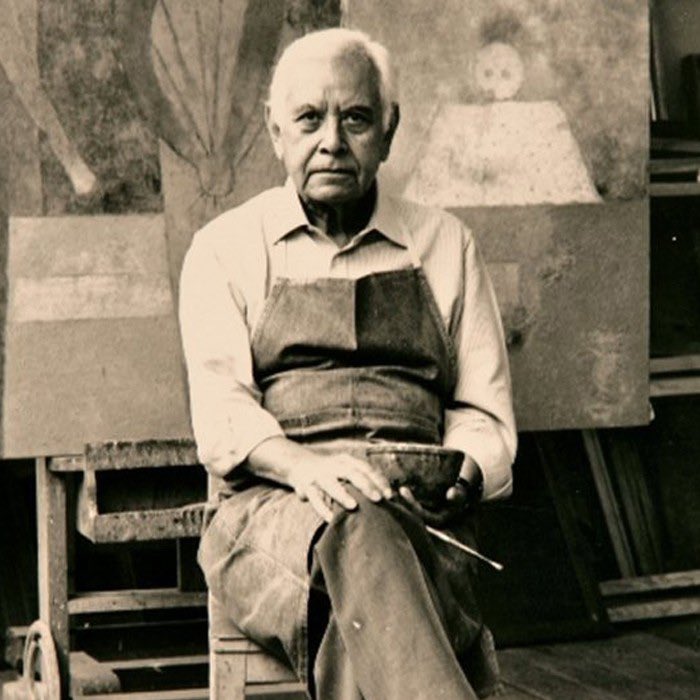
Tamayo enjoyed portraying women in his paintings. His early works included many nudes, a subject which eventually disappeared in his later career. However, he often painted his wife Olga, showing her struggles through color choices and facial expressions. The shared difficulties of painter and wife can be seen in the portrait Rufino and Olga, circa 1934, where the couple appears broken by life’s obstacles.
Tamayo also painted murals, some of which are displayed inside Palacio Nacional de Bellas Artes opera house in Mexico City, such as Nacimiento de la nacionalidad (Birth of the Nationality, 1952).
From 1937 to 1949, Tamayo and his wife Olga lived in New York where he painted some of his most memorable works. He had his first show in New York City at the Valentine Gallery. He gained credibility thereby and proceeded to exhibit works at the Knoedler Gallery and Marlborough Gallery.
Gallery
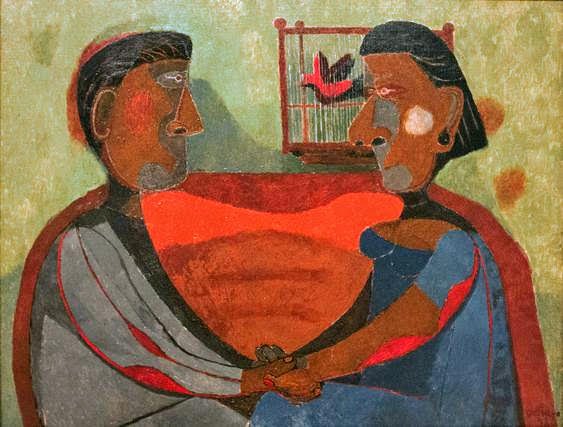
Los amantes
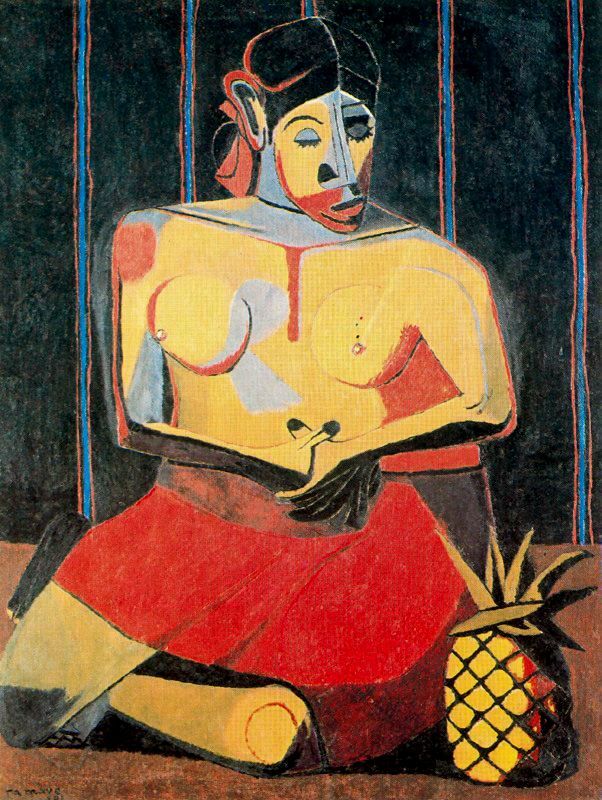
Woman with Pineapple
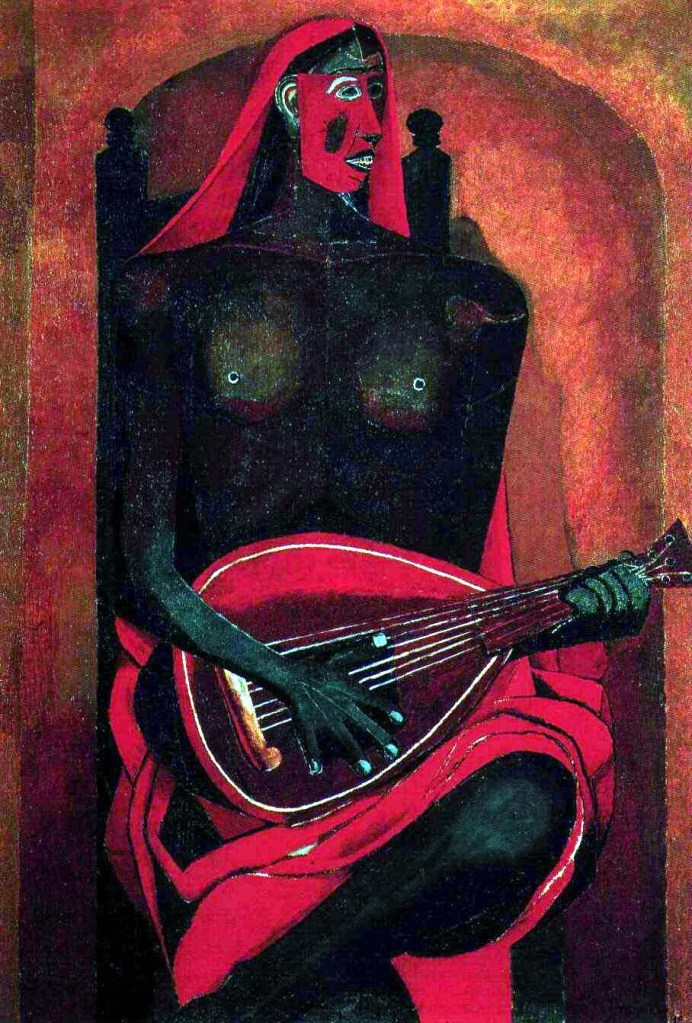
The Woman with Red Mask
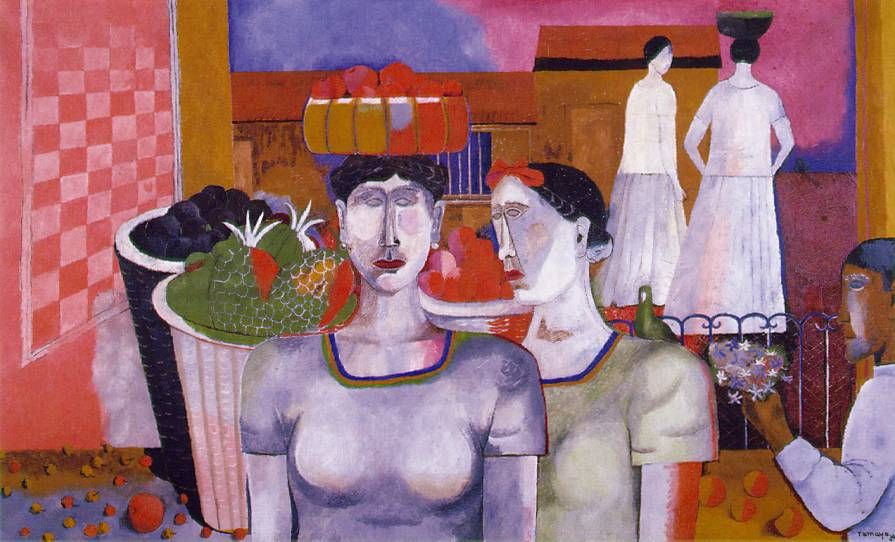
Women of Tehuantepec, 1939
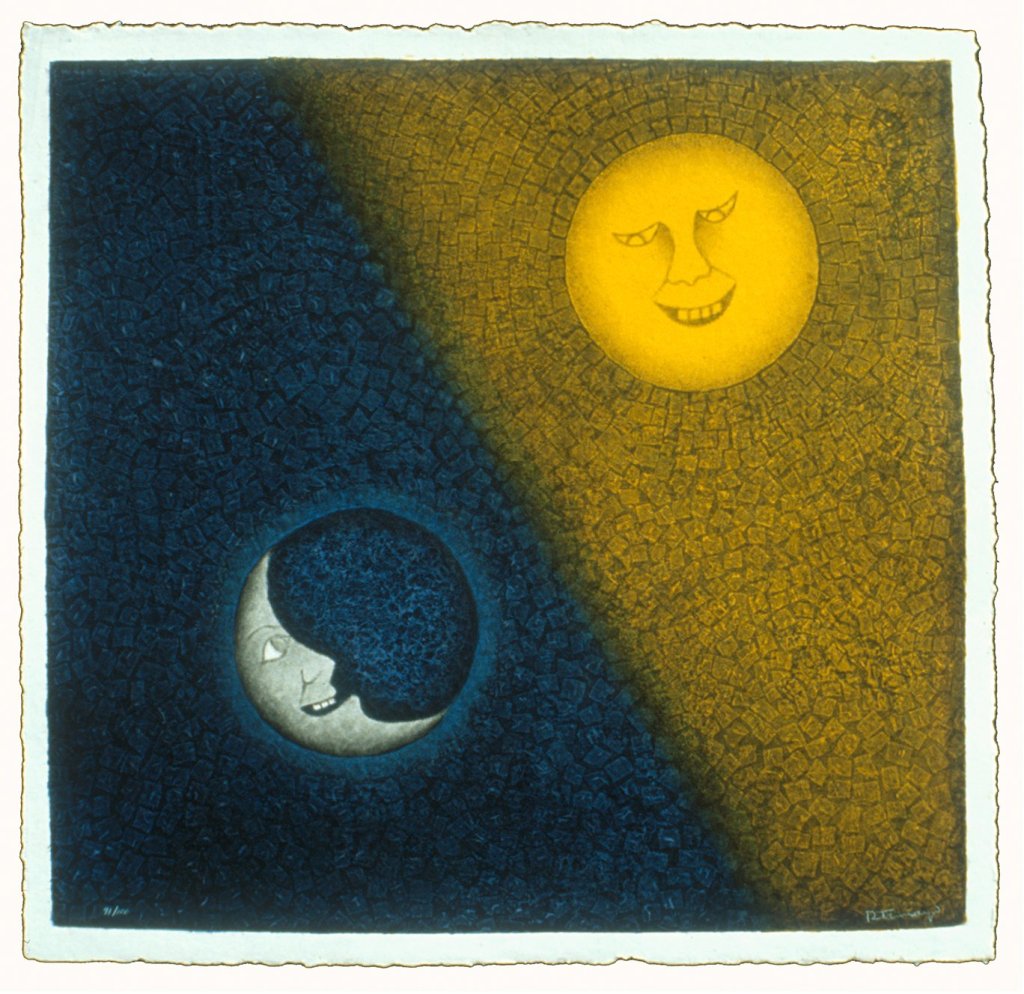
Luna y Sol, 1990
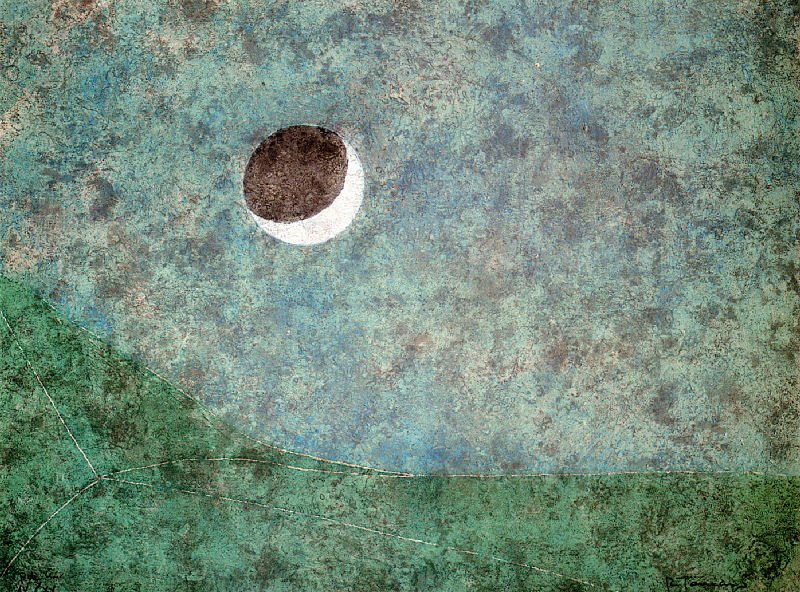
Eclipse 1980
Mac Tag
thanks for stoppin’ by y’all
 The Lovers’ Chronicle
Leave a reply to The Lovers’ Chronicle 31 October – without – birth of John Keats & Natalie Barney – art by Marie Laurencin – photographs by Helmut Newton – The Lovers’ Chronicle Cancel reply