
Dear Zazie, Here is today’s Lovers’ Chronicle from Mac Tag to his muse. Follow us on twitter @cowboycoleridge. Are you sittin’ alone? Rhett
The Lovers’ Chronicle
Dear Muse,
pre-you, all of the verse
could have been called,
ode to solitude
“From your room for one
with a view”
yes, and good thing we did not
meet before, i had no capacity
for maintainin’ any permanence
i thought relationships
were best measured in days
“No need to measure ours”
only in terms of quality
from our room for two with a view
© copyright 2023 mac tag/cowboy coleridge all rights reserved
suppose it matters where it comes from; against or with your will, mine self imposed and necessary, not bein’ fit for any kind of relationship, i needed to begin the process of figurin’ out my place and whether that included a room for two with a view; and it does, so i laid to rest my solo ways for life played as part of a duet
© copyright 2022.2023 mac tag/cowboy coleridge all rights reserved
no longer, since you
not a bad place to be
but life was passin’ by
not entirely sure
what i created
was worth sharin’
the sincerity,
the vulnerability
as real as possible
no question, it is better
havin’ someone to share with
and we can leave solitude be
and see where the verse leads
© copyright 2021.2023 mac tag/cowboy coleridge all rights reserved
Pale Love, Pale Rider
at my desk writin’
these summer nights
wanderin’ midst the vision
sadness left behind
and the numbness
that ruled many years
“And what about
tomorrow?”
somethin’
to look forward to
now with you in it
and the anticipation
of where the verse will go
comin’ from you
© copyright 2020 mac tag/cowboy coleridge all rights reserved
pretty sure
this is meant to be
i do keep tryin’
though it might
be a sign of insanity;
doin’ the same thing
over and over
expectin’ different results
at least the food is good,
and the cocktails
i am no monk
why not indulge
in the pleasures
of the flesh
then return to you
the one true

© copyright 2019.2024 mac tag/cowboy coleridge all rights reserved
solitude in the library
these summer nights
wanderin’ midst the vision
sadness within, sure
but it beats the numbness
that ruled for so many years
“And what about
tomorrow?”
the morn
will take care of itself
“And love?”
well, of course,
of all women
and everything fine
***
Karen: ‘’Describe life in two words
I’ll start - Everything changes’’
live it
K: ‘’I love your answer’’
made my day that we both had posts
about change unbeknownst to each other
K: ‘’We are synched :)’’
© copyright 2018 mac tag/cowboy coleridge all rights reserved
routines, raht
fix supper, drink wine
polish boots, starch
and iron shirt and jeans
watch movies, write
let the dreams loose
these nights, not many
variations thereof
by the fireplace
or on the porch
maybe sketchin’
instead of writin’
let the cafard loose
of course,
there is this constant
the echoes of regret
runnin’ through my head
rememberin’ what you said
© copyright 2017 mac tag/cowboy Coleridge all rights reserved
Really good at fallin’
Not worth a damn at stayin’
Forever!?
You must be kiddin’
For awhile works for me
© copyright 2016 mac tag/cowboy Coleridge all rights reserved
Had it all. Hell,
had everything
But then just threw
it all away
I could not have
thrown it away
any faster
had I tried and
perhaps I was
Some are at peace
Some are not. Some
are free from pain
Some are not. To
come to them, brings
me peace. It
makes me fear not
Wayward poet, cowboy philosopher
Pierced with vision and verse, unforgiven
That hum, reverberates, too late to flee
© copyright 2015 mac tag/cowboy Coleridge all rights reserved
| Claude Joseph Vernet | |
|---|---|
 | |
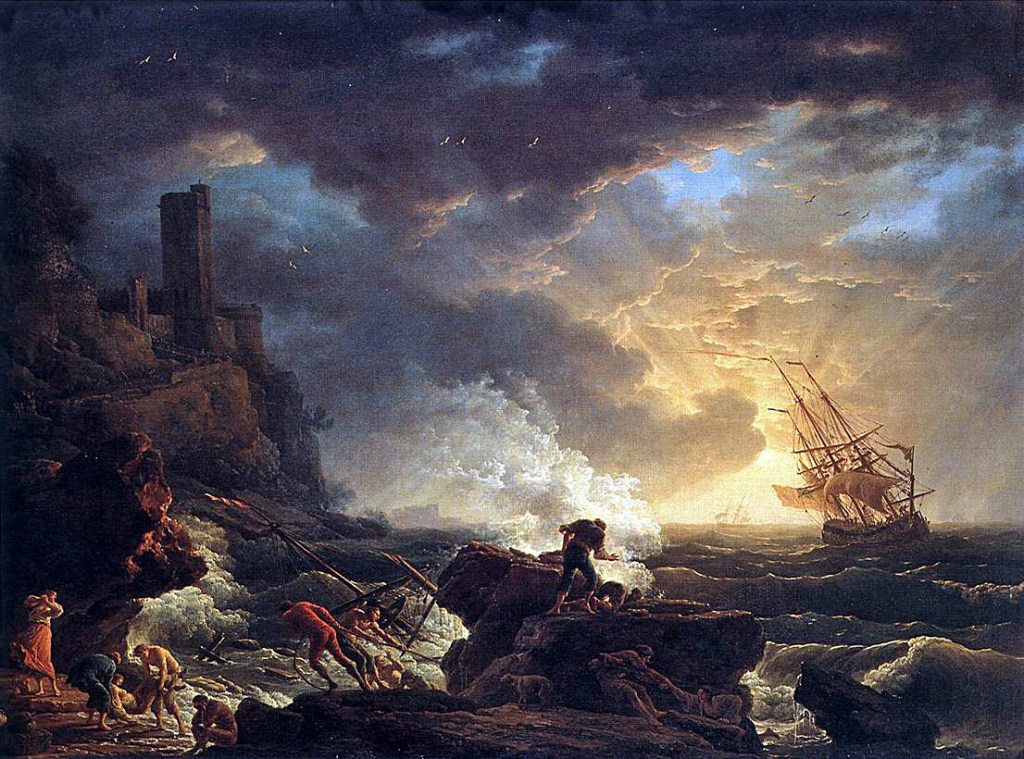
Today is the birthday of Claude-Joseph Vernet (Avignon, France 14 August 1714 – 3 December 1789 Paris); painter. His son, Antoine Charles Horace Vernet, was also a painter (see below).
For twenty years Vernet lived in Rome, producing views of seaports, storms, calms, moonlights, and large whales, becoming especially popular with English aristocrats, many of whom were on the Grand Tour. In 1745, he married an Englishwoman whom he met in the city. In 1753, he was recalled to Paris: there, by royal command, he painted the series of the seaports of France (now in the Louvre and the Musée national de la Marine) by which he is best known for.
Gallery
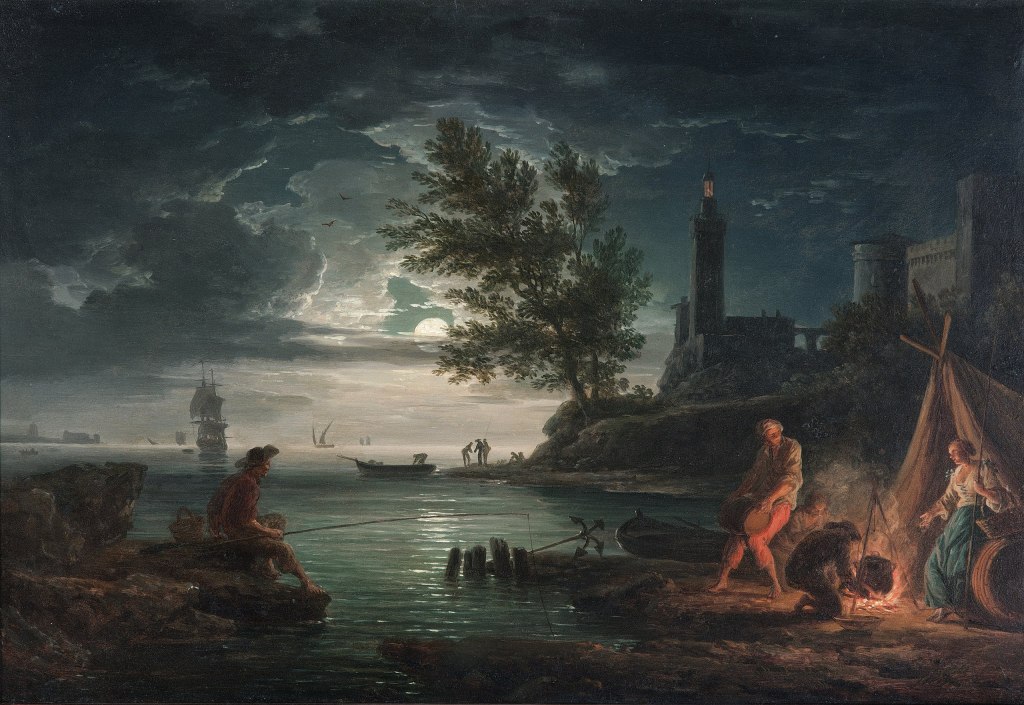
the night

La Nuit, Ashmolean Museum, Oxford

Nuit – Scène de côte méditerranéenne avec des pêcheurs et des bateaux, (1753), musée Thyssen-Bornemisza

Seaport by Moonlight
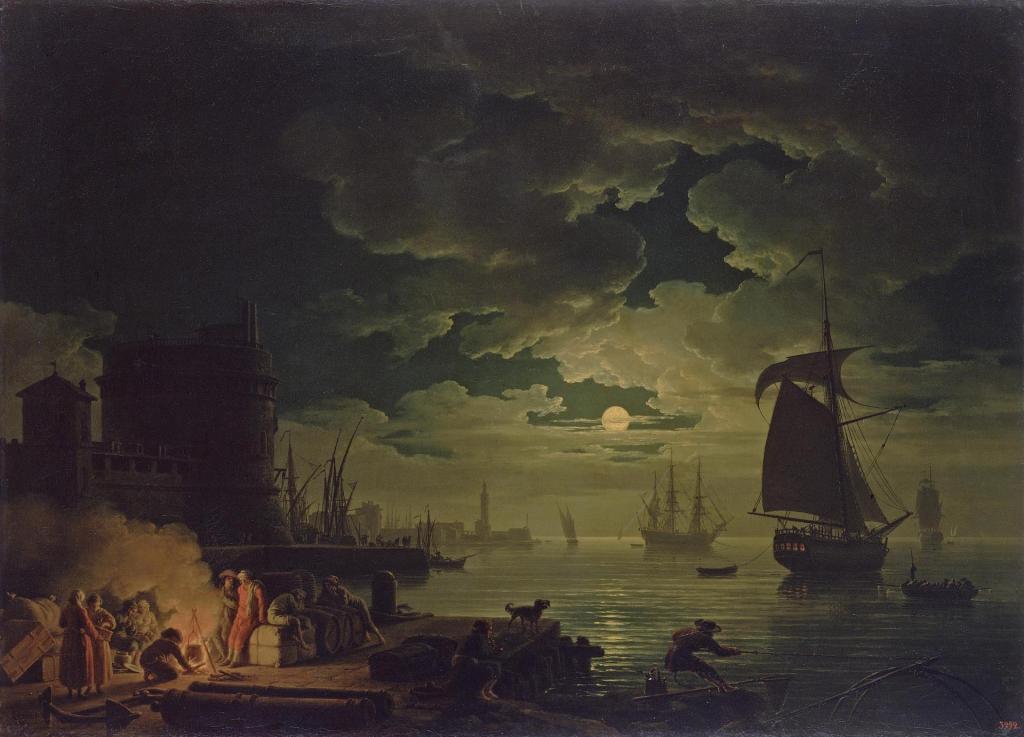
Entrée du port de Palerme au clair de lune (1769), musée de l’Ermitage, Saint-Pétersbourg
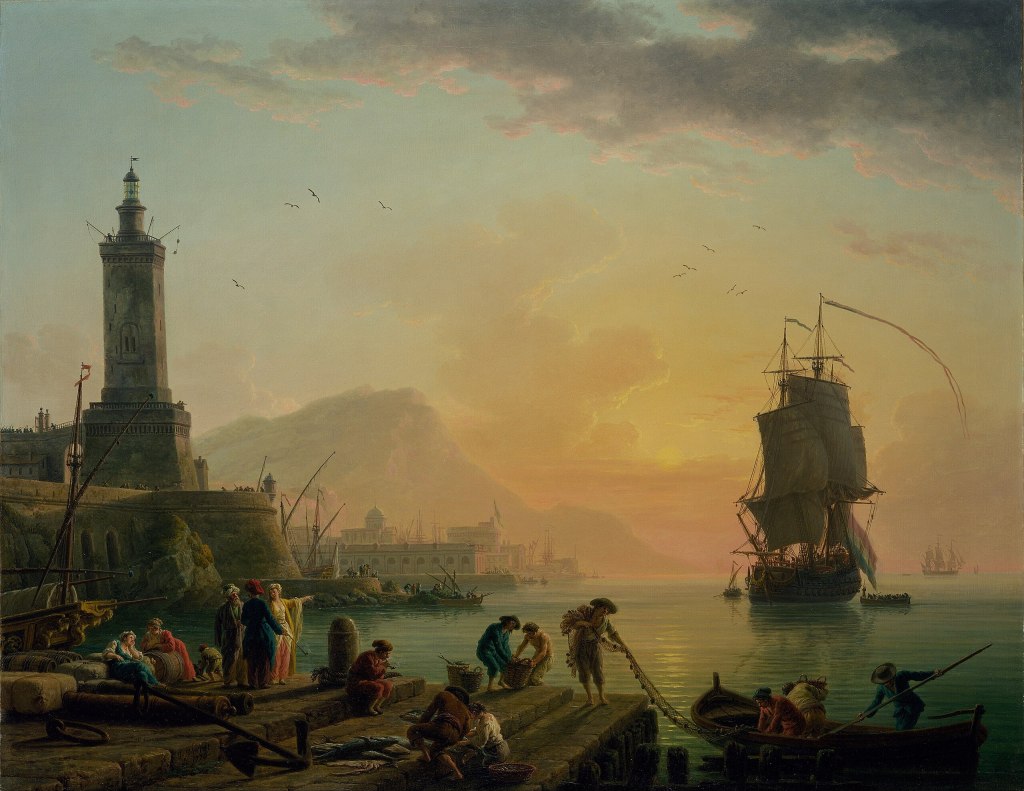
A Calm at a Mediterranean Port (1770-80s)
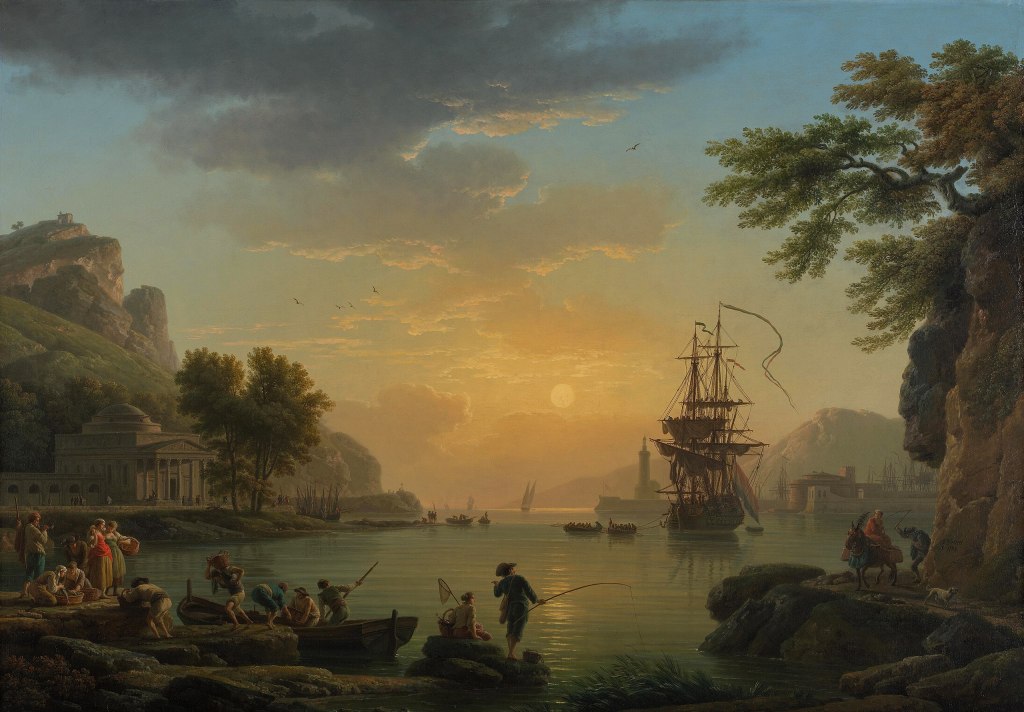
A Landscape at Sunset with Fishermen returning with their Catch (Calme) (1773), National Gallery, London

Marine, soleil couchant (1772), musée du Louvre
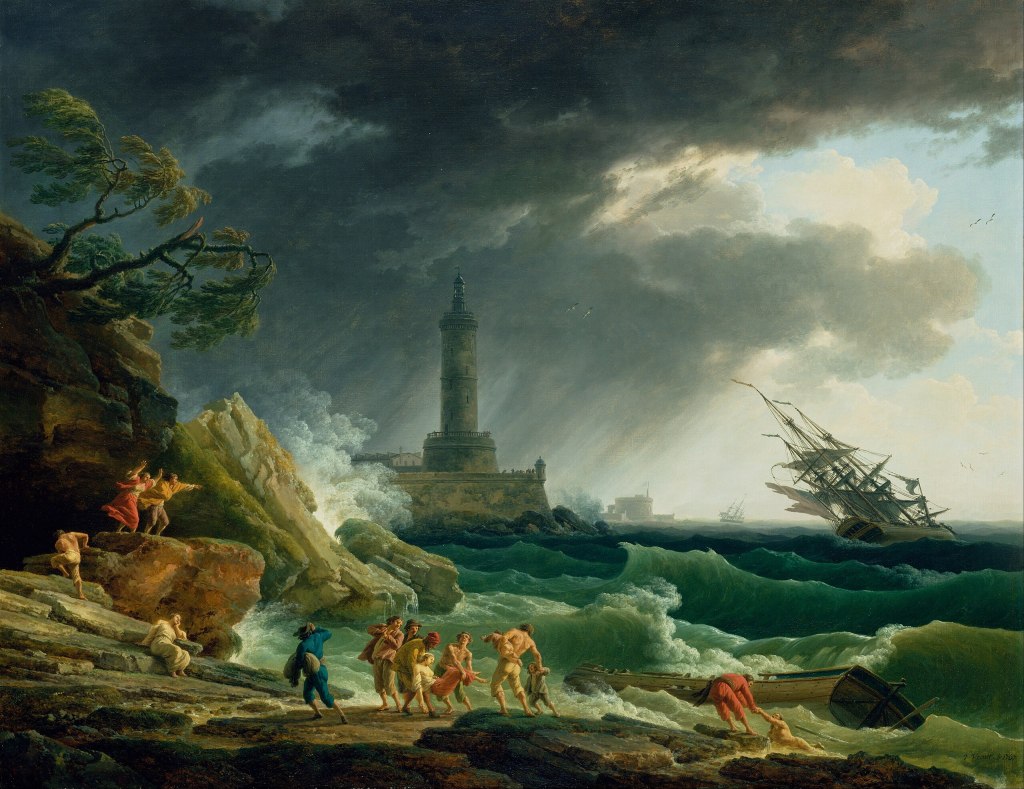
A Storm on a Mediterranean Coast

Shipwreck in Stormy Seas (Tempête) (1773), National Gallery, London
Today is the birthday of painter Carle Vernet (Antoine Charles Horace Vernet; Bordeaux 14 August 1758 – 17 November 1836 Paris); the youngest child of Claude Joseph Vernet (see above), and the father of Horace Vernet.

portrait by Robert Lefevre
At the age of five, he showed an passion for drawing horses, but went through the regular academical course as a pupil of his father and of Nicolas-Bernard Lépicié. Strangely, after winning the grand prix (1782), he seemed to lose interest in the profession, and his father had to recall him back from Rome to France to prevent him from entering a monastery.
In his Triumph of Aemilius Paulus, he broke with tradition and drew the horse with the forms he had learnt from nature in stables and riding-schools. His hunting-pieces, races, landscapes, and work as a lithographer were also very popular.
Carle’s sister was executed by the guillotine during the Revolution. After this, he gave up art.
In addition to being a painter and lithographer, Vernet was an avid horseman. Just days before his death at the age of seventy-eight, he was seen racing as if he were a sprightly young man.
Gallery
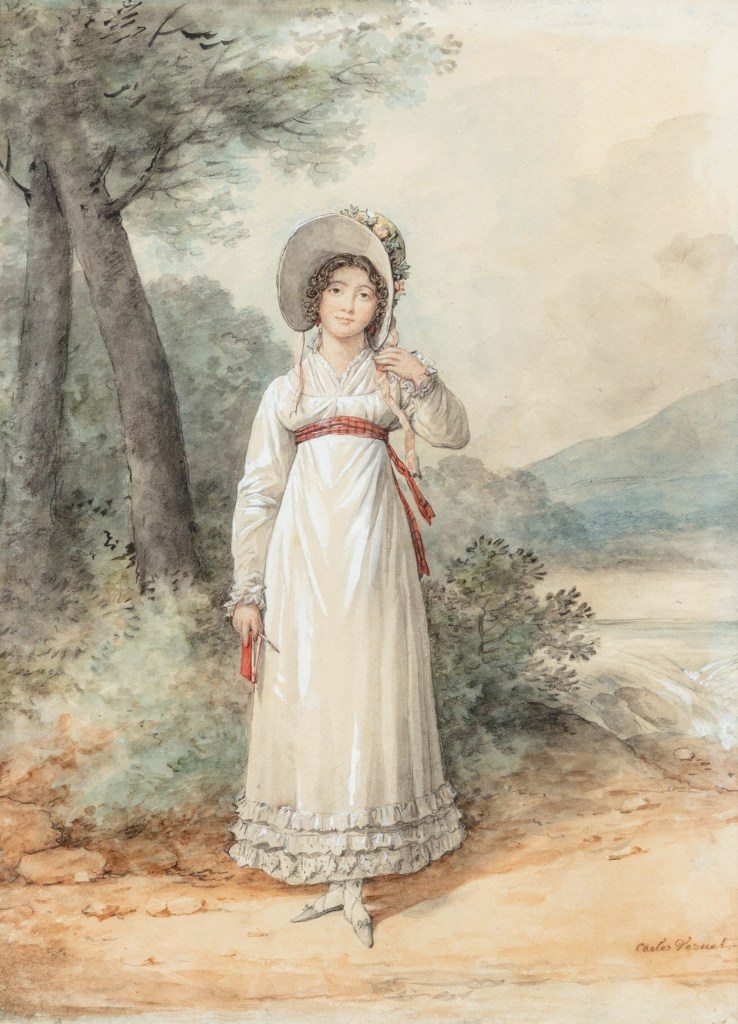
Madame Horace Vernet, born Louise-Jeanne-Henriette Pujol (1789-1858), drawn outdoors, daughter-in-law of the artist
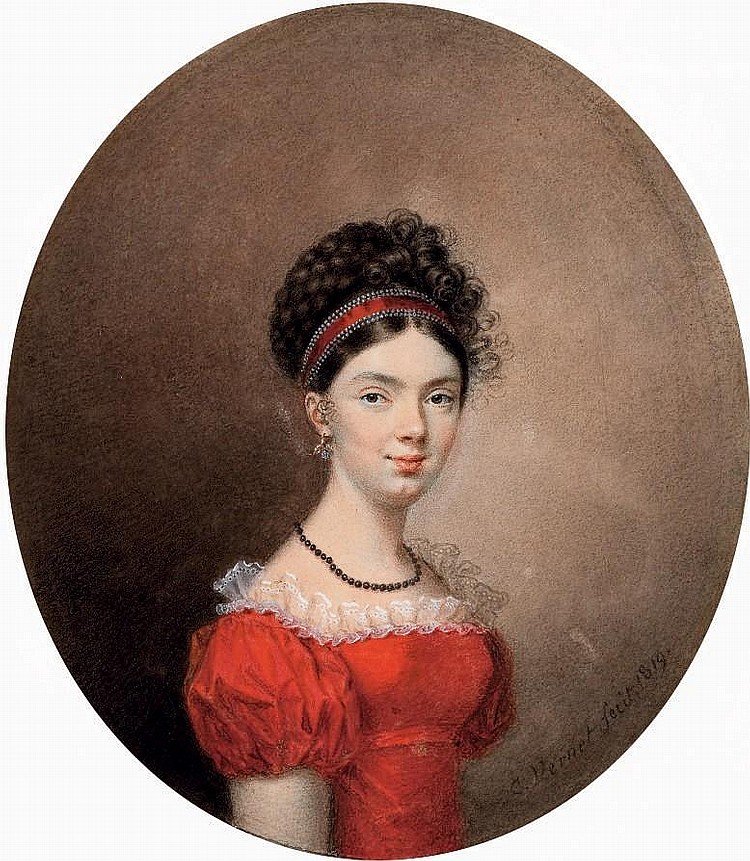
Maria Ivanovna de Traversay

Musée Calvet Vernet Carle Chevaux & orage 1800

Cheval mamelouk, huile sur toile
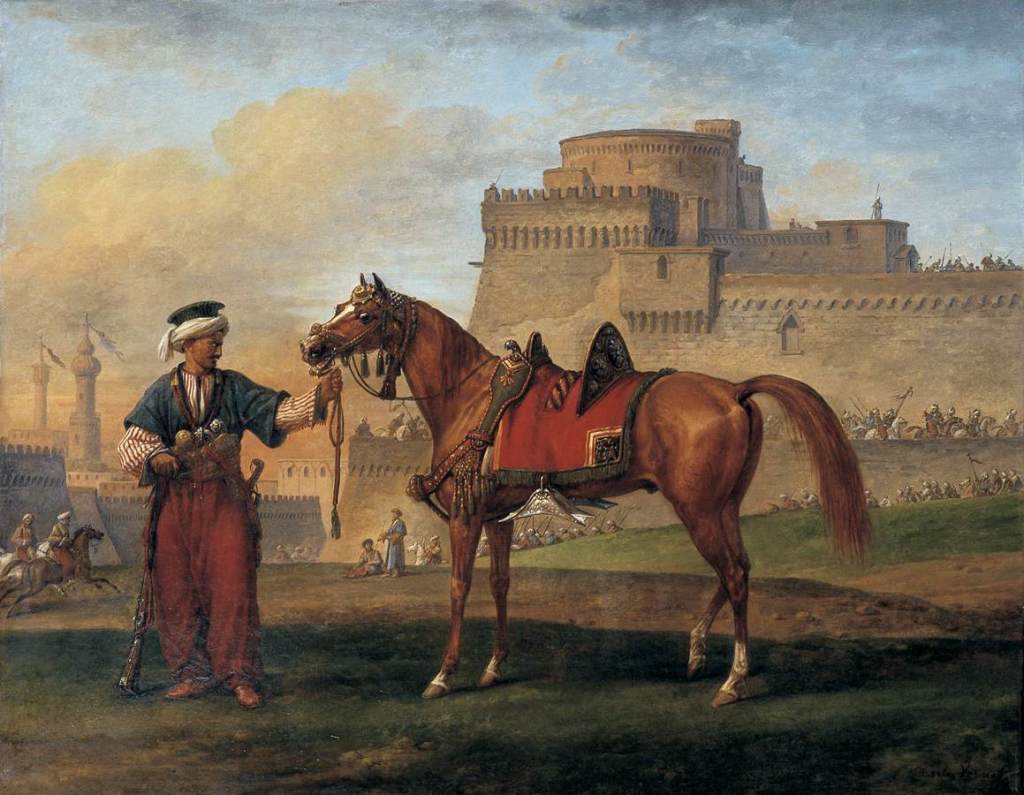
A Mameluke Leading His Horse

Today is the birthday of poet and novelist Letitia Elizabeth Landon, better known as L. E. L., born in 1802 in Chelsea, London. Love was not kind to LEL. In October 1836, Landon met George Maclean, governor of the Gold Coast (now Ghana), at a dinner party, and the two began a relationship. Maclean, however, moved to Scotland early the following year, to the surprise and distress of Landon. After much proddin’, Maclean returned to England and he and Landon were married shortly thereafter, on 7 June 1838. In early July, the couple sailed for Cape Coast, where they arrived on 16 August. Maclean was hot-tempered, and Landon’s married life was unhappy. Two months later, she was found dead, clutchin’ an empty bottle of hydrogen cyanide in her hand. There was a hasty inquest and she was buried the same day. Elizabeth Barrett Browning and Christina Rossetti both wrote elegies to Landon, but her work became unfashionable after her death. Here for you muse is a poem by LEL:
She Sat Alone Beside Her Hearth
She sat alone beside her hearth—
For many nights alone;
She slept not on the pleasant couch
Where fragrant herbs were strewn.
At first she bound her raven hair
With feather and with shell;
But then she hoped; at length, like night,
Around her neck it fell.
They saw her wandering mid the woods,
Lone, with rite cheerless dawn,
And then they said, ‘Can this be her
We called ‘The Startled Fawn?’ ‘
Her heart was in her large sad eyes,
Half sunshine and half shade;
And love, as love first springs to life,
Of every thing afraid.
The red leaf far more heavily
Fell down to autumn earth,
Than her light feet, which seemed to move
To music and to mirth.
With the light feet of early youth,
What hopes and joys depart,
Ah! nothing like the heavy step
Betrays the heavy heart.
It is a usual history
That Indian girl could tell;
Fate sets apart one common doom
For all who love too well.
The proud—the shy—the sensitive,—
Life has not many such;
They dearly buy their happiness,
By feeling it too much.
A stranger to her forest home,
That fair young stranger came;
They raised for him the funeral song—
For him the funeral flame.
Love sprang from pity,—and her arms
Around his arms she threw;
She told her father, ‘If he dies,
Your daughter dieth too.’
For her sweet sake they set him free—
He lingered at her side;
And many a native song yet tells
Of that pale stranger’s bride.
Two years have passed—how much two years
Have taken in their flight!
They’ve taken from the lip its smile,
And from the eye its light.
Poor child! she was a child in years—
So timid and so young;
With what a fond and earnest faith
To desperate hope she clung!
His eyes grew cold—his voice grew strange—
They only grew more dear.
She served him meekly, anxiously,
With love—half faith—half fear.
And can a fond and faithful heart
Be worthless in those eyes
For which it beats?—Ah! wo to those
Who such a heart despise.
Poor child! what lonely days she passed,
With nothing to recall
But bitter taunts, and careless words,
And looks more cold than all.
Alas! for love, that sits at home,
Forsaken, and yet fond;
The grief that sits beside the hearth—
Life has no grief beyond.
He left her, but she followed him—
She thought he could not bear,
When she had left her home for him,
To look on her despair.
Adown the strange and mighty stream
She took her lonely way;
The stars at night her pilots were,
As was the sun by day.
Yet mournfully—how mournfully!—
The Indian looked behind,
When the last sound of voice or step
Died on the midnight wind,
Yet still adown the gloomy stream
She plied her weary oar;
Her husband—he had left their home,
And it was home no more.
She found him—but she found in vain—
He spurned her from his side;
He said, her brow was all too dark,
For her to be his bride.
She grasped his hands,—her own were cold,—
And silent turned away,
As she had not a tear to shed,
And not a word to say.
And pale as death she reached her boat,
And guided it along;
With broken voice she strove to raise
A melancholy song.
None watched the lonely Indian girl,—
She passed unmarked of all,
Until they saw her slight canoe
Approach the mighty Fall!
Upright, within that slender boat
They saw the pale girl stand,
Her dark hair streaming far behind—
Upraised her desperate hand.
The air is filled with shriek and shout—
They call, but call in vain;
The boat amid the waters dash’d—
‘Twas never seen again!
Sad end for LEL, sad poem. I sit here on my porch alone, missin’ you.
And today is the birthday of Horst P. Horst (born Horst Paul Albert Bohrmann; Weißenfels, Germany; August 14, 1906 – November 18, 1999 Palm Beach Gardens, Florida); fashion photographer.
Horst is best known for his photographs of women and fashion, but is also recognized for his photographs of interior architecture, still lifes, especially ones including plants, and environmental portraits. One of the great iconic photos of the 20th century is “The Mainbocher Corset” with its erotically charged mystery, captured by Horst in Vogue’s Paris studio in 1939. Designers like Donna Karan continue to use the timeless beauty of “The Mainbocher Corset” as an inspiration for their outerwear collections today. His work frequently reflects his interest in surrealism and his regard of the ancient Greek ideal of physical beauty.
He met Valentine Lawford, British diplomat in 1938, and they lived together until Lawford’s death in 1991.
Gallery
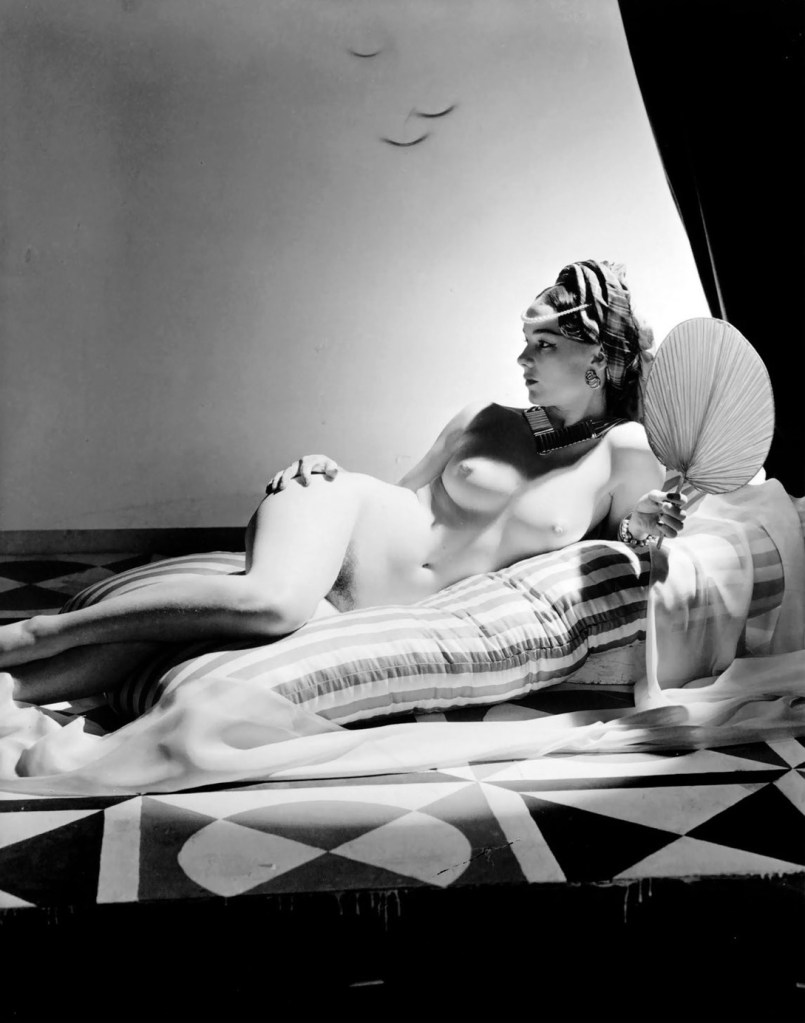
Odalisque I”, New York (1943)
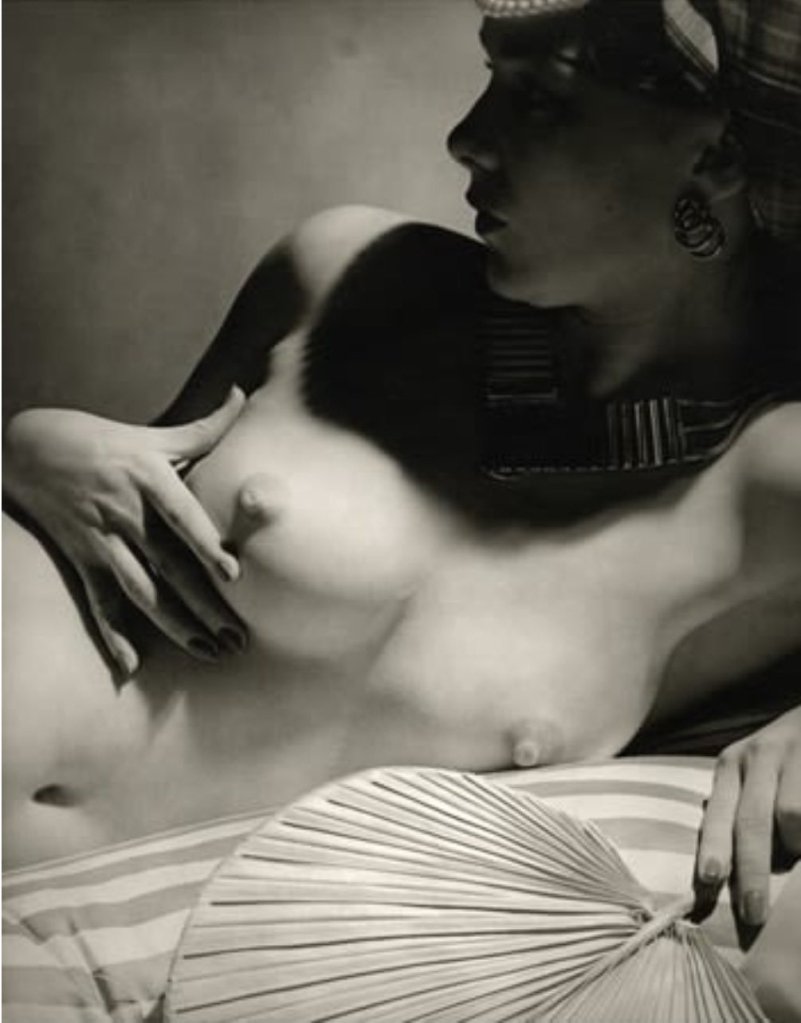
Odalisque III”, New York, 1943.

Lisa with Money Plant (1939)

Salvador Dali and his wife and muse Gala Dali sitting outdoor on a hill.
c.1948.
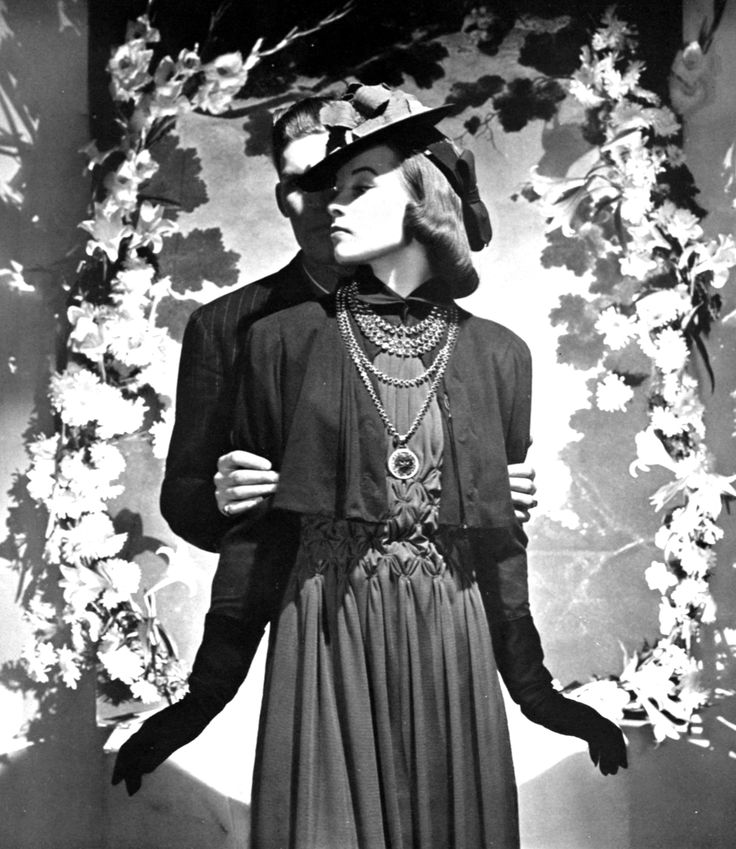
1938
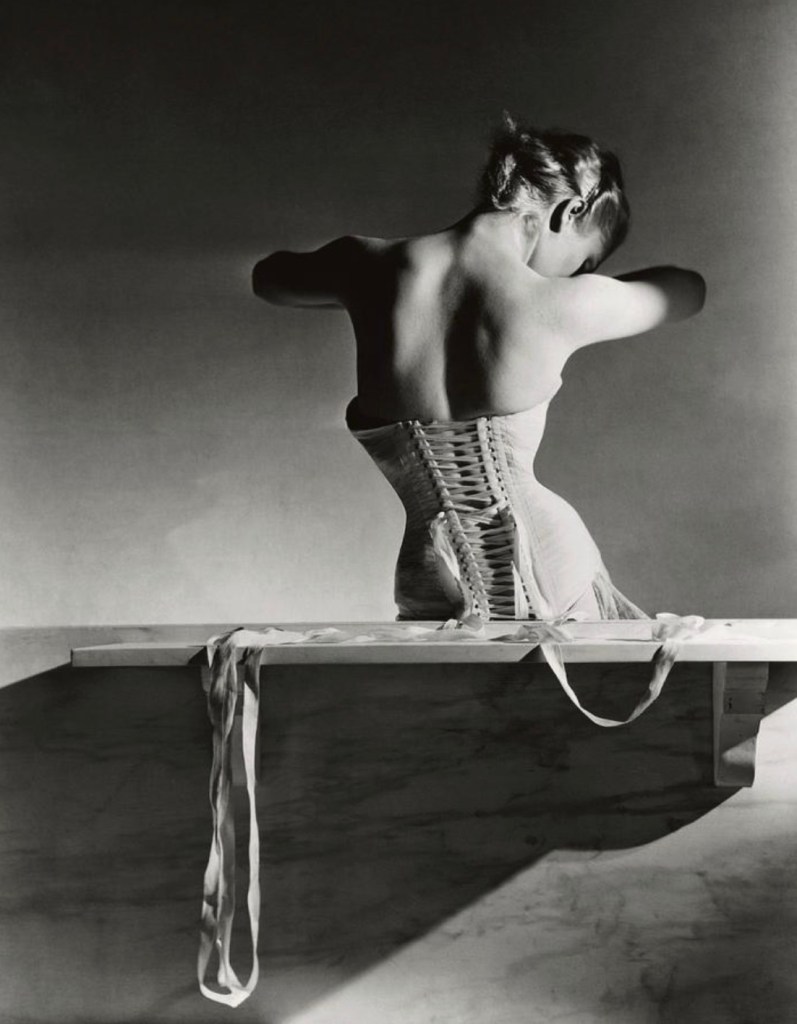
‘The Mainbocher corset’, Vogue, 1939

1963

Betty McLauchlen

Gloria Vanderbilt, 1941
Mac Tag
thanks for stoppin’ by y’all
The Song of the Day is Heart‘s version of Alone.
 The Lovers’ Chronicle
Leave a comment