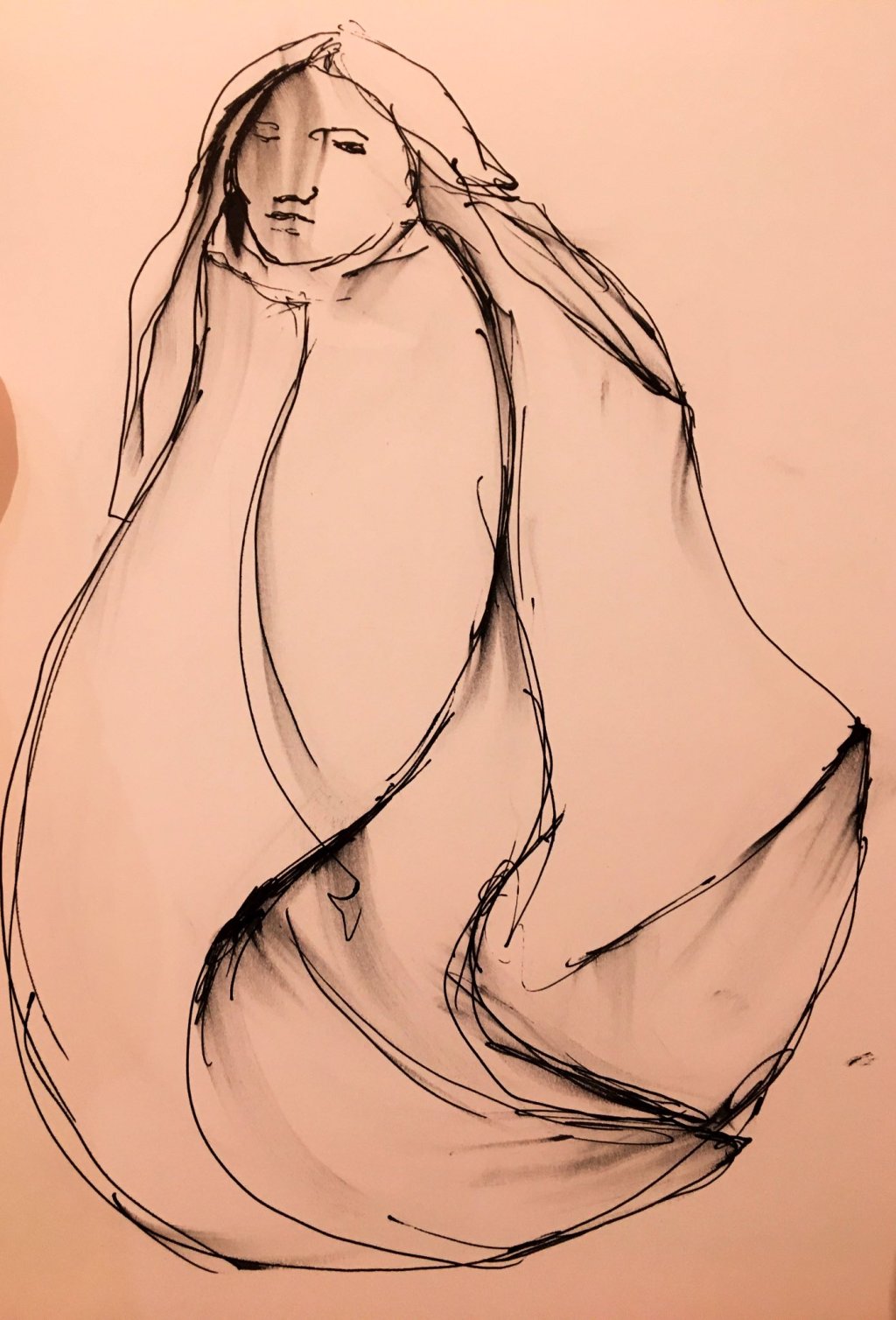
Dear Zazie, Here is today’s Lovers’ Chronicle from Mac Tag. Art thou true to thine own self? Rhett
The Lovers’ Chronicle
Dear Muse,
this one comes from Hamlet act 1 scene 3,
Polonius' still relevant advice
’’But not a good theme for a song’’
no, but there is a line in ‘’Fancy’’ written by the fabulous Bobbie Gentry;
’’She handed me a heart-shaped locket that said, ‘’To thine own self be true’’
‘’More solid advice, if you only have one chance you better take it’’
about bein’ true, as discovered, hard to do if you have not found yourself
as for takin’ chances, not accurate that we only had one but we took a chance
’’And look at us now’’
at ourselves bein’ true

© copyright 2023.2024 mac tag/cowboy coleridge all rights reserved
as mentioned before, never occurred that i needed to be true to myself before i could be true to someone else, must have sensed i needed to find somethin’ because i kept searchin’, a pretty smile would git my attention, a door would open, i would fall through it and think the search was over, but sooner or later, usually sooner, the urge to search would surface, this was rinsed and repeated till i could be who i needed for me and you

© copyright 2022.2024 mac tag/cowboy coleridge all rights reserved
in bed, and time now
thine be the kisses, dear,
smilin’ charms pullin’ us
and thou, ma cherie, layin’
in these arms as i read
poetry, others and mine,
on with sorrow and beauty
while the feelin’s ring clear
our thoughts, our eyes see,
a reassurin’ touch, confirms,
to our ownself
© copyright 2021.2023 mac tag/cowboy coleridge all rights reserved
Pale Love, Pale Rider
from where standin’ now,
interestin’ choice of word
all of us mixed bags
but hard to figure still
bein’ fooled, thinkin’
nothin’ else matters,
but i god, no accoutin’
someone so wrapped
up they cannot see
and then believin’,
this burns even now,
that you could mean
somethin’ to somebody
to thine ownself indeed
© copyright 2020.2023 mac tag/cowboy coleridge all rights reserved
hey, whatcha doin’
“Making roux.”
oh i wish i was there to help
“Me too. It would be better
with you here helping.”
in that and all we did
“And would you still?”
all the day
and every night
if with me you would
“In arms embraced.”
thine be the charms,
and want laid rest
© copyright 2019 mac tag/cowboy coleridge all rights reserved

Road trip 4th y’all
About 1100 miles
And five states
In two days
My room for the week
live from Table Rock Lake, Missouri
and i would you, all the day
“And every night.”
if with me you would
“In arms embraced.”
too soon the night would pass
desirous need inspires us
is there ought else
unbends the mind
thine be the charms,
and want laid rest
© copyright 2018 mac tag/cowboy coleridge all rights reserved

Status update…
Wednesday 500 mile road trip south
Thursday, another 500 miles south
Destination…
survivin’, so far,
a trip back to a place
fraught with emotions
once beloved
now not so much
so many changes,
so many ghosts
discoverin’
that Wolfe got it right
you cannot go home
a shame but not
will take the lessons
and the feelin’s
and sort it all out
in the verse
and remain
to thine ownself
© copyright 2017.2023 mac tag/cowboy coleridge all rights reserved
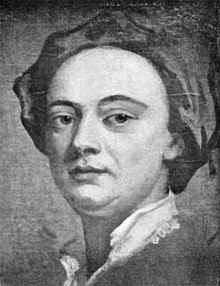
Today is the birthday of John Gay (Barnstaple, England 30 June 1685 – 4 December 1732 London); poet and dramatist and member of the Scriblerus Club. Perhaps best remembered for The Beggar’s Opera (1728), a ballad opera.
It is one of the watershed plays in Augustan drama and is the only example of the once thriving genre of satirical ballad opera to remain popular today. Ballad operas were satiric musical plays that used some of the conventions of opera, but without recitative. The lyrics of the airs in the piece are set to popular broadsheet ballads, opera arias, church hymns and folk tunes of the time.
The characters, including Captain Macheath and Polly Peachum, became household names.
Verse
- ‘Twas when the seas were roaring
With hollow blasts of wind,
A damsel lay deploring,
All on a rock reclined.- The What D’ye Call It (1715), Act II, sc. viii.
- So comes a reckoning when the banquet’s o’er,—
The dreadful reckoning, and men smile no more.- The What d’ ye call it (1715). Compare: “The time of paying a shot in a tavern among good fellows, or Pantagruelists, is still called in France a ‘quart d’heure de Rabelais,’—that is, Rabelais’s quarter of an hour, when a man is uneasy or melancholy”, Life of Rabelais (Bohn’s edition), p. 13.
- My lodging is on the cold ground,
And hard, very hard, is my fare,
But that which grieves me more
Is the coldness of my dear.- My Lodging Is on the Cold Ground (1720), st. 1.
- No retreat. No retreat. They must conquer or die who’ve no retreat.
- “We’ve Cheated the Parson” (song), Polly: an Opera (1729), Air 46, Act II, sc. x.
- Life is a jest; and all things show it. I thought so once; and now I know it.
- My Own Epitaph, inscribed on Gay’s monument in Westminster Abbey; also quoted as “I thought so once; but now I know it”.
- All in the Downs the fleet was moor’d.
- Sweet William’s Farewell to Black-eyed Susan, reported in Bartlett’s Familiar Quotations, 10th ed. (1919).
- Adieu, she cried, and waved her lily hand.
- Sweet William’s Farewell to Black-eyed Susan
The Beggar’s Opera (1728)
- Through all the Employments of Life
Each Neighbour abuses his Brother;
Whore and Rogue they call Husband and Wife:
All Professions be-rogue one another:
The Priest calls the Lawyer a Cheat,
The Lawyer be-knaves the Divine:
And the Statesman, because he’s so great,
Thinks his Trade as honest as mine.- Peachum, Act I, air 1.
- ‘T is woman that seduces all mankind;
By her we first were taught the wheedling arts.- Act I, scene i.
- Over the hills and far away.
- Act I, scene i. Compare: “O’er the hills and far away”, D’Urfey, Pills to purge Melancholy (1628–1723).
- You know, my Dear, I never meddle in matters of Death; I always leave those Affairs to you. Women indeed are bitter bad Judges in these cases, for they are so partial to the Brave that they think every Man handsome who is going to the Camp or the Gallows.
- Mrs. Peachum, Act I, sc. iv.
- How the mother is to be pitied who hath handsome daughters! Locks, bolts, bars, and lectures of morality are nothing to them: they break through them all. They have as much pleasure in cheating a father and mother, as in cheating at cards.
- Mrs. Peachum, Act I, sc. viii.
- Do you think your Mother and I should have liv’d comfortably so long together, if ever we had been married?
- Peachum, Act I, sc. viii.
- Can you support the expense of a husband, hussy, in gaming, drinking and whoring? Have you money enough to carry on the daily quarrels of man and wife about who shall squander most? There are not many husbands and wives, who can bear the charges of plaguing one another in a handsome way.
- Mrs. Peachum, Act I, sc. viii.
- O Polly, you might have toyed and kissed,
By keeping men off, you keep them on.- Act I, sc. viii, air 9.
- Were I laid on Greenland’s Coast,
And in my Arms embrac’d my Lass;
Warm amidst eternal Frost,
Too soon the Half Year’s Night would pass.- Act I, sc. xxxiii, air 16.
- Macheath: And I would love you all the day,
Polly: Every night would kiss and play,
Macheath: If with me you’d fondly stray
Polly: Over the hills and far away.- Act I, sc. xxxiii, air 16.
- Fill ev’ry glass, for wine inspires us,
And fires us
With courage, love and joy.
Women and wine should life employ.
Is there ought else on earth desirous?- Matt, Act II, sc. i, air 19.
- The fly that sips treacle is lost in the sweets.
- Act II, scene ii.
- How happy could I be with either,
Were t’ other dear charmer away!- Act II, scene ii.
- If the heart of a man is depressed with cares,
The mist is dispell’d when a woman appears;
Like the notes of a fiddle, she sweetly, sweetly
Raises the spirits, and charms our ears.- Act II, sc. iii, air 21.
- I must have women—there is nothing unbends the mind like them.
- Macheath, Act II, sc. iii.
- Youth’s the season made for joys,
Love is then our duty.- Act II, sc. iv, air 22.
- Before the Barn-Door crowing,
The Cock by Hens attended,
His Eyes around him throwing,
Stands for a while suspended:
Then One he singles from the Crew,
And cheers the happy Hen;
With how do you do, and how do you do,
And how do you do again.- Act II, sc. iv, air 23.
- Man may escape from rope and gun;
Nay, some have outlived the doctor’s pill:
Who takes a woman must be undone,
That basilisk is sure to kill.
The fly that sips treacle is lost in the sweets,
So he that tastes woman, woman, woman,
He that tastes woman, ruin meets.- Act II, sc. viii, air 26.
- You base man you,—how can you look me in the face after what hath passed between us?—See here, perfidious wretch, how I am forc’d to bear about the load of infamy you have laid upon me— -O Macheath! thou hast robb’d me of my quiet—to see thee tortur’d would give me pleasure.
- Lucy, Act II, sc. ix.
- Sure men were born to lie, and women to believe them!
- Lucy, Act II, sc. xiii.
- How happy could I be with either,
Were t’other dear charmer away!- Macheath, Act II, sc. xiii, air 35.
- How happy I am, if you say this from your heart! For I love thee so, that I could sooner bear to see thee hang’d than in the Arms of another.
- Lucy, Act II, sc. xv.
- If love be not his Guide,
He never will come back!- Lucy, Act II, sc. xv, air 40 .
- The charge is prepar’d, the lawyers are met,
The judges all ranged,—a terrible show!- Act III, scene ii.
- Fill it up. I take as large draughts of liquor as I did of love. I hate a flincher in either.
- Mrs. Trapes, Act III, sc. vi.
- I don’t enquire after your Affairs– –so whatever happens, I wash my hands on’t—- It hath always been my Maxim, that one Friend should assist another– –But if you please—-I’ll take one of the Scarfs home with me. ‘Tis always good to have something in Hand.
- Trapes, Act III, sc. vi.
- The charge is prepared; the lawyers are met;
The judges all ranged (a terrible show!)
I go, undismay’d.—For death is a debt,
A debt on demand.—So take what I owe.- Macheath, Act III, sc. xi, air 57.
Today is the birthday of Horace Vernet (Émile Jean-Horace Vernet; Paris Louvre 30 June 1789 – 17 January 1863 Paris); French painter of battles, portraits, and Orientalist Arab subjects.

Self-Portrait with Pipe (1835)
Vernet was born to painter Carle Vernet who was himself a son of painter Claude Joseph Vernet.
In Arthur Conan Doyle’s Sherlock Holmes story “The Adventure of the Greek Interpreter”, Holmes claims to be related to Vernet, stating, “My ancestors were country squires… my grandmother… was the sister of Vernet, the French artist”; it is generally assumed that this individual is Émile Jean-Horace Vernet, because Horace was only 65 years older than Sherlock Holmes while the other Vernets lived much before. The Holmes-Vernet connection is also central to the plot of Laurie R. King’s 2024 novel, The Lantern’s Dance.
Gallery
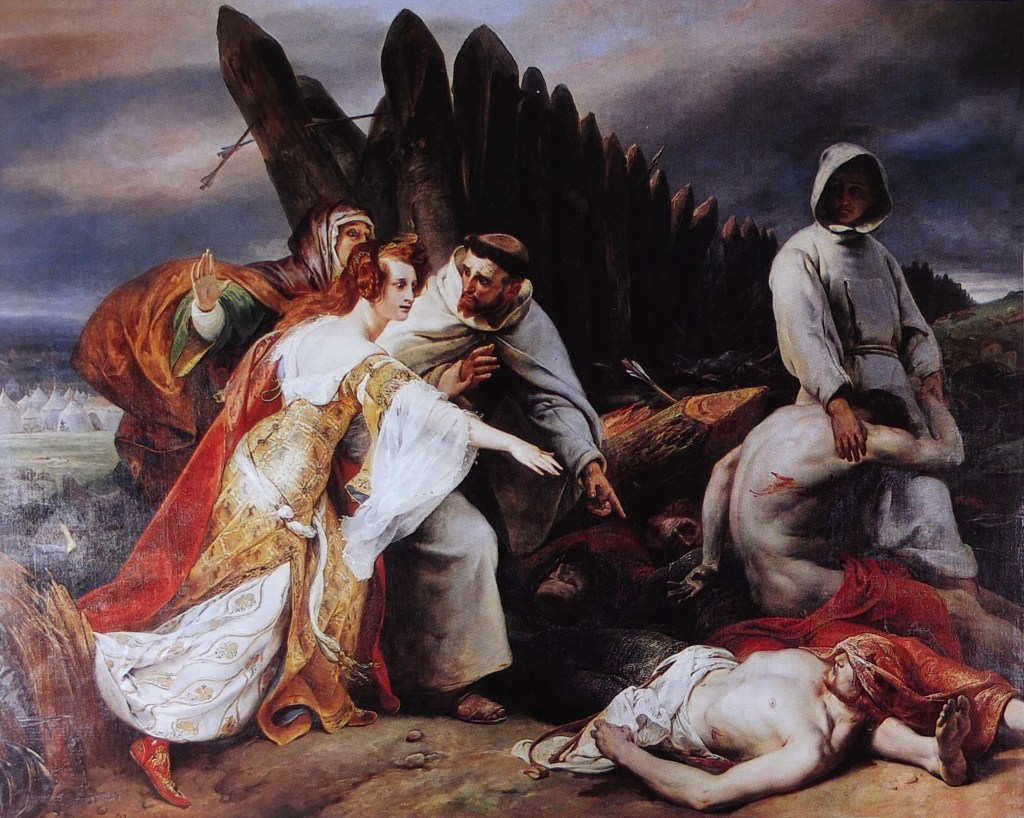
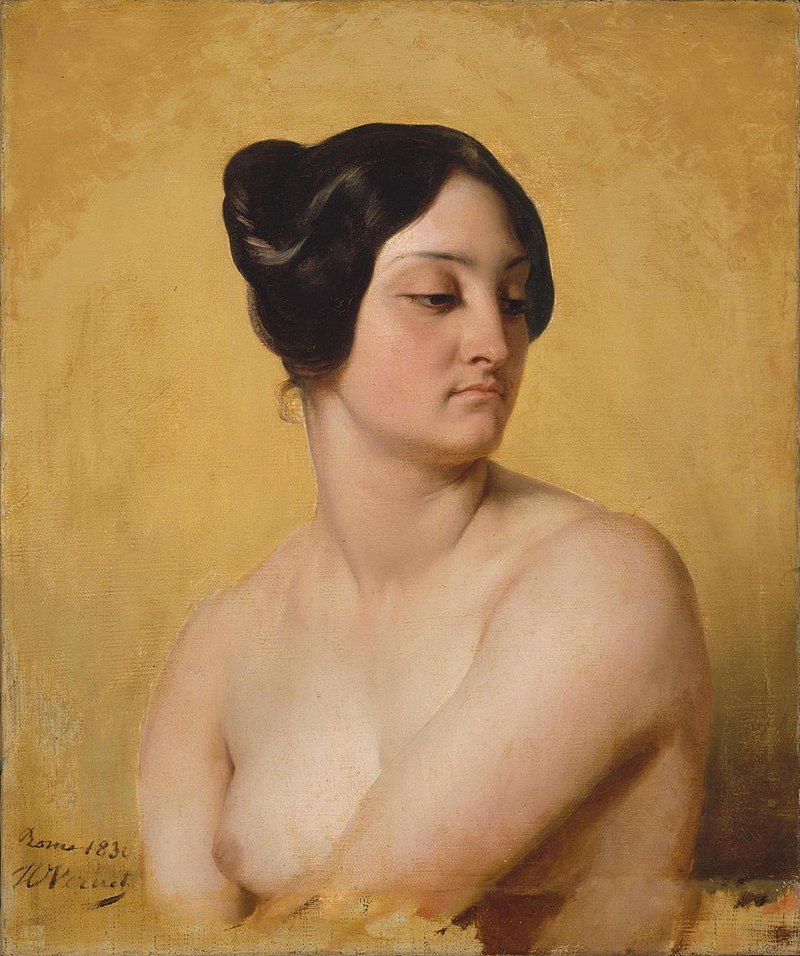
Olympe Pélissier, étude pour Judith et Holopherne (1830), musée des beaux-arts de Boston

slave market

Judah and Tamar, 1840

L’ange de la mort
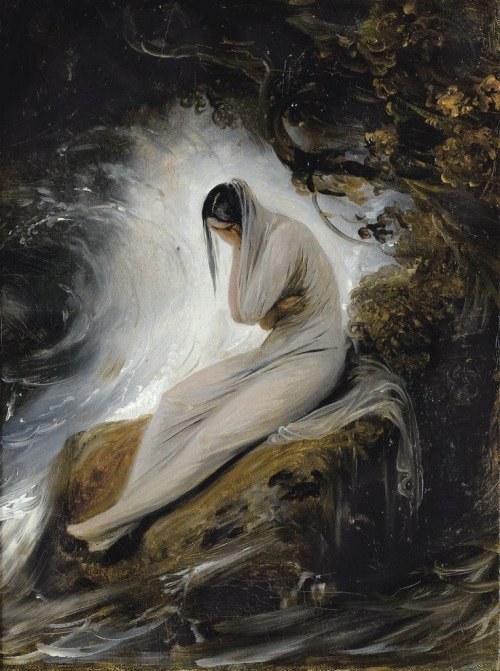
The Maiden’s Lament

Plague in Barcelona, 1822

Portrait of Louise Vernet, 1830
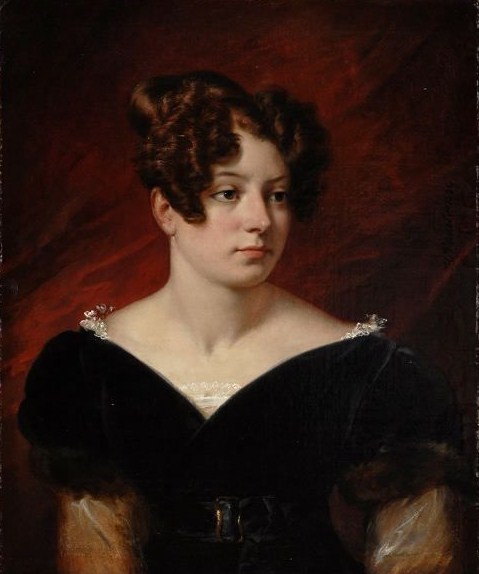
“Josephine de forget”

An Algerian Lady Hawking
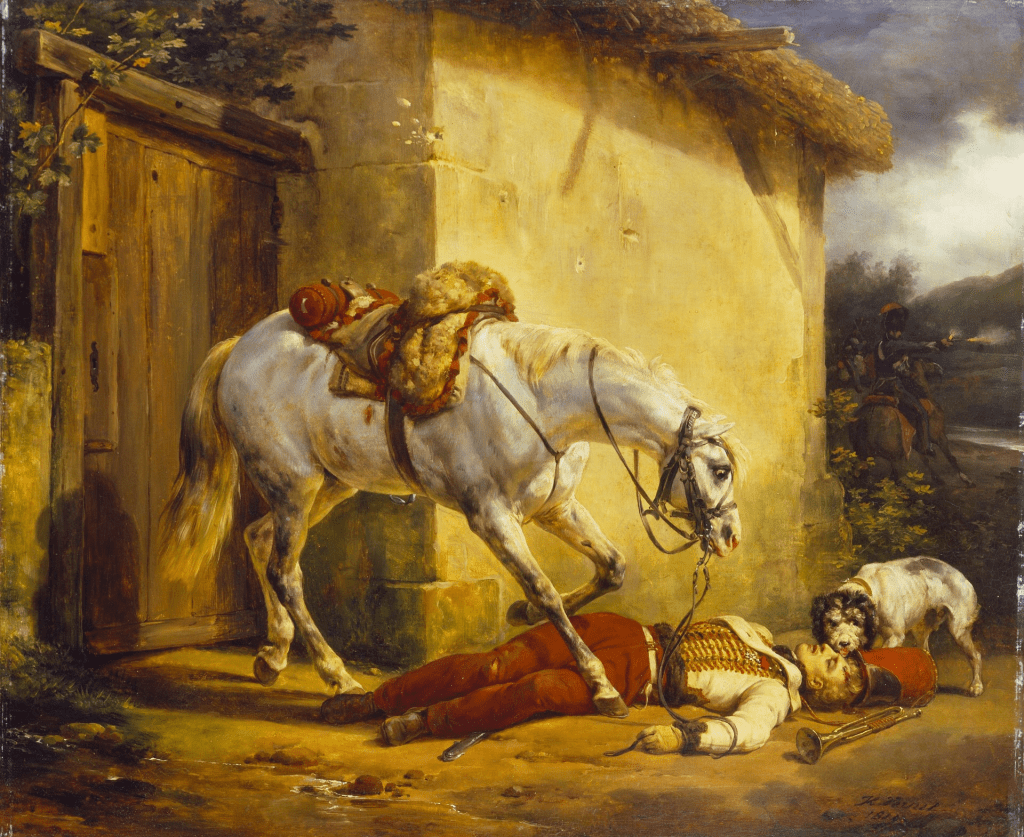
The Wounded Trumpeter, 1819
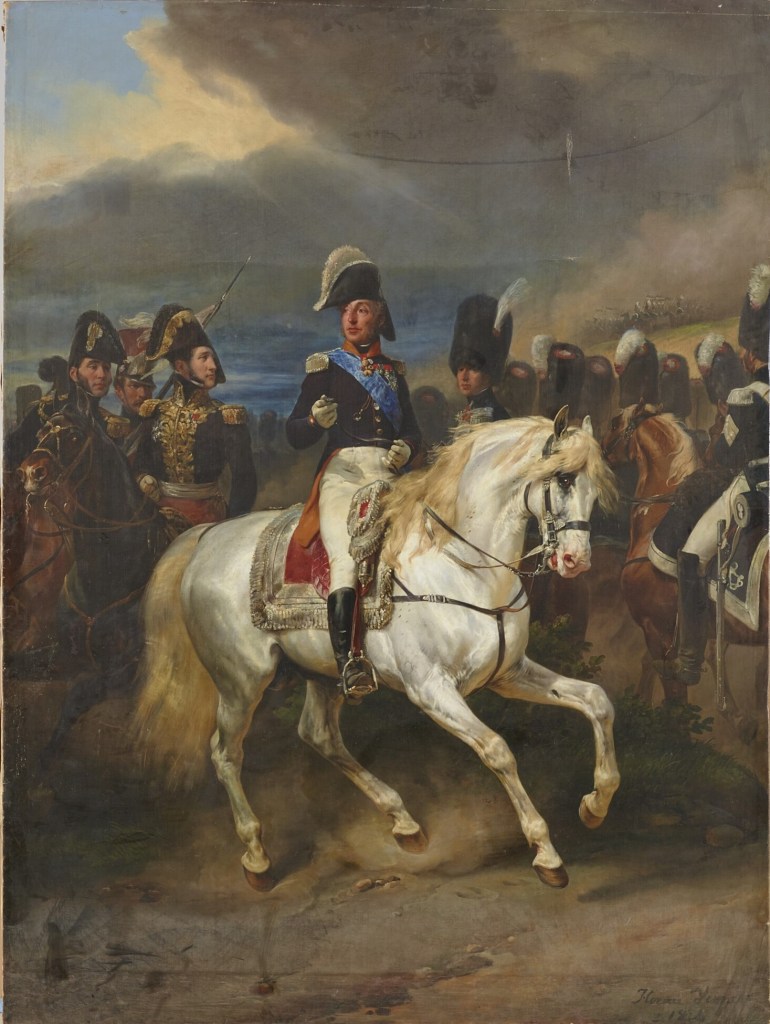
Duke of Angoulême, 1824

Carlo Alberto of Savoy, 1834
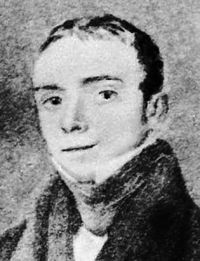
Today is the birthday of Thomas Lovell Beddoes (Clifton, Bristol, England 30 June 1803 – 26 January 1849 Basel, Switzerland); poet, dramatist and physician. Beddoes’ writing shows a constant preoccupation with death. In 1824, he went to Göttingen to study medicine, motivated by his hope of discovering physical evidence of a human spirit which survives the death of the body. He continued to write, but published nothing. He led an itinerant life after leaving Switzerland, returning to England only in 1846, before going back to Germany. He became increasingly disturbed, and died by suicide by poison at Basel, in 1849, at the age of 45. For some time before his death he had been engaged on a drama, Death’s Jest Book, which was published in 1850 with a memoir by his friend, T. F. Kelsall. His Collected Poems were published in 1851.
- A cypress-bough, and a rose-wreath sweet,
A wedding-robe, and a winding-sheet,
A bridal bed and a bier.
Thine be the kisses, maid,
And smiling Love’s alarms;
And thou, pale youth, be laid
In the grave’s cold arms.
Each in his own charms,
Death and Hymen both are here;
So up with scythe and torch,
And to the old church porch,
While all the bells ring clear:
And rosy, rosy the bed shall bloom,
And earthy, earthy heap up the tomb.- A Cypress-Bough, and A Rose-Wreath Sweet, from The Poetical Works of Thomas Lovell Beddoes (1890).
- Shivering in fever, weak, and parched to sand,
My ears, those entrances of word-dressed thoughts,
My pictured eyes, and my assuring touch,
Fell from me, and my body turned me forth
From its beloved abode: then I was dead;
And in my grave beside my corpse I sat,
In vain attempting to return- Dream of Dying, from The Poetical Works of Thomas Lovell Beddoes (1890).
Today is the birthday of Allan Houser (Allan Capron Houser or Haozous; near Apache, Oklahoma; June 30, 1914 – August 22, 1994 Santa Fe, New Mexico); Chiricahua Apache sculptor, painter and book illustrator born in Oklahoma. In my opinion, one of the most renowned Native American painters and Modernist sculptors of the 20th century.
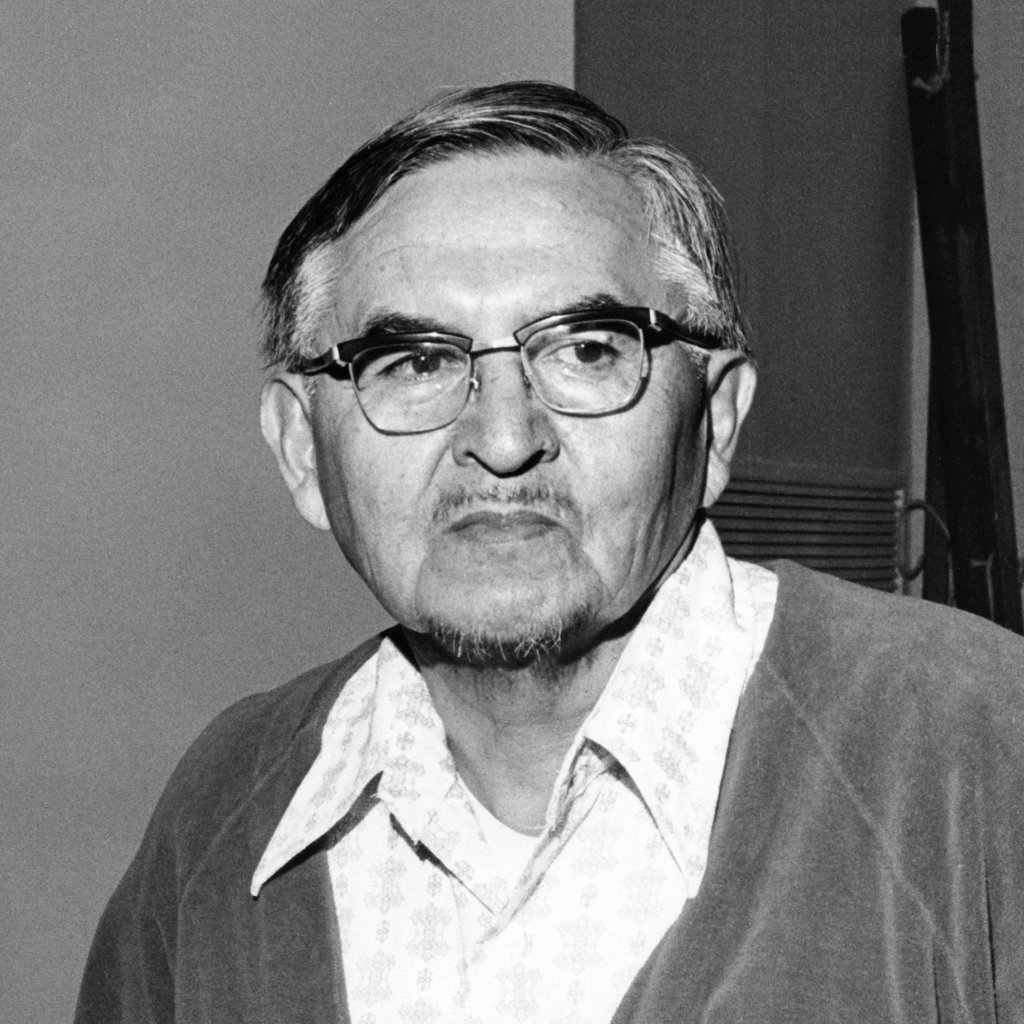
Houser’s work can be found at the Smithsonian Museum of American Art, the National Museum of the American Indian, the National Portrait Gallery in Washington, D.C., and in numerous major museum collections throughout North America, Europe and Japan. Additionally, Houser’s Offering of the Sacred Pipe is on display at United States Mission to the United Nations in New York City.
He married Anna Maria Gallegos of Santa Fe.
Gallery
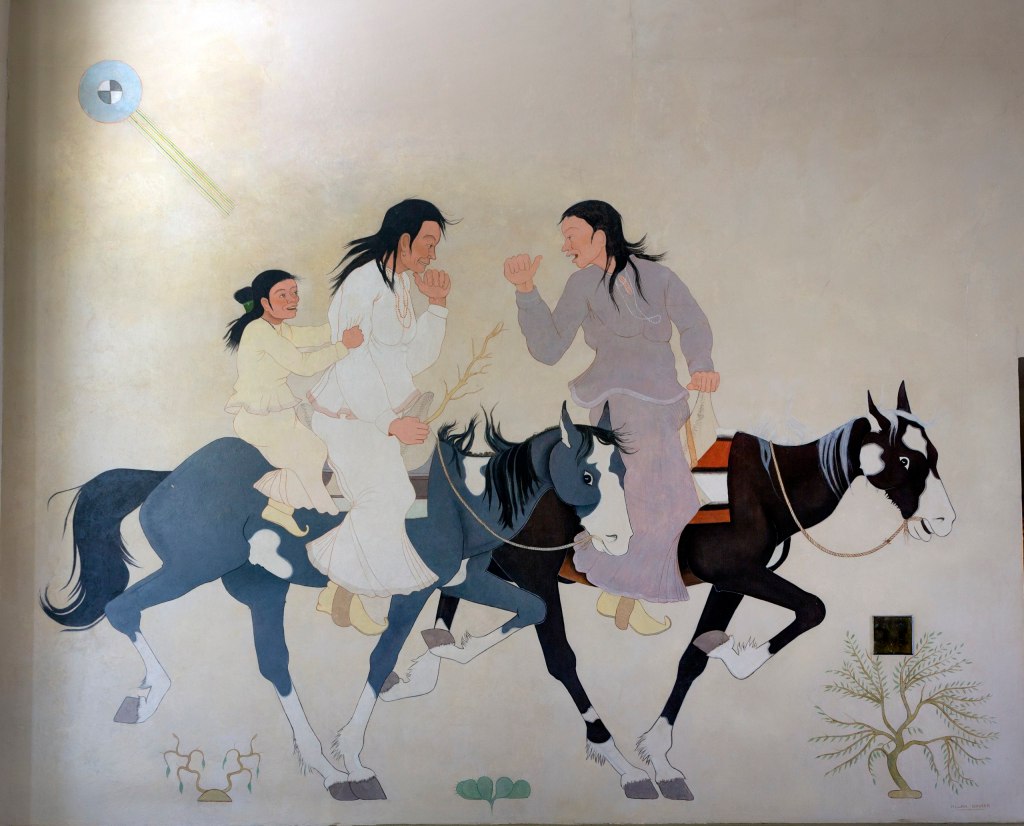
Mural showing Native Americans on horseback at the Interior Department Building, Washington, D.C

Young woman after a sculpture
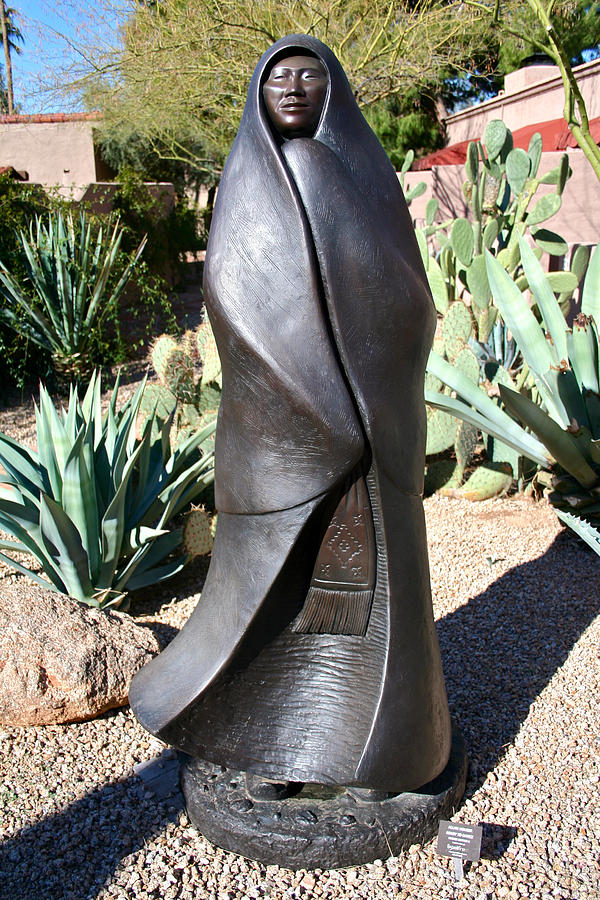
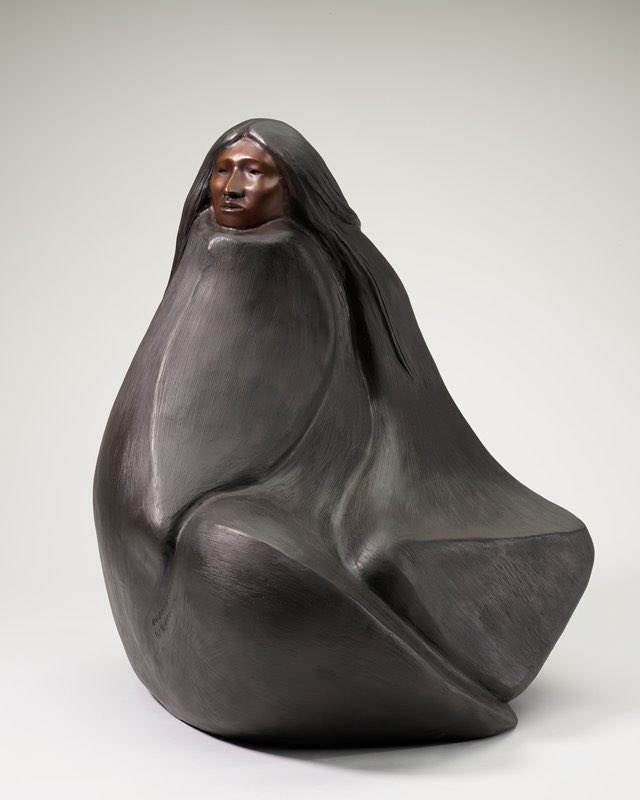
“young woman”
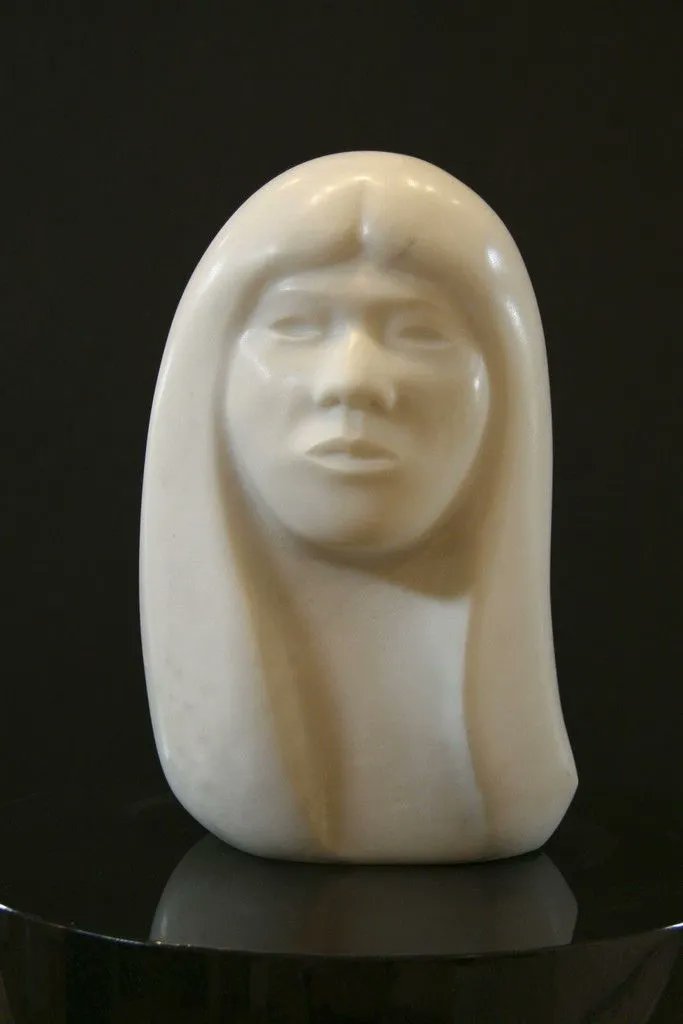
Young beauty
And today is the birthday of Bob Willoughby (Robert Hanley Willoughby; Los Angeles; June 30, 1927 – 18 December 2009 Vence, Departement des Alpes-Maritimes, Provence-Alpes-Côte d’Azur, France); photographer. Popular Photography called him “The man who virtually invented the photojournalistic motion picture still.”

Between 1948 and 1954, Willoughby’s exhibitions of photographs of jazz musicians and dancers led to a contract with Globe Photos, and one, of a screaming female audience, was selected by Edward Steichen for The Family of Man exhibit at the Museum of Modern Art which toured the world to be seen by 9 million visitors. Later, he worked for Harper’s Bazaar magazine where his photographs illustrated arts and culture articles.
Willoughby’s big break came when he was assigned by six magazines to photograph Judy Garland during the filming of A Star is Born (1954). Subsequently, he was hired by Warner Brothers to film the extensive “Born in a Trunk” sequence. This was the first time a motion picture studio hired a special or unit photographer to specifically take photographs for sale to magazines. The result was a Life magazine cover featuring a close-up portrait of the pixie-faced singer in costume. It was her second Life cover and his first.
Much of Willoughby’s popularity stemmed from his ability to capture film stars in unguarded moments. Director Sydney Pollack said in the introduction to Bob’s autobiography: “Sometimes a filmmaker gets a look at a photograph taken on his own set and sees the ‘soul’ of his film in one still photograph. It’s rare, but it happens. It happened to me in 1969, the first time I looked at the work of Bob Willoughby during the filming of They Shoot Horses, Don’t They?“.
In 1963, Willoughby built the first remote radio-controlled camera for on-set still photography. This led to other innovations that enabled him to take still photographs identical to the film footage. Much of his best work revolved around stars like Audrey Hepburn, Frank Sinatra and Elizabeth Taylor.
Willoughby continued to photograph for the rest of his life. He lived in Ireland for 17 years where he used his photographic skills to illustrate ancient Irish poetry text with photographs of the countryside. In addition, he authored books on photography and other subjects. He lived his last years in Vence, France, where he continued a very active professional life. He died of cancer. Willoughby’s images are represented by the Motion Picture and Television Photo Archive and can be viewed by the public at mptvimages.com
Gallery
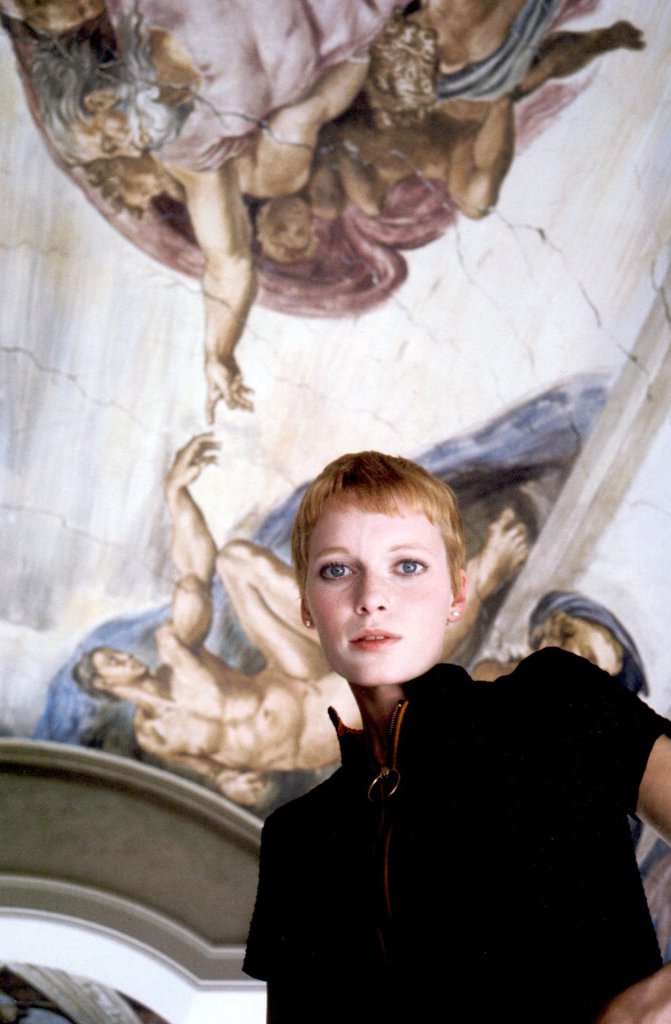
On the set of Rosemary’s Baby in 1968, Mia
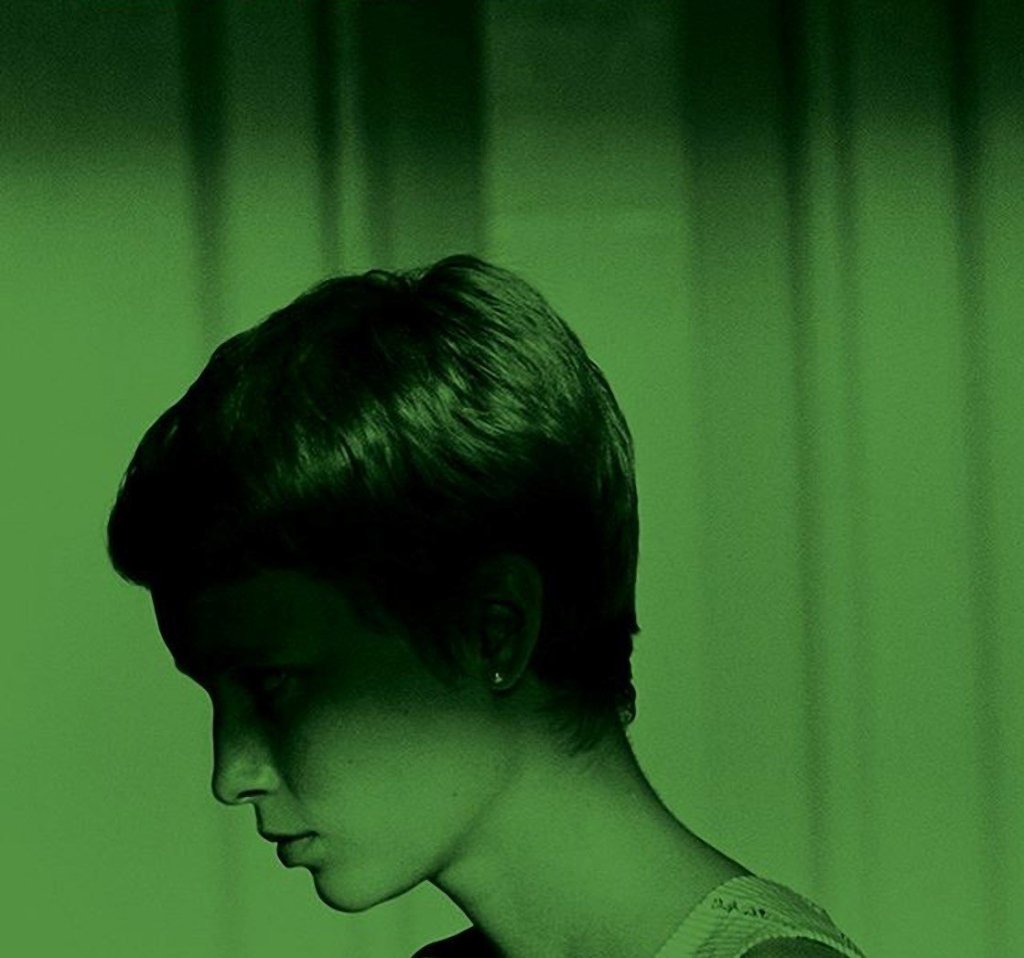
On the set of Rosemary’s Baby in 1968, Mia Farrow

Elizabeth Taylor during the filming of “Raintree County”, (1956)
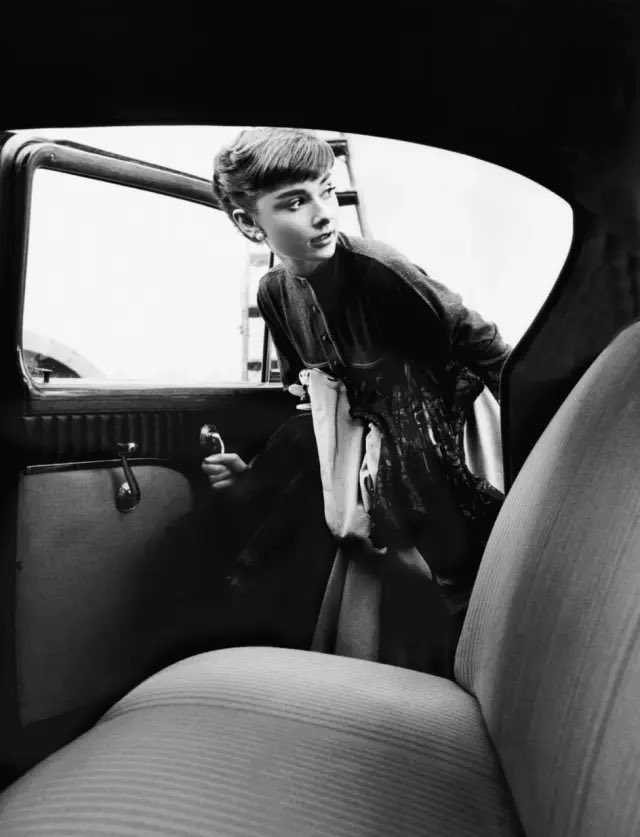
audrey

Audrey on set of set of Green Mansions, 1958

Barbra Streisand and Elliott Gould at the Beverly Hills Hotel, 1963

barbara at the Beverly Hills Hotel, 1963

Anita Ekberg on the set of the Paramount-produced film “Artists and Models”, 1955

Sonny & Cher photographed for Vogue (1967)
thanks for stoppin’ by y’all
Mac Tag
To write an opera you have to have the soul of a hero—and the mentality of a lackey—to have it produced. Franz Liszt
 The Lovers’ Chronicle
Leave a comment