
Dear Zazie, Here is todays’ Lover’s Chronicle from Mac Tag. Rhett
The Lovers’ Chronicle
Dear Muse,
clearly not thinkin’ of songs
when i picked this theme
“I can’t think of one”
another topic that could be
what all of ’em are about
“Oh yes, I get it. It’s something
everyone should be doing”
for me it had to start
with myself
it was a discovery process
who i was and what i wanted
there could be no learnin’ you
if i had not learned myself
“Well then, come here so we
can do some more learning”
© copyright 2023 mac tag/cowboy coleridge all rights reserved
an ongoin’ process
when it comes to art,
music, movies, and writin’
particularly the latter
come a long way
since the earliest verse
as for life lessons,
boldly gonna say
the last one learnt
in early 2020
it came as a surprise
because i thought
i had already
learned that one
rest assured
will not get fooled again
© copyright 2022.2023 mac tag/cowboy coleridge all rights reserved
the only need
it is revelatory
creatin’ what we feel
creatin’ what we see
creatin’ what is real to us
all that matters
is what moves us
you with your voice
me with this verse
this to which we belong
expressin’ ourselves
in our own way,
in our time
© copyright 2021 mac tag/cowboy coleridge all rights reserved
Pale Love, Pale Rider
the purpose rests
in the ability to see
and express
it is revelatory and needed
for an intimacy unlike
any ever known
creatin’ what you feel
what moves you
nothin’ else matters
this to which i belong
and none of this could be
were it not for the desire
of this
© copyright 2020 mac tag/cowboy coleridge all rights reserved
the most i ever knew
upon you, contentment
and still i famish, to ascend
so eminent a sight
and a song for intimate
delight
resume
left behind need
to what purpose
will fate, or luck,
or who knows what,
finally allow
© copyright 2019 mac tag/cowboy coleridge all rights reserved
the purpose rests
in the ability to see
and express
this vision
cannot be separated
from livin’
it is the only need
it is revelatory
create what you feel
create what you see
create what is real to you
nothin’ else matters
moved or left cold by lines
depends on viewpoints
all that matters
is what moves you
you say, sometimes
you do not understand
the lines
they mean
what you want
them to mean
there is only one reason
expressin’ yourself
in your own time,
and your own way
© copyright 2018 mac tag/cowboy coleridge all rights reserved
cool night
whiskey for one
torch lit screen porch
sounds… crickets,
waterfall, distant
train whistle
twilight settles in
missin’… you
tired, need sleep
but the night is too nice
to give up on just yet
this moment, this feelin
near about contentment,
reckon, as i can git
if i wrote all night
would you hear it
would you feel it
would you read it
and want more
if i wrote all night
would you believe
tryin’ to learn…
i do not need anything
or anyone that will not
help me be who i need to be
tryin’ to learn to give up
on everything, except
that to which i belong
© copyright 2017 mac tag/cowboy Coleridge all rights reserved
Just give me the coffee and nobody gets hurt!
Beyond the pale
Bone deep, drop dead
Please make it stop
© copyright 2015 mac tag/cowboy Coleridge all rights reserved
Today is the birthday of Eleanor Norcross (Ella Augusta Norcross, Fitchburg, Massachusetss 19 June 1854 – 19 October 1923 Fitchburg); painter who studied under William Merritt Chase and Alfred Stevens. She lived the majority of her adult life in Paris, France as an artist and collector and spent the summers in her hometown of Fitchburg, Massachusetts. Norcross painted Impressionist portraits and still lifes, and is better known for her paintings of genteel interiors.
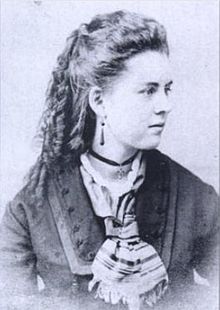
She lived in Paris for 40 years, and traveled throughout Europe. Her father lived with her during the winters after his retirement and until 1898, when he died.
Gallery
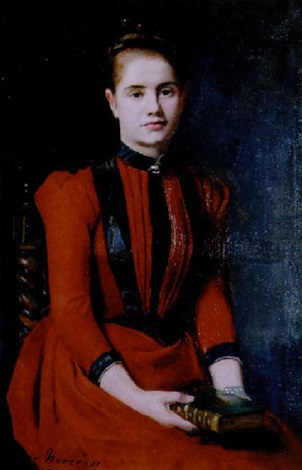
jeune fille à la robe rouge
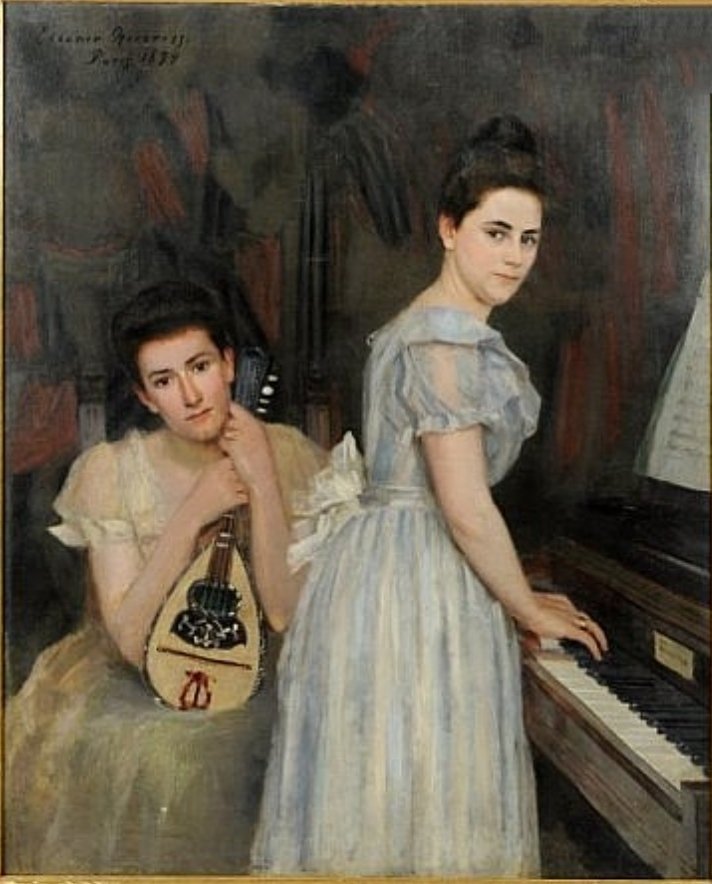
two women at the piano


Woman in a [Paris] Garden, Fitchburg Art Museum

Tapestry, oil on canvas, Fitchburg Art Museum

Carpeaux Sevres (also known as Arte Moderne), oil on canvas, Fitchburg Art Museum
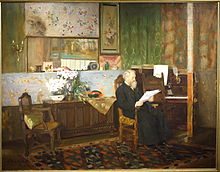
My Studio, 1891, oil on canvas, Fitchburg Art Museum, Massachusetts
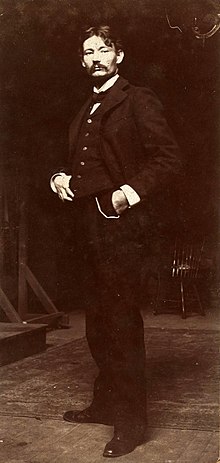
Today is the birthday of Robert Henri (Robert Henry Cozad; Cincinnati, Ohio; June 24, 1865 – July 12, 1929 New York City); painter and teacher. He was a leading figure of the Ashcan School of American realism and an organizer of the group known as “The Eight,” a loose association of artists who protested the restrictive exhibition practices of the powerful, conservative National Academy of Design.
Henri was a distant cousin of the painter Mary Cassatt. In 1871, Henri’s father, John J. Cozad, founded the town of Cozaddale, Ohio. In 1873, the family moved west to Nebraska, where his father founded the town of Cozad. In October 1882, Henri’s father became embroiled in a dispute with a rancher, Alfred Pearson, over the right to pasture cattle on land claimed by the family. When the dispute turned physical, Cozad shot Pearson fatally with a pistol. Cozad was eventually cleared of wrongdoing, but the mood of the town turned against him. He fled to Denver, Colorado, and the rest of the family followed shortly afterwards. In order to disassociate themselves from the scandal, family members changed their names. The father became known as Richard Henry Lee, and his sons posed as adopted children under the names Frank Southern and Robert Earl Henri (pronounced “hen rye”). In 1883, the family moved to New York City, then to Atlantic City, New Jersey, where the young artist completed his first paintings.
During the summers of 1916, 1917 and 1922, Henri went to Santa Fe, New Mexico to paint. He found that locale as inspirational as the countryside of Ireland had been. He became an important figure in the Santa Fe art scene and persuaded the director of the state art museum to adopt an open-door exhibition policy.
Gallery

“Edna Smith in a Japanese Wrap”, 1915, Indianapolis museum of art

The Beach Hat, 1914, oil on canvas, The Detroit Institute of Arts
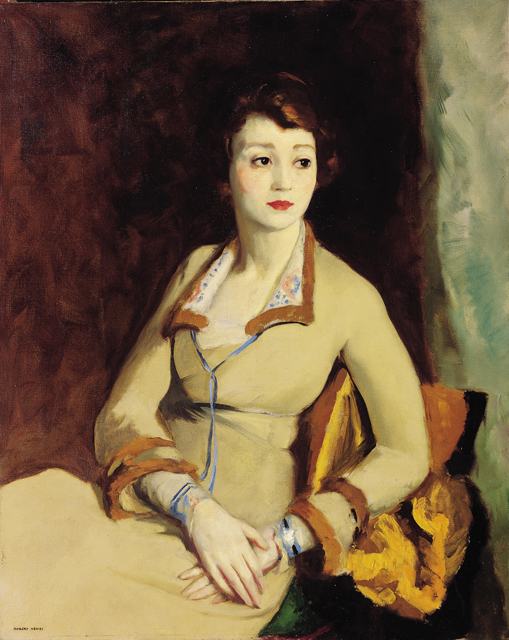
Portrait of Fay Bainter, 1918
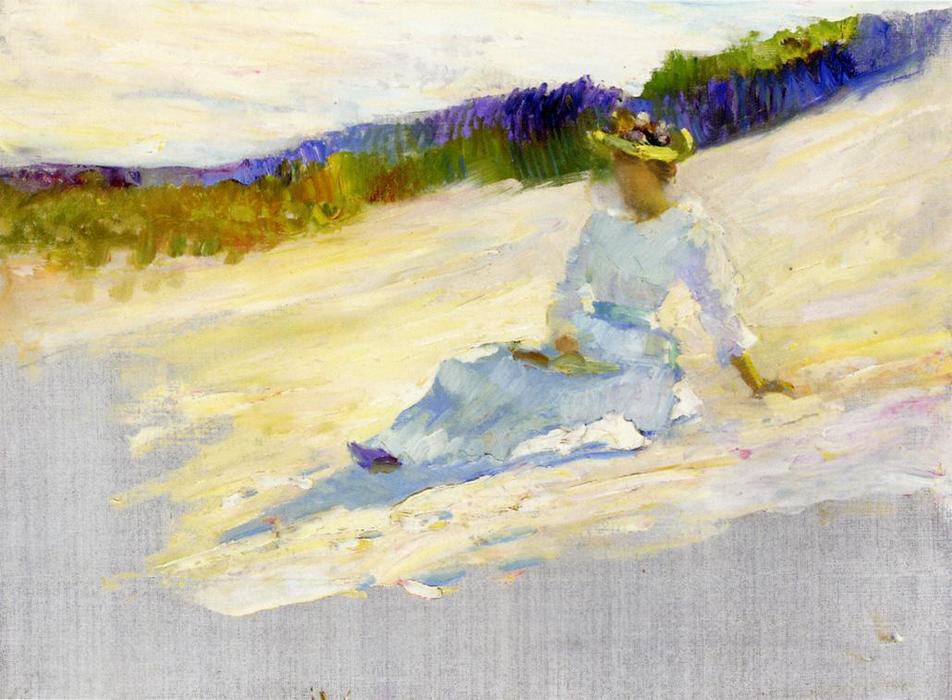
Sunlight Girl on Beach
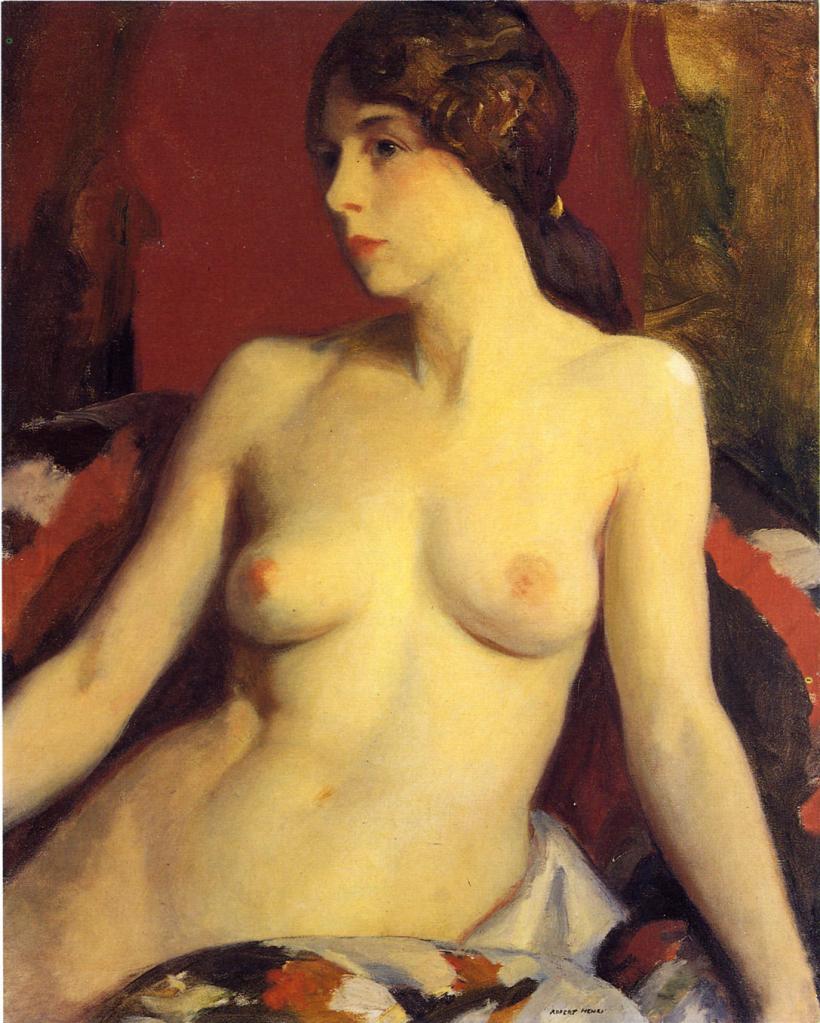
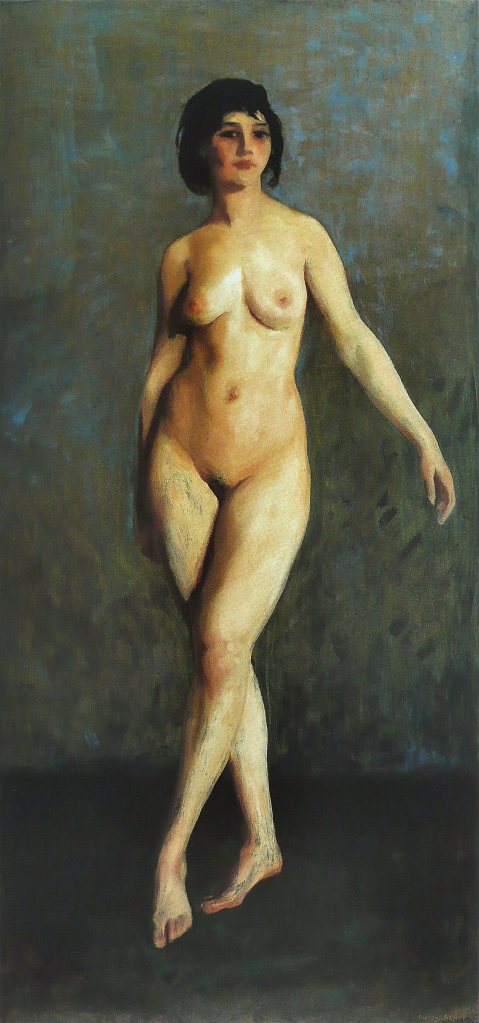
Figure in Motion, 1913
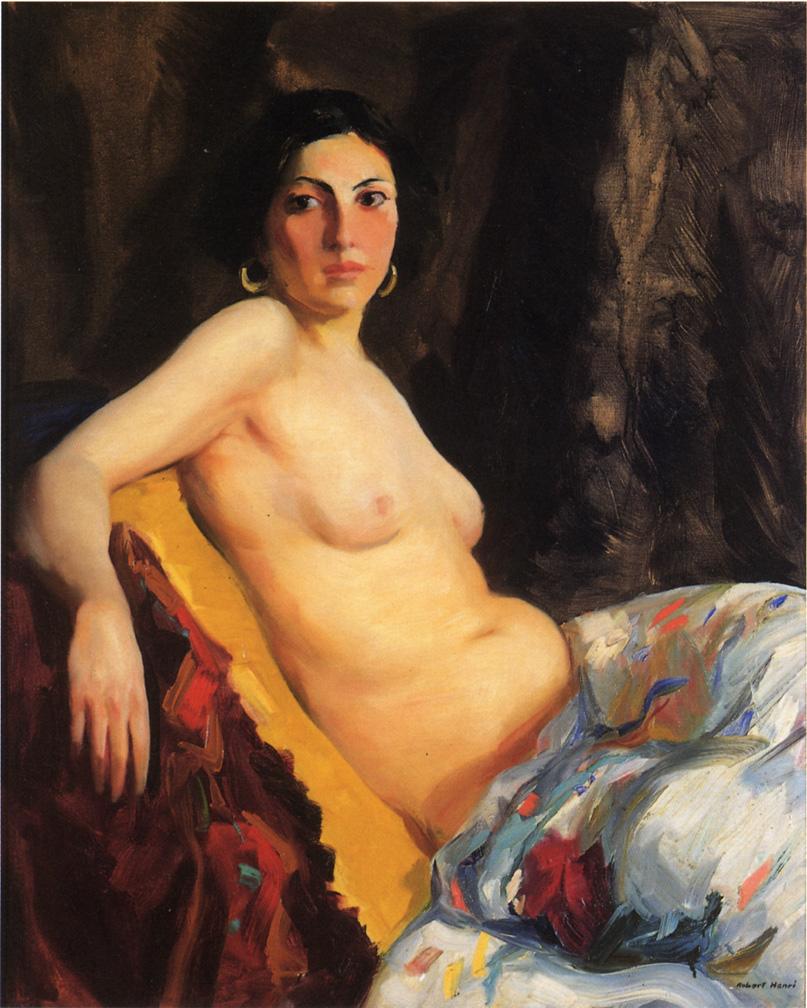
orientale
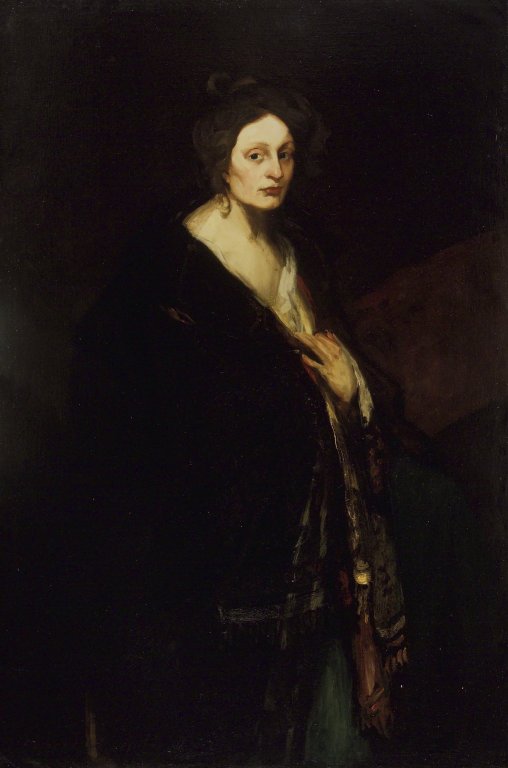
Woman in Manteau, 1898 – Brooklyn Museum
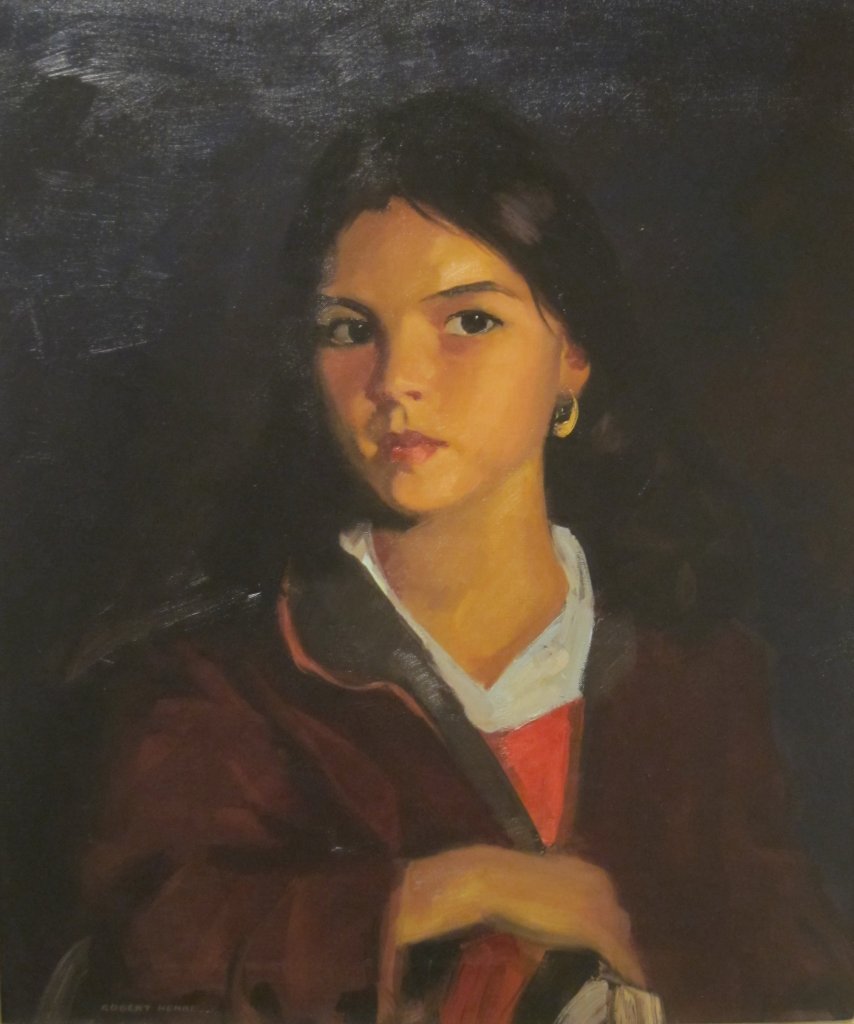
Bernardita, 1922

The Dancer, 1910
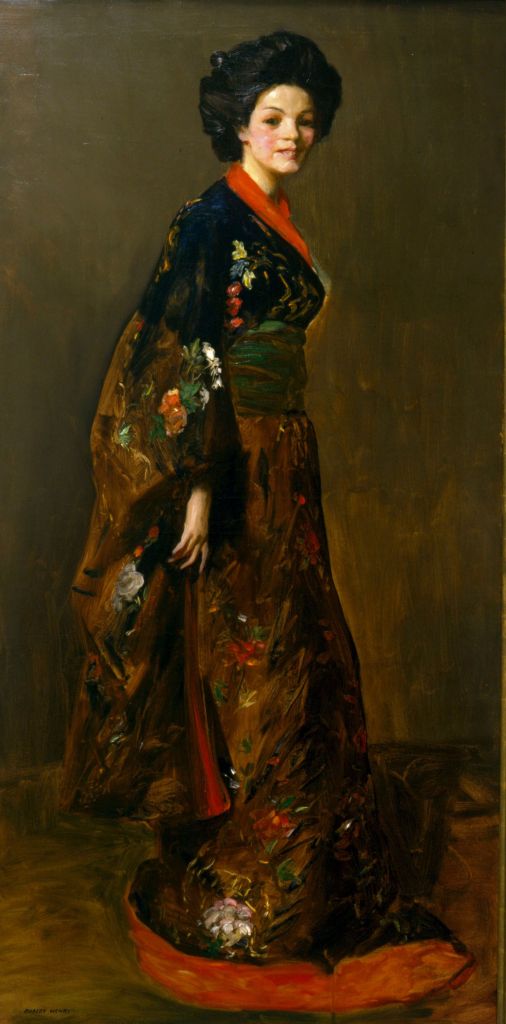
The Blue Kimono, 1909 – New Orleans Museum of Art

Salome, 1909, John and Mable Ringling Museum of Art, Sarasota, Florida
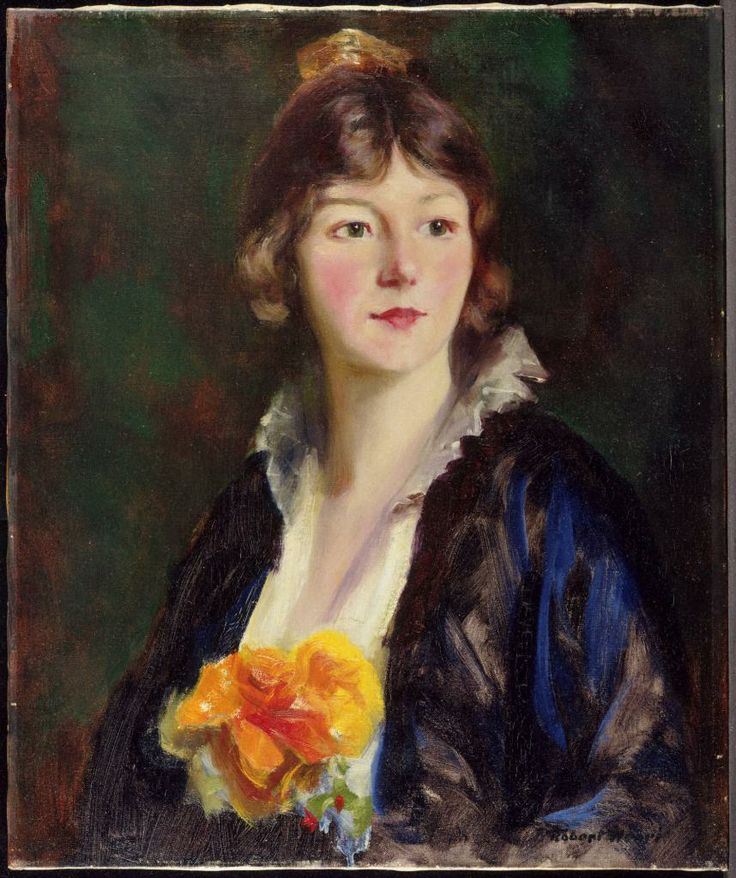
Mildred Clarke von Kienbusch, 1914, Princeton University Art Museum
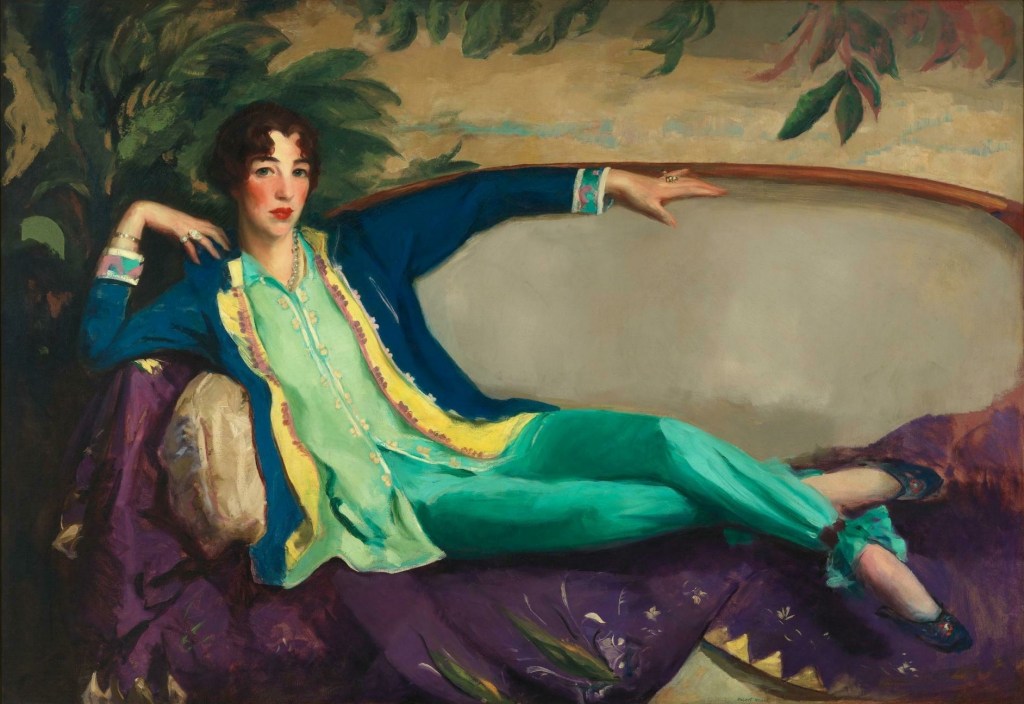
Gertrude Vanderbilt Whitney, 1916, Whitney Museum of American Art
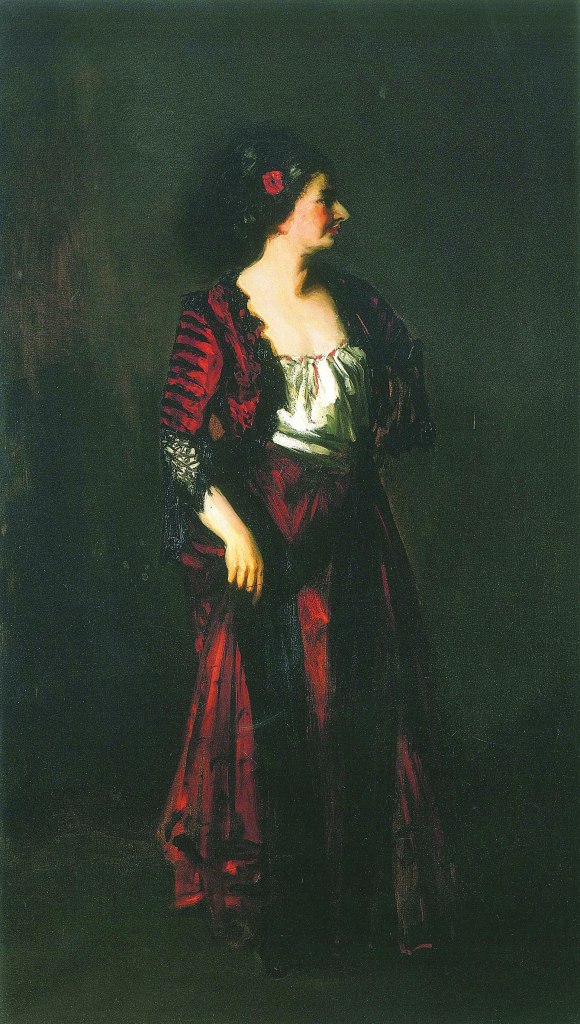
Portrait of Eugenie Stein, 1906/1907, The National Arts Club

quotes
It is harder to see than it is to express. The whole value of art rests in the artist’s ability to see well into what is before him.”
“Art cannot be separated from life. It is the expression of the greatest need of which life is capable, and we value art not because of the skilled product, but because of its revelation of a life’s experience.”
“Paint what you feel. Paint what you see. Paint what is real to you.”
“Different men are moved or left cold by lines according to the difference in their natures. What moves you is beautiful to you.”
“There is only one reason for art in America, and that is that the people of America learn the means of expressing themselves in their own time, and their own land.”
And today is the birthday of Jean Metzinger (Jean Dominique Antony Metzinger, Nantes, France; 24 June 1883 – 3 November 1956 Paris); painter, theorist, writer, critic and poet. His earliest works, from 1900 to 1904, were influenced by the Neo-impressionism of Georges Seurat and Henri-Edmond Cross. Between 1904 and 1907 Metzinger worked in the Divisionist and Fauvist styles with a strong Cézannian component, leading to some of the first proto-Cubist works.
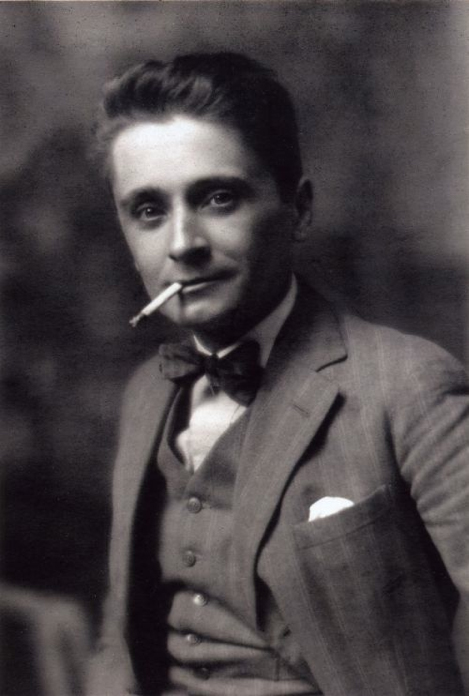
Metzinger married Lucie Soubiron in Paris on 30 December 1909.
Gallery
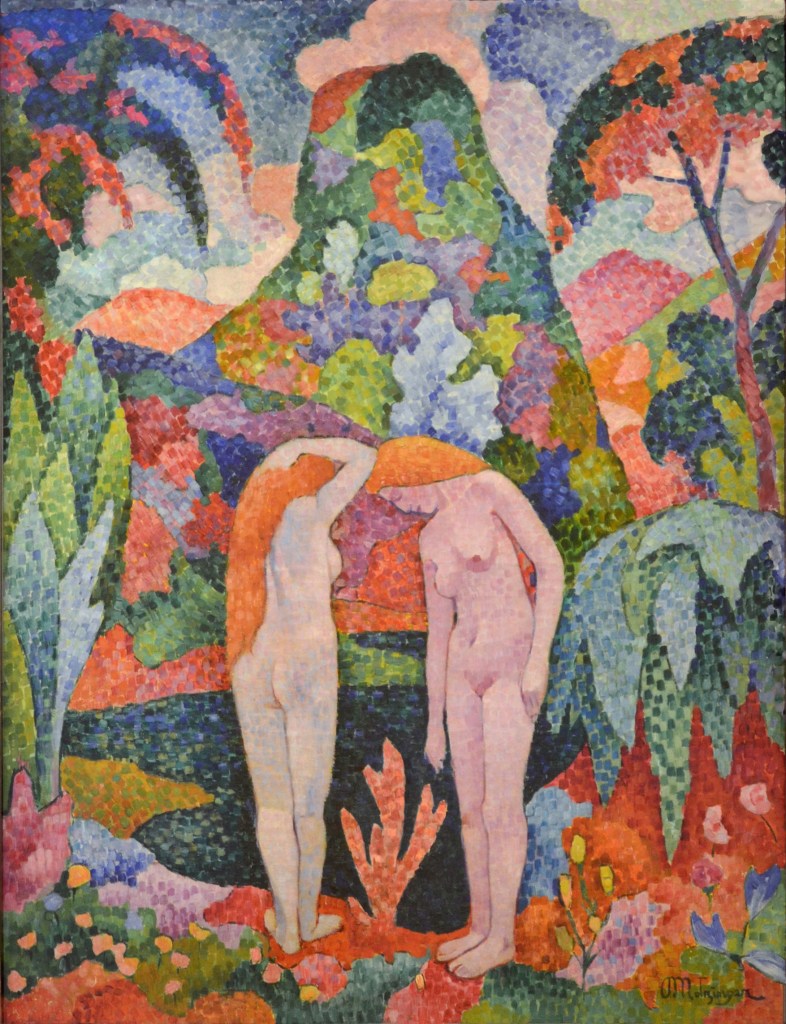
1905, Baigneuses, Deux nus dans un jardin exotique (Two Nudes in an Exotic Landscape), oil on canvas, 116 x 88.8 cm, Thyssen-Bornemisza Museum, Madrid

Le goûter (Tea Time), 1911, 75.9 x 70.2 cm, Philadelphia Museum of Art. Exhibited at the 1911 Salon d’Automne. André Salmon dubbed this painting “The Mona Lisa of Cubism”

1911, Nu (Nu debout), oil on carton, 52 x 35 cm. Reproduced in Du “Cubisme”, 1912


nu
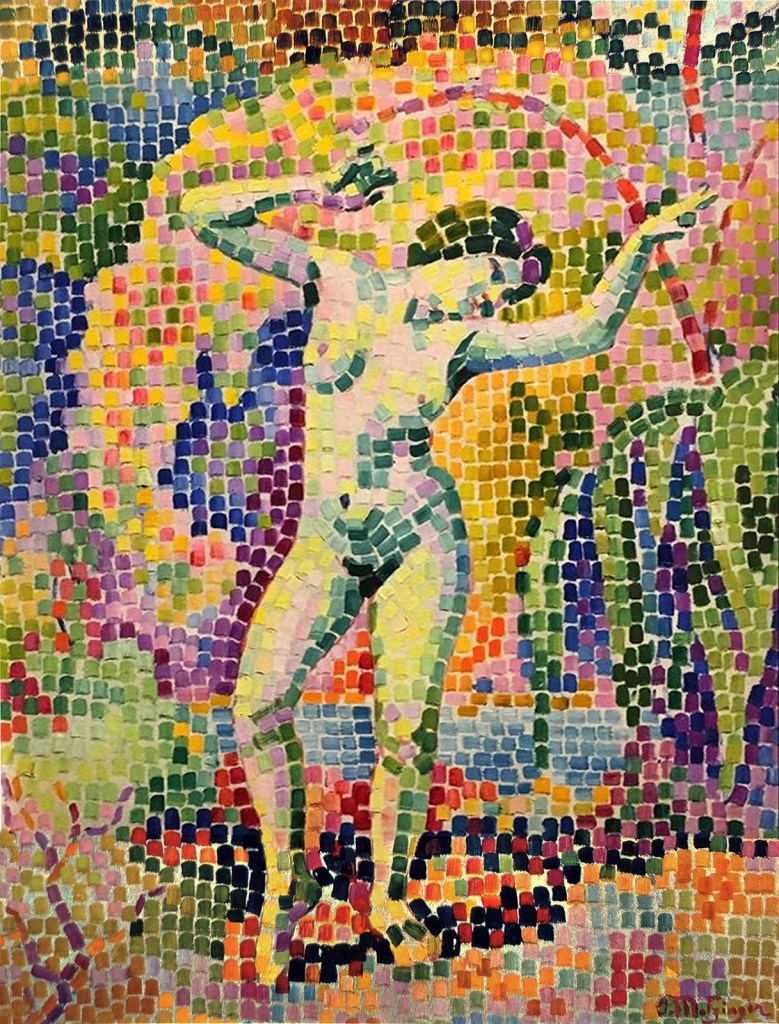
1906, La danse (Bacchante), oil on canvas, 73 x 54 cm. At the outbreak of World War I this painting from the collection of Wilhelm Uhde was confiscated by the French state and sold at Hôtel Drouot in 1921


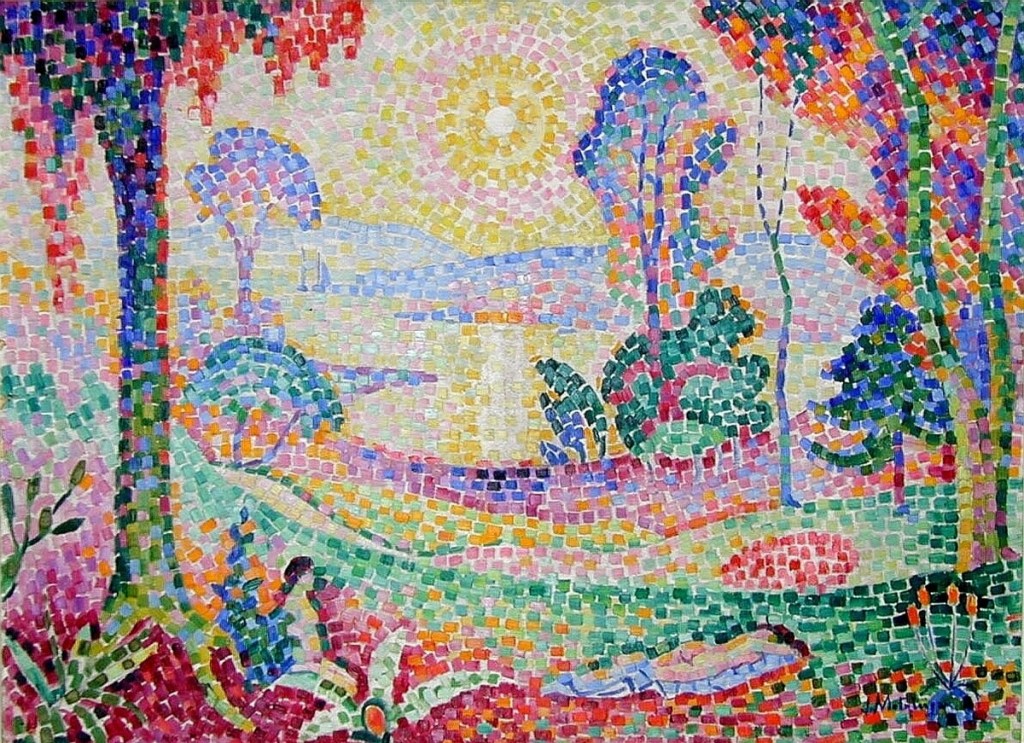
ca. 1906, Coucher de Soleil No. 1 (Landscape), oil on canvas, 72.5 x 100 cm, Kröller-Müller Museum, Otterlo, Netherlands
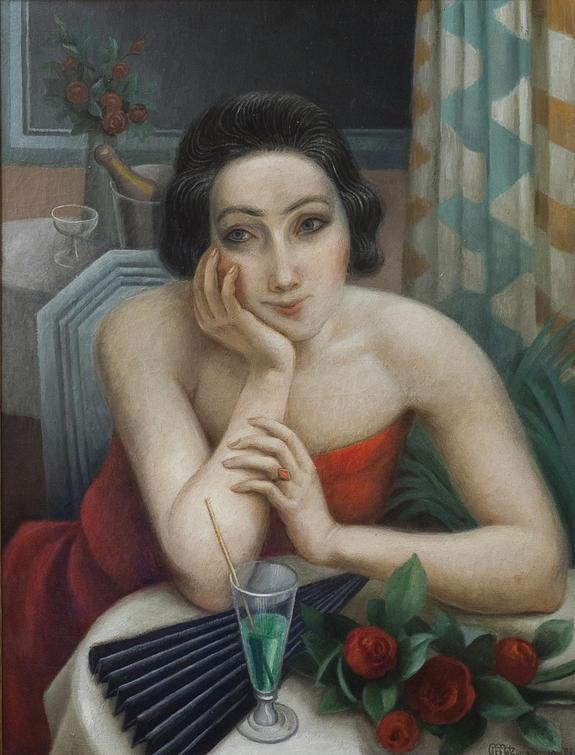
Jeune Femme pensive aux Roses rouges” 1923

c.1906, Femme au Chapeau (Woman with a Hat), oil on canvas, 44.8 x 36.8 cm, Korban Art Foundation
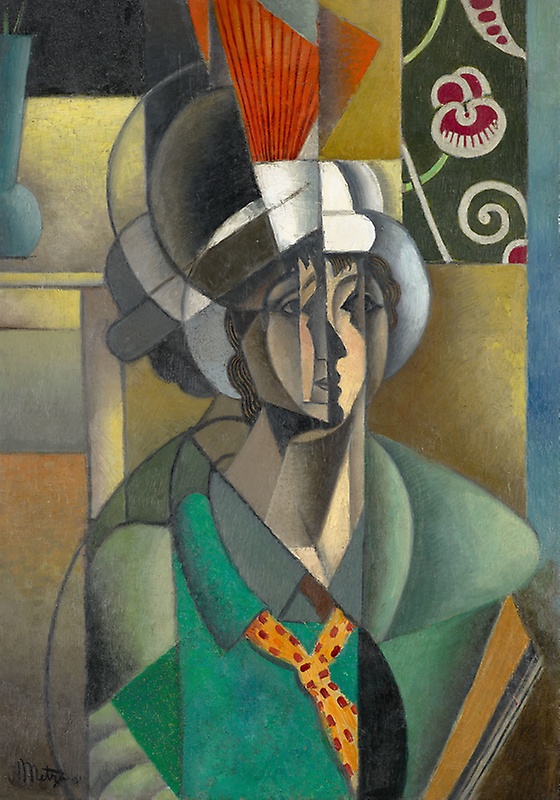
1913, La Femme à l’Éventail (Woman with a Fan), oil on canvas, 92.8 x 65.2 cm, Art Institute of Chicago, IL

April 1916, Femme au miroir (Femme à sa toilette, Lady at her Dressing Table), oil on canvas, 92.4 x 65.1 cm, private collection


thanks for stoppin’ by y’all
- Mac Tag
 The Lovers’ Chronicle
Leave a comment