Dear Zazie, Here is today’s Lovers’ Chronicle from Mac Tag dedicated to his muse. Do you have the right words for the right one? Rhett
The Lovers’ Chronicle
Dear Muse,
today you have a choice
”Ok my love”
you can choose for a song,
either the original by the Kinks,
written by Ray Davies,
or the cover by Van Halen
”Ah, you really got me,
and I really have to go
with the Kinks, no offense”
none taken, do not expect you
to follow my obsessions
as long as you respect ‘em
”Ditto”
the lyrics are not exactly profound
”No, but the hook is great”
the guitar riff some have called
the first hard rock riff
“But is it true”
absolutely,
you really got me
you really got me
you really got me
Oww

© copyright 2023.2024 mac tag/cowboy coleridge all rights reserved
the who, what, why of it all, since conception, the idea and purpose, the reason, beginnin’ as an unacknowledged need, an urge, the answer to the question; is there more than this, resoundingly answered, a complex rich roux simmerin’ till just right, had to git to where it could be served, had to learn how to weave the words together, that they would flow in the right direction to come hopefully near worthy for one as wondrous as you

© copyright 2022.2024 mac tag/cowboy coleridge all rights reserved
there have been a few
never claimed to be a monk
but from the High Plains
to the Gulf of Mexico
across to the Carolinas
then back to the High Plains
and now in the Peach State
through the lost years
to the finally found
without and with the verse
there has not been anyone
like you

© copyright 2021.2024 mac tag/cowboy coleridge all rights reserved
Pale Love, Pale Rider
a name
in the night
a pleadin’,
in the sleepless mind
always there
since first appearance
come unannounced
stay till want filled
and leave taken
when pleased
at the point
where this is all
that is left,
the only comfort
into the silence,
in this unforgivin’ night
© copyright 2020 mac tag/cowboy coleridge all rights reserved
this change of scenery
should benefit all involved
the verse, the first priority,
could use some fresh air
would be foolin’ myself
and y’all if i said i had
not considered
the greater likelihood
of romantic rendezvous
with this move from a place
that has far more cattle than people
to one of the biggest cities in the South
perhaps appropriate to say
this one is for the future you

© copyright 2019.2024 mac tag/cowboy coleridge all rights reserved
ordinary, does not interest
seekin’ only the high moments
for you, for me
for a losin’ all control,
fallin’ and lettin’ go,
knowin’ you will be caught feelin’
it was that way
please,
please tell me,
it was that way
a fragmentation
did i dream you
do you exist
at times it feels
as if you were here
at other times
it feels as if
you were long ago
© copyright 2018 mac tag/cowboy coleridge all rights reserved
caution…
will talk on and on
about good light
will pull the truck over
to write some verse
will git lost
in daydreams,
in your eyes
the moon comes and goes,
a river on a starry night
look round you
can it be as it was
roam wheresoe’er i may,
by night or day
the things i have seen
i cannot forget
must accept as is
© copyright 2017 mac tag/cowboy Coleridge all rights reserved
Rememberin’…
The blackness paled to gray
A faint shadow
from somethin’ overhead
The face seemed to change
Do not take me back there
© copyright 2016 mac tag/cowboy Coleridge all rights reserved
Did y’all know that
Superman is
impervious
to pressure. Damn
good thing. Oh look
here comes some more
***
Up there; the wind
blows and the view
stretches out for
miles. The silence
permeates all
They lie there mute
against all time
Up there; safety
The wind comforts
Hear the whispers
They listen, they
know there is not
another way
Turnin’, always
turnin’, away
from what matters
From what is right
Darkness descends
Soon to be all
encompassin’
As it must be
So shall it be
I saw the tears
in your eyes and
I wanted to
hold you and make
it go away
I know your pain
I feel your tears
I wish i could
take it away
© copyright 2015 mac tag/cowboy Coleridge all rights reserved
for SKK – the first lyrics i wrote
At first my words were few
And far between
I was holdin’
And foldin’ ’em
Not to be heard
Not to be seen
When my words came
They were too harsh
I was throwin’ ’em
And blowin’ ’em
With no regard
With no respect
Now my words are true
And they are real
I’m shapin’ ’em
And makin’ ’em
Just what I feel
Just for you
© copyright 1998 mac tag all rights reserved
Today is the birthday of Egon Schiele (Tulln an der Donau, Austro-Hungarian Empire; 12 June 1890 – 31 October 1918 Vienna); painter. A protégé of Gustav Klimt, Schiele was a major figurative painter of the early 20th century. His work is noted for its intensity and its raw sexuality, and the many self-portraits the artist produced, including naked self-portraits. The twisted body shapes and the expressive line that characterize Schiele’s paintings and drawings mark the artist as an early exponent of Expressionism.
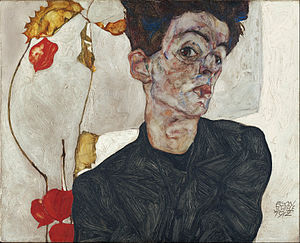
Self portrait
In 1911, Schiele met the seventeen-year-old Walburga (Wally) Neuzil, who lived with him in Vienna and served as a model for some of his most striking paintings. Very little is known of her, except that she had previously modelled for Gustav Klimt and might have been one of his mistresses. Schiele and Wally went to the small town of Český Krumlov (Krumau) in southern Bohemia. Krumau was the birthplace of Schiele’s mother; today it is the site of a museum dedicated to Schiele. Despite Schiele’s family connections in Krumau, he and his lover were driven out of the town by the residents, who strongly disapproved of their lifestyle, including his alleged employment of the town’s teenage girls as models. In 1914, Schiele glimpsed the sisters Edith and Adéle Harms, who lived with their parents across the street from his studio in the Viennese suburb of Hietzing, 101 Hietzinger Hauptstrasse. In 1915, Schiele chose to marry the more socially acceptable Edith, but had apparently expected to maintain a relationship with Wally. However, when he explained the situation to Wally, she left him immediately and never saw him again. This abandonment led him to paint Death and the Maiden, where Wally’s portrait is based on a previous pairing, but Schiele’s is newly struck. Despite some opposition from the Harms family, Schiele and Edith were married on 17 June 1915, the anniversary of the wedding of Schiele’s parents. In the autumn of 1918, the Spanish flu pandemic that claimed more than 20,000,000 lives in Europe reached Vienna. Edith, who was six months pregnant, succumbed to the disease on 28 October. Schiele died only three days after his wife. He was 28 years old. During the three days between their deaths, Schiele drew a few sketches of Edith.


Gallery
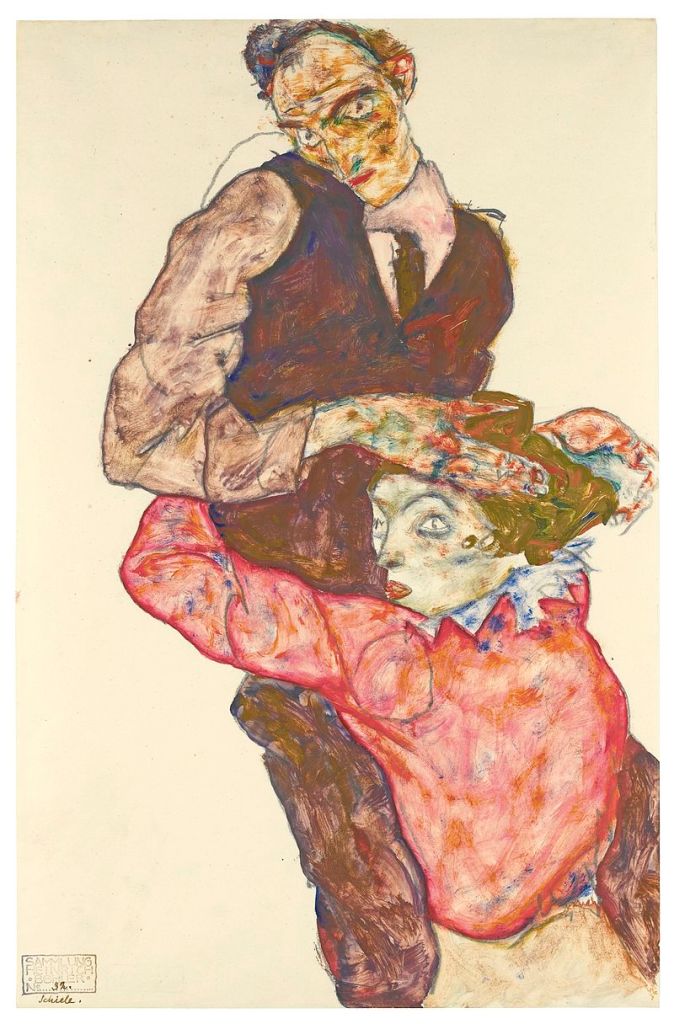
Lovers – Self-Portrait With Wally, c. 1914 – 1915
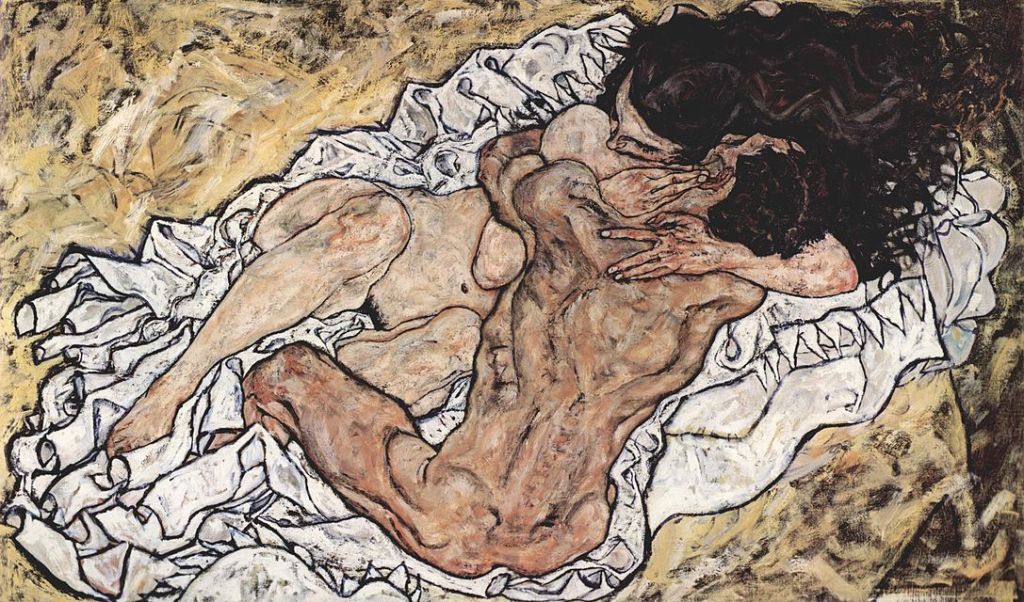
Pair embracing, 1917
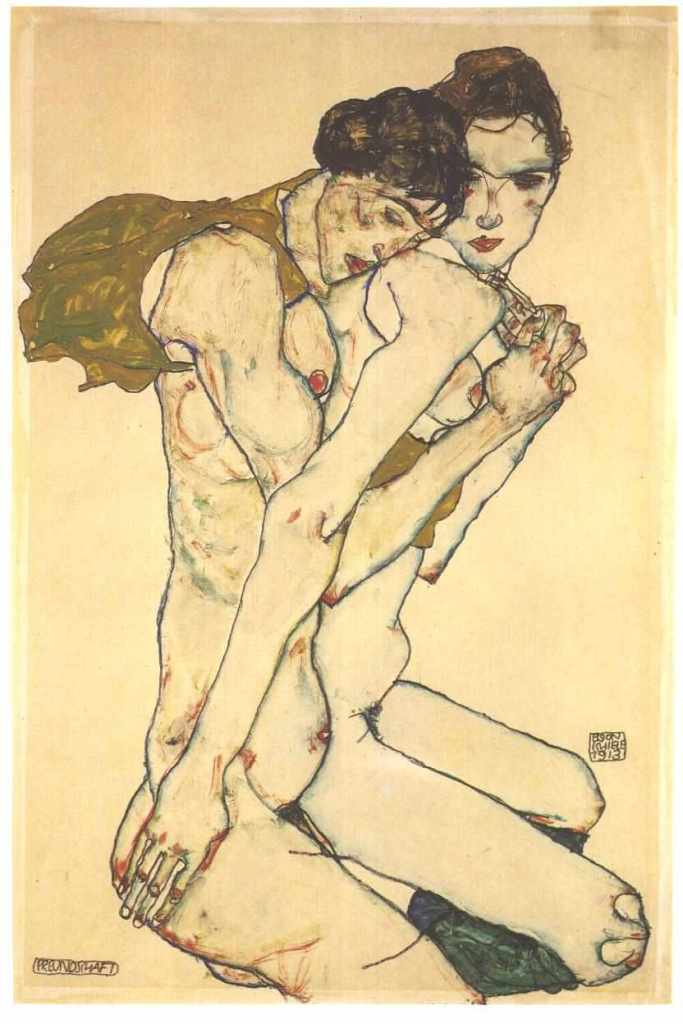
Friendship, 1913
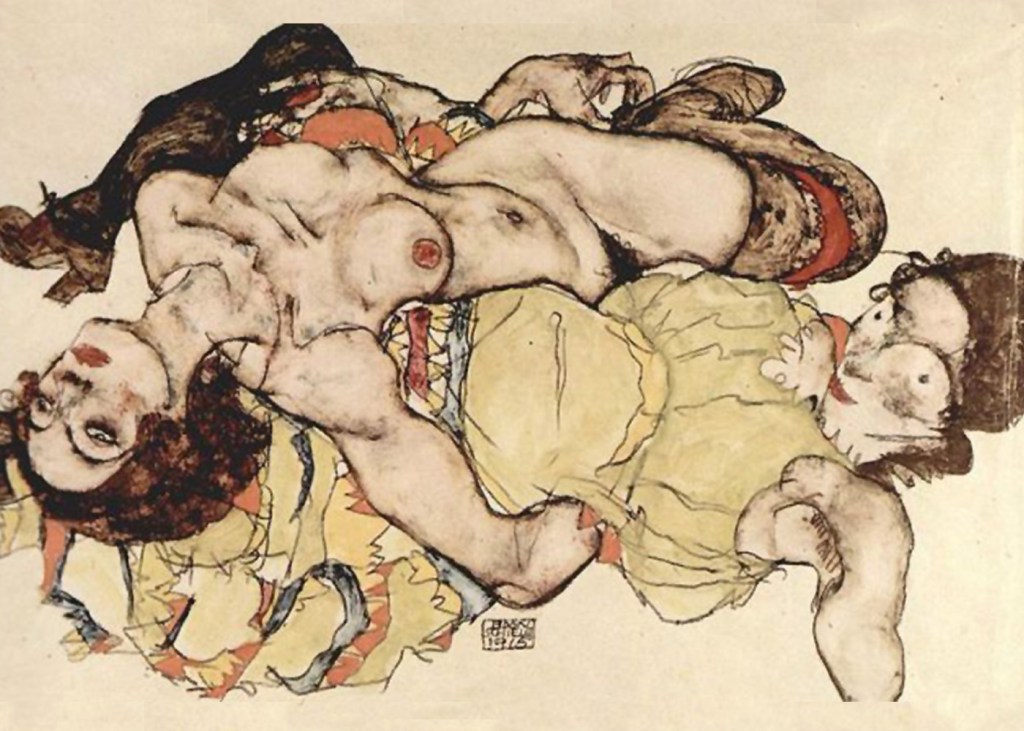
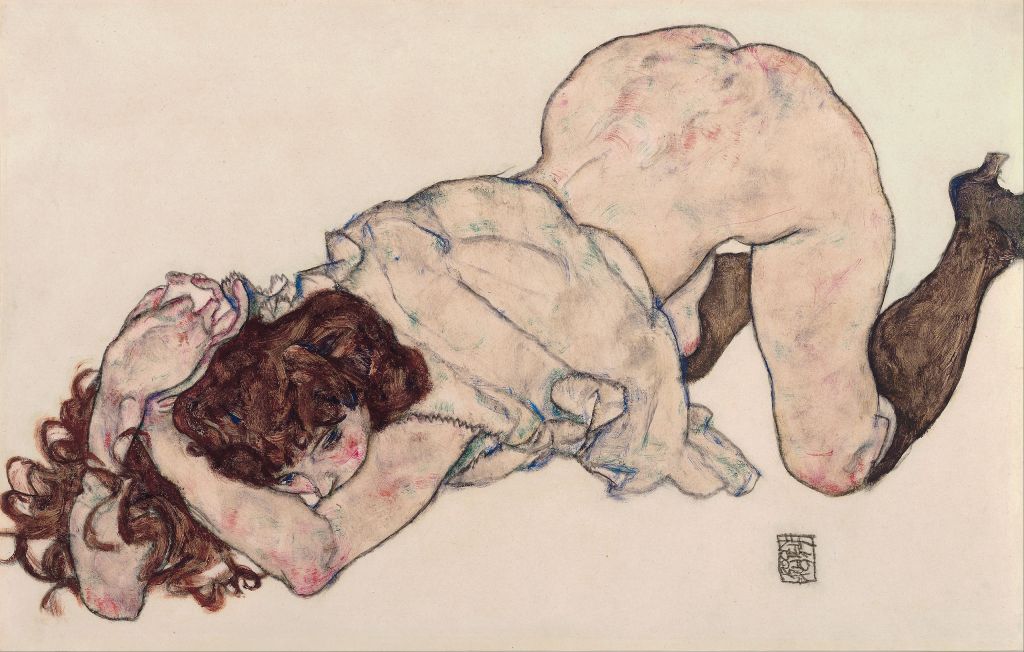
Kneeling Girl, Resting on Both Elbows 1917 Leopold Museum
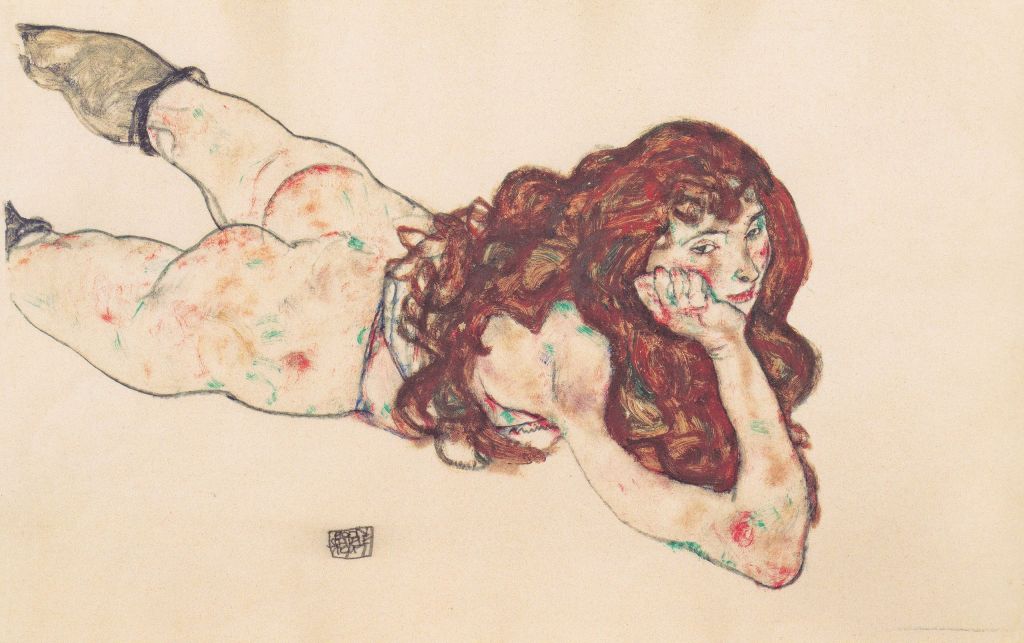
Nude, 1917
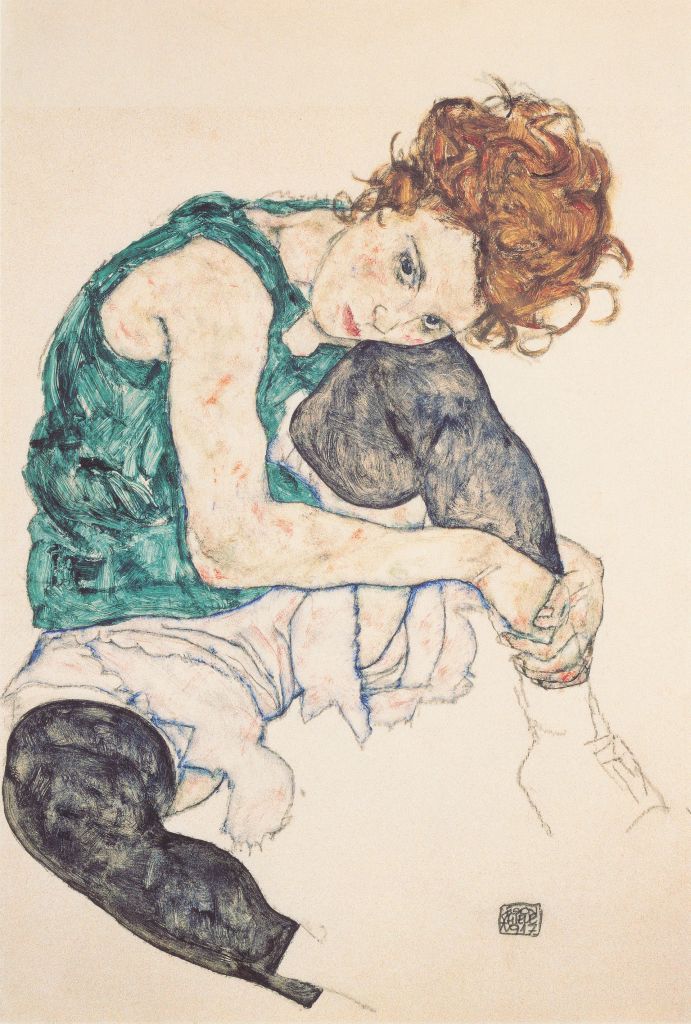
Seated woman with bent knees, 1917, National Gallery Prague
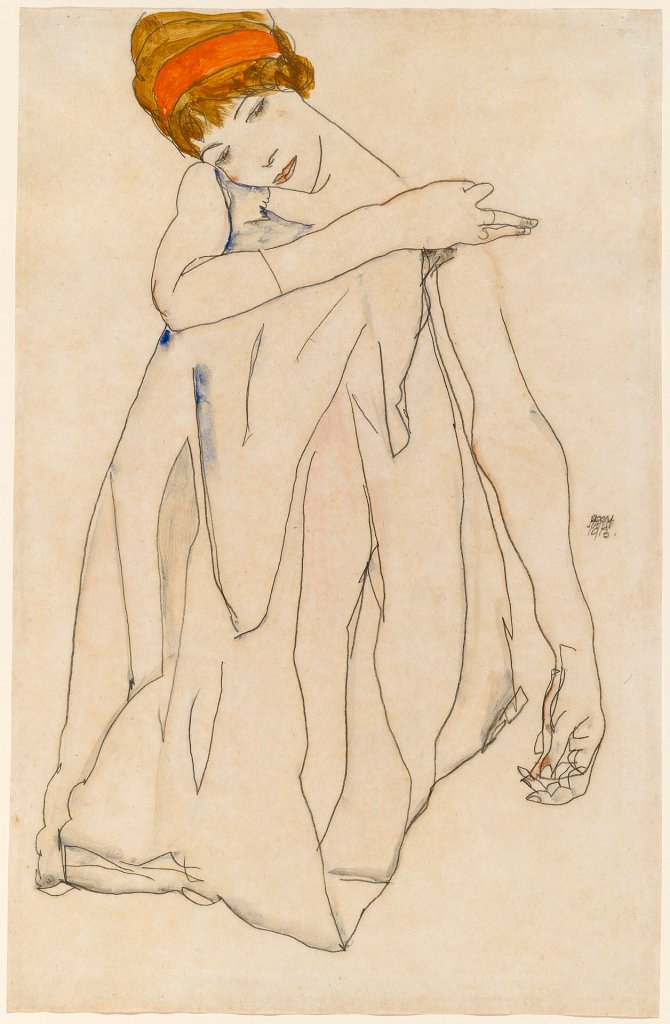
Dancer
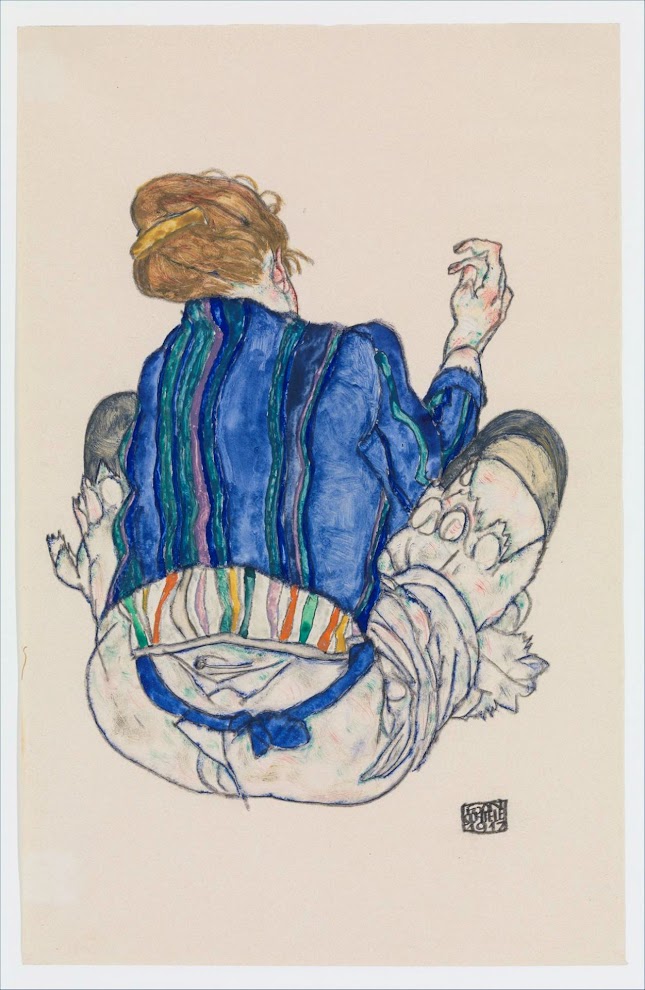

Portrait of Wally, 1912
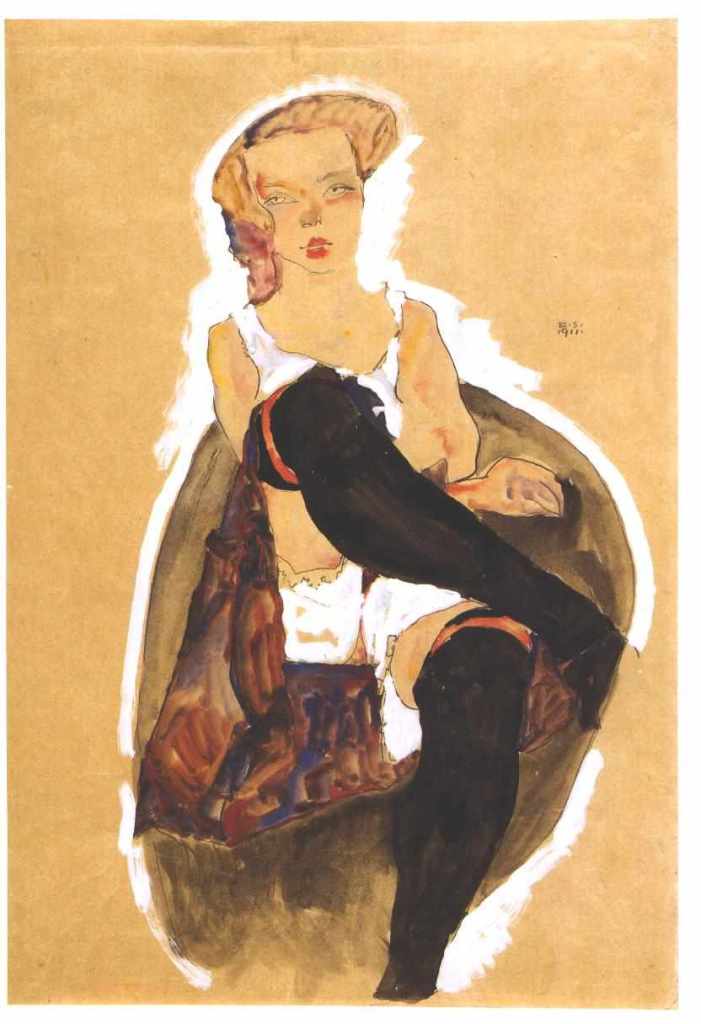
Semi-nude Reclining 1911
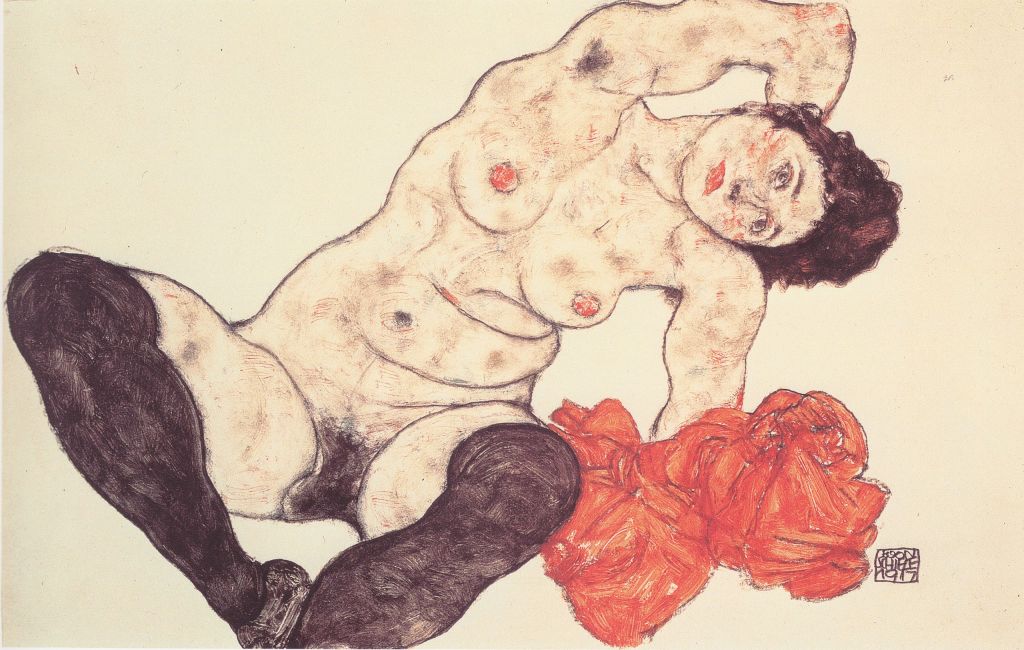
Sitting girl, 1917
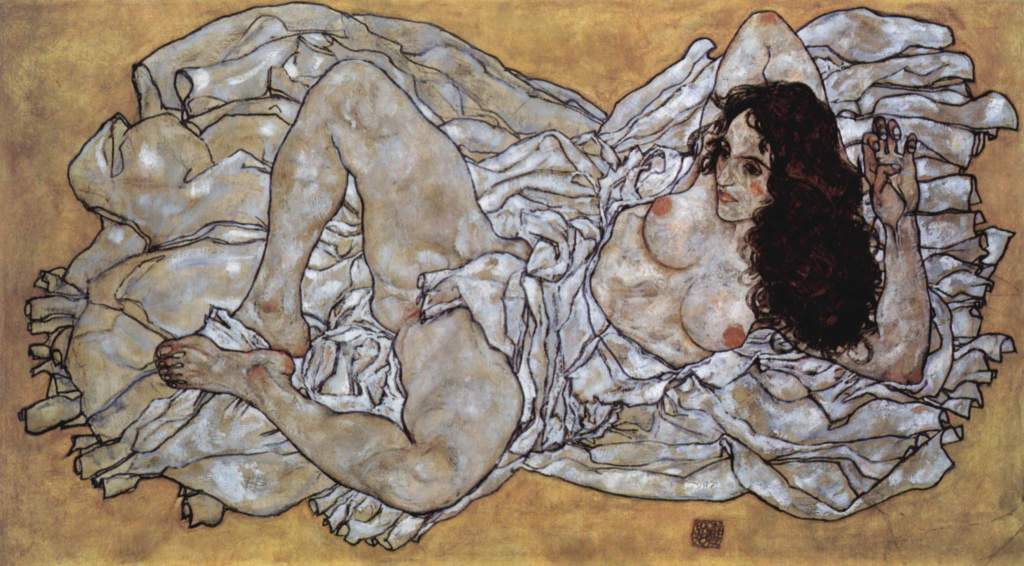
Reclining woman, 1917 Leopold Museum
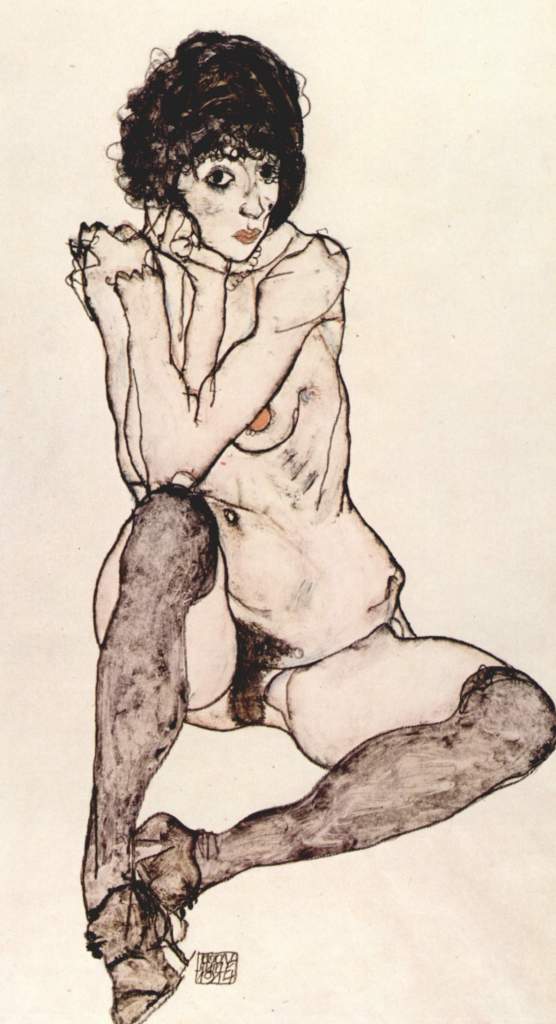
Seated female nude with elbows propped, 1914
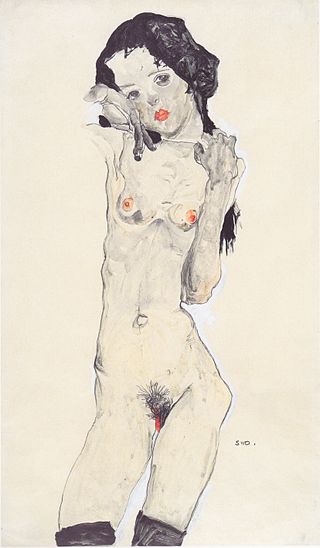
Girl with black hair 1910
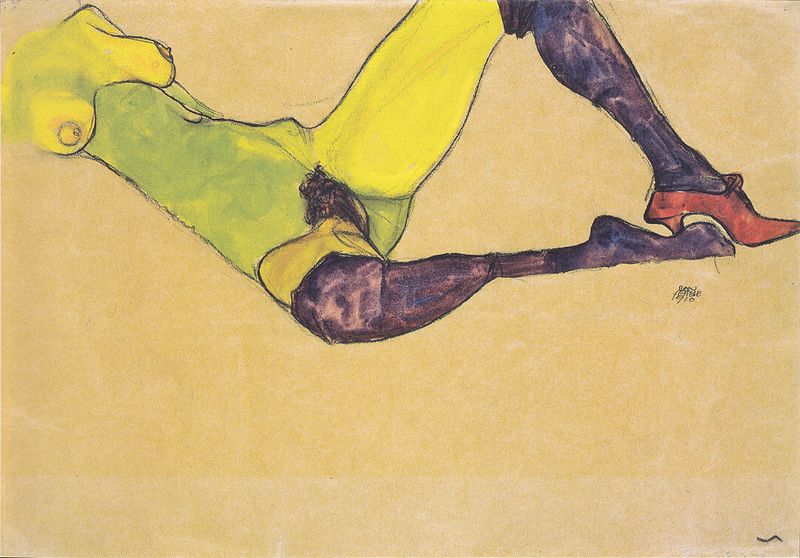
Reclining nude, 1910
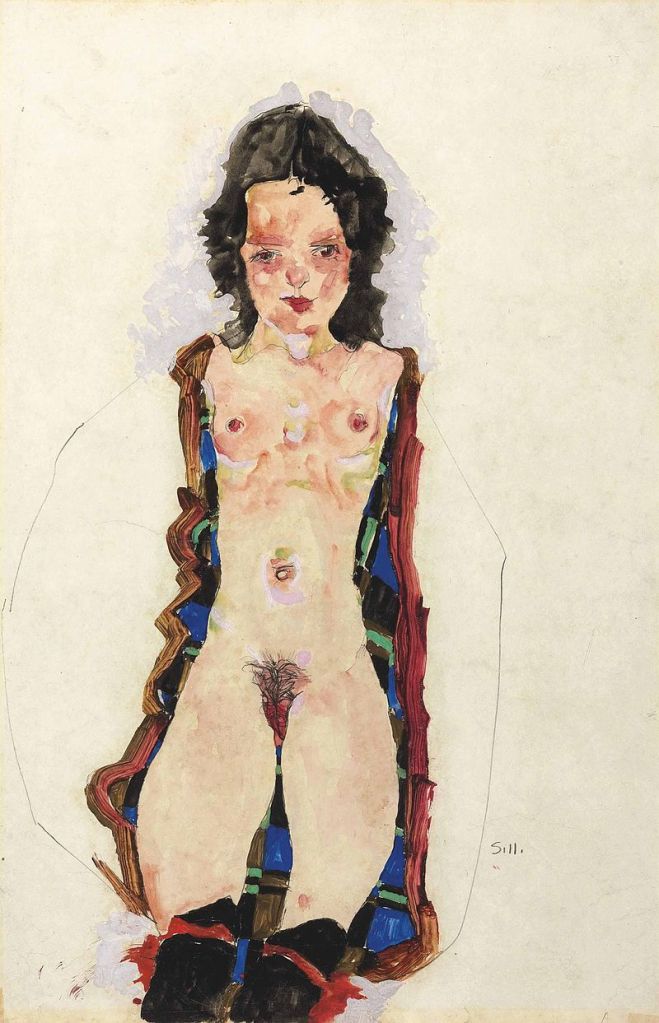
Nude with Red Garters, 1911
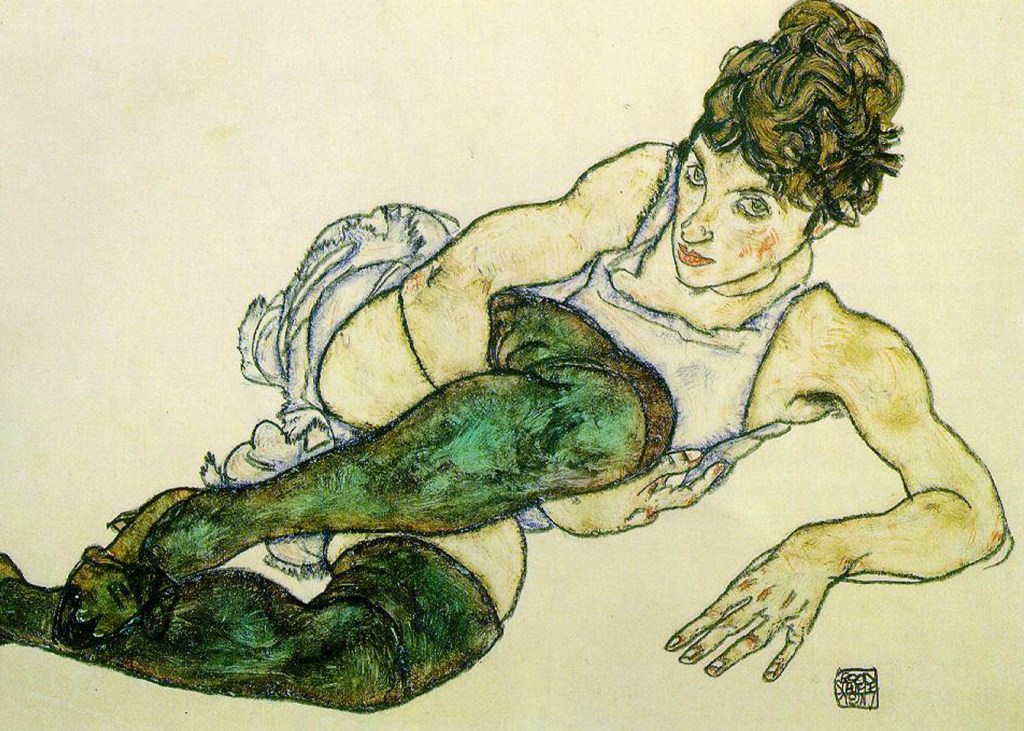
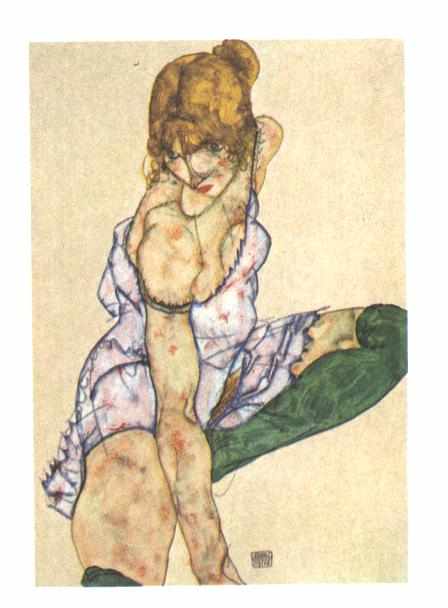
Blonde girl in green stockings, 1914
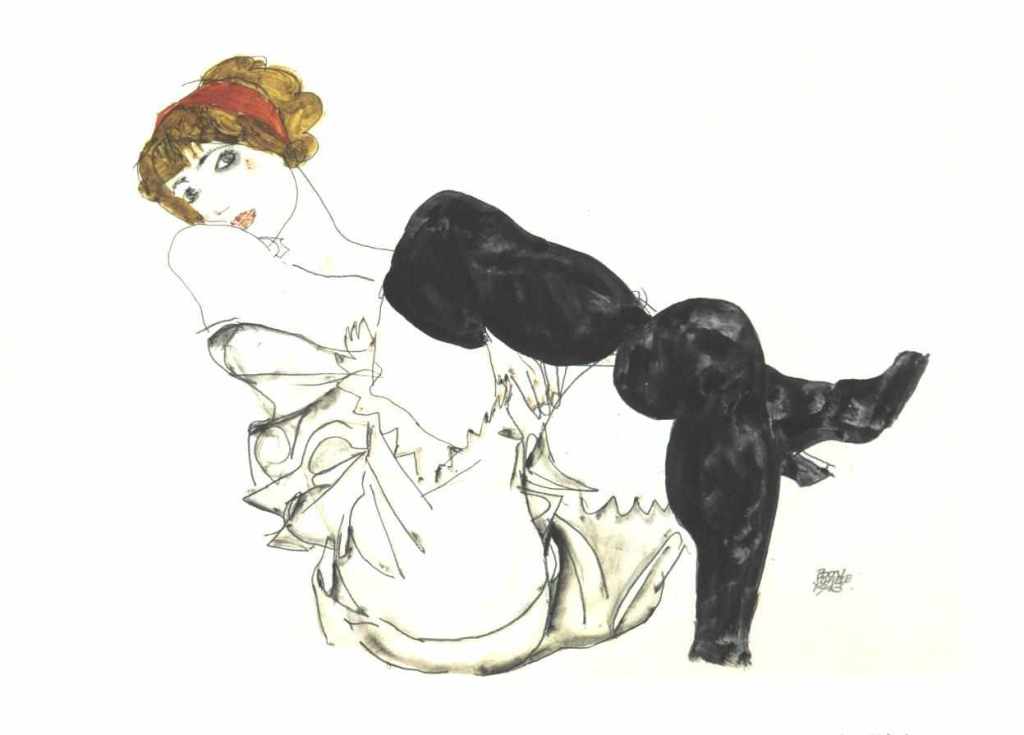
Walburga Neuzil in black stockings, 1913
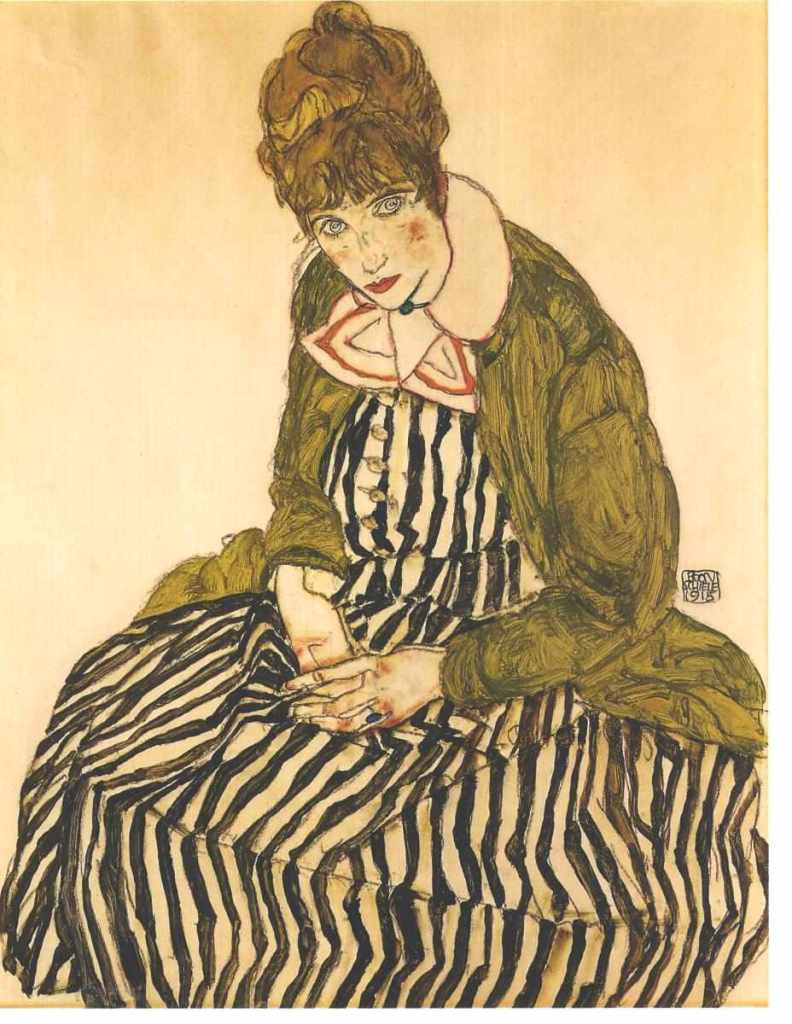
Edith Schiele 1915
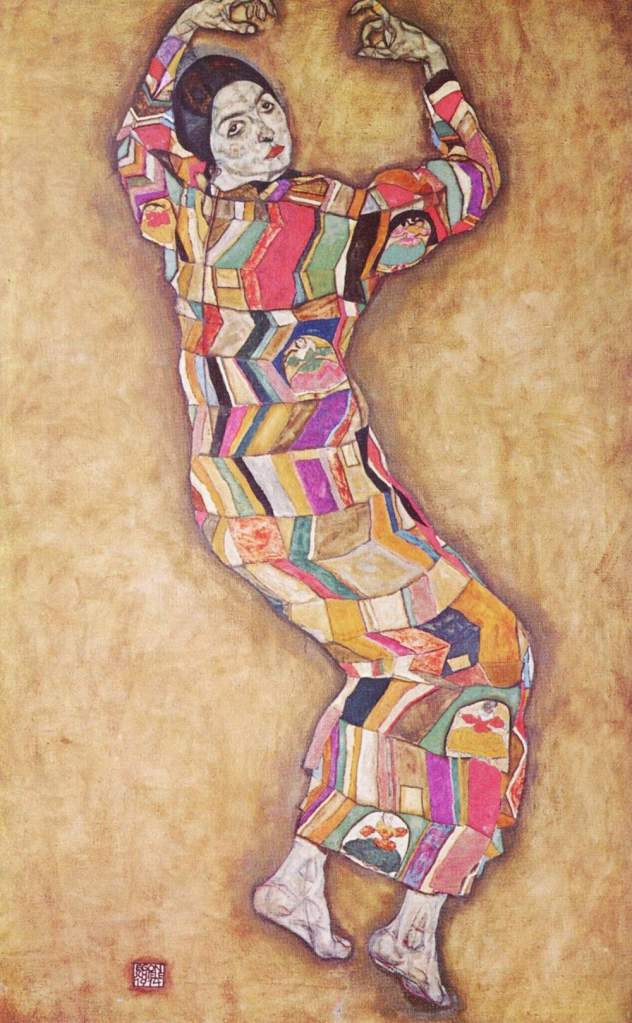
Frederike Beer, 1914
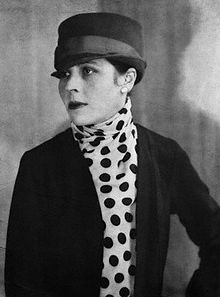
today is the birthday of Djuna Barnes (Storm King Mountain, New York; June 12, 1892 – June 18, 1982 Greenwich Village); novelist, poet, playwright, and artist best known for her novel Nightwood (1936), a cult classic of lesbian fiction and an important work of modernist literature.
In 1913, Barnes began her career as a freelance journalist and illustrator for the Brooklyn Daily Eagle. By early 1914, Barnes was a highly sought feature reporter, interviewer, and illustrator whose work appeared in the city’s leading newspapers and periodicals. Later, Barnes’s talent and connections with prominent Greenwich Village bohemians afforded her the opportunity to publish her prose, poems, illustrations, and one-act plays in both avant-garde literary journals and popular magazines, and publish an illustrated volume of poetry, The Book of Repulsive Women (1915).
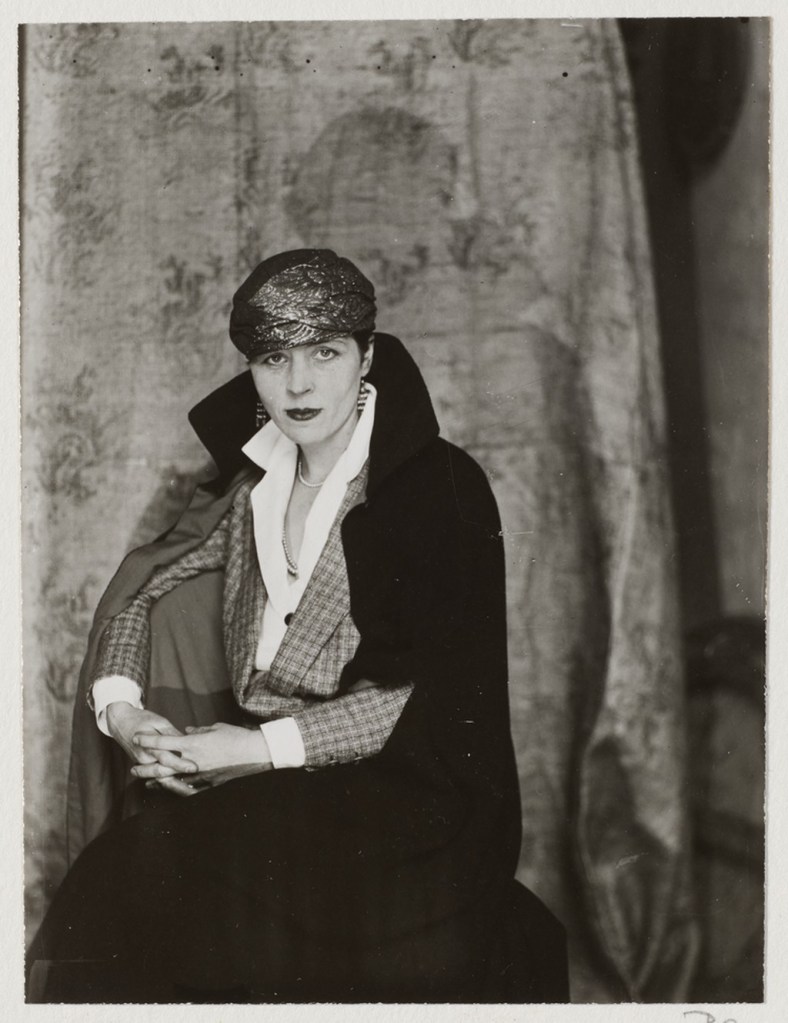
by Berenice Abbott, 1926
In 1921, a lucrative commission with McCall’s took Barnes to Paris, where she lived for the next 10 years. In this period she published A Book (1923), a collection of poetry, plays, and short stories, which was later reissued, with the addition of three stories, as A Night Among the Horses (1929), Ladies Almanack (1928), and Ryder (1928).
During the 1930s, Barnes spent time in England, Paris, New York, and North Africa. It was during this restless time that she wrote and published Nightwood. In October 1939, after nearly two decades living mostly in Europe, Barnes returned to New York. She published her last major work, the verse play The Antiphon, in 1958, and she died in her apartment at Patchin Place.
In the 1920s, Paris was the center of modernism in art and literature. She interviewed her fellow expatriate writers and artists for U.S. periodicals and soon became a well-known figure on the local scene; her black cloak and her acerbic wit are remembered in many memoirs of the time. Even before her first novel was published, her literary reputation was already high, largely on the strength of her story “A Night Among the Horses,” which was published in The Little Review and reprinted in her 1923 collection A Book. She was part of the inner circle of the influential salon hostess Natalie Barney, who became a lifelong friend and patron, as well as the central figure in Barnes’s satiric chronicle of Paris lesbian life, Ladies Almanack. The most important relationship of Barnes’s Paris years was with the artist Thelma Wood. Wood was a Kansas native who had come to Paris to become a sculptor, but at Barnes’s suggestion took up silverpoint instead, producing drawings of animals and plants that one critic compared to Henri Rousseau. By the winter of 1922 they had set up housekeeping together in a flat on the Boulevard Saint-Germain. Another close friendship that developed during this time was with the Dada artist Baroness Elsa von Freytag-Loringhoven, with whom Barnes began an intensive correspondence in 1923. ‘’Where Wood gave Barnes a doll as a gift to represent their symbolic love child, the Baroness proposed an erotic marriage whose love-child would be their book.” From Paris, Barnes supported the Baroness in Berlin with money, clothing, and magazines. She also collected the Baroness’s poems and letters.
Quotes
Someday beneath some hard
Capricious star —
Spreading its light a little
Over far,
We’ll know you for the woman
That you are.
- From Fifth Avenue Up
Somewhere beneath her hurried curse,
A corpse lies bounding in a hearse;
And friends and relatives disperse,
And are not stirred.
- From Third Avenue On
- One sees you sitting in the sun
Asleep;
With the sweeter gifts you had
And didn’t keep,
One grieves that the altars of
Your vice lie deep.- Twilight of the Illicit
- We watched her come with subtle fire
And learned feet,
Stumbling among the lustful drunk
Yet somehow sweet. - We saw the crimson leave her cheeks
Flame in her eyes;
For when a woman lives in awful haste
A woman dies. - The jests that lit our hours by night
And made them gay,
Soiled a sweet and ignorant soul
And fouled its play.- To a Cabaret Dancer
and on this day in 1968, Rosemary’s Baby an American psychological horror filmwritten and directed by Roman Polanski, based on Ira Levin’s 1967 novel. The film stars Mia Farrow as the titular Rosemary, a newlywed living in Manhattan who becomes pregnant, but soon begins to suspect that her neighbors have sinister intentions regarding her and her baby. The film’s supporting cast includes John Cassavetes, Ruth Gordon, Sidney Blackmer, Maurice Evans, Ralph Bellamy, Patsy Kelly, Angela Dorian, and Charles Grodin in his feature film debut.
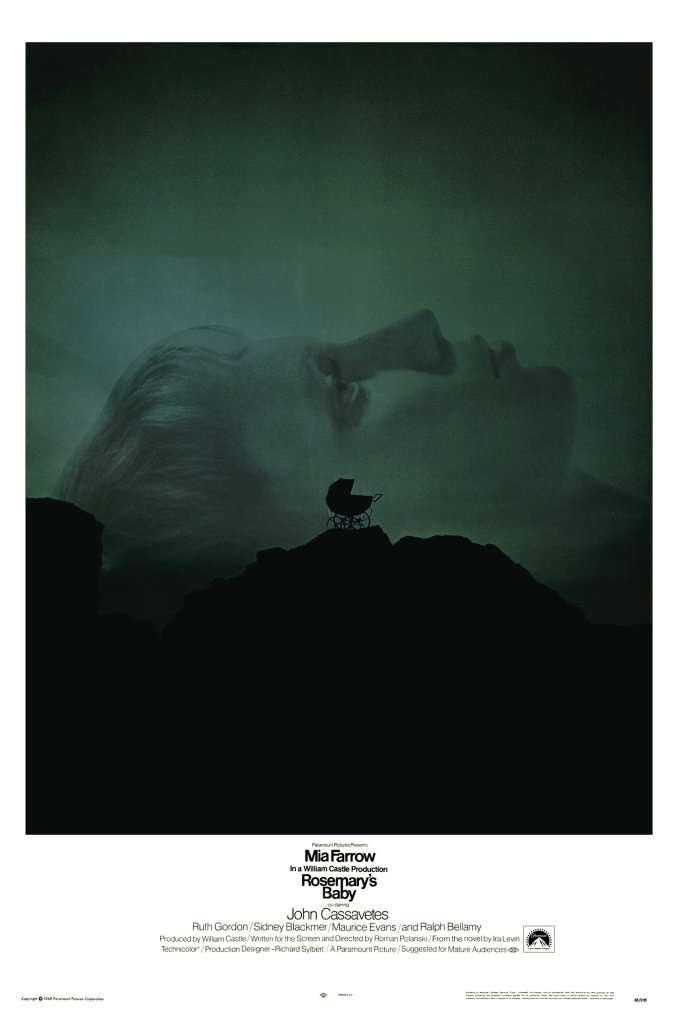
Theatrical release poster by Philip Gips
thanks for stoppin’ by y’all
Mac Tag
 The Lovers’ Chronicle
Leave a reply to The Lovers’ Chronicle 1 July – towards – art by Rhoda Delaval & Willard Metcalf – birth of George Sand – The Lovers’ Chronicle Cancel reply