Dear Zazie, Here is today’s Lovers’ Chronicle from Mac Tag. Remember y’all, at TLC we celebrate all forms of love; true love, lost love, unrequited love, mad love, shadow love, random love, and abandoned love. Rhett
The Lovers’ Chronicle
Dear Muse,
the theme was originally, vesture of sorrow
which opens the door on findin’ a song
the first to come to mind was a David Bowie
cover from his Pin Ups album written by
Bob Feldman, Jerry Goldstein, Richard Gottehrer;
“With your long blonde hair and your eyes of blue
The only thing I ever got from you
Was sorrow
Sorrow”
remind you of someone
”Had it said long white hair maybe”
hey there is still some blonde in there
”Ha, just teasing, yes if I squint I see it”
you are hilarious, and the hair is not all
that has changed, my draped in sorrow
days have faded in the rear view
and these still blue eyes
only want to give you
beauty

© copyright 2023.2024 mac tag/cowboy coleridge all rights reserved
born in the particularly gloomy days, this topic, meant as a shroud made up of all the sad poems to be worn as penance, perhaps as a statement, an explanation for how one finds their way into a series of sorrowful events, plenty of wonderin’ was done, aloud and in print, whether i attracted sorrow or brought it out in the women i romanced, ‘spect a bit of both, but will say again, lay the blame here, now we can focus on weavin’ a vesture of bliss

© copyright 2022.2024 mac tag/cowboy coleridge all rights reserved
some asked why
well, more than some
i knew i could not fix it
so i had to stand it
weren’t no reins on it
and it damn near
cost me everything
but i stood it
and here i am
still fairly sound
and still me
and i have but this
to offer, this place
i hold dear
for you to join
© copyright 2021 mac tag/cowboy coleridge all rights reserved
Pale Love, Pale Rider
“Thank you.”
my pleasure
still to be
to be presum’d,
no hidden causes here
give me a look,
simplicity a grace
verse loosely flowin’,
such memories
more taketh me
they strike mine eyes
come, let us prove,
while we can,
time will be ours
“I wish I could set you free.”
me too
© copyright 2020 mac tag/cowboy coleridge all rights reserved
movin’ on
done a time or two
since solo, focus on one of those;
to Park Falls and Italian Gina,
yes, named after Lollobrigida,
raised in Peru, she also belonged
to the black, brown, cinnamon club
she was waitin’ at a bus stop in downtown Houston
i walked right up to her and introduced myself
she smiled the most beautiful smile i had ever seen
we chatted a few minutes then her bus came
i asked if i could ride with her and she said yes
i had no idea where the bus was goin’
luckily, Houston bein’ big as hell, the ride
took about an hour and we talked all the way
communication was a bit of a challenge,
she had never heard a High Plains drawl before
i had never heard a blended Italian/Spanish accent
we parted at her stop but i had her number
she was the livin’ definition of beauty,
and she was funny and she had almost
as much baggage as i did
there are more Gina stories
but i will save them for another day
wrapped in a vesture of joy and sorrow
© copyright 2019.2024 mac tag/cowboy coleridge all rights reserved
a name
in an endless night
a call
a pleadin’,
in the sleepless mind,
to give
that which is needed
always there
in the shadows
in the recesses
of the restless mind
since first appearance
come unannounced
stay till want filled
and leave taken
when pleased
the point
where this is all
that is left
the only comfort
have to have
the verse
into the silence,
in this unforgivin’ night
in the vesture of sorrow
© copyright 2018 mac tag/cowboy coleridge all rights reserved
Callin’ out her name
In the darkness
of an endless night
Callin’ for her to come
To lay beside him
But she would not come
Pleadin’ with her
In the black
of his sleepless mind
Pleadin’ with her to give him
that which he needed
But she took no heed
He knew she was there
She was always there
In the shadows
In the recesses
of his restless mind
Since she had first appeared
she came unannounced
stayed as long as she wanted
and took her leave when she pleased
Now, he needed her
He had reached the point
where she was all he had left
Where she provided
the only comfort
in the pool of his despair
He had to have the words
Then, of a sudden,
into the silence,
in this unforgivin’ night,
she came, and whispered
Vengeance earned is vengeance due
Walk in the vesture of sorrow
© copyright 2017 mac tag/cowboy coleridge all rights reserved
Early night blackness clears
to cool starlight
The horses are not movin'
No sound disturbed
the silence of the canyon

Hours passed
The white stars moved
across the narrow strip
of dark-blue sky above
Watchin'
Waitin'
Thoughts
Only of sadness

Thoughts
only of sadness,
the truth
of the moment
dyin'

The after-part of night
wore on interminably
blackened
to the darkest hour
Perhaps
at the gray of dawn...
Rememberin'
© copyright 2016 mac tag/cowboy Coleridge all rights reserved
Feo, fuerte y formal
Yeah, pretty much sums it up
So, seriously
What would be the point
I do not feel, so
it does not matter
“Will you ever want?”
That’ll be the day!
“Will you ever care?”
That’ll be the day!
“Will you ever need?”
That’ll be the day!
“Will you ever love?”
That’ll be the day!
Really rare beauty
So close, yet so far
“Gonna hold
on to hope?”
Not hardly!
© copyright 2015 mac tag/cowboy Coleridge all rights reserved
Today is the birthday of Ben Jonson (Benjamin Jonson; Westminster, London; c. 11 June 1572 – 6 August 1637 London); playwright, poet, actor and literary critic, whose artistry exerted a lasting impact upon English poetry and stage comedy. He popularised the comedy of humours. Perhaps best known for the satirical plays Every Man in His Humour (1598), Volpone, or The Foxe (1605), The Alchemist (1610) and Bartholomew Fayre: A Comedy (1614) and for his lyric poetry. Jonson is generally regarded as the second most important English dramatist, after William Shakespeare, during the reign of James I. Jonson was a classically educated, well-read and cultured man of the English Renaissance with an appetite for controversy (personal, political, artistic, and intellectual) whose cultural influence was felt upon the playwrights and the poets of the Jacobean era (1603–1625) and of the Caroline era (1625–1642).
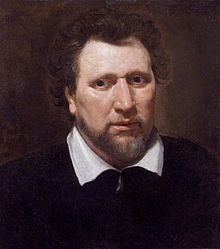
Jonson described his wife to William Drummond as “a shrew, yet honest”. The identity of Jonson’s wife is obscure, though she sometimes is identified as “Ann Lewis”, the woman who married a Benjamin Jonson in 1594, at the church of St Magnus-the-Martyr, near London Bridge.
The registers of St Martin-in-the-Fields record that Mary Jonson, their eldest daughter, died in November 1593, at six months of age. A decade later, in 1603, Benjamin Jonson, their eldest son, died of bubonic plague when he was seven years old, upon which Jonson wrote the elegiac “On My First Sonne” (1603). A second son, also named Benjamin Jonson, died in 1635.
Jonson and his wife lived separate lives for five years; Jonson enjoyed the residential hospitality of his patrons, Esme Stuart, 3rd Duke of Lennox and 7th Seigneur d’Aubigny and Sir Robert Townshend.
quotes
Still to be powder’d, still perfum’d,
Lady, it is to be presum’d,
Though art’s hid causes are not found,
All is not sweet, all is not sound.
Give me a look, give me a face,
That makes simplicity a grace;
Robes loosely flowing, hair as free,
Such sweet neglect more taketh me
Than all the adulteries of art:
They strike mine eyes, but not my heart.
- Epicene, or The Silent Woman (1609), Act I, scene I
The Works of Ben Jonson, First Folio (1616)
The Forest
- Come my Celia, let us prove,
While we can, the sports of love;
Time will not be ours forever,
He at length our good will sever.
Spend not then his gifts in vain;
Suns that set may rise again,
But if once we lose this light,
‘Tis with us perpetual night.
Why should we defer our joys?
Fame and rumour are but toys.- Song, To Celia, lines 1-10.
- Compare Catullus, Carmina V
- Song, To Celia, lines 1-10.
- Follow a shadow, it still flies you;
Seem to fly it, it will pursue:
So court a mistress, she denies you;
Let her alone, she will court you.- That Women Are But Men’s Shadows, lines 1-4.
- Drink to me only with thine eyes,
And I will pledge with mine;
Or leave a kiss but in the cup
And I’ll not look for wine.
The thirst that from the soul doth rise
Doth ask a drink divine;
But might I of Jove’s nectar sup,
I would not change for thine.
I sent thee late a rosy wreath,
Not so much honoring thee
As giving it a hope that there
It could not withered be.
But thou thereon didst only breathe,
And sent’st it back to me;
Since when it grows and smells, I swear,
Not of itself, but thee.- Song, To Celia, lines 1-16; this poem was inspired by “Letter XXIV” of Philostratus, which in translation reads: “Drink to me with your eyes alone… And if you will, take the cup to your lips and fill it with kisses, and give it so to me”.
The Works of Ben Jonson, Second Folio (1640)
Underwoods
- I now think, Love is rather deaf, than blind,
For else it could not be,
That she,
Whom I adore so much, should so slight me,
And cast my love behind.- IX, My Picture Left in Scotland, lines 1-5.
The voice so sweet, the words so fair,
As some soft chime had stroked the air;
And, though the sound were parted thence,
Still left an echo in the sense.
- LXXXIV, Eupheme, part 4, lines 37-40
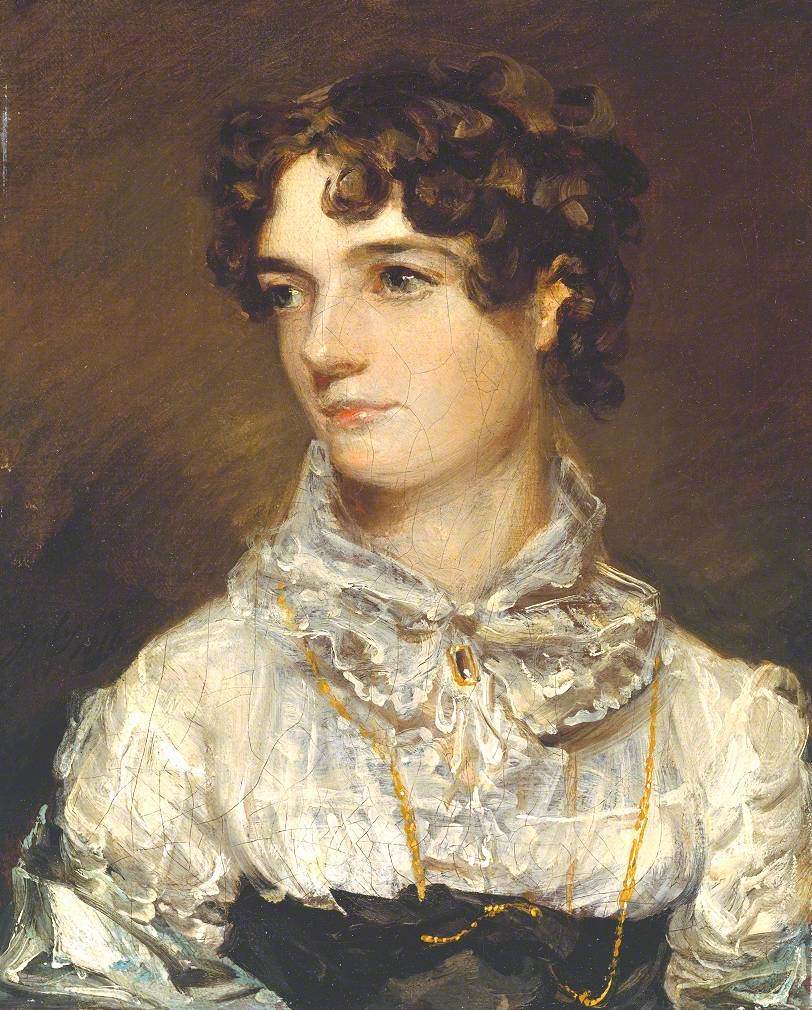
Today is the birthday of John Constable (East Bergholt, Suffolk, England 11 June 1776 – 31 March 1837 Hampstead, London); Romantic painter. Perhaps best known for his landscape paintings of Dedham Vale, the area surrounding his home—now known as “Constable Country”. “I should paint my own places best”, he wrote to his friend John Fisher in 1821, “painting is but another word for feeling”. His most famous paintings include Wivenhoe Park of 1816, Dedham Vale of 1802 and The Hay Wain of 1821. Although his paintings are now among the most popular and valuable in British art, Constable was never financially successful. He did not become a member of the establishment until he was elected to the Royal Academy at the age of 52. His work was embraced in France, where he sold more works than in his native England and inspired the Barbizon school.
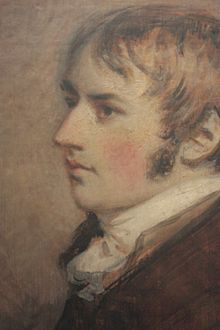
by Daniel Gardner, 1796
His childhood friendship with Maria Elizabeth Bicknell developed into a deep, mutual love. Their marriage in October 1816 at St Martin-in-the-Fields was followed by a honeymoon tour of the south coast. The sea at Weymouth and Brighton stimulated Constable to develop new techniques of colour and brushwork. After the birth of their seventh child in January 1828, Maria fell ill and died of tuberculosis on 23 November, at the age of 41. Intensely saddened, Constable wrote to his brother Golding, “hourly do I feel the loss of my departed Angel—God only knows how my children will be brought up…the face of the World is totally changed to me”. Thereafter, he dressed in black and was, “a prey to melancholy and anxious thoughts”. He cared for his seven children alone for the rest of his life.

Gallery
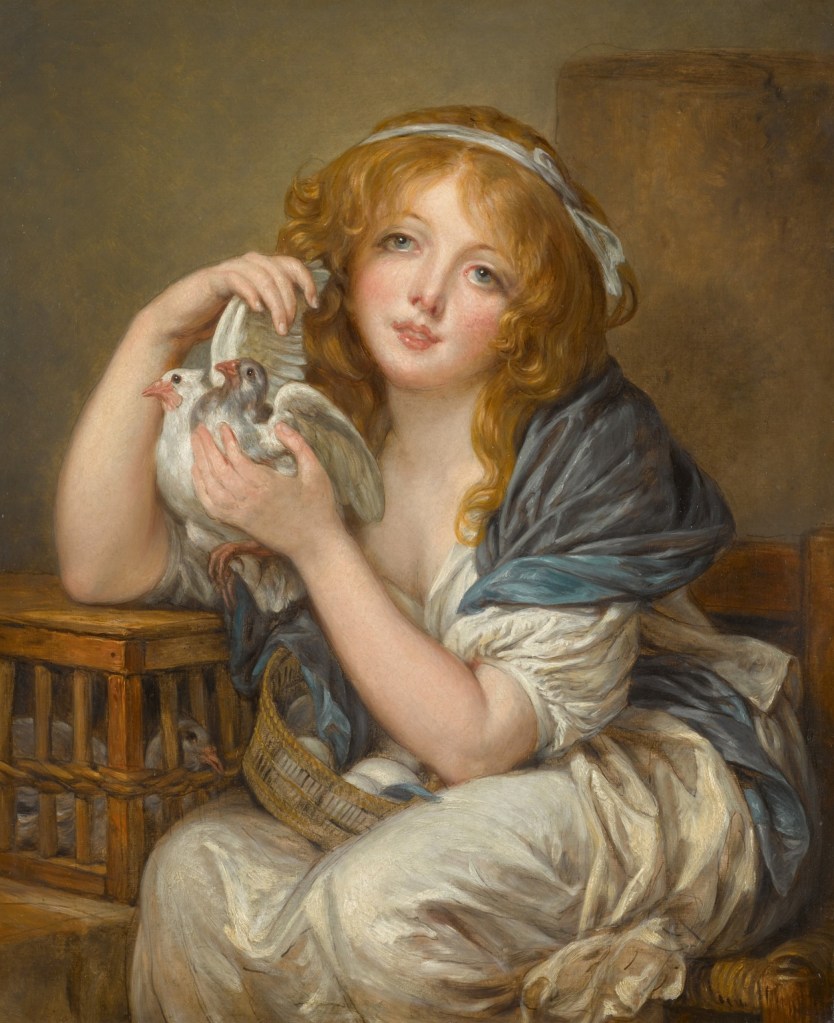
Une fillette avec pigeons’, after Jean-Baptiste Greuze
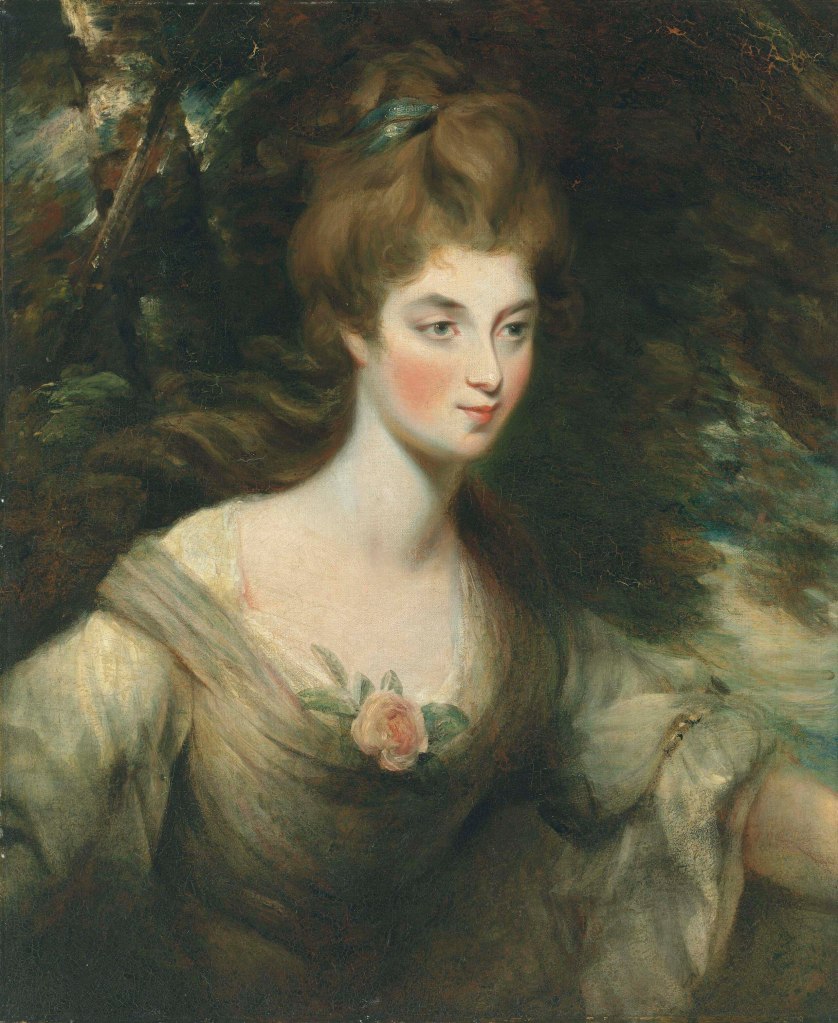
Portrait of Elizabeth, Lady Croft (1754-1815)

Lady Louisa Tollemache (1745–1840), Countess of DysartI
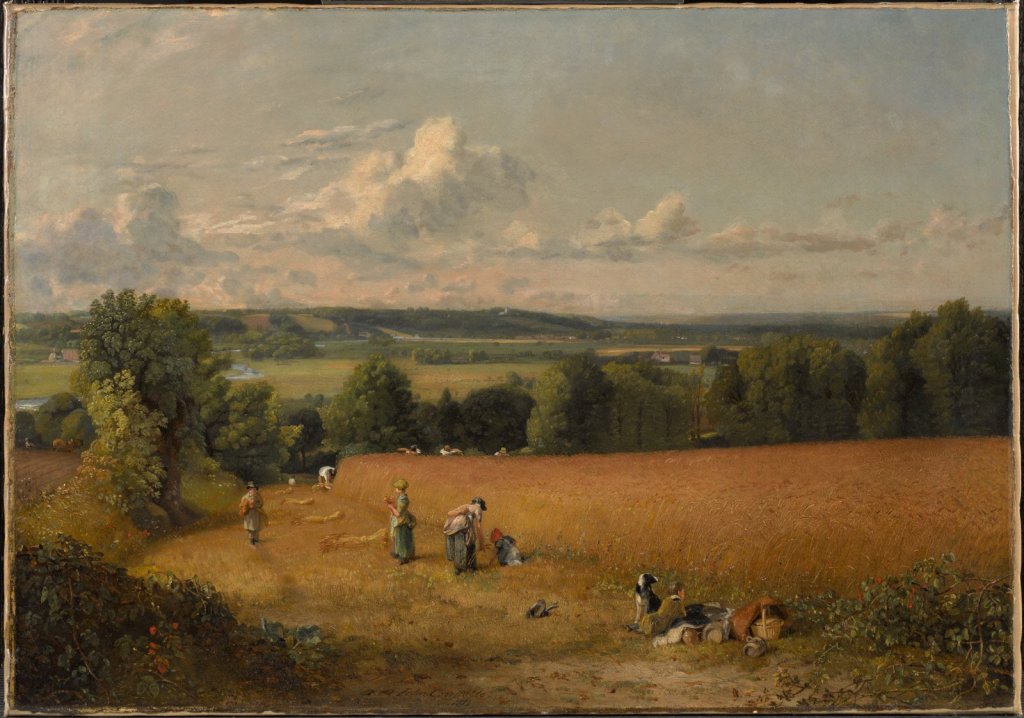
The Wheat Field, 1816, oil on canvas. Clark Art Institute, gift of the Manton Art Foundation in memory of Sir Edwin and Lady Manton
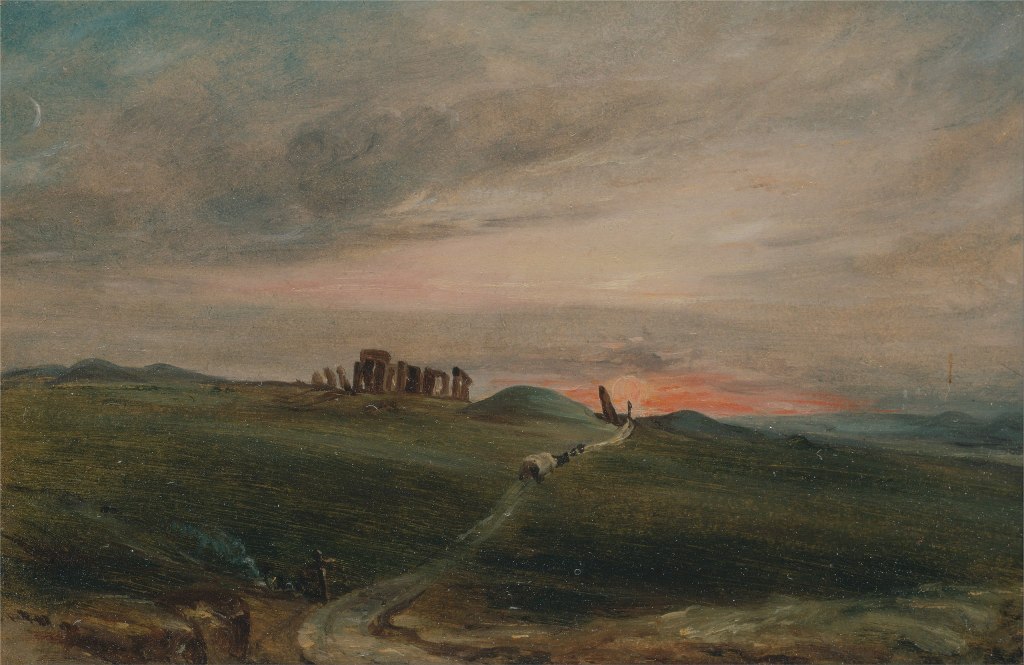
Stonehenge at Sunset
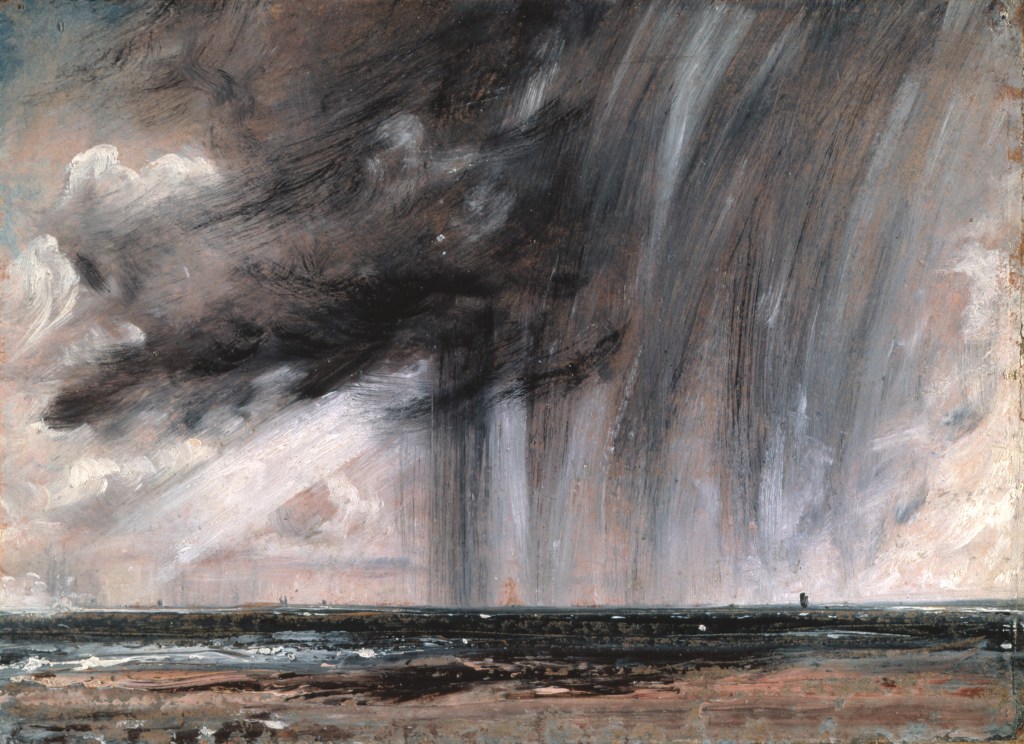
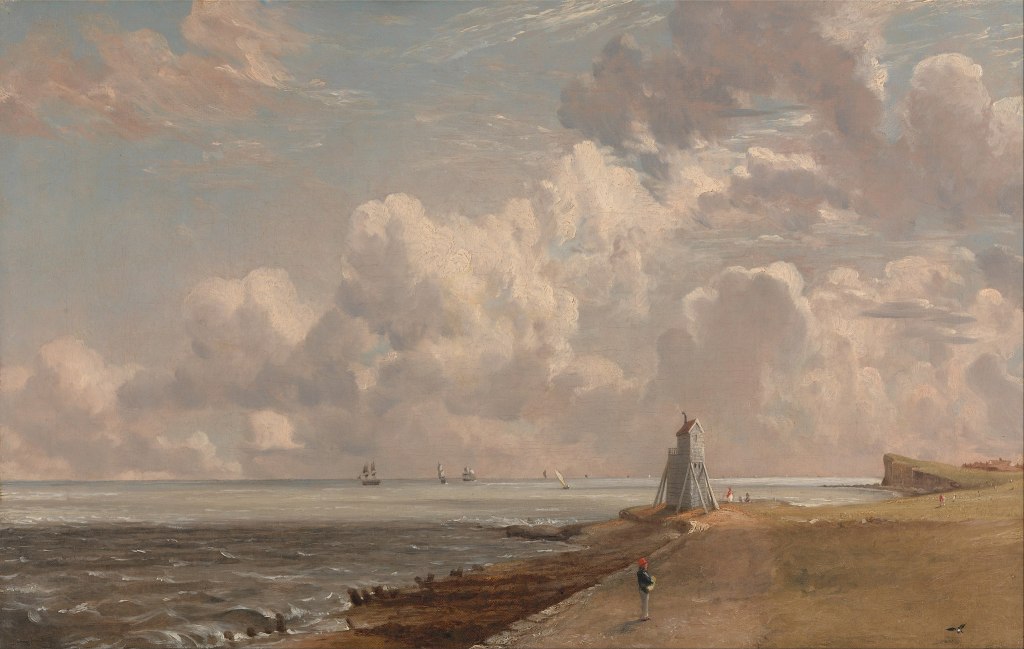
Harwich Lighthouse, oil on canvas, 1820
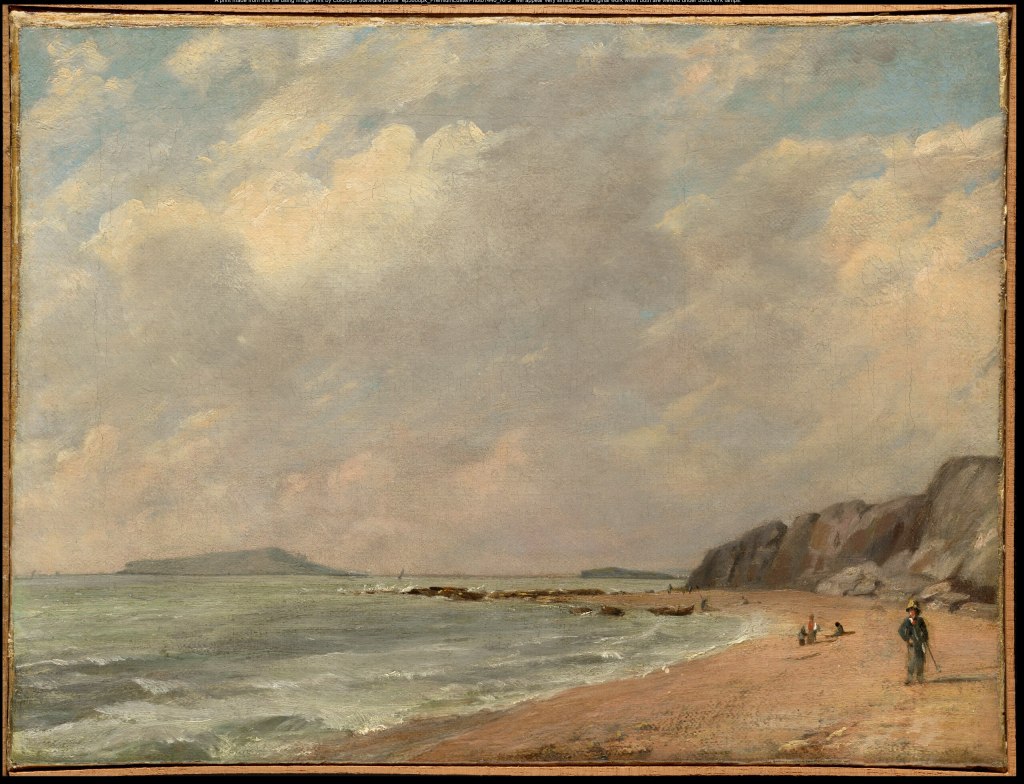
Osmington Bay, 1816, oil on canvas. Clark Art Institute, gift of the Manton Art Foundation in memory of Sir Edwin and Lady Manton
| “ | For the last two years I have been running after pictures, and seeking the truth at second hand… I have not endeavoured to represent nature with the same elevation of mind with which I set out, but have rather tried to make my performances look like the work of other men…There is room enough for a natural painter. The great vice of the present day is bravura, an attempt to do something beyond the truth. | ” |
Today is the birthday of Julia Margaret Cameron (née Pattle; 11 June 1815 Calcutta – 26 January 1879 Kalutara, British Ceylon); photographer. Perhaps best known for her portraits of celebrities and for photographs with Arthurian and other legendary or heroic themes. Cameron’s photographic career spanned eleven years (1864–1875). She took up photography at the age of 48, when she was given a camera as a present. Her style was not widely appreciated in her own day: her choice to use a soft focus and to treat photography as an art as well as a science, by manipulating the wet collodion process. She found more acceptance among pre-Raphaelite artists than among photographers. Her work has had an impact on modern photographers, especially her closely cropped portraits. Her house, Dimbola Lodge, on the Isle of Wight is open to the public.
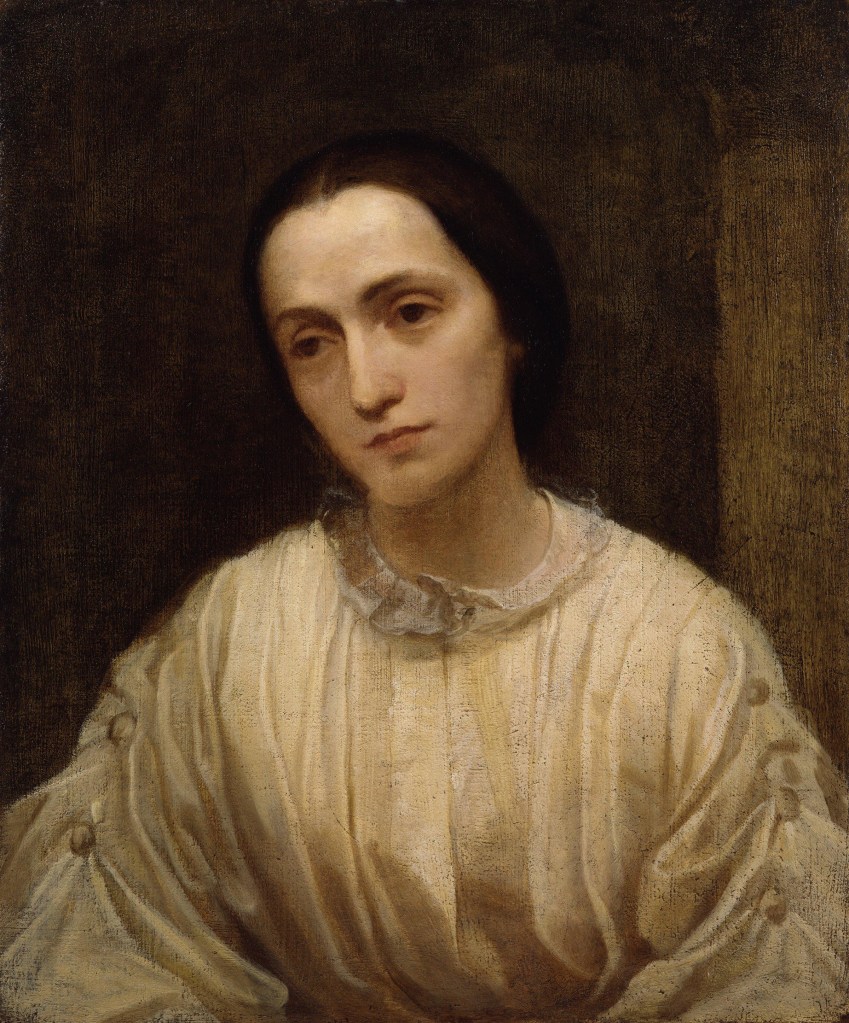
by George Frederic Watts. Oil on canvas, 1850–1852
Cameron’s portraits are partly the product of her intimacy and regard for the subject, but also intend to capture “particular qualities or essences—typically, genius in men and beauty in women”. Mike Weaver, a scholar who wrote about Cameron’s photography in work published in 1984, framed her idea of genius and beauty “within a specifically Christian framework, as indicative of the sublime and the sacred”. Weaver supposes that Cameron’s myriad influences informed her concept of beauty: “the Bible, classical mythology, Shakespeare’s plays, and Tennyson’s poems were fused into a single vision of ideal beauty.”
Cameron herself indicated her desire to capture beauty. She wrote, “I longed to arrest all the beauty that came before me and at length the longing has been satisfied” and “My aspirations are to ennoble Photography and to secure for it the character and uses of High Art by combining the real & Ideal & sacrificing nothing of Truth by all possible devotion to poetry and beauty.”
Her female subjects were typically chosen for their beauty, particularly the “long-necked, long-haired, immature beauty familiar in Pre-Raphaelite paintings”.
Gallery
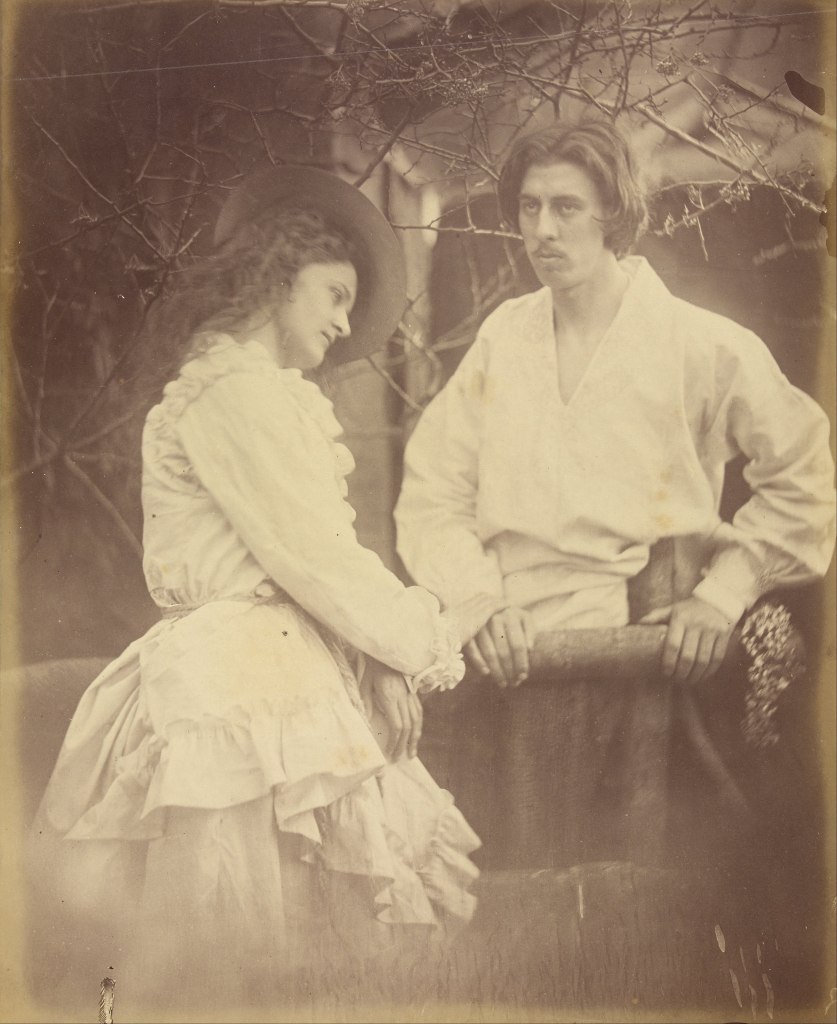
He thought of that sharp look Mother I gave him yesterday”/”They call me cruel hearted, I care not what they say”, 1875
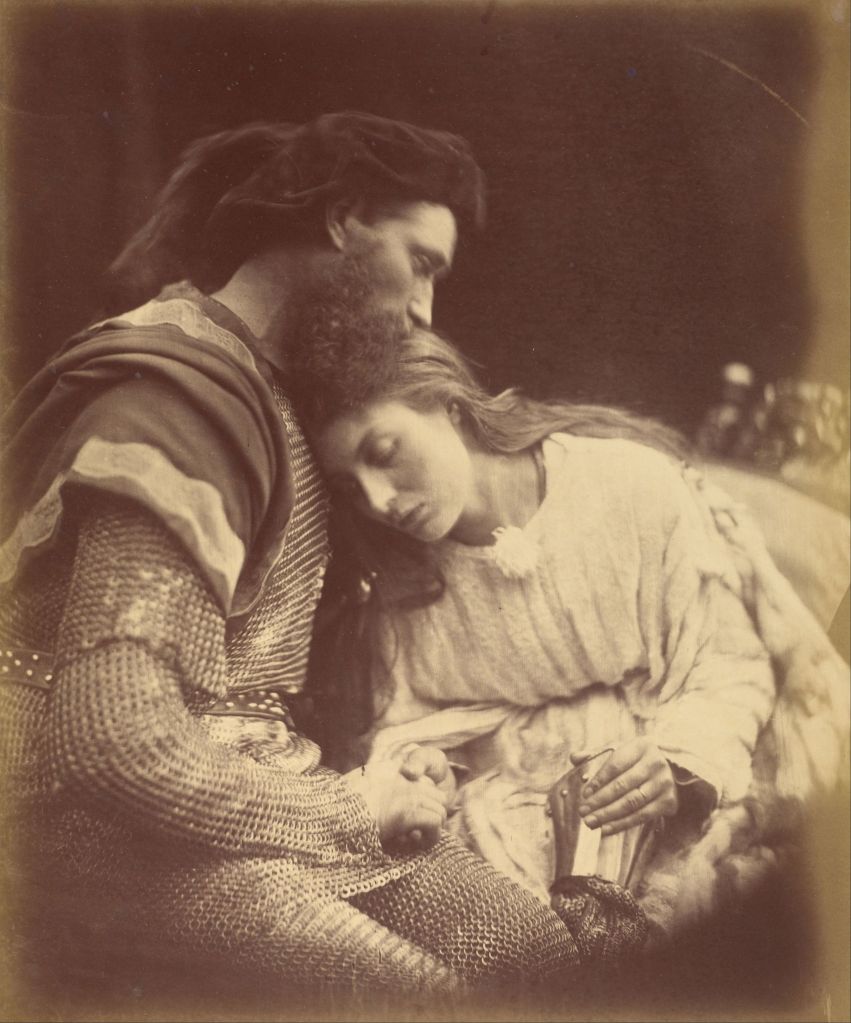
Parting of Sir Lancelot and Queen Guinevere, 1874
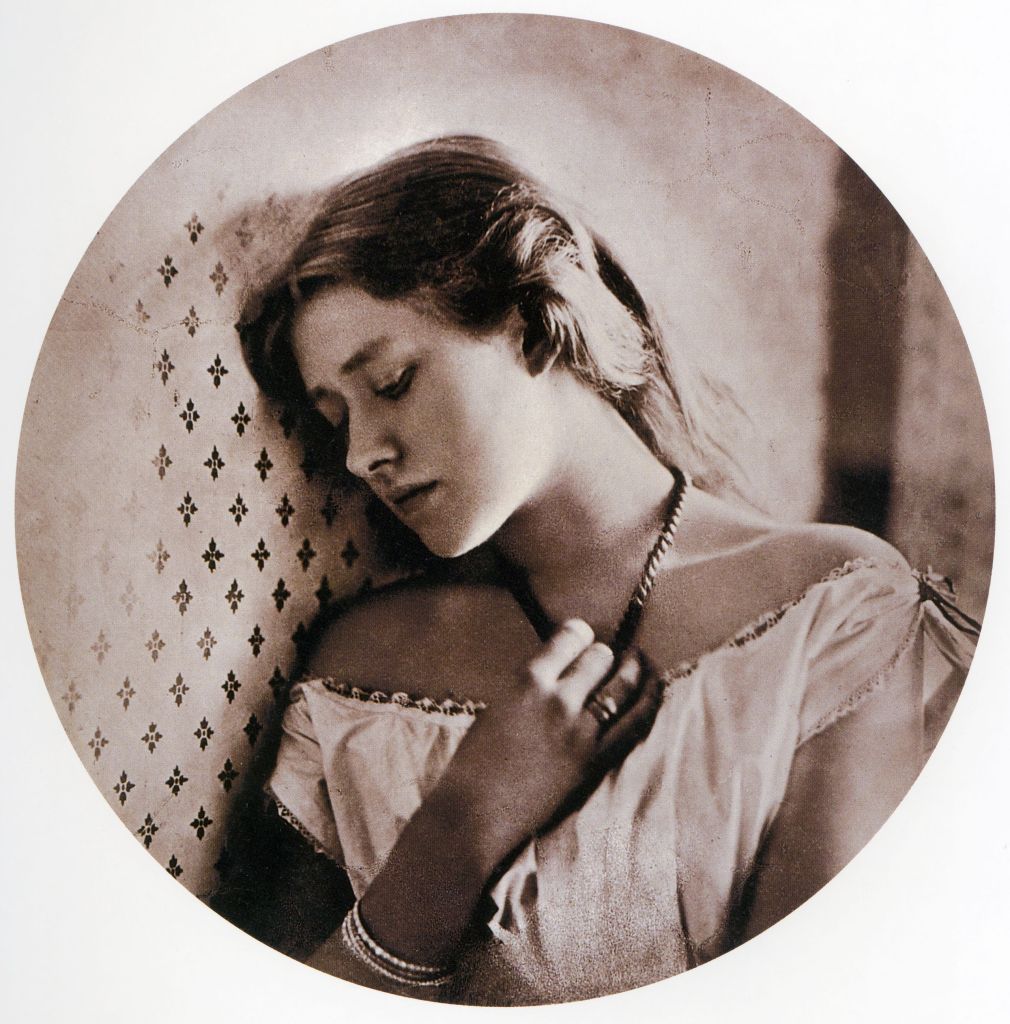
Ellen Terry, 1864
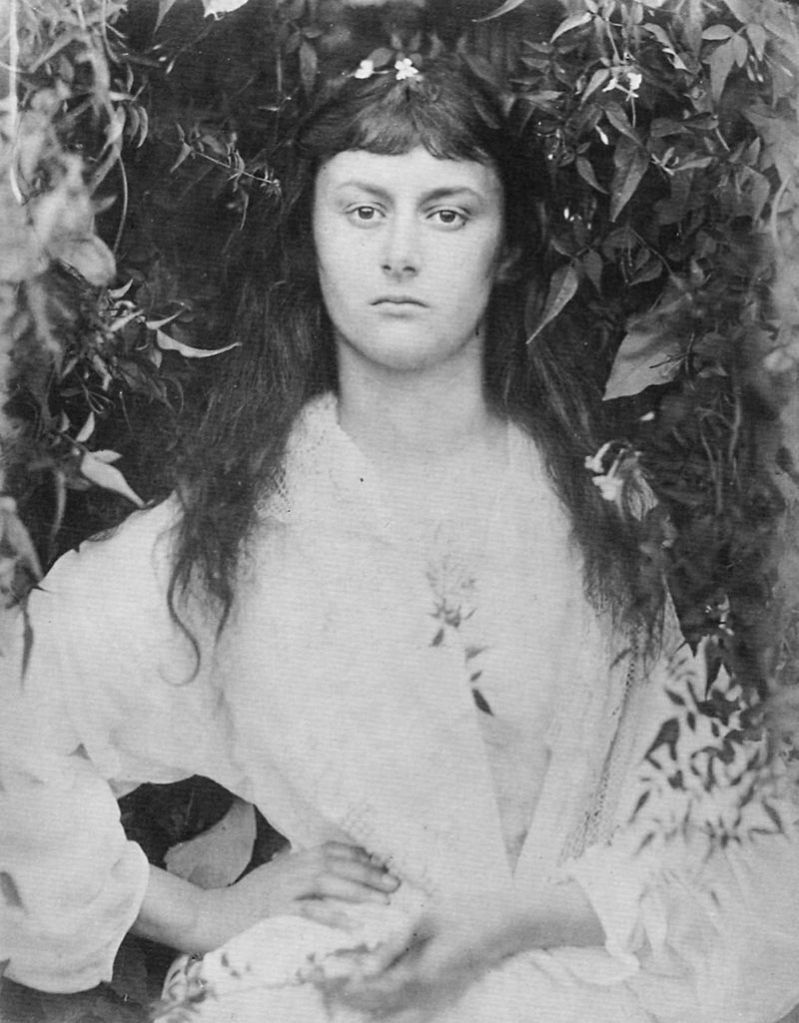
Alice Liddell (4 May 1852 – 16 November 1934) age of 20
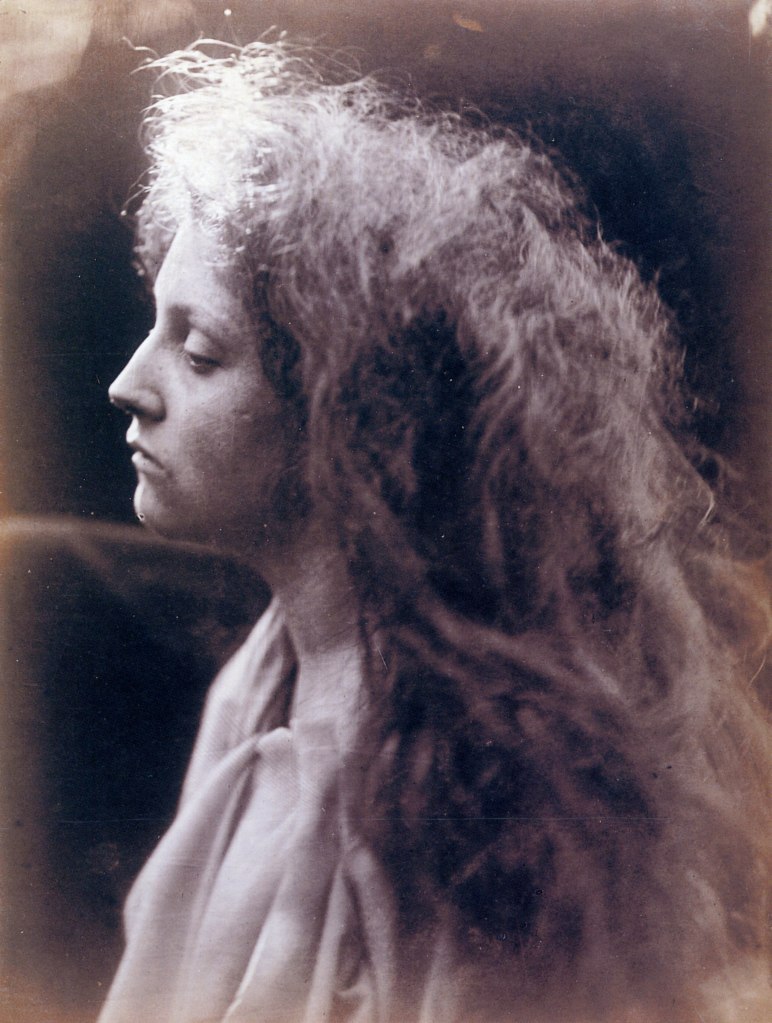
The Angel at the Tomb
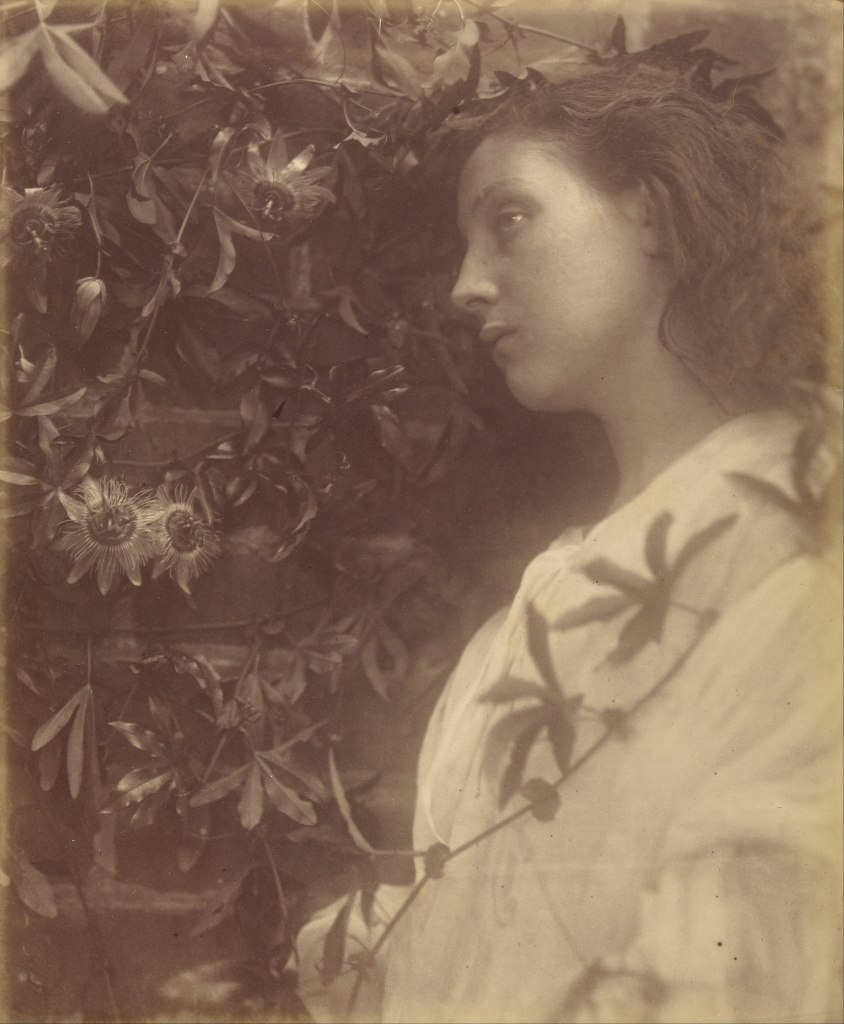
Maud “There has Fallen a splendid Tear From the Passion Flower at the Gate”, 1875
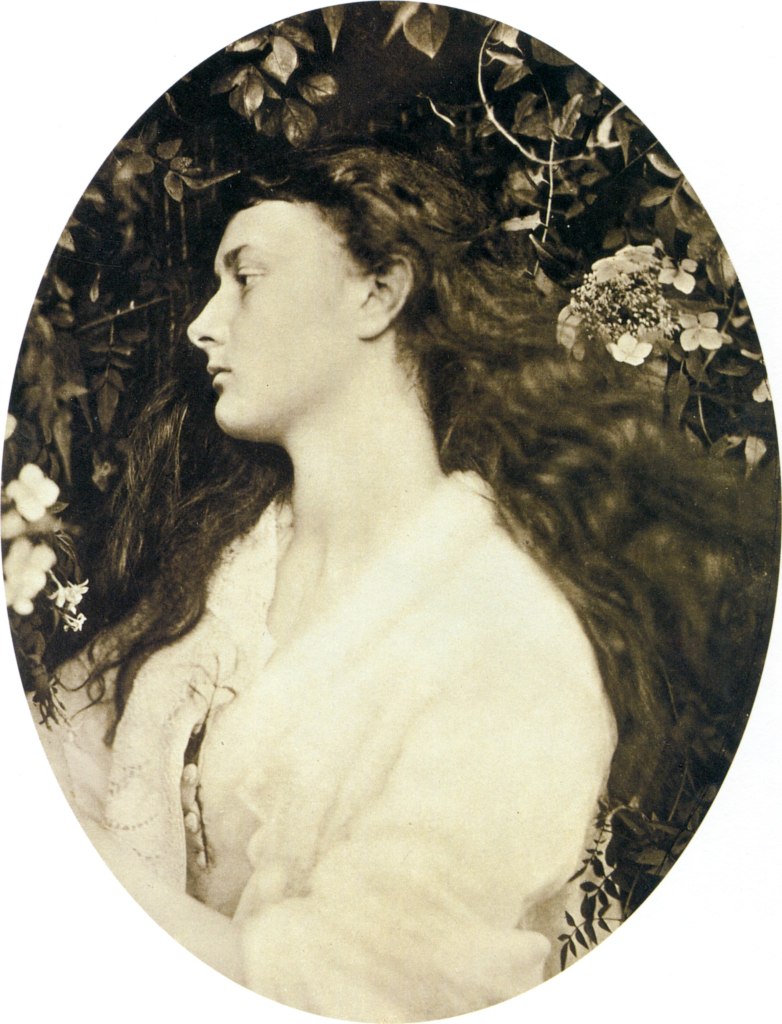
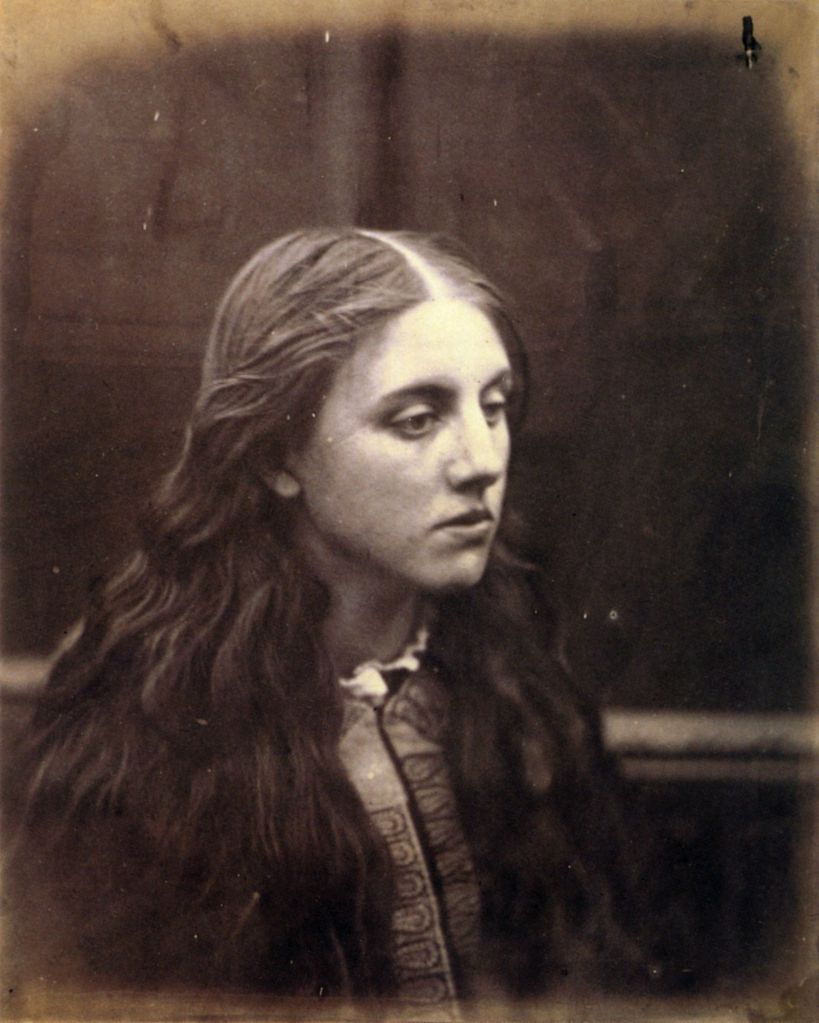
Suspense. Model is Kate Dore.

So now I think my time is near – I trust it is – I know”/”The blessed Music went that way my soul will have to go”, 1875
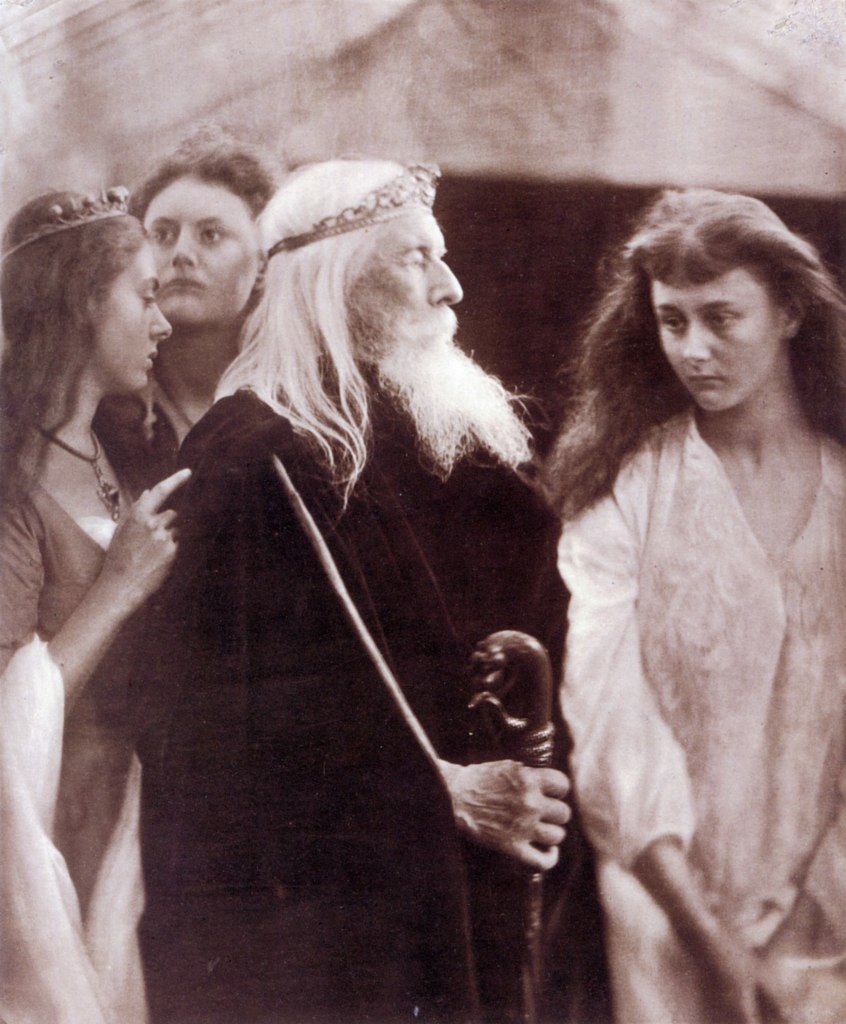
King Lear allotting his Kingdom to his three daughters. Sitters are Lorina Liddell, Edith Liddell, Charles Hay Cameron and Alice Liddell
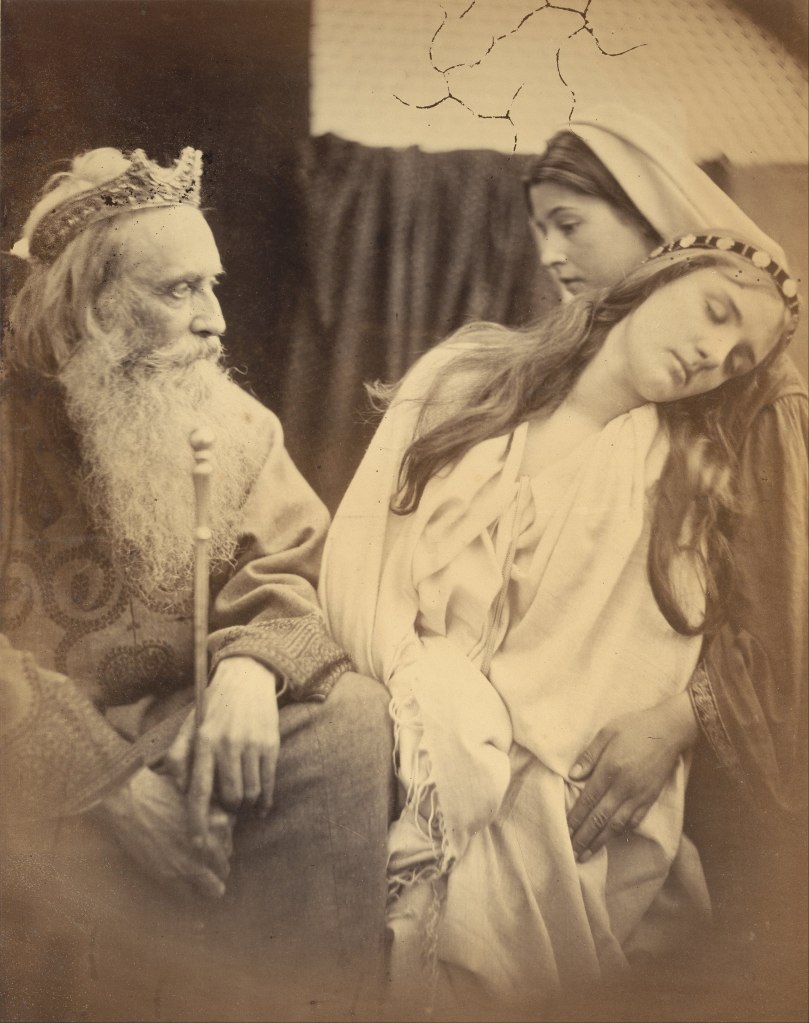
Queen Esther before King Ahasuerus, 1865
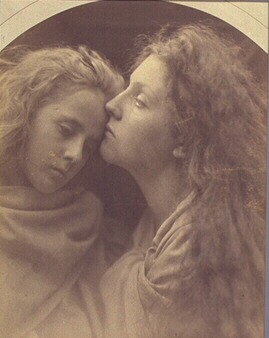
The Kiss of Peace
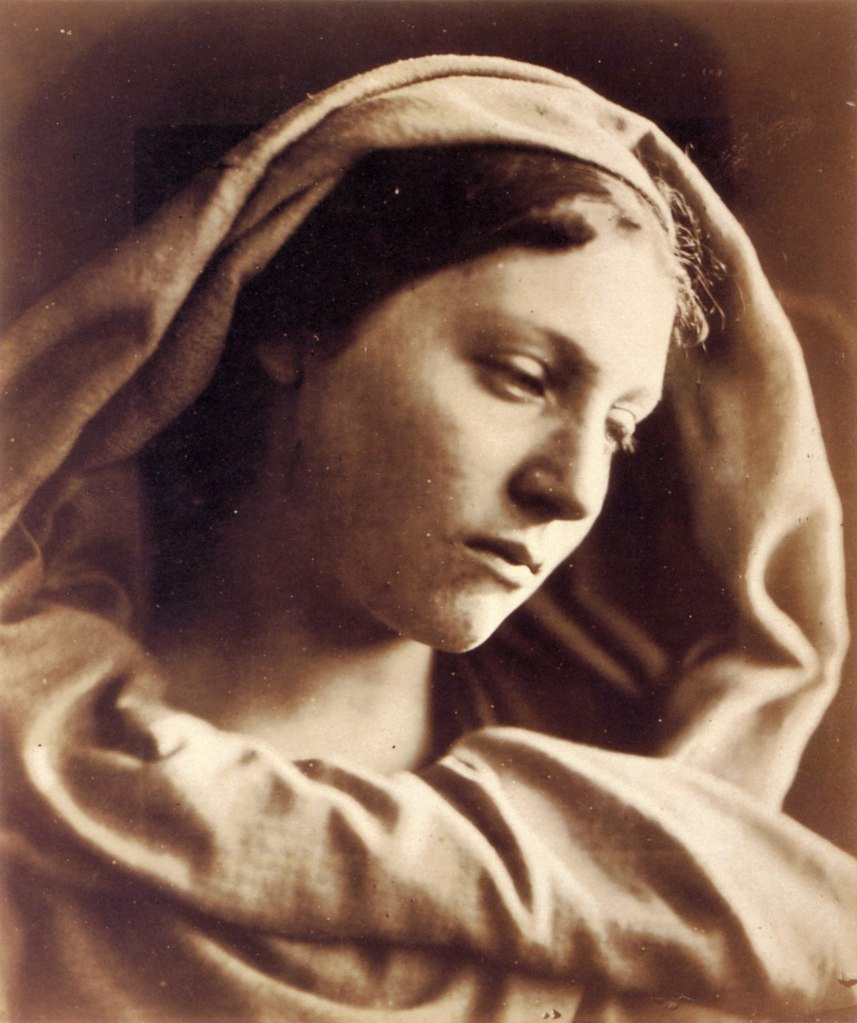
mary mother

An 1864 photograph of her husband, Charles Hay Cameron (1795–1881)

Alfred Lord Tennyson. Carbon print by Cameron, 1869
 Portrait by Henry Herschel Hay Cameron – 1870
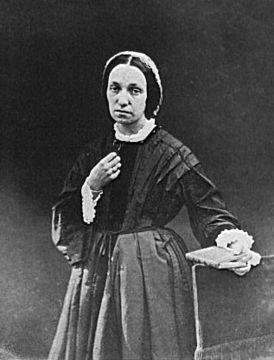 Photograph by her brother-in-law Charles Somers Somers-Cocks, 3rd Earl Somers, c. 1860
 Portrait by Henry Herschel Hay Cameron – 1870
Today is the birthday of Renée Vivien, born Pauline Mary Tarn (London 11 June 1877 – 18 November 1909 Paris); poet who wrote in French, in the style of the Symbolistes and the Parnassiens. A high-profile lesbian in the Paris of the Belle Époque, she was as notable for her lifestyle as for her work. Many of her poems are autobiographical, reflecting a life of extreme hedonism, leading to early death. She was the subject of a pen-portrait by her friend Colette. During her brief life, Vivien was an extremely prolific poet who came to be known as the “Muse of the Violets”, derived from her love of the flower.
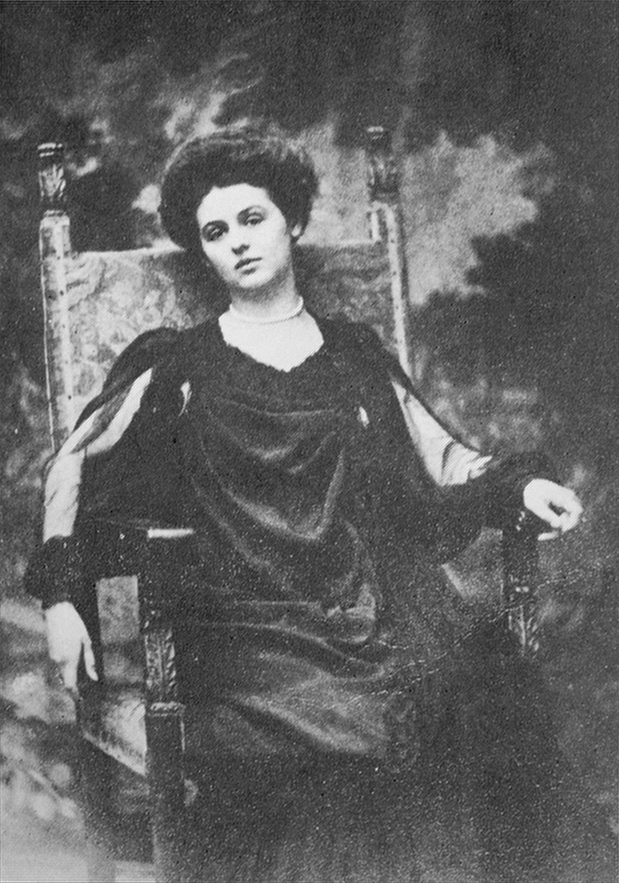
Vivien harbored a romantic relationship with her childhood friend and neighbor, Violet Shillito – a relationship that remained unconsummated. Shillito introduced Vivien to the American heiress, Natalie Barney. The following year Shillito died of typhoid fever, Vivien felt to blame for her death and felt guilty for sidelining Shillito in favour of Barney. Perhaps because of this death, but likely also in part to Barney’s infidelities, Vivien and Barney split a year later, in 1901. It is thought that Shillito is mentioned in Vivien’s poems using the word violet or purple.


In 1902, Vivien became romantically involved with the wealthy Baroness Hélène van Zuylen, one of the Paris Rothschilds. Zuylen provided much-needed emotional support and stability. Her social position did not allow for a public relationship, but she and Vivien often travelled together and continued a discreet affair for a number of years. In letters to her confidant, the French journalist and Classical scholar Jean Charles-Brun, Vivien considered herself married to the Baroness.
While still with Zuylen, Vivien received a letter from an admirer in Istanbul, Kérimé Turkhan Pacha [fr; es], the wife of a Turkish diplomat. This launched a passionate correspondence, followed by brief clandestine encounters. Kérimé, who was French-educated and cultivated, lived according to Islamic tradition. Isolated and veiled, she could neither travel freely nor leave her husband. Meanwhile, Vivien would not give up the Baroness de Zuylen.
In 1907, Zuylen left Vivien for another woman. Shocked and humiliated, Vivien fled to Japan and Hawaii with her mother, becoming seriously ill on the voyage. Another blow came in 1908 when Kérimé, upon moving with her husband to Saint Petersburg, ended their affair.
Vivien was terribly affected by these losses and turned increasingly to alcohol and drugs.
Colette, who was Vivien’s neighbour from 1906 to 1908, immortalised this period in The Pure and the Impure, a collection of portraits showing the spectrum of homosexual behaviour. Written in the 1920s and originally published in 1932, its factual accuracy is questionable; Natalie Barney reportedly did not concur with Colette’s characterization of Vivien.
quotes
Brumes de fjords, 1902
Les fleurs sans parfum
Ses compagnes l’appelèrent du haut des rochers.
Ses compagnes l’appelèrent en pleurant.
Elle leur tendit les bras des profondeurs de la montagne.
Ses larmes coulèrent sur les fleurs sans parfum,
Mais elle ne put répondre à ses compagnes,
Car, déjà, elle avait oublié leur langage.
- Brumes de fjords, Renée Vivien, éd. Alphonse Lemerre, 1902, Les fleurs sans parfum, p. 77
Légende du saule
Les premiers souffles du printemps s’attiédissaient.
Les forêts étaient lourdes de la vie intarissable des plantes et du rut des animaux.
Les Nymphes violées s’évanouissaient de leurs amoureuses blessures et les Hamadryades elles-mêmes, dans leurs temples d’écorce et de feuillages, n’étaient plus à l’abri de l’attaque des Faunes.
- Brumes de fjords, Renée Vivien, éd. Alphonse Lemerre, 1902, Légende du saule, p. 103
Divinement et terriblement éblouie, elle vit la Naïade lui sourire d’un sourire qui semblait attirer et promettre, et elle eut le pressentiment des mortelles amours…
Revenue à la conscience d’elle-même, elle chercha de nouveau, mais en vain, l’illusion mystérieuse de ce visage.
Le songe avait disparu.
- Brumes de fjords, Renée Vivien, éd. Alphonse Lemerre, 1902, Légende du saule, p. 103
Sapho
Vois se rapprocher l’Aurore Vénérable,
Apportant l’effroi, la souffrance et l’effort,
Et le souvenir dont la langueur accable,
La vie et la mort.
- Sapho; traduction nouvelle avec le texte grec, Renée Vivien, éd. Alphonse Lemerre, 1903, p. lire en ligne
L’herbe de l’été pâlit sous le soleil.
La rose, expirant sous les âpres ravages
Des chaleurs, languit vers Pombre, et le sommeil
Coule des feuillages.
- Sapho; traduction nouvelle avec le texte grec, Renée Vivien, éd. Alphonse Lemerre, 1903, p. lire en ligne
Poèmes en vers
On m’a montrée du doigt en un geste irrité
Parce que mon regard cherchait ton regard tendre…
En nous voyant passer, nul n’a voulu comprendre
Que je t’avais choisie avec simplicité.
- Huitième strophe de « Paroles à l’amie » (publié dans le recueil A l’heure des mains jointes en 1906).
- Choix de poèmes, Renée Vivien, éd. Thi-Van Phuong Nguyen, 2010 (1e éd. 2001), p. 23
Laissons-les au souci de leur morale impure,
Et songeons que l’aurore a des blondeurs de miel,
Que le jour sans aigreur et que la nuit sans fiel
Viennent, tels des amis dont la bonté rassure…
Nous irons voir le clair d’étoiles sur les monts…
Que nous importe, à nous, le jugement des hommes ?
Et qu’avons-nous à redouter, puisque nous sommes
Pures devant la vie et que nous nous aimons ?
- Les deux dernières strophes du poème « Paroles à l’amie » (publié dans le recueil A l’heure des mains jointes en 1906).
- Choix de poèmes, Renée Vivien, éd. Thi-Van Phuong Nguyen, 2010 (1e éd. 2001), p. 23
And today is the birthday of William Styron (William Clark Styron, Jr.; Newport News, Virginia; June 11, 1925 – November 1, 2006 Martha’s Vineyard, Massachusetts); novelist and essayist who won major literary awards for his work.

Styron was best known for his novels, including:
- Lie Down in Darkness (1951), his acclaimed first work, published at age 26;
- The Confessions of Nat Turner (1967), narrated by Nat Turner, the leader of an 1831 Virginian slave revolt;
- Sophie’s Choice (1979), a story “told through the eyes of a young aspiring writer from the South, about a Polish Catholic survivor of Auschwitz and her brilliant but psychotic Jewish lover in postwar Brooklyn”.
In 1985, he suffered from his first serious bout with depression. When he emerged out from under this initial experience, Styron was able to write the memoir Darkness Visible (1990), the work he became best known for during the last two decades of his life. Sophie’s Choice is one of the books that has stayed with me since I read it. A formative book. If you have not read it, you should drop what you are doin’ and read it. Now.
While doing a fellowship at the American Academy in Rome, Styron renewed a passing acquaintance with young Baltimore poet Rose Burgunder. They married in Rome in the spring of 1953.
Styron died from pneumonia at age 81. He is buried at West Chop Cemetery in Vineyard Haven, Dukes County, Massachusetts.
Sophie’s Choice (1979)
- Her thought process dwindled, ceased. Then she felt her legs crumple. “I can’t choose! I can’t choose!”
- Ch. 15.
- Someday I will understand Auschwitz. This was a brave statement but innocently absurd. No one will ever understand Auschwitz.
- Ch. 16.
- Let your love flow out on all living things. These words at some level have the quality of a strapping homily. Nonetheless, they are remarkably beautiful, strung together in their honest lump-like English syllables… Let your love flow out on all living things.
But there are a couple of problems with this precept of mine. The first is, of course, that it is not mine. It springs from the universe and is the property of God, and the words have been intercepted — on the wing, so to speak — by such mediators as Lao-tzu, Jesus, Gautama Buddha and thousands upon thousands of lesser prophets, including your narrator, who heard the terrible truth of their drumming somewhere between Baltimore and Wilmington and set them down with the fury of a madman sculpting in stone.- Ch. 16; the italicized words being quotes of the song “Let Your Love Flow” by Larry E. Williams, as sung by The Bellamy Brothers
- This was not judgement day — only morning. Morning: excellent and fair.
- Last lines
thanks for stoppin’ by y’all
Mac Tag
 The Lovers’ Chronicle
Leave a reply to The Lovers’ Chronicle 27 February – your name – birth of Henry Wadsworth Longfellow & John Steinbeck – art by Joaquín Sorolla & Leander Engström – The Lovers’ Chronicle Cancel reply