Dear Zazie, Here is today’s Lovers’ Chronicle from Mac Tag. How does your heart break? Rhett
The Lovers’ Chronicle
Dear Muse,
inspired by Wilde’s “Roses and Rue”
“Sadly, no stranger to heartbreak”
here is a view on the matter
i have not taken
“Oh do tell”
for the poet,
heartbreak does not come
in loss, it comes in silence
loss is the lifeblood of poetry
silence, the death, for if the poet
no longer hears the music,
that is true heartbreak
“And what do you hear my love”
i hear oceans of symphonies
and i will write them for you
© copyright 2023 mac tag/cowboycoleridge all rights reserved
sometimes, if not often, i get caught up in how the words sound when wound
together and i lose all sense of meanin’; or i find as i dance around sayin’ what i want without sayin’ it, i end up in an abstract ’l’ embrassade’ from which i cannot escape; to you, for wadin’ through all of it, the heartbreak, the sensical and not, for you bein’ you, lets keep goin’ down this road
© copyright 2022 mac tag/cowboy coleridge all rights reserved
if you have been
followin’ along
you know well
how a poet’s
heart breaks
but of late,
have you noticed,
this is how
it comes together
your touch
your words,
your affirmation
of all that i have
written, hoped
and dreamed
this soi-disant poet’s
heart mends so
© copyright 2021 mac tag/cowboy coleridge all rights reserved
Pale Love, Pale Rider
a bit too untranslatable,
i get it, but i know not
another way, so i keep on
soundin’ my verse over
time passin’ by
weep not, my darlin’,
with these words
let me remove your tears
somewhere between
said and unsaid
hear the passionate past
reachin’ out too late to heal
© copyright 2020 mac tag/cowboy coleridge all rights reserved
write
what you think
what you believe
what you dream
it is the only way
long enough were you there,
now no more in your eyes
we must attune ourselves
to the moments that matter
too long have we waited
now i will to you and you to i
be bold that by us
swear, never again
© copyright 2019 mac tag/cowboy coleridge all rights reserved
could we get back
what was lost
could we learn again
after all this time
at what price
were it possible,
could the past
be brought back
were it worth the pain
i often recall
the places
the way you looked
memories rushin’ back…
dancin’ naked
in the high
hill country rain
sensual overload
smell of rain
feel of wet skin
and later that night
the way you looked
and the way we were
then another day
in the rain
a hand as it waved adieu
and eyes as they searched
a crime, selfish
so much wasted time
could we get back
what we had,
at what cost,
could the past
call back
or, after all,
does broken
become too much,
or just a crutch
© copyright 2018 mac tag/cowboy coleridge all rights reserved
first light
the exchange
of a knowin’ look
well written verse
this place called the High Plains
thoughts for which the right language
has not been found and moonlight of course
a long anticipated touch
the sun in your hair
the sound of your name
a mutual sigh
somewhere between the said and the unsaid
***
Sorry y’all
Consistency shall return
In about a week
Life changin’ events
Goin’ on here, high
On the High Plains
© copyright 2017 mac tag/cowboy Coleridge all rights reserved
I can work all day
I can dance all night
I can love you till
dawn. I will be gone
at first light, but i
can love you till then
***
To listen to you
is to still have hope
© copyright 2015 mac tag/cowboy Coleridge all rights reserved
Another from the Dark Muse. I have given up on fightin’ her and now welcome her into my life. Each night as I go to sleep I ask her to come and give me words. So far, she is respondin’, perhaps too good. I have many draft poems inspired by her. Just have to find the time to finish ’em. Today’s Poem of the Day was inspired by Oscar Wilde’s “Roses and Rue”.
After all this time, a poet first and last. After all that has happened; a poet still. This to cling to. Live like a poet, love like a poet, fight like a warrior poet. And when love leaves, this is a……
Poet’s Heartbreak
Could we get back what was lost
At what price
Could we learn love’s tune again
After all this time
Were it possible,
Could the passionate
past possibly be brought back
Were it worth the pain
I often recall the fun we had
The places we went
The way you looked when
You smiled, the sound of your laugh
And your eyes, so bright
So easy to get lost in
And welcomed they did
When I leaned and kissed
And your mouth, your lips
would smile and beguile
and spread all over
Capturin’ my heart anew
More memories rushin’ back:
That fine late spring day
When we ran and danced naked
in the high hill country rain
A sensual overload;
Smell of rain – Feel of wet skin
You looked wonderful
And I watched full of wonder
Your hair all gleamin’
Streamin’ in the rain
That day that was ours
When we asked the world to wait
And later that night
When our passion came abloom
Our bodies movin’ in rhyme
and rhythm and rhapsody
And your eyes, the way they looked
When we reached that place
Where rapture and flesh entwine
And love never ends
But then came that day
Standin’ in the pourin’ rain
Was is it rain or tears
Streamin’ down your face
Your hand as it waved adieu;
Your eyes as they searched;
Your voice as it said good-bye;
A cry, petulant therein –
“Your crime, dreadful and selfish
You have but wasted your time.”
Then I rushed through the gate, but
It was all too late.
Could we get back what we had,
At what cost,
Could the passionate past call
Back its dead!
So, a broken heart
Broken for loves sake,
Broken in rhythm and rhyme
Poets’ hearts break so.
© 2013 Mac Tag Cowboy Coleridge All rights reserved
| Walt Whitman | |
|---|---|
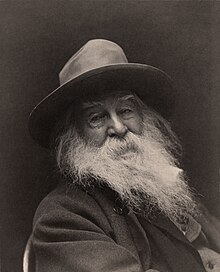 | |
Today is the birthday of Walt Whitman (Walter Whitman; West Hills, Huntington, Long Island, New York; May 31, 1819 – March 26, 1892 Camden, New Jersey); poet, essayist, and journalist. A humanist, he was a part of the transition between transcendentalism and realism, incorporating both views in his works. Whitman is among the most influential poets in the American canon, often called the father of free verse. His work was very controversial in its time, particularly his poetry collection Leaves of Grass, which was described as obscene for its overt sexuality. Leaves of Grass, was first published in 1855 with his own money. The work was an attempt at reaching out to the common person with an American epic. He continued expanding and revising it until his death in 1892. When he died at age 72, his funeral became a public spectacle. He described himself in Leaves of Grass; “Walt Whitman, an American, one of the roughs, a kosmos, disorderly, fleshly, and sensual, no sentimentalist, no stander above men or women apart from them, no more modest than immodest.”
Peter Doyle may be the most likely candidate for the love of Whitman’s life. Doyle was a bus conductor whom Whitman met around 1866, and the two were inseparable for several years. Interviewed in 1895, Doyle said: “We were familiar at once—I put my hand on his knee—we understood. He did not get out at the end of the trip—in fact went all the way back with me.” In his notebooks, Whitman disguised Doyle’s initials using the code “16.4” (P.D. being the 16th and 4th letters of the alphabet). Oscar Wilde met Whitman in the United States in 1882 and told the homosexual-rights activist George Cecil Ives that Whitman’s sexual orientation was beyond question—”I have the kiss of Walt Whitman still on my lips.”
Another possible lover was Bill Duckett. As a teenager, he lived on the same street in Camden and moved in with Whitman, living with him a number of years and serving him in various roles.
There is also some evidence that Whitman had sexual relationships with women. He had a romantic friendship with a New York actress, Ellen Grey, in the spring of 1862, but it is not known whether it was also sexual. He still had a photograph of her decades later, when he moved to Camden, and he called her “an old sweetheart of mine”. In a letter, dated August 21, 1890, he claimed, “I have had six children—two are dead”. This claim has never been corroborated. Toward the end of his life, he often told stories of previous girlfriends and sweethearts and denied an allegation from the New York Herald that he had “never had a love affair”. As Whitman biographer Jerome Loving wrote, “the discussion of Whitman’s sexual orientation will probably continue in spite of whatever evidence emerges.
Excerpts from Leaves of Grass
- Long enough have you dream’d contemptible dreams,
Now I wash the gum from your eyes,
You must habit yourself to the dazzle of the light and of every moment of your life. (46) - Long have you timidly waded holding a plank by the shore,
Now I will you to be a bold swimmer… - I am the teacher of athletes,
He that by me spreads a wider breast than my own proves the width of my own,
He most honors my style who learns under it to destroy the teacher. (47) - I teach straying from me, yet who can stray from me?
I follow you whoever you are from the present hour,
My words itch at your ears till you understand them. - It is you talking just as much as myself, I act as the tongue of you,
Tied in your mouth, in mine it begins to be loosen’d. (47) - I swear I will never again mention love or death inside a house,
And I swear I will never translate myself at all, only to him or her who privately stays with me in the open air.
If you would understand me go to the heights or water-shore - And as to you Death, and you bitter hug of mortality, it is idle to try to alarm me. (49)
- There is that in me — I do not know what it is — but I know it is in me.
…
I do not know it — it is without name — it is a word unsaid,
It is not in any dictionary, utterance, symbol.
Something it swings on more than the earth I swing on,
To it the creation is the friend whose embracing awakes me. (50) - Do I contradict myself?
Very well then I contradict myself,
(I am large, I contain multitudes.) (51) - I too am not a bit tamed, I too am untranslatable,
I sound my barbaric yawp over the roofs of the world. - Weep not, child,
Weep not, my darling,
With these kisses let me remove your tears,
The ravening clouds shall not long be victorious,
They shall not long possess the sky, they devour the stars only in apparition,
Jupiter shall emerge, be patient, watch again another night, the Pleiades shall emerge,
They are immortal…
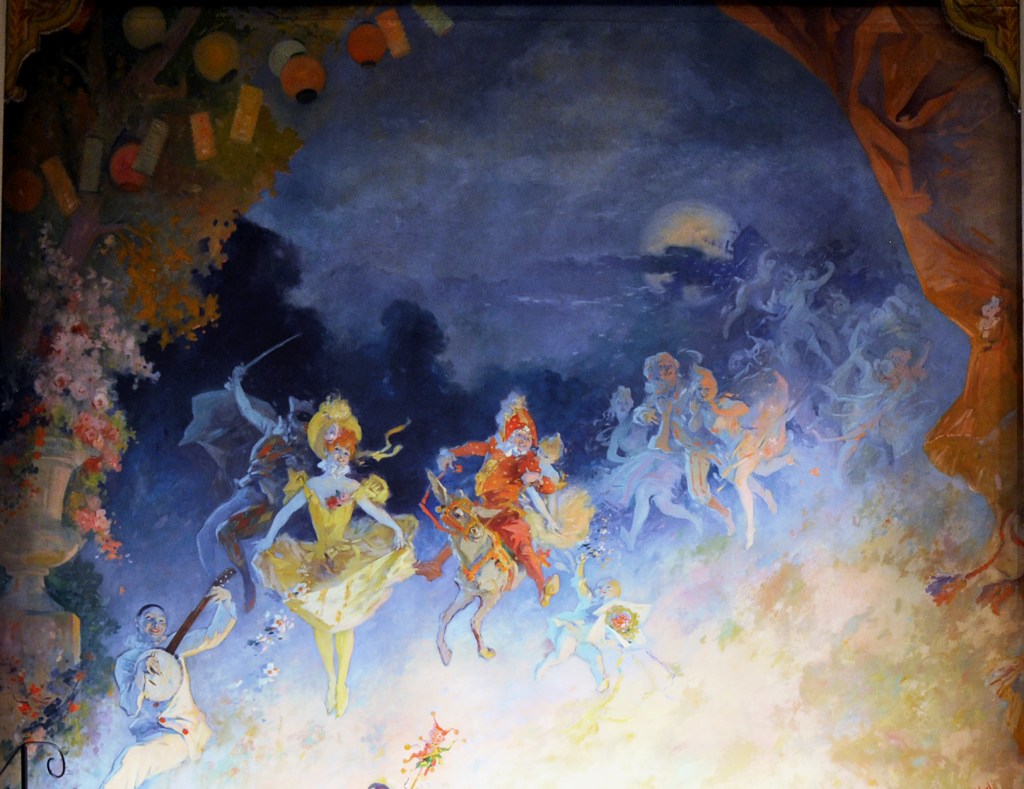
Today is the birthday of Jules Chéret (Paris 31 May 1836 – 23 September 1932 Nice); painter and lithographer who became a master of Belle Époque poster art. He has been called the father of the modern poster.

photographed by Nadar, c. 1900
As his work became more popular and his large posters displaying modestly free-spirited women found a larger audience, pundits began calling him the “father of the women’s liberation.” Women then had previously been depicted in art as prostitutes or puritans. The women of Chéret’s posters, joyous, elegant and lively—’Cherettes’, as they were popularly called—were neither. It was freeing for the women of Paris, and heralded a noticeably more open atmosphere in Paris where women were able to engage in formerly taboo activities, such as wearing low-cut bodices and smoking in public. These ‘Cherettes’ were widely seen and recognised, and a writer of the time said “It is difficult to conceive of Paris without its ‘Cheréts’ (sic).”
gallery

Affiche créée en 1893
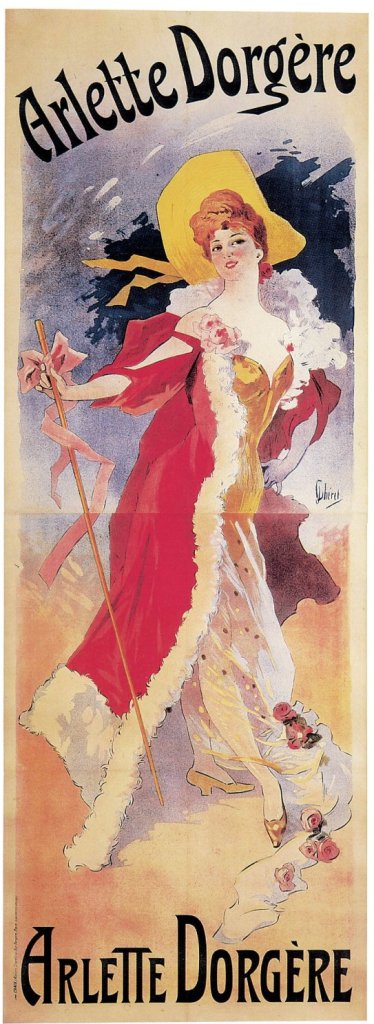
Arlette Dorgère (vers 1904)

Exposition Universelle 1889, Le Pays des Feés
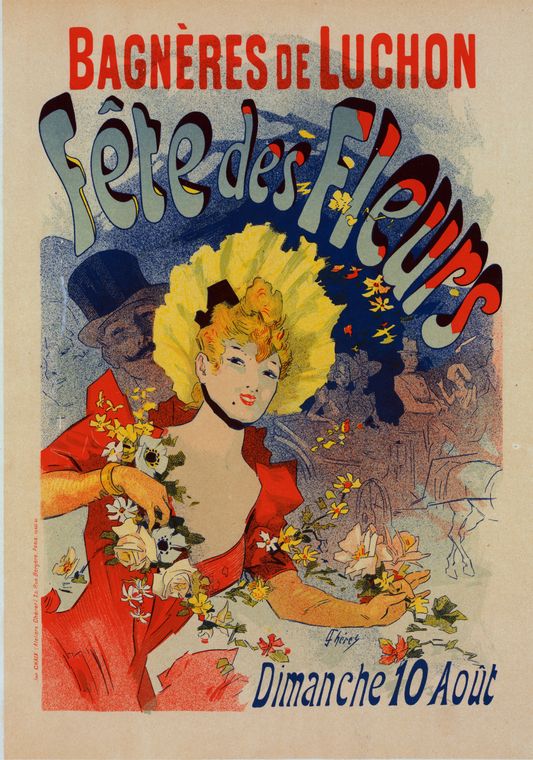
Fête des fleurs à Bagnères-de-Luchon (1890)
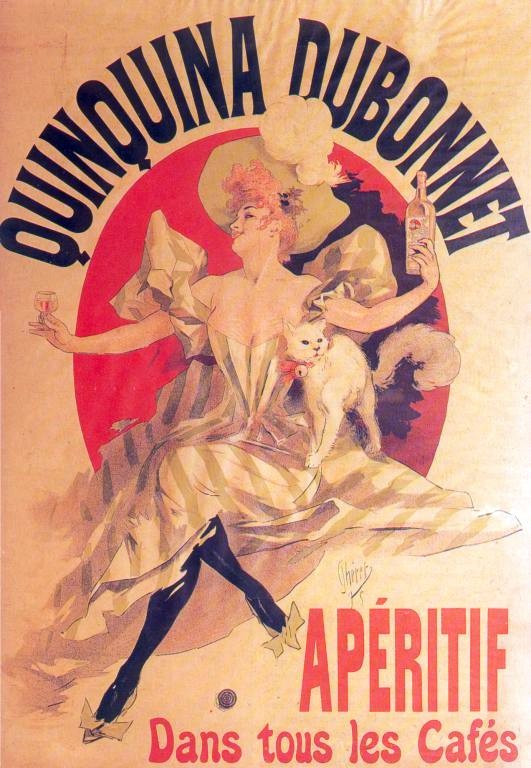
Quinquina Dubonnet (1895)

L’Amant des Danseuses Roman Moderniste par Félicien Champsaur
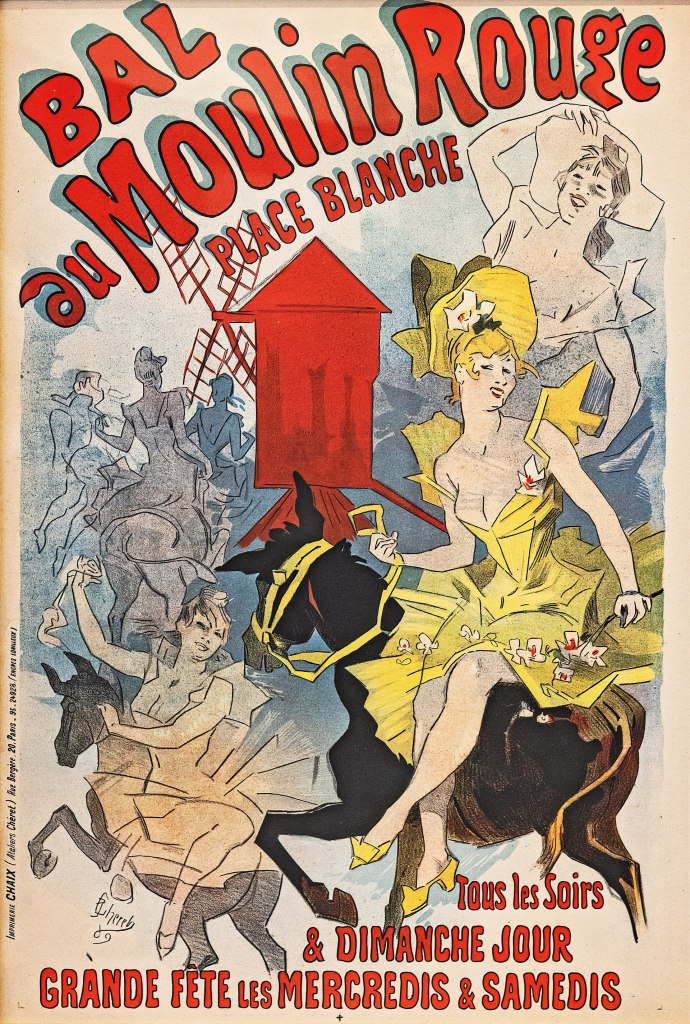
Bal au Moulin rouge (1889)
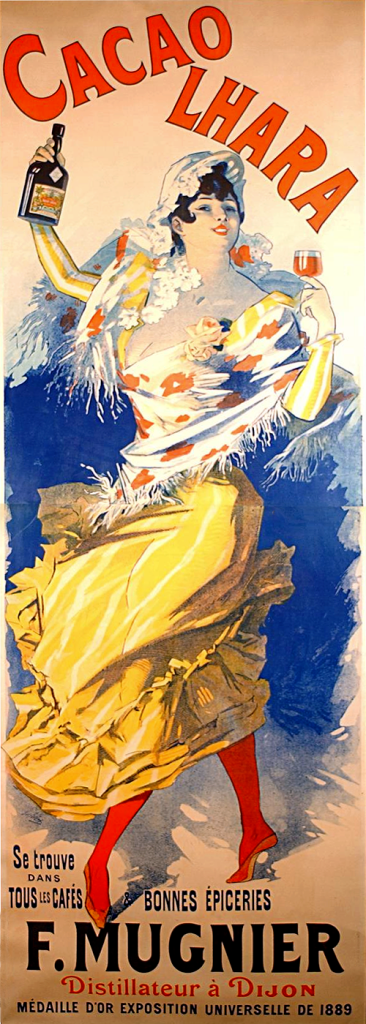
Cacao Lhara (1889), affiche

Affiche Cosmydor (1891)

La Comédie pour Les Montmartrois de Jean Goudezki et Léopold Gangloff (1891)
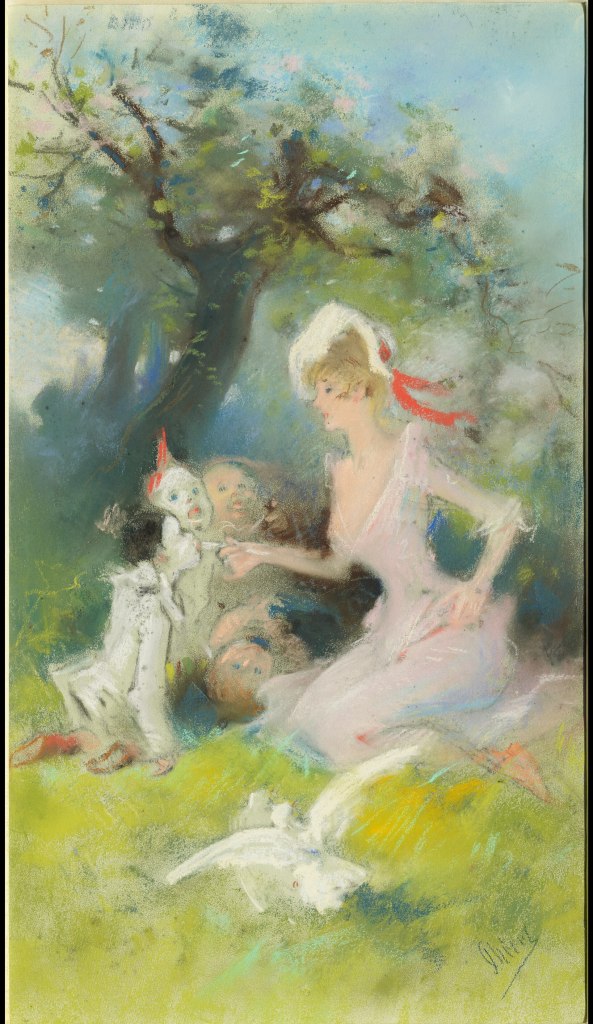
Feeding the Clowns, before 1890, pastel on beige wove paper. Clark Art Institute
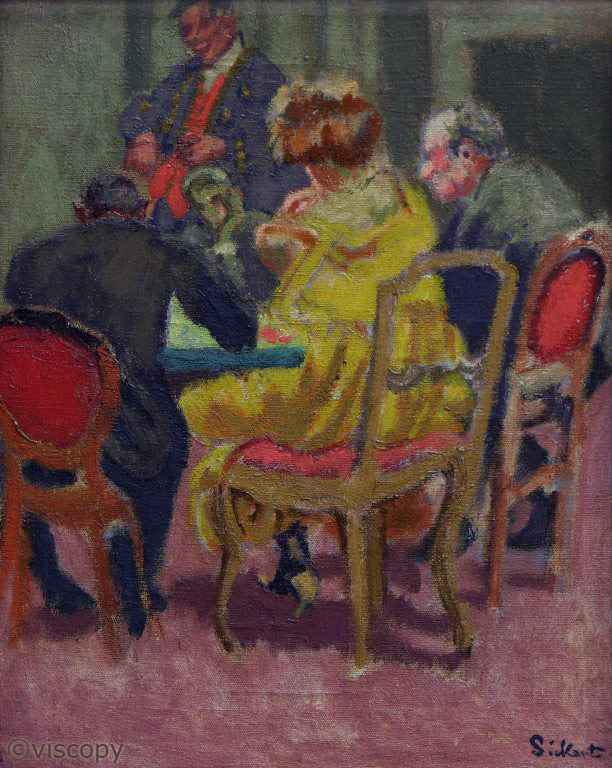
And today is the birthday of Walter Sickert (Walter Richard Sickert; Munich 31 May 1860 – 22 January 1942 Bath, Somerset, England); painter and printmaker who was a member of the Camden Town Group in London. He was an important influence on distinctively British styles of avant-garde art in the 20th century. Sickert was a cosmopolitan and eccentric who often favoured ordinary people and urban scenes as his subjects. His oeuvre also included portraits of well-known personalities and images derived from press photographs. He is considered a prominent figure in the transition from Impressionism to Modernism. Decades after his death, several researchers and theorists suspected Sickert to have been the London-based serial killer Jack the Ripper, although the theory has largely been dismissed.
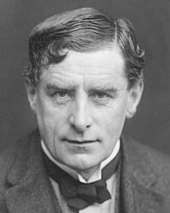
photograph by George Charles Beresford, 1911
Sickert married three times: to Ellen Cobden, a daughter of Richard Cobden from 1885 until their divorce in 1899; to Christine Angus from 1911 until her death in 1920; and to the painter Thérèse Lessore from 1926 until his death.
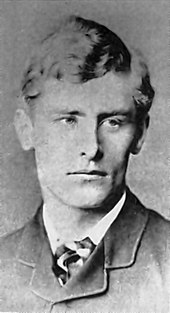
Portrait of Sickert in 1884
Sickert’s sister was Helena Swanwick, a feminist and pacifist active in the women’s suffrage movement.
Gallery

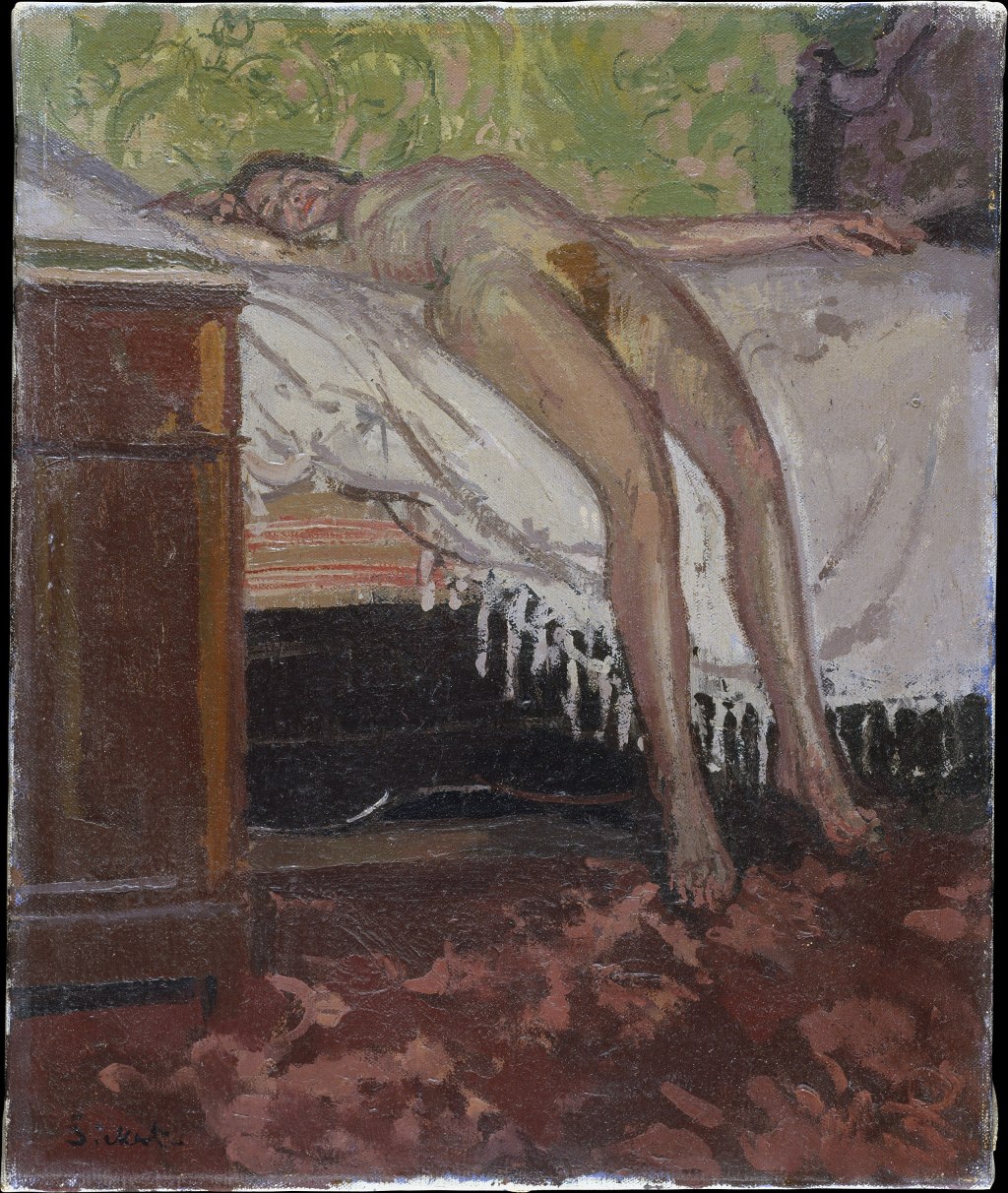
Reclining Nude (Thin Adeline) MET
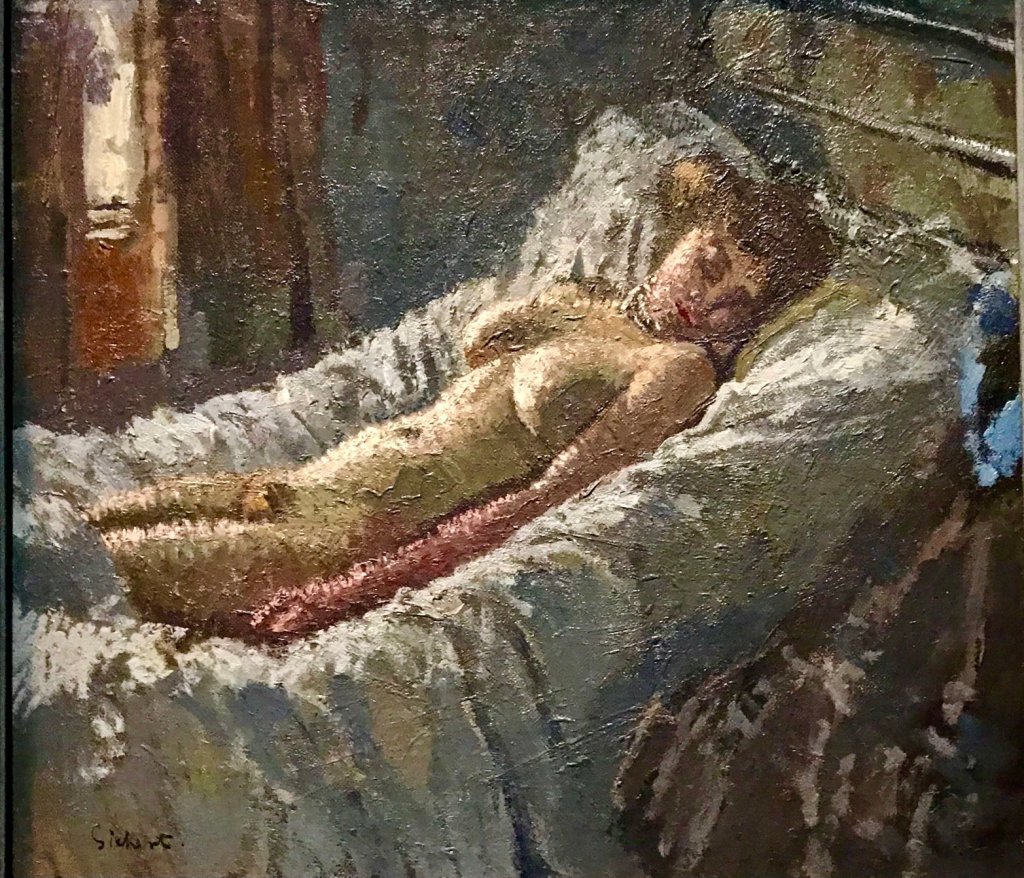
Mornington Crescent Nude, Contre-Jour 1907


The Camden Town Murder, originally titled, What Shall We Do for the Rent?, alternatively, What Shall We Do to Pay the Rent, 1908
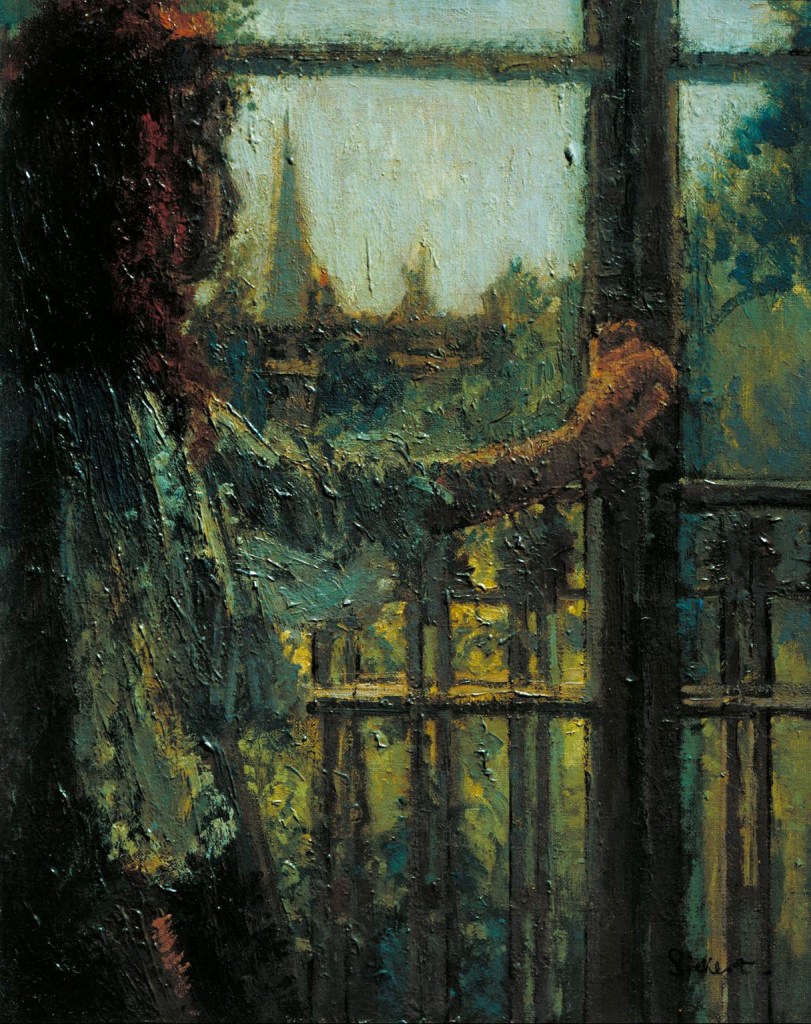
‘Girl at a Window, Little Rachel’, Mornington Crescent Gardens (1907)

La Giuseppina, the Ring (1903-1905)

The Acting Manager or Rehearsal: The End of the Act, (portrait of Helen Carte), c. 1885

The Music Hall or The P.S. Wings in the O.P. Mirror 1888–1889

Ennui (1914), Tate Britain

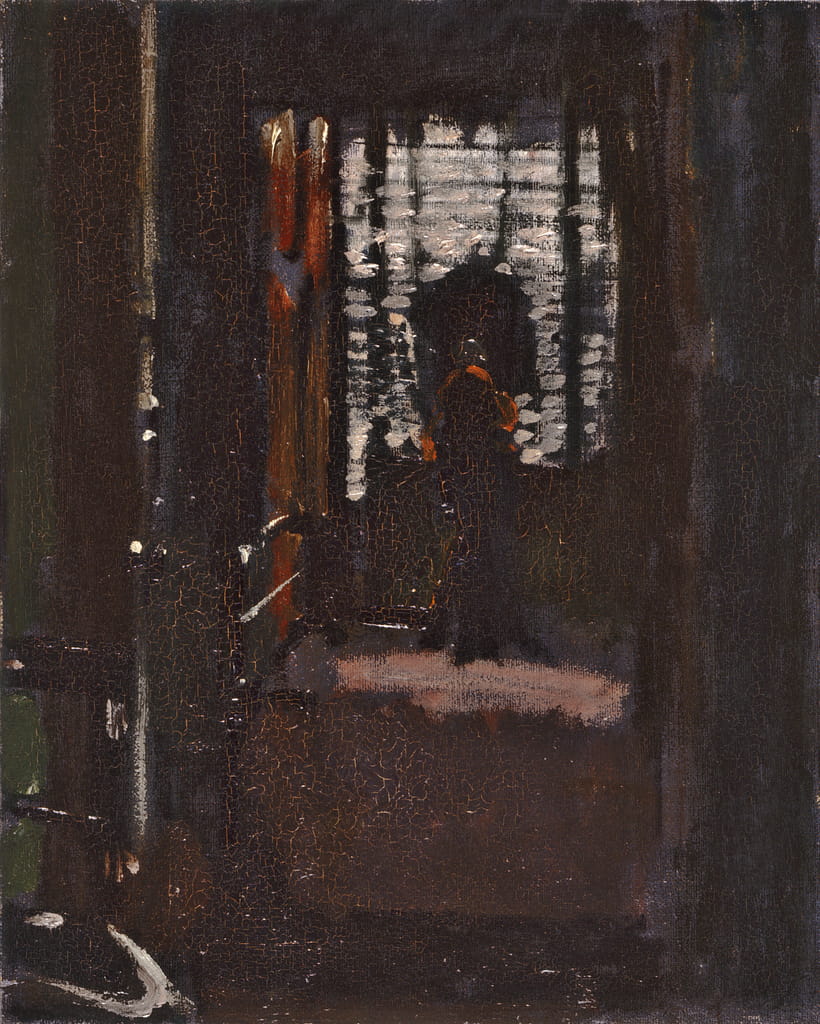
Jack the Ripper’s Bedroom, c. 1907


Henry Tonks. Sodales: Mr Steer and Mr Sickert, 1930
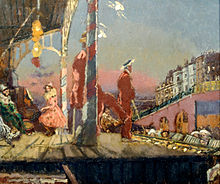
Brighton Pierrots (1915)
The Song of the Day is “Poet’s Heart” by Westlife. We do not own the rights to this song. All rights reserved by the rightful owner.
thanks for stoppin’ by
Mac Tag
Follow us on twitter @cowboycoleridge
 The Lovers’ Chronicle
Leave a reply to The Lovers’ Chronicle 4 July – another, reprise – birth of Nathaniel Hawthorne – Leaves of Grass by Walt Whitman – photography by John de Mirjian – art by Nellie Mae Rowe – The Lovers’ Chronicle Cancel reply