Dear Zazie, Today’s Lovers’ Chronicle from Mac Tag to his muse. Anyone knockin’ at your chamber? Rhett.
The Lovers’ Chronicle
Dear Muse,
Laissez les bons rêves rouler…
-This time transported from deep sleep by smell, chicory coffee and beignets-
That’s a large café au lait and two orders of beignets to go, anything else sir
uh, yes, no, thanks
-Crossing Decatur Street then walking into Jackson Square, he sees the radiant redhead sitting on a bench-
Hello my love
hey beautiful, breakfast is ready
Thanks baby, what brings us
to one of our favorite cities
today is the day officially recognized
as the foundin’ of New Orleans
Fabulous, so how should we celebrate
we should go for a long walk
then pick up a muffaletta from
Central Grocery then go take a nap
Perfect so far and then
we will go to Antoine’s then find some music
Love it, a dream we have already lived
absolutely
And what is next for us
you know, this is far beyond anything
we imagined so we just need to enjoy
every moment
Let the good love roll

© copyright 2024 mac tag/cowboycoleridge all rights reserved
we can and we should
oh, which do you prefer
to venture forth or go
“The less dramatic way”
ha i agree
but, i have no song for this
“Me either”
it is a place where our minds
are free to roam, where words
are arranged, not randomly,
not in dreary dead habit
but purposely beyond
© copyright 2023 mac tag/cowboycoleridge all rights reserved
we can and we should venture forth or go, which do you prefer, where the mind is free to roam, where fine words arranged in whichever way we please lead not in dreary dead habit nor from the depth of truth or perfection, the tireless strivin’ stretches of whatever
© copyright 2022.2023 mac tag/cowboycoleridge all rights reserved
i do what many dream of,
strive to do, agonize to do,
and fail in doin’ sometimes
to paint a portrait like this, you appearin’,
as if conjured, passin’ with your robes afloat
yes, like that, so much more than imagined
and what it means, all that matters within reach
© copyright 2021 mac tag/cowboy coleridge all rights reserved
Pale Love, Pale Rider
hope you saw the moon tonight
i watched with thoughts of you
commit to the inspiration,
to learnin’ how to see,
usin’ words and visions
the means to see somethin’ worth
the birth of learnin’ how to see
when midnight comes,
knock at my dream’s door
***
for the first time
i know what
and who i want
and that is
the damnable
misery of it
© copyright 2020 mac tag/cowboy coleridge all rights reserved
provocation towards
lookin’ for somethin’ other
transformin’ encounters
with verse, art, music
you
© copyright 2019 mac tag/cowboy coleridge all rights reserved
what dreams
are made of
strive ever so
to catch the light
to write verse
tryin’ to come close
to what you achieve
simply by bein’
the way you are
for that is what i seek
to exceed the reach
beyond ordinary
© copyright 2018 mac tag/cowboy coleridge all rights reserved
Tried to play the part
Tried to fill the role
Just was not any
Damn good at it
So best let me be
Content to observe
And comment, in verse
And visual art,
From a safe distance
Never intended
To hurt anyone
But the trail of heartbreak
Stretches from the High Plains
To the Gulf of Mexico
And cannot be buried
© copyright 2017 mac tag/cowboy coleridge all rights reserved
you come knockin’
at my chamber
in my dreams
every night
if only it were more
than just in my dreams
Would it were that we were
in New Orleans
when midnight comes
© copyright 2016 mac tag all rights reserved
for Julie
In praise of my muse,
La Femme du Soleil,
for helpin’ me create
a place where I can write
and talk at length,
about what stirs me.
Merci
© copyright 2012 mac tag/cowboy coleridge all rights reserved

It was on this day in 1718, that the city of New Orleans was founded by Jean-Baptiste Le Moyne, Sieur de Bienville. One of our favorite cities. Rhett has loved some beautiful women there. As you know, New Orleans features prominently in my verse. Would it were that we were in New Orleans when midnight comes.
Today is the birthday of Olympe de Gouges (Marie Gouze; Montauban, Guyenne-and-Gascony, France 7 May 1748 – 3 November 1793 Place de la Révolution, Paris); playwright and political activist whose feminist and abolitionist writings reached a large audience.
| Olympe de Gouges | |
|---|---|
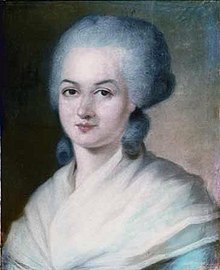 | |
She began her career as a playwright in the early 1780s. As political tension rose in France, de Gouges became increasingly politically engaged. She became an advocate against the slave trade in the French colonies in 1788. At the same time, she began writing political pamphlets. Perhaps best known as an early feminist who demanded that French women be given the same rights as French men. In her Déclaration des droits de la femme et de la citoyenne (Declaration of the Rights of Woman and the Female Citizen (1791)), she challenged the practice of male authority and the notion of male-female inequality. She was executed by guillotine during the Reign of Terror for attacking the regime of the Revolutionary government and for her association with the Girondists.
In 1765 aged 16 she was married against her will to Louis Aubry, a caterer. De Gouges said in a semi-autobiographical novel (Mémoire de Madame de Valmont contre la famille de Flaucourt), “I was married to a man I did not love and who was neither rich nor well-born. I was sacrificed for no reason that could make up for the repugnance I felt for this man.” Her husband died a year later, and in 1770 she moved to Paris with her son to live with her sister. She never married again, calling the institution of marriage “the tomb of trust and love”.
In Paris she started a relationship with the wealthy Jacques Biétrix de Rozières, but refused his marriage proposal. She remained close to Rozières throughout the French Revolution. With the support of Rozières she established a theatre company. De Gouges attended the artistic and philosophical salons of Paris, where she met many writers, including La Harpe, Mercier, and Chamfort, as well as future politicians such as Brissot and Condorcet. She usually was invited to the salons of Madame de Montesson and the Comtesse de Beauharnais, who also were playwrights.
In 1788 she published Réflexions sur les hommes négres, which demanded compassion for the plight of slaves in the French colonies. For de Gouges there was a direct link between the autocratic monarchy in France and the institution of slavery, she argued that “Men everywhere are equal… Kings who are just do not want slaves; they know that they have submissive subjects.” She came to the public’s attention with the play l’Esclavage des Noirs, which was staged at the famous Comédie-Française in 1785. Her stance against the slavery in the French colonies made her the target of threats. De Gouges was also attacked by those who thought that a woman’s proper place was not in the theatre. The influential Abraham-Joseph Bénard remarked “Mme de Gouges is one of those women to whom one feels like giving razor blades as a present, who through their pretensions lose the charming qualities of their sex… Every woman author is in a false position, regardless of her talent”. Gouges was defiant, she wrote “I’m determined to be a success, and I’l do it in spite of my enemies.” The slave trade lobby had mounted a press campaign against her play and she eventually took legal action, forcing Comédie-Française to stage l’Esclavage des Noirs. But the play closed after three performances, the lobby had paid hecklers to sabotage the performances.
A passionate advocate of human rights, de Gouges greeted the outbreak of the Revolution with hope and joy, but soon became disenchanted when égalité (equal rights) was not extended to women. In 1791 de Gouges became part of the Society of the Friends of Truth, also called the “Social Club,” an association with the goal of equal political and legal rights for women. Members sometimes gathered at the home of the well-known women’s rights advocate, Sophie de Condorcet. Here de Gouges expressed, for the first time, her famous statement:
“Si la femme a le droit de monter sur l’échafaud, elle doit avoir également celui de monter à la tribune.”
(A woman has the right to mount the scaffold. She must possess equally the right to mount the speaker’s platform. {The Declaration of the Rights of Women})
1791, in response to the Declaration of the Rights of Man and of the Citizen, she wrote the Déclaration des droits de la Femme et de la Citoyenne (“Declaration of the Rights of Woman and the Female Citizen”). This was followed by her Contrat Social (“Social Contract,” named after a famous work of Jean-Jacques Rousseau), proposing marriage based upon gender equality.
As the Revolution progressed, she became more and more vehement in her writings. On 2 June 1793, the Jacobins arrested the Girondins, imprisoned them, and sent them to the guillotine in October. Finally, her poster Les trois urnes, ou le salut de la Patrie, par un voyageur aérien (“The Three Urns, or the Salvation of the Fatherland, by an Aerial Traveller”) of 1793, led to her arrest. That piece demanded a plebiscite for a choice among three potential forms of government: the first, unitary republic, the second, a federalist government, or the third, a constitutional monarchy.
After she was arrested, the commissioners searched her house for evidence. When they could not find any in her home, she voluntarily led them to the storehouse where she kept her papers. It was there that the commissioners found an unfinished play titled La France Sauvée ou le Tyran Détroné (“France Preserved, or The Tyrant Dethroned”). In the first act (only the first act and a half remain), Marie-Antoinette is planning defence strategies to retain the crumbling monarchy and is confronted by revolutionary forces, including Gouges herself. The first act ends with Gouges reproving the queen for having seditious intentions and lecturing her about how she should lead her people. Both Gouges and her prosecutor used this play as evidence in her trial. The prosecutor claimed that Gouges ‘ depictions of the queen threatened to stir up sympathy and support for the Royalists, whereas Gouges stated that the play showed that she had always been a supporter of the Revolution.
She spent three months in jail without an attorney, trying to defend herself. The presiding judge denied Gouges her legal right to a lawyer on the grounds that she was more than capable of representing herself. It seems as though the judge based this argument on Gouges’ tendency to represent herself in her writings. Through her friends, she managed to publish two texts: Olympe de Gouges au tribunal révolutionnaire (“Olympe de Gouges at the Revolutionary tribunal”), in which she related her interrogations; and her last work, Une patriote persécutée (“A [female] patriot persecuted”), in which she condemned the Terror.
The Jacobins sentenced her to death on 3 November 1793, and she was executed the following day for seditious behaviour and attempting to reinstate the monarchy. De Gouges was executed only a month after Condorcet had been proscribed, and just three days after the Girondin leaders had been guillotined. Her body was disposed of in the Madeleine Cemetery. Olympe’s last moments were depicted by an anonymous Parisian who kept a chronicle of events:
“Yesterday, at seven o’clock in the evening, a most extraordinary person called Olympe de Gouges who held the imposing title of woman of letters, was taken to the scaffold, while all of Paris, while admiring her beauty, knew that she didn’t even know her alphabet…. She approached the scaffold with a calm and serene expression on her face, and forced the guillotine’s furies, which had driven her to this place of torture, to admit that such courage and beauty had never been seen before…. That woman… had thrown herself in the Revolution, body and soul. But having quickly perceived how atrocious the system adopted by the Jacobins was, she chose to retrace her steps. She attempted to unmask the villains through the literary productions which she had printed and put up. They never forgave her, and she paid for her carelessness with her head.”
Gallery
 Unknown
 The execution of de Gouges

Today is the birthday of Robert Browning (Camberwell, Surrey, England 7 May 1812 – 12 December 1889 Venice); poet and playwright whose mastery of the dramatic monologue made him one of the foremost Victorian poets. His poems are known for their irony, characterization, dark humour, social commentary, historical settings, and challenging vocabulary and syntax. In 1846 Browning married the older poet Elizabeth Barrett, who at the time was considerably better known than himself. So started one of history’s most famous literary marriages. They went to live in Italy, a country he called “my university”, and which features frequently in his work.
Men and Women (1855)
- I do what many dream of, all their lives,
— Dream? strive to do, and agonize to do,
And fail in doing. I could count twenty such
On twice your fingers, and not leave this town,
Who strive — you don’t know how the others strive
To paint a little thing like that you smeared
Carelessly passing with your robes afloat —
Yet do much less, so much less, Someone says,
(I know his name, no matter) — so much less!
Well, less is more, Lucrezia: I am judged.
There burns a truer light of God in them,
In their vexed beating stuffed and stopped-up brain,
Heart, or whate’er else, than goes on to prompt
This low-pulsed forthright craftsman’s hand of mine.- “Andrea del Sarto”, line 70
- Ah, but a man’s reach should exceed his grasp,
Or what’s a heaven for?- “Andrea del Sarto”, line 98.
- Take away love, and our earth is a tomb!
- “Fra Lippo Lippi, line 54.
- If you get simple beauty and naught else,
You get about the best thing God invents.- “Fra Lippo Lippi”, line 217.
For I say this is death and the sole death,—
When a man’s loss comes to him from his gain,
Darkness from light, from knowledge ignorance,
And lack of love from love made manifest.

Today is the birthday of Archibald MacLeish (Glencoe, Illinois, May 7, 1892 – April 20, 1982 Boston); poet, writer, and the 9th Librarian of Congress. He is associated with the Modernist school of poetry. He received three Pulitzer Prizes for his work.
MacLeish went to Yale University, where he majored in English, was elected to Phi Beta Kappa, and was selected for the Skull and Bones society. He then enrolled in Harvard Law School, where he served as an editor of the Harvard Law Review.
His studies were interrupted by World War I, in which he served first as an ambulance driver and later as an artillery officer. He fought at the Second Battle of the Marne. His brother, Kenneth MacLeish, was killed in action during the war. He graduated from law school in 1919, taught law for a semester for the government department at Harvard, then worked briefly as an editor for The New Republic. He next spent three years practicing law with the Boston firm Choate, Hall & Stewart. MacLeish expressed his disillusion with war in his poem Memorial Rain, published in 1926.
In 1923, MacLeish left his law firm and moved with his wife, Ada Hitchcock, to Paris, where they joined the community of literary expatriates that included such members as Gertrude Stein and Ernest Hemingway. They also became part of the famed coterie of Riviera hosts Gerald and Sarah Murphy, which included Hemingway, Zelda and F. Scott Fitzgerald, John Dos Passos, Fernand Léger, Jean Cocteau, Pablo Picasso, John O’Hara, Cole Porter, Dorothy Parker, and Robert Benchley. He returned to America in 1928. From 1930 to 1938, he worked as a writer and editor for Henry Luce’s Fortune, during which he also became increasingly politically active, especially with antifascist causes. By the 1930s, he considered capitalism to be “symbolically dead” and wrote the verse play Panic (1935) in response.
While in Paris, Harry Crosby, publisher of the Black Sun Press, offered to publish MacLeish’s poetry. Both MacLeish and Crosby had overturned the normal expectations of society, rejecting conventional careers in the legal and banking fields. Crosby published MacLeish’s long poem “Einstein” in a deluxe edition of 150 copies that sold quickly. MacLeish was paid $200 for his work. In 1932, MacLeish published his long poem “Conquistador”, which presents Cortés’s conquest of the Aztecs as symbolic of the American experience. In 1933, “Conquistador” was awarded a Pulitzer Prize, the first of three awarded to MacLeish.
In 1934, he wrote a libretto for Union Pacific, ballet by Nicolas Nabokov and Léonide Massine (Ballet Russe de Monte-Carlo); it premiered in Philadelphia with a great success.
In 1938, MacLeish published as a book a long poem “Land of the Free”, built around a series of 88 photographs of the rural depression by Dorothea Lange, Walker Evans, Arthur Rothstein, Ben Shahn, and the Farm Security Administration and other agencies. The book was influential on Steinbeck in writing The Grapes of Wrath.
A poem should be motionless in time~
A poem should be wordless~
A poem should not mean, but be~
- “Ars Poetica”, Collected Poems, 1917-1982 (1985)
So mirrored in thy heart are all desires,
Eternal longings, Youth’s inheritance,
All hopes that token immortality,
All griefs whereto immortal grief aspires.
If you commit yourself to the art of poetry, you commit yourself to the task of learning how to see, using words as elements of sight and their sounds as prisms. And to see means to see something worth all the agony of learning how to see.
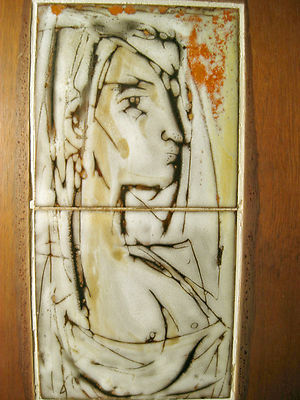
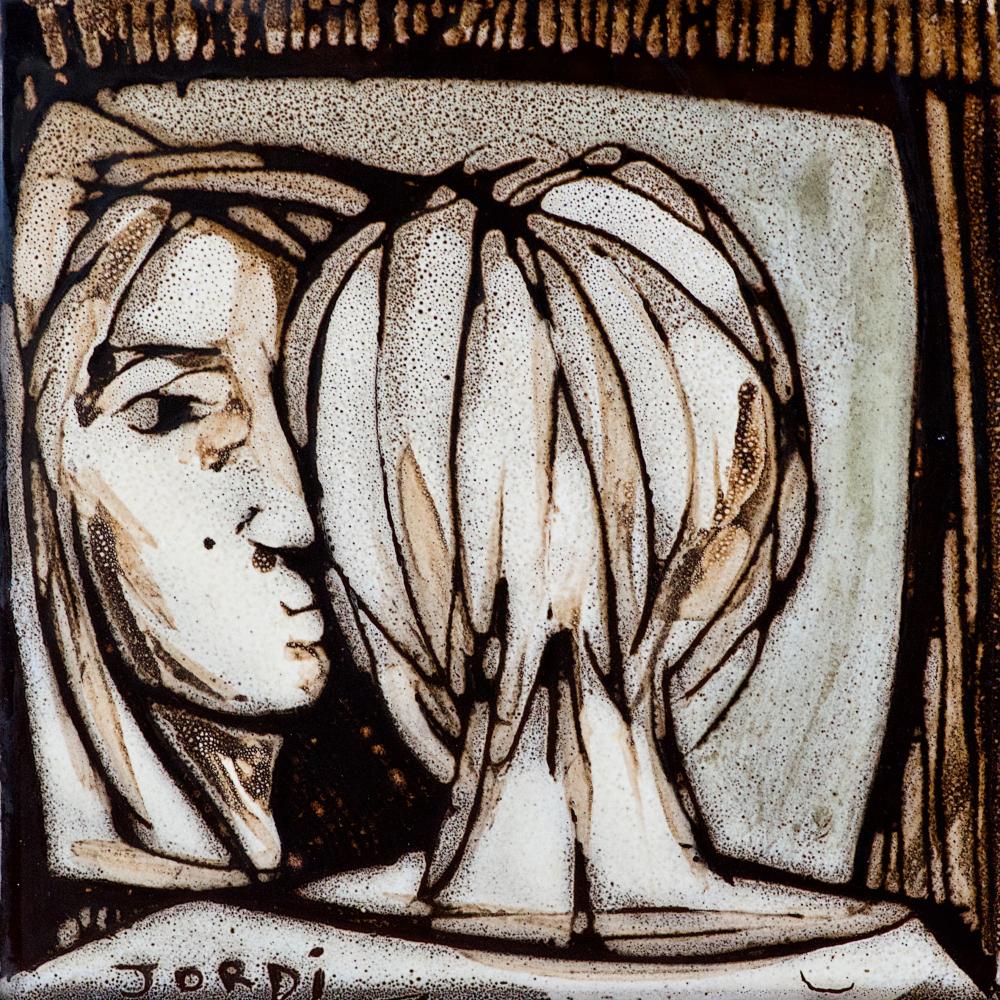
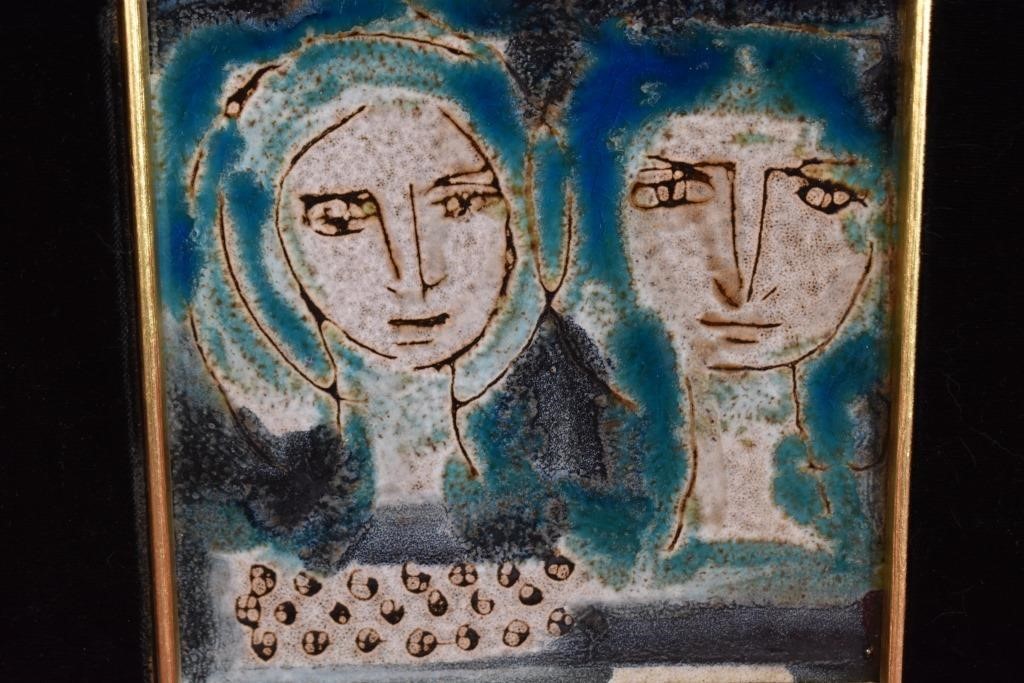
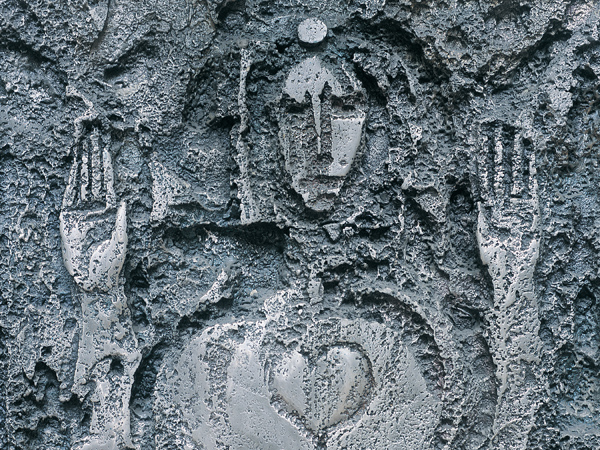
today is the birthday of Jordi Bonet (Barcelona 7 May 1932 – 25 December 1979 Mont-Saint-Hilaire, Quebec); painter, ceramist, muralist, and sculptor who worked principally in Quebec.

He emigrated to Canada in 1954, establishing himself in Quebec, where he continued his studies. After briefly returning to Spain, he established an atelier in Mont-Saint-Hilaire in 1960. Over the next 20 years, he created more than 100 works in Quebec and abroad, and associated with major art figures such as Salvador Dalí. He died from leukemia aged 47.
Gallery

And on this day in 1934, The Black Cat an American pre-Code horror film directed by Edgar G. Ulmer and starring Boris Karloff and Béla Lugosi, had its premiere. It was Universal Pictures’ biggest box office hit of the year, and was the first of eight films (six of which were produced by Universal) to feature both Karloff and Lugosi. In 1941, Lugosi appeared in a comedy horror mystery film with the same title, which was also named after and ostensibly “suggested by” Edgar Allan Poe’s 1843 short story.
The film was among the earlier movies with an almost continuous music score, and it helped to create and popularize the psychological horror subgenre by emphasizing atmosphere, eerie sounds, the darker side of the human psyche, and emotions like fear and guilt to deliver its scares.
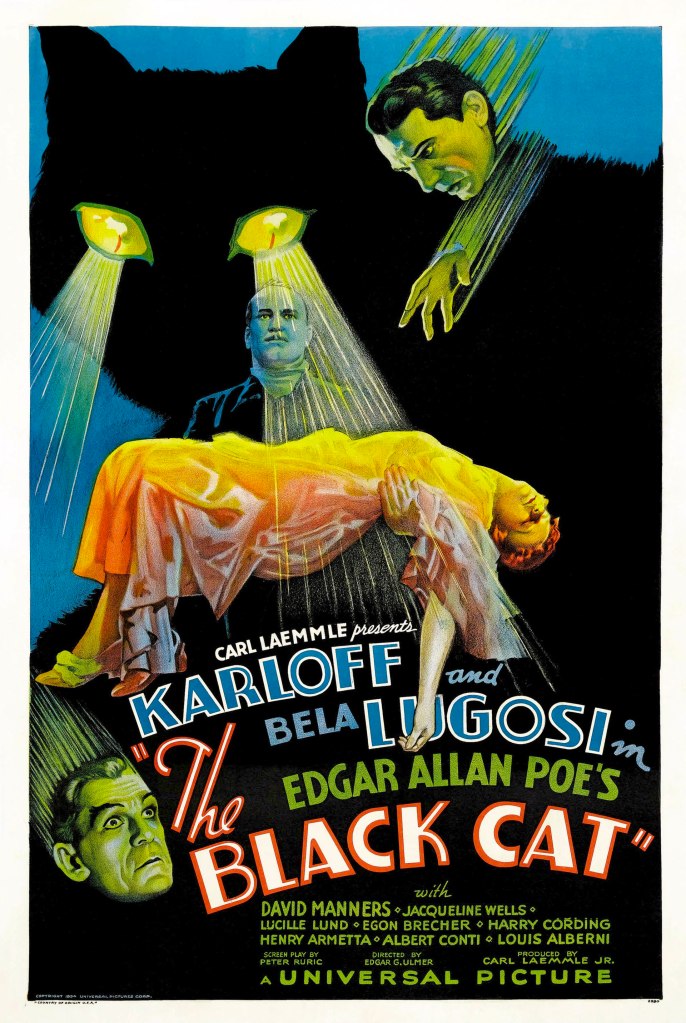
“Style D” theatrical release poster
thanks for stoppin’ by y’all
Mac Tag
When midnight comes, knock at my chamber-window.
– Shakespeare
A little while and – red eve dies –
Our love shall be of yesterday,
Ah, let us kiss each other’s eyes,
And laugh our love away.
WB Yeats
For it is love that I am seeking for,
But of a beautiful, unheard-of kind
That is not in the world.
WB Yeats
Now, mistress, profit you in what you read?
– Shakespeare
I feel no love, only the Idea of Love.
– Sylvia Plath
To live is the rarest thing in the world. Most people exist, that is all.
– Oscar Wilde
We should meet in another life, we should meet in air, me and you.
– Sylvia Plath
 The Lovers’ Chronicle
Leave a reply to The Lovers’ Chronicle 3 January – venetian lovers – premiere of Donizetti’s Don Pasquale – art by August Macke – The Lovers’ Chronicle Cancel reply