Dear Zazie, Here is today’s Lovers’ Chronicle from Mac Tag. Are you unforgiven too? Rhett
The Lovers’ Chronicle
Dear Muse,
there can only be
one song for today,
actually three,
versions I, II, and III
“Metallica baby”
absolutely
i like that i can swing
from “Nessun Dorma”
to “Enter Sandman” with ease
“You seem to be drawn to extremes”
i believe so, not sure how or why
“Speaking of drawn…”
oh yes, come here bébé
© copyright 2023 mac tag/cowboycoleridge all rights reserved
written often about how the key with regret and grief is not to wallow in it; mine i keep close, as a reminder, but have no time for dwellin’, so many words to write, so little time, same for forgiveness, askin’ for or grantin’, could and should, but not gonna, the dead do not care about redemption, or revenge, again, vices are fine as long as they are not destructive, and they set up a favorite parlour game, i will show you mine if you will show me yours, as for me and you the only thing unforgiven are the songs

© copyright 2022.2024 mac tag/cowboycoleridge all rights reserved
turns out,
there was someone
standin’ there, though
not in the moonlight,
but in the lights
of peachtee street
i called and you answered
the words, stir and stay
and do not fade away
and now we shall
entwined, readin’
the verse that moves
and goes on and on
© copyright 2021 Mac tag/cowboy coleridge all rights reserved
Pale Love, Pale Rider

is anybody there,
standin’ in the moonlight
tell them i came,
and no one answered,
that i kept my word
never the least stir
made the listeners,
words fall echoin’
through the shadows
from a man left awake
how the silence surges softly,
and emptiness goes on and on
© copyright 2020 mac tag/cowboy coleridge all rights reserved
a word without rhyme
except for near ones
which do not count
came to learn
how not to believe in it
real and imagined
witnessed
none the wiser
for dyin’, for leavin’
for what was done
and what was not done
for not bein’
what was wanted
true to upbringin’,
learn to include amongst
searchin’,
carryin’ all that
into torrid affairs
spectacularly flawed,
endin’ not well every time
packin’ and leavin’
turnin’ the page
sowin’ and reapin’
cultivatin’ and endin’
up alone
for that is the price paid
to live the life chosen
come to know
that which some
had not the capacity,
nor the will,
nor way to know…
it begins with self
but cannot allow that
thus continue to be
are you too
© copyright 2019 mac tag/cowboy coleridge all rights reserved
yes, still a charter member
one of the advantages
of solitude
much has been made in the past
of the road there, no time spent
wonderin’ about the way out
if asked, for what purpose
would work as answer
hey, everyone needs
a belief system

© copyright 2018.2024 mac tag/cowboy coleridge all rights reserved
It was half past three
In the mornin’
She was standin’ there
As I had last seen her
But when I moved
She was gone
It was the very same
Hour when she left me
In Nogales
© copyright 2016 mac tag/cowboy coleridge all rights reserved
Greetin’s from South Dakota.
Will cover 600 miles today.
This will save my sanity;
for awhile.
***
Forgive is so hard to say
When taught from an early age
not to forgive or forget,
It is a hard thing to do
The queen of unforgiveness
Retribution her mantra
She said vengeance was a dish
best served anyway you can
Witnessed the sharp verbal knife
slipped in and twisted, sometimes
the victim none the wiser
And true to his upbringin’,
he would learn to include her
among his unforgiven
© copyright 2015 mac tag/cowboy coleridge all rights reserved
Is she the one
Sent to save me
That’s not the right question
Is she the one
Sent to hold me
After I’ve saved myself
© copyright 2014 mac tag/cowboy coleridge all rights reserved
Another for the Dark Muse. This is a true story. He is. Are you……
Unforgiven
Forgive has seven letters
Two syllables, one meanin’
Comes from an Old English word
Cannot rhyme it, except for
near rhymes which he does not count
Accent second syllable,
if you are gonna say it
And for him, it is quite hard
When taught from an early age,
not to forgive or forget,
It is a hard thing to do
Raised by one of the masters
The queen of unforgiveness
Retribution her mantra
She said vengeance was a dish
best served anyway you can
Watched her exact her revenge
on her friends and family
for slights real and imagined
Witnessed the sharp verbal knife
slipped in and twisted, sometimes
the victim none the wiser
Her list of those she never
forgave was a lengthy one
It started with her mother
for dyin’ the way she did
and included her father
for leavin’ the way he did
Her mother’s brother and wife,
who adopted her, for what
was done and what was not done
Her brother, for what he did
Her husband, for not bein’
what she wanted him to be
The list would even one day
include the son she taught well
And true to his upbringin’,
he would learn to include her
among his unforgiven
He went out into the world
carryin’ all that baggage
and had torrid love affairs
with some spectacularly
flawed and beautiful women
Of course these relationships
ended not well every time,
with him packin’ his journals,
his books, his unforgiveness
and leavin’; turnin’ the page
sowin’ his pain and sorrow,
reapin’ his wrath and revenge,
Cultivatin’ his grudges,
and yes, endin’ up alone
For that is the price he paid
to live the life he chose, to
follow the path and become,
one of the unforgiven
Then one day, he came to know
that which the one he learned from
had not the capacity,
nor the will, nor way to know;
That in order to forgive,
he must first forgive himself
But he will not allow that
So he continues to be,
among the unforgiven
Are you unforgiven too?
© Copyright 2013 Mac Tag/Cowboy Coleridge All rights reserved
for Julie
I wrote a poem for a friend
and she told me
it brought her tears of happiness,
I feel loved.
© Copyright 2012 Mac Tag/Cowboy Coleridge All rights reserved
The Songs of the Day are “The Unforgiven I, II and III” by Metallica. We do not own the rights to these songs. All rights reserved by the rightful owner. No copyright infringement intended.
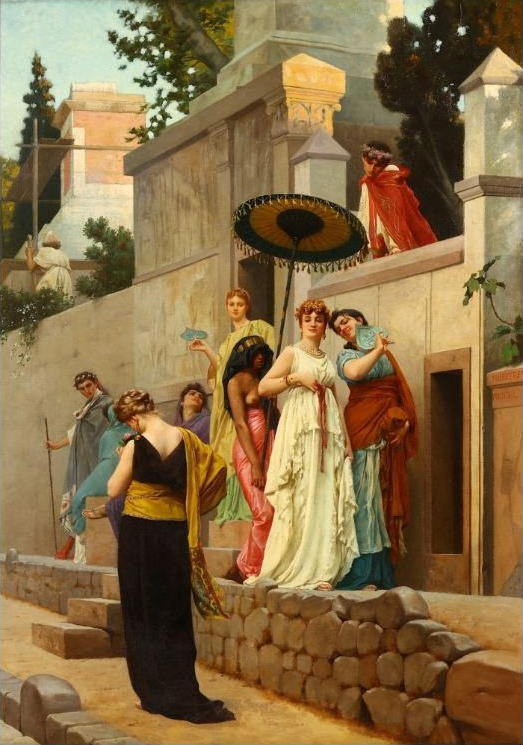
Today is the birthday of Gustave Boulanger (Gustave Clarence Rodolphe Boulanger; Paris 25 April 1824 – 22 September 1888 Paris); figurative painter and academic artist and teacher known for his Classical and Orientalist subjects.
Boulanger was the close friend of one of the most famous actresses in France, Zaïre-Nathalie Martel, known to one and all as Mademoiselle Nathalie. She remains a legend in the annals of the Comedie-Française.
While some contemporary writers said that Boulanger and Nathalie were married, the foremost Boulanger scholar of the 20th century, Marie-Madeleine Aubrun, refuted this: “Although here and there the idea of marriage has been insinuated, we have found no written trace of it. Furthermore, the actress’s death announcement in 1885 does not mention the name of Gustave Boulanger, which seems surprising. And above all, the death certificate specifies célibataire [single].”
Mademoiselle Nathalie died three years before Boulanger, in 1885. He donated his portrait of her, painted in 1867, to the Comedie-Française.
gallery
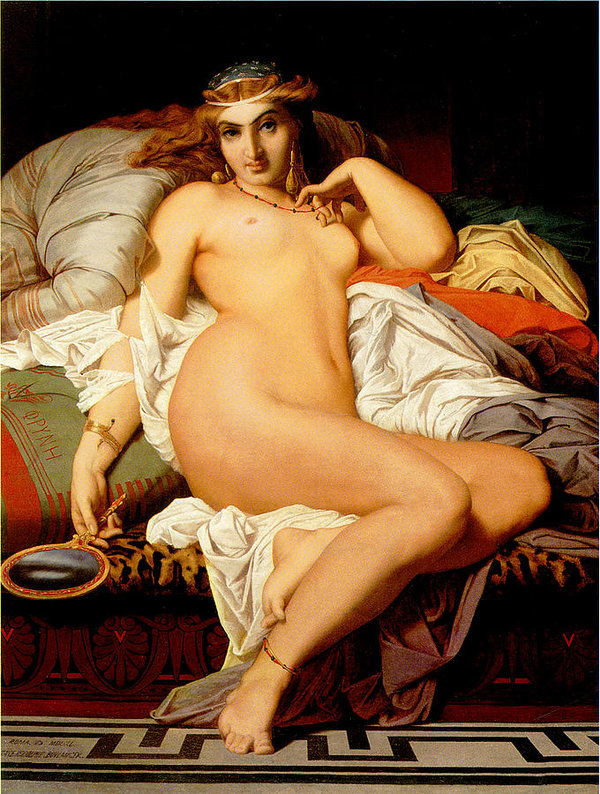
Phryne (1850), Amsterdam, musée van Gogh

Hercule aux pieds d’Omphale (Salon de 1861)
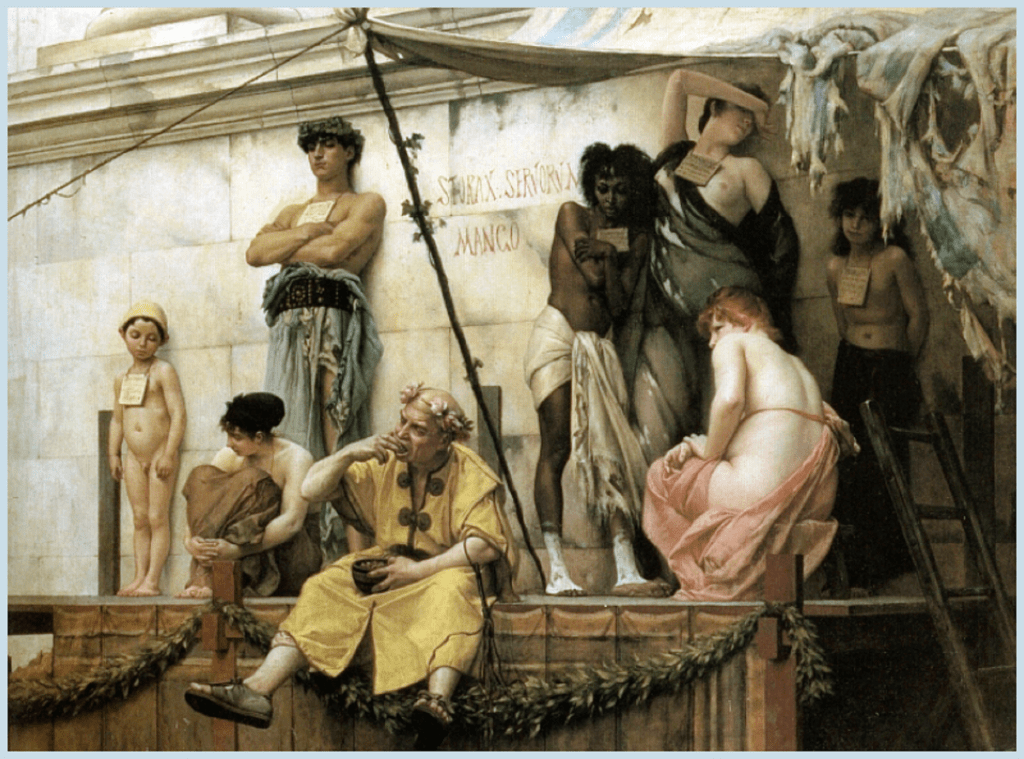
Le Marché aux esclaves (1882)

Horace et Lydie, 1863
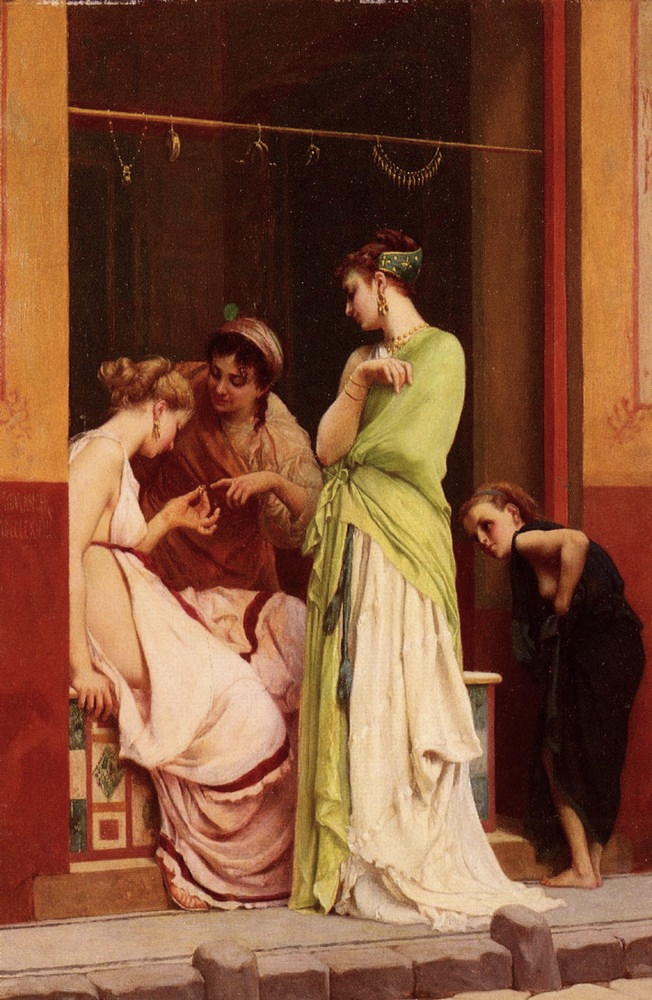
Une marchande de bijoux a Pompéi, 1868

Portrait de Madame Lambinet, 1887, Musée Lambinet, Versailles
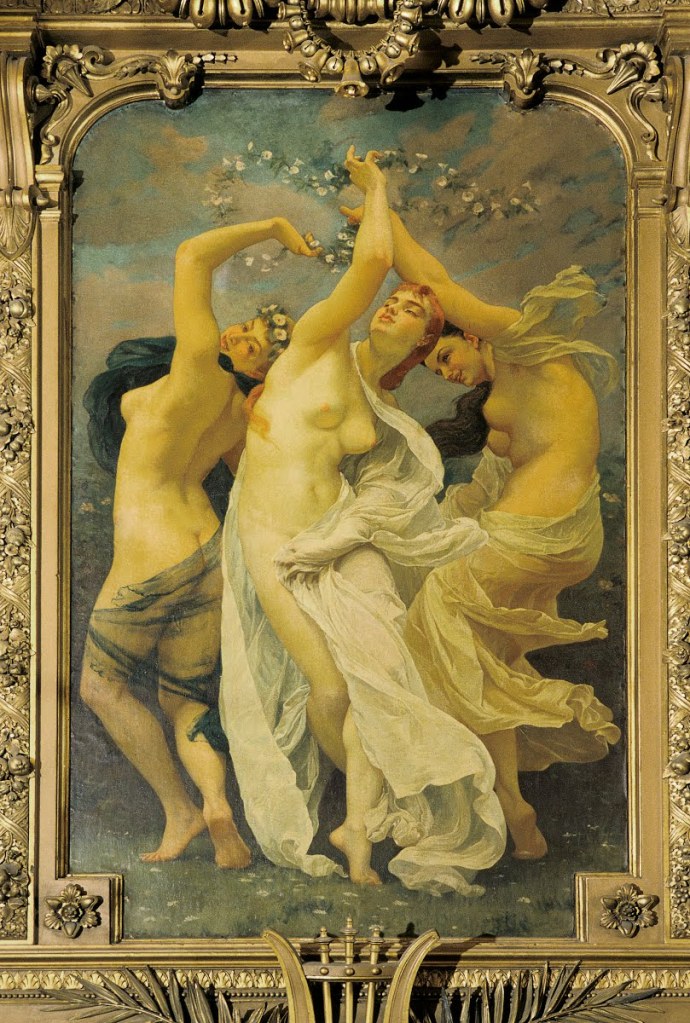
La danse champétre

La danse bachique
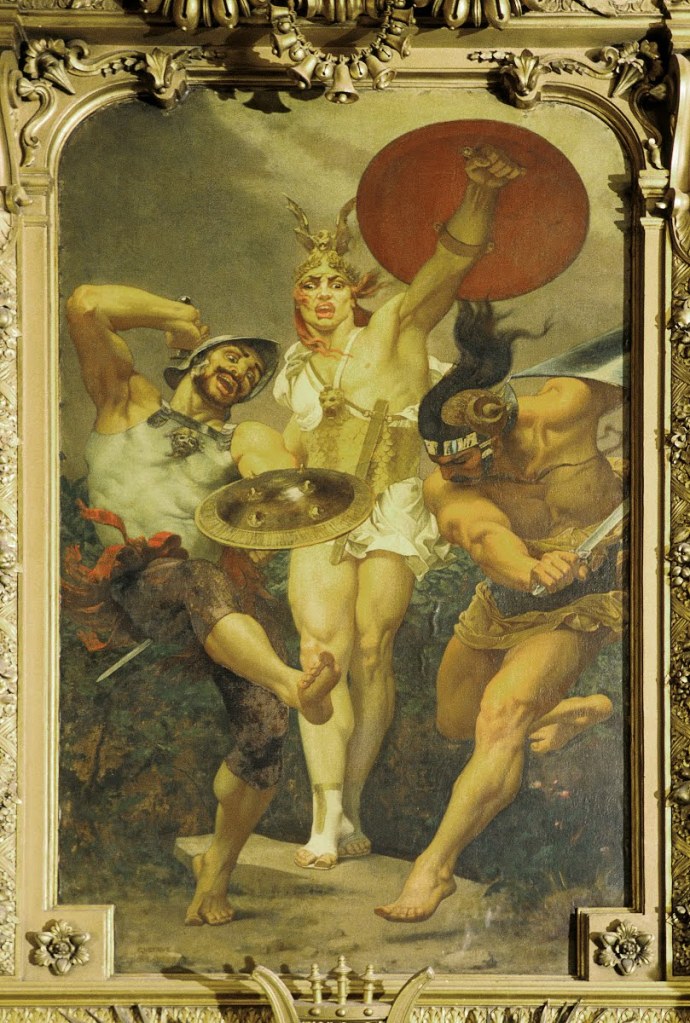
La danse guerrière

Today is the birthday of Walter John de la Mare (Charlton, Kent, England 25 April 1873 – 22 June 1956 Twickenham, Middlesex, England); poet, short story writer and novelist. Perhaps best remembered for his works for children, for his poem “The Listeners”, and for subtle psychological horror stories, amongst them “Seaton’s Aunt” and “Out of the Deep”.
In 1892 de la Mare joined the Esperanza Amateur Dramatics Club, where he met and fell in love with (Constance) Elfrida Ingpen, the leading lady, who was ten years older than him. Her father, William Alfred Ingpen, was Clerk to the Insolvent Debtors Court and Clerk of the Rules. De la Mare and Elfrida were married on 4 August 1899, and they went on to have four children: Richard Herbert Ingpen, Colin, Florence and Lucy Elfrida. The family lived in Beckenham and Anerley from 1899 till 1924. The home in Anerley in South London was the scene of many parties, notable for imaginative games of charades.

Drawing of de la Mare by William Rothenstein
The Listeners (1912)
- “Is anybody there?” said the Traveler,
Knocking on the moonlit door;
And his horse in the silence champed the grasses
Of the forest’s ferny floor. - “Tell them I came, and no one answered,
That I kept my word,” he said. - Never the least stir made the listeners,
Though every word he spake
Fell echoing through the shadowiness of the still house
From the one man left awake:
Aye, they heard his foot upon the stirrup,
And the sound of iron on stone,
And how the silence surged softly backward,
When the plunging hoofs were gone.
- Here lies a most beautiful lady,
Light of step and heart was she;
I think she was the most beautiful lady
That ever was in the West Country.- An Epitaph.
- But beauty vanishes; beauty passes;
However rare—rare it be;
And when I crumble, who will remember
This lady of the West Country?- An Epitaph.
- Look thy last on all things lovely,
Every hour—let no night
Seal thy sense in deathly slumber
Till to delight
Thou hast paid thy utmost blessing.- Fare Well, st. 3 (1918).
- ‘Who knocks?’ ‘I, who was beautiful,
Beyond all dreams to restore,
I from the roots of the dark thorn am hither,
And knock on the door.’- The Ghost.
- A face peered. All the grey night
In chaos of vacancy shone;
Nought but vast sorrow was there—
The sweet cheat gone.- The Ghost.
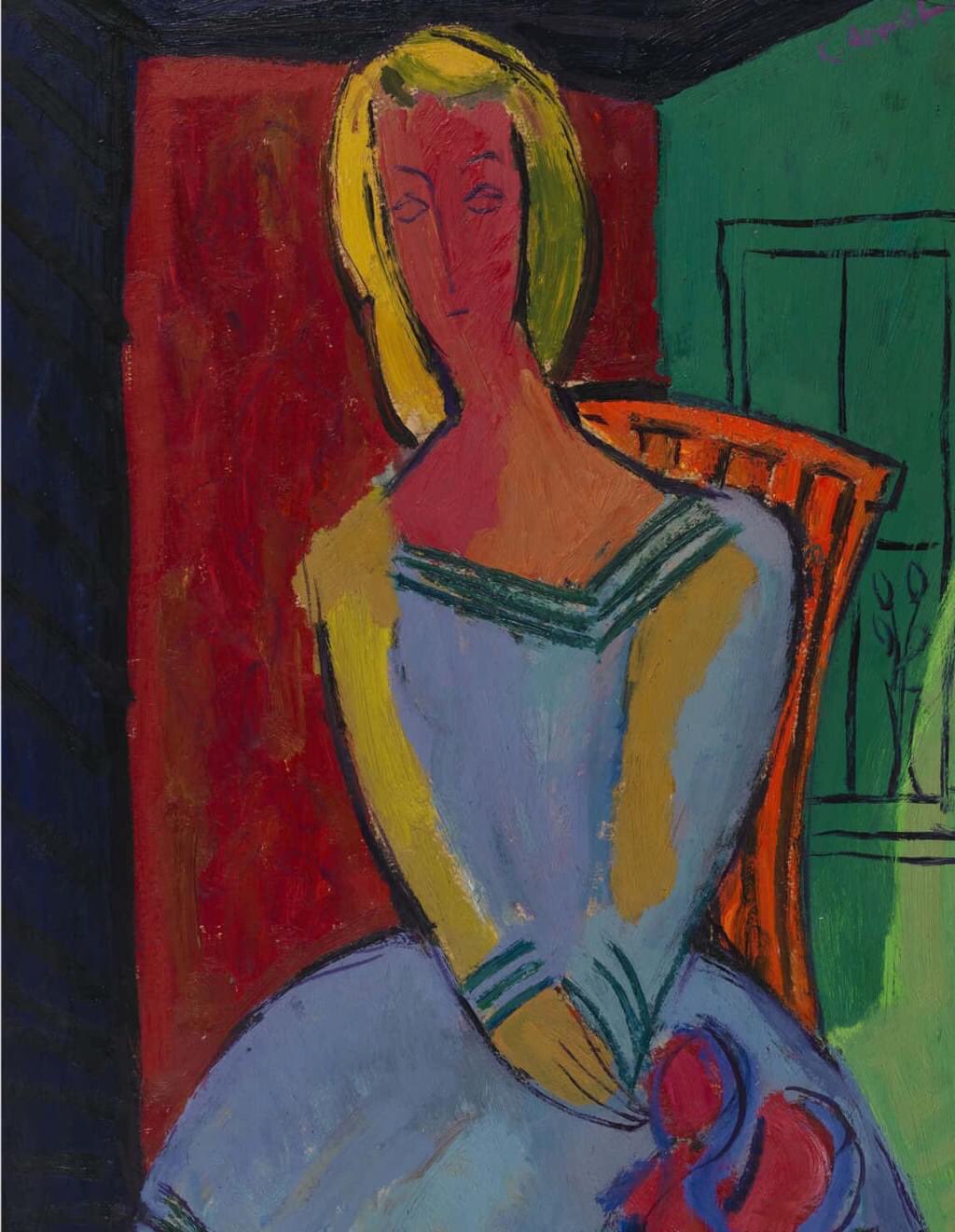
Today is the birthday of Karel Appel (Christiaan Karel Appel; Amsterdam 25 April 1921 – 3 May 2006 Zürich); painter, sculptor, and poet. He started painting at the age of fourteen and studied at the Rijksakademie in Amsterdam in the 1940s. He was one of the founders of the avant-garde movement CoBrA in 1948. He was also an avid sculptor and has had works featured in MoMA and other museums worldwide.

in 1982
Gallery

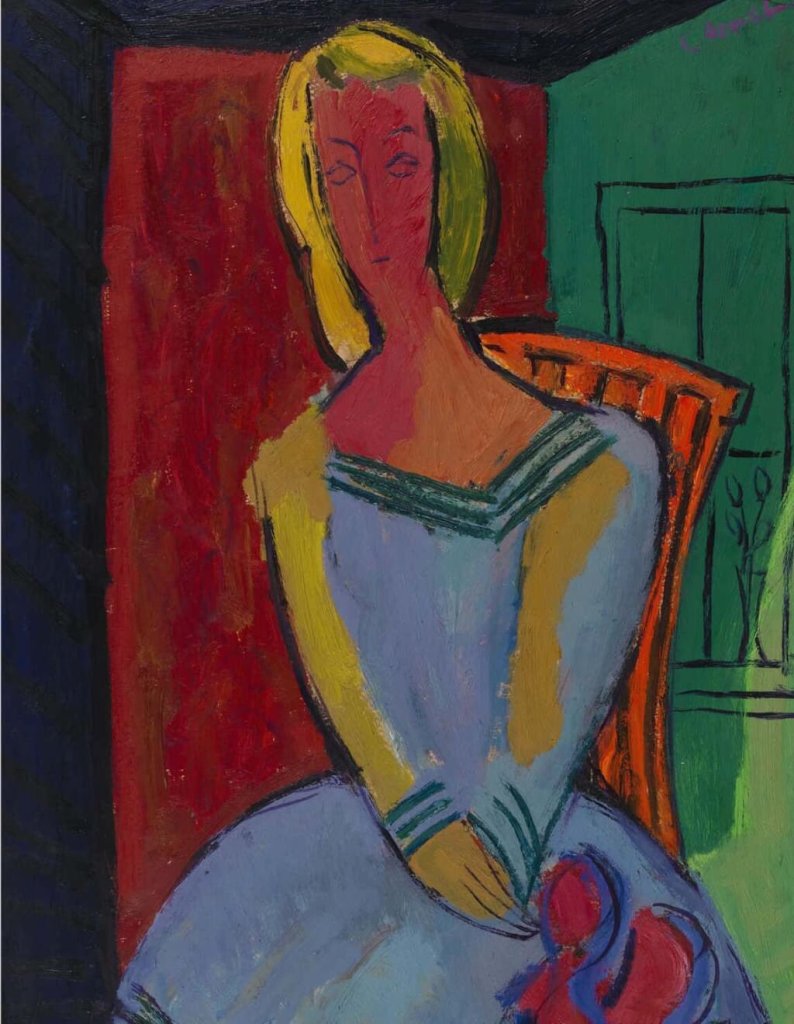
Sitting girl

face

Today is the premier date in 1926 of Turandot, an opera in three acts by Giacomo Puccini, posthumously completed by Franco Alfano in 1926, and set to a libretto in Italian by Giuseppe Adami and Renato Simoni. Its best-known aria is “Nessun dorma”.
 The cover of the score printed by Ricordi
Though Puccini first became interested in the subject matter when reading Friedrich Schiller’s 1801 adaptation, he based his work more closely on the earlier play Turandot (1762) by Count Carlo Gozzi. The original story is one of the seven stories in the epic Haft Peykar; a work by twelfth-century Persian poet Nizami (c. 1141–1209). Nizami aligned his seven stories with the seven days of the week, the seven colors, and the seven planets known in his era. This particular narrative is the story of Tuesday, as told to the king of Iran, Bahram V (r. 420–438), by his companion of the red dome, associated with Mars. In the first line of the story, the protagonist is identified as a Russian princess. The name of the opera is based on Turan-Dokht (daughter of Turan), which is a name frequently used in Persian poetry for Central Asian princesses.
The opera’s version of the story is set in China. It involves Prince Calaf, who falls in love with the cold Princess Turandot. In order to obtain permission to marry her, a suitor must solve three riddles. Any single wrong answer will result in the suitor’s execution. Calaf passes the test, but Turandot refuses to marry him. He offers her a way out: if she is able to guess his name before dawn the next day, he will accept death. In the original story by Nizami, the princess sets four conditions: firstly “a good name and good deeds”, and then the three challenges. As with Madama Butterfly, Puccini strove for a semblance of authenticity (at least to Western ears) by integrating music from the region. Up to eight of the musical themes in Turandot appear to be based on traditional Chinese music and anthems, and the melody of a Chinese song “Mò Li Hūa (茉莉花)”, or “Jasmine”, became a motif for the princess.
Puccini left the opera unfinished at the time of his death in 1924; Franco Alfano completed it in 1926. The first performance took place at the Teatro alla Scala in Milan on 25 April 1926, conducted by Arturo Toscanini. The performance included only Puccini’s music without Alfano’s additions. The first performance of the opera as completed by Alfano was performed on the next evening, 26 April, although it is disputed whether the second performance was conducted by Toscanini or by Ettore Panizza.
“Nessun dorma” (let no one sleep), has long been a staple of operatic recitals. Luciano Pavarotti popularized the piece beyond the opera world in the 1990s following his performance of it for the 1990 World Cup, which captivated a global audience. Both Pavarotti and Plácido Domingo released singles of the aria, with Pavarotti’s reaching number 2 in the UK. The Three Tenors performed the aria at three subsequent World Cup Finals, in 1994 in Los Angeles, 1998 in Paris, and 2002 in Yokohama. Many crossover and pop artists have performed and recorded it. In what the National Academy of Recording Arts and Sciences called “the greatest last-second substitution act in Grammy history”, Aretha Franklin sang a “soul-infused” version of the aria in place of Pavarotti when throat problems caused him to withdraw from the 1998 40th Annual Grammy Awards show.
The aria has been used in the soundtracks of numerous films often appearing at a central moment in the film—sometimes with the aria’s moment of musical resolution aligned with the film’s narrative climax, giving symbolic meaning to the aria’s rich emotional impact. Films in which the aria plays a significant role in the soundtrack include The Killing Fields, New York Stories, The Sea Inside, The Sum of All Fears, The Mirror Has Two Faces, Bend It Like Beckham, No Reservations, Mission: Impossible – Rogue Nation (with the scene set within a performance of Turandot itself), and The Upside. It was sung by Pavarotti himself as part of his fictional role in the film Yes, Giorgio. When all of Italy was under lockdown due to the COVID-19 pandemic, a video of opera singer Maurizio Marchini performing “Nessun dorma” from his balcony in Florence went viral.
As the final act opens, it is now night. Calaf is alone in the moonlit palace gardens. In the distance, he hears Turandot’s heralds proclaiming her command. His aria begins with an echo of their cry and a reflection on Princess Turandot:
| Nessun dorma! Nessun dorma! Tu pure, o Principessa, nella tua fredda stanza, guardi le stelle che tremano d’amore, e di speranza! | None shall sleep! None shall sleep! Not even you, oh Princess, in your cold bedroom, watching the stars that tremble with love, and with hope! |
| Ma il mio mistero è chiuso in me; il nome mio nessun saprà! No, No! Sulla tua bocca, lo dirò quando la luce splenderà! | But my secret is hidden within me; no one will know my name! No, no! On your mouth, I will say it when the light shines! |
| Ed il mio bacio scioglierà il silenzio che ti fa mia! | And my kiss will dissolve the silence that makes you mine! |
Just before the climactic end of the aria, a chorus of women is heard singing in the distance:
| Il nome suo nessun saprà, E noi dovrem, ahimè, morir, morir! | No one will know his name, and we will have to, alas, die, die! |
Calaf, now certain of victory, sings:
| Dilegua, o notte! Tramontate, stelle! Tramontate, stelle! All’alba, vincerò! Vincerò! Vincerò! | Vanish, o night! Fade, you stars! Fade, you stars! At dawn, I will win! I will win! I will win! |
And today is the birthday of Cy Twombly (Edwin Parker Twombly Jr.; Lexington, Virginia; April 25, 1928 – July 5, 2011 Rome); painter, sculptor and photographer. He belonged to the generation of Robert Rauschenberg and Jasper Johns.
His best-known works are typically large-scale, freely-scribbled, calligraphic and graffiti-like works on solid fields of mostly gray, tan, or off-white colors. His later paintings and works on paper shifted toward “romantic symbolism”, and their titles can be interpreted visually through shapes and forms and words. Twombly often quoted poets such as Stéphane Mallarmé, Rainer Maria Rilke and John Keats, as well as classical myths and allegories, in his works. Examples of this are his Apollo and The Artist and a series of eight drawings consisting solely of inscriptions of the word “VIRGIL”.
Twombly’s works are in the permanent collections of modern art museums globally, including the Menil Collection in Houston, the Tate Modern in London, New York’s Museum of Modern Art and Munich’s Museum Brandhorst. He was commissioned for a ceiling at the Musée du Louvre in Paris.
Gallery

wilder shores of love
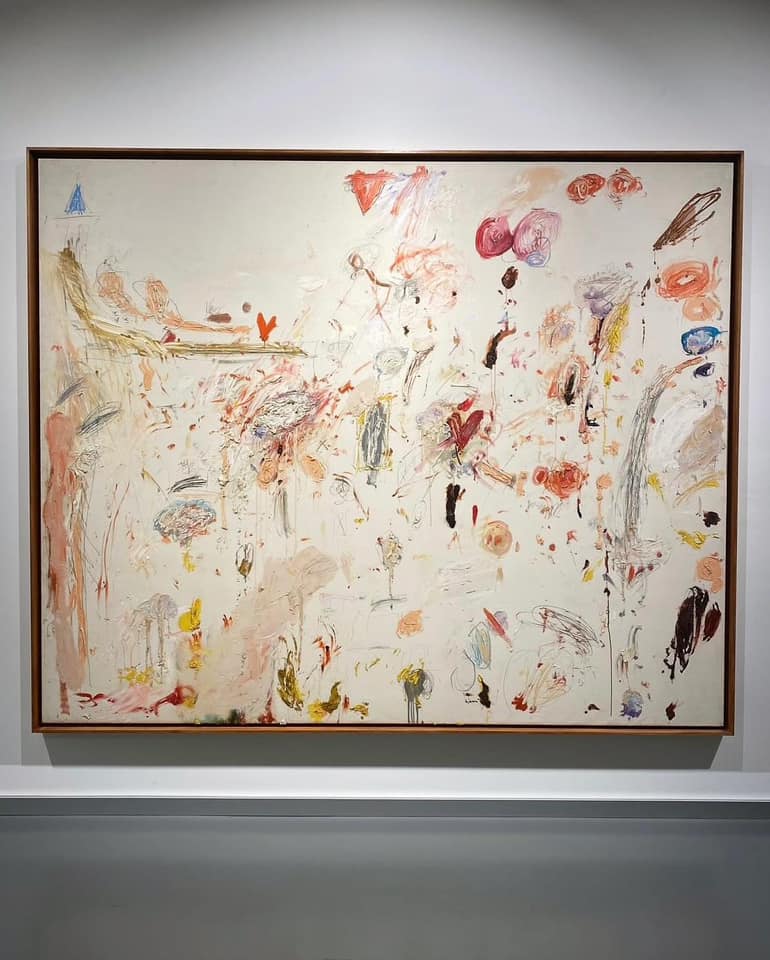
Untitled 1961

 Sunset
 Light and dark
thanks for stoppin’ by y’all
mac tag
 The Lovers’ Chronicle
Leave a reply to The Lovers’ Chronicle 22 December – somethin’ – birth of Puccini – verse by Kenneth Rexroth – art by Jean-Michel Basquiat – The Lovers’ Chronicle Cancel reply