Dear Zazie,
Here is today’s Lovers’ Chronicle from Mac Tag.
Rhett
The Lovers’ Chronicle
Dear Muse,
no not from Streisand
and it is not the way we were
but rather the way we are
“That’s right baby”
today is the day Haggard died
and i wrote song lyrics in 2013
inspired by his music
“A rich mine for you”
indeed, one of my favorite moments on our trip
to Nashville was goin’ to Layla’s and them playin’
Hag’s songs between bands
“Speaking of favorite moments”
we seem to be wrackin’ up
some wonderful memories
“Like right now”
© copyright 2023 mac tag/cowboycoleridge all rights reserved
the only rear view gazin’ goin’ on now is to give thanks for the twists and turns in the trail for had they not been we would not be here; indeed, appears that the verse has been pointin’ in this direction; a certain wish
bein’ fulfilled, pourin’ memories of together
© copyright 2022 mac tag/cowboy coleridge all rights reserved
always one for
rear view gazin’…
personally,
misery and gin
mixed quite well
for me
and there were days
where i often thought,
oh hell, i will just stay
here and drink
but it appears
that the verse
has been pointin’
in this direction
a certain wish
bein’ fulfilled
© copyright 2021 mac tag/cowboy coleridge all rights reserved
Pale Love, Pale Rider
a different view
of the rear view…
comes down to choices
pickup a pen
and let the words out
courtin’ forgiveness,
but not settlin’,
settin’ grievin’ aside,
cowboy up,
pourin’ memories
of this creation
no longer strugglin’
do memories
come true
and faith in this
© copyright 2020 mac tag/cowboy coleridge all rights reserved
back to the rear view again…
comes down to choices
tried sleep but ain’t no use
booze cannot quiet regret
pickup a pen
and let the words out
demand so
descend
memories
were that i were able
to allow forgiveness
to settle in
but cannot or will not
does not matter
grievin’ insists,
so cowboy up,
pourin’ memories
and whiskey
learned well
how not to forgive
and not to forget
how to move
on down the line
from one heart
to the next
of course,
that only mixes well
with memories
and whiskey
seekin’ shelter
doin’ right
doin’ wrong
not carin’
carin’
holdin’ on
keep pourin’
these words and mixin’
and stirrin’ regret
and orderin’ up more
memories and whiskey
© copyright 2019 mac tag/cowboy coleridge all rights reserved
gazin’ in the rear view again
stirin’ and pourin’
struggled constantly
with a consumin’ desire
for hell if i knew what
well, at the time
it was known
s’pose the struggle
would still be goin’ on
had not the flames
finally cooled
a certain wish
that i could say
i am entirely free
from all of that
but that would be a lie
because i cannot
forget
© copyright 2018 mac tag/cowboy coleridge all rights reserved
Lyrics inspired by the incomparable music of Merle Haggard, who was born and died on this day, and the Dark Muse. Tonight I am mixin’……
Memories and Whiskey
Comes down to a matter of choice
Tried to sleep but it ain’t no use
Booze cannot quiet regret
Grabbed my pen and these words came out…
Dark Muse demands so
Descend swiftly
Swarmin’ memories
Were that I were able
To allow forgiveness
To settle in
But cannot or will not
Does not matter
Grievin’ insists,
So cowboy up,
And keep on mixin’
Memories and whiskey
Seekin’ shelter
In the wrong places
Holdin’ what I’ve got,
Though it don’t mix well
Keep on pourin’
Memories and whiskey
Could start doin’ right
And quit doin’ wrong
But she don’t care
So it don’t matter
Keep on stirin’
Memories and whiskey
She taught me good
How not to forgive
And not to forget
So I’ll keep movin
On down the line
From one heart to the next
And I’ll keep pourin’
These words and mixin’
Misery with tears
And stirrin’ regret
And order up more
Memories and whiskey
©Copyright 2013 Cowboy Coleridge All rights reserved
The Songs of the Day are “Misery and Gin” and “I Think I’ll Just Stay Here And Drink” by Merle Haggard. We do not own the rights to these songs. All rights reserved by the rightful owner. No copyright infringement intended.

On this day in 1327, the poet Petrarch saw Laura for the first time. It was on Good Friday, in the church of Saint Claire in Avignon. Her identity has never been confirmed, but she was probably Laure de Noves, a noblewoman living in Avignon with her husband Hugues de Sade. Petrarch was 22 years old, and she was a teenager, maybe 17. He fell instantly in love. Of Laura he wrote:
“In my younger days, I struggled constantly with an overwhelming but pure love affair – my only one, and I would have struggled with it longer had not premature death, bitter but salutary for me, extinguished the cooling flames. I certainly wish I could say that I have always been entirely free from desires of the flesh, but I would be lying if I did.”
Today is the birthday of Gustave Moreau (Paris 6 April 1826 – 18 April 1898 Paris); Symbolist painter whose main emphasis was the illustration of biblical and mythological figures. The female characters from the bible and mythology that he so frequently depicted came to be regarded by many as the archetypical symbolist woman. He appealed to the imaginations of some Symbolist writers and artists.
| Gustave Moreau | |
|---|---|
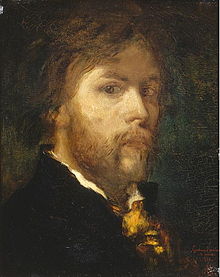 | |
Moreau never married and very little information is known about his personal and romantic relationships. In the past some biographers speculated that he was gay, largely inferred from the fact that he was a bachelor, a lack of information regarding women in his life, and the sometimes effeminate or androgynous appearance of male figures in some of his paintings. However, more recent research and documents revealed a relationship with Adelaide-Alexandrine Dureux (b. Guise, 8 November 1835 – d. Paris, March 1890) that lasted over 30 years. Moreau apparently met Alexandrine soon after his return from Italy and in following years he produced many drawings and watercolors of her, as well as romantic caricatures of the two of them walking on clouds together. He subsidized an apartment for her on Rue Norte-Dame de Lorette, just a few blocks from the townhome where he lived with his parents. Their relationship was very discreet and known by only a few in his closest circle. His mother was aware of their relationship and apparently fond of her, as indicated by a stipulation in her will that provided an annuity for Alexandrine should Gustave die before her. He designed her tombstone, engraved with their interlaced initials, A and G, which is located near his family plot where he was interned with his parents.
Gallery
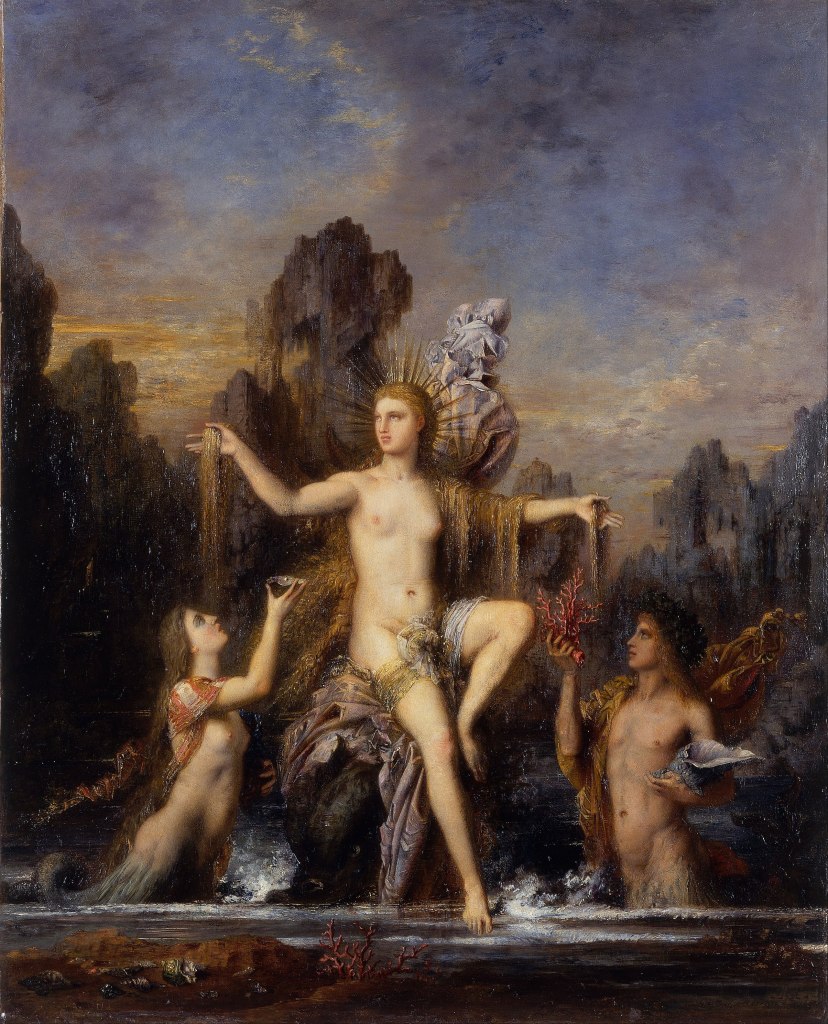
Venus Rising from the Sea

la toilette 1885-90
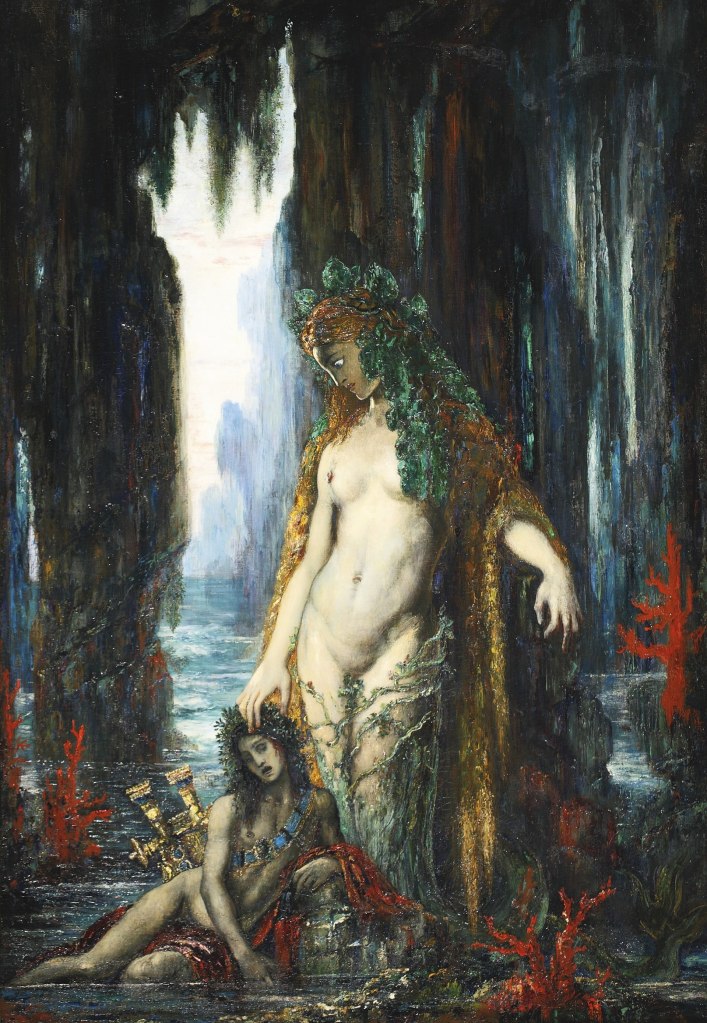
Le Poète et le Sirène (1893), collection particulière

La Chimère (1867), Cambridge, Fogg Art Museum

Salomé (1876)

Galatée (vers 1880), Paris, musée d’Orsay

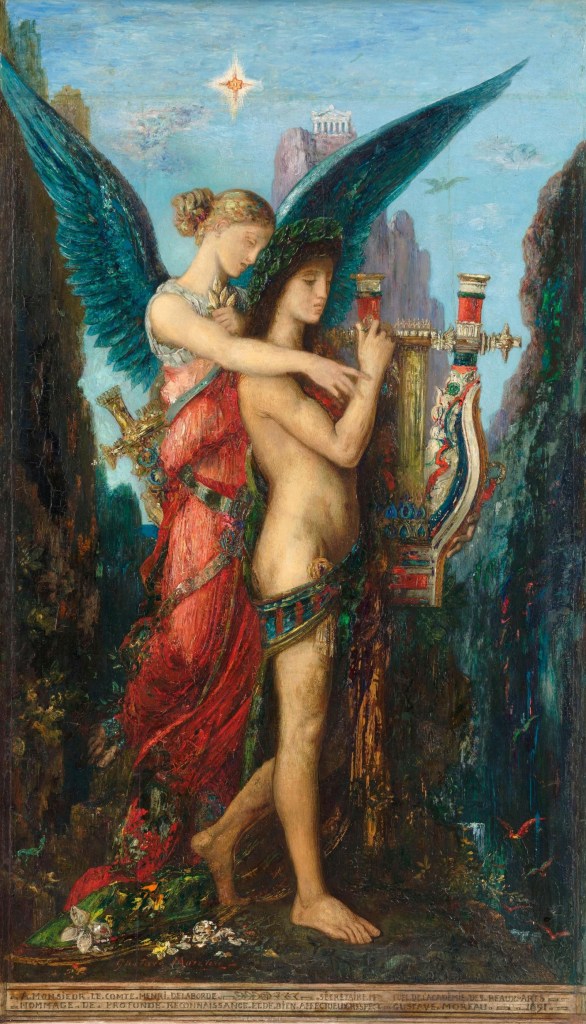
Hésiode et le Muse (1890), Paris, musée d’Orsay
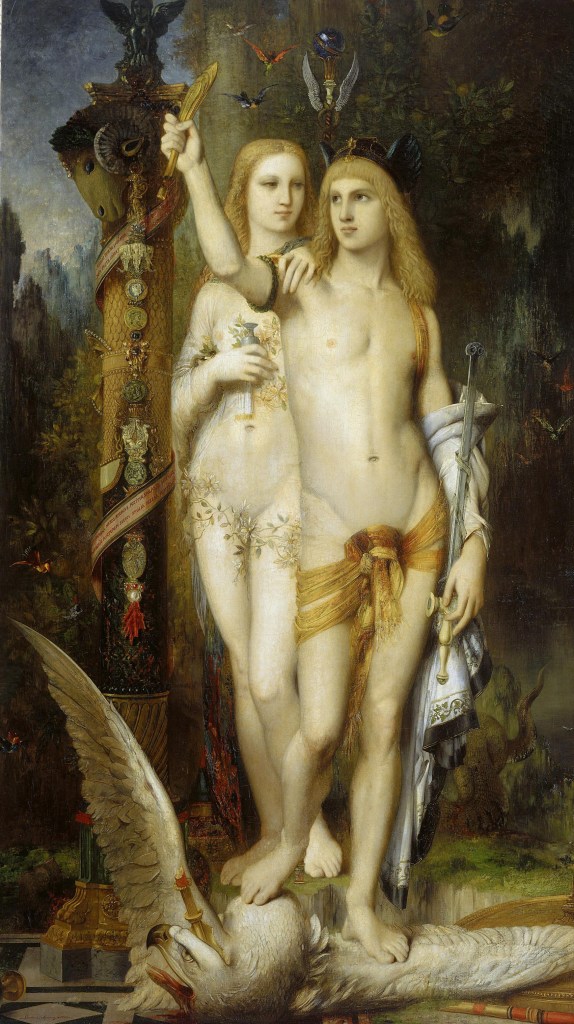
Jason et Médée

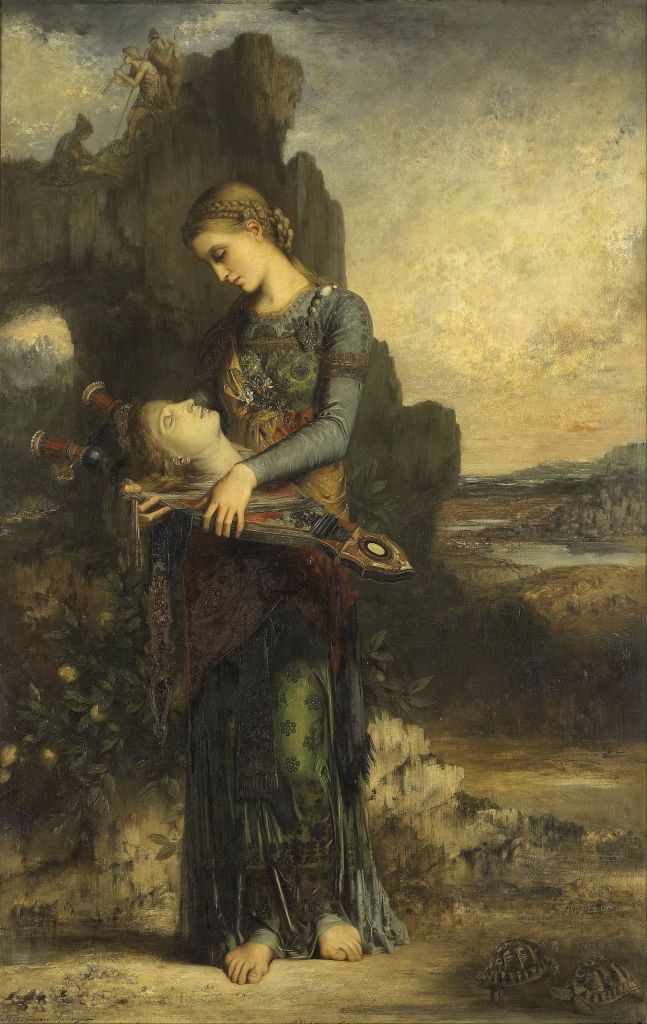
Jeune fille thrace portant la tête d’Orphée (1865), huile sur bois, Paris, musée d’Orsay

Œdipe et le Sphinx (1864), New York, Metropolitan Museum of Art

Salomé au jardin (1878), aquarelle, Paris, collection particulière


Les Filles de Thespius, 1853-1882, Paris, musée Gustave Moreau
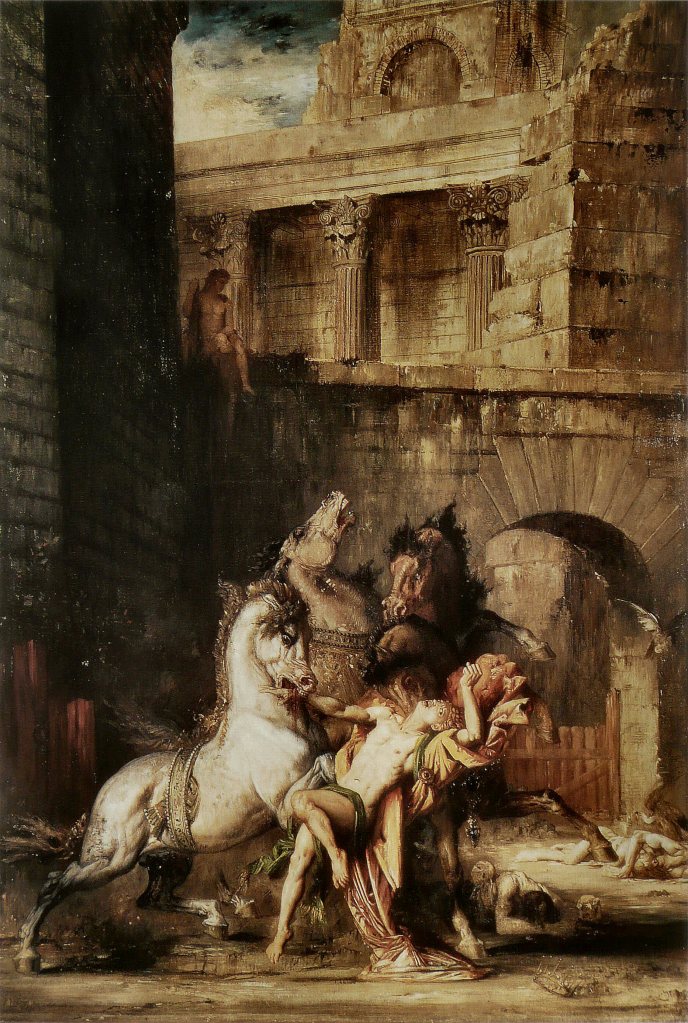

Scottish Horseman (ca. 1854), 145 x 145 cm., Musée Gustave Moreau
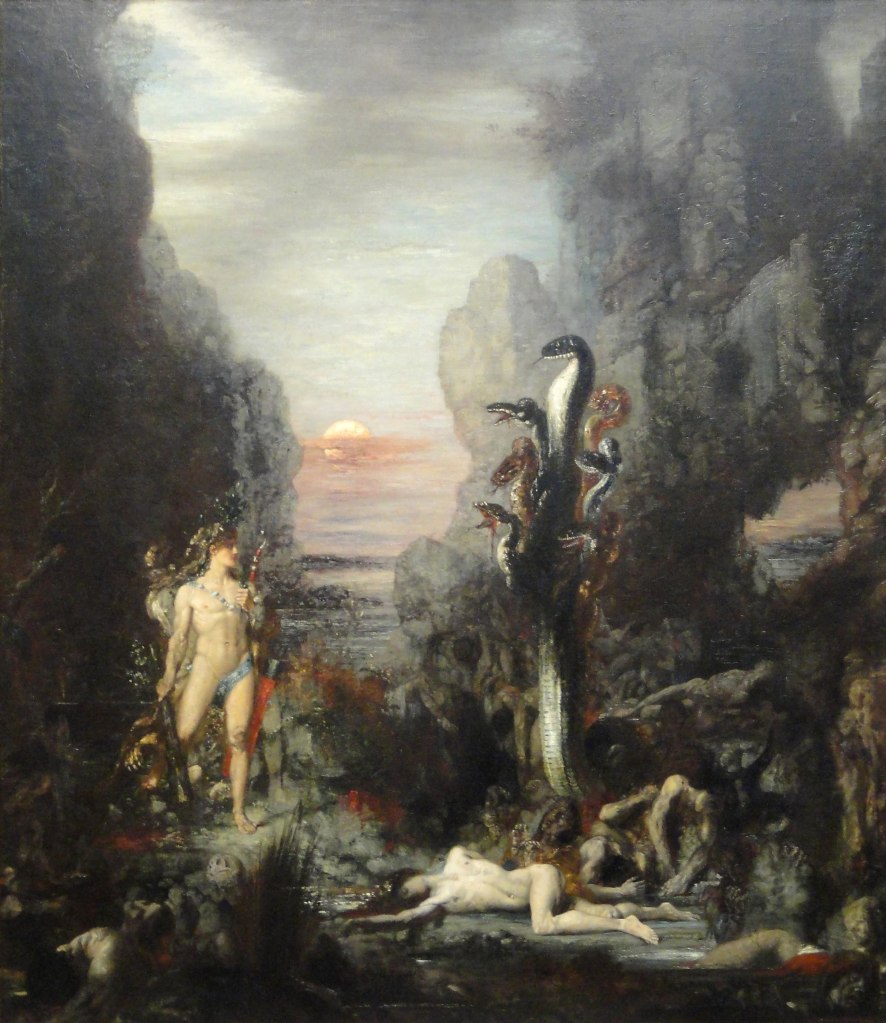
Hercule et l’Hydre de Lerne, 1876, huile sur toile, Chicago, Art Institute
Today is the baptismal day of John William Waterhouse (Rome 6 April 1849 – 10 February 1917 London); painter known for working first in the Academic style and for then embracing the Pre-Raphaelite Brotherhood’s style and subject matter. His paintings are known for their depictions of women from both ancient Greek mythology and Arthurian legend. A high proportion depict a single young and beautiful woman in a historical costume and setting, though there are some ventures into Orientalist painting and genre painting, still mostly featuring women.

c 1886
Born to English parents who were both painters, Waterhouse later moved to London, where he enrolled in the Royal Academy of Art Schools. He soon began exhibiting at their annual summer exhibitions, focusing on the creation of large canvas works depicting scenes from the daily life and mythology of ancient Greece. Many of his paintings are based on authors such as Homer, Ovid, Shakespeare, Tennyson, or Keats.
Waterhouse’s work is displayed in many major art museums and galleries, and the Royal Academy of Art organised a major retrospective of his work in 2009.
In 1883, Waterhouse married Esther Kenworthy, the daughter of an art schoolmaster from Ealing who had exhibited her own flower-paintings at the Royal Academy and elsewhere. In 1895 Waterhouse was elected to the status of full Academician. He taught at the St. John’s Wood Art School, joined the St John’s Wood Arts Club, and served on the Royal Academy Council.
Gallery


Echo and Narcissus 1903

Hylas and the Nymphs 1896
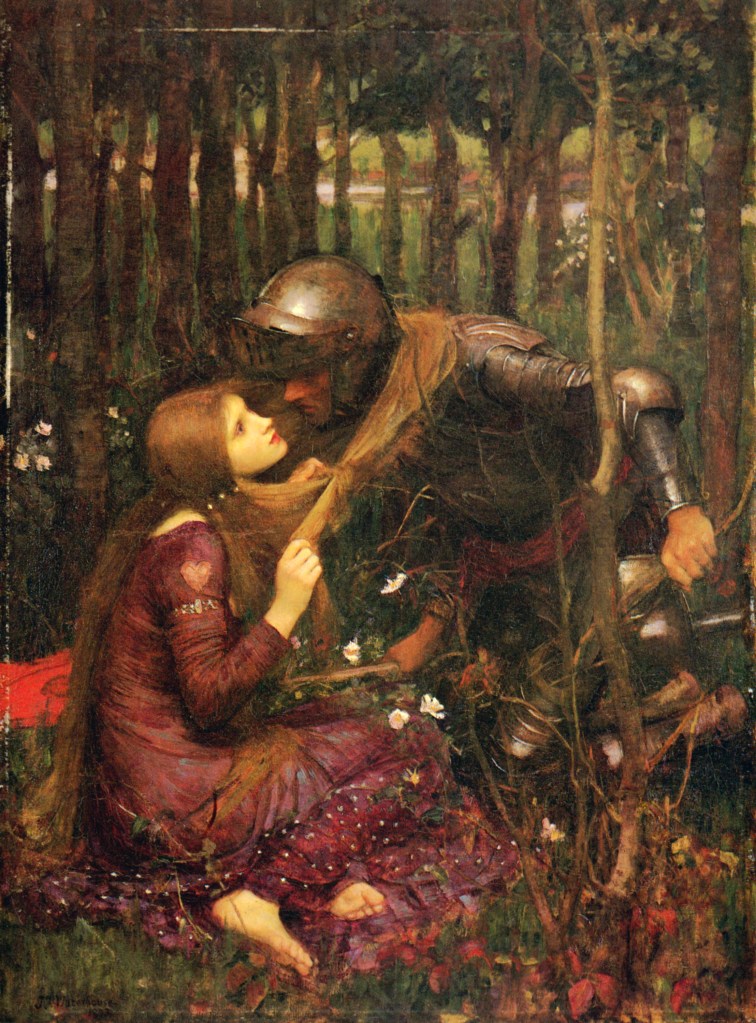
La Belle Dame sans Merci 1893

Ophelia 1894
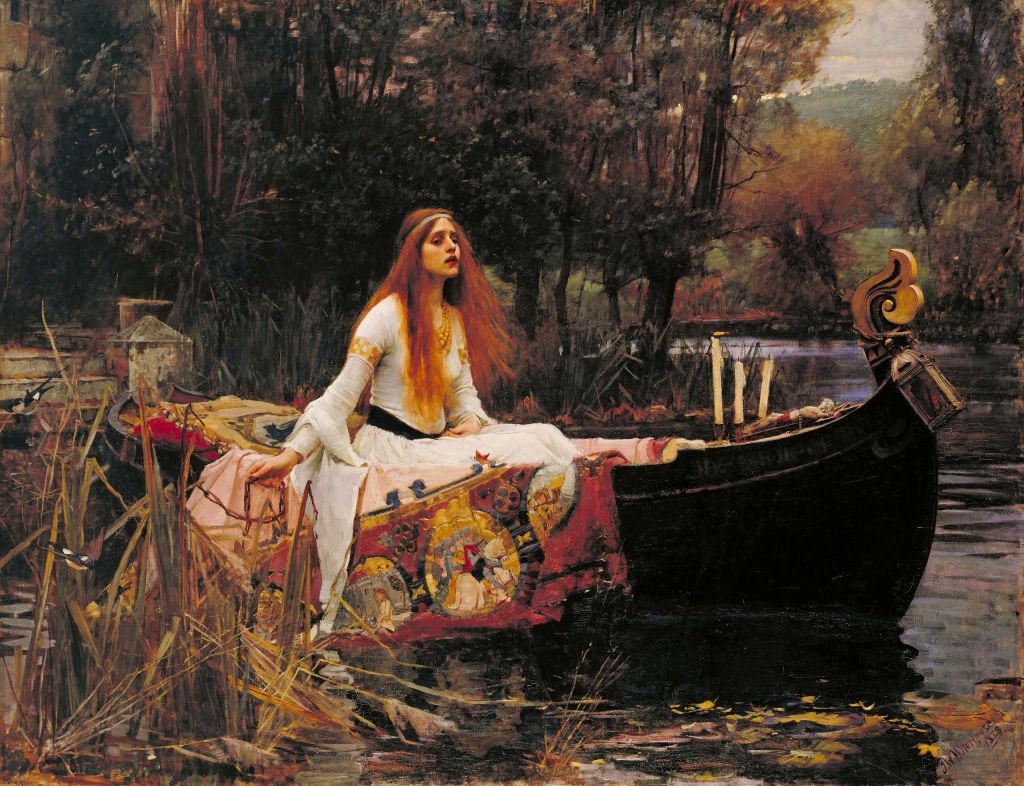
The Lady of Shalott 1888


Study for Nymphs Finding the Head of Orpheus 1900


Lamia (version 1) 1905
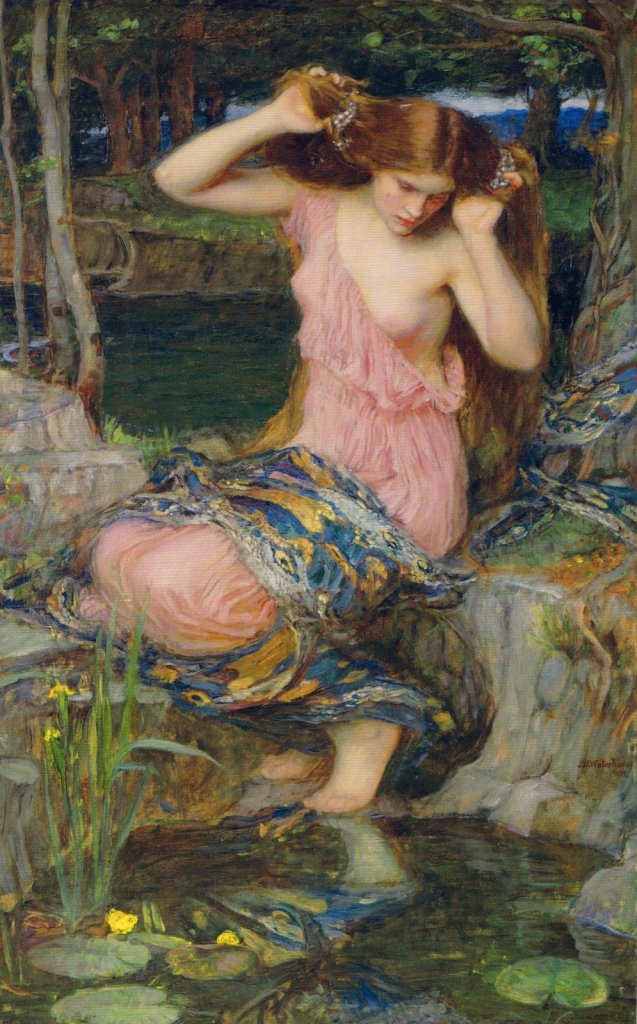

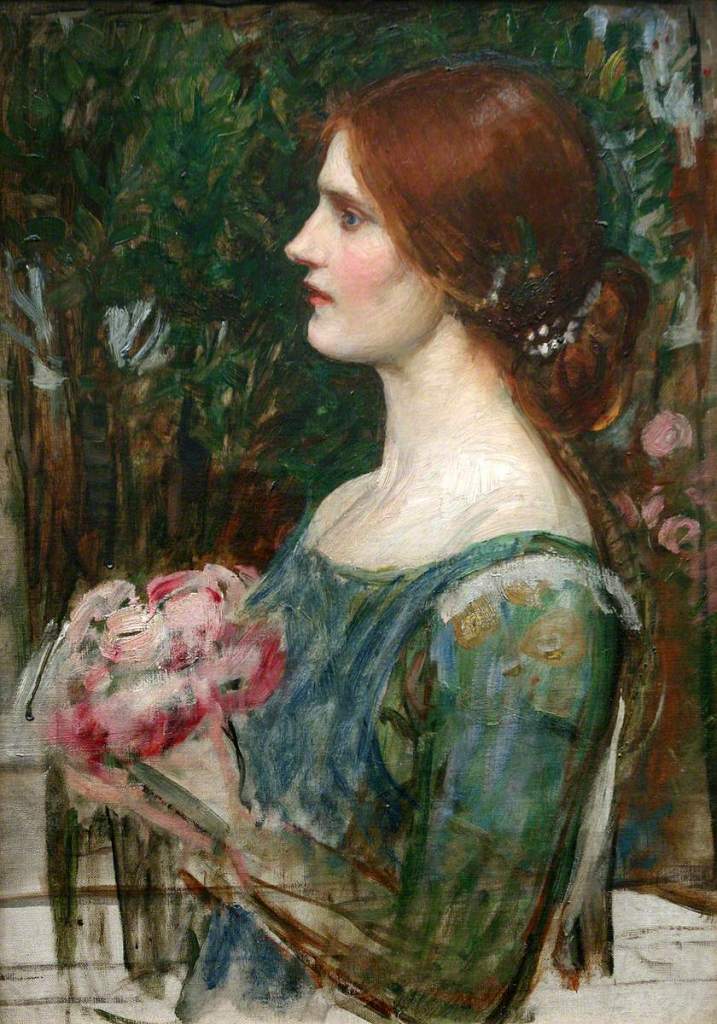


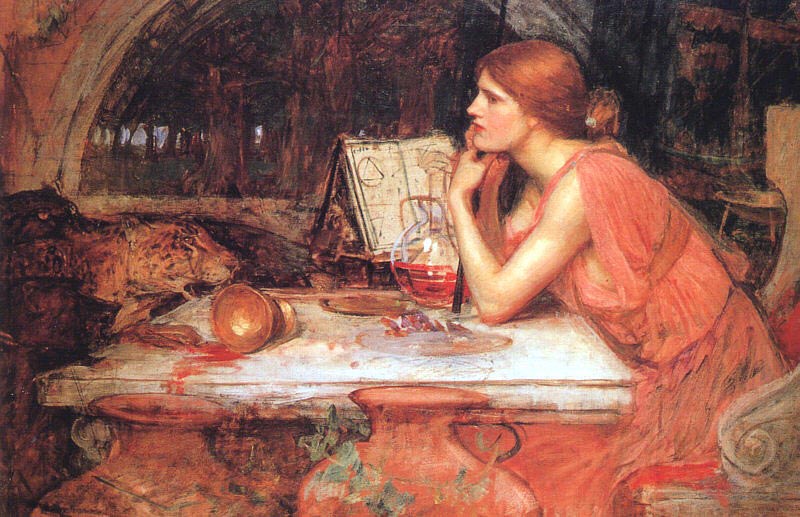
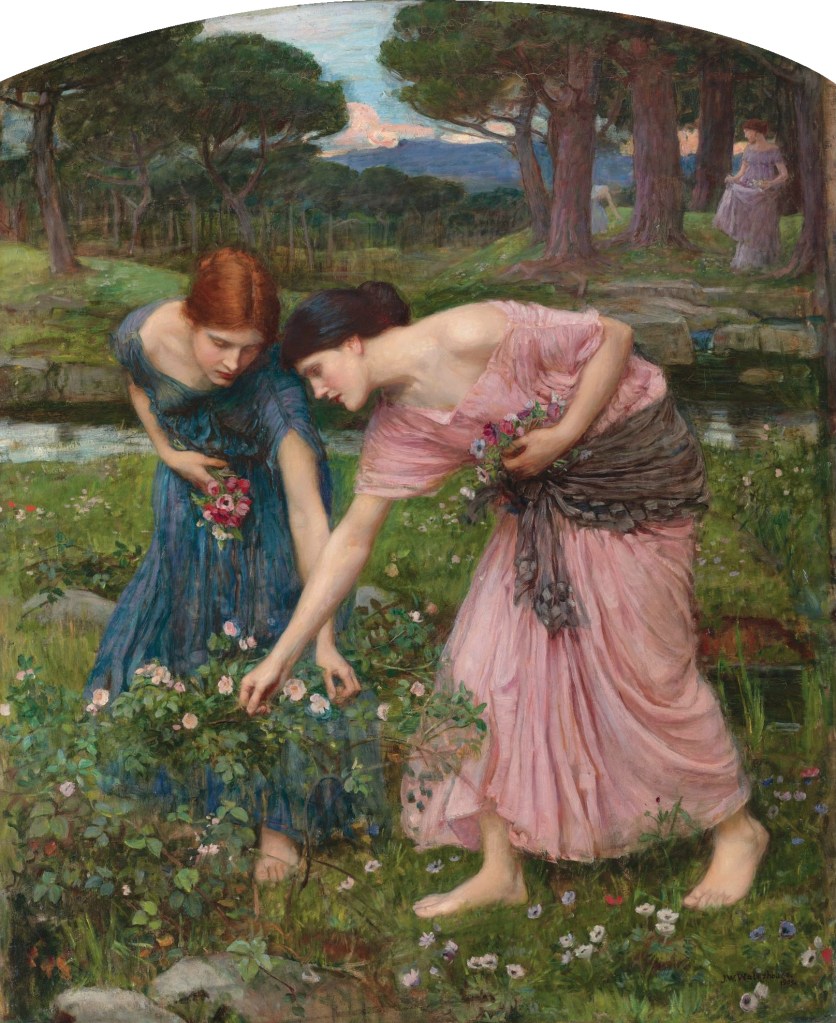
. .

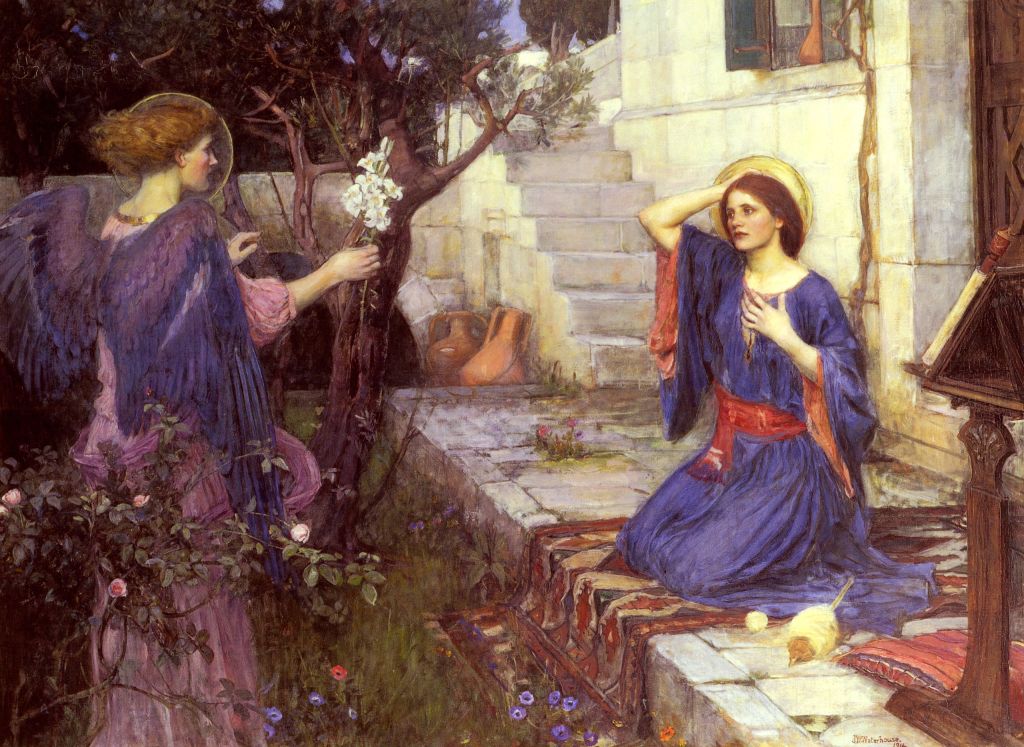
The Annunciation 1914

Psyche Opening the Golden Box 1903

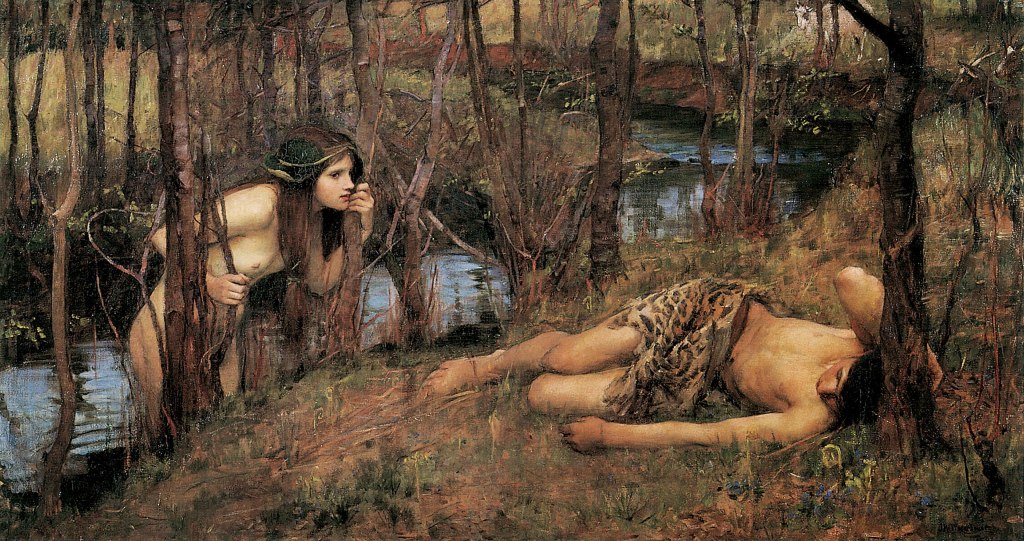
A Naiad or Hylas with a Nymph 1893

Penelope and the Suitors 1912

Tristan and Isolde 1916
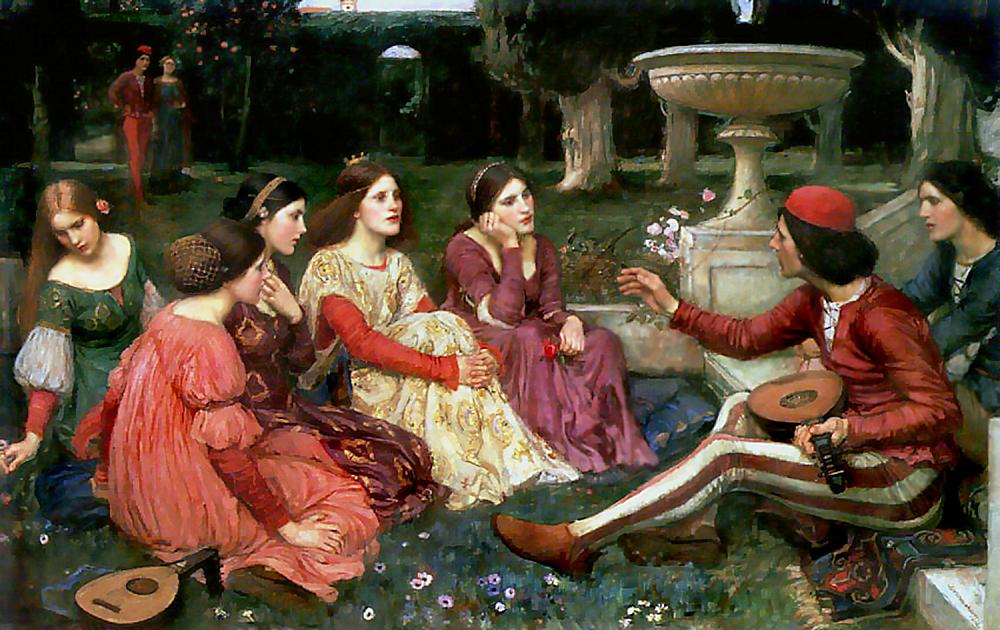
A Tale from the Decameron 1916

I am Half-Sick of Shadows, said the Lady of Shalott 1916
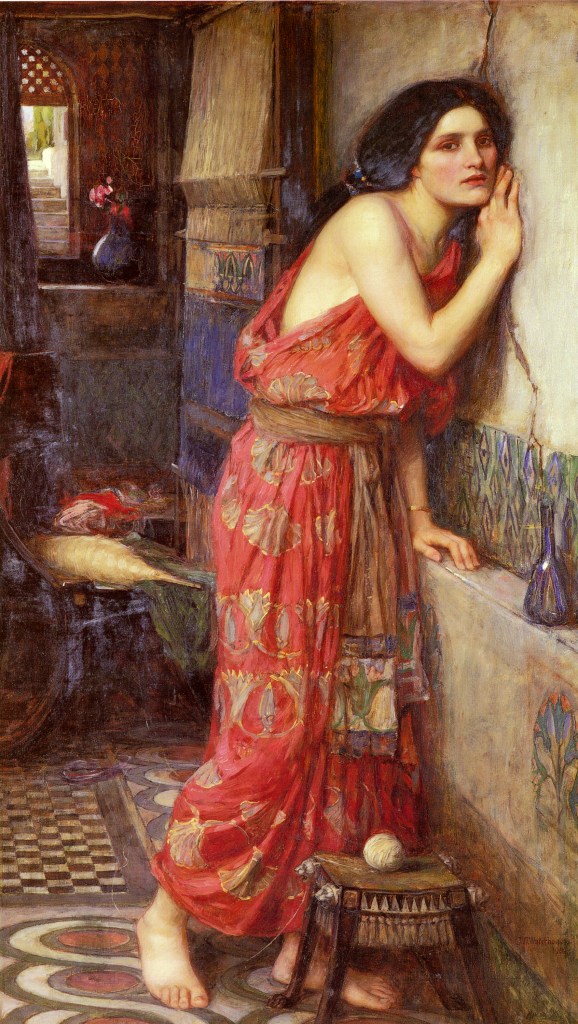
Thisbe 1909


The Charmer 1911
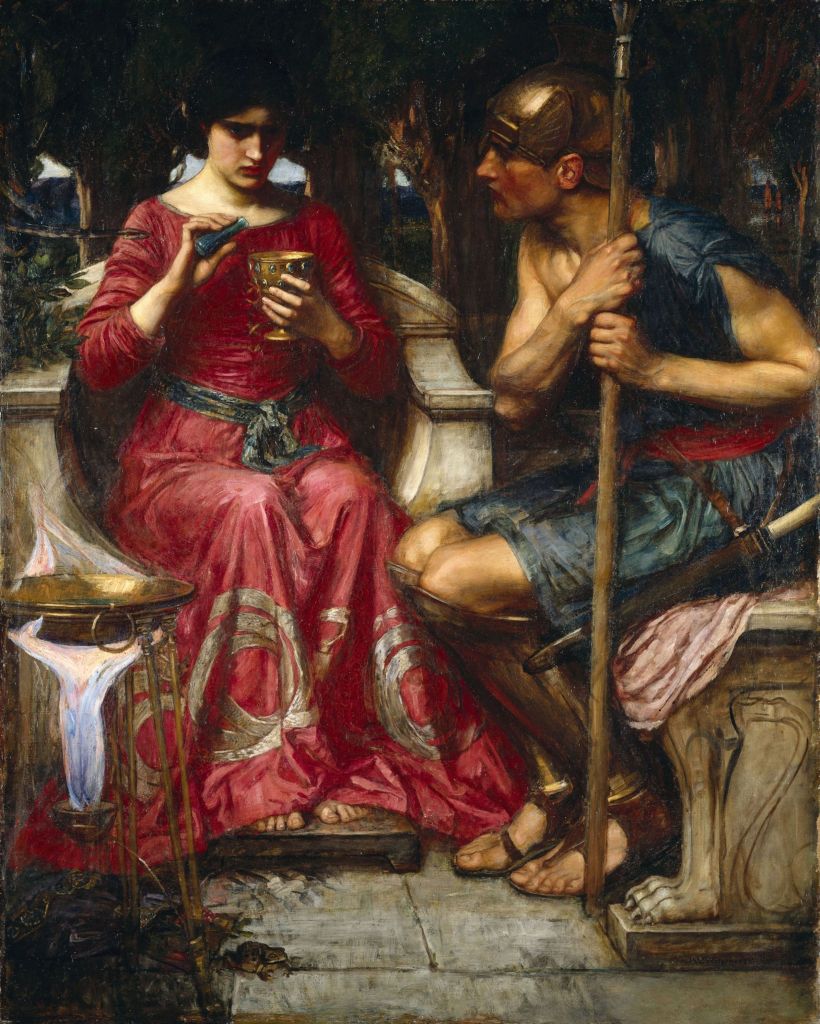

Saint Eulalia 1885

Pandora 1896

The Crystal Ball 1902

Nymphs Finding the Head of Orpheus 1900

Juliet 1898


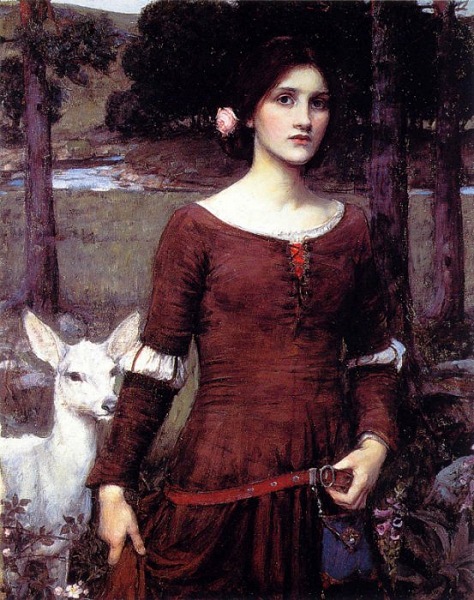

Gather Ye Rosebuds While Ye May… 1908
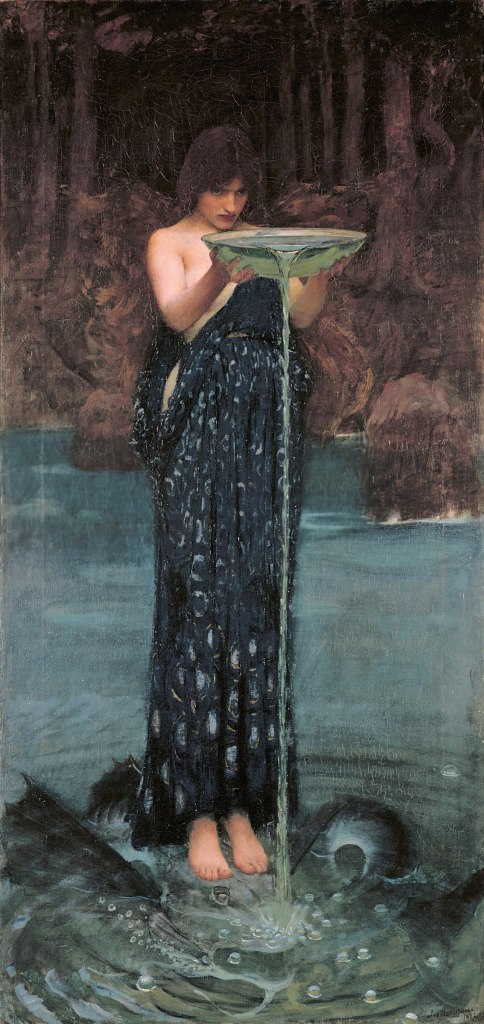
Circe Invidiosa 1892
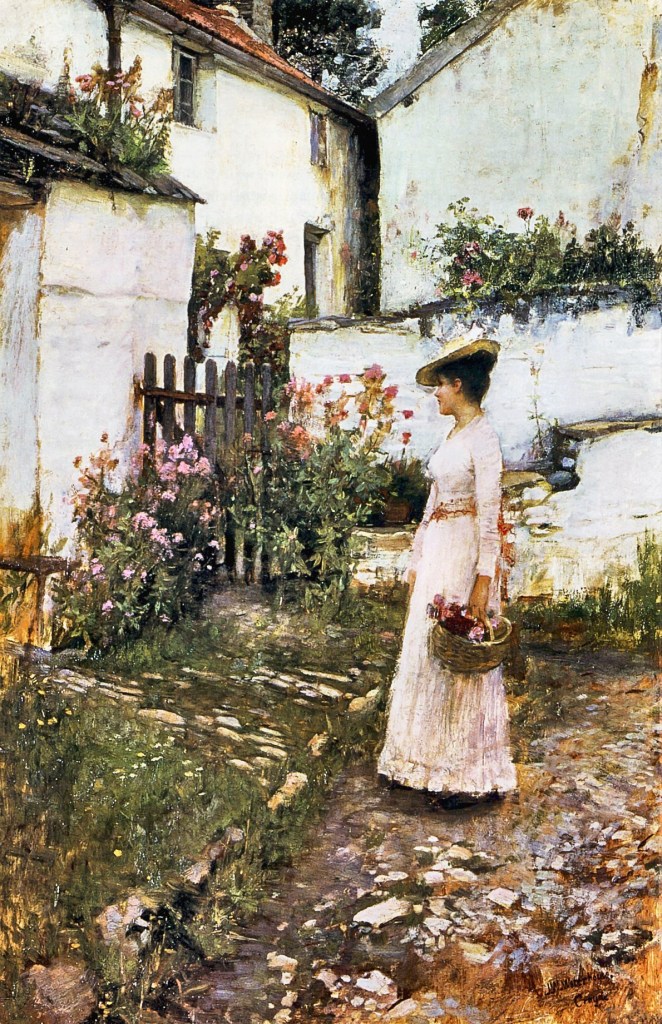

Ophelia 1889

Boreas 1903
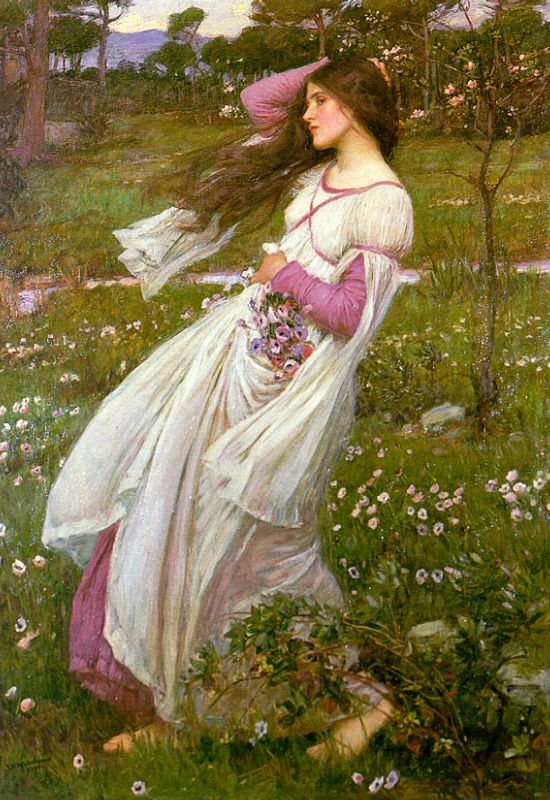
Windflowers 1902
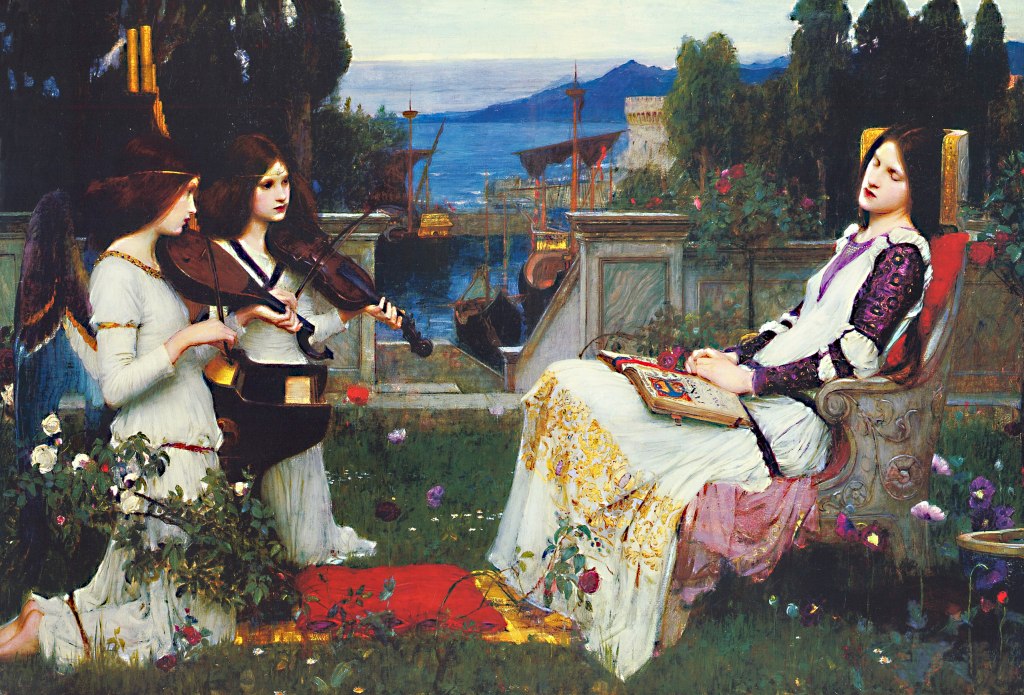
Saint Cecilia 1895
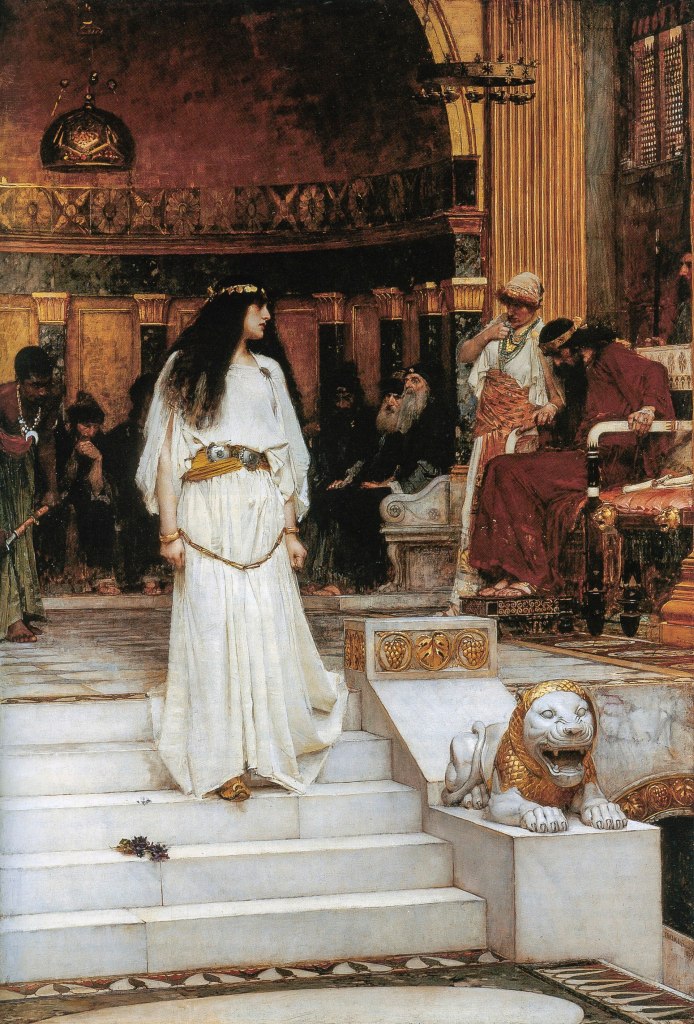
Mariamne Leaving the Judgement Seat of Herod 1887

Consulting the Oracle 1884
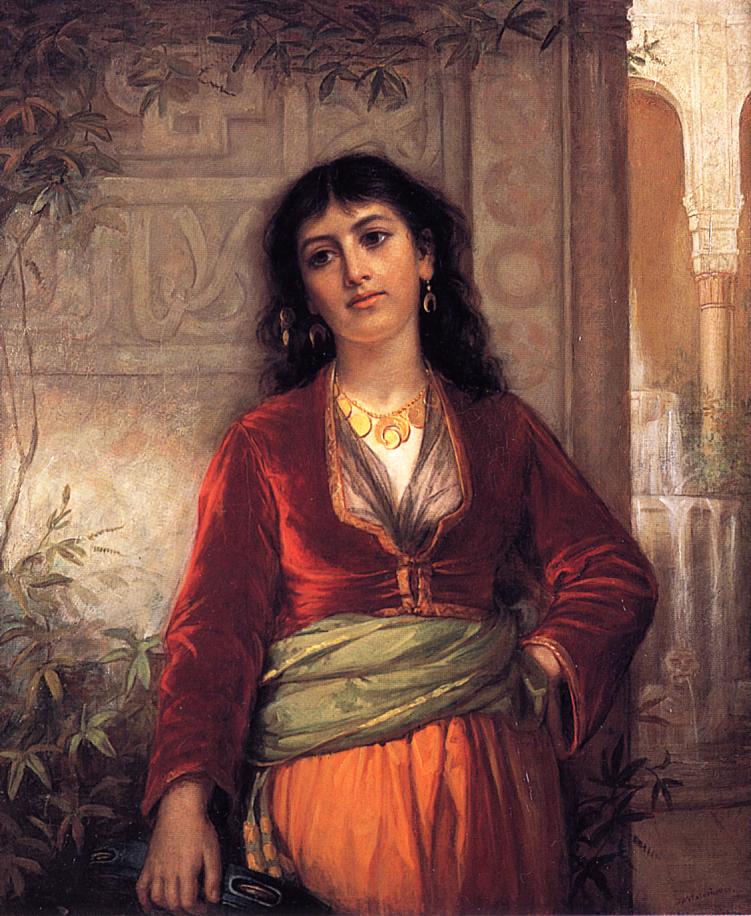
The Unwelcome Companion: A Street Scene in Cairo 1873

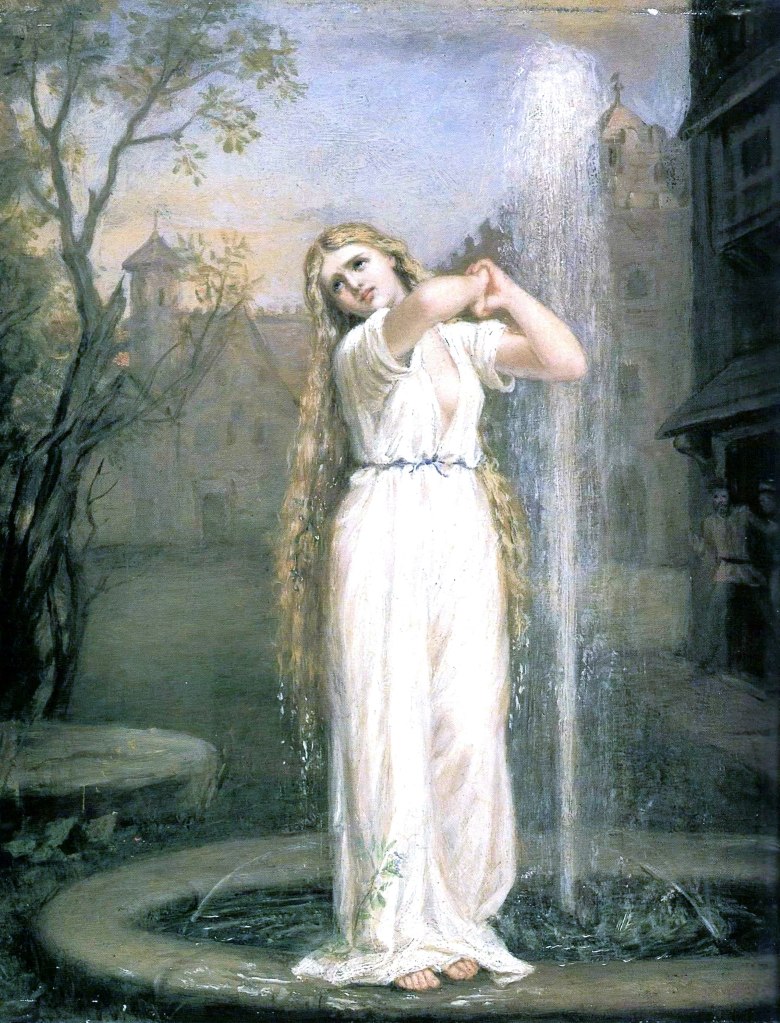
Undine 1872

Good Neighbours (or Gossip), 1885
Today is the birthday of Arthur Wesley Dow (April 6, 1857 – December 13, 1922); painter, printmaker, photographer and influential arts educator.
Dow died on December 13, 1922, in his home in New York City. He was interred in the Old North Burying Ground in Ipswich, Massachusetts. He was survived by his wife Eleanor Pearson, whom he married in 1893.
Gallery

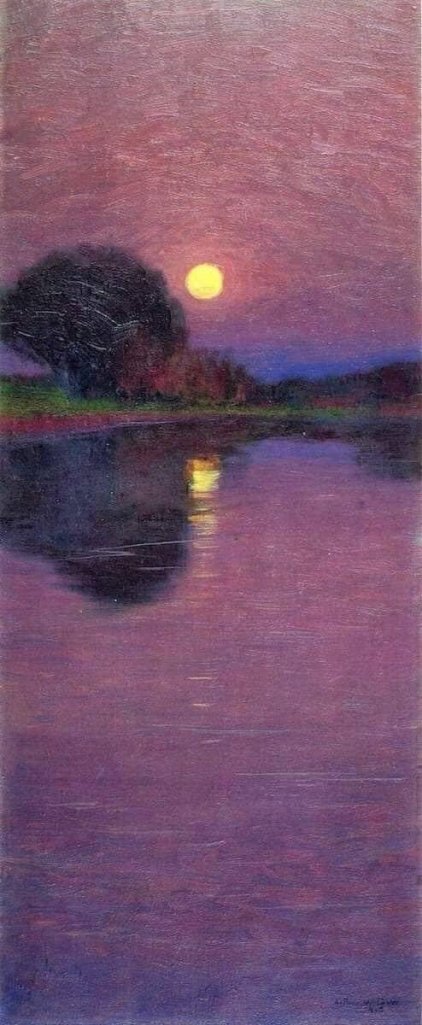
moonrise

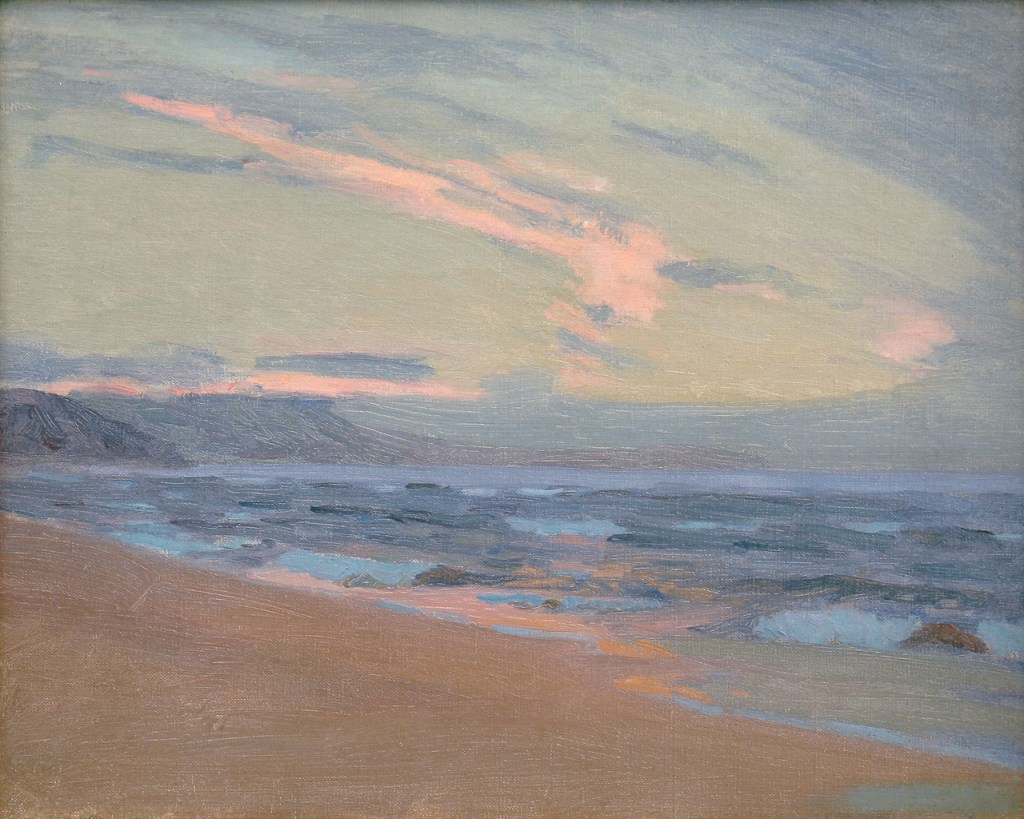

Crater Lake, oil on canvas, 1919

View of Lake Louise, Alberta, Canada, 1919

Today is the birthday of Jeanne Hébuterne (Meaux, Seine-et-Marne; France 6 April 1898 – 25 January 1920 Paris); artist, best known as the frequent subject and common-law wife of the artist Amedeo Modigliani. She took her own life the day after Modigliani died, and is now buried beside him.
Hébuterne was born the second child to Achille Casimir Hébuterne (born 1857), who worked at Le Bon Marché, a department store, and Eudoxie Anaïs Tellier Hébuterne (born 1860). The family was Roman Catholic. A beautiful girl, she was introduced to the artistic community in Montparnasse by her brother André Hébuterne, who wanted to become a painter. She met several of the then-starving artists and modeled for Tsuguharu Foujita.

Modigliani, Portrait de Jeanne Hébuterne (1918), Pasadena, Norton Simon Museum
Wanting to pursue a career in the arts, and with a talent for drawing, she chose to study at the Académie Colarossi, where in the spring of 1917 Hébuterne was introduced to Modigliani by the sculptress Chana Orloff, who came with many other artists to take advantage of the Academy’s live models. Jeanne began an affair with the charismatic artist, and the two fell in love. She soon moved in with him, despite strong objection from her parents.
Described by the writer Charles-Albert Cingria [fr] (1883–1954) as gentle, shy, quiet, and delicate, Hébuterne became a principal subject for Modigliani’s art. In the spring of 1918, the couple moved to the warmer climate of Nice on the French Riviera where Modigliani’s agent hoped he might raise his profile by selling some of his works to the wealthy art connoisseurs who wintered there. While they were in Nice, their daughter, Jeanne, was born on 29 November.
The following spring, they returned to Paris and Jeanne became pregnant again. By this time, Modigliani was suffering from tuberculous meningitis and his health, made worse by complications brought on by substance abuse, was deteriorating badly.
On 24 January 1920 Modigliani died. Hébuterne’s family brought her to their home, but she threw herself out of the fifth-floor apartment window the day after Modigliani’s death, killing herself and her unborn child.
Her family, who blamed her demise on Modigliani, interred her in the Cimetière de Bagneux. Nearly ten years later, at the request of Modigliani’s brother, Emanuele, the Hébuterne family agreed to have her remains transferred to Père Lachaise Cemetery to rest beside Modigliani. Her epitaph reads: “Devoted companion to the extreme sacrifice.”
Gallery
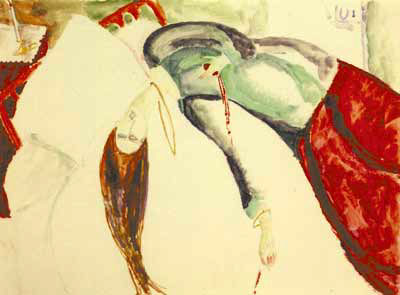

Autoportrait 1917
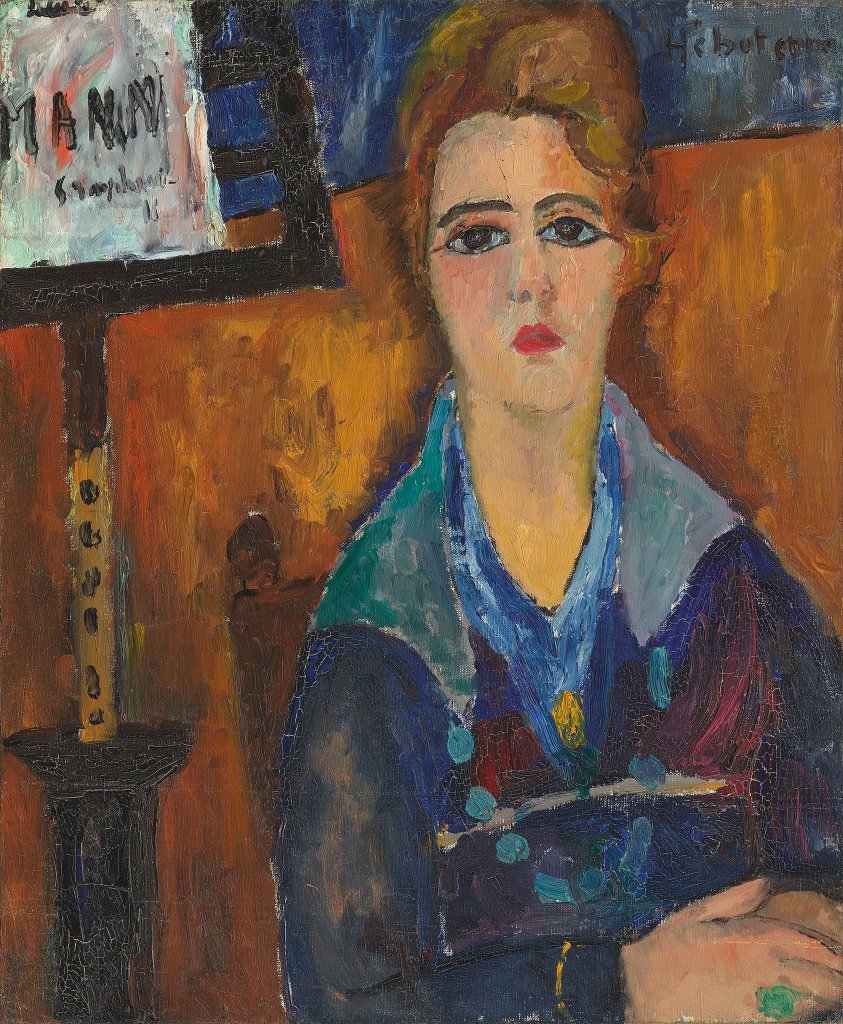
Femme au collier, modèle de Modigliani’

self portrait
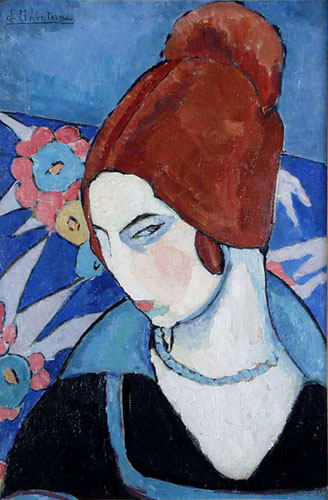
Autoportrait
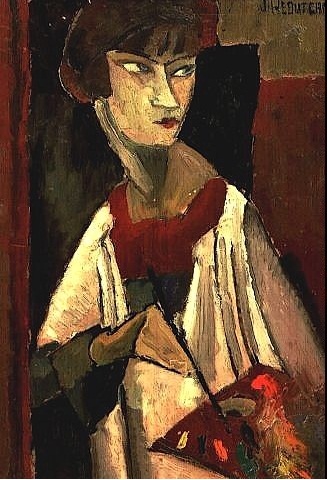
Autoportrait

Autoportrait
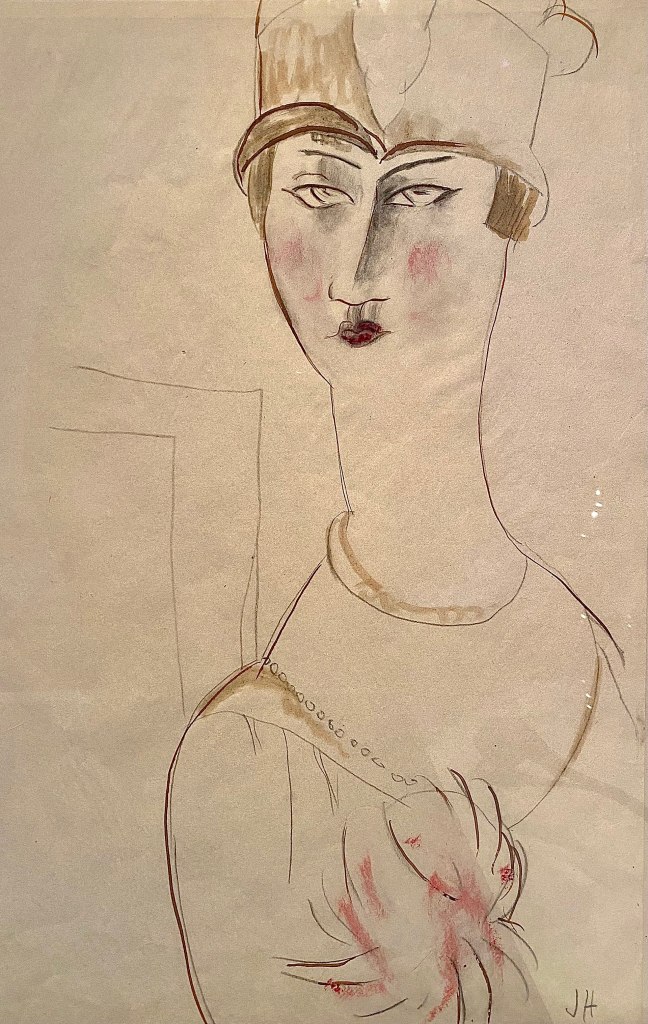
Femme au chapeau
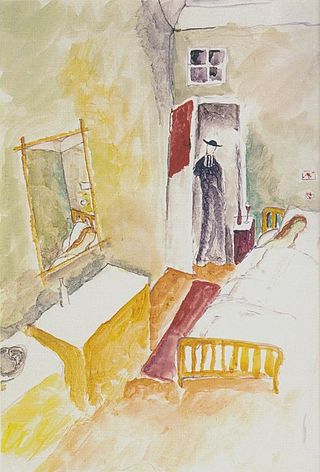
morte 1919
And today is the birthday of Leonora Carrington (Mary Leonora Carrington Westwood House in Clayton-le-Woods, Lancashire, England 6 April 1917 – 25 May 2011 Mexico City); surrealist painter and novelist. She lived most of her adult life in Mexico City and was one of the last surviving participants in the surrealist movement of the 1930s. Carrington was also a founding member of the women’s liberation movement in Mexico during the 1970s.
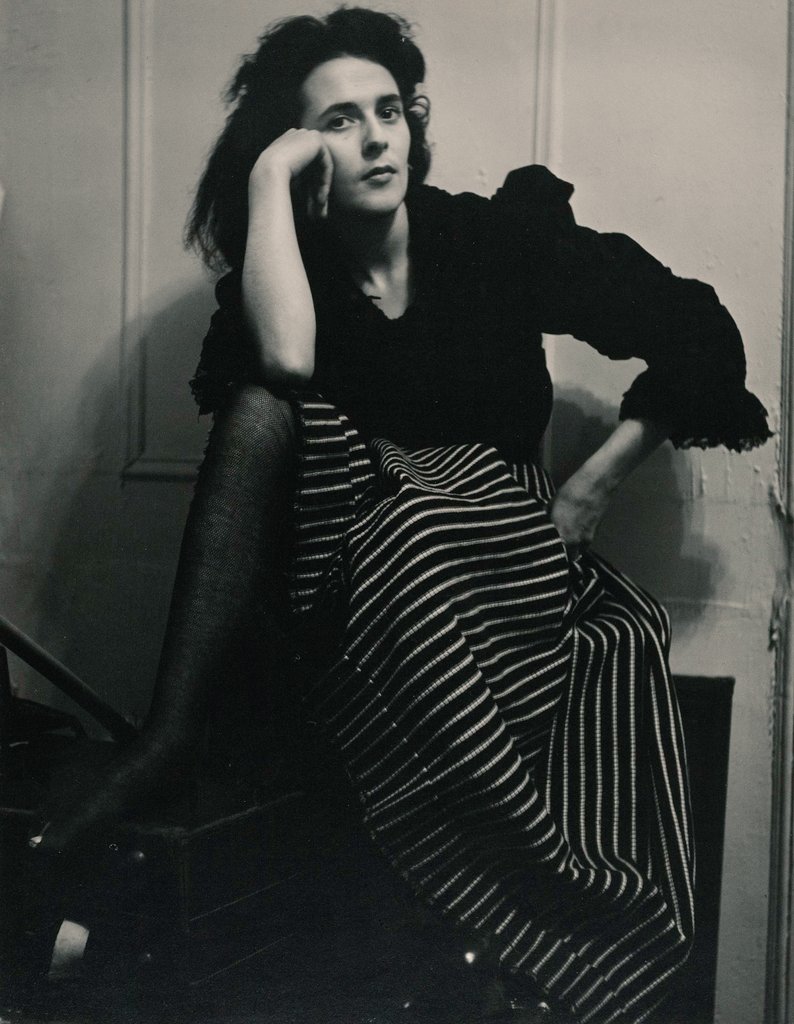
In 1936 Carrington saw the work of the German surrealist Max Ernst at the International Surrealist Exhibition in London and was attracted to the Surrealist artist before she even met him. In 1937 Carrington met Ernst at a party held in London. The artists bonded and returned together to Paris, where Ernst promptly separated from his wife. In 1938 they left Paris and settled in Saint Martin d’Ardèche in southern France. The new couple collaborated and supported each other’s artistic development. The two created sculptures of guardian animals (Carrington created a plaster horse head, while Ernst created his birds) to decorate their home. In 1939 Carrington and Ernst painted portraits of each other. Both capture the ambivalence in their relationship, but whereas Ernst’s The Triumph of Love (see below) features both artists in the composition, Carrington’s Portrait of Max Ernst (see below) focused solely on Ernst and is laced with heavy symbolisms. The portrait was not her first Surrealist work; between 1937 and 1938 Carrington painted Self-Portrait, also called The Inn of the Dawn Horse (see below), now exhibited at the Metropolitan Museum of Art. Sporting white jodhpurs and a wild mane of hair, Carrington is perched on the edge of a chair in this curious, dreamlike scene, her hand outstretched toward a prancing hyena and her back to a tailless rocking horse flying behind her.

Carrington and Ernst by Lee Miller
With the outbreak of World War II Ernst, who was German, was arrested by the French authorities for being a “hostile alien”. With the intercession of Paul Éluard, and other friends, including the American journalist Varian Fry, he was discharged a few weeks later. Soon after the Nazis invaded France, Ernst was arrested again, this time by the Gestapo, because his art was considered by the Nazis to be “degenerate”. He managed to escape and flee to the United States with the help of Peggy Guggenheim.
After Ernst’s arrest Carrington was devastated and agreed to go to Spain with a friend, Catherine Yarrow. She stayed with family friends in Madrid until her paralyzing anxiety and delusions led to a psychotic break and she was admitted into an asylum. She was given electroconvulsive therapy and was treated with the drugs Cardiazol (a powerful convulsant), and Luminal (a barbiturate). She was released from the asylum into the care of a keeper, and was told that her parents had decided to send her to a sanatorium in South Africa. En route to South Africa, she stopped in Portugal, where she made her escape. She went to the Mexican Embassy to find Renato Leduc, a poet and the Mexican Ambassador. Leduc was a friend of Pablo Picasso (they knew each other from bull fights) and agreed to a marriage of convenience with Carrington so that she would be accorded the immunity given to a diplomat’s wife. The pair divorced in 1943. Meanwhile, Ernst had married Guggenheim in New York in 1941. That marriage ended a few years later. Ernst and Carrington never resumed their relationship.
After spending a year in New York, Leduc and Carrington went to Mexico, where many European artists fled in search of asylum, in 1942, which she grew to love and where she lived, on and off, for the rest of her life.
She later married Emerico Weisz (nicknamed “Chiki”), born in Hungary in 1911, a photographer and the darkroom manager for Robert Capa during the Spanish Civil War. Together they had two sons: Gabriel, an intellectual and poet, and Pablo, a doctor and Surrealist artist. Weisz died on 17 January 2007, at home. He was 97 years old. Carrington died as a result of complications arising from pneumonia. Her remains were buried at Panteón Inglés (English Cemetery) in Mexico City.
Gallery

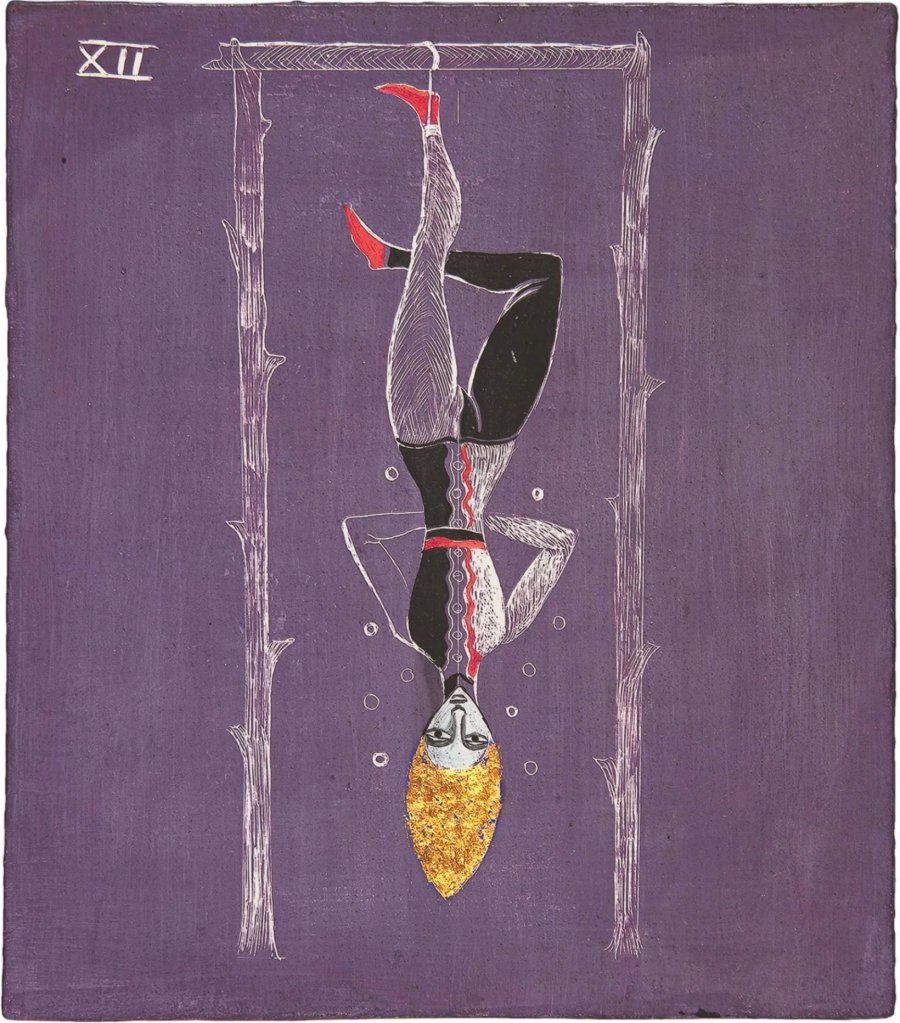
The Hangman (XII) tarot card (1955)
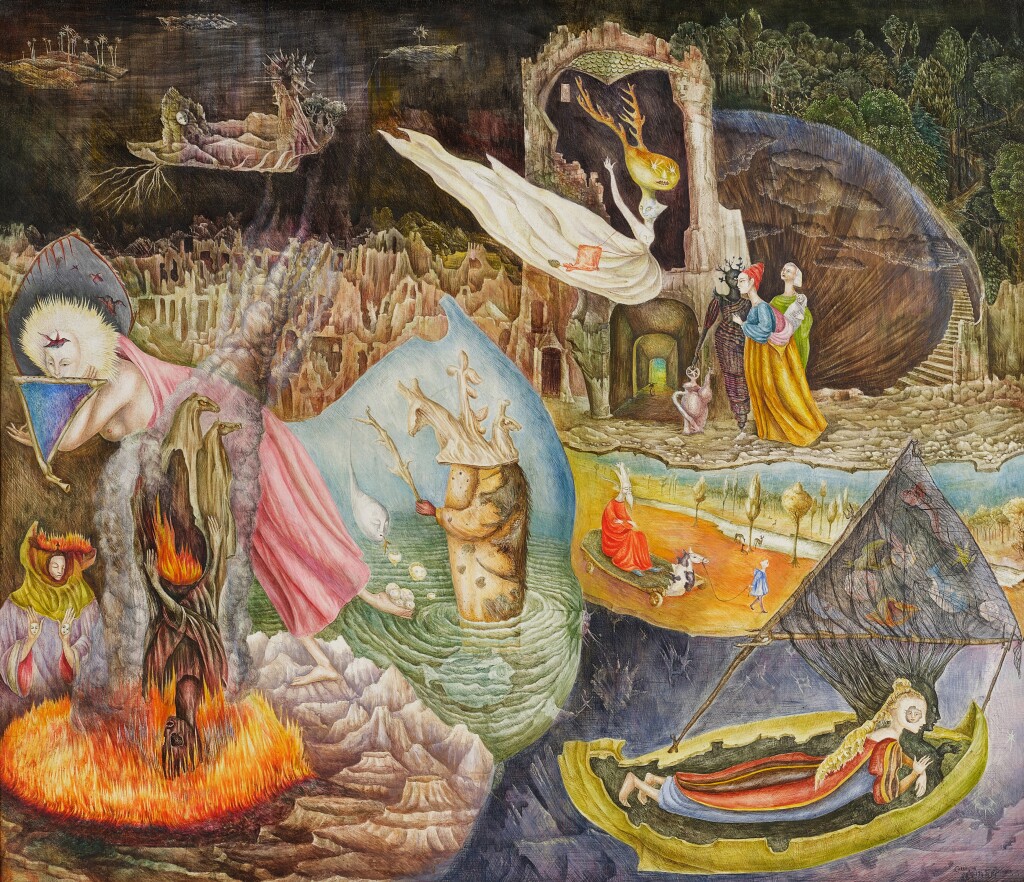
Les Distractions de Dagobert

Self-Portrait, also called The Inn of the Dawn Horse
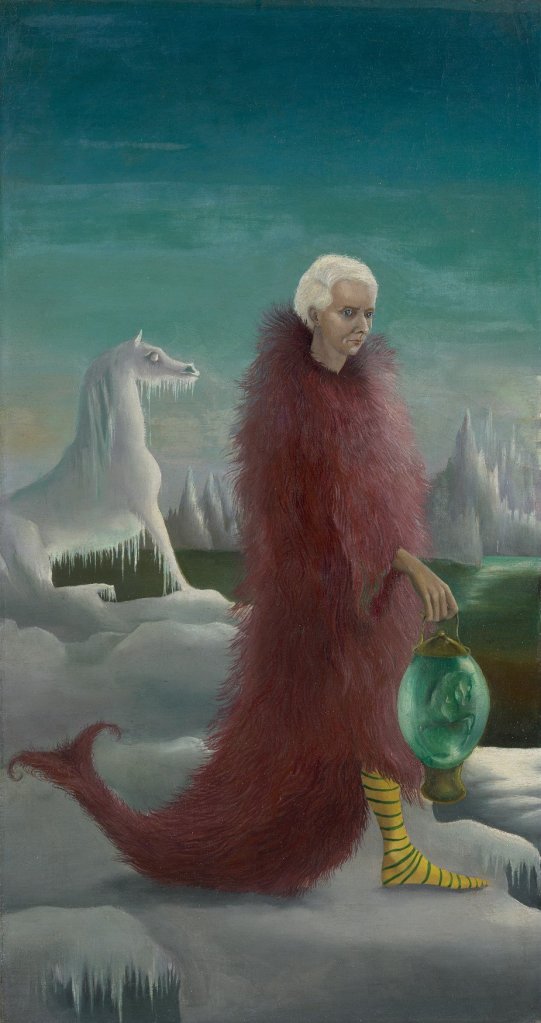
Portrait of Max Ernst
thanks for stoppin’ by y’all
mac tag
 The Lovers’ Chronicle
Leave a reply to The Lovers’ Chronicle 12 July – full woman – art by Eugène Boudin, Max Jacob, Modigliani & Andrew Wyeth – verse by Max Jacob & Pablo Neruda – The Lovers’ Chronicle Cancel reply