
Dear Zazie, Here is today’s Lovers’ Chronicle from Mac Tag dedicated to his muse. Follow us on twitter @cowboycoleridge. Can you hear me? Rhett
The Lovers’ Chronicle
i hear you dreamin’…
wait what, where am i, i hear music,
-The song is Steven, from Alice Cooper’s
album, Welcome to My Nightmare-
dreamin’ again, but where is not clear
i hear my name
is someone callin’ me
an icy breath carryin’ screams of pain
i do not want to go but i cannot stop
do you have pennies for my eyes
maybe it will go away
is someone callin’ me
the voice is gittin’ closer
wait
what is that sound
sounds like someone knockin’
and now a door, yes definitely
i hear someone knockin’,
but should i open the door
-The song I Hear You Knocking
by Dave Edmunds starts to play-
-He yanks open the door-
Hello my love, says the radiant redhead
oh baby, so glad it it you, and you can come in,
no, come on we gotta git outta this place
Hey that is another song
cue it and lets go,
girl there is a better life for me and you

© copyright 2024.2025 mac tag/cowboy coleridge all rights reserved
goin’ with a British popular song
published in London in 1908 with lyrics
by Harold Lake and music by Charles Marshal;
‘’I hear you calling me.
You called me when the moon had veiled her light,
Before I went from you into the night;
I came, – do you remember? – back to you
For one last kiss beneath the kind stars' light.’’
’’Oh that is lovely’’
it has a sad endin’ though
’’Not surprised, you are the master
at finding sadness in art’’
thank you very much,
but lets focus on the, hear you callin’ part
‘’That’s what you were doing, writing
this almost five year trail of poems’’
yes, i was callin’ out, hopin’ someone
would answer
‘’And I did’’
you sure did
‘’Now it’s time for the next kiss’’
beneath the kind stars’ light

© copyright 2023.2025 mac tag/cowboy coleridge all rights reserved
Mallarmé wrote; ´La chair est triste, hélas! et j'ai lu tous les livrés’, some of his poetry does not translate well, but this is straight forward; The flesh is sorrowful, alas! And I've read all the books; that resonated when i first read it, books bein’ my first outlet, my escape, and there was plenty of sorrow, but no more, and now books serve to enhance what we have, part of what makes this tres bon, we take the time to share, to see, to feel, to hear each other

© copyright 2022.2024 mac tag/cowboy coleridge all rights reserved
takes your breath,
to see and to hear
puttin’ blue on white
announcin’
the sad opacity
do we know
what it means
here in the vision
shall we find out
to tell that it is
necessary
is worth tellin’
if you want
we will have each other
show with your lips
without sayin’ it
© copyright 2021 mac tag/cowboy coleridge all rights reserved
Pale Love, Pale Rider
some nights tears come, look at me now
i have given up pretendin’, to believe
here with you gives as good as it gets
and when apart i dream
every night of holdin’ you,
or at least of divin’ after you,
through the waves
i hear you callin’
you need not worry
© copyright 2020 mac tag/cowboy coleridge all rights reserved
a mystery, who accepts
must seek the key
takes your breath,
made to see
in all forms
and to hear
puttin’ blue on white
announces,
the sad opacity
of the spectra
do we know
what it is
ancient and vague
whose meanin’ lies
in the mystery
shall we find out
write or paint
not the thing
but its effect
to do, one of your smiles,
how much would it take
to tell that it is
necessary
is worth tellin’
hesitation would be
to pay a worse silence
if you want
we will have each other
show with your lips
without sayin’ it
© copyright 2019 mac tag/cowboy coleridge all rights reserved
apologies for not stoppin’ by last year
i was listenin’, still am, but rather
preoccupied with the situation
here as fluid as it was

it led up to, as i hoped, a way forward
to where i could respond every day
to where i could write every day
turns out, had to wait three months
but now, nine months in, i am here
where i belong, waitin’ for you

© copyright 2018.2024 mac tag/cowboy coleridge all rights reserved
And now, we hark back to this day in 2016 when Rhett discovered that Zazie had left him a note on 28 December 2015…
Dangit! I feel bad! I had not heard from you in so long, I stopped comin’ by. So sorry I missed your note! I have missed our correspondence terribly. I will stop by occasionally. Please let me know, are you ok?!
“I scream!
No one comes.
I scream again!
Still, no one comes.
I grab anything
to steady myself.
I feel like my legs
may give way.
I slowly allow myself
to the floor, tears,
I cry out one last time.
No one comes…
I then realize
no sound comes out.
No one can hear me!”
Yes, I can hear you!
but faintly,
barely a whisper
it had been so long
since i heard
the sweetest voice
i stopped listenin’
but i am listenin’ now
and i will be
please forgive me
and please come back
© copyright 2016 mac tag/cowboy Coleridge all rights reserved
Sorry if my
desperateness
drooled on your leg
Down! Down boy, down!
***
Not askin’ for
understandin’,
certainly not
for forgiveness
Just tolerance,
as I grapple
with what must be
Shuttered. Locked. Heaved
the key into
a canyon. No
turnin’ back. No
point in tryin’.
Saddled up. It
is what it is.
Your idea
is brilliant. You
are brilliant. And
beautiful. But
my dance card is
full with despair
and hopelessness.
You say I make
your days better
I hear that. But
acceptin’ that
implies hope and
hope is gone; kiss
my ass and go
to hell, long gone
© copyright 2015 mac tag/cowboy Coleridge all rights reserved
| Stéphane Mallarmé | |
|---|---|
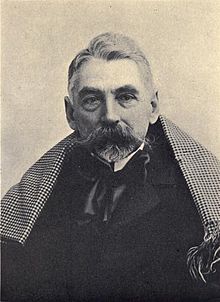 | |
Today is the birthday of Stéphane Mallarmé (Étienne Mallarme; Paris; 18 March 1842 – 9 September 1898 Vulaines-sur-Seine, France); poet and critic. He was a symbolist, and his work anticipated and inspired several revolutionary artistic schools of the early 20th century, such as Cubism, Futurism, Dadaism, and Surrealism.
On 10 August 1863, he married Maria Christina Gerhard.

Édouard Manet, Portrait of Stéphane Mallarmé, 1876
In my opinion, Mallarmé is one of the French poets most difficult to translate into English. The difficulty is due in part to the complex, multilayered nature of much of his work, but also to the important role that the sound of the words, rather than their meaning, plays in his poetry. When recited in French, his poems allow alternative meanings which are not evident on reading the work on the page. For example, Mallarmé’s Sonnet en ‘-yx’ opens with the phrase ses purs ongles (‘her pure nails’), whose first syllables when spoken aloud sound very similar to the words c’est pur son (‘it’s pure sound’). The ‘pure sound’ aspect of his poetry has been the subject of musical analysis and has inspired musical compositions. These phonetic ambiguities are difficult to reproduce in a translation which must be faithful to the meaning of the words.
Mallarmé’s poetry has been the inspiration for several musical pieces, notably Claude Debussy’s Prélude à l’après-midi d’un faune (1894), a free interpretation of Mallarmé’s poem L’après-midi d’un faune (1876), which creates powerful impressions by the use of striking but isolated phrases. Maurice Ravel set Mallarmé’s poetry to music in Trois poèmes de Stéphane Mallarmé (1913). Other composers to use his poetry in song include Darius Milhaud (Chansons bas de Stéphane Mallarmé, 1917) and Pierre Boulez (Pli selon pli, 1957–62).

during his career
Un poème est un mystère dont le lecteur doit chercher la clef.
Le monde est fait pour aboutir à un beau livre.
Ecrire, c’est déjà mettre du noir sur du blanc.
Cette foule hagarde ! Elle annonce : Nous sommes la triste opacité de nos spectres futurs.
Sait-on ce que c’est qu’écrire ? Une ancienne et très vague mais jalouse pratique dont gît le sens au mystère du Coeur.
Peindre non la chose mais son effet.
Oh ! Pour faire, Seigneur, un seul de tes sourires, Combien faut-il donc de nos pleurs ?
Dire au peintre qu’il faut prendre la nature comme elle est, vaut de dire au virtuose qu’il peut s’asseoir sur le piano.
De blancs sanglots glissant sur l’azur des corolles
– C’était le jour béni de ton premier baiser.
La chair est triste, hélas! et j’ai lu tous les livres.
Si tu veux nous nous aimerons
Avec tes lèvres sans le dire
Cette rose ne l’interromps
Qu’à verser un silence pire
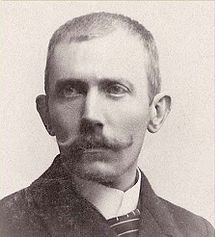
today is the birthday of Eugène Jansson (Eugène Fredrik Jansson; 18 March 1862, Stockholm – 15 June 1915, Skara); painter known for his night-time land- and cityscapes dominated by shades of blue. Towards the end of his life, from about 1904, he mainly painted male nudes. The earlier of these phases has caused him to sometimes be referred to as blåmålaren, “the blue-painter”.
Gallery

Le Bal des marins (1912)

dancing marines

at the piano

Hornsgatan (1902)

Nocturne (1901)

 al crepuscolo
 Dawn over Riddarfjärden 1899

Pushing Weights with Two Arms, II, 1913–14 (in a private collection)
And today is the birthday of Eikoh Hosoe (細江 英公, Hosoe Eikō; Yonezawa, Yamagata, Japan 18 March 1933 – 16 September 2024 Tokyo); photographer and filmmaker who emerged in the experimental arts movement of post-World War II Japan. Hosoe is best known for his dark, high contrast, black and white photographs of human bodies. His images are often psychologically charged, exploring subjects such as death, erotic obsession, and irrationality. Some of his photographs reference religion, philosophy and mythology, while others are nearly abstract, such as Man and Woman # 24 (see below) from 1960.

in 1989
He was professionally and personally affiliated with the writer Yukio Mishima and experimental artists of the 1960s such as the dancer Tatsumi Hijikata, though his work extends to a diversity of subjects. His photography is not only notable for its artistic influence but for its wider contribution to the reputations of his subjects.
Gallery
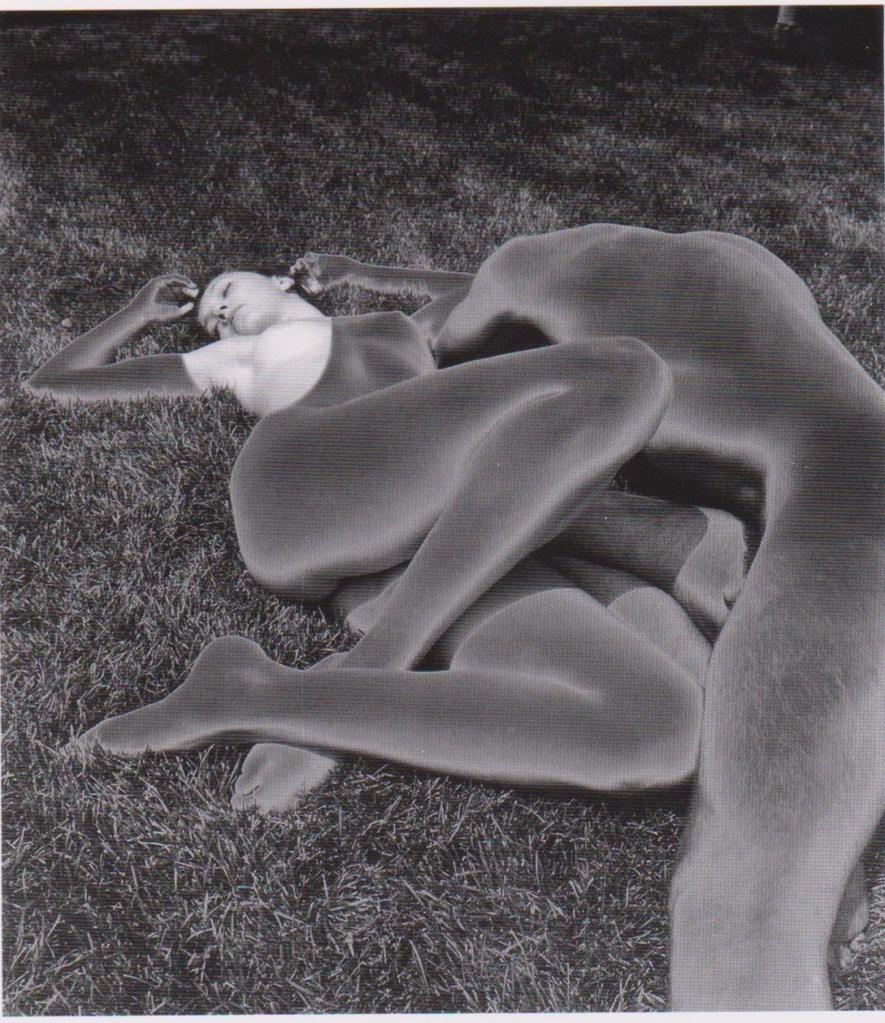
“A Languid Afternoon,” 1994
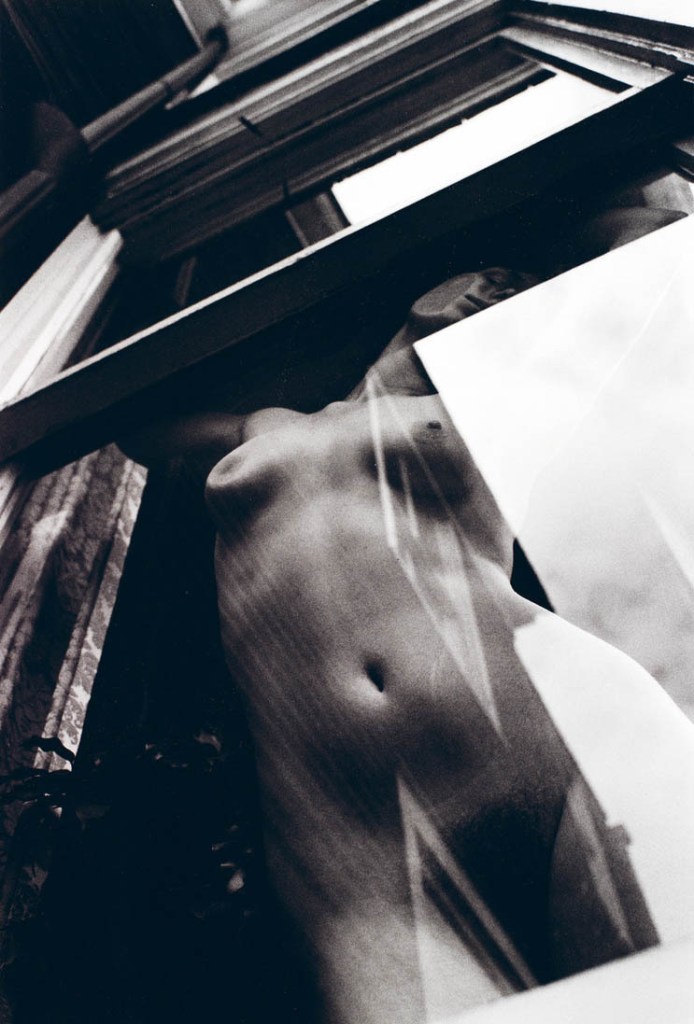
“Naked School” (Chicago, 1973)

“Bee and Woman”, 1964

Man and Woman #24, 1960
thanks for stoppin’ by y’all
mac tag
 The Lovers’ Chronicle
Leave a comment