Dear Zazie,
Hey there Zazie! Good to hear from you. Made me feel good to see your note. Though I wish it were under better circumstances. Sounds like you have run afoul of relationship love. Well, I cannot help you with that. Relationships are not my bag. I was de-bagged long ago, thankfully. But Jett is an expert, as you know. So I gave your note to him. And I shared it with Mac Tag and of course he turned the whole thing into verse, as he does. Hope it helps. Let us know.
Here is today’s Lovers’ Chronicle from Mac Tag dedicated to his muse. Follow us on twitter @cowboycoleridge. Jett
The Lovers’ Chronicle
Dear Muse,
dreams of Venus…
being whisked away, the sensation of movement, portends a dream, wonder where this time
hey baby, he says to the wonderful redhead, grab ahold of this
Hey baby, I’m here
A song is playing a familiar melody, “A goddess on a mountain top…”
The sign says Firenze
oh nice, Florence should be interestin’, he says, plenty of history here
They are escorted into a studio where an artist is painting on a large canvas
And the song keeps playing, “The summit of beauty and love…
oh wow, you recognize that
Of course, so that is Botticelli
“She's got it
Yeah, baby, she's got it”
oh hold on, we are movin’ again
They are soon escorted into London’s Drury Lane Theatre and handed a playbill which reads, The Loves of Mars and Venus by John Weaver
“She's got it
Yeah, baby, she's got it”
very nice, this is considered the first ballet, and i see the common thread connectin’ this dream
I love it, another fabulous dream
come my Venus, lets watch the ballet
That’s right, “I'm your Venus
I'm your fire, at your desire”

-‘’Venus’’ written by Shocking Blue guitarist Robbie van Leeuwen-

© copyright 2024 mac tag/cowboycoleridge all rights reserved

already so many
"To be held on to"
to be carried
from one to the next
"It sustains, breathes life"
sustenance, inspiration
even the smallest, shortest
"They all matter"
in a time when it seems
increasin'ly that forces
are conspirin' to eliminate them
"We will keep creating"
and cherishin’ these moments
© copyright 2023 mac tag/cowboycoleridge all rights reserved
yes, tracin’ the lines of your face, holdin’ your curves, your hair cascadin’ down, the look in your eyes, fingertips on your skin, fingers strong from weights, pens and delicate touches, do you love these hands, cup of warm calloused palm on your cheek, the way i memorize you
© copyright 2022 mac tag/cowboy coleridge all rights reserved
one of the favorite phrases,
stackin’ ‘em up like chopped wood

typical Tuesday here
you know the routine

time to focus on the words
which now begin and end
with you, with what we are buildin’
through verse, reachin’, explorin’
as the memorable moments
keep on comin’

© copyright 2021.2024 mac tag/cowboy coleridge all rights reserved
Pale Love, Pale Rider
what we project
is what we perceive
and passion
is the root
of our perception
an effortless dance,
refusin’ to settle
to specify a world,
expandin’ our purview
a vision comin’ together
no longer the opposite of two
a lonely me, a lonely you, no more
with purpose now known
© copyright 2020 mac tag/cowboy coleridge all rights reserved
in that soft high plains drawl
talkin’ ’bout creativity
and purpose
not always knowin’
what in the hell
it is all about
and keep on
writin’ everyday,
laconically of course,
with all senses wide open,
words, music, lights, sounds, touch…
lightnin’
© copyright 2019 mac tag/cowboy coleridge all rights reserved
have i told you
in the last five minutes
that you are the best
if not
then i am five minutes
overdue for tellin’ you,
you are the best
are we makin’ this
way harder
than it needs to be
is the obvious
answer
right before us
i realize
we would be
tradin’ one problem
for another
but the problem solved
is the oldest one known
© copyright 2018 mac tag/cowboy coleridge all rights reserved
a return to a place
one of our places
looks the same
feels empty
remember
when we talked
about how no place
would ever feel the same
after we had been there
sit and order coffee
take out my notebook
and begin to write
when a break happens
what is it that we miss
certainly not the hurt
do we miss the person
or the presence
and what to do
with the memories,
the naggin’
what could have been
thoughts
how much time
needs be spent
on playin’ things out
in the mind,
on imaginin’
how it would be
if they were here
simple reminders
lyin’ around
a scent,
an image,
a feelin’
think back on ways
you could have changed
on ways you wish they had
you try, you imagine
if you try again,
will it be different
but you know better
you take a deep breath
and try to push those thoughts away
of course, they come back
and you ask, what exactly
has you holdin’ on
do you miss the manipulation
and the negative emotions
or, hold on here comes fear,
have you become dependent
and can no longer feel
anything good
must it be so hard
is it hard, because
the sweet moments,
oh they were there,
are so hard to let go of
you long for them,
you need them,
they are a drug
trickin’ your mind
what is it that we miss
so much in these moments
© copyright 2017 mac tag/cowboy Coleridge all rights reserved
Mind says; Not now,
go away. But
stubborn feelin’s
persist. Alas;
The mind never,
ever, backs down.
If I were a
drinkin’ man, I
would drink you off
my mind. But I
am a writin’
man, so I keep
tryin’ to write
you off my mind
© copyright 2015 mac tag/cowboy Coleridge all rights reserved
The Loves of Mars and Venus
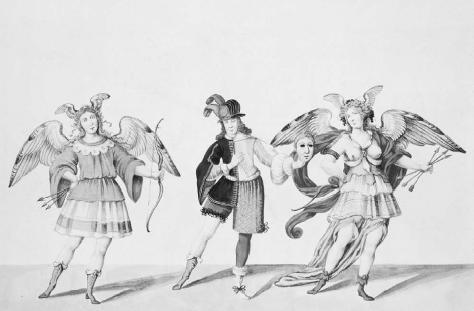
The Loves of Mars and Venus by John Weaver was arguably the first modern ballet, the first dance work to tell a story through dance, gesture and music alone. Its first performance was at London’s Drury Lane Theatre on this day in 1717.
Before then, ballet had always been part of operas and plays and dependent on their words to narrate the drama. The Loves of Mars and Venus was a danced drama, equal to the plays seen on London’s stage, described in its own time as a ‘Dramatic Entertainment of Dancing’, “the first of this kind produced upon the British Stage or in the Kingdom”. All the action was conveyed in dance and mime alone, setting a pattern for future ballets.
Weaver’s ballet tells the story of the love affair between Venus, the goddess of love, and Mars, the god of war, and the revenge enacted on them by her husband Vulcan. It draws on classical mythology, but contemporary passions abound, and its immediate source was Peter Anthony Motteux’s play, The Loves of Mars and Venus, written in 1695. Despite Weaver’s appeal to the revered performances of the ‘mimes and pantomimes’ of classical antiquity, who he wished to emulate, his ballet was a modern work in tune with the sophisticated comedies of his own time.
The Loves of Mars and Venus told the familiar story in six short scenes full of dancing and gestures. It lasted, perhaps, 40 minutes. Mars appears with his soldiers and performs a war dance. Venus is shown surrounded by the Graces and displays her allure in a sensual passacaille, but when Vulcan arrives she quarrels with him in a dance ‘of the pantomimic kind’. Vulcan retires to his smithy to devise revenge with the help of his workmen the Cyclops. Mars and Venus meet and, with their followers, perform dances expressive of love and desire. Vulcan completes his plan of revenge against the lovers. In the final scene, Vulcan and the Cyclops catch Mars and Venus together and expose them to the derision of the other gods, until Neptune intervenes and harmony is restored in a final ‘Grand Dance’.

At the first performances, Mars was danced by Louis Dupré, Venus was Hester Santlow and Weaver himself danced Vulcan. Dupré was a virtuoso dancer who was probably French, although he was probably not the famous ‘Le grand’ Dupré of the Paris Opera. Mrs Santlow was an English dancer-actress, greatly admired for her beauty as well as her dancing skills. One contemporary described her as ‘incomparable’. Weaver’s stage skills were essentially those of a comic dancer, although he was obviously also a master of rhetorical gesture. They were supported by Drury Lane’s best dancers as the ‘Followers’ of Mars and Venus, with the company’s comedians as Weaver’s workmen the Cyclops.
The Loves of Mars and Venus was a success, with seven performances during its first season and revivals at the Drury Lane Theatre until 1724. Colley Cibber the English actor- manager, playwright and Poet Laureate, said of it ‘To give even Dancing therefore some Improvement; and to make it something more than Motion without Meaning, the Fable of Mars and Venus, was form’d into a connected Presentation of Dances in Character, wherein the Passions were so happily expressed, and the whole Story so intelligibly told, by a mute Narration of Gesture only, that even thinking Spectators allow’d it both a pleasing and a rational Entertainment’. It may well have been seen by the young French ballerina Marie Sallé, who would herself later experiment with narrative and expressive dancing. Sallé, of course, influenced the choreographer Jean-Georges Noverre when he came to create his ballets d’action. They led to the story ballets of the romantic period and onwards to the narrative dance works for which English ballet became famous in the 20th century.
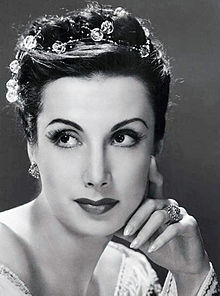
Today is the birthday of Tamara Toumanova (Tyumen, Russia SFSR; 2 March 1919 – 29 May 1996 Santa Monica, California); Georgian-American prima ballerina and actress. A child of exiles in Paris after the Russian Revolution of 1917, she made her debut at the age of 10 at the children’s ballet of the Paris Opera.
She became known internationally as one of the Baby Ballerinas of the Ballet Russe de Monte Carlo after being discovered by her fellow émigré, balletmaster and choreographer George Balanchine. She was featured in numerous ballets in Europe. Balanchine featured her in his productions at Ballet Theatre, New York, making her the star of his performances in the United States. While most of Toumanova’s career was dedicated to ballet, she appeared as a ballet dancer in several films, beginning in 1944. She became a naturalized United States citizen in 1943 in Los Angeles, California.
Toumanova appeared in six Hollywood films between 1944 and 1970, always playing dancers. She made her feature film debut in 1944, in Days of Glory, playing a Russian dancer being saved from the invading Germans in 1941 by Soviet partisan leader Gregory Peck (who also made his debut in that film).
In 1953, she played Russian prima ballerina Anna Pavlova in Tonight We Sing, and in 1954, she appeared in the biographical musical Deep in My Heart as the French dancer Gaby Deslys. In 1956, she performed a dance scene with Gene Kelly in Invitation to the Dance. In 1966, she played the odious, unnamed lead ballerina in Alfred Hitchcock’s political thriller Torn Curtain. In 1970, she played Russian ballerina Madame Petrova in Billy Wilder’s The Private Life of Sherlock Holmes.
In 1944, Toumanova married Casey Robinson, whom she met as the producer and screenwriter of Days of Glory, her first film. The union was childless. The couple divorced on 13 October 1955.
Her funeral was a high mass at the Russian Orthodox Holy Virgin Mary Cathedral, Los Angeles. She was interred next to her mother Princess Eugenie in Hollywood, Hollywood Forever Cemetery.
British choreographer John Gregory described Toumanova as a “remarkable artist – a great personality who never stopped acting. It is impossible to think of Russian ballet without her.”
And today is the birthday of Ernst Haas (Vienna; March 2, 1921 – September 12, 1986 New York City); photojournalist and color photographer. During his 40-year career, Haas bridged the gap between photojournalism and the use of photography as a medium for expression and creativity. In addition to his coverage of events around the globe after World War II, Haas was an early innovator in color photography. His images were disseminated by magazines like Life and Vogue and, in 1962, were the subject of the first single-artist exhibition of color photography at New York’s Museum of Modern Art. He served as president of the cooperative Magnum Photos, and his book The Creation (1971) was one of the most successful photography books ever, selling 350,000 copies.
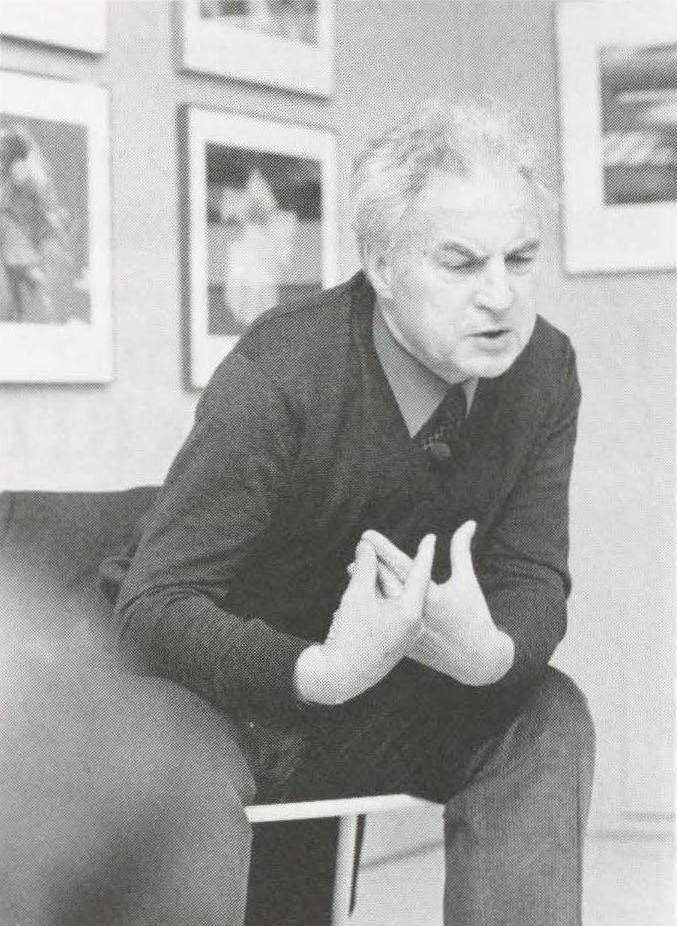
1951 Haas married the Hungarian countess Antoinette Wenckheim. They later divorced, and in 1962 Haas married Cynthia Buehr Seneque, an American editor.
Gisela Minke, a German-born airline stewardess, was Haas’s companion for many years. She encouraged his interest in Tibet, and their travels resulted in the book Himalayan Pilgrimage. Six years before his death, he met Takiko Kawai, who he credited with introducing him to the culture and traditions of Japan.
In the early 1970s Haas became interested in creating audiovisual slideshows—long sequences of projected imagery with accompanying soundtracks, dissolving from one image into the next. “I love music,” he explained, “and with my audiovisual presentation I can combine music and photography.”
After suffering a stroke in December 1985, Haas concentrated on layouts for two books he wanted to publish, one featuring his black and white photographs, the other his color. At the time of his death from a stroke, he had been preparing to write his autobiography.
Gallery

Shopping in NY

Marilyn on The Misfits set

romance Paris 1957

Windmill, Greece, 1952
thanks for stoppin’ by y’all
mac tag
 The Lovers’ Chronicle
Leave a reply to The Lovers’ Chronicle 2 June – longed for – art by Domenico Ghirlandajo & Paul-Albert Besnard – birth of Thomas Hardy – The Lovers’ Chronicle Cancel reply