
Dear Zazie, Here is today’s Lovers’ Chronicle from Mac Tag dedicated to his muse. Follow us on twitter @cowboycoleridge. Are you without someone? Rhett
The Lovers’ Chronicle
Dear Muse,
dream Romantic…
writing in his journal; we have arrived at Villa Diodati by Lake Geneva, Switzerland having travelled up the Rhine, though I fear we will never see England again
having been kept inside by incessant rain, we have turned from reading fantastical stories to each writing stories of our own, mine I believe shall be called “The Vampyre”, but I have a feeling Mary will write the best one about…
what are you doing, asks the beautiful redhead
just hanging out with Byron and Percy and Mary
no, you are not Polidori, come with me else you might end up following that romantic scoundrel to Greece and die from an infernal fever, we can go to Spain, it is lovely this time of year
with you everywhere is lovely
© copyright 2024 mac tag/cowboy coleridge all rights reserved
based on my cursory research,
there are beaucoup songs
with the phrase of the day
lets go with Bowie’s song;
“You’re exactly who I want to be with (ooh, ooh)
Without you
What would I do?”
“Yes, more Bowie please”
we have talked about how we
built good lives without, but now
look at us and how good it is with
© copyright 2023.2024 mac tag/cowboy coleridge all rights reserved
absolutely had to go through without to get here, could not skip it or go around it, could not tip toe through it, no, had to dive in head first, wallow in it, get out and dive head first again, and again, (i was slow and stubborn), but it had to be, i had to git to where i could accept it, to be able to appreciate bein’ with you
© copyright 2022.2024 mac tag/cowboy coleridge all rights reserved
the song of you
matters most
have not much more
than this to offer
and a promise
to not shy away
from the highest highs
and the lowest lows
and to do all i can
to explore all aspects
of beauty and sorrow
and take you along
with you and these
new ever after moments
© copyright 2021 mac tag/cowboy coleridge all rights reserved
Pale Love, Pale Rider
to this eye
there is but this
new ever after
addin’ to the ones
already cherished
you up there on high,
canopied by the blue
Carolina sky, lookin’
as lovely as ever
wave on wave
upon the river
of my thoughts
a change came o’er
my dreams, leadin’
me back to this
© copyright 2020 mac tag/cowboy coleridge all rights reserved
givin’ breath to thoughts
to git us to dream
music, moods projected
onto the canvas
arouse sensations
capture these impressions
improvise what we want
a dance on the plains
the light, perspective
the colors, a song
us, on and on
© copyright 2019 mac tag/cowboy coleridge all rights reserved

blizzard comin’ on
plenty wood, food
now just waitin’
and creatin’
the song of you
still matters most
with or without you
still have not much more
than a song to offer
and a promise
to not shy away
from the highest highs
and the lowest lows
and to do all i can
to explore all aspects
of beauty and sorrow
and take you along
***
not carin’ at all
about havin’
only care about bein’
© copyright 2018 mac tag/cowboy coleridge all rights reserved
came to the Dakotas,
to the solitude,
the faraway
came out here
with not much more
than a song of you
to sustain me
this is how it is
without you…
open range, miles
from the nearest comfort
campfire, moonlit night
my journals, sketch book
my thoughts,
my visions of you
this is how it is
without you
from sunup
to sundown
and in my dreams
matters not
where i ride or roam
there is but one constant
you on my mind
this is how it is…
© copyright 2017 mac tag/cowboy Coleridge all rights reserved
stayin’ up till dawn
to hear the bells
we were drinkin’ and kept
goin’ into every café we passed
and it was rainin’ and we
were gittin’ wet and drunk
and then we went to our hotel
and made love and slept all day
and I awoke, fevered
with inspiration and wrote
till midnight and then you
walked in lookin’ like all
that is best of dark and light
thus mellowed to your tender light
I “struck a match on you” and found
my voice and wrote, true to my feelin’s
and the struggle to maintain it
is all that I believe in
now, without you
an acute melancholy, perhaps
with no indisposition, save one,
the worst of them all, as it goes
prone to passionate, brief affairs
learned culture and art by travellin’
or fleein’. some were enthralled,
some disgusted. but passion
and turmoil were all that mattered
© copyright 2016 mac tag/cowboy Coleridge all rights reserved
I can hear you
Callin’, I know
That you are there
But I can see
The Darkness. I
Know the Darkness;
I can fuckin’
FEEL IT! and so
I must return
***
Suddenly: Me
And you bein’
Together, just
Us, enjoyin’
Each other. Then
Drivin’ on an
Open road – Then
The damn totem
Fell and we were
No more again
© copyright 2015 mac tag/cowboy Coleridge all rights reserved
I have a knack for fallin’ in love with beautifully broken women…
Godsmack Redux
I’m the one who’s so far away
When I feel her kiss enter my veins
I can’t believe I’m here again
I don’t recall why I came back…
We were a pre-ordained to fail pair
I was fantastically flawed
She was beautifully broken
© copyright 2014 mac tag/cowboy Coleridge all rights reserved
The Song of the Day is “Without You” by the Dixie Chicks. We do not own the rights to this song. No copyright infringement intended. All rights reserved by the producer/artist.
| Lord Byron | |
|---|---|
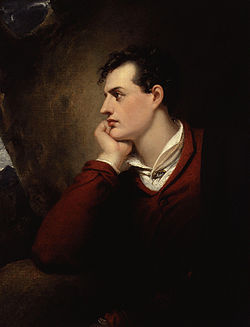 | |
Today is the birthday of the 6th Baron Byron (George Gordon Byron; London 22 January 1788 – 19 April 1824 Missolonghi, Aetolia, Ottoman Empire (present-day Aetolia-Acarnania, Greece)); poet, politician, and a leading figure in the Romantic movement. Among his best-known works are the lengthy narrative poems, Don Juan and Childe Harold’s Pilgrimage, and the short lyric poem, “She Walks in Beauty”.
In my opinion, Byron is as one of the greatest British poets. He travelled extensively across Europe, especially in Italy, where he lived for seven years. Later in his brief life, Byron joined the Greek War of Independence fighting the Ottoman Empire, for which many Greeks revere him as a national hero.
He died at the age of 36 from a fever contracted while in Missolonghi. Often described as the most flamboyant and notorious of the major Romantics, Byron was both celebrated and castigated in life for his aristocratic excesses, including huge debts, numerous love affairs – with men as well as women, as well as rumours of a scandalous liaison with his half-sister – and self-imposed exile.
Byron fell in love with Mary Chaworth, whom he met while at school, and she was the reason he refused to return to Harrow in September 1803. His mother wrote, “He has no indisposition that I know of but love, desperate love, the worst of all maladies in my opinion. In short, the boy is distractedly in love with Miss Chaworth.” In Byron’s later memoirs, “Mary Chaworth is portrayed as the first object of his adult sexual feelings.”
Ah! Sure some stronger impulse vibrates here,
Which whispers friendship will be doubly dear
To one, who thus for kindred hearts must roam,
And seek abroad, the love denied at home.

by Henry Pierce Bone
 Percy Bysshe Shelley, 1819
 Mary Shelley, 1840
 Claire Clairmont
Byron left England in April 1816— forever as it turned out. (Despite his dying wishes, however, his body was returned for burial in England.) He journeyed through Belgium and continued up the Rhine river. In the summer of 1816 he settled at the Villa Diodati by Lake Geneva, Switzerland, with his personal physician, the young, brilliant and handsome John William Polidori. There Byron befriended the poet Percy Bysshe Shelley, and Shelley’s future wife Mary Godwin. He was also joined by Mary’s stepsister, Claire Clairmont, with whom he had had an affair in London.

Frontispiece to a c. 1825 edition of Childe Harold’s Pilgrimage
Kept indoors at the Villa Diodati by the “incessant rain” of “that wet, ungenial summer” over three days in June, the five turned to reading fantastical stories, including Fantasmagoriana, and then devising their own tales. Mary produced what would become Frankenstein, or The Modern Prometheus, and Polidori was inspired by a fragmentary story of Byron’s, Fragment of a Novel, to produce The Vampyre, the progenitor of the romantic vampire genre.
Byron’s story fragment was published as a postscript to Mazeppa; he also wrote the third canto of Childe Harold. Byron wintered in Venice, pausing his travels when he fell in love with Marianna Segati, in whose Venice house he was lodging, and who was soon replaced by 22-year-old Margarita Cogni; both women were married. Cogni could not read or write, and she left her husband to move into Byron’s Venice house. Their fighting often caused Byron to spend the night in his gondola; when he asked her to leave the house, she threw herself into the Venetian canal.
Italy

Byron’s visit to San Lazzaro as depicted by Ivan Aivazovsky (1899)
In 1817, he journeyed to Rome. On returning to Venice, he wrote the fourth canto of Childe Harold. About the same time, he sold Newstead and published Manfred, Cain and The Deformed Transformed. The first five cantos of Don Juan were written between 1818 and 1820, during which period he made the acquaintance of the 18 year old Countess Guiccioli, who found her first love in Byron, who in turn asked her to elope with him.
Led by the love for this local aristocratic and married young Teresa Guiccioli, Byron lived in Ravenna between 1819 and 1821. Here he continued Don Juan and wrote the Ravenna Diary and My Dictionary and Recollections. Of Byron’s lifestyle in Ravenna we know more from Shelley, who documented some of its more colourful aspects in a letter:
“Lord Byron gets up at two. I get up, quite contrary to my usual custom … at 12. After breakfast we sit talking till six. From six to eight we gallop through the pine forest which divide Ravenna from the sea; we then come home and dine, and sit up gossiping till six in the morning. I don’t suppose this will kill me in a week or fortnight, but I shall not try it longer. Lord B.’s establishment consists, besides servants, of ten horses, eight enormous dogs, three monkeys, five cats, an eagle, a crow, and a falcon; and all these, except the horses, walk about the house, which every now and then resounds with their unarbitrated quarrels, as if they were the masters of it… . [P.S.] I find that my enumeration of the animals in this Circean Palace was defective … . I have just met on the grand staircase five peacocks, two guinea hens, and an Egyptian crane. I wonder who all these animals were before they were changed into these shapes.”

“Byron’s Grotto” in Porto Venere, Italy, named in his honour, because according to a local legend he meditated here and drew inspiration from this place for his literary works.
Byron attended the funeral of Shelley, which was orchestrated by Trelawney after Williams and Shelley drowned in a boating accident on 8 July 1822. His last Italian home was Genoa, where he was still accompanied by the Countess Guiccioli, and the Blessingtons, providing the material for Lady Blessington’s work: Conversations with Lord Byron, an important text in the reception of Byron in the period immediately after his death.

Lord Byron in Albanian dress painted by Thomas Phillips in 1813. Venizelos Mansion, Athens (the British Ambassador’s residence)
Byron was living in Genoa when, in 1823 he accepted overtures for his support from representatives of the movement for Greek independence from the Ottoman Empire. At first, Byron did not wish to abandon his twenty-two year old mistress Countess Teresa Guiccioli who had abandoned her husband to live with him; ultimately Guiccioli’s father, Count Gamba was allowed to leave his exile in the Romagna under the condition that his daughter return to him, without Byron. On 16 July, Byron left Genoa arriving at Kefalonia in the Ionian Islands on 4 August.
On 15 February 1824, Byron fell ill, and the usual remedy of bloodletting weakened him further. He made a partial recovery, but in early April he caught a violent cold which therapeutic bleeding, insisted on by his doctors, aggravated. It is suspected this treatment, carried out with unsterilised medical instruments, may have caused him to develop sepsis. He developed a violent fever, and died.

Lord Byron on His Deathbed, by Joseph Denis Odevaere (c. 1826). Oil on canvas, 166 × 234.5 cm Groeningemuseum, Bruges. (Note the sheet covering his misshapen right foot.)
Lord Tennyson would later recall the shocked reaction in Britain when word was received of Byron’s death. The Greeks mourned Lord Byron deeply, and he became a hero. The national poet of Greece, Dionysios Solomos, wrote a poem about the unexpected loss, named To the Death of Lord Byron. Βύρων (“Vyron”), the Greek form of “Byron”, continues in popularity as a masculine name in Greece, and a town near Athens is called Vyronas in his honour.
Byron’s body was embalmed, but the Greeks wanted some part of their hero to stay with them. According to some sources, his heart remained at Missolonghi. His other remains were sent to England (accompanied by his faithful manservant, “Tita”) for burial in Westminster Abbey, but the Abbey refused for reason of “questionable morality”. Huge crowds viewed his coffin as he lay in state for two days in London. He is buried at the Church of St. Mary Magdalene in Hucknall, Nottinghamshire. A marble slab given by the King of Greece is laid directly above Byron’s grave.
In 1969, 145 years after Byron’s death, a memorial to him was finally placed in Westminster Abbey. The memorial had been lobbied for since 1907: The New York Times wrote, “People are beginning to ask whether this ignoring of Byron is not a thing of which England should be ashamed … a bust or a tablet might be put in the Poets’ Corner and England be relieved of ingratitude toward one of her really great sons.”
 Lady Caroline Lamb
 Jane Elizabeth Scott “Lady Oxford”
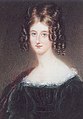 Augusta Leigh
 Anne Isabella Milbanke in 1812 by Charles Hayter
In 1812, Byron embarked on a well-publicised affair with the married Lady Caroline Lamb that shocked the British public. She had spurned the attention of the poet on their first meeting, subsequently giving Byron what became his lasting epitaph when she famously described him as “mad, bad and dangerous to know”. This did not prevent him from pursuing her.
Byron eventually broke off the relationship, and moved swiftly on to others (such as that with Lady Oxford), but Lamb never entirely recovered, pursuing him even after he tired of her. She was emotionally disturbed, and lost so much weight that Byron sarcastically commented to her mother-in-law, his friend Lady Melbourne, that he was “haunted by a skeleton”. She began to call on him at home, sometimes dressed in disguise as a pageboy, at a time when such an act could ruin both of them socially. One day, during such a visit, she wrote on a book at his desk, “Remember me!” As a retort, Byron wrote a poem entitled Remember Thee! Remember Thee! which concludes with the line “Thou false to him, thou fiend to me”.
Eventually Byron began to court Lady Caroline’s cousin Anne Isabella Milbanke (“Annabella”), who refused his first proposal of marriage but later accepted him. Milbanke was a highly moral woman, intelligent and mathematically gifted; she was also an heiress. They married at Seaham Hall, County Durham, on 2 January 1815.
The marriage proved unhappy. He treated her poorly. On 16 January 1816, Lady Byron left him. On 21 April, Byron signed the Deed of Separation. Rumours of marital violence, adultery with actresses, incest with Augusta Leigh, and sodomy were circulated, assisted by a jealous Lady Caroline. In a letter, Augusta quoted him as saying: “Even to have such a thing said is utter destruction and ruin to a man from which he can never recover.” That same year Lady Caroline published her popular novel Glenarvon, wherein Lord Byron was portrayed as the seedy character Lord Ruthven.

Reproduction of Portrait of Lord Byron by Thomas Phillips

The Bride of Abydos or Selim and Zuleika. Painting, 1857, by Eugène Delacroix depicting Lord Byron’s work
The Dream (1816)

- And both were young, and one was beautiful.
- Stanza 2.
- And to his eye
There was but one beloved face on earth,
And that was shining on him.- Stanza 2.
- She was his life,
The ocean to the river of his thoughts,
Which terminated all.- Stanza 2; this can be compared to: “She floats upon the river of his thoughts”, Henry W. Longfellow, The Spanish Student, act ii, scene 3.
- A change came o’er the spirit of my dream.
- Stanza 3.
- And they were canopied by the blue sky,
So cloudless, clear, and purely beautiful
That God alone was to be seen in heaven.- Stanza 4
Today is the birthday of Francis Picabia (Paris; born Francis-Marie Martinez de Picabia, 22 January 1879 – 30 November 1953 Paris); avant-garde painter, poet and typographist. After experimenting with Impressionism and Pointillism, Picabia became associated with Cubism. His highly abstract planar compositions were colourful and rich in contrasts. He was one of the early major figures of the Dada movement in the United States and in France. He was later briefly associated with Surrealism, but would soon turn his back on the art establishment.
Gallery

L’accordéoniste | 1940-41
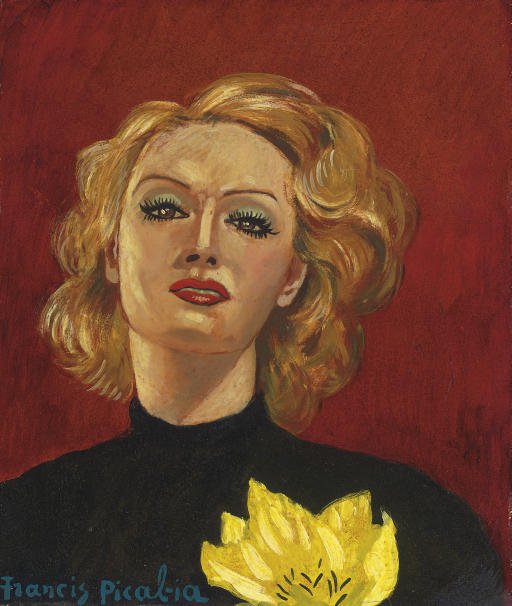
Femme a fleur jaune
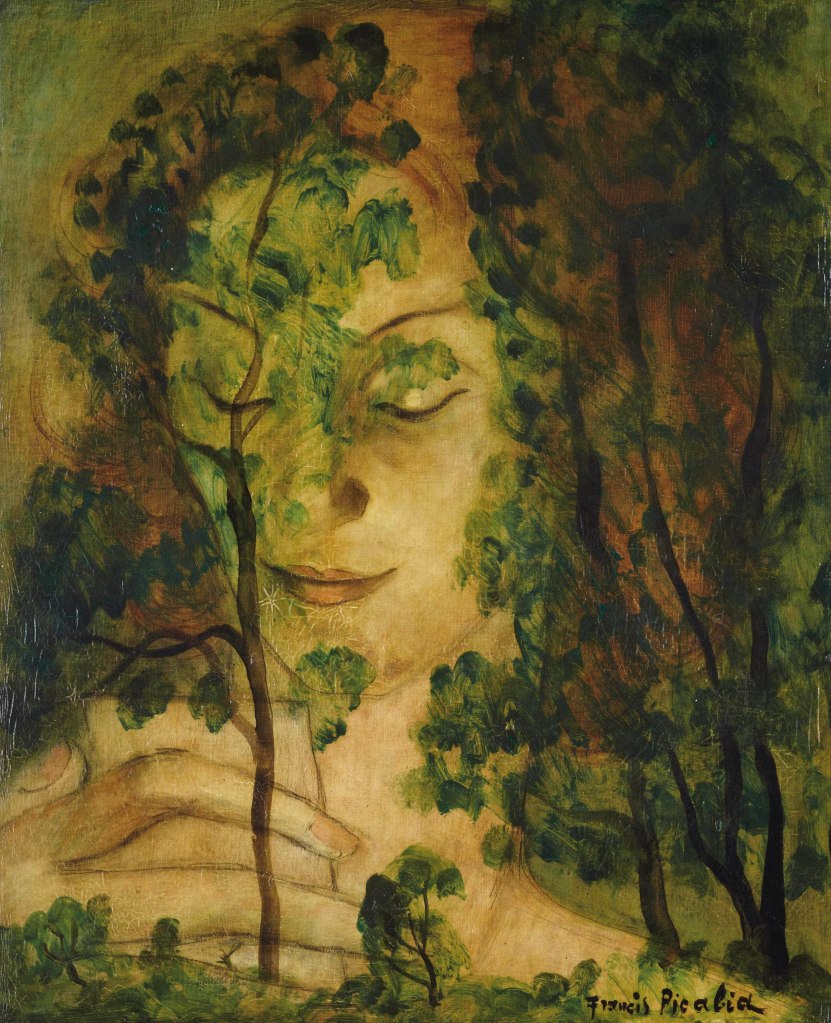
Femme aux arbres, 1930

Adam et Ève, vers 1941

Nu de dos, vers 1940
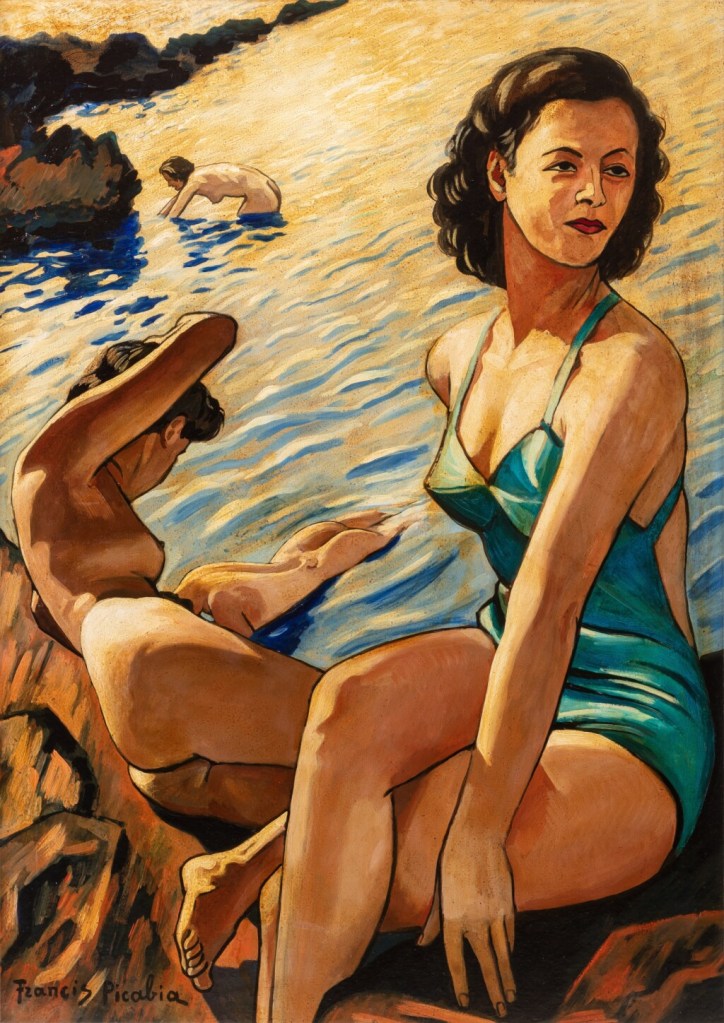
Quatre femmes au bord de l’eau, vers 1942
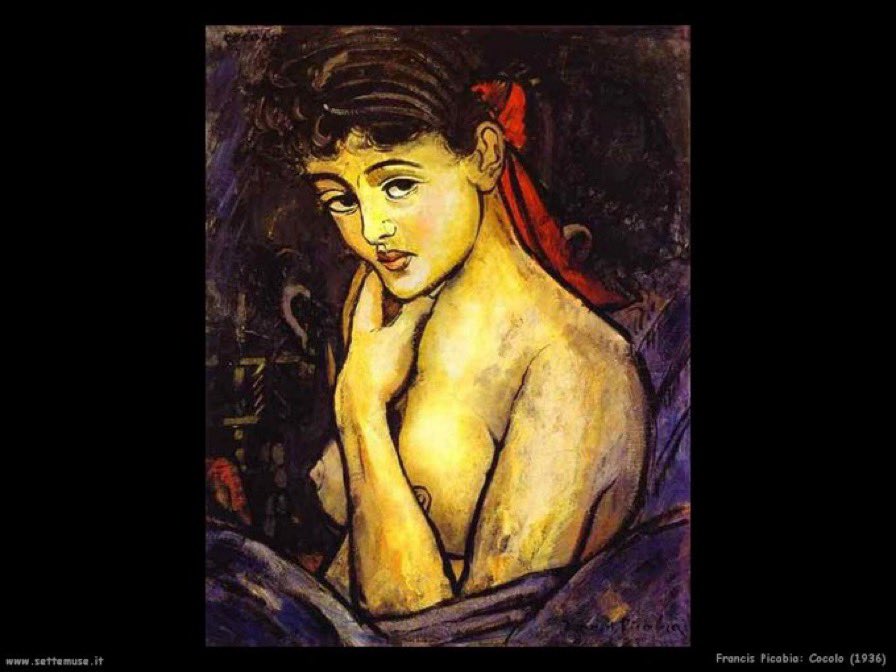
Cocolo

Uncana, 1929
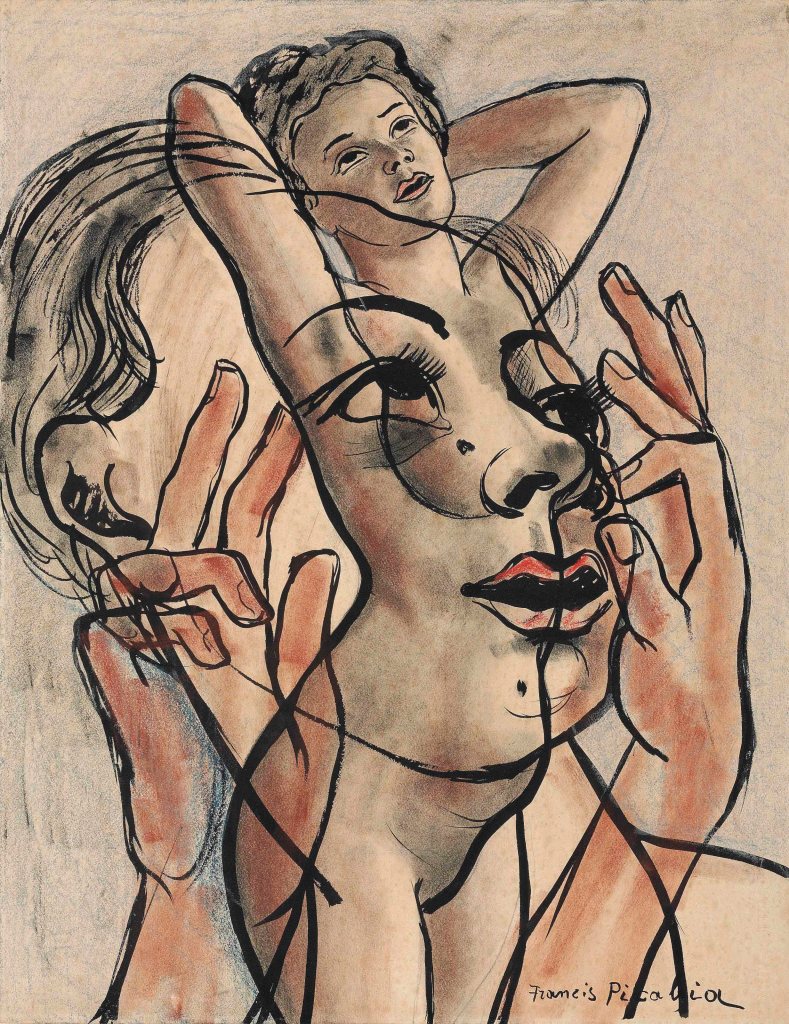
Volupté, 1932
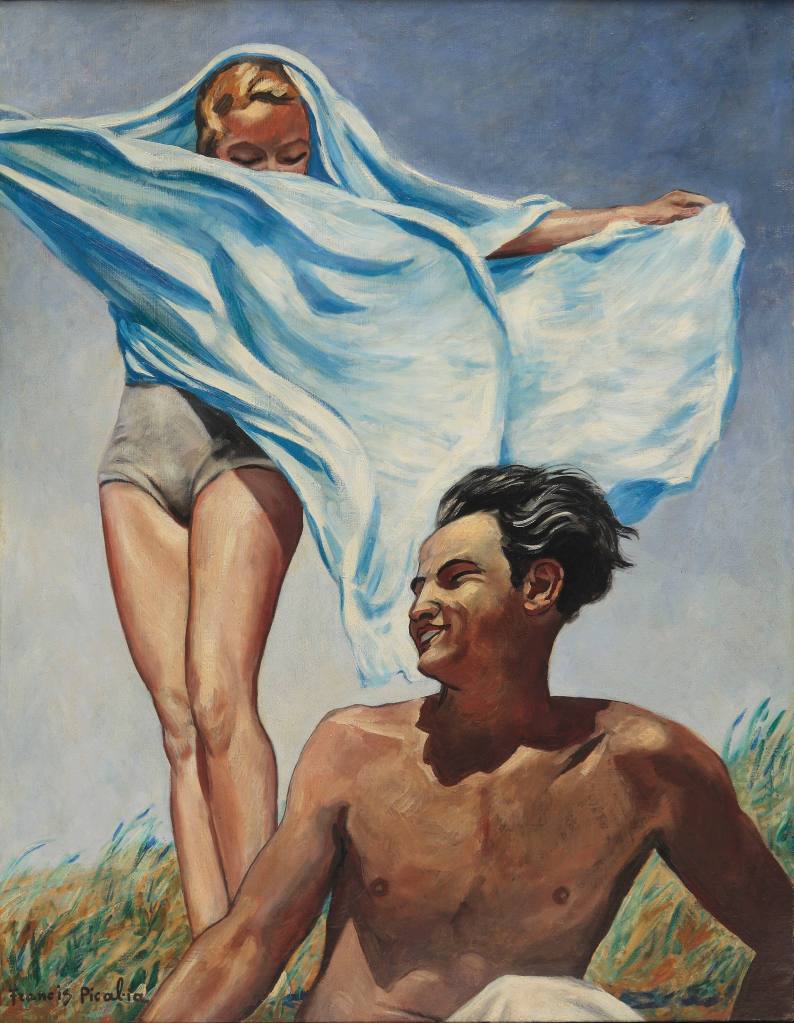
Printemps, 1941-42
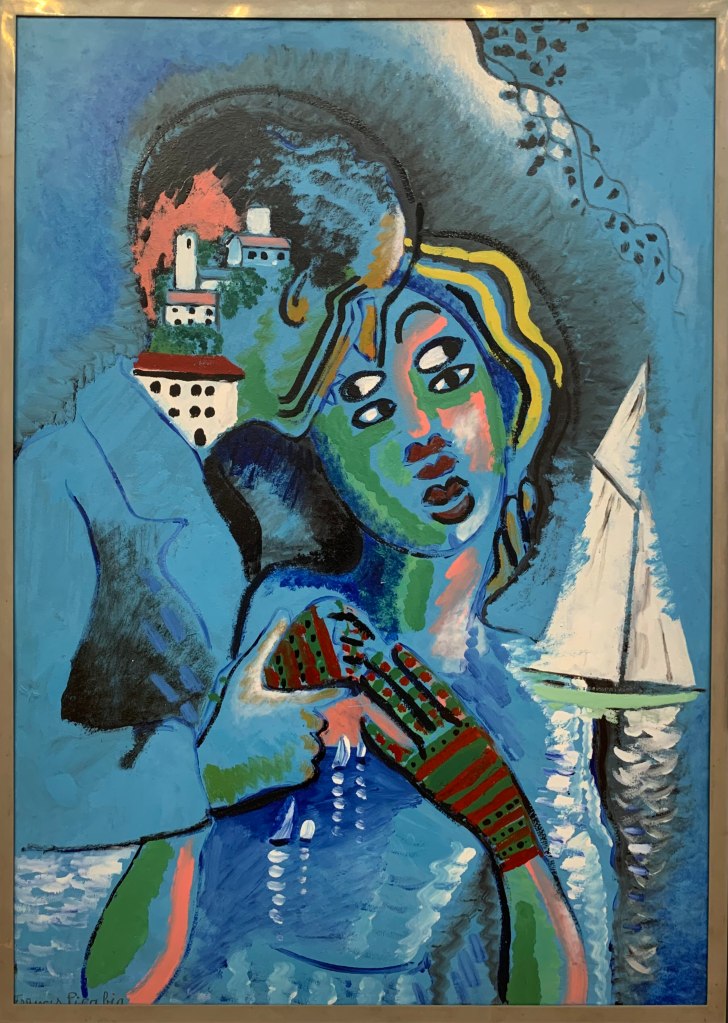
Idylle, v. 1926, musée de Grenoble
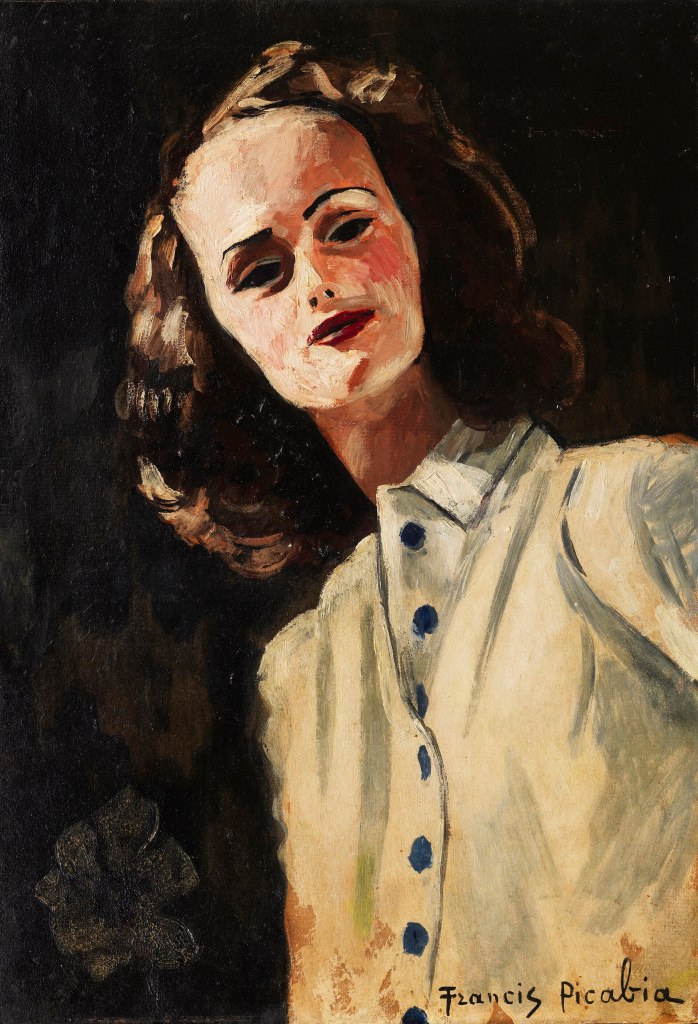
La Résistance, vers 1943
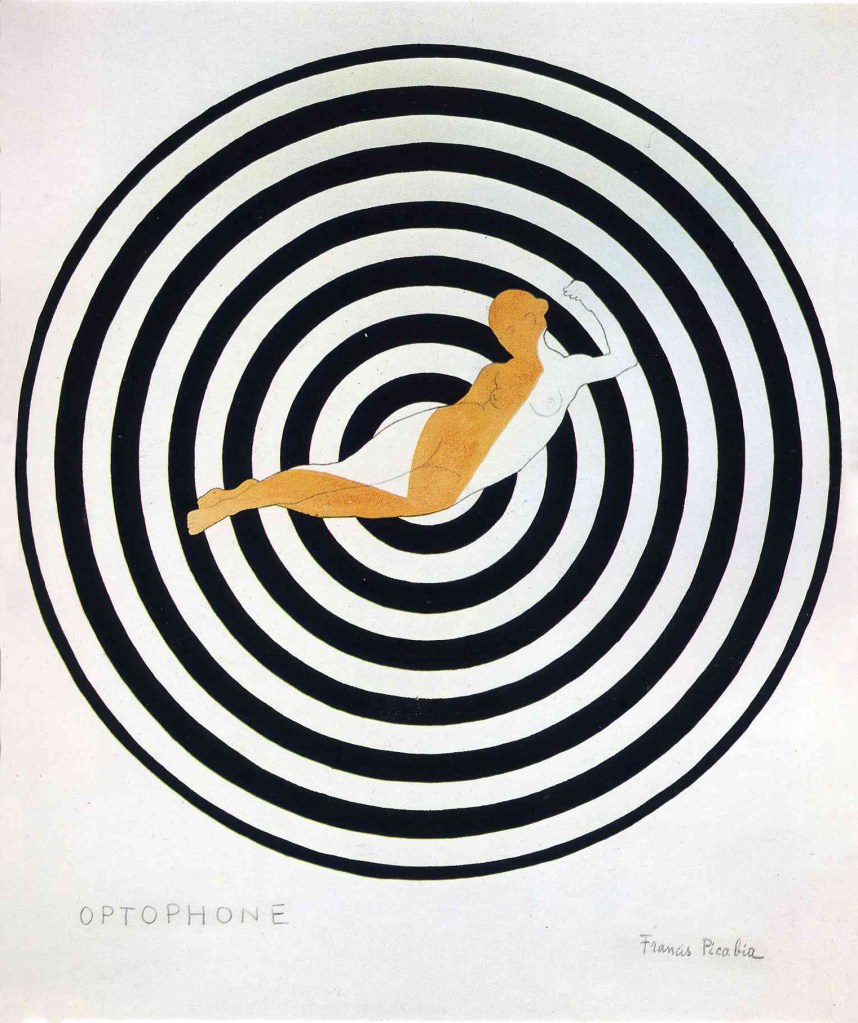
Optophone I, vers 1922

Les Seins, 1927

Hera, vers 1929

Transparence – Sphinx, 1929, oil on canvas, 131 × 163 cm, Centre Georges Pompidou

Danse au printemps, 1912, oil on canvas, 120.5 x 120.6 cm, Philadelphia Museum of Art

Horses, 1911, oil on canvas, 73.3 x 92.5 cm, Musée National d’Art Moderne, Centre Georges Pompidou, Paris
And today is the birthday of Moïse Kisling (born Mojżesz Kisling; Kraków 22 January 1891 – 29 April 1953 Bandol, Var, Provence-Alpes-Côte d’Azur, France); painter. Kisling studied at the Academy of Fine Arts. He left for Paris in 1910 at the age of 19. After moving to Montmartre, Kisling became a member of the Parisian avant-garde known also as the School of Paris, and developed close professional relationships with painters Amedeo Modigliani and Jules Pascin, among others. Kisling gained recognition for portraying the female form and completed numerous nudes and portraits during his career.
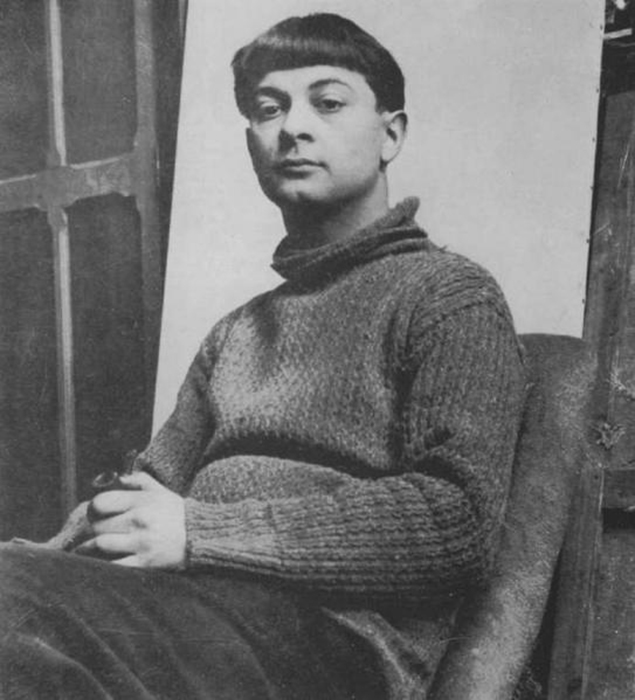
c. 1916
He became a French national in 1924, after serving and being wounded with the French Foreign Legion in World War I. In 1940, despite being 49, Kisling rejoined the army for World War II but moved to the United States following the French Army’s surrender and the impending threat to Jews in occupied France. In the U.S., he exhibited his works in New York City and Washington and settled in Southern California. After World War II and the defeat of Nazi Germany, Kisling returned to France. He lived his later years continuing his artwork until his death in 1953, after a brief illness.
Gallery
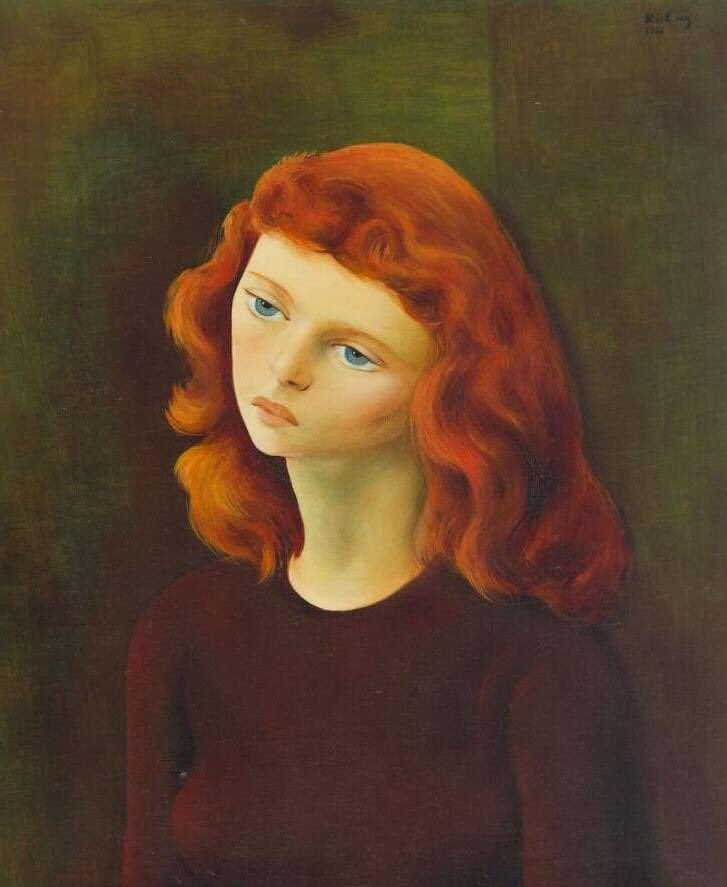
“Mona Luisa” (1952)
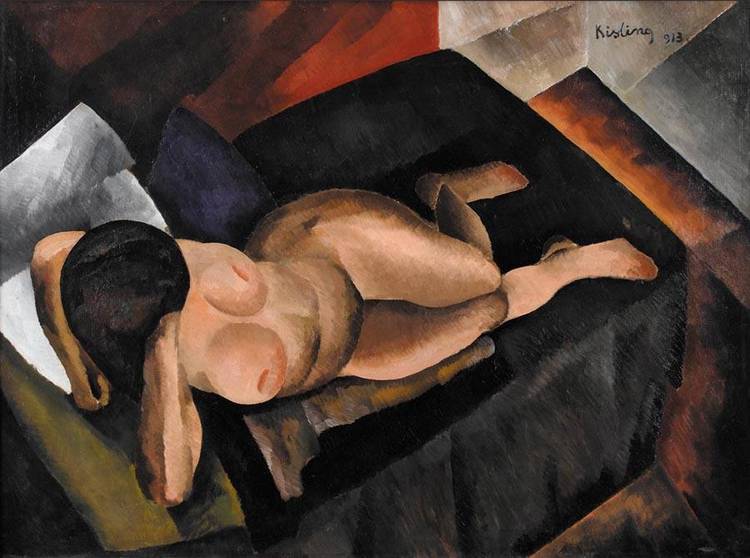
Nu sur un divan noir, oil on canvas, 97 x 130 cm, published in Montjoie, 1914

Kiki de Montparnasse, 1926

1916, La Sieste à Saint-Tropez (Kisling with Renée)
Mario Anthony Casilli (January 22, 1931 – April 25, 2002) was an American photographer. Among other photos, he worked for Playboy magazine between 1957 and 1996
Gallery

Willy Rey, Playboy Redheads’ book, February 1971

Barbara Streisand 1977

Carrie fisher

Kristine Winder for Playboy, 1977

Elizabeth Jordan (born January 11, 1945, in Fort Myers, Florida) was Playboy Magazine’s Playmate of the Month for its May 1968 issue

Fran Gerard (Playboy 1967)
thanks for stoppin’ by y’all
mac tag
 The Lovers’ Chronicle
Leave a reply to The Lovers’ Chronicle 18 August – waitin’, reprise – art by Josef Danhauser – birth of Lucienne Boyer – The Lovers’ Chronicle Cancel reply