
Dear Zazie, Here is today’s Lovers’ Chronicle from Mac Tag dedicated to his muse. Rhett
The Lovers’ Chronicle
Dear Muse,
dream aria…
music softly, sounds like “Recondita armonia” from Tosca
yes, but where am i he wonders
looks like i am standin’ in front of Sant’Andrea della Valle in Rome
why is the Sacristan talkin’ to me about this paintin’
whoa wait, am i Mario, must be, here comes Tosca
but that cannot be, this woman has red hair and Tosca’s is black
Mario, come we must leave
of course, if not this does not end well
then let us leave and pledge to be
beats staying here and dyin’, though the arias are fabulous
© copyright 2024 mac tag all rights reserved
there is a great song by Jackie Wilson;
“Someone to kiss
Someone to miss
When you’re away
To hear from each day”
“Yes, we have moved beyond
the original inspiration for this phrase”
right, when conceived, i was without
and that was the ongoin’ internal debate
whether to be or not
“We settled that question”
we did, now we can write about
how it is to be well loved
“Come here, we have writing to do”
© copyright 2023.2024 mac tag all rights reserved
that question has ruled many days and nights and if you have paid attention, the or not answer prevailed until last year, bein’ there was part choice and part circumstance, the latter changed and the former took awhile, as you know, but i came around and chose to be here with you
© copyright 2022 mac tag all rights reserved
pre-you
that question
was too easy
to answer
decidedly or not
sure there were
some fleetin’ moments
where i thought maybe
but they were just that
a pause to tighten the cinch
and jump another fence
but now
to be here with you
startin’ to believe,
and feel a need
to change that answer
© copyright 2021 mac tag/cowboy coleridge all rights reserved
Pale Love, Pale Rider
and so it is,
more and more us
whether it be
hours talkin’ and laughin’
workin’ on Rocky Top
makin’ roux or woo
you have carried so much
on yourself, by yourself
i am here now darlin’
and i want nothin’ more
than to be the one
to be there for you
take my hand
so we can be
© copyright 2020 mac tag/cowboy coleridge all rights reserved
silence understood
and how all the same
in what we do
you know
similarities
with color
complete
the canvas
between the things
seen and said
cannot imagine
to be without
will not lose
another moment
think
of nothin’ else
become
more and more
us
© copyright 2019 mac tag/cowboy coleridge all rights reserved
to be or not to be
these are the thoughts
that seize my nights
and govern my days
my friends
i hear the chorus
and i ‘preciate
your concern
but i believe
solitude chooses
some of us
and it becomes
a first, best destiny
……
whoa, hold on playa
it is not that i do not
want your body
it is your mind
that i really want
that is where you keep
your beauty and sorrow
show me that
the rest will follow
or not
……
come, be my Lady Brett
we will sip absinthe
by the fire and talk
of our hopes
and dreams
……
come, enter this vision…
me, white dinner jacket tux
you in a killer black dress
we waltz the night away
***
reckon who
has surrounded themselves
with a taller, stronger wall
me or you
reckon either
can be knocked down

© copyright 2018 mac tag/cowboy coleridge all rights reserved
it is not what she did
this mornin’
at first light
accounts for the smile
it is,
that she plans
to do it again
this evenin’
oh those eyes
ever
lettin’ on
but it is not
exactly
her eyes,
or her mouth
or even
her smile
it is all of her
and i want more
© copyright 2017 mac tag/cowboy Coleridge all rights reserved
1959, October
fall comin down
on a High Plains ranch
Daddy would come home
from a long day ahorseback
She either had supper
or hell awaitin’
© copyright 2016 mac tag/cowboy Coleridge all rights reserved
Today is the birthday of Henri Fantin-Latour (Grenoble, Isère, France 14 January 1836 – 25 August 1904 Buré, Orne in Lower Normandy); painter and lithographer best known for his flower paintings and group portraits of Parisian artists and writers.

Self-portrait (1859), Museum of Grenoble
In 1875, Fantin-Latour married a fellow painter, Victoria Dubourg, after which he spent his summers on the country estate of his wife’s family at Buré, Orne in Lower Normandy, where he died. He was interred in the Cimetière du Montparnasse, Paris, France.
Gallery
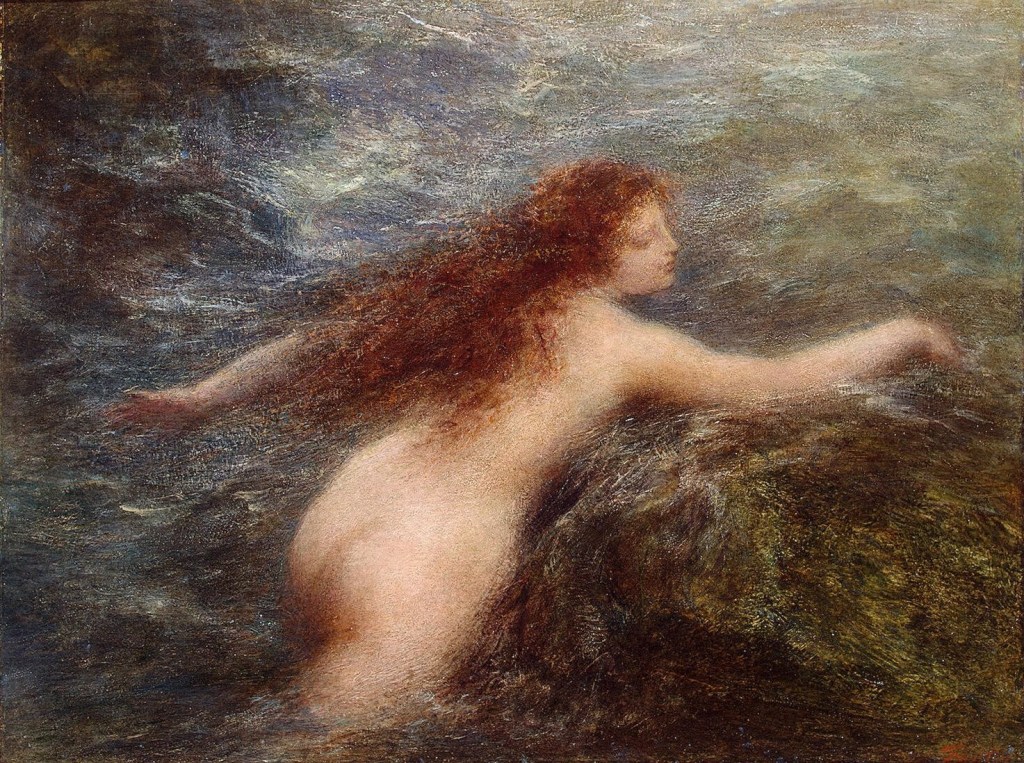
Naïade, Saint-Pétersbourg, musée de l’Ermitage
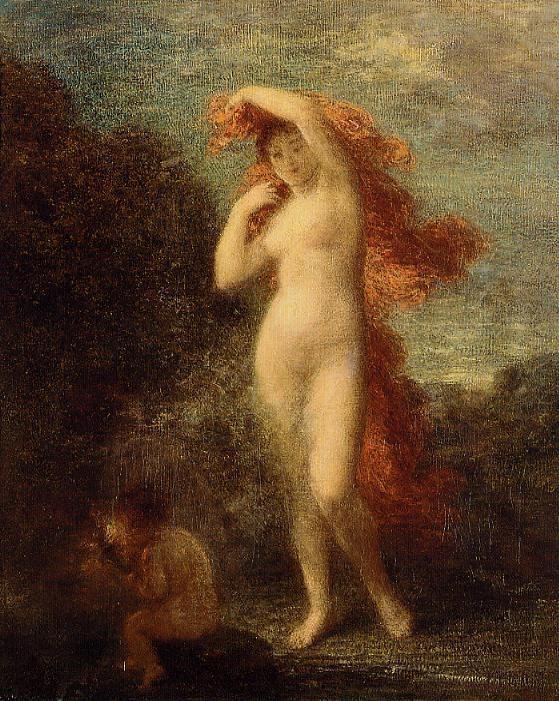
venus and cupid
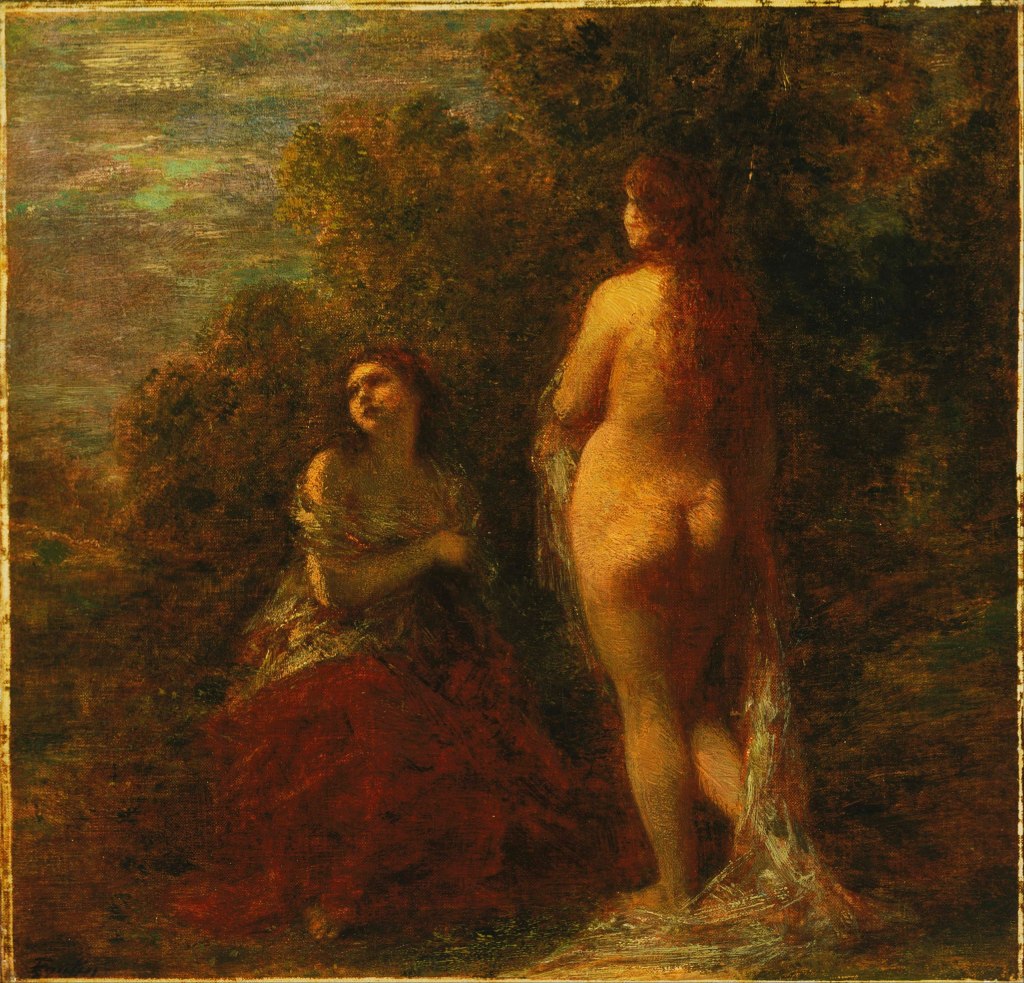
Dawn (c. 1883)
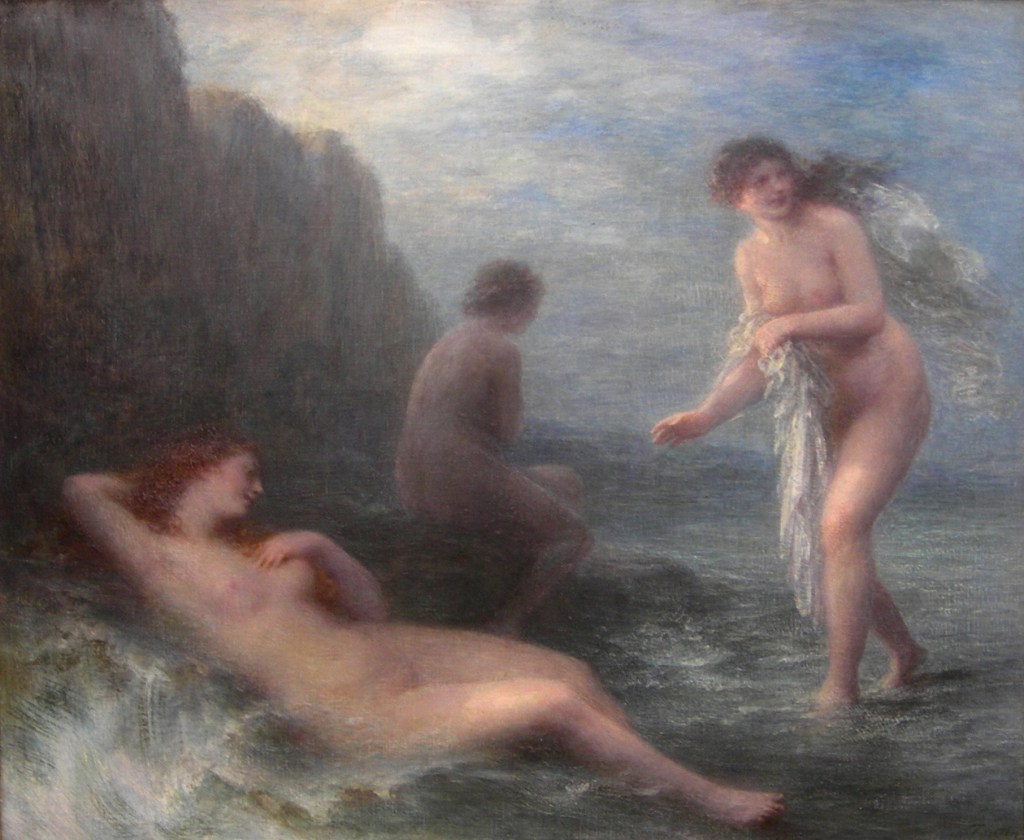
Le Soir, Roubaix, La Piscine
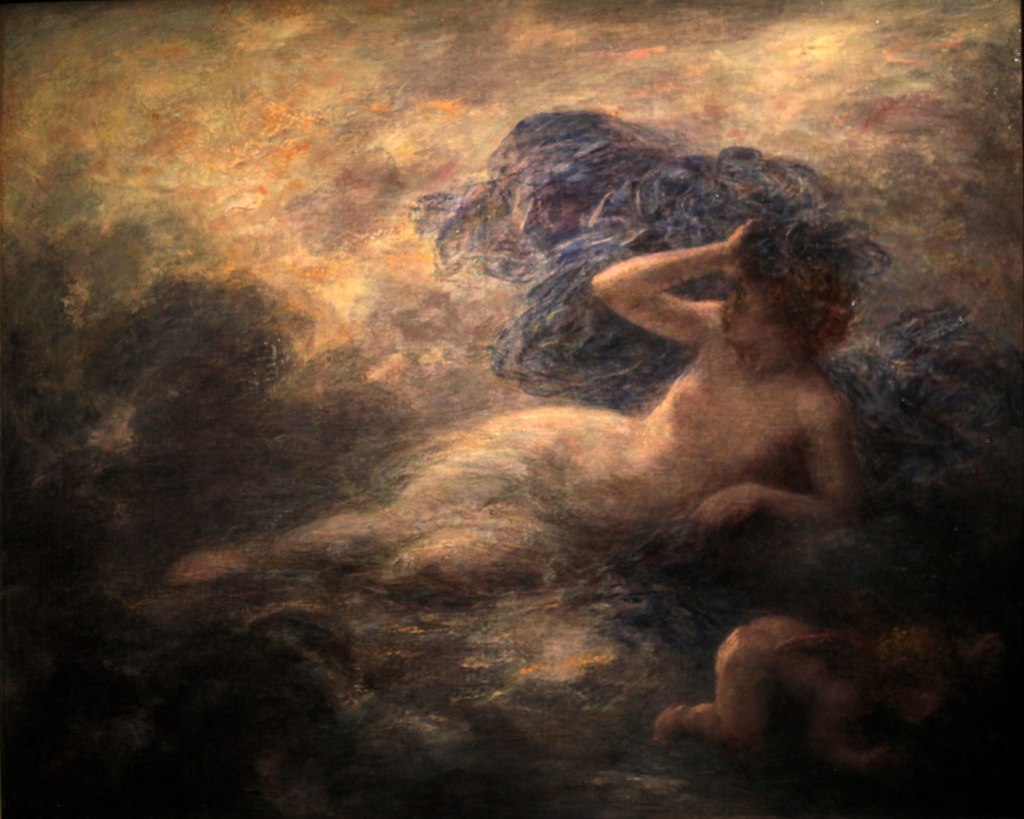
La Nuit (1897), Paris, musée d’Orsay

Danae

Ariane abandonnée (1899), musée des Beaux-Arts de Lyon
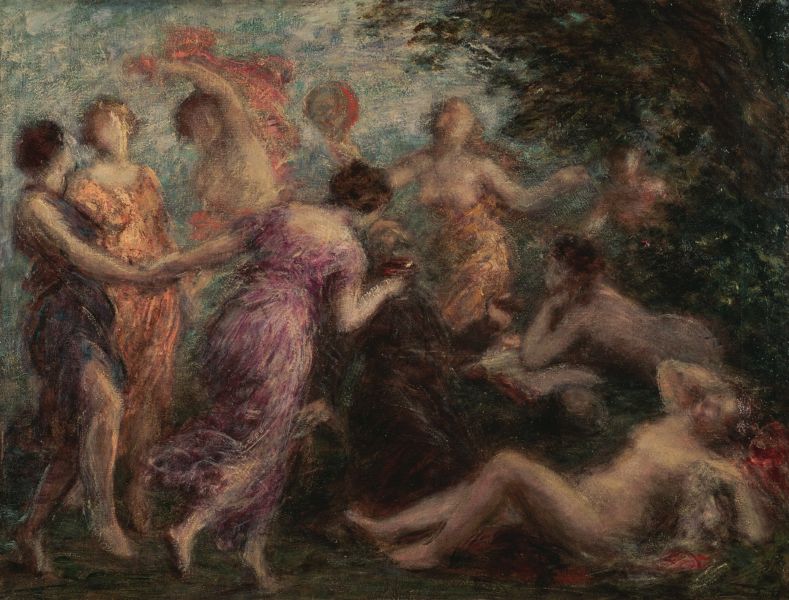
La Tentation de saint Antoine, Tokyo, musée national de l’Art occidental


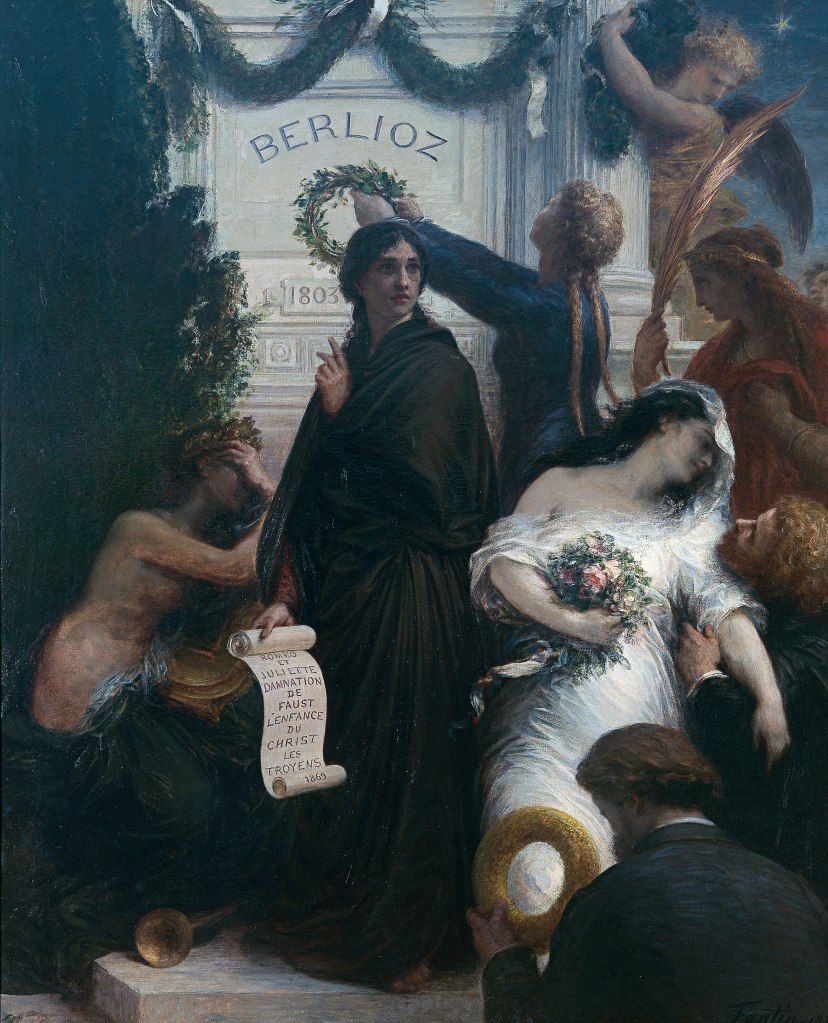
Hommage à Hector Berlioz (1878), musée de Grenoble

La Lecture (1877), musée des Beaux-Arts de Lyon

Madame Lerolle (1882)

Portrait de Sonia (1890), Washington, National Gallery of Art

Mr et Mrs Edwin Edwards (1875), Londres, Tate Gallery

Portrait de Charlotte Dubourg (1882), Paris, musée d’Orsay
A Studio at Les Batignolles, Un atelier aux Batignolles, parody, “Worshipping Manet”, 1870
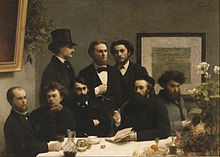
By the Table

Peonies

Still Life with a Carafe, Flowers and Fruit

Flowers and Fruit

Vase of Flowers
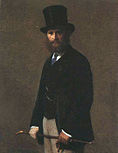 Édouard Manet, 1867, Art Institute of Chicago
 Roses
Roses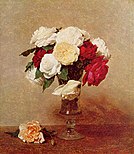 Vase of Roses 1875
 Still Life with Flowers and Fruit, 1865
| Berthe Morisot Madame Eugène Manet | |
|---|---|
 | |
Today is the birthday of Berthe Marie Pauline Morisot (Bourges, Cher, France; January 14, 1841 – March 2, 1895 Paris); painter and a member of the circle of painters in Paris who became known as the Impressionists. In 1864, she exhibited for the first time in the esteemed Salon de Paris. Sponsored by the government, and judged by Academicians, the Salon was the official, annual exhibition of the Académie des beaux-arts in Paris. Her work was selected for exhibition in six subsequent Salons until, in 1874, she joined the “rejected” Impressionists in the first of their own exhibitions, which included Paul Cézanne, Edgar Degas, Claude Monet, Camille Pissarro, Pierre-Auguste Renoir, and Alfred Sisley.
She was married to Eugène Manet, the brother of her friend and colleague Édouard Manet.
In 1868 Morisot became friends with Édouard Manet who painted several portraits of her, including a striking study in a black veil while in mourning for her father. Correspondence between them shows affection, and Manet gave her an easel as a Christmas present.
Morisot drew Manet into the circle of painters who became known as the Impressionists. In 1874, she married Manet’s brother, Eugène.
Morisot died of pneumonia contracted while attending to her daughter Julie’s similar illness, and thus orphaning her at the age of 16. She was interred in the Cimetière de Passy.
Gallery
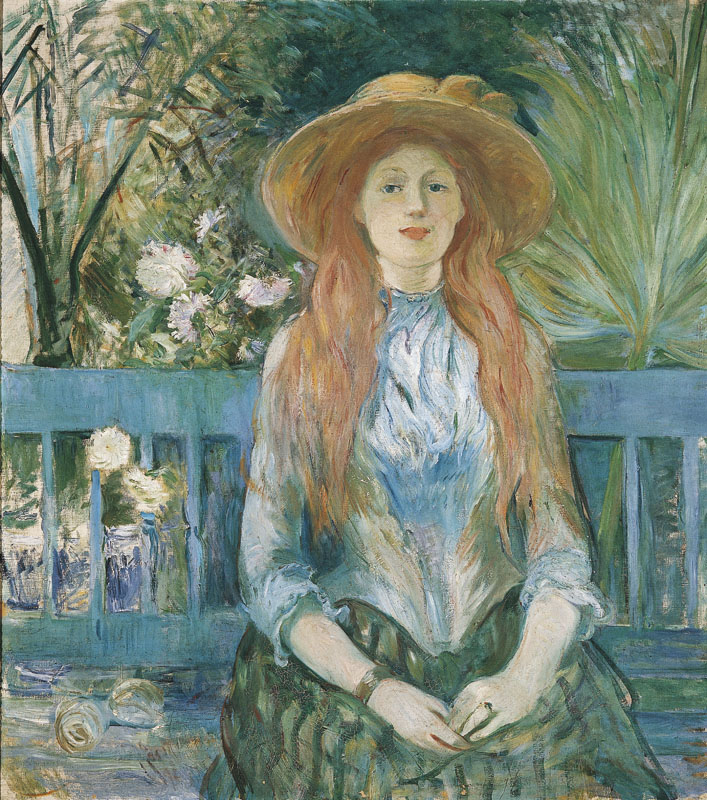
Jeune Fille dans un parc, 1893, musée des Augustins, Toulouse
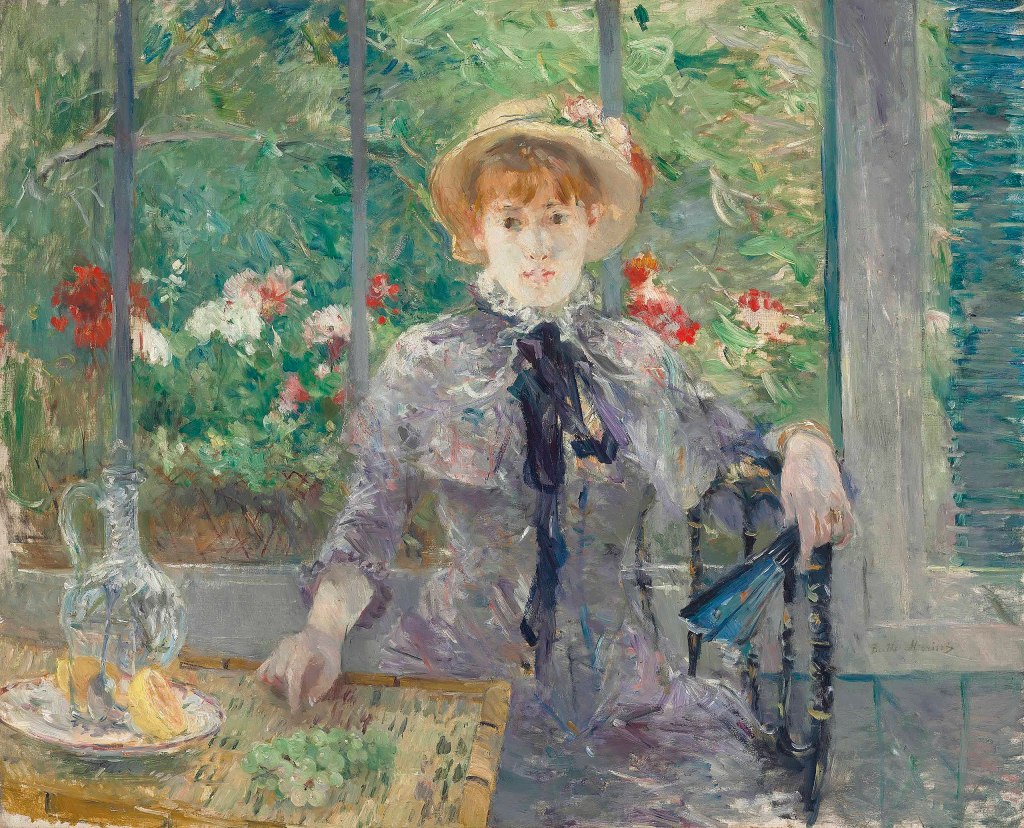
After Lunch, 1881
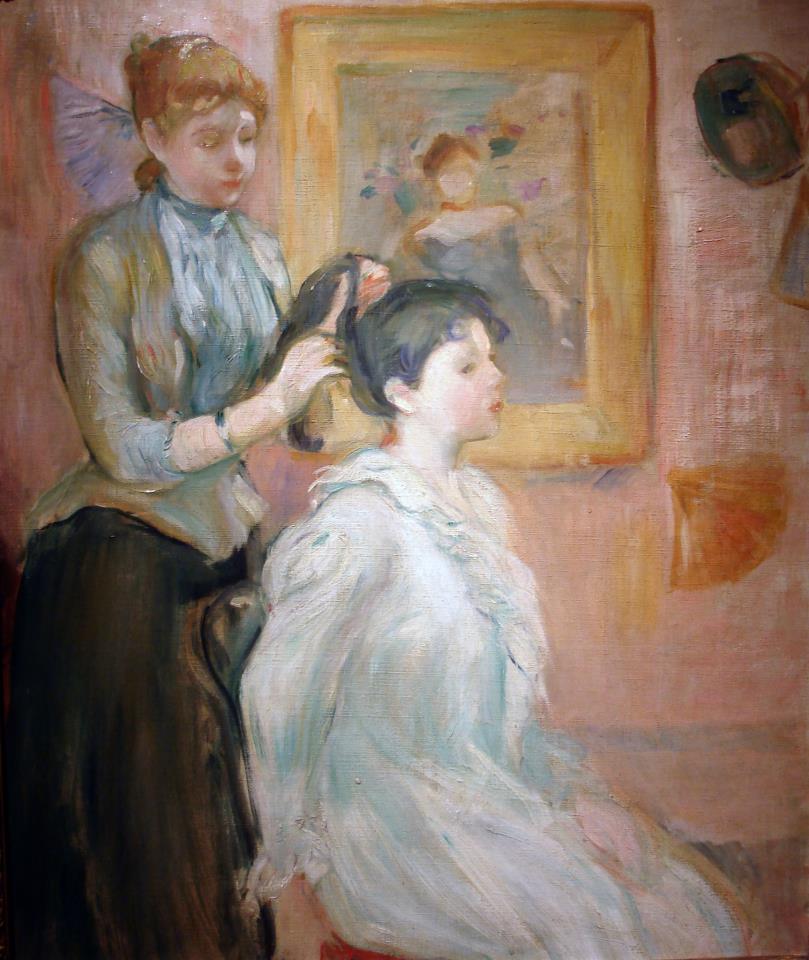
La Coiffure, 1894, musée national des Beaux-Arts, Buenos Aires
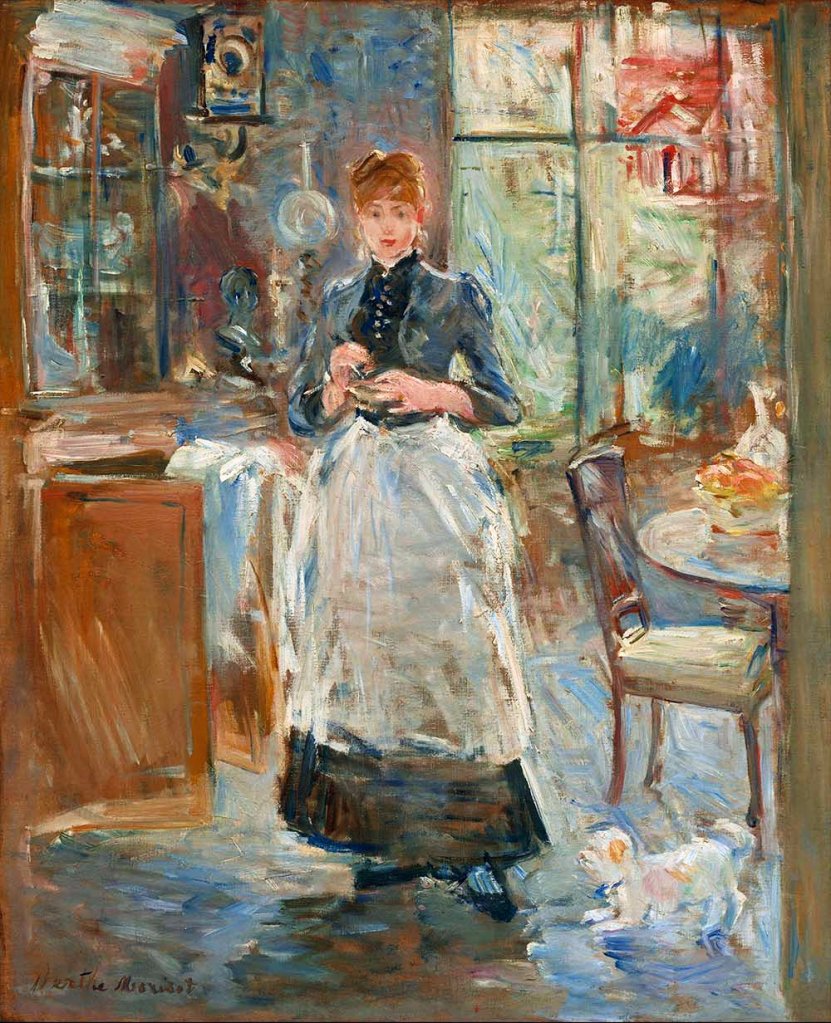
la salle à manger, c. 1875 National Gallery of Art

Deux jeunes filles, 1894
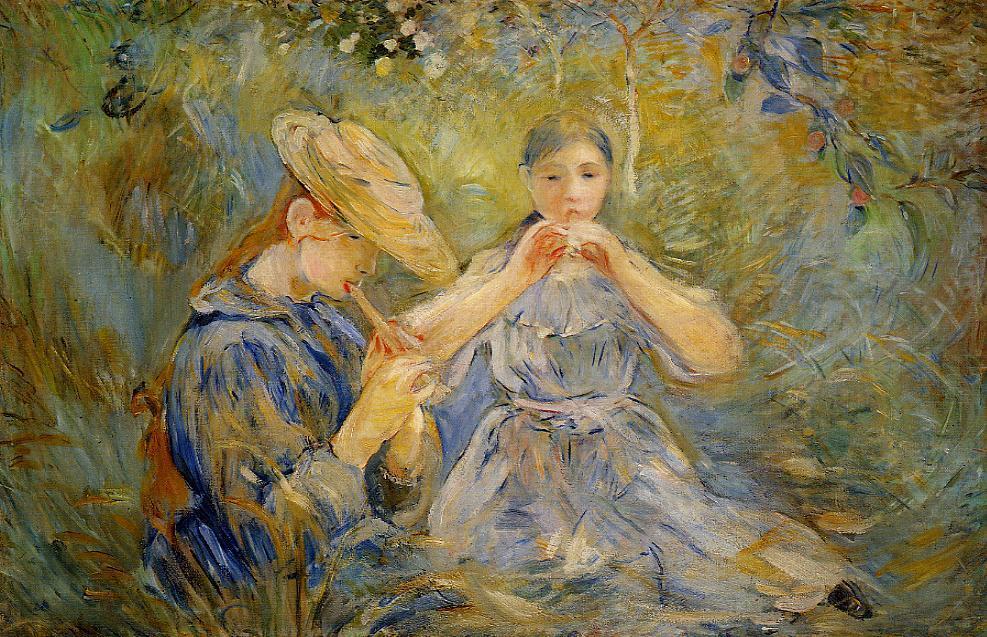
Le Flageolet, 1890

Jour d’été, 1879, National Gallery, Londres

Le Corsage rouge, 1885, Ordrupgaard museum, Charlottenlund

Bergère nue couchée, 1891

Before the Mirror, 1890, Fondation Pierre Gianadda, Switzerland
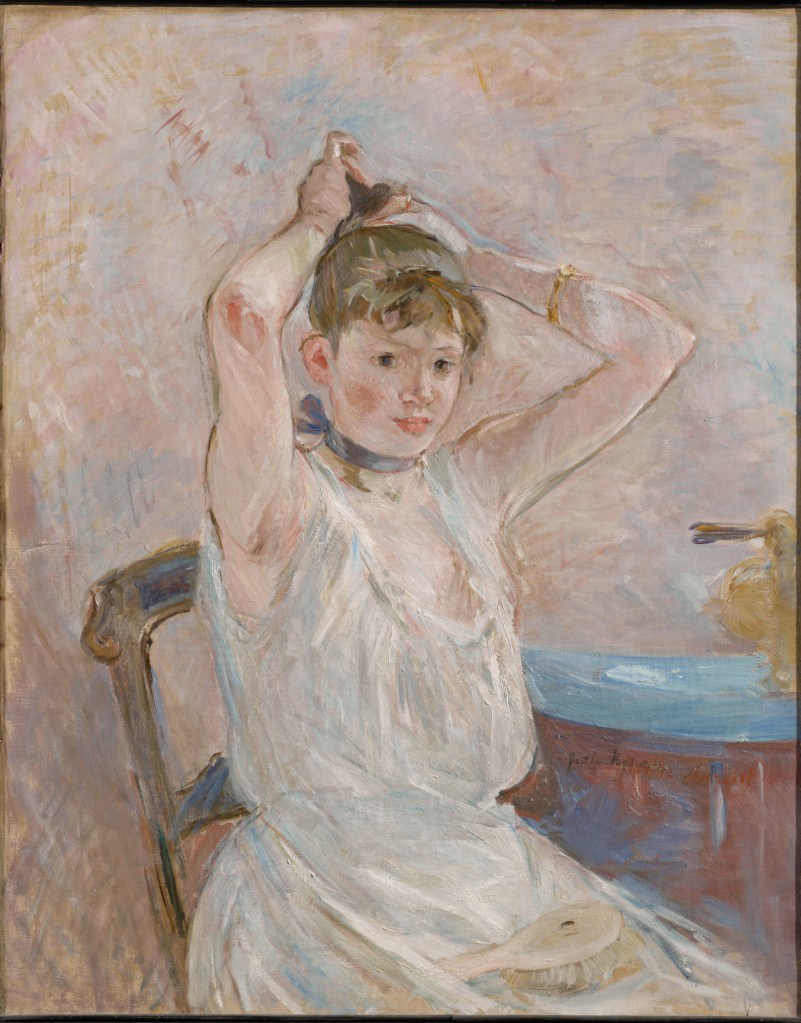
Le Bain, 1885-6, Clark Art Institute, Williamstown

Jeune Fille enfilant son bas, 1880, collection privée

Fillette au chapeau de paille, 1892

Paysanne niçoise, Célestine, 1888-9, musée des Beaux-Arts de Lyon
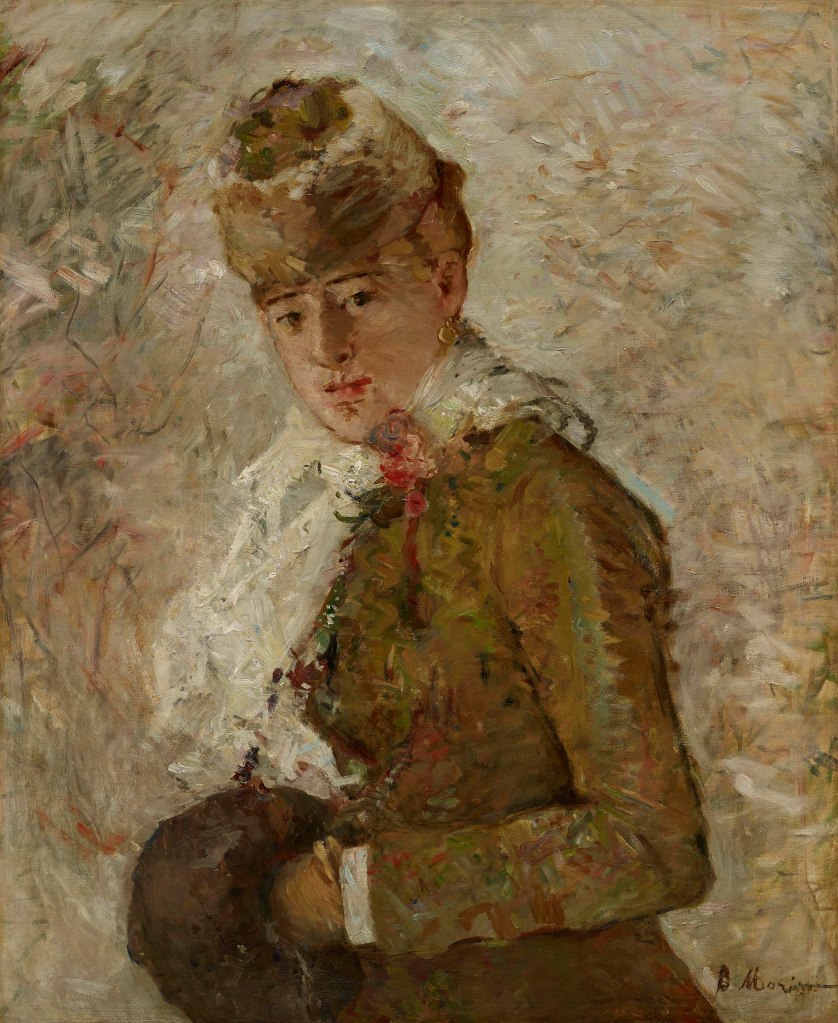
Hiver (Femme au manchon), 1880, Dallas Museum of Art

Au Bal, 1875, musée Marmottan-Monet, Paris

Le Jardin, 1882, Art Institute of Chicago
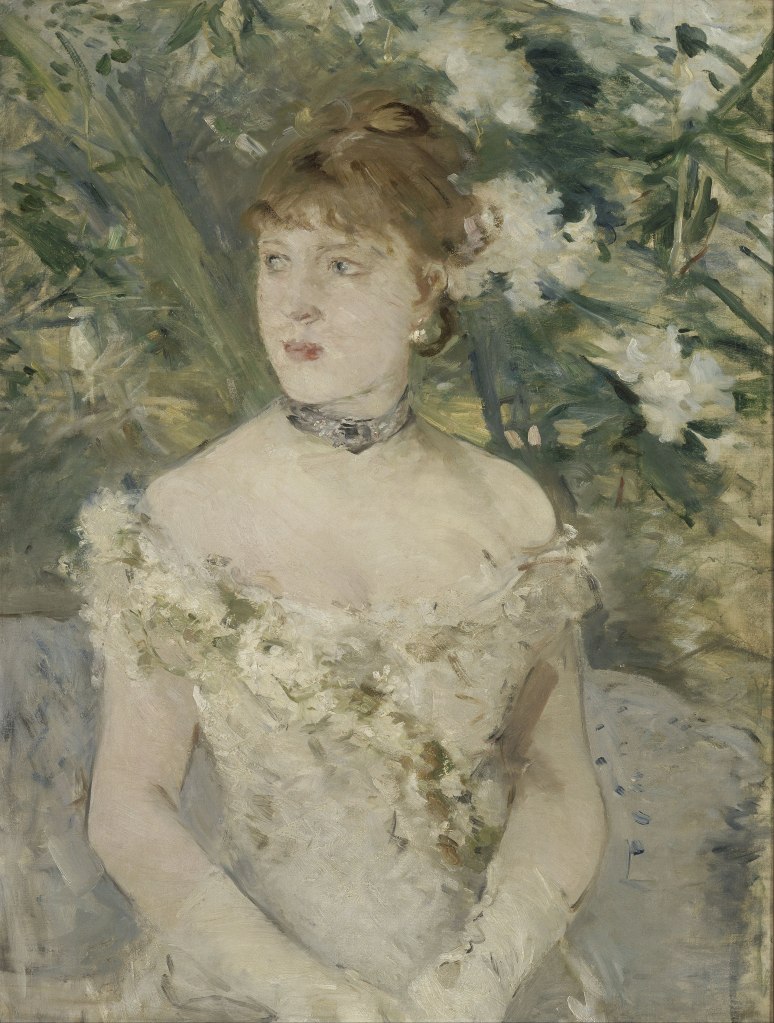
Jeune Femme en toilette de bal, 1879, musée d’Orsay, Paris
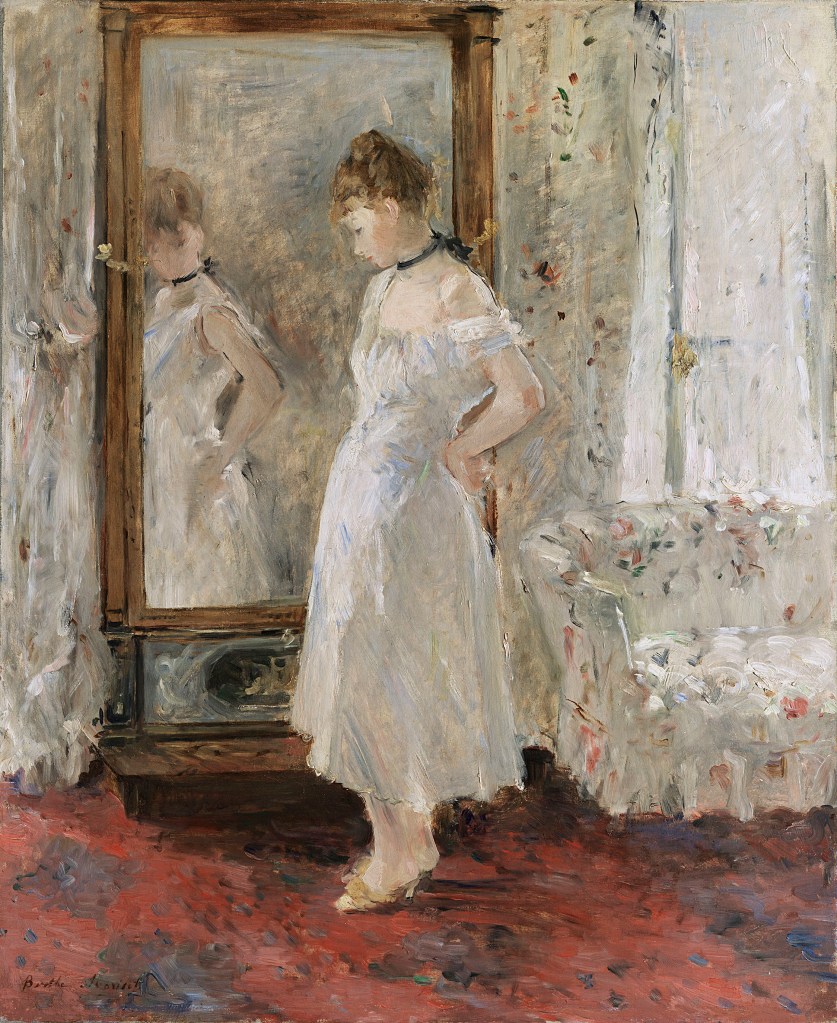
La Psyché, 1876 musée Thyssen-Bornemisza

Julie et son lévrier, 1893
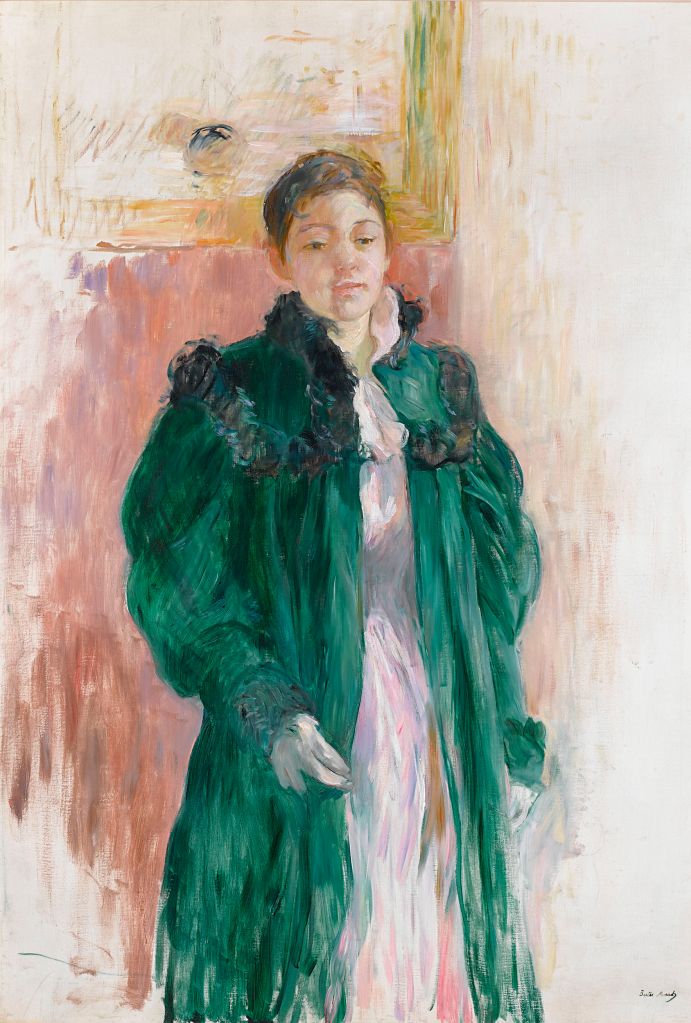
Jeune Fille au Manteau Vert, oil on canvas, c. 1894
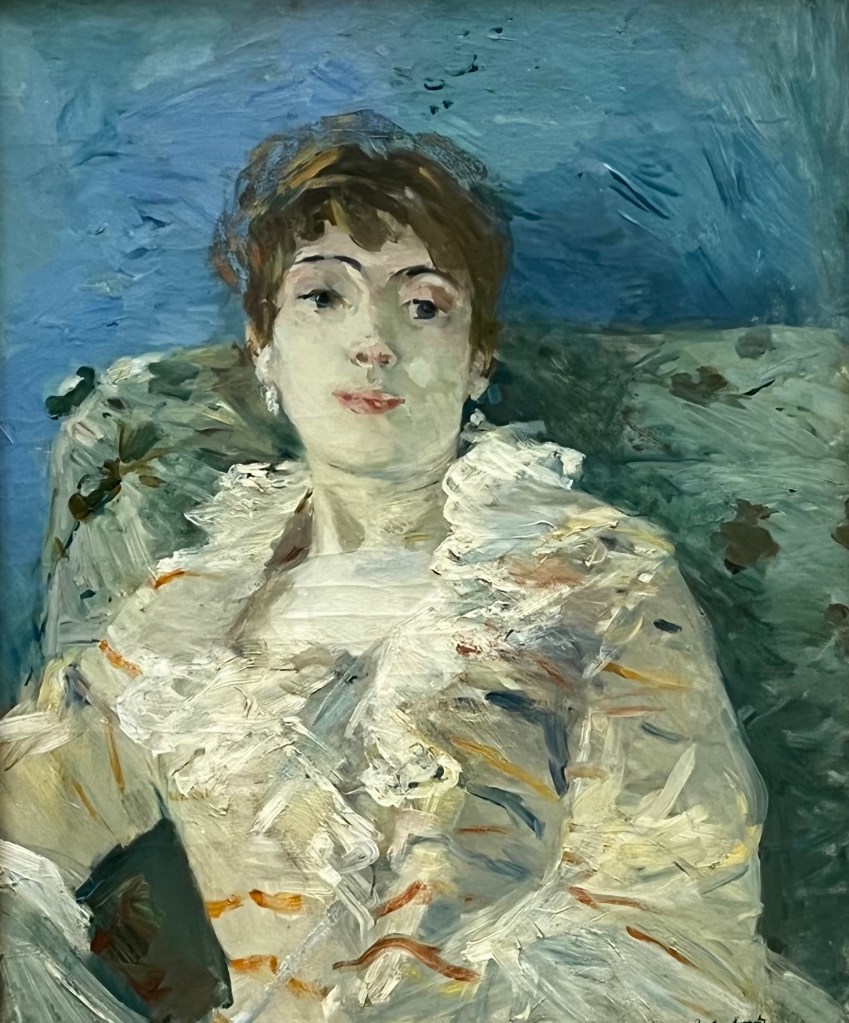
Girl on Divan, ca. 1885, National Gallery, London
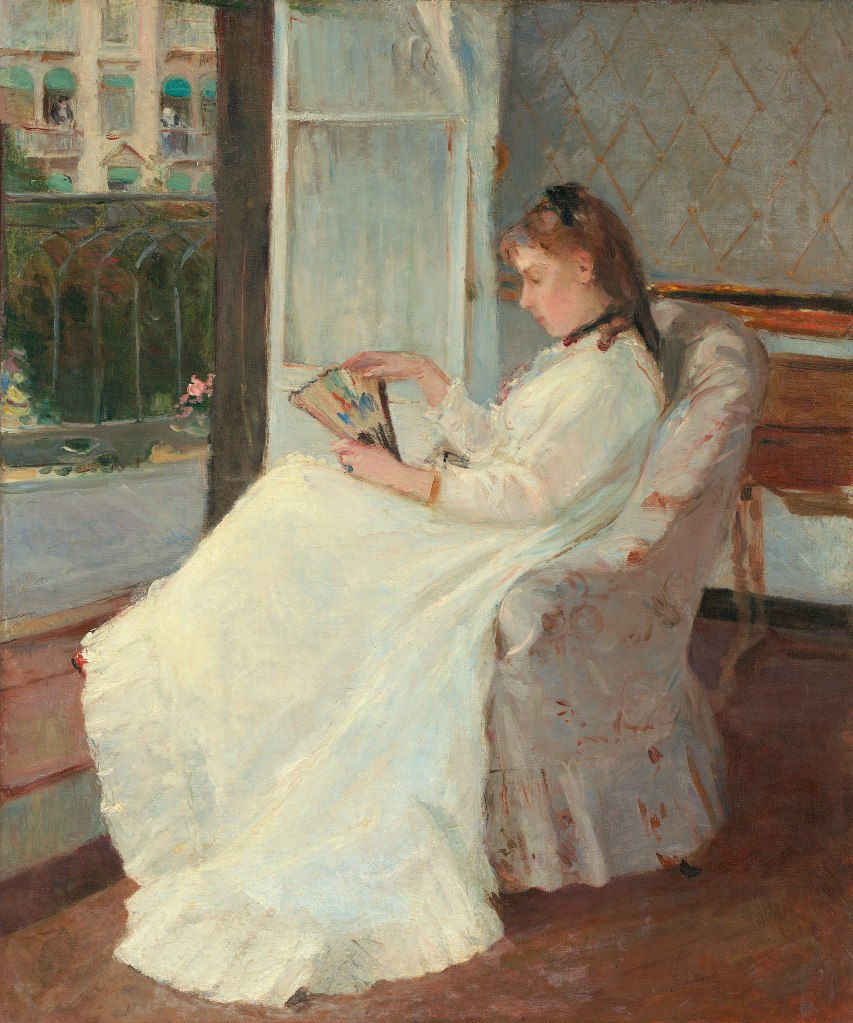
The Artist’s Sister at a Window, 1869, National Gallery of Art, Washington D.C.

The Sisters, 1869, National Gallery of Art, Washington D.C.
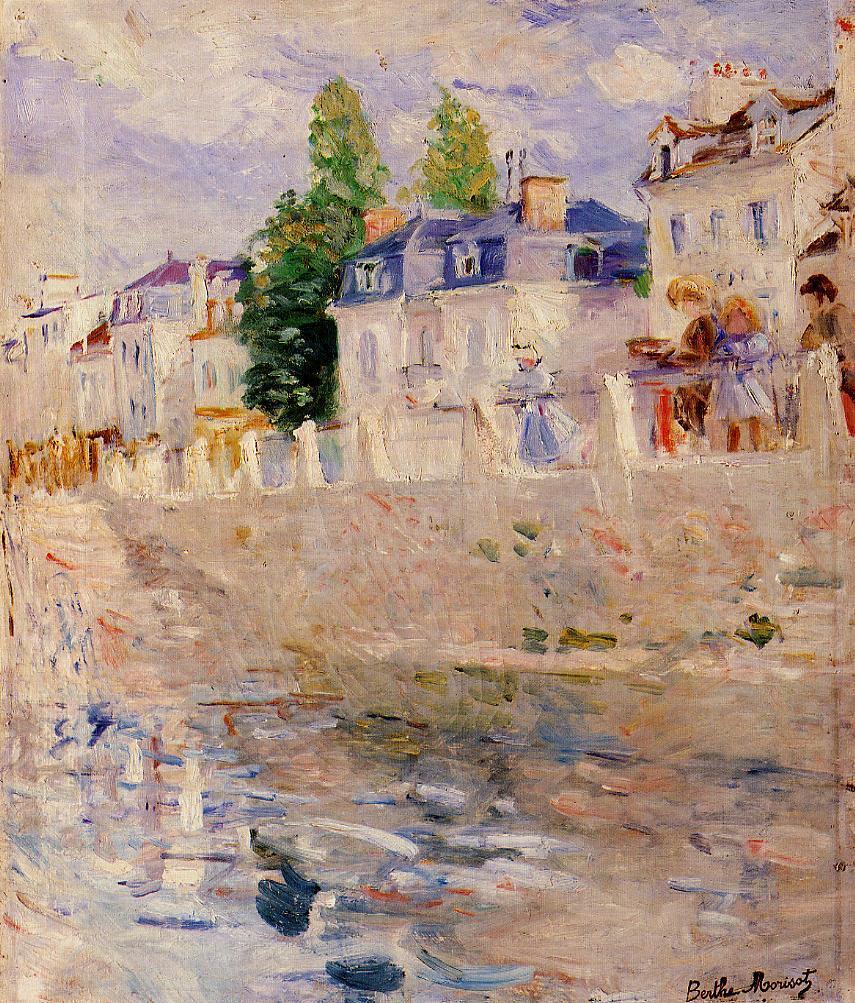
Bords de Seine, 1883, Galerie nationale d’Oslo
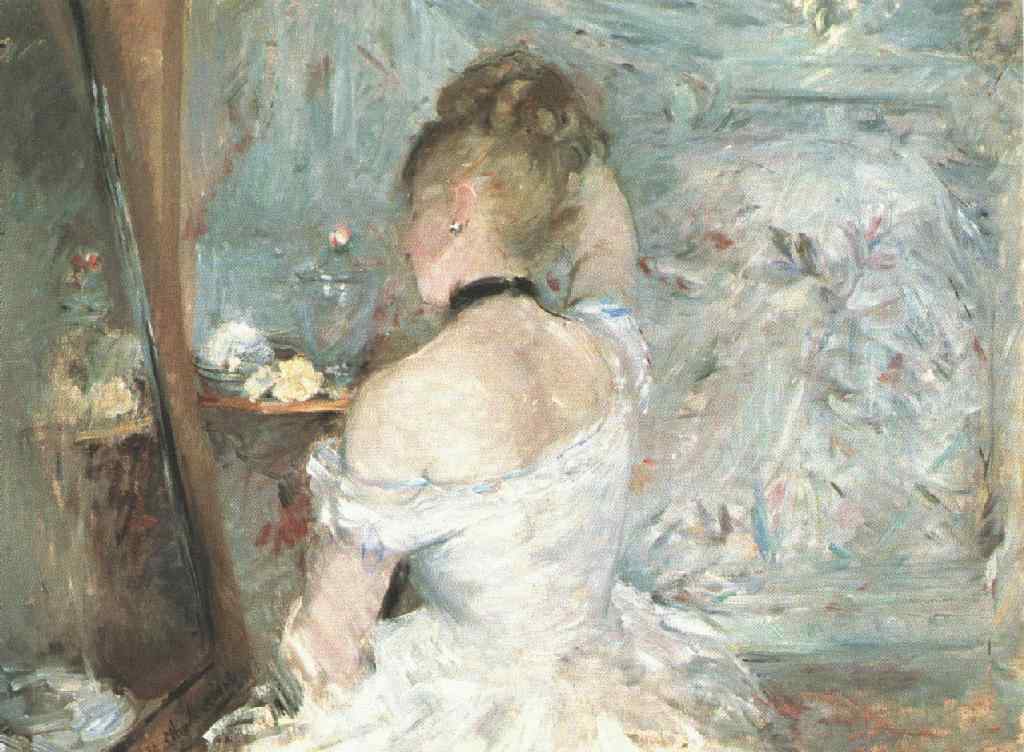
Femme à sa toilette, 1875
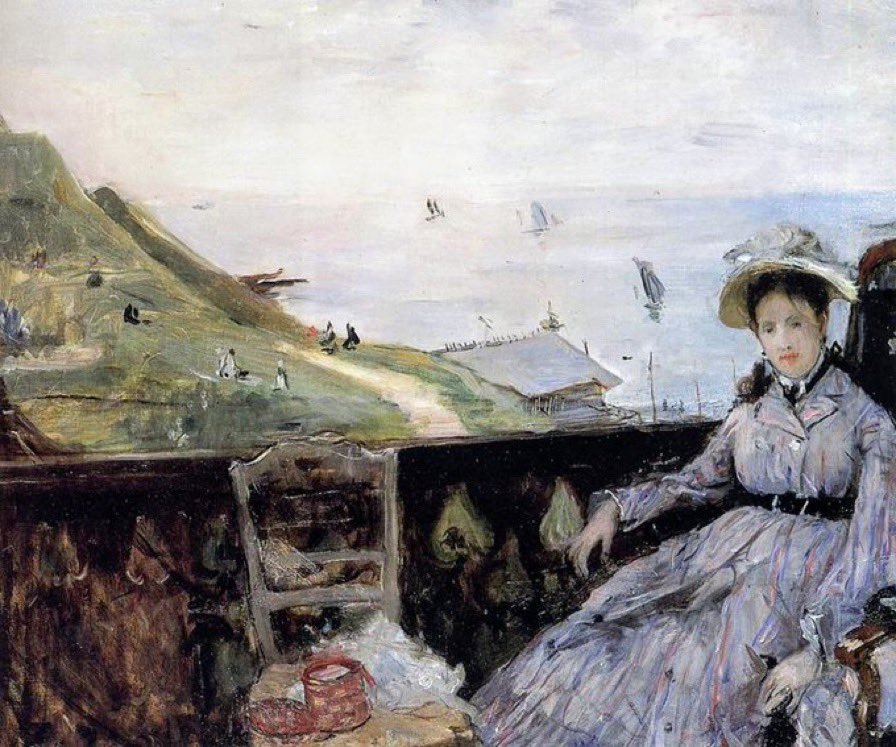

Edma Morisot lisant Berthe Morisot (1867) Cleveland Museum of Art

La Lecture (intitulé aussi : Madame Morisot et sa fille, Madame Pontillon) (1869-1870)
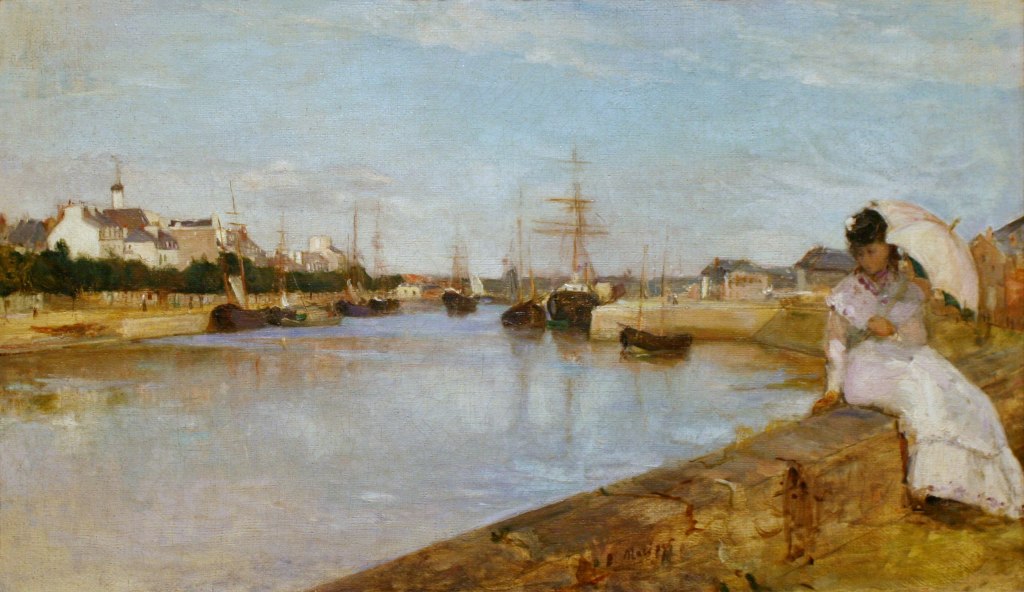
Vue du petit port de Lorient, 1869, par Berthe Morisot
 Jeune Femme se levant. 1886
 Avant le théâtre, 1875-76

Manet, Berthe Morisot with a Bouquet of Violets (in mourning for her father), 1872, Musée d’Orsay
 Hanging the Laundry out to Dry, 1875, National Gallery of Art
Portraits of Berthe Morisot
 Detail from The balcony by Édouard Manet, with the portrait of Berthe in the foreground. 1868.
 Berthe Morisot posing for The Rest. 1870. By Édouard Manet.
 Berthe Morisot on a divan couch, 1872, by Édouard Manet.
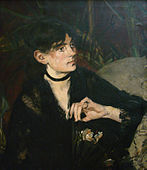 Portrait of Berthe Morisot with a Fan, 1874 by Manet.
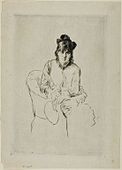 Portrait of Berthe Morisot, 1876, by Marcellin Desboutin
 Portrait of Berthe Morisot. 1882. By Manet
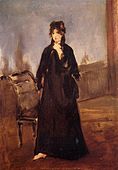 Berthe Morisot au soulier rose. 1872. By Manet. Hiroshima Museum of Art
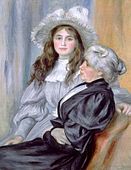 Berthe Morisot and her daughter Julie Manet, 1894, by Pierre-Auguste Renoir
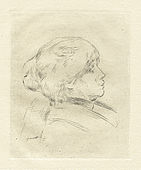 Berthe Morisot, 1892, by Renoir

And on this day in 1900, the premiere of Tosca, an opera in three acts by Giacomo Puccini to an Italian libretto by Luigi Illica and Giuseppe Giacosa. It premiered at the Teatro Costanzi in Rome. The work, based on Victorien Sardou’s 1887 French-language dramatic play, La Tosca, is a melodramatic piece set in Rome in June 1800, with the Kingdom of Naples’s control of Rome threatened by Napoleon’s invasion of Italy. It contains depictions of torture, murder, and suicide, as well as some of Puccini’s best-known lyrical arias.
Puccini saw Sardou’s play when it was touring Italy in 1889 and, after some vacillation, obtained the rights to turn the work into an opera in 1895. Turning the wordy French play into a succinct Italian opera took four years, during which the composer repeatedly argued with his librettists and publisher. Tosca premiered at a time of unrest in Rome, and its first performance was delayed for a day for fear of disturbances. Despite indifferent reviews from the critics, the opera was an immediate success with the public.
Musically, Tosca is structured as a through-composed work, with arias, recitative, choruses and other elements musically woven into a seamless whole. Puccini used Wagnerian leitmotifs to identify characters, objects and ideas. While critics have often dismissed the opera as a facile melodrama with confusions of plot, the power of its score and the inventiveness of its orchestration have been widely acknowledged. The dramatic force of Tosca and its characters continues to fascinate both performers and audiences, and the work remains one of the most frequently performed operas. Many recordings of the work have been issued, both of studio and live performances.
thanks for stoppin’ by y’all
Mac Tag
 The Lovers’ Chronicle
Leave a comment