
Dear Zazie, Here is today’s Lovers’ Chronicle™ from Mac Tag dedicated to his muse. Rhett
The Lovers’ Chronicle
Dear Muse,
i god 2023
“What a beautiful year”
it was, it began and ended
in Tallahassee together
the year took us from
Florida to Hilton Head,
Manhattan, New Orleans
and back to Florida
“And more adventures await in 2024”
right, and before we go, a nod to Burns,
“And we’ll take a right good-will draught”
for cheers to 2024 bébé
© copyright 2023 mac tag/cowboy coleridge all rights reserved
i god 2022 helluva year, began and ended (in Tallahassee again) where it should, physically, emotionally, creatively, romantically, every good kinda “ly” that can be thought of, a year of same but more, with, a connection growin’ deeper, more moments to add to, arrivals of pleasure with no departures, cheers bébé to another year
© copyright 2022.2023 mac tag/cowboy coleridge all rights reserved
i god 2021
what a year
begun in the arms of belongin’
with hope ridin’ shotgun
as the year progressed,
comin’ together, came
a gift, we gave each other
that opened and bloomed
and became what matters
now look where it ended
where it was meant to
© copyright 2021 mac tag/cowboy coleridge all rights reserved
Pale Love, Pale Rider
i god 2020
what a year
begun in the arms of belongin’
only to find that short lived
and how the hell
did you let that get to you
so disappointed in myself
but learnin’ is all
and then look
where it ended
perhaps where it should
have been all along
in the end is the beginnin’
© copyright 2020 mac tag/cowboy coleridge all rights reserved
i god 2019
what a year
i know where it started
still tryin’ to process
where it ended
as you know,
began without
holdin’ nothin’
but verse
and now,
here with you
nine and a half
years later
holdin’ you
what i waited for,
what i wanted
for so long
with you
i am amazed
© Copyright 2019 Mac tag/cowboy coleridge all rights reserved
i god, 2018
what a year
another
stressful one
it was the best
of times
it was the worst…
oh wait, that
has already
been written
it will go down,
for now anyway,
as the time
it was decided
that this
is the only
true way to be
it began
with a question
and ends
with an answer
if not you,
then this
***
2018
it was the best
of times
it was the worst…
oh wait, that
has already been written
helluva year
much have i told you,
much i have not
suffice to say,
i got by
thanks in part
to a lotta help
from my friends
“I get by
with a little help…”
thank you friends
may 2019
hold for you
all that you would have
© copyright 2018 mac tag/cowboy coleridge all rights reserved
i god, 2017
what a year
what i knew
would happen
finally did
only cost
one heart attack,
fourteen years,
and a lotta money
but it was worth it
to be where i should be
new year’s eve, alone
with the twilight zone
and champagne
Cheers, Santé,
Sláinte, Salute,
¡Salud!, Prosit,
to 2018,
to you
may the new year
be more
than we can dream
***
2017
ends in a better place
than it began
thanks in part
to a lotta help
from my friends,
new and old
“i git by
with a little help
from my friends”
thank you friends
© copyright 2017 mac tag/cowboy coleridge all rights reserved
i god, 2016
what a year
the stress finally
became too much
this cold, cold heart
tried to stop beatin’
i know, i know,
some thought
i had not a heart
thankful to still
be here, but so
is the stress
hopeful i will
be writin’ to you
this time next year
© copyright 2016 mac tag/cowboy coleridge all rights reserved
The letters he wrote to her,
his only remedy to keep
from goin’ mad or waistin’ of regret…
He took the course
of least resistance
Puttin’ himself in a position
where he need no longer go
without any necessities of life
Just what those necessities were
for him, no one could judge….
No one could understand
how an intimacy
could exist between him
and the woman in Wyoming
He a man of known character,
her strong in her commitment
to her way of life,
her land and livestock,
he attracted to every kind
of impermanence
But then he met Jolie
A woman of beauty,
intelligence, and culture
Of her he said,
those who believe that a woman
is incapable of makin’ a man
equally happy all the twenty-four
hours of the day have never
known a Jolie
She turned him on
to opera and French poetry
He turned her on
to campfires and first light
No woman so captivated
him as she did
Only one other obtained
so deep an understandin’ of him
She penetrated his outward
shell early on in their relationship
But Jolie resisted the temptation
to join her destiny with his
She came to discern
his wanderin’ nature,
and the precariousness
of his feelin’s
Before leavin’,
she slipped a letter into his pocket
He would not speak of what it said
Crestfallen, despondent,
he returned to Wyoming,
to the woman
who waited patiently for him
She welcomed him
knowin’ full well
he would wander again
And so it was,
after a lucky gamblin’ streak,
he recovered
and set off for a tour of France,
and Italy
Along the way,
from one town, from one heart,
to another,
he engaged in sexual escapades
resemblin’ operatic plots
He settled in Venice,
learned the language,
and wrote verse
and letters to the one
he came to understand,
he should return to
© copyright 2016 mac tag/cowboy Coleridge all rights reserved
I would ask the question
But I know the answer
And I do not give a damn
Remember
© copyright 2016 mac tag/cowboy Coleridge all rights reserved
I remember the first
final denouement,
runnin’ away,
nothin’ could match
my haste. All my gear
fit into my pickup
I had read Manon Lescaut,
La Dame aux camellias,
I knew what I was doin’
She had taught me well
there was no cryin’
I suffer a diminished
capacity to emote
At the border,
starin’ into the desert,
into the immensity
She found me,
offered me a way
Given the least kindness;
I am easily led
© copyright 2015 mac tag/cowboy Coleridge all rights reserved
The pages turn
Another year
Burned. Another
Year of gettin’
By. Of holdin’
Back and chokin’
Back the what ifs
Another year
Without within
***
Doctor, doctor
Gimme the news
‘Tis true, I have
Relationship
ADHD
***
Him: I hate bein’ married
Her: Then why do you keep doin’ it?
Him: Because I am not just a fool but a damn fool!
© copyright 2014 mac tag/cowboy Coleridge all rights reserved

On this day in 1759 – Arthur Guinness signs a 9,000 year lease at £45 per annum and starts brewing Guinness. Raise a glass to our favorite beer!
Today is the birthday of Marie Catherine Sophie, Comtesse d’Agoult (Frankfurt am Main, Germany 31 December 1805 – 5 March 1876 Paris); romantic author, known also by her pen name, Daniel Stern.

(1843), painting by Henri Lehmann.
She entered into an early marriage of convenience with Charles Louis Constant d’Agoult, Comte d’Agoult (1790–1875) on 16 May 1827, thereby becoming the Comtesse d’Agoult. They were divorced on 19 August 1835.
From 1835 to 1839, she lived with virtuoso pianist and composer Franz Liszt, who was six years younger, and was then a rising concert star. She became close to Liszt’s circle of friends, including Frédéric Chopin, who dedicated his 12 Études, Op. 25 to her. D’Agoult had three children with Liszt; however, she and Liszt did not marry, maintaining their independent views and other differences while Liszt was busy composing and touring throughout Europe.
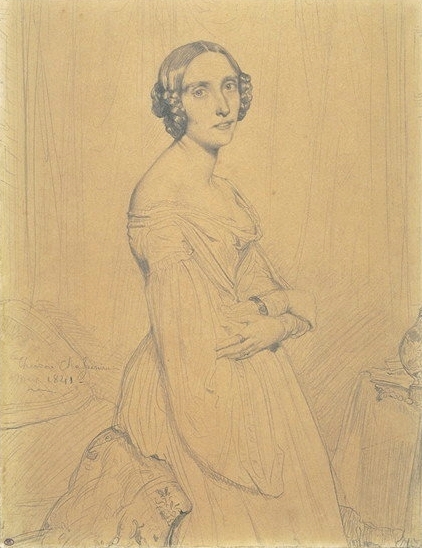
Portrait de d’Agoult par Théodore Chassériau (Musée du Louvre)
She died aged 70, and was buried in Division 54 of Père Lachaise Cemetery.
She was portrayed by Geneviève Page in the 1960 film Song Without End, opposite Dirk Bogarde as Liszt; by Klara Luchko in the 1970 film Szerelmi álmok – Liszt, by Fiona Lewis; in the 1975 Ken Russell film Lisztomania, opposite Roger Daltrey as Liszt; and by Bernadette Peters in the 1991 James Lapine film Impromptu, which last dramatized encounters between d’Agoult, Liszt (Julian Sands), Chopin (Hugh Grant), and George Sand (Judy Davis).
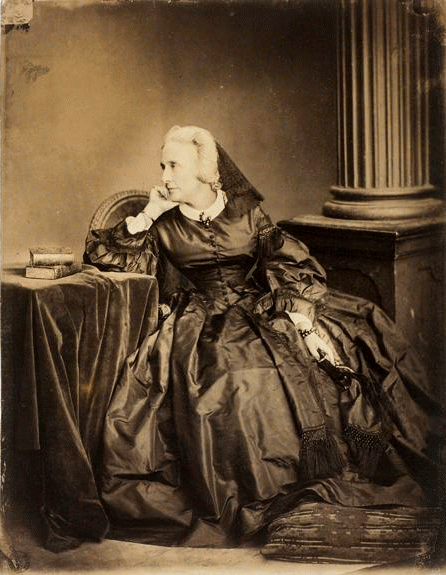
d’Agoult in 1861. Photo by Adam-Salomon
Her first stories (Hervé, Julien, and Valentia) were published in 1841-1845. Perhaps her best-known work (written as “Daniel Stern”) is the Histoire de la révolution de 1848 (appearing from 1850–53, in 3 volumes). D’Agoult’s other works include the novel Nélida (1846), Lettres Républicaines in Esquisses morales et politiques (1849, collected articles), Trois journées de la vie de Marie Stuart (1856), Florence et Turin (1862), Histoire des commencements de la république aux Pays-Bas (1872), “A Catholic Mother Speaks to Her Children” (1906, posthumously), and Mes souvenirs (1877, posthumously).
Today is the birthday of Alexander Smith (Kilmarnock, East Ayrshire, Scotland 31 December 1830 – 5 January 1867 Edinburgh); poet, labelled as one of the Spasmodic School, and essayist.

Portrait head of Smith on his grave, Warriston Cemetery, Edinburgh
On 24 April 1857 Smith married Flora Macdonald (1829/30–1873) at Ord House on the Isle of Skye. The couple had to return to Edinburgh soon after the wedding (via a steamer trip to Oban), but it was to Skye that they would return every August for the nine remaining years of the poet’s life. These visits, as well as providing the raw material for his best-known work, were to prove essential to sustaining his creativity.
Verse
- We hear the wail of the remorseful winds
In their strange penance. And this wretched orb
Knows not the taste of rest; a maniac world,
Homeless and sobbing through the deep she goes. - Unrest and Childhood.
- The soul of man is like the rolling world,
One half in day, the other dipt in night;
The one has music and the flying cloud,
The other, silence and the wakeful stars. - Horton.
- Time has fallen asleep in the afternoon sunshine.
- Dreamthorp: Essays written in the Country (1863).
- The man who in this world can keep the whiteness of his soul is not likely to lose it in any other.
- Dreamthorp: Essays written in the Country (1863).
A Life Drama and other Poems (1853)
- Like a pale martyr in his shirt of fire.
- Scene 2.
- In winter, when the dismal rain
Comes down in slanting lines,
And Wind, that grand old harper, smote
His thunder-harp of pines. - Scene 2.
- A poem round and perfect as a star.
- Scene 2.
- Some books are drenchèd sands
On which a great soul’s wealth lies all in heaps,
Like a wrecked argosy. - Scene 2.
- The saddest thing that befalls a soul
Is when it loses faith in God and woman. - Scene 12.
- We twain have met like the ships upon the sea,
Who hold an hour’s converse, so short, so sweet;
One little hour! And then, away they speed
On lonely paths, through mist and cloud and foam,
To meet no more. - Part iv.
City Poems (1857)
- Each time we love,
We turn a nearer and a broader mark
To that keen archer, Sorrow, and he strikes. - “A Boy’s Dream”.
- Death is the ugly fact which Nature has to hide, and she hides it well.
- “The Fear of Dying”.
- Everything is sweetened by risk.
- “The Fear of Dying”.
- In life there is nothing more unexpected and surprising than the arrivals and departures of pleasure. If we find it in one place to-day, it is vain to seek it there to-morrow. You can not lay a trap for it.
- “The Fear of Dying”.
| Giovanni Boldini | |
|---|---|
 | |
Today is the birthday of Giovanni Boldini (Ferrara, Italy 31 December 1842 – 11 July 1931 Paris); genre and portrait painter who lived and worked in Paris for most of his career. According to a 1933 article in Time magazine, he was known as the “Master of Swish” because of his flowing style of painting.
A Boldini portrait of his former muse Marthe de Florian, a French actress, was discovered in a Paris flat in late 2010, hidden away from view on the premises that were unvisited for 70 years. The portrait has never been listed, exhibited or published and the flat belonged to de Florian’s granddaughter who went to live in the South of France at the outbreak of the Second World War and never returned. A love-note and a biographical reference to the work painted in 1888, when the actress was 24, proved its authenticity. A full-length portrait of the lady in the same clothing and accessories, but less provocative, hangs in the New Orleans Museum of Art. The discovery of this painting forms the background to Michelle Gable’s 2014 novel A Paris Apartment.

Self-portrait at Montorsoli, (1892), Florence, Uffizi Gallery, Vasari Corridor
Gallery

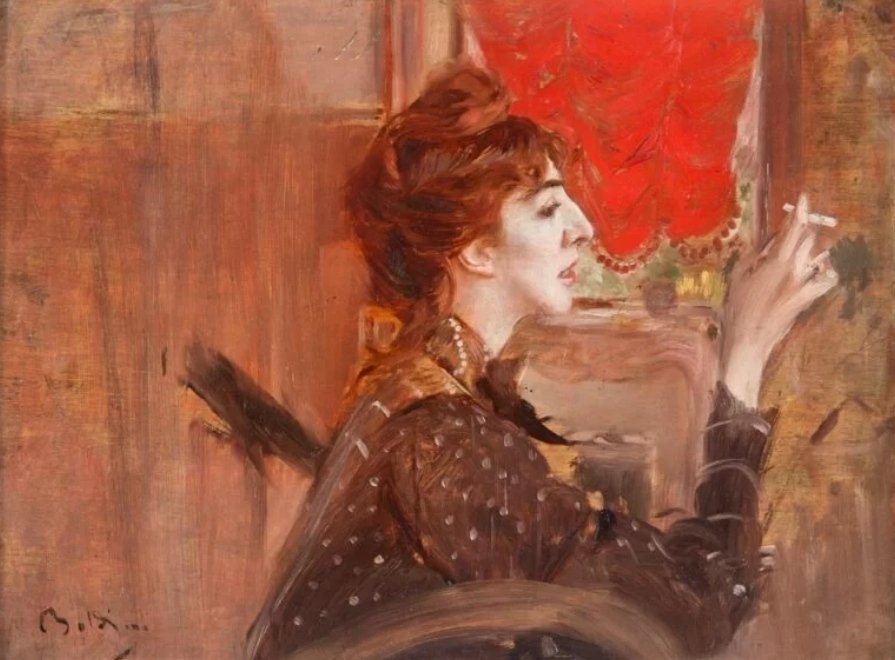
La tenda rossa, 1904

Portrait of a Lady Lina Bilitis with two Pekinese

Marthe, Princess Bibesco (28 January 1886 – 28 November 1973) Painting (1911)

Portrait of Lucie Gérard, circa 1890. Pastel on canvas
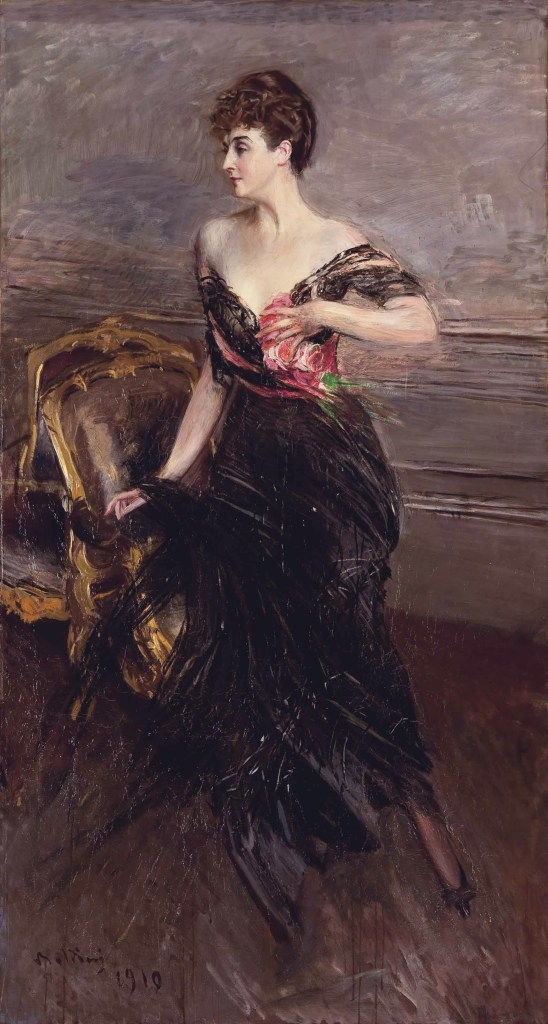
Portrait of the Princess Cécile Murat, Ney d’Elchingen, 1910

La marchesa Luisa Casati con un levriero (1908), olio su tela

Luisa Casati, nata Luisa Adele Rosa Maria Amman (Milano, 23 gennaio 1881 – Londra, 1º giugno 1957), è stata una nobildonna e collezionista d’arte italiana. Reclinabile Nudo
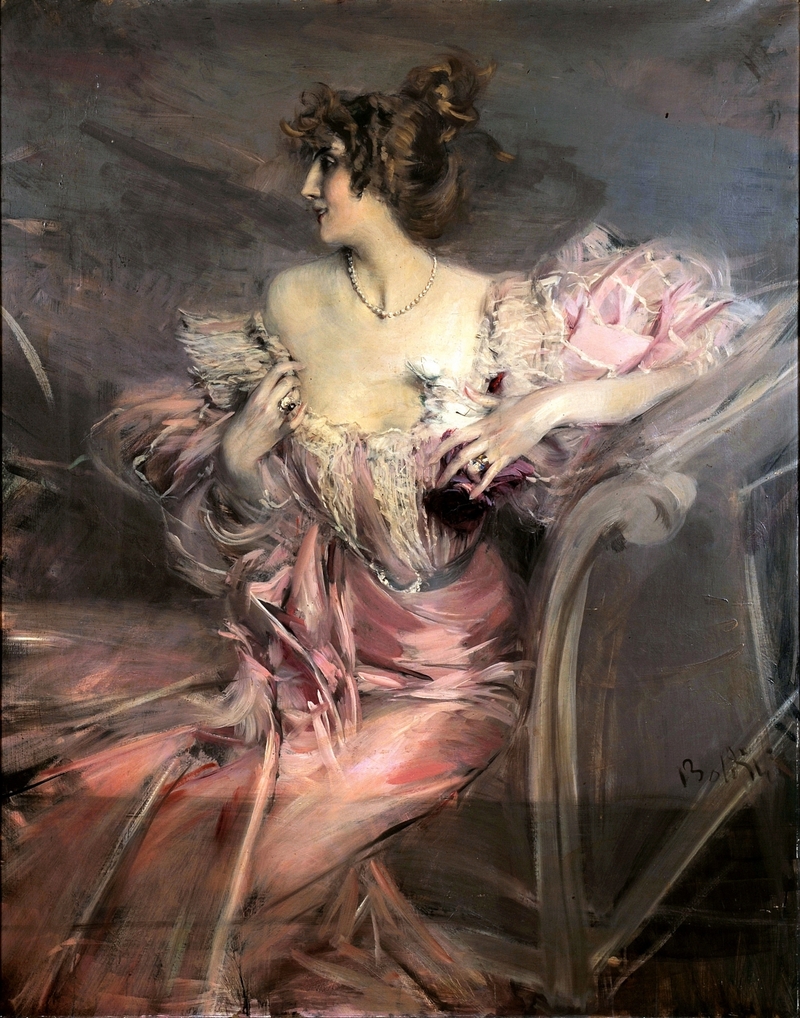
Portrait of the actress Marthe de Florian

Lina Cavalieri (25 December 1874 – 7 February 1944) Italian operatic soprano

Ritratto di donna Franca Florio (1924), 221×119 cm

Portrait of Rita de Acosta Lydig, 1911

Portrait of Anita de la Ferie (the Spanish Dancer), 1900

Ritratto di Elizabeth Wharton Drexel, 1905, olio su tela, 219 × 120 cm, The Elms (Preservation Society of Newport), Newport, Rhode Island, U.S.
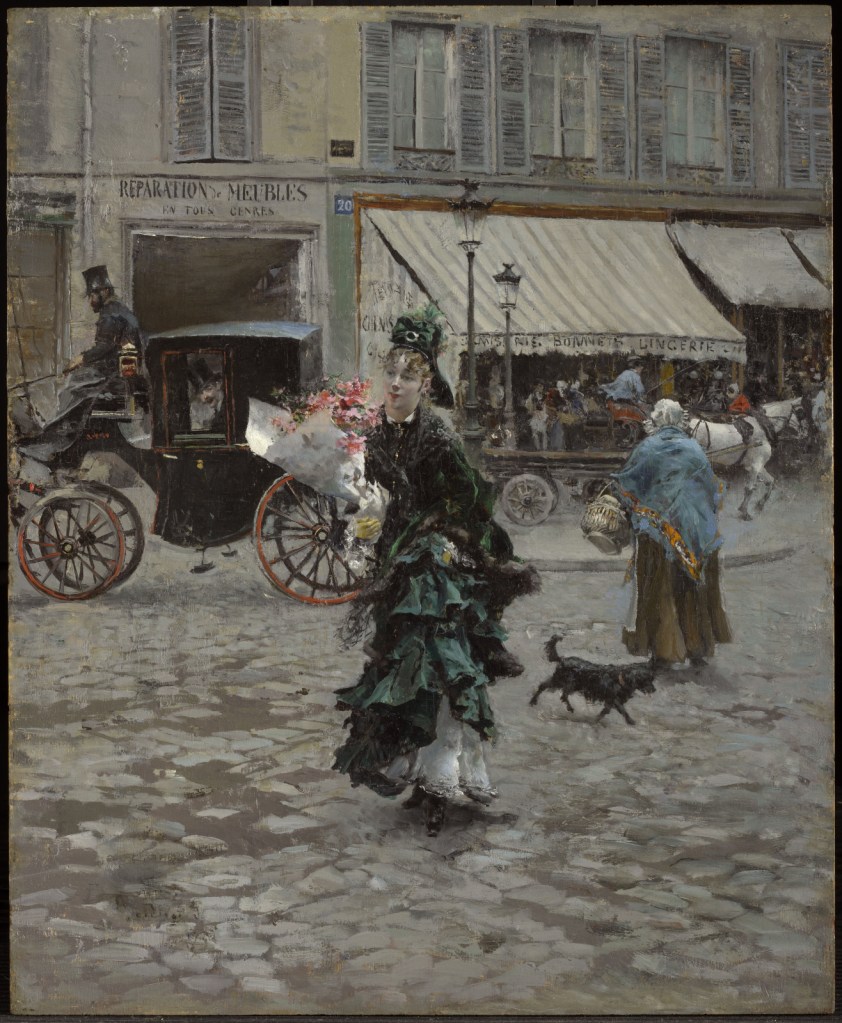
Attraversando la strada (1875); olio su tela, 46×37,5 cm, Clark Institute, Williamstown, Massachusetts
Today is the birthday of Giovanni Pascoli (Giovanni Placido Agostino Pascoli; San Mauro Pascoli, Italy; December 31, 1855 – April 6, 1912 Bologna); poet, classical scholar and an emblematic figure of Italian literature in the late nineteenth century. Alongside Gabriele D’Annunzio, he was one of the greatest Italian decadent poets.

Immagine da Poesie varie, Bologna, 1914
Ed ella avvolse l’uomo nella nube
dei suoi capelli; ed ululò sul flutto
sterile, dove non l’udia nessuno:
– Non esser mai! non esser mai! più nulla,
ma meno morte, che non esser più! –
Io vedo (come è questo giorno, oscuro!),
vedo nel cuore, vedo un camposanto
con un fosco cipresso alto sul muro.
E quel cipresso fumido si scaglia
allo scirocco: a ora a ora in pianto
sciogliesi l’infinita nuvolaglia.
| Henri Matisse | |
|---|---|
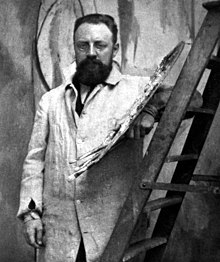 | |
And today is the birthday of Henri Matisse (Henri-Émile-Benoît Matisse; Le Cateau-Cambrésis, Nord, France; 31 December 1869 – 3 November 1954 Nice); artist, known for both his use of colour and his fluid and original draughtsmanship. He was a draughtsman, printmaker, and sculptor, but is known primarily as a painter.
Matisse is commonly regarded, along with Pablo Picasso and Marcel Duchamp, as one of the three artists who helped to define the revolutionary developments in the plastic arts throughout the opening decades of the twentieth century, responsible for significant developments in painting and sculpture. Although he was initially labelled a Fauve (wild beast), by the 1920s he was increasingly hailed as an upholder of the classical tradition in French painting. His mastery of the expressive language of colour and drawing, displayed in a body of work spanning over a half-century, won him recognition as a leading figure in modern art.
With the model Caroline Joblau, he had a daughter, born in 1894. In 1898 he married Amélie Noellie Parayre.
Matisse’s wife Amélie, who suspected that he was having an affair with her young Russian emigre companion, Lydia Delectorskaya, ended their 41-year marriage in July, 1939, dividing their possessions equally between them. Delectorskaya attempted suicide by shooting herself in the chest. She survived with no serious after-effects, and instead returned to the now-single Matisse and worked with him for the rest of his life, running his household, paying the bills, typing his correspondence, keeping records, assisting in the studio and coordinating his business affairs.
In 1941, a nursing student named Monique Bourgeois responded to an ad placed by Matisse for a nurse. A friendship developed between Matisse and Bourgeois. He discovered that she was an amateur artist, and taught her about perspective. After Bourgeois left the position to join a convent in 1944, Matisse sometimes contacted her to request that she model for him. Bourgeois became a Dominican nun in 1946, and Matisse painted a chapel in Vence, a small town he moved to in 1943, in her honor.
Matisse died of a heart attack at the age of 84. He is interred in the cemetery of the Monastère Notre Dame de Cimiez, near Nice.

Henri and Amélie Matisse, 1898
Gallery

Woman with a Hat, 1905. San Francisco Museum of Modern Art

Les trois baigneuses (Three Bathers), 1907, Minneapolis Institute of Art, Minneapolis

Bathers with a Turtle, 1908, Saint Louis Art Museum, St. Louis

La Danse (first version), 1909, Museum of Modern Art, New York City

La Danse (second version), 1910, Hermitage Museum, St. Petersburg, Russia

Still Life with Dance, 1909, Hermitage Museum, St. Petersburg, Russia

Les Capucines (Nasturtiums with The Dance II), 1910–12, Pushkin Museum, Moscow, Russia

Blue Nude, 1907, Baltimore Museum of Art, Baltimore, Maryland

Etude d’un nu, 1899, Bridgestone Museum of Art, Tokyo

Le Luxe II, 1907–08, Statens Museum for Kunst, Copenhagen, Denmark

Gustave Moreau’s Studio, 1894-1895

Nu (Carmelita), 1904, Museum of Fine Arts, Boston

La coiffure, 1907, Staatsgalerie Stuttgart, Stuttgart, Germany

Odalisque, 1920–21, oil on canvas, 61.4 x 74.4 cm, Stedelijk Museum

Studio, Quad Saint Michel, 1916, The Phillips Collection
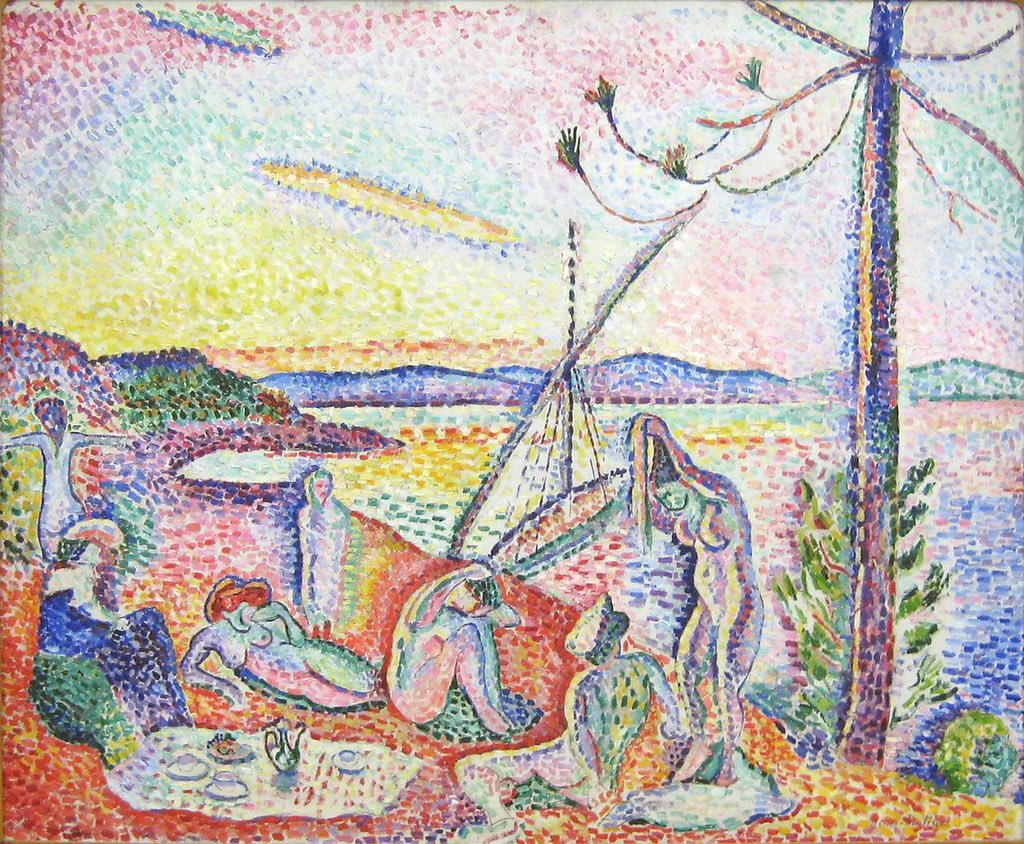
Luxe, Calme et Volupté, 1904, Musée d’Orsay, Paris, France
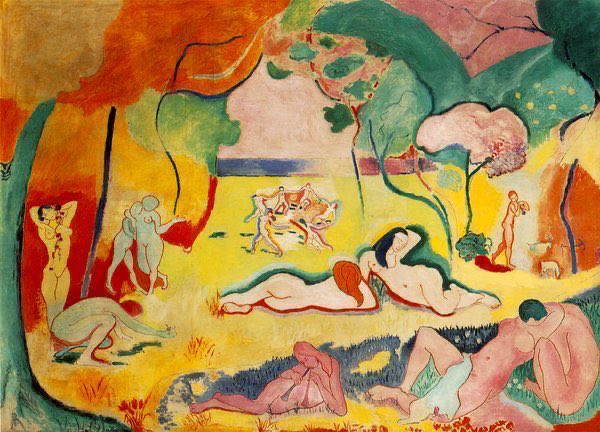
Le bonheur de vivre, 1905–6, Barnes Foundation

The Conversation, c. 1911, The Hermitage, St. Petersburg, Russia
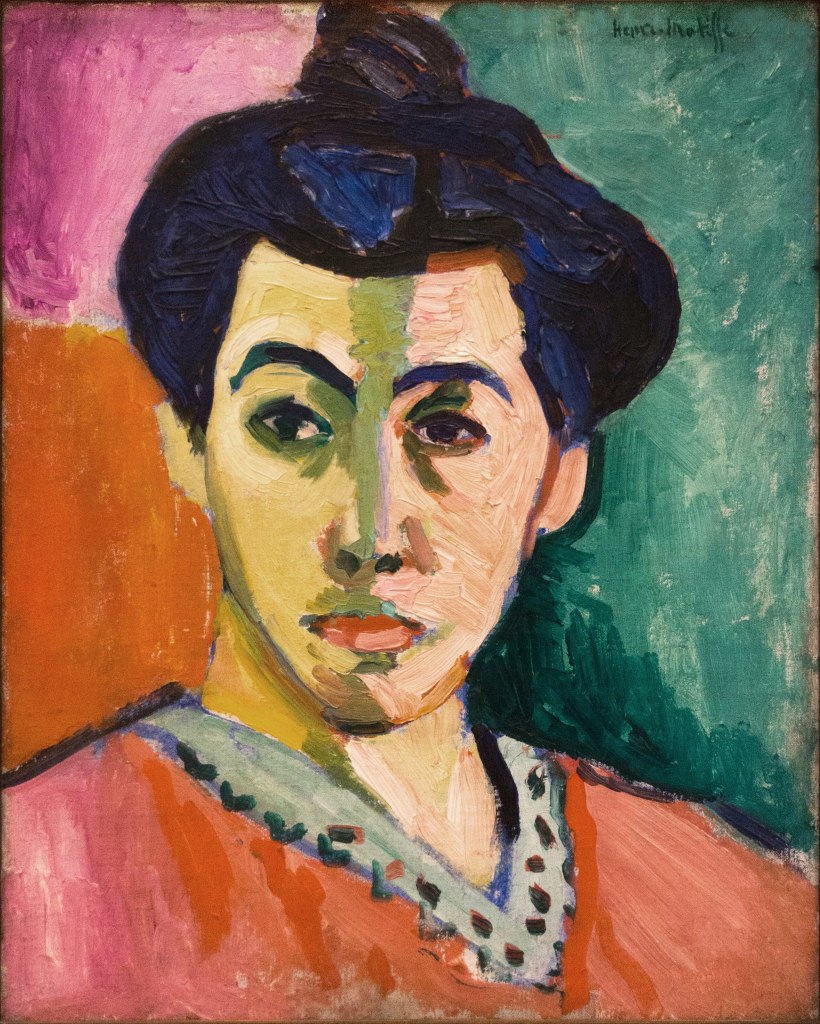
Portrait of Madame Matisse (The green line), 1905, Statens Museum for Kunst, Copenhagen, Denmark
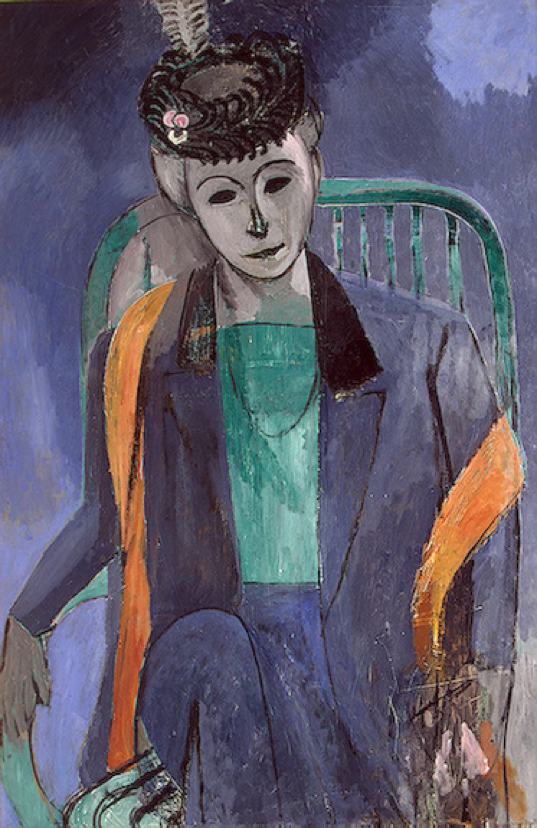
Portrait of the Artist’s Wife, 1913, Hermitage Museum, Saint Petersburg

Madras Rouge, The Red Turban, 1907, Barnes Foundation, Philadelphia, Pennsylvania
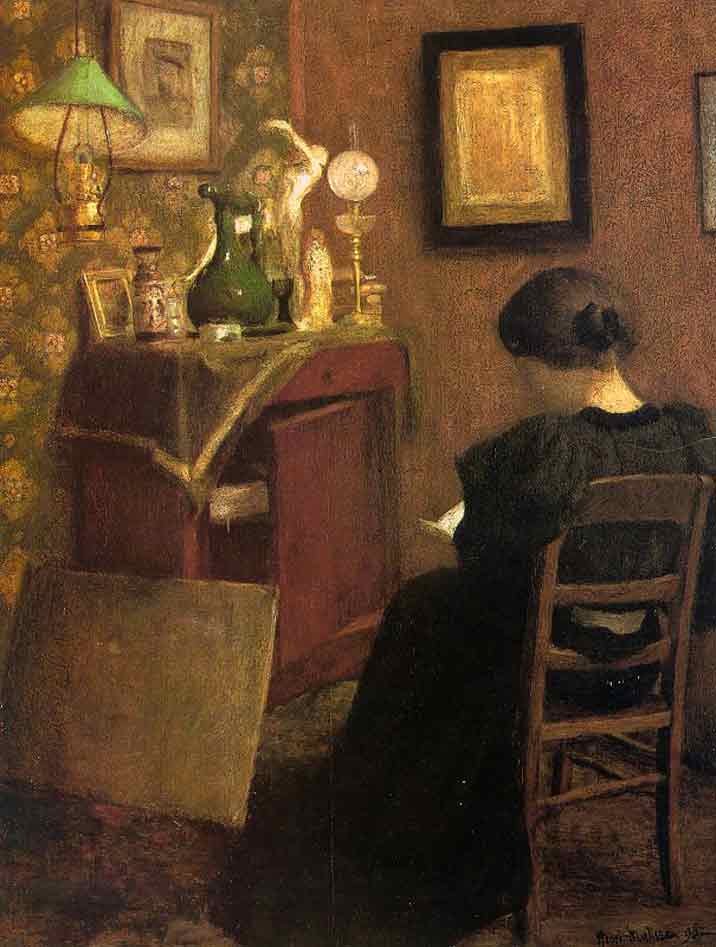
Woman Reading (La Liseuse), 1895, oil on board, 61.5 x 48 cm, Le Cateau-Cambrésis, Musée Matisse
Thanks for stoppin’ by y’all
Mac Tag
 The Lovers’ Chronicle
Leave a reply to The Lovers’ Chronicle 2 November – still you – art by Jean Siméon Chardin & James Lesesne Wells – Lady Chatterley’s Lover – The Lovers’ Chronicle Cancel reply