Dear Zazie, Today’s Lovers’ Chronicle from Mac Tag dedicated to his muse. Are these days halcyon days for you? Qui est ta vie? Rhett
The Lovers’ Chronicle
Dear Muse,
an obvious choice of song today,
La Môme and her song “La vie en rose”
“Of course, beautiful song”
the lyrics, written by Piaf, translate
literally as “life in pink” but perhaps figuratively
as “life seen through rose-coloured glasses”
ironic the song was her biggest hit
and she definitely needed a rosy view
“One of the beautifully sad stories you love”
absolutely, lets close this as Édith sings us out,
“C’est toi pour moi, moi pour toi dans la vie”
© copyright 2023 mac tag/cowboy coleridge all rights reserved
“non regrette rien / non, je ne regrette rien”, pre-you everytime i heard that song i would have an Inception moment and think, yes, here comes the kick to git me out of this damn dream, alas no, but as written before, there are no regrets, only that i never learned to play an instrument or to sing, (the caterwaulin’ i do to heavy rock and old country songs does not count), and now when i hear the first notes i think, i would do it all again to git to you
© copyright 2022.2023 mac tag/cowboy coleridge all rights reserved
non regrette rien
non, je ne regrette rien…
nope, still no regrets
everything had to happen the way it did
to git to where i could write everyday
and it all had to go down exactly
the way it did to git to you
i do have some related to art and music
but we will save those for another day
lets turn it over to La Môme,
“Car ma vie, car mes joies
Aujourd’hui, ça commence avec toi”
© copyright 2021.2023 mac tag/cowboy coleridge all rights reserved
Pale Love, Pale Rider
non, je ne regrette rien…
keeps echoin’ about
no longer waitin’
to be taken back
the pull of solitude
and routine are strong
but the effort is worth it
to find again
the past is paid
and swept away,
startin’ over happens
ma vie, mes joies
begins with you
© copyright 2020 mac tag/cowboy coleridge all rights reserved
non regrette rien
non, je ne regrette rien…
are you kiddin’
no, i regret nothin
everything had to happen
the high times, the low
the wonder, the heartache,
all of it, just as it came
it had to unfold
just as it did,
for me to get here
© copyright 2019 mac tag/cowboy coleridge all rights reserved
comfort
to live in belief,
the conviction
of a full woman
reveal the past
the present wish
capriciously flung
into the light
this is sorrow
and beauty
now i know
what i created
non, je ne regrette rien
© copyright 2018 mac tag/cowboy coleridge all rights reserved
tired pale blue eyes, open
sleep evades again
without
non, rien de rien, non…
keeps echoin’
about
waitin’ for a dream
to take me
back
to halcyon days
such a dang struggle
tryin’ to figure
without
je ne regrette rien…
hits all the notes
of doubt
the pull of solitude
and routine
so strong
would the effort even
be worth it
to find
halcyon days again
a lifetime, maybe more
learnin’ to live
without
non, je ne regrette rien…
louder now, within
and out
can the past be paid
and swept away,
forgotten
does startin’ over
ever happen
could
ma vie, mes joies
really begin
with you
© copyright 2017 mac tag/cowboy coleridge all rights reserved
Rememberin’ …
So much pain in leavin’
Desperately sayin’ goodbye
***
“I wouldn’t go as far
as calling you
a cold-hearted bastard.”
Oh no, please do
Flattery will git you
whatever you want
***
Thought it would kill me
Obviously, I had done
somethin’ wrong
It did not seem
so bad at the time
and it was so
convenient
How was I to know
© copyright 2015 mac tag/cowboy coleridge all rights reserved
On the bright side:
Each day I get
To quote Shakespeare;
“Once more unto
The breach, dear friends.”
More on the bright
Side: Every day
I get to quote;
“Cry havoc! And
Let slip the dogs
Of war.” Shakespeare
***
“Your sins they are
Terrible, it
Is just that you
suffer. Your life
Could be redeemed,
But I know you
Do not believe.
You will not change.”
© copyright 2014 mac tag/cowboy coleridge all rights reserved
Halycon Days, Reprise
These tired pale blue eyes, still open
How can I sleep without you here
Were I with you all night I could,
From need be free and never want
Without you, alone I must be
Unless you join me, in my dreams
Then the days we had, can go on and on
Halcyon days never endin’
You shall find wherever you go
Me all the while attendin’
To the memories of those days
Inspired in oh, so many ways
These words, this vision, this desire
Dream with me so that we may cling
To those days we had long ago
For without ’em, without those days,
We will always want for meanin’
Nothin’ lost that cannot be caught
Life without loss, livin’ for dreams
Halcyon days never endin’
You shall find wherever you go
Me all the while attendin’
To the true meanin’ of those days
So please come away, come on darlin’
In those days, this dream let us stay
Time’s holiday, we can make it
Not thrown away, sacred to hold
Convince you to stay, how can I
Now, with me today, you will come
We can find the right way, tell me
So come away, come on darlin’
Halcyon days never endin’
You shall find wherever you go
Me all the while attendin’
To the days we had together
© copyright 2012 mac tag/Cowboy Coleridge all rights reserved
The SOD, really? Non, je ne regrette rien by Edith Piaf. we do not own the rights to this recording.
Today is the birthday of Fitz Henry Lane (born Nathaniel Rogers Lane; also formerly, mistakenly, known as Fitz Hugh Lane; Gloucester, Massachusetts; December 19, 1804 – August 14, 1865 Duncan’s Point, Gloucester); painter and printmaker of a style that would later be called Luminism, for its use of pervasive light.
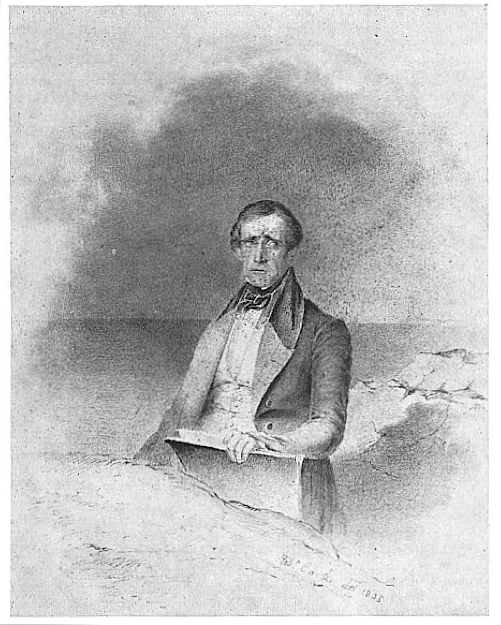
Portrait by Robert Cooke, 1835 (Courtesy of American Antiquarian Society)
A contemporary of the Hudson River School, he enjoyed a reputation as America’s premier painter of marine subjects during his lifetime, but fell into obscurity soon after his death with the rise of French Impressionism. Lane’s work would be rediscovered in the 1930s by the art collector Maxim Karolik, after which his art steadily grew in popularity among private collectors and public institutions.
The largest collection of his work is currently held by the Wallace Family of Boston, Massachusetts where his work is on display throughout their family offices, private homes, and estates.
Gallery

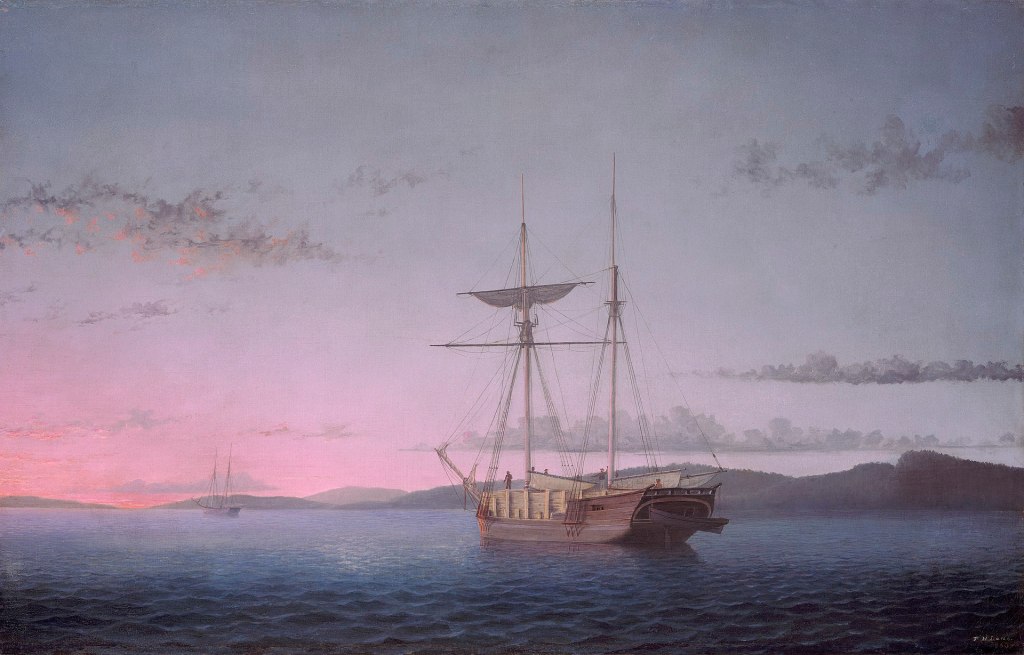
Lumber Schooners at Evening on Penobscot Bay, 1863. National Gallery of Art
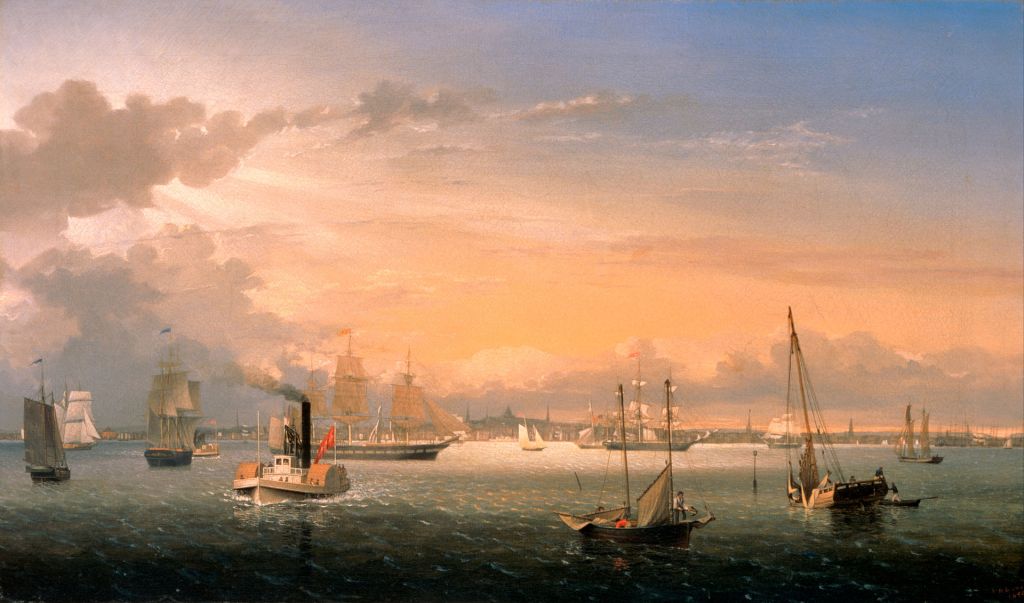
Boston Harbor, 1854
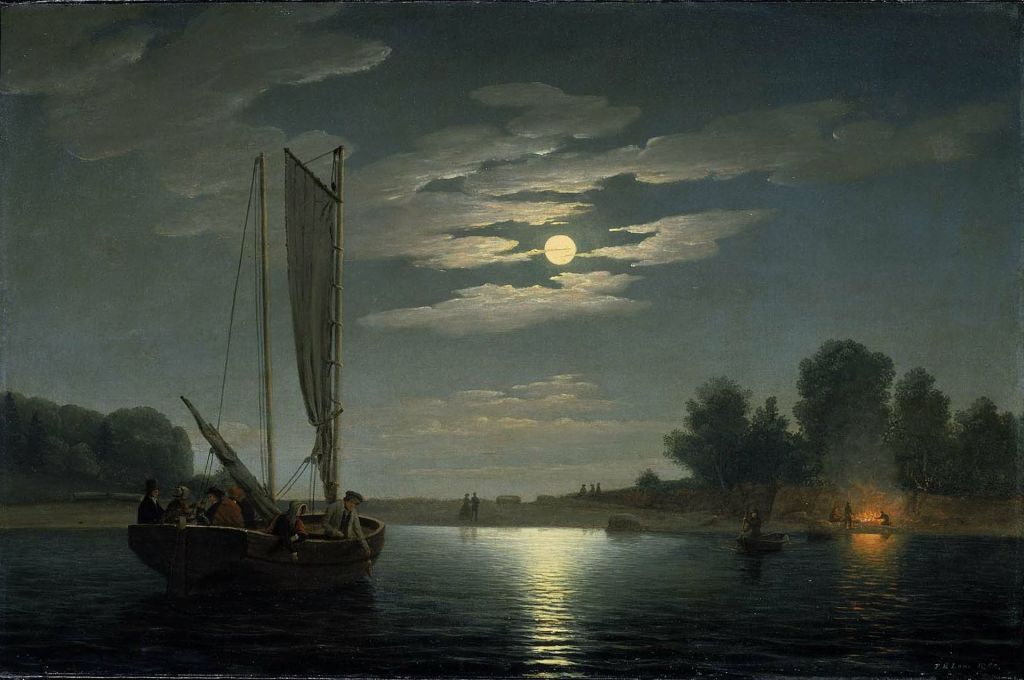
Fishing Party, (1855)
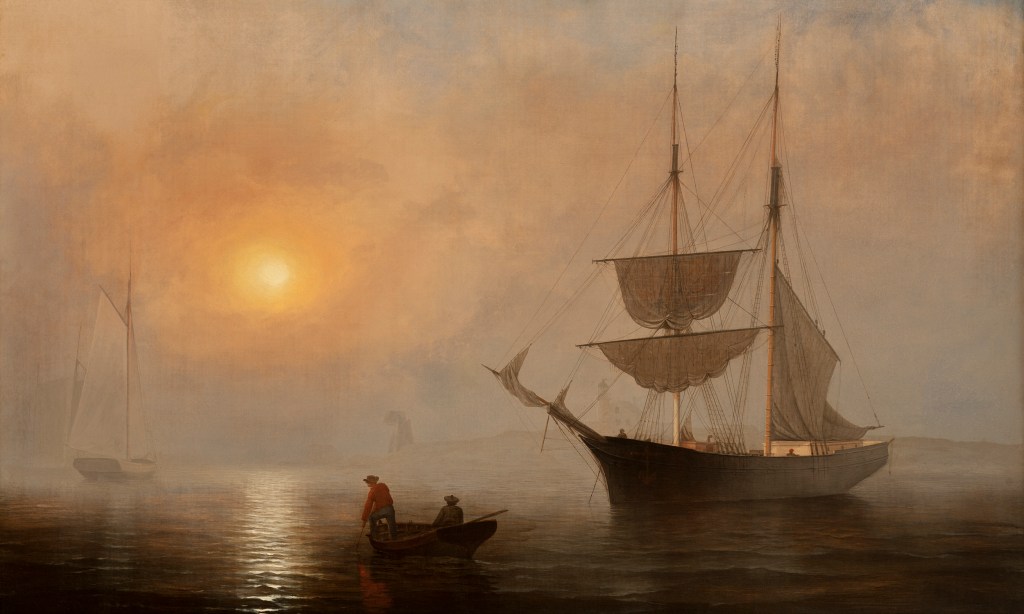
Ship in Fog, Gloucester Harbor, ca. 1860, Princeton University Art Museum

Today is the birthday of Italo Svevo (Aron Ettore Schmitz; Trieste, then in Austrian Empire, after 1867 Austria-Hungary, 19 December 1861 – 13 September 1928 Motta di Livenza, Italy); writer, businessman, novelist, playwright, and short story writer.
A close friend of Irish novelist and poet James Joyce, Svevo was considered a pioneer of the psychological novel in Italy and is perhaps best known for his classic Modernist novel La Coscienza di Zeno (1923), a work that had a profound effect on the movement.
Following the death of his parents, Svevo married his cousin Livia Veneziani in a civil ceremony in 1896. Soon after, Livia convinced him to convert to Catholicism and take part in a religious wedding (probably after a troublesome pregnancy). Personally, however, Svevo was an atheist. He became a partner in his wealthy father-in-law’s paint business – that specialized in manufacturing industrial paint, that was used on naval warships. He became successful in growing the business, and after trips to France and Germany set up a branch of the company in England.
After being involved in a serious car crash, he was brought into hospital in Motta di Livenza, where his health rapidly failed. As death approached, he asked one of his visitors for a cigarette. It was refused. Svevo replied: “That would have been my last”. He died that afternoon.
La coscienza di Zeno (1923)
Italian quotations are cited from Cristina Benussi (ed.) La coscienzia di Zeno (Milano: Feltrinelli, 2004);
- È un modo comodo di vivere quello di credersi grande di una grandezza latente.
- It is comfortable to live in the belief that you are great, though your greatness is latent.
- P. 10; p. 12.
- La malattia è una convinzione ed io nacqui con quella convinzione.
- Disease is a conviction, and I was born with that conviction.
- P. 11; p. 14.
- L’amore sano è quello che abbraccia una donna sola e intera, compreso il suo carattere e la sua intelligenza.
- Healthy love is the love that embraces a single, whole woman, including her character and her intelligence.
- P. 14; p. 16.
- Quando si muore si ha ben altro da fare che di pensare alla morte.
- When a man dies, he has too many other worries to allow any thinking about death.
- P. 45; p. 55.
- Il vino è un grande pericolo specie perché non porta a galla la verità. Tutt’altro che la verità anzi: rivela dell’individuo specialmente la storia passata e dimenticata e non la sua attuale volontà; getta capricciosamente alla luce anche tutte le ideucce con le quali in epoca più o meno recente ci si baloccò e che si è dimenticate.
- Wine is a great danger, especially because it doesn’t bring truth to the surface. Anything but the truth, indeed: it reveals especially the past and forgotten history of the individual rather than his present wish; it capriciously flings into the light also all the half-baked ideas with which in a more or less recent period one has toyed and then forgotten.
- P. 194; p. 232.
- La vita non è né brutta né bella, ma è originale!
- Life is neither ugly nor beautiful, but it is original!
- P. 275; p. 330.
- È così che a forza di correr dietro a quelle immagini, io le raggiunsi. Ora so di averle inventate. Ma inventare è una creazione, non già una menzogna.
- Thus, after pursuing those images, I overtook them. Now I know that I invented them. But inventing is a creation, not a lie.
- P. 337; p. 404.
| Édith Piaf | |
|---|---|
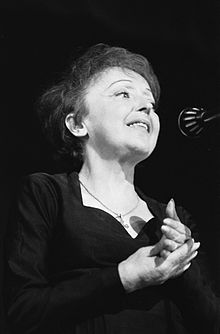 | |
Today is the birthday of La Môme Piaf, Édith Piaf (born Édith Giovanna Gassion; Belleville, Paris 19 December 1915 – 10 October 1963 Plascassier, Grasse, France); cabaret singer, songwriter and actress who became widely regarded as France’s national chanteuse, as well as one of France’s greatest international stars.
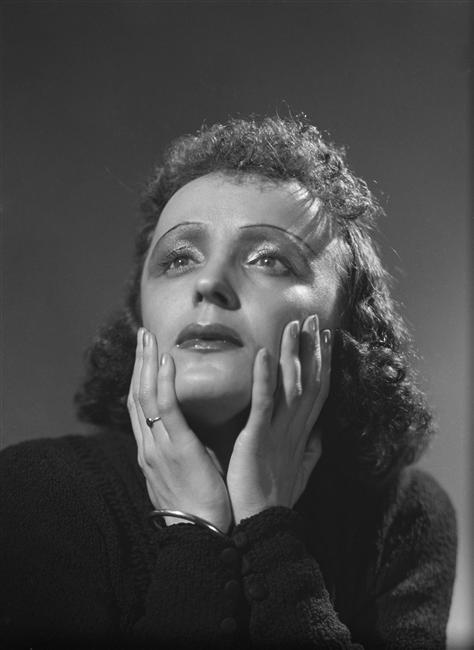
studio harcourt 1939
Her music was often autobiographical with her singing reflecting her life. Her specialty was chansons and torch ballads, particularly of love, loss and sorrow. Among her well known songs are “La Vie en rose” (1946), “Non, je ne regrette rien” (1960), “Hymne à l’amour” (1949), “Milord” (1959), “La Foule” (1957), “L’Accordéoniste (fr)” (1955), and “Padam … Padam …” (1951).
Since her premature death in 1963 and with the aid of several biographies and films including 2007’s Academy Award winning La Vie en rose, Piaf has acquired a legacy as one of the greatest performers of the 20th century, and her voice and music continue to be celebrated globally.
Her grandmother, known as Maman Tine, a “madam” who ran a brothel in Bernay in Normandy. Her mother, Annetta Giovanna Maillard (1895–1945) (of French descent on her father’s side and of Italian and algerian chaoui origin on her mother’s, a native of Livorno, Italy) worked as a café singer under the name Line Marsa.
In 1929, at age 14, she joined her father in his acrobatic street performances all over France, where she first sang in public. At the age of 15, Piaf met Simone “Mômone” Berteaut (fr), who may have been her half-sister. They were able to rent a room at Grand Hôtel de Clermont (18 rue Veron, Paris 18ème).
In 1932, Piaf met and fell in love with Louis Dupont. She soon left Dupont.
Spring 1944 saw the first colaboration and a love affair with Yves Montand in the Moulin Rouge. In 1947, she wrote the lyrics to the song Mais qu’est-ce que j’ai ? (music by Henri Betti) for Montand. Within a year, he became one of the most famous singers in France. She broke off their relationship when he had become almost as popular as she was.
The love of Piaf’s life, the married boxer Marcel Cerdan, died in a plane crash in October 1949, while flying from Paris to New York City to meet her. Piaf and Cerdan’s affair made international headlines, as Cerdan was the former middleweight world champion and a legend in France.
Piaf married Jacques Pills (real name René Ducos), her first husband, in 1952 (her matron of honour was Marlene Dietrich) and divorced him in 1957. In 1962, she wed Théo Sarapo (Theophanis Lamboukas), a Greek hairdresser-turned-singer and actor who was 20 years her junior. The couple sang together in some of her last engagements.

She died at age 47 at her villa in Plascassier (Grasse), on the French Riviera, the day before filmmaker and friend Jean Cocteau died. Her last words were “Every damn thing you do in this life, you have to pay for.” It is said that Sarapo drove her body back to Paris secretly so that fans would think she had died in her hometown. She is buried in Père Lachaise Cemetery in Paris. The name inscribed at the foot of the tombstone is Famille Gassion-Piaf. Her name is engraved on the side as Madame Lamboukas dite Édith Piaf.
Piaf’s work and name resound in popular culture and music today.
One of the most prominent uses of her songs occurred in the 2010 film, Inception; “Non, je ne regrette rien” was used as a motif in the narrative element of the film.
Piaf’s life has been the subject of multiple films and plays.
La Vie en rose (2007), a film about her life directed by Olivier Dahan, premiered at the Berlin Film Festival in February 2007. Titled La Môme in France, the film stars Marion Cotillard as Piaf with a performance that won her an Academy Award for Best Actress (Oscar). David Bret’s 1988 biography, Piaf, A Passionate Life, was re-released by JR Books to coincide with the film’s release.
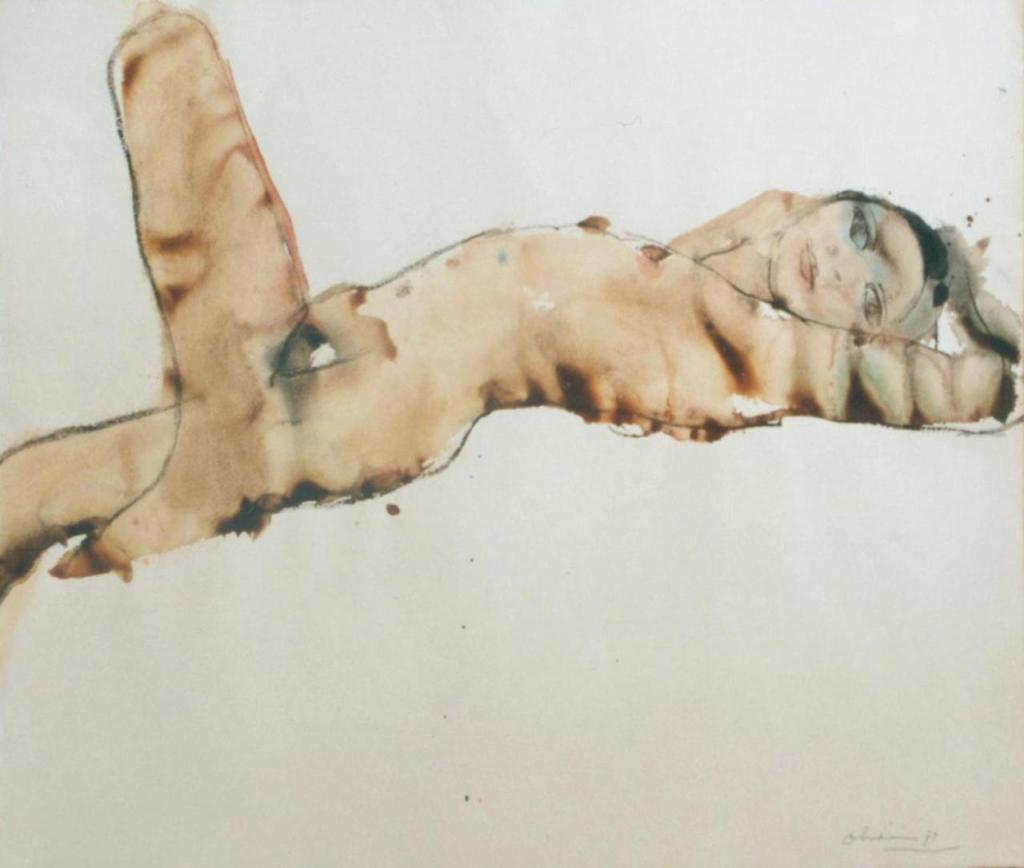
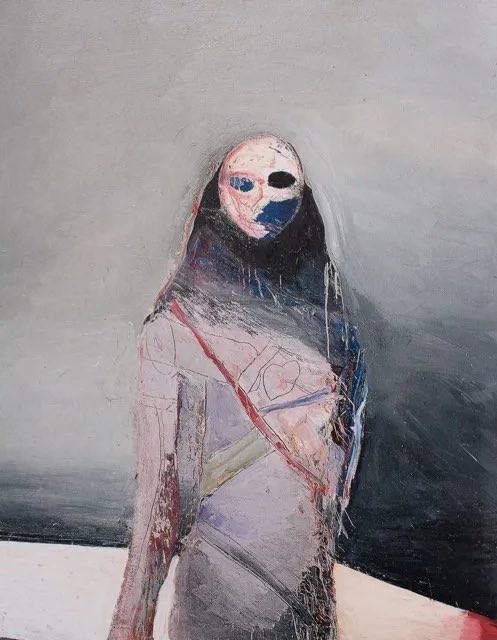
And today is the birthday of Nathan Oliveira (oakland, California; December 19, 1928 – November 13, 2010 Palo Alto, California); painter, printmaker, and sculptor, born to immigrant Portuguese parents. Since the late 1950s, Oliveira has been the subject of nearly one hundred solo exhibitions, in addition to having been included in hundreds of group exhibitions in important museums and galleries worldwide. He taught studio art for several decades in California, beginning in the early 1950s, when he taught at the California College of Arts and Crafts (now California College of the Arts) in Oakland. After serving as a Visiting Artist at several universities, he became a Professor of Studio Art at Stanford University.
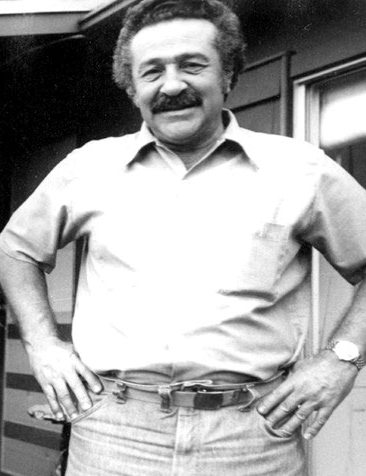
Oliveira established an early reputation for his depictions of isolated figures painted in an improvisational style. Over time his subjects and style varied as he created images of animals, birds of prey, human heads, masks, nudes, and still lifes of fetish objects. Oliveira also developed a series of “sites” that told the story of an invented culture with shamanic characteristics. Most of the artist’s paintings are either vividly colored but somber human figures, or abstract expressionist works that vaguely resemble seascapes. Sea from 1959, in the collection of the Honolulu Museum of Art, is an example of these almost abstract seascapes.
Gallery
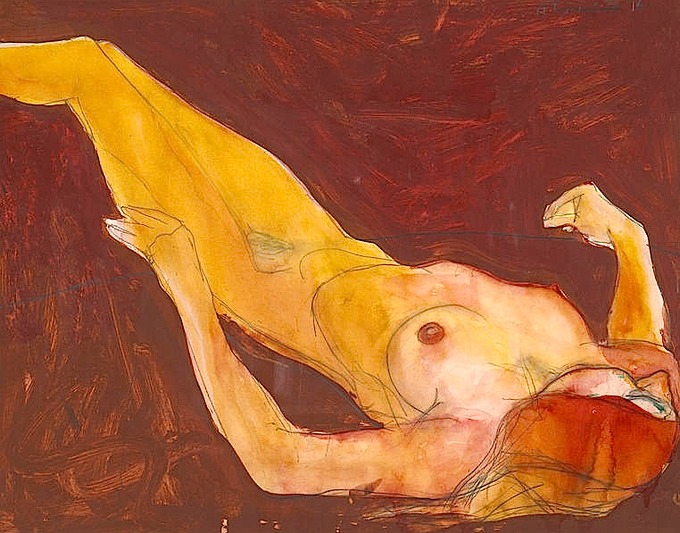
reclining nude
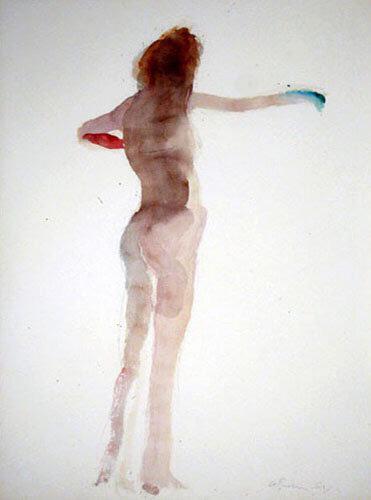
standing woman
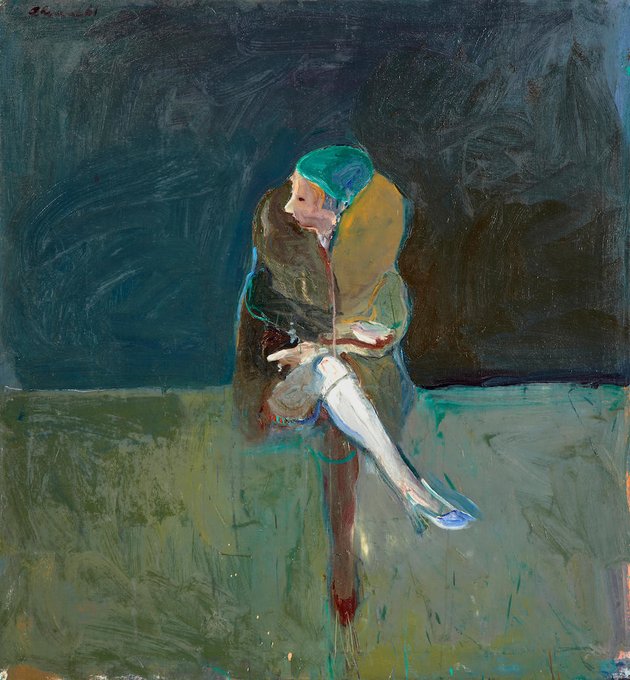
Seated Woman with Fur Collar (1961)
thanks for stoppin’ by y’all
Mac Tag
 The Lovers’ Chronicle
Leave a comment