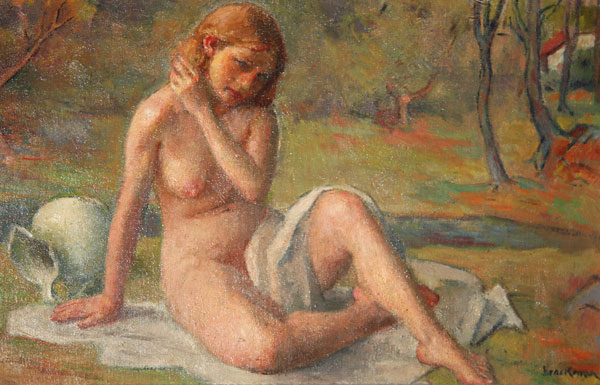
Dear Zazie, Here is today’s Lovers’ Chronicle from Mac Tag dedicated to his muse. Are you lost? Follow us on twitter @cowboycoleridge. Rhett
The Lovers’ Chronicle
Dear Muse,
lost in dreams…
-They find themselves whisked along in a carriage-
Where are we going love, asks the radiant redhead
not exactly sure, i know where i hope we are goin’
-The carriage emerges from a thick fog on a street,
now being pulled by a horse, in the French Quarter-
Nice, New Orleans, one of our favorite places
if i am right, we will be stoppin’ at 624 Pirate’s Alley
Any particular reason
follow me
-He helps her down from the carriage, they walk up to a house
and he knocks on a door and young man opens the door,
he wordlessly lets them in and sits down at a writing desk-
Is that Faulkner
yes, he lived here in 1925, he is working on Soldier’s Pay,
his first novel to be published, from here he moves to Paris
Ah, to hang out with the expat Lost Generation group there
readin’ about that time and place is fascinatin’


© copyright 2024 mac tag/cowboy coleridge all rights reserved
lets pass on by
the obvious song
that comes to mind
“Right, no time for that”
we both have been there
“And we both escaped”
to a place that allowed
us to find ourselves
and now that we are not,
where shall we go
“On our way
to where we want”
also, to where
the verse takes us
© copyright 2023 mac tag/cowboy coleridge all rights reserved
shall we go Faulkner, we can try, see if the words allow, on a fine afternoon sittin’ on the balcony the weather just right, on the warm side cooled by an ice cold mezcal and mango margarita, conducive for readin’, the Paris Review, and keepin’ up with the flow as you dictate which way the story goes
© copyright 2022.2023 mac tag/cowboy coleridge all rights reserved
spent more time
there than anywhere
in most every way
but centered on
self and purpose
without those two
it would be a wonder
if anything was found
what good that was
was by accident
or the will of others
would still be there
had not the noise
been filtered out
and i could hear
the words
and you
© copyright 2021.2023 mac tag/cowboy coleridge all rights reserved
Pale Love, Pale Rider
for Gay
once thought
completely so
now startin’ to wonder
this day full of you
from your words
this mornin’
definin’ the contours
to the words
written on this day
seemin’ly for you
to the paintin’
of the late summer nude
that reminds me of you
and that i wish
i was holdin’ you
© copyright 2020 mac tag/cowboy coleridge all rights reserved
a word, i used easily once
too, see i have been usin’
words for a long time and
i found that word is no more
than the others: a sound
to fill a void, and that when
the right time comes, we
will not need a word for that
nor for what we never had
and for what we will have
© Copyright 2019 Mac tag/cowboy Coleridge all rights reserved
realization comes,
perhaps too late
what i had read about
but never believed
that it comes not easily
and certainly not
because you deserve it
can it be
that what we had
was not lost
but rather,
that we have been lost
without each other
come
shall we find out
© copyright 2018 mac tag/cowboy coleridge all rights reserved
either too much intimacy
or not enough
pity, both for suspicions
and the causes
dull hours spent in idle
and diffuse conversation
efforts to arrange matters
succeeded only in disarrangin’
found nothin’ that answered
to indefinable expectations
habit turns into
makeshift attachments
seekin’ that which
can no longer be found
i know not what lost home
i have failed to find
***
Might have been helpful
Had there been someone
There all the while, yellin’;
Hey you big dummy,
Try lovin’ yourself first!
© copyright 2017 mac tag/cowboy Coleridge all rights reserved
The totem spins…
We are groovin’
Playin’ the same tune
I am your art
You are my verse
We are each others
Renaissance
© copyright 2016 mac tag/cowboy Coleridge all rights reserved
After; I like the feel of it:
The prairie at night. Wide awake
The way it draws me in, just like
you did, whenever you were near
Il deserto
Shadows cast upon
an adobe wall
The way your hair shone
in that fine moonlight
The way this feelin
will not go away
Watchin’ Walk the Line.
Yes, again. Can never,
ever git enough
of the Man in Black
or Johnny and June
Folsom Prison Blues
That was it. Hearin’
that, started a life-
long love of music
and good songwritin’
© copyright 2015 mac tag/cowboy Coleridge all rights reserved
for Kelli
He needs her to hold him
In the cold, dark hours when
There just ain’t no foolin’
Himself, about what he’s done
And what he hasn’t done
© copyright 2014 mac tag/cowboy Coleridge all rights reserved
| William Faulkner | |
|---|---|
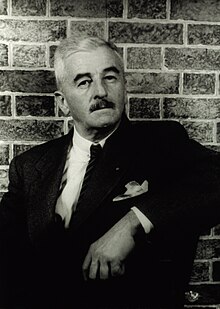 in 1954 in 1954 | |
Today is the birthday of William Faulkner (William Cuthbert Falkner; New Albany, Mississippi; September 25, 1897 – July 6, 1962 Byhalia, Mississippi); writer and Nobel Prize laureate. Faulkner wrote novels, short stories, a play, poetry, essays, and screenplays. He is primarily known for his novels and short stories set in the fictional Yoknapatawpha County, based on Lafayette County, Mississippi, where he spent most of his life.
Faulkner is one of the most celebrated writers in American literature generally and Southern literature specifically. Though his work was published as early as 1919, and largely during the 1920s and 1930s, Faulkner was relatively unknown until receiving the 1949 Nobel Prize in Literature, for which he became the only Mississippi-born Nobel winner. Two of his works, A Fable (1954) and his last novel The Reivers (1962), won the Pulitzer Prize for Fiction.
As a teenager in Oxford, Mississippi, Faulkner dated Estelle Oldham (1897–1972), the popular daughter of Major Lemuel and Lida Oldham. Estelle dated other boys during their romance, and in 1918 one of them, Cornell Franklin, proposed marriage to her before Faulkner did. Estelle’s parents insisted she marry Cornell, as he was an Ole Miss law graduate, had recently been commissioned as a major in the Hawaiian Territorial Forces, and came from a respectable family with which they were old friends. Estelle’s marriage to Franklin fell apart ten years later, and she was divorced in April 1929. Faulkner married Estelle in June 1929 at College Hill Presbyterian Church just outside Oxford. They honeymooned on the Mississippi Gulf Coast at Pascagoula, then returned to Oxford. In 1930 Faulkner purchased the antebellum home Rowan Oak, known at that time as The Shegog Place from Irish planter Robert Shegog. After his death, Estelle and their daughter, Jill, lived at Rowan Oak until Estelle’s death in 1972. The property was sold to the University of Mississippi in 1972. The house and furnishings are maintained much as they were in Faulkner’s day. Faulkner’s scribblings are still preserved on the wall there, including the day-by-day outline covering an entire week that he wrote out on the walls of his small study to help him keep track of the plot twists in the novel A Fable.
The quality and quantity of Faulkner’s literary output were achieved despite a lifelong drinking problem. He rarely drank while writing, preferring instead to binge after a project’s completion.
Faulkner is known to have had several extramarital affairs. One was with Howard Hawks’s secretary and script girl, Meta Carpenter, later known as Meta Wilde. The affair was chronicled in her book A Loving Gentleman. Another affair, from 1949 to 1953, was with a young writer, Joan Williams, who made her relationship with Faulkner the subject of her 1971 novel, The Wintering.
When Faulkner visited Stockholm in December 1950 to receive the Nobel Prize, he met Else Jonsson (1912–96) and they had an affair that lasted until the end of 1953. Else was the widow of journalist Thorsten Jonsson (1910–50), reporter for Dagens Nyheter in New York, who had interviewed Faulkner in 1946 and introduced his works to Swedish readers. At the banquet in 1950 where they met, publisher Tor Bonnier referred to Else as widow of the man responsible for Faulkner being awarded the prize.
Quotes
As I Lay Dying (1930)
- He had a word, too. Love, he called it. But I had been used to words for a long time. I knew that that word was like the others: just a shape to fill a lack; that when the right time came, you wouldn’t need a word for that anymore than for pride or fear.
- It takes two people to make you, and one people to die. That’s how the world is going to end.
- Sin and love and fear are just sounds that people who never sinned nor loved nor feared have for what they never had and cannot have until they forget the words.
The Wild Palms (1939)
If I Forget Thee, Jerusalem [first published as The Wild Palms] has ten unnumbered chapters. The odd chapters are titled “Wild Palms”, the even ones “Old Man”. Page numbers from the Vintage Books (1966) edition.
- … the second time I ever saw you I learned what I had read in books but I had never actually believed: that love and suffering are the same thing and that the sum of love is what you have to pay for it and any time you get it cheap you have cheated yourself.
- Harry Wilbourne to Charlotte Rittenmeyer, in (Ch. 3) “Wild Palms”; p. 48
- … not sin, he thought, I dont believe in sin. It’s getting out of timing. You are born submerged in anonymous lockstep with the teeming anonymous myriads of your time and generation; you get out of step once, falter once, and you are trampled to death.
- Harry Wilbourne, in (Ch. 3) “Wild Palms”; p. 54 (Faulkner’s italics)
- They say love dies between two people. That’s wrong. It doesn’t die. It just leaves you, goes away, if you are not good enough, worthy enough. It doesn’t die; you’re the one that dies.
- Charlotte Rittenmeyer to Harry Wilbourne, in (Ch. 5) “Wild Palms”; p. 83
- I told you once how I believe it isn’t love that dies, it’s the man and the woman, something in the man and the woman that dies, doesn’t deserve the chance any more to love.
- Charlotte Rittenmeyer to Harry Wilbourne, in (Ch. 7) “Wild Palms”; p. 218
- … when she became not then half of memory became not and if I become not then all of remembering will cease to be.—Yes, he thought, between grief and nothing I will take grief.
- Harry Wilbourne, in (Ch. 9) “Wild Palms”; p. 324 (Faulkner’s italics)
Requiem for a Nun (1951)
- The past is never dead. It’s not even past.
- Act 1, sc. 3;
- … maybe the only thing worse than having to give gratitude constantly all the time, is having to accept it.
- Act 2, sc. 1
- … so vast, so limitless in capacity is man’s imagination to disperse and burn away the rubble-dross of fact and probability, leaving only truth and dream.
- Act 3
| Robert Brackman | |
|---|---|
 Sculpture of Robert Brackman, published in the book Labor Sculpture by Max Kalish, ©1938 Comet Press. Sculpture of Robert Brackman, published in the book Labor Sculpture by Max Kalish, ©1938 Comet Press. | |
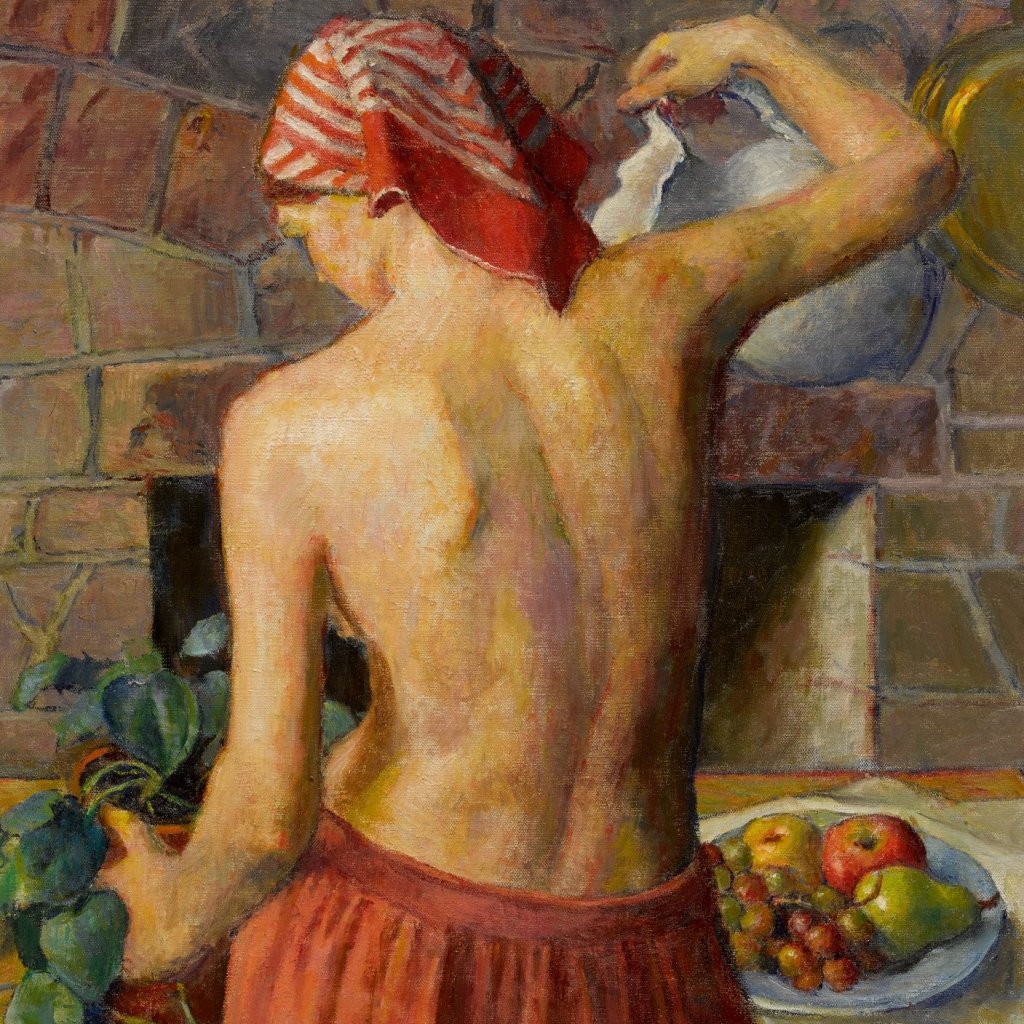
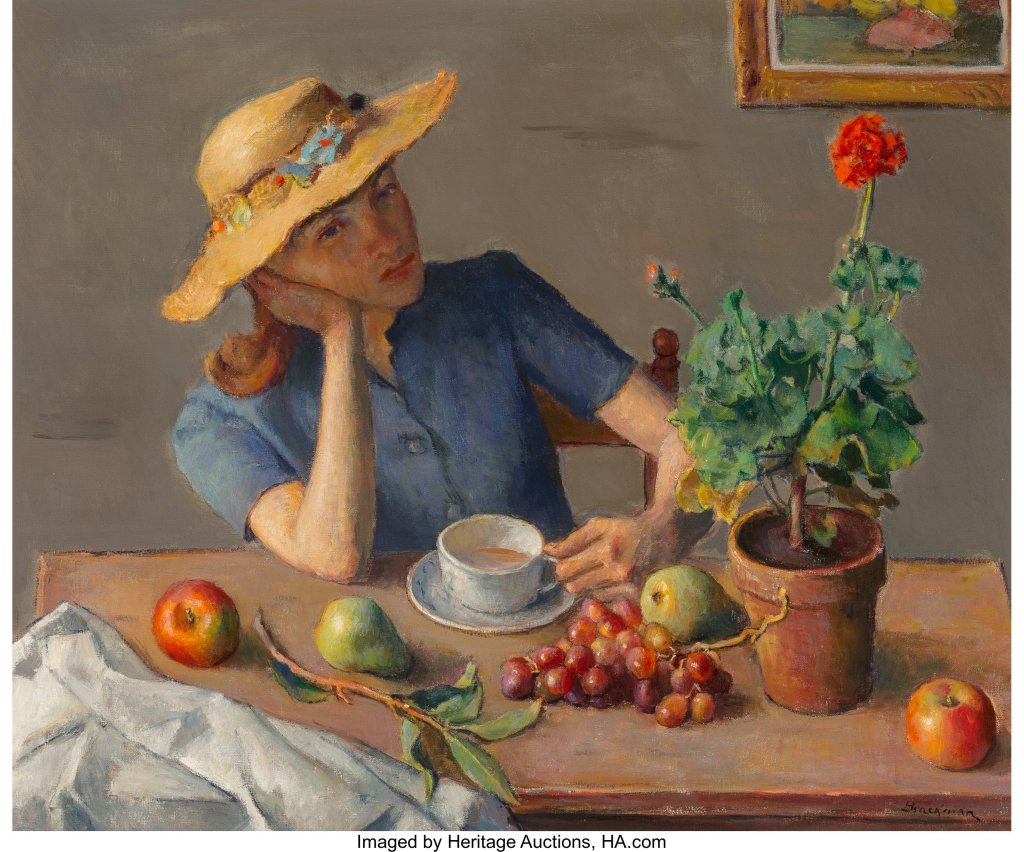
Today is the birthday of Robert Brackman (Odes’ka Oblast, Ukraine September 25, 1898 – July 16, 1980 Noank, Connecticut); artist and teacher of Ukrainian origin, best known for large figural works, portraits, and still lifes.
He painted a portrait of actress Jennifer Jones for use as a prop in the 1948 film Portrait of Jennie, where it represents a portrait painted by the character of Eben Adams (Joseph Cotten).
Brackman was married to Rochelle Post; they later divorced. He had two daughters with his second wife, Francis R. Davis, whom he met in 1935 while teaching at the Minneapolis School of Fine Arts, now known as the Minneapolis College of Art and Design.
Gallery

Late Summer Nude



Portrait of a Woman

And today is the birthday of Shel Silverstein (Sheldon Allan Silverstein; Chicago 25 September 1930 – May 10, 1999 Key West); author, poet, cartoonist, songwriter, and playwright.

Silverstein briefly attended university before being drafted into the United States Army. During his rise to prominence in the 1950s, his illustrations were published in various newspapers and magazines, including the adult-oriented Playboy. He also wrote a satirical, adult-oriented alphabet book, Uncle Shelby’s ABZ Book.
As a children’s author, some of his most acclaimed works include The Giving Tree, Where the Sidewalk Ends, and A Light in the Attic. His works have been translated into more than 47 languages. As a songwriter, Silverstein wrote the 1969 Johnny Cash track “A Boy Named Sue”, which peaked at number 2 on the U.S. Billboard Hot 100. His songs have been recorded and popularized by a wide range of other acts including Tompall Glaser, The Irish Rovers and Dr. Hook & the Medicine Show. He was the recipient of two Grammy Awards as well as nominations at the Golden Globe Awards and Academy Awards.
His book A Light in the Attic is dedicated to his daughter Shoshanna who died of a cerebral aneurysm on April 24, 1982, at age 11. Silverstein died of a heart attack at age 68.
From around 1967 to 1975, Silverstein lived on a houseboat in Sausalito, California. He also owned homes on Martha’s Vineyard, Greenwich Village and Key West. He never married, and according to the 2007 biography A Boy Named Shel, had sex with “hundreds, perhaps thousands of women”. He was also a frequent presence at Hugh Hefner’s Playboy Mansion and Playboy Clubs.
Silverstein met a woman from Sausalito named Susan Taylor Hastings at the Playboy Mansion, and they had a daughter named Shoshanna Jordan Hastings (b. June 30, 1970). Susan died on June 29, 1975, one day before Shoshanna’s fifth birthday. Silverstein later met Key West native Sarah Spencer, who drove a tourist train and inspired Silverstein’s song “The Great Conch Train Robbery”.
Other songs he wrote or co-wrote include; “Put Another Log on the Fire”, “One’s on the Way”, “Hey Loretta”, “25 Minutes to Go”, “The Unicorn”, “the Taker”, “The Cover of ‘Rolling Stone’”, “Rosalie’s Good Eats Café”, “The Mermaid”, “The Winner”, “Warm and Free”, “Tequila Sheila”, “Marie Laveau”, “The Ballad of Lucy Jordan”, and “Queen of the Silver Dollar”.
And she lay there neath the covers
Dreamin of a thousand lovers
Til the world turned to orange
And the room went spinnin’ round
And she bowed & curtsied to the man
Who reached & offered her his hand
And he led her down to the long white car that waited past the crowd
At the age of 37
She knew she’d found forever
As she rode along through Paris
With the warm wind in her hair
Mac Tag
thanks for stoppin’ by y’all
 The Lovers’ Chronicle
Leave a comment