Dear Zazie, Here is today’s Lovers’ Chronicle from Mac Tag dedicated to his muse. Follow us on twitter @cowboycoleridge. Is there someone you never see who you will always love? Is there someone you long to see? Do you yield? Rhett
The Lovers’ Chronicle
Dear Muse,
the look in the lover’s eyes
“The best use of that word”
right, we could talk about
french fries and chocolate
which are both fabulous,
but not our focus here
“We were both tempted
quickly with each other”
oh yes, at first sight,
as we sat on that bench
waitin’ for our table
then sealed as the evenin’
ended with our first kiss
“Let’s yield again”
© copyright 2023 mac tag/cowboy coleridge all rights reserved
once reconciled with inner self, understandin’ fell right in; purpose and place lined up, that helped, acceptance loped in and and we have what we have, a helluva fête; now the words will come, the melody will follow, and we continue, a two-step toward what awaits
© copyright 2022.2023 mac tag/cowboy coleridge all rights reserved
simple
the right one, the only
that could, came along
at the moment when
the lowerin’ of walls
was possible
when thoughts of yieldin’,
not summarily dismissed,
lingered and what if or
maybe became why not
all that could be matched up
with all we are and were
and temptation crashed
in waves around us
© copyright 2021.2023 mac tag/cowboy coleridge all rights reserved
Pale Love, Pale Rider

a view awaits
in the beginnin’
such is the simplicity
to hearken after the flesh
but never before like this
in each other we exist
and all we see or seem,
is a life within a dream
and it turns out
the best part
is the holdin’ on
so we yield
and let it overtake us
© copyright 2020 mac tag/cowboy coleridge all rights reserved
ha, not likely
learned enough
to not yield unto
too closed to let anybody in
no chance of showin’
any vulnerability
and then there is work
all work and verse may
make me borin’ but
not much trouble there
so no temptin’ goin’ on
only what i can do for you
© copyright 2019.2023 mac tag/cowboy coleridge all rights reserved
to see or hear
to be able to say
faithfully
always to wait
open and close
always to stretch out
only to allow
and then be consumed
to see or hear
to yield
to say your name
aloud
with that which grows
ever more tender
© copyright 2018 mac tag/cowboy coleridge all rights reserved

good news,
i dreamed you
two nights ago
hazy of course
but definitely
had an intimate feel
i was swept away
bad news, i dreamed
a new woman last night
that usually means
someone is comin’
that is the last thing i need
on this night, clear
in the moonlight
a long walk in order
a promised view awaits
at the foot of a temple
commence climbin’ the steps
granite stairs, imposin’,
uniformly gray under
the nocturnal sky
vanish ahead
no turnin’ ’round
to disappear
in the depths beneath,
to fall with the dizzy
rapidity of a dream
black shadows stretch out beyond
lost now in the immensity
a deep silence reigns
a reverence steals over
a cool wind passes over
at the end of the terrace
the valley below resembles
a dark rent which the moonbeams
cannot fathom
a good place
as promised
to sit and contemplate
choices to be made
deliver me not into temptation…
© copyright 2017 mac tag/cowboy Coleridge all rights reserved
Where lies verity
Suddenly changed;
Barely touched:
Now revealed
© copyright 2016 mac tag/cowboy Coleridge all rights reserved
Rollin' West on I-90 today in South Dakota.
Sure wanted to ride that sumbitch
all the way into Wyoming

Shoulda said, to hell
with it. Shoulda kept
goin', on in to
Wyoming. Might have
made things worse, but it
sure woulda felt good

© copyright 2015 mac tag/cowboy Coleridge all rights reserved
Never to see her
always to love her
Always to long
just to see her
© copyright 2012 mac tag/cowboy Coleridge all rights reserved
On this day in 1791 La clemenza di Tito (English: The Clemency of Titus), K. 621, an opera seria in two acts composed by Wolfgang Amadeus Mozart to an Italian libretto by Caterino Mazzolà, after Pietro Metastasio, premiered at the Estates Theatre in Prague. It was started after the bulk of Die Zauberflöte (The Magic Flute), the last opera that Mozart worked on, was already written.
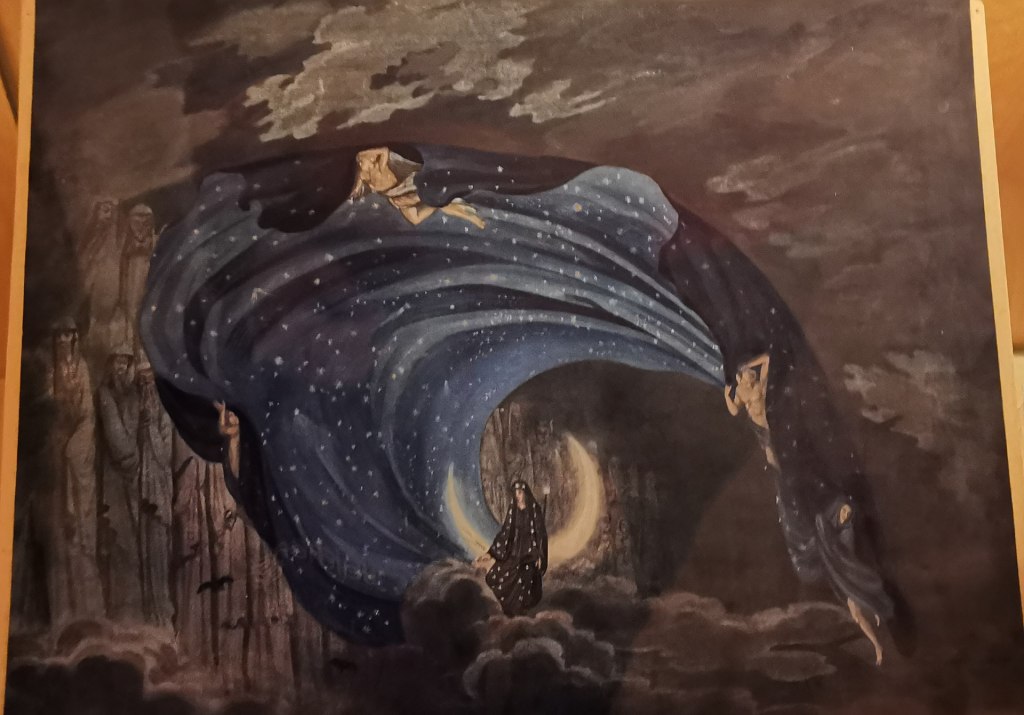
By Alessandro Sanquirico
Act One
Vitellia, daughter of the late emperor Vitellio (who had been deposed by Tito’s father Vespasian), wants revenge against Tito. She stirs up Tito’s vacillating friend Sesto, who is in love with her, to act against him (duet Come ti piace, imponi). But when she hears word that Tito has sent Berenice of Cilicia, of whom she was jealous, back to Jerusalem, Vitellia tells Sesto to delay carrying out her wishes, hoping Tito will choose her (Vitellia) as his empress (aria Deh, se piacer mi vuoi).
Tito, however, decides to choose Sesto’s sister Servilia to be his empress, and orders Annio (Sesto’s friend) to bear the message to Servilia (aria Del più sublime soglio). Since Annio and Servilia, unbeknownst to Tito, are in love, this news is very unwelcome to both (duet Ah, perdona al primo affetto). Servilia decides to tell Tito the truth but also says that if Tito still insists on marrying her, she will obey. Tito thanks the gods for Servilia’s truthfulness, and immediately forswears the idea of coming between her and Annio (aria Ah, se fosse intorno al trono).
In the meantime, however, Vitellia has heard the news about Tito’s interest in Servilia and is again boiling with jealousy. She urges Sesto to assassinate Tito. He agrees, singing one of the opera’s most famous arias (Parto, parto, ma tu, ben mio with basset clarinet obbligato). Almost as soon as he leaves, Annio and the guard Publio arrive to escort Vitellia to Tito, who has now chosen her as his empress. She is torn with feelings of guilt and worry over what she has sent Sesto to do.
Sesto, meanwhile, is at the Capitol wrestling with his conscience (recitativo Oh Dei, che smania è questa), as he and his accomplices go about to burn it down. The other characters (except Tito) enter severally and react with horror to the burning Capitol. Sesto reenters and announces that he saw Tito slain, but Vitellia stops him from incriminating himself as the assassin. The others lament Tito in a slow, mournful conclusion to act one.
Act Two
The act begins with Annio telling Sesto that Emperor Tito is in fact alive and has just been seen; in the smoke and chaos, Sesto mistook another for Tito. Sesto wants to leave Rome, but Annio persuades him not to (aria Torna di Tito a lato). Soon Publio arrives to arrest Sesto, bearing the news that it was one of Sesto’s co-conspirators who dressed himself in Tito’s robes and was stabbed, though not mortally, by Sesto. The Senate tries Sesto as Tito waits impatiently, sure that his friend will be exonerated; Publio expresses his doubts (aria Tardi s’avvede d’un tradimento) and leaves for the Senate. Annio begs Tito to show clemency towards his friend (aria Tu fosti tradito). Publio returns and announces that Sesto has been found guilty and an anguished Tito must sign Sesto’s death sentence.
He decides to send for Sesto first, attempting to obtain further details about the plot. Sesto takes all the guilt on himself and says he deserves death (rondo Deh, per questo istante solo), so Tito tells him he shall have it and sends him away. But after an extended internal struggle, Tito tears up the execution warrant for Sesto. He determines that, if the world wishes to accuse him (Tito) of anything, it should charge him with showing too much mercy, rather than with having a vengeful heart (aria Se all’impero).
Vitellia at this time is torn by guilt, but Servilia warns her that tears alone will not save Sesto (aria S’altro che lagrime). Vitellia finally decides to confess all to Tito, giving up her hopes of empire (rondo Non più di fiori with basset horn obbligato). In the amphitheatre, the condemned (including Sesto) are waiting to be thrown to the wild beasts. Tito is about to show mercy, when Vitellia offers her confession as the instigator of Sesto’s plot. Although shocked, the emperor includes her in the general clemency he offers (recitativo accompagnato Ma che giorno è mai questo?). The opera concludes with all the subjects praising the extreme generosity of Tito; he then asks that the gods cut short his days, should he ever cease to care for the good of Rome.
Today is the birthday of John Atkinson Grimshaw (Leeds, England 6 September 1836 – 13 October 1893 Knostrop, Leeds); Victorian-era artist best known for his nocturnal scenes of urban landscapes. He was called a “remarkable and imaginative painter” by the critic and historian Christopher Wood in Victorian Painting (1999).
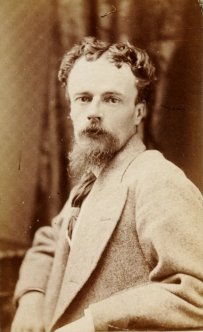
Portrait of John Atkinson Grimshaw (1836-1893)
Grimshaw’s love for realism stemmed from a passion for photography, which would eventually lend itself to the creative process. Though entirely self-taught, he is known to have openly used a camera obscura or lenses to project scenes onto canvas, which made up for his shortcomings as a draughtsman and his imperfect knowledge of perspective. This technique, which Caravaggio and Vermeer were suspected to have also used in secret, was condemned by a number of his contemporaries who believed it demonstrated less skill than painting by eye, with some claiming that his paintings appeared to “show no marks of handling or brushwork”, while others “were doubtful whether they could be accepted as paintings at all”. However, many recognised his mastery of colour, lighting and shadow, as well as his unique ability to provoke strong emotional responses in the viewer. James McNeill Whistler, whom Grimshaw worked with in his Chelsea studios, stated, “I considered myself the inventor of nocturnes until I saw Grimmy’s moonlit pictures.”
His early paintings were signed “JAG”, “J. A. Grimshaw”, or “John Atkinson Grimshaw”, though he finally settled on “Atkinson Grimshaw”.
In 1856 he married his cousin Frances Hubbard (1835–1917). In 1861, at the age of 24, to the dismay of his parents, he left his job as a clerk for the Great Northern Railway to become a painter. He first exhibited in 1862, mostly paintings of birds, fruit, and blossom, under the patronage of the Leeds Philosophical and Literary Society. He and his wife moved in 1866 to a semi-detached villa, which is now numbered 56 Cliff Road in Headingley and has a Leeds Civic Trust blue plaque, and in 1870 to Knostrop Old Hall. Grid Reference: SE 32125 32100. He became successful in the 1870s and rented a second home, Castle-by-the-Sea in Scarborough. Scarborough became a favourite subject.
He died of tuberculosis and is buried in Woodhouse Cemetery, now called St George’s Fields, in Leeds.
Gallery

Spirit of the Night, 1879.

Iris, 1886
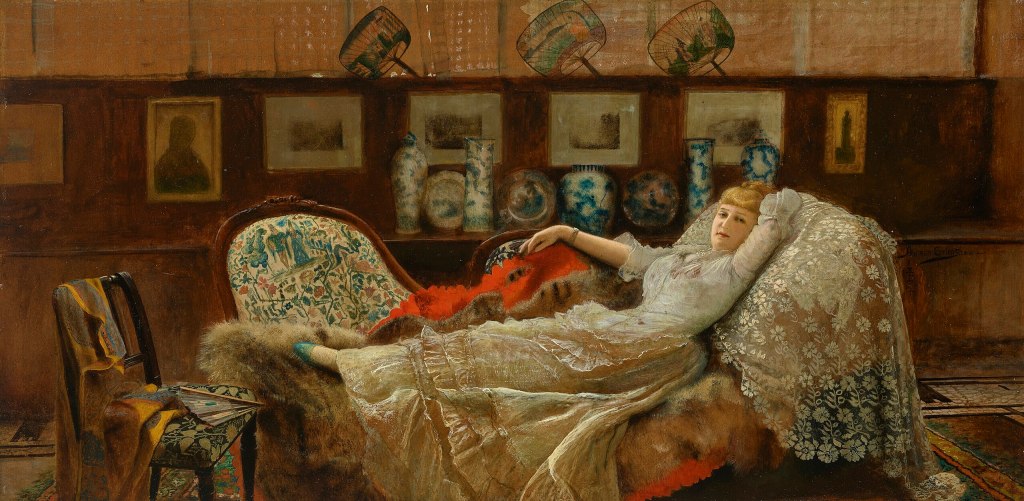
day dreams
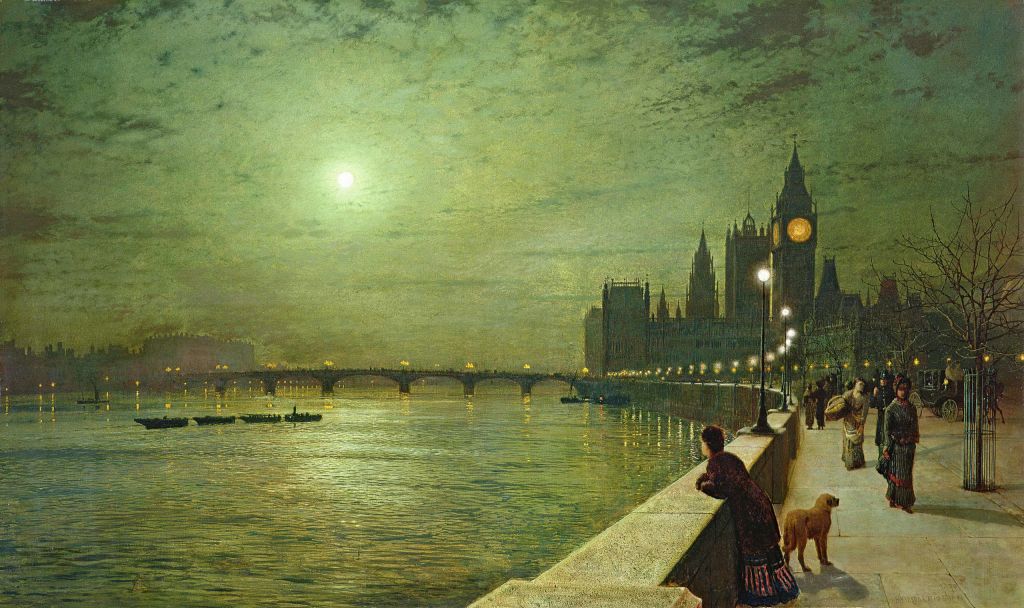
Reflections on the Thames, 1880

Late October, 1882
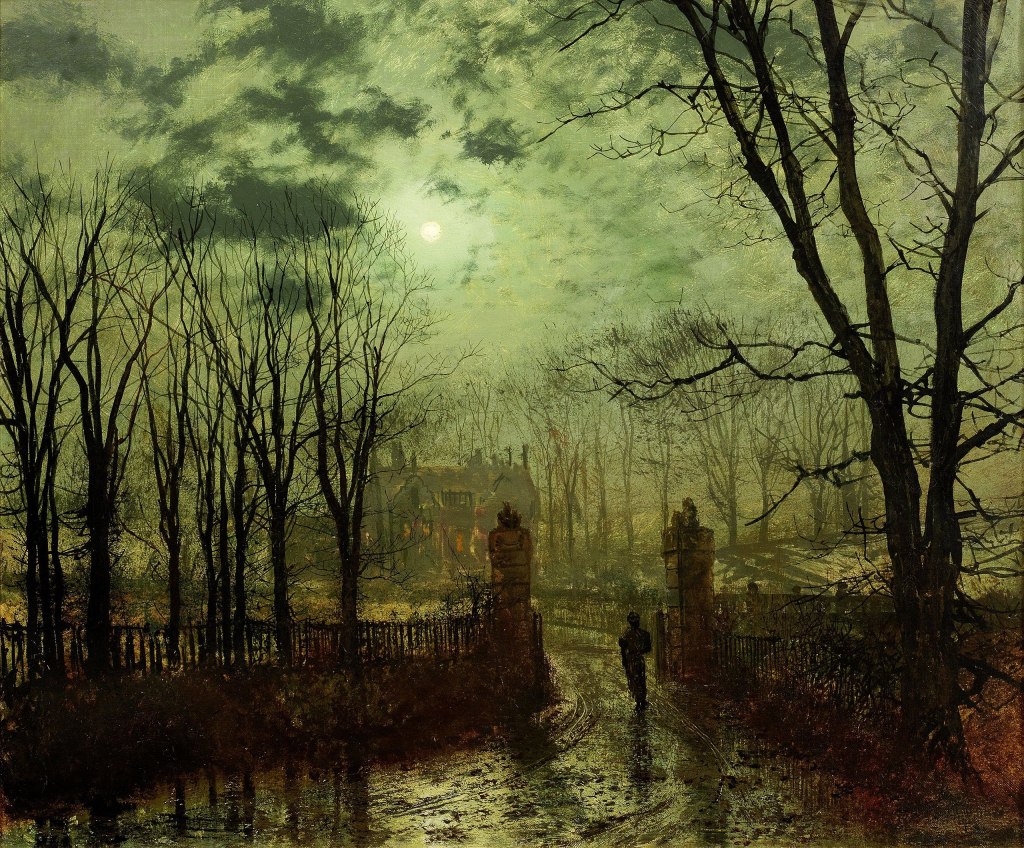
At The Park Gate, 1878

Nightfall on the Thames, 1880

Glasgow, Saturday Night

Shipping on the Clyde, 1881
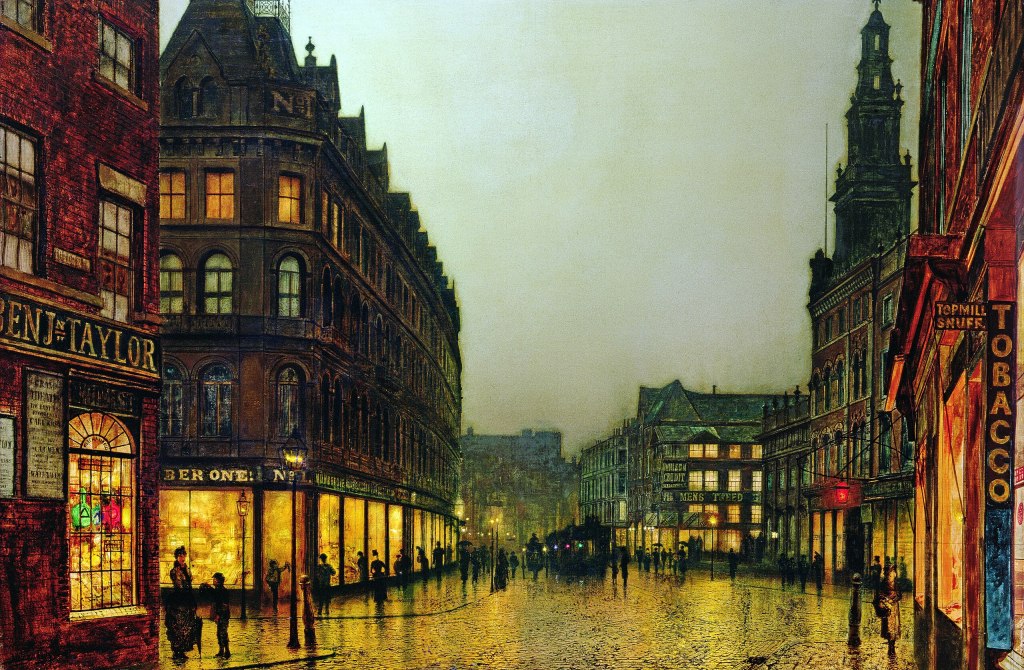
Boar Lane, 1881

Canny Glasgow, 1887

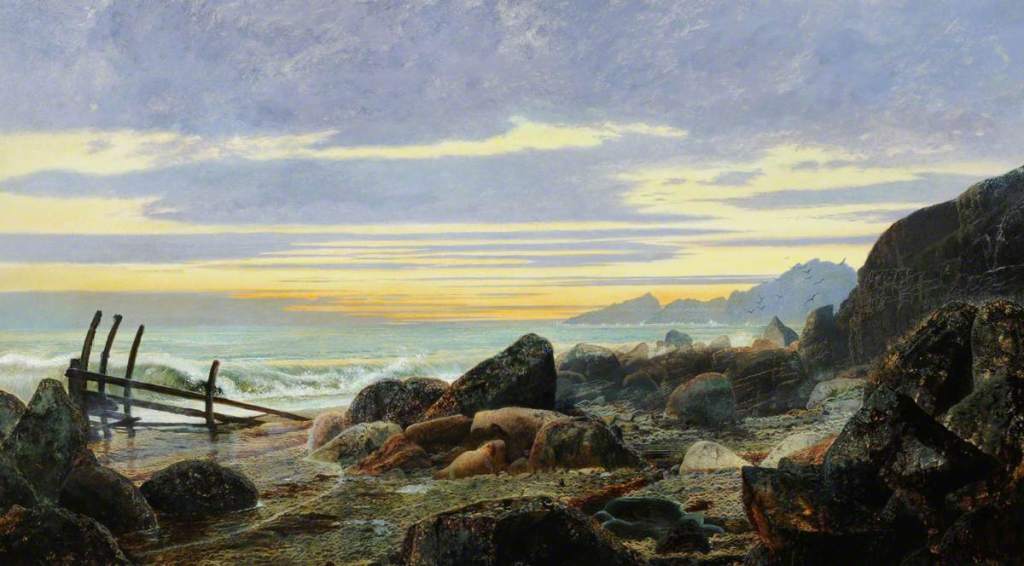
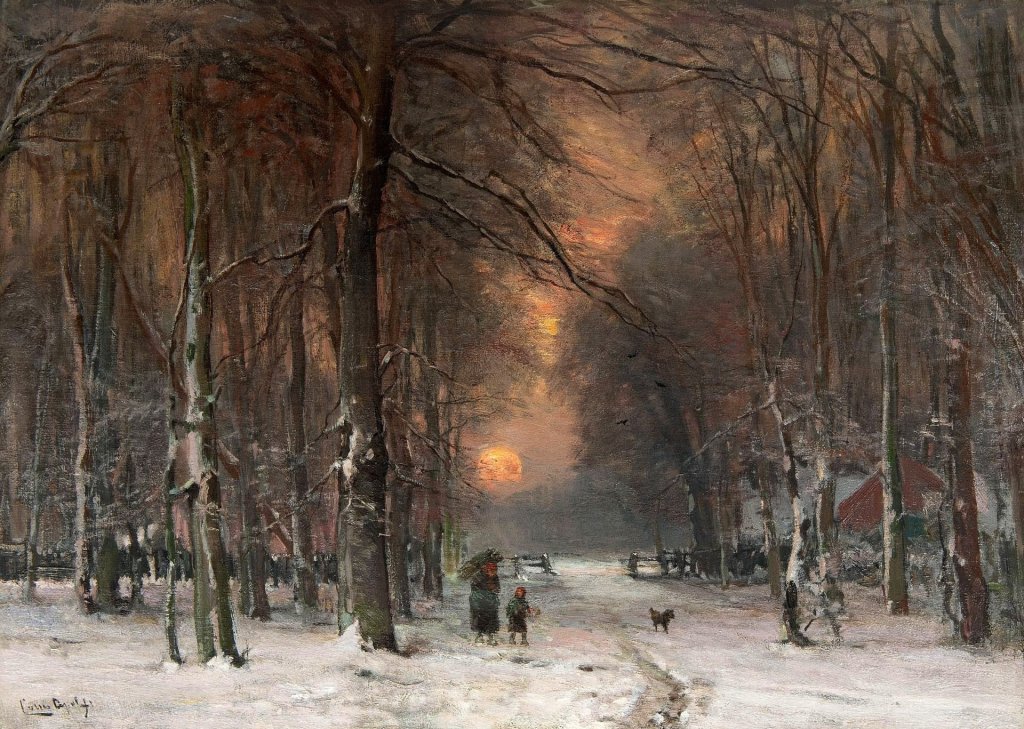
today is the birthday of Louis Apol (Lodewijk Frederik Hendrik Apol, 6 September 1850 in The Hague – 22 November 1936 in The Hague); painter and one of the most prominent representatives of the Hague School.
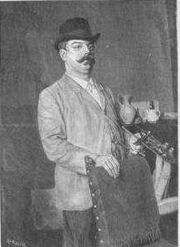
Photo around 1904
Apol’s talent was discovered early in his life and his father ordered private lessons for him. He received a scholarship from the Dutch King Willem III in 1868. Apol specialized in winter landscapes; people are seldom depicted in his paintings. He mostly painted snowy forest landscapes with subtle man-made artefacts, such as a bridge or fence.
In 1880 Apol took part in an expedition on the SS Willem Barentsto Spitsbergen in the Arctic Ocean. The impressions of this journey were a source of inspiration from then on.
Gallery



Today is the birthday of Julius LeBlanc Stewart (September 6, 1855, Philadelphia, Pennsylvania — January 4, 1919, Paris, France); artist who spent his career in Paris. A contemporary of fellow expatriate painter John Singer Sargent, Stewart was nicknamed “the Parisian from Philadelphia”.
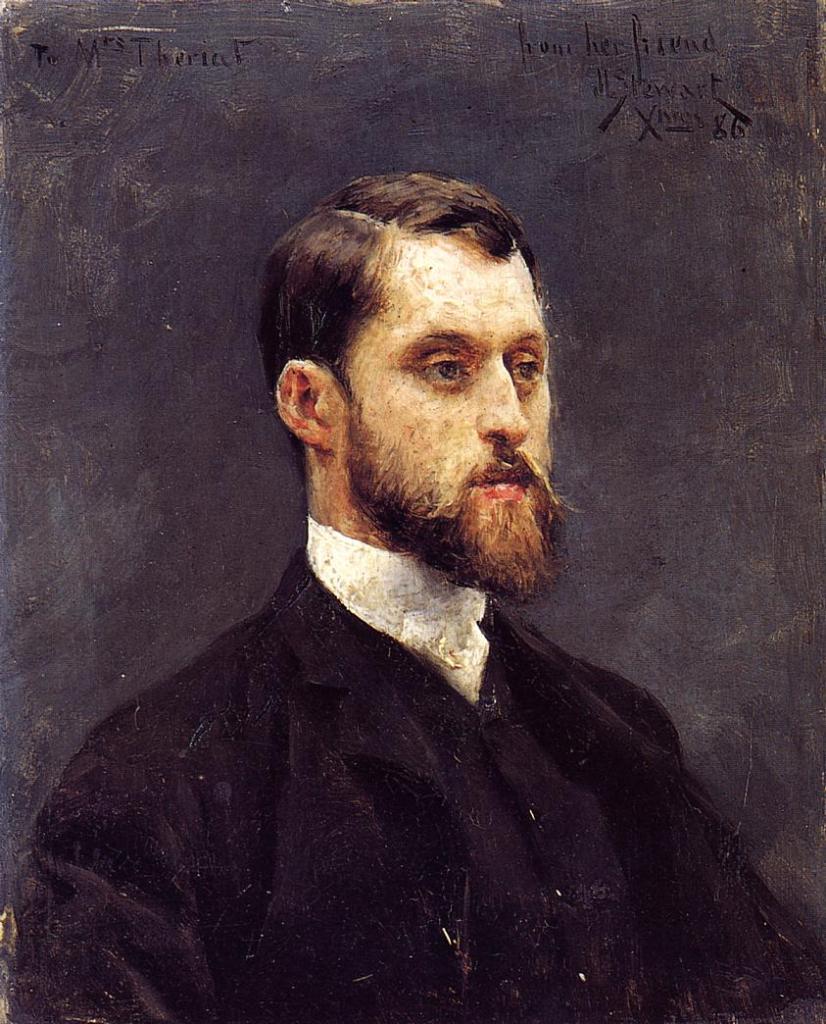
self portrait 1886
He exhibited regularly at the Paris Salon from 1878 into the early 20th century, and helped organize the “Americans in Paris” section of the 1894 Salon. The Baptism (Los Angeles County Museum of Art, 1892), which reportedly depicts a gathering of the Vanderbilt family, was shown at the 1893 Chicago World’s Columbian Exposition, and received acclaim at the 1895 Berlin International Exposition.
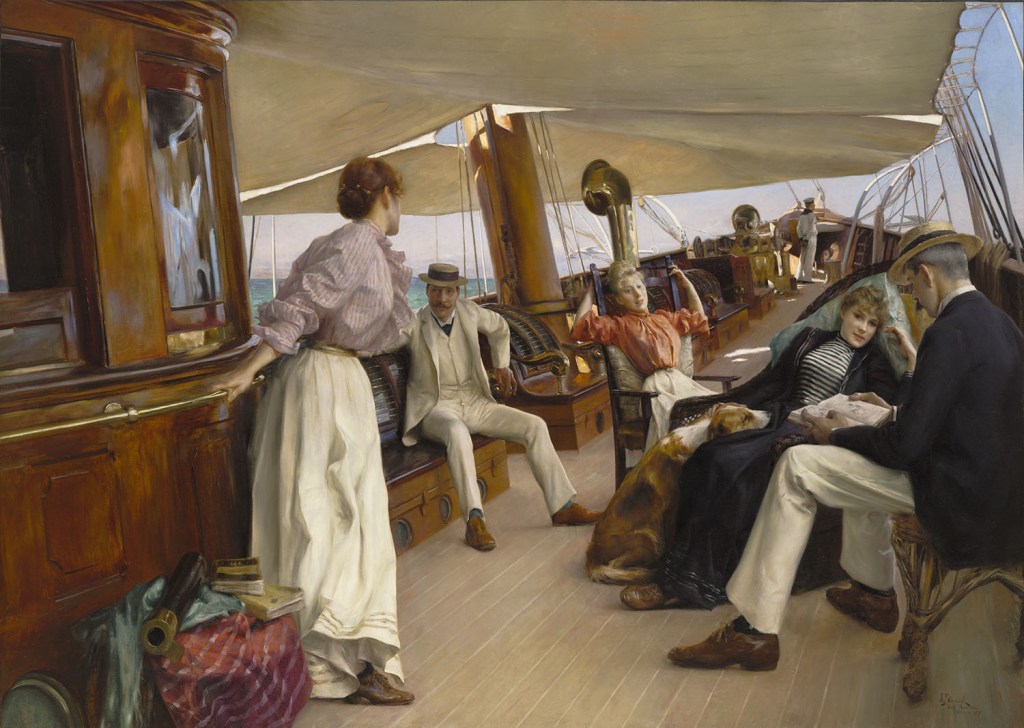
He painted a series of sailing pictures aboard James Gordon Bennett, Jr.’s yacht Namouna. The most accomplished of these, On the Yacht “Namouna”, Venice (Wadsworth Atheneum, 1890), showed a sailing party on deck and included a portrait of the actress Lillie Langtry. Another, Yachting on the Mediterranean (1896), set a record price for the artist, selling in 2005 for US$2.3 million.
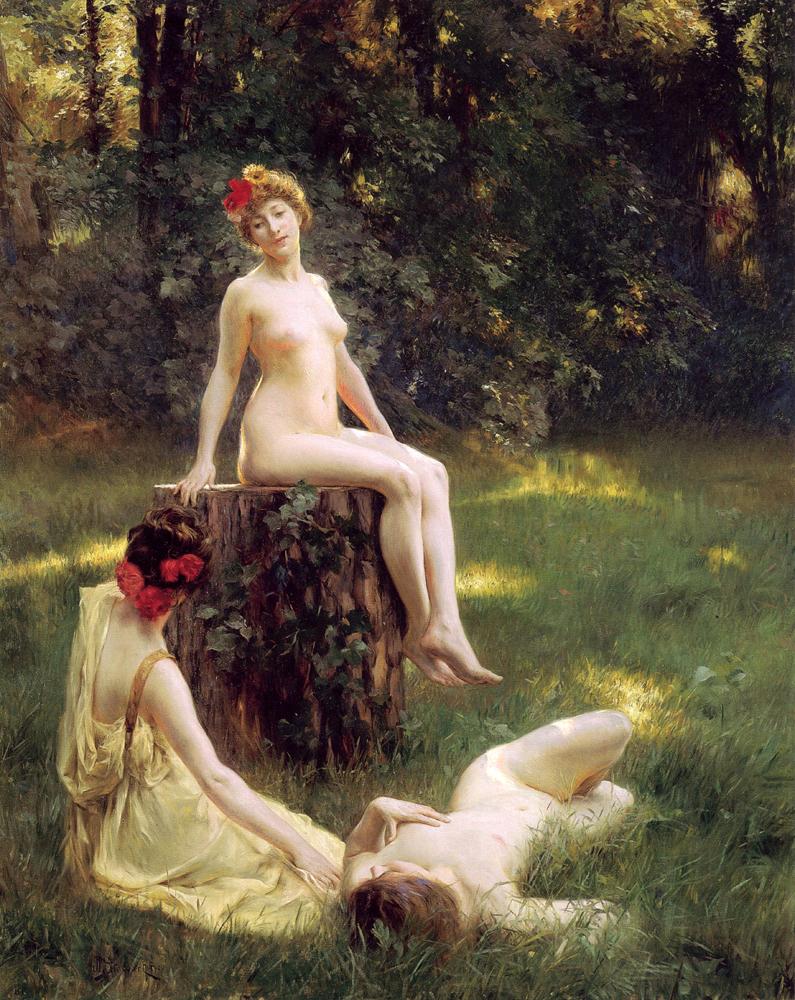
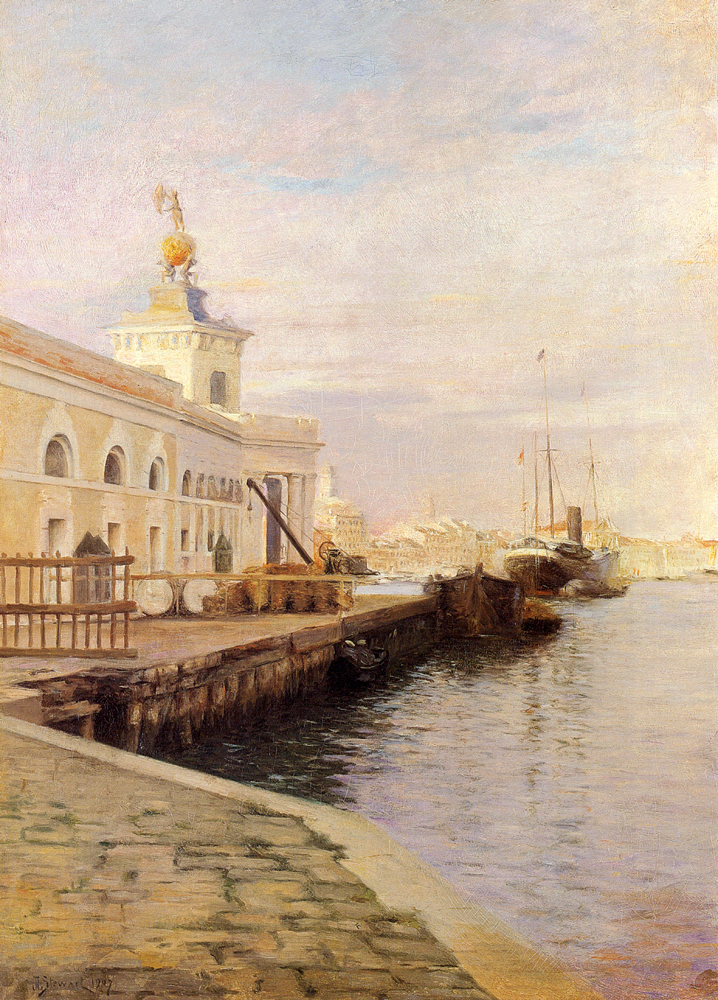
Late in life, he turned to painting outdoor nudes and Venetian scenes, but Stewart is perhaps best remembered for his Belle Époque society portraits.
gallery

Nymphs Hunting or Hunting (1898)
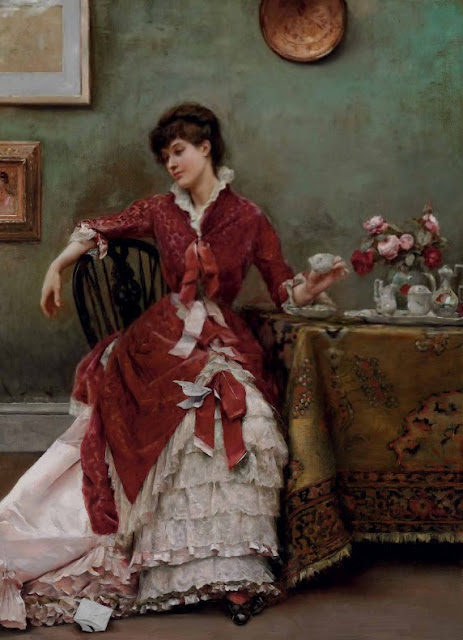
Disappointment: Portrait of Sarah Bernhardt (1882)

Rédemption (1895), Musée d’Art et d’Industrie, Roubaix, France

Lady on a Pink Divan (1877)

Young Beauty In A White Dress
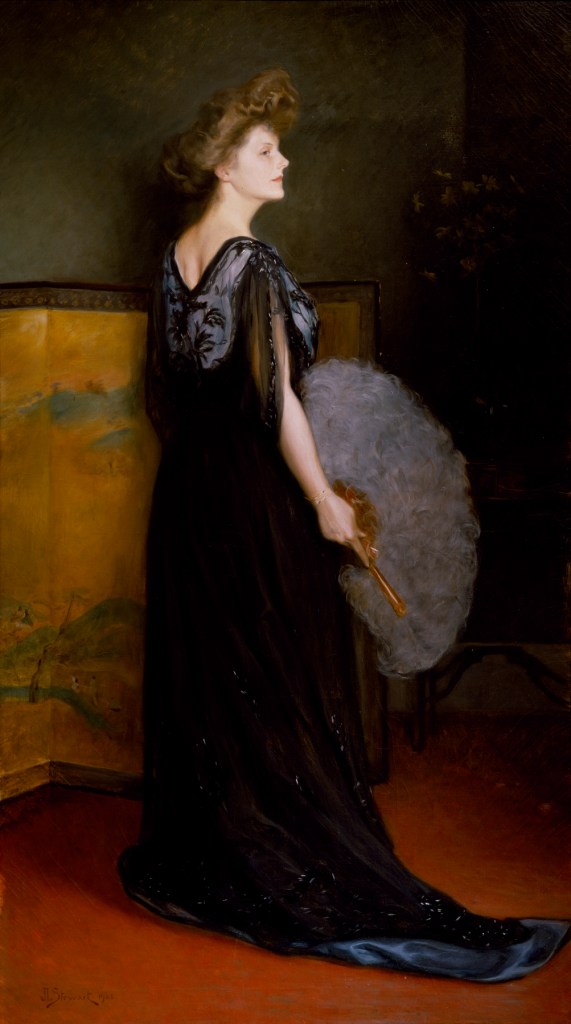
Portrait of Mrs. Francis Stanton Blake (1908), Walters Art Museum

The Goldsmith Ladies … in a Peugeot (1897), Musée du Château de Compiègne, France

The Baptism (1892), Los Angeles County Museum of Art

Yachting on the Mediterranean (1896)

And today is the birthday of Rosa Rolanda (Rosemonde Cowan Ruelas; Azusa, California; September 6, 1895 – March 25, 1970 Mexico City); multidisciplinary artist, dancer, and choreographer.
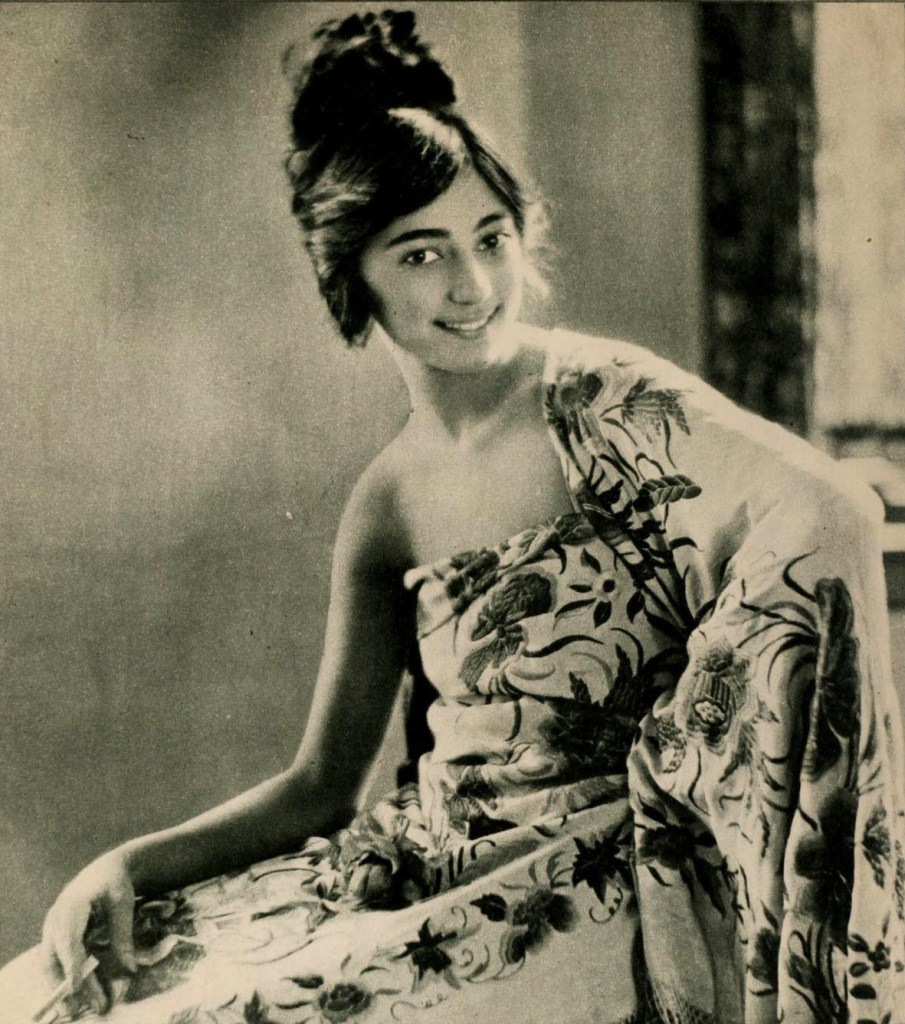
Rolanda began her artistic career in New York in 1916, as a celebrated dancer in Broadway revues. Rolanda’s debut performance was to Shubert’s Over the Top, which sparked a continued dance career throughout the 1920s. After a tour in Europe with the Ziegfeld Follies dance troupe, Rolanda performed in the musical Around the Town. It was soon after, while working on Garrick Gaieties, that Rolanda met Miguel Covarrubias on set in 1924, and in the following year the couple traveled to Mexico, where Rolanda began to take photographs. Albums of her images were published in Covarrubias’s best-selling books Island of Bali (1938) and Mexico South: Isthmus of Tehuantepec (1946), and her work was also featured in the “Ameridinian” issue of Wolfgang Paalen’s journal DYN, published in 1943. During the late 1920s or early 1930s, Rolanda experimented with photograms, creating significant series of surrealist self-portraits that may have been influenced by Man Ray, who photographed Rolanda in Paris in 1923. She began painting around 1926. The majority of Rolanda’s canvases depict colorful, folkloric scenes of children and festivals, portraits of friends, the movie actresses Dolores del Río and María Félix, and self-portraits. Rolanda and Covarrubias married in 1930, and by 1935 they had permanently settled into his family home in Tizapan El Alto, close to Mexico City. In 1952 Rolanda exhibited her paintings in a solo show at the prominent Galeria Souza in Mexico City.
By 1952, Covarrubias had completely separated from Rolanda in pursuit of one of his own students, Rocío Sagaón. At this point, Rolanda was producing works, such as Autorretrato (self-portrait), conveying her innermost turmoils onto canvas.
Gallery

Tehuana, 1940
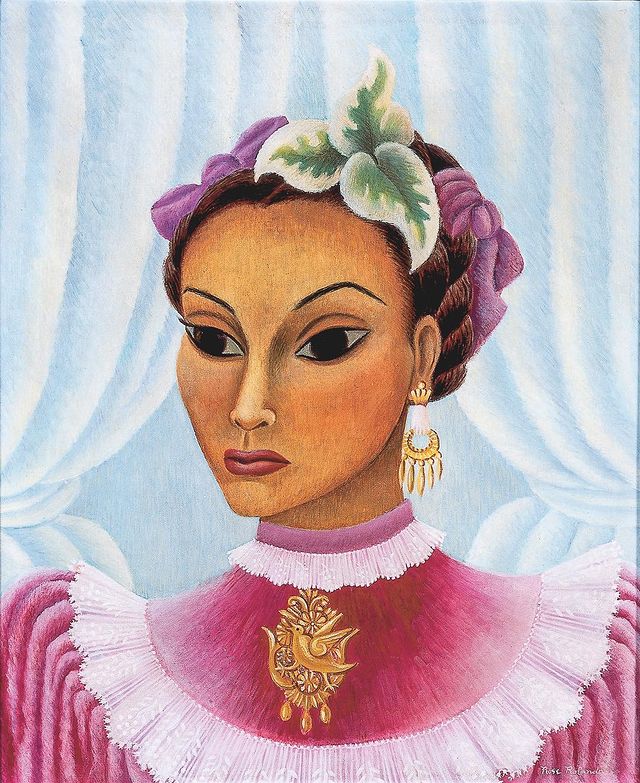
Retrato de Dolores del Río

self portrait

Autorretrato (1952)

Autorretrato
Mac Tag
thanks for stoppin’ by y’all
Poets are all who love, who feel great truths,
And tell them; and the truth of truths is love. - Philip James Bailey
Such is the simplicity of man to hearken after the flesh. – Shakespeare
Your dying is my dying. In you I exist—to live or not. – Euripides
All we see or seem, is but a dream within a dream ~ Edgar Allan Poe
The best thing to hold onto in life is each other. ~ Audrey Hepburn
She bid me take love easy, as the leaves grow on the tree;
But I, being young and foolish, with her would not agree. - W.B. Yeats
 The Lovers’ Chronicle
Leave a comment