Dear Zazie, Here is today’s Lover’s Chronicle from Mac Tag. What do you not know? What do you know? Rhett
The Lover’s Chronicle
Dear Muse,
obvious song choice
“Where you’re going to”
we do in fact
“And where we have been”
perhaps more importantly,
where we are not goin’
“To the ear of the Goddess”
no longer chasin’ fantasies
nothin’ slippin’ from our hands
no more sad answers
nor waitin’ to see
“Do we know”
yes we do
© copyright 2023 mac tag/cowboy coleridge all rights reserved
shall we dispense with the pleasantries; no one has time for that; drawin’ a line in the sand to say; i understand what has to be known; the best way to navigate this wondrous, absurd, beautiful, bafflin’, ride we were forced to join; all that is left is to keep comin’ here everyday
© copyright 2022.2023 mac tag/cowboy coleridge all rights reserved
know, what beauty in art,
in music, in poetry provided
here, all mirrors of you
there is much i do not know,
but i know i saw you today
and that is all i need
© copyright 2021 mac tag/cowboy coleridge all rights reserved
Pale Love, Pale Rider
what i know
wind, waltzin’, workin’
wide open skies
poetry and opera
and what i used to know
well, best leave it at
i miss it all very much
what was done
cannot be
unwound
or forgotten
choices were made
and those choices
must be lived with
at least i figured out
how to go on
© copyright 2020 mac tag/cowboy coleridge all rights reserved
the pull is strong
shan’t say deserved
(never presume
that kinda power)
but earned
for certain
is it possible,
whether dealt or self-inflicted,
one becomes so accustomed
that one seeks one purpose
or refuses to get outta the way
just hope it keeps comin’
gotta feel somethin’
© copyright 2019 mac tag/cowboy coleridge all rights reserved
all i know of truth
is what i found in you
just part of the reason
why i am never alone
© copyright 2018 mac tag/cowboy coleridge all rights reserved
Always been a runner
From everyone
Some ran after
With the things
That came with
But no more
Always said,
My feelin’s
Were irrelevant
Because it never
Happened for me
Or more candidly,
I never let it happen
© copyright 2017 mac tag/cowboy coleridge all rights reserved
This one just sort of appeared. I believe it came from a few lines from a half remembered poem. What do I know? Not enough? Too much? Certainly, more than I did. I wish I knew then what I know now. What I did not know then, if you have been following TLC, you know. How to be without you……
What I Do Not Know
With certainty,
What I do know
Horses, cattle
Ropes, boots, spurs, wind
Waltzin’, workin’
Wide open skies
French poetry
And opera
And here is what
I used to know
The softest touch
Sweetest caress
Lingerin’ kiss
Fervent friction
Climax in sync
Mutual sigh
All of that missed
So very much
But what was done
Cannot be unwound
Or forgotten
Choices were made
And those choices
Must be lived with
So here is what
I do not know
How in the hell
Do I do that
To live without
What I lived for
How, tell me how
Do I go on
© copyright 2013 Cowboy Coleridge mac tag All rights reserved
| Ivan Aivazovsky | |
|---|---|
 Self-portrait, 1874, oil on canvas, 74 × 58 cm, Uffizi, Florence Self-portrait, 1874, oil on canvas, 74 × 58 cm, Uffizi, Florence | |
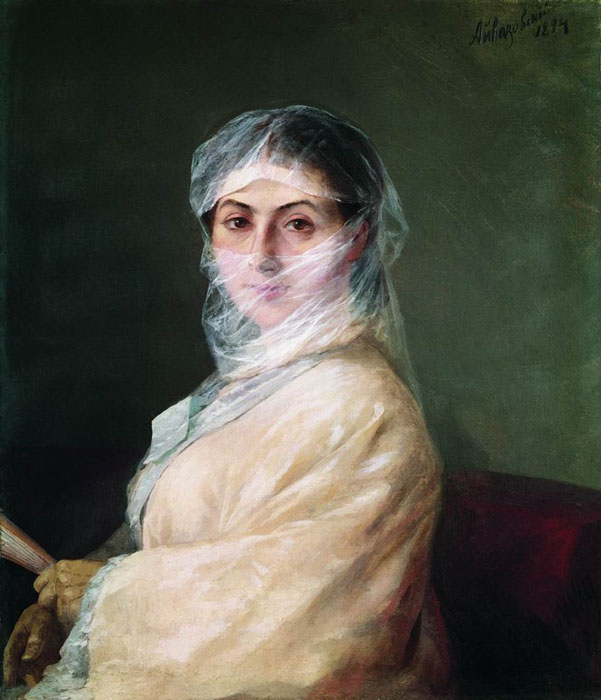
Today is the birthday of Ivan Aivazovsky (Ivan Konstantinovich Aivazovsky; Feodosia, Taurida, Russian Empire 29 July 1817 – 2 May 1900 Feodosia, Russian Empire); Romantic painter. In my opinion, one of the greatest marine artists. Baptized as Hovhannes Aivazian, Aivazovsky was born into an Armenian family in the Black Sea port of Feodosia and was mostly based in his native Crimea. Following his education at the Imperial Academy of Arts, Aivazovsky traveled to Europe and lived briefly in Italy in the early 1840s. He then returned to Russia and was appointed the main painter of the Russian Navy. The saying “worthy of Aivazovsky’s brush”, popularized by Anton Chekhov, was used in Russia for “describing something ineffably lovely.” During his almost 60-year career, he created around 6,000 paintings, making him one of the most prolific artists of his time. The vast majority of his works are seascapes, but he often depicted battle scenes, Armenian themes, and portraiture.

Portrait by Alexey Tyranov, 1841
In 1848, Aivazovsky married Julia Graves, an English governess. They separated in 1860 and divorced in 1877 with permission from the Armenian Church, since Graves was a Lutheran.

with his first wife, Julia, and their four daughters
Aivazovsky’s second wife, Anna Burnazian, was a young Armenian widow 40 years his junior. Aivazovsky said that by marrying her in 1882, he “became closer to [his] nation”, referring to the Armenian people.
Gallery
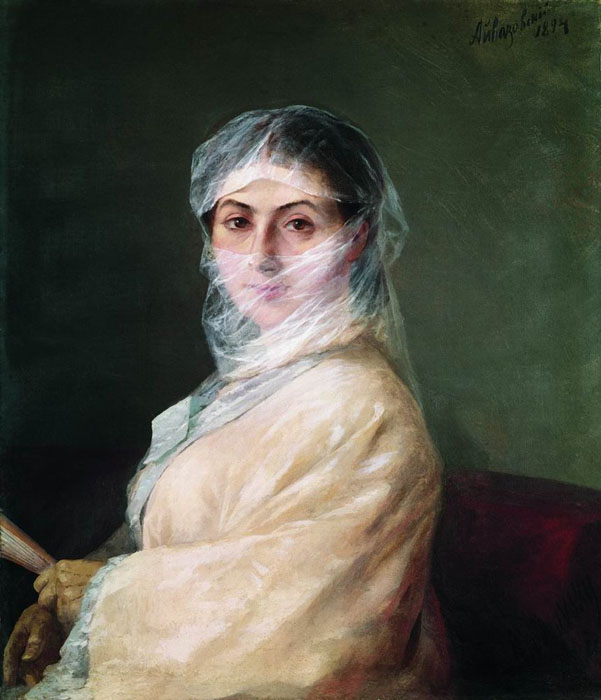
his second wife Anna Burnazian (1882)
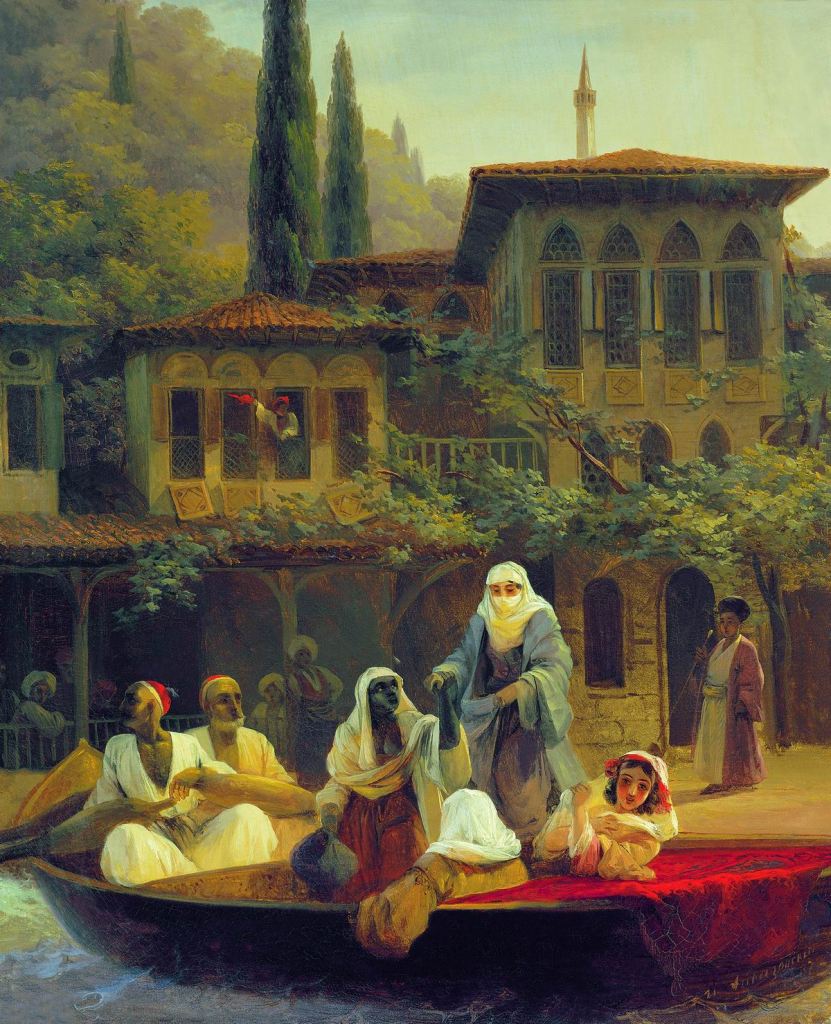
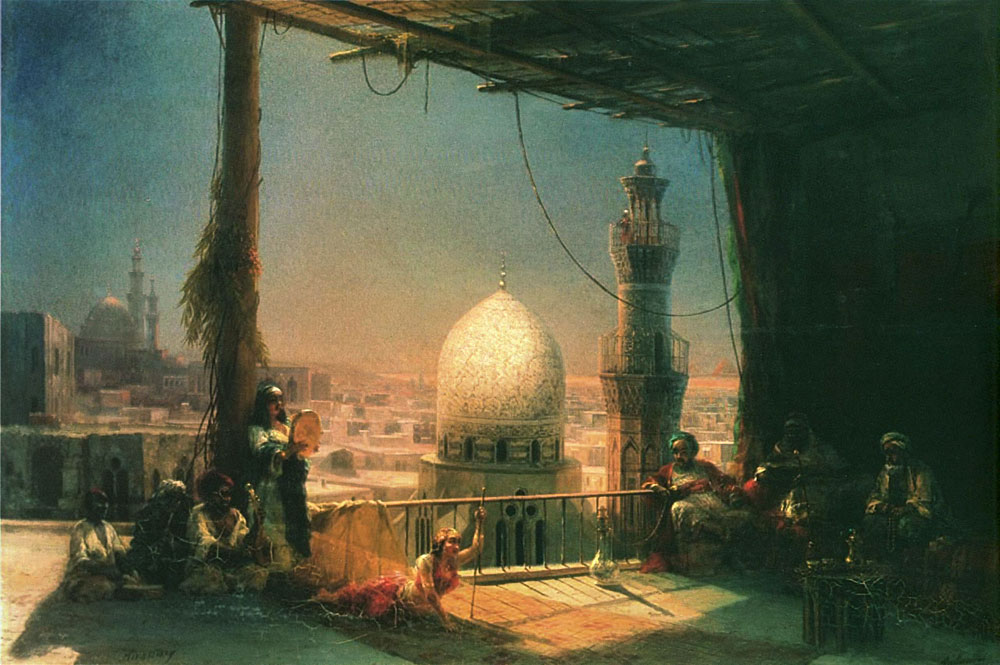
Scenes from Cairo’s Life
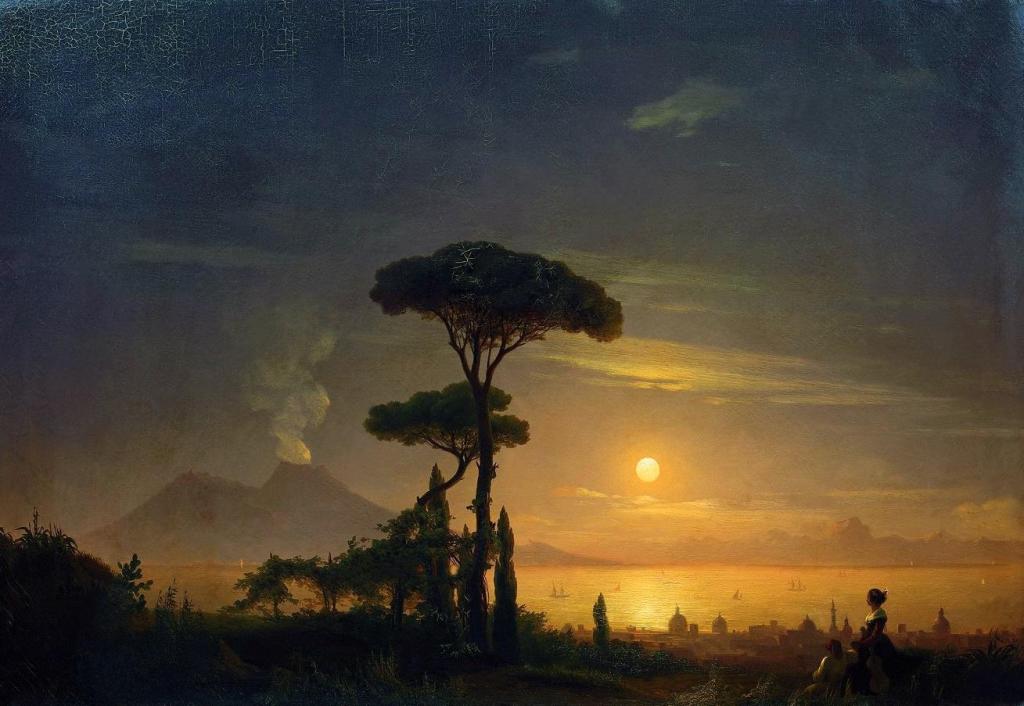
La baie de Naples (1845)
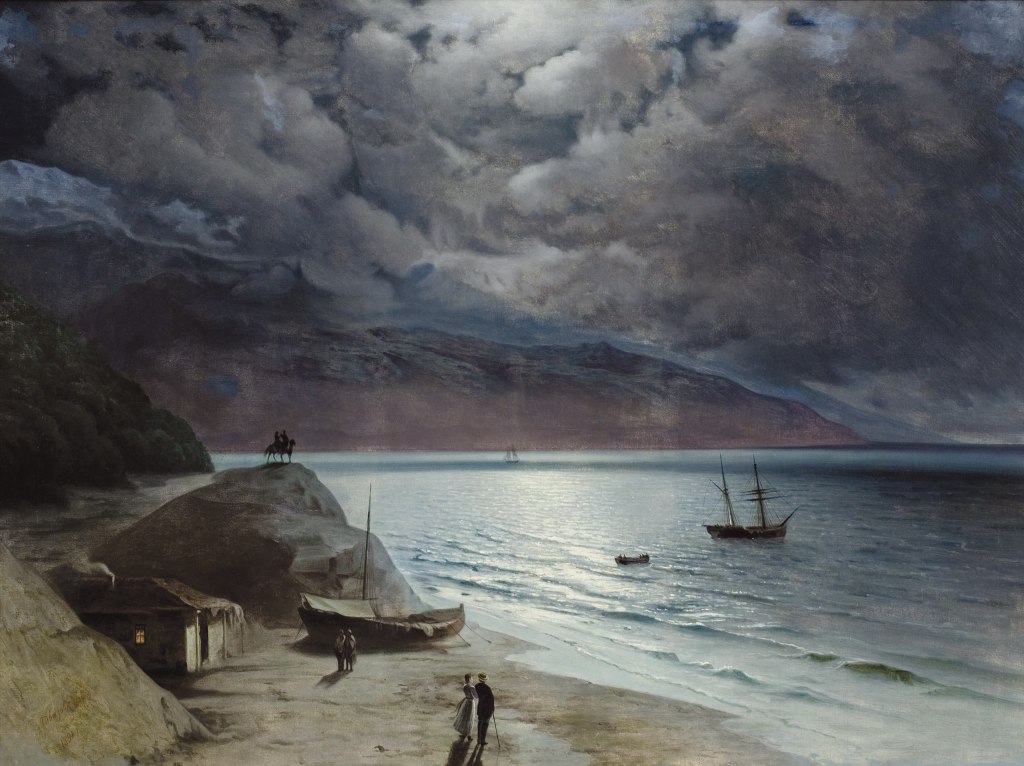
Night at Gurzof
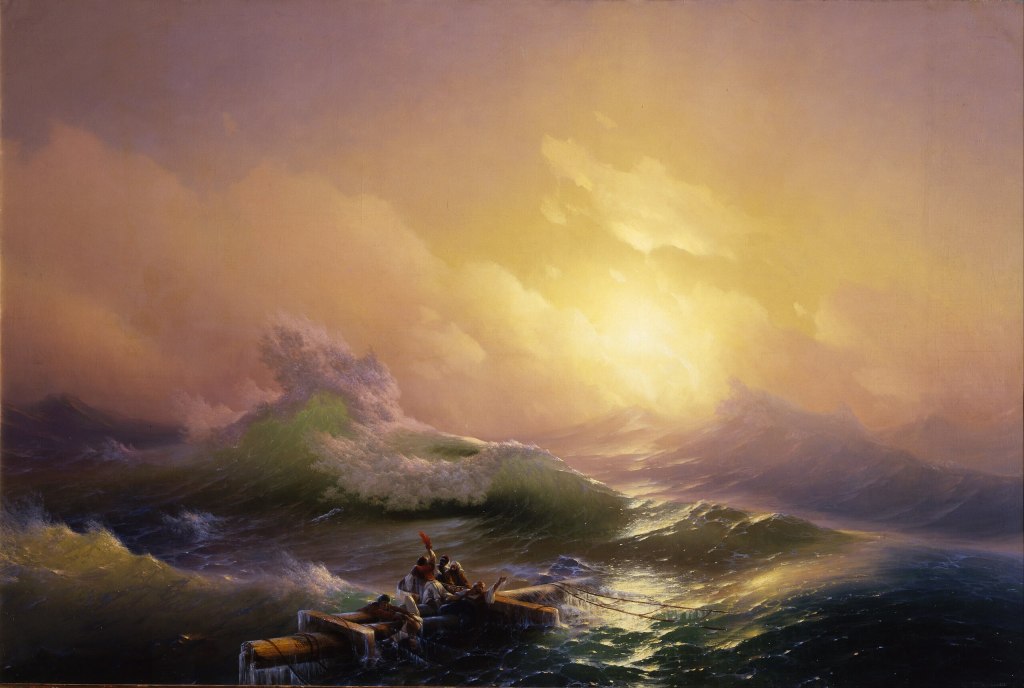
The Ninth Wave (1850) is considered Aivazovsky’s most famous work
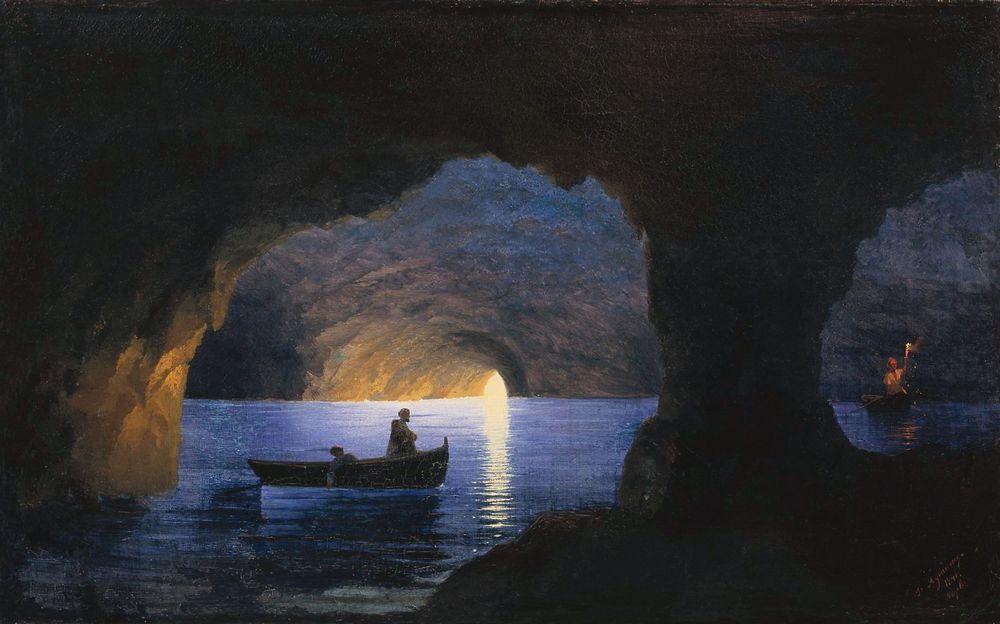
Azure Grotto, Naples (1841)
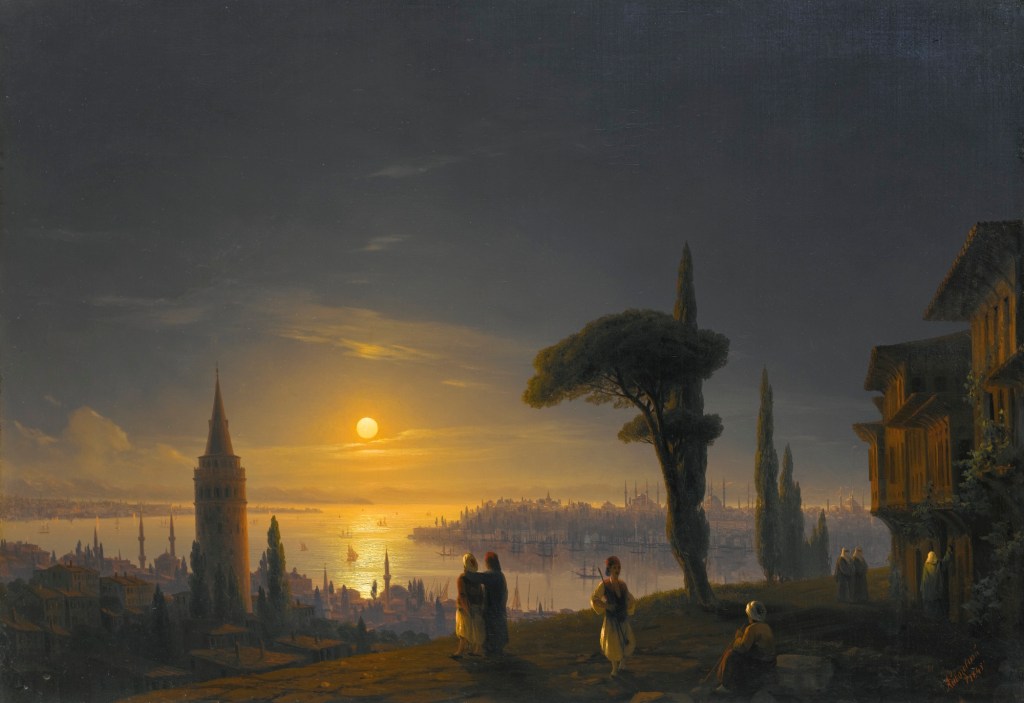
The Galata Tower by Moonlight (1845)
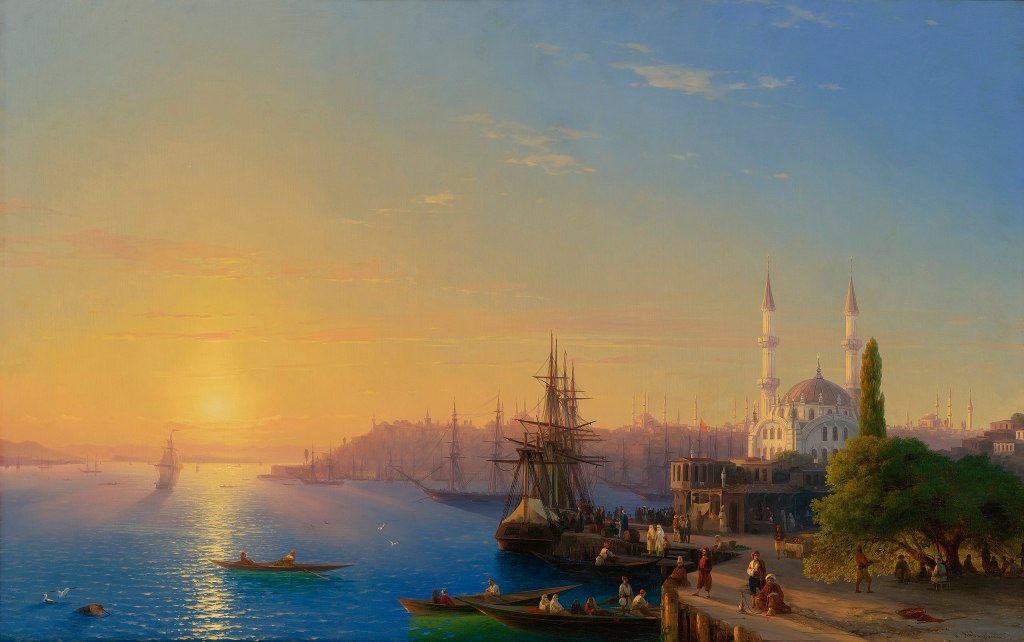
View of Constantinople (1856)
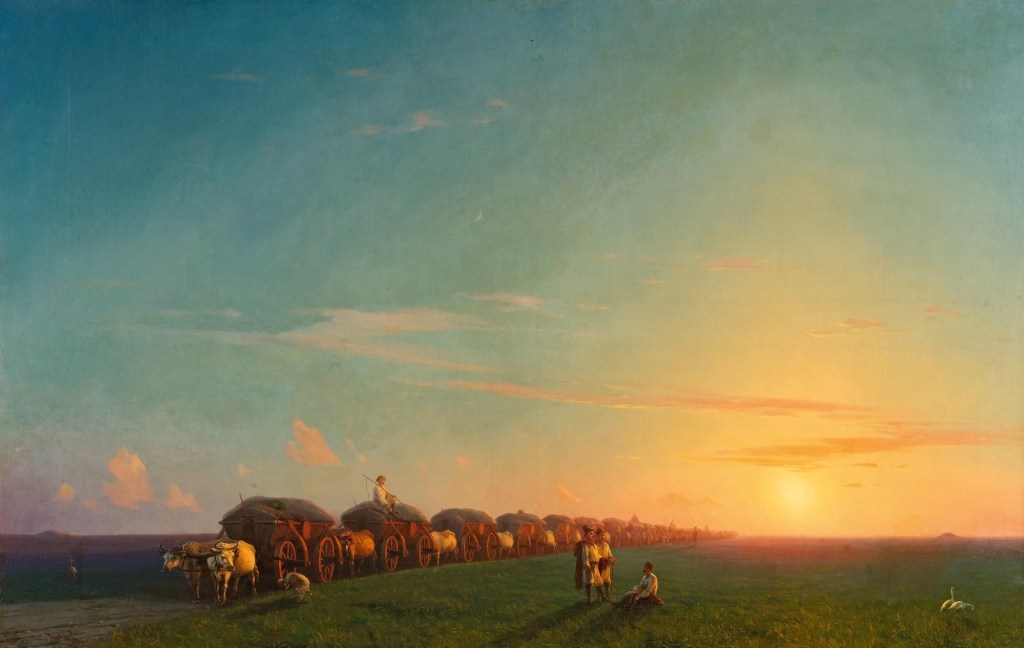
Landscape with Settlers (1856)
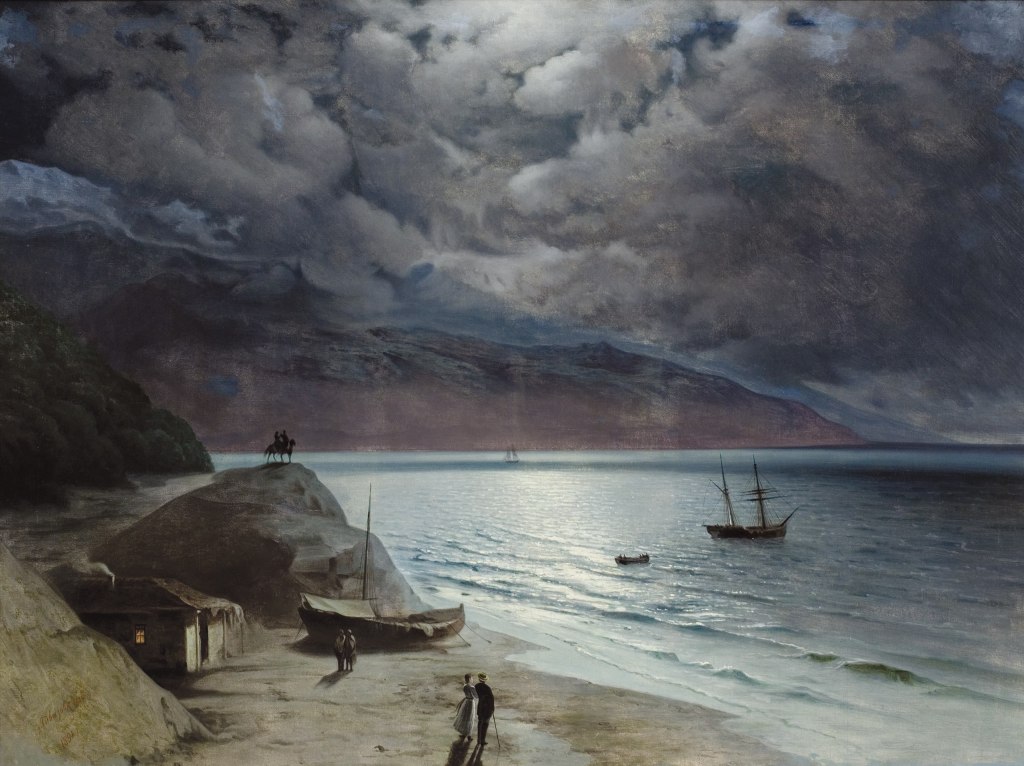
Night at Gurzof
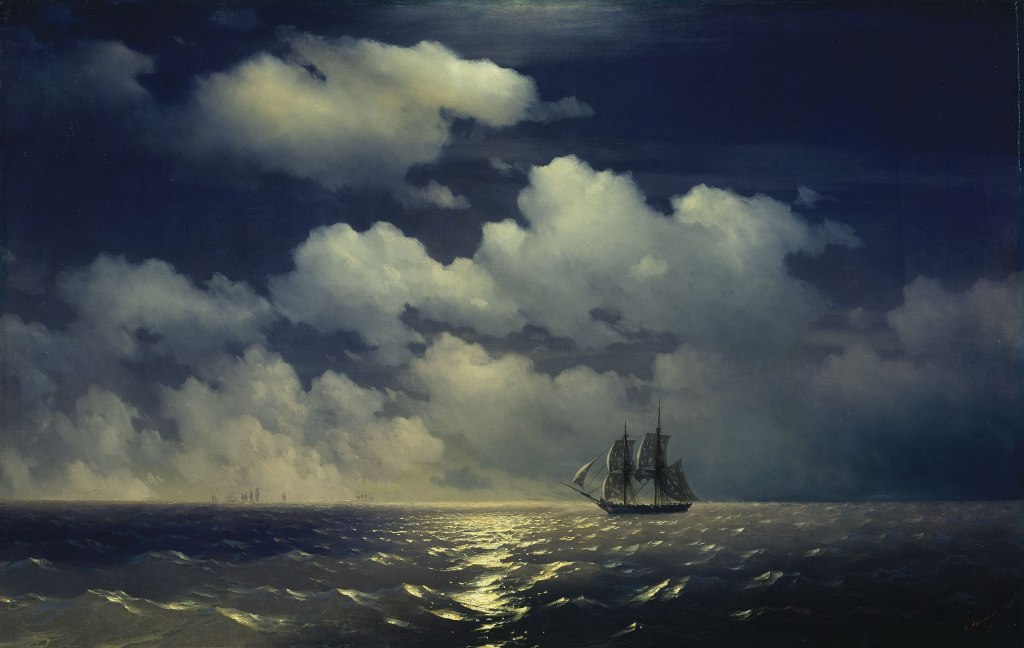
The brig Mercury encounter after defeating two Turkish ships of the Russian squadron (1848)
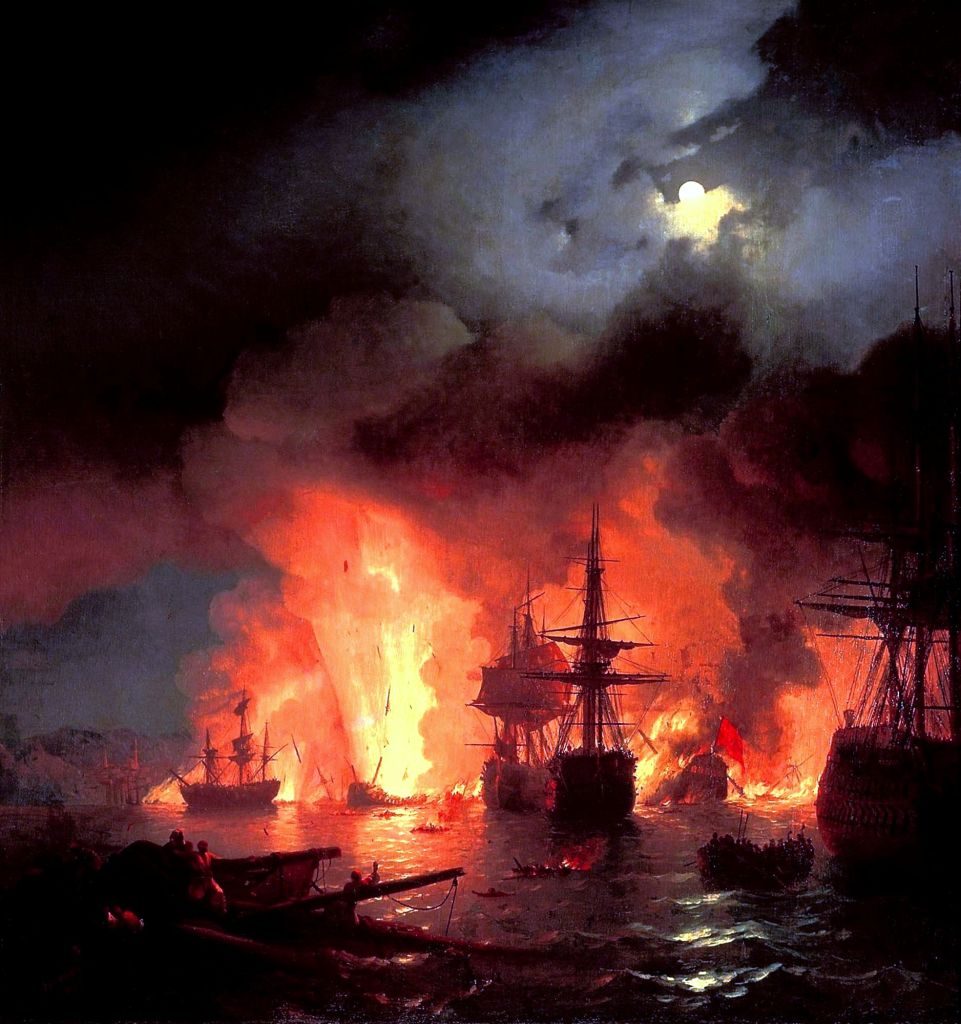
Battle of Çesme at Night (1856)
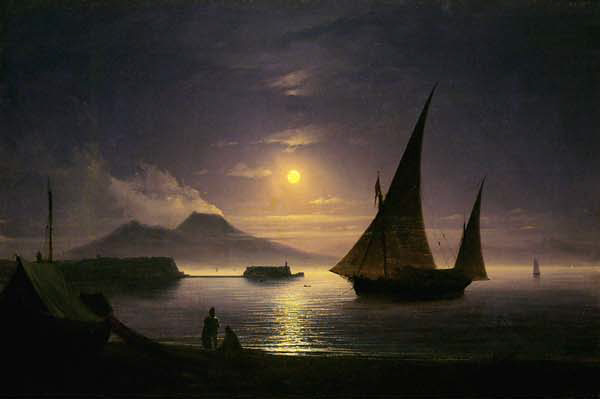
Bay of Naples (1842)
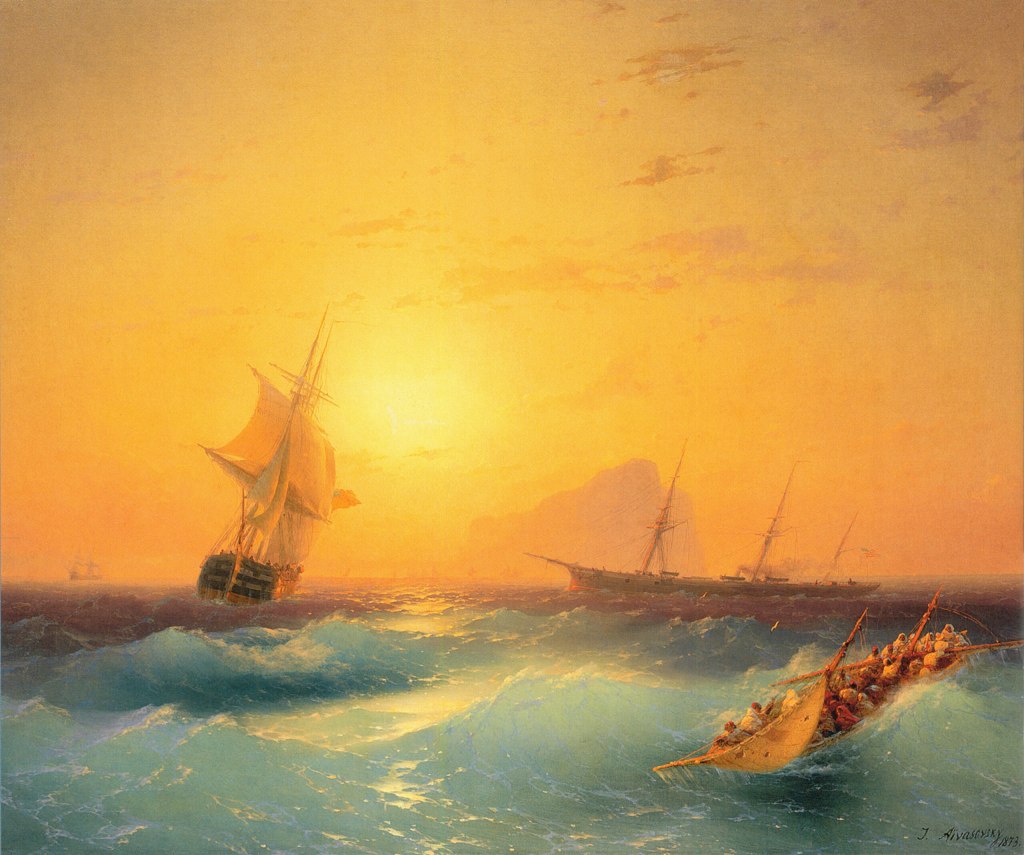
American Shipping off the Rock of Gibraltar (1873)
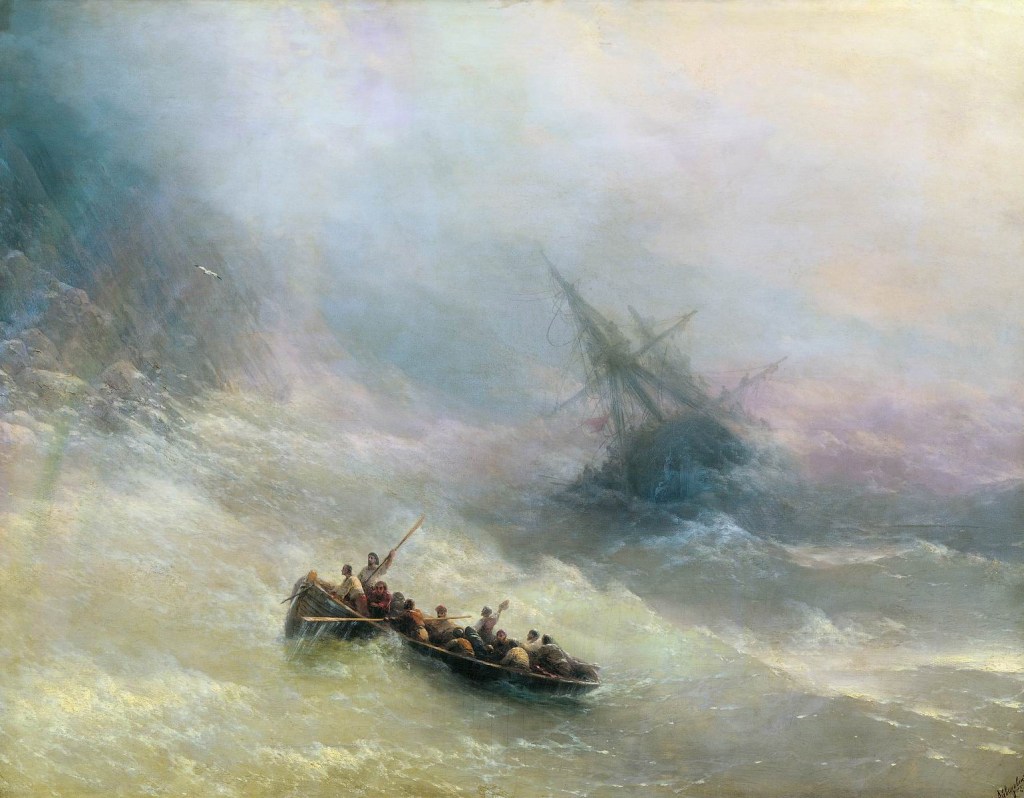
Rainbow (1873)
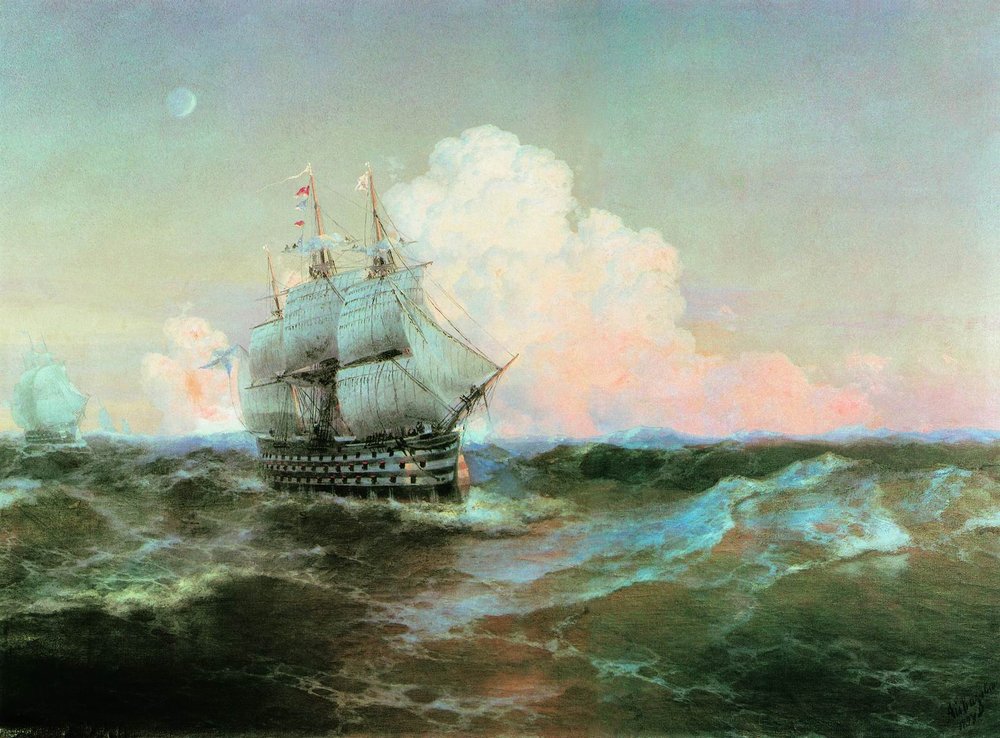
Ship “Twelve Apostles” (1878)
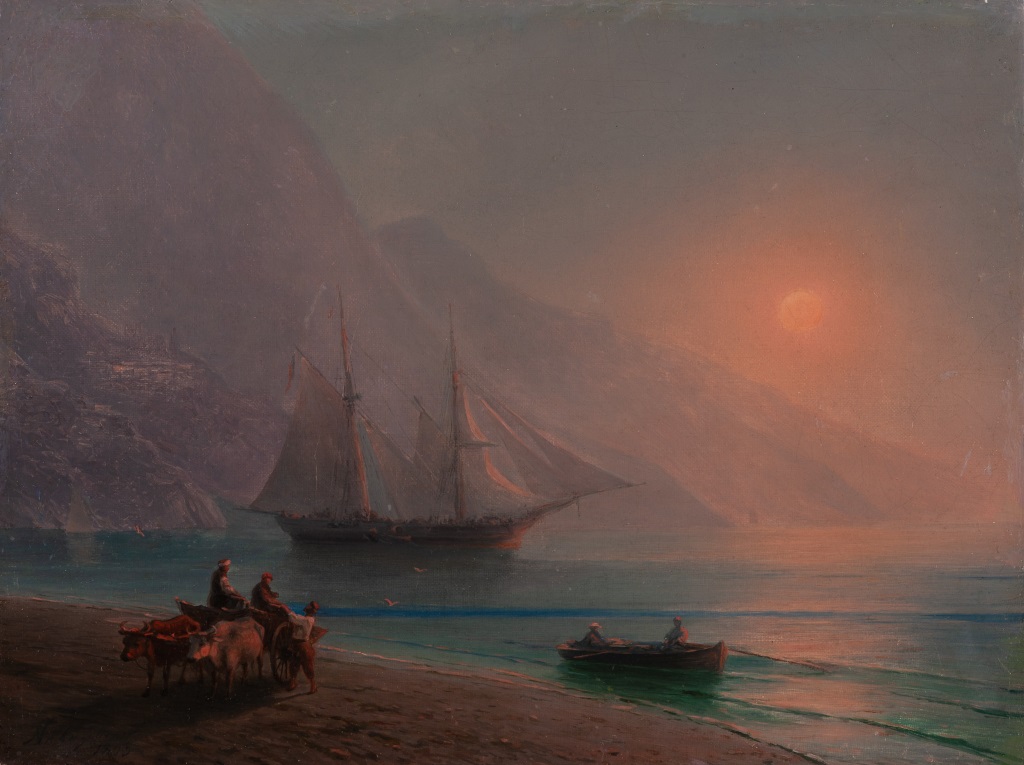
Fog over the Sea (1895)
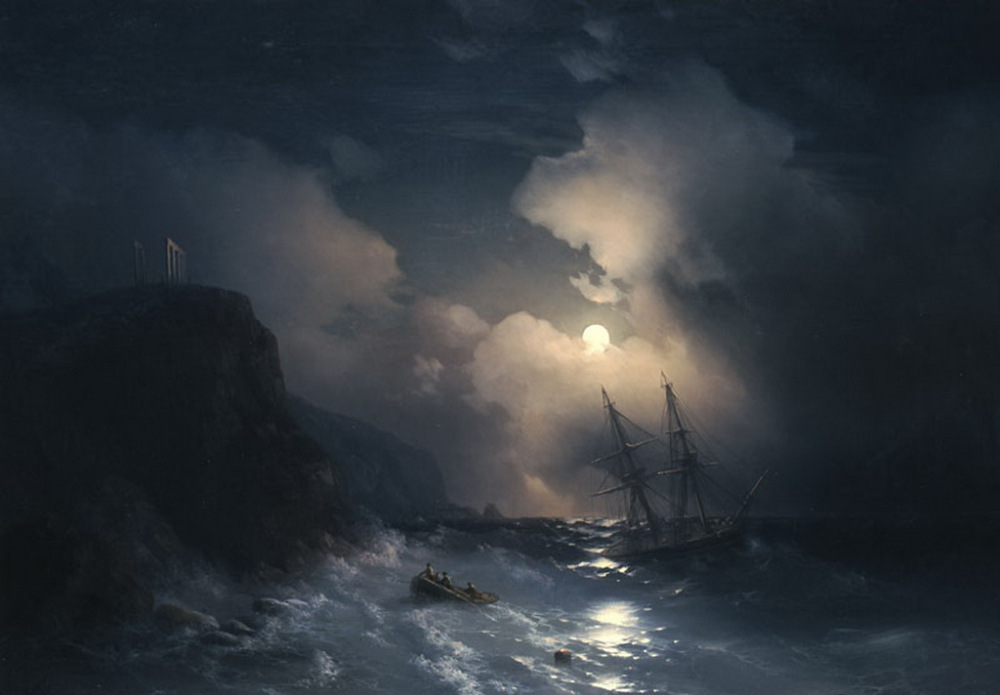
Tempest by Sounion (1856)
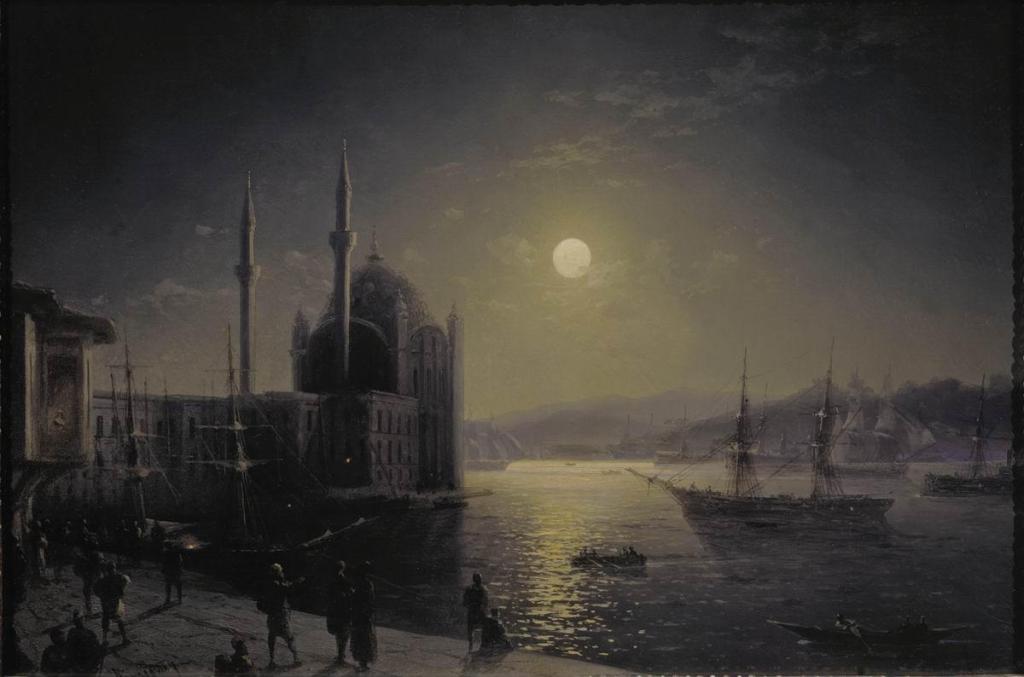
A Moonlit Night on the Bosphorus, featuring Ortaköy Mosque
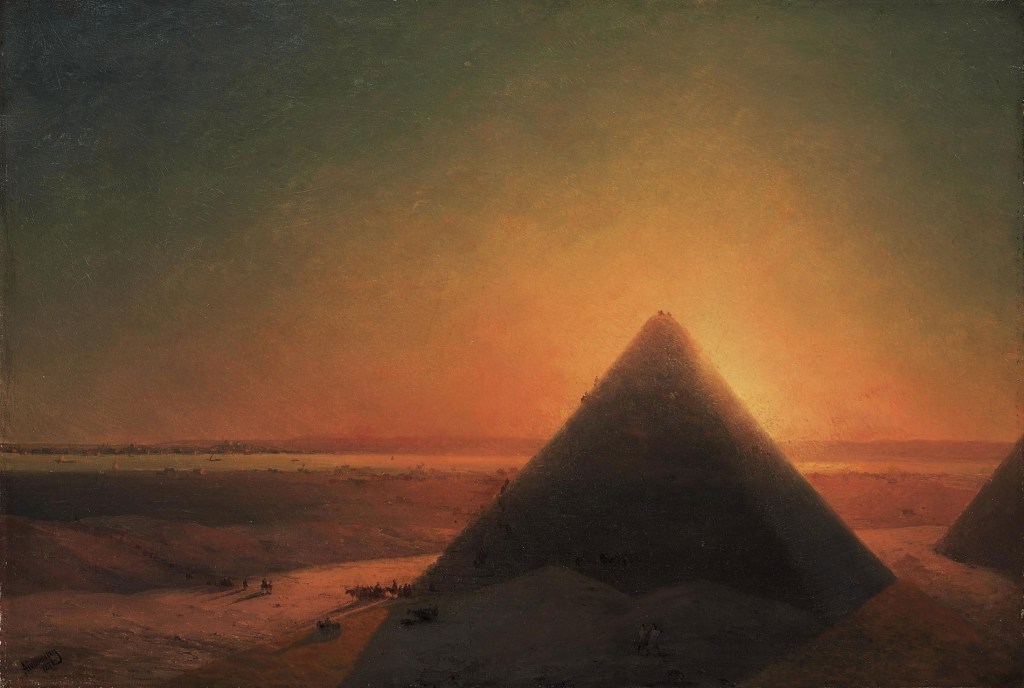
The Great Pyramid of Giza
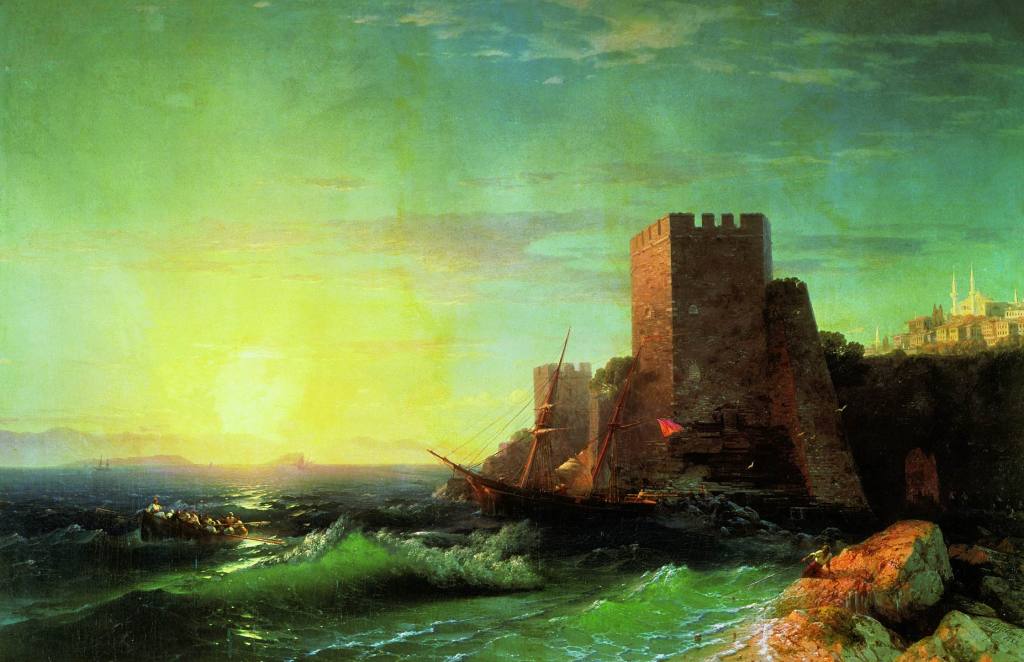
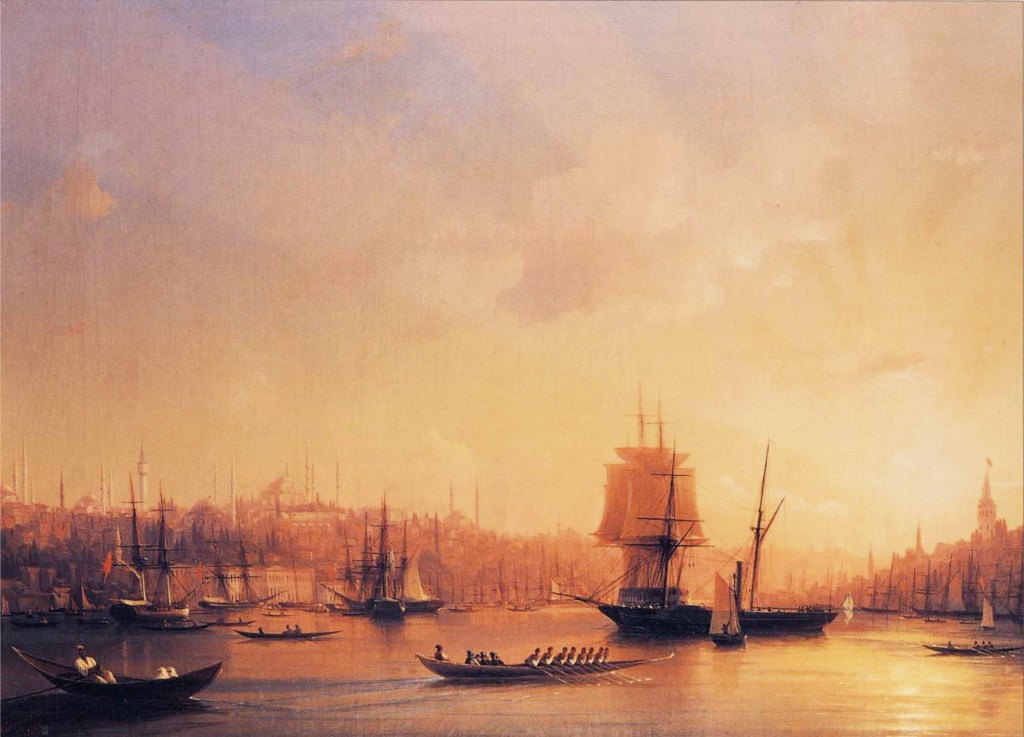
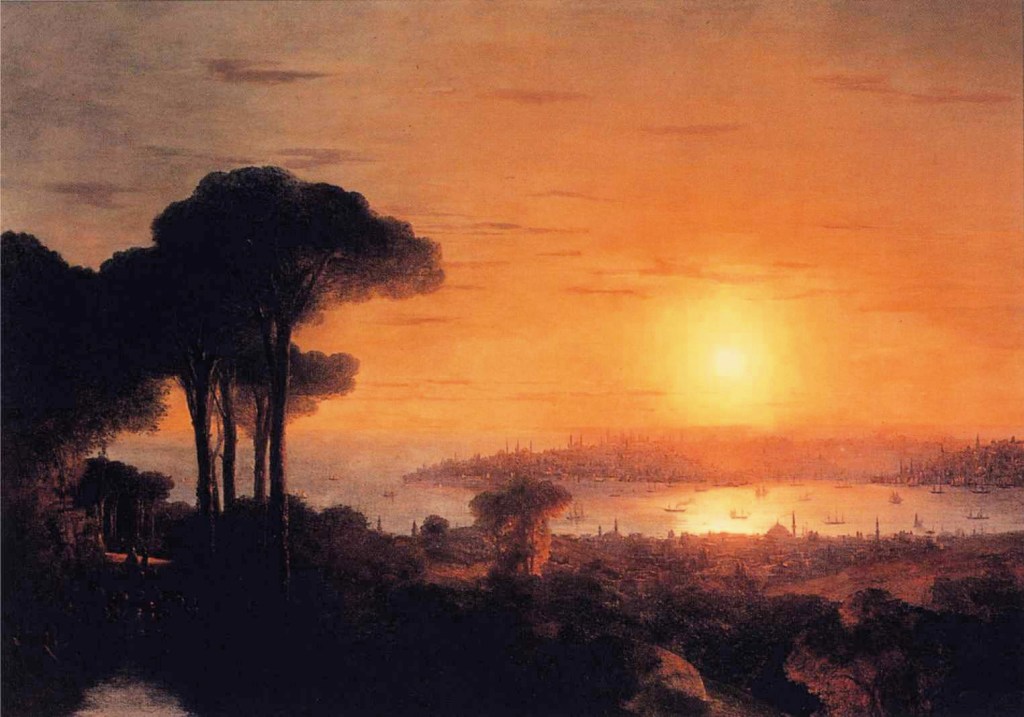
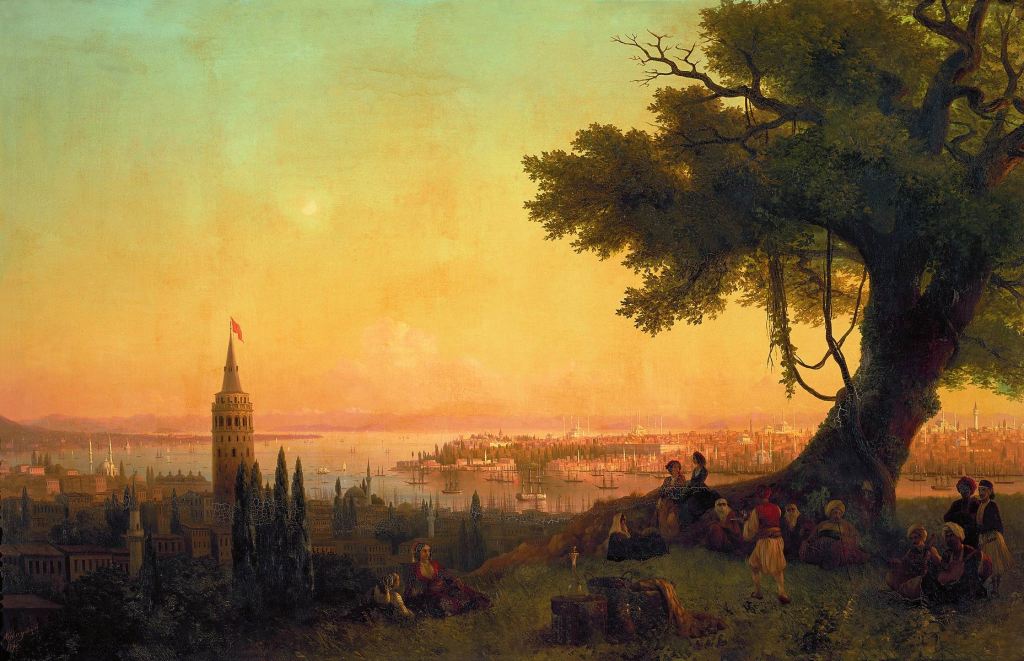
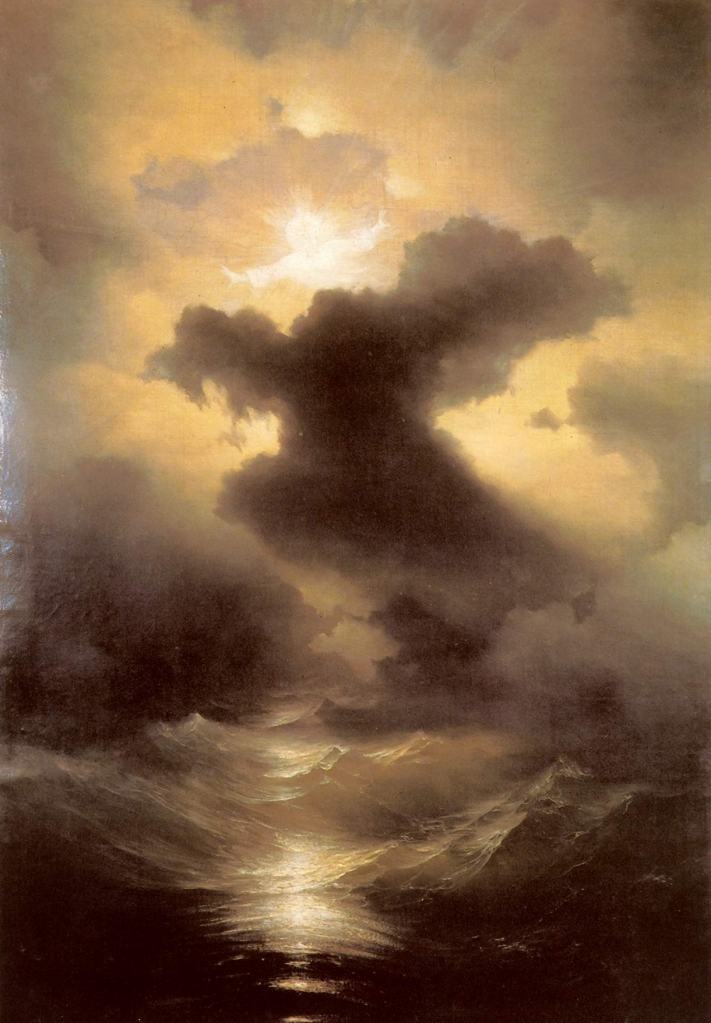
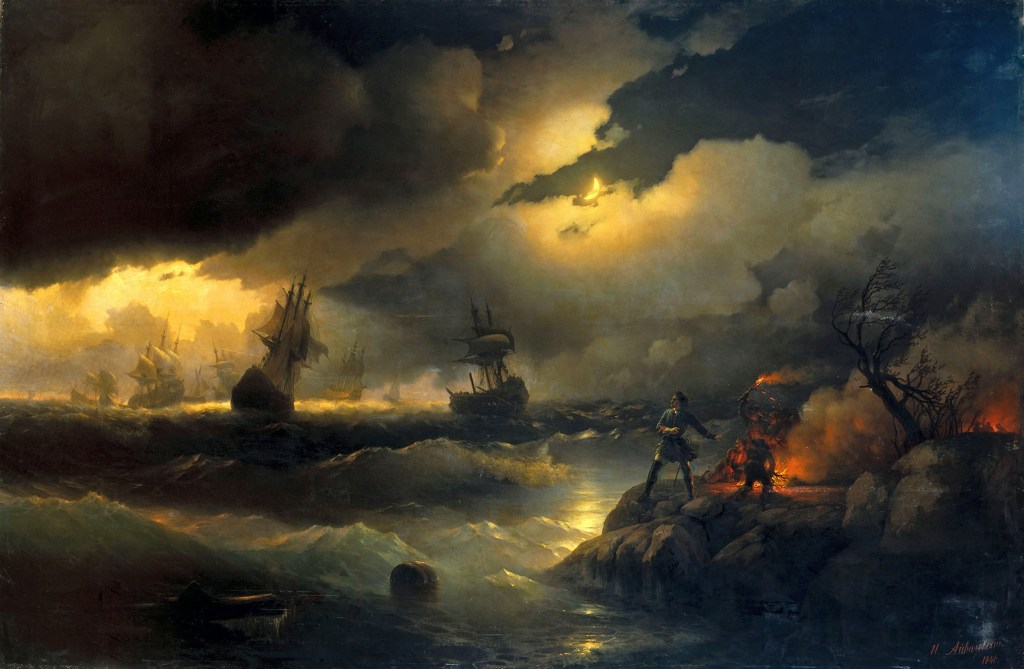
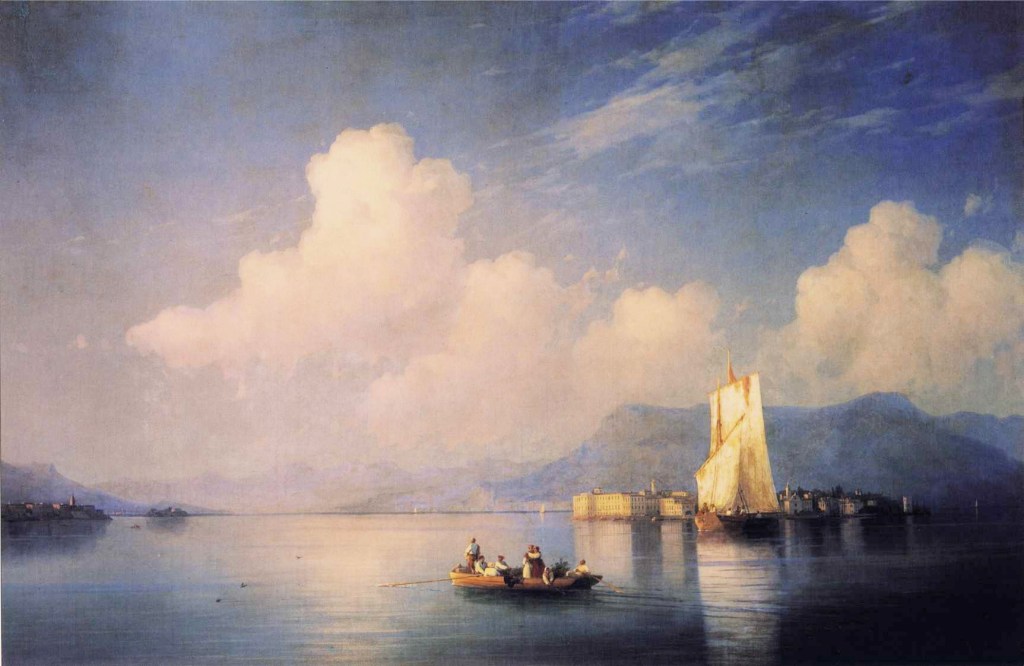
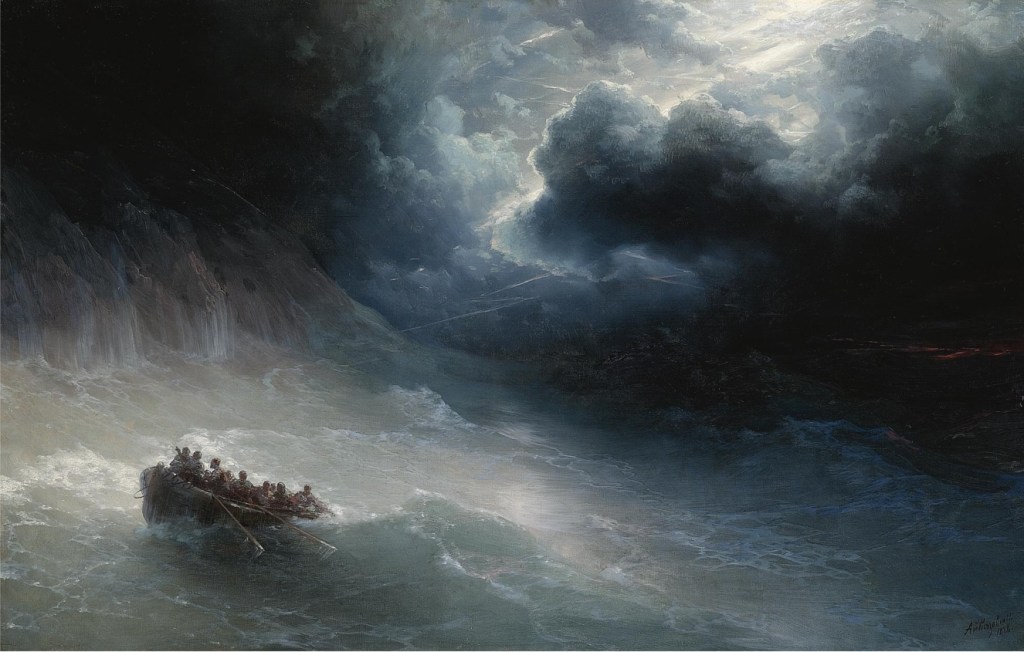
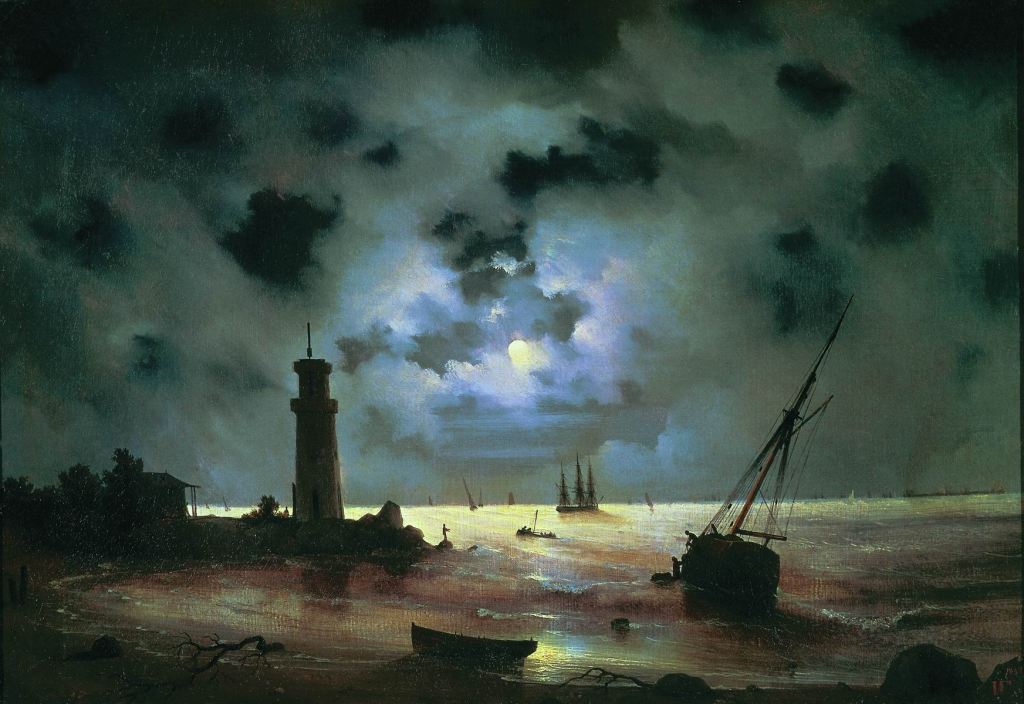
Sea coast at night. Near the beacon

1898 Among the waves.

Stormy Sea in Night (1849)
today is the birthday of Eastman Johnson (Jonathan Eastman Johnson; Lovell, Maine; July 29, 1824 – April 5, 1906 New York City); painter and co-founder of the Metropolitan Museum of Art, New York City, with his name inscribed at its entrance. Perhaps best known for his genre paintings, paintings of scenes from everyday life, and his portraits both of everyday people and prominent Americans such as Abraham Lincoln, Nathaniel Hawthorne, Ralph Waldo Emerson, and Henry Wadsworth Longfellow. His later works often show the influence of the 17th-century Dutch masters, whom he studied in The Hague in the 1850s; he was known as The American Rembrandt in his day.
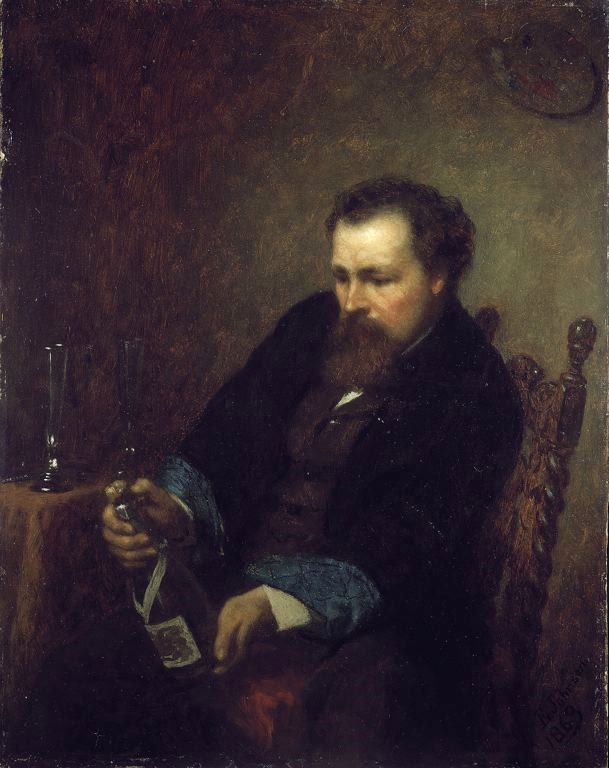
Self-portrait, 1863
In 1869, at the age of 55, he married for the first time, to Elizabeth Buckley. When he died in 1906 at age 81, Johnson was buried at Green-Wood Cemetery in Brooklyn, New York.
Gallery
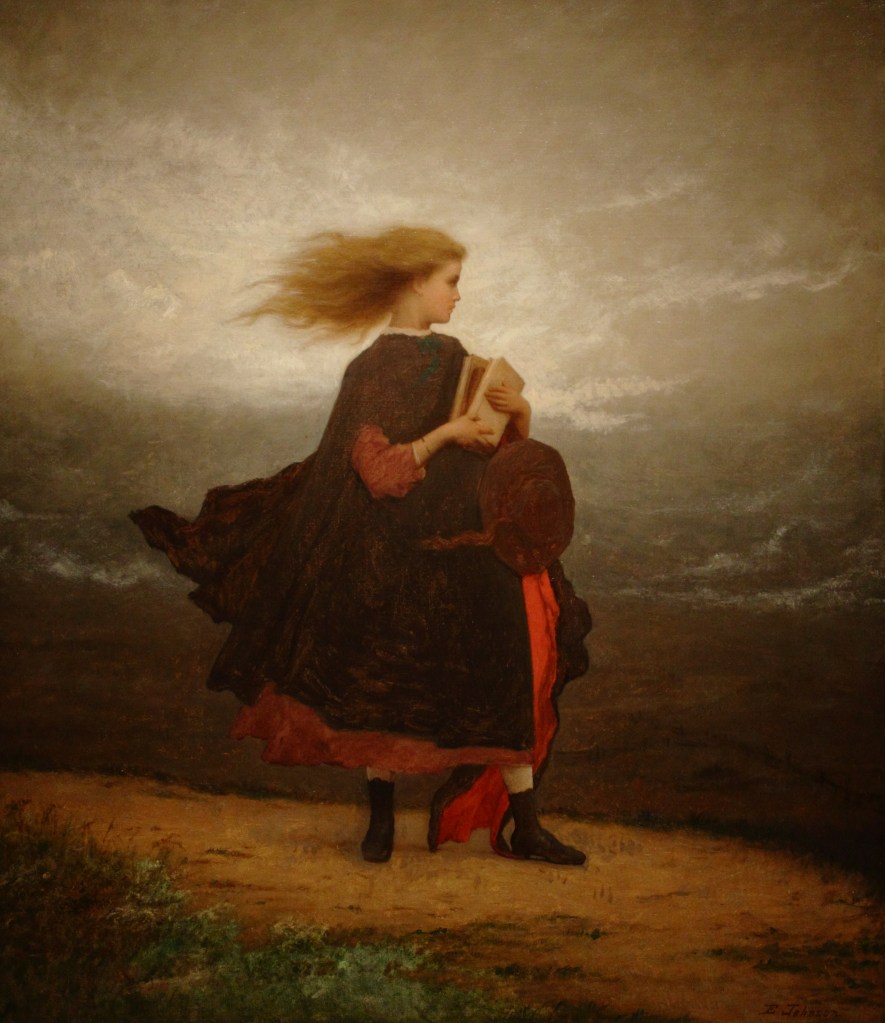
The Girl I Left Behind Me, oil on canvas, c. 1870–1875, 42 x 35 in., Smithsonian American Art Museum
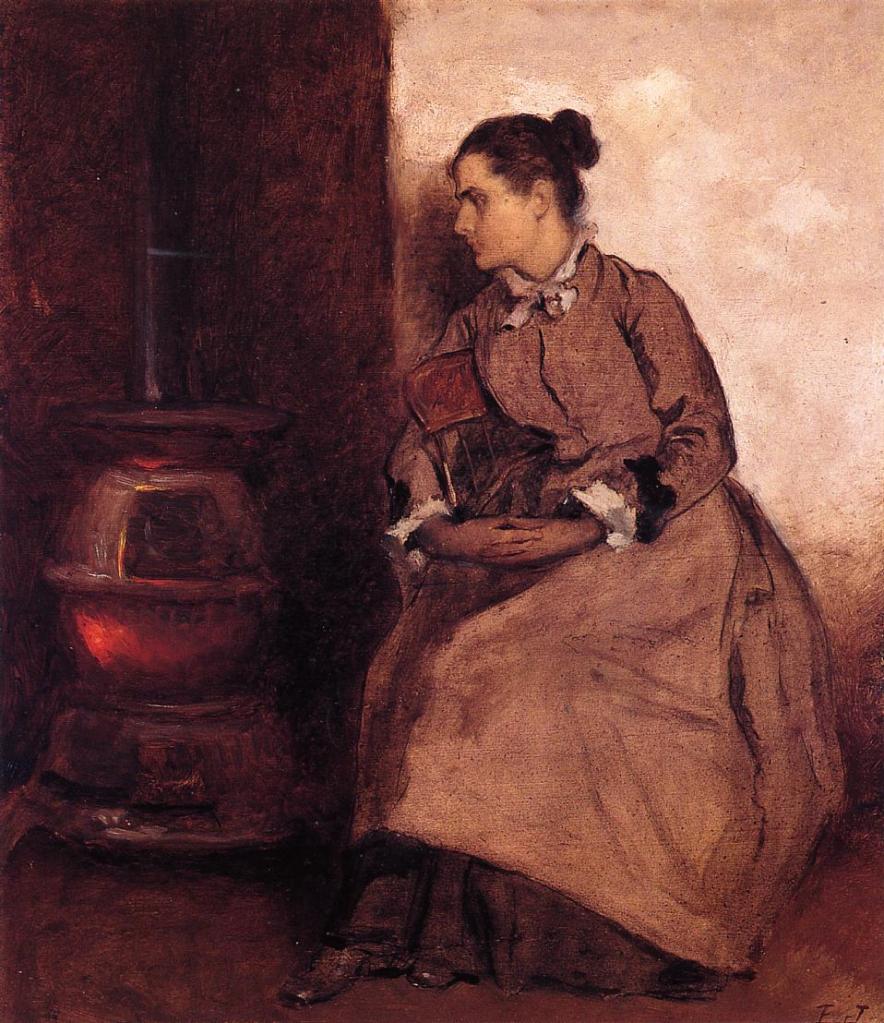
Ruth, oil on panel, 1880–1885, Albright-Knox Art Gallery
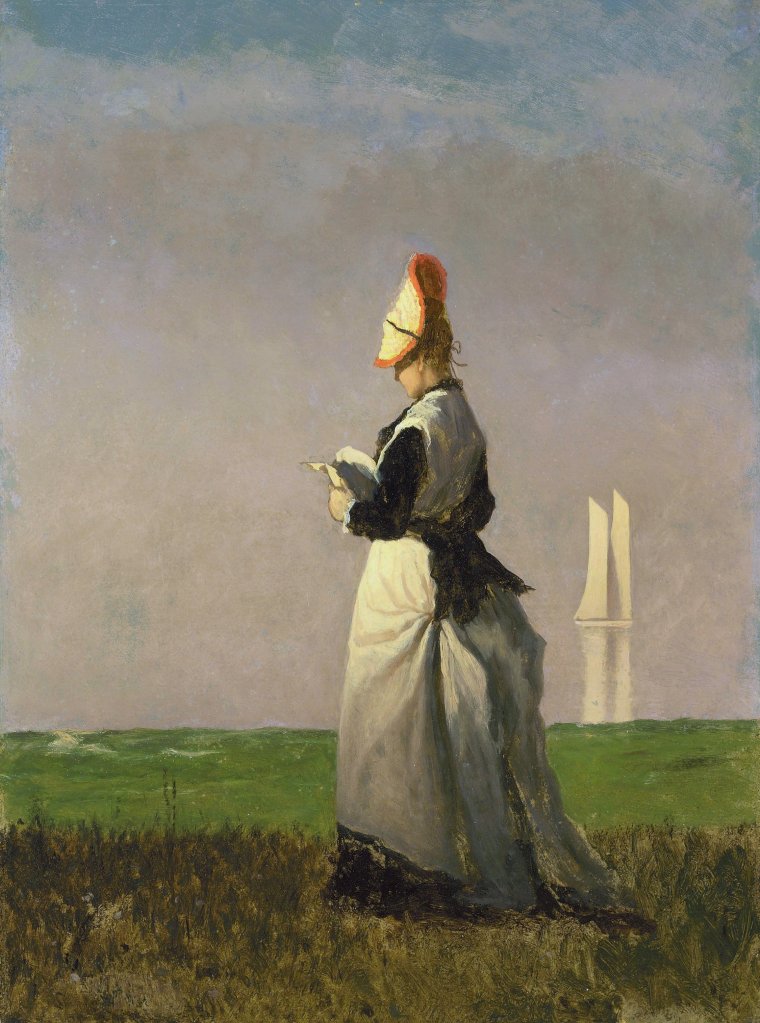
woman reading
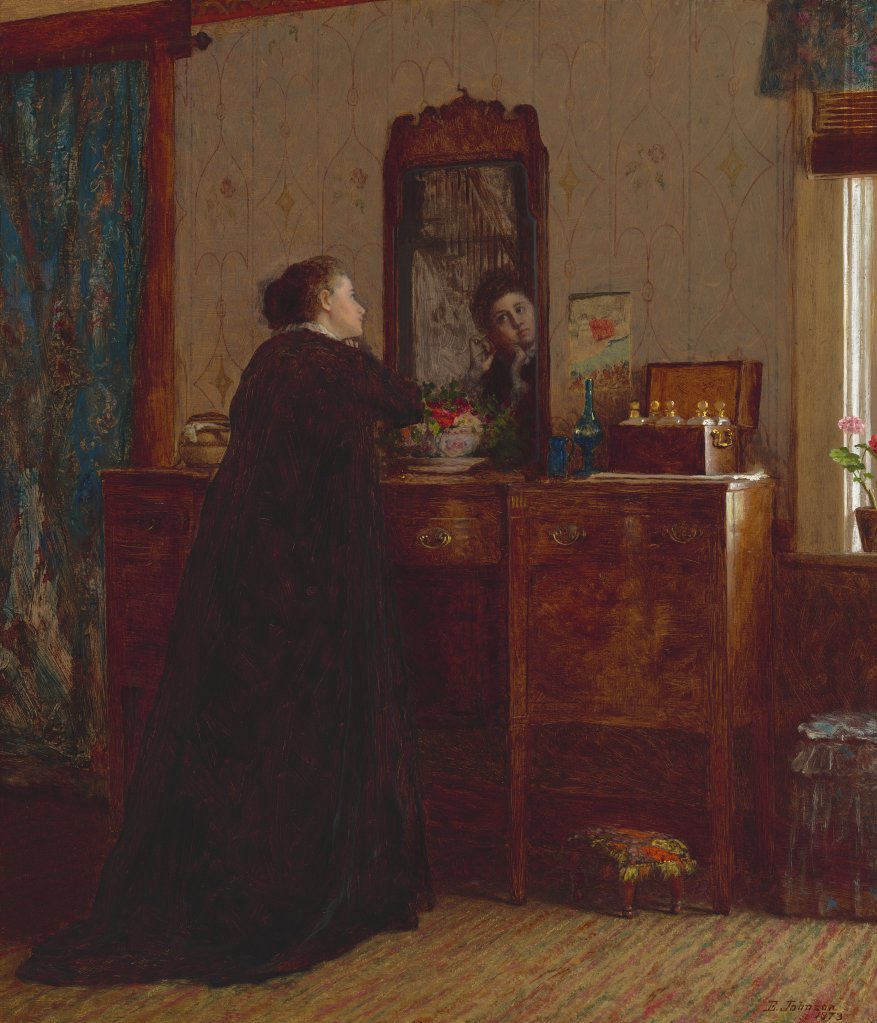
the toilet
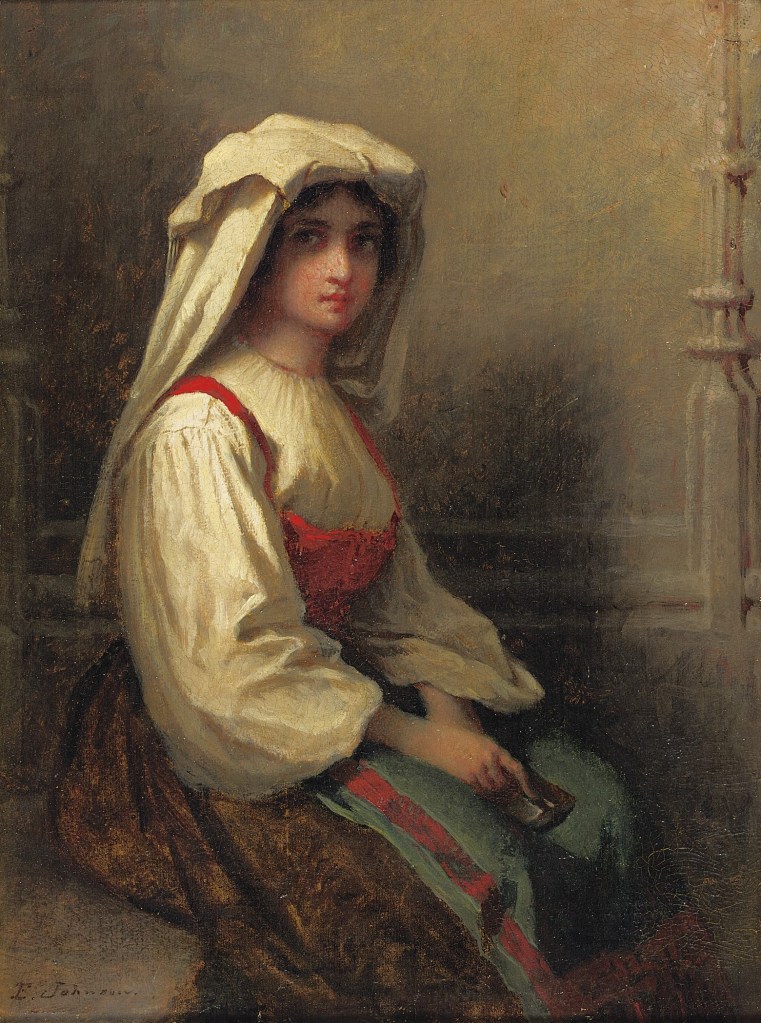
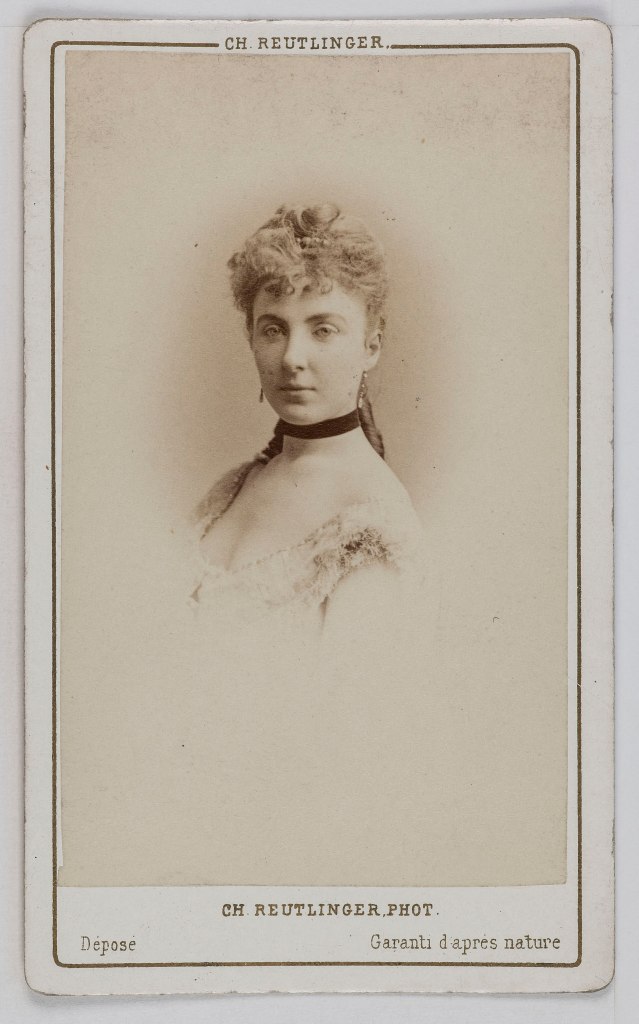
And today is the death day of the countess Valtesse de La Bigne (Émilie-Louise Delabigne 1848 Paris – 29 July 1910 Ville-d’Avray); courtesan and demi-mondaine. Though born to a working-class family in Paris, she rose through the social ranks and was a supporter of painters, while creating a space for women to participate in the art world through her collecting and Salon.
gallery
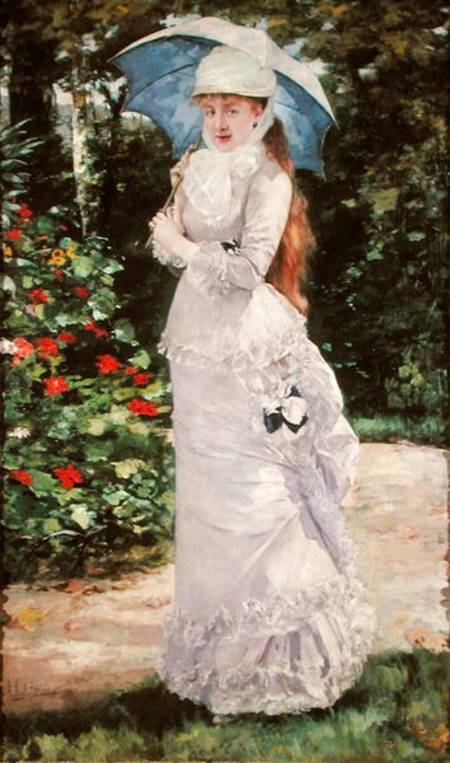
Henri Gervex Portrait
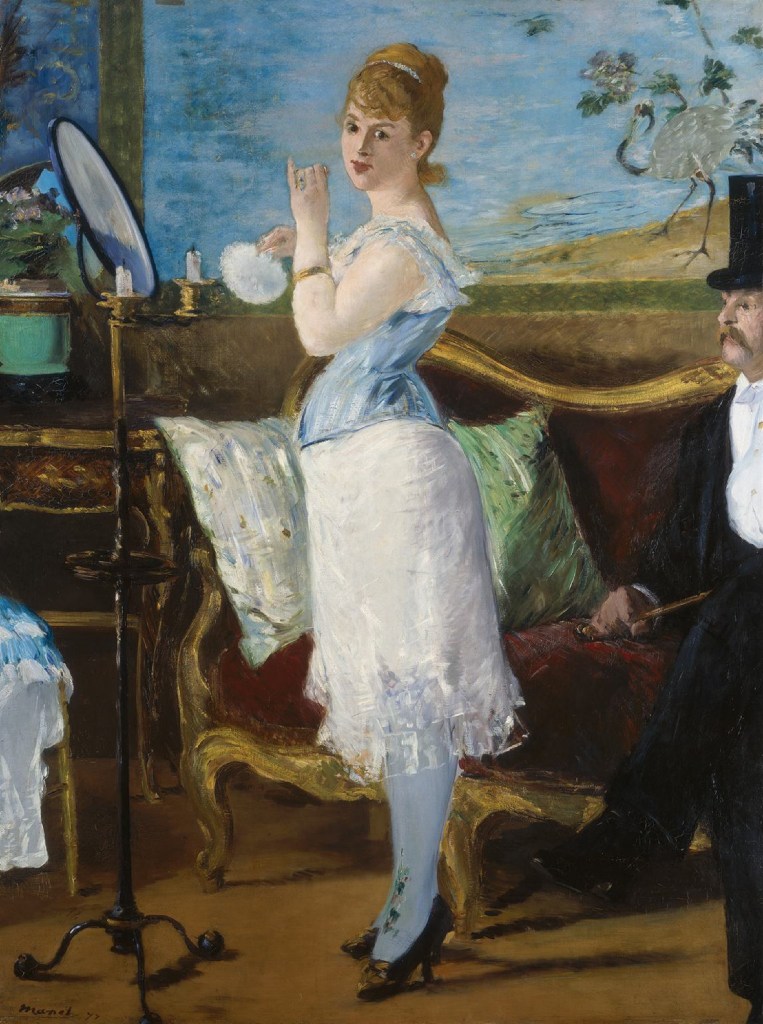
Édouard Manet‘s Nana, 1877, based on the character invented by Zola. Zola was heavily inspired by Valtesse for his titular character
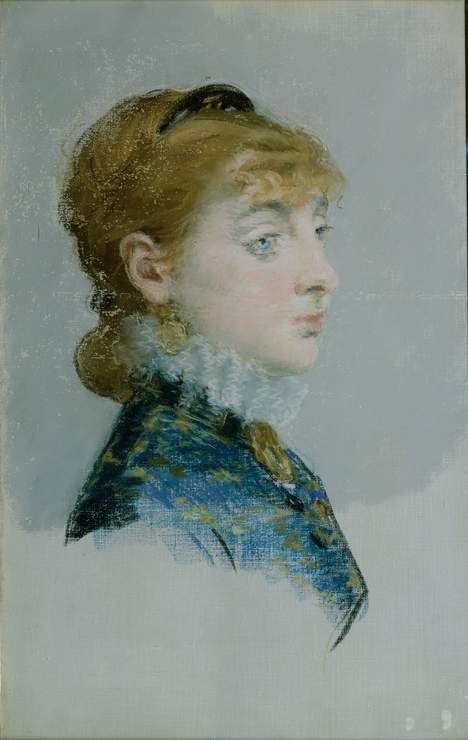
by Manet 1879
The Song of the Day is “I Don’t Know“ by The Sheepdogs. We do not own the rights to this song. All rights reserved by the rightful owner. No copyright infringement intended.
Mac Tag
thanks for stoppin’ by y’all
Follow us on twitter @cowboycoleridge
 The Lovers’ Chronicle
Leave a comment