Dear Zazie, Here is today’s Lovers’ Chronicle from Mac Tag to his muse. Visit us on twitter @cowboycoleridge. Are you listenin’? Ciao, Rhett
The Lovers’ Chronicle
Dear Muse,
listen to the dream…
The last time i checked, our bedroom
did not have a tomb, says the lovely redhead
no my love, welcome to our latest dream,
this is Petrarch’s tomb in Arquà Petrarca, Italy
Ah that makes sense, one of your heroes
yes, the father of unrequited love,
sure thought that was my destiny
-He slips his hand into hers, she leans
into him and they hear a song begin;
“Don’t you feel it growin’ day by day?
People gettin’ ready for the news
Some are happy, some are sad…”
well this is the place to lay those days to rest,
and give thanks for the verse provided
Yes my love, now let’s listen to what’s calling
absolutely, there is a winery just down the road,
Loreggian, are you ready Cara Mia
Andiamo, amore mio

© copyright 2024.2025 mac tag/cowboy coleridge all rights reserved
goin’ with the first song that came to mind,
though i had to look up who recorded it,
’’Listen to Your Heart’’ recorded by Roxette
with Marie Fredriksson on vocals
and written by Per Gessle and Mats Persson
’’I remember, have to love 80’s rock ballads’’
we were listenin’, from the day we met
’’And we’ve known where we’re going’’
and we know why, as long as we keep listenin’

© copyright 2023.2024 mac tag/cowboy coleridge all rights reserved
another relapse; hey, appears this is becomin’ part of the routine, to write you, you know about my routines, all these words keep comin’ and i have to do somethin’ with them; did you hear, or is could, the right question, s’pose these post mortems are macabre, perhaps pointless, given the one way diaogue; i know this; it takes two to listen, wish we had both been
© copyright 2022.2023 mac tag/cowboy coleridge all rights reserved
upon the first star
i see tonight
thinkin’
the thoughts
that interweave
the possibilities
and choices
that await
what now, which way
wherefore i throw a wish
to find out if i might
and i listen
i will hear you
in order to be
even for a moment
to keep choosin’ you
© copyright 2021 mac tag/cowboy coleridge all rights reserved
Pale Love, Pale Rider
a fine reminder
that it takes two
whatever the endeavor
particularly this one
in regards to the two
most important “ships”;
relationships
and friendships
i could not hear
for the longest time
why it took nearly
a lifetime to write
also explains
why i am quiet
i need to hear the words
to give them to you
© copyright 2020.2023 mac tag/cowboy coleridge all rights reserved
i search and find
and it comes on
i have to because
i have ideas runnin’
through my head
that i do not know
how to describe
whatever it is that pulls,
past the ordinariness
even for a moment,
it is enough
contemplatin’
pictures made
in order to be
anything we need
© copyright 2019 mac tag/cowboy coleridge all rights reserved
here again
to choose you
only one way
to close these thoughts
and the path that leads them
where they must go
perhaps
some sort of madness,
but is there not
some reason as well
whatever it is that pulls,
past the ordinariness
even for a moment,
it is enough
listen still
© copyright 2018 mag tag/cowboy coleridge all rights reserved
on the prairie
at night alone
stars comin’ on
thinkin’ the thoughts
that interweave
the possibilities
and choices
that await
a whisper,
what now, which way
wherefore i threw a wish
to find out if i might
and i listen
and listen still
none wise enough
to find out all there is
and is not
certainly i
but i will still
be listenin’ for you
till the stars fade away
and the shadows take the moon

Karen: L’Absinthe by Degas is one of my favorite paintings.
agree
her melancholic look
makes me want to join her
and drink too much absinthe
and read Baudelaire and Rimbaud to her
K: Exactly! Also, I can stare at this painting for hours (which I have); there is so much depth and expression. Degas is incredible.
© copyright 2017 mac tag/cowboy Coleridge all rights reserved
“I hope you find peace”
Ah yes, peace
Quite the elusive lover
But I found her
When I realized
The verse is all
That matters to me
© copyright 2016 mac tag/cowboy Coleridge all rights reserved
Today, a day in history story of unrequited love, my favorite kind. On this day in 1374, scholar, poet, humanist, “The Father of Humanism”, “The Father of the Renaissance”, Petrarch died at his home in Arquà Petrarca, Veneto, Italy one day before his 70th birthday. Born Francesco Petrarca on 20 July 1304 in Arezzo, Tuscany, Italy. He rediscovered many Ancient Greek and Roman writers and his belief that there was no real conflict between Classical and Christian thought anticipated the Renaissance spirit. He did not see a conflict between realizing humanity’s potential and having religious faith.
Petrarch is perhaps best known for his Il Canzoniere (Song Book) a collection of 366 poems which address his lifelong unrequited love for a mysterious woman named Laura.
 Laura de Noves
In many of these he developed and perfected the sonnet form, and the “Petrarchan sonnet” still bears his name. Apparently, on 6 April 1327, Good Friday, the sight of a woman called “Laura” in the church of Sainte-Claire d’Avignon awoke in him a lasting passion. Laura may have been Laura de Noves, the wife of Count Hugues de Sade (an ancestor of the Marquis de Sade). According to his “Secretum”, she refused him for the very proper reason that she was already married to another man. Petrarch channeled his feelings into love poems. Upon her death in 1348, he found that his grief was as difficult to live with as was his former unrequited longing. Later in his “Letter to Posterity”, Petrarch wrote: “In my younger days I struggled constantly with an overwhelming but pure love affair – my only one, and I would have struggled with it longer had not premature death, bitter but salutary for me, extinguished the cooling flames. I certainly wish I could say that I have always been entirely free from desires of the flesh, but I would be lying if I did.” The Romantic composer Franz Liszt set three of Petrarch’s Sonnets (47, 104, and 123) to music for voice, Tre sonetti del Petrarca, which he later would transcribe for solo piano for inclusion in the suite Années de Pèlerinage.
Today is the birthday of Edgar Degas (born Hilaire-Germain-Edgar De Gas, Paris; 19 July 1834 – 27 September 1917 Paris); artist of paintings, sculptures, prints, photographs, and drawings. He is especially identified with the subject of dance; more than half of his works depict dancers. He is regarded as one of the founders of Impressionism, although he rejected the term, preferring to be called a realist. His portraits are notable for their psychological complexity and for their portrayal of human isolation. At the beginning of his career, Degas wanted to be a history painter, a calling for which he was well prepared by his rigorous academic training and close study of classic art. In his early thirties, he changed course, and by bringing the traditional methods of a history painter to bear on contemporary subject matter, he became a classical painter of modern life.
 Self-portrait (Degas au porte-fusain), 1855
He never married and spent the last years of his life, nearly blind, restlessly wandering the streets of Paris.

Gallery
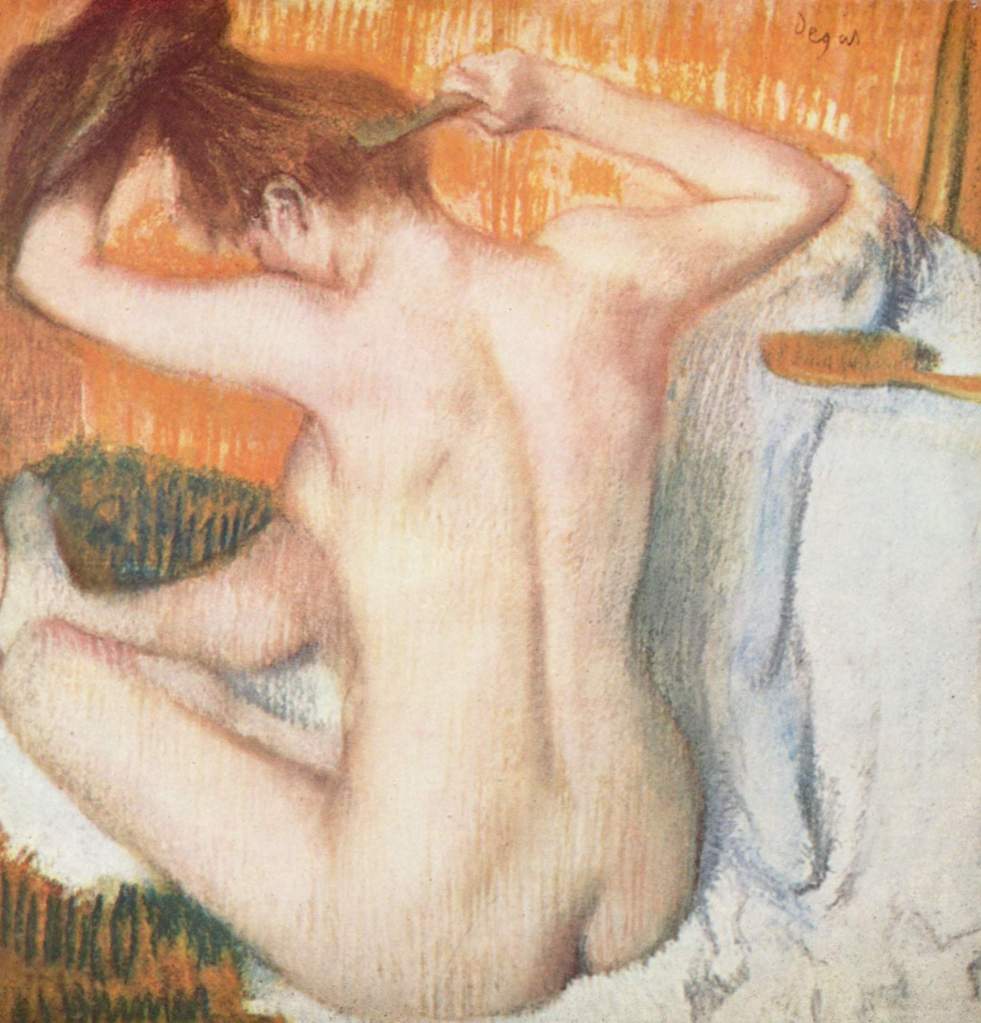
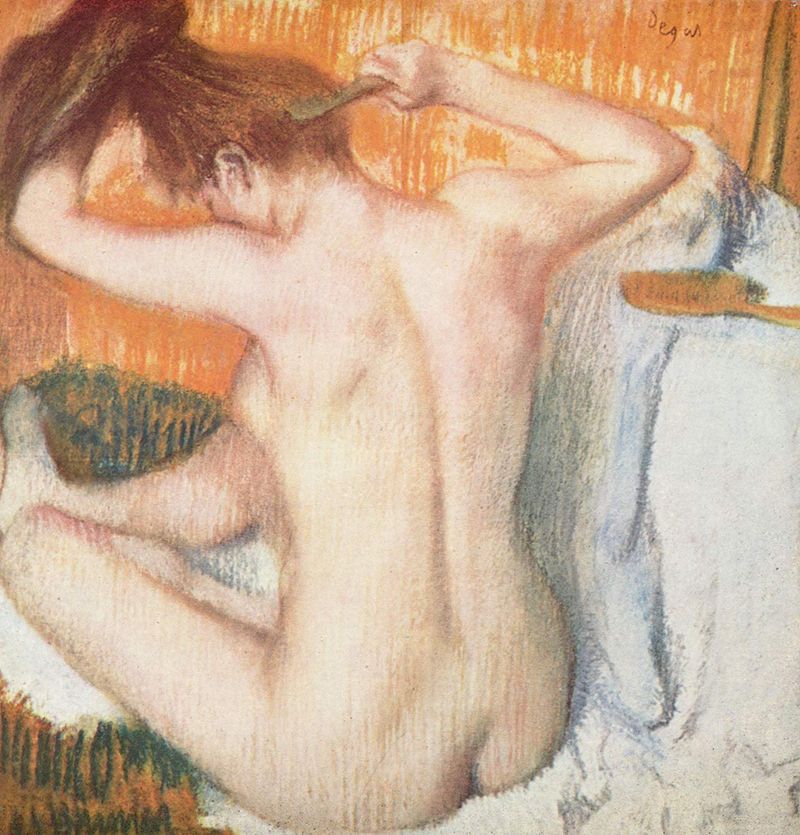
La Toilette (Woman Combing Her Hair), c. 1884–1886, pastel on paper, Hermitage Museum, St. Petersburg

Woman in the Bath, 1886, Hill-Stead Museum, Farmington, Connecticut
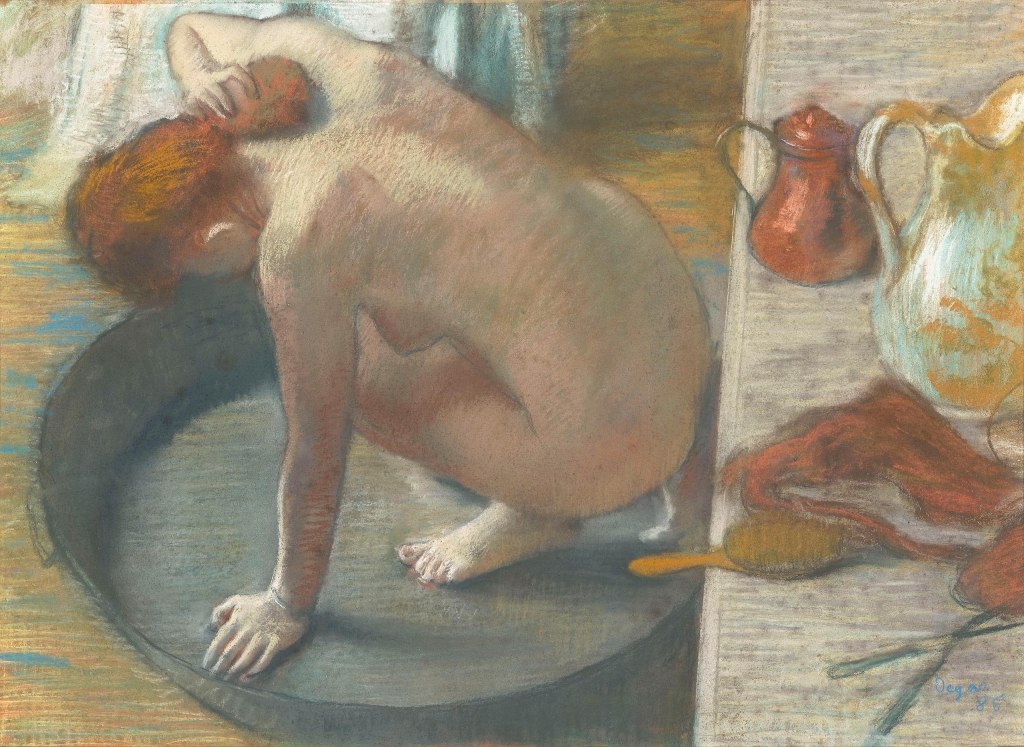
The Tub, 1886, Musée d’Orsay, Paris, France
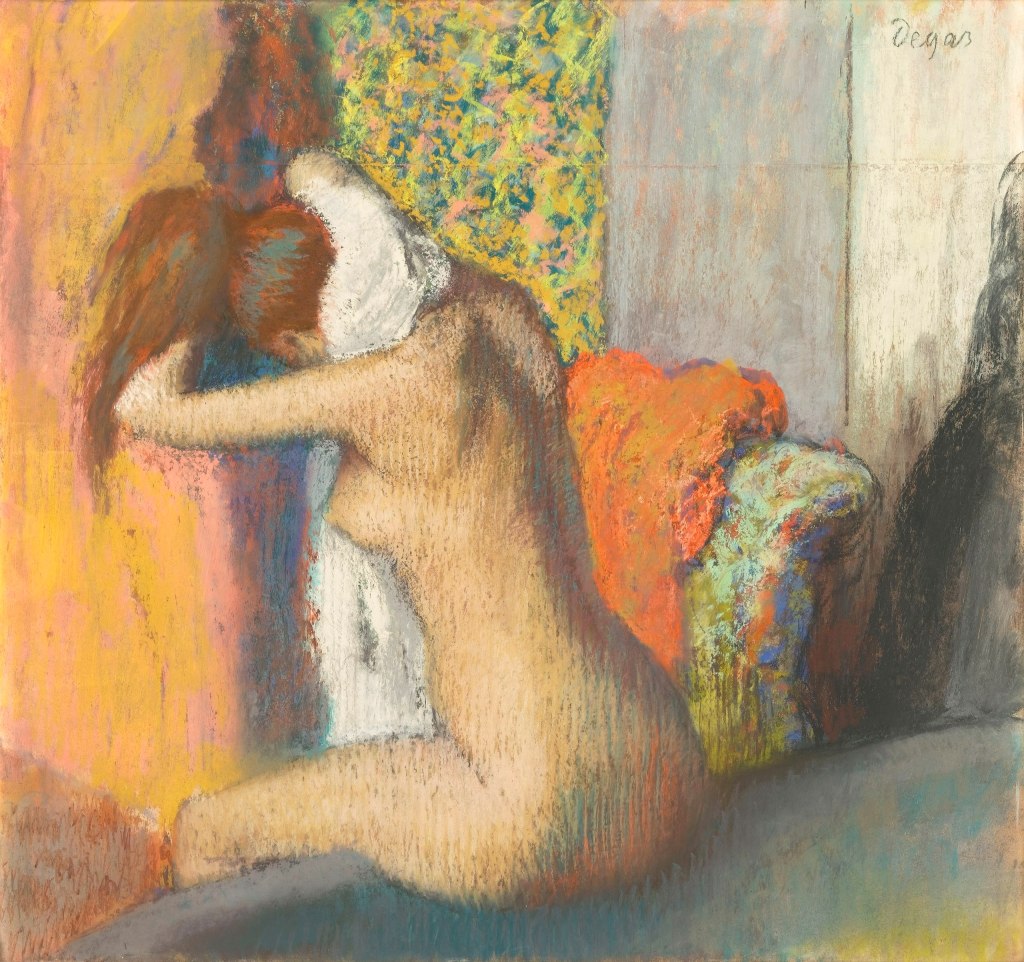
After the Bath, Woman Drying her Nape, pastel on paper, 1898, Musée d’Orsay, Paris

Kneeling Woman, 1884, Pushkin Museum, Moscow
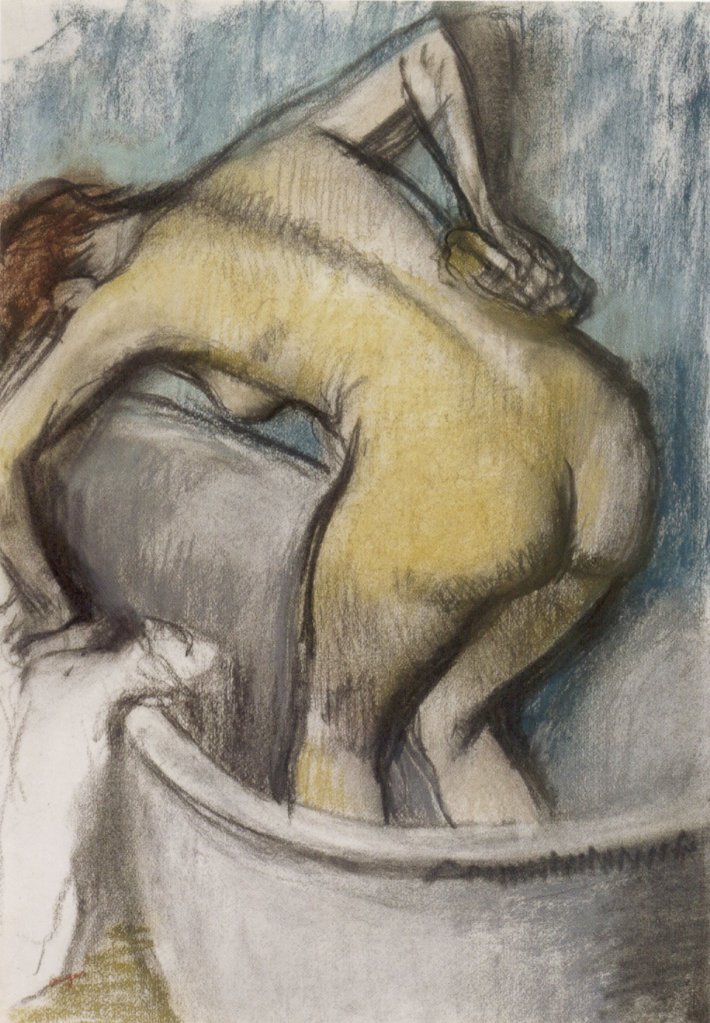
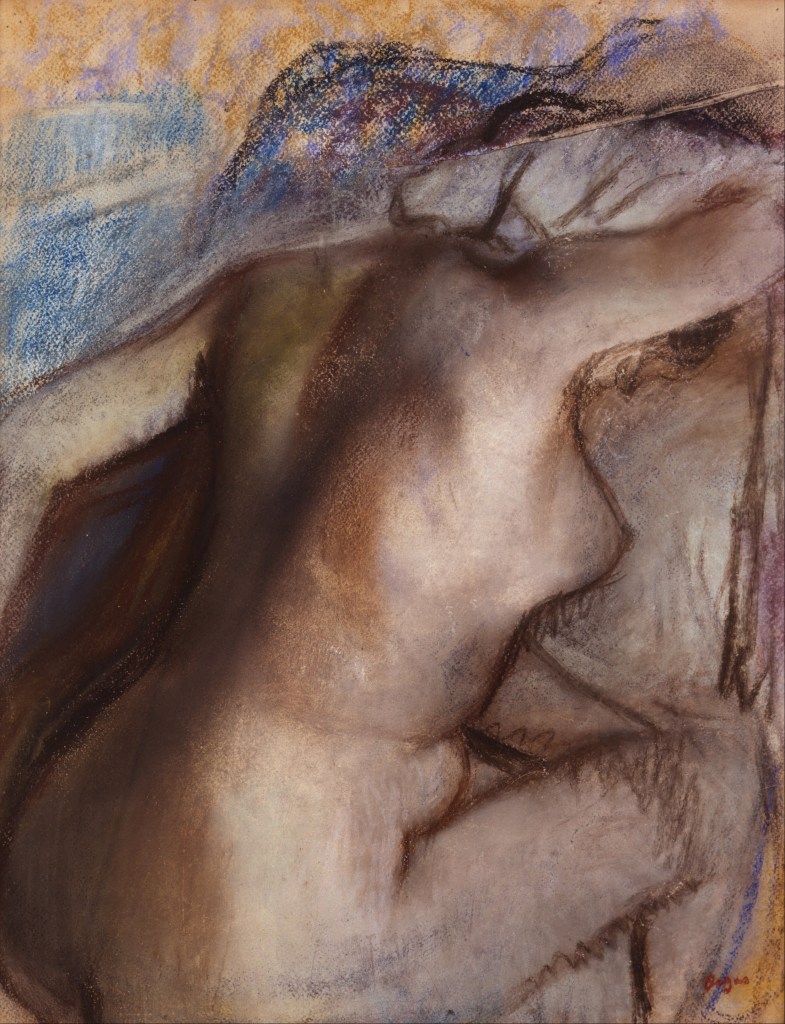
After the Bath, Woman Drying Herself, c. 1884–1886, reworked between 1890 and 1900, pastel on wove paper, 40.5 x 32 cm, Musée Malraux, Le Havre
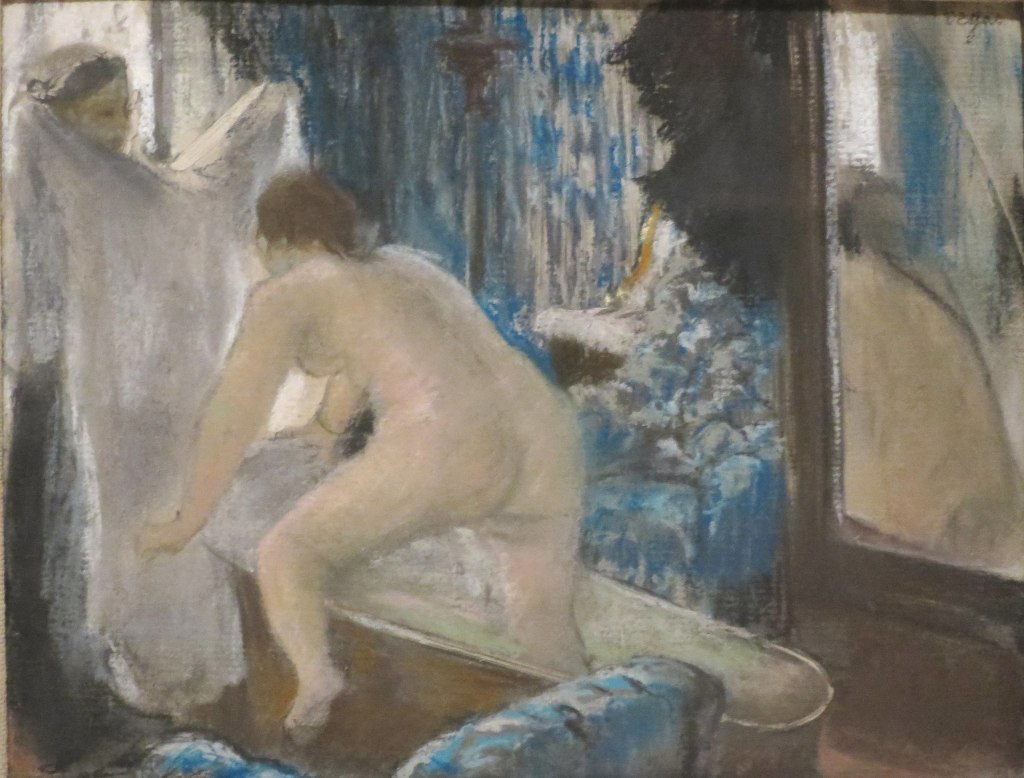
Woman Getting out of the Bath, 1877, Norton Simon Museum, Pasadena

Après le bain (vers 1890), Munich, Neue Pinakothek

Jeune femme se séchant après le bain (1896), photographie, Los Angeles, Getty Center

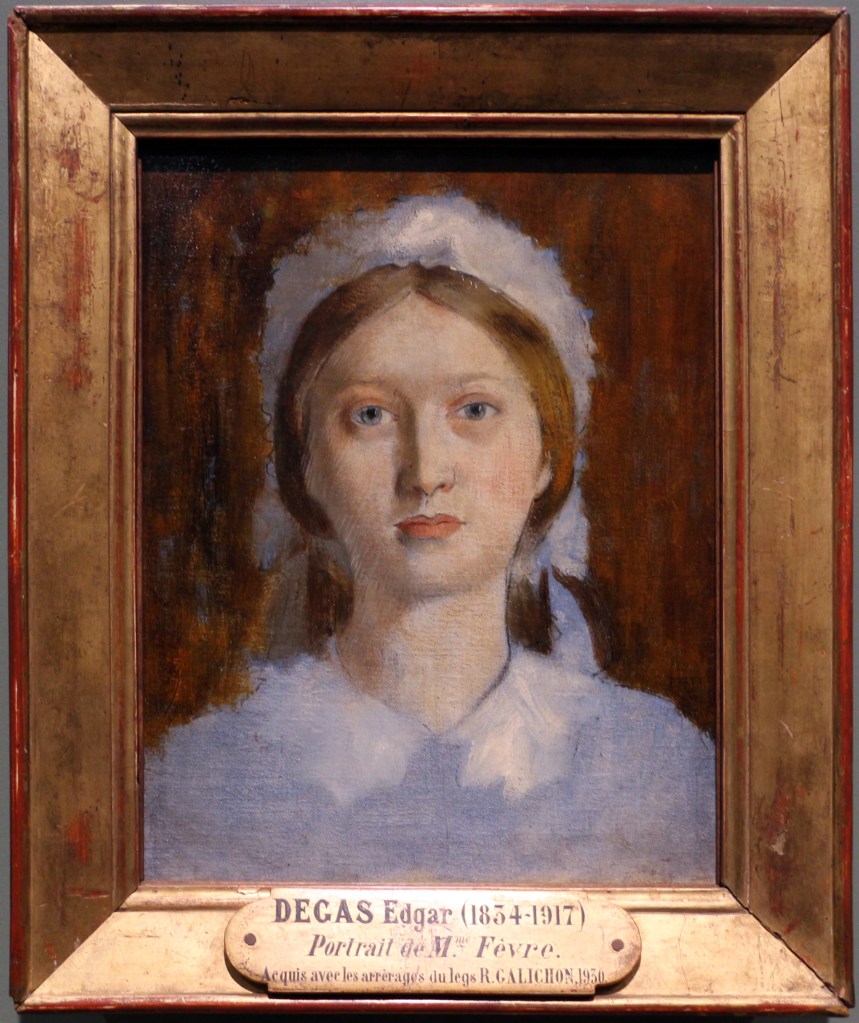

Femme assise à côté d’un vase de fleurs (Mme Paul Valpinçon), 1865, huile sur toile, 73,7 × 92,7 cm, MMA, New-York
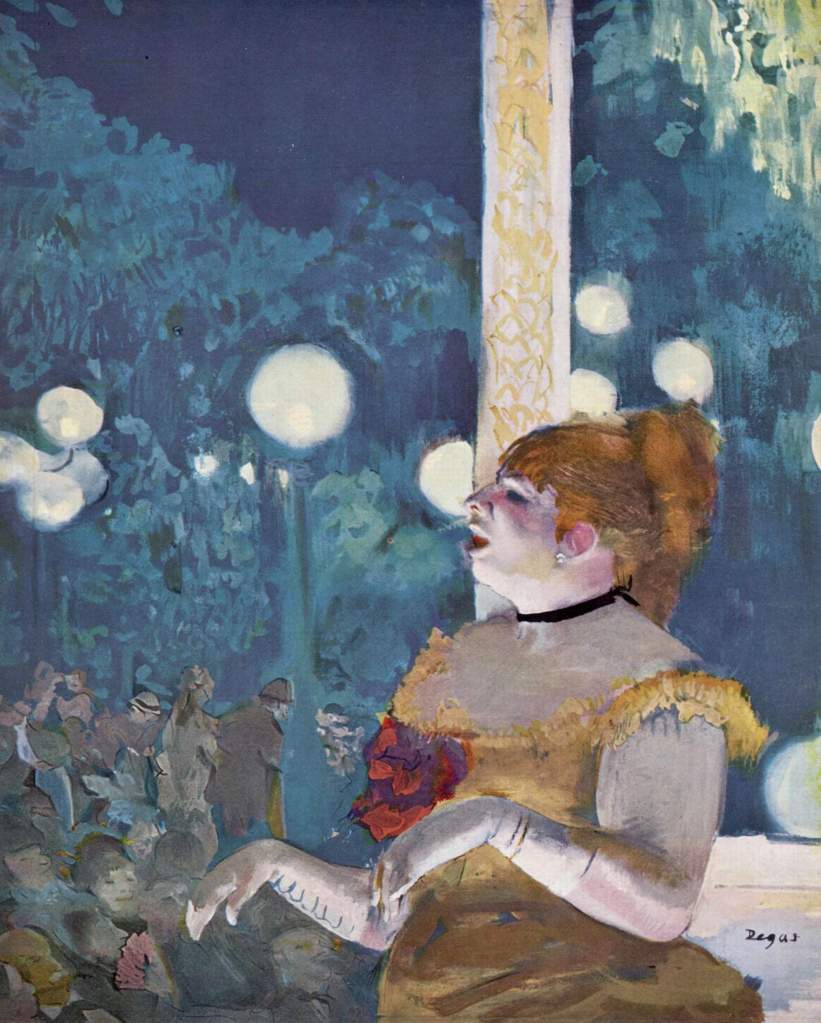
At the Café-Concert: The Song of the Dog, 1875–1877

The Singer with the Glove, 1878, The Fogg Art Museum, Cambridge, Massachusetts

deux danseurs de ballet 1879 at the Shelburne Museum

Dancers, 1900, Princeton University Art Museum
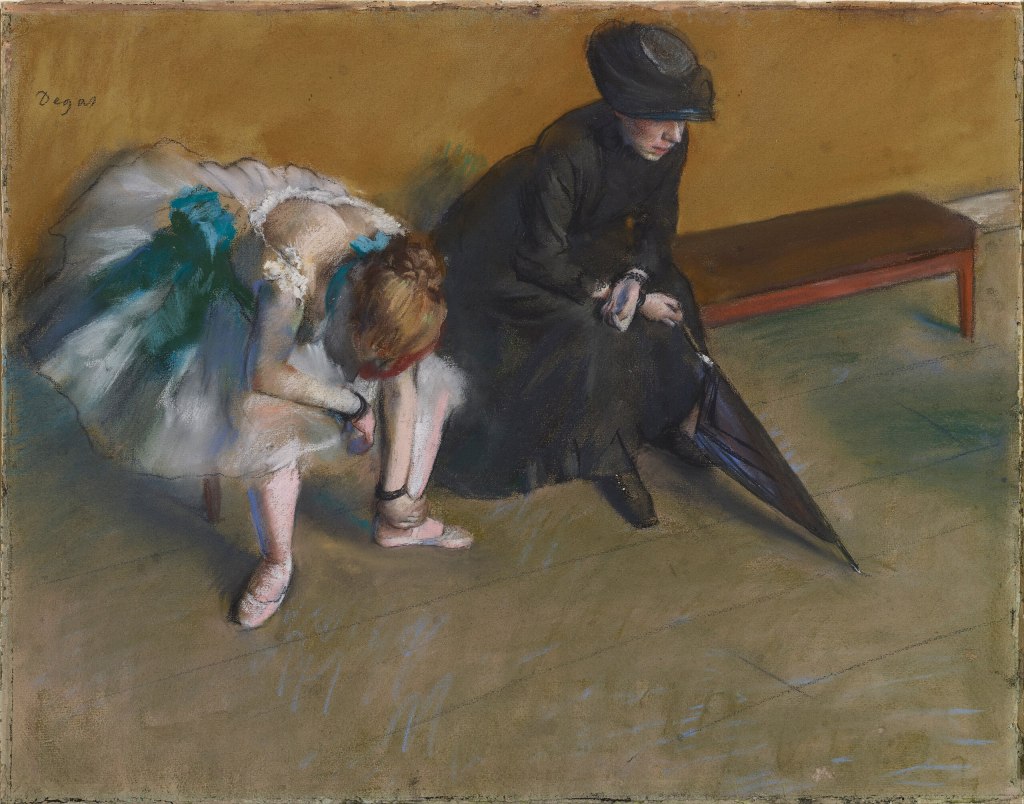
Waiting, pastel on paper, 1880-82

Dancers at The Bar, 1888, The Phillips Collection, Washington, DC

The Millinery Shop, 1885, The Art Institute of Chicago

Les petites modistes, 1882

The Milliners, c. 1898, St. Louis Art Museum
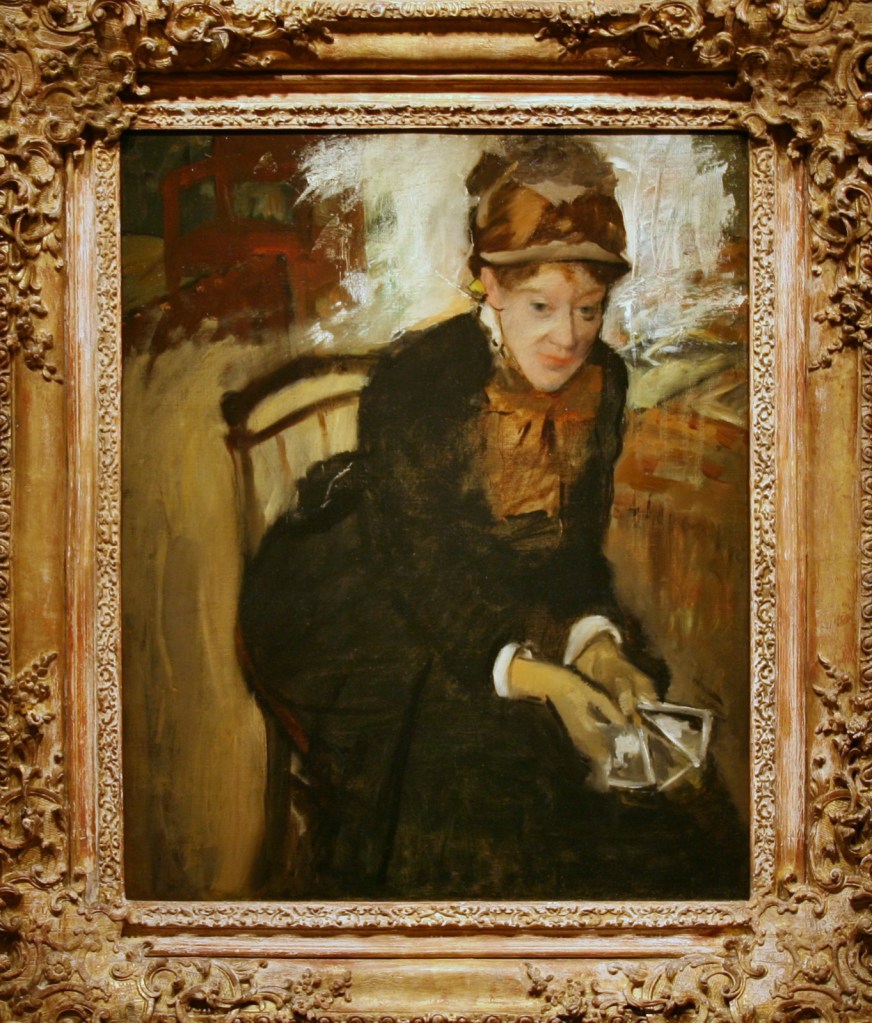

Three Dancers in Yellow Skirts, circa 1891, oil on canvas, The Detroit Institute of Arts
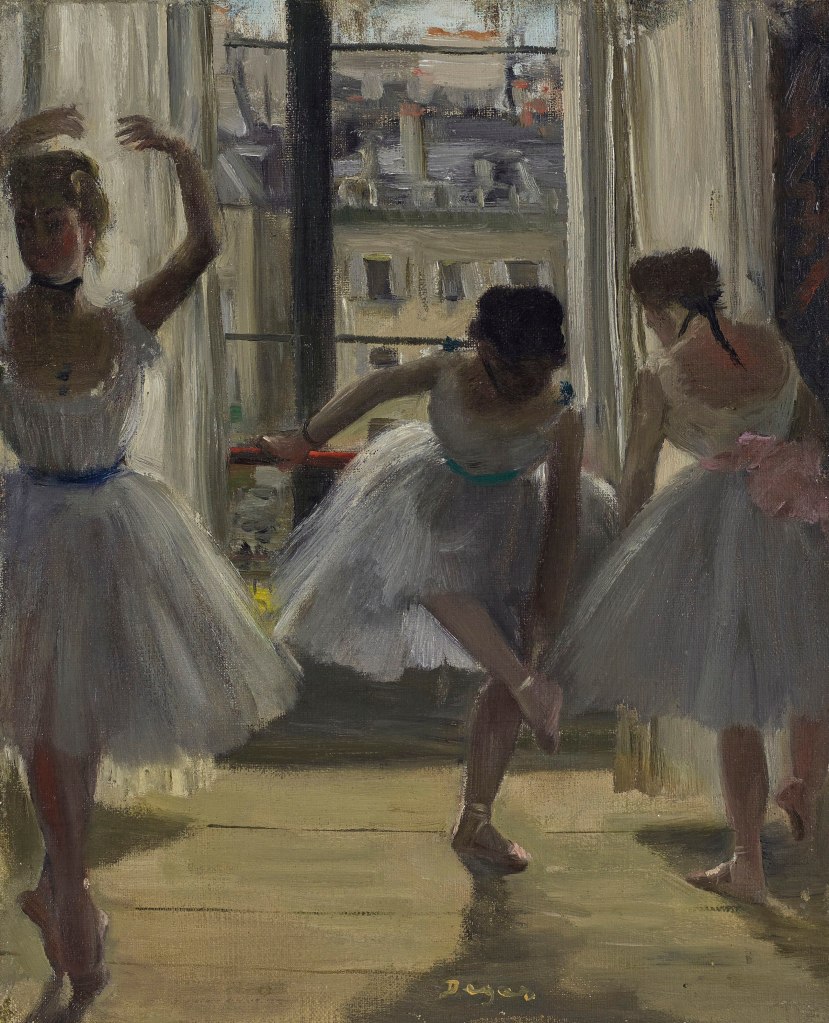
Trois Danseuses (1873), huile sur toile, 27 × 22 cm, collection particulière
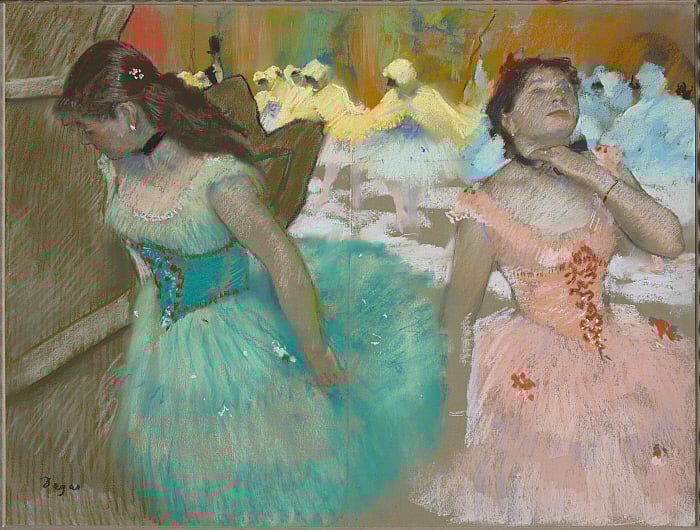
Entrance of the Masked Dancers (1879), pastel on gray wove paper, 19 5/16 x 25 1/2 in. (49 x 64.8 cm), Clark Art Institute

Ballet Rehearsal, 1873, The Fogg Art Museum, Cambridge, Massachusetts

L’Absinthe, 1876, oil on canvas

Blue Dancers, 1897, pastel on paper, Pushkin Museum, Moscow
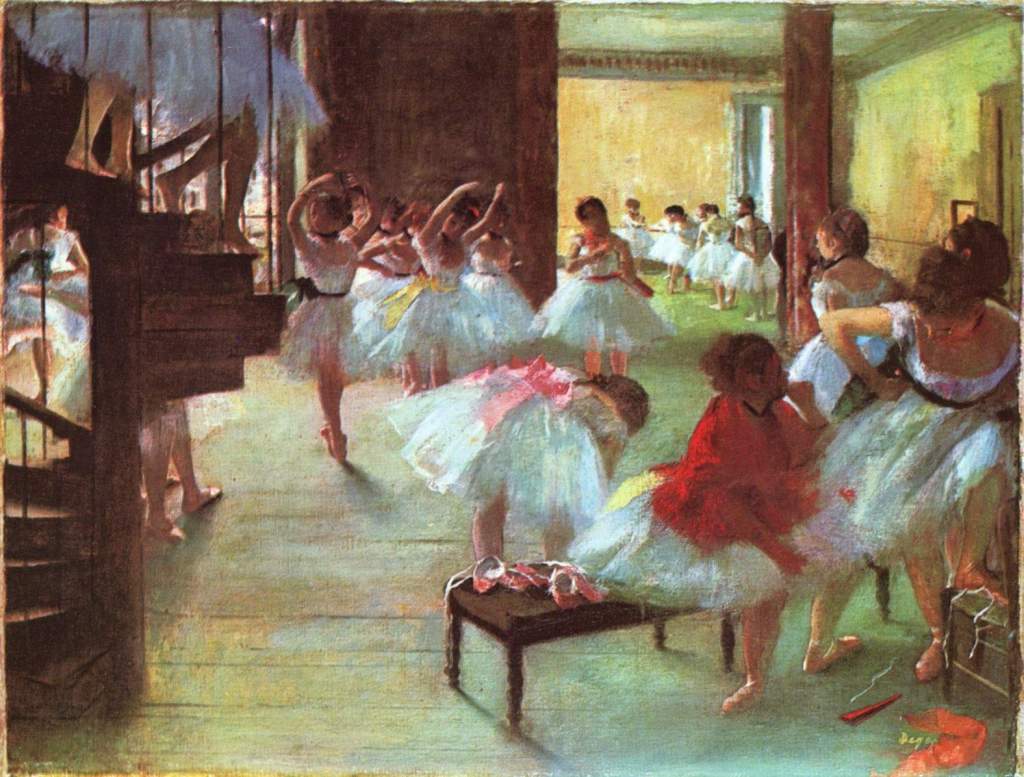
L’École de danse (1879-1880), huile sur toile, 42 × 49 cm, Washington, Corcoran Gallery of Art
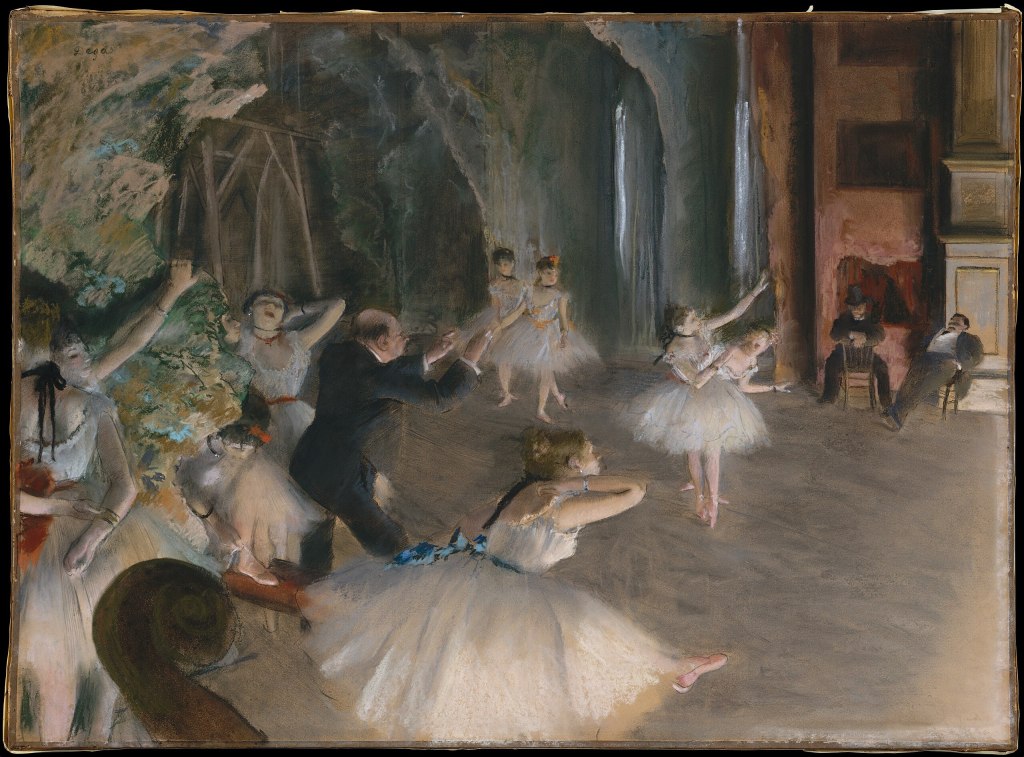
Stage Rehearsal, 1878–1879, The Metropolitan Museum of Art, New York City

La Salle de ballet de l’Opéra, rue Le Pelletier (1872), huile sur toile, 33 × 46 cm, Paris, musée d’Orsay
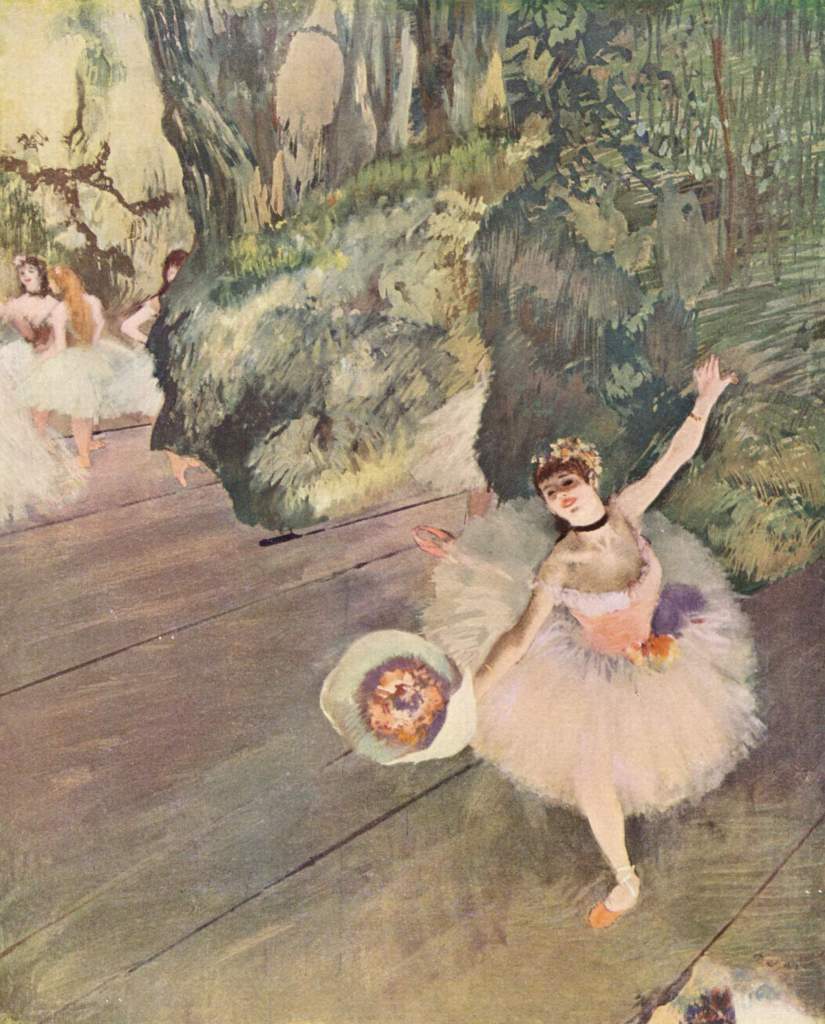
Dancer with a Bouquet of Flowers (Star of the Ballet) (with also ballerina Rosita Mauri), 1878
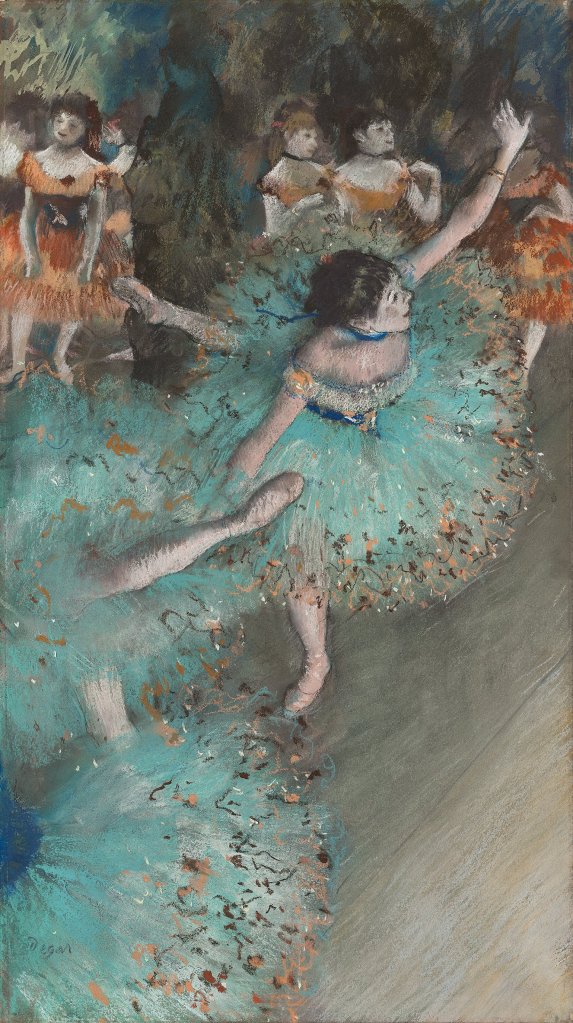
Swaying Dancer (Dancer in Green), 1877–1879, Thyssen-Bornemisza Museum, Madrid

Fin d’Arabesque, with ballerina Rosita Mauri, 1877, Musée d’Orsay

Dance Class, 1871, The Metropolitan Museum of Art, New York City

The Dance Class (La Classe de Danse), 1873–1876, oil on canvas

Miss La La at the Cirque Fernando, (1879) National Gallery, London
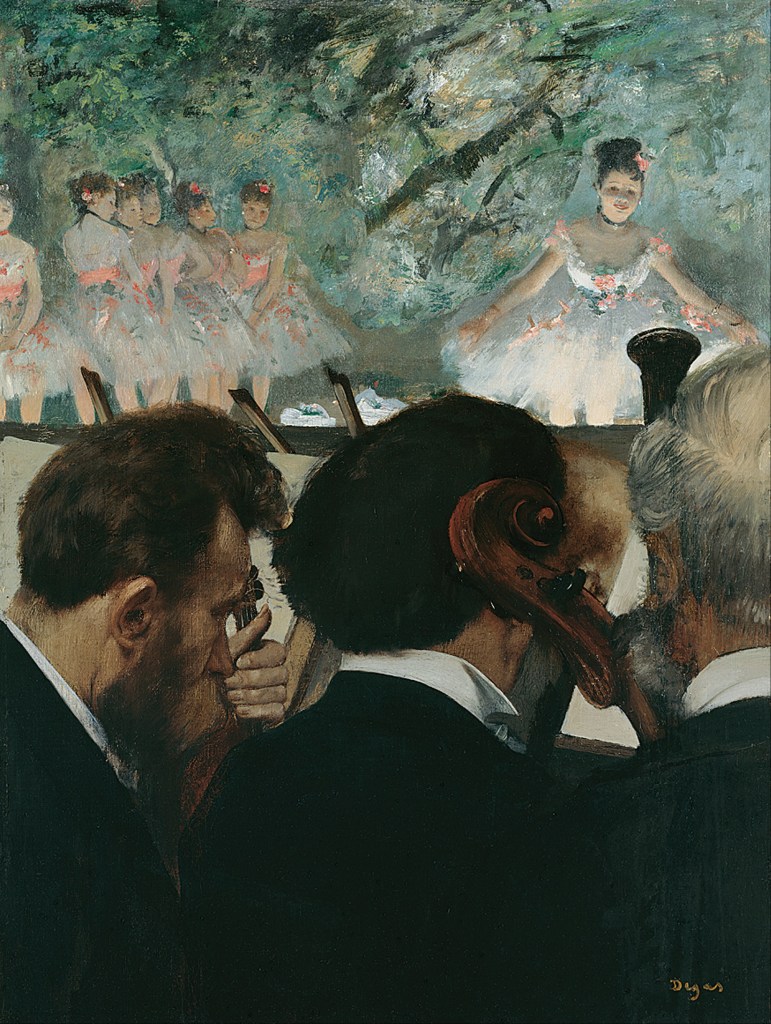
Musicians in the Orchestra, 1872, oil on canvas
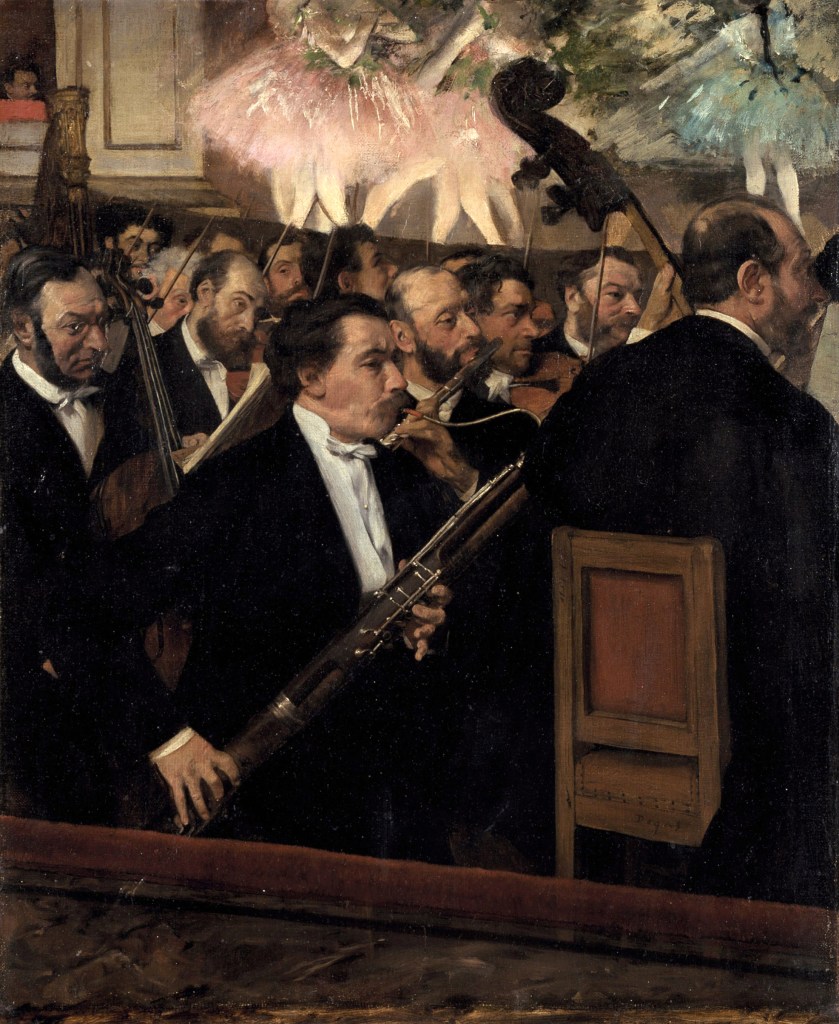

Rehearsal on Stage, 1874, Musée d’Orsay, Paris
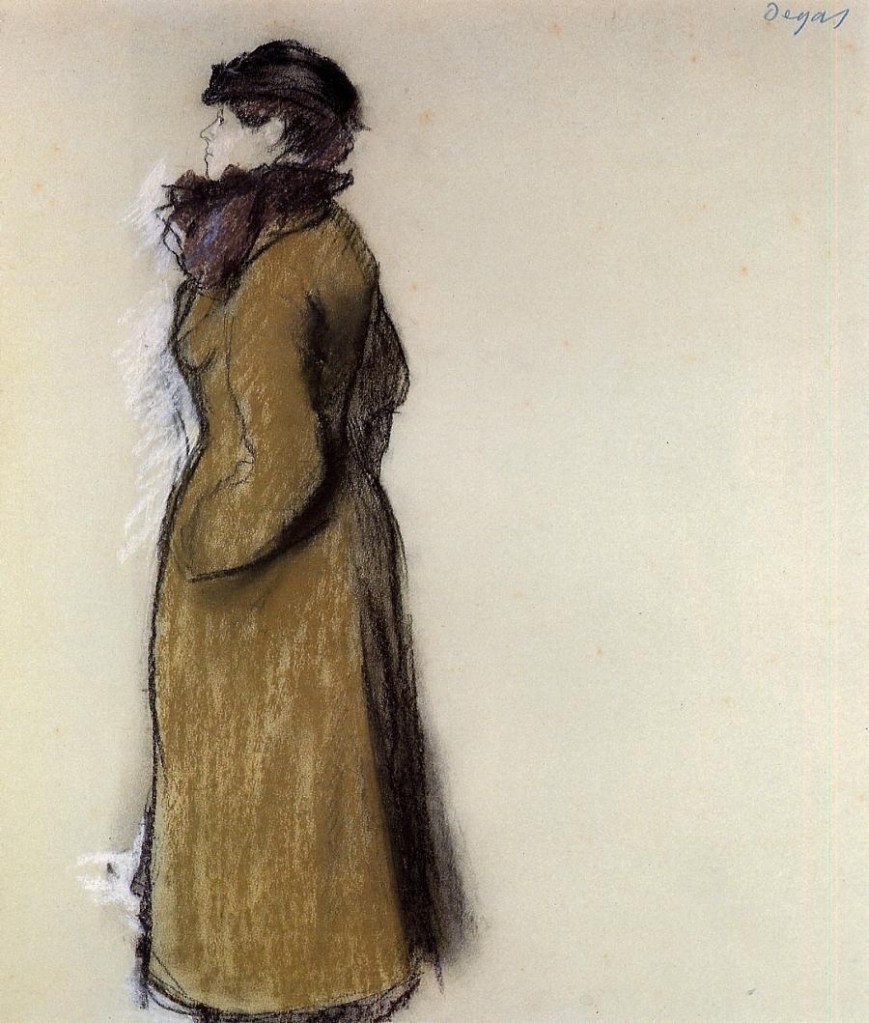
Woman in Street Clothes, Portrait of Ellen Andrée, 1879, pastel on paper
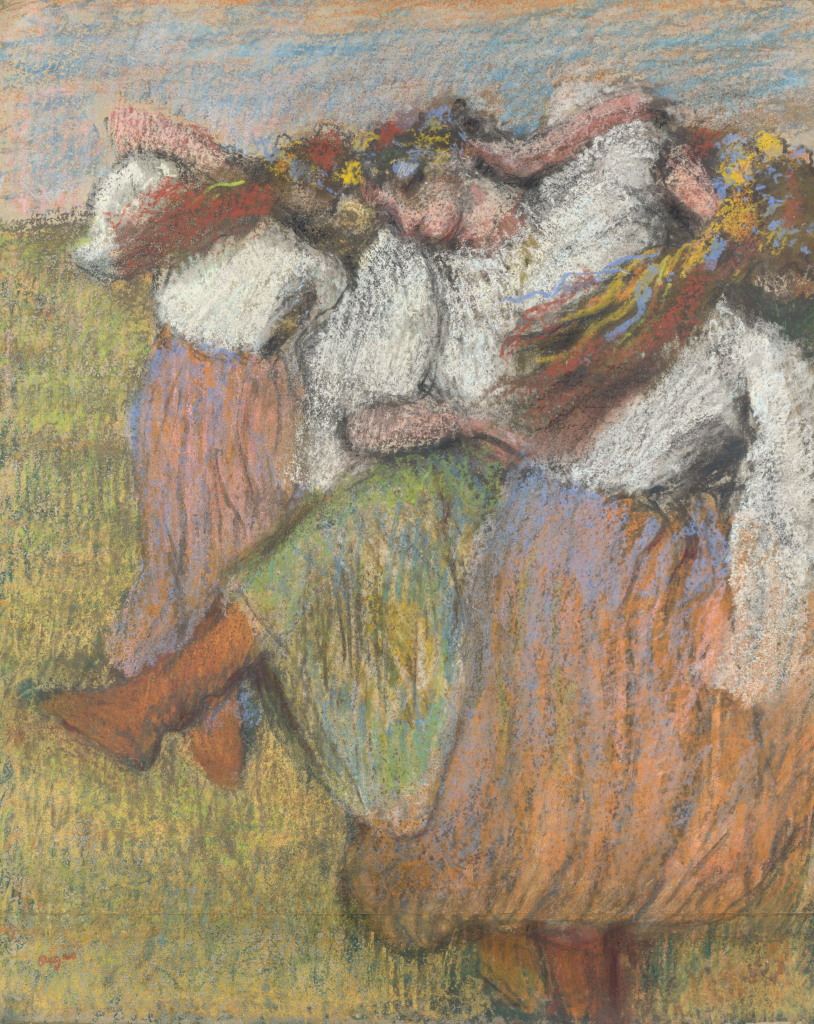
Ukrainian Dancers, c. 1899, pastel and charcoal on paper, 73 × 59 cm, The National Gallery, London

Mademoiselle Marie Dihau (1867-1868), New York, Metropolitan Museum of Art

Portrait d’Henri Michel-Lévy, 1878, huile sur toile, musée Calouste-Gulbenkian, Lisbonne
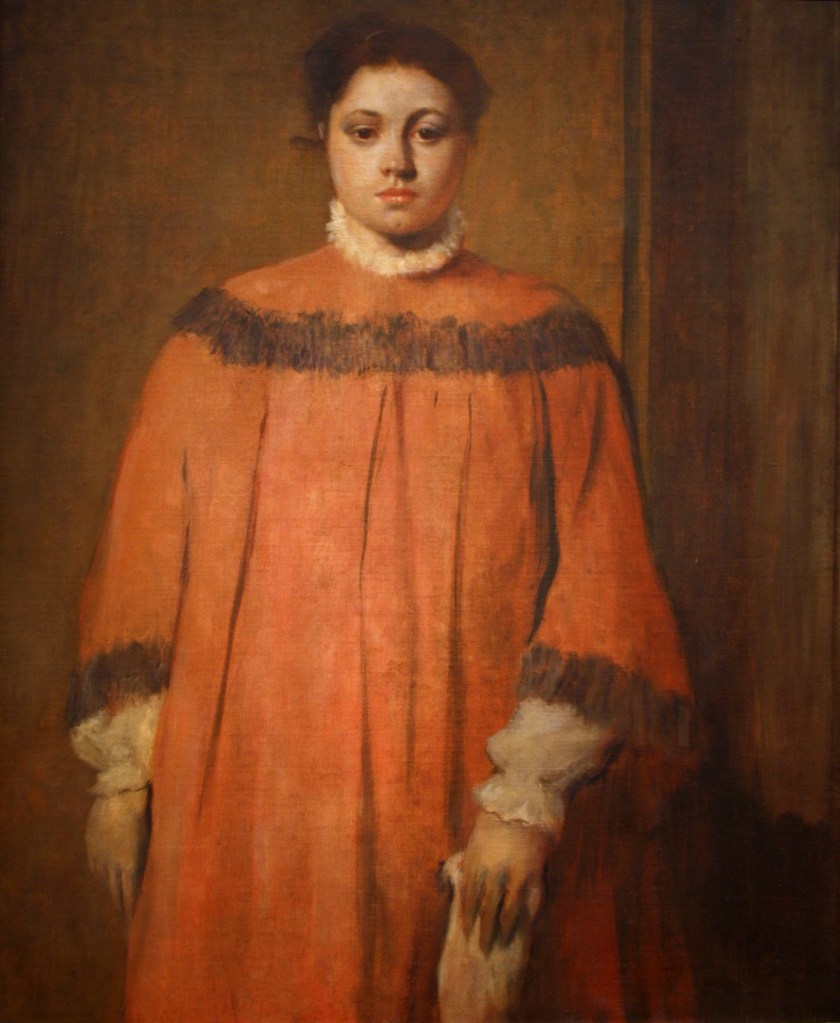
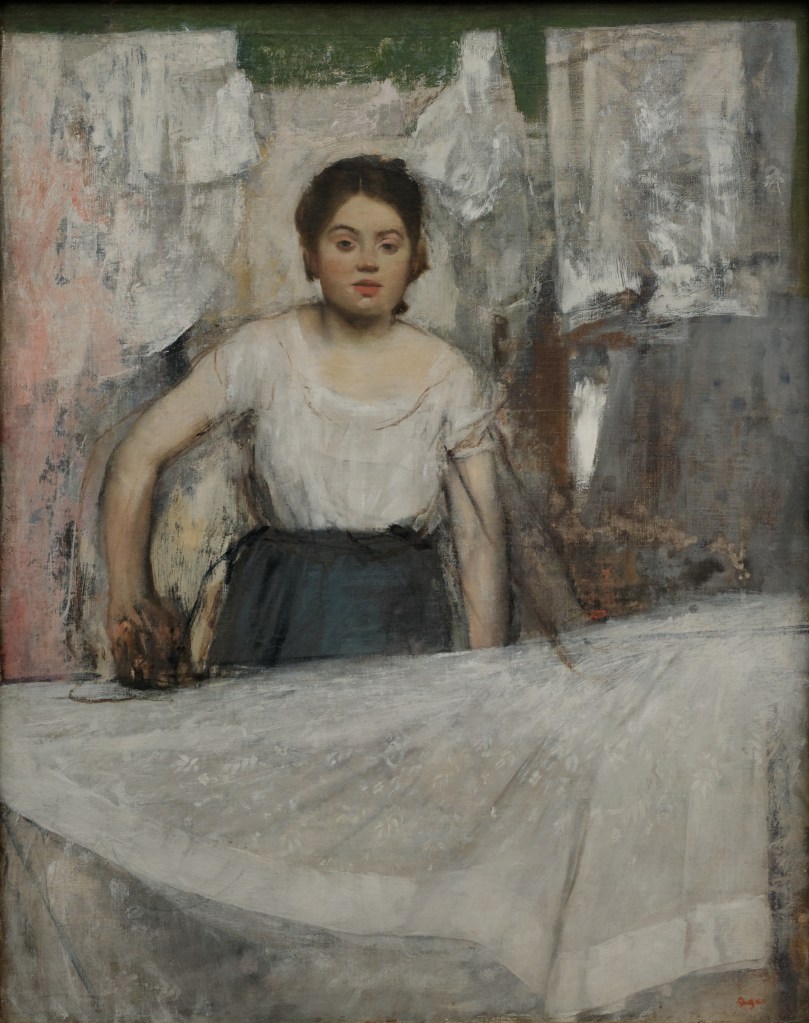

Paysage de plage, 1869, pastel sur papier, 15,6 × 30,5 cm, Palais Albertina, Vienne

Sémiramis construisant Babylone, 1861. Musée d’Orsay, Paris

Before the Race, 1882–84, oil on panel, The Walters Art Museum, Baltimore

At the Races, 1877–1880, oil on canvas, Musée d’Orsay, Paris
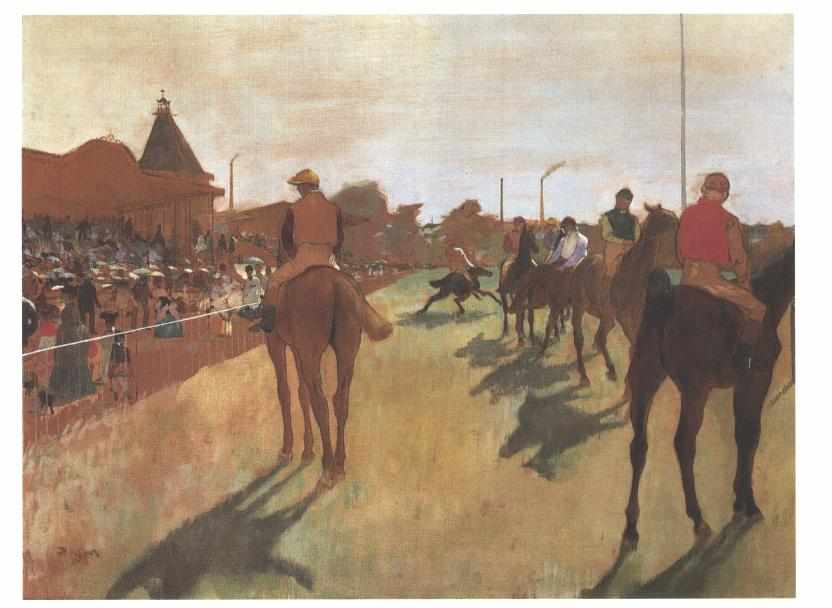
Devant les tribunes
Il y a amour et on travaille, et nous n’avons qu’un seul cœur.
Of course the song of the day is Liszt’s “Tre sonetti di Petrarca”, I´vidi in terra. Luciano Pavarotti, tenor. John Wustman, piano. http://www.youtube.com/watch?v=bU3E5FjtZh8
All for you muse,
Mac Tag
thanks for stoppin’ by y’all
Only Death can close from my thoughts
the loving path that leads them
to the sweet doorway of their blessing.
– Petrarch
There is always some madness in love, but there is also always some reason in madness. ~ Petrarch
And here choose i; joy be the consequence! – Shakespeare
Whatever it is that pulls the pin, that hurls you past the boundaries of your own life into a brief and total beauty, even for a moment, it is enough. – Jeanette Winterson
 The Lovers’ Chronicle
Leave a comment