Dear Zazie, Here is today’s Lovers’ Chronicle from Mac Tag to his muse. Follow us on twitter @cowboycoleridge. Does the softness come to you? Rhett
The Lovers’ Chronicle
Dear Muse,
picked a gorgeous song for today
written by Gretchen Christopher,
Barbara Ellis, and Gary Troxel
of the Fleetwoods but we are goin’ with
the version recorded by Bob Welch
with Christine McVie, ‘’Come Softly to Me’’
’’That is a lovely song, beautiful harmonies’’
Welch was a favorite from my late teen years
and now darlin’, we waited so long
come to me through the night

© copyright 2023.2024 mac tag/cowboy coleridge all rights reserved
pardon another relapse; i am tempted to write you, to see if you remember, or care; i will, for i must, for the sake of seein’ these words; as was proven, there is nothin’ else; not seekin’ an explanation nor redemption, just want you to know, the devotion was real, the vulnerability was real, the hardness inevitable
© copyright 2022.2023 mac tag/cowboy coleridge all rights reserved
from your touch
i set aside old tragedies
and let the touch fill me
now what comes next
i can write about how
as none ever had
or about how
i look forward
to each touch
how about this
your touch came
and it lingers
i take it with me
wherever i go
© Cowboy Coleridge mac tag copyright 2021.2023 all rights reserved
Pale Love, Pale Rider
remembrance
these years later
of the softness that came
i miss that touch,
was it real or dream
it lingers still,
is that not obvious
was it fair to expect it
to be enough
or are there
too many
old tragedies
to be set aside
only time
and a lot of verse
can tell
© copyright 2020 mac tag/cowboy coleridge all rights reserved
here once more
i hover and wait,
expectant of you
best requited
no doubt; but to have
unrequited is better than
not to be able at all
some of us cannot
and are satisfied
with the inspiration
provided therein
remember,
only hangin’ on
by the ropes
of old tragedy
© copyright 2019 mac tag/cowboy coleridge all rights reserved
the only “ship”
i have ever been
worth a damn at
is friendship…
remembrance
these years later
of the softness
that came from your touch
to say that i was changed
is a gross understatement
but of course
it was not enough
to say that i miss that touch,
there are no words
to say that it lingers still,
is that not obvious
but it was not fair
to expect that touch,
or you to be enough
there were too many
old tragedies
that had to be
set aside
only time
and a lot of verse
could do that
and now that they have been
only one question remains,
is it too late
© copyright 2018 mac tag/cowboy coleridge all rights reserved
oh it came, but only
in fleetin’ moments
a tease, as if to say;
“Look at me,
this is what you
have always wanted
and you can have me”
then the inevitable,
it turns out,
awakenin’
those brief interludes
were all that were meant
and you best get used
to the hardness
that comes with knowin’
***
“Olly, olly oxen free”
This just in…
No one comes in free
© copyright 2017.2023 mac tag/cowboy coleridge all rights reserved
“I would ask
that you remain
emotionally detached,
but I don’t believe
that is your problem
is it?”
Not hardly
© copyright 2015 mac tag/cowboy coleridge all rights reserved
And A Softness Came
And a softness came from her touch
And I set aside old tragedies
and let the touch fill me
Full to the bone
Now what comes next
Do I write about
how that touch touched me
As none ever had
But that has been written
before and often
By much better poets
than this cowboy
Or do I write about
how I miss that touch
But to what purpose
To wallow in self pity
I could write about
how I fell in love with the touch
How love made a fool of me
But I have not the strength
How about this
Her touch came to me
And it lingers still
At least I have that
© Cowboy Coleridge mac tag copyright 2012 all rights reserved
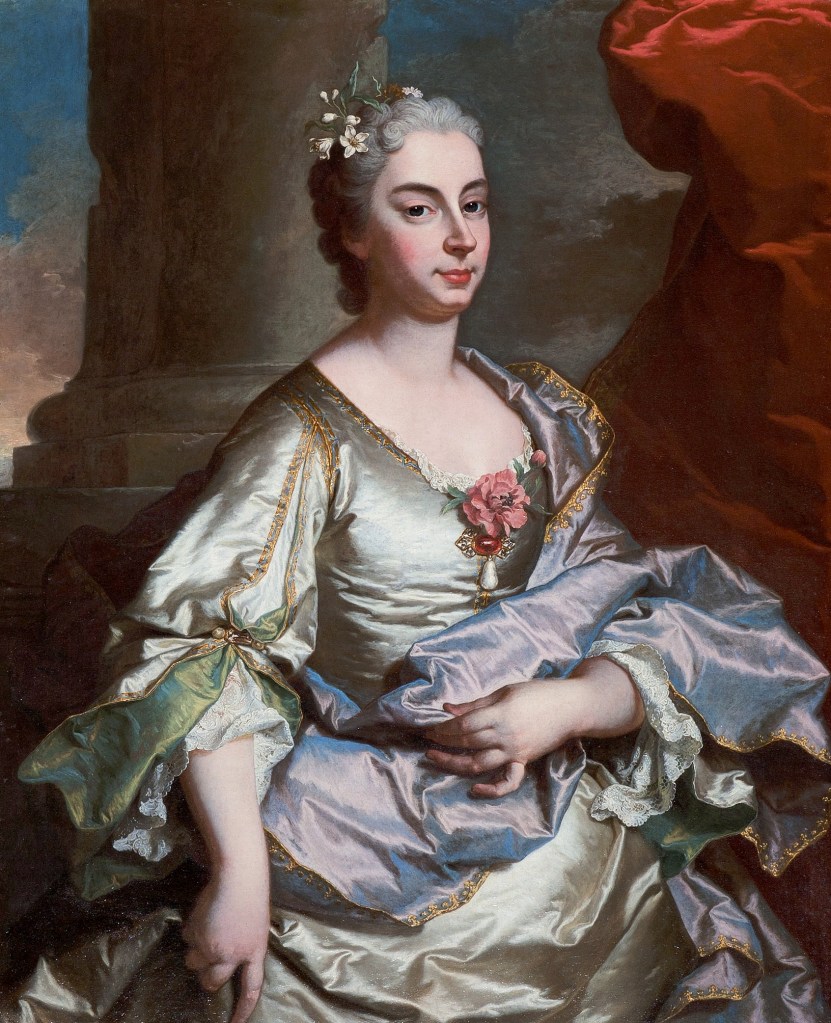
Today is the birthday of Hyacinthe Rigaud (born Jacint Rigau-Ros i Serra in Perpignan, France 18 July 1659 – 29 December 1743 Paris); baroque painter of Catalan origin whose career was based in Paris. He was one of the most important portrait painters during the reign of King Louis XIV.
 Self-portrait in a turban, 1698, Perpignan, Musée Hyacinthe Rigaud

His instinct for impressive poses and grand presentations precisely suited the tastes of the royal personages, ambassadors, clerics, courtiers, and financiers who sat for him. Rigaud owes his celebrity to the faithful support he received from the four generations of Bourbons whose portraits he painted. He garnered the core of his clientele among the richest circles as well as among the bourgeois, financiers, nobles, industrialists and government ministers, also courting all the major ambassadors of his time and several European monarchs. His œuvre reads as a near-complete portrait gallery of the chief movers in France from 1680 to 1740. Some of that œuvre (albeit a minority) also includes those of more humble origins – Rigaud’s friends, fellow artists or simple businessmen.
Gallery
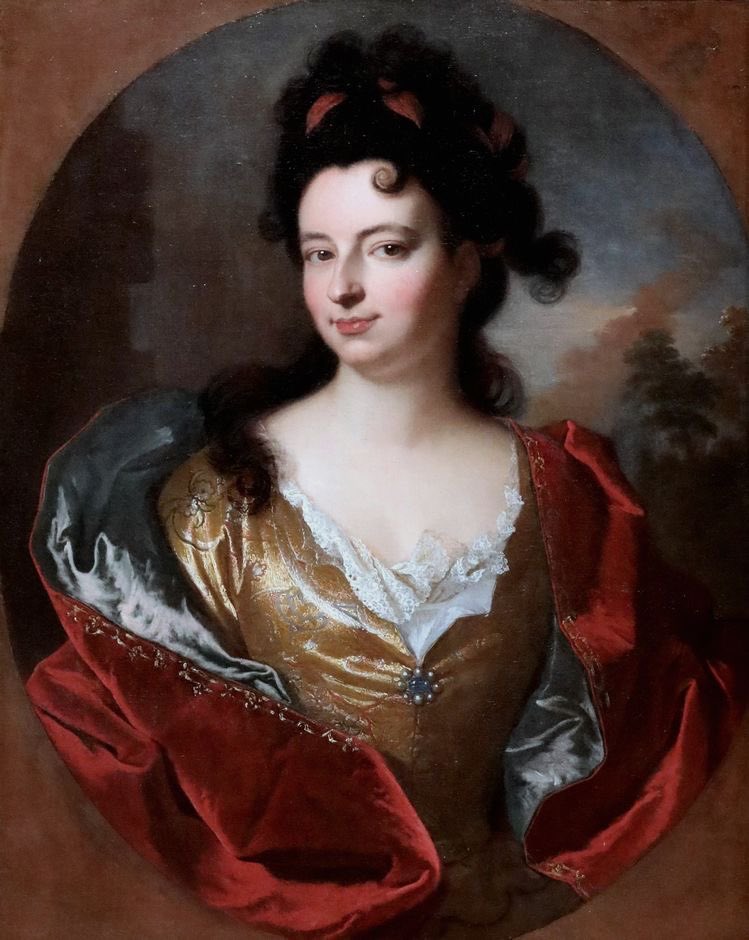
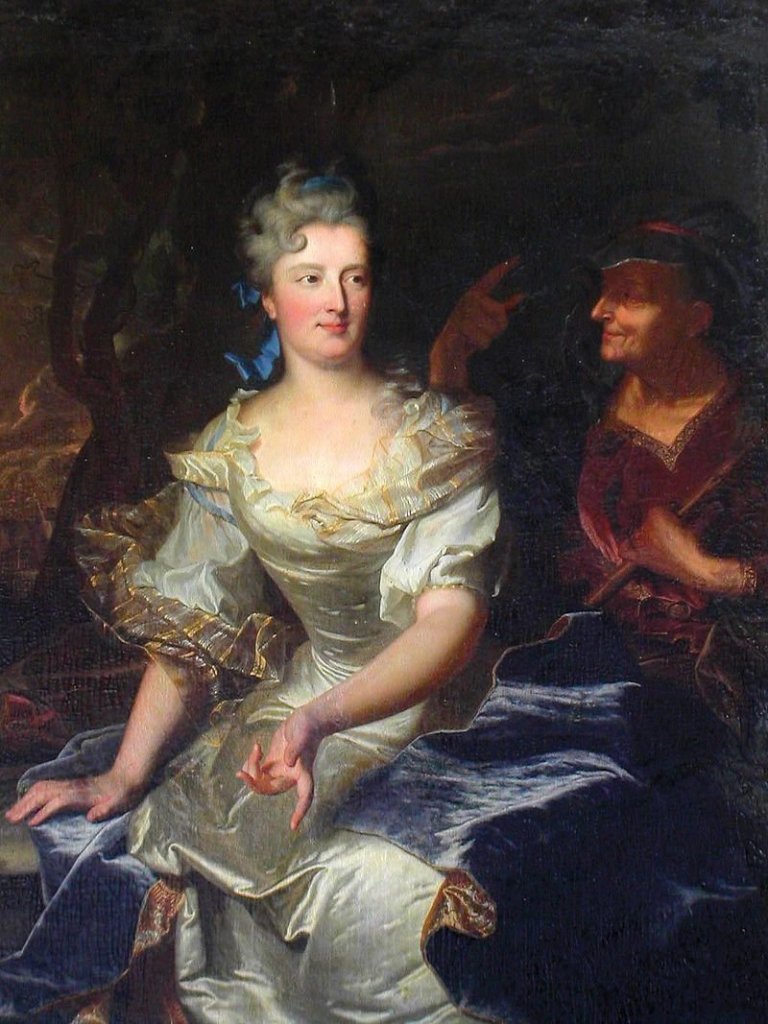
Portrait de Marie-Anne Varice de La Ravoye, née de Valières, travestie en Vertumne et Pomone, Fontenay-le-Comte, Château de Terre-Neuve
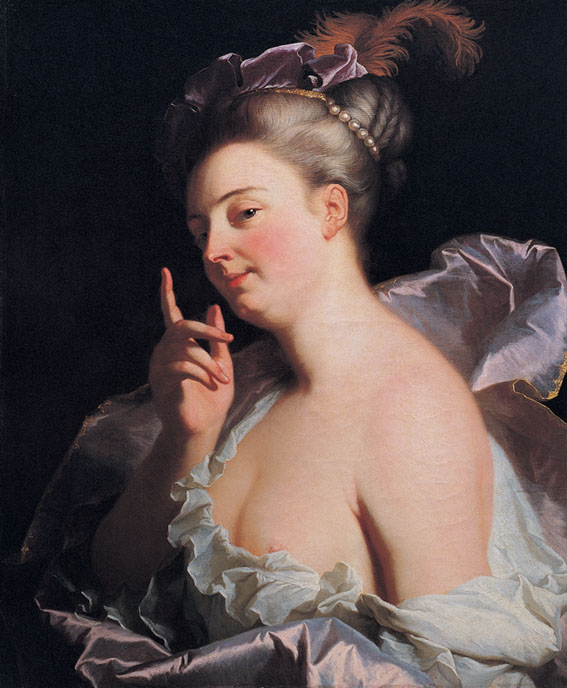
La Menasseuse
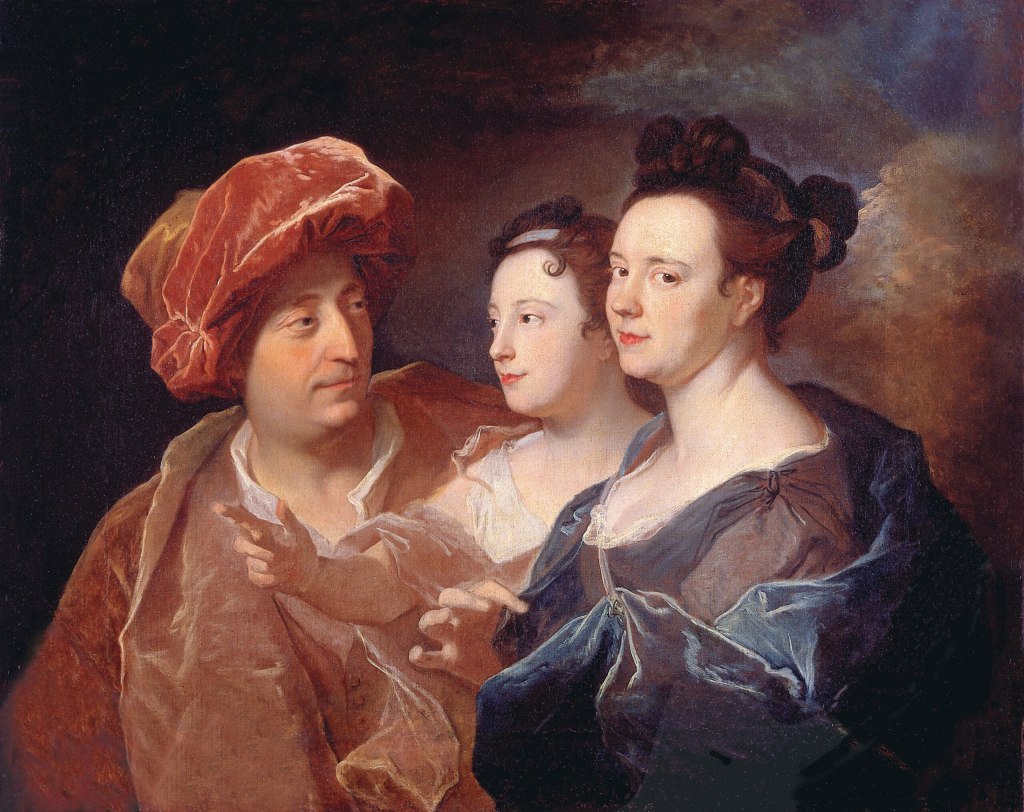
The Lafitte family
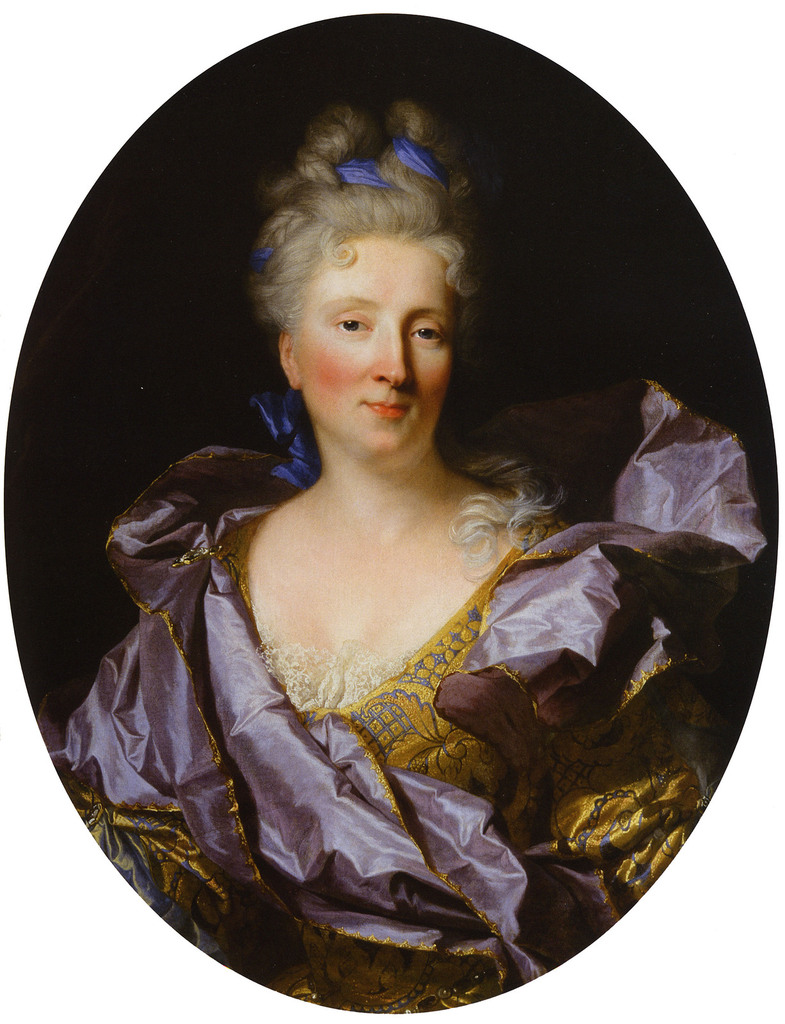
La comtesse de Lignières / Marie Louise du Bouchet de Sourches (1665-1749) épouse de Louis Colbert
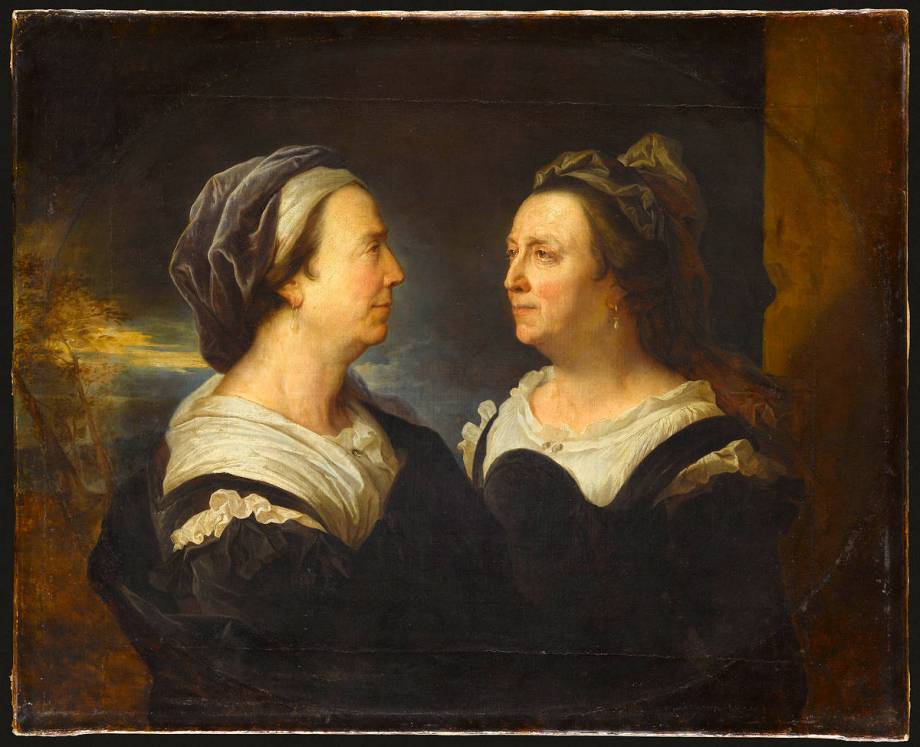
Portrait de Marie Serre (1695), huile sur toile, 81 x 101cm, musée du Louvre. Rigaud représente sa mère sous deux angles à la fois, peignant ainsi plus fidèlement la personnalité de cette femme mûre
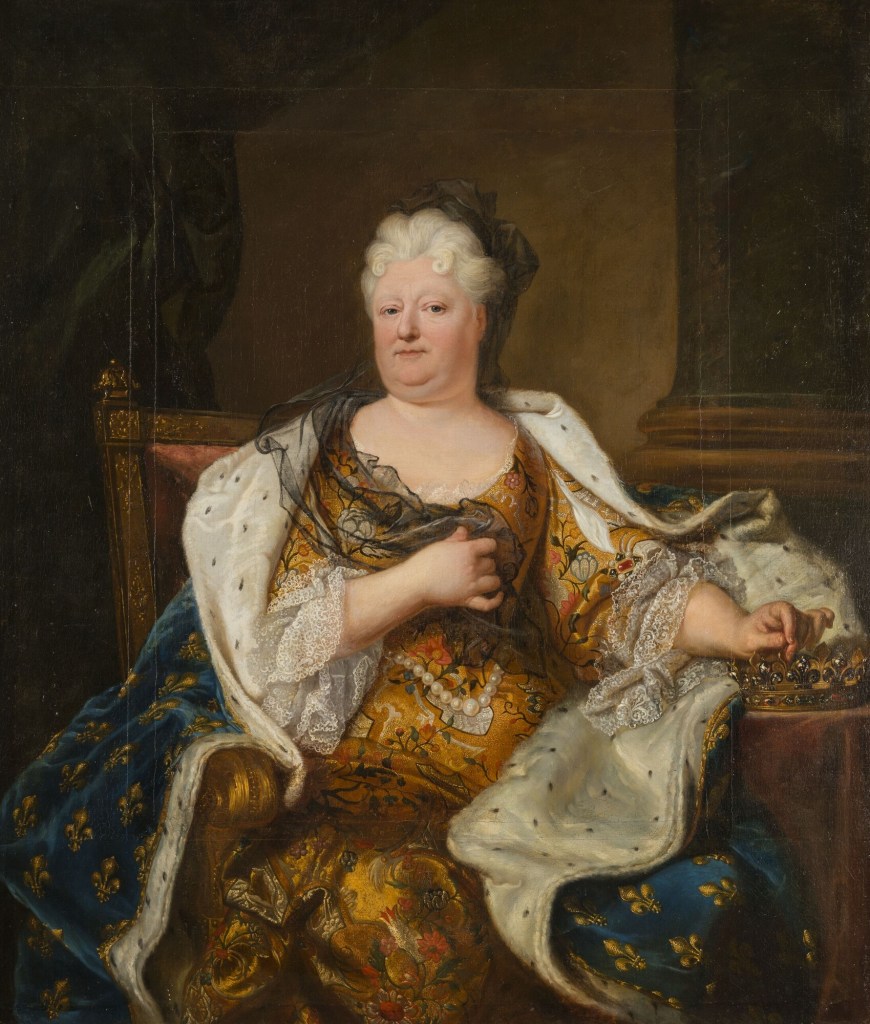
portrait de la Princesse Palatine, 1713, Versailles, musée national du château
| William Makepeace Thackeray | |
|---|---|
 | |
Today is the birthday of William Makepeace Thackeray (Calcutta, British, India 18 July 1811 – 24 December 1863 London); novelist and author. He is known for his satirical works, particularly Vanity Fair, a panoramic portrait of English society.

Thackeray portrayed by Eyre Crowe, 1845
Thackeray married, on 20 August 1836, Isabella Gethin Shawe (1816–1894), second daughter of Isabella Creagh Shawe and Matthew Shawe, a colonel who had died after distinguished service, primarily in India. The Thackerays had three children, all girls: Anne Isabella (1837–1919), Jane (who died at eight months old) and Harriet Marian (1840–1875), who married Sir Leslie Stephen, editor, biographer and philosopher.
Tragedy struck in Thackeray’s personal life as his wife, Isabella, succumbed to depression after the birth of their third child, in 1840. Finding that he could get no work done at home, he spent more and more time away until September 1840, when he realised how grave his wife’s condition was. Struck by guilt, he set out with his wife to Ireland. During the crossing she threw herself from a water-closet into the sea, but she was pulled from the waters. They fled back home after a four-week battle with her mother. From November 1840 to February 1842 Isabella was in and out of professional care, as her condition waxed and waned.

Caricature of Thackeray by Thackeray
She eventually deteriorated into a permanent state of detachment from reality. Thackeray desperately sought cures for her, but nothing worked, and she ended up in two different asylums in or near Paris until 1845, after which Thackeray took her back to England, where he installed her with a Mrs Bakewell at Camberwell. Isabella outlived her husband by 30 years, in the end being cared for by a family named Thompson in Leigh-on-Sea at Southend until her death in 1894. After his wife’s illness Thackeray became a de facto widower, never establishing another permanent relationship. He did pursue other women, however, in particular Mrs Jane Brookfield and Sally Baxter. In 1851 Mr Brookfield barred Thackeray from further visits to or correspondence with Jane. Baxter, an American twenty years Thackeray’s junior whom he met during a lecture tour in New York City in 1852, married another man in 1855.
 Thackeray’s grave at Kensal Green Cemetery, London, photographed in 2014
Thackeray’s health worsened during the 1850s and he was plagued by a recurring stricture of the urethra that laid him up for days at a time. He also felt that he had lost much of his creative impetus. He worsened matters by excessive eating and drinking, and avoiding exercise, though he enjoyed riding his horse. He has been described as “the greatest literary glutton who ever lived”. His main activity apart from writing was “guttling and gorging”. He could not break his addiction to spicy peppers, further ruining his digestion. On 23 December 1863, after returning from dining out and before dressing for bed, he suffered a stroke. He was found dead in his bed the following morning. His death at the age of fifty-two was entirely unexpected, and shocked his family, his friends and the reading public. An estimated 7,000 people attended his funeral at Kensington Gardens. He was buried on 29 December at Kensal Green Cemetery, and a memorial bust sculpted by Marochetti can be found in Westminster Abbey.
The History of Pendennis (1848-1850)
- Yet round about the spot
Ofttimes I hover;
And near the sacred gate
With longing eyes I wait,
Expectant of her.- Pendennis: At the Church Gate, reported in Bartlett’s Familiar Quotations, 10th ed. (1919).
- It is best to love wisely, no doubt; but to love foolishly is better than not to be able to love at all. Some of us can’t: and are proud of our impotence, too.
- Ch. 6.
- Yes, I am a fatal man, Madame Fribsbi. To inspire hopeless passion is my destiny.
- Ch. 23.
- Remember, it’s as easy to marry a rich woman as a poor woman.
- Ch. 28.
- As the gambler said of his dice, to love and win is the best thing, to love and lose is the next best.
- Ch. 40.
And today is the birthday of Franciszek Żmurko (18 July 1859, Lviv, Ukraine – 9 October 1910, Warsaw); realist painter. Żmurko began drawing lessons as a young boy in his hometown with the painter Franciszek Tepa. As an adolescent he relocated to Kraków to study at the Academy of Fine Arts where he took lessons from Professor Jan Matejko. In 1877 Żmurko moved to Vienna, Austria where he was accepted at the Vienna Academy, but left soon thereafter to study under Alexander von Wagner in Munich. Żmurko returned to Kraków in 1880 and then moved to Warsaw in 1882 where he remained until his death in 1910.
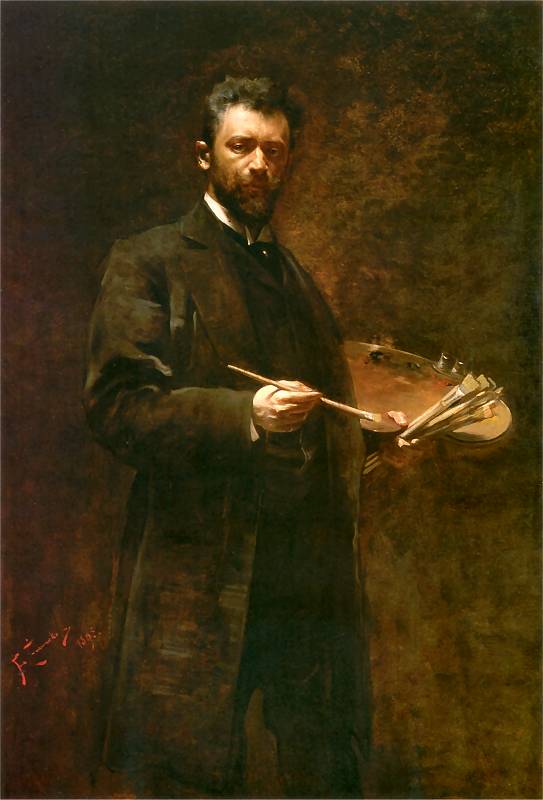
Self-portrait with a palette
Gallery
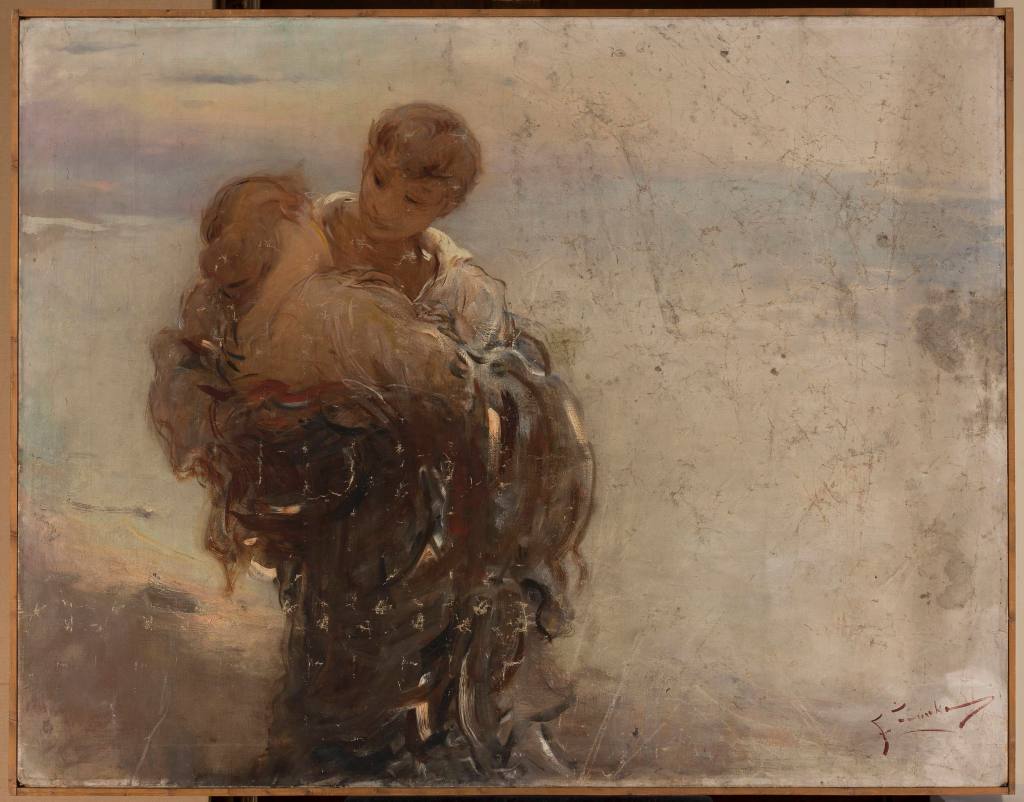
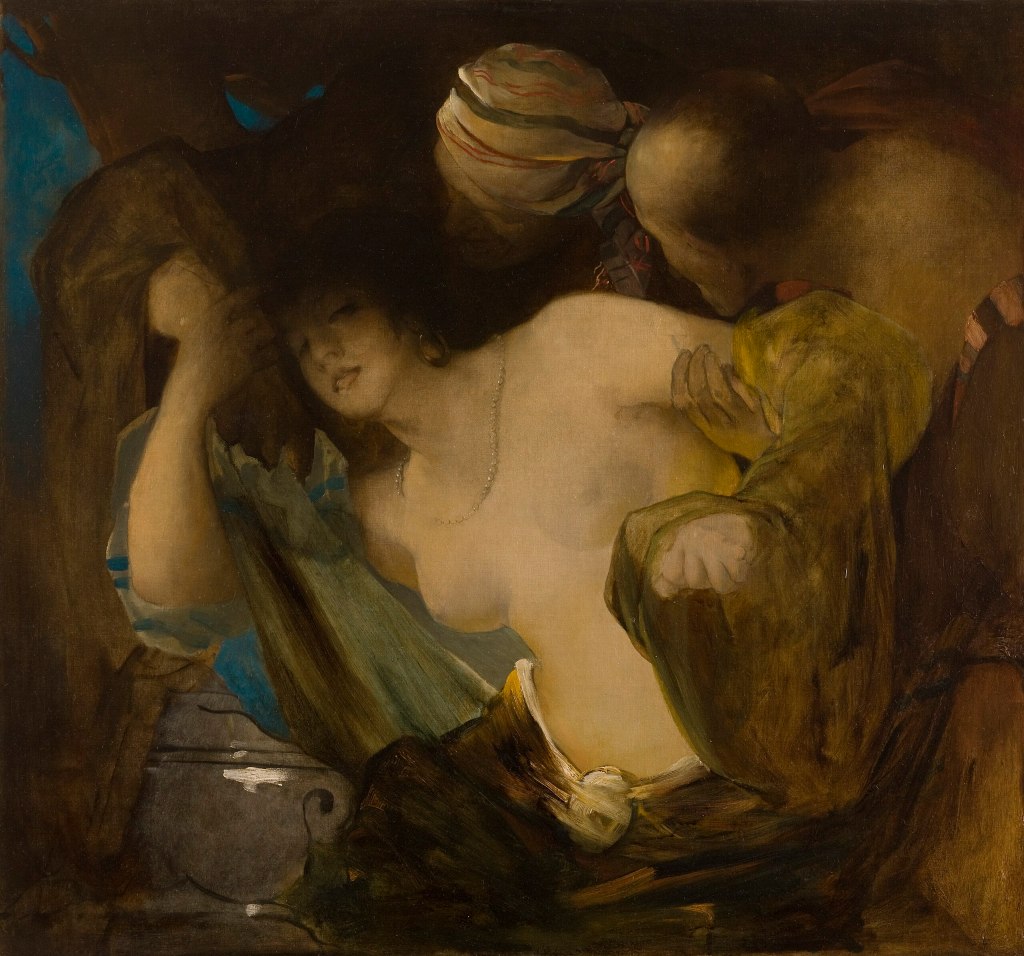
Susanna and the elders 1879. oil on canvas. 92 × 100 cm (36.2 × 39.3 in). Kraków, Muzeum Narodowe.
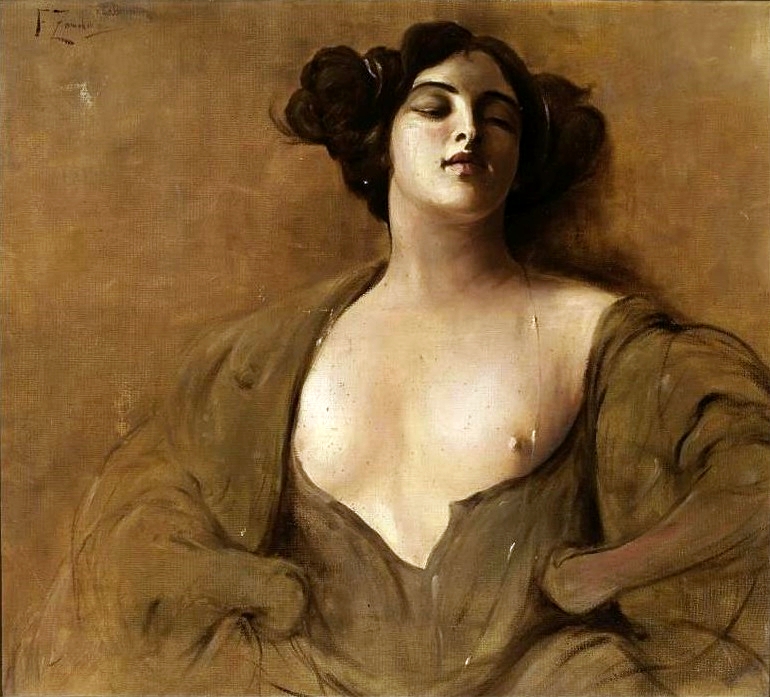
Una Donna (Mégère)
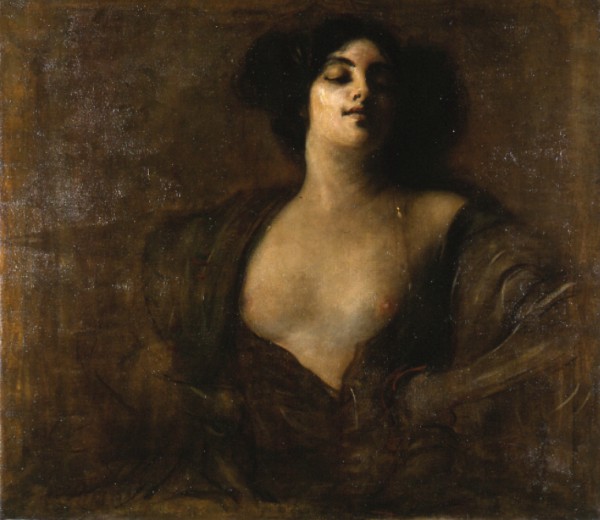
Hetaera, 1906. Owned by the Society for the Encouragement of Fine Arts in Warsaw, inv. no. 369 (lost between 1939 and 1945 (World War II).
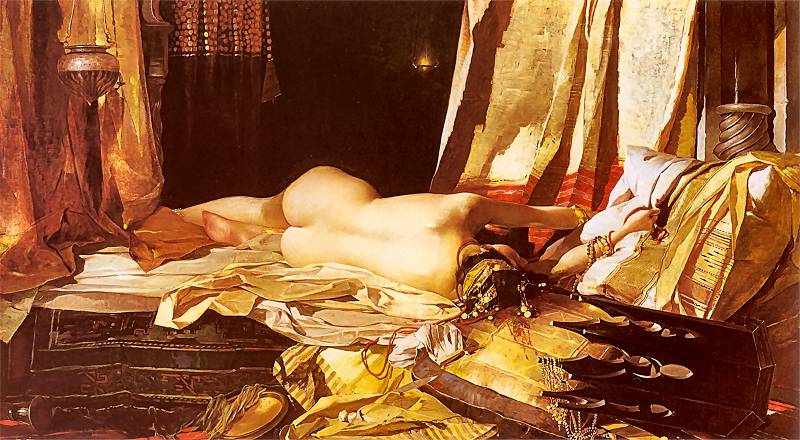
At Padishah’s order, 1881
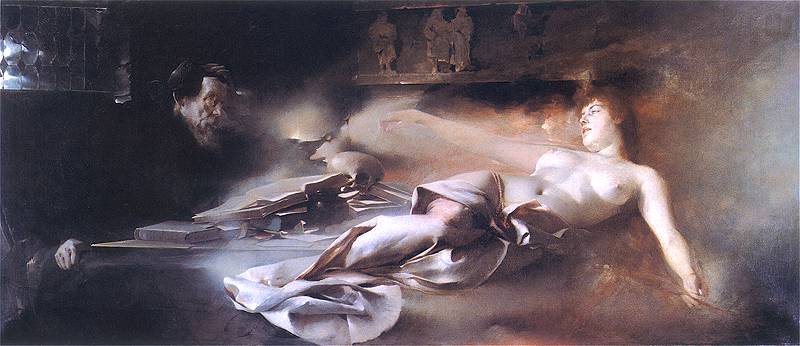
Faust’s Vision, 1890
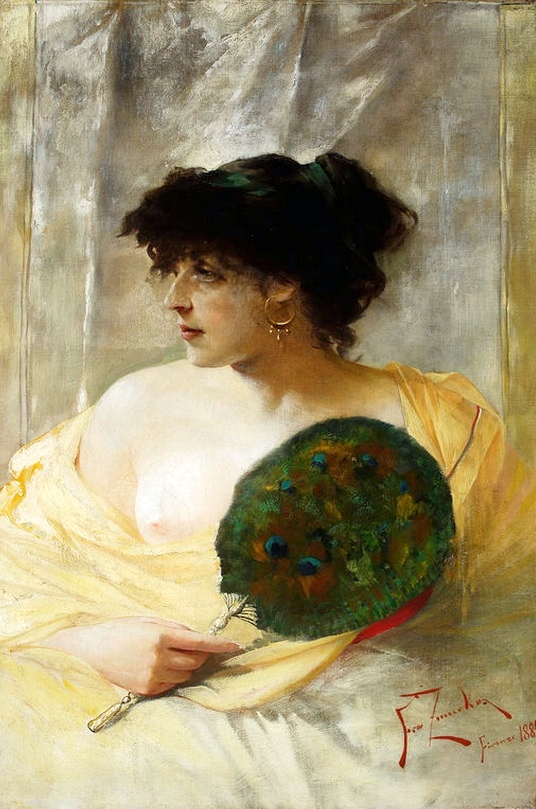
Femme à l’éventail” . 1884. oil on canvas, Warsaw, National Museum (MNW)
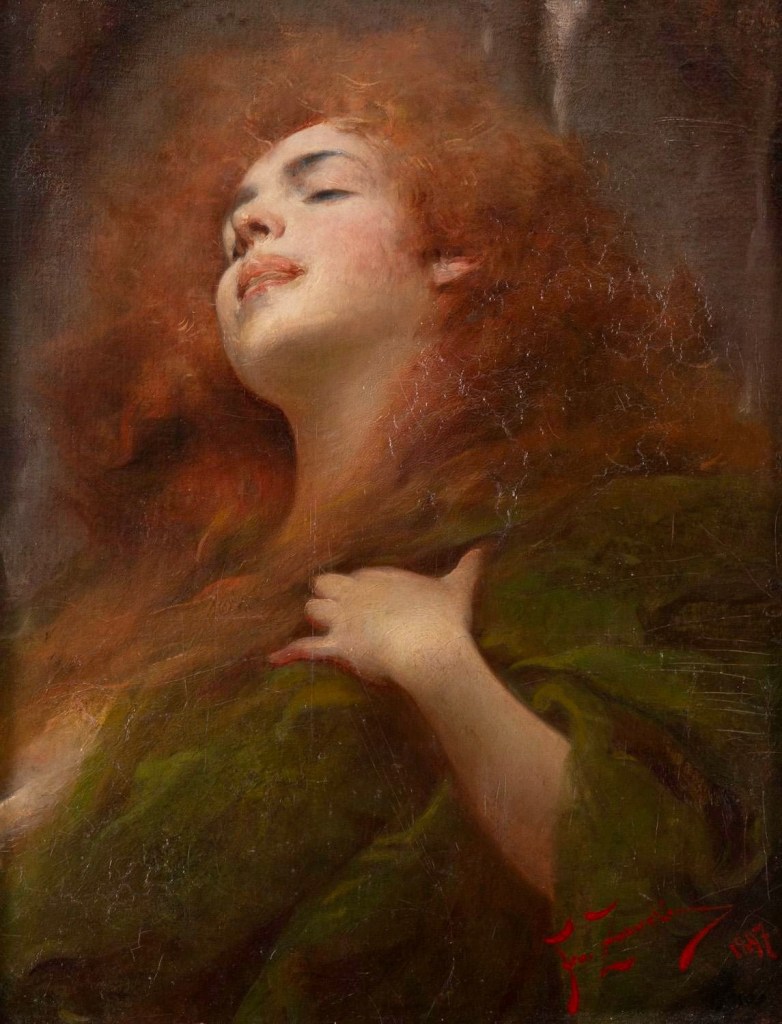
portrait of red haired woman 1897
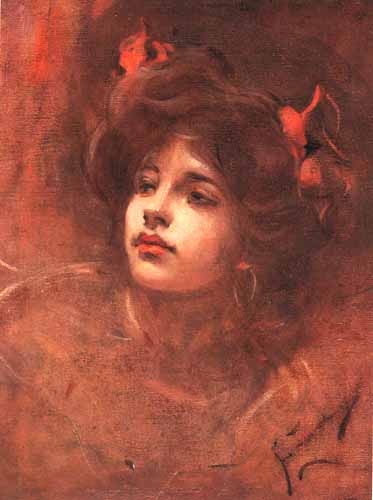
Girl with red ribbons in hair
thanks for stoppin’ by y’all
Mac Tag
The song of the day is from Bobby Fuller who died on this day in 1966 – “Love’s Made a Fool of You” –
I borrow the stilts of an old tragedy. Sylvia Plath
…And a softness came from the starlight and filled me full to the bone. – W.B. Yeats
When at last you find someone to whom you feel you can pour out your soul, you stop in shock at the words you utter. – Sylvia Plath
 The Lovers’ Chronicle
Leave a comment