Dear Zazie, Here is today’s Lovers’ Chronicle from Mac Tag. Tell us about your awakenin’. Rhett
The Lovers’ Chronicle
Dear Muse,
struggled findin’ a song,
but i have a close one that will work,
a ballad from Alice Cooper Goes to Hell;
’’Wake me gently
If you can
Wake me gently
Just touch my hand’’
’’I know he’s one of your favorites’’
been listenin’ to the Coop for forty years
he is still makin’ good rock ‘n’ roll records
‘’That is fabulous, old rockers still rocking’’
awakenin’s can come gently or with a jerk
so i think the song suits, and it made me
think about the one with you
and how it came gently
when we touched

© copyright 2023.2024 mac tag/cowboy coleridge all rights reserved
on a spreadsheet i could map out the series of these that led here, for there have been many; that i was not sent here to save anyone, that i did not need to follow a well worn path, that i did not have to be with someone to feel complete, that purpose could come late in life, that slowin’ down to take in every moment matters, that i could sit down each day with a blank page and create a stream of words, that the greatest awakenin’ would be with you

© copyright 2022.2024 mac tag/cowboy coleridge all rights reserved
as i often do
runnin’ through visions,
thinkin’, hear me,
take me to hold
ours for each other
unlike anything before
not somethin’ conjured up
from wishful thinkin’
comfortin’ to know
we have fallen
and can fall no farther
so come,
we will marvel
at what we create
© copyright 2021 mac tag/cowboy coleridge all rights reserved
Pale Love, Pale Rider
took too long, but we got there
’bout damn time
guess we had to age in to it
i do not do that shit
yeah, well you ain’t drivin’
oh the places we would go
sure, house
hey do you reckon anyone
back home still says that
not sure but we have detoured
oh yes, get us back on track
they can come softly or with a thud
ours this year
was somewhere in the middle
it was kinda rude
but that awakenin’
as shown us the way
everyday

© copyright 2020.2024 mac tag/cowboy coleridge all rights reserved
lift me
and ask
was it good,
bein’
your face
smilin’
the lullaby i sing
as we hold
for as long as we can
here we find ourselves
cradled in arms
eyes wide
into each other
askin’ again and again,
how do we stay here
© copyright 2019 mac tag/cowboy coleridge all rights reserved
it was then i began
to write again
from intense purpose
every day
imagination
scarcely falterin’,
rhythm barely
skippin’ a beat
and the verse i wrote…
a beginnin’ and an end
a first long drink
not to be forgotten,
nor likely tasted again…
© copyright 2018 mac tag/cowboy coleridge all rights reserved
it is the beginnin’
of many things
but shall we cut
the drama and stick
with brevity…
it is now i begin
still amazed i suppose
and a bit unsure
where to start
should i cry
rage against it all,
or laugh uncontrollably
shout joy high and low
no, have neither
of those in me
just gonna write
till i figure it out
© copyright 2017.2023 mac tag/cowboy coleridge all rights reserved
Now to sleep
Hope to see you
Please come
I will be waitin’
And we can be
As we were
Come be my canvas
And I will sketch
A love for you
Unlike anything
You have ever known
© copyright 2016 mac tag/cowboy coleridge all rights reserved
A closed book. So
hard to read. So
difficult to
understand. Damn
near, swear to God,
impossible
to hold on to
“His judgement cometh
And that right soon.”
If only i could
find my way back to
where hope is a good
thing, maybe the best
thing ever to have
© copyright 2015 mac tag/cowboy coleridge all rights reserved
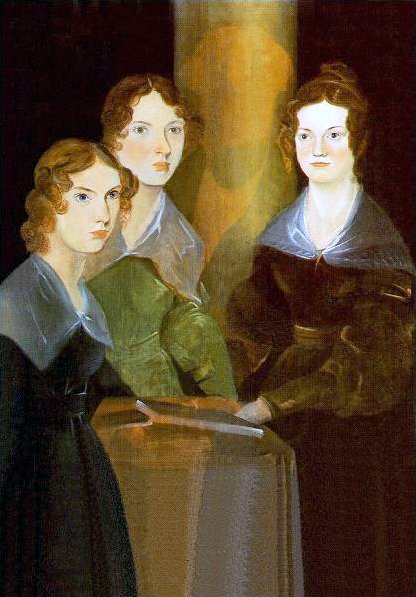
Today is the birthday of Branwell Brontë (Patrick Branwell Brontë; Thornton, West Riding of Yorkshire, England 26 June 1817 – 24 September 1848 Haworth, West Riding of Yorkshire, England); painter and writer. He was the only son of the Brontë family, and brother of the writers Charlotte, Emily and Anne.
Brontë was rigorously tutored at home by his father, and shared some of his sisters’ creative talent, earning praise for his poetry and translations from the classics. But he drifted between jobs, supporting himself by portrait-painting, and gave way to drug and alcohol addiction, apparently worsened by a failed relationship with a married woman, leading to his early death.
In January 1843, Brontë took up a tutoring position in Thorp Green, where he was to tutor the Reverend Edmund Robinson’s young son. His sister Anne had been the governess there since May 1840. At first things went well, with Charlotte reporting in January 1843 that her siblings were “both wonderously valued in their situations.” During his 30 months service Branwell corresponded with several old friends about his increasing infatuation with Robinson’s wife Lydia, née Gisborne, a charming and sophisticated woman, almost fifteen years senior to him. He wrote, perhaps unreliably, to one of his friends that “my mistress is DAMNABLY TOO FOND OF ME” and sent him a “lock of her hair, wch has lain at night on his breast – wd to God it could do so legally !” In July 1845, he was dismissed from his position. According to Gaskell, he received a letter “sternly dismissing him, intimating that his proceedings were discovered, characterising them as bad beyond expression and charging him, on pain of exposure, to break off immediately, and for ever, all communication with every member of the family.” Multiple explanations have been given for this, including inappropriate relationships with a Robinson daughter or son, or that he had passed forged cheques. The most likely explanation is Brontë’s own account that he had an affair with Mrs Robinson which Brontë hoped would lead to marriage after her husband’s death. For several months after his dismissal, he regularly received small amounts of money from Thorpe Green, sent by Mrs. Robinson herself, probably to dissuade him from blackmailing his former employer and lover.
Brontë returned home to his family at the Haworth parsonage, where he looked for another job, wrote poetry and attempted to adapt Angrian material into a book called And the Weary are at Rest. During the 1840s, several of his poems were published in local newspapers under the name of Northangerland, making him the first of the Brontës to be a published poet. Soon however, after Mr Robinson’s death, Mrs Robinson made clear that she was not going to marry Branwell, who then declined into alcoholism, opiates and debt. Charlotte’s letters from this time demonstrate that she was angered by his behaviour. In January 1847, he wrote to his friend Leyland about the easy existence he hoped for: “to try and make myself a name in the world of posterity, without being pestered by the small but countless botherments.” His behaviour became increasingly embarrassing to the family. He managed to set fire to his bed, after which his father had to sleep with him for the safety of the family. Towards the end of his life he was sending notes to a friend asking of “Five pence (5d) worth of Gin”. It is not known whether he was even informed of the 1847 debut novels of his three sisters.
Brontë died at Haworth parsonage, most likely due to tuberculosis aggravated by delirium tremens, alcoholism, and laudanum and opium addiction, despite the fact that his death certificate notes “chronic bronchitis-marasmus” as the cause. Elizabeth Gaskell’s biography of Charlotte reports an eye-witness account that Brontë, wanting to show the power of the human will, decided to die standing up, “and when the last agony began, he insisted on assuming the position just mentioned.” On 28 September 1848, he was interred in the family vault. Emily died of tuberculosis on 19 December of that year and Anne on 29 May 1849 in the coastal resort of Scarborough. Charlotte, the last living sister, married the Reverend Arthur Bell Nichols, curate of Haworth, in 1854 and died in March 1855, of pregnancy complications.
Gallery

Branwell Brontë, self-portrait, 1840

Brontë painted himself out of this painting of his three sisters.

Self caricature of Branwell (1847) in bed waiting to die.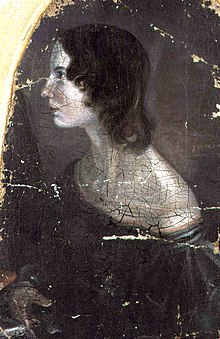 Disputed portrait made by Brontë about 1833; sources are in disagreement over whether this image is of Emily or Anne.
Today is the birthday of Daoud Corm (Ghosta, Lebanon 26 June 1852–1930 Beirut), David Corm in English; painter and the father of writer, industrialist and philanthropist Charles Corm. He was a teacher and mentor to the young Khalil Gibran as well as Khalil Saleeby and Habib Srour.
In 1870 he went to Rome and enrolled at the Accademia di San Luca where he trained under Roberto Bompiani, the Italian court painter. During his five years in Italy, Corm studied the works of Renaissance artists whose influence was evident throughout his works. He gained official recognition when he was commissioned to paint a portrait of Pope Pius IX (reg 1846-78). Upon his return to Lebanon in 1875, he painted portraits of many Arabs including Abbas II of Egypt (reg 1892–1914) in 1894.
In 1912, Corm expanded his artistic enterprise and its public appeal when he opened Maison d’Art, an art supply store and art studio centrally located near Beirut’s post office. Its significant commercial success indicated a growing public interest not only in art viewing but also in art making. Corm exhibited his work abroad in Egypt and Europe, most notably at the 1889 Versailles Exhibition in France and at the 1900 Paris Exhibition, where he received the Prize of Honor of Excellence. Additional recognition of his career includes receipt of the Lebanese Order of Merit and the Ottoman Medal of Glory. Corm died at age 77.
Gallery

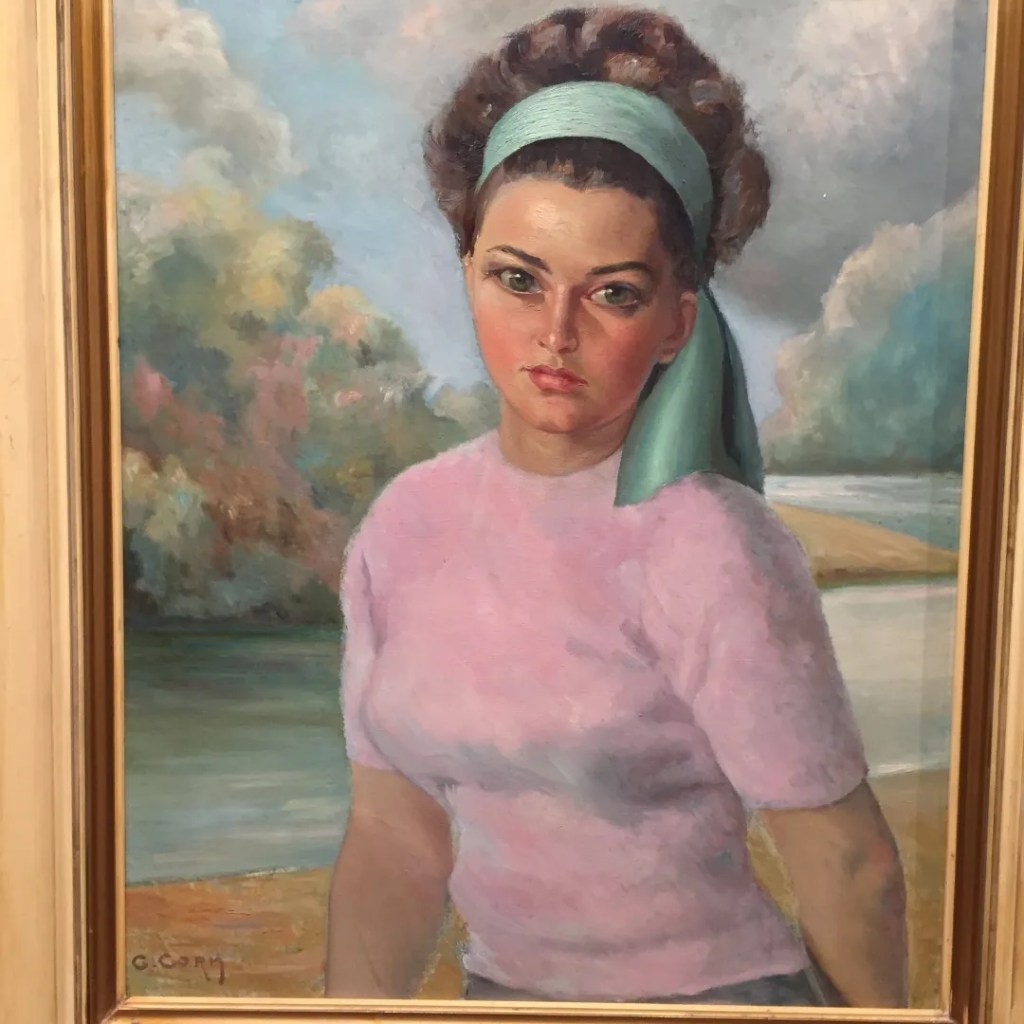
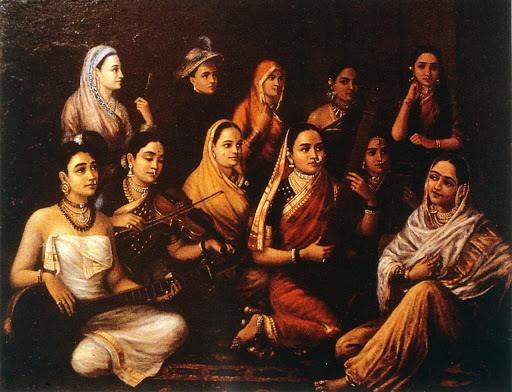
portrait de femme 1936
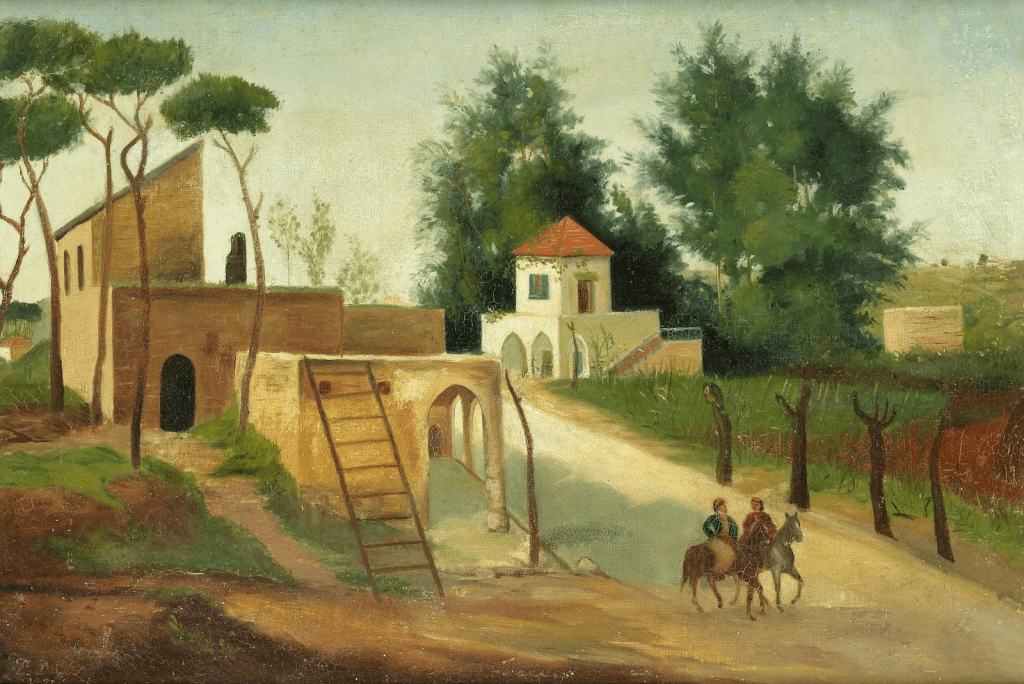
View of Achrafieh (1881)
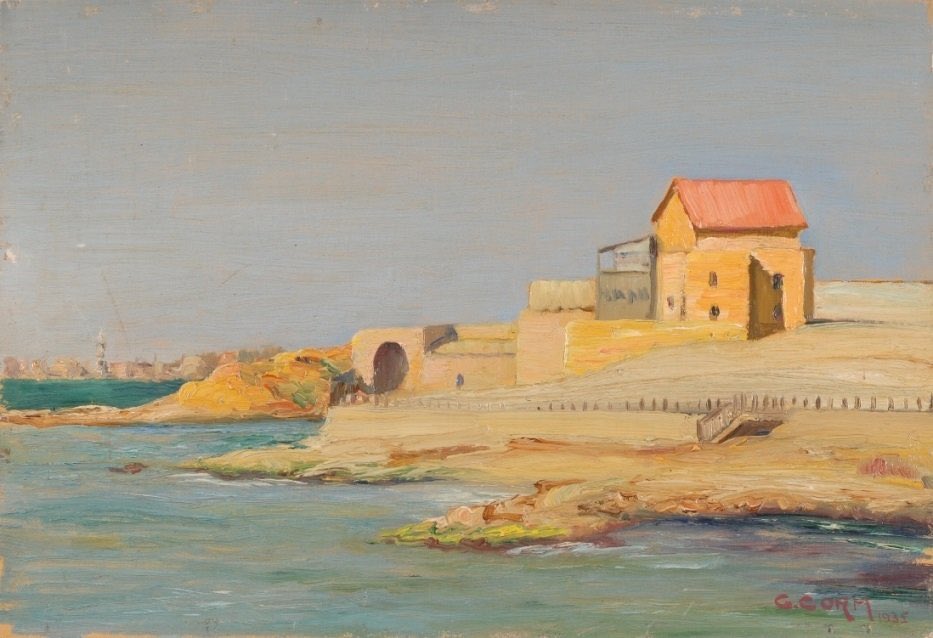

1900 self portrait
Today is the birthday of Pearl Buck (Pearl Sydenstricker Buck; Hillsboro, West Virginia; June 26, 1892 – March 6, 1973 Danby, Vermont), also known by her Chinese name Sai Zhenzhu (Chinese: 赛珍珠); writer and novelist. Perhaps best known for The Good Earth which was the best-selling novel in the United States in 1931 and 1932 and won the Pulitzer Prize in 1932. In 1938, Buck won the Nobel Prize in Literature “for her rich and truly epic descriptions of peasant life in China” and for her “masterpieces”, two memoir-biographies of her missionary parents. She was the first American woman to win that prize.
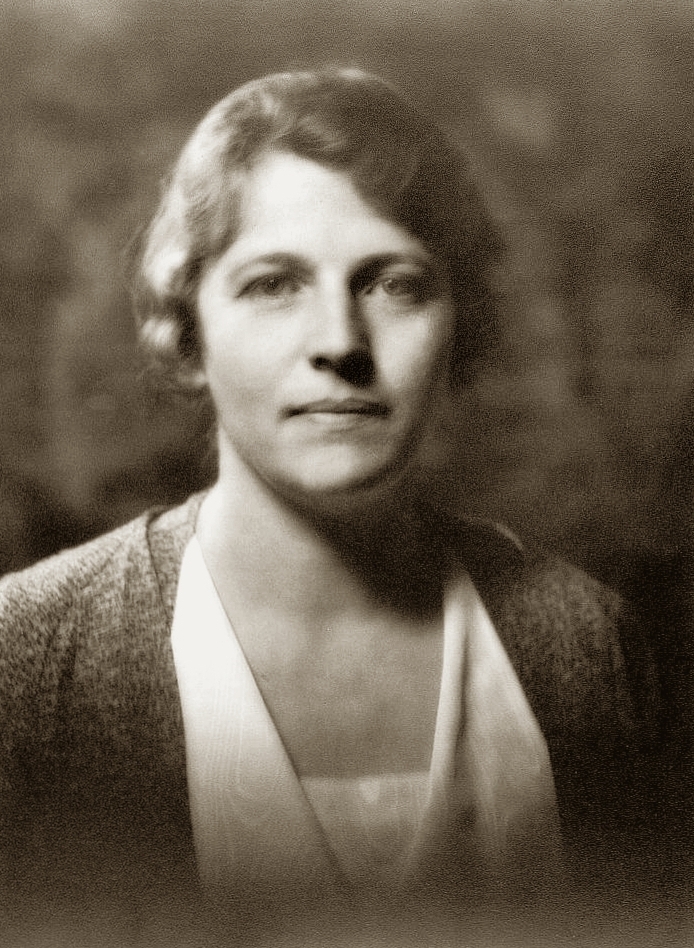
In October 1892, her parents took their 4-month-old baby to China. As the daughter of missionaries and later as a missionary herself, Buck spent most of her life before 1934 in Zhenjiang, with her parents, and in Nanjing, with her first husband. She and her parents spent their summers in a villa in Kuling town, Mountain Lu, Jiujiang, and it was during this annual pilgrimage that the young girl decided to become a writer. She graduated from Randolph-Macon Woman’s College in Lynchburg, Virginia, then returned to China. From 1914 to 1932, after marrying John Lossing Buck, she served as a Presbyterian missionary, but she came to doubt the need for foreign missions. Her views became controversial during the Fundamentalist–Modernist controversy, leading to her resignation. After returning to the United States in 1935, she married the publisher Richard J. Walsh and continued writing prolifically. She became an activist and prominent advocate of the rights of women and racial equality, and wrote widely on Chinese and Asian cultures, becoming particularly well known for her efforts on behalf of Asian and mixed-race adoption.
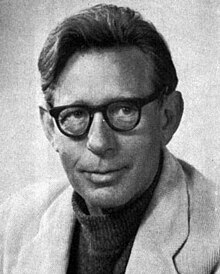
And today is the birthday of Laurie Lee (Laurence Edward Alan Lee; Stroud, Gloucestershire, England 26 June 1914 – 13 May 1997 Slad, Gloucestershire, England); poet, novelist and screenwriter. Perhaps best known for his autobiographical trilogy which consisted of Cider with Rosie (1959), As I Walked Out One Midsummer Morning (1969) and A Moment of War (1991). The first volume recounts his childhood in the Slad Valley. The second deals with his leaving home for London and his first visit to Spain in 1935, and the third with his return to Spain in December 1937 to join the Republican International Brigades.
In 1933 he met Sophia Rogers, an “exotically pretty girl with dark curly hair” who had moved to Slad from Buenos Aires, an influence on Lee who said later in life that he only went to Spain because “a girl in Slad from Buenos Aires taught me a few words of Spanish.”
Lee met Mary Garman’s married sister Lorna Wishart, in Cornwall in 1937, and they had an affair lasting until she left him for Lucian Freud in 1943. They had a daughter, Yasmin David, together. Wishart’s husband Ernest agreed to raise the girl as his own; she later became an artist.
In 1950 Lee married Catherine Francesca Polge, whose father was Provençal and whose mother was another of the Garman sisters, Helen; they had one daughter, Jessie.
Cider with Rosie (1959)
Cider with Rosie Penguin Books, Harmondsworth, England 1962
- It was then I began to on my bed… to make up poems from intense abstraction; hour after unmarked hour, imagination scarcely faltering once, rhythm hardly skipping a beat and the poems I made… were the first and last of that time.
- Never to be forgotten, that first long secret drink of golden fire, juice of those valleys and of that time, wine of wild orchards, of russet summer, of plump red apples, and Rosie’s burning cheeks. Never to be forgotten, or ever tasted again…
As I Walked out one Midsummer Morning
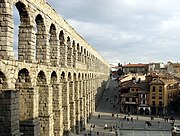
Segovia..”Here were churches, castles, and medieval walls standing sharp in the evening light, but all dwarfed by that extraordinary phenomenon of masonry, the Roman aqueduct, which overshadowed the whole…’The Aqueduct’, said the farmer, pointing with his whip, in case by chance I had failed to notice it.”
‘Love is simply the slipping of a hand in another’s, of knowing you are where you belong at last.’
thanks for stoppin’ by y’all
Mac Tag
 The Lovers’ Chronicle
Leave a comment