Hey Z, Today’s Lovers’ Chronicle from Mac Tag. Rhett
The Lovers’ Chronicle
Dear Muse,
like a coat from the cold
no song came right to mind,
so off we go in another direction
”We can handle that my love”
when someone is hurtin’ from a deep wound
they may go to great lengths to soothe the ache
and take comfort however they can git it,
in large measures or ones quite small
even as small as a quantum
”Oh I see what you did there”
just call me tag, mac tag
”Ha, hilarious”
had to go with one of my favorites,
the Bond film, Quantum of Solace
which fits today’s theme because
he was seekin’ solace for his loss
somethin’ we know a little about
”But we seek no more”
no, our searchin’ ended
in each other

© copyright 2023.2024 mac tag/cowboycoleridge all rights reserved
just occurred that solace is a better word, from Old French solas, from Latin sōlācium "consolation", more poetic, either way, sought for, though unaware that it was a search, in books, in music, in relationships, for wrongs, for things not understood, fortunate the list did not include drugs, nor whisky, or we would not be here, at the root it was purpose bein’ looked for, and only with writin’ did consolation come, necessary for that to be found before you

© copyright 2022.2024 mac tag/cowboycoleridge all rights reserved
there is now
of a much different sort
than back then
the consistent writin’
that began in June 2017
brought in a certain kind
before that,
the Nerval years,
there was very little
just grateful now
that whatever inside
kept hangin’ in there
till real comfort with you
© copyright 2021.2023 mac tag/cowboycoleridge all rights reserved
Pale Love, Pale Rider
ok, not gonna go
all Nerval on y’all
but i sure could
is it that contentment
often leads to sadness
forcin’ one to think
of the misfortune
that seems to follow
return once more
it is wise, in the beautiful
season of age, to believe
what we are talkin’ about
the dream is a second life
a place to lay your weary head
© copyright 2020 mac tag/cowboy coleridge all rights reserved
dearest,
possible change of scene comin’
see what may, see what might
visitin’ an old friend in Atlanta
would miss my High Plains
but all that matters is this
and i can write you from
anywhere darlin’
can you understand the comfort
it brings, knowin’ you are here
waitin’ for these lines to come
it is with wide wonder
that i continue
yours, m

© copyright 2019.2024 mac tag/cowboy coleridge all rights reserved
no longer git upset
is it that contentment
can lead to sadness
forcin’ one to think
of the misfortune
that follows closely
is it wise to believe
in else,
besides this
to dream
is to find comfort
© copyright 2018 mac tag/cowboy coleridge all rights reserved
wish we could be
at the Trevi Fountain today
but only to toss two coins
not three
***
if you ever see me
tossin’ coins
into the Trevi Fountain,
do what needs be done
to prevent me
from tossin’
that third coin
© copyright 2017 mac tag/cowboy coleridge all rights reserved
tell all, tell it
Revelator
with in kind words
to the eased
twilight, fast fallin’
a horseman crosses
the dark line of low ground
to become more distinct
as he climbs the slope,
movin’ swiftly, comin’ sharply
into sight as he tops a ridge
to show wild and black
above the horizon,
and then passes down ,
dimmin’ into the purple of the sage
the pale afterglow in the west
darkens with the mergin’
of twilight into night
the sage spreads out
black and gloomy
one dim star glimmers
in the southwest sky
the sound of the trottin’ horse
ceases, and there is silence
broken only by the faint,
dry patterin’ of cottonwood leaves
in the soft night wind
no home,
no comfort,
no rest,
no place
to lay your weary head
© copyright 2016 Mac tag all rights reserved
Matters not what this way comes
I will find them, just for you
***
Nothin’ have I to give
So I keep givin’ these
As the moon fetches light
For weary, forlorn eyes
© copyright 2015 mac tag/cowboy coleridge all rights reserved
On this day in 1762 the Trevi Fountain in Rome is officially completed and inaugurated by Pope Clement XIII.
| Trevi Fountain | |
|---|---|
| Italian: Fontana di Trevi | |
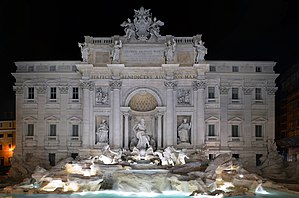 | |
The Trevi Fountain (Italian: Fontana di Trevi) is a fountain in the Trevi district in Rome, Italy, designed by Italian architect Nicola Salvi and completed by Pietro Bracci. Standing 26.3 metres (86 ft) high and 49.15 metres (161.3 ft) wide, it is the largest Baroque fountain in the city and one of the most famous fountains in the world.
Coins are purportedly meant to be thrown using the right hand over the left shoulder. This was the theme of 1954’s Three Coins in the Fountain and the Academy Award-winning song by that name which introduced the picture. Tradition states that tossing one coin will bring you back to Rome again, two coins will bring you love or romance while in Rome, and three coins you will happily marry in Rome.
The fountain has also appeared in Roman Holiday (1953) and Federico Fellini’s classic, La Dolce Vita (1960).
The Trevi Fountain is depicted in the third movement, “The Trevi Fountain at Noon”, of Ottorino Respighi’s 1916 symphonic poem Fountains of Rome.
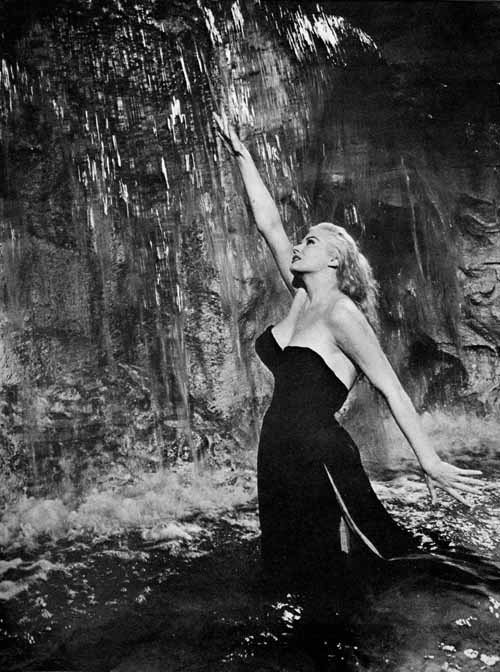
In La Dolce Vita, Anita Ekberg wades into the fountain with Marcello Mastroianni.
| Gérard de Nerval | |
|---|---|
 |
Today is the birthday of Gérard de Nerval (Gérard Labrunie; Paris 22 May 1808 – 26 January 1855 Paris); writer, poet, essayist and translator. A major figure of French romanticism who worked in many genres, he is best known for his poems and novellas, especially the collection Les Filles du feu (The Daughters of Fire), which includes the novella Sylvie and the poem El Desdichado. He died by suicide during the night of 26 January 1855, by hanging himself from a sewer grating in the rue de la vieille-lanterne, a narrow lane in the fourth arrondissement of Paris. He left a brief note to his aunt: “Do not wait up for me this evening, for the night will be black and white.” The poet Charles Baudelaire observed that Nerval had “delivered his soul in the darkest street that he could find (délier son âme dans la rue la plus noire qu’il pût trouver).”
Corilla
Mazetto : Vous avez l’air contrarié.
Fabio : C’est que le bonheur me rend triste ; il me force à penser au malheur qui le suit toujours de près.
- Corilla dans Les Chimères – La Bohême galante – Petits châteaux de Bohême, Gérard de Nerval, éd. Gallimard, coll. Poésie / Gallimard, 2005, partie Second château, Petits châteaux de Bohême, p. 224
Il est sage d’aimer dans la belle saison de l’âge ; plus sage de n’aimer pas.
- Corilla dans Les Chimères – La Bohême galante – Petits châteaux de Bohême, Gérard de Nerval, éd. Gallimard, coll. Poésie / Gallimard, 2005, partie Second château, Petits châteaux de Bohême, p. 239
Emilie
Vallier : Eh bien ! C’est toute l’aventure du sergent prussien tué par Desroches.
Wilhelm : Desroches ! Est-ce du lieutenant Desroches que vous parlez ?
- Emilie dans Les Filles du feu, Gérard de Nerval, éd. Folio, coll. Classique/Folio, 2007, p. 295
Aurélia, 1853
Le rêve est une seconde vie.
- Aurélia, dans Œuvres, Gérard de Nerval, éd. Gallimard, coll. Bibliothèque de la Pléiade, 1960, p. première phrase
Rien n’est indifférent, rien n’est impuissant dans l’univers ; un atome peut tout dissoudre, un atome peut tout sauver.
- Aurélia, dans Œuvres, Gérard de Nerval, éd. Gallimard, coll. Bibliothèque de la Pléiade, 1960, p. 404
Les Faux Saulniers, 1868
Il est des gens qui crient très haut qu’ils n’ont jamais voulu se vendre ; c’est peut-être qu’on ne se serait jamais soucié de les acheter.
- Les Faux Saulniers, dans Œuvres, Gérard de Nerval, éd. Gallimard, coll. Bibliothèque de la Pléiade, 1960, p. 443
Le carnet de Dolbreuse
La vertu, chez les uns, c’est peur de la justice ; chez beaucoup c’est faiblesse ; chez d’autres, c’est calcul.
- Le carnet de Dolbreuse, dans Œuvres, Gérard de Nerval, éd. Gallimard, coll. Bibliothèque de la Pléiade, 1960, p. 430
Today is the birthday of Fritz von Uhde (Friedrich Hermann Carl Uhde; Wolkenburg, Germany; May 22, 1848 – February 25, 1911 Munich); painter of genre and religious subjects. His style laying between Realism and Impressionism, he was once known as “Germany’s outstanding impressionist” and he became one of the first painters who introduced en plein air art in his country.

Gallery

Easter morning. Oil on canvas
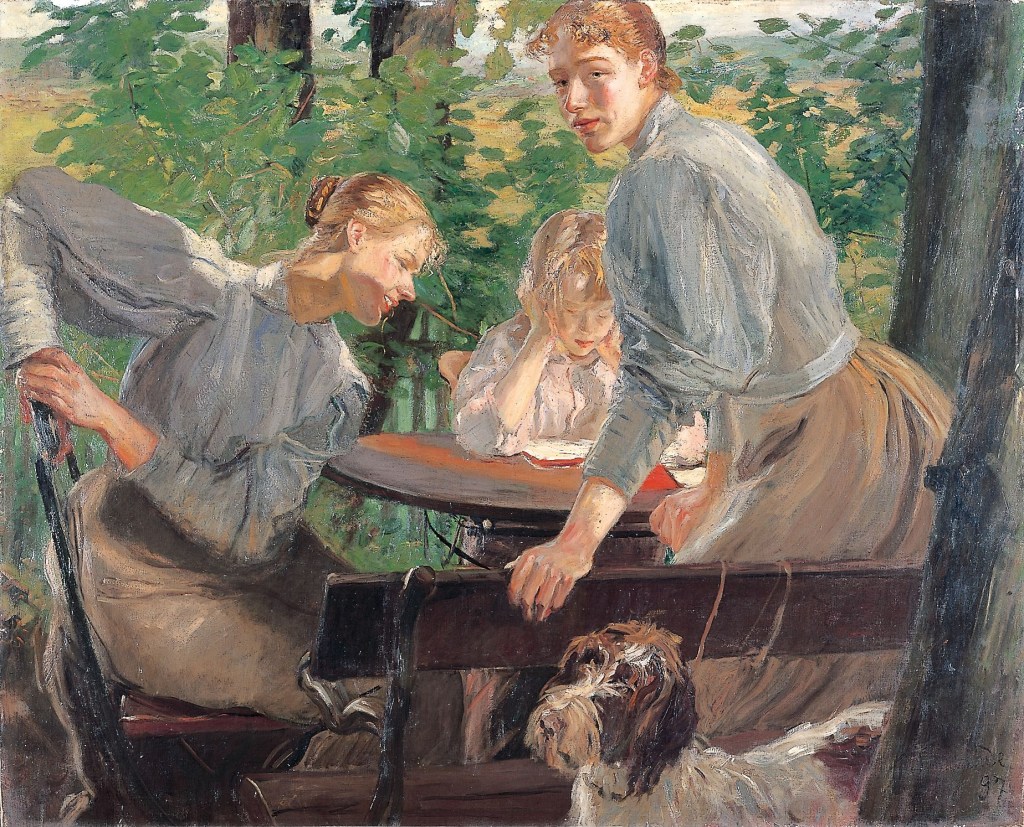
Die Töchter des Künstlers im Garten (1897)
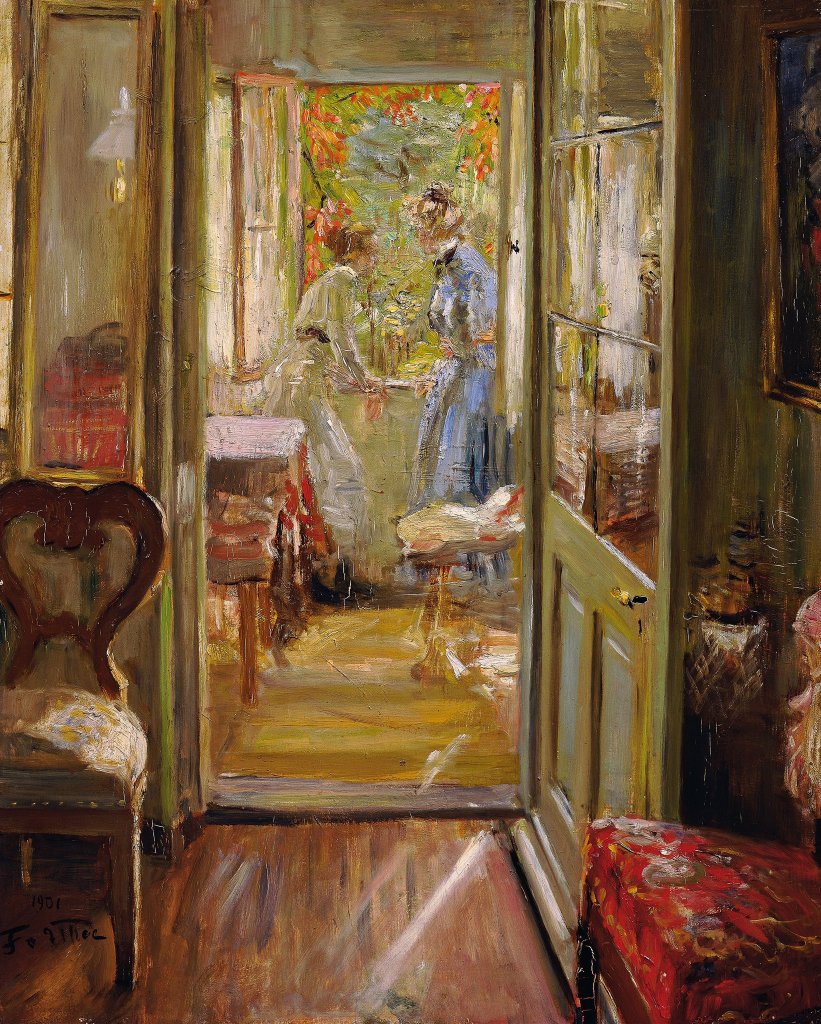
Girls on the Veranda (1901)

At the Window (1890)
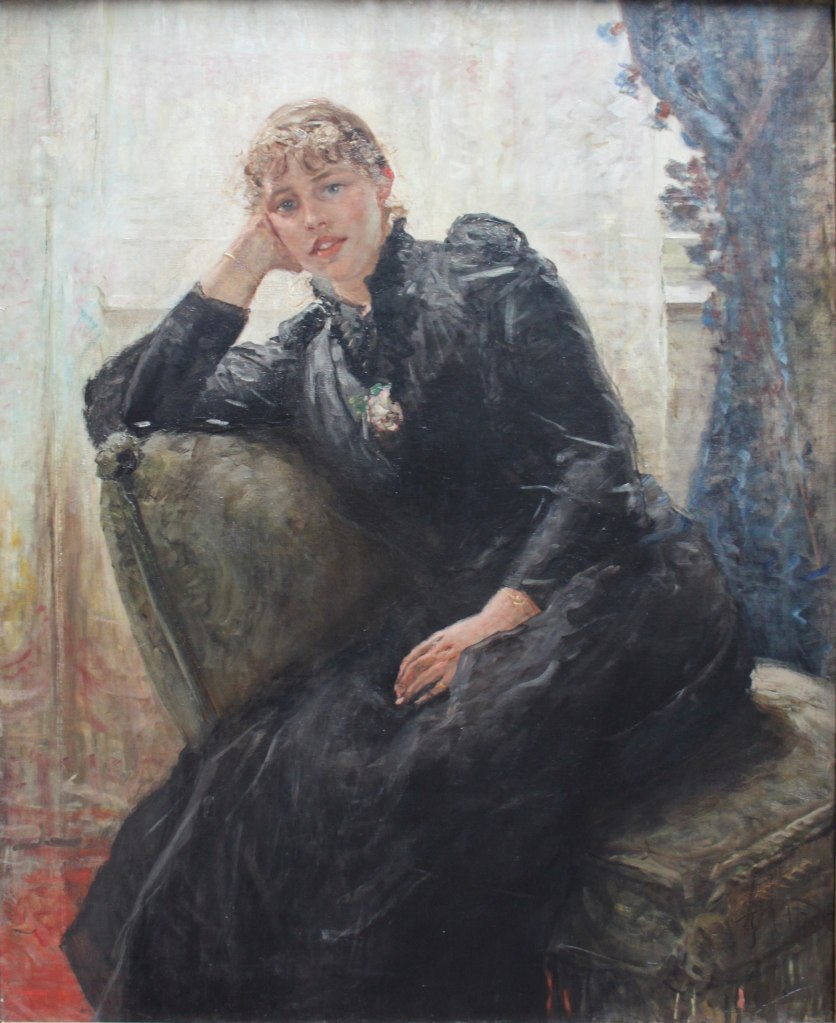
Portrait of Therese Karl (1890)

In the Garden (1901)


Today is the birthday of Hildegard Thorell (Hildegard Katarina Bergendal; Kroppa parish, Värmland County, Sweden 22 May 1850 – 2 February 1930 Stockholm); painter. Thorell mainly painted large portraits, for example “Modersglädje” (Maternal Joy) och “Damporträtt” (Female Portrait).
In 1872 she married the auditor Oskar Reinhold Thorell. She studied at the Royal Swedish Academy of Fine Arts in Stockholm from 1876 to 1879, where she was the only married female student. She became an agré at the Royal Swedish Academy of Fine Arts in 1883 and was apprenticed to Bertha Wegmann. Later she travelled to Paris, where she studied with Léon Bonnat and Jean-Léon Gérôme.
Gallery
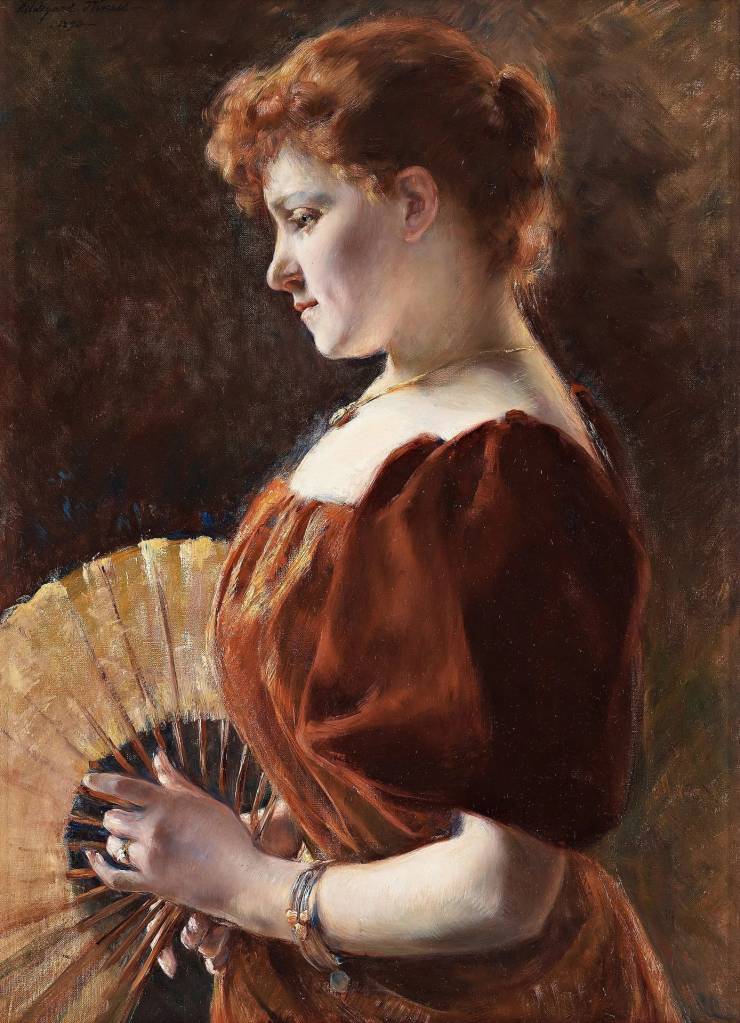
‘Young Woman with Fan’, 1893 Oil on canvas

Lady in Mourning

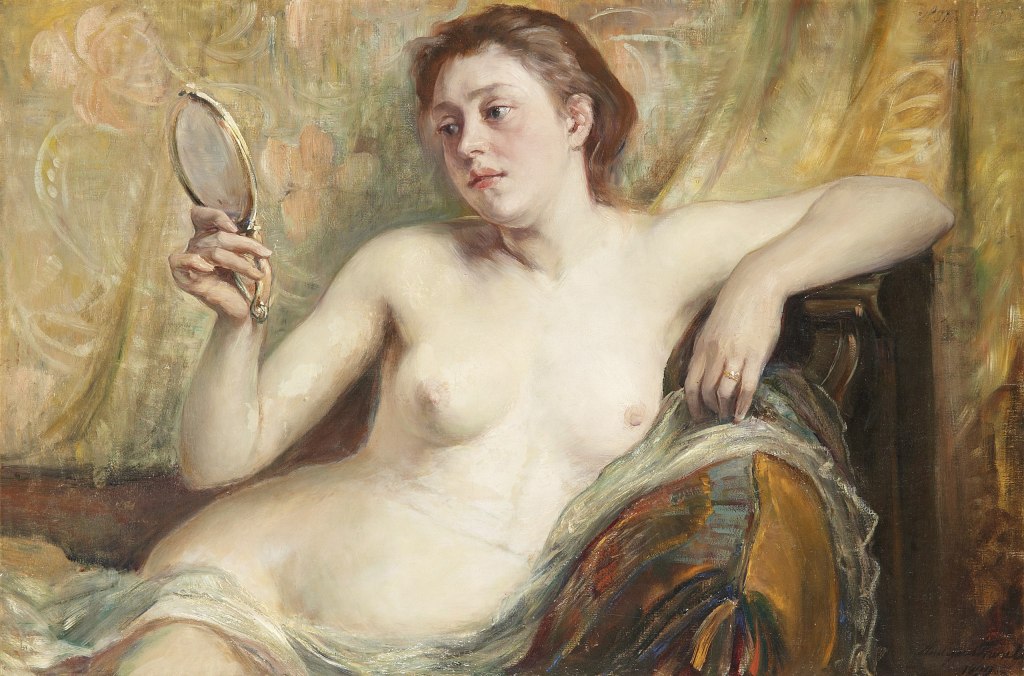
Modell med spegel (1899) oil on canvas
| Mary Cassatt | |
|---|---|
 | |
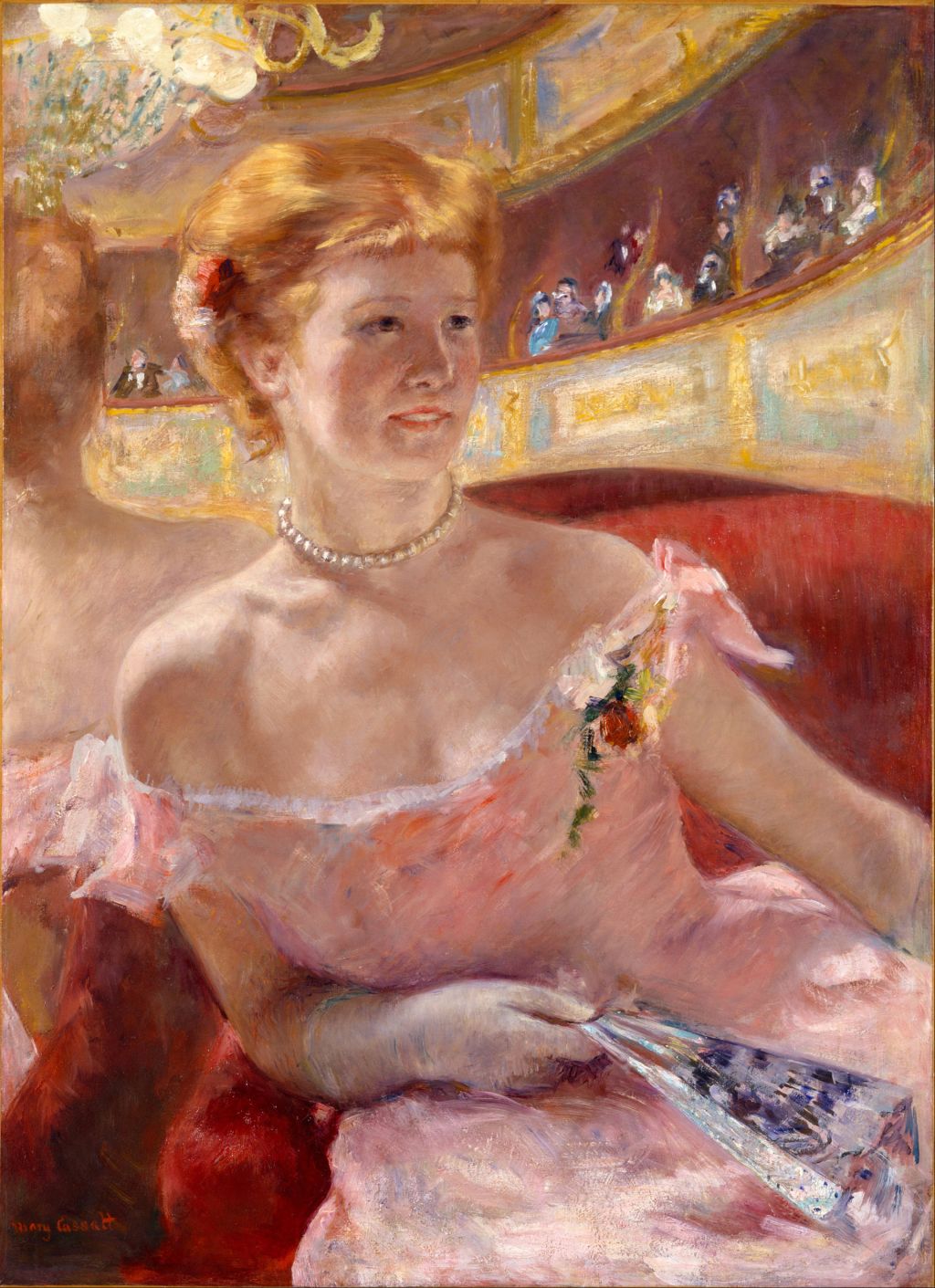
Today is the birthday of Mary Cassatt (Mary Stevenson Cassatt; Allegheny, Pennsylvania; May 22, 1844 – June 14, 1926 Château de Beaufresne, near Paris); American painter and printmaker. She lived much of her adult life in France, where she first befriended Edgar Degas and later exhibited among the Impressionists. Cassatt often created images of the social and private lives of women. She was described by Gustave Geffroy in 1894 as one of “les trois grandes dames” of Impressionism alongside Marie Bracquemond and Berthe Morisot.
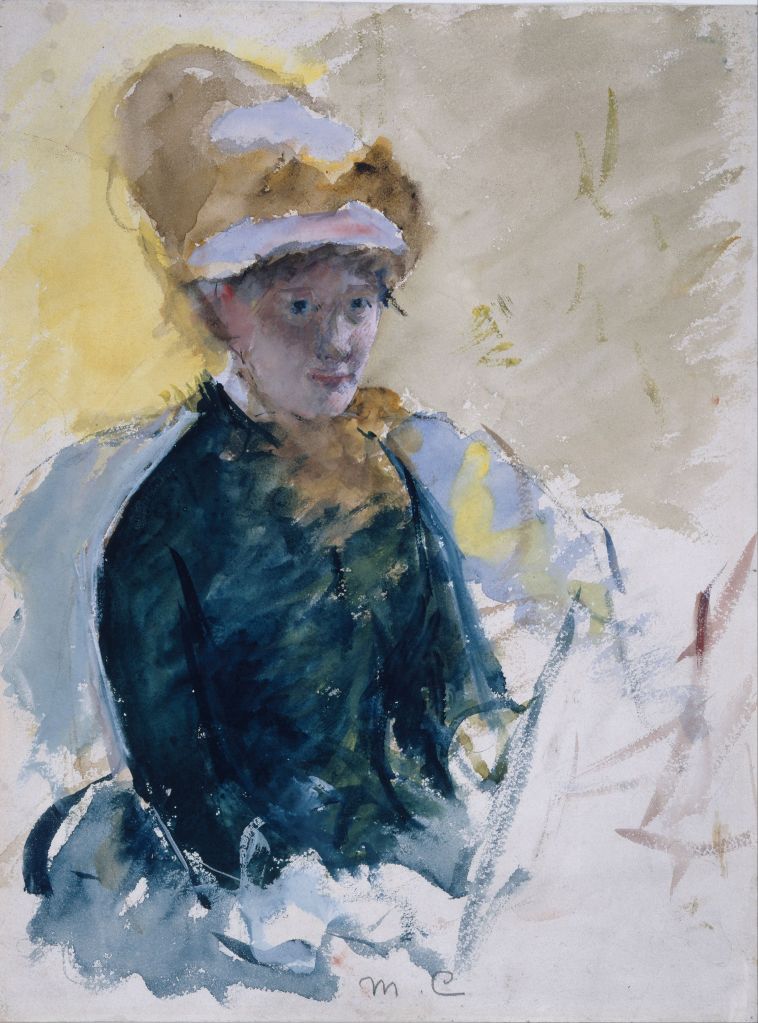
Self-Portrait, c. 1880, gouache and watercolor over graphite on paper, 32.7 cm × 24.6 cm, National Portrait Gallery, Washington, D.C.
Cassatt depicted the “New Woman” of the 19th century from the woman’s perspective. As a successful, highly trained woman artist who never married, Cassatt—like Ellen Day Hale, Elizabeth Coffin, Elizabeth Nourse and Cecilia Beaux—personified the “New Woman”. She “initiated the profound beginnings in recreating the image of the ‘new’ women”, drawn from the influence of her intelligent and active mother, Katherine Cassatt, who believed in educating women to be knowledgeable and socially active. She is depicted in Reading ‘Le Figaro’ (1878), see below.
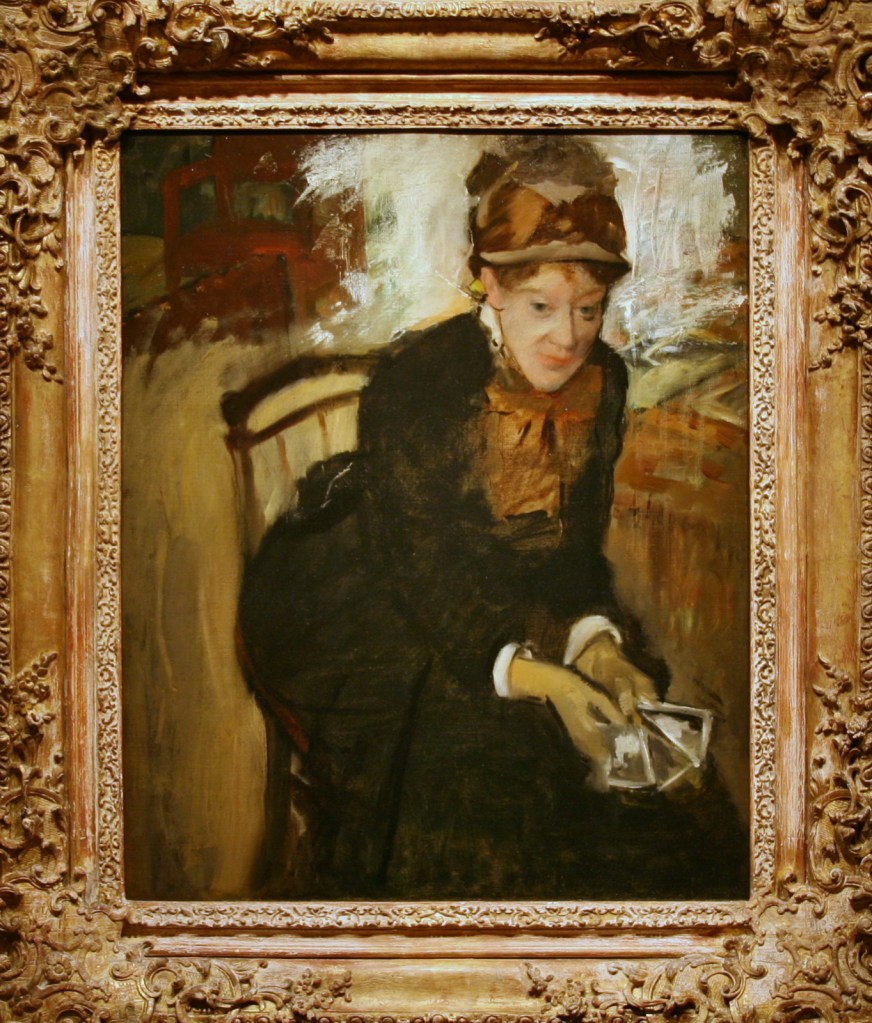
Cassatt’s independence and choice to not marry as a “New Women” could also be seen as a reaction to the strict institutionalized misogamy of the art world at the time, as marriage could have been seen as unserious and incompatible with any serious artistic career that she was fighting to be recognized for
Gallery
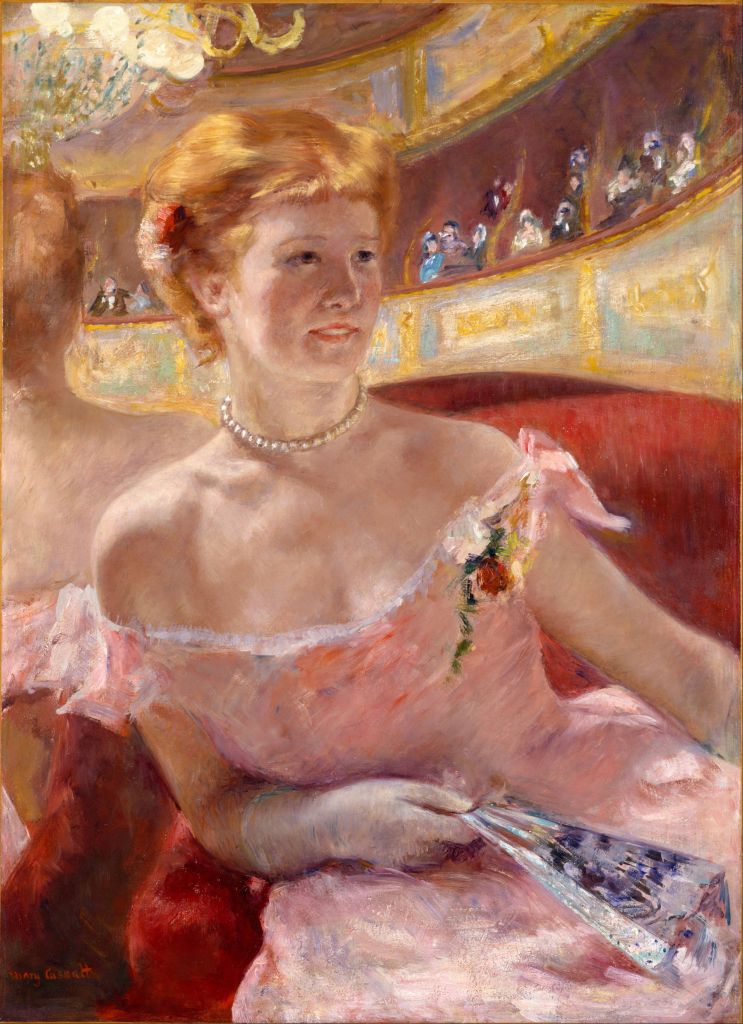
Woman with a Pearl Necklace in a Loge, 1879, oil on canvas, 81.3 c 59.7 cm, Philadelphia Museum of Art
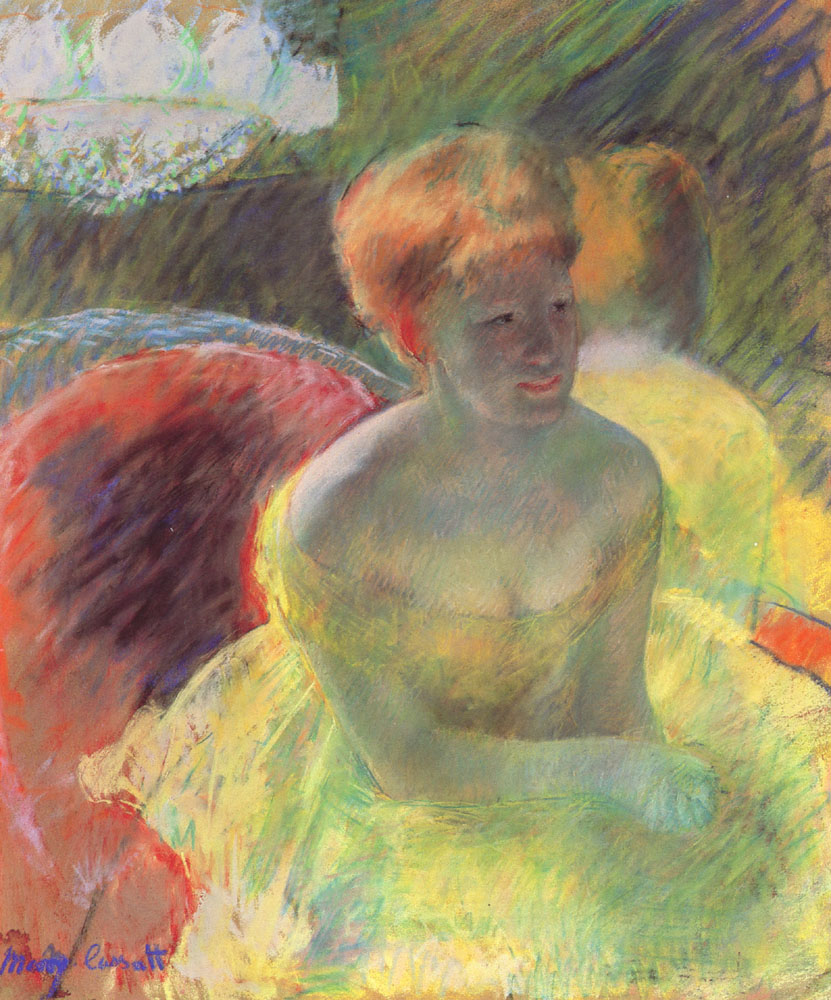
Lydia Leaning on Her Arms, Seated in Loge (1879)

The Reader (1877), Crystal Bridges Museum of American Art

Woman Standing Holding a Fan, 1878–79, (Amon Carter Museum of American Art)
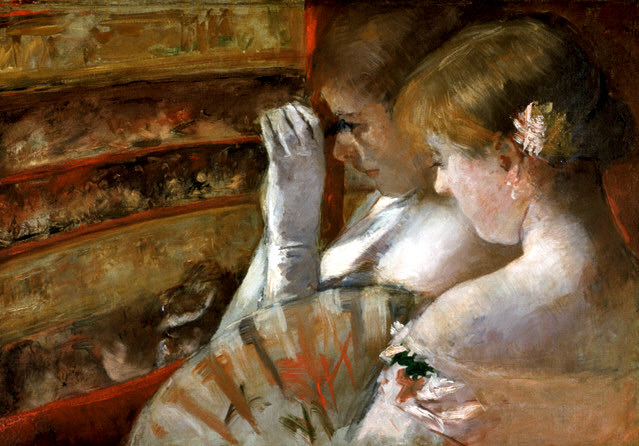
In the Box (1879)

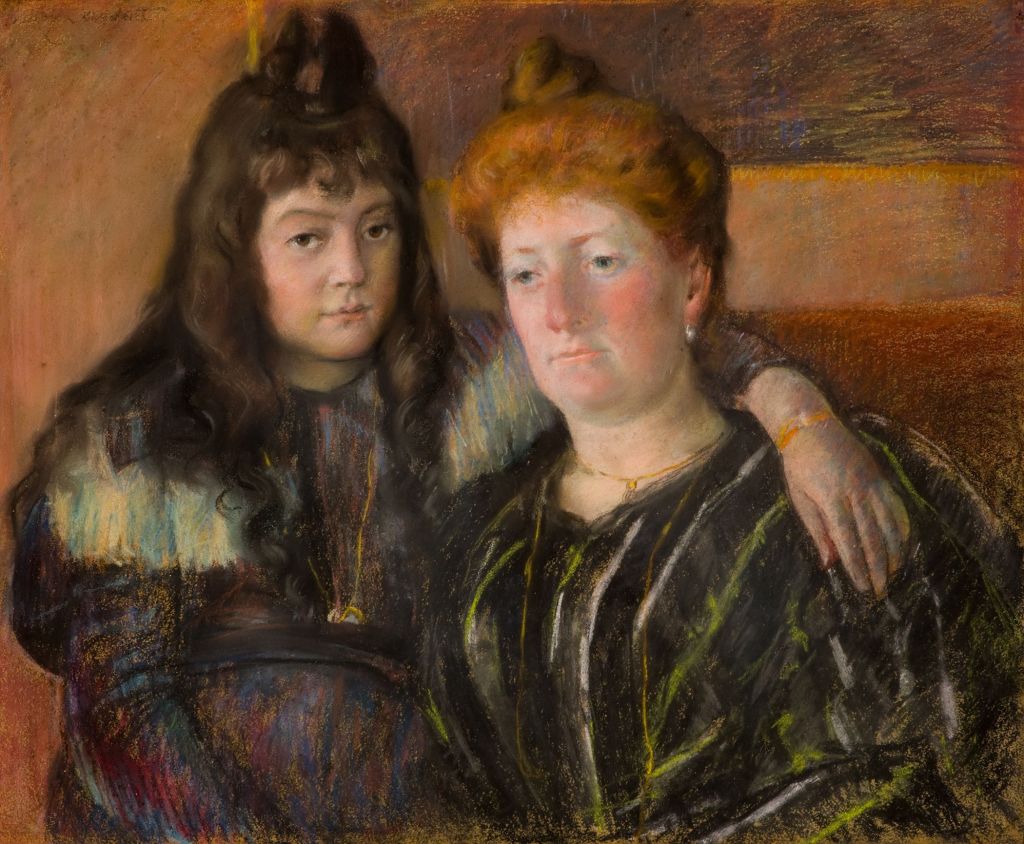
Madame Gaillard and Her Daughter Marie-Thérèse (1899), pastel, Reynolda House Museum of American Art
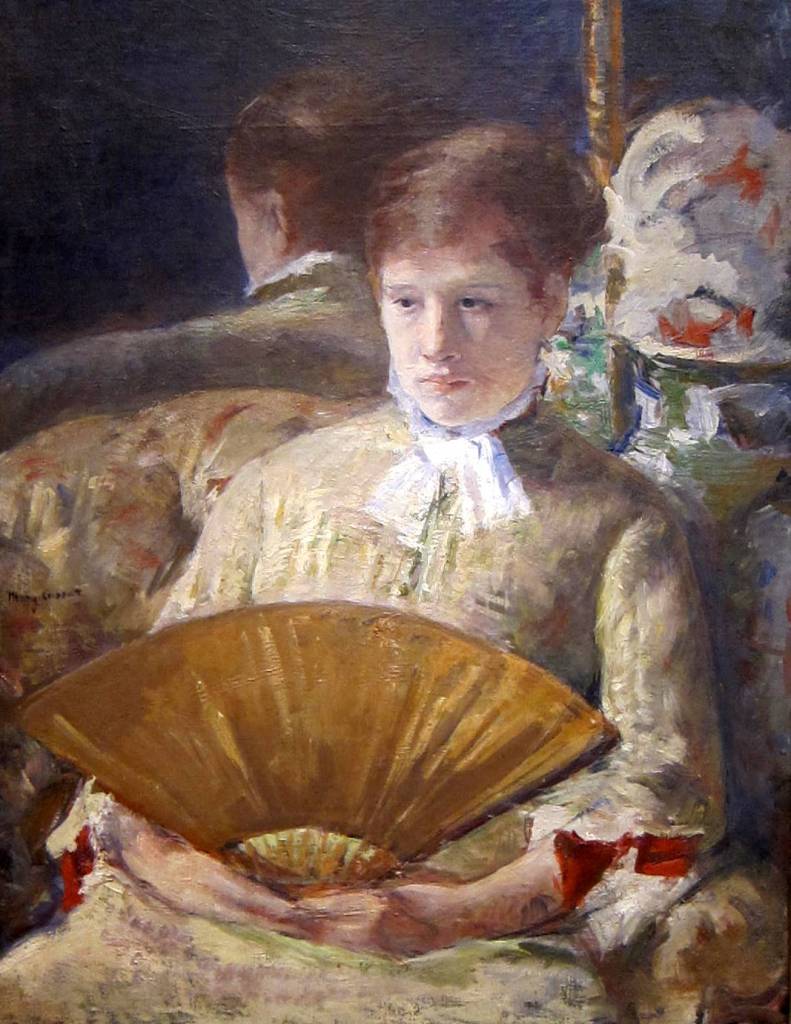


Portrait of Madame Sisley (1873)

Woman Bathing (La Toilette) by Mary Cassatt, 1890–91, Drypoint and aquatint print, Metropolitan Museum of Art

Summertime by Mary Cassatt, c. 1894, oil on canvas, Terra Foundation for American Art, Chicago
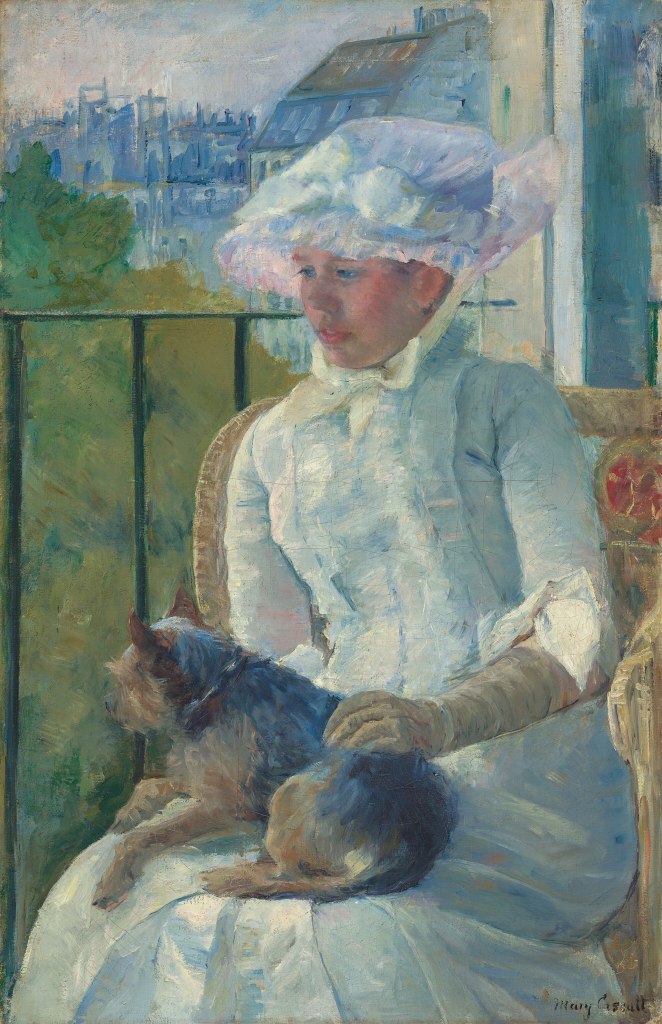
Young Girl at a Window (c. 1883–1884), National Gallery of Art

Lydia at the Tapestry Loom (c. 1881)

Lady at the Tea Table (1883–1885), Metropolitan Museum of Art
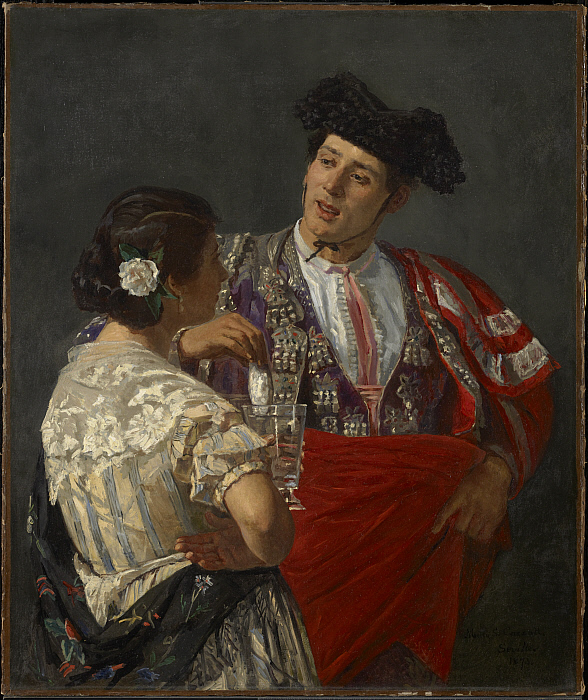
Offering the Panal to the Bullfighter (1873), oil on canvas, Clark Art Institute

Young Woman in a Black and Green Bonnet, 1890, Princeton University Art Museum
Today is the birthday of Belmiro Almeida (Belmiro Barbosa de Almeida 22 May 1858, Serro, Brazil – 12 June 1935, Paris); painter, illustrator, sculptor and caricaturist.

Self-portrait (1883) Efeitos do sol
In the late 1880s, he travelled to Rome and Paris, where he studied at the Académie Julian, worked in the studios of Jules Lefebvre and participated in several Salons. After that time, having become enamored of the French capitol, he alternated his residence between Paris and Rio de Janeiro.
As a sculptor, he is best known for his figure of Manequinho (modeled after the Mannekin Pis in Brussels), which is on a public square in front of the Botafogo de Futebol e Regatas clubhouse and has become the club’s mascot.
He settled in Paris permanently after World War I, but continued to participate in the “Exposições Gerals de Belas Artes”, winning the Grand Gold Medal in 1921. Perhaps his most famous painting is Arrufos (The Spat), which used the art critic Gonzaga Duque as a model. In turn, Almeida inspired a character in Duque’s novel Mocidade Morta (The Death of Youth, 1899).
Gallery

Nu feminino

The Chatterbox (1893)
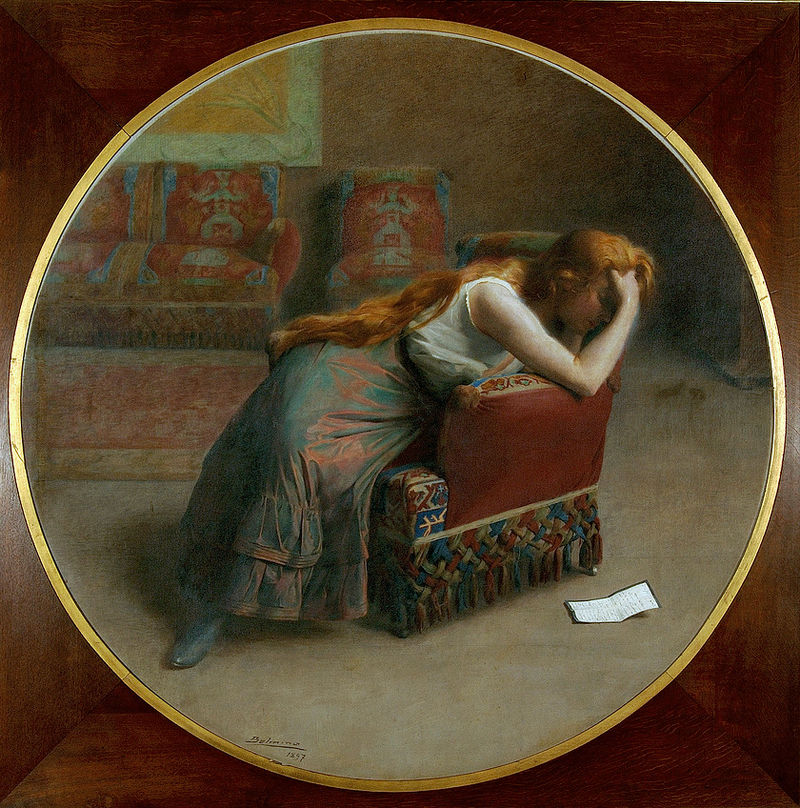
Bad News (1897)
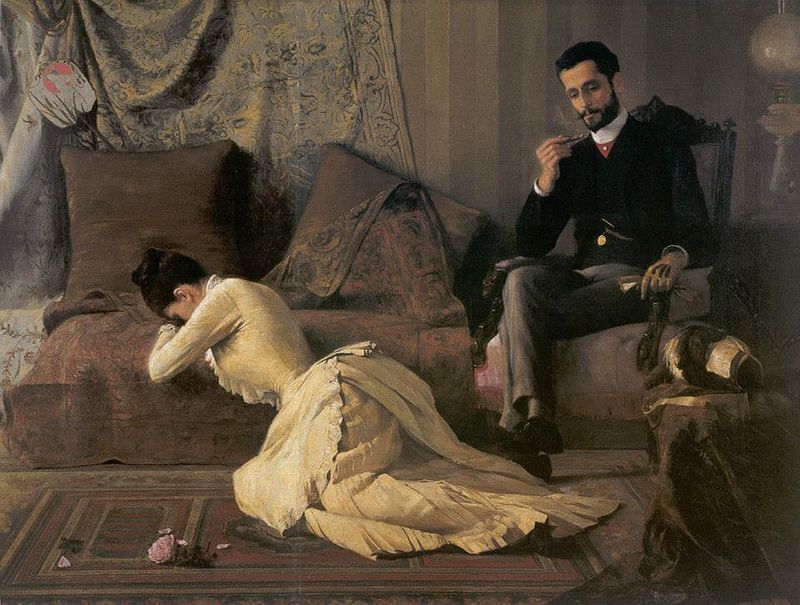
Arrufost (The Spat, 1887)

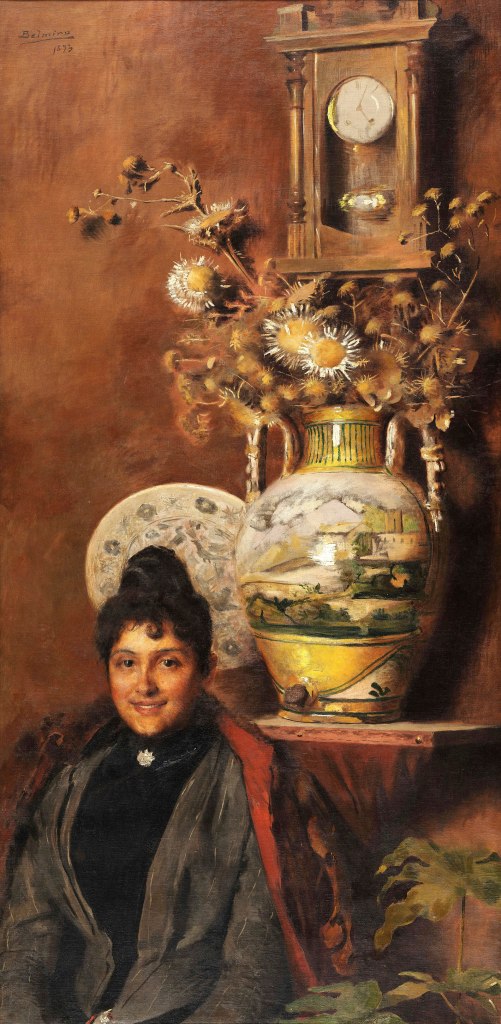
Vaso com flores
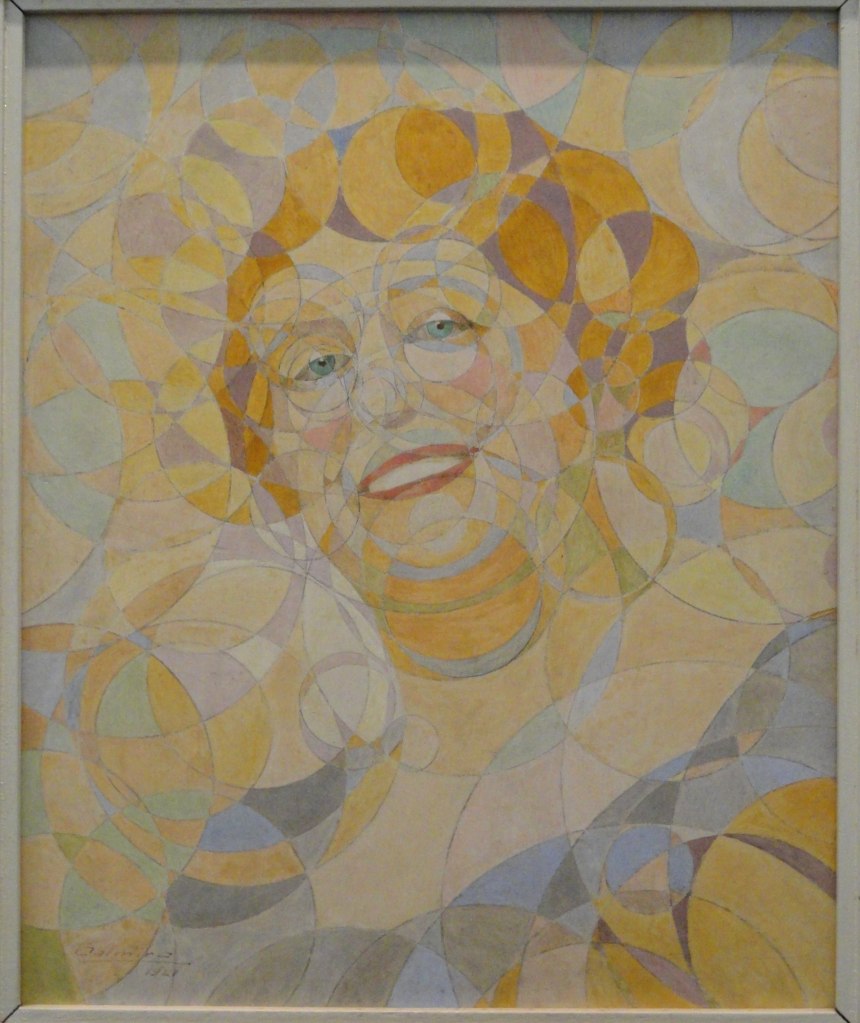
Mulher em círculos

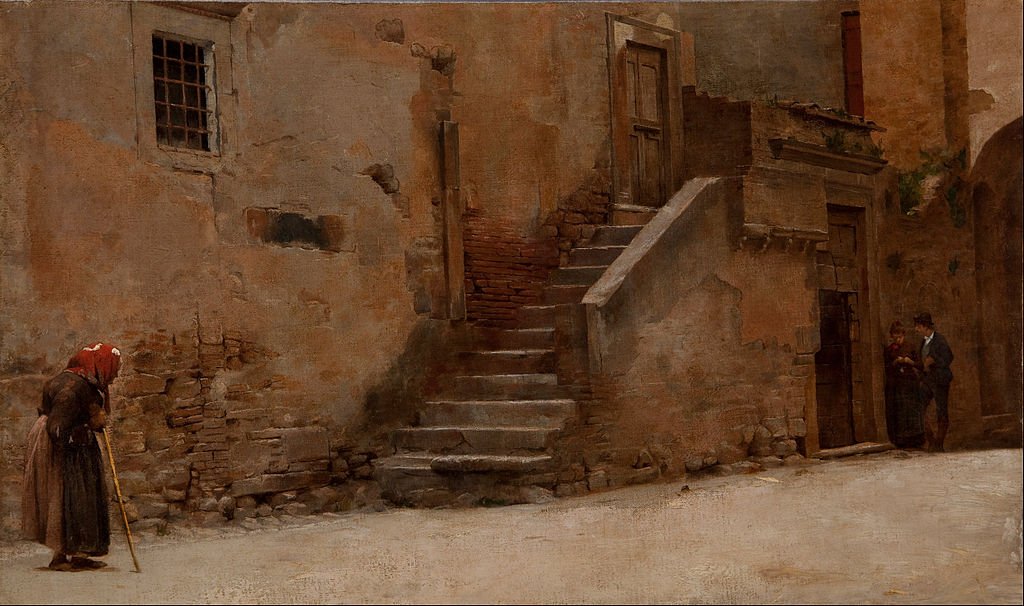
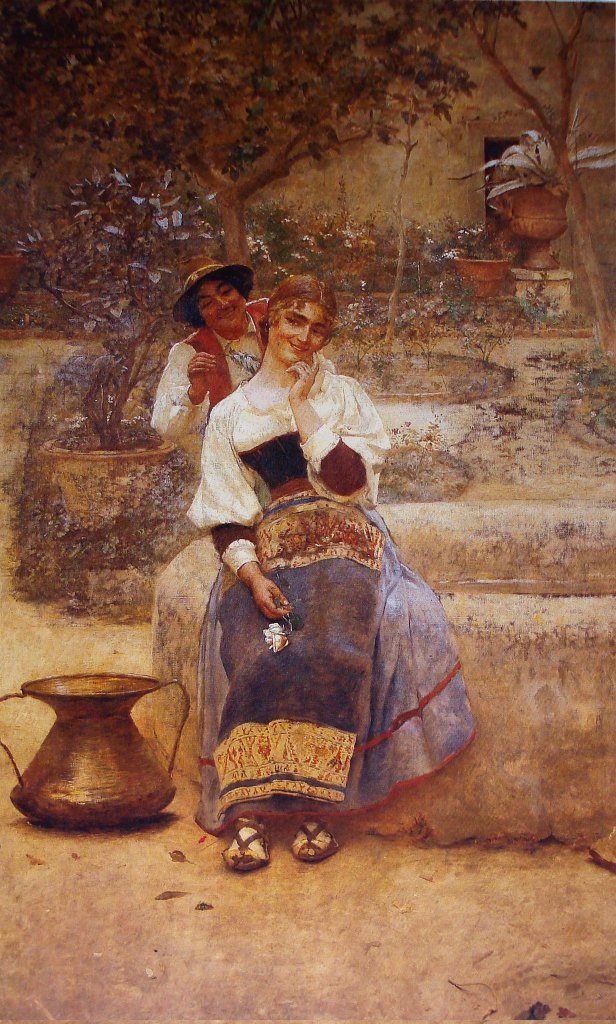
Street in Italy (circa 1889)
And Cherie, on this day in 1885, poet, playwright, novelist, essayist, visual artist, statesman, human rights activist and exponent of the Romantic movement in France, Victor Hugo died in Paris at the age of 83. His best-known works are the novels Les Misérables and Notre-Dame de Paris (also known in English as The Hunchback of Notre-Dame) and for his poetry, particularly Les Contemplations and La Légende des siècles. His books are in my library. In 1833 he met the French actress Juliette Drouet. They became lovers and she abandoned her theatrical career afterwards to dedicate her life to her lover. Oh to know what it would feel like to be loved like that! Is he more fortunate to have been blessed with his writin’ skills or to have been blessed with her love?
Au revoir Cherie,
Mac Tag
Follow us on twitter @cowboycoleridge
 The Lovers’ Chronicle
Leave a comment