Dear Zazie, Today’s Lovers’ Chronicle from Mac Tag to his muse. Visit us on twitter @cowboycoleridge. Hope all is well with you. Take care of yourself. Rhett
The Lovers’ Chronicle
Dear Muse,
ship of dreams…
You seem out of breath, my darling, says the gorgeous redhead
tryin’ to wrangle this dream, got reins on it but it is a struggle,
there is a lot goin’ on, this bein’ Katherine Anne Porter’s birthday
Oh do tell my love
from the first story of hers i read, i have felt a connection to her
she was born in Texas, as i was, and she was unlucky in love,
ditto, she was
thought of a line in a great song
by one of the best bands;
“Truth or consequence, say it aloud
Use that evidence, race it around”
“Yes, Foo Fighters, “My Hero”,
and musically we could say that”
absolutely, or this could be about a place,
Truth or Consequences, New Mexico
”Never been there, tell me more”
originally called Hot Springs
for the hot springs in the area,
the name was changed in 1950,
after the NBC Radio quiz show
”Wow guess the publicity was worth it”
i s’pose, anyway, lets raise a glass
to the fine consequences
we continue to reap from
our choosin’ to create us

© copyright 2023.2024 mac tag/cowboycoleridge all rights reserved
conscious and recollected years have been lived till now in the shadow of past romantic miscues, and most of the energies of mind and spirit have been spent in the effort to grasp the meanin’ of those wrong turns, to trace them to their sources and to understand the logic of these failures, only to discover from this vantage that it was a necessary process to get to us
© copyright 2022.2023 mac tag/cowboycoleridge all rights reserved
pre-you the focus on this
was on the payments comin’ due
for all the sketchy choices made
some of ‘em had to be set up
on auto payment
but with you
i was able to mark ‘em all
paid in full
funny how the right choice
can lead to helluva good
consequences

© copyright 2021.2024 mac tag/cowboycoleridge all rights reserved
Pale Love, Pale Rider
not talkin’ ’bout promises,
nor false hopes, and not
gonna get all romantic
about it
plenty enough drama
in the world now
just writin’ what i feel,
pourin’ out my stories
and lettin’ ’em go
where they may
all to say that i care
at least i can know
the truth about that
© copyright 2020 mac tag/cowboy coleridge all rights reserved
regrets
sure, got ’em stacked
up like cord wood
the trick is to not let ’em
eat you up, or to minimize
how much of you it eats up
and there are two kinds;
those you can do
somethin’ about
and those you cannot
never been one to worry
about what cannot
be controlled
so to those i cannot
do anything about
i say, adieu
the ones i could do
somethin’ about,
those are tough
i like to think
i have ’em
under control
but there is one
that haunts
and takes
a little piece
day by day
some choices come
with a helluva consequence
© copyright 2019 mac tag/cowboy coleridge all rights reserved
no false hopes
no more foolin’
could not live
that way anymore
listenin’ to voices
from the past
tellin’ their stories
lettin’ ’em explain
how things happened
at least i know now
whatever happens
assurances made
in the silence
a promise made
in hopefulness
© copyright 2018 mac tag/cowboy coleridge all rights reserved
A vignette:
A man, fiftyish, dressed very specifically; starched black jeans pressed tight and stacked over black cowboy boots, long sleeve grey pearl snap shirt worn over a long sleeve white Henley shirt, black leather vest, black denim sport coat with a white linen monogrammed pocket square, full-length black oilskin duster, 6-X silver belly cowboy hat, sits at a table in the outdoor section of a small hotel bar somewhere in the New Mexico Rockies. He is drinkin’ Dow’s 30 Year Old Tawny Port and smokin’ an Arturo Fuente Opus X Perfexion No. 2 pyramid. He is writin’ a letter:
You ask if I have regrets
I God, of course I do
got ’em stacked up like cord wood
The trick with regret is to not let it
eat you up, or to minimize
how much of you it eats up
And there are two kinds of regret;
those you can do somethin’ about
and those you cannot
Never been one to worry
about what I cannot control
So to the regrets I cannot do anything about
I say, adios, adieu, ciao, see ya’ later
Now the ones I could do somethin’ about,
those are the tough ones
I like to think I have ’em under control
so one of ’em does not come rollin’
off the stack and knock me down
But there is one regret
that haunts me night and day
Each day she takes a little piece of me
I made a choice, and that choice
came with a consequence
A Helluva consequence
***
throw off the saddle and blanket
from the horse’s hot, wet back,
throw his own clothes off, and,
shoutin’, dive into the stream
© copyright 2016 Mac Tag/Cowboy Coleridge all rights reserved
| Viktor Vasnetsov | |
|---|---|
 | |
Today is the birthday of Viktor Vasnetsov (Viktor Mikhaylovich Vasnetsov; May 15, 1848, Lopyal, Vyatka Governorate, Russian Empire – July 23, 1926 Moscow); artist who specialized in mythological and historical subjects. He is considered the co-founder of Russian folklorist and romantic nationalistic painting and a key figure in the Russian revivalist movement.
Gallery
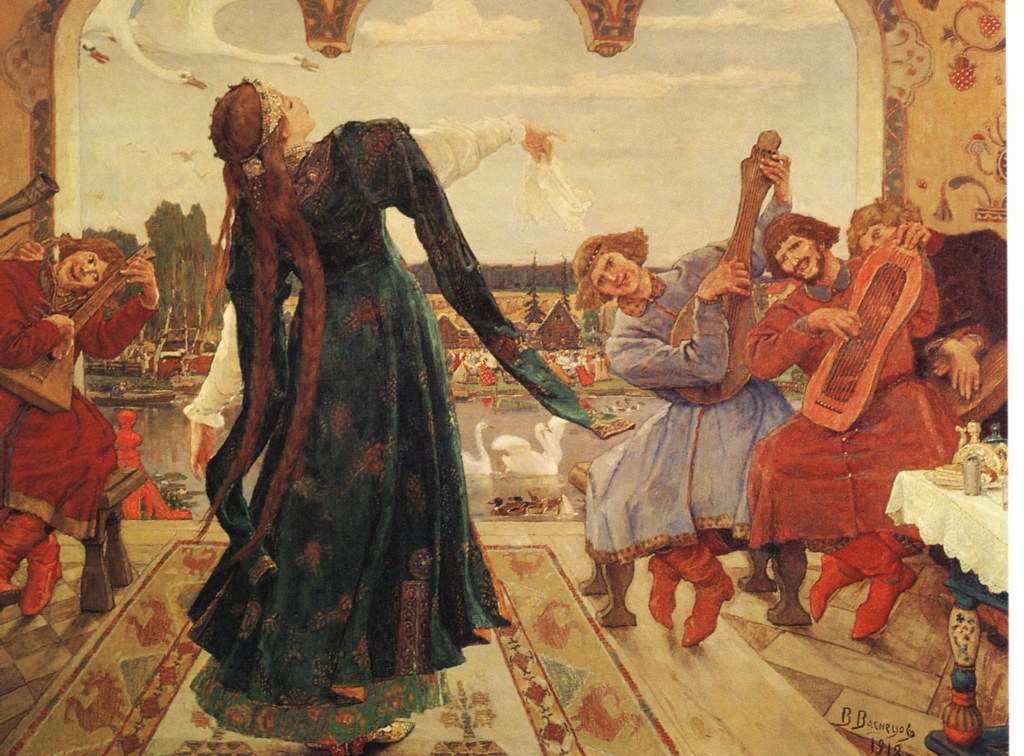
the frog princess 1918

Alenushka


Three princesses of the Underground Kingdom (1884)
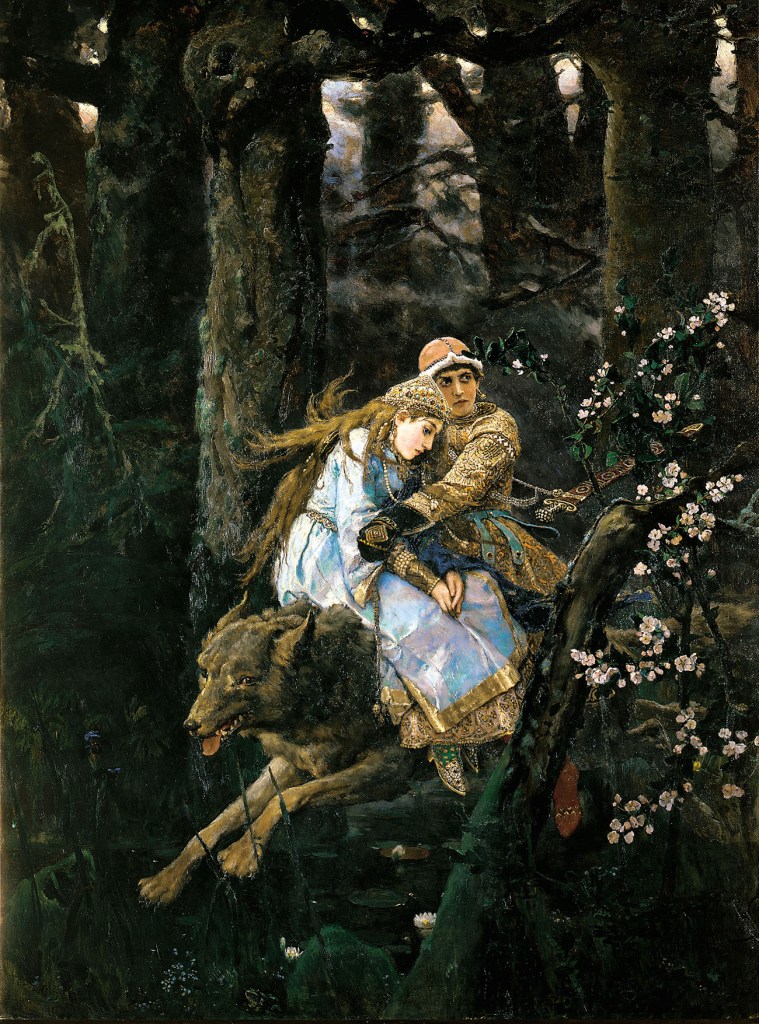
Ivan Tsarevich riding the Gray Wolf (1889)

Moving House (1876)

The Flying Carpet (1880)
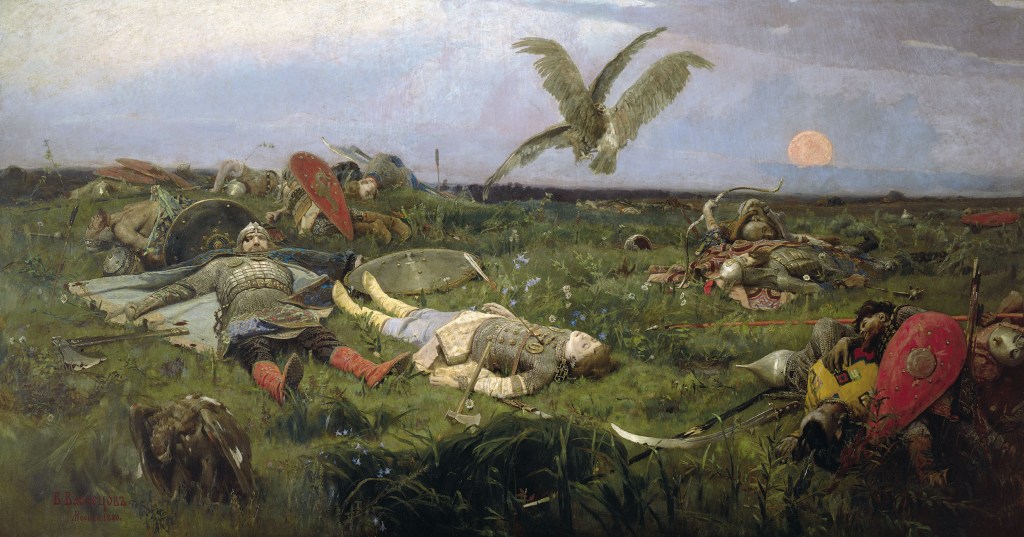
After Igor Svyatoslavich’s fighting with the Cumans (1880)
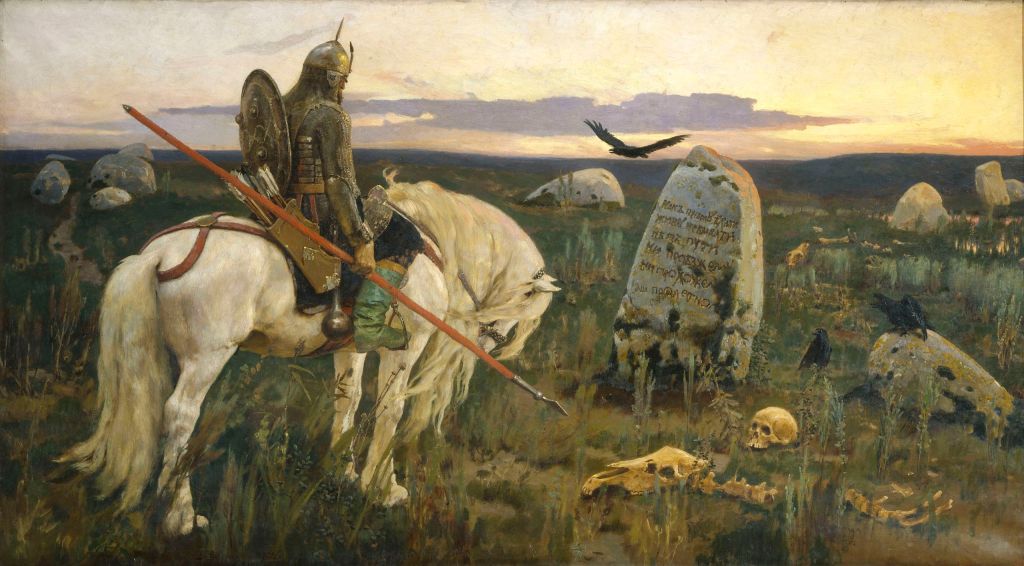
The Knight at the Crossroads (1878)
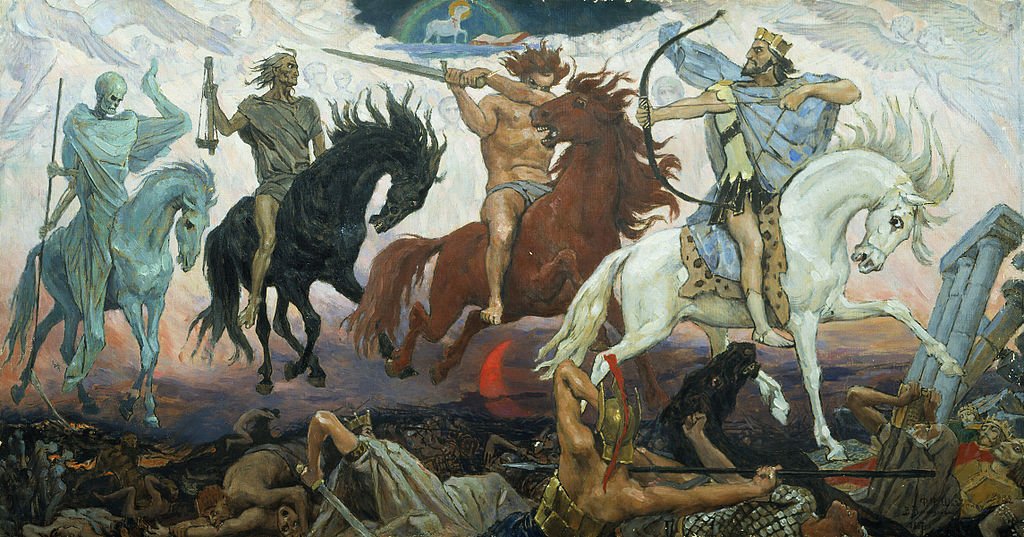
Four Horsemen of the Apocalypse (1887)
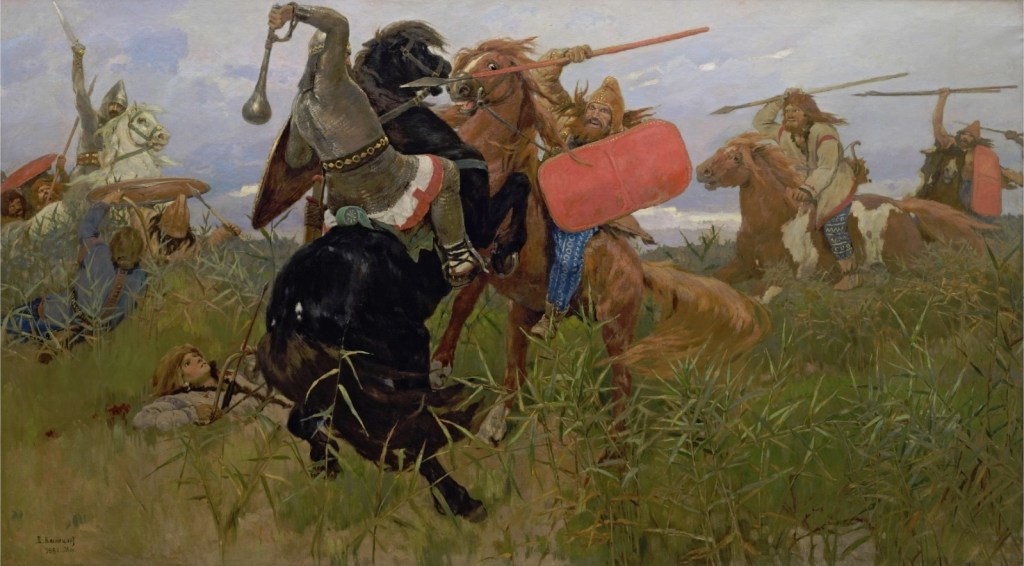
Battle between the Scythians and the Slavs (1881)

Bogatyrs (1898) one of Vasnetsov’s most famous paintings, depicts mythical Russian knights Dobrynya Nikitich, Ilya Muromets and Alyosha Popovich
| Katherine Anne Porter | |
|---|---|
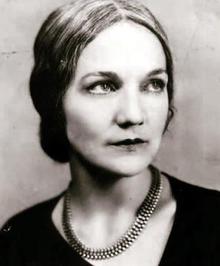 |
Today is the birthday of Katherine Anne Porter (Callie Russell Porter; Indian Creek, Texas; May 15, 1890 – September 18, 1980 Silver Spring, Maryland); Pulitzer Prize-winning journalist, essayist, short story writer, novelist, and political activist. Her 1962 novel Ship of Fools was the best-selling novel in America that year, but her short stories received more critical acclaim. She is known for her penetrating insight. Her work deals with dark themes such as betrayal, death and the origin of human evil. In 1990, Recorded Texas Historic Landmark number 2905 was placed in Brown County, Texas, to honor the life and career of Porter.
In 1906, at age sixteen, Porter left home and married John Henry Koontz in Lufkin, Texas. She subsequently converted to his religion, Roman Catholicism. Koontz, the son of a wealthy Texas ranching family, was physically abusive; once while drunk, he threw her down the stairs, breaking her ankle.
In 1914 she escaped to Chicago, where she worked briefly as an extra in movies. She then returned to Texas and worked the small-town entertainment circuit as an actress and singer. In 1915, she asked that her name be changed to Katherine Anne Porter as part of her divorce decree.
Also in 1915, she was diagnosed with tuberculosis and spent the following two years in sanatoria, where she decided to become a writer. It was discovered during that time, however, that she had bronchitis, not TB. In 1917, she began writing for the Fort Worth Critic, critiquing dramas and writing society gossip. Prior to 1918 Porter was married to, then subsequently divorced from, T. Otto Taskett then Carl Clinton von Pless. In 1918, she wrote for the Rocky Mountain News in Denver, Colorado. In the same year, Katherine almost died in Denver during the 1918 flu pandemic. When she was discharged from the hospital months later, she was frail and completely bald. When her hair finally grew back, it was white and remained that color for the rest of her life. Her experience was reflected in her trilogy of short novels, Pale Horse, Pale Rider (1939), for which she received the first annual gold medal for literature in 1940 from the Society of Libraries of New York University.
In 1924, Porter had an affair with Francisco Aguilera which resulted in pregnancy. In December of that year, Porter gave birth to a stillborn son. Some biographers suggest that Porter suffered several miscarriages and had an abortion. During the summer of 1926, Porter visited Connecticut with other writers and artists including Josephine Herbst, John Herrmann, and Ernest Stock, an English painter. After contracting gonorrhea from Stock, Porter had a hysterectomy in 1927, ending her hopes of ever having a child. Yet Porter’s letters to her lovers suggest that she still intimated her menstruation after this alleged hysterectomy. She once confided to a friend that “I have lost children in all the ways one can.”
During the 1930s, she spent several years in Europe during which she continued to publish short stories. She married Eugene Pressly, a writer, in 1930. In 1938, upon returning from Europe, she divorced Pressly and married Albert Russel Erskine, Jr., a graduate student. He reportedly divorced her in 1942, after discovering her real age and that she was 20 years his senior.
Select Writings
- I don’t want any promises, I won’t have false hopes, I won’t be romantic about myself. I can’t live in their world any longer, she told herself, listening to the voices back of her. Let them tell their stories to each other. Let them go on explaining how things happened. I don’t care. At least I can know the truth about what happens to me, she assured herself silently, making a promise to herself, in her hopefulness, her ignorance.
- “Old Mortality” in Pale Horse (1939)
- The road to death is a long march beset with all evils, and the heart fails little by little at each new terror, the bones rebel at each step, the mind sets up its own bitter resistance and to what end? The barriers sink one by one, and no covering of the eyes shuts out the landscape of disaster, nor the sight of crimes committed there.
- “Pale Horse, Pale Rider” (1939)
- For myself, and I was not alone, all the conscious and recollected years of my life have been lived to this day under the heavy threat of world catastrophe, and most of the energies of my mind and spirit have been spent in the effort to grasp the meaning of those threats, to trace them to their sources and to understand the logic of this majestic and terrible failure of the life of man in the Western world.
In the face of such shape and weight of present misfortune, the voice of the individual artist may seem perhaps of no more consequence than the whirring of a cricket in the grass, but the arts do live continuously, and they live literally by faith; their names and their shapes and their uses and their basic meanings survive unchanged in all that matters through times of interruption, diminishment, neglect; they outlive governments and creeds and the societies, even the very civilization that produced them. They cannot be destroyed altogether because they represent the substance of faith and the only reality. They are what we find again when the ruins are cleared away.- Flowering Judas, Introduction to Modern Library edition (1940)
- They had both noticed that a life of dissipation sometimes gave to a face the look of gaunt suffering spirituality that a life of asceticism was supposed to give and quite often did not.
- Ship of Fools (1962) Pt. 3
- Miracles are instantaneous, they cannot be summoned, but come of themselves, usually at unlikely moments and to those who least expect them.
- Ship of Fools (1962) Pt. 3
- The real sin against life is to abuse and destroy beauty, even one’s own — even more, one’s own, for that has been put in our care and we are responsible for its well-being.
- “Herr Freytag” in Ship of Fools (1962) Pt. 3

And today is the birthday of Ricard Avedon (New York City; May 1923 – 1 October 2004 San Antonio, Texas); fashion and portrait photographer. He worked for Harper’s Bazaar, Vogue and Elle specializing in capturing movement in still pictures of fashion, theater and dance. An obituary published in The New York Times said that “his fashion and portrait photographs helped define America’s image of style, beauty and culture for the last half-century”.
Hollywood presented a fictional account of Avedon’s early career in the 1957 musical Funny Face, starring Fred Astaire as the fashion photographer “Dick Avery.” Avedon supplied some of the still photographs used in the production, including its most noted single image: an intentionally overexposed close-up of Audrey Hepburn’s face in which only her noted features – her eyes, her eyebrows, and her mouth – are visible.
 By Irving Penn
Hepburn was Avedon’s muse in the 1950s and 1960s, and he went so far as to say: “I am, and forever will be, devastated by the gift of Audrey Hepburn before my camera. I cannot lift her to greater heights. She is already there. I can only record. I cannot interpret her. There is no going further than who she is. She has achieved in herself her ultimate portrait.”
In 1944, Avedon married 19-year-old bank teller Dorcas Marie Nowell, who later became the model and actress Doe Avedon; they did not have children and divorced in 1949. The couple summered at the gay village of Cherry Grove, Fire Island, and Avedon’s bisexuality has been attested to by colleagues and family. He was reportedly devastated when Nowell left him.
In 1951, he married Evelyn Franklin; she died on March 13, 2004.
Gallery

Marilyn as Lillian Russell 1962

Barbara 1 April 1970

Catherine Deneuve

Marilyn

cher
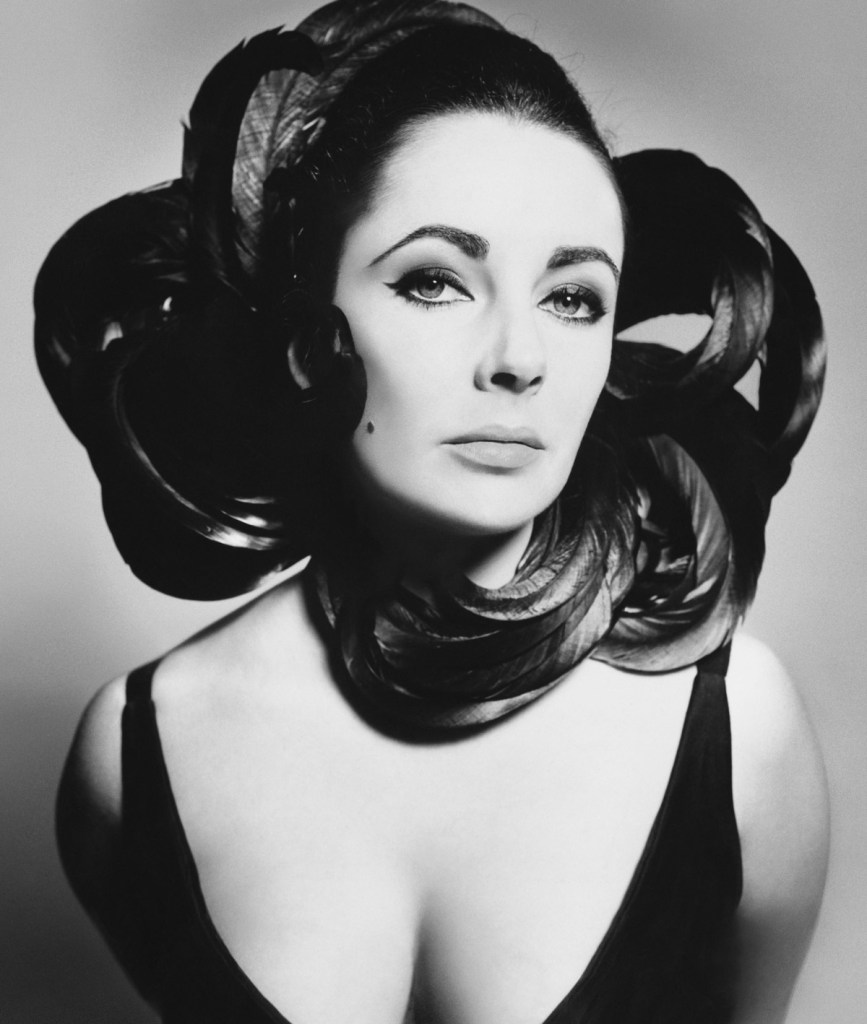
Elizabeth Taylor
Mac Tag
thanks for stoppin’ by y’all
mac tag
It is so much safer not to feel, not to let the world touch one. – Sylvia Plath
For we are but obedient to the thoughts
That drift into the mind at a wink of the eye. - W.B. Yeats
 The Lovers’ Chronicle
Leave a comment