
Dear Zazie, Today’s Lovers’ Chronicle from Mac Tag to his muse. Check us out on Twitter @cowboycoleridge. Rhett
The Lovers’ Chronicle
Dear Muse,
easily could go dramatic and say intoxicatin’, overwhelmin’, consumin’; those are the words of youth, it was and is very near that; frequently found in first encounters, intimate and otherwise, gazin’ into the eyes of the one you desire, a fine perfume, an XO cognac, étouffée made the way it should be, no better feelin’ than to be fully immersed in someone or something, for a moment, for awhile, to feel the presence, to feel yours has changed mine

© copyright 2022.2024 mac tag/cowboycoleridge all rights reserved
under the night lights
on Peachtree
under the Atlanta sun
drivin’ with the top down
since you
everything else
feels long ago
so much discovered
the words, us
were we chosen
were we sent
one for the other
we will not know but this
what matters is our presence
© copyright 2021.2023 mac tag/cowboycoleridge all rights reserved
Pale Love, Pale Rider
there is no
right or wrong answer
this is just the way it is
your presence
either near or far
has been the force
one of the few constants,
comin’ up on ten years
whether
i was chosen,
or you were sent
i do not know
and it matters not
what does,
are these words
© copyright 2020 mac tag/cowboy coleridge all rights reserved
spin the totem…
in the bedroom we shared,
walkin’ over to the bed,
pickin’ up your pillow,
pressin’ it to my face
and breathin’ in
your presence,
floodin’ senses
feelin’ lightheaded
sittin’ on the bed
alone with anguish
but there are no tears
life has wrenched them away
© copyright 2019 mac tag/cowboy coleridge all rights reserved
for J
azaleas in the sun
dogwoods bloomin’ neath
the Carolina blue sky
was it that long ago
to use the word saved,
is no exaggeration
so much discovered
the words, myself, you
but you
just as suddenly found
then suddenly gone
at least i have the words
you left behind
© copyright 2018 mac tag/cowboy coleridge all rights reserved
there is no could be
only what was and
what could have been
ain’t no damn could be
best go ahead and bury
that sumbitch right now
He could see it clearly
The night that was comin’
His eyes and his thoughts
Reached out for it
© copyright 2016 mac tag/cowboy coleridge all rights reserved
It is a tragic opera kinda day y’all;
particularly arias from
Madama butterfly.
Loud. Really loud.
These depths, best not
spoken of. What
is deserved was
earned and what was
earned is bein’
paid for in spades
Laments, ashes
and dust, amen
Lamentations
Ashes and dust
Beyond what can
be imagined
Retribution
Served with gusto
Deserved, deserved
Ashes and dust
at last amen
Beyond words; just
simply beyond
my limited
ability
to convey what
I am thinkin’
How in the hell
did I let this
happen! Again!!!
© copyright 2015 mac tag/cowboy coleridge all rights reserved
I was alone today in a car with a dark-haired beautiful woman. The first time I have been alone with a beautiful woman since… It was overwhelmin’. Her perfume was makin’ my head swim. It was intoxicatin’. I yearned so to touch her. I wanted her to touch me; to hold me. It made me dream again…
walkin’ into the bedroom,
the bedroom they had shared
he could still smell her perfume
rememberin’ when they talked
about wearin’ pajamas to bed
she considered wearin’ anything
more than a few drops
of Chanel No. 5
to be overdressed
walkin’ over to the bed,
pickin’ up her pillow
he pressed it to his face
and breathed in deeply
he was awash with her
her presence,
flooded his senses
he felt lightheaded
and sat on the bed
alone with his anguish
but there were no tears
life had wrenched them away
© copyright 2012 Mac Tag Cowboy Coleridge all rights reserved
Today is the birthday of Jean-Léon Gérôme (Vesoul, Haute-Saone 11 May 1824 – 10 January 1904 Paris); painter and sculptor in the style now known as Academicism. The range of his oeuvre included historical painting, Greek mythology, Orientalism, portraits, and other subjects. In my opinion, one of the most important painters from this academic period. In addition to being a painter, he was also a teacher with a long list of students.
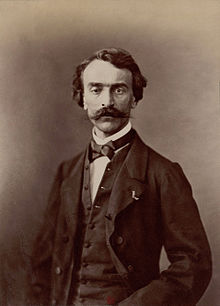 |
In 1863, he married Marie Goupil (1842–1912), the daughter of the international art dealer Adolphe Goupil. They had four daughters and one son. His oldest daughter was Jeanne (1863-1944) and she was followed by Suzanne (1867-1941; married to Aimé Morot), Blanche (1868-1918) and Madeleine (1875-1905). Upon his marriage he moved to a house in the Rue de Bruxelles, close to the Folies Bergère. He expanded it into a grand house with stables with a sculpture studio below and a painting studio on the top floor.
From approximately 1876 to 1890, Gérôme frequently worked with model Emma Dupont, who posed for several of his works.
Gallery

pool in a harem


bathsheba

A Roman Slave Market, c. 1884, Walters Art Museum

moorish bath
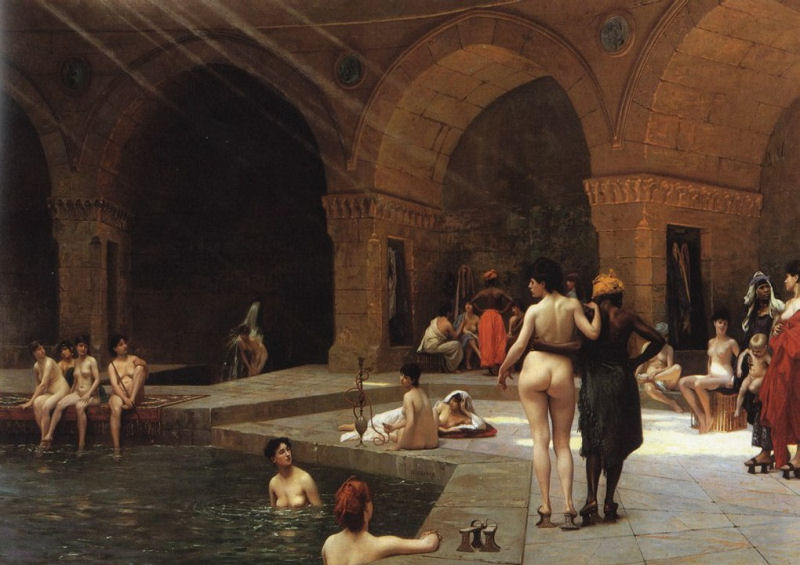
The Large Pool of Bursa, 1885
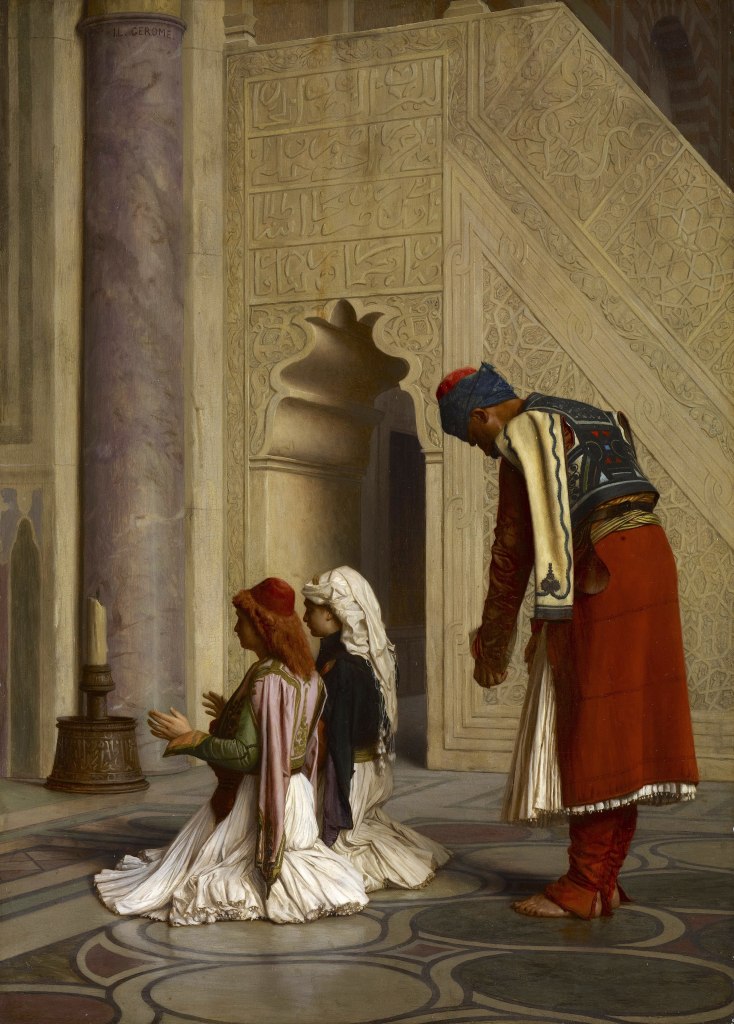
Young Greeks at the Mosque, 1865, Minneapolis Institute of Art

Phryne before the Areopagus, 1861

Truth Is at the Bottom of the Well, 1895, Musée des beaux-arts de Lyon
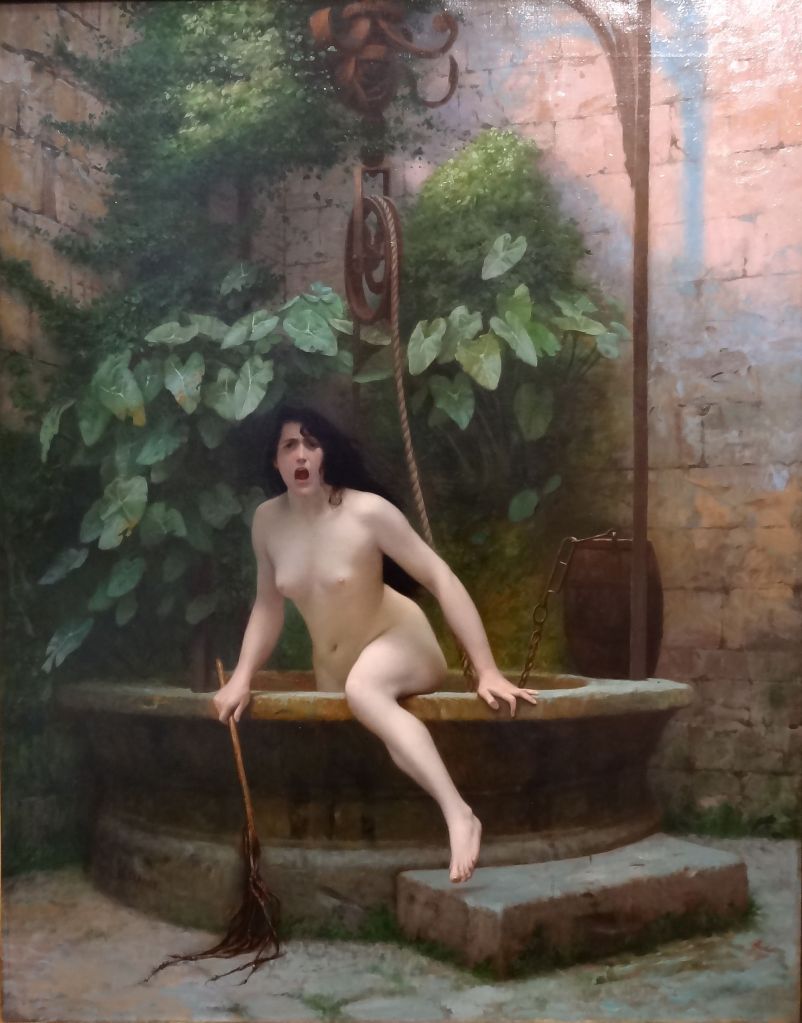
Truth Rising from her well, 1896


Autoportrait peignant La Joueuse de boules
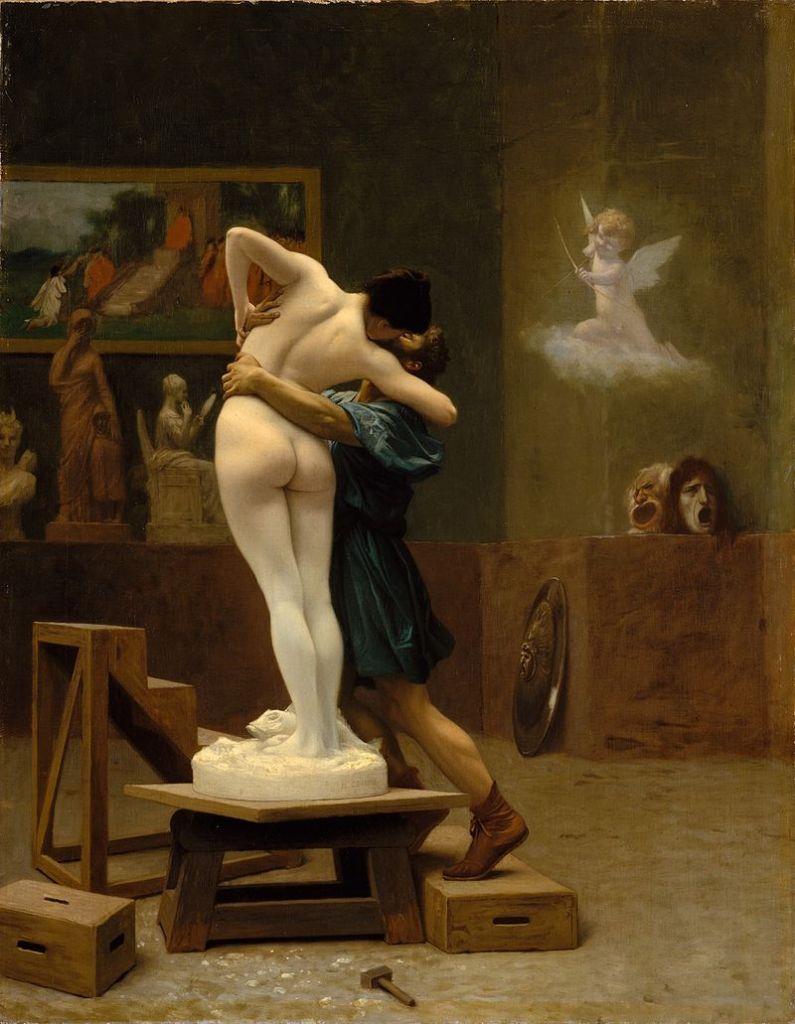
Pygmalion et Galatée (1890), Metropolitan Museum of Art, New York

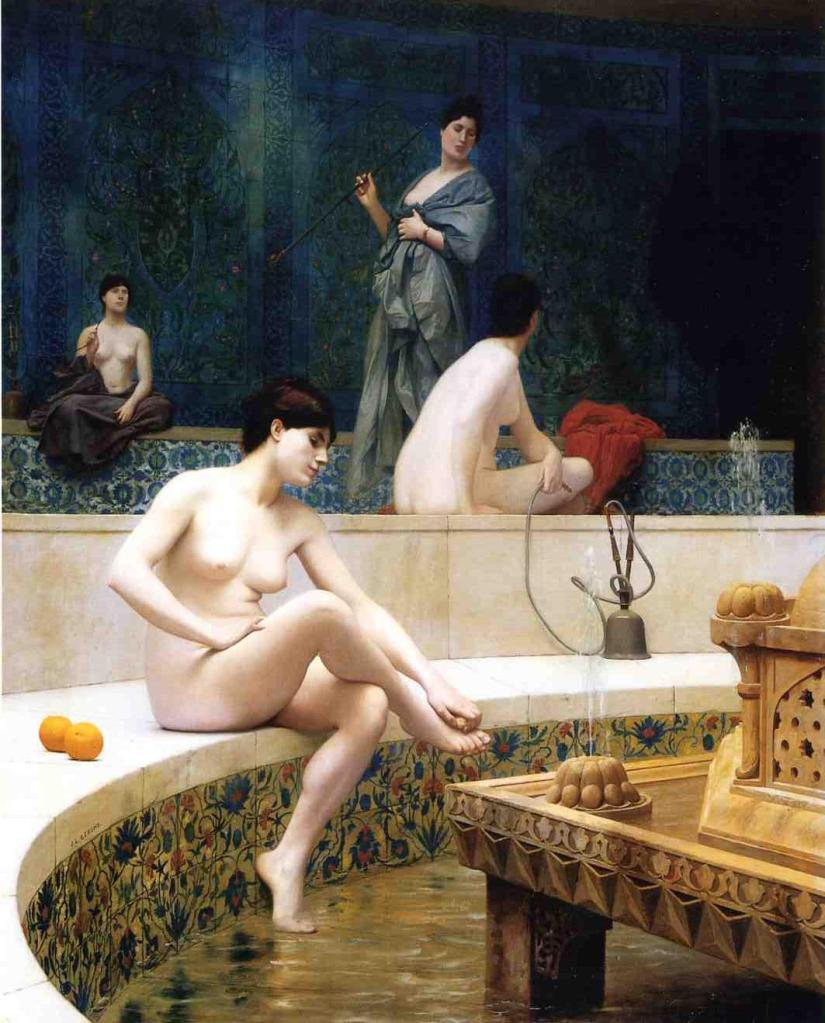
“The Harem Bathing”

Après le bain
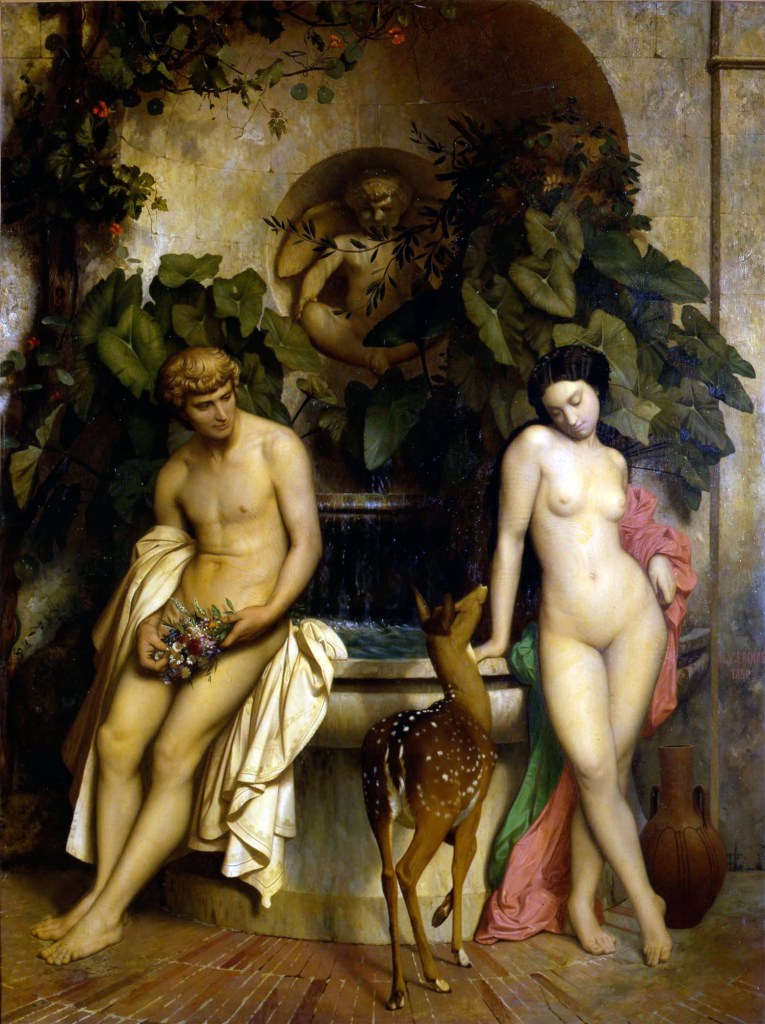
An Idyll (Daphnis and Chloe), 1858, Musée Massey
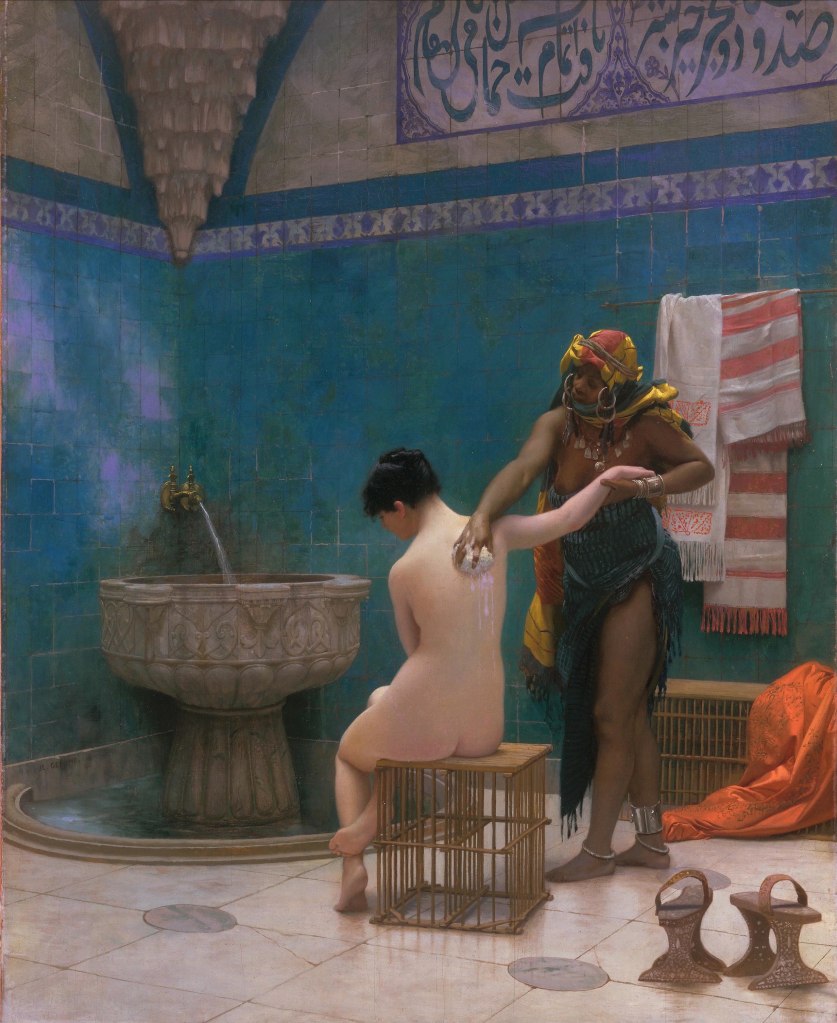
The Bath, 1880–1885, Legion of Honor, San Francisco

King Candaules, 1859, Museo de Arte de Ponce


Slave Market in Ancient Rome, c. 1884, Hermitage Museum
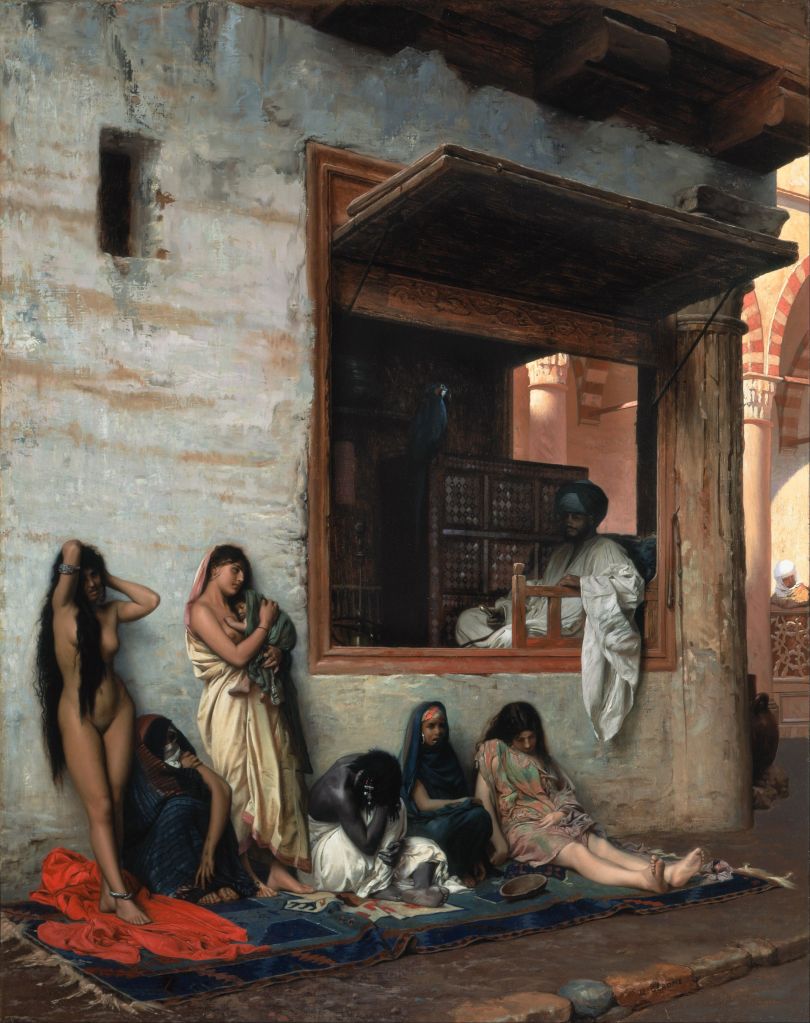
The Slave Market, 1871, Cincinnati Art Museum

Cleopatra and Caesar, 1866, private collection
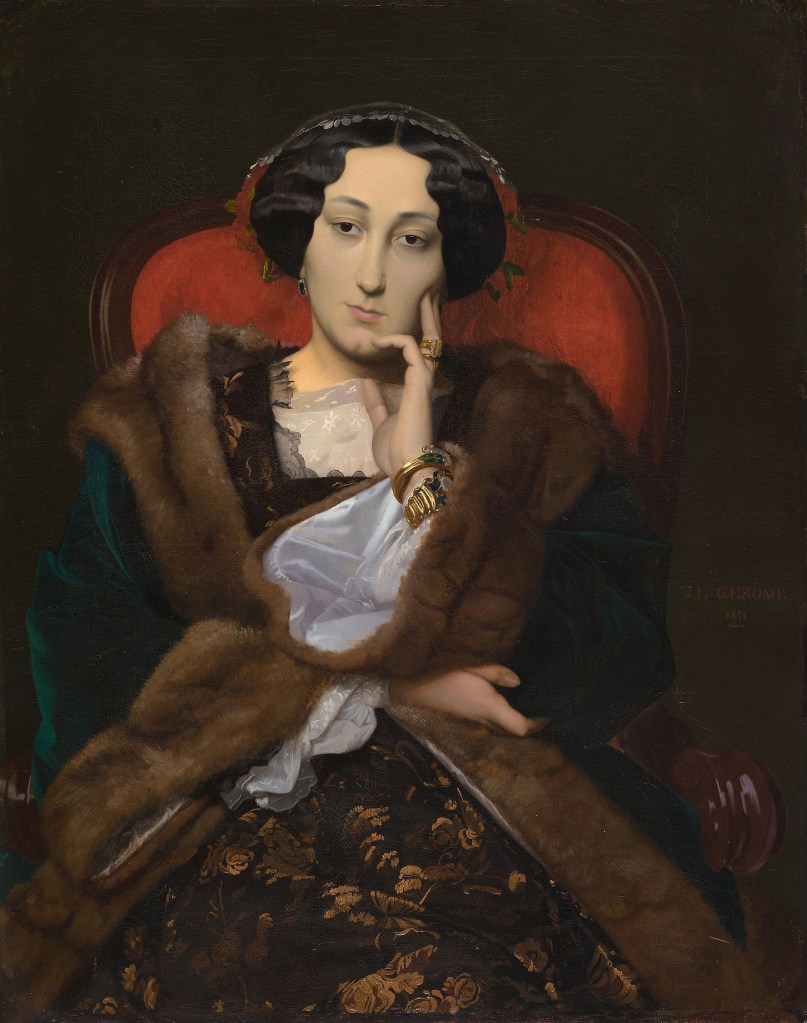
Portrait of a Woman, 1848, Art Institute of Chicago

The Antique Pottery Painter: Sculpturæ vitam insufflat pictura (painting breathes life into sculpture), 1893, Art Gallery of Ontario

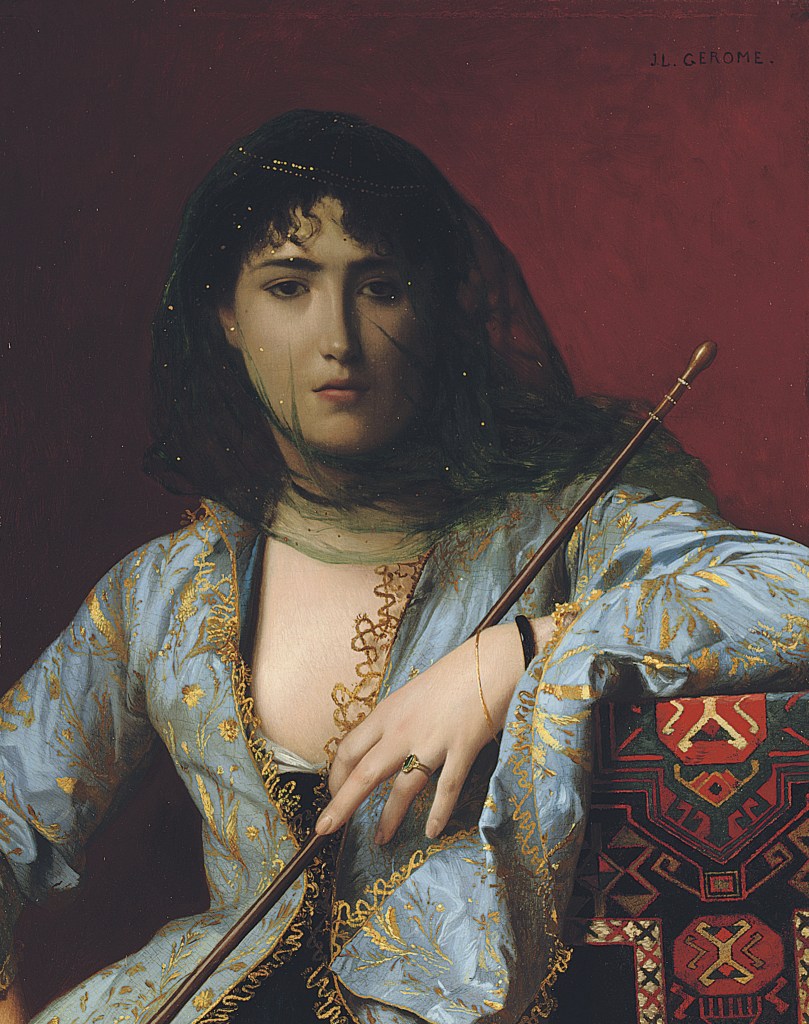

La République, 1848–1849, Petit Palais, Paris

Evening Prayer, Cairo, 1865, private collection

The Two Majesties, 1883, Milwaukee Art Museum

The Horse Market, 1867, Haggin Museum
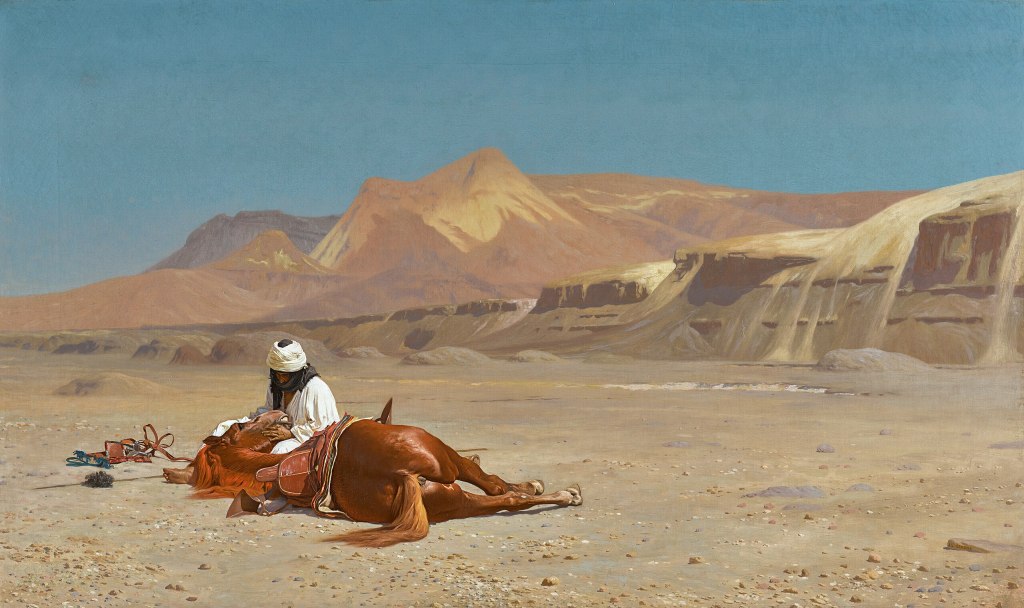
Rider and his Steed in the Desert, 1872, private collection

Riders Crossing the Desert, (1870), private collection

The Saddle Bazaar, Cairo, 1883, Haggin Museum
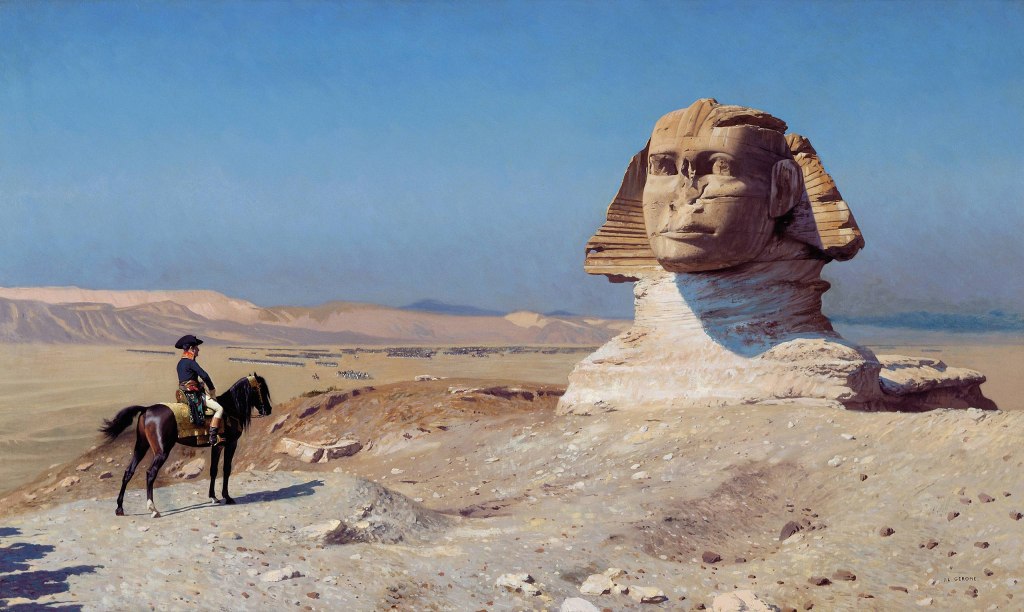
Bonaparte Before the Sphinx, aka Œdipe, 1886, Hearst Castle
Today is the birthday of Jean-Baptiste Carpeaux (Valenciennes, Nord, France 11 May 1827 – 12 October 1875 Bécon-les-Bruyères, outside Courbevoie, France); sculptor and painter during the Second Empire under Napoleon III.
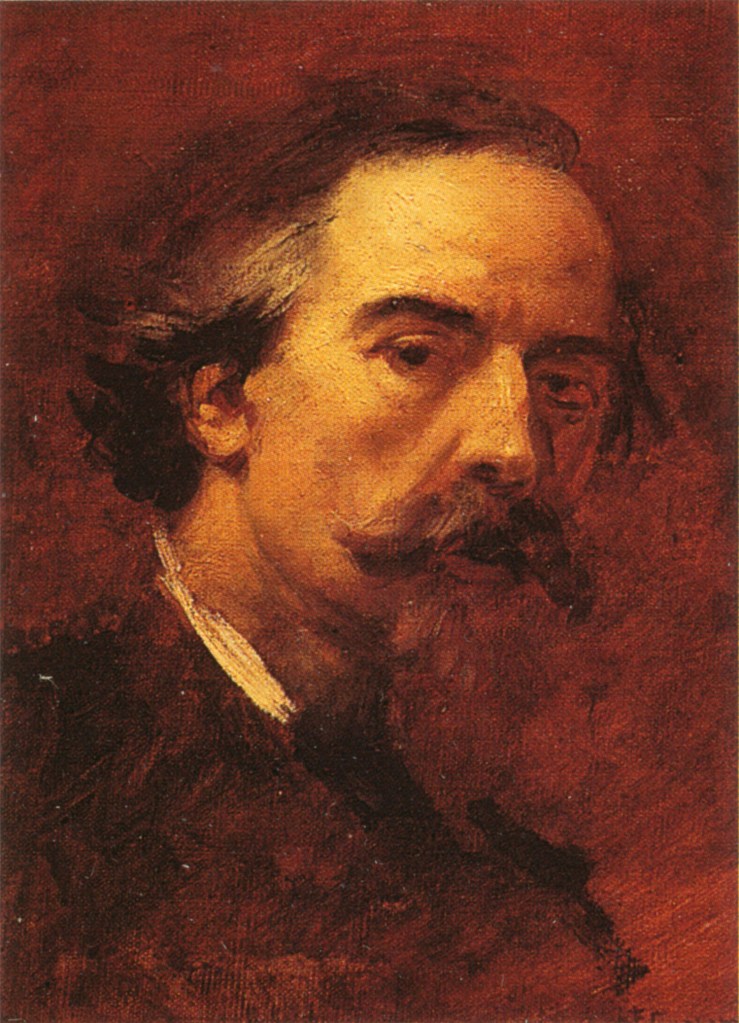
Carpeaux entered the École des Beaux-Arts in 1844 and won the Prix de Rome in 1854, and moving to Rome to find inspiration, he there studied the works of Michelangelo, Donatello and Verrocchio. Staying in Rome from 1854 to 1861, he obtained a taste for movement and spontaneity, which he joined with the great principles of baroque art. Carpeaux sought real life subjects in the streets and broke with the classical tradition.
Carpeaux soon grew tired of academicism and became a wanderer on the streets of Rome. He spent free time admiring the frescoes of Michelangelo at the Sistine Chapel. Carpeaux said, “When an artist feels pale and cold, he runs to Michelangelo in order to warm himself, as with the rays of the sun”.
The Carpeaux: a cake made with butter cream and candied chestnuts between two oval macaroons is named in tribute to Carpeaux.
Gallery
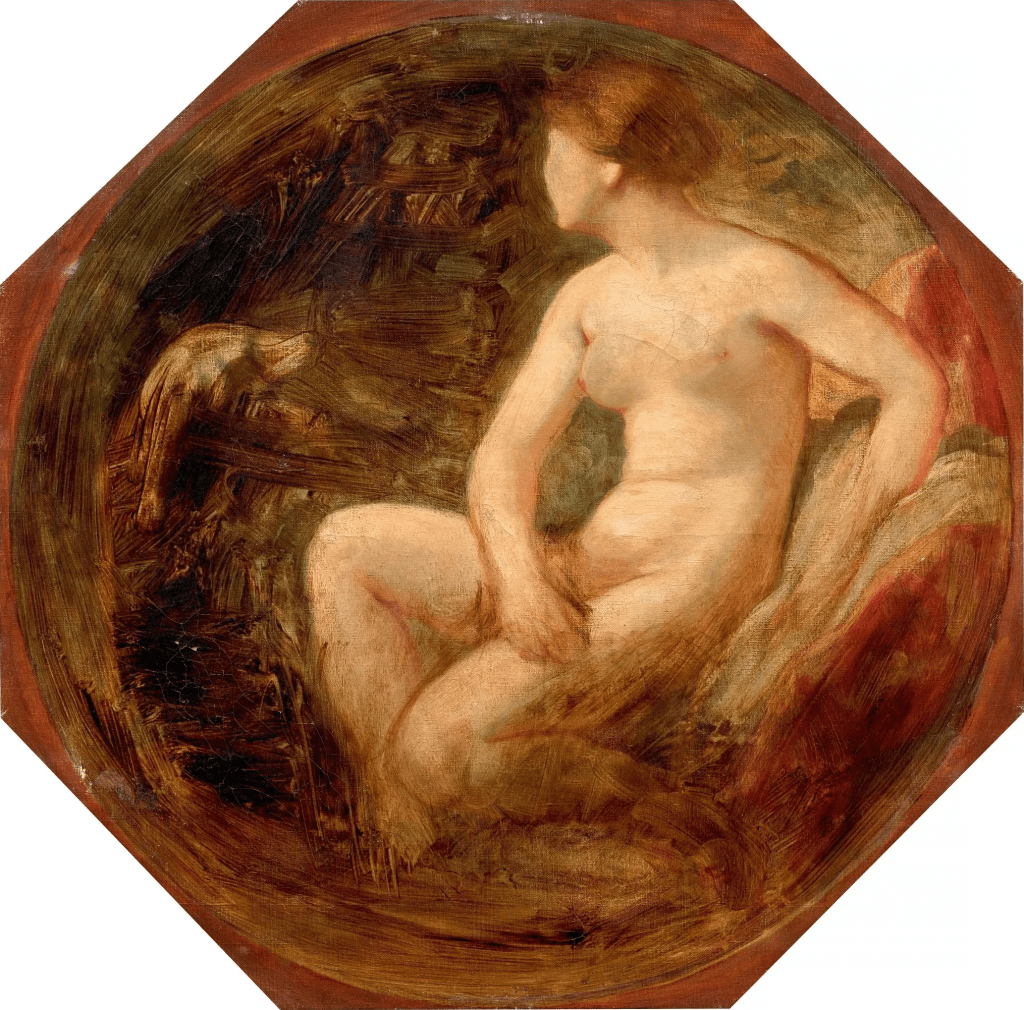
Diane
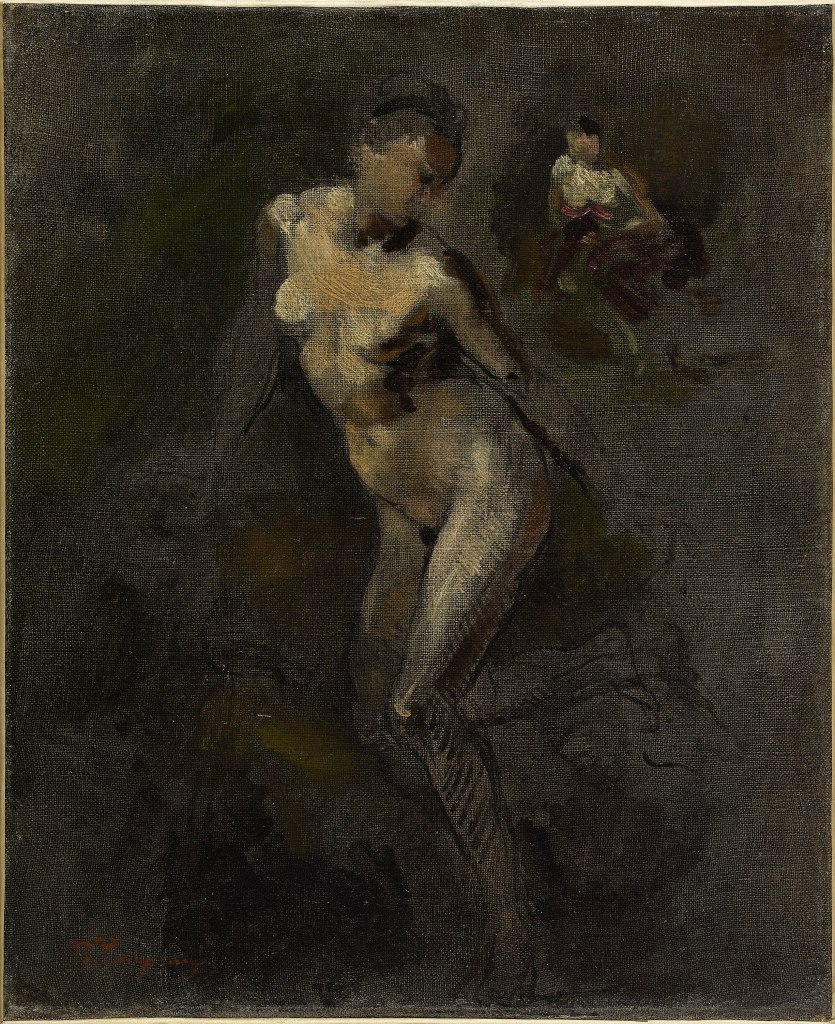
Femme nue (étude) – Musée des Beaux-Arts de la ville de Paris
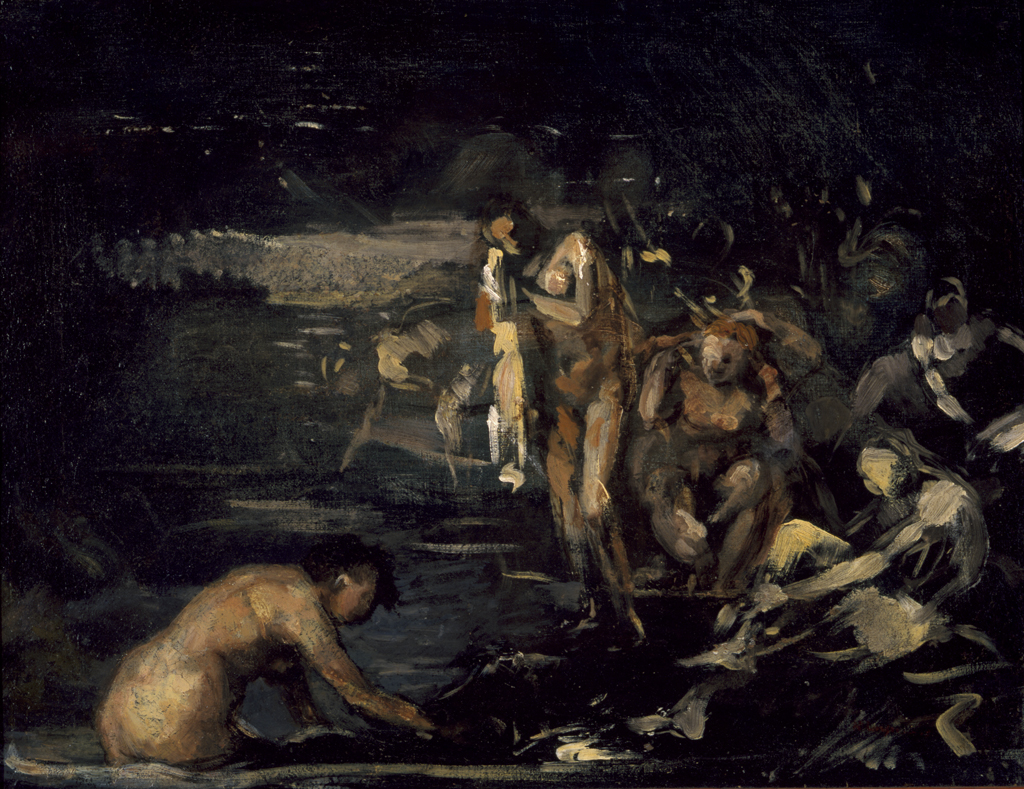
baigneuses

Scène de rue, Washington, The Phillips Collection
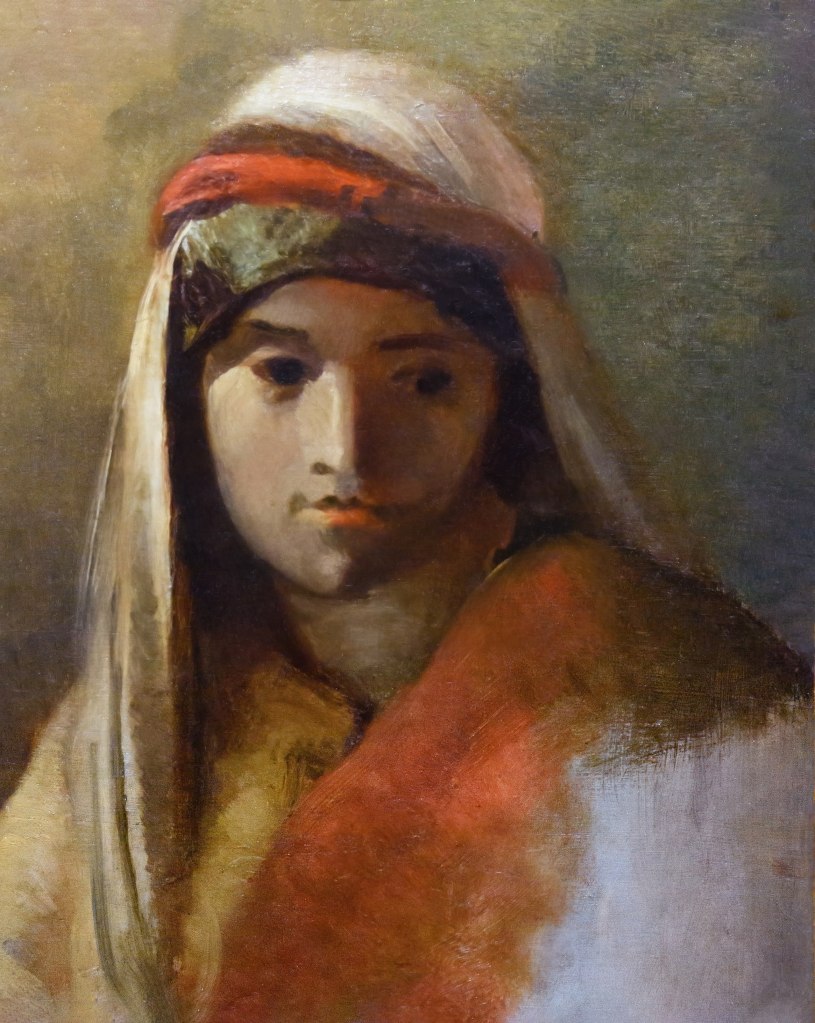
Jeune fille arabe, huile sur toile, musée des Beaux-Arts de Narbonne

Effet de ciel sur une rivière -Musée des Beaux-Arts de la ville de Paris

Crépuscule, effet de lune

Today is the birthday of Irving Berlin (born Israel Isidore Baline, Russia, May 11, 1888 – September 22, 1989 New York City); composer and lyricist, in my opinion, one of the greatest songwriters in American history. His music forms a significant part of the Great American Songbook. His compositions include; “Alexander’s Ragtime Band”, “White Christmas”, “There’s No Business Like Show Business”, “God Bless America”, “When I Lost You”, “Blue Skies”, “Puttin’ on the Ritz”, “Anything You Can Do”, “Cheek to Cheek”, and “Always”.
In February 1912, after a brief whirlwind courtship, he married 20-year-old Dorothy Goetz of Buffalo, New York, the sister of one of Berlin’s collaborators, E. Ray Goetz. During their honeymoon in Havana, she contracted typhoid fever, and doctors were unable to treat her illness when she returned to New York. She died July 17 of that year. Left with writer’s block for months after Goetz’s death, he eventually wrote his first ballad, “When I Lost You”, to express his grief.

In 1924 he met and fell in love with young author and heiress Ellin Mackay. Because Berlin was Jewish and she was a Catholic of Irish descent, their life was followed in every possible detail by the press, which found the romance of an immigrant from the Lower East Side and a young heiress a good story. Mackay’s father, Clarence Mackay, the socially prominent head of the Postal Telegraph Cable Company, objected to their marriage.
Her father opposed the match from the start. He went so far as to send her off to Europe to find other suitors and forget Berlin. However, Berlin wooed her with letters and songs over the airwaves such as “Remember” and “All Alone”, and she wrote him daily. Biographer Philip Furia writes that newspapers rumored they were engaged before she returned from Europe, and some Broadway shows even performed skits of the “lovelorn songwriter”. After her return, she and Berlin were besieged by the press, which followed them everywhere. Variety reported that her father vowed that their marriage “would only happen ‘over my dead body.’” As a result, they decided to elope and were married in a simple civil ceremony at the Municipal Building away from media attention.
The wedding news made the front page of The New York Times. The marriage took her father by surprise, and he was stunned upon reading about it. The bride’s mother, however, who was at the time divorced from Mackay, wanted her daughter to follow the dictates of her own heart. Berlin had gone to her mother’s home before the wedding and had obtained her blessing.
There followed reports that the bride’s father disowned his daughter because of the marriage. In response, Berlin gave the rights to “Always”, a song still played at weddings, to her as a wedding present. Ellin was thereby guaranteed a steady income regardless of what might happen with the marriage. For nearly three years Mackay refused to speak to the Berlins, but they reconciled after the death of the Berlins’ son, Irving Berlin Jr., on Christmas Day 1928, less than one month after he was born.
Their marriage remained a love affair and they were inseparable until she died in July 1988 at the age of 85. They had four children during their 63 years of marriage: Mary Ellin Barrett in 1926, Irving Berlin Jr., Linda Louise Emmet in 1932, and Elizabeth Irving Peters in 1936.
When I Lost You
The roses each one
Met with the sun
Sweetheart when I met you
The sunshine had fled
The roses were dead
Sweetheart when I lost you
I lost the sunshine and roses
I lost the heavens of blue
I lost the beautiful rainbow
I lost the morning dew
I lost the angel who gave me
Summer, the whole winter through
I lost the gladness that turned into sadness
When I lost you
The birds ceased their song
Right turned to wrong
Sweetheart when I lost you
A day turned to years
The world seemed in tears
Sweetheart when I lost you
© Sony/ATV Music Publishing LLC, Universal Music
Blue Skies
Blue skies looking at me
Nothing but blue skies do I see
Bluebirds singing a song
Nothing but bluebirds from now on
I never saw the sun shining so bright
Never saw things goin’ so right
Noticing the days hurrying by
When you’re in love, my, my, how they fly
Blue days, all of them gone
Nothing but blue skies from now on
Looking at me
Blue skies looking at me
Nothing but blue skies do I see
Bluebirds singing a song
Nothing but bluebirds from now on
I never saw the sun shining so bright
Never saw things goin’ so right
Noticing the days hurrying by
When you’re in love, my, my, how they fly
Blue days, all of them gone
Nothing but blue skies
Nothing but blue skies
Blue skies, blue, blue skies
Nothing but blue skies from now on
© IMAGEM U.S. LLC
Always
Everything went wrong,
And the whole day long
I’d feel so blue.
For the longest while
I’d forget to smile,
Then I met you.
Now that my blue days have passed,
Now that I’ve found you at last –
I’ll be loving you always
With a love that’s true always.
When the things you’ve planned
Need a helping hand,
I will understand always.
Always.
Days may not be fair always,
That’s when I’ll be there always.
Not for just an hour,
Not for just a day,
Not for just a year,
But always.
I’ll be loving you, oh always
With a love that’s true always.
When the things you’ve planned
Need a helping hand,
I will understand always.
Always.
Days may not be fair always,
That’s when Ill be there always.
Not for just an hour,
Not for just a day,
Not for just a year,
But always.
Not for just an hour,
Not for just a day,
Not for just a year,
But always.
© Sony/ATV Music Publishing LLC
For non-commercial use only.
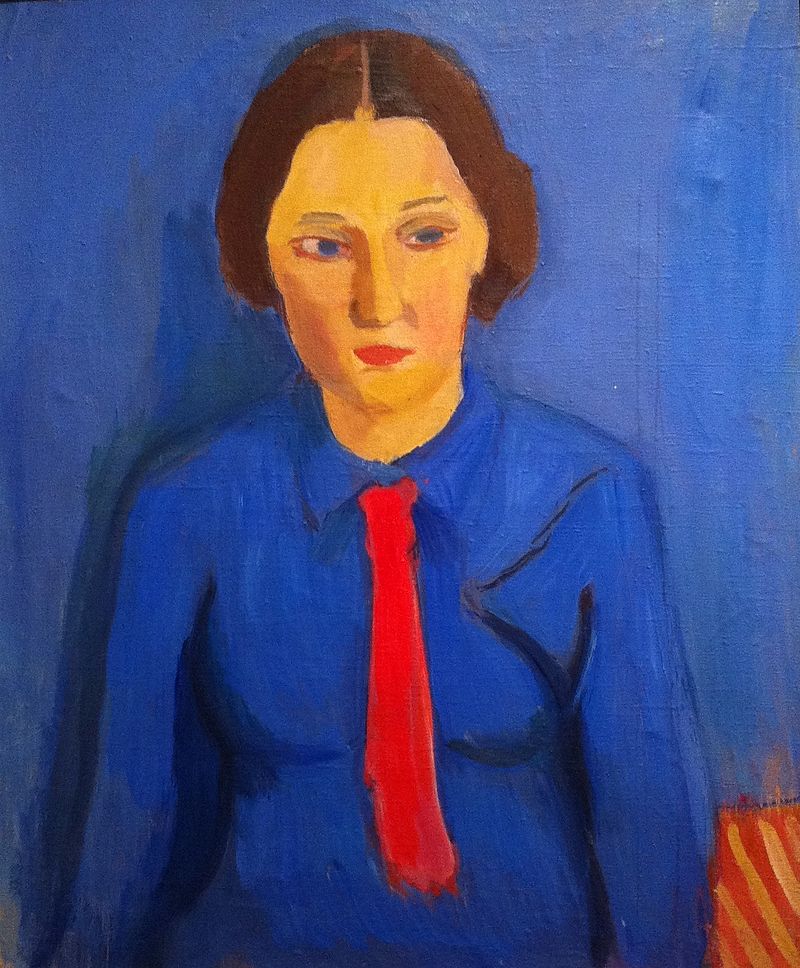
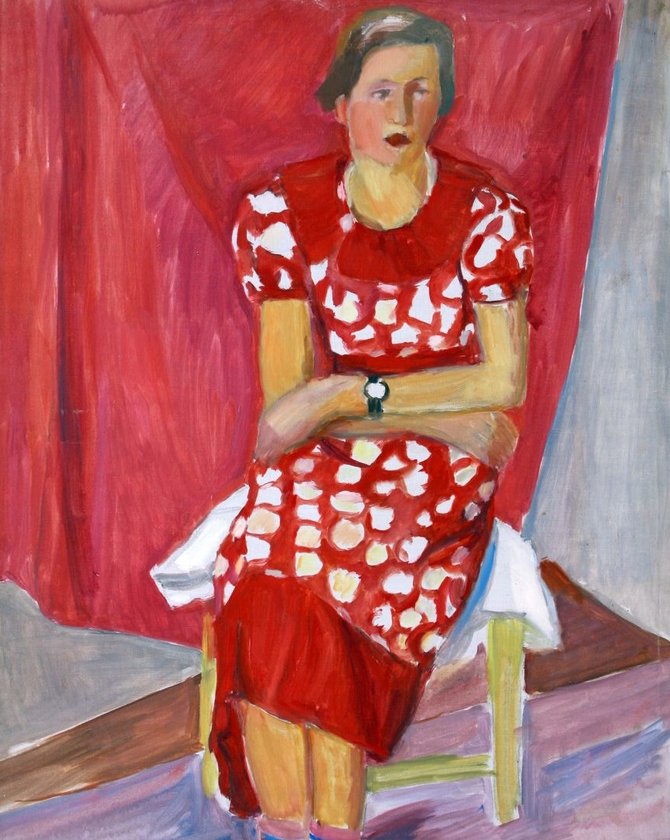
Today is the birthday of Karl Pärsimägi (11 May 1902, Oe, Antsla Parish, Estonia – 27 July 1942, Auschwitz); Fauvist painter.

In 1919, he participated in the Estonian War of Independence and was awarded a medal. After that, against his father’s wishes, he went to Tartu to enroll at the new “Pallas Art School” which was known for promoting modern art. In addition to the newer styles, such as Fauvism, he found himself influenced by Estonian folk art and by Konrad Mägi, who was a teacher there. He also studied with Ado Vabbe and Nikolai Triik and, in 1923, made a study trip to Germany. That same year, he held his first exhibition. He interrupted his training several times, to visit the family farm and paint landscapes.
In 1937, he moved to Paris, with the financial support of his father, who had finally become reconciled to his son’s career choice. While there, he studied at the Académie Colarossi and came under the influence of Paul Cézanne, although he became known as the “Estonian Matisse”. At the outbreak of World War II, unlike most other Baltic artists, he refused to return to his homeland, which was now occupied by the Russians.
In 1941, he was arrested by the Gestapo and taken to Auschwitz by way of Drancy internment camp. The reasons for his arrest remain unclear. He was not Jewish but, perhaps, had been trying to help a Jewish friend or was active in the Resistance. Sexual orientation has also been cited as a possible motive. He was put to death the following year.
Gallery

Sitting nude (Nude on a green background)
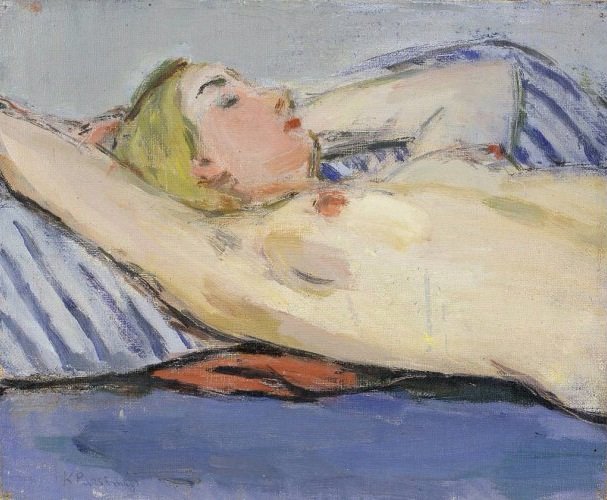
Lying Nude
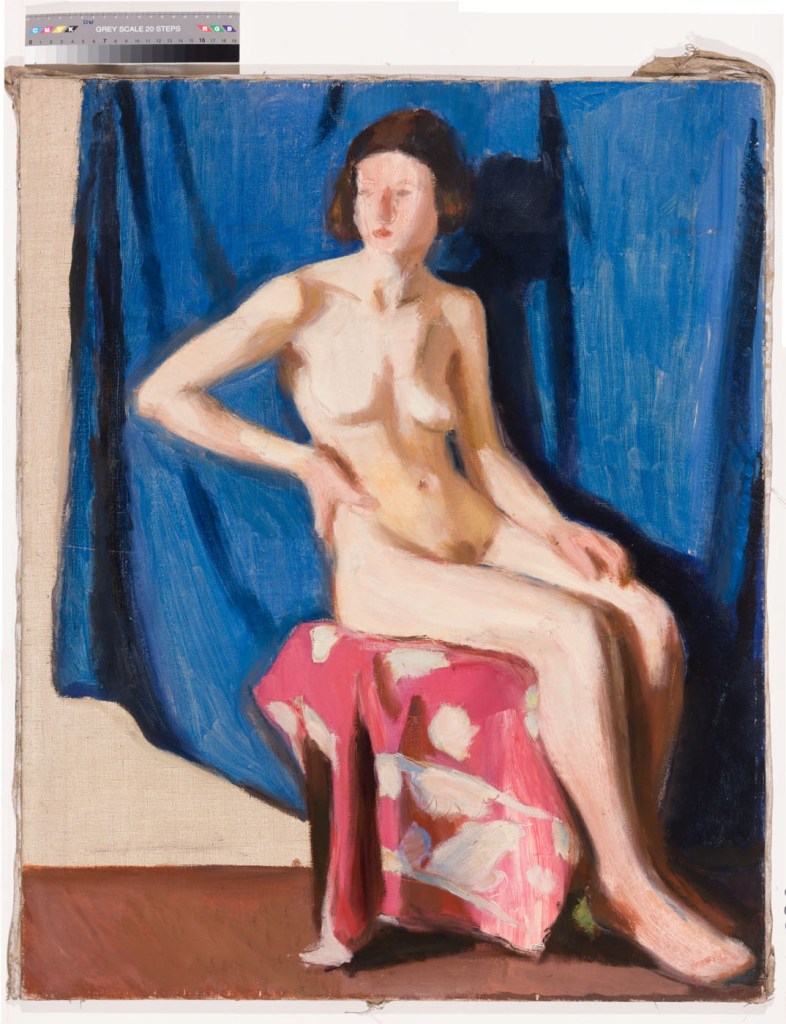

Seated Woman in a Blue Dress

Girl at the Window
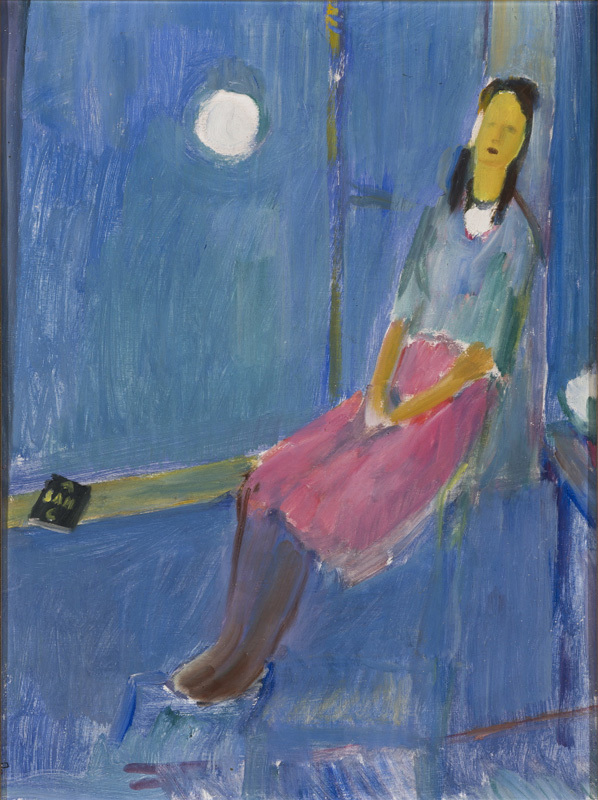
Tütarlaps ja kuu

And today is the birthday of Salvador Dalí (Salvador Domingo Felipe Jacinto Dalí i Domènech, 1st Marquis of Dalí de Púbol; Figueres, Catalonia, Spain; 11 May 1904 – 23 January 1989 Figueres); surrealist painter.
Dalí was a skilled draftsman, best known for the striking and bizarre images in his surrealist work. His painterly skills are often attributed to the influence of Renaissance masters. Perhaps his best-known work, The Persistence of Memory, was completed in August 1931. Dalí’s expansive artistic repertoire included film, sculpture, and photography, at times in collaboration with a range of artists in a variety of media.
Dalí attributed his “love of everything that is gilded and excessive, my passion for luxury and my love of oriental clothes” to an “Arab lineage”, claiming that his ancestors were descendants of the Moors. He was highly imaginative, and also enjoyed indulging in unusual and grandiose behavior.
After living together since 1929, Dalí married Gala in a civil ceremony in 1934, and remarried in a Catholic ceremony in 1958 in the Pyrenean hamlet of Montrejic. They needed to receive a special dispensation by the Pope because Gala had been previously married and she was a believer (not Catholic, but was an Orthodox Christian). Dalí was said to have been a virgin when they met on the Costa Brava in 1929. She was Dalí’s muse, directly inspiring and appearing in many of his works.
In the early 1930s, Dalí started to sign his paintings with his and her name as “(i)t is mostly with your blood, Gala, that I paint my pictures”. He stated that Gala acted as his agent, and aided in redirecting his focus. According to most accounts, Gala had a strong libido and throughout her life had numerous extramarital affairs (among them with her former husband Paul Éluard), which Dalí encouraged, since he was a practitioner of candaulism. She had a fondness for young artists, and in her old age she often gave expensive gifts to those who associated with her.
In 1968, Dalí bought Gala the Castle of Púbol, Girona, where she would spend time every summer from 1971 to 1980. He also agreed not to visit there without getting advance permission from her in writing.
Gallery

Gala staring into an invisible mirror

Sfumato (1972)

Ritratto di Gala (1945)
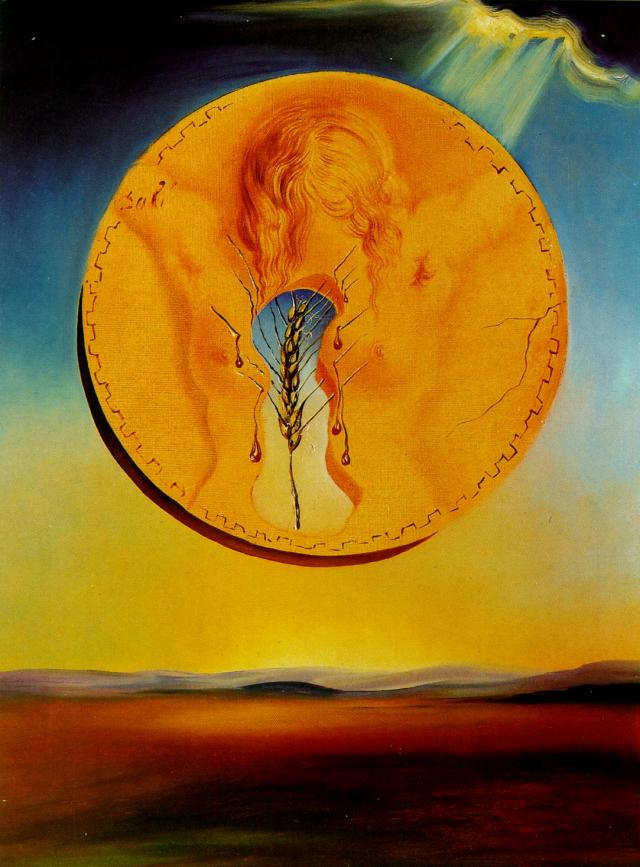
Fertility


La tentación de San Antonio
thanks for stoppin’ by y’all
mac tag
 The Lovers’ Chronicle
Leave a comment