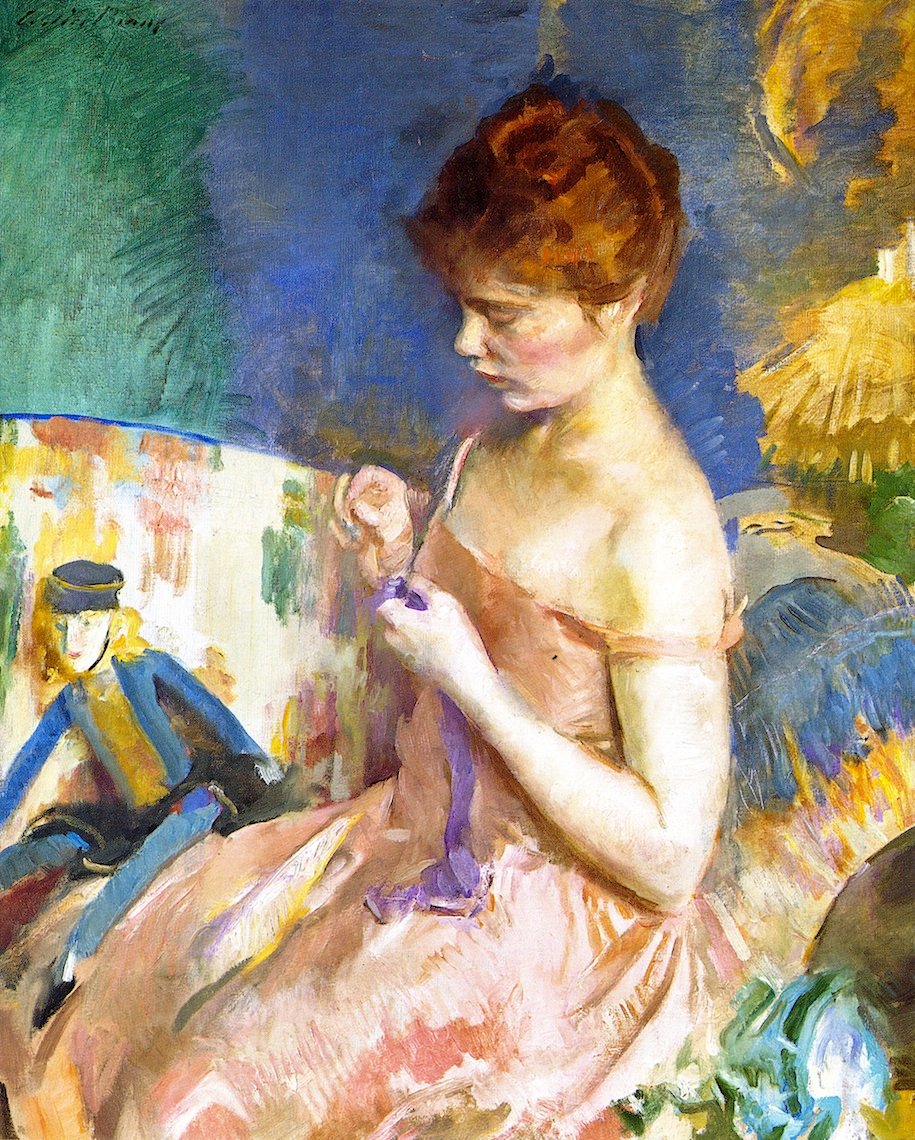
Dear Zazie, Here is today’s Lovers’ Chronicle from Mac Tag. What do you do when you are in a daze? Who do you think of? Rhett
The Lovers’ Chronicle
Dear Muse,
live from The Peabody in Memphis y’all
was gonna go with the Foo Fighters’
song, reportedly Grohl’s favorite,
but it is rather dark
”No more darkness”
so found this that applies to us
“Well, I'll keep on movin', movin' on
Things are bound to be improving these days
One of these days”
”Great song by Jackson Browne”
i like Gregg Allman’s version best
”Well you’re right, we lived it”
one of these days came for us

© copyright 2023.2024 mac tag/cowboy coleridge all rights reserved
these are the finest, but lets not bore with details, rather shall we contemplate what it means to share a vision of togetherness discovered early or late in life; does it carry more weight havin’ waited so long, cannot compensate for lack of years of shared moments but is there more appreciation for what was found when it was thought gone; gonna give equal measure of wonder to both so raise a glass to those who have, however they got there and wind down this day of days with my words for you

© copyright 2022.2024 mac tag/cowboy coleridge all rights reserved
did i see you
within a dream
i wrote you
and you heard
you knew why
we were there
an answer
no longer
alone
without
well, why not
down here
anything can,
and usually does,
happen these days
even that
© copyright 2021.2024 mac tag/cowboy coleridge all rights reserved
Pale Love, Pale Rider
i sit to write
as i do everyday
with these thoughts
it is as if
you were sittin’ right here
i have said
and written,
they are all about this
do you believe yet
this is as close
as i can get to why…
some believe
you get to choose
what you write
i do not believe that
© 2020 copyright mac tag/cowboy coleridge all rights reserved
leave the ordinary
abandon, ready
to believe, an intricate
ballet hummin’ with life
inside rapt together
nestled against what comes
we make such abundance
feel the flesh churn the fire inside us,
pushin’ forward toward its ragged edge,
rushin’ like a swollen river into multitude
there is a purpose,
there is enough of us
to see it, we can, from a distance,
hear the thrum, we are gorgeous
© copyright 2019 mac tag/cowboy coleridge all rights reserved
these days
cool mornin’s
just right evenin’s
verse comin’
followin’ the vision
these days
this daze
when writin’
and wonderin’
imaginin’,
creatin’
this
these days
lightin’ flashin’
thunder boomin’
rain pourin’
hail poundin’
days lingerin’
and lengthenin’
time spent longin’
for you
© copyright 2018 mac tag/cowboy coleridge all rights reserved
April in the rearview,
A month and a half to go
All together now,
Tell me I can do this
© copyright 2017 mac tag/cowboy coleridge all rights reserved
Hopin’ this mornin’ there would be
But no, there was not
Went to bed as black as can be
Why, why here but not
I do want
Now more than ever
The height of desire
Wonderin’ how it can ever
be realized. Can it, ever
It is dreadful how I miss you
Everything
Silly, insipid
Lackin’ a zest for life
Sisters of sorrow sigh
Supposin’ you git bored
My goin’ on like this
© copyright 2015 mac tag/cowboy coleridge all rights reserved
One from the archives. Forever thinkin’ of you in……
This Daze
for J
I love these days
The cool mornin’s
Just right evenin’s
New beginnin’s
New poems comin’
Flowers buddin’
Dogwoods bloomin’
I love these days
I love this daze
My mind is in
When I’m writin’
And wonderin’
Imaginin’
And creatin’
Contemplatin’
I love this daze
I love these days
Lightin flashin’
Thunder boomin’
The rain pourin’
Days lingerin’
And lengthenin’
Time spent longin’
I love these days
I love this daze
This day dreamin’
Of her, wishin’
For romancin’
For belongin’
For love lastin’
Everlastin’
I love this daze
© Copyright 2011 Mac Tag/CowboyColeridge All rights reserved
The Song of the Day is “Forever in a Daze“ by Flying Colors. We do not own the rights to this song. All rights reserved by the rightful owner. No copyright infringement intended.
On this day in 1786 – In Vienna, Austria, Mozart’s opera The Marriage of Figaro is performed for the first time. The Marriage of Figaro (Italian: Le nozze di Figaro), K. 492, is an opera buffa (comic opera) in four acts composed by Wolfgang Amadeus Mozart, with an Italian libretto written by Lorenzo Da Ponte. It premiered at the Burgtheater in Vienna. The opera’s libretto is based on a stage comedy by Pierre Beaumarchais, La folle journée, ou le Mariage de Figaro (“The Mad Day, or The Marriage of Figaro”), which was first performed in 1784. It tells how the servants Figaro and Susanna succeed in getting married, foiling the efforts of their philandering employer Count Almaviva to seduce Susanna and teaching him a lesson in fidelity.
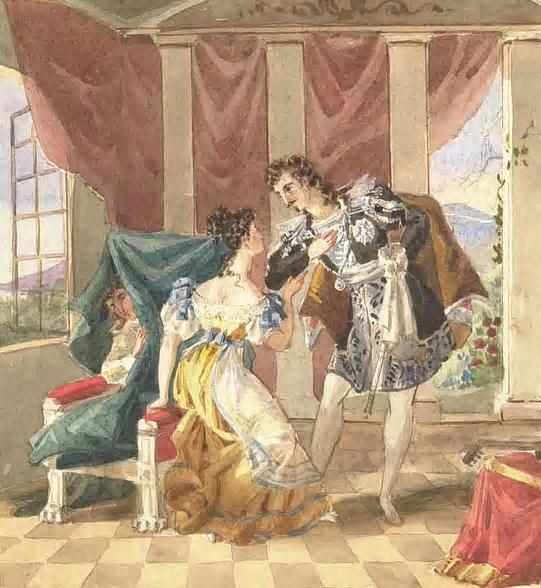
Anonymous Le nozze di Figaro Act 1: Cherubino hides behind Susanna’s chair as the Count arrives
The opera is a cornerstone of the modern opera repertoire and appears consistently among the top ten in the Opera base list of most frequently performed operas.
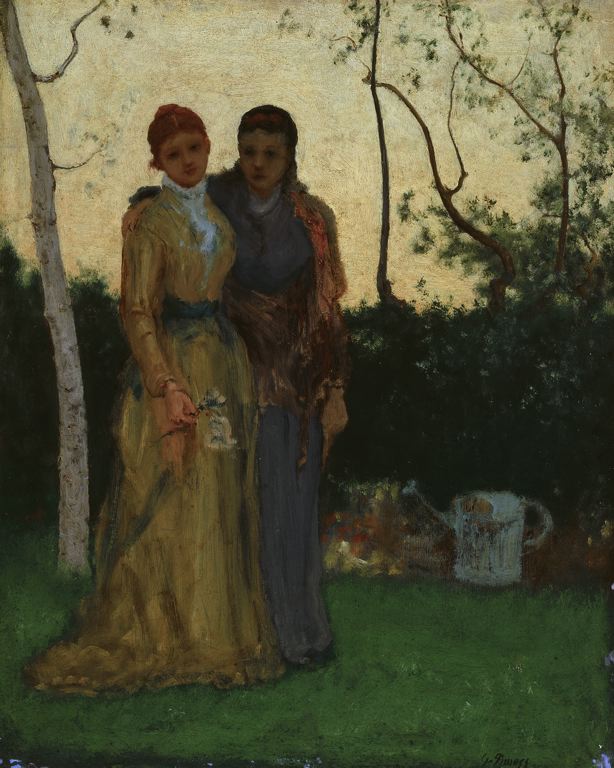
Today is the birthday of George Inness (Newburgh, New York May 1, 1825 – August 3, 1894 Bridge of Allan, Scotland); landscape painter and georgist activist.
 |
Now recognized as one of the most influential American artists of the nineteenth century, Inness was influenced by the Hudson River School at the start of his career. He also studied the Old Masters, and artists of the Barbizon school during later trips to Europe. There he was introduced to the theology of Emanuel Swedenborg, which was significant for him; he expressed that spiritualism in the works of his maturity (1879–1894).
Although Inness’s style evolved through distinct stages over a prolific career that spanned more than forty years and 1,000 paintings, his works consistently earned acclaim for their powerful, coordinated efforts to elicit depth of mood, atmosphere, and emotion. Neither pure realist nor impressionist, Inness was a transitional figure. He worked to combine both the earthly and the ethereal in order to capture the complete essence of a locale in his works. A master of light, color, and shadow, he became noted for creating highly ordered and complex scenes that often juxtaposed hazy or blurred elements with sharp and refined details to evoke an interweaving of both the physical and the spiritual nature of experience. In Inness’s words, he attempted through his art to demonstrate the “reality of the unseen” and to connect the “visible upon the invisible.”
Within his lifetime, art critics hailed Inness as one of America’s greatest artists. Often called “the father of American landscape painting,” Inness is perhaps best known for his mature works that not only exemplified the Tonalist movement but also displayed an original and uniquely American style.
Inness opened his first studio in New York in 1848. In 1849, he married Delia Miller, who died a few months later. The next year he married Elizabeth Abigail Hart, with whom he would have six children.
During trips to Paris in the early 1850s, Inness came under the influence of artists working in the Barbizon school of France. Barbizon landscapes were noted for their looser brushwork, darker palette, and emphasis on mood. Inness quickly became the leading American exponent of Barbizon-style painting, which he developed into a highly personal style. In 1854 during one of these trips, his son George Inness, Jr., who also became a landscape painter of note, was born in Paris.
Gallery
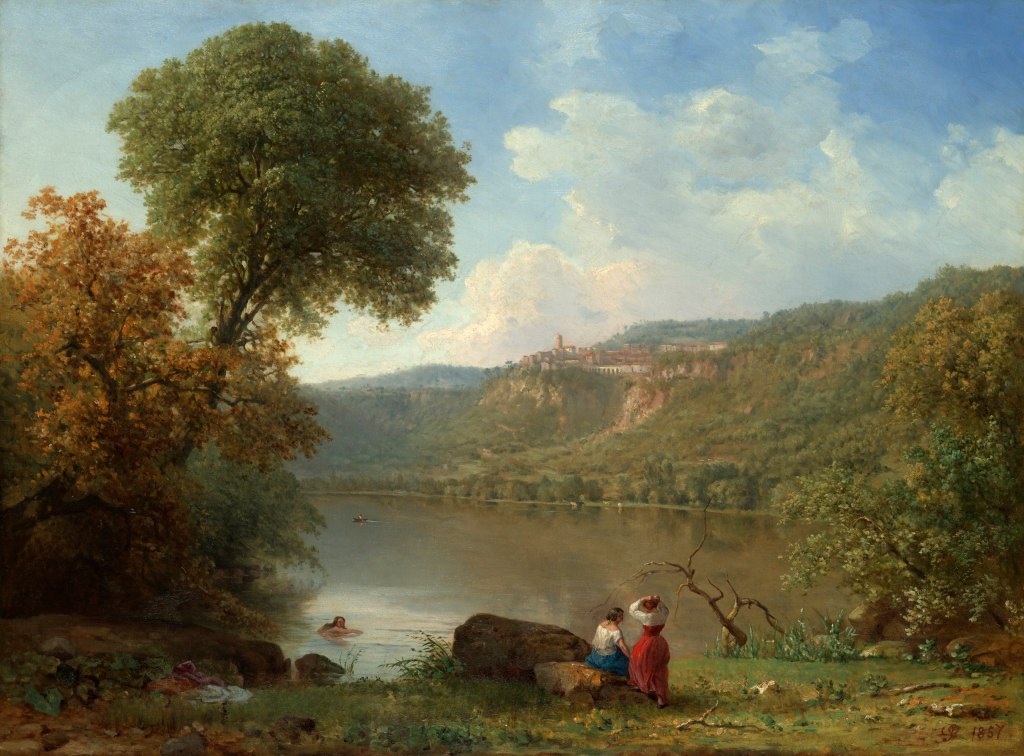
Lake Nemi, oil on canvas, 1857, Yale University Art Gallery
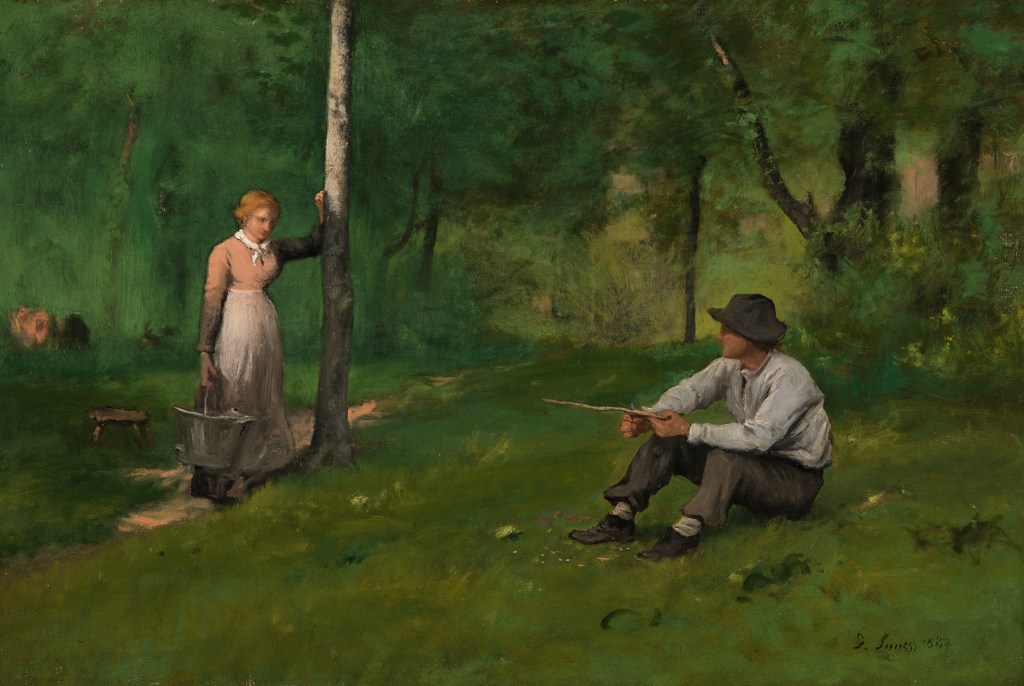
gossip
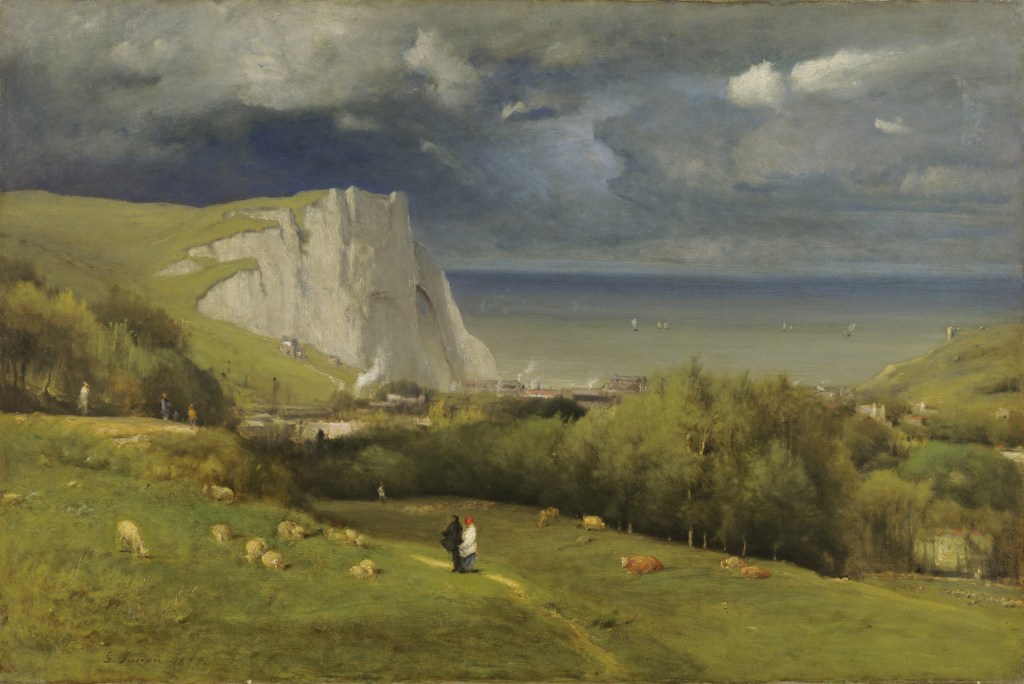
Étretat, oil on canvas, 1875, Wadsworth Atheneum
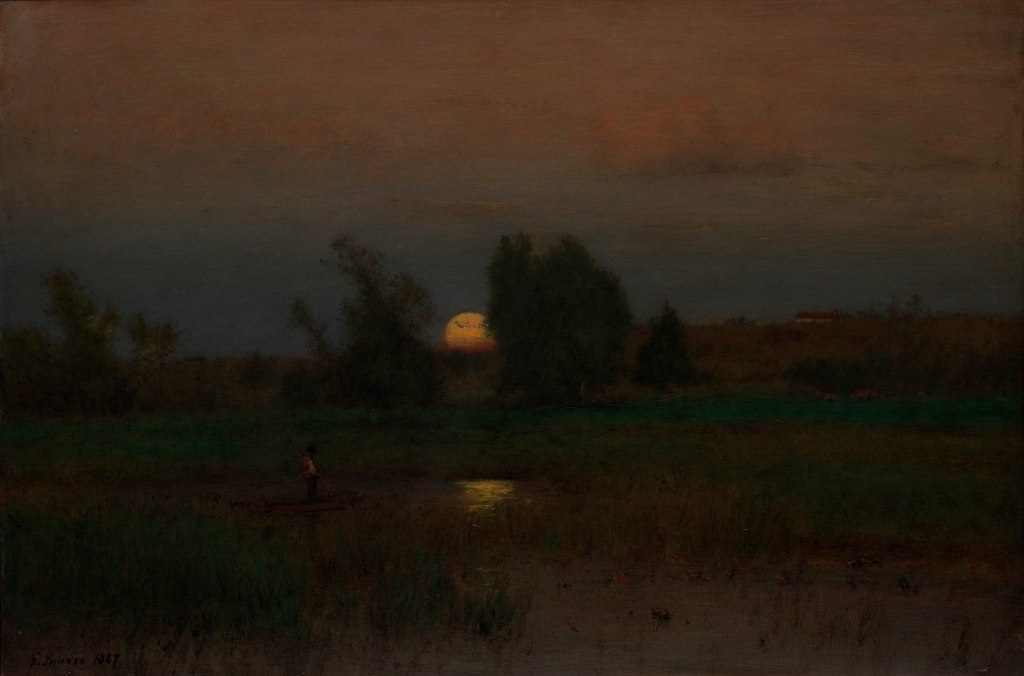
Moonrise, oil on canvas, 1887, Yale University Art Gallery
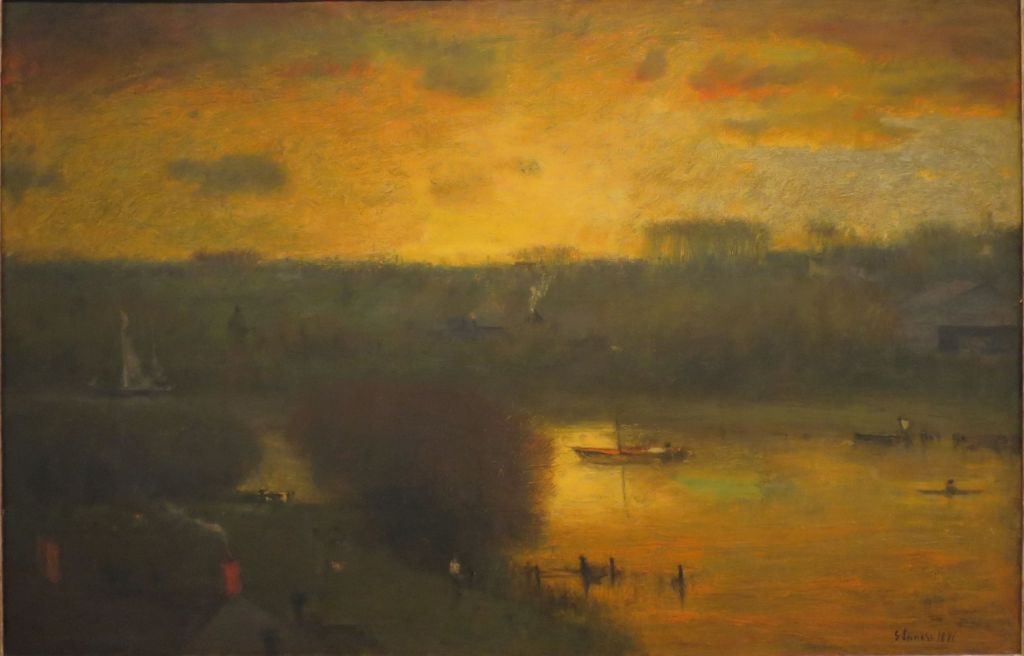
Sunset on the Passaic, oil on canvas, 1891,Honolulu Museum of Art
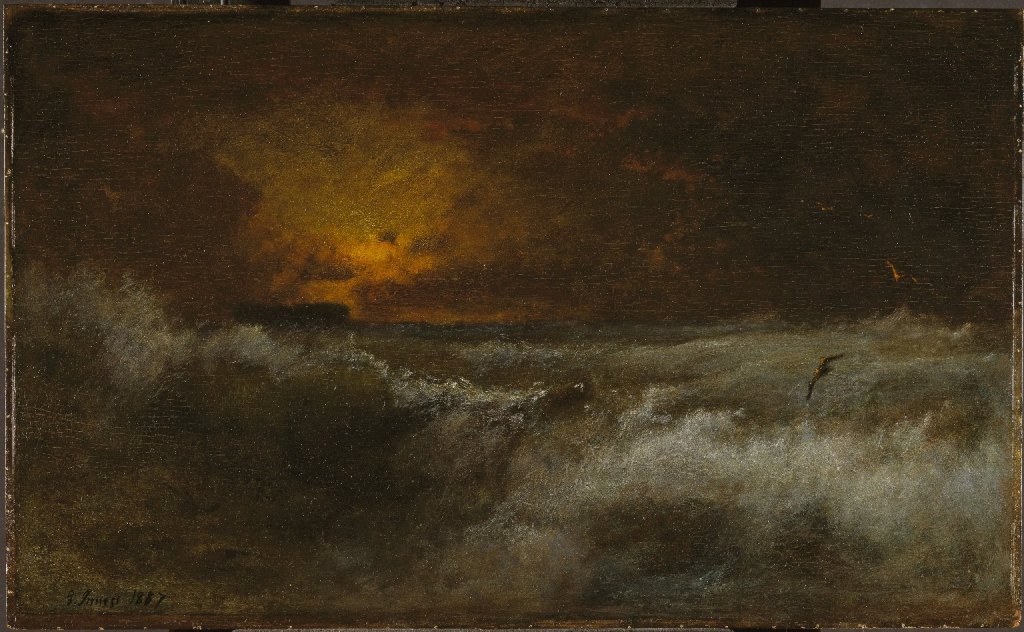
Sunset over the Sea, 1887, Brooklyn Museum
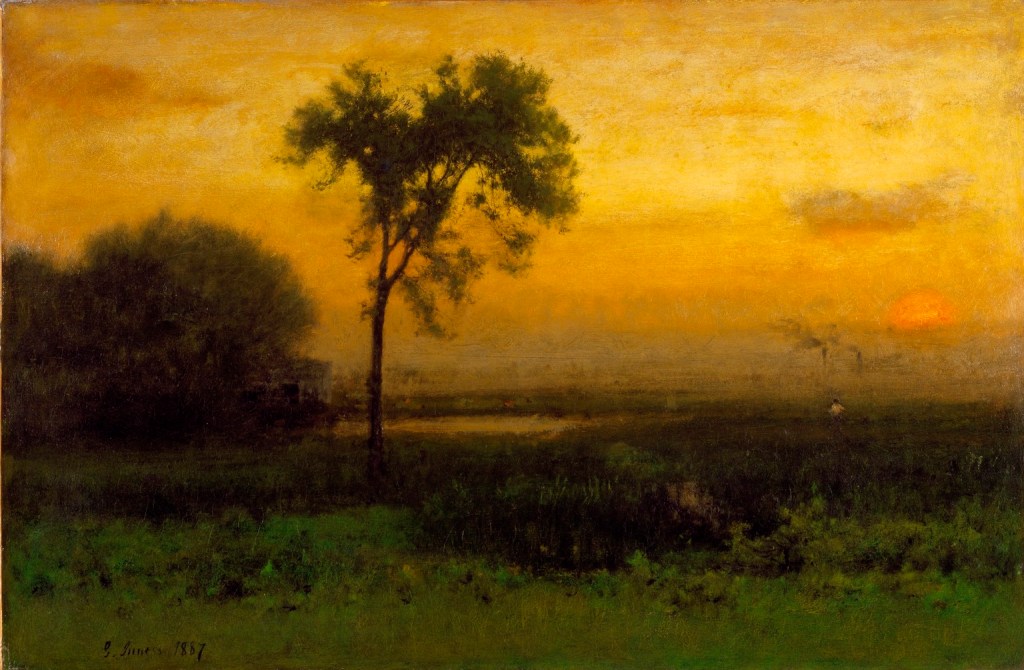

In the Berkshires, 1850
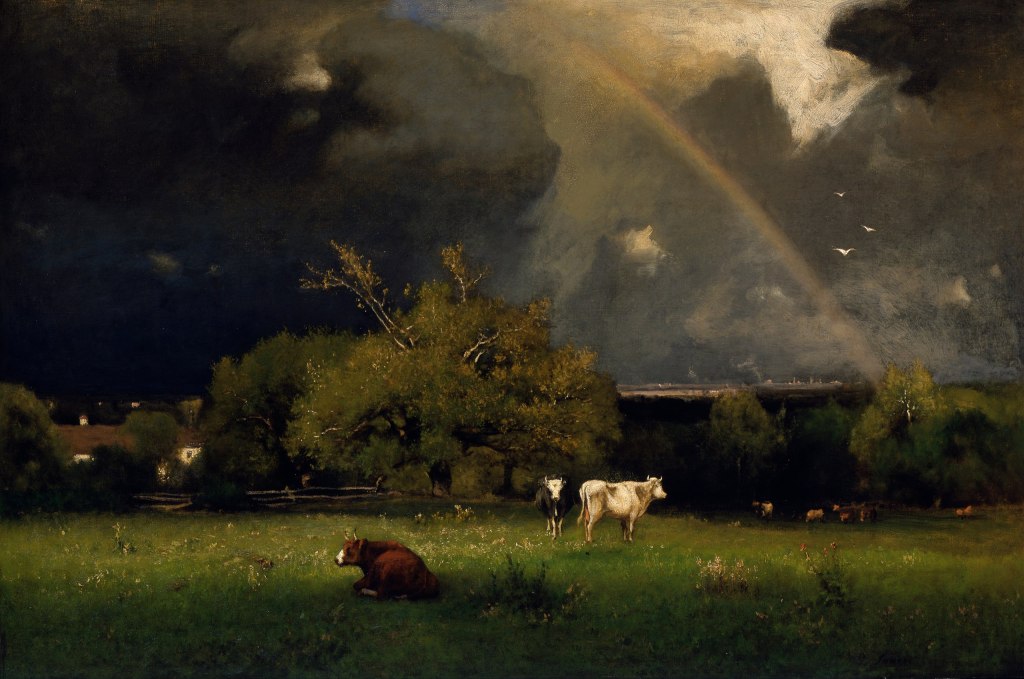
The Rainbow, oil on canvas c. 1878, Indianapolis Museum of Art
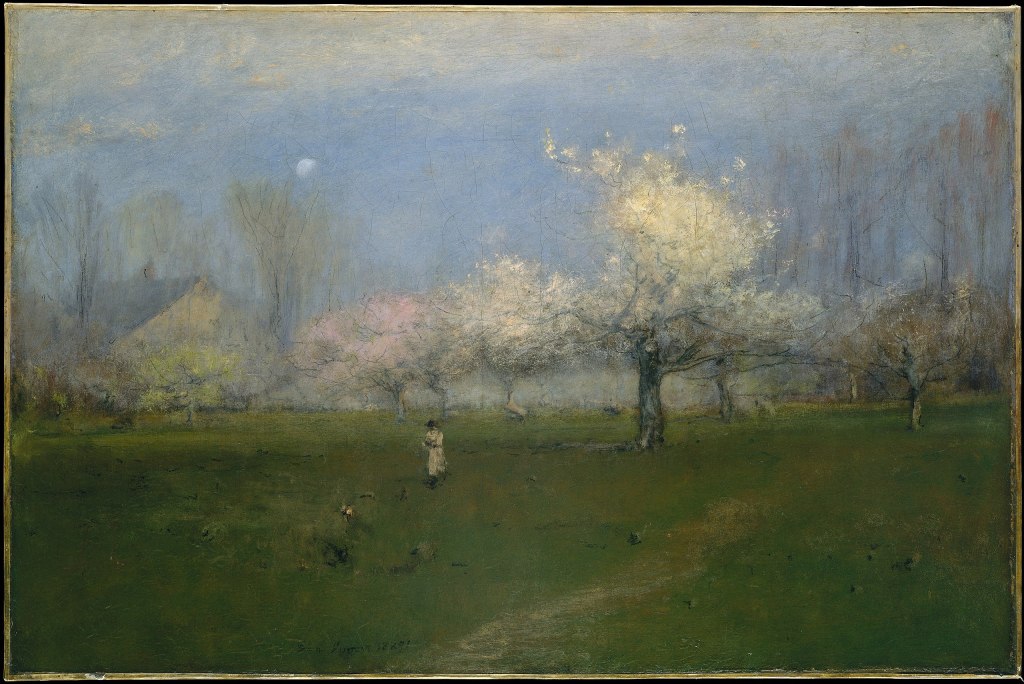
Spring Blossoms, Montclair, New Jersey, oil and crayon or charcoal on canvas, c.1891
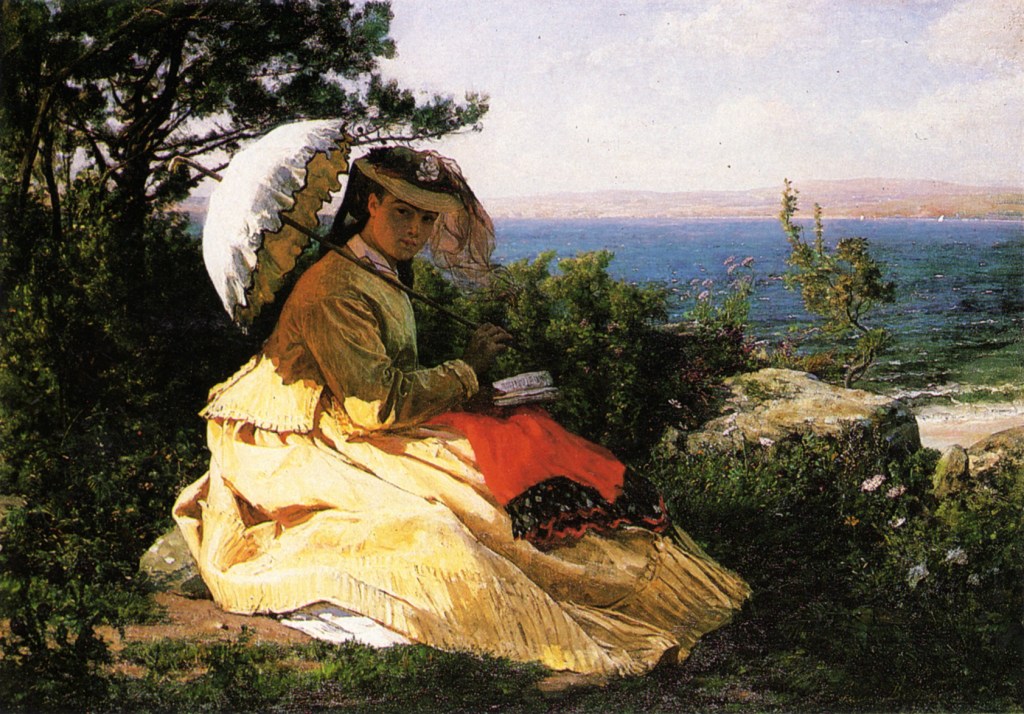
Today is the birthday of Jules Breton (Jules Adolphe Aime Louis Breton; Courrieres, France 1 May 1827 – 5 July 1906 Paris); Realist painter. His paintings are heavily influenced by the French countryside. His absorption of traditional methods of painting helped make Breton one of the primary transmitters of the beauty and idyllic vision of rural existence.
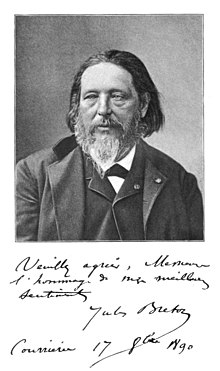 |
Breton married Elodie de Vigne in 1858.
Gallery
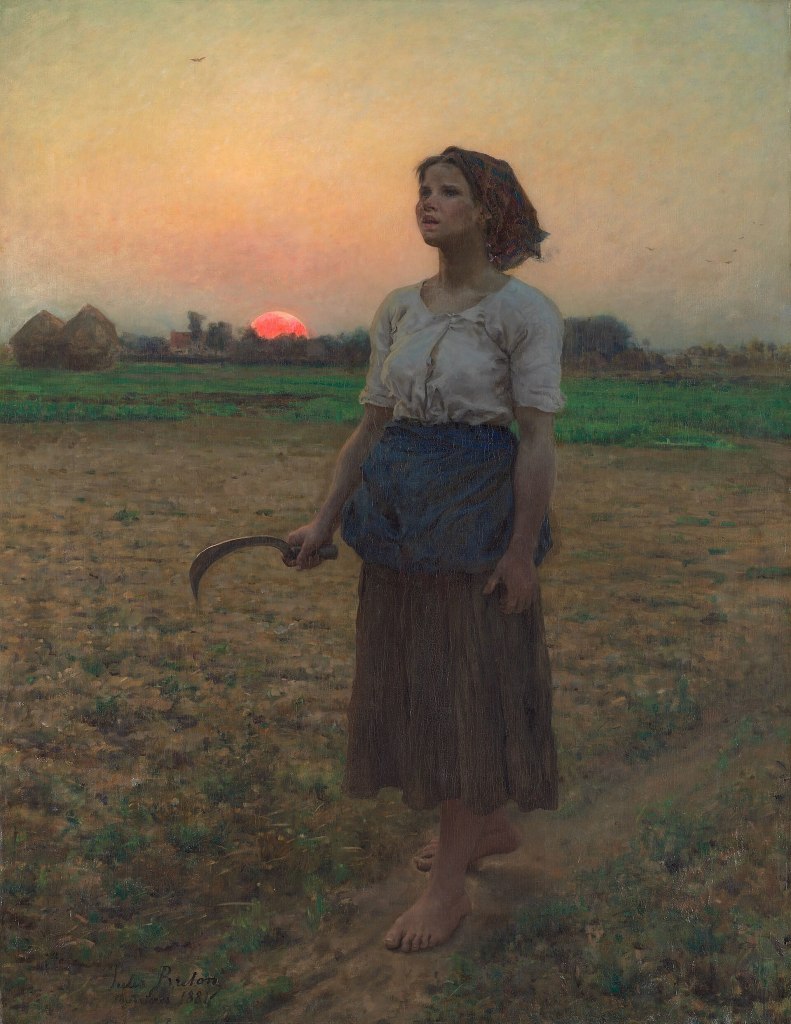
The Song of the Lark, oil on canvas, 1884
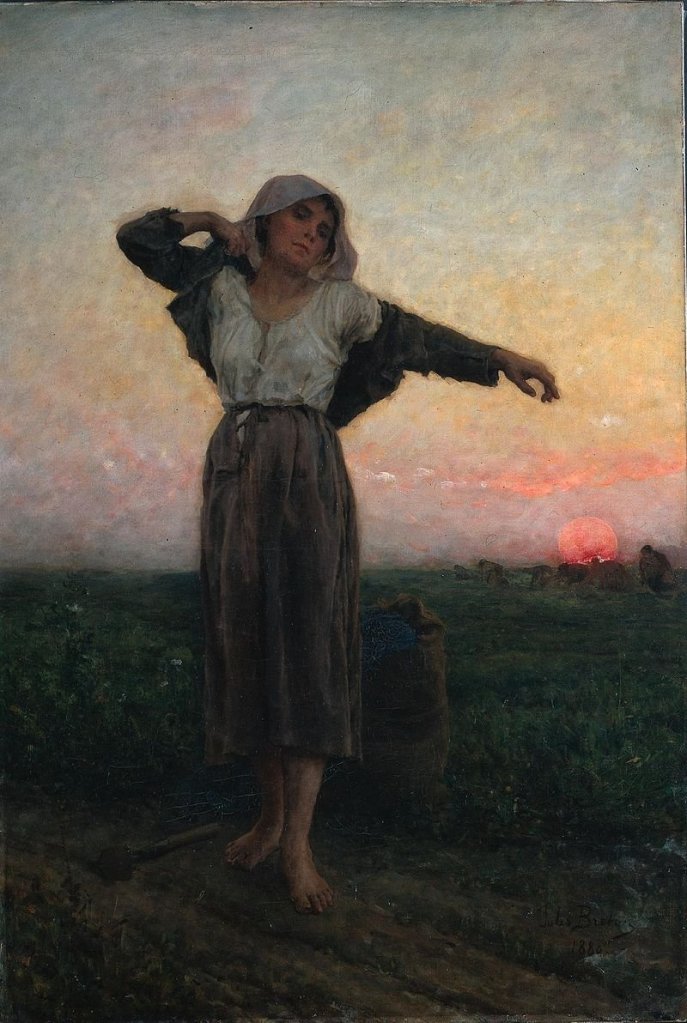
La Glaneuse lasse (1880), Cleveland Museum of Art
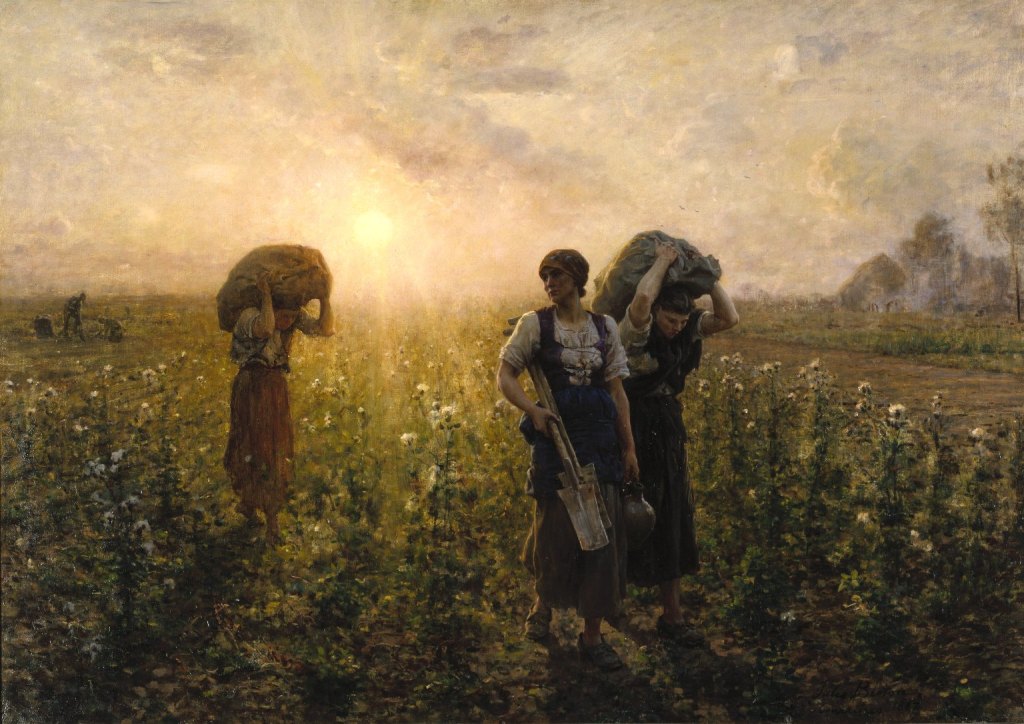
The End of the Working Day, 1886-87, Brooklyn Museum
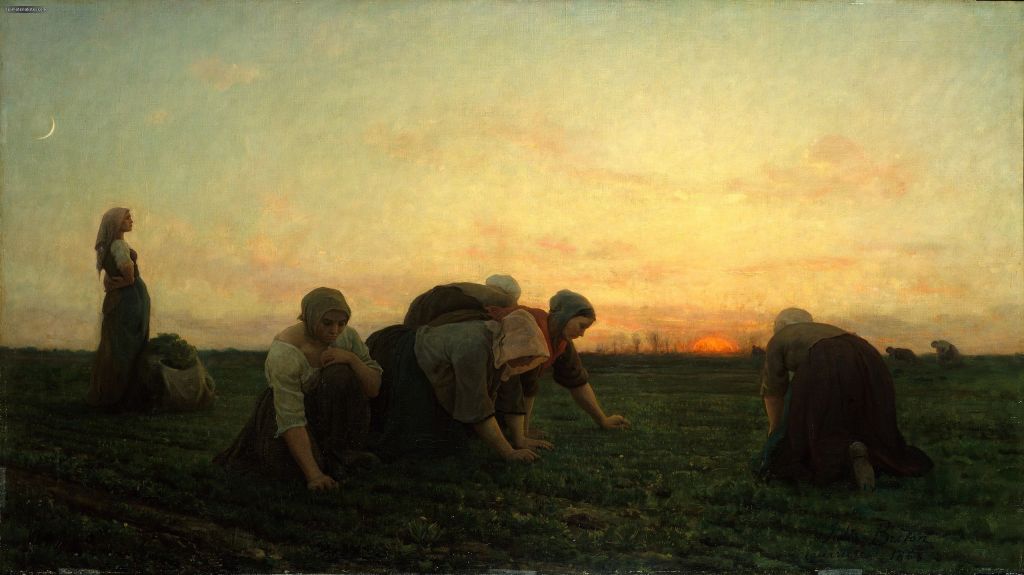
Les Sarcleuses
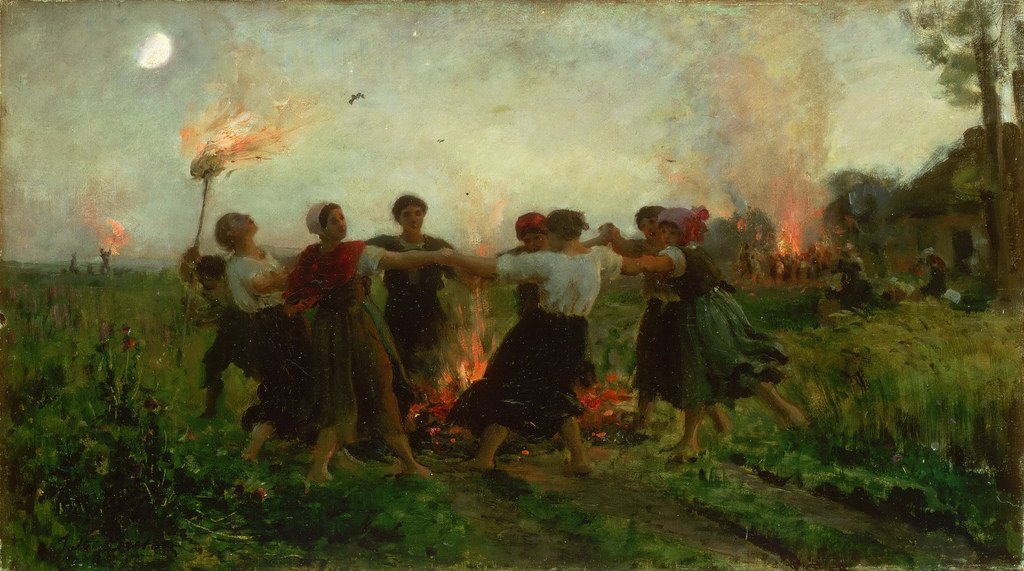
La Fête de Saint-Jean (1875), Philadelphia Museum of Art
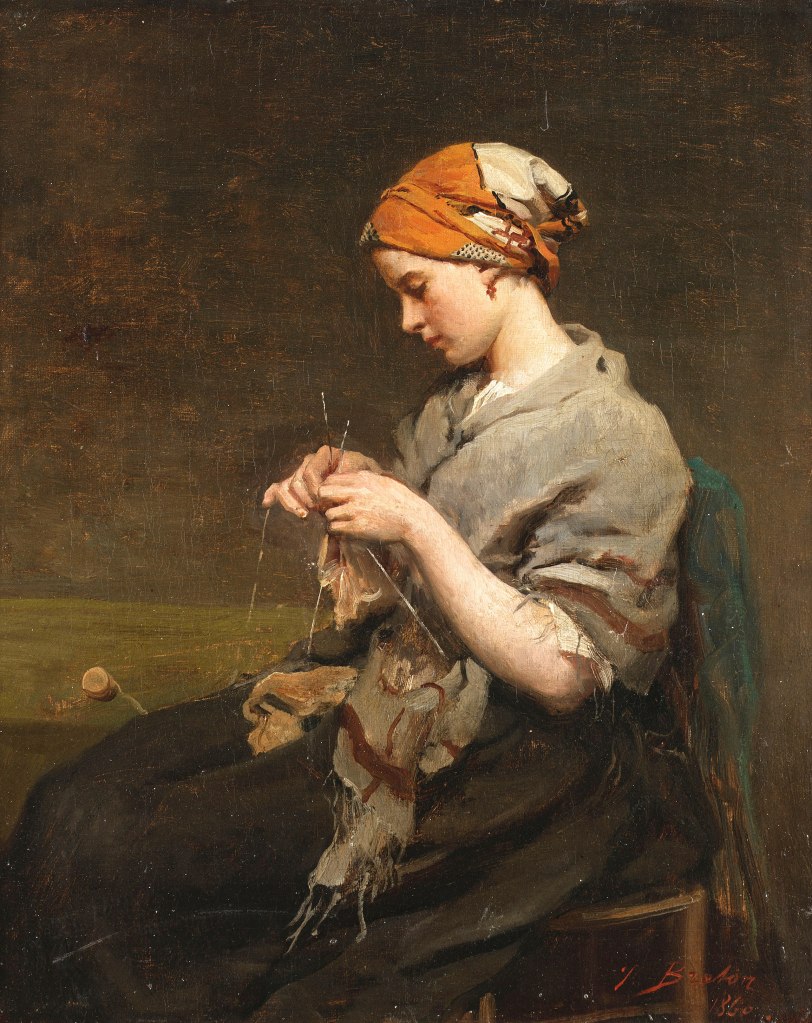
Jeune fille tricotant’ (1860)
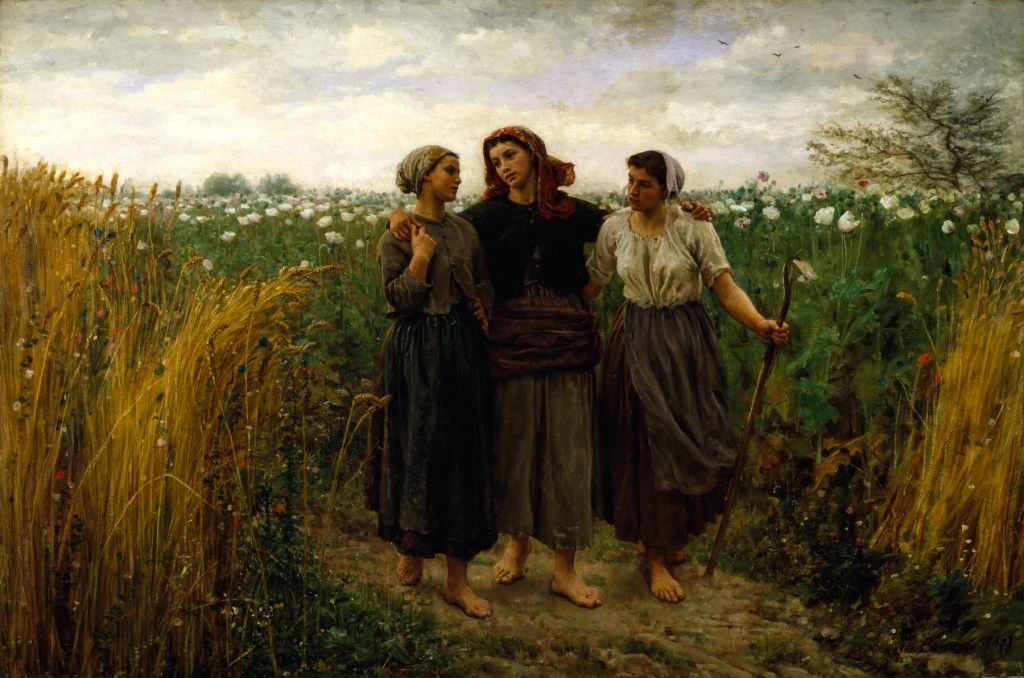
Le Retour des champs (1871), Baltimore, Walters Art Museum
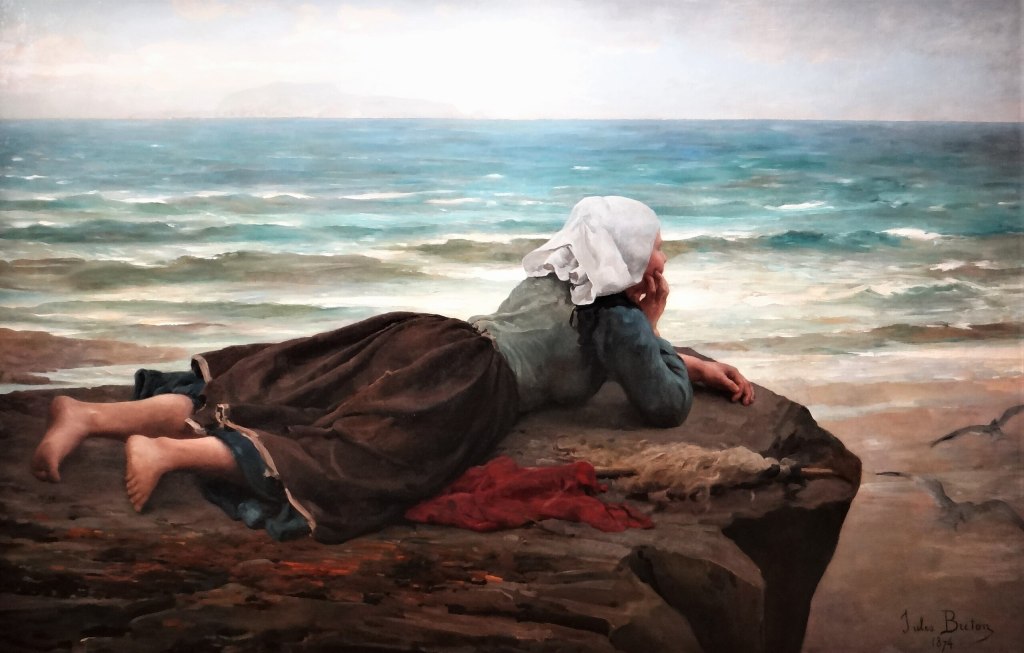
La Falaise (1874), Collection Eric Weider
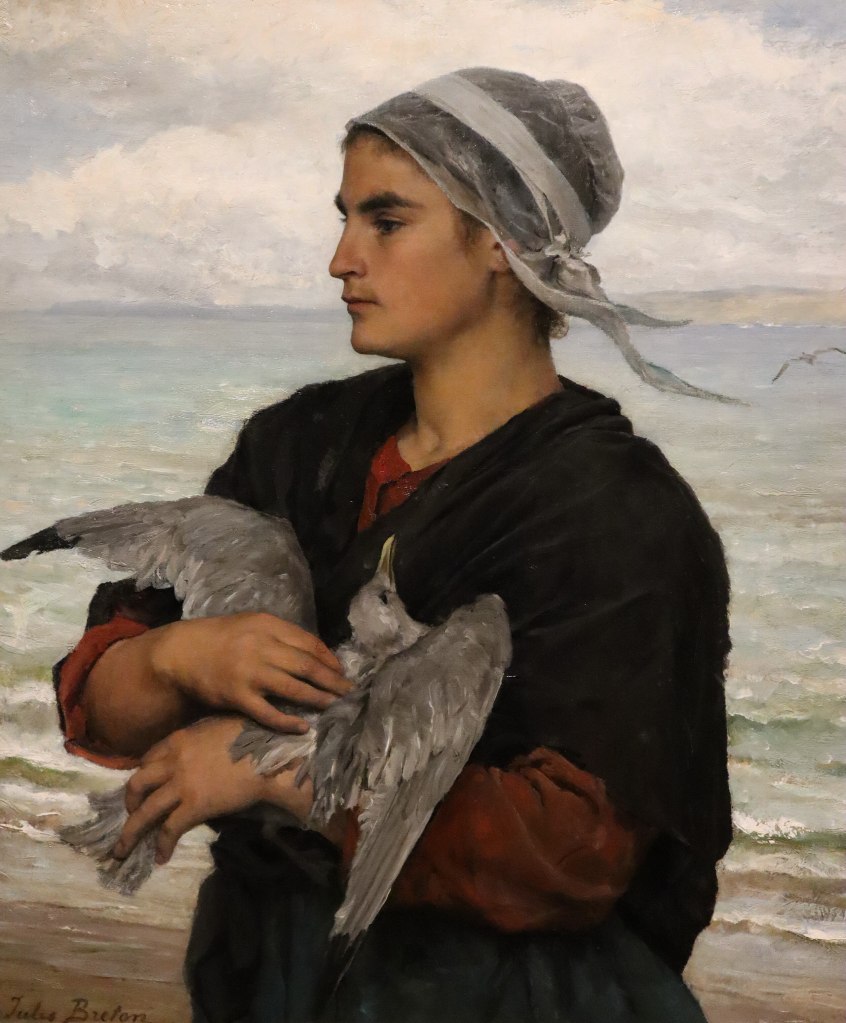
Wounded Seagull (1878) oil on canvas, depicting a woman on the coast of Brittany holding a bird to her breast, with others flying in the distance

Jeanne Calvet (1865), oil on millboard, Clark Art Institute
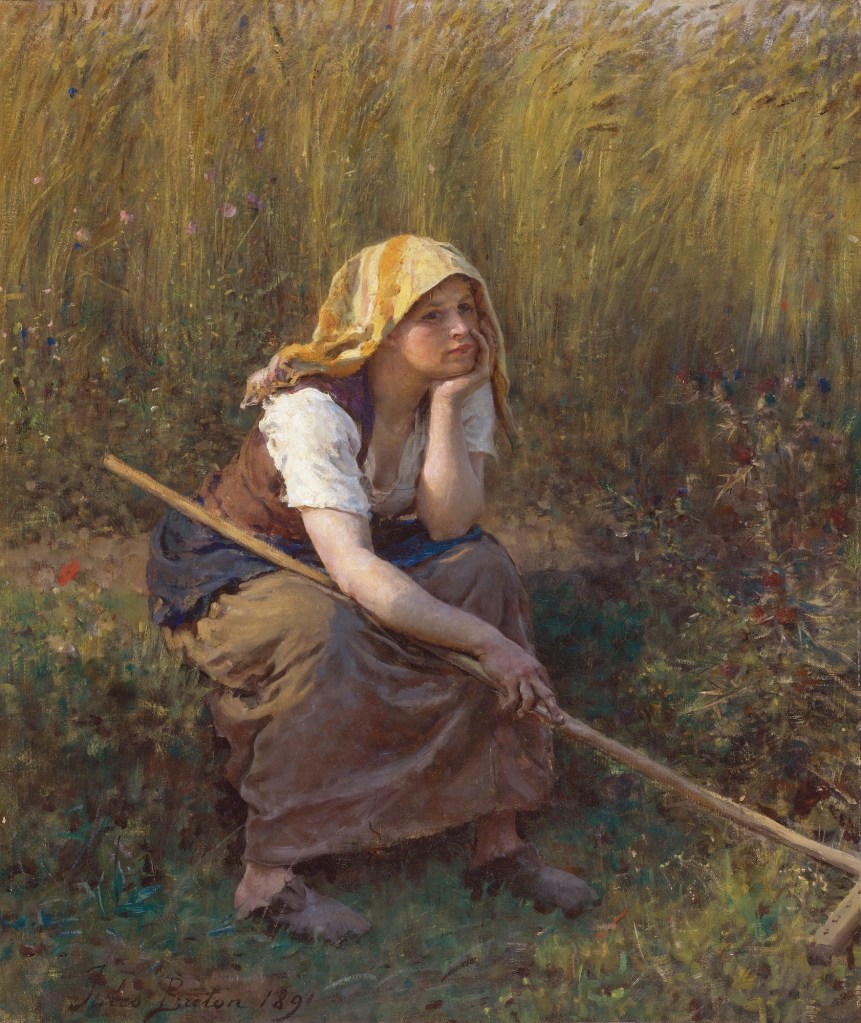
*oil on canvas 1891
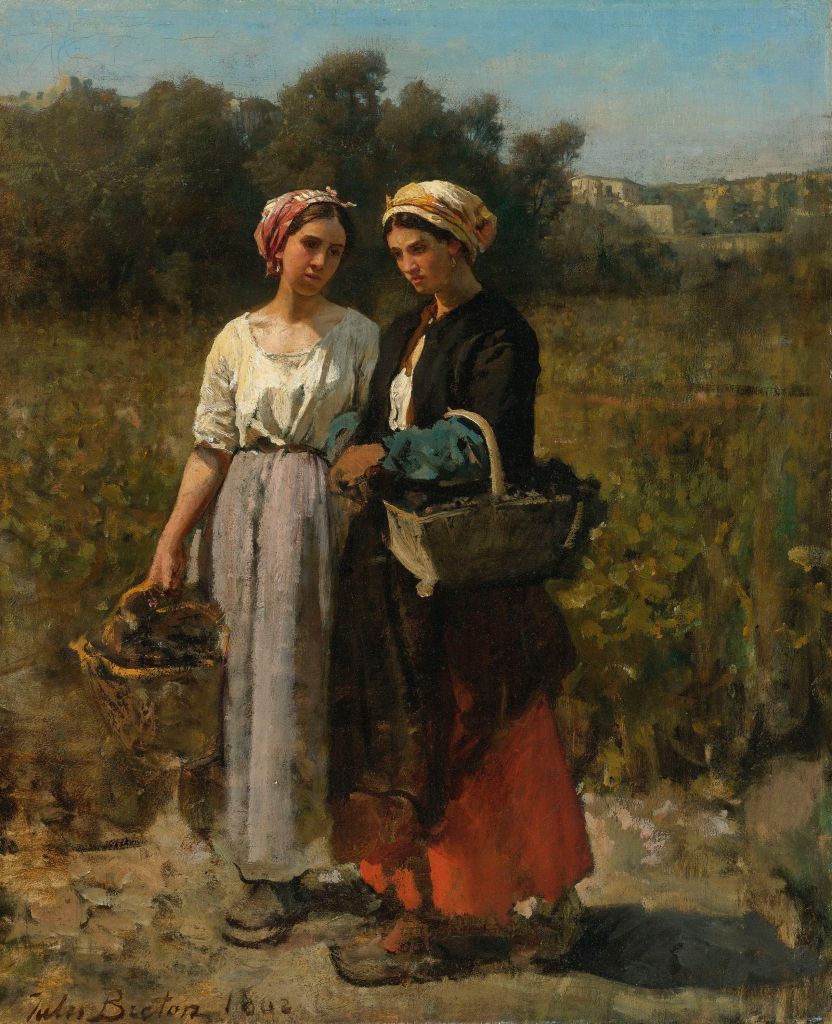
Today is the birthday of Cecilia Beaux (Philadelphia May 1, 1855 – September 7, 1942 Gloucester, Mass.); artist and the first woman to teach art at the Pennsylvania Academy of the Fine Arts. Known for her elegant and sensitive portraits of friends, relatives, and Gilded Age patrons, Beaux painted many famous subjects including First Lady Edith Roosevelt, Admiral Sir David Beatty and Georges Clemenceau.
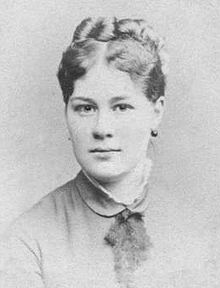 |
Beaux was trained in Philadelphia and went on to study in Paris where she was influenced by academic artists Tony Robert-Fleury and William-Adolphe Bouguereau as well as the work of Édouard Manet and Edgar Degas. Her style was compared to that of John Singer Sargent; at one exhibition, Bernard Berenson joked that her paintings were the best Sargents in the room. Like her instructor William Sartain, she believed there was a connection between physical characteristics and behavioral traits.
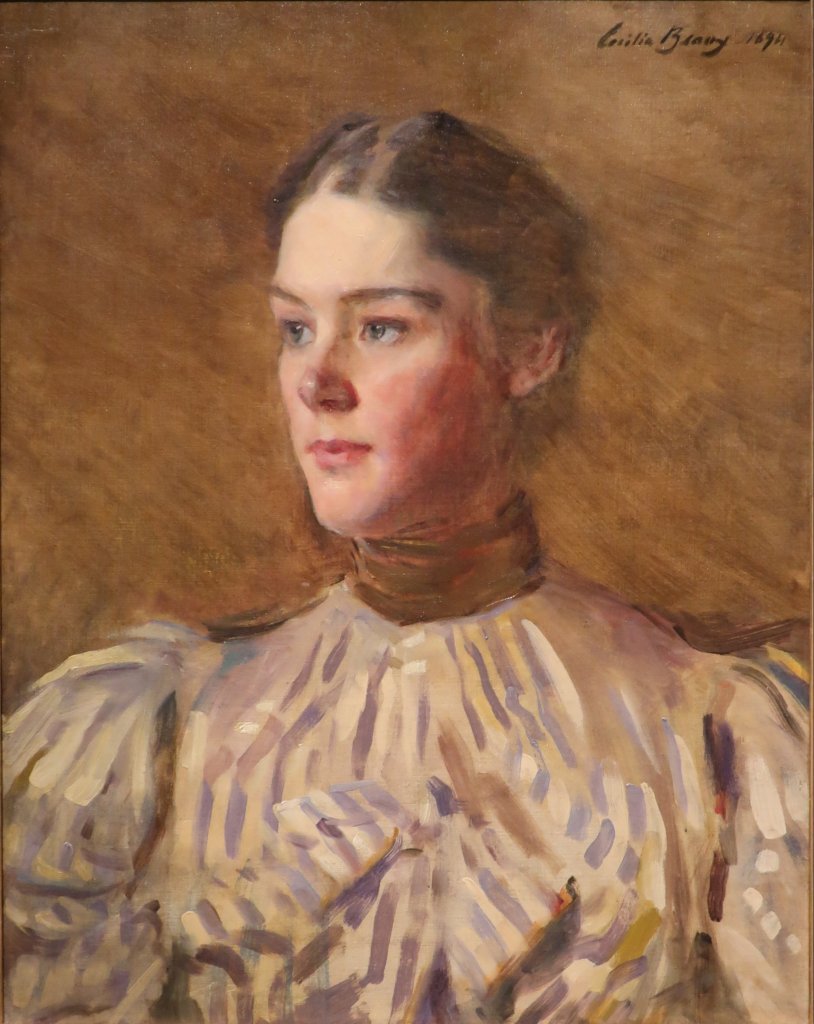
self portrait 1894
Beaux was awarded a gold medal for lifetime achievement by the National Institute of Arts and Letters, and honored by Eleanor Roosevelt as “the American woman who had made the greatest contribution to the culture of the world”.
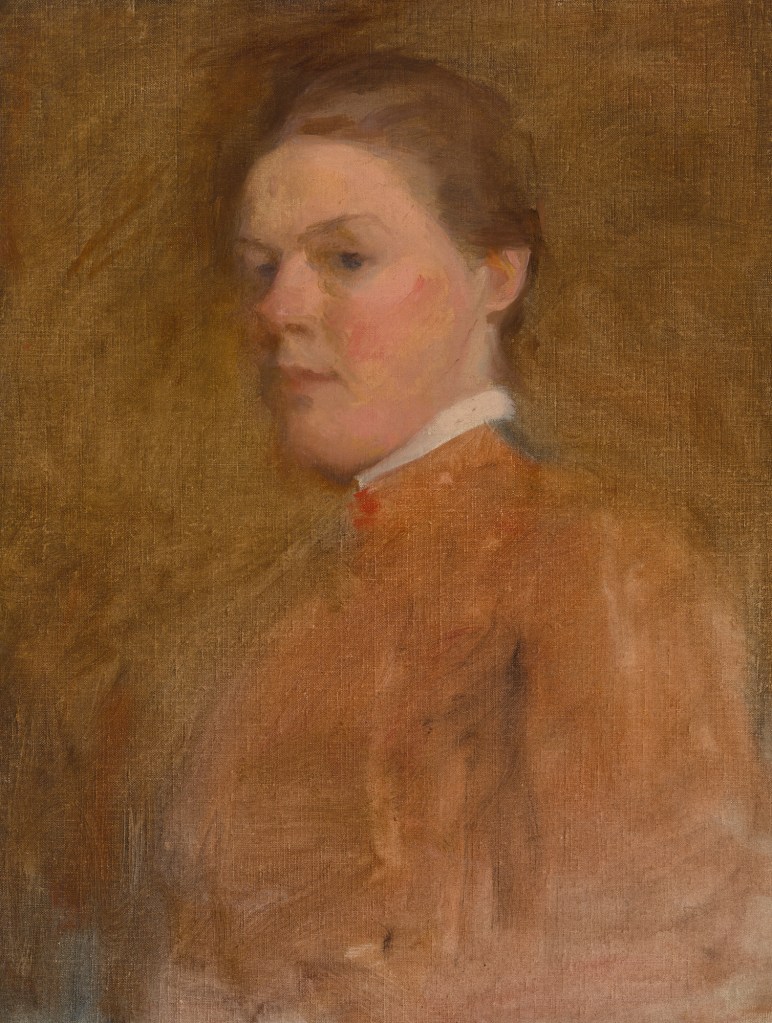
At 32, despite her success in Philadelphia, Beaux decided that she still needed to advance her skills. She left for Paris with cousin May Whitlock, forsaking several suitors and overcoming the objections of her family. There she trained at the Académie Julian, the largest art school in Paris, and at the Académie Colarossi, receiving weekly critiques from established masters like Robert-Fleury and Bouguereau. She wrote, “Fleury is much less benign than Bouguereau and don’t temper his severities…he hinted of possibilities before me and as he rose said the nicest thing of all, ‘we will do all we can to help you’…I want these men…to know me and recognize that I can do something.” Though advised regularly of Beaux’s progress abroad and to “not be worried about any indiscretions of ours”, her Aunt Eliza repeatedly reminded her niece to avoid the temptations of Paris, “Remember you are first of all a Christian – then a woman and last of all an Artist.”
When Beaux arrived in Paris, the Impressionists, a group of artists who had begun their own series of independent exhibitions from the official Salon in 1874, were beginning to lose their solidarity. Also known as the “Independents” or “Intransigents”, the group which at times included Degas, Monet, Sisley, Caillebotte, Pissarro, Renoir, and Berthe Morisot, had been receiving the wrath of the critics for several years. Their art, though varying in style and technique, was the antithesis of the type of Academic art in which Beaux was trained and of which her teacher William-Adolphe Bouguereau was a leading master. In the summer of 1888, with classes in summer recess, Beaux worked in the fishing village of Concarneau with the American painters Alexander Harrison and Charles Lazar. She tried applying the plein-air painting techniques used by the Impressionists to her own landscapes and portraiture, with little success. Unlike her predecessor Mary Cassatt, who had arrived near the beginning of the Impressionist movement 15 years earlier and who had absorbed it, Beaux’s artistic temperament, precise and true to observation, would not align with Impressionism and she remained a realist painter for the rest of her career, even as Cézanne, Matisse, Gauguin, and Picasso were beginning to take art into new directions. Beaux mostly admired classic artists like Titian and Rembrandt. Her European training did influence her palette, however, and she adopted more white and paler coloration in her oil painting, particularly in depicting female subjects, an approach favored by Sargent as well.
Beaux considered herself a “New Woman”, a 19th-century woman who explored educational and career opportunities that had generally been denied to women. This “New Woman” was successful, highly trained, and often did not marry; other such women included Ellen Day Hale, Mary Cassatt, Elizabeth Nourse and Elizabeth Coffin.
Gallery
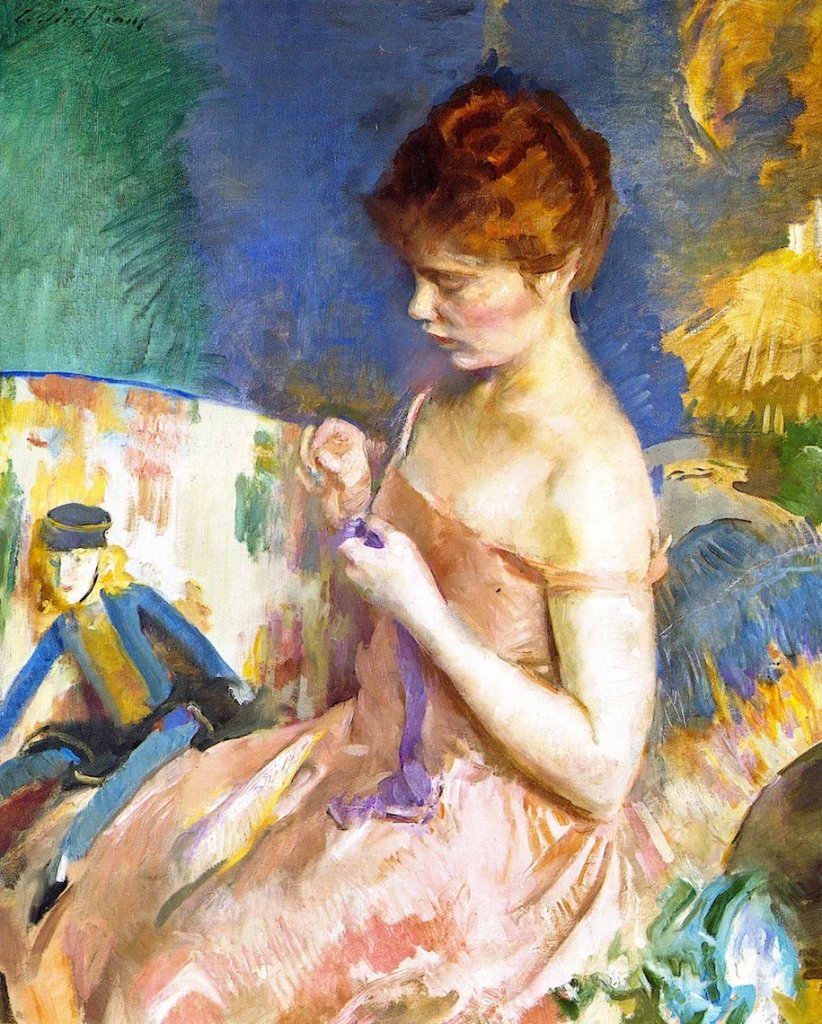
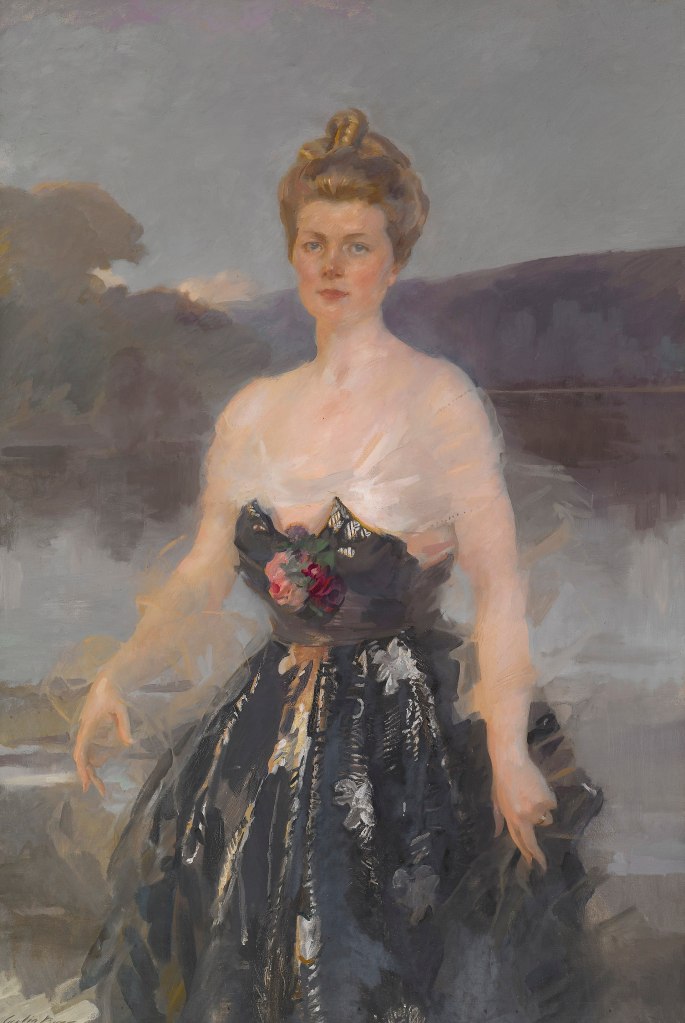
Portrait of Mrs. Albert J. Beveridge (Catherine Eddy, Lady Primrose Portrait) – 1999.44 – Indianapolis Museum of Art
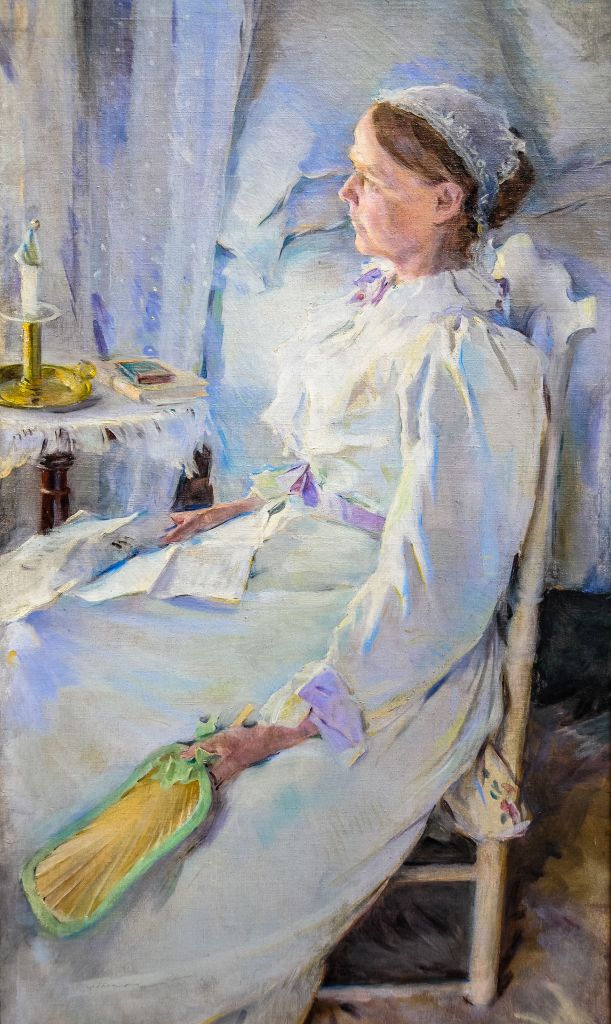
New England Woman. Portrait of Mrs. Jedidiah H. Richards (Beaux’s cousin Julia Leavitt), 1895. Pennsylvania Academy of Fine Arts
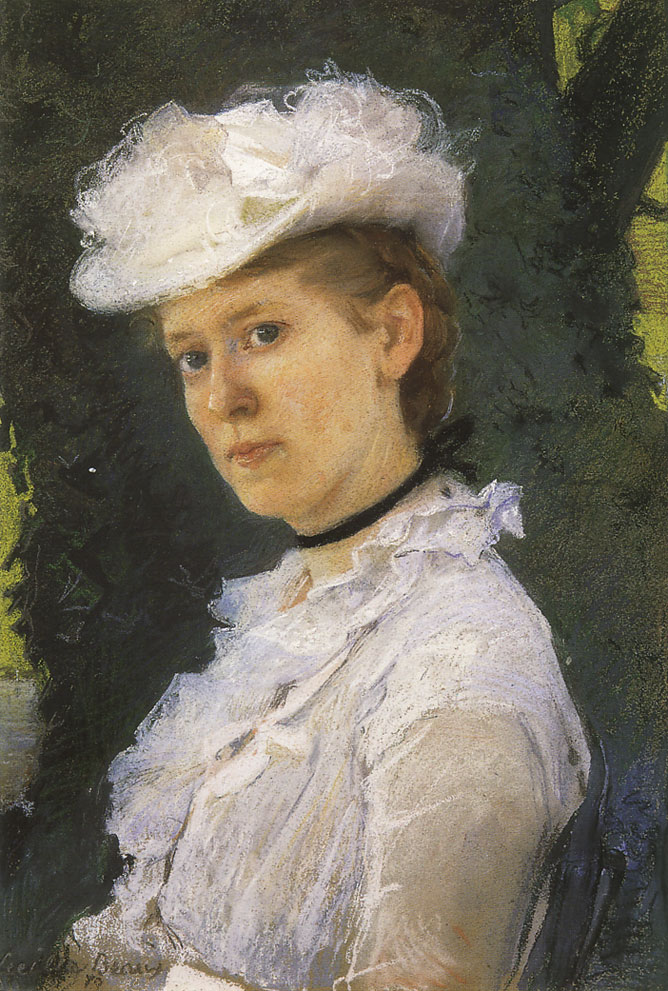
Lady George Darwin, Beaux’s pastel portrait of the former Martha du Puy of Philadelphia, who married Sir George Darwin. 1889
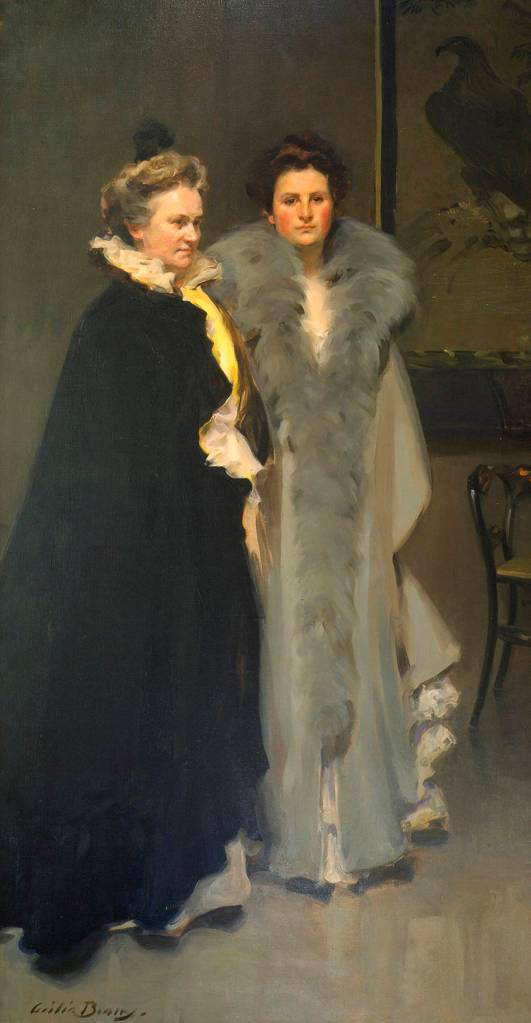
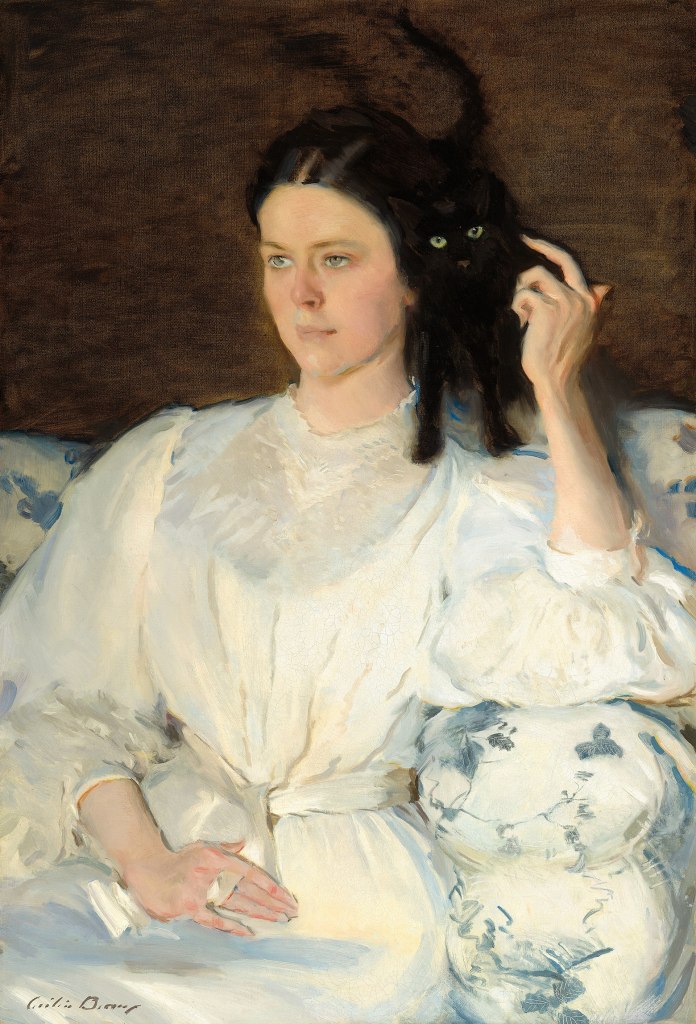
Sita and Sarita (Jeune Fille au Chat). Portrait of Sarah Allibone Leavitt, 1893–1894. Collection of the Musée d’Orsay, Paris
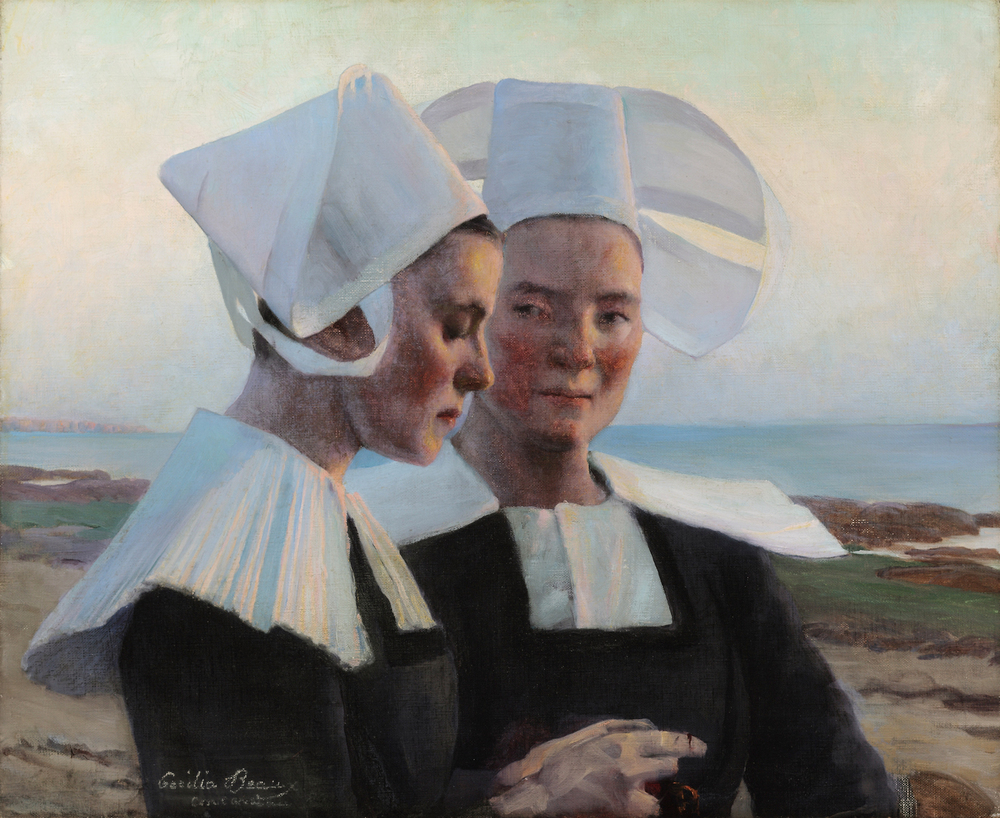
Twilight Confidences, 1888


Mrs. Robert Abbe (Catherine Amory Bennett). Brooklyn Museum
thanks for stoppin’ by y’all
mac tag
 The Lovers’ Chronicle
Leave a comment