Dear Zazie,
Here is the Lovers’ Chronicle from Mac Tag. Rhett
The Lovers’ Chronicle
Dear Muse,
no idea
where this theme came from
though, again,
they all could be about this
“Yes I see a common thread”
kinda surprised i did not go
with one of my favorite
RPW poems
i call myself a poet but
i have said storyteller
may be more accurate
“I like your tales, especially
the ones with us”
since you are here in my arms
let me tell you another story
with me and you and how
we came to feel again
© copyright 2023 mac tag/cowboycoleridge all rights reserved
on the record many times sayin’ they were irrelevant, or non-existent, the only way i knew to survive was to bury ‘em deep, and it took a long time to find a way to start processin’, there was no one to talk to, plus the whole, “i ain’t askin’ nobody for nuthin’” mantra, no we were raised to make do or do without, so i did, till i got to where i could start writin’ my way out of it, saved by my ink pin and keyboard, and the Muse, so the once pesky feelin’s could emerge, blinded at first by the light but ready when needed when you walked in

© copyright 2022.2024 mac tag/cowboycoleridge all rights reserved
recallin’ what i started to tell you,
how night-long i have written
heard from visions in their sleep
stories remember and go about
in slow, steady strokes tellin’ us
there is somethin’ here to hold
so lean into our belief, headlong
that we can touch and it comes
© copyright 2021.2023 mac tag/cowboycoleridge all rights reserved
Pale Love, Pale Rider
never realized the toll
lack of touch
could have on an empath
you know i know
how many days
it has been
so little time we live,
and we learn painfully,
for desire flames only with a kindred other
echoes caught from the same voice
and defines, what shall be rejoiced
© copyright 2020 mac tag/cowboy coleridge all rights reserved
“Tell me a story,
of moments and mania.
Make it of need,
long delayed.
We will know the name
of the story, without ever
having to say it.
Tell me a story
of mutual ardor.”
then let us turn,
our fable will be
of two who know
and on each other,
gaze in belief
© copyright 2019 mac tag/cowboy coleridge all rights reserved
clingin’
to memories
commutin’
between dream
and reality,
not yet arrived
fortune give way
always more to say
but little damn time
we all come to learn
somethin’, i that i
ignored the warnin’s
and it cost dearly,
put one across on me
lost and alone
Soy yo. Me sientes?
© copyright 2018 bret mosley & mac tag/cowboy coleridge all rights reserved
not really a drinkin’ thing
more like a thinkin’ thing
cain’t stop thinkin’ about you
© copyright 2017 mac tag/cowboy Coleridge all rights reserved
Dare to peak inside
The mind of this
Wayward cowboy
And you will find
Many books includin’
All the King’s Men
by Robert Penn Warren
© copyright 2016 mac tag/cowboy Coleridge all rights reserved
That was close;
pulled the cape on
just ahead of big
disappointment
Trust me on this:
Life is better
without feelin’s
or emotions
© copyright 2015 mac tag/cowboy Coleridge all rights reserved
today is the birthday of Henri Manuel (Paris 24 April 1874 – 11 September 1947 Neuilly-sur-Seine); photographer who served as the official photographer of the French government from 1914 to 1944.
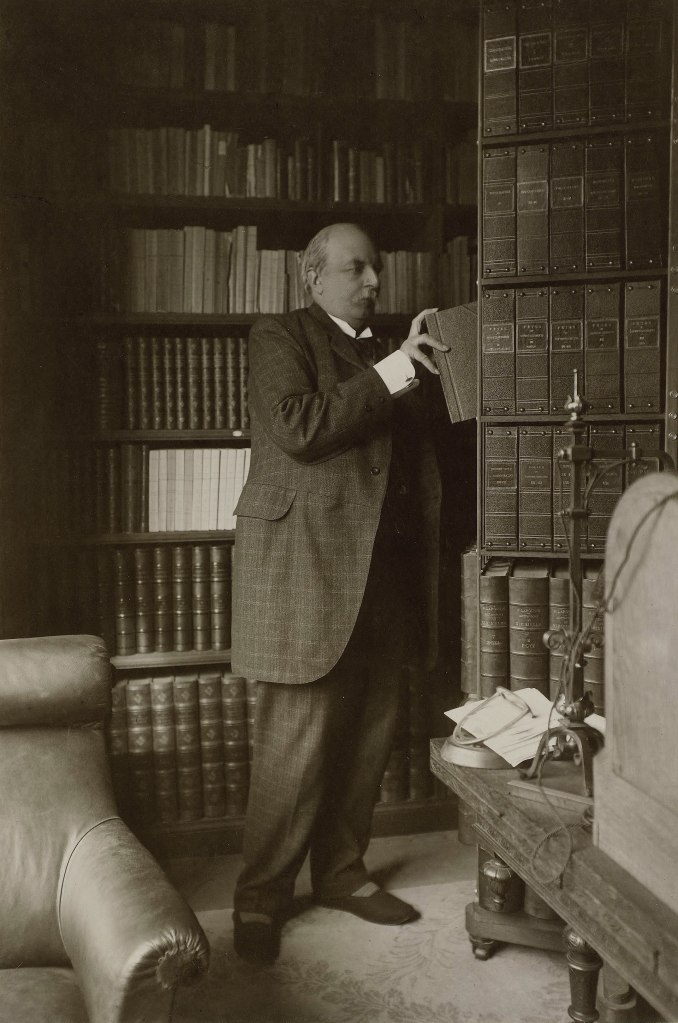
In 1900, Manuel opened a portrait studio in Paris with his brother Gaston, which specialised in portrait photography. Manuel quickly became renowned as a photographer of people from the worlds of politics, art and sports, as well as a photographer of art and architecture. Soon his portraits were used by news agencies, and in 1910 Manuel’s studio began providing a commercial service to news agencies for photographs known as “l’Agence universelle de reportage Henri Manuel”.
The studio became the largest photographic studio in Paris and a leading centre where young aspiring photographers such as Thérèse Bonney might go to work. In 1925, the brothers moved their business to 27 rue du Faubourg Montmartre, where they expanded their business into fashion photography for the likes of Chanel, Patou, Poiret and Lanvin. By 1941 the studio had produced over a million images, spread between fashion photographs, news agency photographs, personal portraits and other images.
The studio was shut down during the Second World War, and most of the photographic plates were destroyed. Some 500 survived, and ultimately passed into possession of the Médiathèque de l’architecture et du patrimoine.
Gallery
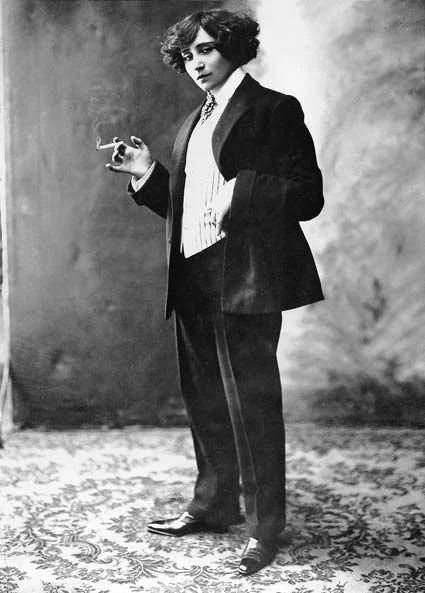
Colette Wearing a Man’s Suit and Smoking, 1909


Today is the birthday of Jean Crotti (Bulle, Fribourg, Switzerland 24 April 1878 – 30 January 1958 Paris); painter.

He first studied in Munich, Germany at the School of Decorative Arts, then at age 23 moved to Paris to study art at the Académie Julian. Initially he was influenced by Impressionism, then by Fauvism and Art Nouveau. Around 1910 he began to experiment with Orphism, an offshoot of Cubism, and a style that would be enhanced by his association in New York City with Marcel Duchamp and Francis Picabia.
A refugee from World War I, he looked to America as a place where he could live and develop his art. In New York, he shared a studio with Duchamp and met his sister, Suzanne. She was part of the Dada movement in which Crotti would become involved. In 1916, he exhibited Orphist-like paintings, several of which had religious titles that also included his Portrait of Marcel Duchamp and his much discussed Les Forces MÈcaniques de l’amour Mouvement, created by using found objects.
In the fall of 1916, Crotti separated from his wife, Yvonne Chastel, and returned to Paris. He had begun a relationship with Suzanne that would culminate in his divorce in 1919 and immediate marriage to Suzanne. An artist in her own right, she would greatly influence Crotti’s painting. In 1920, he produced one of his best known works, a portrait of Thomas Edison. He participated in the 1925 Exposition International in Paris and the International Exhibition of Modern Art at the Brooklyn Museum in 1926–1927. Over the ensuing years, he would create numerous paintings and be the subject for several solo exhibitions at major galleries in England, France, Germany, and the United States.
Gallery

femme avec bateau
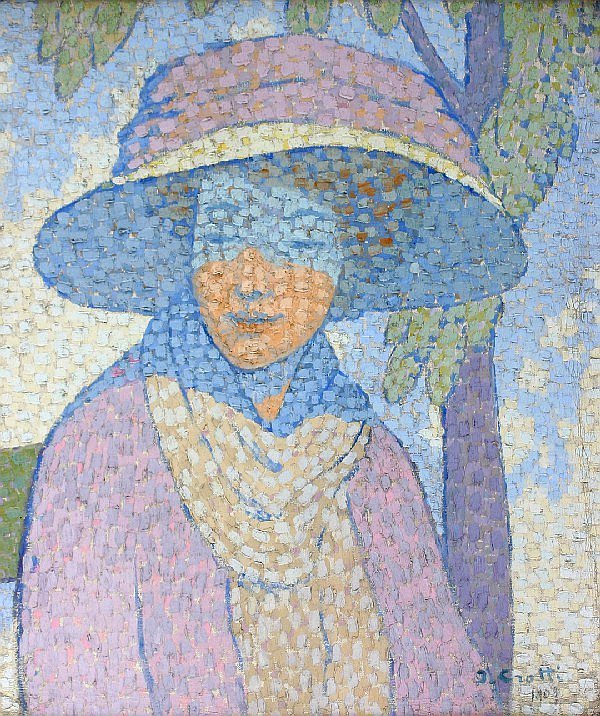
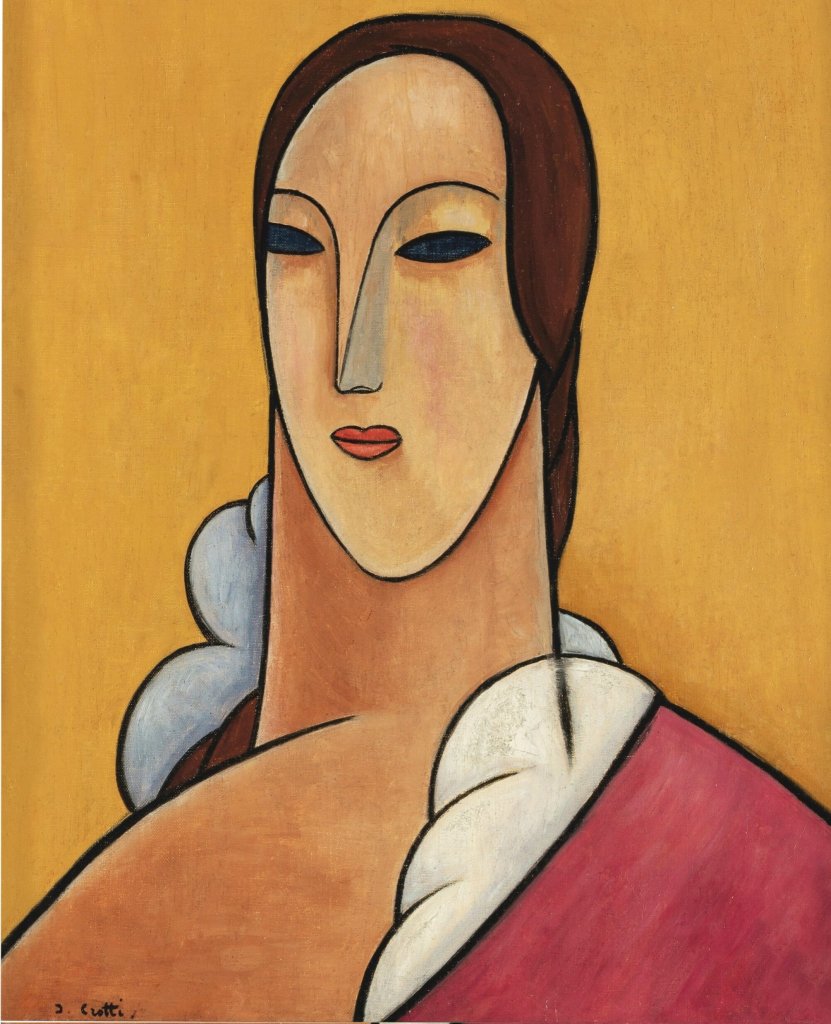
buste de femme

la femme au chat

Today is the birthday of Denys Finch Hatton (Denys George Finch Hatton; Kensington , London 24 April 1887 – 14 May 1931 Voi, Kenya); aristocratic big-game hunter and the lover of Baroness Karen Blixen (also known by her pen name, Isak Dinesen), a Danish noblewoman who wrote about him in her autobiographical book Out of Africa, first published in 1937. One of my favorite books. In the book, his name is hyphenated: “Finch-Hatton”. The book was made into a movie of the same name in 1985, directed by Sydney Pollack and starring Meryl Streep as Blixen and Robert Redford as Finch Hatton. Of course, a favorite movie.
| Willem de Kooning | |
|---|---|
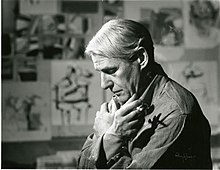 | |
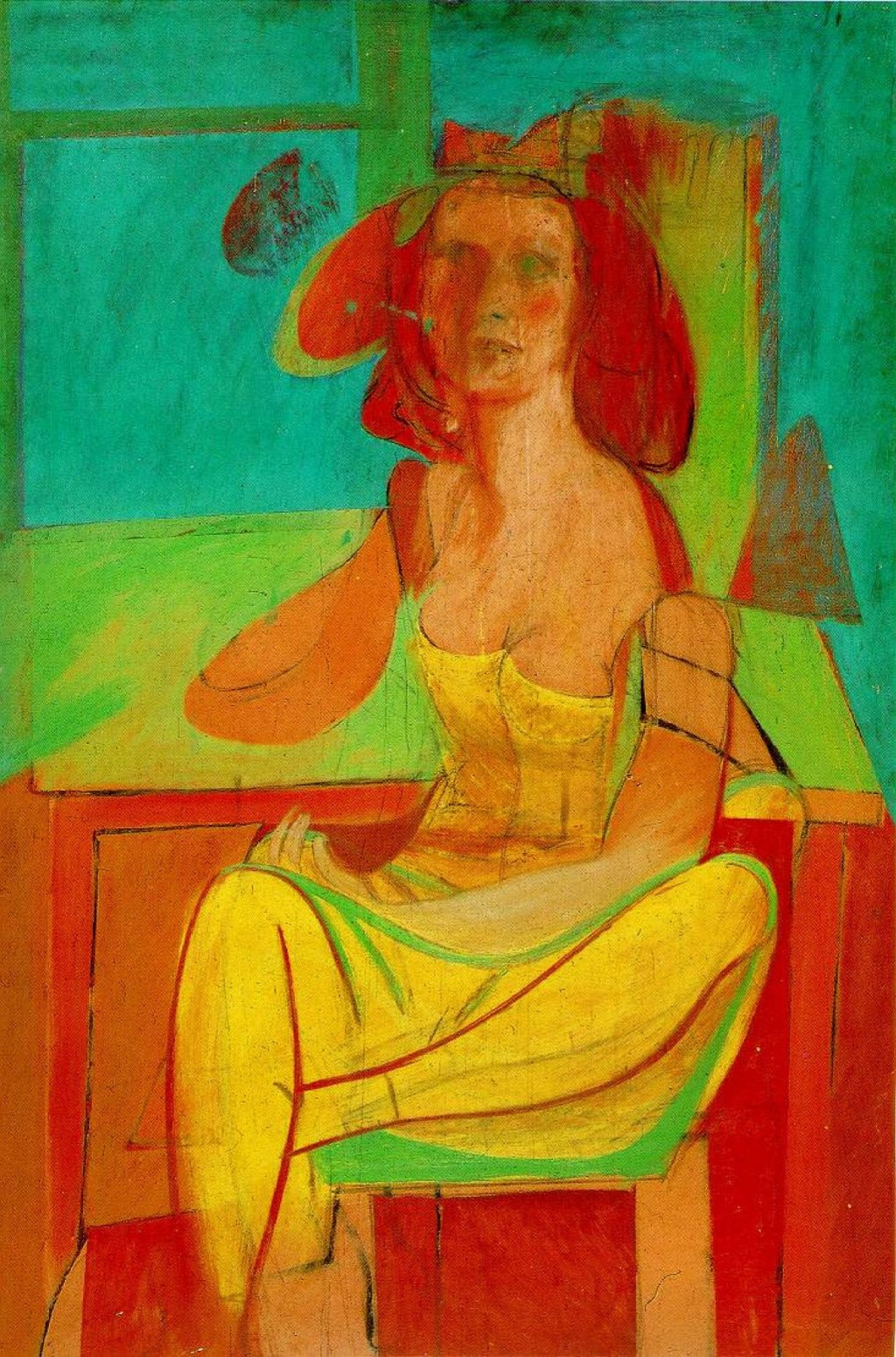
Today is the birthday of Willem de Kooning (Roatterdam April 24, 1904 – March 19, 1997 East Hampton, New York); abstract expressionist artist. He moved to the United States in 1926, and became an American citizen in 1962. On December 9, 1943, he married painter Elaine Fried.
In the years after World War II, de Kooning painted in a style that came to be referred to as Abstract expressionism or “action painting”, and was part of a group of artists that came to be known as the New York School. Other painters in this group included Jackson Pollock, Elaine de Kooning, Lee Krasner, Franz Kline, Arshile Gorky, Mark Rothko, Hans Hofmann, Adolph Gottlieb, Anne Ryan, Robert Motherwell, Philip Guston, Clyfford Still, and Richard Pousette-Dart.

de Kooning (1968)

De Kooning met his wife, Elaine Fried, at the American Artists School in New York. She was 14 years his junior. Thus was to begin a lifelong partnership affected by alcoholism, lack of money, love affairs, quarrels and separations. They were married on December 9, 1943.
Elaine had admired Willem’s artwork before meeting him. In 1938 her teacher introduced her to de Kooning at a Manhattan cafeteria when she was 20 and him 34. After meeting, he began to instruct her in drawing and painting. They painted in Willem’s loft at 143 West 21st Street. When they married in 1943, she moved into his loft and they continued sharing studio spaces.
Elaine and de Kooning had what was later called an open marriage; they both were casual about sex and about each other’s affairs. Elaine and Willem both struggled with alcoholism, which eventually led to their separation in 1957. While separated, Elaine remained in New York, struggling with poverty, and Willem moved to Long Island and dealt with depression. Despite bouts with alcoholism, they both continued painting. Although separated for nearly twenty years, they never divorced, and ultimately reunited in 1976.
It was revealed toward the end of his life that de Kooning had begun to lose his memory in the late 1980s and had been suffering from Alzheimer’s disease for some time. This revelation has initiated considerable debate among scholars and critics about how responsible de Kooning was for the creation of his late work.
Succumbing to the progress of his disease, de Kooning painted his final works in 1991. He died at the age of 92 and was cremated.
Gallery
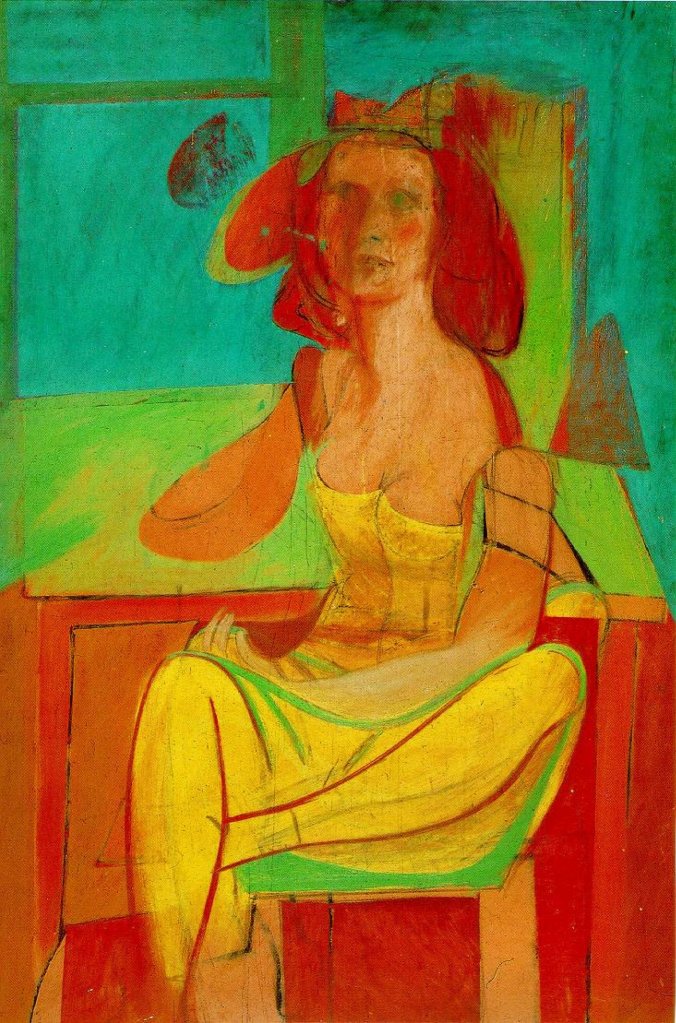
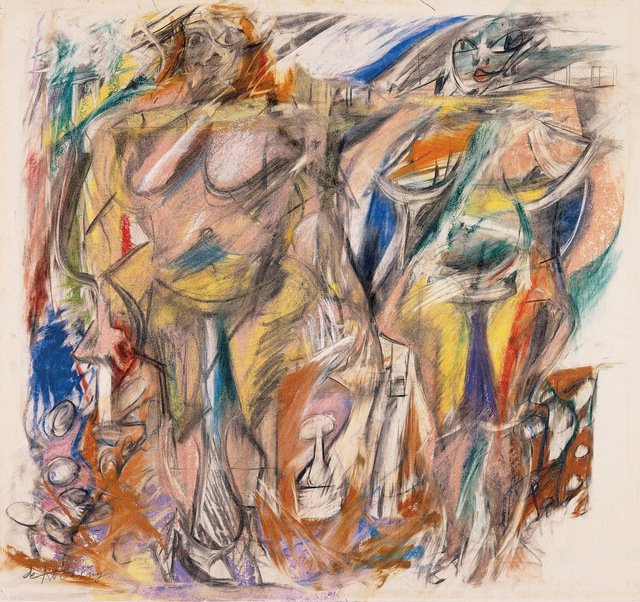

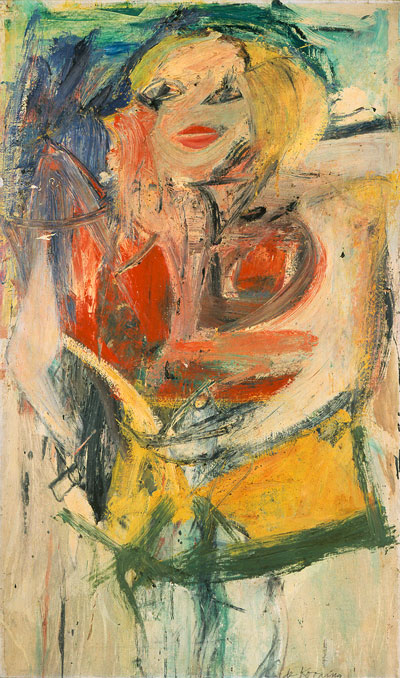
Marilyn Monroe

Woman series

woman ii

woman iii

And today is the birthday of Robert Penn Warren (Guthrie, Kentucky April 24, 1905 – September 15, 1989 Stratton, Vermont); American poet, novelist, and literary critic and was one of the founders of New Criticism. He was also a charter member of the Fellowship of Southern Writers. Warren founded the influential literary journal The Southern Review with Cleanth Brooks in 1935. He received the 1947 Pulitzer Prize for the Novel for his novel All the King’s Men (1946) and the Pulitzer Prize for Poetry in 1958 and 1979. Warren is the only person to have won Pulitzer Prizes for both fiction and poetry.
His first marriage was to Emma Brescia. His second marriage was in 1952 to Eleanor Clark. During his tenure at Louisiana State University he resided at Twin Oaks (otherwise known as the Robert Penn Warren House) in Prairieville, Louisiana. He lived the latter part of his life in Fairfield, Connecticut, and Stratton, Vermont, where he died of complications from prostate cancer. He is buried in Stratton and, at his request, a memorial marker is situated in the Warren family gravesite in Guthrie, Kentucky.
So little time we live in Time,
And we learn all so painfully,
That we may spare this hour’s term
To practice for Eternity.
- “Bearded Oaks”, Eleven Poems on the Same Theme (1942)
For fire flames but in the heart of a colder fire.
All voice is but echo caught from a sound-less voice.
Height is not deprivation of valley, nor defect of desire.
But defines, for the fortunate, that joy in
which all joys should rejoice.
- “To a Little Girl, One Year Old, in a Ruined Fortress” (1956)
I cannot recall what I started to tell you, but at least
I can say how night-long I have lain under the stars and
Heard mountains moan in their sleep. By daylight,
They remember nothing, and go about their lawful occasions
Of not going anywhere except in slow disintegration. At night
They remember, however, that there is something they cannot remember.
So moan. Their’s is the perfected pain of conscience that
Of forgetting the crime, and I hope you have not suffered it. I have.
- “A Way to Love God”, New and Selected Poems 1923–1985 (1985)
Tell me a story.
In this century, and moment, of mania,
Tell me a story.
Make it a story of great distances, and starlight.
The name of the story will be Time,
But you must not pronounce its name.
Tell me a story of deep delight.
- “Tell me A Story”
Then let us turn now — you to me
And I to you — and hand to hand
Clasp, even though our fable be
Of strangers met in a strange land
Who pause, perturbed, then speak and know
That speech, half lost, can yet amaze
Joy at the root; then suddenly grow
Silent, and on each other gaze.
- Love’s Voice
thanks for stoppin’ by y’all
mac tag
 The Lovers’ Chronicle
Leave a comment