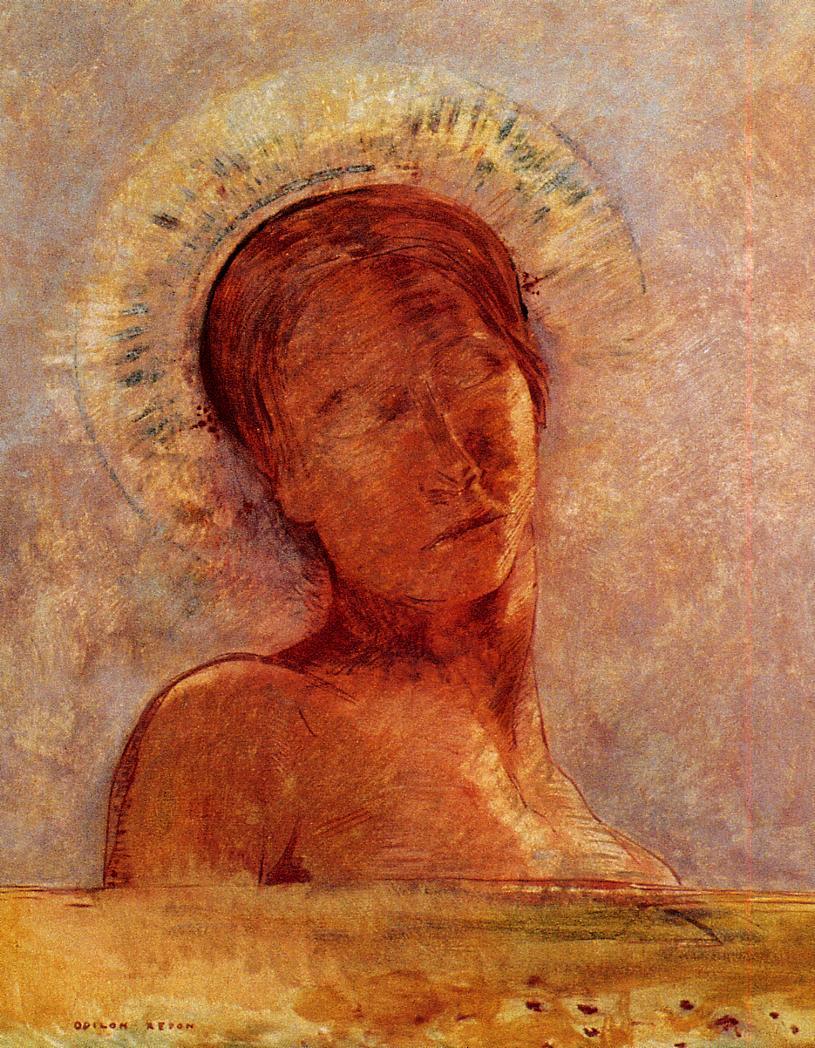
Dear Zazie,
Here is today’s Lovers’ Chronicle from Mac Tag.
Rhett
The Lovers’ Chronicle
Dear Muse,
dream steepin’…
Why is the bed moving my love, asks the ravishing redhead
because it is not a bed, it is a gondola
Oh are we back in Venice
yes we are
And what brings us to dream Venice
today is the day the Scourge of Princes was born,
Pietro Aretino 16th century writer, satirist, poet,
his Sonetti Lussuriosi, Lust Sonnets, feature
some on the earliest European pornography
Ha, fabulous, sounds like a fascinating guy
the targets of his satire were the wealthy,
includin’ popes, thus his nickname
He could have anchored Weekend Update
exactly, he wrote a pamphlet mockin’ the death
of Pope Leo X’s pet elephant Hanno
He really had a pet elephant
i cannot make this shit up,
includin’ this, Aretino reportedly died
of suffocation from "laughing too much”,
and there is a paintin’ of the scene
Ha, wow, here in Venice I presume
right, why we are here
Steeped in one of your interesting stories
now lets have the gondolier take us back
to our hotel so we can steep in each other

© copyright 2024 mac tag/cowboycoleridge all rights reserved
“Like a tea bag”
ha, no, another origin unknown
first used in a 2016 poem
“From the melodramatic years”
yes well, drama did as drama does
“Oh I had that coming”
it is an apt verb for any of this verse
the gamut was run from the depths
of without to the culmination of with
“Steeped in this romance”
together we are
© copyright 2023 mac tag/cowboycoleridge all rights reserved
in ways formed by routine, comin’ now on five years, sanctuary here, free from pretendin’, pursuin’ all that matters, tunin’ these voices from the past, visions help focus, resonate across years an affirmation of purpose, reasons why and who, memories resumed reachin’ out, steeped in us, do you feel
© copyright 2022.2023 mac tag/cowboycoleridge all rights reserved
i write, steeped in thoughts of you,
the woman who holds the reins
of so much discovery and beauty,
which the beloved well need
who has lived and learned
to cry and laugh, to enjoy
with depth and intensity
callin’ now, languid desire,
listen to her and this
you must have
© copyright 2021 mac tag/cowboy coleridge all rights reserved
Pale Love, Pale Rider
the things i write
and say here,
about feelin’ again,
and the wonder of this
i know y’all have heard
it all before
but i do so
not because i think
i am supposed to,
not out of expectation
and damn sure not
because i want somethin’
i do so because
it is how i feel
this is my purpose
i know not else how to be
© copyright 2020 mac tag/cowboy coleridge all rights reserved
for the one
who prefers,
often somehow
to damn near always
imagine, no longer
torn between with
and without, no more
may as well, may as not
discoverin’
that the hardness was necessary
to allow, to know and want again
that this does not begin to tell the story
© copyright 2019 mac tag/cowboy coleridge all rights reserved
writin’ what might sound
like boastin’ of lack thereof,
which the unforgiven
well sighed,
who laid aside joy
with haughtiness,
and learned to weep
with that weepin’ sans tears
who leaned into his hardness
and called in a languid sound,
who does not listen to her
and takes her pain
© copyright 2018.2023 mac tag/cowboycoleridge all rights reserved
for Karen
“What are your favorite love songs”
“Love Hurts”, “Love Bites”,
“Accidentally like a Martyr”…
oops, my bias is showin’
“Show away my friend, show away”
© copyright 2017 mac tag/cowboycoleridge all rights reserved
been ridin’ since first light
my restin’ place for the night
a ruin… cabin and corral
after hours of pushin’
on through silence,
still to have silence,
still to eat, to sleep in it,
perfectly fits the mood
the great levels around me
lay chilly and the air
smells of wet weather
far in front the mesas rise
through the rain, indefinite
i want this isolation
not to be near anyone
steeped in reverie
***
When you dig, dig shallow
I want to feel the rain
© copyright 2016 mac tag all rights reserved
Come, to the great circle of shadow
To the night, to the darkenin’ hills
Where the sage no longer blooms
And desire no longer comes
The heavy-born heart
The snow in shadow
Unmoved by sweet touch
Alterred not from darkness
Immune from fervent heat
***
She appears
Draws the mind from any other
Blends her charm with grace
Amore lingers in her shadow
This dreamscape, all about her
Take my hand and
do not let go
Tell me you can
see; that you know
And i will try
to believe you
© copyright 2015 mac tag/cowboycoleridge all rights reserved

Today is the birthday of Pietro Aretino (Arezzo, Republic of Florence 20 April 1492 – 21 October 1556 Venice); author, playwright, poet, satirist and blackmailer who wielded immense influence on contemporary art and politics and may have invented modern literate pornography.
When Hanno the elephant, pet of Pope Leo X, died in 1516, Aretino penned a satirical pamphlet entitled “The Last Will and Testament of the Elephant Hanno”. The fictitious will cleverly mocked the leading political and religious figures of Rome at the time, including Pope Leo X himself. The pamphlet was such a success that it started Aretino’s career and established him as a famous satirist, ultimately known as “the Scourge of Princes” (Il Flagello dei Principi).
Aretino prospered, living from hand to mouth as a hanger-on in the literate circle of his patron, sharpening his satirical talents on the gossip of politics and the Papal Curia, and turning the coarse Roman pasquinade into a rapier weapon of satire, until his sixteen ribald Sonetti Lussuriosi (Lust Sonnets) written to accompany Giulio Romano’s exquisitely beautiful pornographic series of drawings engraved by Marcantonio Raimondi under the title I Modi finally caused such outrage that he had to temporarily flee Rome.

This engraving is thought to be by Agostino Veneziano. It is thought to come from a replacement set of engravings created for the images that were in I modi. Paper. British Museum, London. Around 1530
Aretino was a lover of men, having declared himself “a sodomite” since birth. In a letter to Giovanni de’ Medici written in 1524 Aretino enclosed a satirical poem saying that due to a sudden aberration he had “fallen in love with a female cook and temporarily switched from boys to girls…” (My Dear Boy). In his comedy Il marescalco, the lead man is overjoyed to discover that the woman he has been forced to marry is really a page boy in disguise. While at court in Mantua he developed a crush on a young man called Bianchino, and annoyed Duke Federico with a request to plead with the boy on the writer’s behalf.
Aretino settled permanently in 1527, in Venice, the anti-Papal city of Italy, “seat of all vices”, Aretino noted with gusto. He became a blackmailer, extorting money from men who had sought his guidance in vice. He “kept all that was famous in Italy in a kind of state of siege”, in Jakob Burckhardt’s estimation. Francis I of France and Charles V pensioned him at the same time, each hoping for some damage to the reputation of the other. “The rest of his relations with the great is mere beggary and vulgar extortion”, according to Burckhardt. Addison states that “he laid half Europe under contribution”.
Aretino is said to have died of suffocation from “laughing too much”. The more mundane truth may be that he died from a stroke or heart attack.

The Death of Pietro Aretino by Anselm Feuerbach
Quotes
Fottiamci, anima mia, fottiamci presto
perché tutti per fotter nati siamo;
e se tu il cazzo adori, io la potta amo,
e saria il mondo un cazzo senza questo.
E se post mortem fotter fosse onesto,
direi: Tanto fottiam, che ci moiamo;
e di là fotterem Eva e Adamo,
che trovarno il morir sì disonesto.
– Veramente egli è ver, che se i furfanti
non mangiavan quel frutto traditore,
io so che si sfoiavano gli amanti.
Ma lasciam’ir le ciance, e sino al core
ficcami il cazzo, e fà che mi si schianti
l’anima, ch’in sul cazzo or nasce or muore;
e se possibil fore,
non mi tener della potta anche i coglioni,
d’ogni piacer fortuni testimoni
Sonetti Lussuriosi I
Literal translation of Lust Sonnet I
Let's fuck, my soul, let's fuck quickly
because we are all born to fuck;
and if you love cock, I love pussy,
and the world would be shit without this.

And if post-mortem fucker was honest,
I would say: Let's fuck so much, we'll die;
and from there we will fuck Eve and Adam,
who find dying so dishonest.

- Truly it is true, that if the scoundrels
they did not eat that treacherous fruit,
I know that lovers let off steam.

But leave me the chatter, and to the core
stick your dick in me, and make it crash into me
the soul, which on the dick is now born or dies;

and if possible,
don't hold my balls too,
lucky witnesses of every pleasure

***
Io vorrei dir la donna ch’ebbe il vanto
di leggiadra et angelica bellezza,
la qual l’amato ben sospirò tanto
che depose la gioia e l’alterezza,
et imparato a pianger con quel pianto
che ad altri insegnò già la sua durezza:
Medor pur chiama in suon languido e fioco,
che non l’ascolta e ‘l suo mal prende a gioco.
I would like to say the woman who had the boast
of graceful and angelic beauty,
for which the beloved greatly sighed
who put aside joy and haughtiness,
and learned to cry with that cry
who already taught others his harshness:
Medor still calls in a languid and feeble sound,
who doesn't listen to her and makes fun of her pain.
***
Ti amo e, perché ti amo,
preferirei che tu mi odiassi
per averti detto la verità piuttosto
che adorarmi per averti bugie.

(I love you and, because I love you,
I'd rather you hate me
for telling you the truth
than worship me for lying to you.
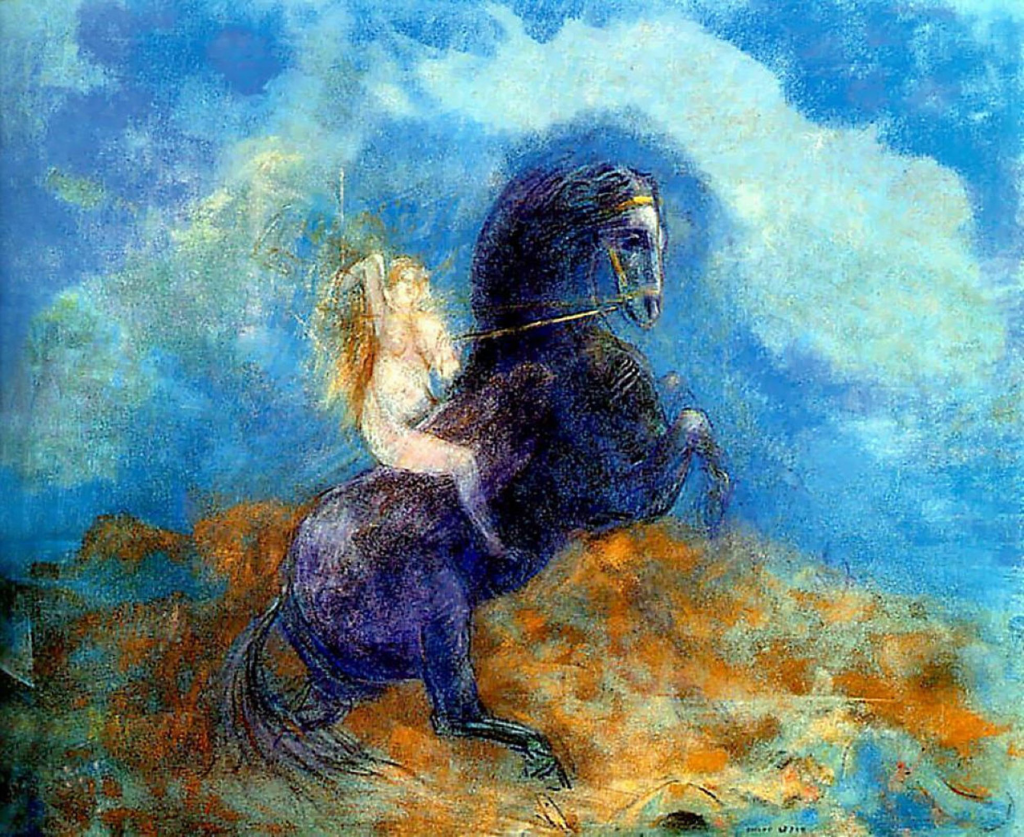
Today is the birthday of Odilon Redon (born Bertrand-Jean Redon; Bordeaux; April 20, 1840 – July 6, 1916 Paris); symbolist painter, printmaker, draughtsman and pastellist.
 |
Early in his career, both before and after fighting in the Franco-Prussian War, he worked almost exclusively in charcoal and lithography, works referred to as noirs. He started gaining recognition after his drawings were mentioned in the 1884 novel À rebours (Against Nature) by Joris-Karl Huysmans. During the 1890s he began working in pastel and oils, which quickly became his favourite medium, abandoning his previous style of noirs completely after 1900. He also developed a keen interest in Hindu and Buddhist religion and culture, which increasingly showed in his work.
He is perhaps best known today for the “dreamlike” paintings created in the first decade of the 20th century, which were heavily inspired by Japanese art and which, while continuing to take inspiration from nature, heavily flirted with abstraction. His work is considered a precursor to both Dadaism and Surrealism.
At 40, Redon married Camille Falte, a young Creole from Île Bourbon. They had a son, Arï Redon (30 April 1889 – 13 May 1972 in Paris). A visual artist himself, and subject of his father’s portraiture as a child, Arï’s partner was Suzanne Redon.
Gallery

Hommage a Goya
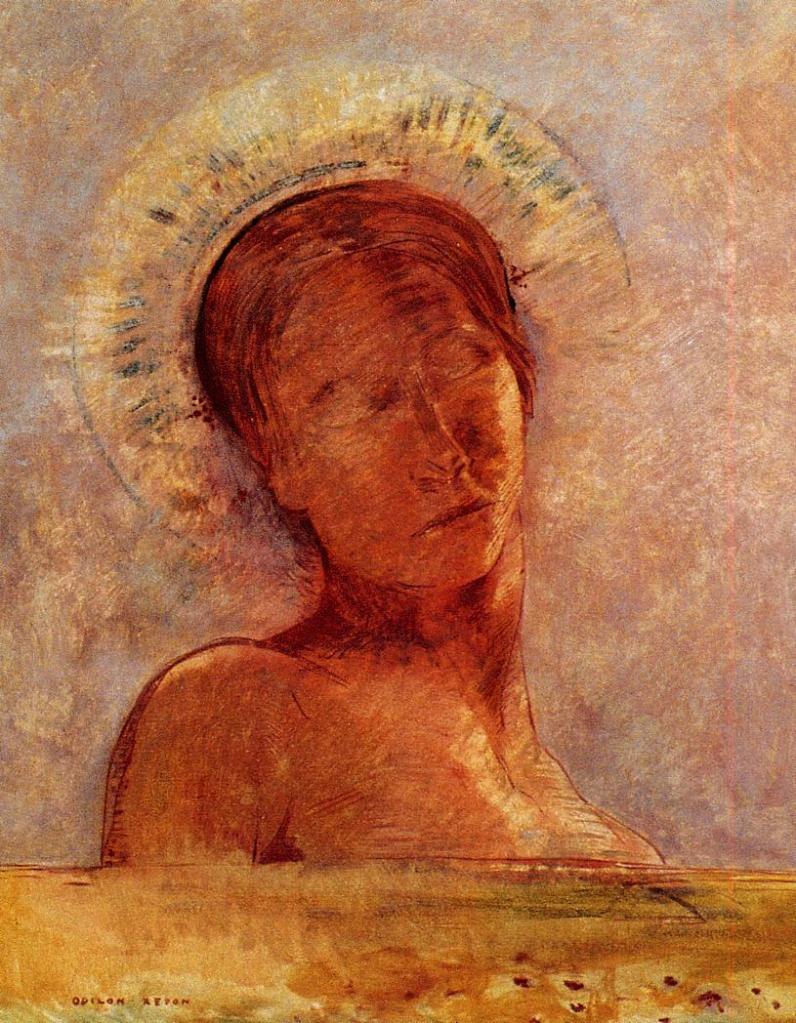
Closed eyes, 1899, oil on cardboard. Van Gogh Museum

La Naissance de Vénus (1912), New York, Museum of Modern Art
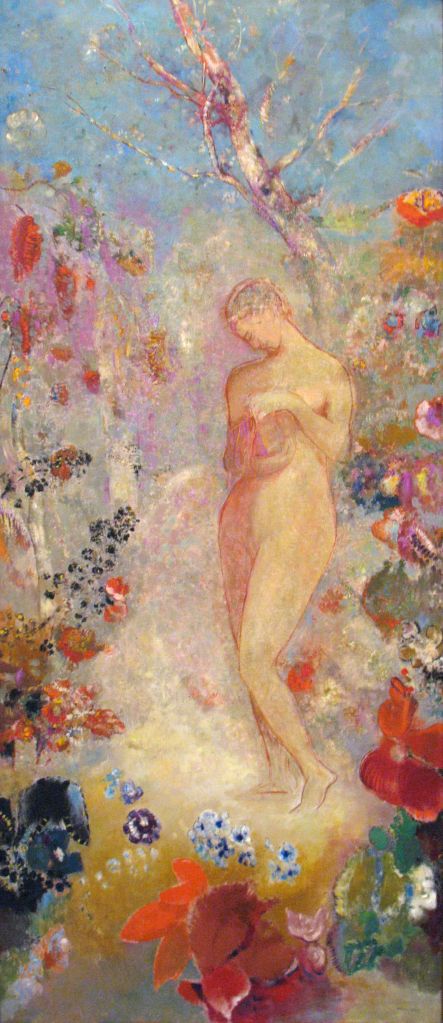
pandora 1914

The Cyclops, 1914 (Kröller-Müller Museum)

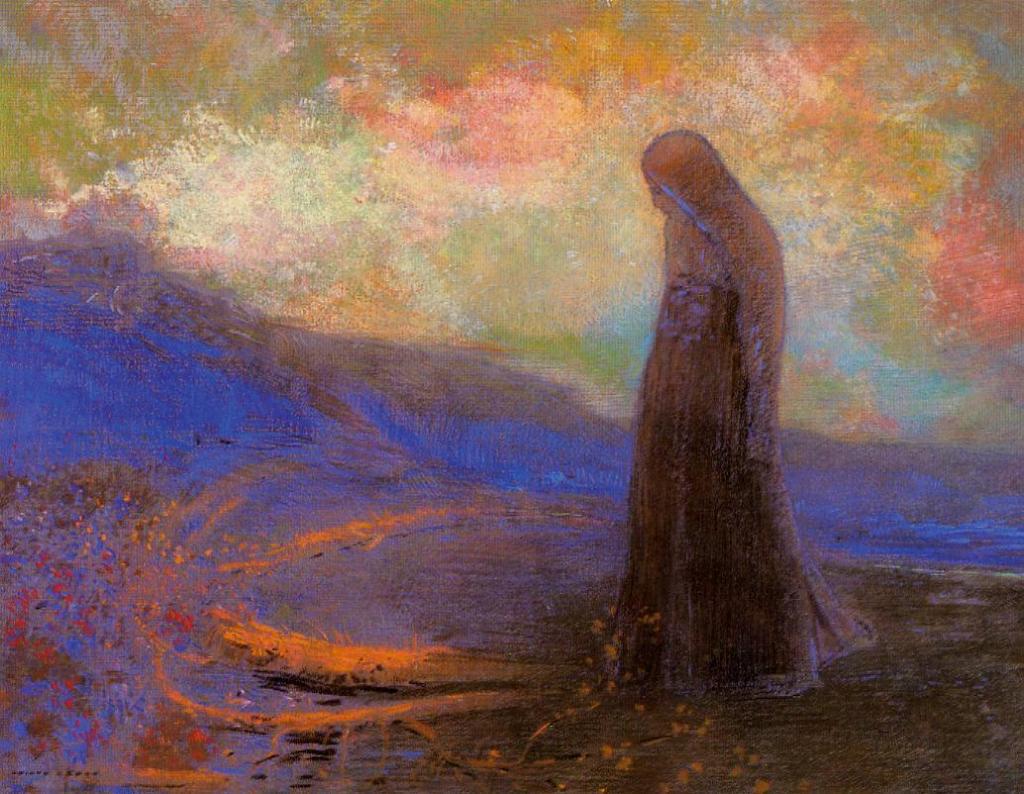
Reflection, 1900–1905
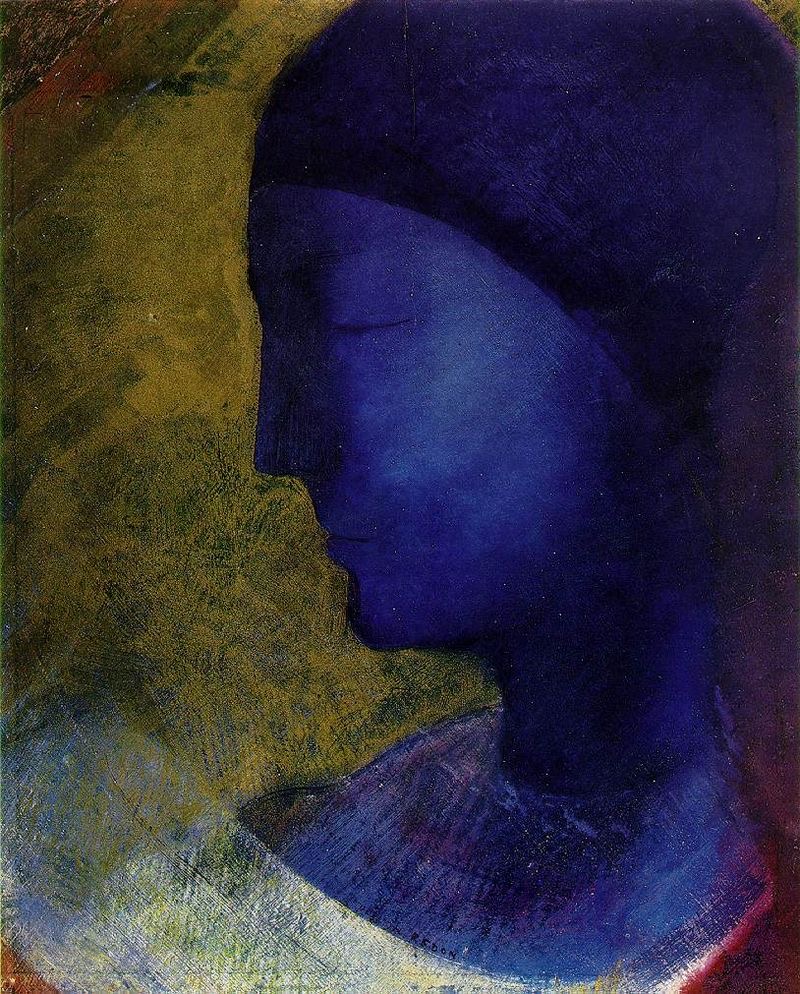
La Cellule d’or (1892)
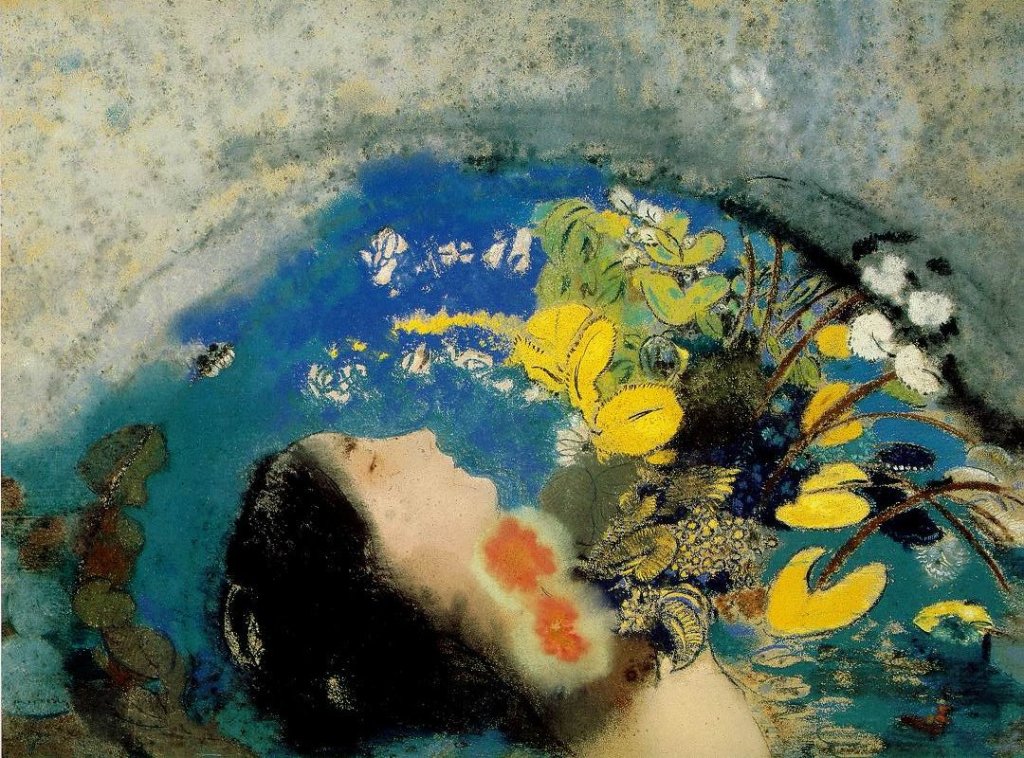
Ophelia, 1900–1905 (Dian Woodner Collection)
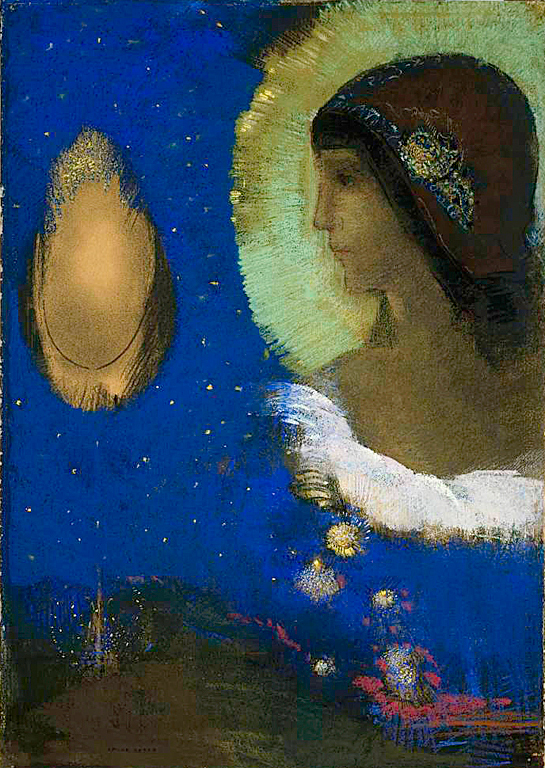

Flower Clouds, 1903 (Art Institute of Chicago)

Coucher de soleil
oil on panel
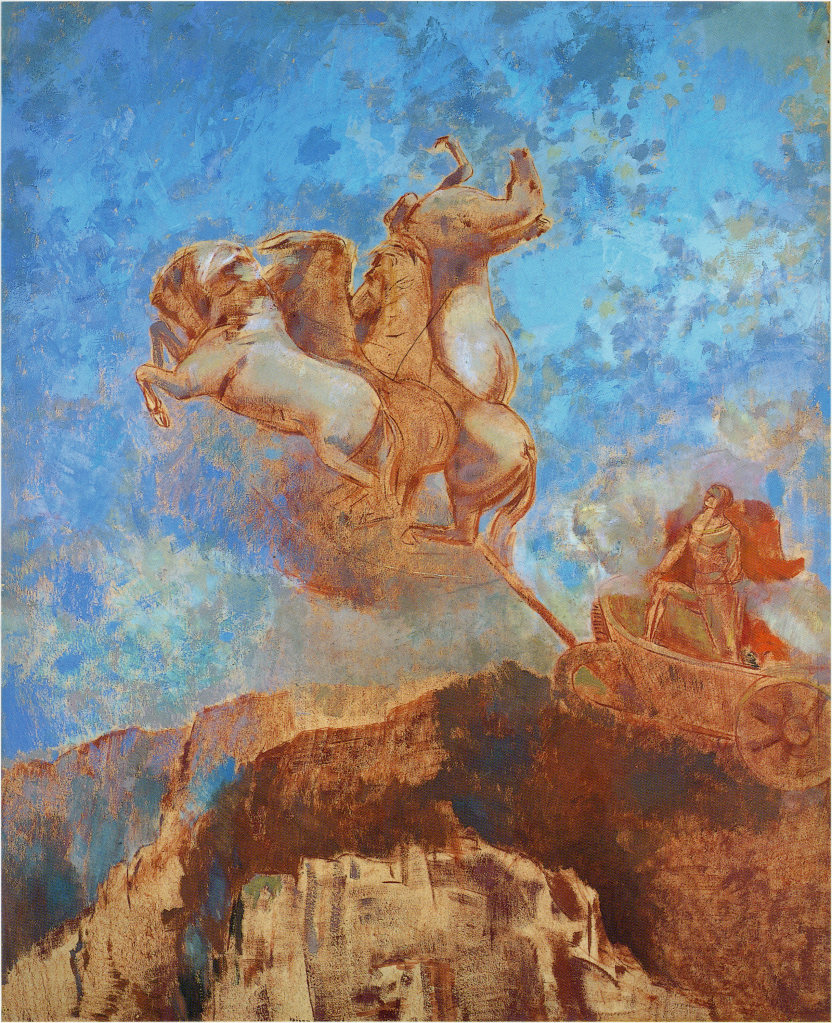
And today is the birthday of Joan Miró (Joan Miró i Ferrà; Barcelona; 20 April 1893 – 25 December 1983 Palma de Mallorca); painter, sculptor, and ceramicist. A museum dedicated to his work, the Fundació Joan Miró, was established in his native city in 1975, and another, the Fundació Pilar i Joan Miró, was established in his adoptive city of Palma de Mallorca in 1981.

Earning international acclaim, his work has been interpreted as Surrealism, a sandbox for the subconscious mind, a re-creation of the childlike, and a manifestation of Catalan pride. In numerous interviews dating from the 1930s onwards, Miró expressed contempt for conventional painting methods as a way of supporting bourgeois society, and declared an “assassination of painting” in favour of upsetting the visual elements of established painting.
Miró married Pilar Juncosa in Palma on 12 October 1929.
Gallery

desnudo de pie
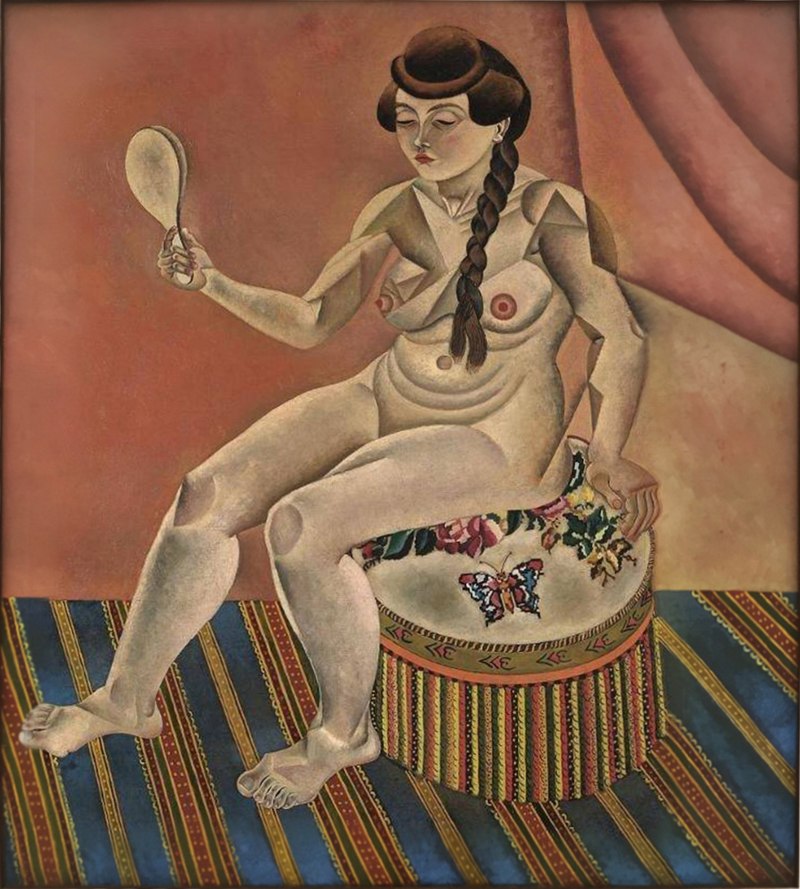
1919, Nu au miroir (Nude with a Mirror, Naakt met mirror), oil on canvas, 113 x 102 cm, Kunstsammlung Nordrhein-Westfalen
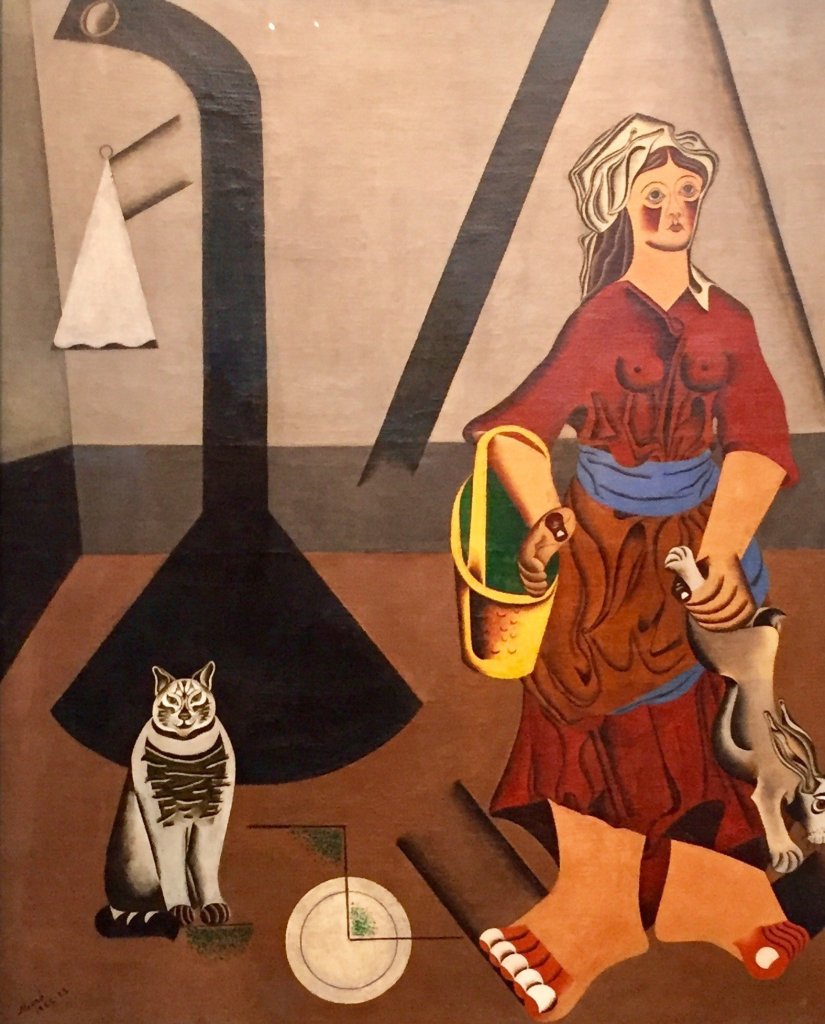
“La Fermière”

Retrato de una bailarina española (1921)
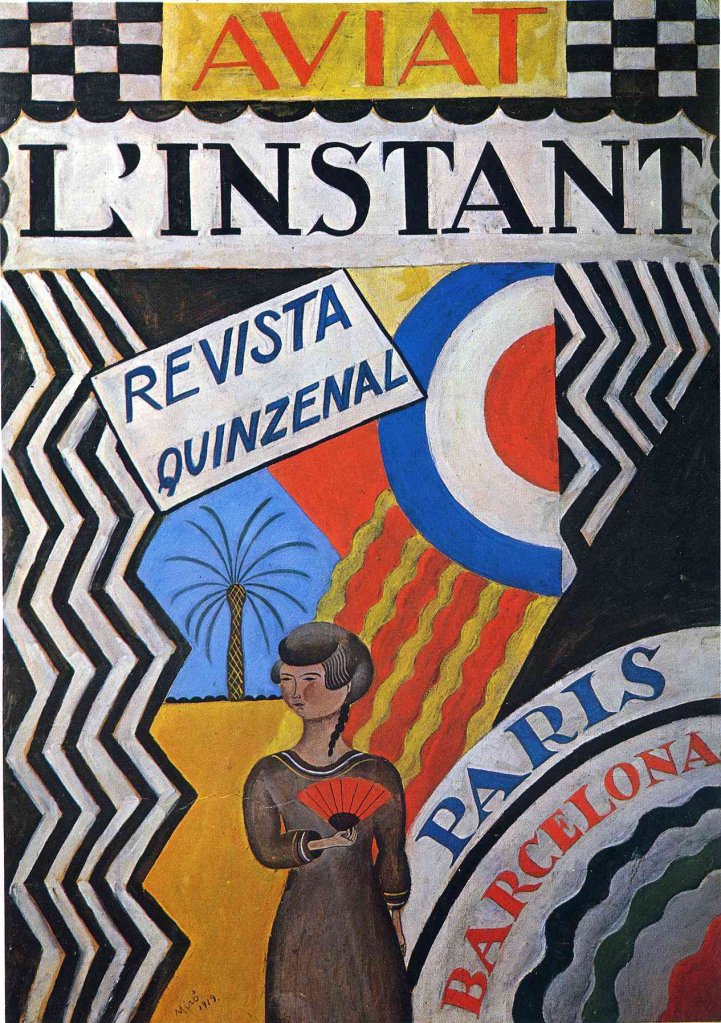
L’instant, 1919
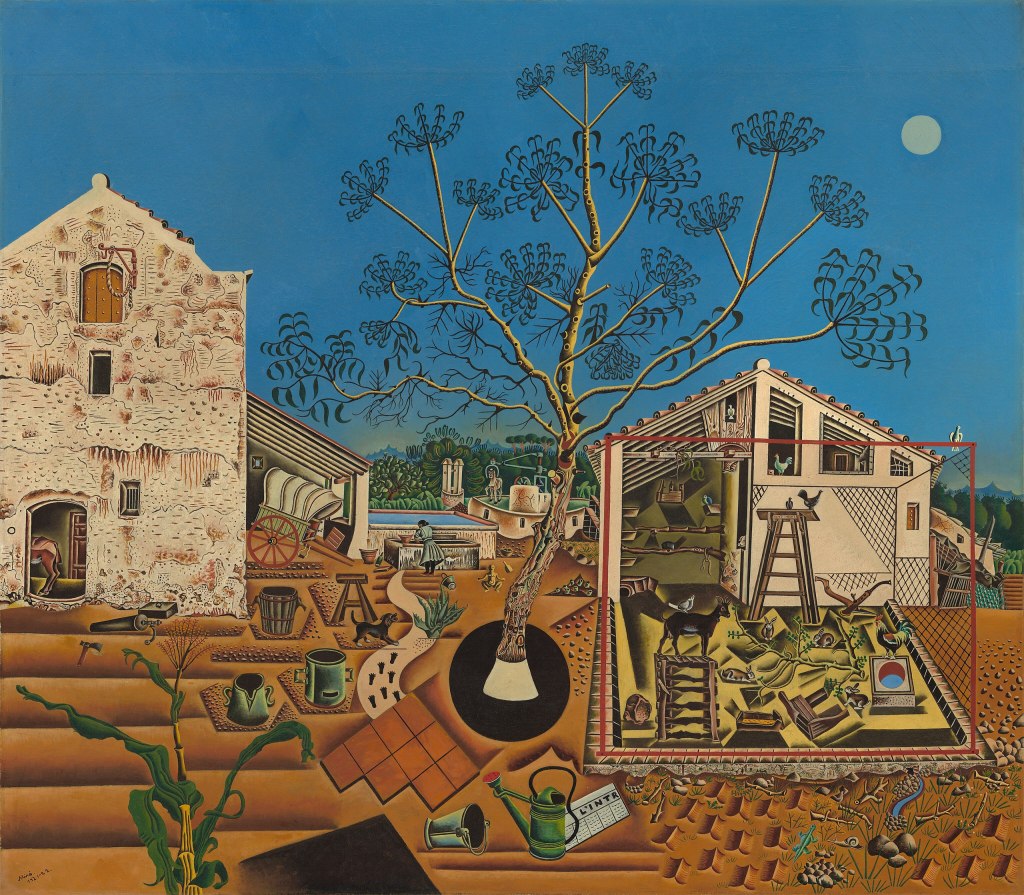
The Farm, 1921–1922, National Gallery of Art, Washington, D.C.

1918, La casa de la palmera (House with Palm Tree), oil on canvas, 65 x 73 cm, Museo Nacional Centro de Arte Reina Sofía

thanks for stoppin’ by y’all
mac tag
 The Lovers’ Chronicle
Leave a comment