Dear Zazie, Here is today’s Lovers’ Chronicle from Mac Tag dedicated to his muse. Follow us on twitter @cowboycoleridge. Rhett
The Lovers’ Chronicle
Dear Muse,
there is a dream in everything…
-Music infuses his sleep state, rousing him…
From Leonard Cohen’s ´Anthem’,
´Ring the bells that still can ring
Forget your perfect offering’
oh nice, one of my favorite songs by one of my favorites, wonder where this one is goin’, and why is it so dark
are you here beautiful
Yes my love, says the ravishing redhead
i cannot see you, reachin’ out he feels her hand
ok, hold on to my hand not sure where this is goin’
-Presently they hear hoof beats approaching;
that is a horse runnin’, look, do you see that glow
Yes, very creepy
-Then coming into view, a rider on a pale horse;
i recognize this, that is Albert Pinkham Ryder’s Death on a Pale Horse
-They watch as horse and rider pass by;
That was weird, she says, further proof we are dreaming and now it’s dark again
wait, do you hear that music
Yes and look up there, a crack with light coming through
now it makes sense
´There is a crack, a crack in everything
That's how the light gets in’
in this case we should go into the light
Let's go

© copyright 2024 mac tag/cowboycoleridge all rights reserved
from Leonard’s song “Anthem”
“Oh of course”
of the creatives,
he was one of the luckiest
to be a poet and hear the melody
“So songwriting is the pinnacle “
i think so, songs span time
existin’ before anyone
could write or draw
“Speaking of luckiest”
you and i and our cracks
that kept the light comin’ in
till we found each other
© copyright 2023 mac tag/cowboycoleridge all rights reserved
and She, pretty sure it was a She, said, let there be light, it is good especially first light and last, the way it looks reflectin’ off your red hair and the way it came in through the cracks, showin’ i was still here
© copyright 2022 mac tag/cowboycoleridge all rights reserved
absolutely, not even close,
cannot feel any other way
without you
to be able again
so many words to say
the end of late winter day
now open, writ as should be
with clarity, probin’, touchin’
and oh, but to believe
we dance, we sing a song
that takes us away
© copyright 2021 mac tag/cowboy coleridge all rights reserved
Pale Love, Pale Rider
when i consider those lingerin’ moments,
that time finally presents, as meant to be
whereon the verse in open flows easily;
when i perceive that now, more as one
i would not change the course taken,
from days of anguish to sullied nights;
all in all it brought us where we belong
© 2020 mac tag/cowboy coleridge all rights reserved
no gloom, nor tears…
dressed in black
and withdrawn,
yours still
winds and a hush
bring what is left
of heart’s content
scarcely a song
hardly a word
the end
of a winter’s day
book lies open,
writ in dreams
lettin’ in the light
she danced, she sung
and took away
© copyright 2019 mac tag/cowboy coleridge all rights reserved
withdrawn
into solitude,
yours still,
rememberin’
the best
of our past
and so
to where i wait,
come gently on
the cracks
are necessary,
do you believe,
to let the light in
bring again
is it possible
need, want
dare say more
oh, not sure
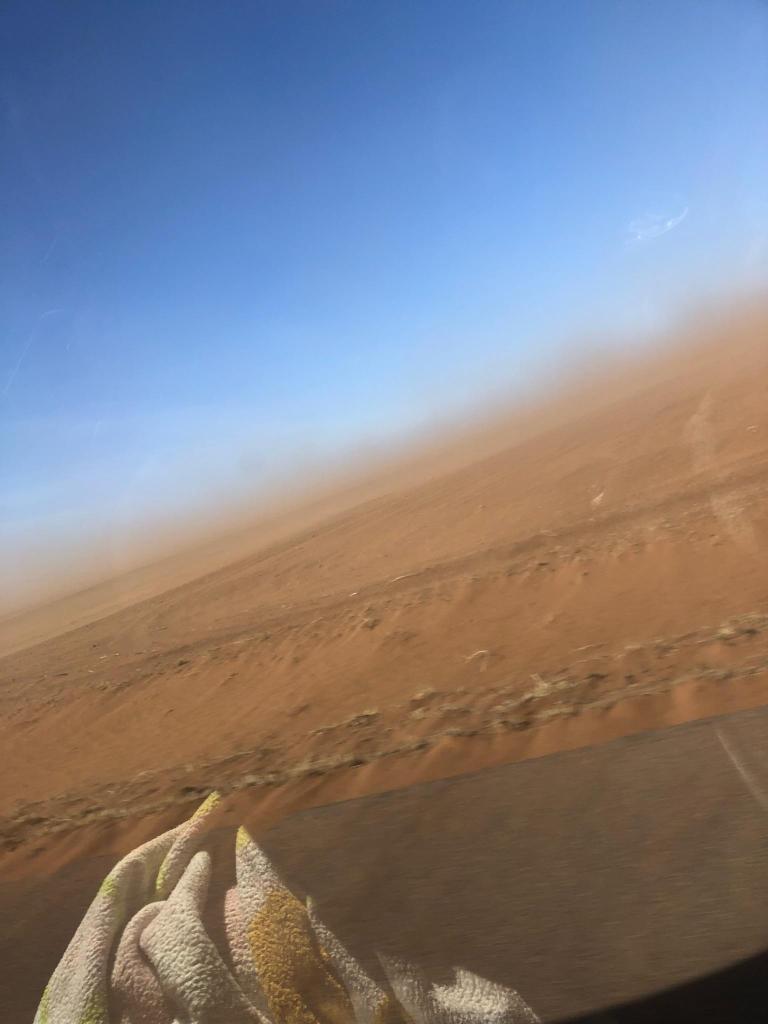
red dirt storm Texas panhandle
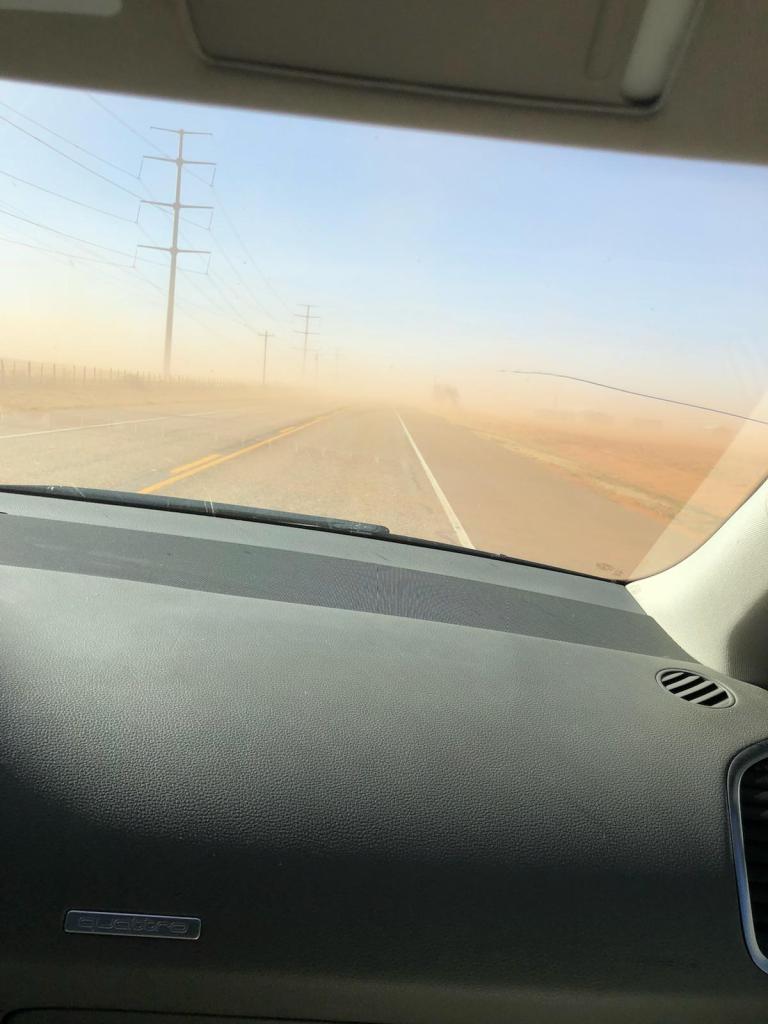
red dirt storm Texas panhandle
© copyright 2018 mac tag/cowboy coleridge all rights reserved
at last, a crack
lettin’ the light in
i want to look
but i cannot
so conditioned
to darkness
can you tell me,
will it be alright
© copyright 2017 mac tag/cowboy Coleridge all rights reserved
Think you know where this one comes from.
Ridin’ Away
Ridin’ away
Lettin’ go of what
Could not be let go
The rope you tied off
Does you no good now
Ridin’, fadin’ away
Becomin’ invisible
Though she tried
So hard to tell you that day
Standin’ in the Carolina sun
© copyright 2016 mac tag/cowboycoleridge all rights reserved
| William Allingham | |
|---|---|
 | |
Today is the birthday of William Allingham (Ballyshannon, County Donegal, Ireland 19 March 1824 – 18 November 1889 Hampstead, London); poet, diarist and editor. He wrote several volumes of lyric verse, and his poem ‘The Faeries’ was much anthologized. Perhaps best known for his posthumously published Diary, in which he records his lively encounters with Tennyson, Carlyle and other writers and artists. His wife, Helen Allingham, was a well-known water-colorist and illustrator.
Verse
No funeral gloom, my dears, when I am gone,
corpse-gazing, tears, black raiment, graveyard grimness.
Think of me as withdrawn into the dimness,
yours still, you mine.
Remember all the best of our past moments,
and forget the rest;
and so to where I wait, come gently on.
- Poem: No funeral gloom – part of funeral of actress Ellen Terry 1928.
Winds and waters keep
A hush more dead than any sleep.
- Ruined Chapel
- Oh, bring again my heart’s content,
Thou Spirit of the Summer-time!- Song
- Scarcely a tear to shed;
Hardly a word to say;
The end of a Summer’s day;
Sweet Love is dead.- An Evening
- Tantarrara! the joyous Book of Spring
Lies open, writ in blossoms.- Daffodil;).
- Mary kept the belt of love, and oh, but she was gay!
She danced a jig, she sung a song that took my heart away.- Lovely Mary Donnelly
| Albert Pinkham Ryder | |
|---|---|
 |
Today is the birthday of Albert Pinkham Ryder (New Bedford, Massachusetts; March 19, 1847 – March 28, 1917 New York City); painter perhaps best known for his poetic and moody allegorical works and seascapes, as well as his eccentric personality. While his art shared an emphasis on subtle variations of color with tonalist works of the time, it was unique for accentuating form in a way that some art historians regard as modernist.
Gallery
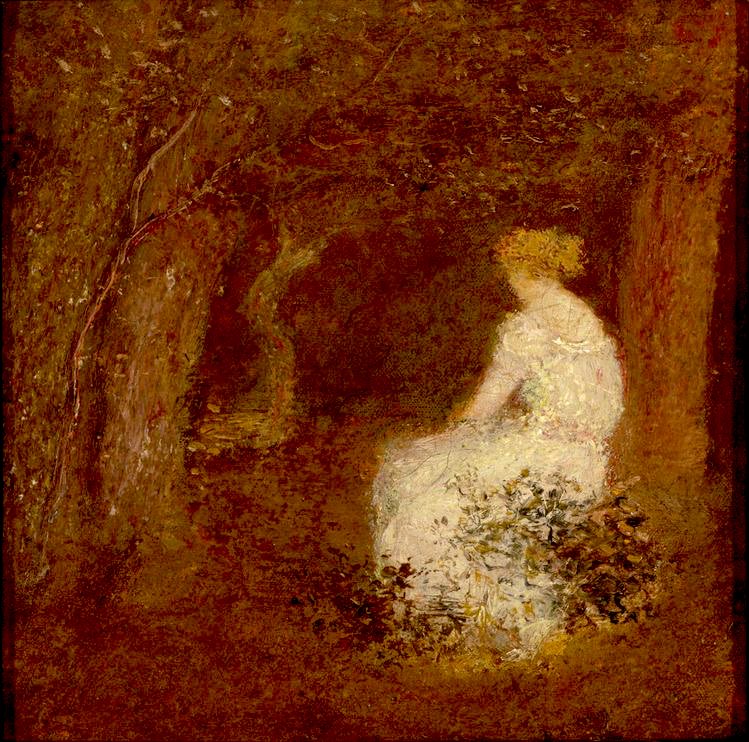
in the wood
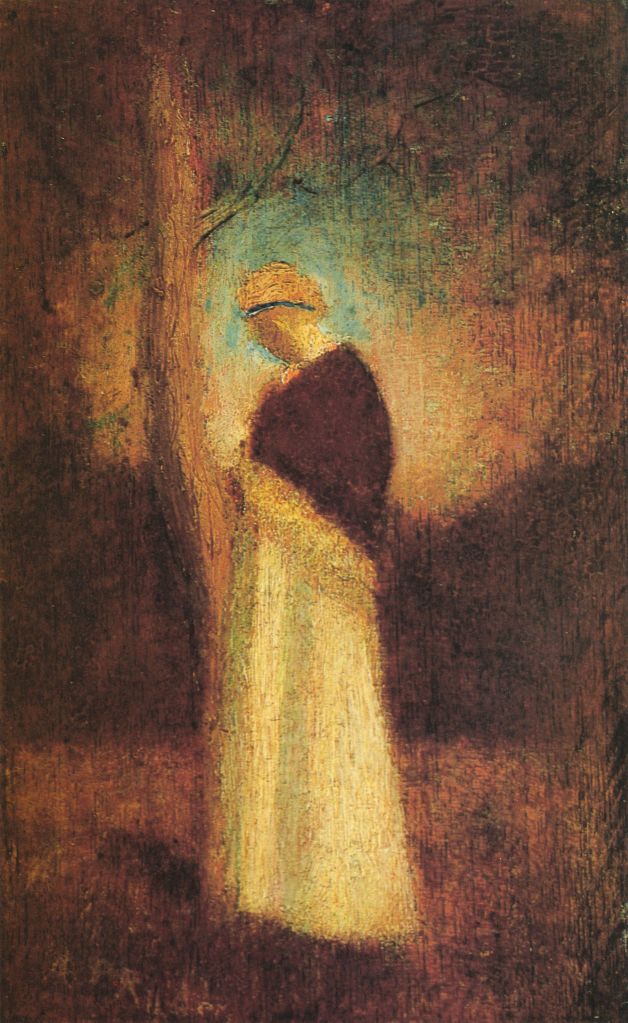
The Spirit of Autumn (c. 1875), the earliest documented work by Ryder. Columbus Museum of Art, Columbus, Ohio
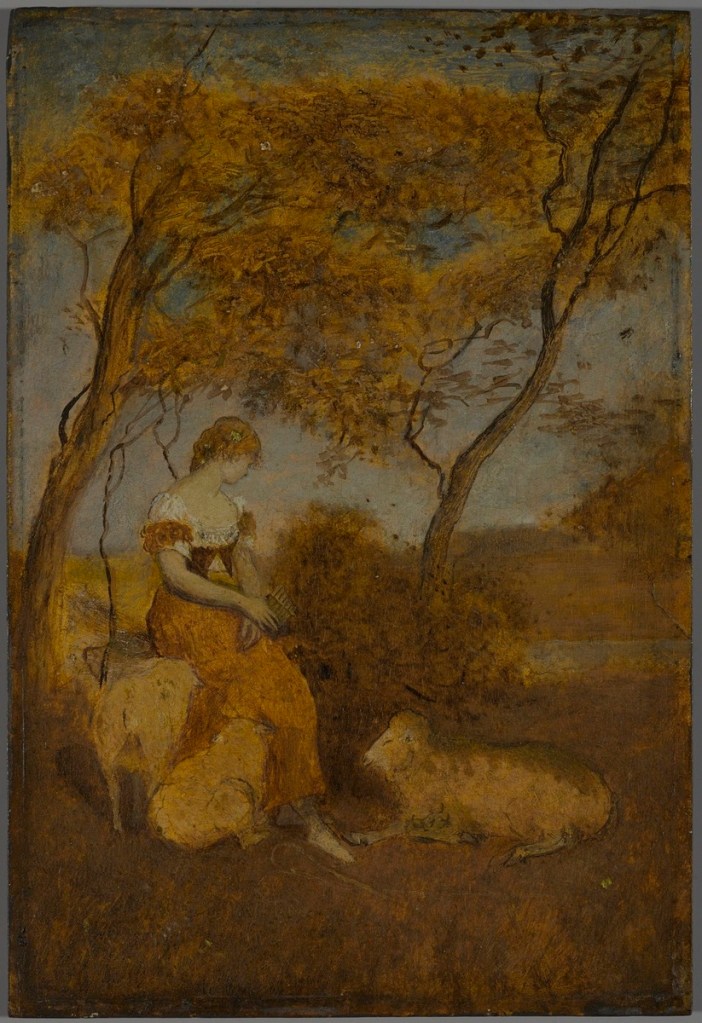
the shepherdess
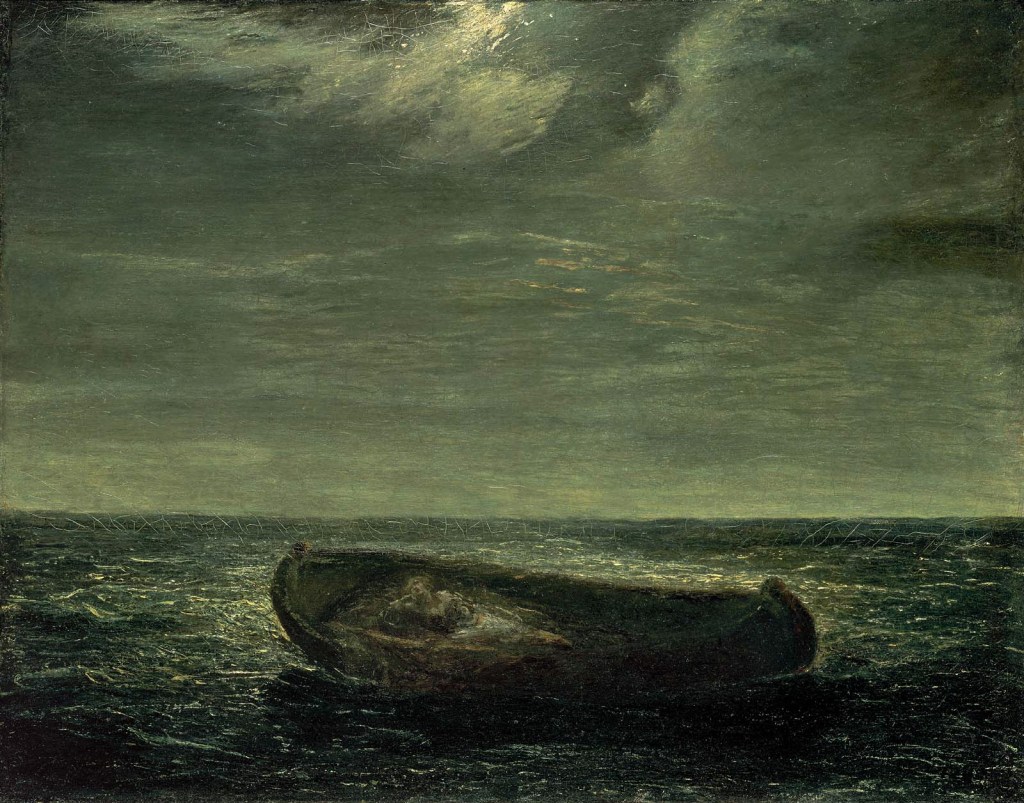
Constance (mid 1880s to mid 1890s) oil on canvas. 28.25 x 36 in. Museum of Fine Arts, Boston
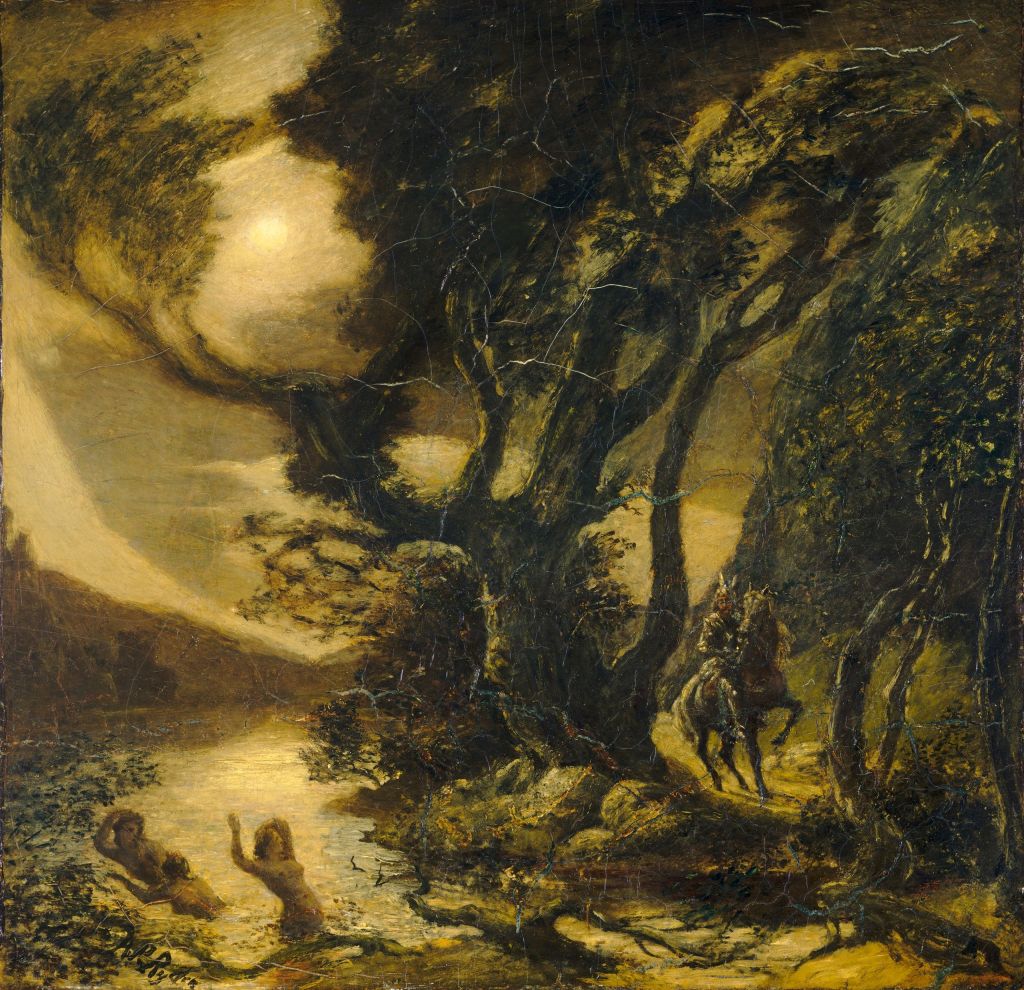
Siegfried and the Rhine Maidens (1888–1891), oil on canvas, 20 x 20.50 in. National Gallery of Art, Washington, DC

The Lover’s Boat c. 1881, Oil on canvas, Smithsonian American Art Museum, Washington, D.C.
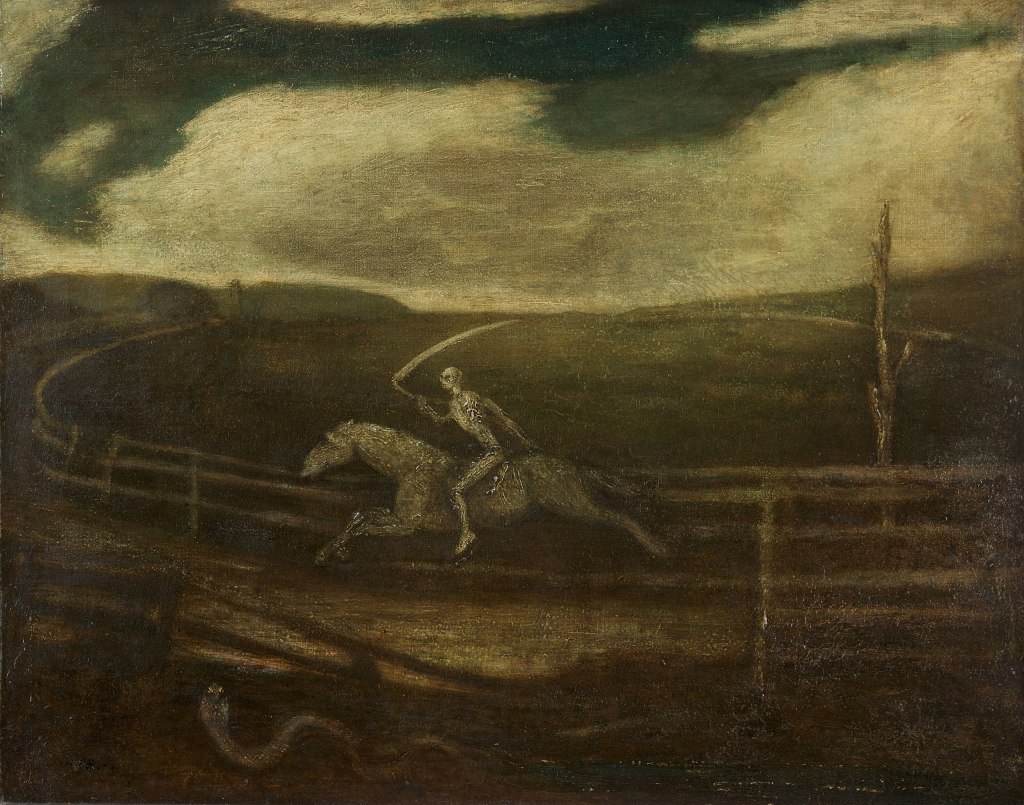
The Race Track (Death on a Pale Horse) (1895–1910), oil on canvas, 28.25 x 35.25. Cleveland Museum of Art
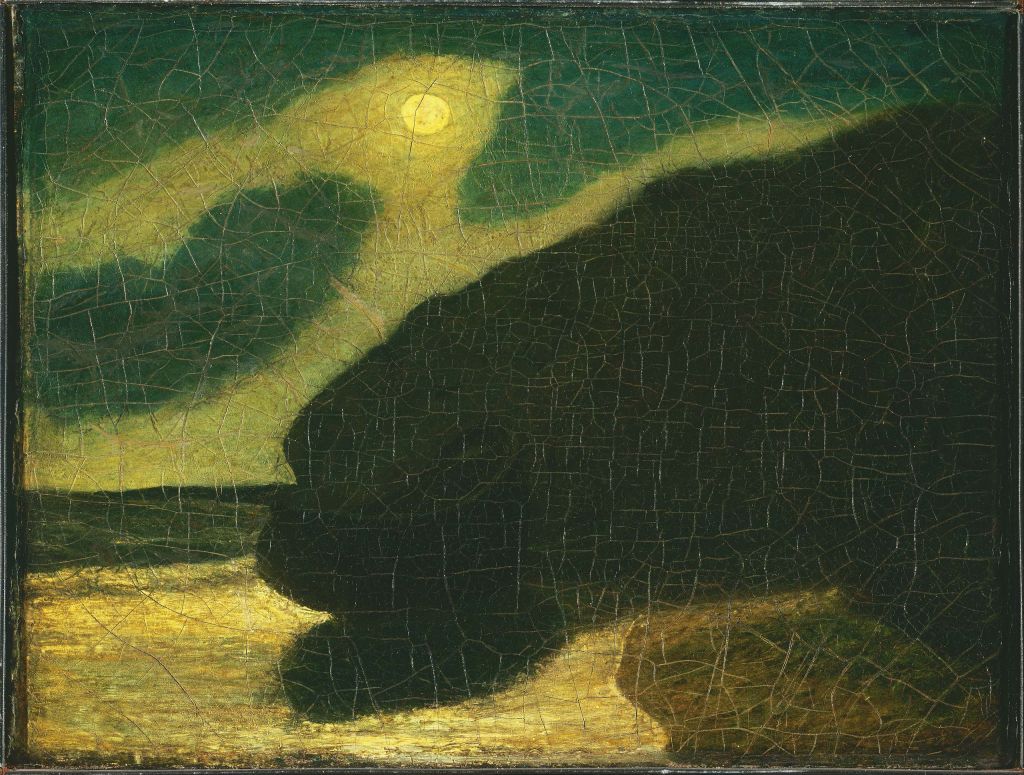
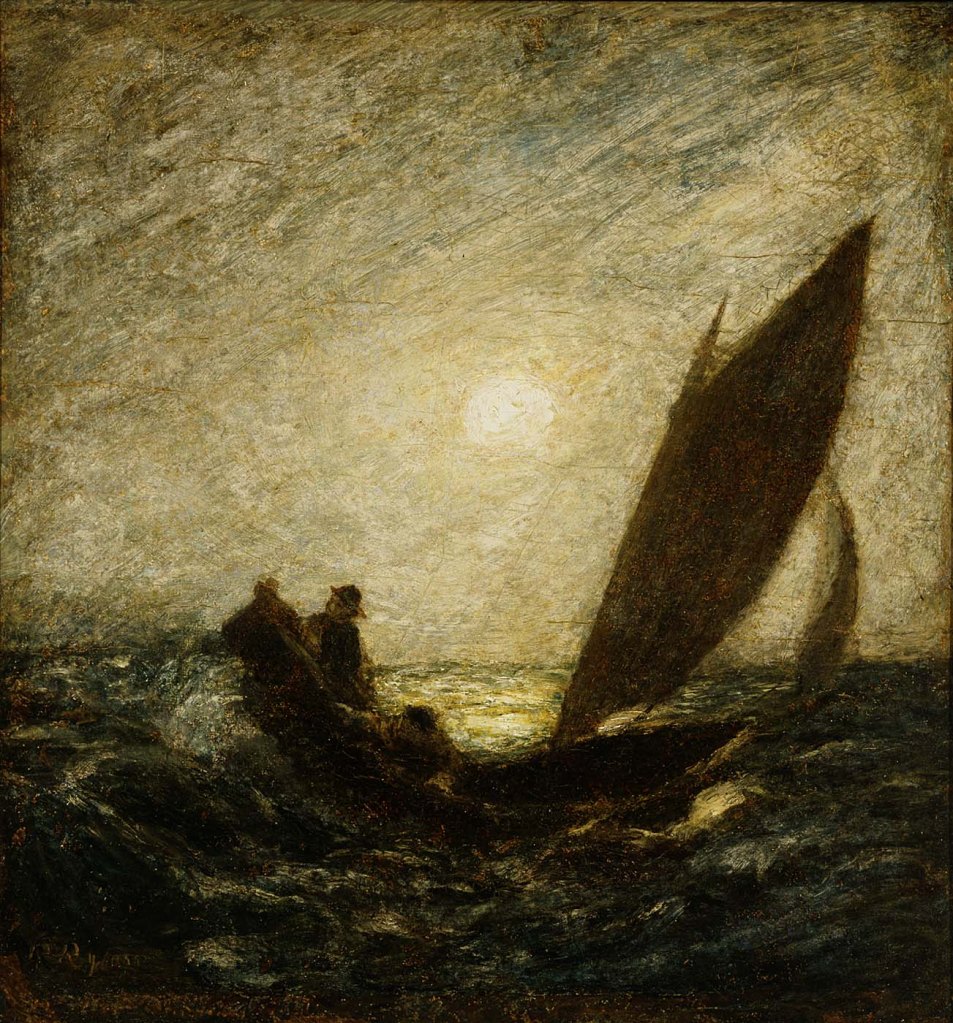
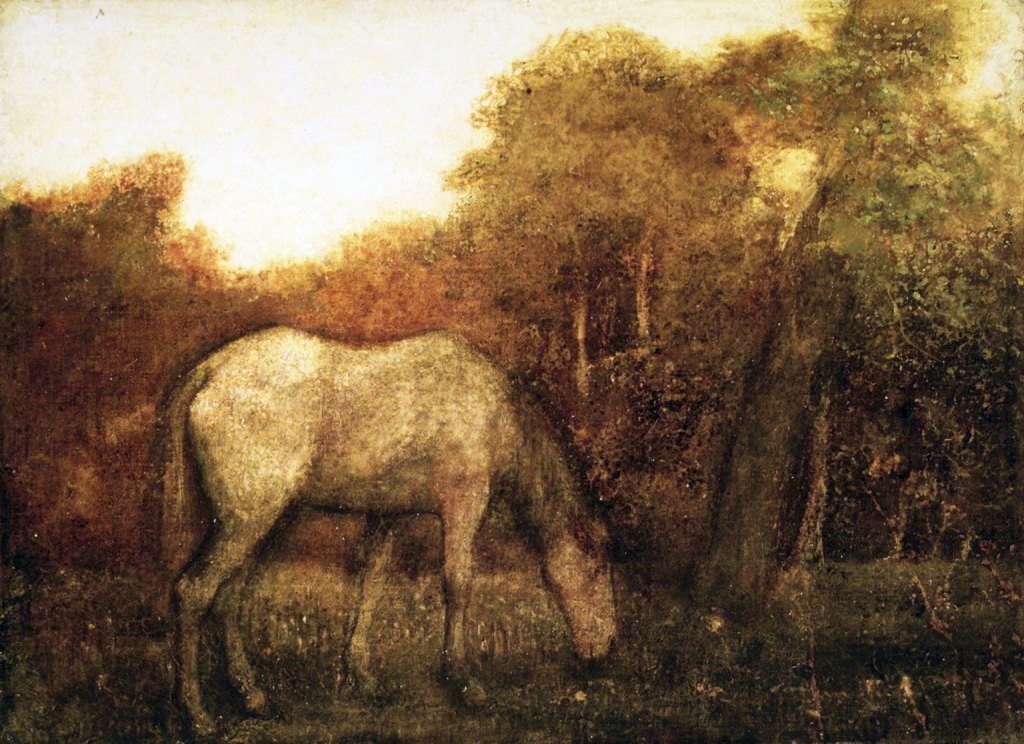
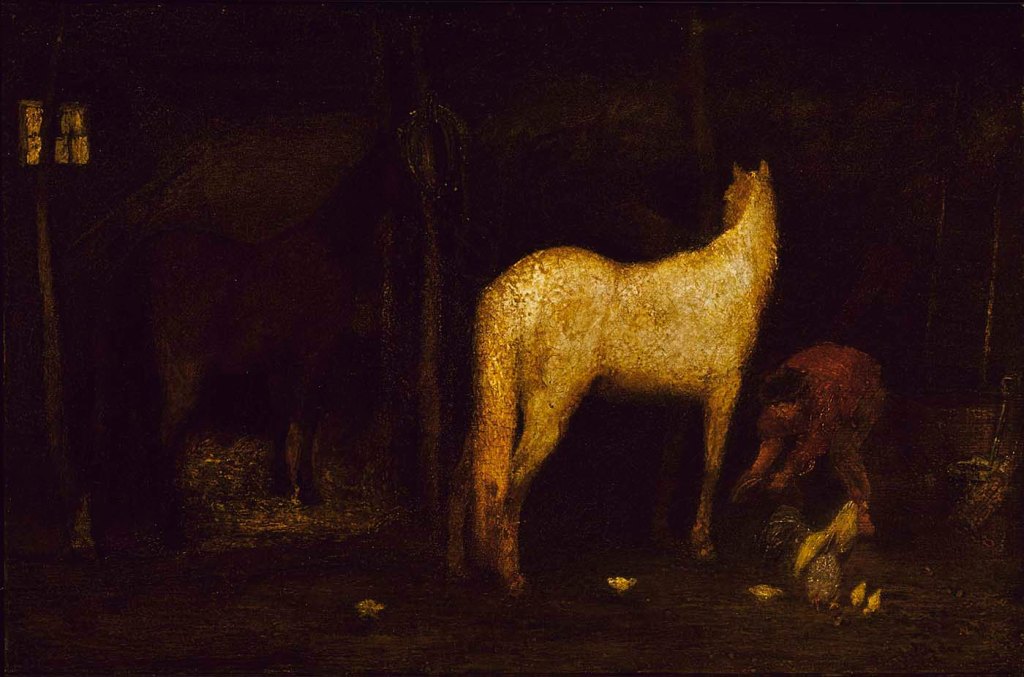
The Grazing Horse (1872 to 1878) oil on canvas, 10 x 14 in. Brooklyn Museum
| Charles M. Russell | |
|---|---|
 | |
Today is the birthday of Charles M. Russell (Charles Marion Russell; St. Louis, Missouri; March 19, 1864 – October 24, 1926 Great Falls, Montana), also known as C. M. Russell, Charlie Russell, and “Kid” Russell; artist of the Old American West. Russell created more than 2,000 paintings of cowboys, Indians, and landscapes set in the Western United States and in Alberta, Canada, in addition to bronze sculptures. Known as ‘the cowboy artist’, Russell was also a storyteller and author. The C. M. Russell Museum Complex located in Great Falls, Montana, houses more than 2,000 Russell artworks, personal objects, and artifacts. Other major collections are held at the Montana Historical Society in Helena, Montana, the Buffalo Bill Center of the West in Cody, Wyoming, the Amon Carter Museum of American Art in Fort Worth, Texas, and the Sid Richardson Museum in Fort Worth, Texas.
Russell’s mural titled Lewis and Clark Meeting the Flathead Indians hangs in the state capitol building in Helena, Montana.
Russell came to Montana in 1880 at the age of 16. After an unsuccessful stint working on a sheep ranch, he found work with a hunter and trapper turned rancher named Jake Hoover, who owned a ranch in the Judith Basin, and from whom Russell learned much about the ways of the west. The two men remained lifelong friends. After a brief visit to his family in 1882, he returned to Montana, where he remained for the rest of his life. He worked as a cowboy for a number of outfits, and documented the harsh winter of 1886–1887 in a number of watercolors. Russell was working on the O-H Ranch in the Judith Basin of Central Montana at the time, when the ranch foreman received a letter from the owner, asking how the cattle herd had weathered the winter. Instead of a letter, the ranch foreman sent a postcard-sized watercolor Russell had painted of gaunt steer being watched by wolves under a gray winter sky. The ranch owner showed the postcard to friends and business acquaintances and eventually displayed it in a shop window in Helena, Montana. After this, work began to come steadily to the artist. Russell’s caption on the sketch, Waiting for a Chinook, became the title of the drawing, and Russell later created a more detailed version which is one of his best-known works.
In 1896, Russell married his wife Nancy. He was 32 and she was 18. In 1897, they moved from the small community of Cascade, Montana to the bustling county seat of Great Falls, where Russell spent the majority of his life.
On the day of Russell’s funeral in 1926, all the children in Great Falls were released from school to watch the funeral procession. Russell’s coffin was displayed in a glass sided coach, pulled by four black horses.
Russell produced about 4000 works of art, including oil and watercolor paintings, drawings and sculptures in wax, clay, plaster and other materials, some of which were also cast in bronze.
Gallery
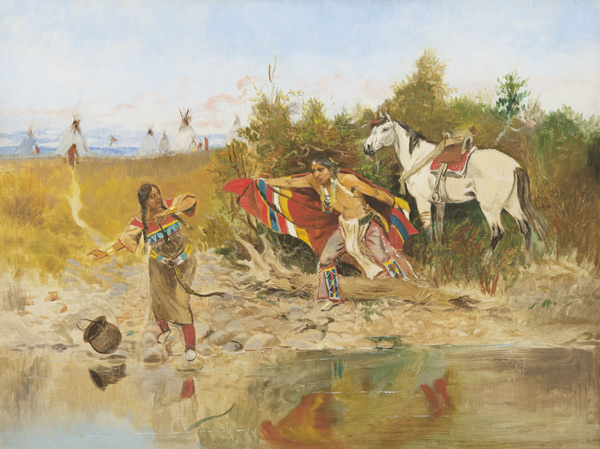
The Marriage Ceremony (Indian Love Call), 1894, Oil on cardboard, Sid Richardson Museum, Fort Worth, Texas
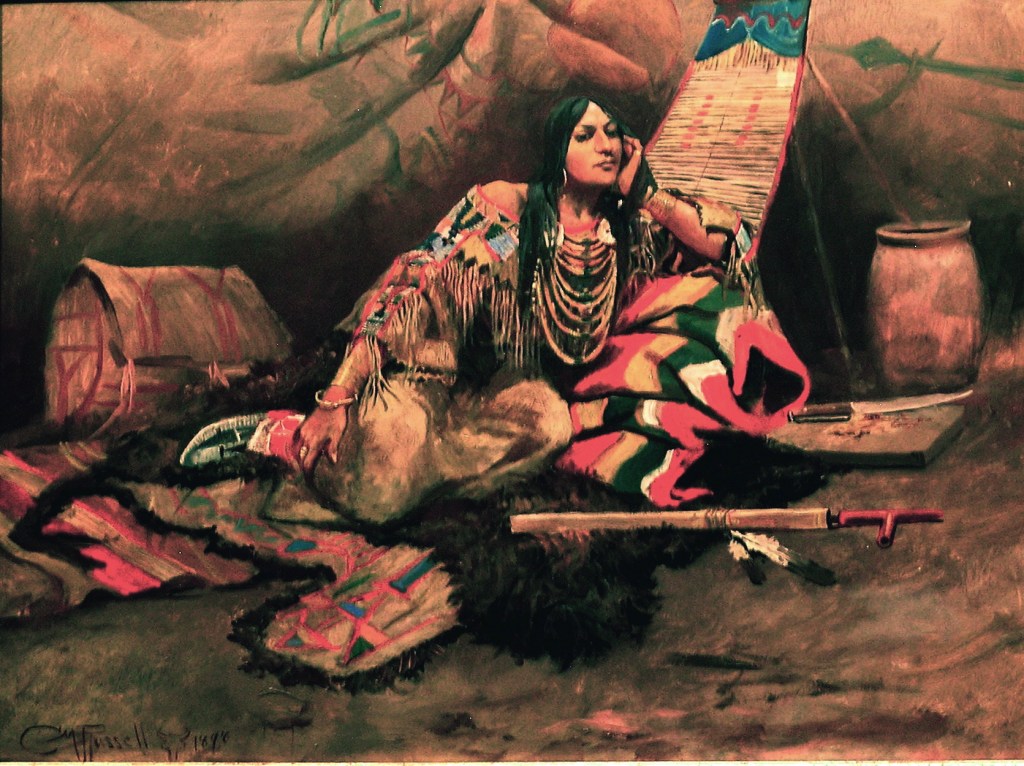
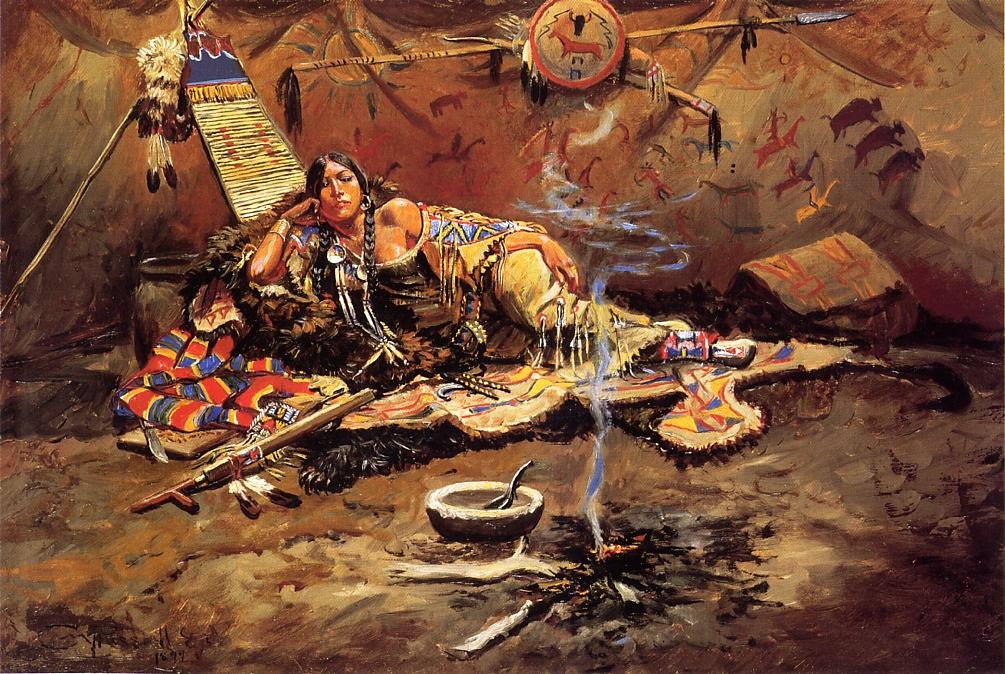
Waiting and Mad, not an official “Keeoma” painting, but sometimes considered part of the series
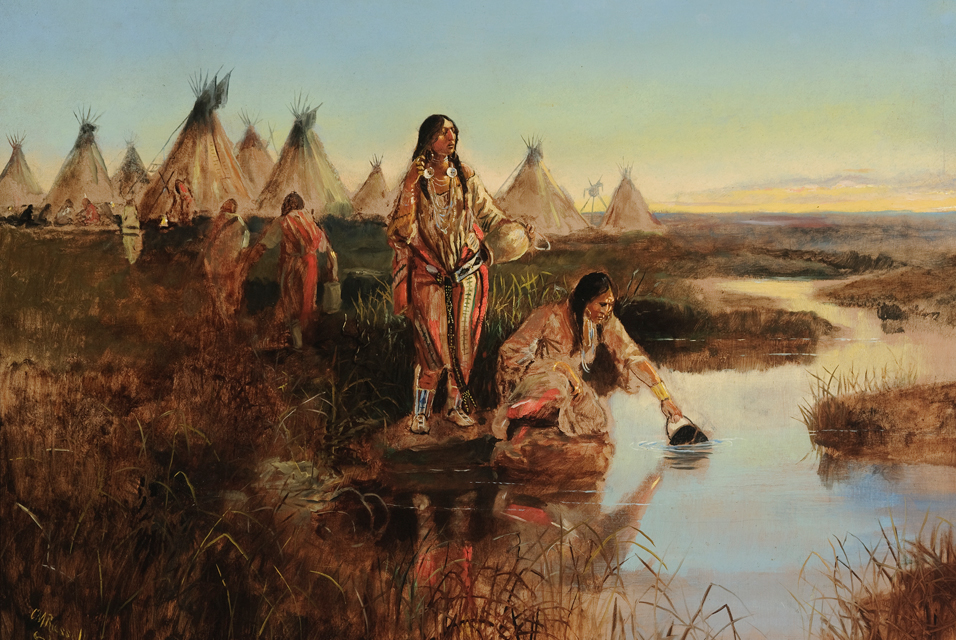
Water for Camp, depicting the everyday life of Native American women
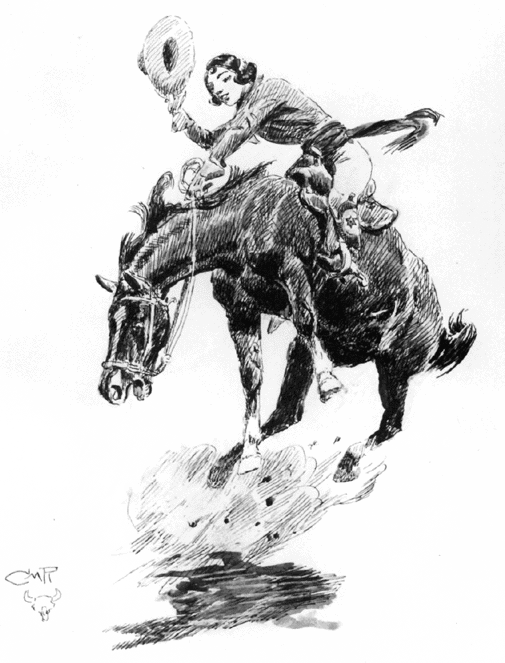
Rodeo cowgirl
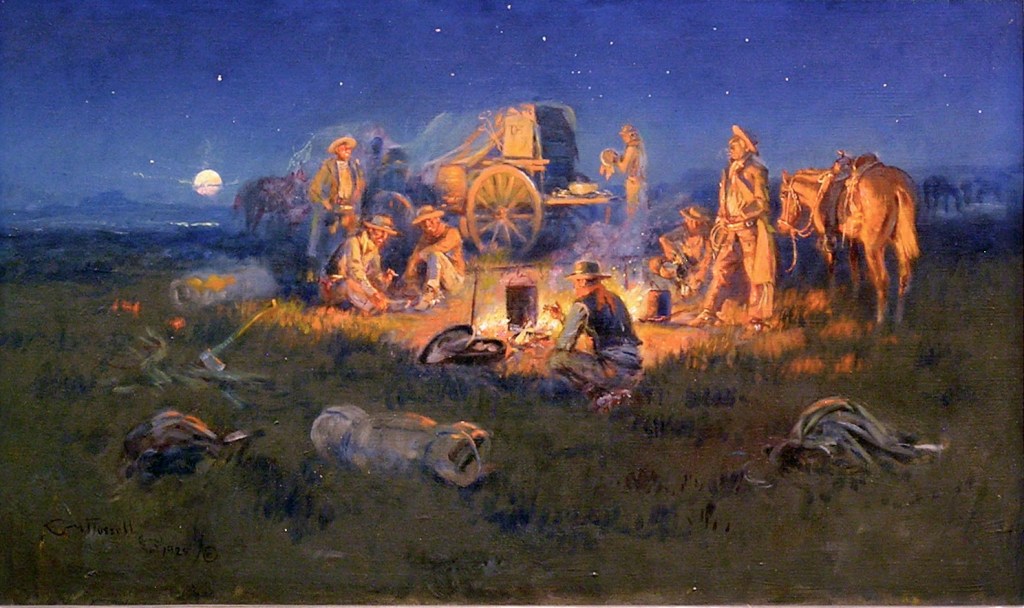
Laugh Kills Lonesome, oil on canvas, 1925. Along with Bronc to Breakfast and In Without Knocking, arguably the most famous of Russell’s “cowboy” paintings
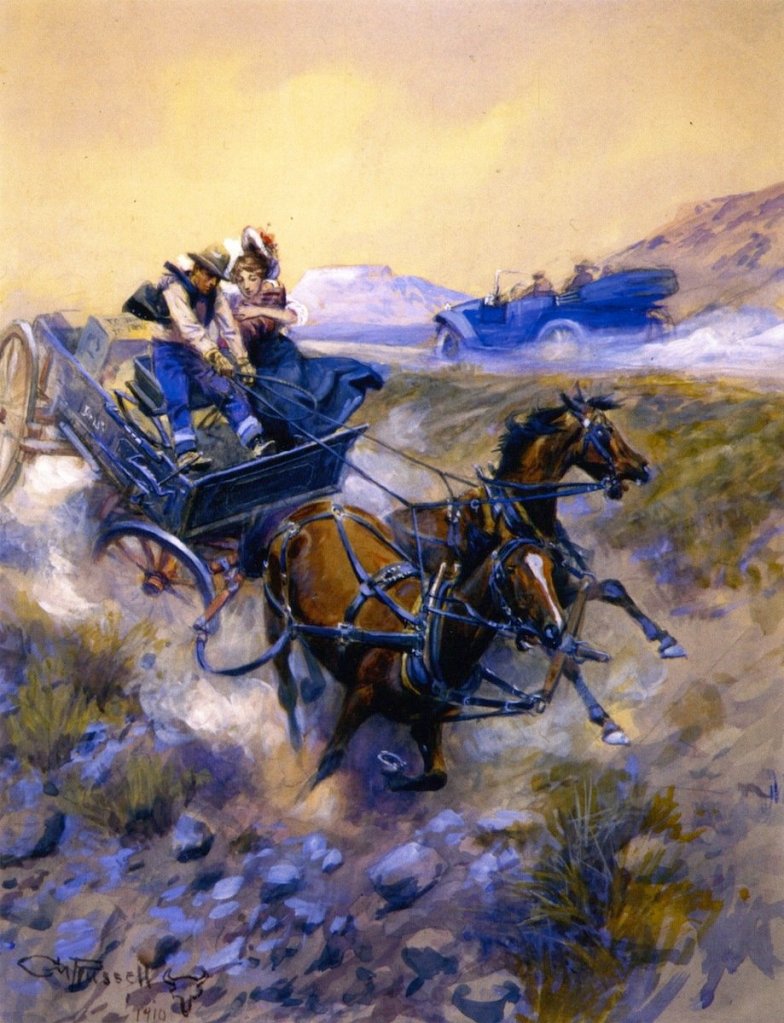
Life saver

Smoke of a .45, oil on canvas, 1908

When The Land Belonged to God, replica image displayed for many years in the Montana Senate
 Charles Marion Russell
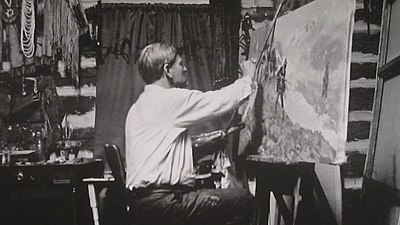 Russell working in his studio in Great Falls, Montana
 C. M. Russell and his friends. A detail of the picture was used for a Montana U.S. Postage Stamp in 1989.
 Self-portrait with Christmas greeting, 1914

The Tenderfoot (1900)
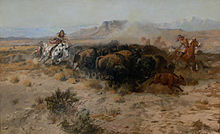
The Buffalo Hunt 1899, Amon Carter Museum, Fort Worth
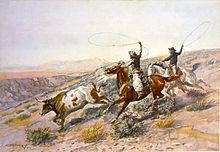
Buccaroos, 1902
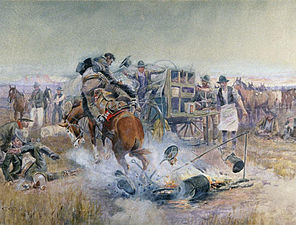 Bronc to Breakfast, oil, 1908
 Loops and Swift Horses are Surer than Lead, 1916
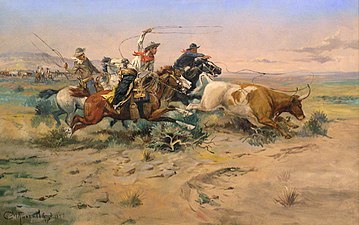 The Herd Quitter
 Roundup #2, oil 1913
 Cree Indian
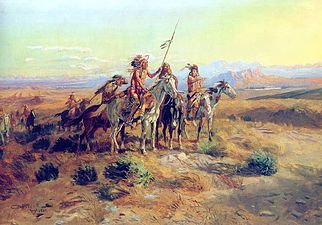 The Scouts
 When Blackfoot and Sioux Meet
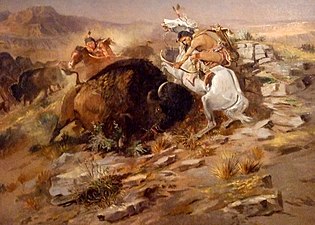 Buffalo Hunt
 Camp Cook’s Troubles
 Burning Crow Buffalo Range
 A Quiet Day in Utica also known as Tinning a Dog (1907). Depicts Russell and other actual residents of Utica, Montana, including general store owner Charles Lehman, and ex-slave Mollie Ringwold, hotel owner, saloon-keeper and later cook for the nearby Yogo sapphire mine
 Waiting for a Chinook, also known as Last of the 5000. One of several depictions of the winter of 1886–87
 To The Victor Belongs The Spoils
 Lewis and Clark on the Lower Columbia. Russell depicted various stages of the Lewis and Clark Expedition in a number of works.
 The Custer Fight (lithograph, 1903). Depicts the Battle of the Little Bighorn from the point of view of the Native American combatants.
 The Indians discovering Lewis and Clark
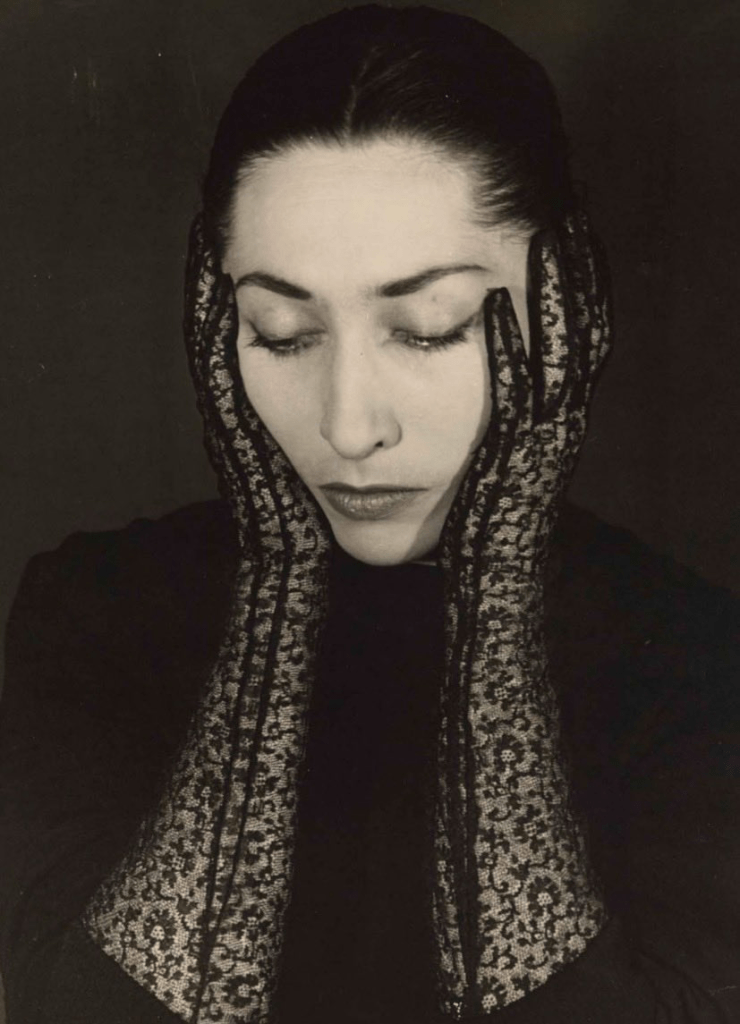
And today is the birthday of Thérèse Le Prat (born Thérèse Cahen; March 19, 1895 in Pantin, France – died on March 6, 1966 in Neuilly-sur-Seine); photographer, first known for her work as a photographer for the Compagnie des messageries maritimes, then for her portraits, especially of personalities from the literary, artistic and scientific world. Theatre actors from all over the world were her main source of inspiration. Author of several books, she was also exhibited many times.
Gallery
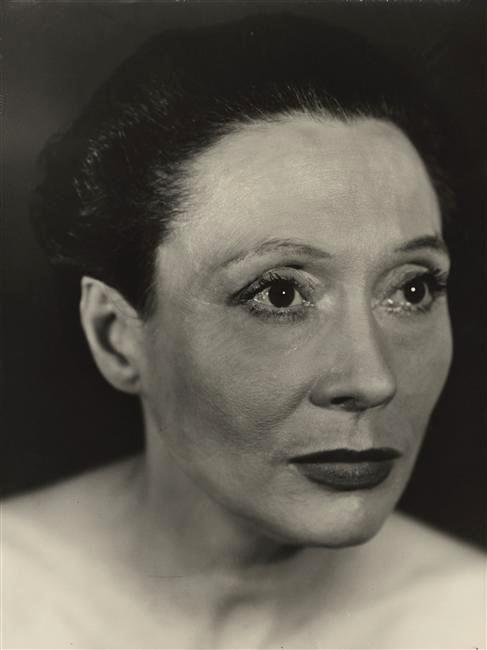
Arletty
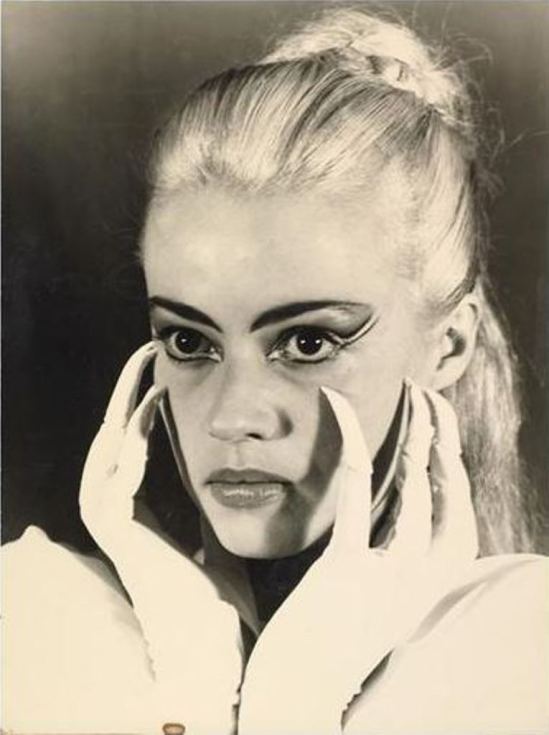
Jeanne Moreau dans La machine infernale réalisé par Jean Cocteau 1954
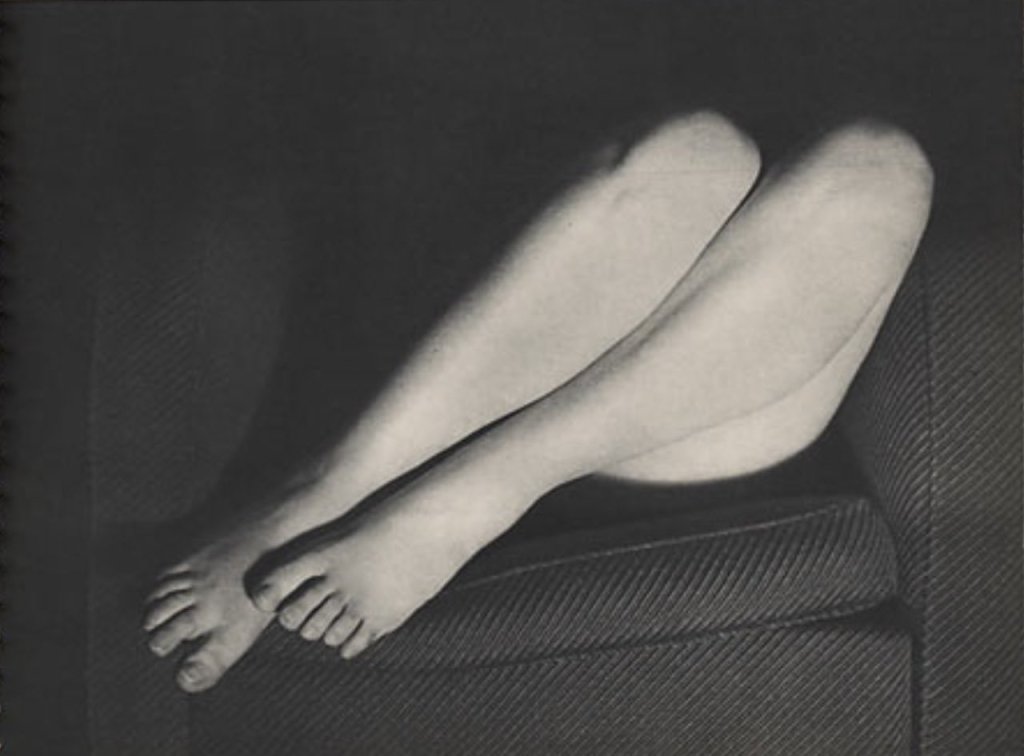
untitled Paris 1935
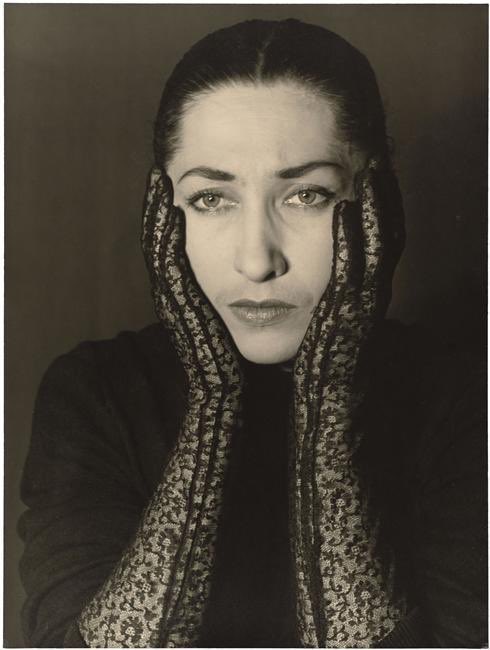
Nina Vyroubova
thanks for stoppin’ by y’all
mac tag
 The Lovers’ Chronicle
Leave a comment