
Dear Zazie, Here is today’s Lovers’ Chronicle from Mac Tag dedicated to his muse. Follow us on twitter @cowboycoleridge. And your name Rhett
The Lovers’ Chronicle
Dear Muse,
of dreams and…
-Being whisked away again in the dream carriage-
Where to tonight my love, asks the fabulous redhead
i made a specific request, hopefully She was listenin’
The carriage rolls past a road sign; John Steinbeck Highway
alright, we are in luck, looks like she has granted my request
Cool I have been to the Monterey Bay area but not to Salinas
-After lunch at the John Steinbeck House and a tour
of The National Steinbeck Center;
Really glad we got to see his camper-truck Rocinante
yes, but kinda disappointed he was a no-show
What, you expected his ghost, wait are you jingling
i am, i have a pocketful of dimes
Why
for our next destination;
-They board the carriage and soon arrive
at La Playa Hotel in Carmel-by-the-Sea;
you know the sayin’, what’s in a name, well
i think you will love the name of their bar, Bud’s
Oh, my dad’s name
how cool is that, and this is where the dimes come in,
once a day a bartender calls Dime Time and for ten minutes
drinks are ten cents but you must pay in exact change
Thank you for another wonderful dream trip my love
lets order a couple of their Bud’s Martinis
and drink a toast to your dad and to us

© copyright 2024.2025 mac tag/cowboycoleridge all rights reserved
said before, during and after
“Yes”
whispered in warm embrace
“Often please”
the first time i heard you say it
the first time i said it
“I like hearing it from you”
though i cain’t drawl it up
“That’s funny”
by any other, thou
wouldst be as sweet
“Careful Will”
and you wear it so well, Anna
© copyright 2023 mac tag/cowboycoleridge all rights reserved
by any other, an important part of persona, tried several on till found what fit, self acceptance is part of the process, the journey, and what you present to others, part of your armor, gotta feel comfortable and confident, perhaps the most attractive trait, and yours by any other, but it does suit you beautifully

© copyright 2022.2024 mac tag/cowboycoleridge all rights reserved
hear the wind whisperin’,
through the trees
look inside
so beautiful,
comes again
see the future
ever here, always near
time doin’ what it does
all done with partin’
and sorrow
say it again,
a new refrain
words we waited
so long to hear
and to say
to each other
© copyright 2021 mac tag/cowboy coleridge all rights reserved
Pale Love, Pale Rider
yours by any other name,
has that been done
uh, sorta, what else ya got
you never even called me by my name
definitely been done before
interestin’ that i know several people,
friends and family, who go by names
other than what they were called as kids
everyone has the right to reinvent themselves
and what about me, i should have a name
my shadow, my other self, my alter ego
not exactly rollin’ easily off the tongue
my evil twin
i like the intent
wait, i got it, or, get it
so clever, i will commence reinventin’
good, i need the quiet so i can write
by any other name

© copyright 2020.2024 mac tag/cowboy coleridge all rights reserved
spent a life
tryin’ to git here
a story teller
askin’ you to feel
and to tell me
yes, it was that way
only thoughts, and dreams,
and longin’ can reach
no little appetite
or pain escapes
the necessary
loneliness
to explain
the inexplicable
only you
© copyright 2019 mac tag/cowboy coleridge all rights reserved
“Those were wonderful nights.
We should have done more.”
yeah, we shoulda
i understand
i was offered somethin’
few are ever offered
a gift given
such as few
have ever known
and i ignored it
if i say
often enough
that you
are not the one
if i write it in verse
if i fill a book
if i write a song,
a libretto
if i shout it
from the mesa top
would i then
believe
© copyright 2018 mac tag/cowboy coleridge all rights reserved
hear the trailin’ whispers
sweep through the halls
look then, inside and commence
the Revelator speaks…
so beautiful, yet
dark and sorrowful
it comes not again
look not mournfully
go forth and meet
the shadowy future
with many scars
so accursed
or blessed
for the hurt
sustains
floatin’ upon
a river of dreams
standin’ on a mesa
at midnight
as the hour comes
and the moon rises
ever here, always near
all the partin’ and sorrow
always near, ever here
time, doin’ what it does
say it again,
whisper
the same refrain
i hear
© copyright 2017 mac tag/cowboy Coleridge all rights reserved
Against a fall of snow, in another place and time
The totem spins…
Shimmerin’ and desperate
In the shadows, around the Vision.
The furious affect of these feelings smolder
No matter that reality hurls at this embrace
The totem keeps spinnin’…
To see your face
To kiss your lips
To be in your embrace!
On this I cannot help but throw myself
In reveries revisited again and again!
Checked the cinch; jumped
the fence again
Just not meant for
any one place
or anyones’s
someone to be
Unforgiven is
As unforgiven does
© copyright 2015 mac tag/cowboy Coleridge all rights reserved
| Henry Wadsworth Longfellow | |
|---|---|
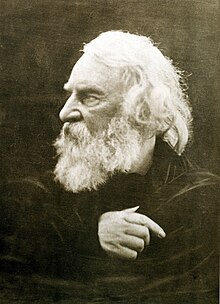 | |
Today is the birthday of Henry Wadsworth Longfellow (Portland, Maine; February 27, 1807 – March 24, 1882 Cambridge, Massachusetts); poet and educator whose works include “Paul Revere’s Ride”, The Song of Hiawatha, and Evangeline. He was also the first American to translate Dante Alighieri’s Divine Comedy, and was one of the five Fireside Poets.
He studied at Bowdoin College. After spending time in Europe he became a professor at Bowdoin and, later, at Harvard College. His first major poetry collections were Voices of the Night (1839) and Ballads and Other Poems (1841). Longfellow retired from teaching in 1854, to focus on his writing, living the remainder of his life in Cambridge, Massachusetts, in a former Revolutionary War headquarters of George Washington. His first wife Mary Potter died in 1835, after a miscarriage. His second wife Frances Appleton died in 1861, after sustaining burns when her dress caught fire. After her death, Longfellow had difficulty writing poetry for a time and focused on translating works from foreign languages.
Longfellow wrote many lyric poems known for their musicality and often presenting stories of mythology and legend. He became the most popular American poet of his day and also had success overseas.
Verse
- I stood on the bridge at midnight,
As the clocks were striking the hour,
And the moon rose o’er the city,
Behind the dark church-tower.- The Bridge, st. 1 (1845).
- Never here, forever there,
Where all parting, pain, and care,
And death, and time shall disappear,—
Forever there, but never here!
The horologe of Eternity
Sayeth this incessantly,—
“Forever — never!
Never — forever!”- The Old Clock on the Stairs, st. 9 (1845).
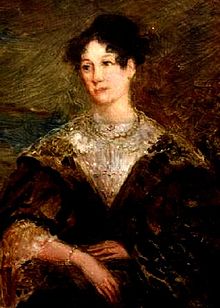
Mary Storer Potter became Longfellow’s first wife in 1831 and died four years later.
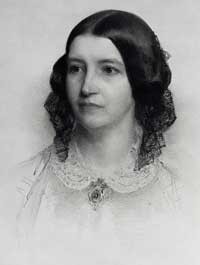
After a seven-year courtship, Longfellow married Frances Appleton in 1843.

Longfellow circa 1850, daguerreotype by Southworth & Hawes
| Joaquín Sorolla | |
|---|---|
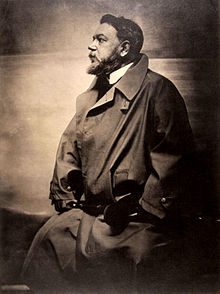 |
Today is the birthday of Joaquín Sorolla (Joaquín Sorolla y Bastida; Valencia, 27 February 1863 – 10 August 1923 Madrid); painter. Sorolla excelled in the painting of portraits, landscapes, and works of social and historical themes. His most typical works are characterized by a dexterous representation of the people and landscape under the bright sunlight of his native land and sunlit water.
In 1888, Sorolla married Clotilde García del Castillo, whom he had first met in 1879 while working in her father’s studio. In 1890, they moved to Madrid, and for the next decade Sorolla’s efforts as an artist were focussed mainly on the production of large canvases of orientalist, mythological, historical, and social subjects, for display in salons and international exhibitions in Madrid, Paris, Venice, Munich, Berlin, and Chicago.
Sorolla suffered a stroke in 1920, while painting a portrait in his garden in Madrid. He was paralyzed for over three years before his death. He is buried in the Cementeri de Valencia, Spain.
Gallery
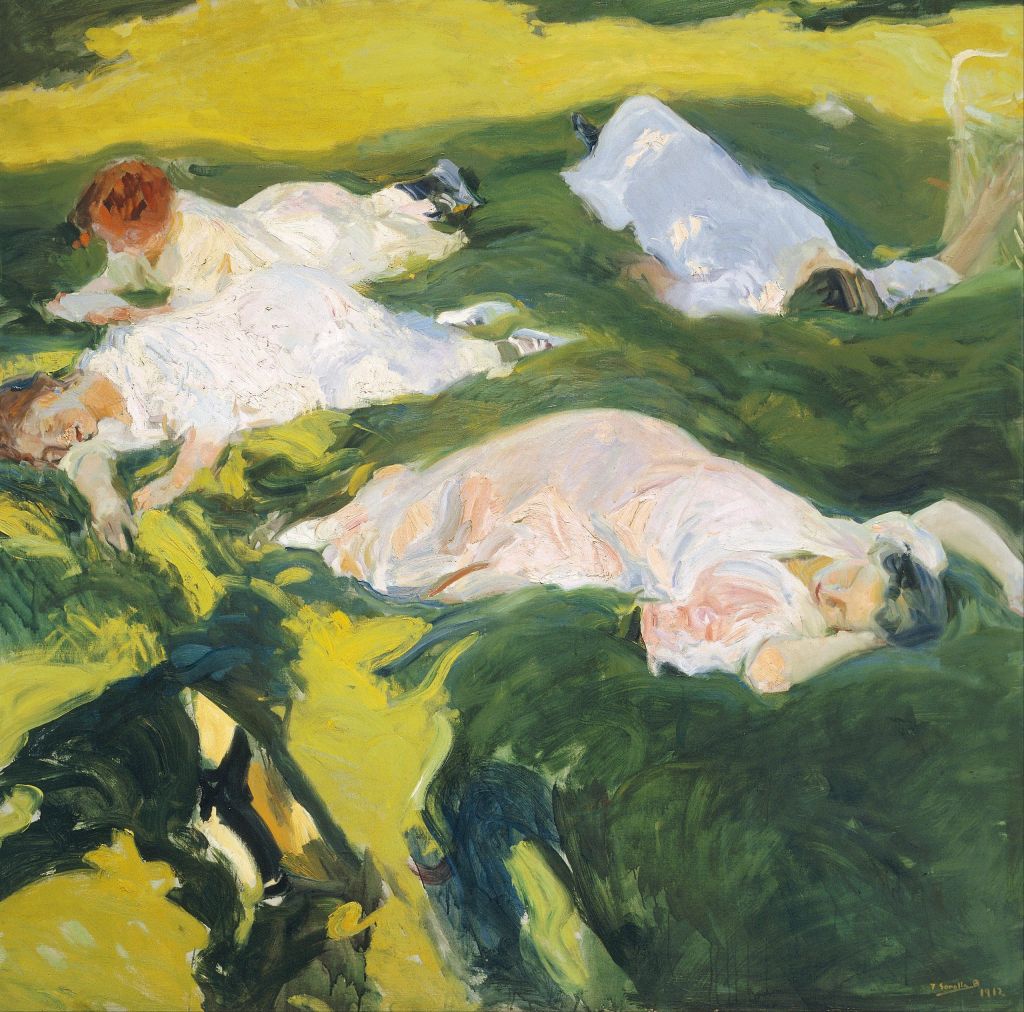
La Siesta
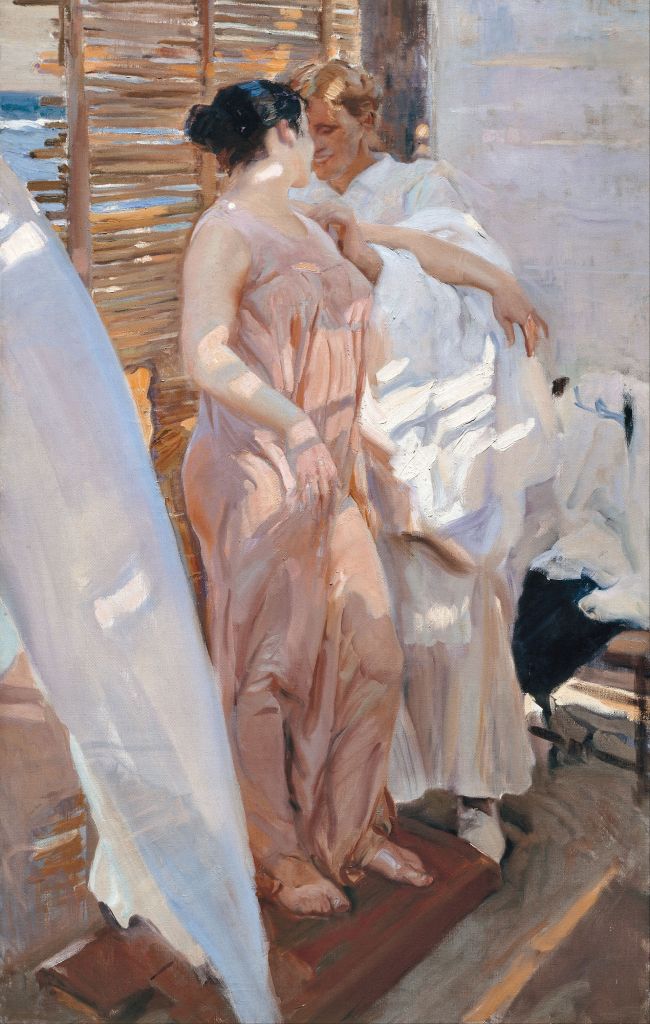
The Pink Robe. After the Bath
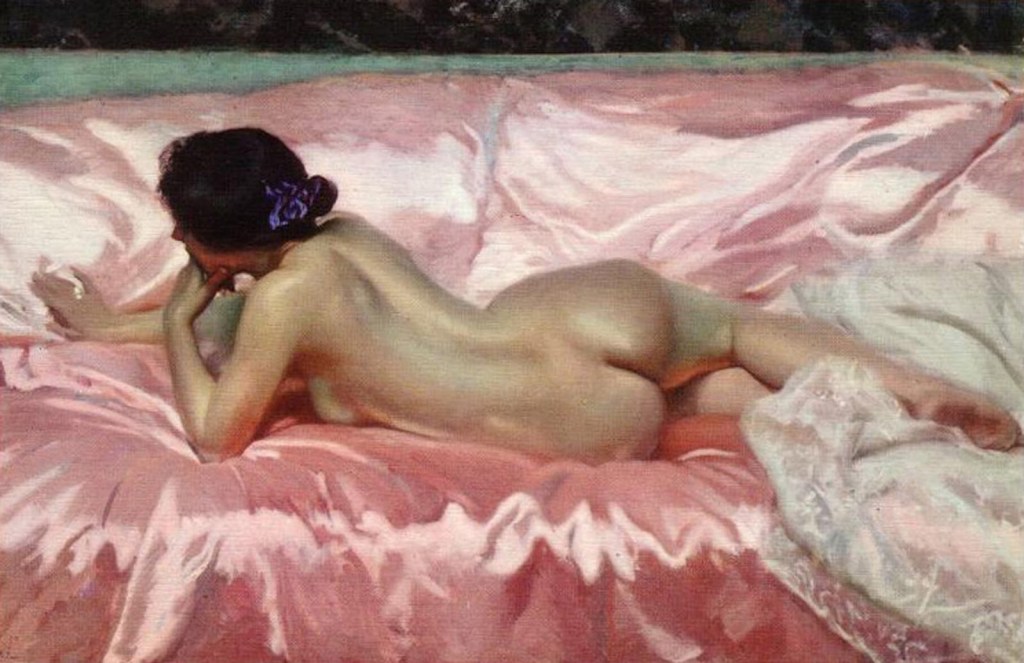
Desnudo de mujer de 1902, posible retrato de Clotilde, pintado durante su etapa de culminación. Colección Particular. Madrid
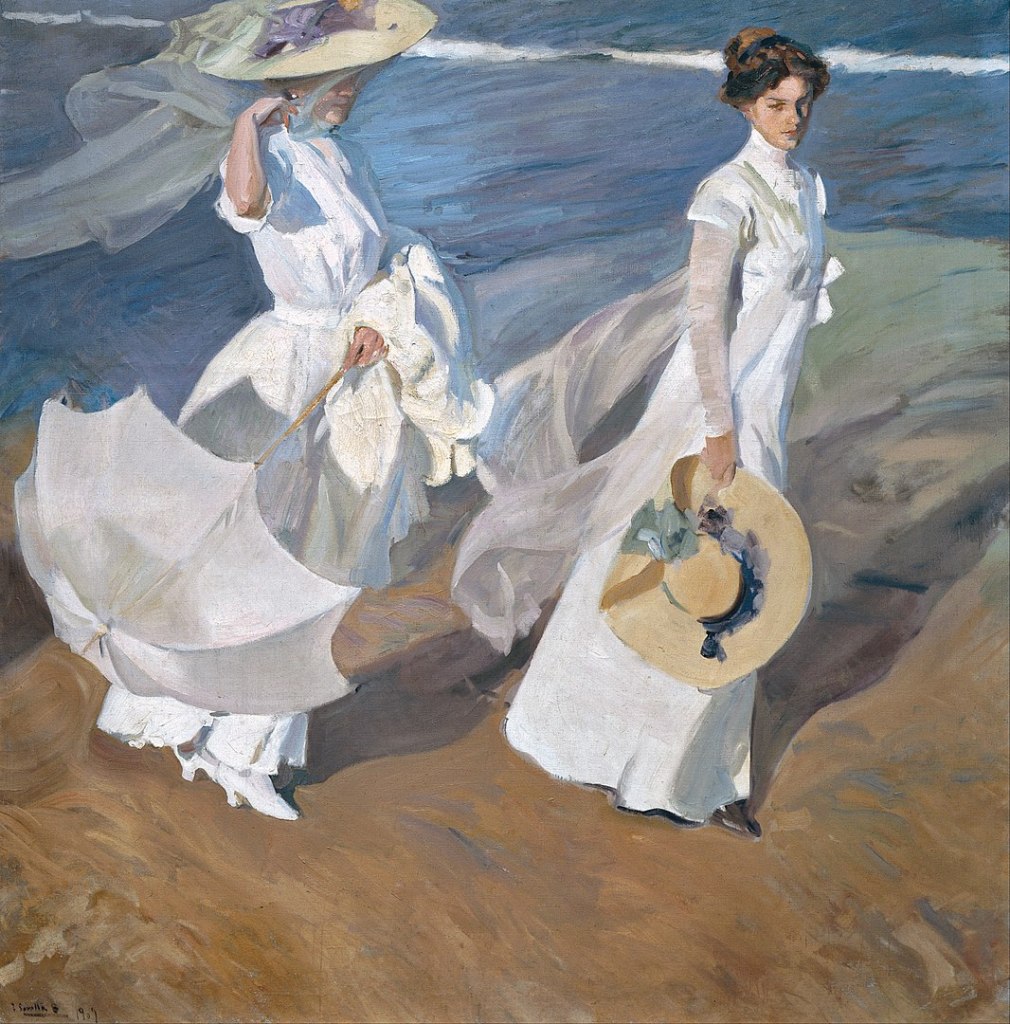
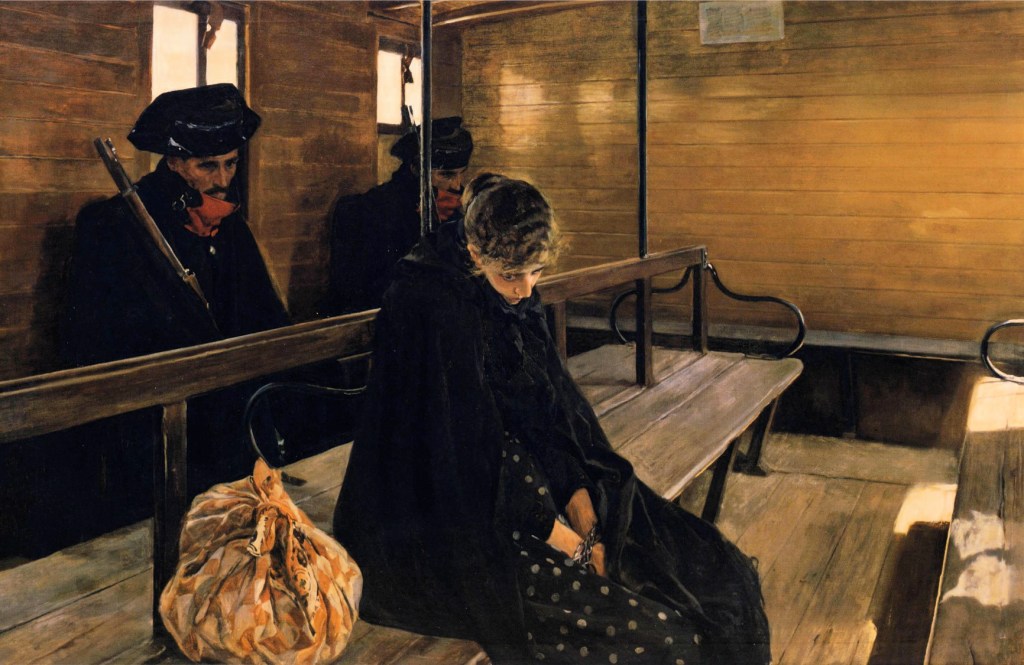
Otra Margarita, 1892. Museo de Arte Mildred Lane Kemper
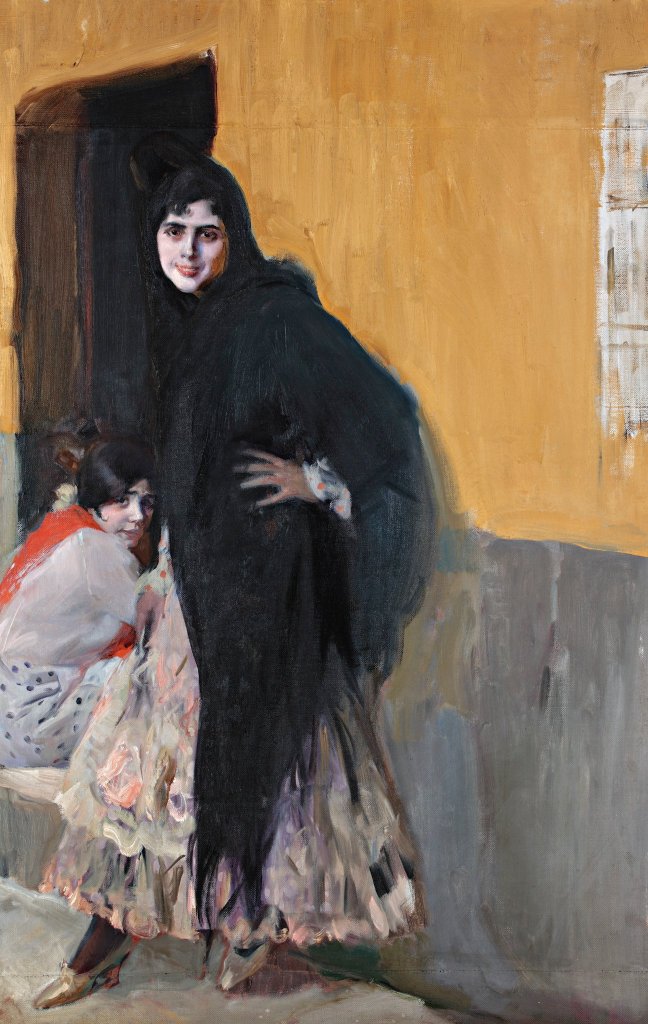
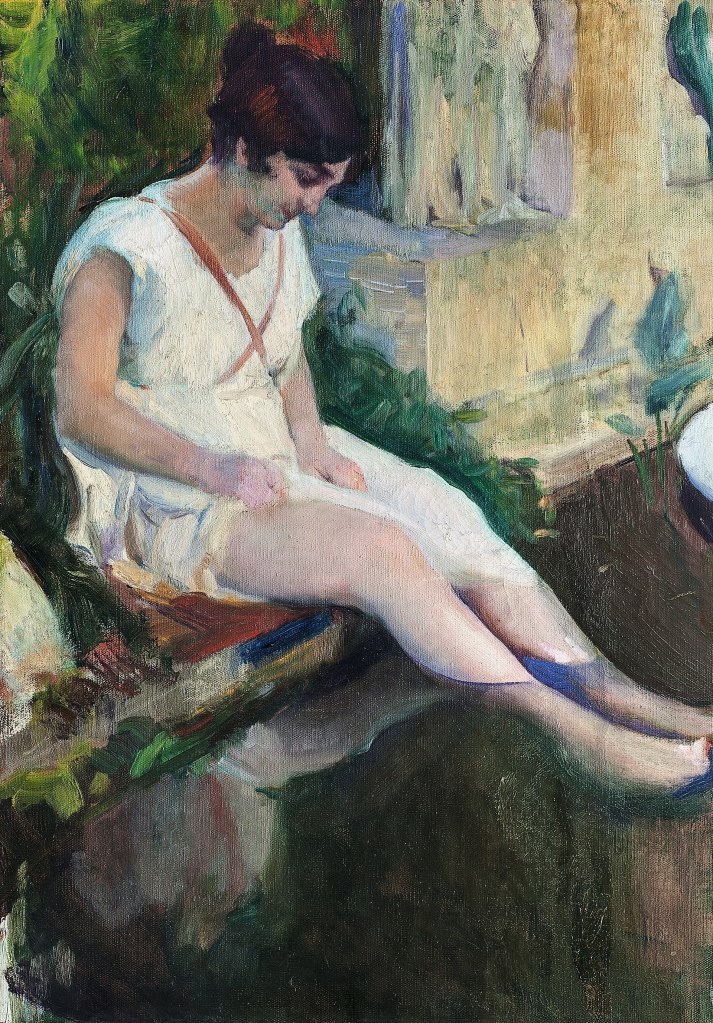
At the Pool in the Artist’s Garden (1898)
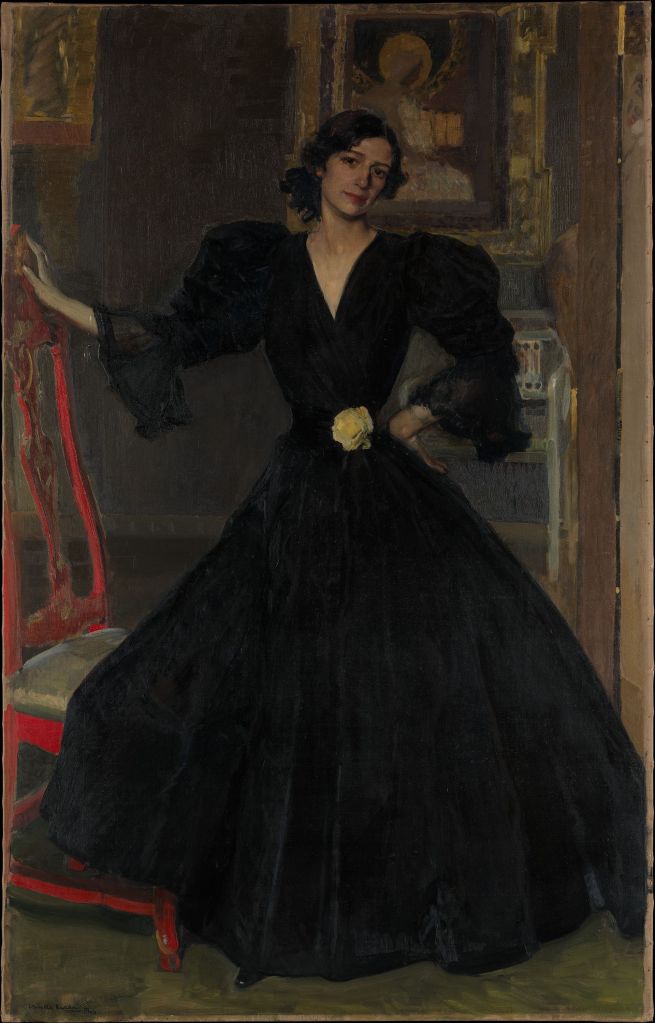
Señora de Sorolla in Black, 1906, Metropolitan Museum of Art

Retrato de Raquel Meller, 1918
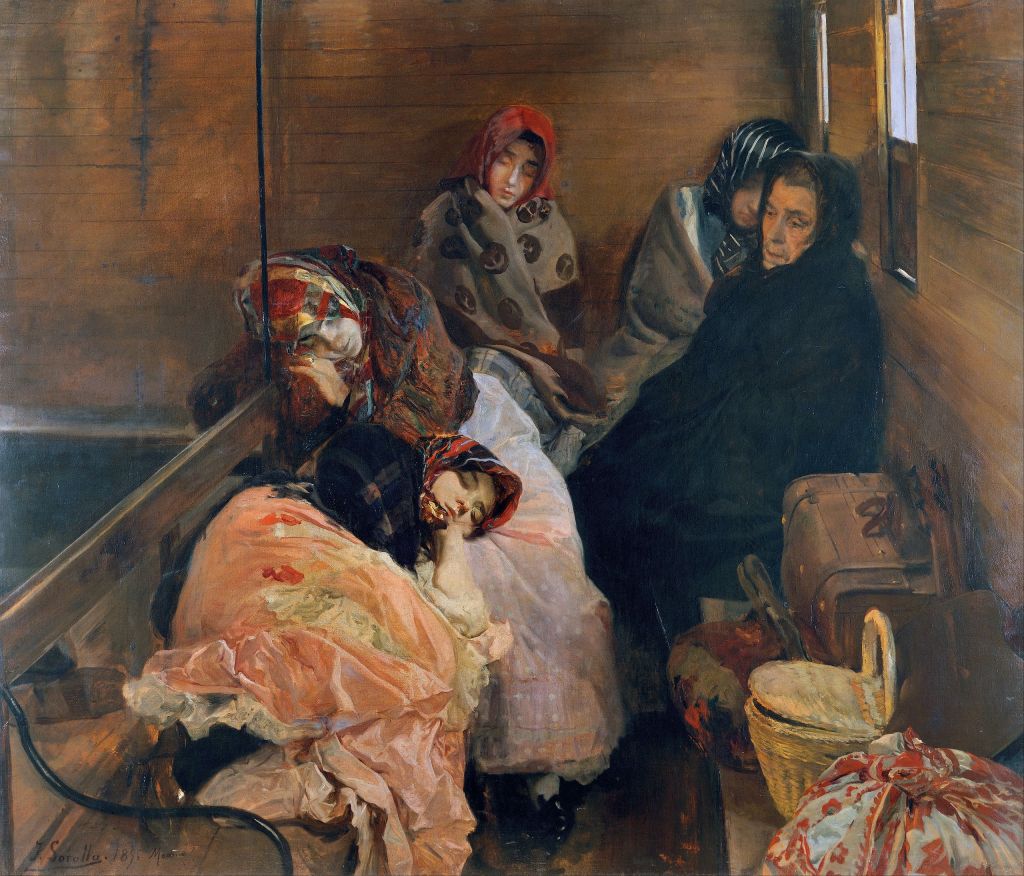
Trata de blancas (1894), Museo Sorolla, Madrid
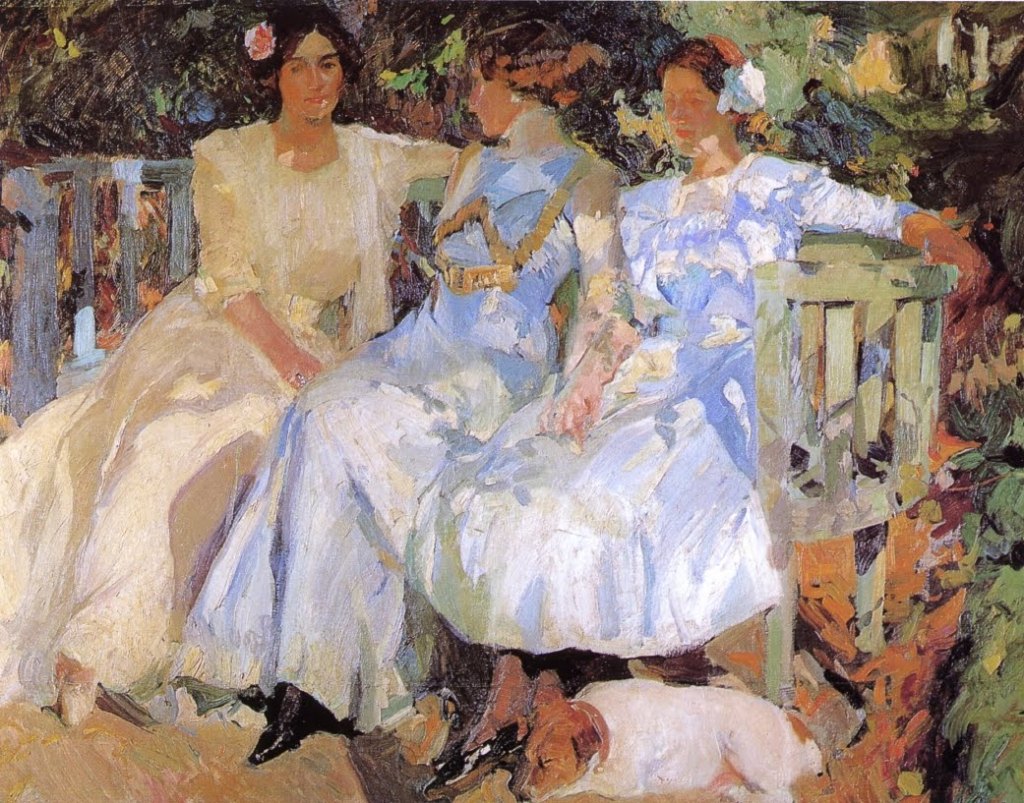
My Wife and Daughters in the Garden or “Mi Esposa e Hijas en el Jardín” which is the original name, 1910
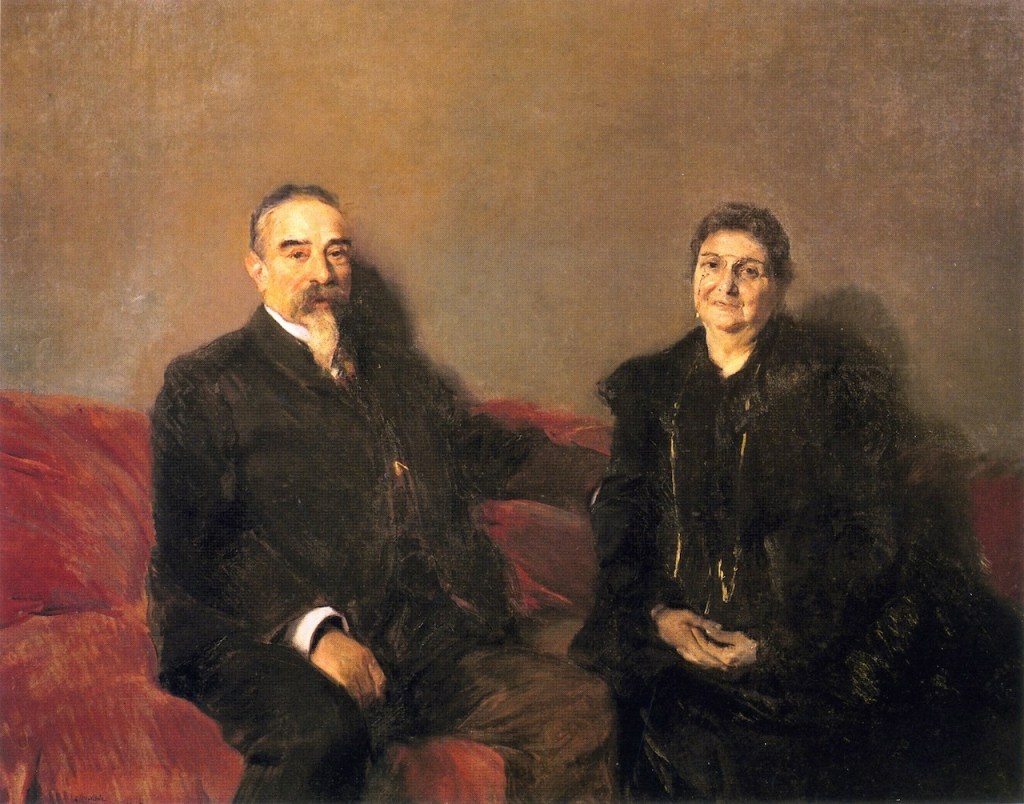
Los abuelos de mis hijos. (1905). Museo de Bellas Artes de Valencia
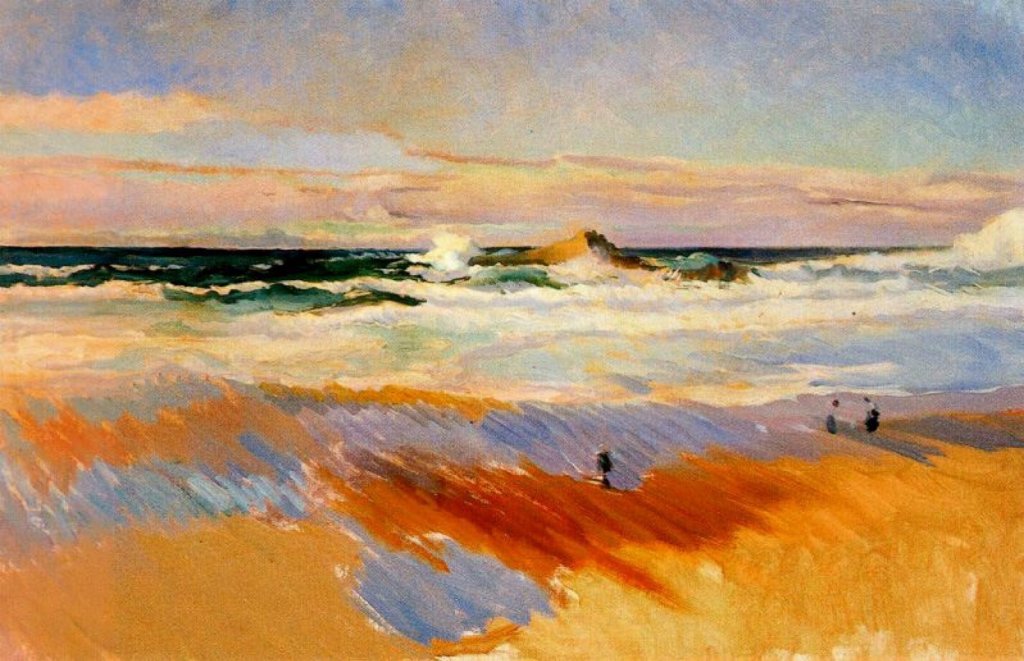
Today is the Leander Engström, sometimes denoted as The Elder (Per Leander Engström; Ytterhogdal, Sweden 27 February 1886 – 6 February 1927 Stockholm); painter. He specialized in portraits and colorful wilderness scenes in the Expressionist style.
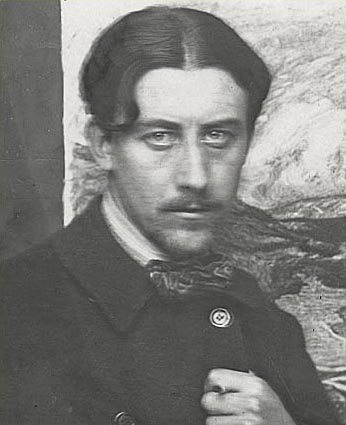
Thanks to financial support from the artist Karl Nordström, he was able to begin studies at the Artist’s Association School (Konstnärförbundets skola), from 1907 to 1908, then went to Paris, where he took lessons from Henri Matisse. He remained there until 1912. Back in Sweden, he was one of the first members of a short-lived group called “De Unga [sv]” (The Young), which applied Expressionist techniques to Swedish motifs. In 1914, he had a successful showing at the Baltic Exhibition.
For much of his life, he travelled through the mountains of Norrland, painting en plein aire. He built a small house in Abisko, one of his favorite locations. During the 1920s, he spent time in Italy: living in Florence from 1920 to 1923. In between, he created paintings on the ceiling of the Skandia-Teatern [sv], an early movie theater in Stockholm.
In 1913, he married Maria Edlund and, the following year, had twin sons, Kjell Leander [sv] and Tord Leander [sv], who both became painters.
He died at the age of forty-one after a long period of poor health, and was buried at the Skogskyrkogården, south of Stockholm.
Gallery
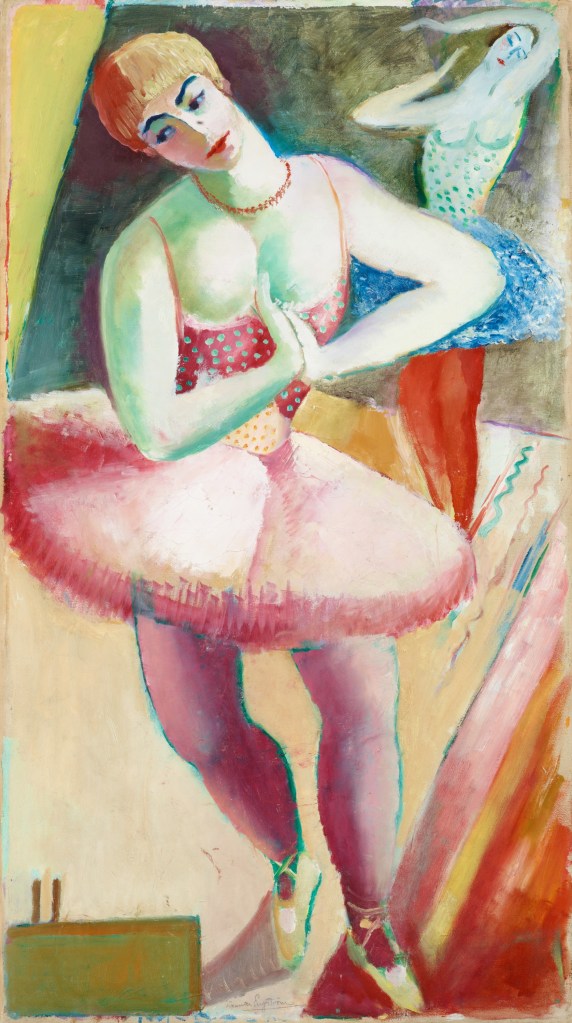
Variety dancers
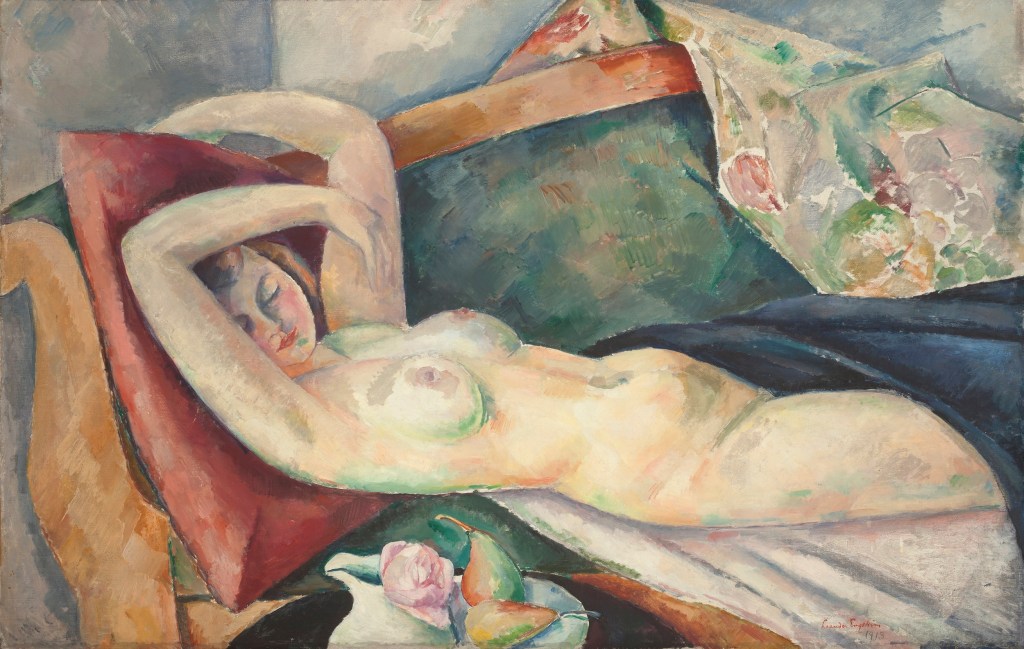
Model with Pear and Rose
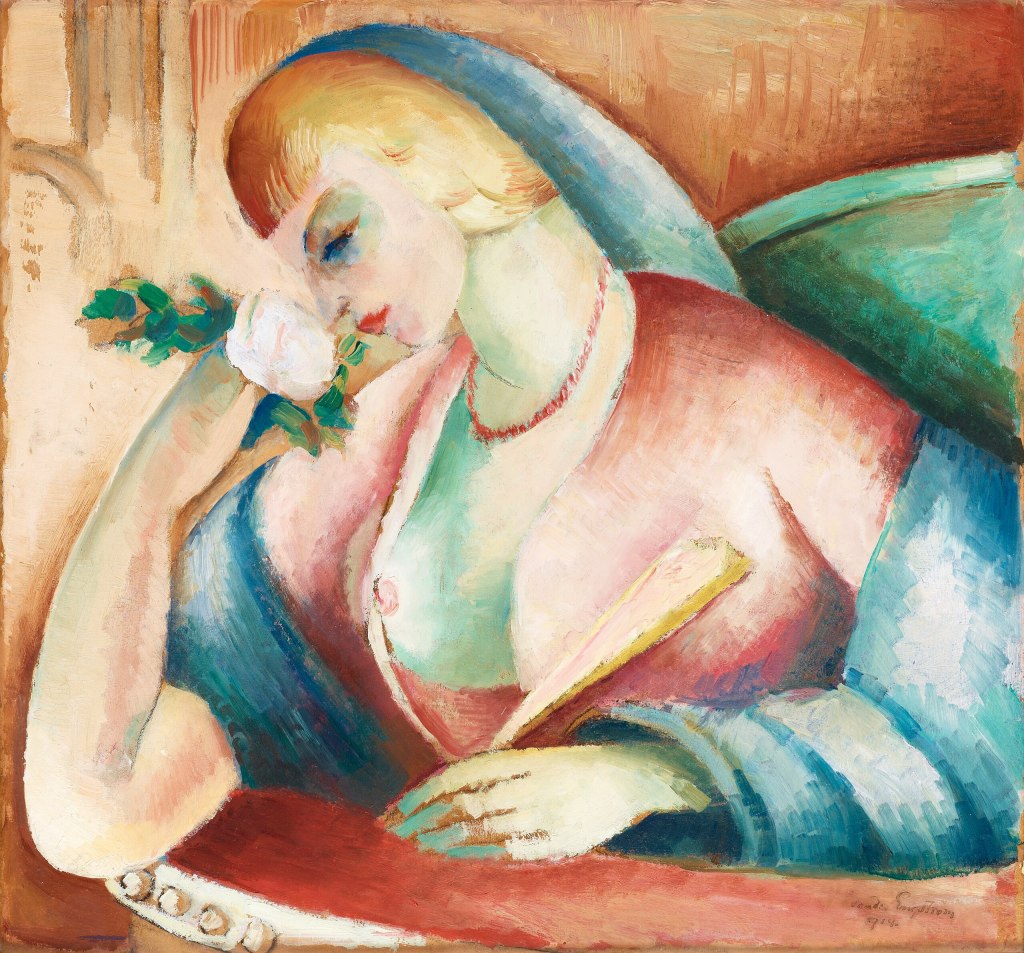
Lady with rose and fan
| John Steinbeck | |
|---|---|
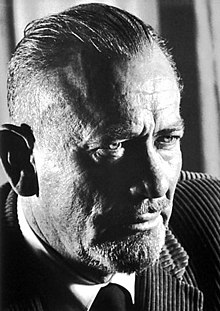 |
And today is the birthday of author John Steinbeck (born John Ernst Steinbeck, Jr. in Salinas, California, February 27, 1902 – December 20, 1968 New York City). He won the 1962 Nobel Prize in Literature “for his realistic and imaginative writings, combining as they do sympathetic humour and keen social perception”. In my opinion one of the giant’s of American letters. Many of his works are considered classics of Western literature.
During his writing career, he authored 27 books, including 16 novels, six non-fiction books, and two collections of short stories. His works include Tortilla Flat (1935) and Cannery Row (1945), the multi-generation epic East of Eden (1952), and the novellas Of Mice and Men (1937) and The Red Pony (1937). The Pulitzer Prize-winning The Grapes of Wrath (1939) is considered Steinbeck’s masterpiece and part of the American literary canon. Most of Steinbeck’s work is set in central California, particularly in the Salinas Valley and the California Coast Ranges region. His works frequently explored the themes of fate and injustice, especially as applied to downtrodden or everyman protagonists.
Steinbeck graduated from Salinas High School in 1919 and went on to study English Literature at Stanford University near Palo Alto, leaving without a degree in 1925. He traveled to New York City where he took odd jobs while trying to write. When he failed to publish his work, he returned to California and worked in 1928 as a tour guide and caretaker at Lake Tahoe, where he met Carol Henning, his first wife. They married in January 1930 in Los Angeles, where, with friends, he attempted to make money by manufacturing plaster mannequins.
In 1942, after his divorce from Carol he married Gwyndolyn “Gwyn” Conger.

Rocinante, camper truck in which Steinbeck traveled across the United States in 1960
In May 1948, Steinbeck’s friend Ed Ricketts, who had been seriously injured when a train struck his car, died. Later, Steinbeck was confronted by Gwyn, who asked for a divorce, which became final in August. Steinbeck spent the year after Ricketts’ death in deep depression.
In June 1949, Steinbeck met stage-manager Elaine Scott at a restaurant in Carmel, California. Steinbeck and Scott eventually began a relationship and in December 1950 Steinbeck and Scott married, within a week of the finalizing of Scott’s own divorce from actor Zachary Scott. This third marriage for Steinbeck lasted until his death in 1968.
Steinbeck died of heart disease and congestive heart failure. He was 66, and had been a lifelong smoker. An autopsy showed nearly complete occlusion of the main coronary arteries.
In accordance with his wishes, his body was cremated, and interred on March 4, 1969 at the Hamilton family gravesite in Salinas, with those of his parents and maternal grandparents. His third wife, Elaine, was buried in the plot in 2004. He had written to his doctor that he felt deeply “in his flesh” that he would not survive his physical death, and that the biological end of his life was the final end to it.
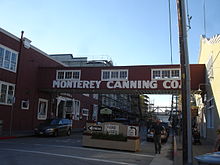
Cannery Row in Monterey
- We are lonesome animals. We spend all our life trying to be less lonesome. One of our ancient methods is to tell a story begging the listener to say — and to feel — ”Yes, that’s the way it is, or at least that’s the way I feel it. You’re not as alone as you thought.”
- “In Awe of Words,” The Exonian, 75th anniversary edition, Exeter University (1930)
- The discipline of the written word punishes both stupidity and dishonesty.
- “In Awe of Words,”
- No little appetite or pain, no carelessness or meanness in him escaped her; no thought or dream or longing in him ever reached her. And yet several times in her life she had seen the stars.
- The Moon Is Down (1942), p. 7
- I have come to believe that a great teacher is a great artist and that there are as few as there are any other great artists. It might even be the greatest of the arts since the medium is the human mind and spirit.
- “…like captured fireflies” (1955)
In utter loneliness a writer tries to explain the inexplicable.
The writer must believe that what he is doing is the most important thing in the world. And he must hold to this illusion even when he knows it is not true.
Syntax, my lad. It has been restored to the highest place in the republic.
- When asked his reaction to John F. Kennedy’s inaugural address
Cannery Row (1945)
- Cannery Row in Monterey in California is a poem, a stink, a grating noise, a quality of light, a tone, a habit, a nostalgia, a dream. [Opening sentence.]
- “It has always seemed strange to me,” said Doc. “The things we admire in men, kindness and generosity, openness, honesty, understanding and feeling are the concomitants of failure in our system. And those traits we detest, sharpness, greed, acquisitiveness, meanness, egotism and self-interest are the traits of success.”
The Wayward Bus (1947)
- He was a fine steady man, Juan Chicoy, part Mexican and part Irish, perhaps fifty years old, with clear black eyes, a good head of hair, and a dark and handsome face. Mrs Chicoy was insanely in love with him and a little afraid of him too, because he was a man, and there aren’t very many of them, as Alice Chicoy had found out. There aren’t very many of them in the world, as everyone finds out sooner or later.
- Ch. 1
- Her body and her mind were sluggish and lazy, and deep down she fought a tired envy of the people who, so she thought, experienced good things while she went through life a gray cloud in a gray room. Having few actual perceptions, she lived by rules. Education is good. Self-control is necessary. Everything in its time and place. Travel is broadening. And it was this last axiom which had forced her finally on the vacation to Mexico.
- About Bernice Pritchard in Ch. 5
- He wondered why he stayed with her. Just pure laziness, he guessed. He didn’t want to go through the emotional turmoil of leaving her. In spite of himself he’d worry about her and it was too much trouble. He’d need another woman right away and that took a lot of talking and arguing and persuading. It was different just to lay a girl but he would need a woman around, and that was the difference. You got used to one and it was less trouble.[…]
But there was another reason too. She loved him. She really did. And he knew it. And you can’t leave a thing like that. It’s a structure and it has an architecture, and you can’t leave it without tearing off a piece of yourself. So if you want to remain whole you stay no matter how much you may dislike staying. Juan was not a man who fooled himself very much.- Ch. 8
- She envied Camille. Camille was a tramp, Mildred thought. And things were so much easier for a tramp. There was no conscience, no sense of loss, nothing but a wonderful, relaxed, stretching-cat selfishness. She could go to bed with anyone she wanted to and never see him again and have no feeling of loss or insecurity about it. That was the way Mildred thought it was with Camille. She wished she could be that way, and she knew she couldn’t. Couldn’t because of her mother. And the unbidden thought entered her mind—if her mother were only dead Mildred’s life would be so much simpler. She could have a secret little place to live somewhere. Almost fiercely, she brushed the thought away. “What a foul thing to think,” she said to herself ceremoniously. But it was a dream she often had.
- Ch. 13. Mildred is the daughter of Elliot and Bernice Pritchard.
Burning Bright (1950)
- Mordeen said: “I used to wonder why this love seemed sweeter than I had ever known, better than many people ever know. And then one day the reason came to me. There are very few great Anythings in the world. In work and art and emotion—the great is very rare. And I have one of the great and beautiful. Now say your yah, yah, Victor, like a child unanswerably answering Wisdom. You will have to do that, I think.”
- Mordeen on her love for Joe Saul in Act One: The Circus
- His guard was up now and he wasn’t listening; he was only angry because here was a world he could not enter and so he had to disbelieve in its existence. He fell back on the world he knew.
- Act One: The Circus. “He” is Victor.
- “I do understand. I understand that you are offered a loveliness and you vomit on it, that you have the gift of love given you such as few men have ever known and you throw on it the acid of your pride, your ugly twisted sense of importance.”
- Friend Ed to Joe Saul in Act Three, Scene I: The Sea
- “It is so easy a thing to give—only great men have the courage and courtesy and, yes, the generosity to receive.”
- Friend Ed to Joe Saul in Act Three, Scene I: The Sea
East of Eden (1952)
- Maybe that’s the reason,” Adam said slowly, feeling his way. “Maybe if I had loved him I would have been jealous of him. You were. Maybe-maybe love makes you suspicious and doubting. Is it true that when you love a woman you are never sure-never sure of her because you aren’t sure of yourself? I can see it pretty clearly. I can see how you loved him and what it did to you. I did not love him. Maybe he loved me. He tested me and hurt me and punished me and finally he sent me out like a sacrifice, maybe to make up for something. But he did not love you, and so he had faith in you. Maybe — why, maybe it’s a kind of reverse.
- “What freedom men and women could have, were they not constantly tricked and trapped and enslaved and tortured by their sexuality! The only drawback in that freedom is that without it one would not be a human. One would be a monster.”
thanks for stoppin’ by y’all
mac tag
 The Lovers’ Chronicle
Leave a comment