
Dear Zazie, Here is today’s Lovers’ Chronicle from Mac Tag dedicated to his muse. Follow us on twitter @cowboycoleridge. Rhett
The Lovers’ Chronicle
Dear Muse,
dream believer…
oh dream goddess, he says, if i have a choice tonight, though spendin’ it with Schopenhauer in Frankfurt discussin’ his beliefs in asceticism and denial of the self would be fascinatin’, or the absolute opposite, spendin’ it with Lindsay in Sydney talkin’ about the inspiration for his erotic art, may we please spend it with Millay at Steepletop
Hello darling, says the fabulous redhead
hey dear, just in time, i think we are goin’ to Steepletop
That would be wonderful
yes, i want to talk to Millay about her candle burnin’ ways and how her Sonnet XLIII: “What lips my lips have kissed” sounds kinda like Schopy
I believe we can, let’s go
© copyright 2024 mac tag/cowboycoleridge all rights reserved
damn good thing to have
“The most important”
in a person or place
for some a thing
“Yes, but that seems fleeting”
agree, i think in someone
or in a purpose is best
“My turn to agree”
gotta have somethin’
to hold on to
“Or the one to turn to”
you mean like right now
give me somethin’ to…
© copyright 2023 mac tag/cowboycoleridge all rights reserved
one for Millay on her birthday; she wrote of what had come and gone and what had once sang in her that no longer did; could be filed in the category of things i could have written, and i was prepared to ride out the days with that as a guidin’ mantra, there were no other options, nothin’ left to believe in, till you
© copyright 2022.2024 mac tag/cowboycoleridge all rights reserved
your influence upon
thoughts, dreams,
days and nights
never knew before what
could have made me feel
did not believe in it
probably afraid of it
i have been astonished
i have shuddered
i shudder no more
my words, you,
my only tenets
ravished, a power
i could resist
until you
© copyright 2021 mac tag/cowboycoleridge all rights reserved
Pale Love, Pale Rider
today is Millay’s birthday and Schopenhauer’s
oh nice we are large admirers of both
to be clear, we are believers in his philosophy,
which i will greatly simplify;
the key to life is managin’ expectations
yes keep those suckers low
the lower the better
are we there yet
i have a sneakin’ worry we are not
© copyright 2020.2024 mac tag/cowboycoleridge all rights reserved
the big high plains sky
above my head
here upon my back
look my fill into after all
and sure enough i see
i ‘most could touch you
reachin’ to try,
i cry to feel
the light through
that keeps us from apart
and we will come to know,
what it means to believe
© copyright 2019 mac tag/cowboy coleridge all rights reserved
all right, let us
bring it…
one time
to sing one song,
to write one poem,
to paint one paintin’
you tellin’ me
that is all you got
the same tune,
the same verse,
the same view
or would you
sing somethin’ different
write somethin’ that matters
paint somethin’ you felt
cuz i am tellin’ you,
that is the stuff that saves
and it ain’t got nothin’ to do
with believin’ in the Goddess
or fate, or magic, or Buddha
it has to do
with believin’
in yourself
© copyright 2018 mac tag/cowboy coleridge all rights reserved
your influence upon
thoughts, dreams,
days and nights,
has not cured
and has made it
so intense that i am
reduced to breathe
in a dull existence
never knew what
could have made me feel
did not believe in it
probably afraid of it,
lest it should burn me up
i have been astonished
i have shuddered
i shudder no more
my words, you,
my only tenets
ravished, a power
i could resist
until you
ever since i have endeavoured
to reason against the reasons
i can do that no more
the sorrow, too much
without you
i should like to cast the die
for with or nothin’
i have no patience
with anything else
© copyright 2017 mac tag/cowboy Coleridge all rights reserved
Today is the birthday of Rembrandt Peale (Bucks County, Pennsylvania; February 22, 1778 – October 3, 1860 Philadelphia); artist and museum keeper. A prolific portrait painter, he was especially acclaimed for his likenesses of presidents George Washington and Thomas Jefferson. Peale’s style was influenced by French Neoclassicism after a stay in Paris in his early thirties.

At the age of 20, Peale married 22-year-old Eleanor May Short (1776–1836) at St. Joseph’s Catholic Church in Philadelphia. During their marriage, Peale and Short had nine children: Rosalba, Eleanor, Michael Angelo, Angelica, and Emma Clara among them. In 1840, he married Harriet Cany (1799–1869), one of his pupils and an artist in her own right.
Gallery
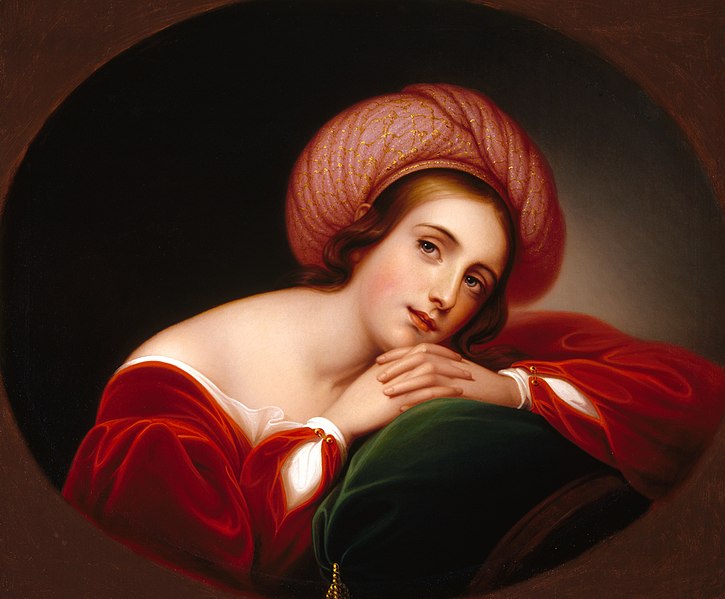
Idealized Portrait – 1845
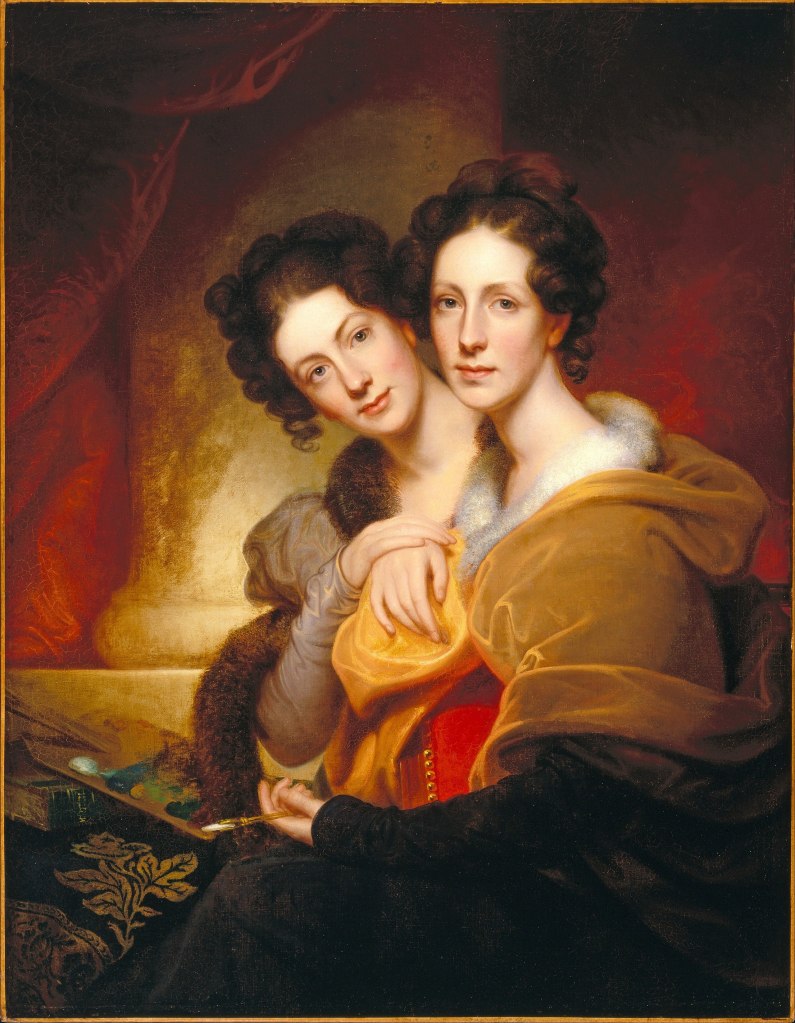
The Sisters (Eleanor and Rosalba Peale) (1826)
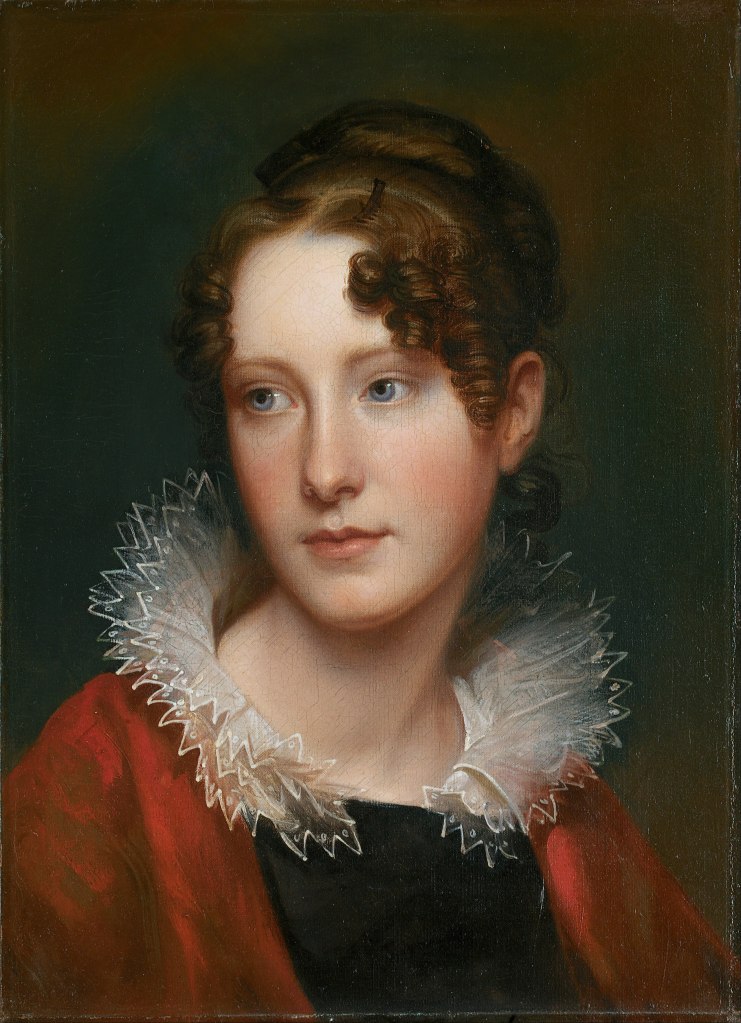
Portrait of Rosalba Peale (1820). Part of the collection of the Smithsonian American Art Museum

Portrait of Jane Griffith Koch (c. 1817)
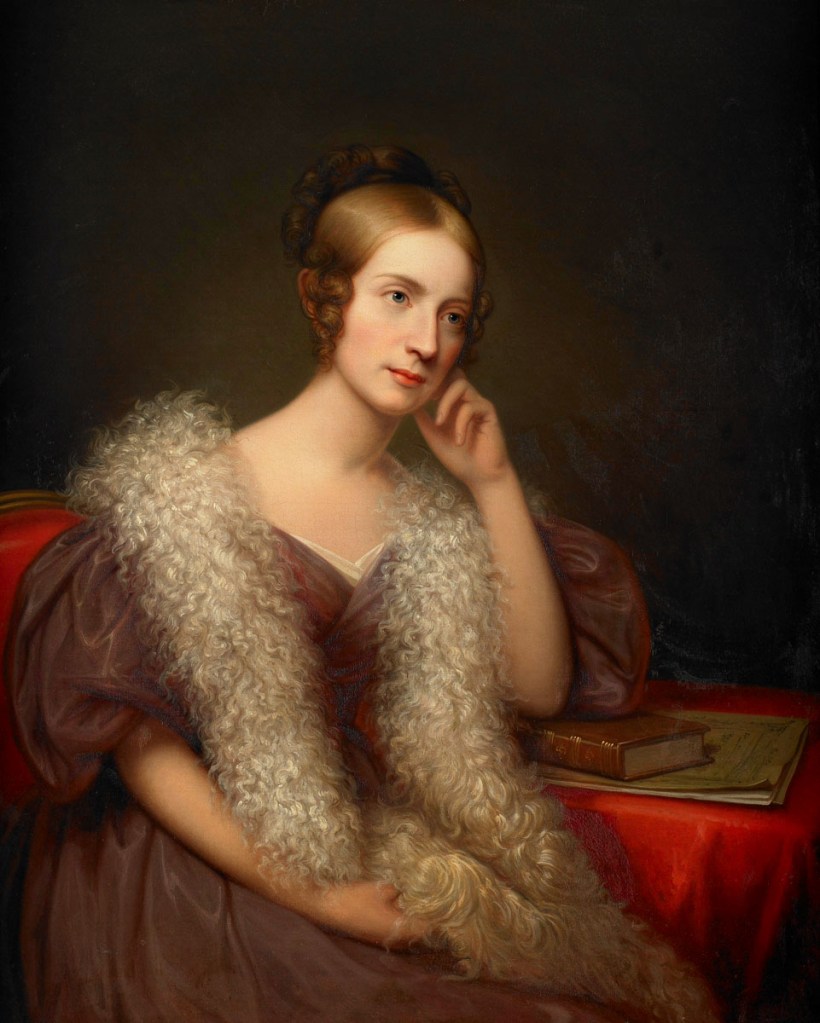
Caroline Louisa Pratt Bartlett (1836)

The Roman Daughter (1811)

Alida Livingston Armstrong and Daughter (c. 1810)
 Pearl of Grief » (1849)

Portrait of George Washington (1795–1823)
 Girl at a Window (Rosalba Peale) (1846)
Today is the birthday of Arthur Schopenhauer (22 February 1788 – 21 September 1860); philosopher. He is known for his 1818 work The World as Will and Representation (expanded in 1844), which characterizes the phenomenal world as the manifestation of a blind and irrational noumenal will. Building on the transcendental idealism of Immanuel Kant, Schopenhauer developed an atheistic metaphysical and ethical system that rejected the contemporaneous ideas of German idealism.

Schopenhauer was among the first philosophers in the Western tradition to share and affirm significant tenets of Indian philosophy, such as asceticism, denial of the self, and the notion of the world-as-appearance. His work has been described as an exemplary manifestation of philosophical pessimism. Though his work failed to garner substantial attention during his lifetime, he had a posthumous impact across various disciplines, including philosophy, literature, and science. His writing on aesthetics, morality, and psychology has influenced many thinkers and artists.
quotes
By all means, marry. If you get a good wife, you will be happy. If you get a bad one, you will be a philosopher.
To marry means to halve one’s rights and double one’s duties.
Marrying means, to grasp blindfolded into a sack hoping to find an eel out of an assembly of snakes.
Today is the birthday of Norman Lindsay (Norman Alfred William Lindsay; Creswick, Victoria, Australia 22 February 1879 – 21 November 1969 Sydney); artist, etcher, sculptor, writer, art critic, novelist, cartoonist and amateur boxer. One of the most prolific and popular Australian artists of his generation, Lindsay attracted both acclaim and controversy for his works, many of which infused the Australian landscape with erotic pagan elements and were deemed by his critics to be “anti-Christian, anti-social and degenerate”. A vocal nationalist, he became a regular artist for The Bulletin at the height of its cultural influence, and advanced staunchly anti-modernist views as a leading writer on Australian art. When friend and literary critic Bertram Stevens argued that children like to read about fairies rather than food, Lindsay wrote and illustrated The Magic Pudding (1918), now considered a classic work of Australian children’s literature.
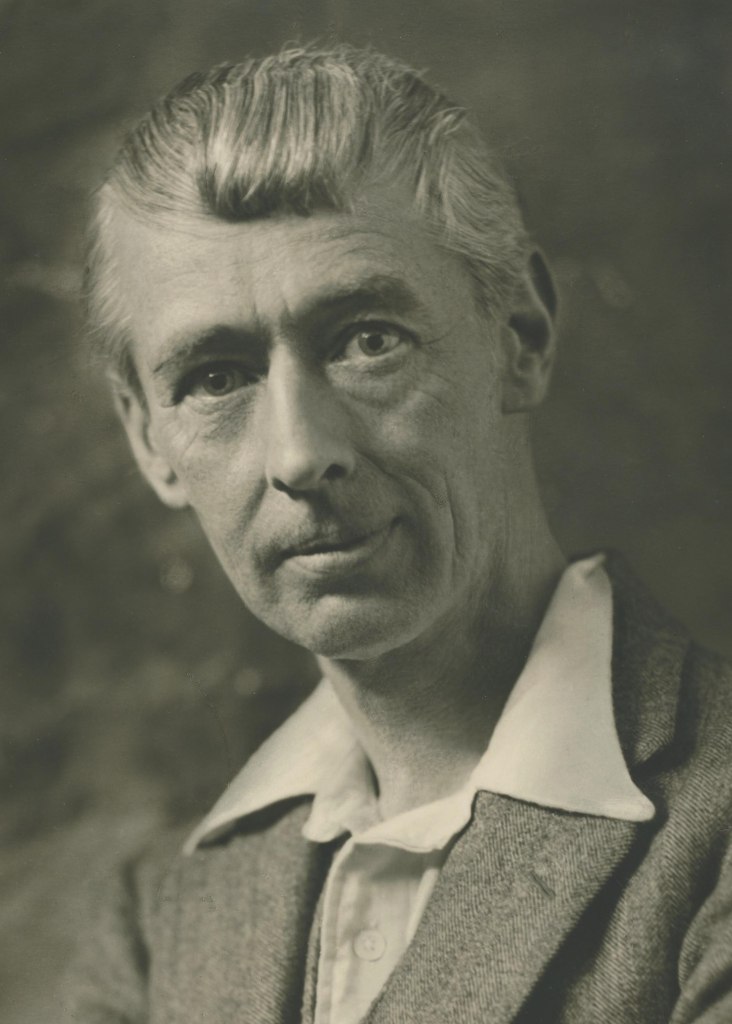
Apart from his creative output, Lindsay was known for his larrikin attitudes and personal libertine philosophy, as well as his battles with what he termed “wowserism”. One such battle is portrayed in the 1994 film Sirens, starring Sam Neill and filmed on location at Lindsay’s home in the Blue Mountains, west of Sydney. It is now known as the Norman Lindsay Gallery and Museum and is maintained by the National Trust of Australia.
Lindsay married Catherine (Kate) Agatha Parkinson, in Melbourne on 23 May 1900. Their son Jack was born in Melbourne on 20 October 1900, followed by Raymond in 1903 and Philip in 1906. They divorced in 1918. He later married Rose Soady who was also his business manager, a most recognisable model, and the printer for most of his etchings. They had two daughters: Jane Lindsay, born in 1920, and Helen Lindsay, born in 1921. Philip died in 1958 and Raymond in 1960. In the Lindsay tradition, Jack became a prolific publisher, writer, translator and activist. Philip also became a writer of historical novels, and worked for the film industry.
Lindsay is buried in Springwood Cemetery in Springwood, close to Faulconbridge where he lived.
Gallery
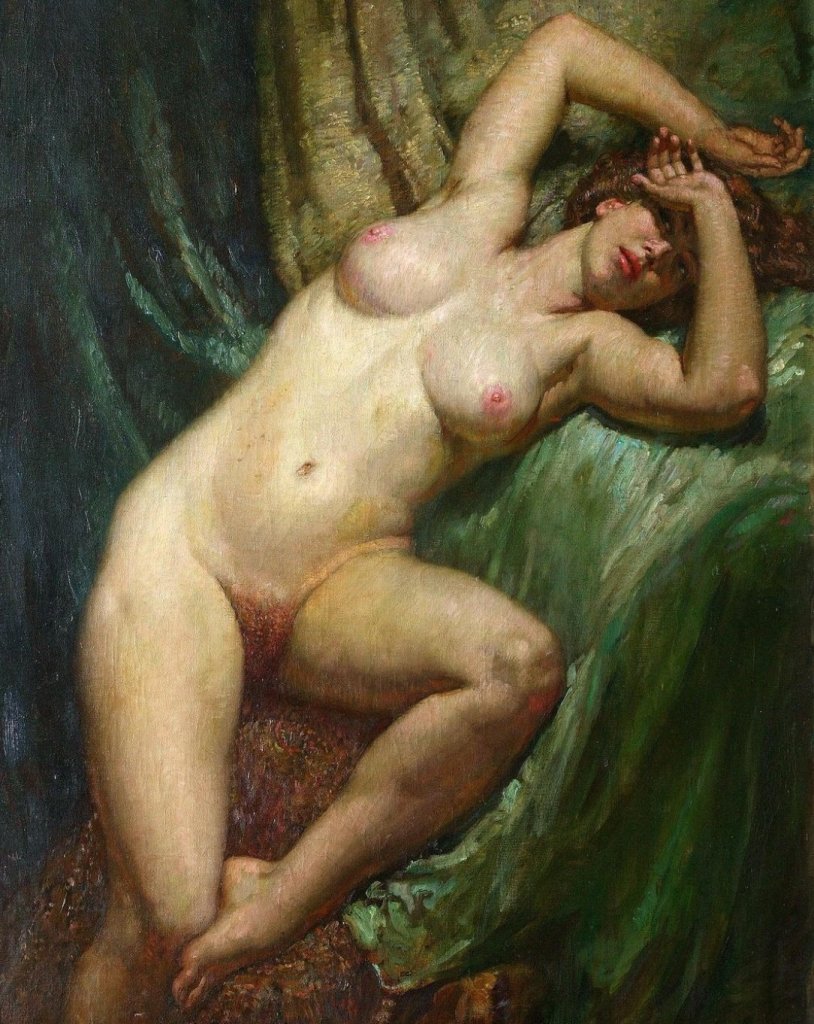
1933
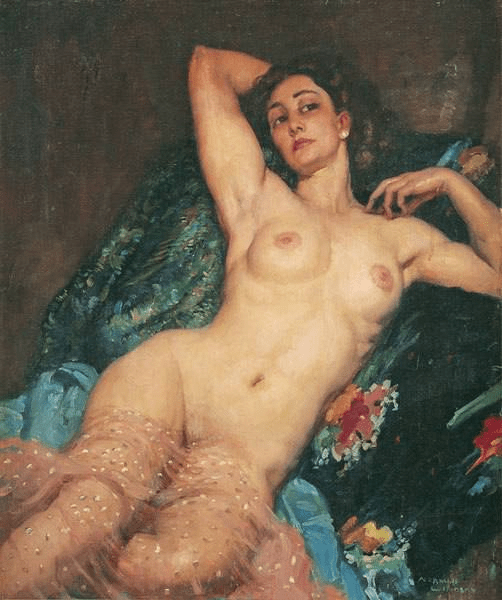

‘The Seventies’ (1942)
Oil on canvas
81.5 x 64.5 cm
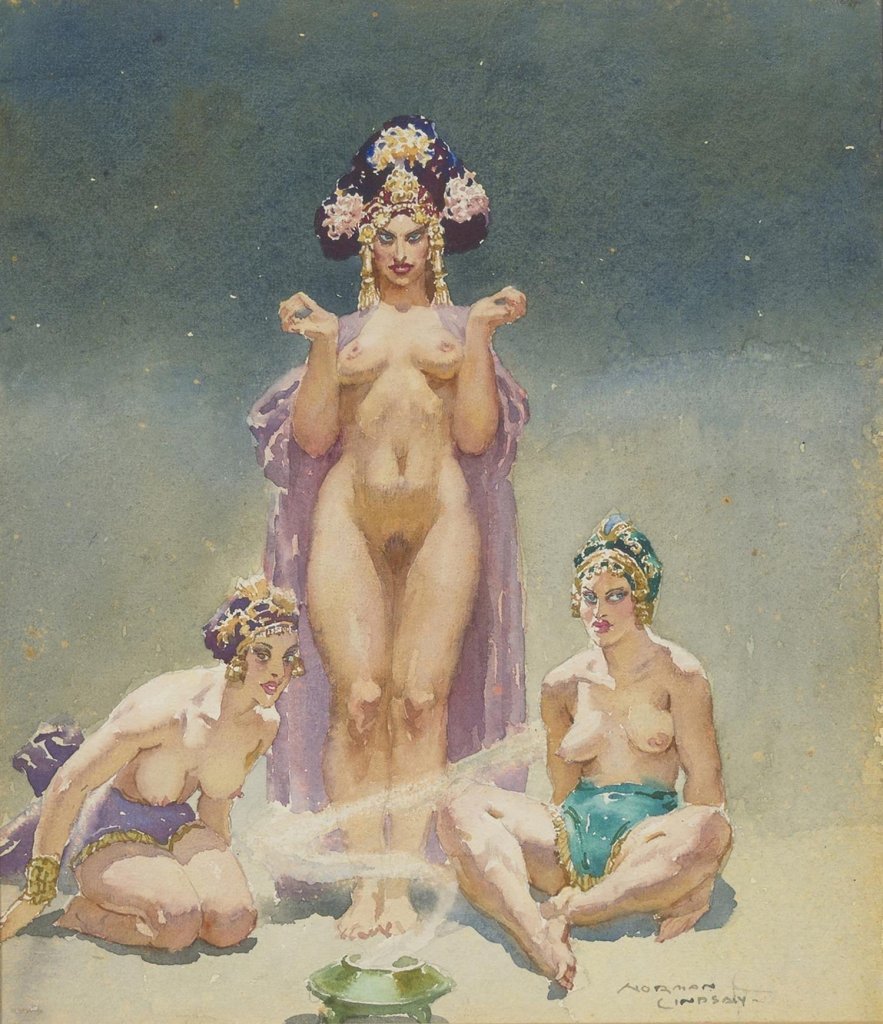
‘The Seventies’ (1942)
Oil on canvas
81.5 x 64.5 cm

“Rita” c 1938

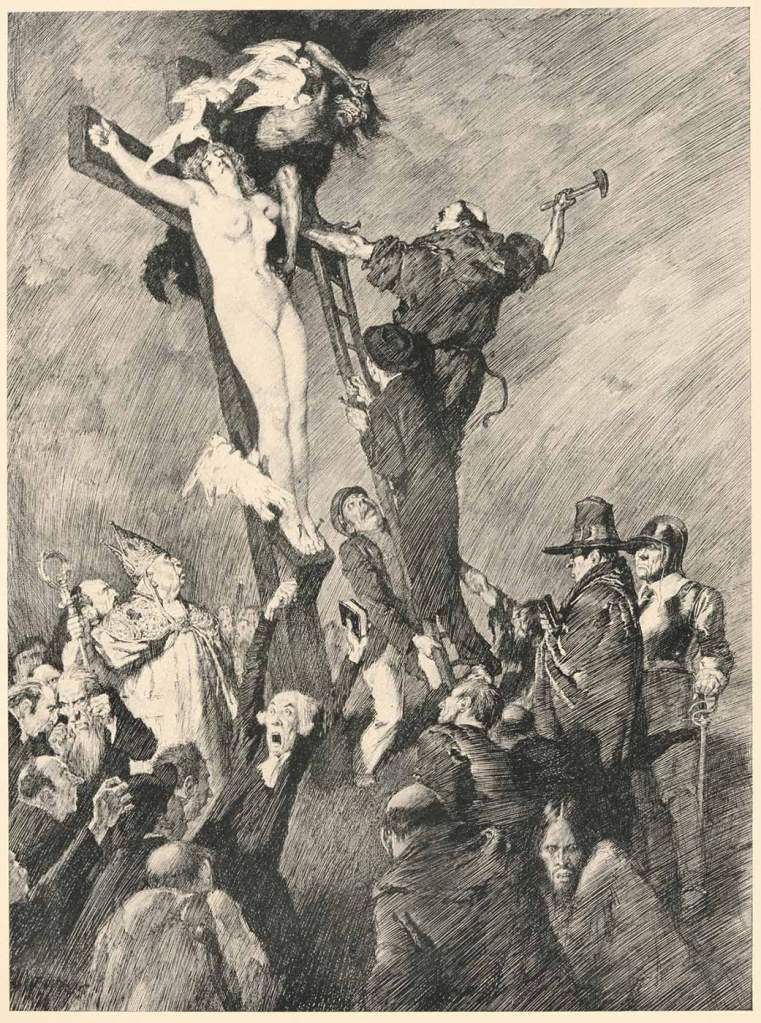
The Crucified Venus, 1912, the subject of a 1913 controversy at the Society of Artists exhibition in Melbourne
| Edna St. Vincent Millay | |
|---|---|
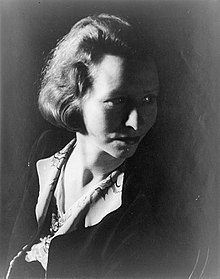 | |
And today is the birthday of Edna St. Vincent Millay (Rockland, Maine; February 22, 1892 – October 19, 1950 Austerlitz, New York); poet and playwright. Millay won the Pulitzer Prize for “The Ballad of the Harp-Weaver.” She was the first woman to win the poetry prize, though two women (Sara Teasdale in 1918 and Margaret Widdemer in 1919) won special prizes for their poetry prior to the establishment of the award. In 1924, literary critic Harriet Monroe labeled Millay “the greatest woman poet since Sappho.” She used the pseudonym Nancy Boyd for her prose work.
After being educated at Vassar, she moved to Greenwich Village and lived a Jazz Age Bohemian life, which revolved around poetry and love affairs. She was beautiful and alluring and many men and women fell in love with her. Critic Edmund Wilson asked her to marry him. She said no. He later reflected that falling in love with her “was so common an experience, so almost inevitable a consequence of knowing her in those days.”
One of her friends described her as “a frivolous young woman, with a brand-new pair of dancing slippers and a mouth like a valentine.” She wrote to a friend, “People fall in love with me and annoy me and distress me and flatter me and excite me.”
In January 1921, Millay traveled to Paris, where she met and befriended the sculptors Thelma Wood and Constantin Brâncuși, photographer Man Ray, had affairs with journalists George Slocombe and John Carter, and became pregnant by a man named Daubigny. She secured a marriage license but instead returned to New England where her mother Cora helped induce an abortion with alkanet, as recommended in her old copy of Culpeper’s Complete Herbal. Possibly as a result, Millay was frequently ill and weak for much of the next four years.
After experiencing his remarkable attention to her during her illness, she married 43-year-old Eugen Jan Boissevain in 1923. Boissevain was the widower of labor lawyer and war correspondent Inez Milholland, a political icon Millay had met during her time at Vassar. A self-proclaimed feminist, Boissevain supported Millay’s career and took primary care of domestic responsibilities. Both Millay and Boissevain had other lovers throughout their 26-year marriage. For Millay, one such significant relationship was with the poet George Dillon, a student 14 years her junior, whom she met in 1928 at one of her readings at the University of Chicago. Their relationship inspired the sonnets in the collection Fatal Interview, which she published in 1931.

In 1925, Boissevain and Millay bought Steepletop near Austerlitz, New York, which had once been a 635-acre (257 ha) blueberry farm. They built a barn (from a Sears Roebuck kit), and then a writing cabin and a tennis court. Millay grew her own vegetables in a small garden. Steepletop had a spring-fed pool and Millay enjoyed swimming in the nude.
Millay died at Steepletop. She had fallen down the stairs and was found with a broken neck approximately eight hours after her death. Her physician reported that she had suffered a heart attack following a coronary occlusion. She is buried alongside her husband at Steepletop.
Verse
But, sure, the sky is big, I said;
Miles and miles above my head;
So here upon my back I’ll lie
And look my fill into the sky.
And so I looked, and, after all,
The sky was not so very tall.
The sky, I said, must somewhere stop,
And — sure enough! — I see the top!
The sky, I thought, is not so grand;
I ‘most could touch it with my hand!
And reaching up my hand to try,
I screamed to feel it touch the sky.
- “Renascence” (1912), st. 3 Renascence and Other Poems (1917)
- The world stands out on either side
No wider than the heart is wide;
Above the world is stretched the sky, —
No higher than the soul is high.
The heart can push the sea and land
Farther away on either hand;
The soul can split the sky in two,
And let the face of God shine through.
But East and West will pinch the heart
That can not keep them pushed apart;
And he whose soul is flat — the sky
Will cave in on him by and by.- “Renascence” (1912), st. 20, Renascence and Other Poems (1917)
- It’s little I know what’s in my heart,
What’s in my mind it’s little I know,
But there’s that in me must up and start,
And it’s little I care where my feet go.- “Departure” (1918) from The Harp-Weaver and Other Poems (1923)
- My candle burns at both ends;
It will not last the night;
But, ah, my foes, and, oh, my friends —
It gives a lovely light.- “First Fig” from A Few Figs from Thistles (1920)
- Safe upon the solid rock the ugly houses stand;
Come and see my shining palace built upon the sand!- “Second Fig” from A Few Figs from Thistles (1920)
- Many a bard’s untimely death
Lends unto his verses breath;
Here’s a song was never sung:
Growing old is dying young.- “To a Poet Who Died Young” in Second April (1921), p. 52
- “One thing there’s no getting by—
I’ve been a wicked girl.” said I;
“But if I can’t be sorry, why,
I might as well be glad!”- From “The Penitent”, A Few Figs from Thistles (1922)
- But you are mobile as the veering air,
And all your charms more changeful than the tide,
Wherefore to be inconstant is no care:
I have but to continue at your side.
So wanton, light and false, my love, are you,
I am most faithless when I most am true.- From Sonnet III: “Oh, Think not I am faithful to a vow!”, A Few Figs from Thistles (1922)
- After all, my earstwhile dear,
My no longer cherished,
Need we say it was not love,
Now that love is perished?- “Passer Mortuus Est”, st. 3, Second April, 1921
- My heart is warm with friends I make,
And better friends I’ll not be knowing,
Yet there isn’t a train I wouldn’t take,
No matter where it’s going.- “Travel”, st. 3, Second April, 1921
- Euclid alone has looked on Beauty bare.
Let all who prate of Beauty hold their peace,
And lay them prone upon the earth and cease
To ponder on themselves, the while they stare
At nothing, intricately drawn nowhere.- Sonnet XXII from The Harp-Weaver and Other Poems (1923)
- Thus in the winter stands the lonely tree,
Nor knows what birds have vanished one by one,
Yet knows its boughs more silent than before:
I cannot say what loves have come and gone,
I only know that summer sang in me
A little while, that in me sings no more.- Sonnet XLIII: “What lips my lips have kissed, and where, and why” (1923), Collected Poems”, 1931
- Love is not all: it is not meat nor drink
Nor slumber nor a roof against the rain;
Nor yet a floating spar to men that sink
And rise and sink and rise and sink again;
Love can not fill the thickened lung with breath,
Nor clean the blood, nor set the fractured bone;
Yet many a man is making friends with death
Even as I speak, for lack of love alone.- Sonnet XXX from Fatal Interview (1931)
thanks for stoppin’ by y’all
mac tag
 The Lovers’ Chronicle
Leave a comment