Dear Zazie, Here is today’s Lovers’ Chronicle from Mac Tag dedicated to his muse. Follow us on twitter @cowboycoleridge. Rhett
The Lovers’ Chronicle
Dear Muse,
blue dream…
sure this is a dream, the first clue was bein’ horseback, the second that the horse is blue, but even in a dream he cannot understand German which the other rider is speaking to him
must be one of the German Expressionists, Franz Marc perhaps, that would explain the blue horses
but what explains this lack of concern for where he is going
Hello mi vida, says the gorgeous redhead also riding on a blue horse
ah, ma vie, that explains that
Where are we going
not sure, our guide only speaks German, but i was hopin’ we were somewhere in Louisiana, i wanted to see if i could find Kate Chopin and ask her about the line from her book, The Awakening;
“There was no despondency when she fell asleep that night; nor was there hope when she awoke in the morning.”
That would be fascinating, but dark
say do you here that music
Oh yes, I recognize that melody;
“Now that my blue days have passed,
Now that I’ve found you at last –
I’ll be loving you”
reckon how you say, take us home in German
© copyright 2024 mac tag/cowboy coleridge all rights reserved
“Where are we going today”
in perpetuity
“Do we have time”
we have what we have
“And will as long as we can”
did you see the sunset today
“Yes, it was wonderful”
a glowin’ orange orb
“Sinking slowly”
to be consumed
“Only to repeat”
as we do
“In each others arms”
ad infinitum
© copyright 2023 mac tag/cowboy coleridge all rights reserved
one of the only accurate uses of that word, over the past four plus years, applies to comin’ here, at first writin’ for myself then for us, but really startin’ this year, been tryin’ to turn down the drama which leads here; that if that exists, i want it to be with you
© copyright 2022.2024 mac tag/cowboy coleridge all rights reserved
lookin’ at you,
an indescribable feelin’
hearin’ your voice,
seductive, never ceasin’,
whisperin’, clamorin’,
murmurin’, invitin’
i realize, my present self,
different, better, seein’ at last
we will not be denied
that which our impassioned,
newly awakened bein’ demands
© copyright 2021 mac tag/cowboy coleridge all rights reserved
Pale Love, Pale Rider
wow heavy word today
one that gets tossed around too easily
the full weight of it rarely applies
gonna use one of my favorite techniques
and write about it without sayin’ it;
i am as guilty as any for bein’ dramatic
and droppin’ that word, at all times,
but now i think the only time
it has meanin’ is as it applies
to comin’ here to do this
© copyright 2020.2024 mac tag/cowboy coleridge all rights reserved
for which, always yearn
expression of dreams
the more we surrender
the closer we get
feed on imagination
leave aside all else
intensity of feelin’s
rhythm and tremor
the movement
the color
tryin’ to get it all
on the canvas
of together
© copyright 2019 mac tag/cowboy coleridge all rights reserved
inspiration
to not hold feelin’s too close
then everything else fades
for awhile
and all that went before
is as if it had never been
the dances in my dreams
the stars in the sky
the radiance in the sunrise
and the written words
that is where i find you
© copyright 2018 mac tag/cowboy coleridge all rights reserved
indeed, shut out
and found
on the threshold
if you forget
know this
when i look at the moon,
at the slow winter
out my window
when i hear the wind,
or a fine
piece of music
whenever i come
across anything
engagin’ or inspirin’
it will always be you
© copyright 2017 mac tag/cowboy Coleridge all rights reserved
call for her
on the porch
not quite night
pinpricks of light
in the Western sky
above the mesa
a risin’ moon
call… to no avail
inside the house… memories
her makin’ biscuits
brushin’ her hair
they are just as i left ‘em
simmerin’, waitin’
i want this
i want this, as night darkens
to stay here on this porch
till the world tilts towards
sleep, till what i remember
misses me, and calls me
***
lonely figure in silent
contemplation
of the occasional
moon and beneath it
the High Plains swift ripples
***
through the open door
which came the interrupted moon
and the swimming reaches of the High Plains
***
Voice from the past
Welcomed
An open door
To a new path
Perhaps
© copyright 2016 mac tag/cowboy Coleridge all rights reserved
Not here lookin’
For trouble. Just
Read my poems and
Nobody will
Get hurt. Capiche?
© copyright 2015 mac tag/cowboy Coleridge all rights reserved
Today is the birthday of Paula Modersohn-Becker (Minna Hermine Paula Becker; Friedrichstadt, German Empire 8 February 1876 – 20 November 1907 Worpswede, German Empire); Expressionist painter of the late 19th and early 20th century. She is noted for the many self-portraits she produced, including nude self-portraits. She is considered one of the most important representatives of early expressionism, producing more than 700 paintings and over 1000 drawings during her active painting life. She is recognized both as the first known woman painter to paint nude self-portraits, and the first woman to have a museum devoted exclusively to her art (the Paula Modersohn-Becker Museum, founded 1927). Additionally, she is considered to be the first woman artist to depict herself both pregnant and nude and pregnant.
Her career was cut short when she died from postpartum embolism at the age of 31.
In May 1901, Becker married painter Otto Modersohn. He was 11 years older than Becker, with an infant daughter, Elsbeth. In the two years that followed, Becker tried to combine her responsibilities as wife, housewife and stepmother with her artistic ambitions. She functioned in this uneasy balance for two years, then returned again to Paris, accompanied by Otto, for two months in 1903. In February 1905 Becker again returned to Paris. Otto briefly came to see her.
In a letter to her friend Rainer Maria Rilke written from Worpswede on 17 February 1906, Becker wrote: “And now, I don’t even know how I should sign my name, I’m not Modersohn and I’m not Paula Becker anymore either”. Soon after she left for Paris and wrote to Otto, “try to get used to the possibility of the thought that our lives can go separate ways”. In a journal entry dated 24 February 1906, a sanguine Modersohn-Becker wrote, “Now I have left Otto Modersohn and am standing between my old life and my new life. I wonder what the new one will be like. And I wonder what will become of me in my new life? Now whatever must be, will be.”
Gallery

Self-Portrait at 6th Wedding Anniversary
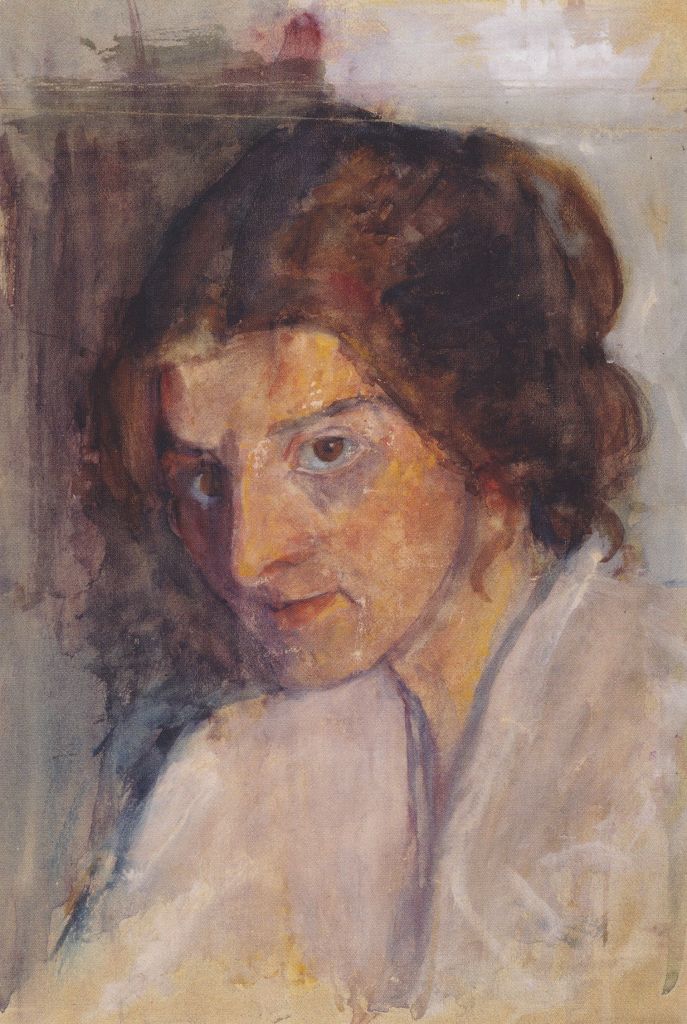
Self-portrait (1897) gouache

Self-Portrait: Nude with Amber Necklace Half-Length II
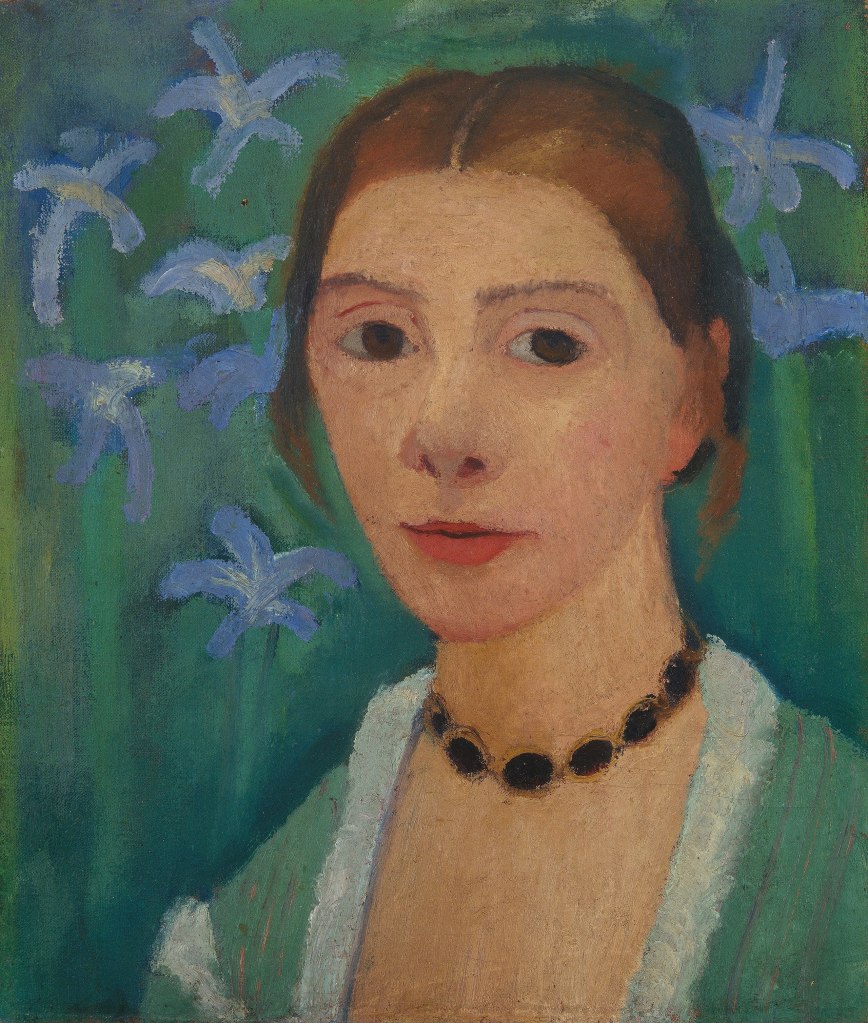
Self-portrait with green background and blue irises (c. 1905)

Self-portrait: The Painter with Camilla Branch (1907)
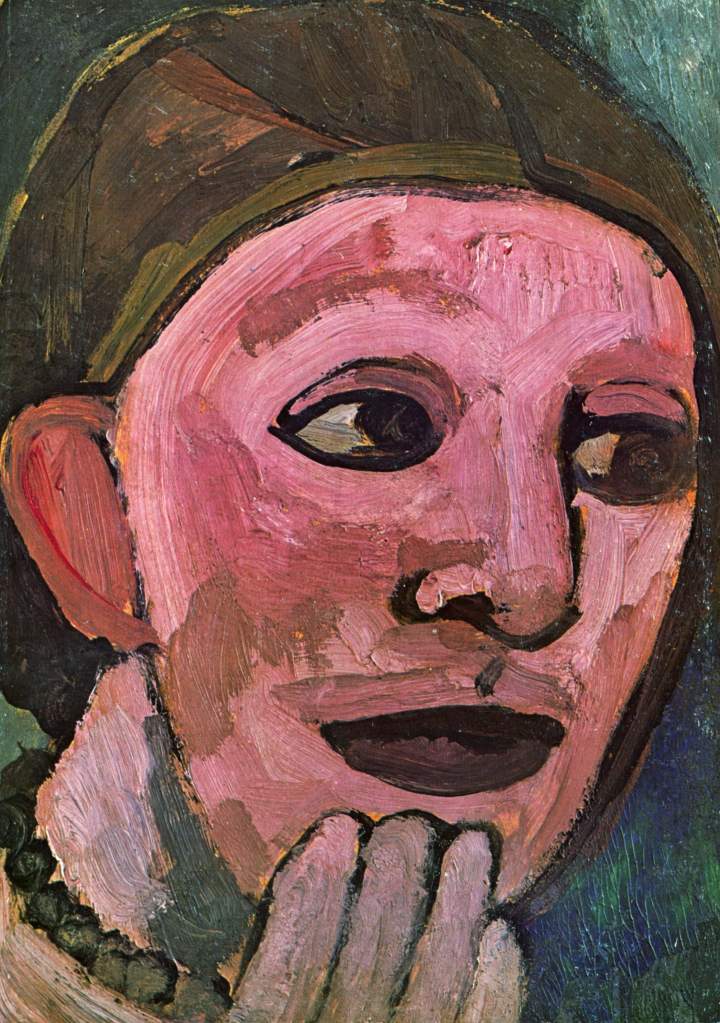
Self-portrait (1907)
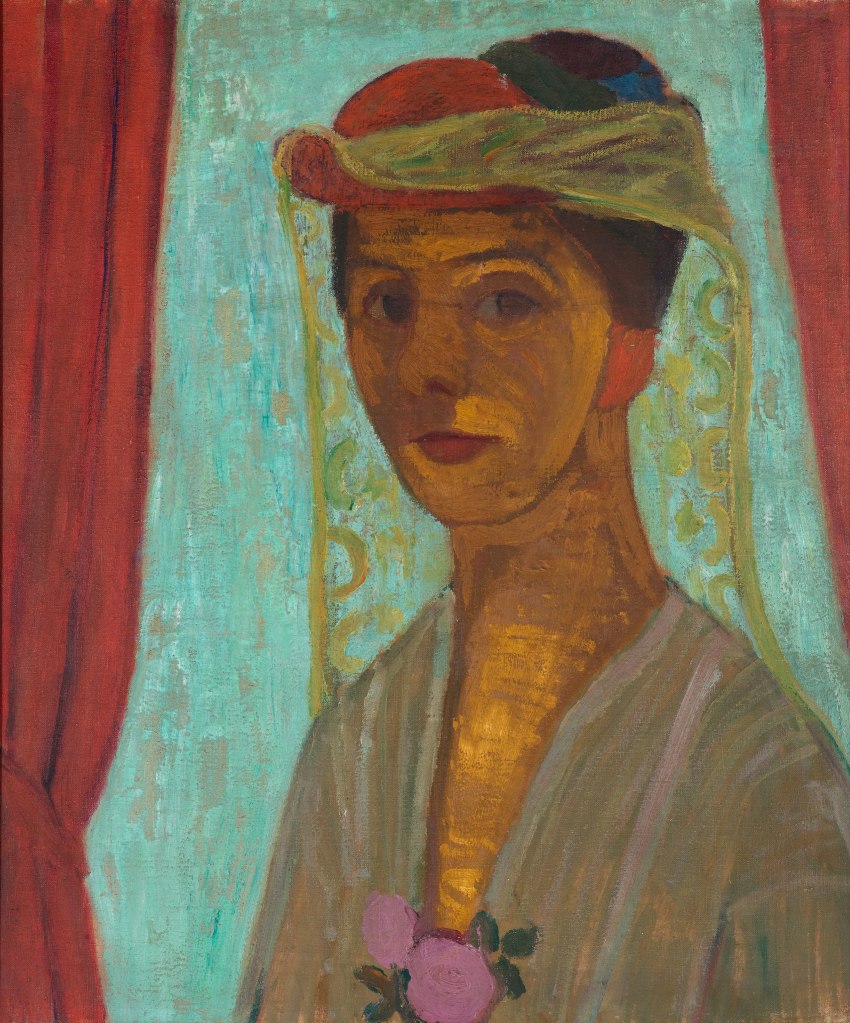
Self-Portrait with Hat and Veil (1907)

Old Peasant Woman (c. 1905)

Klara Rilke-Westhoff (1905) Hamburger Kunsthalle

Lee Hoetger with flower (1906)
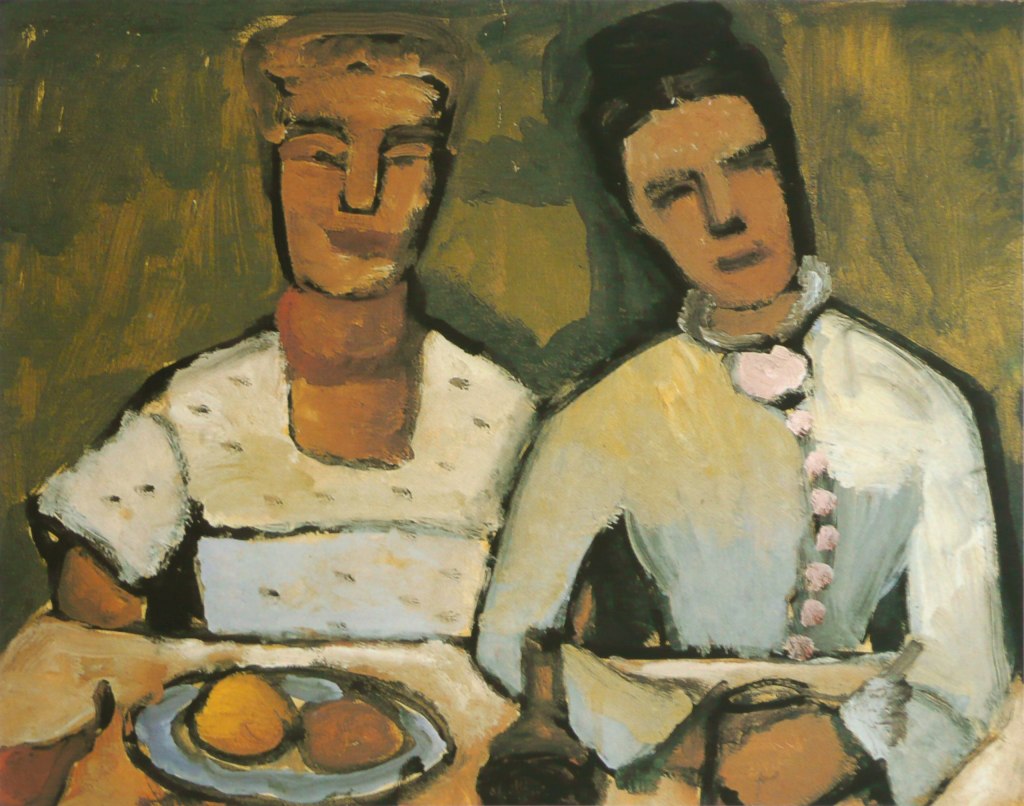
Lee Hoetger and her sister (1906–07)
| Franz Marc | |
|---|---|
 | |
Today is the birthday of Franz Marc (Munich; February 8, 1880 – March 4, 1916 Braquis, France); painter and printmaker, one of the key figures of the German Expressionist movement. He was a founding member of Der Blaue Reiter (The Blue Rider), a journal whose name later became synonymous with the circle of artists collaborating in it.
During his twenties, Marc was involved in a number of stormy relationships, including an affair lasting for many years with Annette Von Eckardt, a married antique dealer nine years his senior. He married twice, first to Marie Schnür, then to Maria Franck; both were artists.
Gallery


nude with cat 1910

Girl with a cat ii
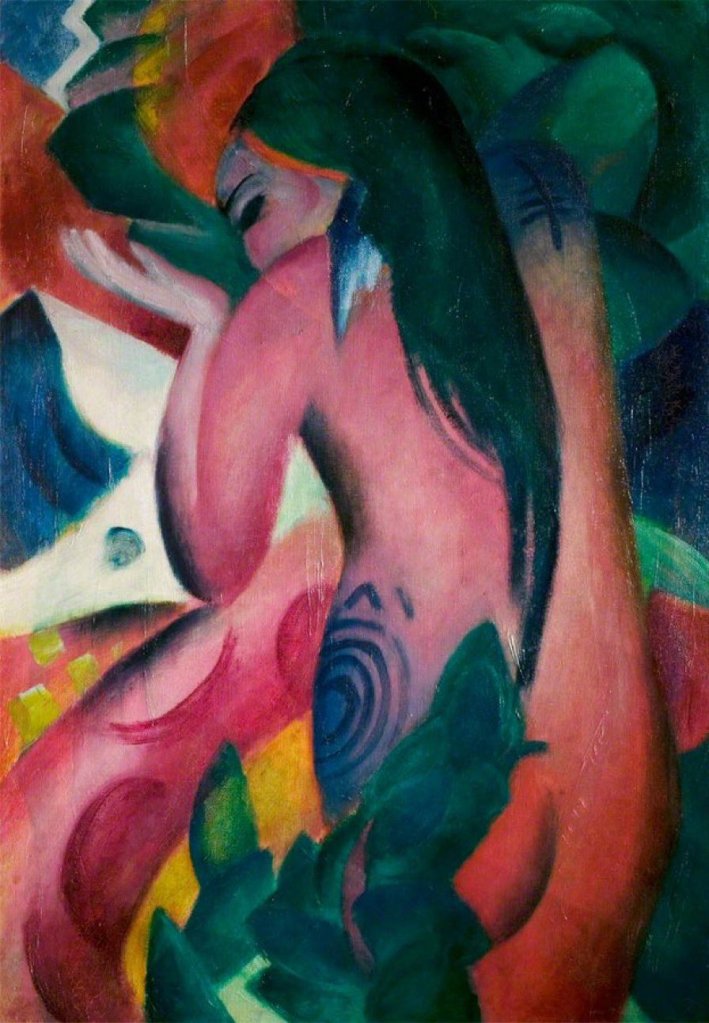
Rote Frau, (1912)
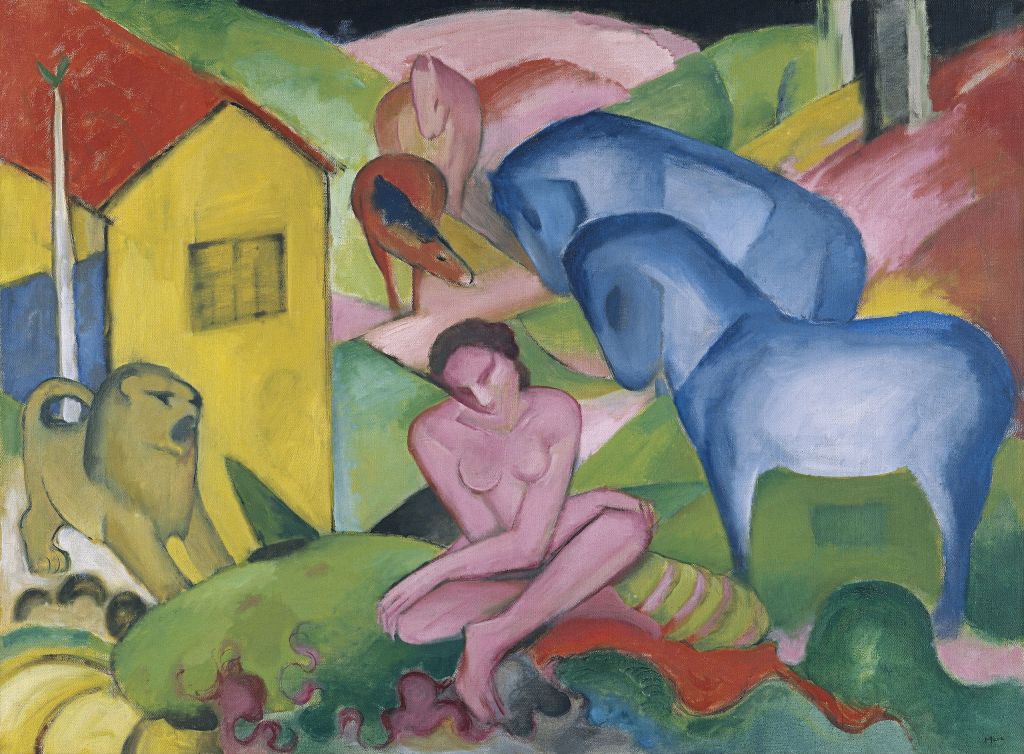
Der Traum, The Dream (1912), Thyssen-Bornemisza Museum in Madrid

Der Wasserfall (Frauen unter einem Wasserfall) The Waterfall (Women under a Waterfall), 1912
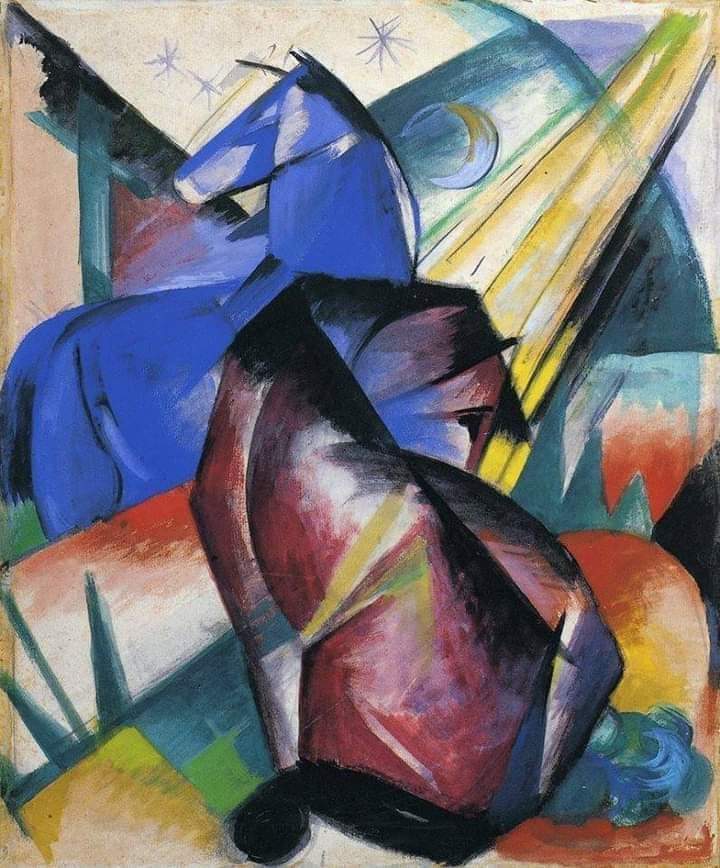
horses 1916
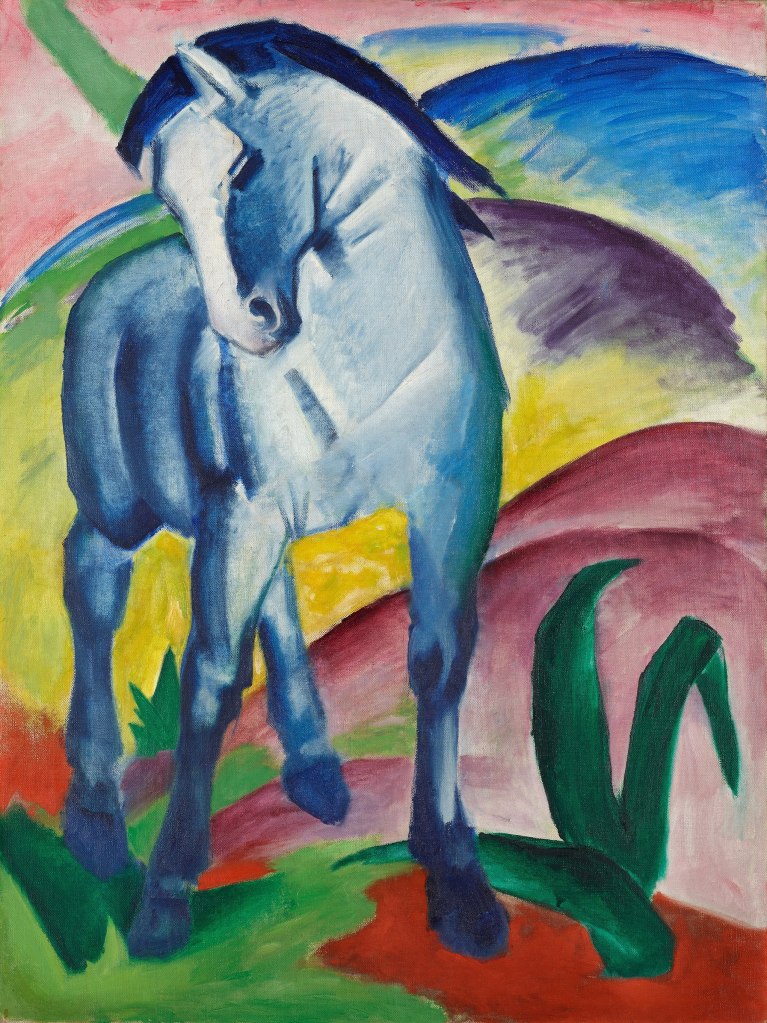
Blaues Pferd I, Blue Horse I (1911)
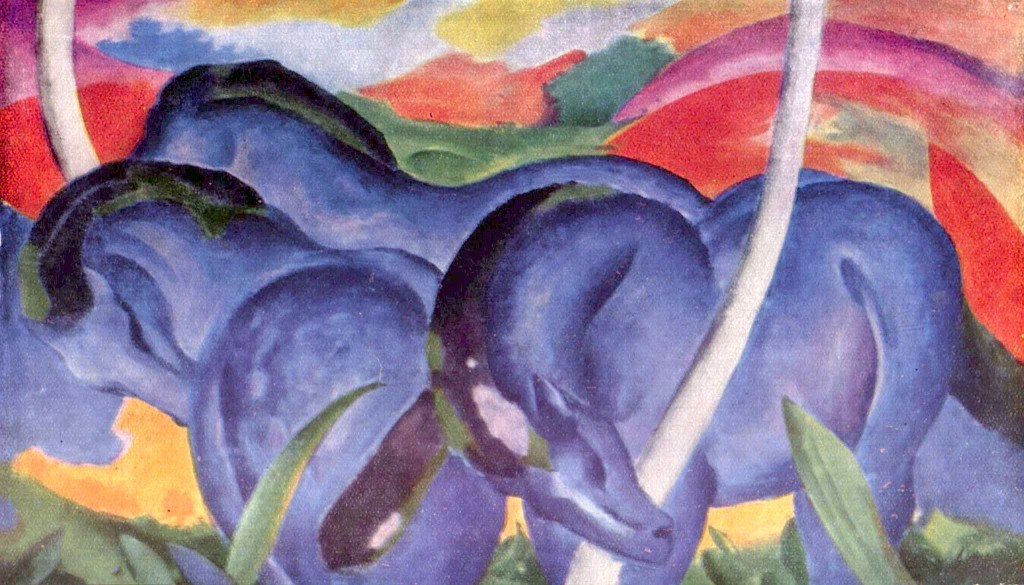
Die großen blauen Pferde, The Large Blue Horses (1911)

Die kleinen blauen Pferde, The Little Blue Horses (1911), Staatsgalerie Stuttgart

Der Turm der blauen Pferde, The Tower of Blue Horses (1913), missing since 1945
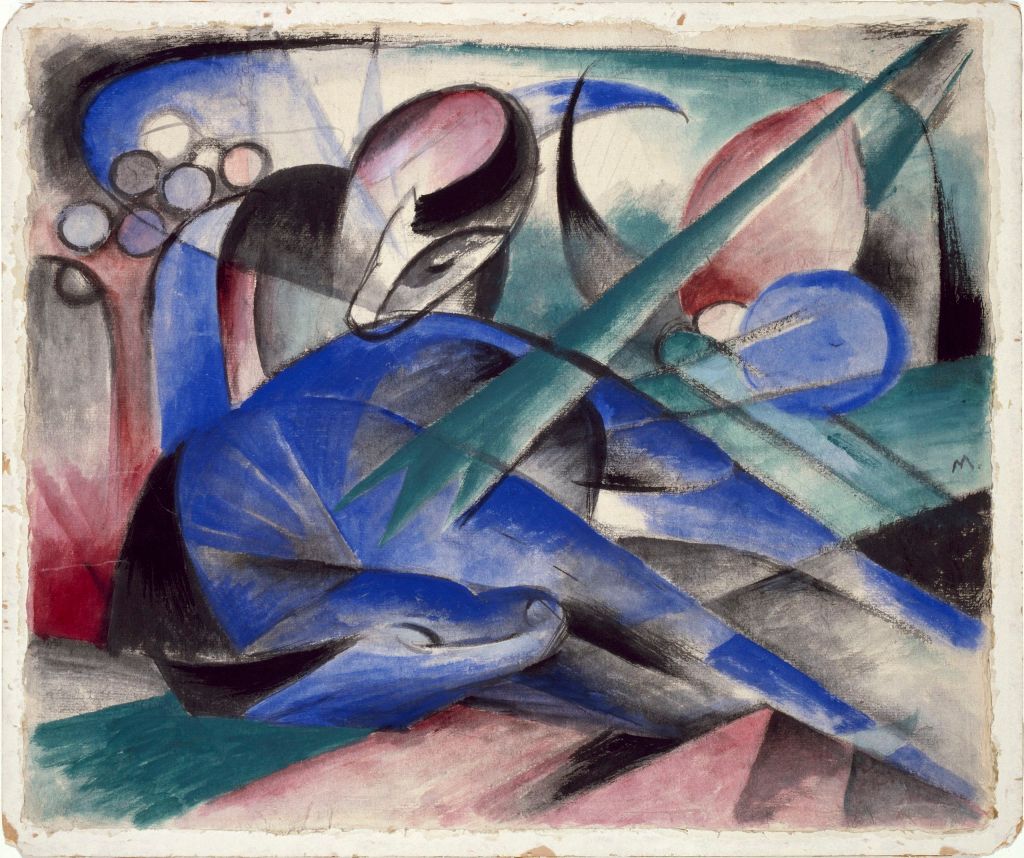
Träumendes Pferd, Dreaming Horse (1913), Solomon R. Guggenheim Museum, New York
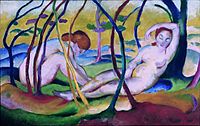 Akte unter Bäumen, Nudes under Trees (1911)
 Grünes Pferd in Landschaft, Green Horse in Landscape (1912), Solomon R. Guggenheim Museum, New York
 St. Julien l’Hospitalier, St. Julian the Hospitaler (1913), Solomon R. Guggenheim Museum, New York
For more on Franz Marc visit artsy.net
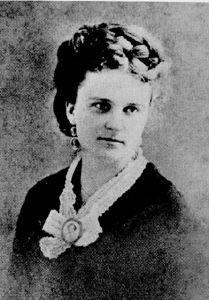
Today is the birthday of Kate Chopin (born Katherine O’Flaherty; St. Louis, Missouri; February 8, 1850 – August 22, 1904 St. Louis, Missouri); author of short stories and novels based in Louisiana. In my opinion, she is a forerunner of American 20th-century feminist authors of Southern or Catholic background.
Chopin was of maternal French and paternal Irish descent. She married and moved with her husband to New Orleans. They later lived in the country in Cloutierville, Louisiana. From 1892 to 1895, Chopin wrote short stories for both children and adults that were published in such national magazines as Atlantic Monthly, Vogue, The Century Magazine, and The Youth’s Companion. Her stories aroused controversy because of her subjects and her approach; they were condemned as immoral by some critics.
Her major works were two short story collections: Bayou Folk (1894) and A Night in Acadie (1897). Her important short stories included “Désirée’s Baby” (1893), a tale of miscegenation in antebellum Louisiana, “The Story of an Hour” (1894), and “The Storm” (1898). “The Storm” is a sequel to “At the Cadian Ball,” which appeared in her first collection of short stories, Bayou Folk.
Chopin also wrote two novels: At Fault (1890) and The Awakening (1899), which are set in New Orleans and Grand Isle, respectively. The characters in her stories are usually residents of Louisiana. Many of her works are set in Natchitoches in north central Louisiana, a region where she lived.
Within a decade of her death, Chopin was widely recognized as one of the leading writers of her time. In 1915, Fred Lewis Pattee wrote, “some of [Chopin’s] work is equal to the best that has been produced in France or even in America. [She displayed] what may be described as a native aptitude for narration amounting almost to genius.”
Quotes
The Awakening (1899)
- Looking at his wife as one looks at a valuable piece of property which has suffered some damage.
- An indescribable oppression, which seemed to generate in some unfamiliar part of her consciousness, filled her with a vague anguish…like a shadow… a mist passing across her soul’s summer day.
- The voice of the sea is seductive; never ceasing, whispering, clamoring, murmuring, inviting the soul to wander for a spell in abysses of solitude; to lose itself in mazes of inward contemplation.
- Sometimes I feel this summer as if I were walking through the green meadow again; idly, aimlessly, unthinking, and unguided.
- As she swam she seemed to be reaching out for the unlimited in which to lose herself.
- She could only realize that she herself — her present self — was in some way different from the other self. That she was seeing with different eyes.
- Edna wondered if they had all gone mad, to be talking and clamoring at that rate. She herself could think of nothing to say about Mexico or the Mexicans.
- The present alone was significant; was hers, to torture her as it was doing then with the biting conviction that she had lost that which she had held, that she had been denied that which her impassioned, newly awakened being demanded.
- She was moved by a kind of commiseration for Madame Ratignolle — a pity for that colorless existence which never uplifted its possessor beyond the region of blind contentment, in which no moment of anguish ever visited her soul, in which she would never have the taste of life’s delirium.
- “She says a wedding is one of the most lamentable spectacles on earth.”
- “Do you suppose a woman knows why she loves? Does she select? Does she say to herself, ‘Go to! here is a distinguished statesman with presidential possibilities; I shall proceed to fall in love with him.’ or, ‘I shall set my heart upon this musician, whose fame is on every tongue?’ or ‘this financier, who controls the world’s money markets?’”
- “The bird that would soar above the plane of tradition and prejudice must have strong wings. It is a sad spectacle to see the weaklings bruised, exhausted, fluttering back to earth.”
- She had resolved never again to belong to another than herself.
- There was something in her attitude, in her whole appearance when she leaned her head against the high-backed chair and spread her arms, which suggested the regal woman, the one who rules, who looks on, who stands alone.
- “I’ve been seeing the waves and the white beach of Grand Isle; the quiet, grassy street of the Chênière Caminada; the old sunny fort at Grand Terre. I’ve been working with a little more comprehension than a machine, and still feeling like a lost soul.”
- All sense of reality had gone out of her life; she had abandoned herself to fate, and awaited the consequences with indifference.
- There was no despondency when she fell asleep that night; nor was there hope when she awoke in the morning.
- “You have been a very foolish boy, wasting your time dreaming of impossible things when you speak of Mr. Pontellier setting me free! I am no longer one of Mr. Pontelliere’s possessions to dispose of or not. I give myself where I choose. If he were to say, ‘here Robert, take her and be happy; she is yours,’ I should laugh at you both”
- “And Nature takes no account of moral consequences, of arbitrary conditions which we create, and which we feel obliged to maintain at any cost.”
- “The years that are gone seem like dreams -if one might go on sleeping and dreaming- but to wake up and find -oh! well! perhaps it is better to wake up after all, even to suffer, rather than to remain a dupe to illusions all ones life.”
- She looked into the distance, and the old terror flamed up for an instant, then sank again. Edna heard her father’s voice and her sister Margaret’s. She heard the barking of an old dog that was chained to the sycamore tree. The spurs of the cavalry officer clanged as he walked across the porch. There was the hum of bees, and the musky odor of pinks filled the air.
- She was becoming herself and daily casting aside that fictitious self which we assume like a garment with which to appear before the world.
| Elizabeth Bishop | |
|---|---|
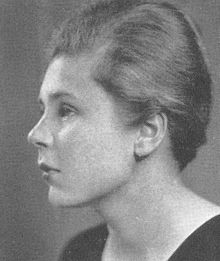 | |
And today is the birthday of Elizabeth Bishop (Worcester, Massachusetts; February 8, 1911 – October 6, 1979 Boston); poet and short-story writer. She was Consultant in Poetry to the Library of Congress from 1949 to 1950, the Pulitzer Prize winner for Poetry in 1956, the National Book Award winner in 1970, and the recipient of the Neustadt International Prize for Literature in 1976.
Verse
- Why should I be my aunt,
or me, or anyone?
What similarities
boots, hands, the family voice
I felt in my throat, or even
the National Geographic
and those awful hanging breasts
held us all together
or made us all just one?- Poem: In the Waiting Room
- From a magician’s midnight sleeve
the radio-singers
distribute all their love-songs
over the dew-wet lawns.- Poem: Late Air
Poems, North and South (1946)
- The armored cars of dreams contrived to let us do
so many a dangerous thing.- Poem: Sleeping standing up
- Topography displays no favorites; North’s as near as West.
More delicate than the historians’ are the map-makers’ colors.- Poem: The Map
- The future
sinks through water
fast as a stone,
alone alone. - “Yes …” that peculiar
affirmative. “Yes …”
A sharp, indrawn breath,
half groan, half acceptance,
that means “Life’s like that.
We know it (also death).”
thanks for stoppin’ by y’all
mac tag
 The Lovers’ Chronicle
Leave a comment