Dear Zazie, Here is today’s Lovers’ Chronicle from Mac Tag dedicated to his muse. Follow us on twitter @cowboycoleridge. Is it cold outside? Is someone keepin’ you warm inside? Rhett
The Lovers’ Chronicle
Dear Muse,
dream outside…
where am i, he wonders, another dream, alright but must admit a little concern
on this day plenty of drama and death
would be nice to be in Paris again, but have to watch out for Mimi and Rodolfo, cannot be catchin’ tuberculosis
perhaps i have been sent to help Manon, though the dream goddess will have to give me a pot of never endin’ gold
hey, what is that song, melody so faint, but we have heard it before
speakin’ of we, where is the beautiful redhead
Hello darling; she enters wearing a warm coat, with hat, gloves and scarves;
is it cold
Baby you know it is
of course, and the song, is that Dean and Marilyn Maxwell
Baby you know it is
we really must stay
As long as you keep me warm
the answer is yes, now together
Baby it’s just a dream
© copyright 2024 mac tag/cowboy coleridge all rights reserved
the obvious song has become polarizin’
but the origin story needs to be heard
to understand it and put it in perspective
“Ok, I’m skeptical, but go ahead”
in 1944, Frank Loesser wrote “Baby, It’s Cold Outside” to sing with his wife, Lynn Garland, at their housewarming party in New York City at the Navarro Hotel. They sang the song to indicate to guests that it was time to leave. Garland wrote that after the first performance, “We became instant parlor room stars. We got invited to all the best parties for years on the basis of ‘Baby.’ It was our ticket to caviar and truffles. Parties were built around our being the closing act.” In 1948, Loesser sold it to MGM for the romantic comedy Neptune’s Daughter. The producers had planned to use a different Loesser song, “(I’d Like to Get You on a) Slow Boat to China”, but studio censors thought it was too suggestive and replaced it with “Baby.”
“Oh wow, I had no idea, it does show that knowing the rest
of the story can be important in understanding anything”
thanks for indulgin’, you know i love to tell a tale,
now back to the weather,
it is only chilly outside
but we should stay inside
“Put some records on while I pour”
© copyright 2023.2024 mac tag/cowboy coleridge all rights reserved
several options here, lets go with Langston and dig what he dug; turnin’ corners till i ran into myself describes what i went through, and i heard the boogie-woogie rumble of a dream deferred, the significance of turnin’ those corners and the fact that the dream did not fester, are not lost on me and i come here each day to pay homage to that and you
© copyright 2022.2024 mac tag/cowboy coleridge all rights reserved
when we turned the corner
and walked towards each other,
it meant there were no
more corners to turn
to have heard the song
of the dream deferred,
to not let without
be our song
no longer waitin’
for somethin’
to happen
temperature
droppin’ now
come on baby,
we can git it back
© copyright 2021 mac tag/cowboy coleridge all rights reserved
Pale Love, Pale Rider
if we were back home
we could say that today
right, it does not git cold here
we could flip that last word
from outside to inside
and talk about our frozen heart
you mean, properly preserved
yes, i think this is the final stage
good, it cannot be broken again
agree, now back to the weather
it ain’t cold but we should stay
put some records on while i pour
© copyright 2020.2024 mac tag/cowboy coleridge all rights reserved
“Will you try again?”
well of course
why would i not
but i never did
(she reaches
for my hand)
“Your callouses
are so coarse.”
i kept waitin’
thinkin’, somethin’
would happen
such an awful waste
temperature
really droppin’ now
you never git back
wasted time
© copyright 2019 mac tag/cowboy coleridge all rights reserved
gazin’ out the window
cold outside
(Che gelida manina
O soave fanciulla)
nothin’ to offer
but this verse
(Dolce svegliare
alla mattina,
Tu più non torni)
remember,
the candle lit nights
the parties, the opera
rushin’ to your side
can you hear me
callin’ your name
© copyright 2018 mac tag/cowboy coleridge all rights reserved
there were those
that knew about the before
that had time to imagine
to see how death
could be sealed
how it could bloom in the evenin’
and take you overnight
a vision, deep in the mountains,
not allowed to come or go,
all the words sent, unheard
time, told not to stop,
slows for a moment
before swayin’
towards some other place
never came
no one went
it all exists
in imagination,
in dreams,
in books,
deep inside
nothin’ but its ownself,
hidin’ from what was possible,
and the cuttin’ of memories
from the imaginin’,
with scissors sharp
© copyright 2016 mac tag/cowboy coleridge all rights reserved
This one was inspired by the cold weather outside and what I wish was goin’ on inside. I know the Song of the Day is traditionally played at Christmas, but the song actually never refers to anything Christmas related and it certainly is cold outside. Our windchills have been consistently below zero.
Outside, Inside
Outside
Cold
Wind blows
Darkness comes
Snow on the ground
Cattle hunker down
Stars fill the great big sky
Inside
Warm
Hearth glows
Music plays
Candles flicker
Man, woman touchin’
Dreams fill two empty hearts
© copyright 2013 mac tag/Cowboy Coleridge all rights reserved
The Song of the Day is Dean Martin‘s version of “Baby, It’s Cold Outside”. We do not own the rights to this song. No copyright infringement intended. All rights reserved by the rightful owner.
Today is the birthday of Thomas Cole (Bolton le Moors, Lancashire, England; February 1801 – 11 February 1848 Catskill, New York); artist and the founder of the Hudson River School art movement. Cole is regarded as the first significant American landscape painter. He was known for his romantic landscape and history paintings. Influenced by European painters, but with an American sensibility, he was prolific throughout his career and worked primarily with oil on canvas. His paintings are typically allegoric and often depict small figures or structures set against moody and evocative natural landscapes. They are usually escapist, framing the New World as a natural eden contrasting with the smog-filled cityscapes of Industrial Revolution-era Britain, in which he grew up. His works, often seen as conservative, criticize the contemporary trends of industrialism, urbanism, and westward expansion.
Gallery


The Voyage of Life: Youth (1842)
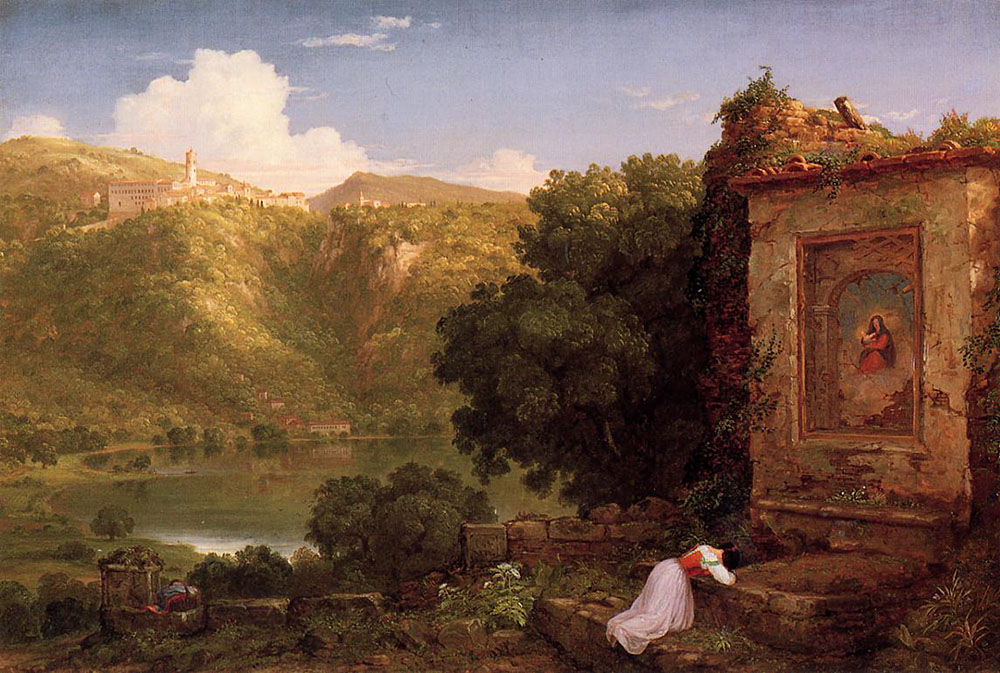
Il Penseroso (1845), Los Angeles County Museum of Art

The Course of Empire: Destruction”
1836
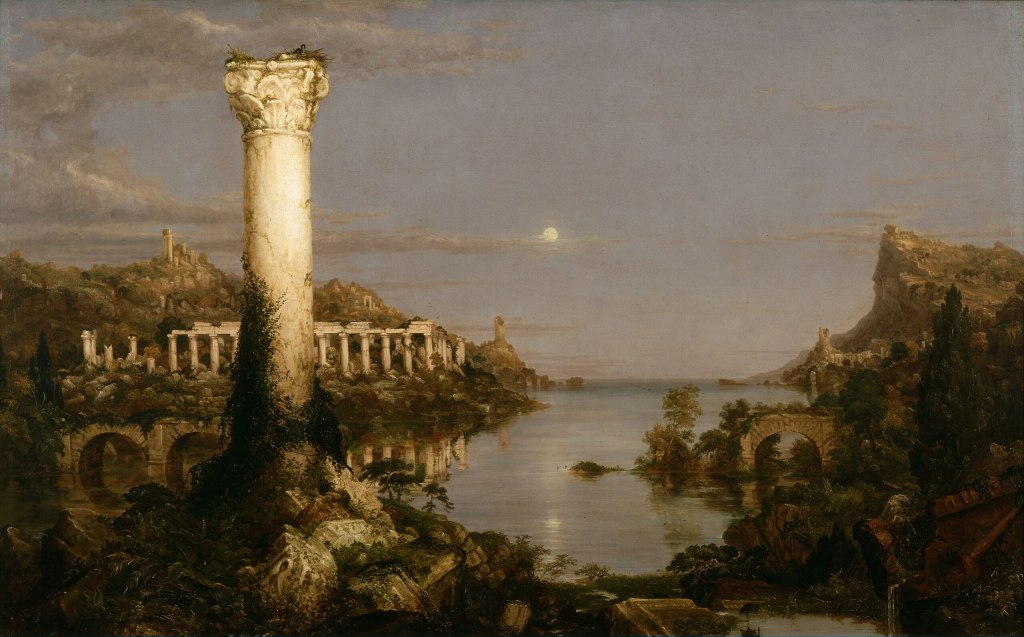
The Course of Empire: Desolation

Expulsion: Moon and Firelight 1828

On this day in 1892, Giacomo Puccini’s Manon Lescaut premiered in Turin, at the Teatro Regio. Manon is an Italian-language opera in four acts composed between 1889 and 1892 to a libretto by Luigi Illica, Marco Praga and Domenico Oliva, based on the 1731 novel Histoire du Chevalier des Grieux, et de Manon Lescaut by the Abbé Prévost.
The publisher, Giulio Ricordi, and the composer himself also contributed to the libretto. So confused was the authorship of the libretto that no one was credited on the title page of the original score. However, it was Illica and Giacosa who completed the libretto and went on to contribute the libretti to Puccini’s next three – and most successful – works, La Bohème, Tosca and Madama Butterfly.
Puccini took some musical elements in Manon Lescaut from earlier works he had written. For example, the madrigal Sulla vetta tu del monte from act 2 echoes the Agnus Dei from his 1880 Messa a quattro voci. Other elements of Manon Lescaut come from his compositions for strings: the quartet Crisantemi (January 1890), three Menuets (probably 1884) and a Scherzo (1883?). The love theme comes from the aria Mentia l’avviso (1883).
Ricordi, had been against any project based on Prévost’s story because Jules Massenet had already made it into a successful opera, Manon, in 1884. While Puccini and Ricordi may not have known it, the French composer Daniel Auber had also already written an opera on the same subject with the title Manon Lescaut, in 1856.
Despite all the warnings, Puccini proceeded. “Manon is a heroine I believe in and therefore she cannot fail to win the hearts of the public. Why shouldn’t there be two operas about Manon? A woman like Manon can have more than one lover.” He added, “Massenet feels it as a Frenchman, with powder and minuets. I shall feel it as an Italian, with a desperate passion.”
It was Puccini’s third opera and his first great success. The opera was first performed at the Metropolitan Opera in New York on 18 January 1907 in the presence of the composer with Lina Cavalieri in the title role, Enrico Caruso as des Grieux, Antonio Scotti as Lescaut, and Arturo Vigna conducting.
On this day in 1896, Puccini’s La bohème, premiered in Turin, Italy at the Teatro Regio. The unforgettably romantic and sad story of Rodolfo and Mimi. Jett says he took a dark-haired beauty to see it and it is one of his best memories.
| La bohème | |
|---|---|
 | |
La bohème is an opera in four acts, composed by Giacomo Puccini to an Italian libretto by Luigi Illica and Giuseppe Giacosa, based on Scènes de la vie de bohème by Henri Murger. The world premiere performance of La bohème was conducted by the young Arturo Toscanini. The U.S. premiere took place the following year, 1897, in Los Angeles. Since then, La bohème has become part of the standard Italian opera repertory and is one of the most frequently performed operas worldwide.
Synopsis
Place: Paris Time: Around 1830.
Act 1
In the four bohemians’ garret
Marcello is painting while Rodolfo gazes out of the window. They complain of the cold. In order to keep warm, they burn the manuscript of Rodolfo’s drama. Colline, the philosopher, enters shivering and disgruntled at not having been able to pawn some books. Schaunard, the musician of the group, arrives with food, wine and cigars. He explains the source of his riches: a job with an eccentric English gentleman, who ordered him to play his violin to a parrot until it died. The others hardly listen to his tale as they set up the table to eat and drink. Schaunard interrupts, telling them that they must save the food for the days ahead: tonight they will all celebrate his good fortune by dining at Cafe Momus, and he will pay.
The friends are interrupted by Benoît, the landlord, who arrives to collect the rent. They flatter him and ply him with wine. In his drunkenness, he begins to boast of his amorous adventures, but when he also reveals that he is married, they thrust him from the room—without the rent payment—in comic moral indignation. The rent money is divided for their evening out in the Quartier Latin.
Marcello, Schaunard and Colline go out, but Rodolfo remains alone for a moment in order to finish an article he is writing, promising to join his friends soon. There is a knock at the door. It is a girl who lives in another room in the building. Her candle has blown out, and she has no matches; she asks Rodolfo to light it. She is briefly overcome with faintness, and Rodolfo helps her to a chair and offers her a glass of wine. She thanks him. After a few minutes, she says that she is better and must go. But as she turns to leave, she realizes that she has lost her key.
Her candle goes out in the draught and Rodolfo’s candle goes out too; the pair stumble in the dark. Rodolfo, eager to spend time with the girl, to whom he is already attracted, finds the key and pockets it, feigning innocence. He takes her cold hand (Che gelida manina – “What a cold little hand”) and tells her of his life as a poet, then asks her to tell him more about her life. The girl says her name is Mimì (Sì, mi chiamano Mimì – “Yes, they call me Mimì”), and describes her simple life as an embroiderer. Impatiently, the waiting friends call Rodolfo. He answers and turns to see Mimì bathed in moonlight (duet, Rodolfo and Mimì: O soave fanciulla – “Oh lovely girl”). They realize that they have fallen in love. Rodolfo suggests remaining at home with Mimì, but she decides to accompany him to the Cafe Momus. As they leave, they sing of their newfound love.
Act 2
Quartier Latin
A great crowd, including children, has gathered with street sellers announcing their wares (chorus: Aranci, datteri! Caldi i marroni! – “Oranges, dates! Hot chestnuts!”). The friends arrive; Rodolfo buys Mimì a bonnet from a vendor, while Colline buys a coat and Schaunard a horn. Parisians gossip with friends and bargain with the vendors; the children of the streets clamor to see the wares of Parpignol, the toy seller. The friends enter the Cafe Momus.
As the men and Mimì dine at the cafe, Musetta, formerly Marcello’s sweetheart, arrives with her rich (and elderly) government minister admirer, Alcindoro, whom she is tormenting. It is clear she has tired of him. To the delight of the Parisians and the embarrassment of her patron, she sings a risqué song (Musetta’s waltz: Quando me’n vo’ – “When I go along”), hoping to reclaim Marcello’s attention. The ploy works; at the same time, Mimì recognizes that Musetta truly loves Marcello. To be rid of Alcindoro for a bit, Musetta pretends to be suffering from a tight shoe and sends him to the shoemaker to get her shoe mended. Alcindoro leaves, and Musetta and Marcello fall rapturously into each other’s arms.
The friends are presented with their bill. Schaunard’s purse has gone missing and no one else has enough money to pay. The sly Musetta has the entire bill charged to Alcindoro. The sound of a military band is heard, and the friends leave. Alcindoro returns with the repaired shoe seeking Musetta. The waiter hands him the bill and, dumbfounded, Alcindoro sinks into a chair.
Act 3
At the toll gate at the Barrière d’Enfer (late February)
Peddlers pass through the barriers and enter the city. Mimì appears, coughing violently. She tries to find Marcello, who is currently living in a little tavern where he paints signs for the innkeeper. She tells him of her hard life with Rodolfo, who abandoned her the night before, and of Rodolfo’s terrible jealousy (O buon Marcello, aiuto! – “Oh, good Marcello, help me!”). Marcello tells her that Rodolfo is asleep inside, and expresses concern about Mimì’s cough. Rodolfo wakes up and comes out looking for Marcello. Mimì hides and overhears Rodolfo first telling Marcello that he left Mimì because of her coquettishness, but finally confessing that his jealousy is a sham: he fears she is slowly being consumed by a deadly illness (most likely tuberculosis, known by the catchall name “consumption” in the nineteenth century). Rodolfo, in his poverty, can do little to help Mimì and hopes that his pretended unkindness will inspire her to seek another, wealthier suitor (Marcello, finalmente – “Marcello, finally”).
Out of kindness towards Mimì, Marcello tries to silence him, but she has already heard all. Her weeping and coughing reveal her presence, and Rodolfo hurries to her. Musetta’s laughter is heard and Marcello goes to find out what has happened. Mimì tells Rodolfo that she is leaving him, and asks that they separate amicably (Mimì: Donde lieta uscì – “From here she happily left”); but their love for one another is too strong for the pair to part. As a compromise, they agree to remain together until the spring, when the world is coming to life again and no one feels truly alone. Meanwhile, Marcello has found Musetta, and the couple quarrel fiercely about Musetta’s flirtatiousness: an antithetical counterpoint to the other pair’s reconciliation (quartet: Mimì, Rodolfo, Musetta, Marcello: Addio dolce svegliare alla mattina! – “Goodbye, sweet awakening in the morning!”).
Act 4
Back in the garret (some months later)
Marcello and Rodolfo are trying to work, though they are primarily talking about their girlfriends, who have left them and found wealthy lovers. Rodolfo has seen Musetta in a fine carriage and Marcello has seen Mimì dressed like a queen. The men both express their nostalgia (duet: O Mimì, tu più non torni – “O Mimì, will you not return?”). Schaunard and Colline arrive with a very frugal dinner and all parody eating a plentiful banquet, dance together and sing, before Schaunard and Colline engage in a mock duel.
Musetta suddenly appears; Mimì, who took up with a wealthy viscount after leaving Rodolfo in the spring, has left her patron. Musetta found her that day in the street, severely weakened by her illness, and Mimì begged Musetta to bring her to Rodolfo. Mimì, haggard and pale, is assisted onto a bed. Briefly, she feels as though she is recovering. Musetta and Marcello leave to sell Musetta’s earrings in order to buy medicine, and Colline leaves to pawn his overcoat (Vecchia zimarra – “Old coat”). Schaunard leaves with Colline to give Mimì and Rodolfo some time together. Mimì tells Rodolfo that her love for him is her whole life (aria/duet, Mimì and Rodolfo: Sono andati? – “Have they gone?”).
To Mimì’s delight, Rodolfo presents her with the pink bonnet he bought her, which he has kept as a souvenir of their love. They remember past happiness and their first meeting—the candles, the lost key. Suddenly, Mimì is overwhelmed by a coughing fit. The others return, with a gift of a muff to warm Mimì’s hands and some medicine. Mimì gently thanks Rodolfo for the muff, which she believes is a present from him, reassures him that she is better and falls asleep. Musetta prays. Schaunard discovers that Mimì has died. Rodolfo rushes to the bed, calling Mimì’s name in anguish. He weeps as the curtain falls.
| Langston Hughes | |
|---|---|
 | |
Today is the birthday of Langston Hughes (James Mercer Langston Hughes; Joplin, Missouri; February 1, 1902 – May 22, 1967 Manhattan); poet, social activist, novelist, playwright, and columnist. He was one of the earliest innovators of the then-new literary art form called jazz poetry. Perhap best known as a leader of the Harlem Renaissance in New York City. He famously wrote about the period that “the negro was in vogue”, which was later paraphrased as “when Harlem was in vogue”.
Hughes never married.
Hughes died at the age of 65 from complications after abdominal surgery related to prostate cancer. His ashes are interred beneath a floor medallion in the middle of the foyer in the Schomburg Center for Research in Black Culture in Harlem. It is the entrance to an auditorium named for him. The design on the floor is an African cosmogram entitled Rivers. The title is taken from his poem “The Negro Speaks of Rivers”. Within the center of the cosmogram is the line: “My soul has grown deep like the rivers”.
Verse
The stars went out and so did the moon.
The singer stopped playing and went to bed
While the Weary Blues echoed through his head.
He slept like a rock or a man that’s dead.
- “The Weary Blues,” from The Weary Blues (1926).
Hold fast to dreams
For if dreams die
Life is a broken-winged bird
That cannot fly.
- “Dreams,” from the anthology Golden Slippers: An Anthology of Negro Poetry for Young Readers, ed. Arna Bontemps (1941).
The Big Sea (1940)
- For poems are like rainbows; they escape you quickly.
Montage of a Dream Deferred (1951)
- My motto,
As I live and learn,
is:
Dig And Be Dug
In Return.- “Motto”.
- When you turn the corner
And you run into yourself
Then you know that you have turned
All the corners that are left.- “Final Curve”.
I know you’ve heard
The boogie-woogie rumble
Of a dream deferred- “Boogie: 1 a.m.”
Why should it be my song,
Why should it be my dream
deferred
overlong?- “Tell Me”.
to a dream deferred?
Daddy, ain’t you heard?- “Good Morning”.
- When you turn the corner
- Does it dry up
like a raisin in the sun?
Or fester like a sore —
And then run?
Does it stink like rotten meat?
Or crust and sugar over —
like a syrupy sweet?
- Does it dry up
- Maybe it just sags
like a heavy load.
- Maybe it just sags
- Or does it explode?
- “Harlem”.
amount of traveling
in a dream deferred.- “Same in Blues”.
of nothing
in a dream deferred.- “Same in Blues”.
All I want is you.
You can have me, baby —
but my lovin’ days is through.
A certain amount
of impotence
in a dream deferred.- “Same in Blues”.
don’t kick dreams
around downtown.- “Comment on Curb”.
Our dream deferred.
Good morning, daddy!
Ain’t you heard?- “Island”.
- The instructor said,
- Go home and write
a page tonight.
And let that page come out of you —
Then, it will be true.- “Theme from English B”.
- Or does it explode?
- It’s not easy to know what is true for you or me
at twenty-two, my age. But I guess I’m what
I feel and see and hear, Harlem, I hear you.- “Theme from English B”.
- Well, I like to eat, sleep, drink, and be in love.
I like to work, read, learn, and understand life.
I like a pipe for a Christmas present,
or records — Bessie, bop, or Bach.
I guess being colored doesn’t make me not like
the same things other folks like who are other races.- “Theme from English B”.
today is the birthday of Vivian Maier (Vivian Dorothy Maier; New York City; February 1, 1926 – April 21, 2009 Oak Park, Illinois); street photographer whose work was discovered and recognized after her death. She took more than 150,000 photographs during her lifetime, primarily of the people and architecture of Chicago, New York City, and Los Angeles, although she also traveled and photographed around the world.
During her lifetime, Maier’s photographs were unknown and unpublished; many of her negatives were never developed. A Chicago collector, John Maloof, acquired some of Maier’s photos in 2007, while two other Chicago-based collectors, Ron Slattery and Randy Prow, also found some of Maier’s prints and negatives in her boxes and suitcases around the same time. Maier’s photographs were first published on the Internet in July 2008, by Slattery, but the work received little response. In October 2009, Maloof linked his blog to a selection of Maier’s photographs on the image-sharing website Flickr, and the results went viral, with thousands of people expressing interest. Maier’s work subsequently attracted critical acclaim, and since then, Maier’s photographs have been exhibited around the world.
Her life and work have been the subject of books and documentary films, including the film Finding Vivian Maier (2013), which premiered at the Toronto International Film Festival, and was nominated for the Academy Award for Best Documentary Feature at the 87th Academy Awards.
Gallery
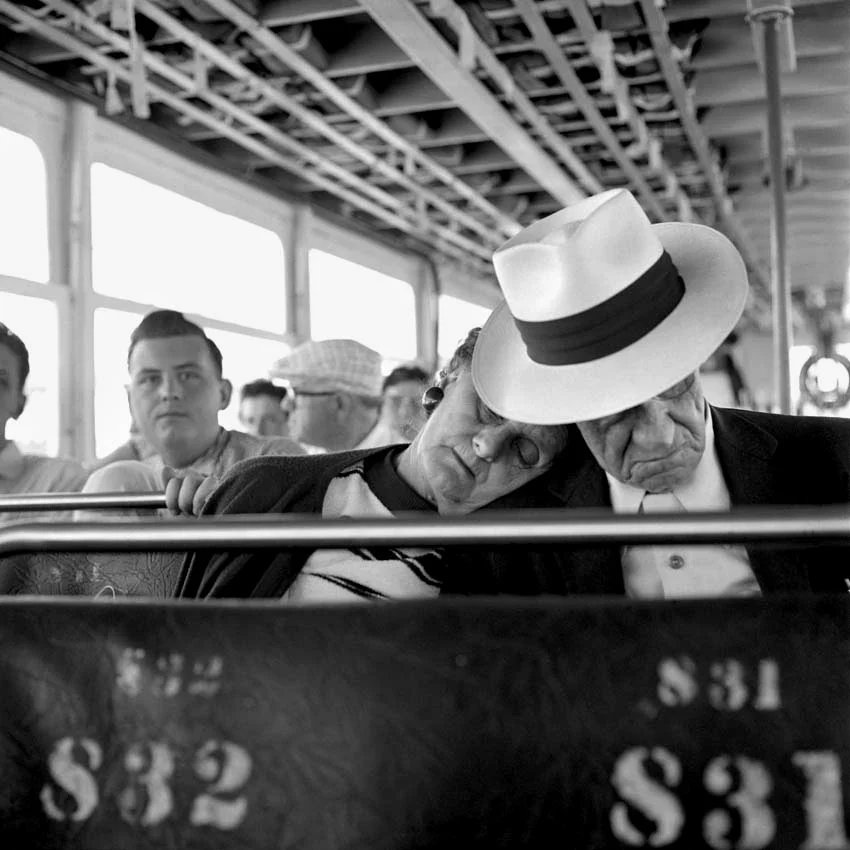

self portrait


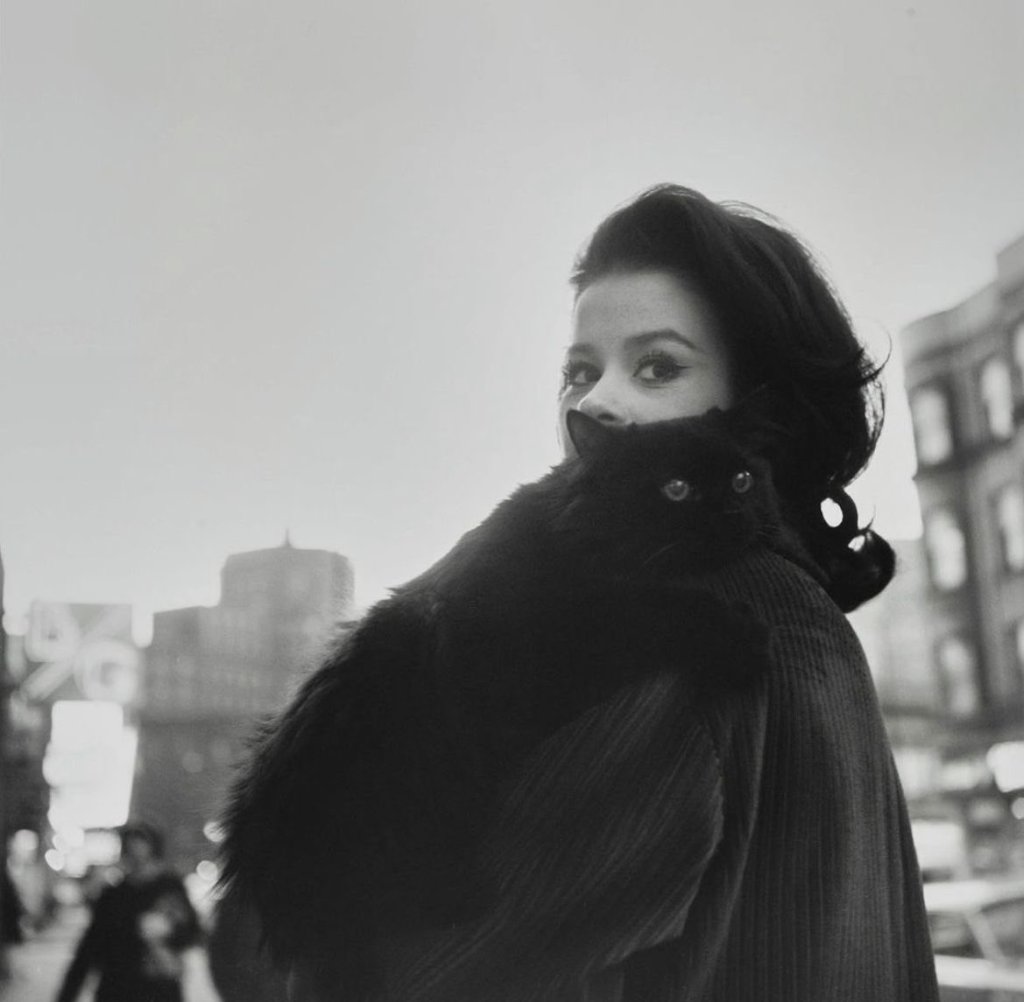

the movie premiere on this day in 1929 at Grauman’s Chinese Theatre, written by Norman Houston and James Gleason from a story by Edmund Goulding and directed by Harry Beaumont, starring Charles King, Anita Page and Bessie Love

And on this day in 1961 the premier of The Misfits, a contemporary Western film directed by John Huston and written by Arthur Miller, who adapted his own 1957 short story. It stars Clark Gable, Marilyn Monroe, and Montgomery Clift, alongside Thelma Ritter and Eli Wallach. It would be the final film for both Monroe and Gable.
thanks for stoppin’ by y’all
mac tag
 The Lovers’ Chronicle
Leave a comment