
Dear Zazie, Here is today’s Lovers’ Chronicle from Mac Tag dedicated to his muse. Follow us on twitter @cowboycoleridge. What do you affirm? Rhett
The Lover’s Chronicle
Dear Muse,
Rêve de Paris…
oh good, looks like we are back in Paris, say, is there anyway we can git frequent flyer miles outta these dream trips
Did you get the tickets to the Rêve d’Égypte my dear, we cannot miss Colette and Missy
yes my love, he tells the pretty redhead, nice to have you at the beginning of the dream
Did I tell you I saw Colette and Natalie Clifford Barney yesterday on the Champs-Élysées
nice, much better than seein’ her with that ass Willy
Agree, now, let’s take a bottle of wine back to our room
and we can affirm our raison d’être
© copyright 2024 mac tag/cowboy coleridge all rights reserved
another tough one for a song
but i am reminded of a line
from the great Tom T. Hall in his song
“Faster Horses (the Cowboy and the Poet)”;
“If my boy ever asks me
What it is that I have learned
I think that I will readily affirm”
“He was a master storyteller,
so tell me, to what do you affirm”
that what matters is this;
what two lovers come to share,
to return to day after day, and
of course, to write about it
“Nice, can we do some affirming now”
absolutely
© copyright 2023.2024mac tag/cowboy coleridge all rights reserved
so much of what has been written of believin’, appears to be some kinda premonition, it is not lost on me, the significance, i take it for what it is; hey, come here i have a bottle of red wine and these strong, calloused hands, i will comfort you and we can affirm choosin’ to be here
© copyright 2022 mac tag/cowboy coleridge all rights reserved
hey, come here
lets git out
a bottle of red wine,
and turn off the lights
now you can collapse
you know i have you
my strong fingers
and calloused hands
will work there magic
on your tense muscles
you need but relax
and nothin’ more
turns out, there is
comin’ back
thanks to you
© copyright 2021 mac tag/cowboy coleridge all rights reserved
Pale Love, Pale Rider
hey, come here
lets git out
a bottle of wine,
turn off all the lights
and light the candles
from the Hôtel Costes
we will lay on the bed,
listen to the wind blow
and talk of all we will be
© copyright 2020 mac tag/cowboy coleridge all rights reserved
the days here swing
from intoxicatin’
to bitter tonic
at least we are past
when they were poison
is the present
predetermined
by the past
a helluava lottta pain
was laid upon the doorstep
is there any comin’ back
from too much time spent payin’
for what cannot be paid
© copyright 2019 mac tag/cowboy coleridge all rights reserved
each day, showin’ up creatin’ this
buildin’, addin’ to what was here
the culmination of the tribulations
proof that anything can be borne
if you write it out, really all this is
it was inside, waitin’ to be released
finally got to my room, should be
easy now, just gotta keep comin’
back and listen to the muses
© copyright 2018.2024 mac tag/cowboy coleridge all rights reserved
just ahead
of a snowstorm,
we reach the hotel
and go up to your room
we take off our jackets and boots
and git out a bottle of wine
we turn off all the lights
and light the candles
from the Hôtel Costes
the musk tinged
scent fills the room
neither of us speak
we sit there on the bed
sippin’ and listenin’
to the wind blow
you lean back
against the headboard
i can tell from the look
in your eyes
what you want
to happen next
you reach over, strokin’
the back of my head
twistin’ my long hair
in your fingers
i put down my glass
and pull you close…
later spent and sated,
an understandin’
this was not just makin’ love
but an affirmation,
an exorcism of pain
© copyright 2017 mac tag/cowboy Coleridge all rights reserved
He knew it should bother him
That he no longer cared
© copyright 2017 mac tag/cowboy Coleridge all rights reserved
high on the High Plains
clear windy day and
the grass rushes ahead
wavin’
in the distance off the low mesa
the dark splash of clouds
huge dark clouds, buildin’
seem unreal
as if painted
by some grand artist
the dark
we live in, big sky
dark, shadowy…
mood dark… the dark
that permeates:
an essential need,
a daily ritual…
it is our way, this livin’,
through and around…
dark… by fancy chance,
by luck, destiny,
magic, a miracle,
a day like today,
the beckonin’,
noisy and constant…
as if no amount of placation
were enough
for the dark wonder
© copyright 2016 mac tag/cowboy Coleridge all rights reserved
She wrote:
The trick is to fall in love
with someone you can have
My problem:
When I read that I thought it said,
someone you can leave
© copyright 2015 mac tag/cowboy Coleridge all rights reserved
| Sidonie-Gabrielle Colette | |
|---|---|
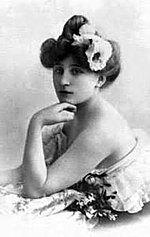 | |
Today is the birthday of Colette (Sidonie–Gabrielle Colette; Saint-Sauveur-en-Puisaye, Yonne 28 January 1873 – 3 August 1954 Paris); novelist nominated for the Nobel Prize in Literature in 1948. Perhaps her best known work, the novella Gigi (1944), was the basis for the film and Lerner and Loewe stage production of the same name. She was also a mime, an actress and a journalist.
In 1893 she married Henry Gauthier-Villars (1859–1931) or ‘Willy’, his nom-de-plume, an author and publisher. Her first four novels, the four Claudine stories, Claudine à l’école (1900), Claudine à Paris (1901), Claudine en menage (1902), and Claudine s’en va (1903), appeared under his name.
Willy, fourteen years older than his wife and one of the most notorious libertines in Paris, introduced Colette into avant-garde intellectual and artistic circles while engaging in sexual affairs and encouraging her own lesbian dalliances. It was he who chose the titillating subject-matter of the Claudine novels, the girls’ school or convent ruled by a seductive female teacher. Colette later said that she would never have become a writer if not for Willy.
Colette and Willy separated in 1906, although it was not until 1910 that the divorce became final. She had no access to the sizable earnings of the Claudine books—the copyright belonged to Willy—and until 1912 she followed a stage career in music halls across France, sometimes playing Claudine in sketches from her own novels, earning barely enough to survive. This period of her life is recalled in La Vagabonde (1910), which deals with women’s independence in a male society, a theme to which she would regularly return in future works. During these years she embarked on a series of relationships with other women, notably with Mathilde de Morny, Marquise de Belbeuf (“Missy”), with whom she sometimes shared the stage. On January 3, 1907, an onstage kiss between Missy and Colette in a pantomime entitled Rêve d’Égypte caused a near-riot, and as a result they were no longer able to live together openly, although their relationship continued for another five years.
In 1912 she married Henry de Jouvenel, the editor of Le Matin. During the war she devoted herself to journalism, but marriage allowed her to devote her time to writing.
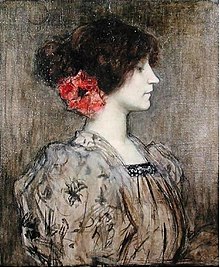
Colette, painted c. 1896 by Jacques Humbert
In 1920 Colette published Chéri, portraying love between an older woman and a much younger man. Chéri is the lover of Léa, a wealthy courtesan; Léa is devastated when Chéri marries a girl his own age, and delighted when he returns to her, but after one final night together she sends him away again.
The marriage to Jouvenel ended in divorce in 1924, partly due to Jouvenel’s infidelities and partly to Colette’s own affair with her sixteen-year-old stepson, Bertrand de Jouvenel. In 1925 she met Maurice Goudeket, who became her final husband (the couple stayed together until her death).

Gigi (1944)
On her death on August 3, 1954, she was refused a religious funeral by the Catholic Church on account of her divorces, but was given a state funeral, the first French woman of letters to be granted this honour, and interred in Père-Lachaise cemetery.
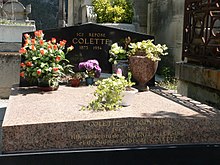
Colette’s tomb in Père Lachaise Cemetery
Today is the birthday of Alice Neel (Merion Square, Pennsylvania; January 28, 1900 – October 13, 1984 New York City); visual artist, who was known for her portraits depicting friends, family, lovers, poets, artists, and strangers. Her paintings have an expressionistic use of line and color, psychological acumen, and emotional intensity. Her work depicts women through a female gaze, illustrating them as being consciously aware of the objectification by men and the demoralizing effects of the male gaze. Her work contradicts and challenges the traditional and objectified nude depictions of women by her male predecessors. She pursued a career as a figurative painter during a period when abstraction was favored, and she did not begin to gain critical praise for her work until the 1960s. Neel was called “one of the greatest portrait artists of the 20th century” by Barry Walker, curator of modern and contemporary art at the Museum of Fine Arts, Houston, which organized a retrospective of her work in 2010.
 Neel in her studio
photographed by Lynn Gilbert (1976)
Gallery
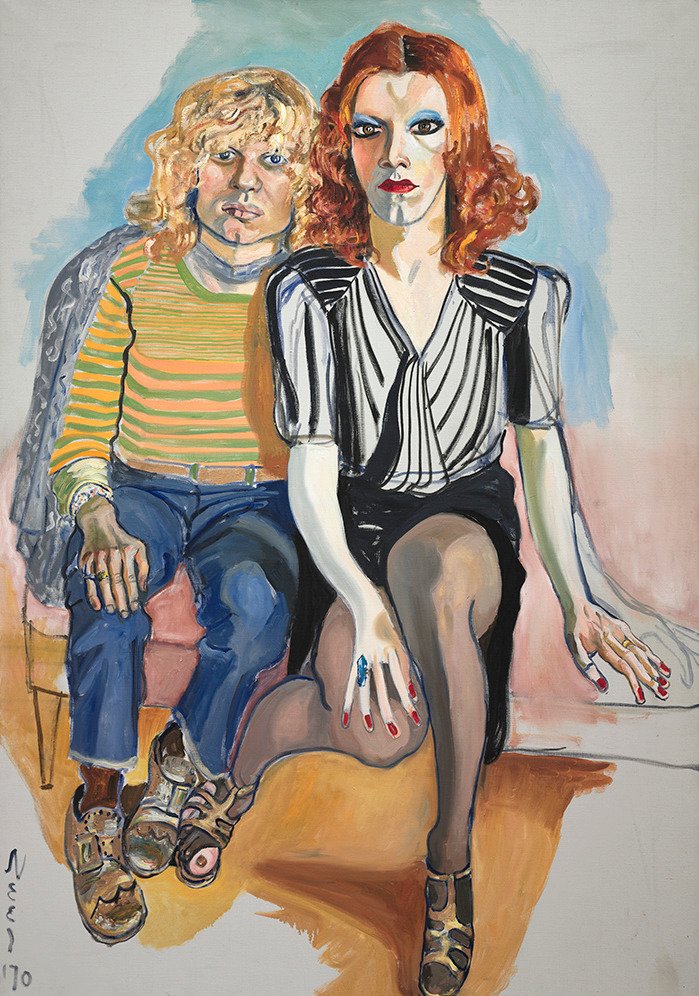


Nancy Green (1965)
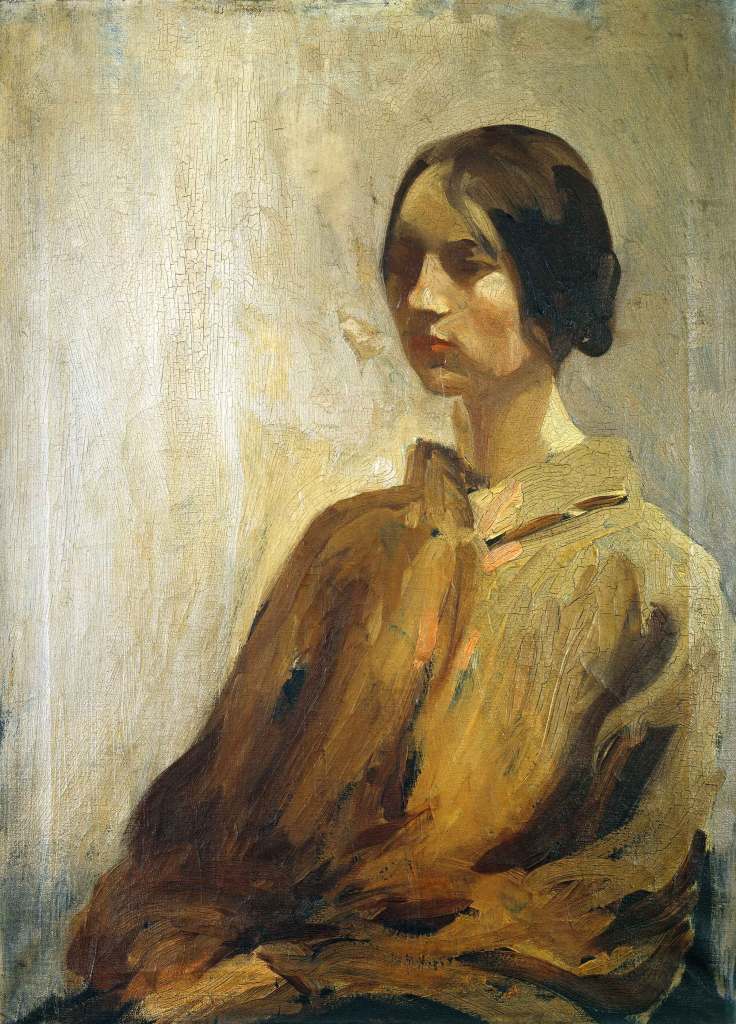
French Girl, oil on canvas, created during Neel’s time at the Philadelphia School of Design for Women from 1921 to 1925
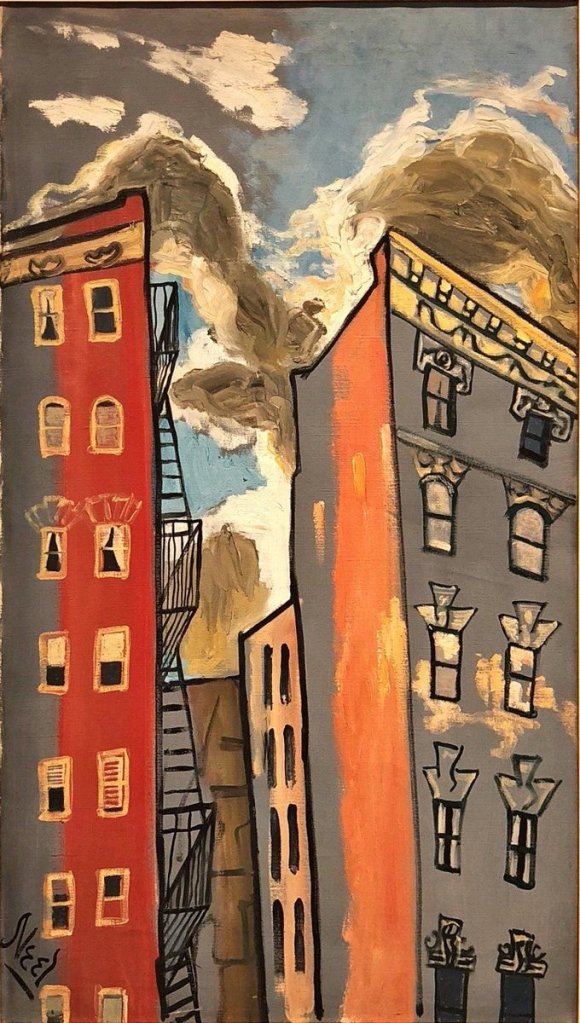
Sunset In Spanish Harlem, 1958


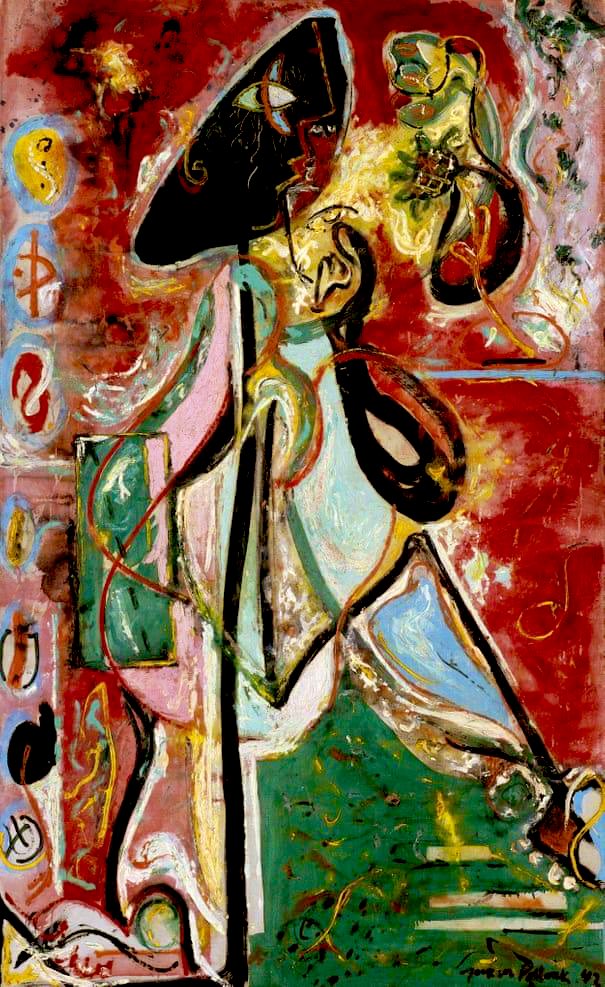
And today is the birthday of Jackson Pollock (Paul Jackson Pollock; January 28, 1912 – August 11, 1956); painter and a major figure in the abstract expressionist movement. He was widely noticed for his “drip technique” of pouring or splashing liquid household paint onto a horizontal surface, enabling him to view and paint his canvases from all angles. It was called all-over painting and action painting, since he covered the entire canvas and used the force of his whole body to paint, often in a frenetic dancing style. This extreme form of abstraction divided the critics: some praised the immediacy of the creation, while others derided the random effects.
Gallery

peddler Circa 1930 to 1935


thanks for stoppin’ by y’all
mac tag
 The Lovers’ Chronicle
Leave a comment