
Dear Zazie, First, Happy Halloween! Trick or treat? We are big fans of Halloween here at TLC. Particularly, we are fans of scary movies. The old ones are the best and Hitchcock’s are the best of the best. Here is today’s Lovers’ Chronicle from Mac Tag dedicated to his muse. Has love left you without mercy? Rhett
The Lovers’ Chronicle
Dear Muse,
trick or dream…
have not written one for Keats on this day
“Overshadowed by all hallows’ eve”
yes, but the theme of the day
comes from his poem,
“La Belle Dame Sans Merci”,
beautiful woman without mercy,
much drama in his writin’
and his early death,
not a creepy story
but certainly sad
“He wrote about his own death
and his life and love weren’t fulfilled”
perhaps his spirit wonders yet
in search of his beloved Fanny
© copyright 2023 mac tag/cowboy coleridge all rights reserved
often at 3am i would awake; at first, thought nothin’ of it, but as it persisted i began to wonder was it somethin’ or someone tryin’ to reach me, i believe in spirits, as you know or will find out; perhaps a ghost from the past to teach a lesson, or the haunt from the Arrow Hotel where i lived for a month, maybe a lost soul without, i could relate
© copyright 2022.2023 mac tag/cowboy coleridge all rights reserved
have you read this far,
you will know that
without is about
the scariest thing
i have written
this year, now with,
i set aside old fears
ready to begin again
and accept whatever
comes this way
i know we will have this
no matter, and this is good
the best treat
is with you
© copyright 2021 mac tag/cowboy coleridge all rights reserved
Pale Love, Pale Rider
another homage to horror
on all hallows’ eve
some excellent recent films
in the genre; Suspiria, Midsommar,
Get Out, Us, Mother!, Hereditary
all very well made, very creepy
what is the draw,
proof that i can feel
after many years
of denyin’ emotions
part of it i suppose
pardon, i must depart
without trepidation
haunts await
© copyright 2020.2023 mac tag/cowboy coleridge all rights reserved
another all hallows’ eve
how will you spend it
are you alone, as i
do you hear creakin’ doors
odd thumps on the ceilin’
do you see movement
in the shadows
are you spendin’ it
with Boris or Bela
or Hitchcock
or Peele
how about readin’ Poe
or Shelley or Stoker
are you with
or without fear
© copyright 2019.2023 mac tag/cowboy coleridge all rights reserved
for Tamela
trick or treat
well, the treat
is all mine
my treat
is simple
i know
i know that you
are a rare,
wonderful woman
and people who see you,
at the gym,
or the market,
or walkin’ down the street
have no idea
just how wonderful you are
but i know
and that is my treat
……
this week,
been watchin’ plenty
of Hitchcock movies
she often looked like
a blonde leadin’ lady
from one of his films
dependin’
on her mood
and her hair
it might be
Grace, or Kim,
or Janet, or Tippi
who will she be,
tonight
© copyright 2018 mac tag/cowboy coleridge all rights reserved
Let it snow
Let it snow
Let it snow
a white Halloween
on the High Plains
***
needless to say,
what needs to be said
what ails thee
on all hallows’ eve
are you without
the only one
who can make you
feel alive
the only one
who can take
your hand and calm
your wanderin’ spirit
on this, all hallows’ eve
are you without
the one
© copyright 2017 mac tag/cowboy Coleridge all rights reserved
Want? Need?
Seriously
You read my verse
What else is there
“I will take your soul
But leave you your verse”
Done deal
Where do I sign
© copyright 2016 mac tag/cowboy Coleridge all rights reserved
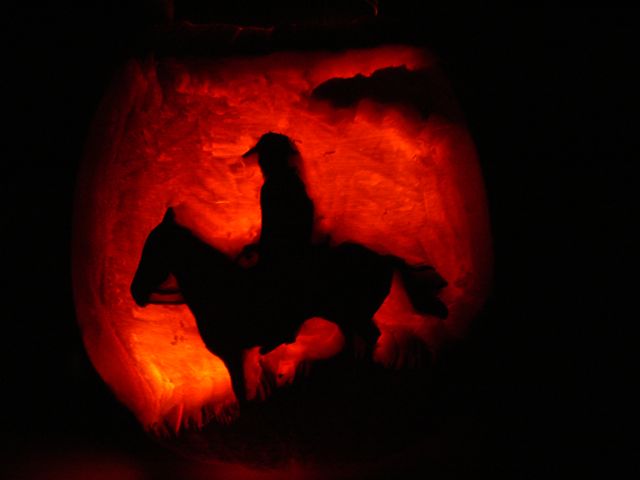
On All Hallows’ Eve;
May the spirits
do unto you
as you would
have them do
© copyright 2015 mac tag/cowboy Coleridge all rights reserved
Road trip checklist; Coffee – check, music – check, suitcase – check, fairly sound mind – close enough, muse on my mind – doublecheck
© copyright 2014 mac tag/cowboy Coleridge all rights reserved
Today is the baptismal day of Johannes Vermeer (Joannis Vermeer; Delft, County of Holland, Dutch Republic 31 October 1632 – 15 December 1675 Delft); painter who specialized in domestic interior scenes of middle-class life. He is considered one of the greatest painters of the Dutch Golden Age. During his lifetime, he was a moderately successful provincial genre painter, recognized in Delft and The Hague. He produced relatively few paintings, primarily earning his living as an art dealer. He was not wealthy; at his death, his wife was left in debt.

Detail of the painting The Procuress (c. 1656), believed to be a self-portrait
Vermeer worked slowly and with great care, and frequently used expensive pigments. He is particularly renowned for making masterful use of light in his work. Most of his paintings are apparently set in two smallish rooms in his house in Delft; they show the same furniture and decorations in various arrangements and they often portray the same people, mostly women.
The modest celebrity he enjoyed during his life gave way to obscurity after his death. He was barely mentioned in Arnold Houbraken’s major source book on 17th-century Dutch painting (Grand Theatre of Dutch Painters and Women Artists, published 1718) and, as a result, was omitted from subsequent surveys of Dutch art for nearly two centuries. In the 19th century, Vermeer was rediscovered by Gustav Friedrich Waagen and Théophile Thoré-Bürger, who published an essay attributing 66 pictures to him, although only 34 paintings are universally attributed to him today. Since that time, Vermeer’s reputation has grown.
In April 1653 Vermeer married a Catholic woman, Catharina Bolnes (Bolenes). The blessing took place in the quiet nearby village of Schipluiden. Vermeer’s new mother-in-law, Maria Thins, was initially opposed to the marriage as she was wealthier than he, and it was probably she who insisted that Vermeer convert to Catholicism before the marriage on 5 April. The fact that Vermeer’s father was in considerable debt also did not help in discussions on the marriage. At some point, the couple moved in with Catharina’s mother, who lived in a rather spacious house at Oude Langendijk, almost next to a hidden Jesuit church. There Vermeer lived for the rest of his life, producing paintings in the front room on the second floor. His wife gave birth to 15 children, four of whom were buried before being baptized.
Vermeer died after a short illness. He was 43 years old. He was buried in the Protestant Old Church on 15 December 1675. In a petition to her creditors, Catharina attributed her husband’s death to the stress of financial pressures.
Gallery

Girl with a Pearl Earring (1665), Mauritshuis in Den Haag

Girl with the Red Hat (c. 1665–1666), National Gallery of Art in Washington, D.C.


Diana and her Nymphs circa 1653–1654 oil on canvas

Lady Seated at a Virginal (c. 1670–1672), National Gallery in London

Lady Writing a Letter with her Maid (c. 1670–1671), National Gallery of Ireland in Dublin, Ireland

Mistress and Maid (1666–1667), Frick Collection in New York City
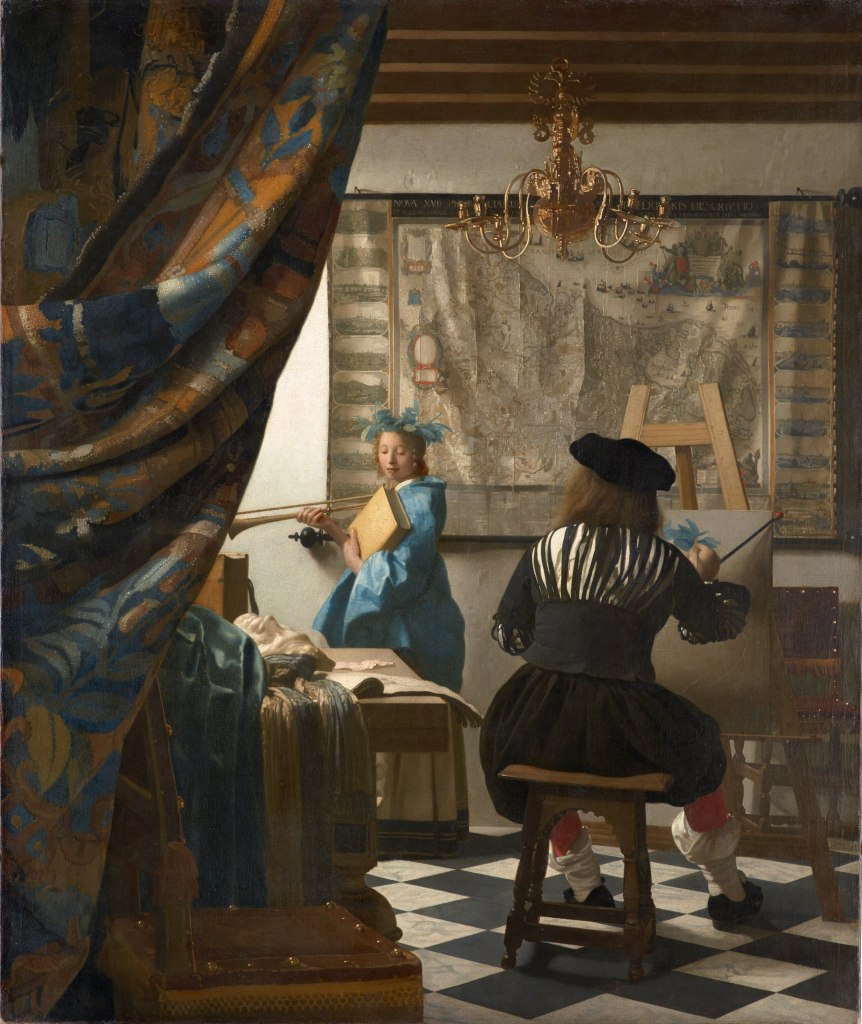
The Art of Painting or The Allegory of Painting (c. 1666–1668), Kunsthistorisches Museum in Vienna

The Milkmaid (c. 1658), Rijksmuseum in Amsterdam

The Girl with the Wine Glass (c. 1659), Herzog Anton Ulrich Museum in Brunswick, Germany

The Music Lesson or A Lady at the Virginals with a Gentleman (c. 1662–1665), Royal Collection in London
| John Keats | |
|---|---|
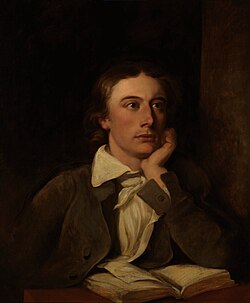 | |
Today is the birthday of John Keats (Moorgate, London; 31 October 1795 – 23 February 1821 Rome); Romantic poet. He was one of the main figures of the second generation of Romantic poets, along with Lord Byron and Percy Bysshe Shelley, despite his work having been in publication for only four years before his death.
Although his poems were not generally well received by critics during his lifetime, his reputation grew after his death, and by the end of the 19th century, he had become one of the most beloved of all English poets. He had a significant influence on a diverse range of poets and writers. Jorge Luis Borges stated that his first encounter with Keats’s work was the most significant literary experience of his life.
The poetry of Keats is characterised by sensual imagery, most notably in the series of odes. This is typical of romantic poets, as they aimed to accentuate extreme emotion through the emphasis of natural imagery. Today his poems and letters are some of the most popular and most analysed in English literature.

On First Looking into Chapman’s Homer
Much have I travell’d in the realms of gold,
And many goodly states and kingdoms seen;
Round many western islands have I been
Which bards in fealty to Apollo hold.
Oft of one wide expanse had I been told
That deep-browed Homer ruled as his demesne;
Yet did I never breathe its pure serene
Till I heard Chapman speak out loud and bold:
Then felt I like some watcher of the skies
When a new planet swims into his ken;
Or like stout Cortez when with eagle eyes
He star’d at the Pacific — and all his men
Look’d at each other with a wild surmise —
Silent, upon a peak in Darien.
The sonnet “On First Looking into Chapman’s Homer”
October 1816
My heart aches, and a drowsy numbness pains
My sense, as though of hemlock I had drunk,
Or emptied some dull opiate to the drains
One minute past, and Lethe-wards had sunk:
‘Tis not through envy of thy happy lot,
But being too happy in thine happiness,—
That thou, light-winged Dryad of the trees,
In some melodious plot
Of beechen green, and shadows numberless,
Singest of summer in full-throated ease.
First stanza of “Ode to a Nightingale”,
May 1819
Keats befriended Isabella Jones in May 1817, while on holiday in the village of Bo Peep, near Hastings. She is described as beautiful, talented and widely read, not of the top flight of society yet financially secure, an enigmatic figure who would become a part of Keats’s circle. Throughout their friendship Keats never hesitates to own his sexual attraction to her, although they seem to enjoy circling each other rather than offering commitment. He writes that he “frequented her rooms” in the winter of 1818–19, and in his letters to George says that he “warmed with her” and “kissed her”. The themes of “The Eve of St. Agnes” and “The Eve of St Mark” may well have been suggested by her, the lyric Hush, Hush! [“o sweet Isabel”] was about her, and that the first version of “Bright Star” may have originally been for her. In 1821, Jones was one of the first in England to be notified of Keats’s death.
Letters and drafts of poems suggest that Keats first met Frances (Fanny) Brawne between September and November 1818. She shared her first name with both Keats’s sister and mother, and had a talent for dress-making and languages as well as a natural theatrical bent. During November 1818 she developed an intimacy with Keats.
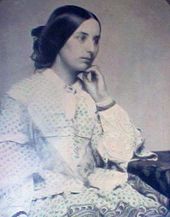
Keats began to lend Brawne books, such as Dante’s Inferno, and they would read together. He gave her the love sonnet “Bright Star” (perhaps revised for her) as a declaration. It was a work in progress which he continued at until the last months of his life, and the poem came to be associated with their relationship. From this point there is no further documented mention of Jones. Sometime before the end of June, he arrived at some sort of understanding with Brawne, far from a formal engagement as he still had too little to offer, with no prospects and financial stricture. Keats endured great conflict knowing his expectations as a struggling poet in increasingly hard straits would preclude marriage to Brawne. Their love remained unconsummated. Darkness, disease and depression surrounded him, reflected in poems such as “The Eve of St. Agnes” and “La Belle Dame sans Merci” where love and death both stalk. “I have two luxuries to brood over in my walks;” he wrote to her, “…your loveliness, and the hour of my death.“
In one of his many hundreds of notes and letters, Keats wrote to Brawne on 13 October 1819: “My love has made me selfish. I cannot exist without you – I am forgetful of every thing but seeing you again – my Life seems to stop there – I see no further. You have absorb’d me. I have a sensation at the present moment as though I was dissolving – I should be exquisitely miserable without the hope of soon seeing you … I have been astonished that Men could die Martyrs for religion – I have shudder’d at it – I shudder no more – I could be martyr’d for my Religion – Love is my religion – I could die for that – I could die for you.”
Tuberculosis took hold and he was advised by his doctors to move to a warmer climate. In September 1820 Keats left for Rome knowing he would probably never see Brawne again. After leaving he felt unable to write to her or read her letters. He died there five months later. None of Brawne’s letters to Keats survive.
It took a month for the news of his death to reach London, after which Brawne stayed in mourning for six years. In 1833, more than 12 years after his death, she married. She outlived Keats by more than 40 years.
Keats was buried in the Protestant Cemetery, Rome. His last request was to be placed under a tombstone bearing no name or date, only the words, “Here lies One whose Name was writ in Water.” Severn and Brown erected the stone, which under a relief of a lyre with broken strings, includes the epitaph:
“This Grave
contains all that was Mortal
of a
Young English Poet
Who
on his Death Bed, in the Bitterness of his Heart
at the Malicious Power of his Enemies
Desired
these Words to be
engraven on his Tomb Stone:
Here lies One
Whose Name was writ in Water.
24 February 1821″
The text bears an echo from Catullus LXX;
“Sed mulier cupido quod dicit amanti / in vento et rapida scribere oportet aqua” (What a woman says to a passionate lover / should be written in the wind and the running water).
Season of mists and mellow fruitfulness
Close bosom-friend of the maturing sun
Conspiring with him how to load and bless
With fruit the vines that round the thatch-eaves run;
To bend with apples the moss’d cottage-trees,
And fill all fruit with ripeness to the core;
To swell the gourd, and plump the hazel shells
With a sweet kernel; to set budding more,
And still more, later flowers for the bees,
Until they think warm days will never cease,
For Summer has o’er-brimm’d their clammy cells.
First stanza of “To Autumn”,
September 1819
The final stanza “To Autumn”:
Where are the songs of Spring? Ay, where are they?
Think not of them, thou hast thy music too,-
While barred clouds bloom the soft-dying day,
And touch the stubble-plains with rosy hue;[79]
And here is “La Belle Dame Sans Merci” (Beautiful Woman Without Mercy):
La Belle Dame Sans Merci
Ah, what can ail thee, wretched wight,
Alone and palely loitering?
The sedge is withered from the lake,
And no birds sing.
Ah, what can ail thee, wretched wight,
So haggard and so woe-begone
The squirrel’s granary is full,
And the harvest’s done.
I see a lily on thy brow
With anguish moist and fever dew,
And on thy cheek a fading rose
Fast withereth too.
I met a lady in the meads,
Full beautiful, a faery’s child:
Her hair was long, her foot was ligh,
And her eyes were wild.
I set her on my pacing steed,
And nothing else saw all day long;
For sideways would she lean, and sing
A faery’s song.
I made a garland for her head,
And bracelets too, and fragrant zone;
She looked at me as she did love,
And made sweet moan.
She found me roots of relish sweet,
And honey wild, and manna dew,
And sure in language strange she said,
“I love thee true!”
She took me to her elfin grot,
And there she gazed and sighed deep,
And there I shut her wild, sad eyes—
So kissed to sleep.
And there we slumbered on the moss,
And there I dreamed, ah! woe betide,
The latest dream I ever dreamed
On the cold hill side.
I saw pale kings, and princes too,
Pale warriors, death-pale were they all;
Who cried—“La belle Dame sans merci
Hath thee in thrall!”
I saw their starved lips in the gloam,
With horrid warning gaped wide,
And I awoke and found me here,
On the cold hill side.
And that is why I sojourn here,
Alone and palely loitering,
Though the sedge is withered from the lake,
And no birds sing.
The Song of the Day is “La Belle Dame Sans Merci” music by Charles Villiers Stanford sung by Ian Bostridge
Today is the birthday of Natalie Barney (Natalie Clifford Barney; Dayton, Ohio; October 31, 1876 – February 2, 1972 Paris); salonist, playwright, poet and novelist who lived as an expatriate in Paris.

Barney’s salon was held at her home at 20 rue Jacob in Paris’s Left Bank for more than 60 years and brought together writers and artists from around the world, including many leading figures in French literature along with American and British Modernists of the Lost Generation. She worked to promote writing by women and formed a “Women’s Academy” (L’Académie des Femmes) in response to the all-male French Academy while also giving support and inspiration to male writers from Remy de Gourmont to Truman Capote.
She was openly lesbian and began publishing love poems to women under her own name as early as 1900, considering scandal as “the best way of getting rid of nuisances” (meaning heterosexual attention from young men). She wrote in both French and English. In her writings she supported feminism and pacifism. She opposed monogamy and had many overlapping long and short-term relationships, including on-and-off romances with poet Renée Vivien and dancer Armen Ohanian and a 50-year relationship with painter Romaine Brooks. Her life and love affairs served as inspiration for many novels written by others, ranging from the salacious French bestseller Idylle Saphique by Liane de Pougy to The Well of Loneliness by Radclyffe Hall, perhaps the most famous lesbian novel of the twentieth century.
| Marie Laurencin | |
|---|---|
 | |
Today is the birthday of Marie Laurencin (Paris 31 October 1883 – 8 June 1956 Paris); painter and printmaker. She became an important figure in the Parisian avant-garde as a member of the Cubists associated with the Section d’Or.
She became romantically involved with the poet Guillaume Apollinaire, and has often been identified as his muse. Laurencin had important connections to the salon of the American expatriate and famed lesbian writer Natalie Clifford Barney. She had heterosexual and lesbian affairs.

La Muse inspirant le poète, Henri Rousseau, musée des beaux-arts Pouchkine, Laurencin and Apollinaire
During the First World War, Laurencin left France for exile in Spain with her German-born husband, Baron Otto von Waëtjen, since through her marriage she had automatically lost her French citizenship. The couple subsequently lived together briefly in Düsseldorf.
Gallery
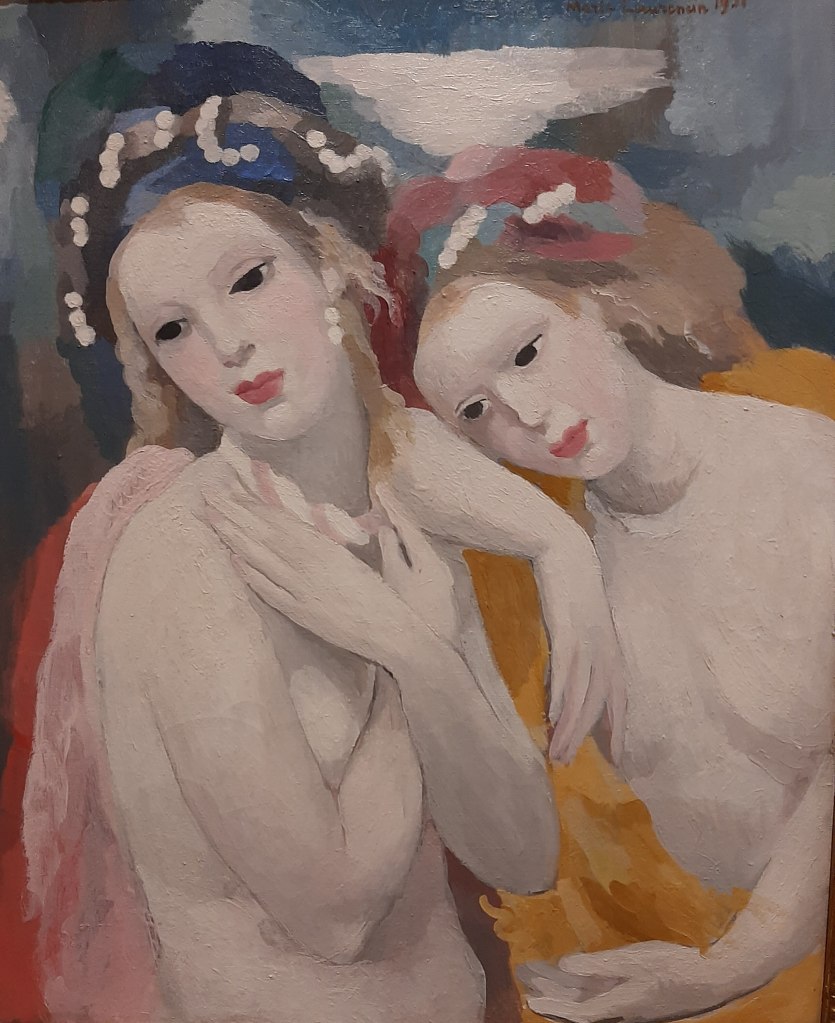
two sisters
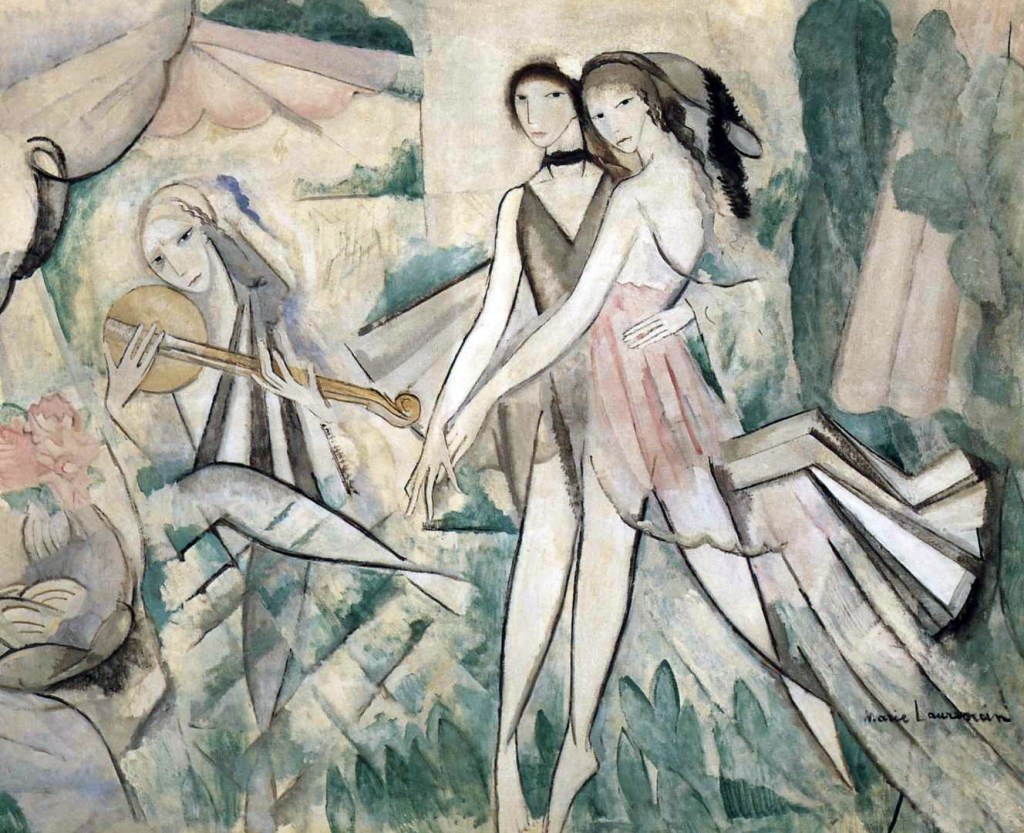
1913, Le Bal élégant, La Danse à la campagne


La Songeuse, 1910-1911

Musique (1944)


1909, Réunion à la campagne (Apollinaire et ses amis), oil on canvas, 130 x 194 cm, Musée Picasso, Paris. Reproduced in The Cubist Painters, Aesthetic Meditations (1913)

1910-11, Les jeunes filles (Jeune Femmes, Young Girls), oil on canvas, 115 x 146 cm. Exhibited Salon des Indépendants, 1911, Moderna Museet, Stockholm
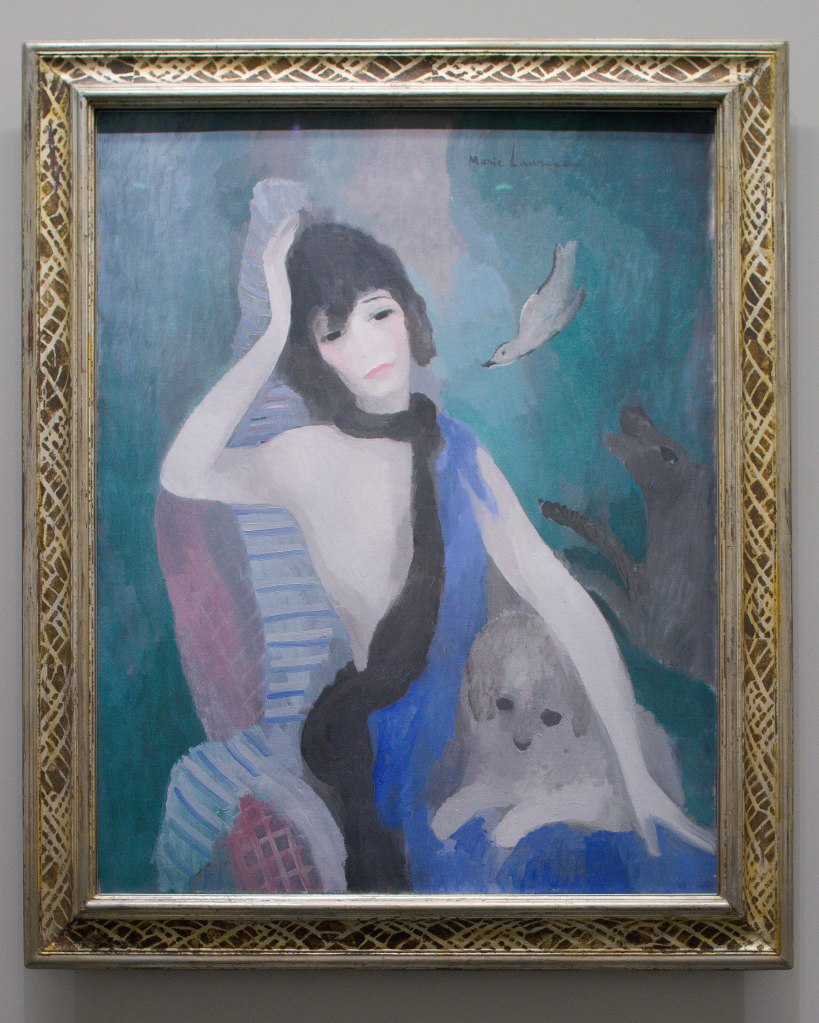
1923, Portrait de Mademoiselle Chanel [referring to Coco Chanel], oil on canvas

1923, Femmes au chien, oil on canvas
today is the birthday of Helmut Newton (Helmut Neustädter; Berlin 31 October 1920 – 23 January 2004 Los Angeles); photographer. The New York Times described him as a “prolific, widely imitated fashion photographer whose provocative, erotically charged black-and-white photos were a mainstay of Vogue and other publications.”

Portrait by his wife June
Newton was issued with a passport just after turning 18 and left Germany on 5 December 1938. At Trieste, he boarded the Conte Rosso (along with about 200 others escaping the Nazis), intending to journey to China. After arriving in Singapore, Newton found he was able to remain there, first briefly as a photographer for the Straits Times and then as a portrait photographer.
Newton was interned by British authorities while in Singapore and was sent to Australia on board the Queen Mary, arriving in Sydney on 27 September 1940. Internees travelled to the camp at Tatura by train under armed guard. He was released from internment in 1942 and briefly worked as a fruit picker in Northern Victoria. In August 1942, Newton enlisted with the Australian Army and worked as a truck driver. After the war in 1945, he became a British subject and changed his name to Newton in 1946.
In 1948, he married actress June Browne, who performed under the stage name June Brunell. Later she became a successful photographer under the ironic pseudonym Alice Springs (after Alice Springs, the town in Central Australia).
Gallery

Alison Cohn and the neon orange
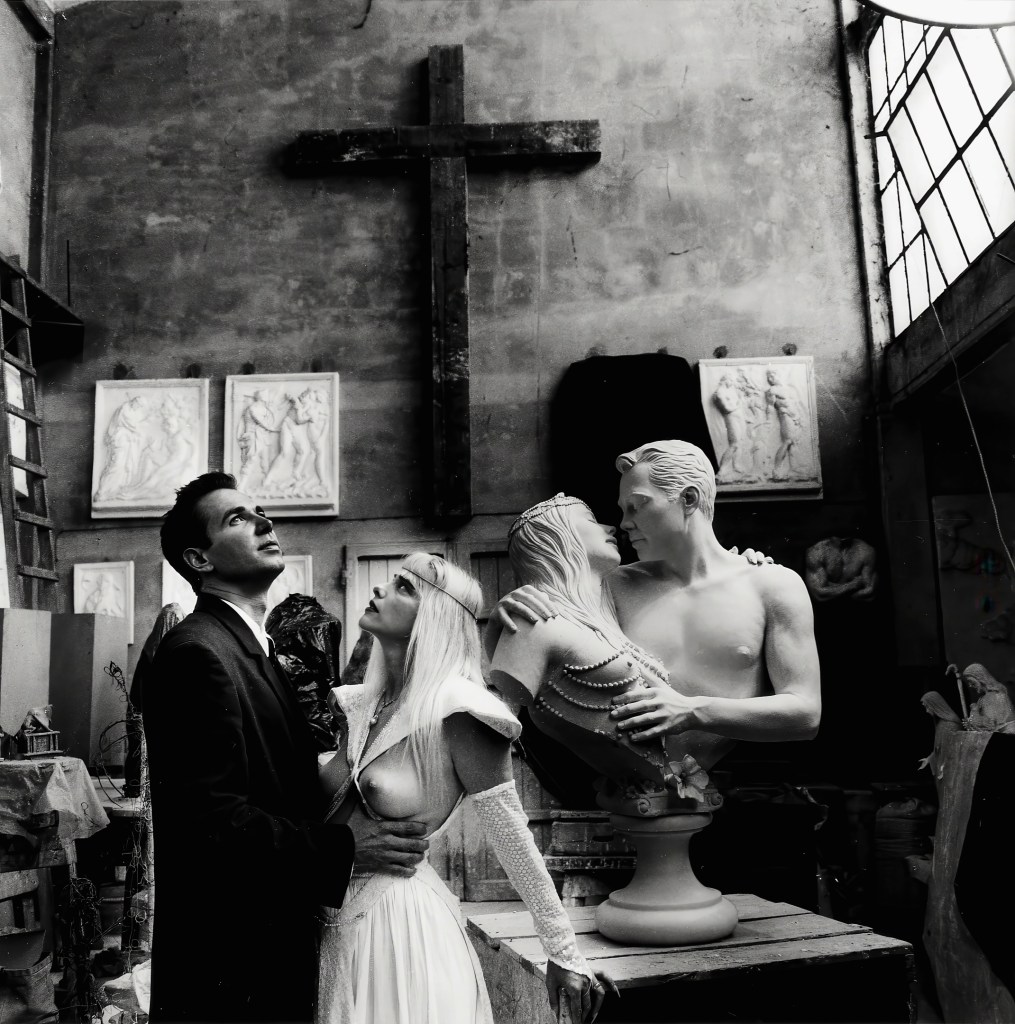
Jeff Koons & Cicciolina – Italy, 1991
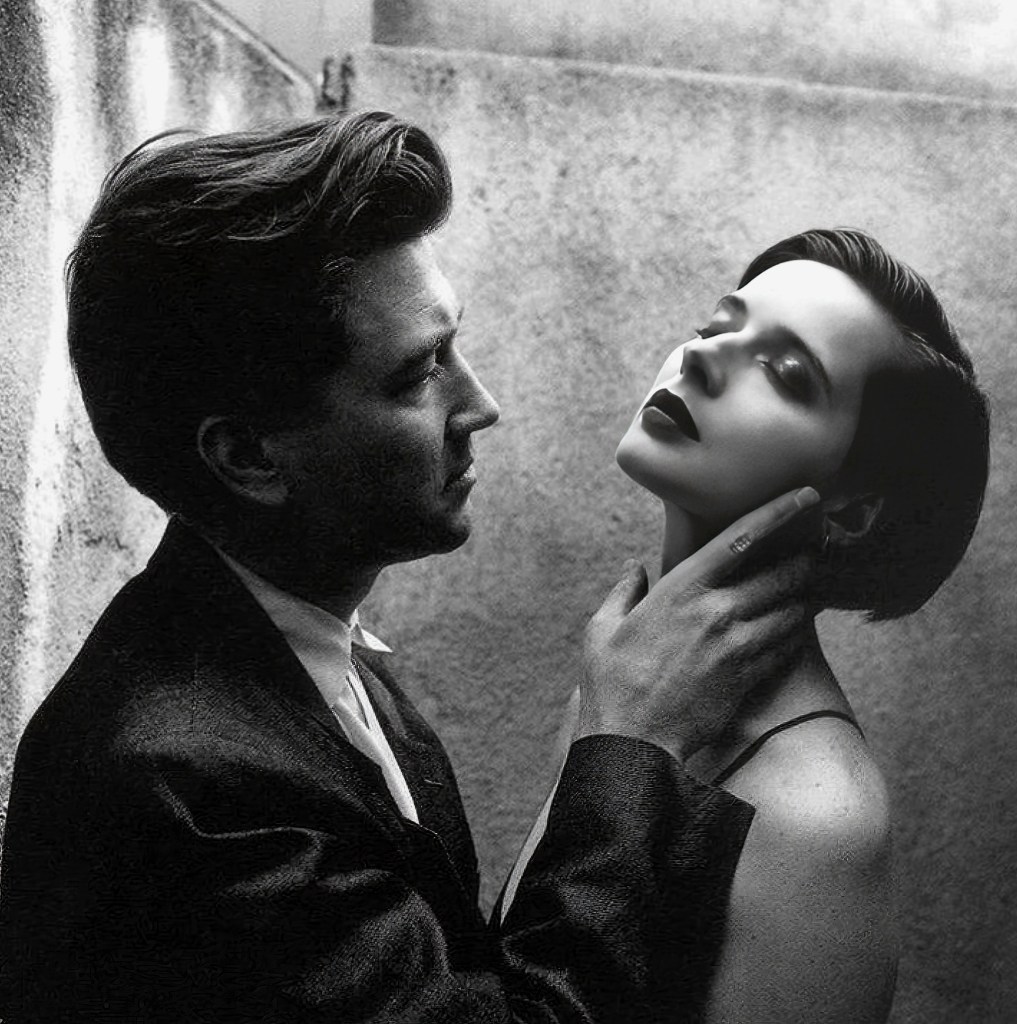
David Lynch & Isabella Rossellini, 1988

Kiss, Bordighera, 1982

jodie foster
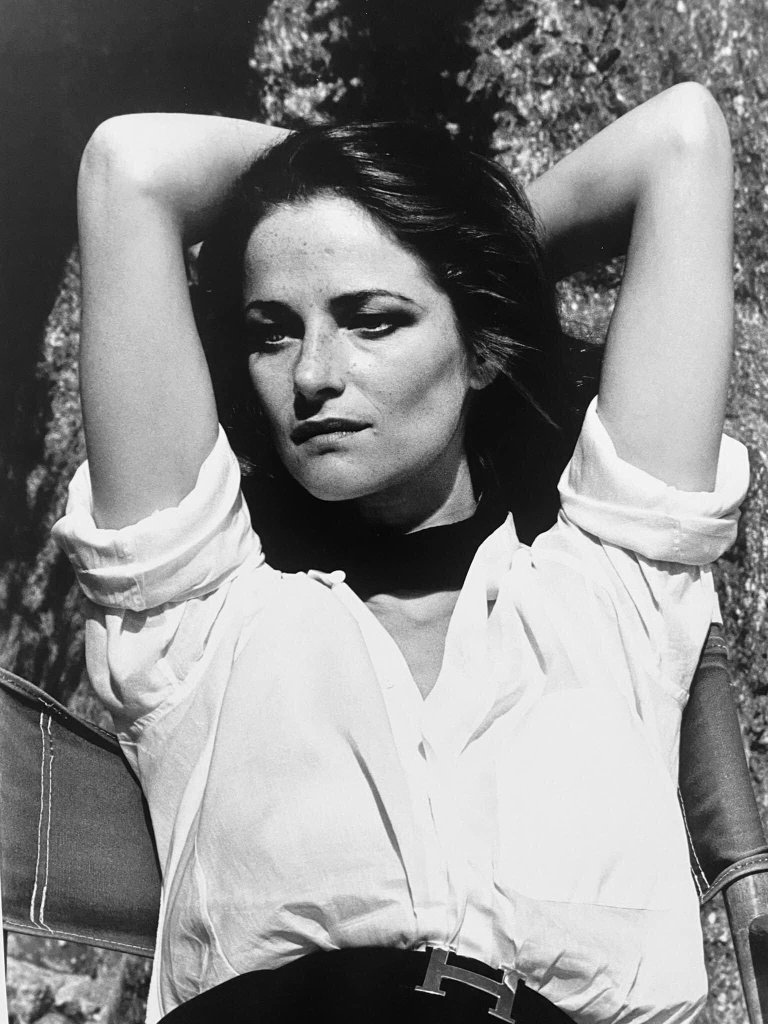
Charlotte Rampling, Saint-Tropez, 1973
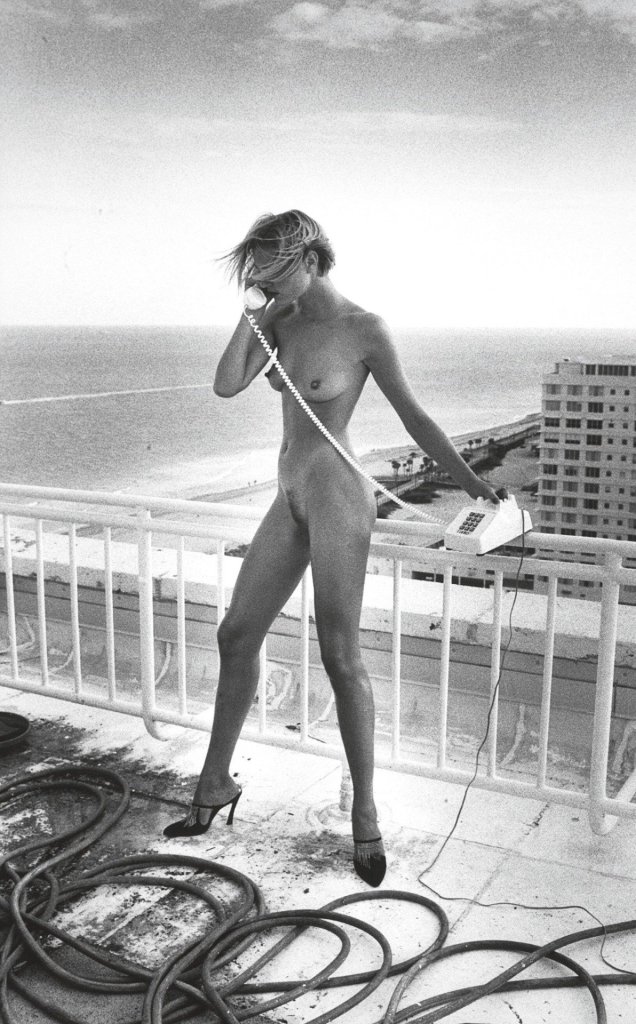
”Hello?”
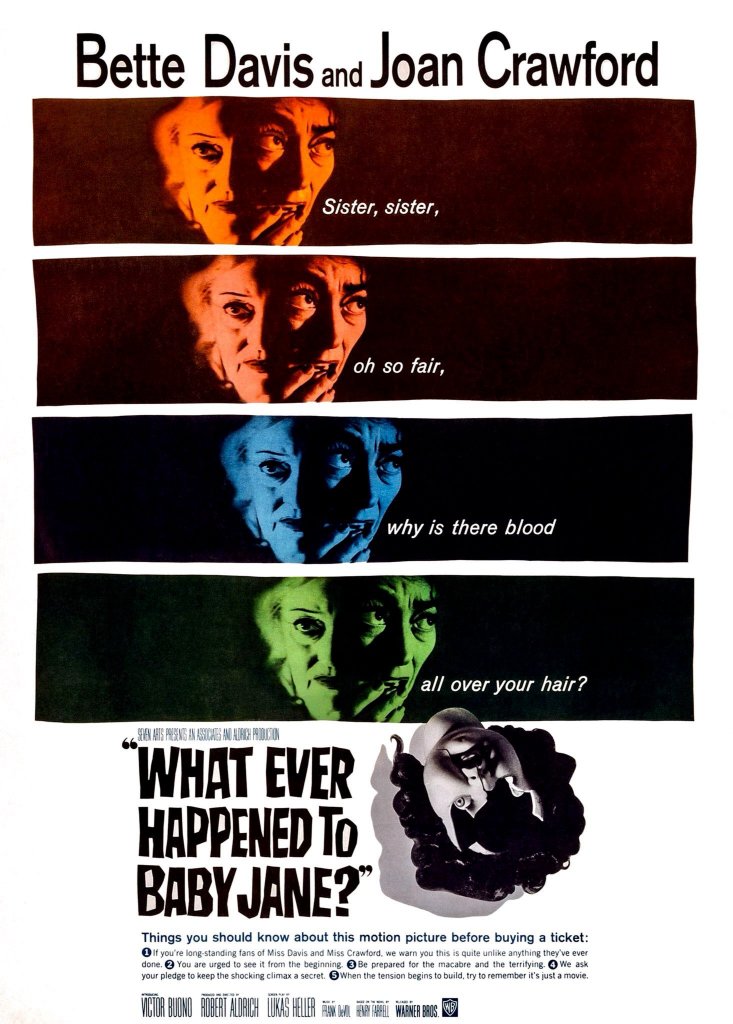
And on this day in 1962, What Ever Happened to Baby Jane?, an American psychological horror thriller film directed and produced by Robert Aldrich, and starring Bette Davis and Joan Crawford, and featuring Victor Buono in his major film debut. The screenplay, adapted by Lukas Hellen from the novel of the same name by Henry Farrell, follows an aging former child star tormenting her paraplegic sister, also a former film star, in a dilapidated Hollywood mansion
Mac Tag
Follow us on twitter @cowboycoleridge
 The Lovers’ Chronicle
Leave a comment