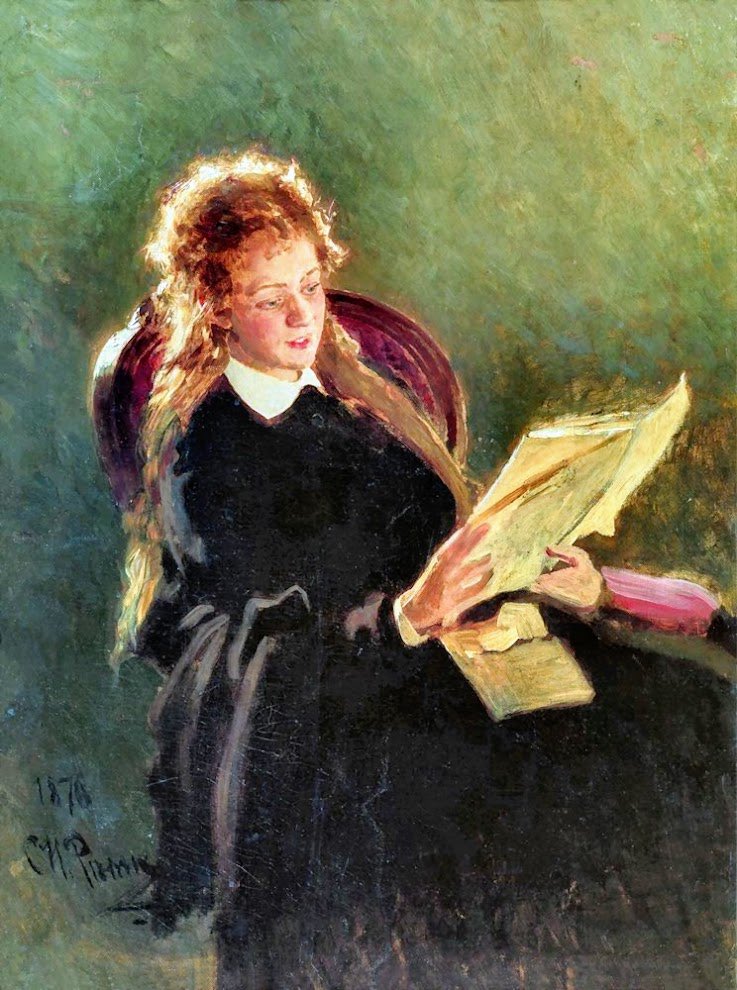
Dear Zazie, Here is Mac Tag‘s Lovers’ Chronicle to his muse. Follow us on twitter @cowboycoleridge. Rhett
The Lovers’ Chronicle
Dear Muse,
i was tempted to go with another song
from one of my songwritin’ heroes
this one by Guy Clark,
’’Desperados Waiting for a Train’’
but we are not desperados
’’We have waited for the MARTA train’’
yes we have
but then i thought of a song
that describes what i was apparently
doin’ in the years leadin’ up to you,
‘’I’ve been waiting
For a girl like you to come into my life’’
Foreigner, written by Lou Gramm and Mick Jones
‘’Good thing you are patient’’
better thing that you came along
‘’So what are we waiting for’’
nothin’, come here

© Copyright 2023.2024 Mac tag/cowboy coleridge all rights reserved
interestin’, for some things i have an infinite reserve of patience, but for others, i have none, of the latter an example; standin’ in line, nope not gonna happen, proof of the former; that i was still standin’ when i found purpose after almost a lifetime of searchin’, need another; that i kept fallin’ and failin’ in love and kept comin’ back for more, not sure where the strength came from to endure nor why i did, but i know this, the wait for you was worth it

© Copyright 2022.2024 Mac tag/cowboy coleridge all rights reserved
the wanderin’ one,
the inquisitive
dreamer of dreams,
sits at his writin’ table,
waits poised for the first lines to come
i will ask you, i will ask you your dreams,
i will hold my words above to seek their fate
i will hear the sound, two lovers who wait no more
© Copyright 2021.2023 Mac tag/cowboy coleridge all rights reserved
Pale Love, Pale Rider
where are you
“I am near.”
i have to talk to you
i offer my hand
and feel yours
closin’ on mine
the touch comes
with emotions
long thought gone,
and a return of maybe
there is a song
in your arms
a rebirth of feelin’s,
much needed
inspiration
come, i will show you
© copyright 2020 mac tag/cowboy coleridge all rights reserved
you keep askin’ why
i say how can i not
the fact that you
keep askin’
says it all
and i know
what i wrote
about deserves
but if anyone
has ever deserved
it is you
© Copyright 2019 Mac tag/cowboy coleridge all rights reserved
you wrote that you played
through your mind,
time and again,
walkin’ in
you wonder
would it be
a beginnin’
or an end
listen, look at me
because i know
it will be the beginnin’
it will drive us
and define us
it will be there
from that day
till the last
© copyright 2018 mac tag/cowboy coleridge all rights reserved
stretched, all dressed
on our bed, lost in reverie
where are you
“I am near.”
i have to talk to you
i offer my hand
and feel yours
closin’ on mine
but the touch
comes with the emotions
of separation and goodbye,
without hope of return
there is no song
in someone else’s arms
dyin’ emotions
caught, in all neglect
dreams, as needed
intervene, two of ’em…
we meet somewhere in town
you give me somethin’ i lost
in the second,
we are ahorseback
ridin’, of a night
through a mountain pass
you ride past me
without sayin’ anything
but i know, wherever i stop
you will be there, waitin’ for me
© copyright 2017 mac tag/cowboy Coleridge all rights reserved
Keep away those who were not forgiven
A solitary with the cowboy’s smile
Roundup and pasture long the mysteries
The snow-white herd of the long undisturbed
Drive far away from here the righteous ones,
the vain daydreams, those with questionin’ eyes
Now understood; never is a long time
The brittle words founder on the dry wind
All burnt up, used up, drawn up in the air
© copyright 2016 mac tag/cowboy Coleridge all rights reserved
They lie easy, hidden away, silent
All their mysteries released on the wind
Motionless hour, thoughts aloft in the blue
Brood on and on; a self-deluded theme
For all that was done, must accept as is
Unbounded words and perfect description
You must have known
what would happen
“Indeed; when i
knew you were you.”
Only one good thing
How i spoiled it. How
i misundertood
it so. Treatin’ it
as somethin’ solemn
or as somethin’ that
could be bought and used
© copyright 2015 mac tag/cowboy Coleridge all rights reserved
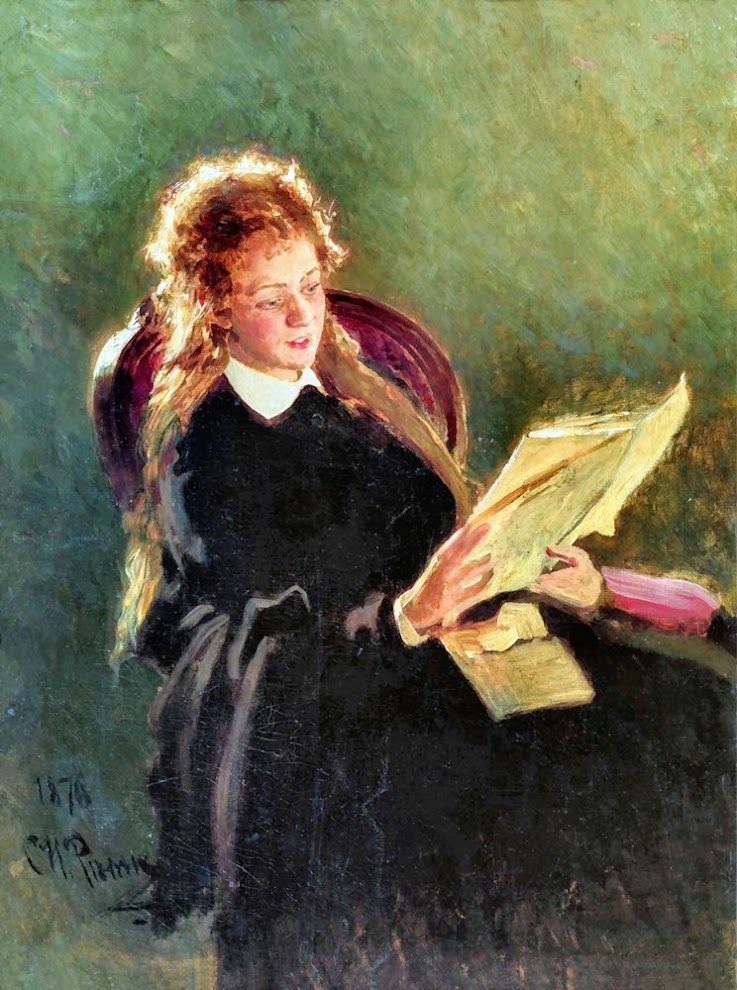
Today is the birthday of Ilya Repin (Ilya Yefimovich Repin Chuguyev, Russian Empire (now Ukraine); 5 August [O.S. 24 July] 1844 – 29 September 1930 Kuokkala, Viipuri Province, Finland); realist painter. Perhaps the most renowned Russian artist of the 19th century. He played a major role in bringing Russian art into the mainstream of European culture. His works include Barge Haulers on the Volga (1873), Religious Procession in Kursk Province (1883) and Reply of the Zaporozhian Cossacks (1880–91).

Self-portrait, 1878 (State Russian Museum, St. Petersburg)
In May 1872 he married Vera Alexeievna Shevtsova (1855-1917). She joined him on his travels, including a trip to Samara, where their first child, Vera, was born. They had three other children; Nadia, Yuri, and Tatyana. The marriage was difficult, as Repin had numerous affairs, while Vera cared for the children. They were married for fifteen years.
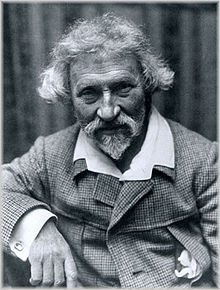
In 1890 Repin met Natalia Nordman (1863-1914), who became his common-law wife. She was the daughter of an admiral, a writer, feminist, and an activist for the improvement of working conditions. She advocated a simple life close to nature. In 1899 he acquired land near a village of Kuokkala, about forty kilometres north of St. Petersburg, and they built a country house, called the Penates, which became his home for the next thirty years. It was located in the Grand Duchy of Finland, then part of the Russian Empire, about an hour by train from St. Petersburg. At first he used it only as a summer house, but after he resigned from the St. Petersburg Academy of Fine Arts in 1907, it became his full-time home and studio. Natalia became ill with tuberculosis and died in Switzerland in 1914.
Gallery
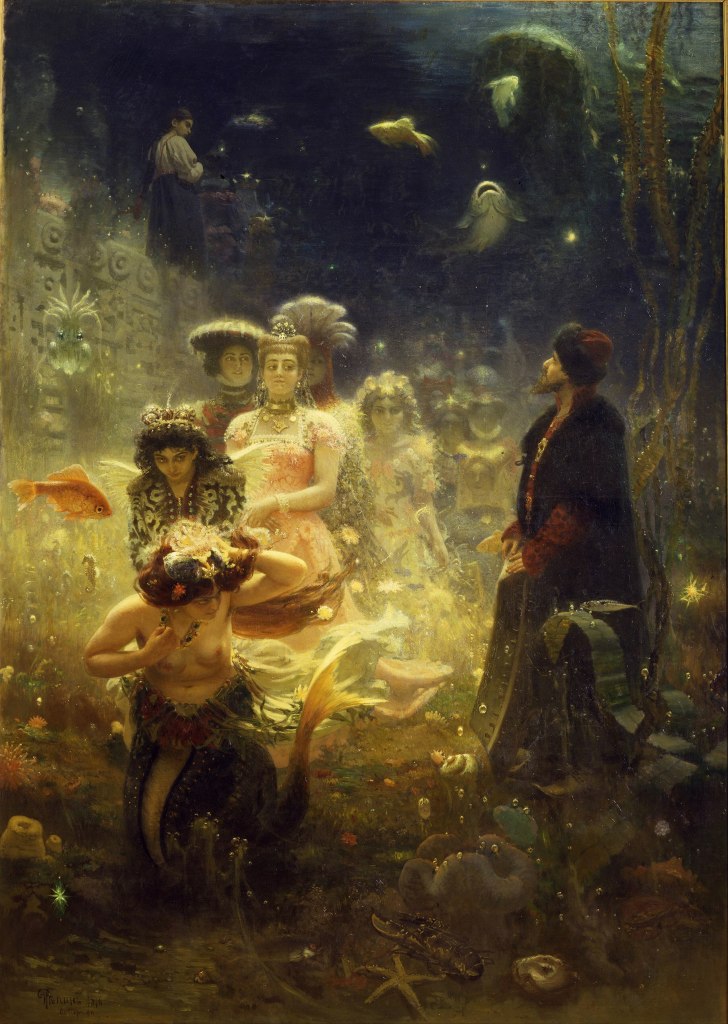
Sadko (1876), Russian Museum, St. Petersburg

The Tsarevnya Sophia Alekseyevna, Tretyakov Gallery (1879)
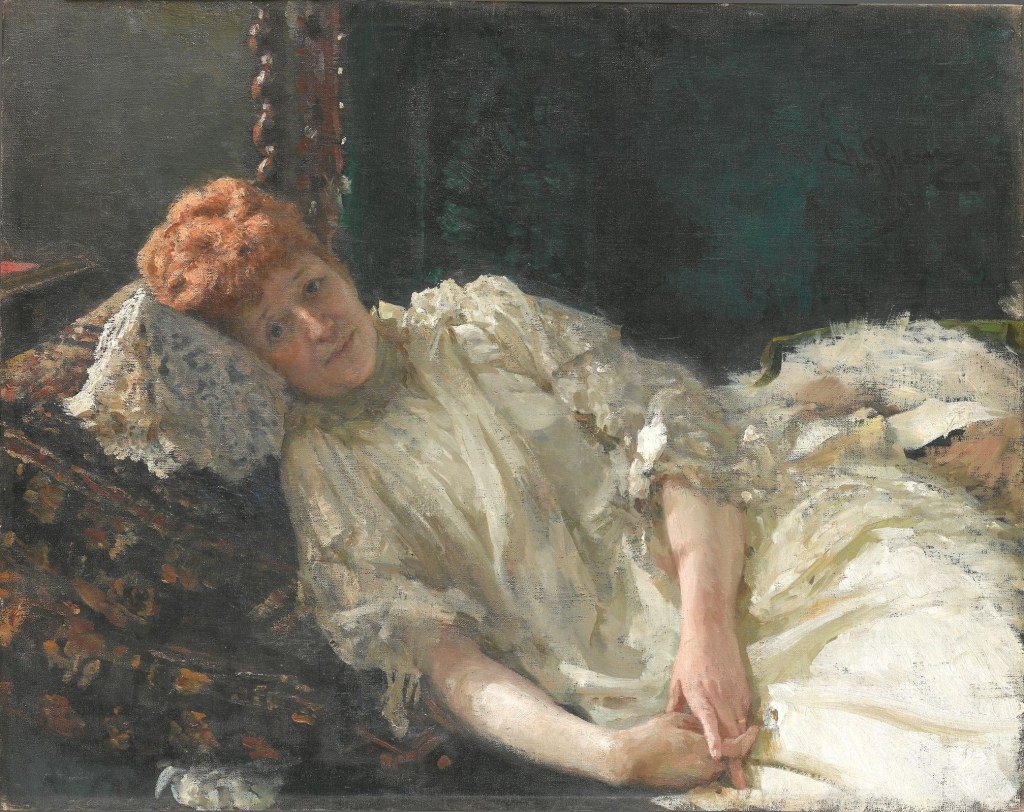
Portrait of pianist and comtesse Louise de Mercy-Argenteau

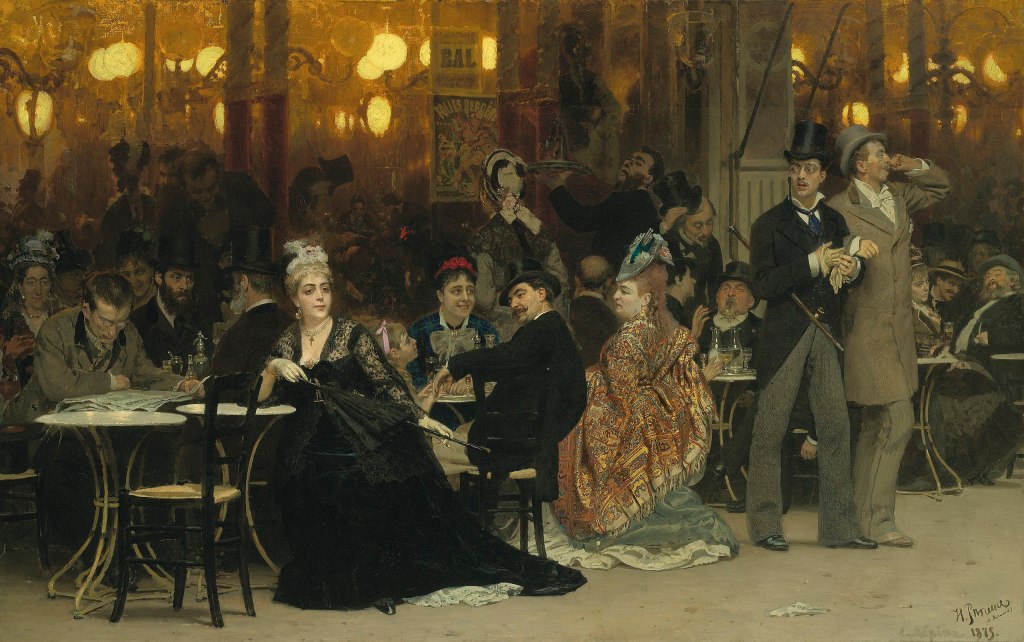
A Paris cafe (1875) (Museum of Avant-Garde Art, Moscow)

What Freedom! (1903)
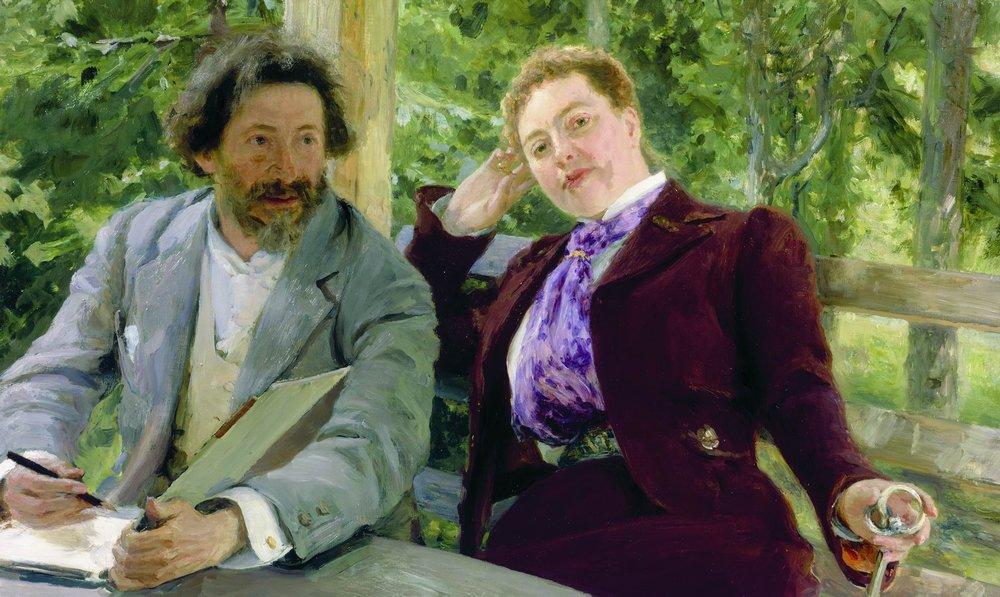
Self-portrait with Natalia (1903). Ateneum, Helsinki

Natalia in a Tyrolese Hat (1900)

In the Sunlight: Portrait of Nadezhda Repina (1900)
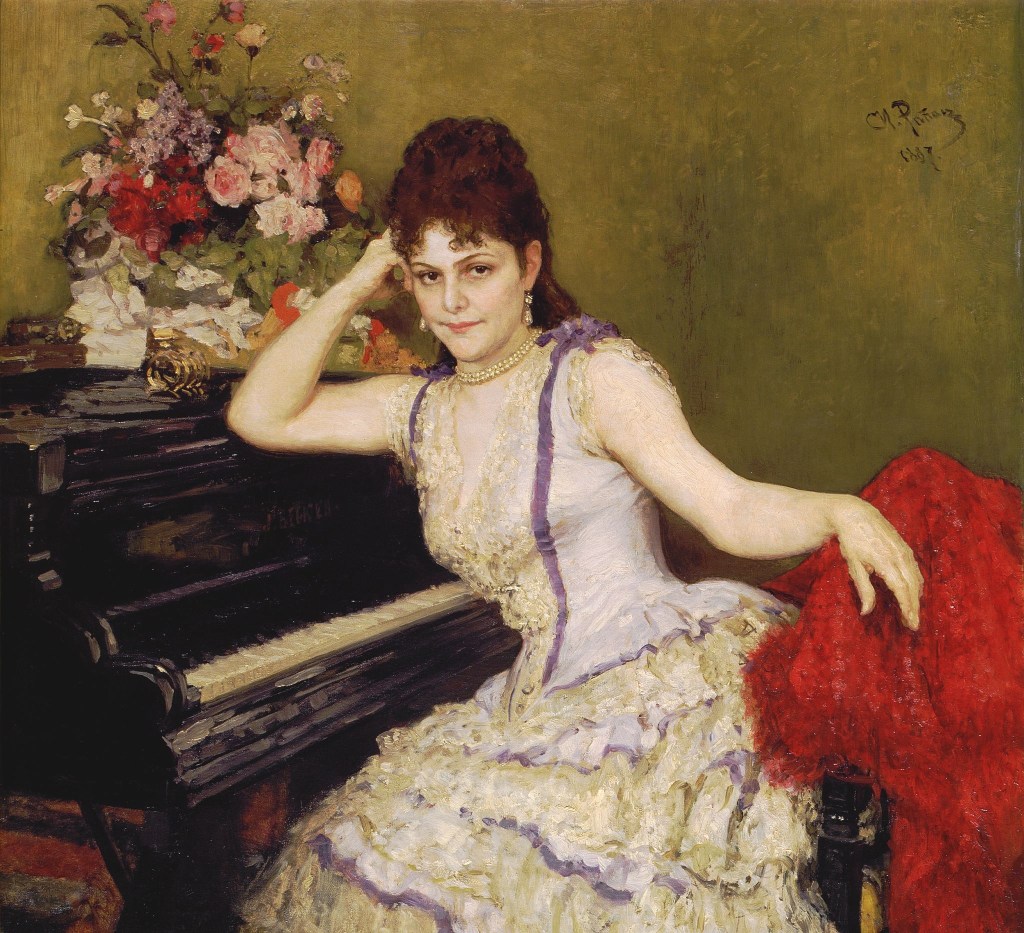
Portrait of Sophie Menter, pianist and professor of music at the Saint Petersburg Conservatory

Painter Elizaveta Zvantseva, Ateneum Gallery, Helsinki (1889)

Moon Night
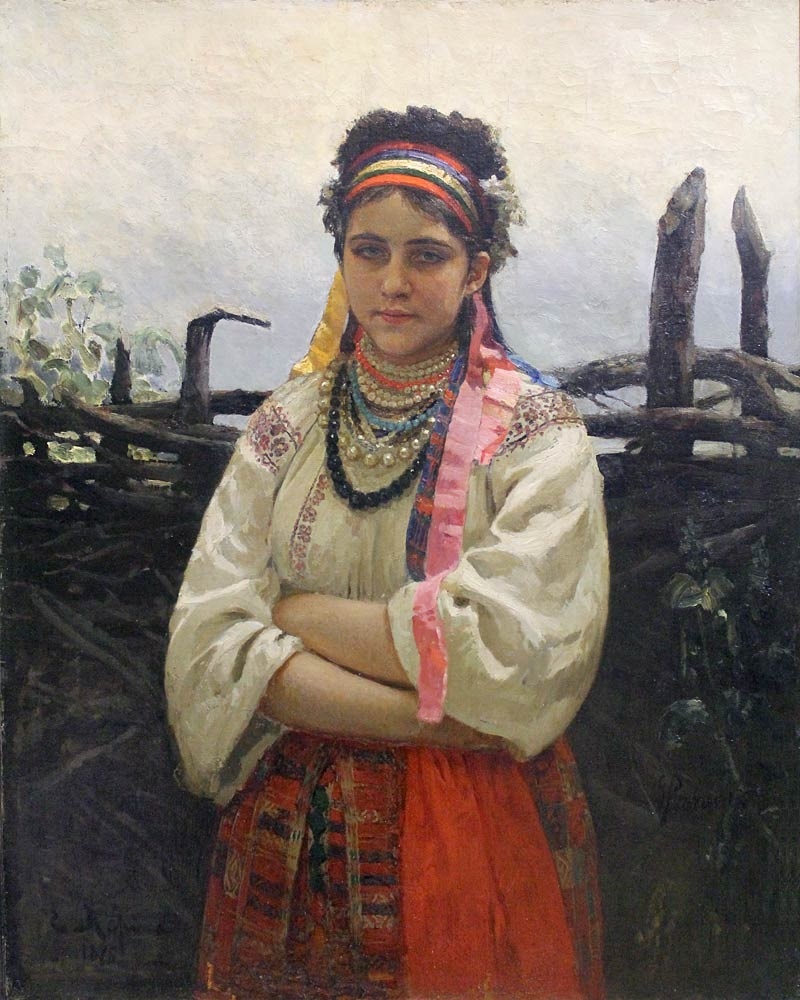
Ukrainian Woman by Repin (1876), Latvian National Museum of Art

Neapolitan Woman (1894)

Portrait of Countess Natalia Petrovna Golovina (1896)
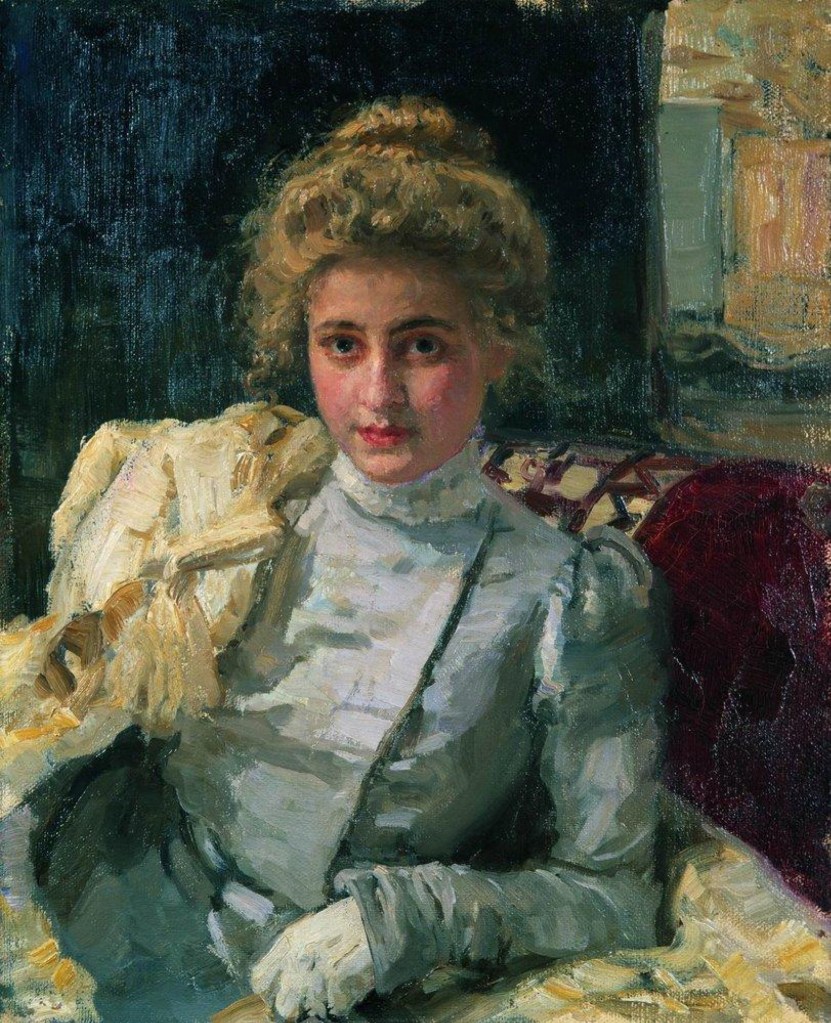
The Blonde Woman (1898, portrait of Tevashova)

October 17, 1905 – Celebration of the new Russian constitution (1905)

| Guy de Maupassant | |
|---|---|
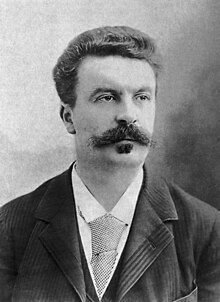 | |
Today is the birthday of Guy de Maupassant (Henri René Albert Guy de Maupassant; Tourville-sur-Arques; France 5 August 1850 – 6 July 1893 Passy, Paris); writer, remembered as a master of the short story form, and as a representative of the naturalist school of writers, who depicted human lives and destinies and social forces in disillusioned and often pessimistic terms. Maupassant was a protégé of Flaubert and his stories are characterized by economy of style and efficient, effortless dénouements. Many are set during the Franco-Prussian War of the 1870s, describing the futility of war and the innocent civilians who, caught up in events beyond their control, are permanently changed by their experiences. He wrote some 300 short stories, six novels, three travel books, and one volume of verse. His first published story, “Boule de Suif” (“Ball of Fat”, 1880), is often considered his masterpiece.
Le cœur a des mystères qu’aucun raisonnement ne pénètre.
La vie, voyez-vous, ça n’est jamais si bon ni si mauvais qu’on croit.
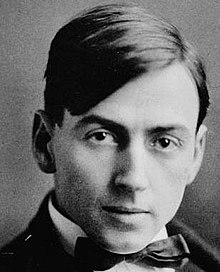
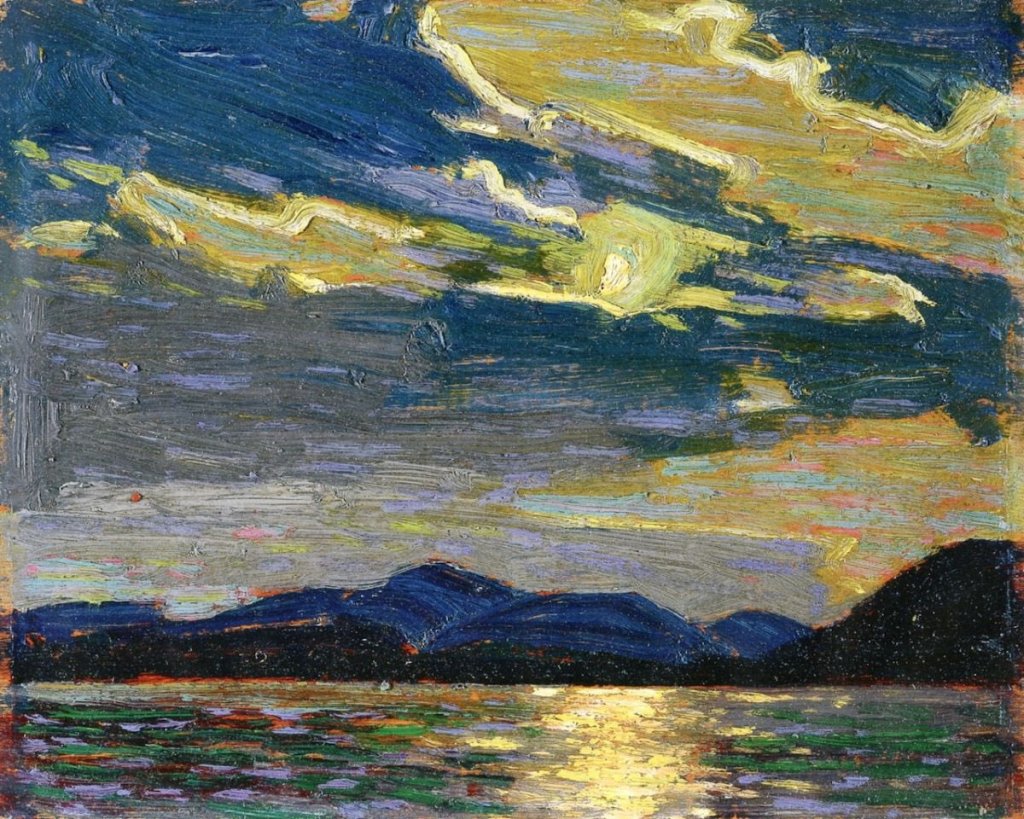
Today is the birthday of Tom Thomson (Thomas John Thomson; Claremont, Ontario; August 5, 1877 – July 8, 1917 Canoe Lake, Algonquin Park, Ontario); artist. He directly influenced a group of Canadian painters that would come to be known as the Group of Seven, and though he died before they formally formed, he is sometimes incorrectly credited as being a member of the group itself.
Thomson disappeared during a canoeing trip on Canoe Lake. His upturned canoe was spotted later in the afternoon, and his body was discovered in the lake eight days later. It was noted that he had a four-inch cut on his right temple and had bled from his right ear. The cause of death was officially determined to be “accidental drowning”. The day after the body was discovered, it was interred in Mowat Cemetery near Canoe Lake. Under the direction of Thomson’s older brother George, the body was exhumed two days later, and re-interred on July 21 in the family plot beside the Leith Presbyterian Church in what is now the Municipality of Meaford, Ontario.
Gallery

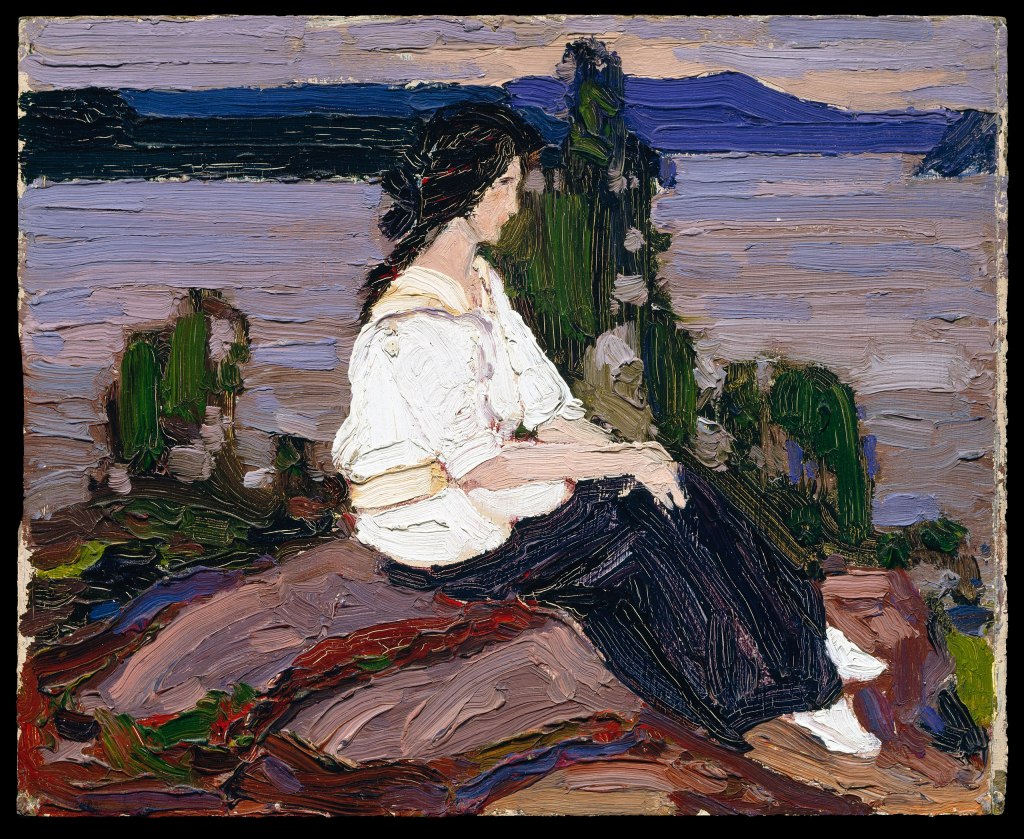
Figure of a Lady, Laura, Fall 1915. Sketch. McMichael Canadian Art Collection, Kleinburg

Design for a Stained Glass Window, c. 1905–08. 34.2 x 17.1 cm. Art Gallery of Ontario, Toronto
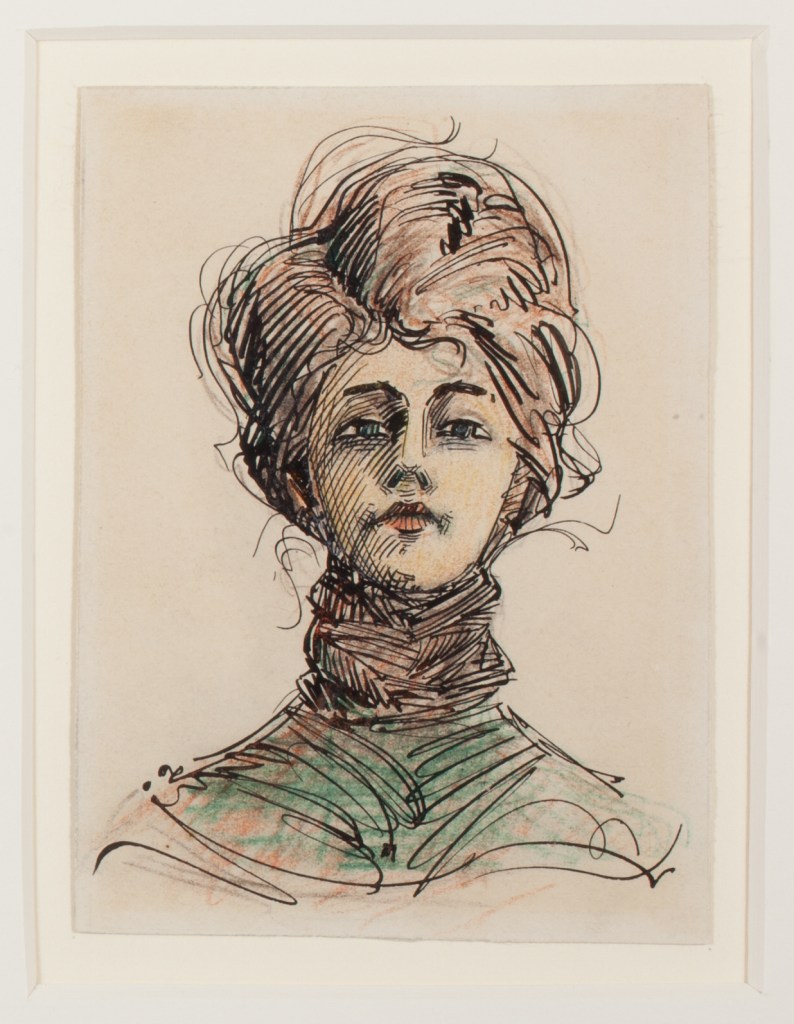
Study of a Woman’s Head, Seattle

moonlight

Moonlight, Fall 1915. Sketch. Private collection, Toronto

Moonlight, Winter 1913–14. 52.9 × 77.1 cm. National Gallery of Canada, Ottawa

Northern Lights, Spring 1917. Sketch. Thomson Collection, Art Gallery of Ontario, Toronto
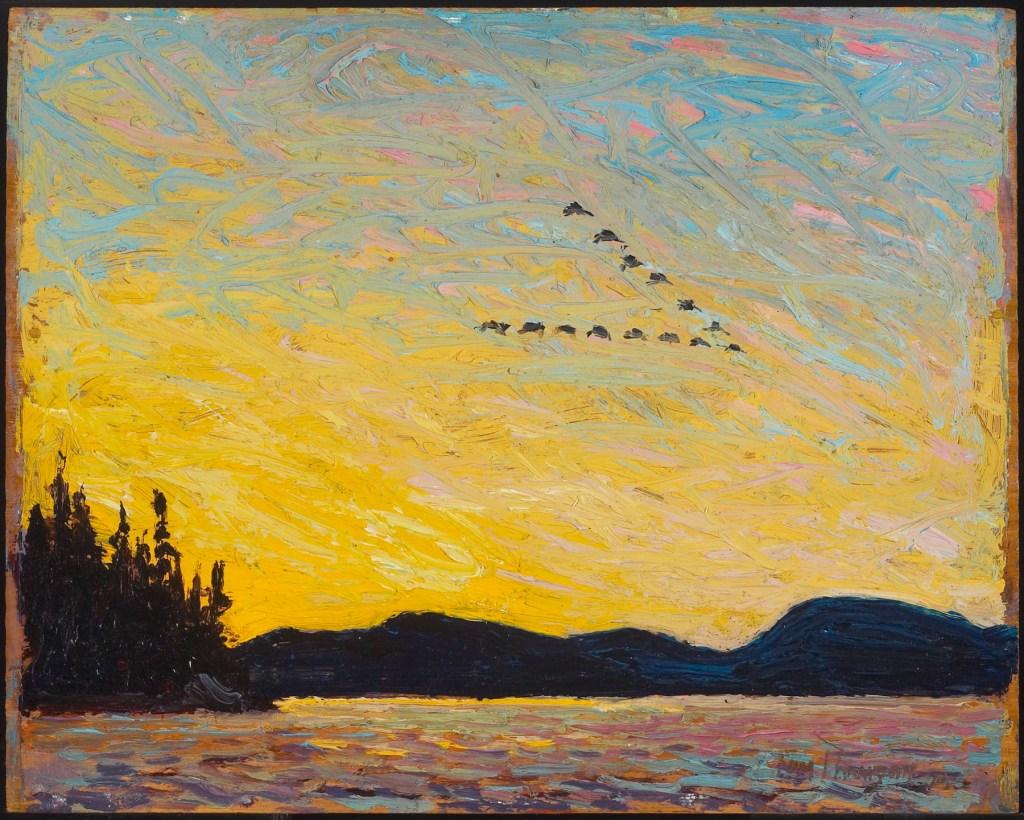
Round Lake, Mud Bay, Fall 1915. Sketch. Art Gallery of Ontario, Toronto
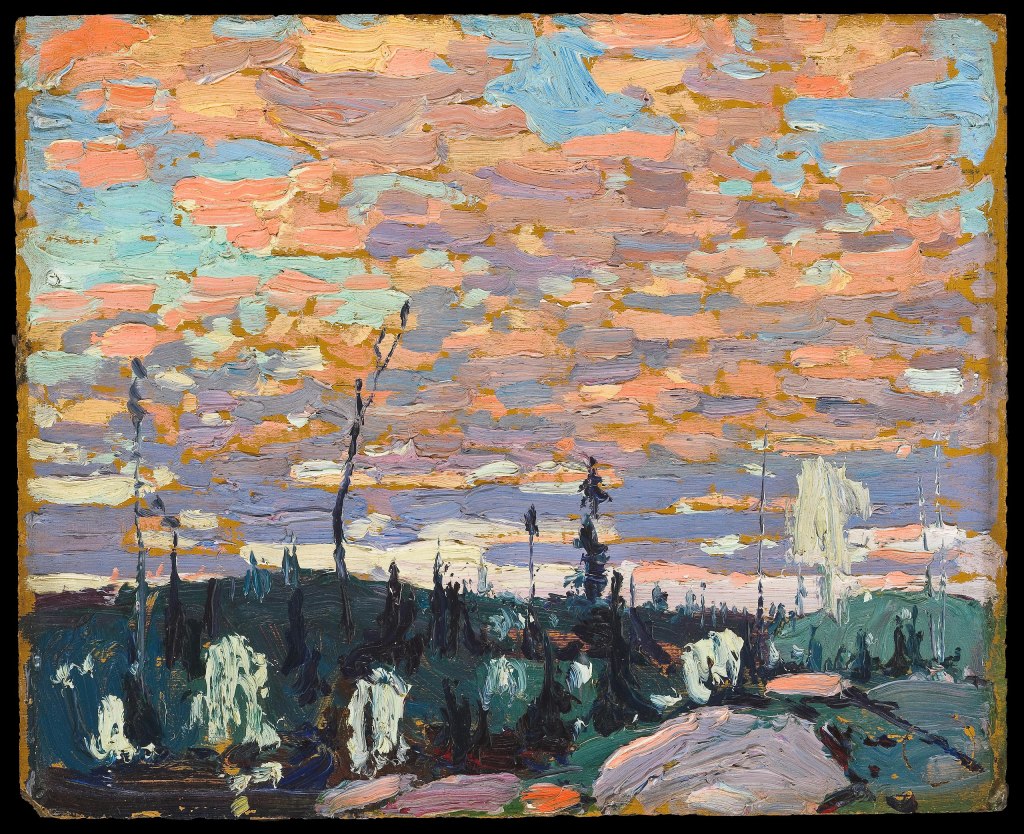
Wild Cherries, Spring, Spring 1915. Sketch. McMichael Canadian Art Collection, Kleinburg

Sky (The Light that Never Was), Summer 1913. Sketch. National Gallery of Canada, Ottawa

Sunset, Summer 1915. Sketch. National Gallery of Canada, Ottawa
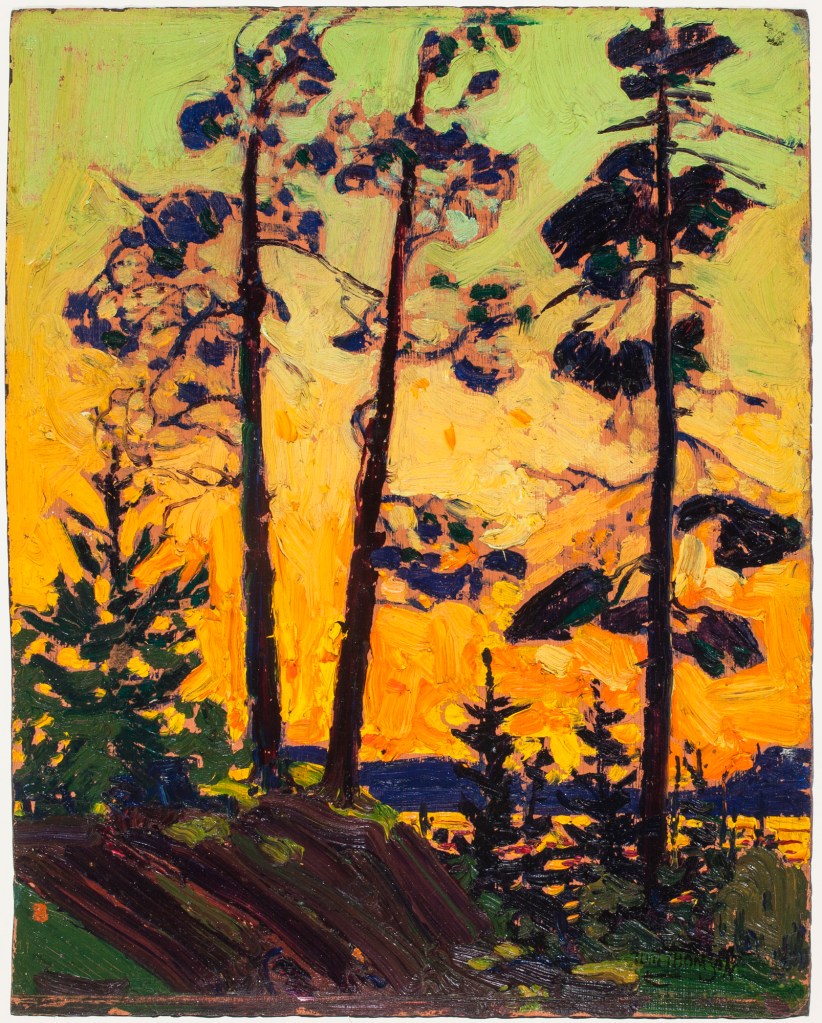
Pine Trees at Sunset, Summer 1915. Sketch. Private collection, Toronto

Northern Lights, Spring 1917. Sketch. National Gallery of Canada, Ottawa

hot summer moonlight

the west wind

A Nothern Lake

Northland Sunset, 1913. Tom Thomson Art Gallery, Owen Sound
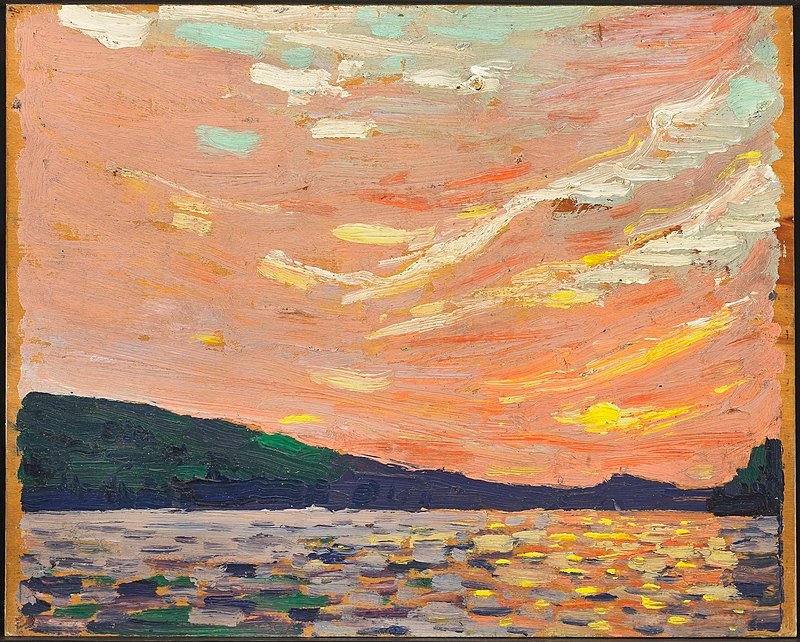
Smoke Lake, Summer 1915. McMichael Canadian Art Collection, Kleinburg
| Conrad Aiken | |
|---|---|
 | |
Today is the birthday of Conrad Aiken (Conrad Potter Aiken; Savannah, Georgia; August 5, 1889 – August 17, 1973 Savannah); writer, whose work includes poetry, short stories, novels, a play, and an autobiography. honored with a Pulitzer Prize and a National Book Award, and was United States Poet Laureate from 1950 to 1952.
He was married three times: first to Jessie McDonald (1912–1929); second to Clarissa Lorenz (1930) (author of a biography, Lorelei Two); and third to Mary Hoover (1937). Aiken’s tomb, located in Bonaventure Cemetery in Savannah, on the banks of the Wilmington River, was made famous by its mention in Midnight in the Garden of Good and Evil, the bestselling book by John Berendt. According to local legend, Aiken wished to have his tombstone fashioned in the shape of a bench as an invitation to visitors to stop and enjoy a martini at his grave. Its inscriptions read “Give my love to the world,” and “Cosmos Mariner—Destination Unknown.”
Verse
- Walk with me world, upon my right hand walk,
speak to me Babel, that I may strive to assemble
of all these syllables a single word
before the purpose of speech is gone.- “This image or another”
- Separate we come, and separate we go, And this be it known, is all that we know.
- Self written obituary in verse.
Discordants (1916)
Published in Turns and Movies and Other Tales in Verse (1916)
- Music I heard with you was more than music,
And bread I broke with you was more than bread;
Now that I am without you, all is desolate;
All that was once so beautiful is dead.- I, This section is also known as “Bread and Music”
- My heart has become as hard as a city street,
The horses trample upon it, it sings like iron,
All day long and all night long they beat,
They ring like the hooves of time.- II
- My heart is torn with the sound of raucous voices,
They shout from the slums, from the streets, from the crowded places,
And tunes from the hurdy-gurdy that coldly rejoices
Shoot arrows into my heart.- II
- O sweet clean earth, from whom the green blade cometh!
When we are dead, my best belovèd and I,
Close well above us, that we may rest forever,
Sending up grass and blossoms to the sky.- IV
All Lovely Things (1916)
- All lovely things will have an ending,
All lovely things will fade and die,
And youth, that’s now so bravely spending,
Will beg a penny by and by. - Come back, true love! Sweet youth, return!—
But time goes on, and will, unheeding,
Though hands will reach, and eyes will yearn,
And the wild days set true hearts bleeding.
The House of Dust (1916 – 1917)
- The wandering one, the inquisitive dreamer of dreams,
The eternal asker of answers, stands in the street,
And lifts his palms for the first cold ghost of rain. - ‘I will ask them all, I will ask them all their dreams,
I will hold my light above them and seek their faces.
I will hear them whisper, invisible in their veins . . .’
The eternal asker of answers becomes as the darkness,
Or as a wind blown over a myriad forest,
Or as the numberless voices of long-drawn rains. - We flow, we descend, we turn . . . and the eternal dreamer
Moves among us like light, like evening air . . . - Our hands are hot and raw with the stones we have laid,
We have built a tower of stone high into the sky,
We have built a city of towers. - What did we build it for? Was it all a dream? . . .
Ghostly above us in lamplight the towers gleam . . .
And after a while they will fall to dust and rain;
Or else we will tear them down with impatient hands;
And hew rock out of the earth, and build them again. - There, in the high bright window he dreams, and sees
What we are blind to,—we who mass and crowd
From wall to wall in the darkening of a cloud. - Before him, numberless lovers smiled and talked.
And death was observed with sudden cries,
And birth with laughter and pain.
And the trees grew taller and blacker against the skies
And night came down again. - From high black walls, gleaming vaguely with rain,
Each yellow light looked down like a golden eye.
They trembled from coign to coign, and tower to tower,
Along high terraces quicker than dream they flew.
And some of them steadily glowed, and some soon vanished,
And some strange shadows threw. - From some, the light was scarcely more than a gloom:
From some, a dazzling desire. - And there was one, beneath black eaves, who thought,
Combing with lifted arms her golden hair,
Of the lover who hurried towards her through the night;
And there was one who dreamed of a sudden death
As she blew out her light. - We were all born of flesh, in a flare of pain,
We do not remember the red roots whence we rose,
But we know that we rose and walked, that after a while
We shall lie down again. - One of us sings in the street, and we listen to him;
The words ring over us like vague bells of sorrow.
He sings of a house he lived in long ago.
It is strange; this house of dust was the house I lived in;
The house you lived in, the house that all of us know. - And we recall, with a gleaming stab of sadness,
Vaguely and incoherently, some dream
Of a world we came from, a world of sun-blue hills . . .
A black wood whispers around us, green eyes gleam;
Someone cries in the forest, and someone kills. - And, growing tired, we turn aside at last,
Remember our secret selves, seek out our towers,
Lay weary hands on the banisters, and climb;
Climbing, each, to his little four-square dream
Of love or lust or beauty or death or crime. - Over the darkened city, the city of towers,
The city of a thousand gates,
Over the gleaming terraced roofs, the huddled towers,
Over a somnolent whisper of loves and hates,
The slow wind flows, drearily streams and falls,
With a mournful sound down rain-dark walls. - A chorus of elfin voices blowing about me
Weaves to a babel of sound. Each cries a secret.
I run among them, reach out vain hands, and drown. - ‘I am the one who stood beside you and smiled,
Thinking your face so strangely young . . . ‘
‘I am the one who loved you but did not dare.’ - ‘I am the one you saw to-day, who fell
Senseless before you, hearing a certain bell:
A bell that broke great memories in my brain.’
‘I am the one who passed unnoticed before you,
Invisible, in a cloud of secret pain.’ - Weave, weave, weave, you streaks of rain!
I am dissolved and woven again…
Thousands of faces rise and vanish before me.
Thousands of voices weave in the rain. - My veins are afire with music,
Her eyes have kissed me, my body is turned to light;
I shall dream to her secret heart tonight… - ‘I bound her to me in all soft ways,
I bound her to me in a net of days,
Yet now she has gone in silence and said no word.
How can we face these dazzling things, I ask you?
There is no use: we cry: and are not heard. - The wind shrieks, the wind grieves;
It dashes the leaves on walls, it whirls then again;
And the enormous sleeper vaguely and stupidly dreams
And desires to stir, to resist a ghost of pain. - We reach vague-gesturing hands, we lift our heads,
Hear sounds far off,—and dream, with quivering breath,
Our curious separate ways through life and death. - We rub the darkness from our eyes,
And face our thousand devious secret mornings . . .
And do not see how the pale mist, slowly ascending,
Shaped by the sun, shines like a white-robed dreamer
Compassionate over our towers bending. - Each gleaming point of light is like a seed
Dilating swiftly to coiling fires.
Each cloud becomes a rapidly dimming face,
Each hurrying face records its strange desires. - More towers must yet be built—more towers destroyed—
Great rocks hoisted in air;
And he must seek his bread in high pale sunlight
With gulls about him, and clouds just over his eyes . . .
And so he did not mention his dream of falling
But drank his coffee in silence, and heard in his ears
That horrible whistle of wind, and felt his breath
Sucked out of him, and saw the tower flash by
And the small tree swell beneath him . . .
He patted his boy on the head, and kissed his wife,
Looked quickly around the room, to remember it,—
And so went out . . . For once, he forgot his pail. - Something had changed—but it was not the street—
The street was just the same—it was himself. - He would not yield, he thought, and walk more slowly,
As if he knew for certain he walked to death:
But with his usual pace,—deliberate, firm,
Looking about him calmly, watching the world,
Taking his ease . . . - Was forty, then, too old for work like this?
Why should it be? He’d never been afraid—
His eye was sure, his hand was steady . . .
But dreams had meanings. - His thoughts were blown and scattered like leaves;
He thought of the pail . . . Why, then, was it forgotten?
Because he would not need it? - I walk in a cloud of wonder; I am glad.
I mingle among the crowds; my heart is pounding;
You do not guess the adventure I have had! . . .
Yet you, too, all have had your dark adventures,
Your sudden adventures, or strange, or sweet . . .
My peril goes out from me, is blown among you.
We loiter, dreaming together, along the street. - Lovers walk in the noontime by that fountain.
Pigeons dip their beaks to drink from the water.
And soon the pond must freeze. - Time is a dream, he thinks, a destroying dream;
It lays great cities in dust, it fills the seas;
It covers the face of beauty, and tumbles walls.
Where was the woman he loved? Where was his youth?
Where was the dream that burned his brain like fire?
Even a dream grows grey at last and falls. - Death is a meeting place of sea and sea.
- Two lovers, here at the corner, by the steeple,
Two lovers blow together like music blowing:
And the crowd dissolves about them like a sea.
Recurring waves of sound break vaguely about them,
They drift from wall to wall, from tree to tree. - ‘One white rose . . . or is it pink, to-day?’
They pause and smile, not caring what they say,
If only they may talk.
The crowd flows past them like dividing waters.
Dreaming they stand, dreaming they walk. - Two lovers move in the crowd like a link of music,
We press upon them, we hold them, and let them pass;
A chord of music strikes us and straight we tremble;
We tremble like wind-blown grass. - What was this dream we had, a dream of music,
Music that rose from the opening earth like magic
And shook its beauty upon us and died away?
The long cold streets extend once more before us.
The red sun drops, the walls grow grey. - The days, the nights, flow one by one above us,
The hours go silently over our lifted faces,
We are like dreamers who walk beneath a sea.
Beneath high walls we flow in the sun together.
We sleep, we wake, we laugh, we pursue, we flee. - The young boy whistles, hurrying down the street,
The young girl hums beneath her breath.
One goes out to beauty, and does not know it.
And one goes out to death. - In one room, silently, lover looks upon lover,
And thinks the air is fire. - As darkness falls
The walls grow luminous and warm, the walls
Tremble and glow with the lives within them moving,
Moving like music, secret and rich and warm.
How shall we live tonight? Where shall we turn?
To what new light or darkness yearn?
A thousand winding stairs lead down before us;
And one by one in myriads we descend
By lamplit flowered walls, long balustrades,
Through half-lit halls which reach no end. - The poet walked alone in a cold late rain,
And thought his grief was like the crying of sea-birds;
For his lover was dead, he never would love again. - ‘When you are dead your spirit will find my spirit,
And then we shall die no more.’ - Through soundless labyrinths of dream you pass,
Through many doors to the one door of all.
Soon as it’s opened we shall hear a music:
Or see a skeleton fall . . . - Let us retrace our steps: I have deceived you:
Nothing is here I could not frankly tell you:
No hint of guilt, or faithlessness, or threat.
Dreams—they are madness. Staring eyes—illusion.
Let us return, hear music, and forget . . . - Of what she said to me that night—no matter.
The strange thing came next day.
My brain was full of music—something she played me—;
I couldn’t remember it all, but phrases of it
Wreathed and wreathed among faint memories,
Seeking for something, trying to tell me something,
Urging to restlessness: verging on grief.
I tried to play the tune, from memory,—
But memory failed: the chords and discords climbed
And found no resolution—only hung there,
And left me morbid . . . Where, then, had I heard it? . . . - You know, without my telling you, how sometimes
A word or name eludes you, and you seek it
Through running ghosts of shadow,—leaping at it,
Lying in wait for it to spring upon it,
Spreading faint snares for it of sense or sound:
Until, of a sudden, as if in a phantom forest,
You hear it, see it flash among the branches,
And scarcely knowing how, suddenly have it—
Well, it was so I followed down this music,
Glimpsing a face in darkness, hearing a cry,
Remembering days forgotten, moods exhausted,
Corners in sunlight, puddles reflecting stars— - The music ends. The screen grows dark. We hurry
To go our devious secret ways, forgetting
Those many lives . . . We loved, we laughed, we killed,
We danced in fire, we drowned in a whirl of sea-waves.
The flutes are stilled, and a thousand dreams are stilled. - Once I loved, and she I loved was darkened.
Again I loved, and love itself was darkened.
Vainly we follow the circle of shadowy days.
The screen at last grows dark, the flutes are silent.
The doors of night are closed. We go our ways.
Chance Meetings (1917)
Originally published as section VII of “Variations” in Contemporary Verse, Vol. 3, No. 5 (May 1917), p. 86
- In the mazes of loitering people, the watchful and furtive,
The shadows of tree-trunks and shadows of leaves,
In the drowse of the sunlight, among the low voices,
I suddenly face you - I love you, what star do you live on?
- And the shadows of tree-trunks and shadows of leaves
Interlace with low voices and footsteps and sunlight
To divide us forever.
Preludes for Memnon (1935)
Preludes for Memnon; or, Preludes to Attitude
- Let us describe the evening as it is:—
The stars disposed in heaven as they are:
Verlaine and Shakspere rotting, where they rot,
Rimbaud remembered, and too soon forgot;
Order in all things, logic in the dark;
Arrangement in the atom and the spark;
Time in the heart and sequence in the brain—
Such as destroyed Rimbaud and fooled Verlaine.
And let us then take godhead by the neck—
And strangle it, and with it, rhetoric.
And today is the birthday of George Tooker (George Clair Tooker, Jr.; Brooklyn; August 5, 1920 – March 27, 2011 Hartland, Vermont); figurative painter. His works are associated with Magic realism, Social realism, Photorealism, and Surrealism. His subjects are depicted naturally as in a photograph, but the images use flat tones, an ambiguous perspective, and alarming juxtapositions to suggest an imagined or dreamed reality. He did not agree with the association of his work with Magic realism or Surrealism, as he said, “I am after painting reality impressed on the mind so hard that it returns as a dream, but I am not after painting dreams as such, or fantasy.” In 1968, he was elected to the National Academy of Design and was a member of the American Academy of Arts and Letters. Tooker was one of nine recipients of the National Medal of Arts in 2007.
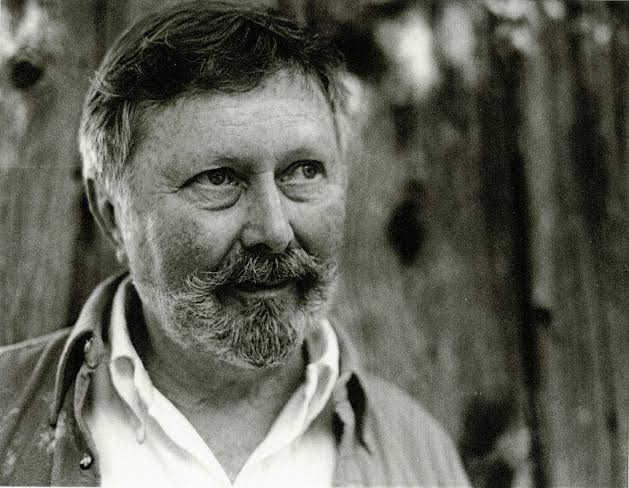
Tooker was in a relationship with the artist Paul Cadmus from 1944-1949 and was a part of the PaJaMa artists collective during that time. He is featured, often nude, in many of their images from that period. In the mid-1950’s Tooker met his long time partner, painter William R. Christopher, and they lived together in New York City. They moved into a house they had built in Hartland, Vermont in 1960. The couple were involved in the Civil Rights Movement and participated in one of the Selma to Montgomery marches in 1965. He taught at the Art Students League of New York from 1965 to 1968. He spent his winters in Málaga, Spain. A few years after Christopher’s 1973 death, Tooker converted to Catholicism. His faith was very important to him, as he was very much involved with his local church. Tooker died at the age of 90 in his home due to kidney failure.
Gallery
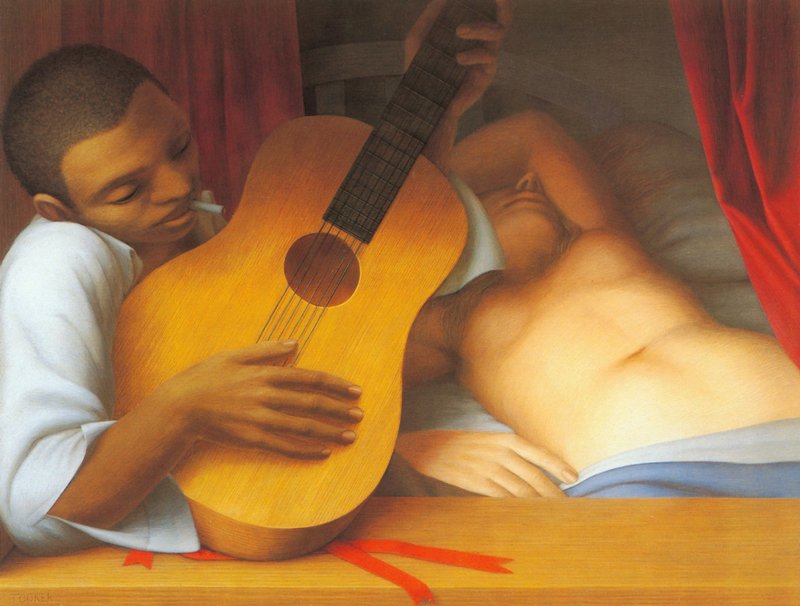
Guitarra, 1957
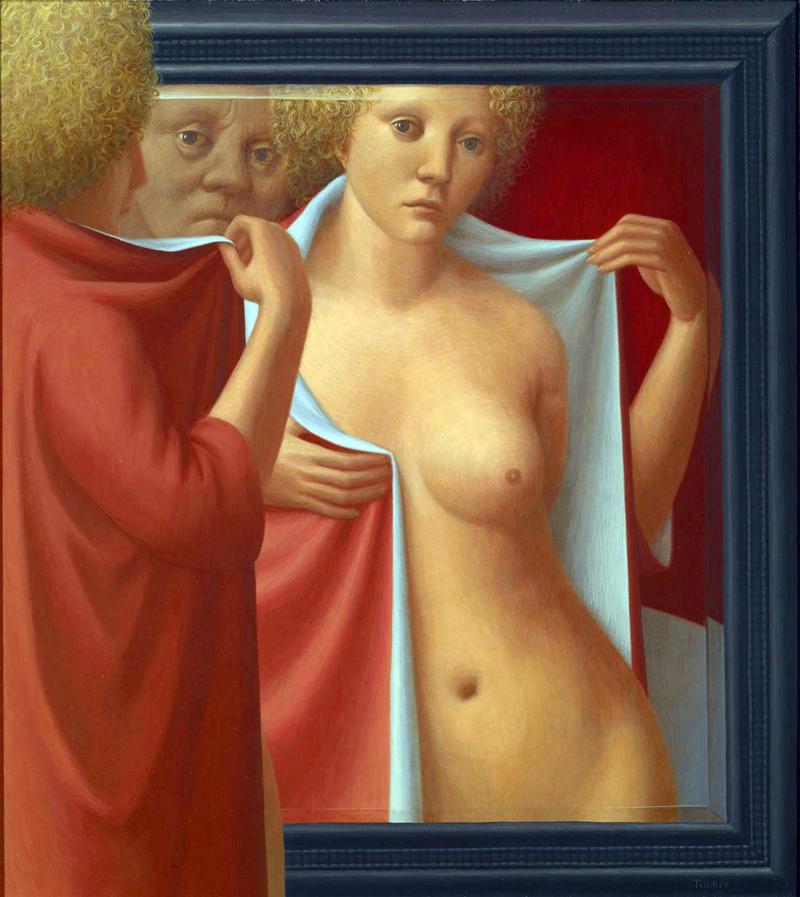

in the summer house
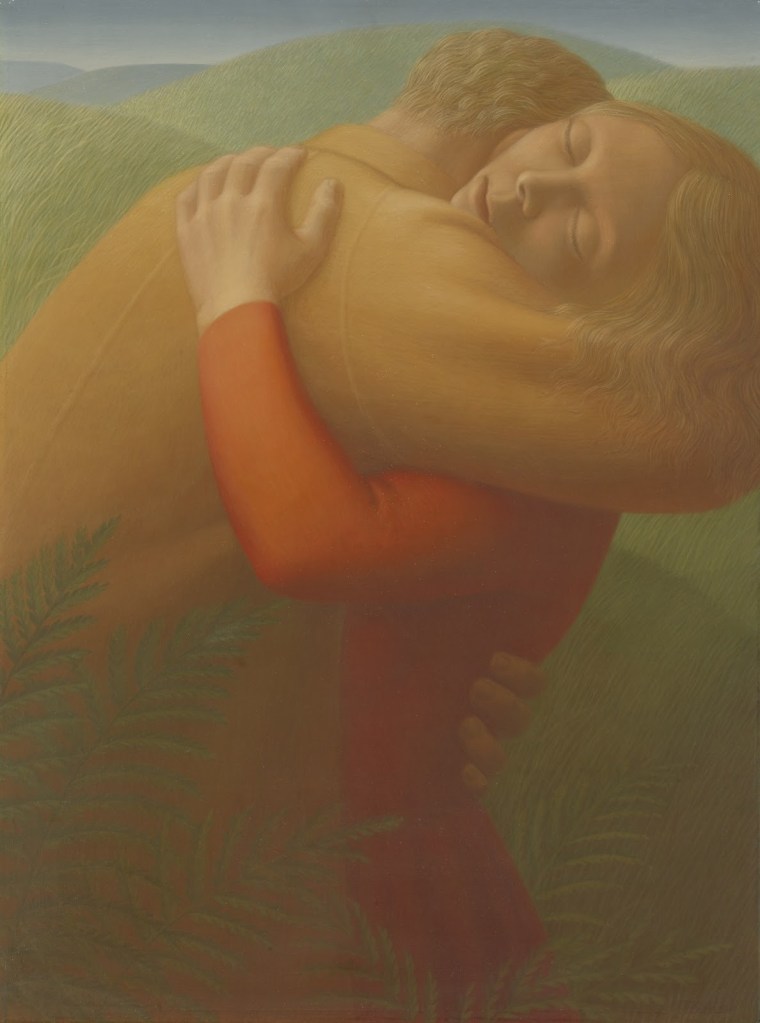
embrace


dance 1946
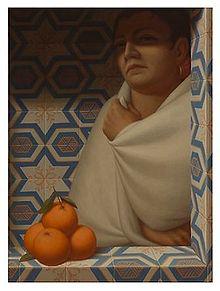
Woman with Oranges (1977)
Mac Tag
thanks for stoppin’ by y’all
 The Lovers’ Chronicle
Leave a comment