
Dear Zazie, Here is today’s Lovers’ Chronicle from Mac Tag. Rhett
The Lovers’ Chronicle
Dear Muse,

nighttime in the Kona Kai marina, shelter island San Diego
© copyright 2024 mac tag/cowboycoleridge all rights reserved
multiple songs would work here;
whether in the dark, with me,
or the night way
’’That’s a lot of dancing’’
could be the queen,
or in the moonlight
’’We’re going to need a nap’’
perhaps with somebody
or in the street
’’Good thing I have comfy shoes’’
have to go with in the moonlight
but anywhere with you my dear,
may i have this dance
’’Absolutely my love’’

© copyright 2023.2024  mac tag/cowboycoleridge all rights reserved
this topic always takes me back to my Greune Hall days, livin’ about 30 minutes away near the Devil’s Backbone, i went as often as i could to listen to live music, drink Shiner Bock beer, and two-step and waltz the night away, nothin’ better for slidin’ boots over than that old wooden dance floor, also reminds me that i danced my way into and out of some tight spots, those were my lovin’ with no clue days, before my last first dance with you

© copyright 2022.2024  mac tag/cowboycoleridge all rights reserved
believed never again
which turns out
was right because
never had it
when what you never had
finally comes around
no fear, to be carried
away, bid all before
fade and tell them,
we think to have
where we stand
together, discover
the reason held dear
not to forsake this dance
© copyright 2021.2023 mac tag/cowboycoleridge all rights reserved
Pale Love, Pale Rider
undone
never as it was
still dancin’
bid you
come,
and tell me,
here i stand
there can only ever
be one want
to carry you away
use for any reason
why should you not
i will not forsake
you shall have
why, then,
what you will
hold so dear
as by chance,
and this in you
come
© copyright 2020 mac tag/cowboy coleridge all rights reserved
solo this year
still fine with that
easy decision
to who leads
two years on and better for it
this verse pourin’ forth, a wave
tryin’ to keep ahead and learnin’
what flows, how the rhythm rolls
how to spare the words but not
the feelin’s, never said but saved
for this dance with you
© copyright 2019.2023 mac tag/cowboy coleridge all rights reserved
undone
a heart,
never as it was
dancin’,
what do you have
bid you
come,
and tell me,
here i stand
there can only ever
be one want
dancin’
to carry you away
use your old lover so,
for any reason
you know
why should you not
i will not forsake
dance
and you shall have
why, then,
what you will
dance
hold so dear
as i was by chance,
and this in you
come
how say you,
will you
and we will have
and not want
take you,
by the hand,
as you are
by this dance,
we shall understand
and that soon must be
when you come,
you will see
© copyright 2018 mac tag/cowboy coleridge all rights reserved
with words
these days
and that suits
with memories and visions
from art, movies, music
perfectly acceptable
substitutes
more than enough to steer by
to heal, to assess, and no
not askin’ for help thanks
this is an independent outfit
with a firm grip on the reins
© copyright 2017.2023 mac tag/cowboy coleridge all rights reserved
Gone away
undone;
My heart,
never as it was
With his dances
stole her away
she will not say
Dancin’, lustful
what do you have not
Dancin’
I fear,
to carry you away
Bid them all
come hither,
And tell them,
he thinks to have
Here he stands
he shall lie with the one
Why use thy old lover so,
For any other reason
Thou long time did know
Why shouldst thou not
I will not forsake
He can dance
And he shall have
her heart in hold
Why, then, my heart
Dancin’
Held so dear
As any realm
under the sun
Then, ere I speed from hence,
I will be so bold to dance
A turn or two
For, as I was walkin’ along
by chance, I was told you agreed
‘Tis true, and this is you;
my worship comes to crave you
For she hath lovers
But he that dances
shall have her
How say you,
will you dance
And you shall have
and shall not want
But one of these must be
And far unfit
To dance with you
Take her, by the hand,
As she is
By this dance,
you shall understand
And saw you not,
have you not seen
To seek you
I cannot see you
among so many
She shall have,
if she have any
Welcome, and welcome here,
Welcome, my true, now to me
And that soon must be
when thou comes,
thou wilt see
Thou art as welcome
Why, how now
I hope you jest
No, by my troth
And, if you be
give you good-night!
I fear you caper so
I thought you had jested
and meant but a fable,
But now do I see
I wish all my friends
by me to take heed,
come not near
when you mean to see
© copyright 2016 mac tag/cowboy Coleridge all rights reserved
for MD
I was prepared
to miss you. At
least, I thought I
was. But I was
not prepared for
this. Not at all.
Come fall with me
Spin the totem
“Where? Where are we
going?” Does it
really matter
as long as we
are together.
Do you know what
it is, to be
part of a whole?
The totem spins:
A part of a
whole again. Not
carin’ where the
train is goin’
Not carin’ ’bout
anything but
this place and our
togetherness
© copyright 2015 mac tag/cowboy Coleridge all rights reserved
Today is the birthday of Gwen John (Gwendolen Mary John; Haverfordwest, Wales 22 June 1876 – 18 September 1939 Diepe, France); artist who worked in France for most of her career. Her paintings, mainly portraits of anonymous female sitters, are rendered in a range of closely related tones. Although she was overshadowed during her lifetime by her brother Augustus John and her lover Auguste Rodin, her reputation has grown steadily since her death.
Gwen John’s art, in its quietude and its subtle colour relationships, stands in contrast to her brother’s far more vivid and assertive work. Though she was once overshadowed by her popular brother, critical opinion now tends to view Gwen as the more talented of the two. Augustus himself had predicted this reversal, saying “In 50 years’ time I will be known as the brother of Gwen John.”
Throughout her life John was attracted to people of both sexes. As a student she had an affair with fellow artist Ambrose McEvoy. Although Rodin was her great love, she had a number of same-sex relationships. While at Slade she developed a passion for an unnamed woman, which her brother Augustus describes in his autobiography Chiaroscuro; and while walking to Paris with Dorelia McNeill, she developed a passion for a married girl, who then followed them to Paris. It has been suggested that John had romantic feelings for McNeill. Rodin, who had a sexual relationship with his assistant Hilda Flodin, drew erotic drawings of Flodin and John together. The German painter Ida Gerhardi fell in love with John but it was not reciprocated. John’s last passion was Véra Oumançoff, for whom she developed an obsession, much to the discomfort of Véra.
Gallery
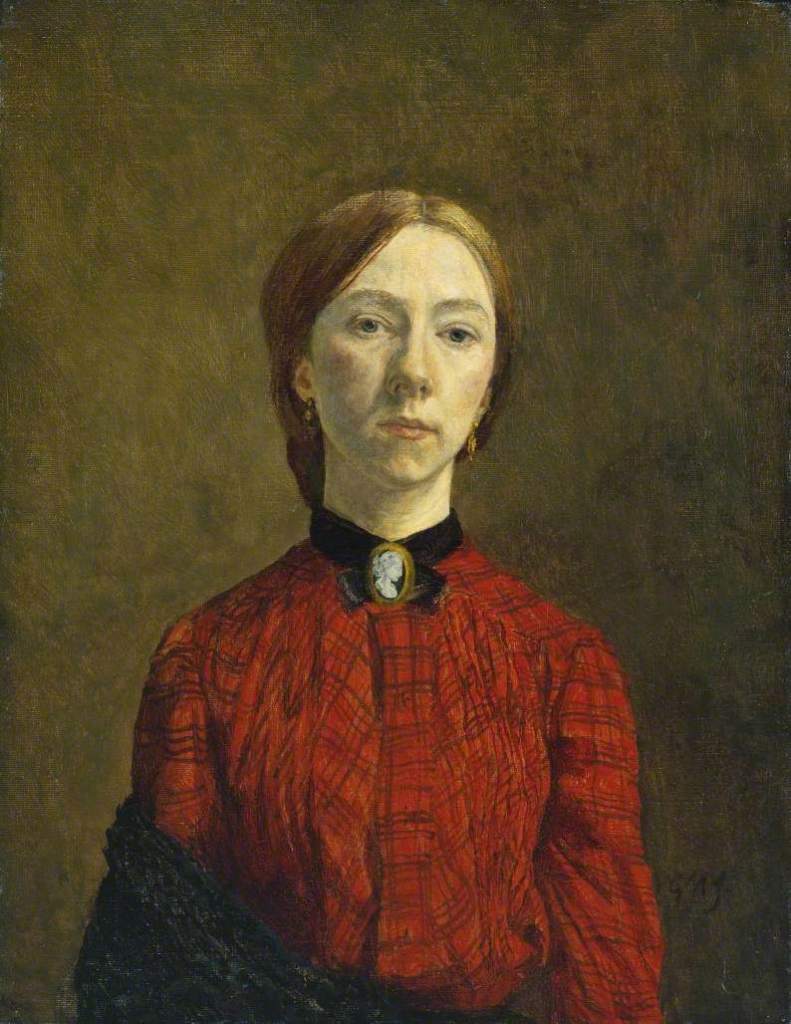
self portrait

self portrait

Winifred john

interior with figures

portrait

Dorelia in a Black Dress, 1903–1904, Tate Gallery

The Convalescent (c. 1923–1924), one of ten versions she painted of this composition
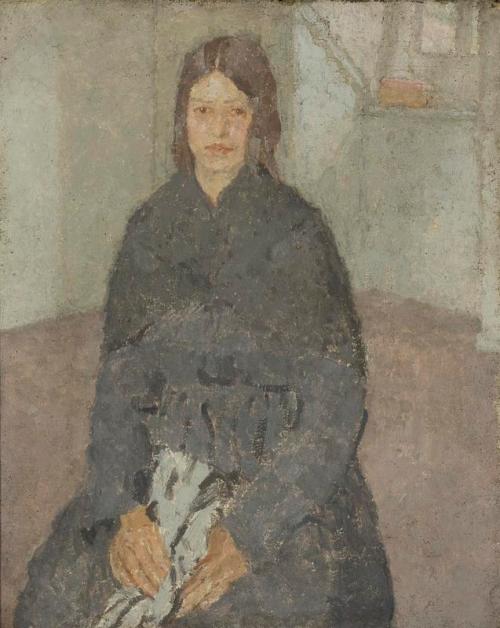
Girl Holding a Piece of Sewing, 1915–1925, Aberdeen Art Gallery

The Pilgrim, c. 1915–1925, Yale Center for British Art
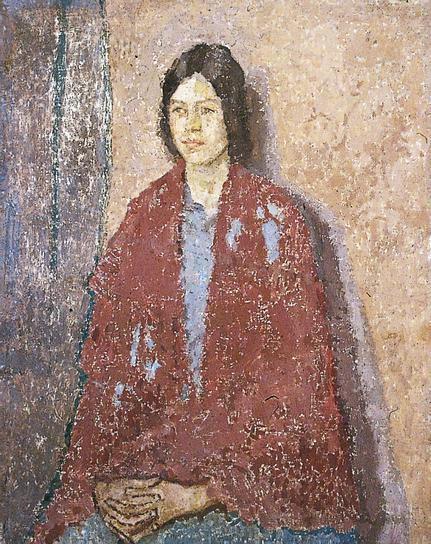
Young Woman in a Red Shawl, c. 1917–1923

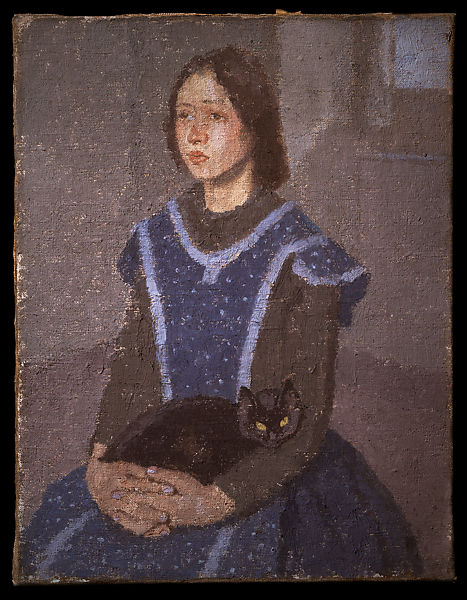
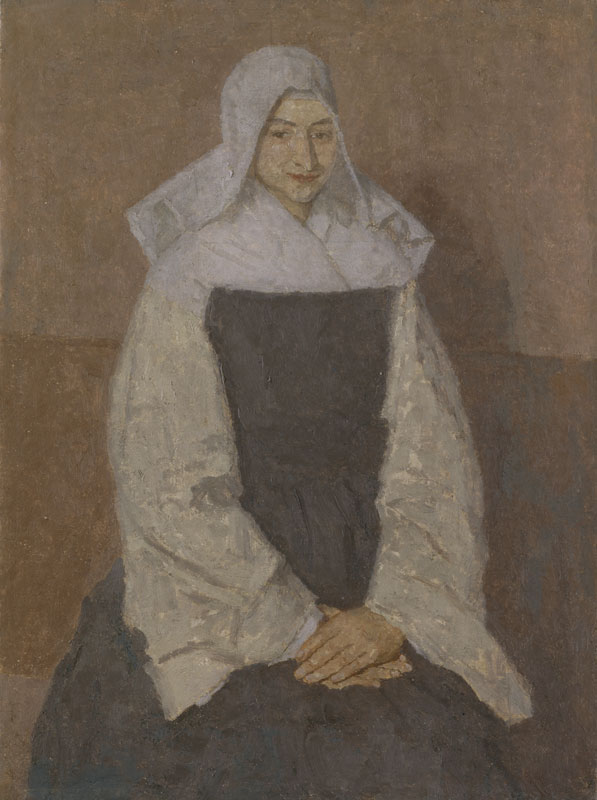
Mère Poussepin, c. late 1910s, Barber Institute, Birmingham

Today is the birthday of Erich Maria Remarque (born Erich Paul Remark; Osnabrück, Lower Saxony, Germany 22 June 1898 – 25 September 1970 Locarno, Switzerland); novelist who created many works about the horrors of war. His best known novel All Quiet on the Western Front (1928), about German soldiers in the First World War, was made into an Oscar-winning film. His book made him an enemy of the Nazis, who burned many of his works.
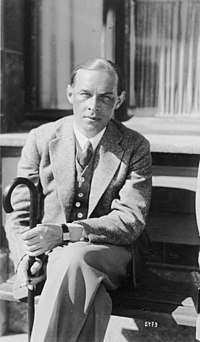
in Davos, 1929
His first marriage was to the actress Ilse Jutta Zambona in 1925. The marriage was stormy and unfaithful on both sides. Remarque and Zambona divorced in 1930, but in 1933 they fled together to Switzerland. In 1938 they remarried, to prevent her from being forced to return to Germany, and in 1939 they immigrated to the United States where they both became naturalised citizens in 1947. They divorced again on 20 May 1957, this time for good. Ilse Remarque died on 25 June 1975.
During the 1930s, Remarque had relationships with Austrian actress Hedy Lamarr, Dolores del Río and Marlene Dietrich. The affair with Dietrich began in September 1937 when they met on the Lido while in Venice for the film festival and continued through at least 1940, maintained mostly by way of letters, cables and telephone calls. A selection of their letters were published in 2003 in the book “Sag Mir, Dass Du Mich Liebst” (“Tell Me That You Love Me”) and then in the 2011 play Puma.
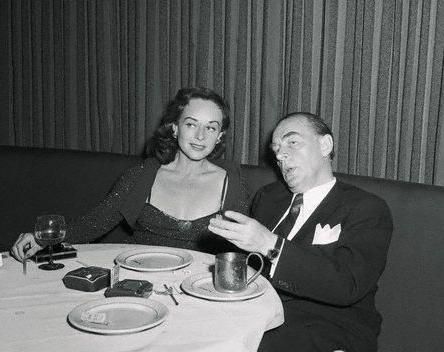
Remarque married actress Paulette Goddard in 1958 and they remained married until his death of heart collapse that had been brought on by an aneurysm in Locarno on 25 September 1970, aged 72.
Remarque was interred in the Ronco Cemetery in Ronco, Ticino, Switzerland. Goddard died in 1990 and was interred next to her husband. She left a bequest of $20 million to New York University to fund an institute for European studies, which is named in honour of Remarque.
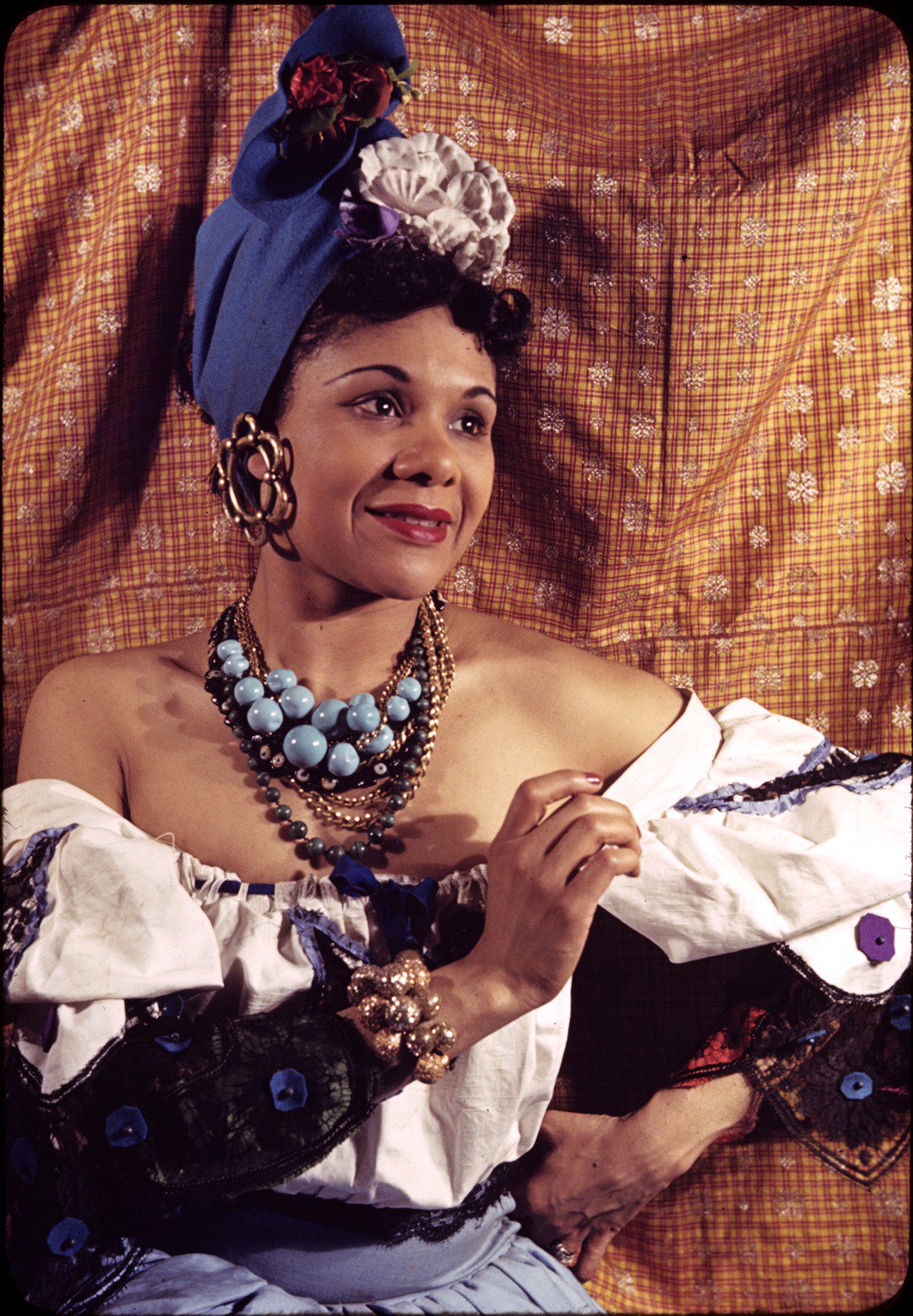
And today is the birthday of Katherine Dunham (Katherine Mary Dunham; Chicago; June 22, 1909 – May 21, 2006 New York City); dancer, choreographer, creator of the Dunham Technique, author, educator, anthropologist, and social activist. Dunham had one of the most successful dance careers in African-American and European theater of the 20th century, and directed her own dance company for many years. She has been called the “matriarch and queen mother of black dance.”
While a student at the University of Chicago, Dunham also performed as a dancer and ran a dance school, and earned an early bachelor’s degree in anthropology. Receiving a fellowship, she went to the Caribbean to study dance and ethnography. She later returned to graduate school and submitted a master’s thesis in anthropology. She did not complete the other requirements for that degree, however, she realized that her professional calling was performance.
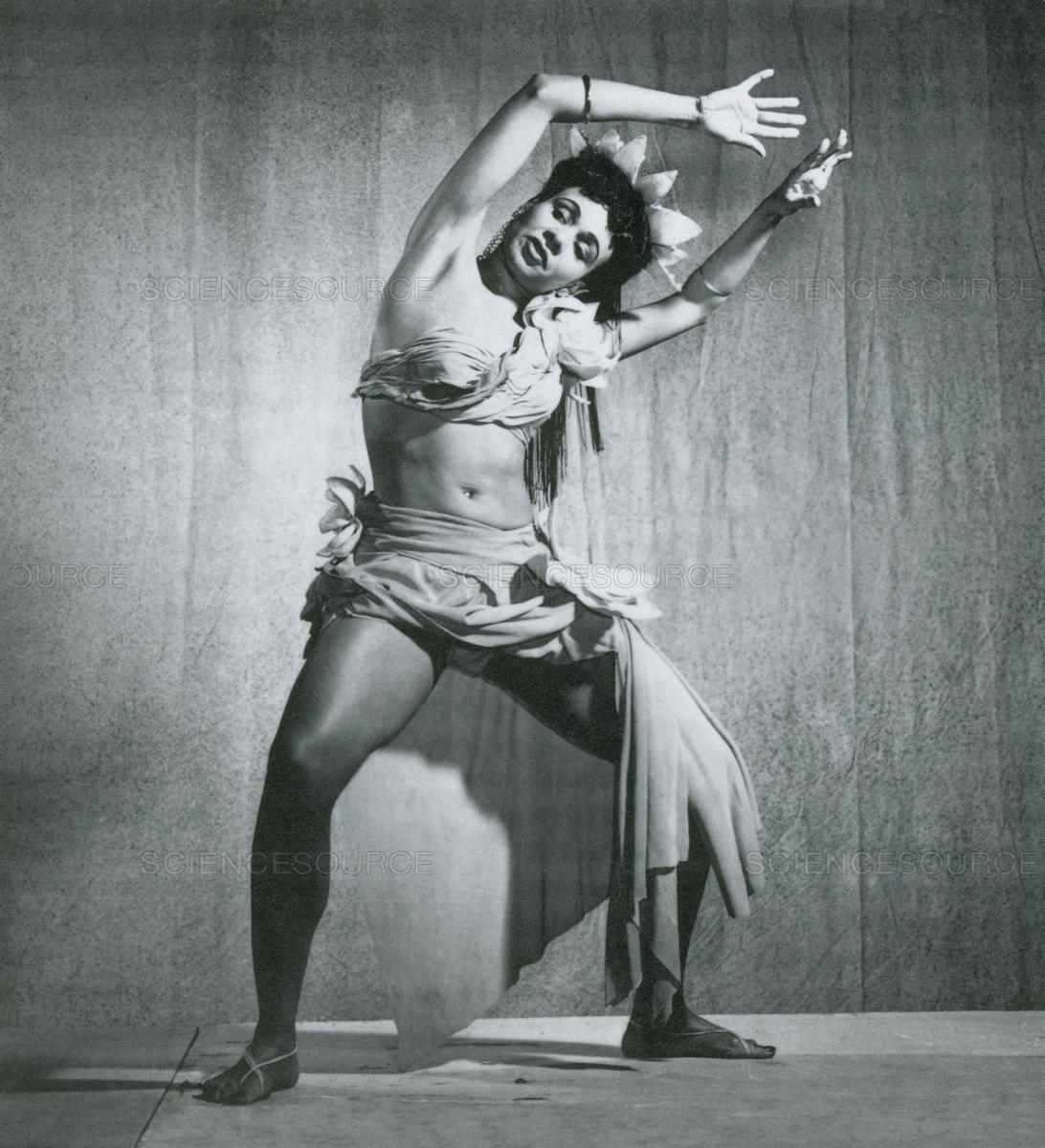
At the height of her career in the 1940s and 1950s, Dunham was renowned throughout Europe and Latin America and was widely popular in the United States. The Washington Post called her “dancer Katherine the Great.” For almost 30 years she maintained the Katherine Dunham Dance Company, the only self-supported American black dance troupe at that time. Over her long career, she choreographed more than ninety individual dances. Dunham was an innovator in African-American modern dance as well as a leader in the field of dance anthropology, or ethnochoreology. She also developed the Dunham Technique, a method of movement to support her dance works.
Dunham married Jordis McCoo, a black postal worker, in 1931, but he did not share her interests and they gradually drifted apart, finally divorcing in 1938. About that time Dunham met and began to work with John Thomas Pratt, a Canadian who had become one of America’s most renowned costume and theatrical set designers. Pratt, who was white, shared Dunham’s interests in African-Caribbean cultures and was happy to put his talents in her service. After he became her artistic collaborator, they became romantically involved. In the summer of 1941, after the national tour of Cabin in the Sky ended, they went to Mexico, where inter-racial marriages were less controversial than in the United States, and engaged in a commitment ceremony on 20 July, which thereafter they gave as the date of their wedding. In fact, that ceremony was not recognized as a legal marriage in the United States, a point of law that would come to trouble them some years later. Katherine Dunham and John Pratt married in 1949 to adopt Marie-Christine, a French 14-month-old baby. From the beginning of their association, around 1938, Pratt designed the sets and every costume Dunham ever wore. He continued as her artistic collaborator until his death in 1986.
thanks for stoppin’ by y’all
Mac Tag
 The Lovers’ Chronicle
Leave a comment